


Red-throated Loon
Red-throated Diver · Gavia stellata
By the Birdfact teamChecked by Nathan Cope
On this page12 sections
How to recognise it
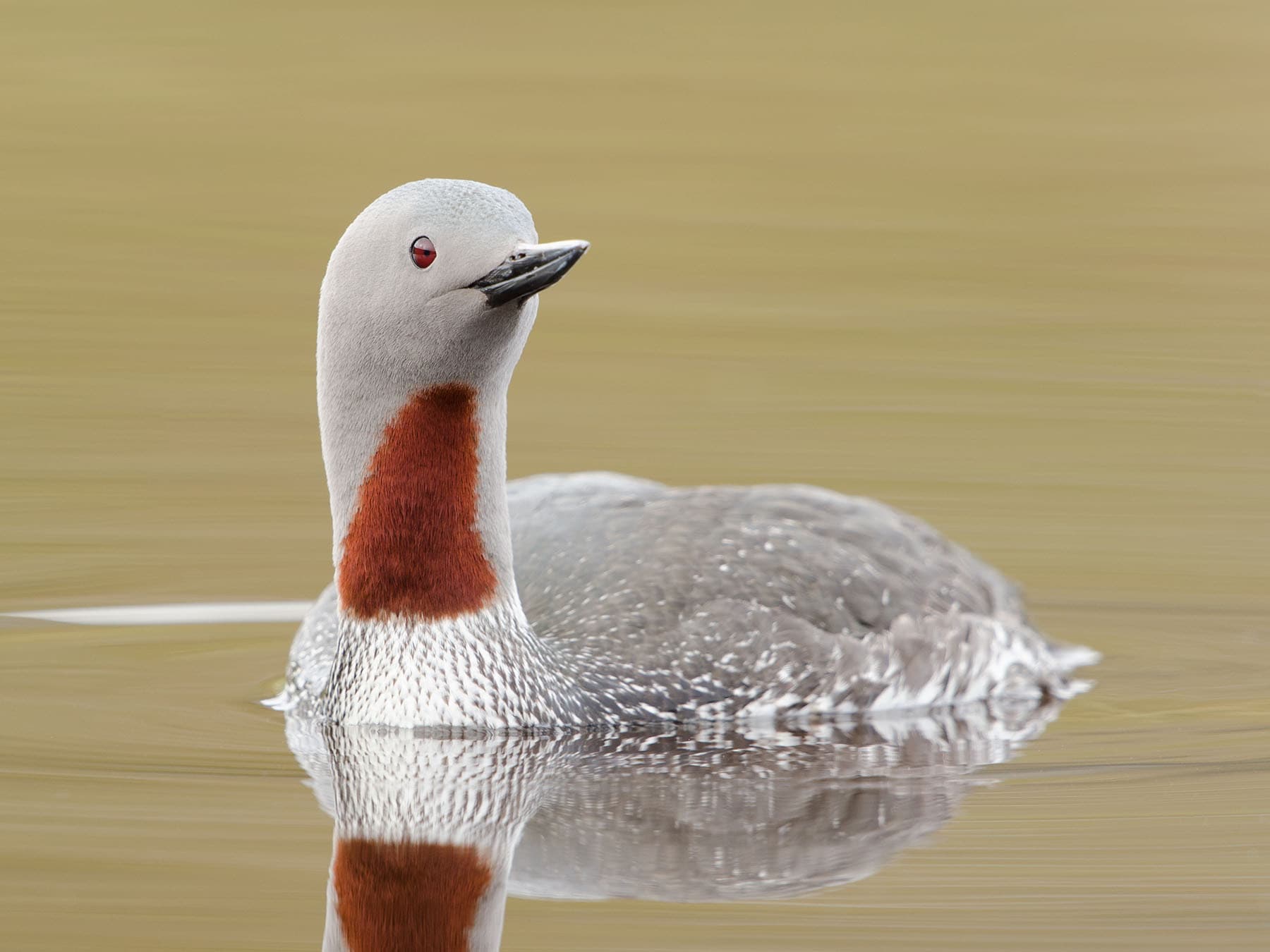
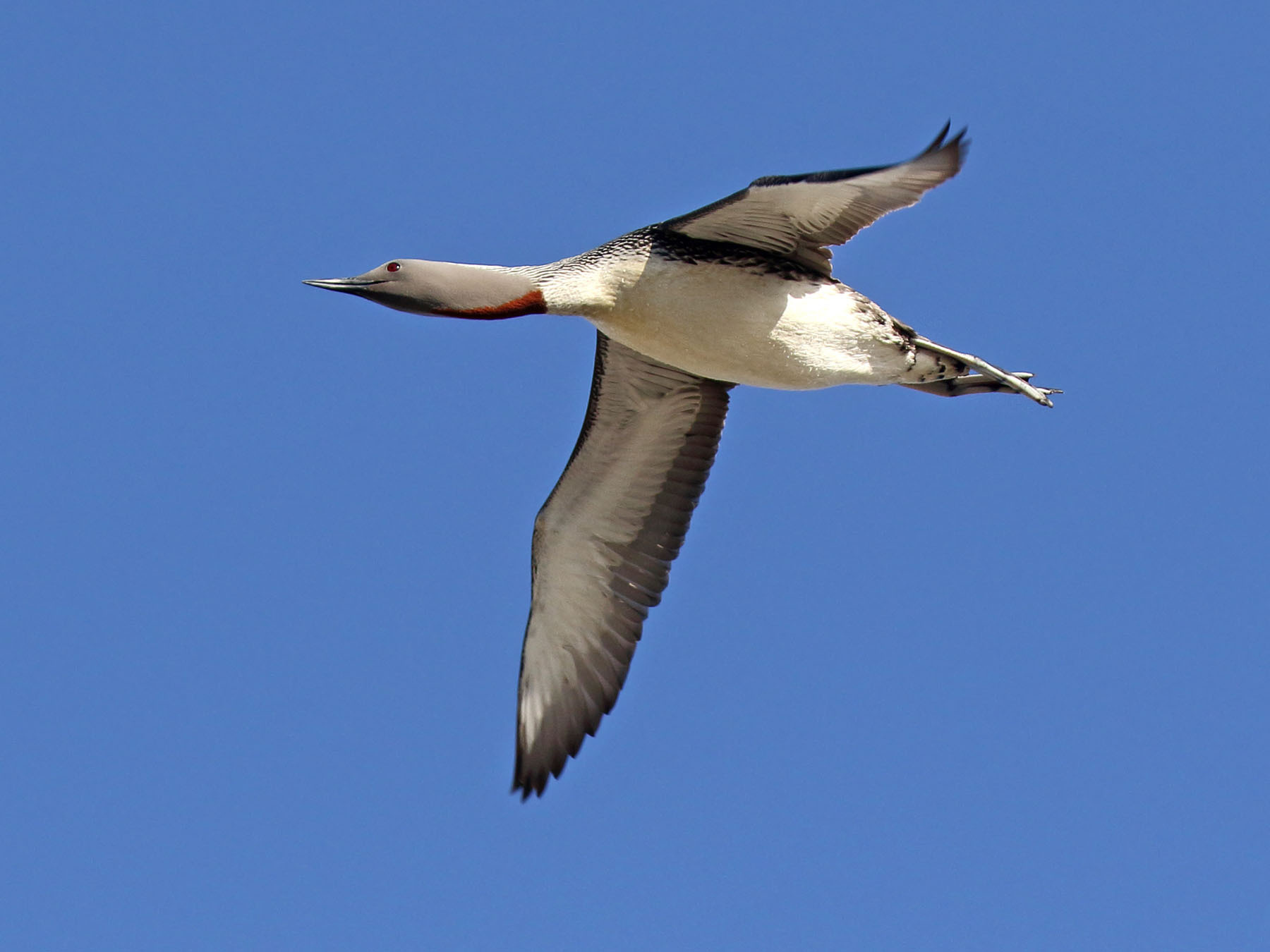
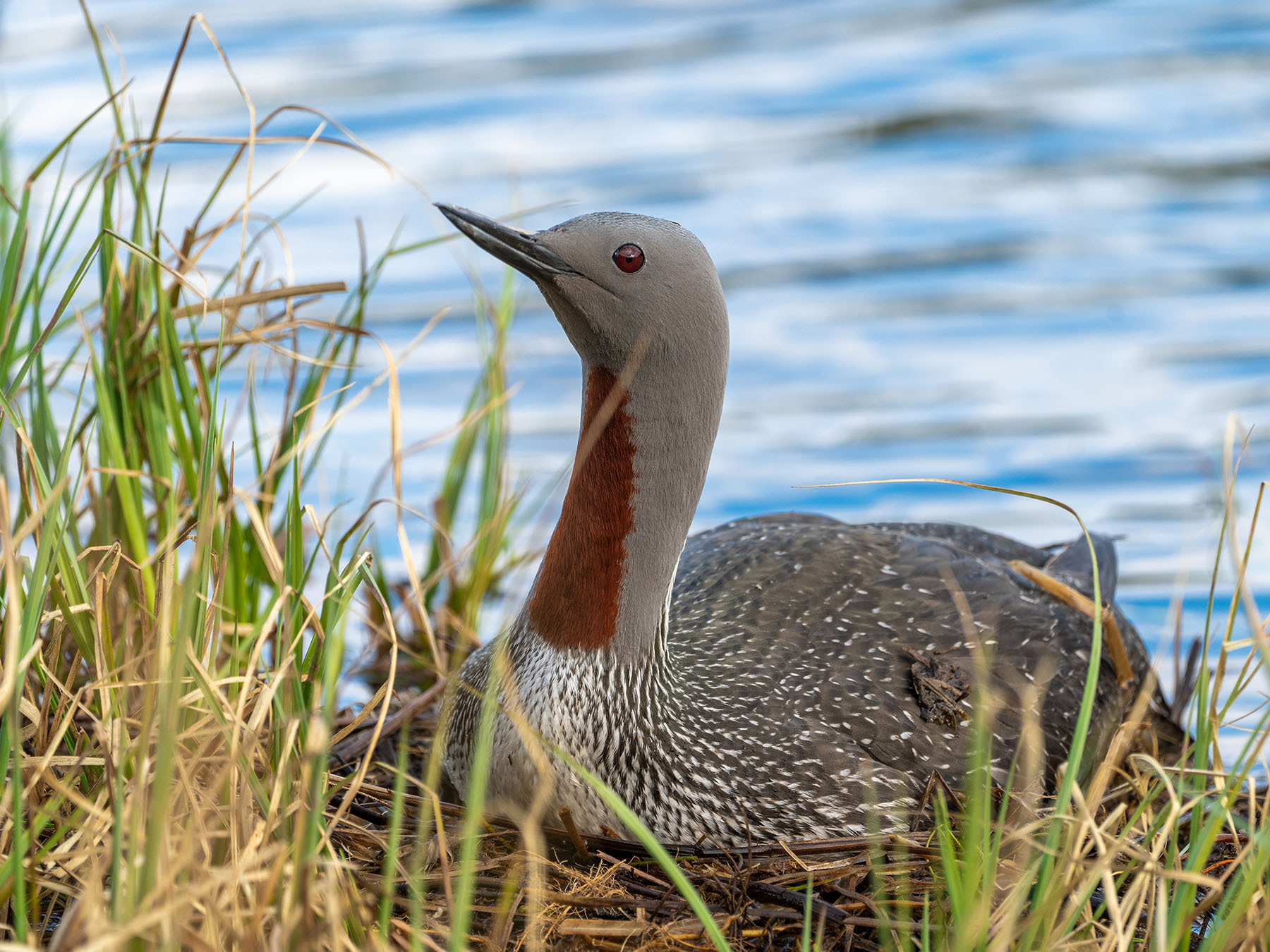
The Red-throated Loon is a sleek, medium-sized waterbird with distinctive breeding plumage. Its back is grey with white speckles, which contrast with its white underside and striking red throat patch.
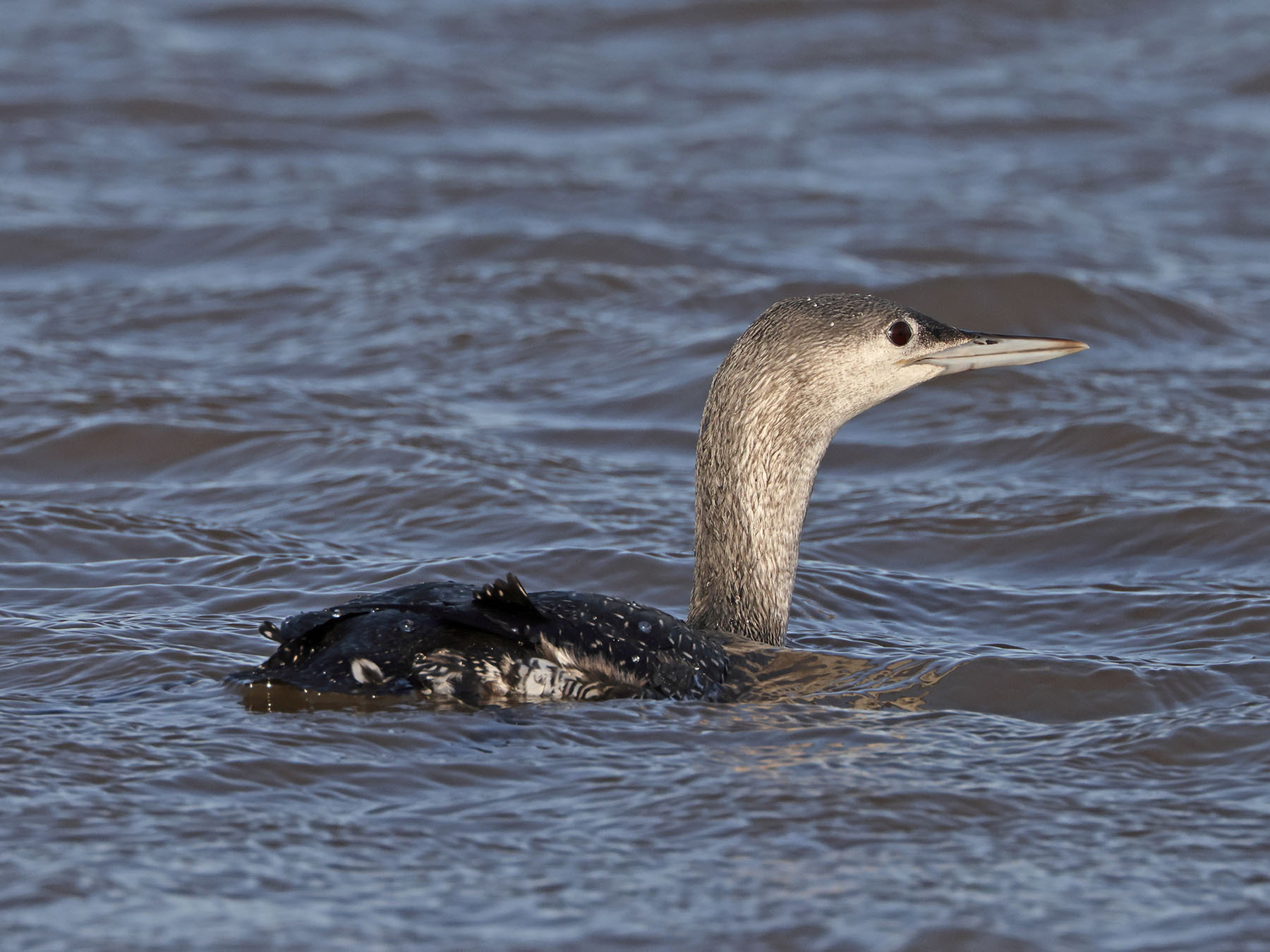
In winter, the red throat disappears, replaced by a white neck and grey head. Juveniles resemble winter adults but have finer white speckling on their backs.
Its size
Adults- Length
- 53–69 cm
- Wingspan
- 106–116 cm
- Weight
- 1000–2500 g
Its song and calls
Red-throated Loons have a variety of vocalisations, including a distinctive yodelling call used during the breeding season. This call sounds like a series of loud, wailing 'kwow-kwow-kwow' notes.
In flight, they produce a repeated 'gag-gag-gag' sound, reminiscent of a goose's honk.
- Song0:00 / 0:23
Recorded in Dalarnas län, Sweden · May 2023
- Flight call0:00 / 0:18
Recorded in Troms og Finnmark, Norway · May 2023
When and where to see it
OctoberArriving
Most recorded in October
- 1. Moray1.3%
- 2. Wicklow1.0%
- 3. Orkney Islands0.92%
- 4. Aberdeen0.89%
- 5. Fife0.88%
Each dot is a county, state or province: the bigger and darker, the larger the bird’s share of that place’s bird records that month. Grey dots: no regular records. The ringed point is the centre of the bird’s records this month; the arrow shows how it moved since last month, and the dashed loop its path through the year. “Arrivals” colours places where it becomes regular this month (orange) or is in its last regular month (grey). GBIF eBird Observation Dataset, 2019–2024. Map data: Natural Earth, US Census Bureau; place centres © OpenStreetMap contributors.
In your area
See when the Red-throated Loon is recorded in your county, state or province.
How often the Red-throated Loon turns up in the UK, Ireland, the United States and Canada through the year, from birdwatchers' records.
United Kingdom
Resident · all year · most records in October
Ireland
Winter visitor · regularly Jul–May · most records in November
United States
Winter visitor · all year · most records in November
Canada
Winter visitor · all year · most records in November
Show as a table
| Month | United Kingdom | Ireland | United States | Canada |
|---|---|---|---|---|
| January | 0.16% (regular) | 0.37% (regular) | 0.11% (regular) | 0.061% (regular) |
| February | 0.14% (regular) | 0.38% (regular) | 0.087% (regular) | 0.040% (regular) |
| March | 0.096% (regular) | 0.35% (regular) | 0.062% (regular) | 0.031% (regular) |
| April | 0.065% (regular) | 0.25% (regular) | 0.029% (regular) | 0.027% (regular) |
| May | 0.063% (regular) | 0.048% (regular) | 0.014% (regular) | 0.035% (regular) |
| June | 0.061% (regular) | 0.020% | 0.026% (regular) | 0.043% (regular) |
| July | 0.065% (regular) | 0.027% (regular) | 0.008% (regular) | 0.031% (regular) |
| August | 0.058% (regular) | 0.039% (regular) | 0.008% (regular) | 0.033% (regular) |
| September | 0.16% (regular) | 0.18% (regular) | 0.012% (regular) | 0.082% (regular) |
| October | 0.23% (regular) | 0.25% (regular) | 0.033% (regular) | 0.14% (regular) |
| November | 0.22% (regular) | 0.46% (regular) | 0.11% (regular) | 0.19% (regular) |
| December | 0.16% (regular) | 0.35% (regular) | 0.10% (regular) | 0.12% (regular) |
Recorded regularly in
Worldwide: recorded regularly in 47 countries
Countries where it was recorded in at least 3 of the 6 years 2019–2024. Linked countries have their own bird list.
Europe (38)
- Åland Islands
- Austria
- Belarus
- Belgium
- Bulgaria
- Croatia
- Czechia
- Denmark
- Estonia
- Faroe Islands
- Finland
- France
- Germany
- Greece
- Hungary
- Iceland
- Ireland
- Isle of Man
- Italy
- Jersey
- Latvia
- Lithuania
- Moldova
- Netherlands
- Norway
- Poland
- Portugal
- Romania
- Russia
- Serbia
- Slovakia
- Slovenia
- Spain
- Svalbard & Jan Mayen
- Sweden
- Switzerland
- Ukraine
- United Kingdom
North America (5)
Data: EOD – eBird Observation Dataset (Cornell Lab of Ornithology), accessed via GBIF.org, CC BY 4.0. Records from 2019–2024, aggregated and filtered by Birdfact. How these lists are made
Tips for seeing it
- Look for them in coastal areas during the winter months
- Listen for their distinctive yodelling call during the breeding season
- Observe their low, direct flight pattern over water
- In the UK, watch for them at estuaries and sheltered bays from autumn to spring
What it eats
Red-throated Loons primarily feed on small fish, which they catch by diving and pursuing underwater. Their diet also includes crustaceans, molluscs, and aquatic insects.
Unlike other loons, they often forage in very shallow water, sometimes in areas only 20-30 cm deep.
Nesting and breeding
Red-throated Loons form monogamous pairs and return to the same breeding sites annually. The breeding season typically begins in May or June, depending on the latitude.
Nests are built close to water, often on small islands or shorelines of ponds. The female usually lays two olive-brown eggs with dark spots. Both parents share incubation duties.
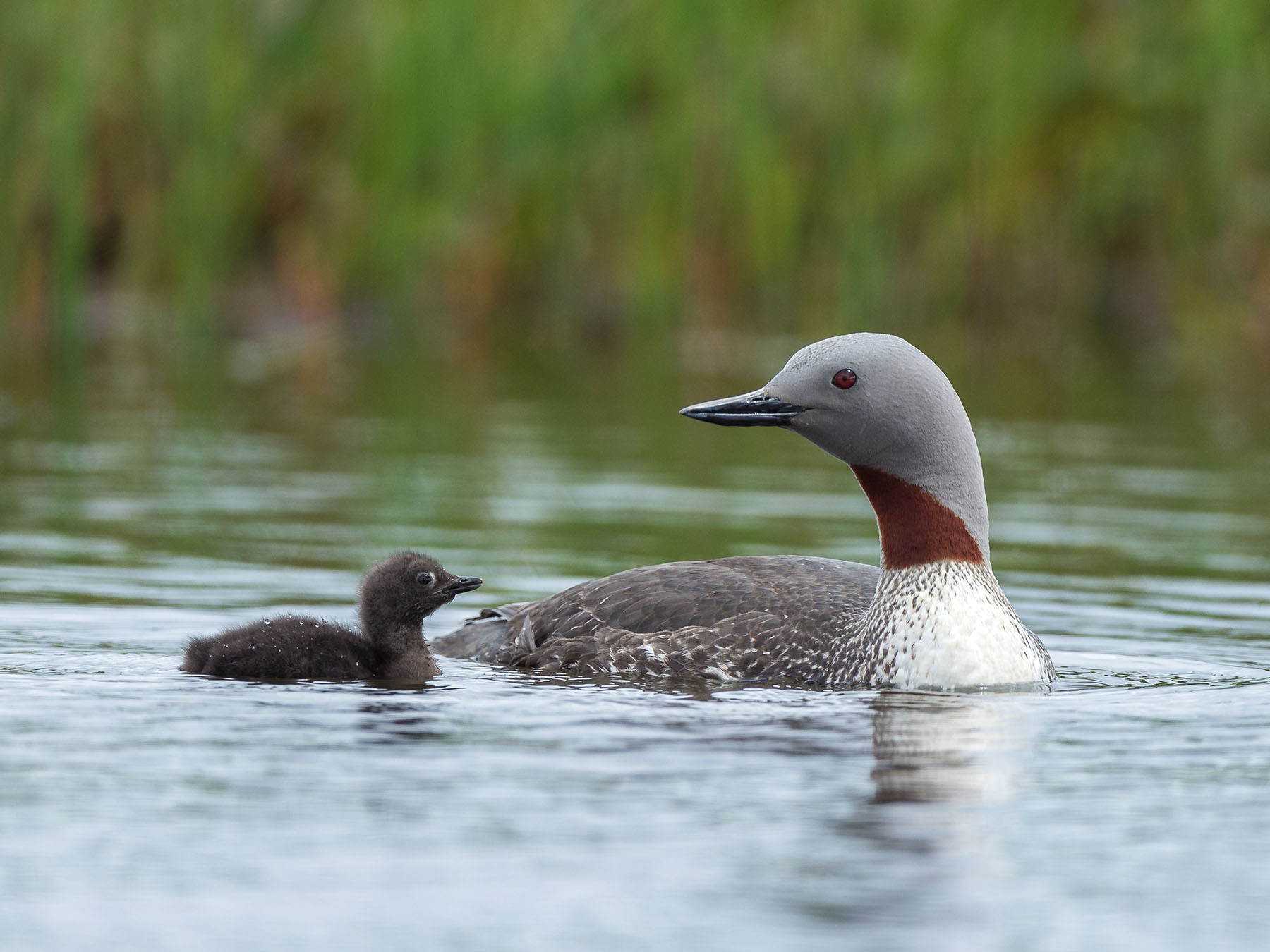
Incubation lasts about 24-29 days, and the chicks fledge after 6-7 weeks. Parents often carry small fish in their bills to feed the young, a behaviour unique among loons.
Behaviour
Red-throated Loons are excellent swimmers and divers, propelling themselves underwater with their feet. They have a unique ability among loons to take off directly from land, albeit with some difficulty.
During the breeding season, pairs engage in synchronised swimming and calling displays.
Conservation
While currently listed as Least Concern globally, Red-throated Loons face threats from oil spills, fishing net entanglement, and habitat disturbance.
Climate change impacts on their Arctic breeding grounds are a growing concern, prompting ongoing monitoring efforts.
Similar birds
Often mistaken for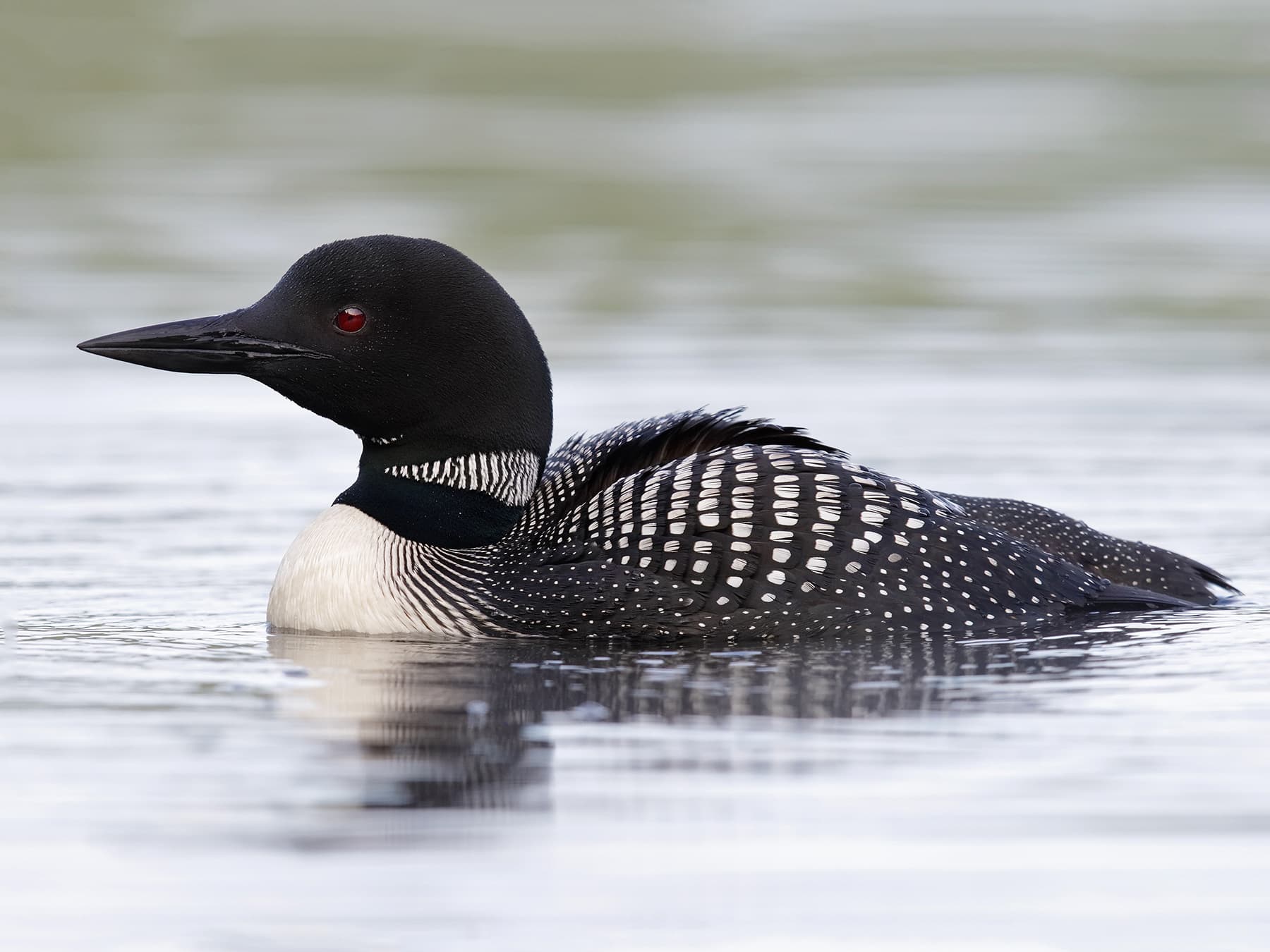
More photos
5 photos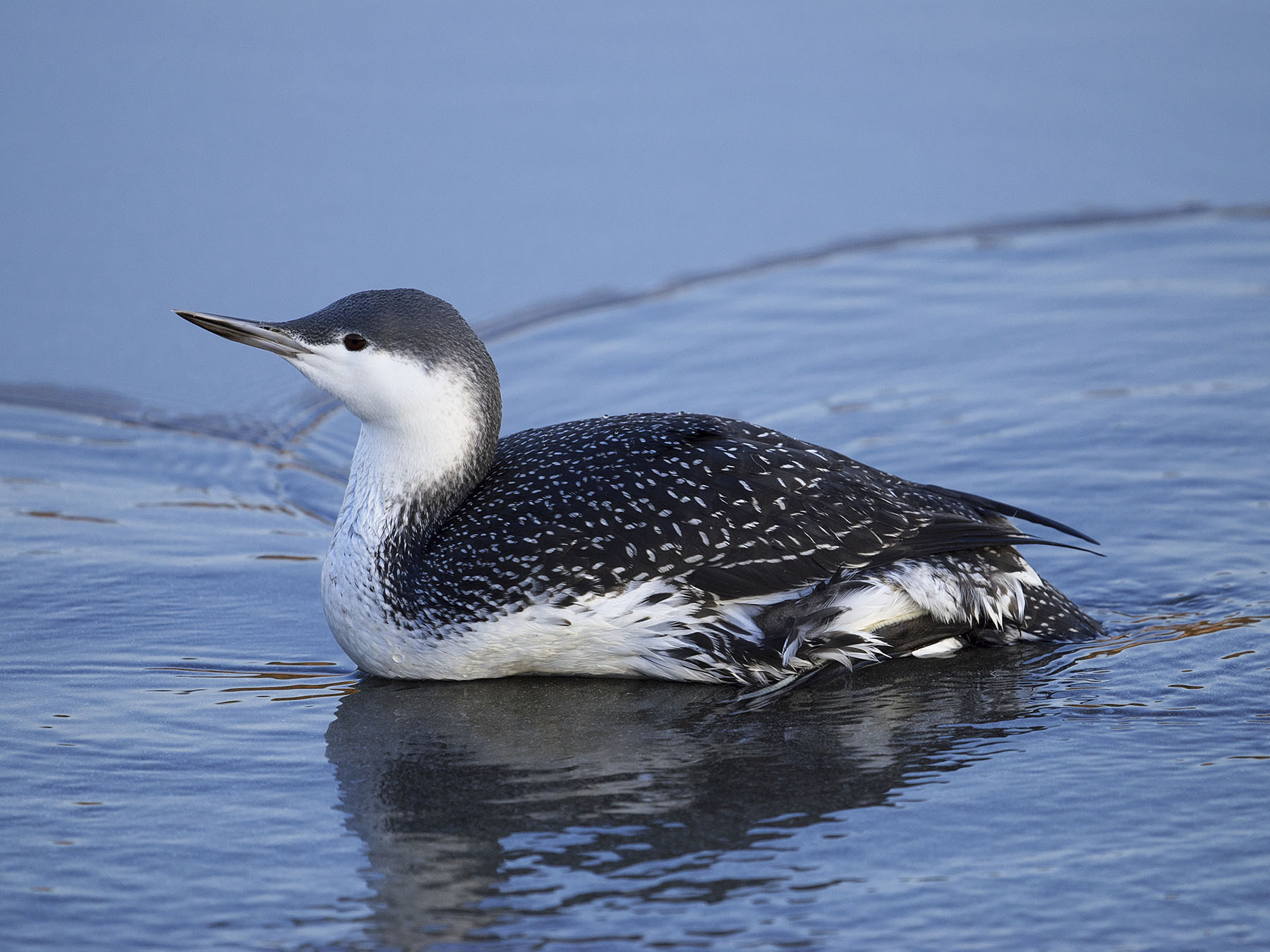
Quick facts
- Length
- 53–69 cm
- Wingspan
- 106–116 cm
- Weight
- 1000–2500 g
- Lifespan
- 8–10 years · oldest recorded 35.9 years
- Family
- Loons & Divers
- Migration
- Long-distance Migrant
- Global status (IUCN)
- Least Concern
- World population
- 200,000 - 600,000 individuals
- Population trend
- Some populations decreasing due to habitat loss and other threats
- Also called
- Red-throated Diver
- Scientific name
- Gavia stellata
Sources
4- 1BirdLife International. 2018. Gavia stellata. The IUCN Red List of Threatened Species 2018: e.T22697829A131942584. Source (opens in a new tab)
- 2Wetlands International (2015)
- 3Wetlands International (2015)
- 4BTO longevity records: maximum age from a ringed bird, 35 years, 11 months, 23 days (set in 2018), BirdFacts: Red-throated Diver (2018) Source (opens in a new tab)

Checked by
Nathan Cope, founder and editor
Nathan founded Birdfact and leads its writers and contributors in the UK, the US and Canada. He has watched and studied birds for more than ten years, and checks every article and species guide before it’s published.