


Arctic Loon
Black-throated Loon, Black-throated Diver · Gavia arctica
By the Birdfact teamChecked by Nathan Cope
On this page14 sections
How to recognise it
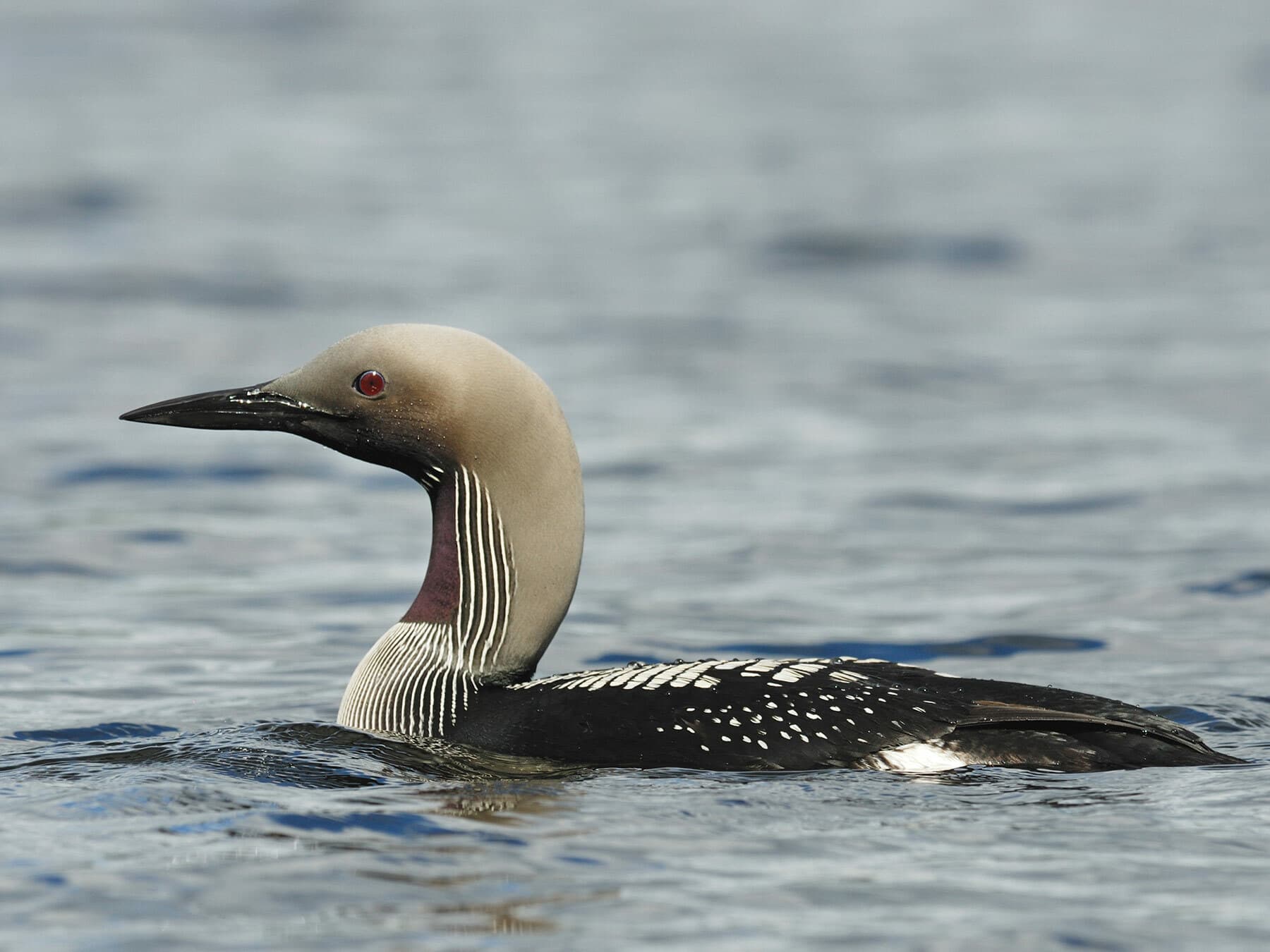
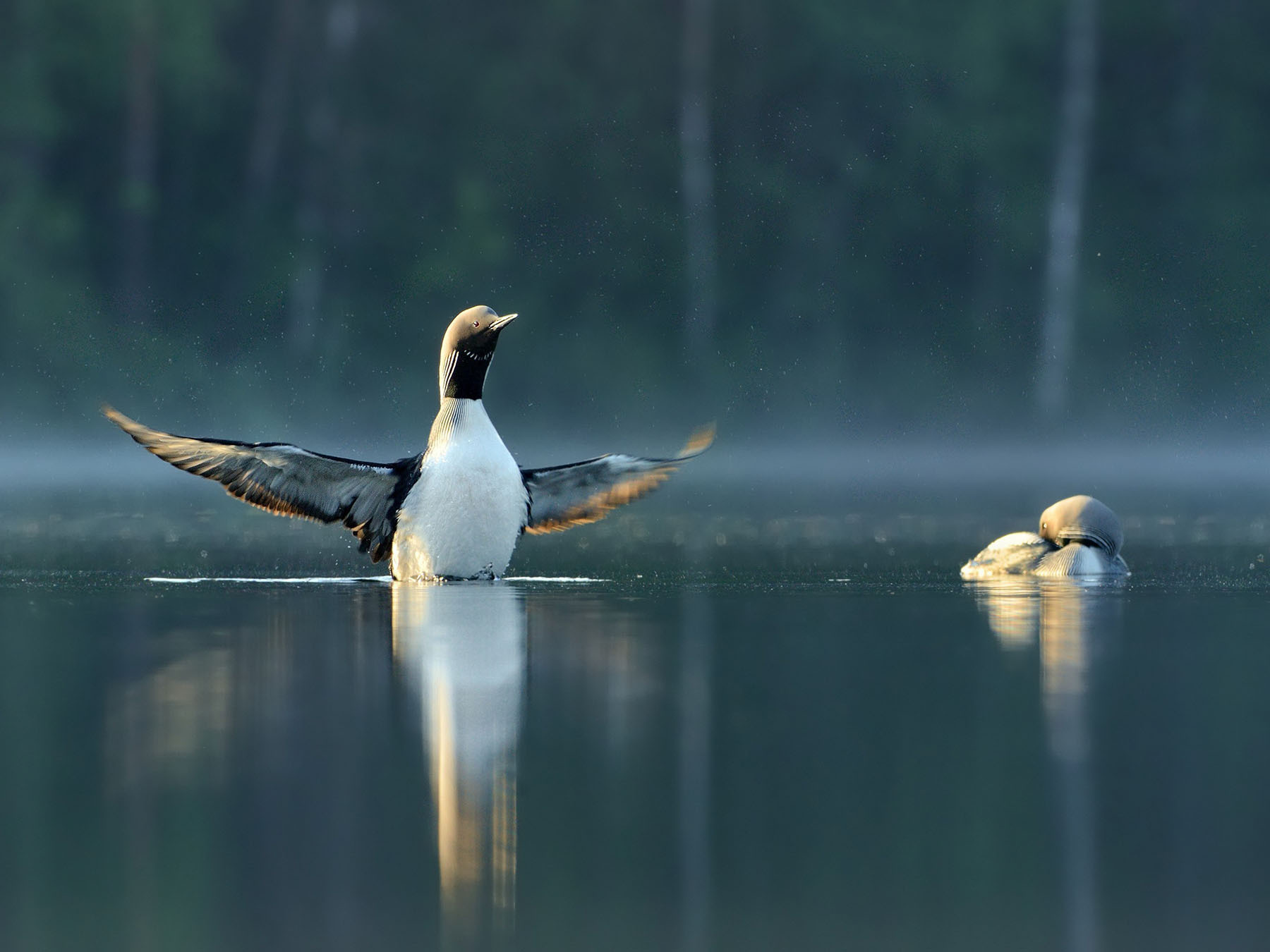
During the breeding season, the Arctic Lon boasts striking black-and-white plumage. Its head and neck are glossy black, offset by distinctive white stripes on the neck and a checkerboard pattern on the back. The bird's dagger-like bill is jet black, complementing its overall striking appearance.
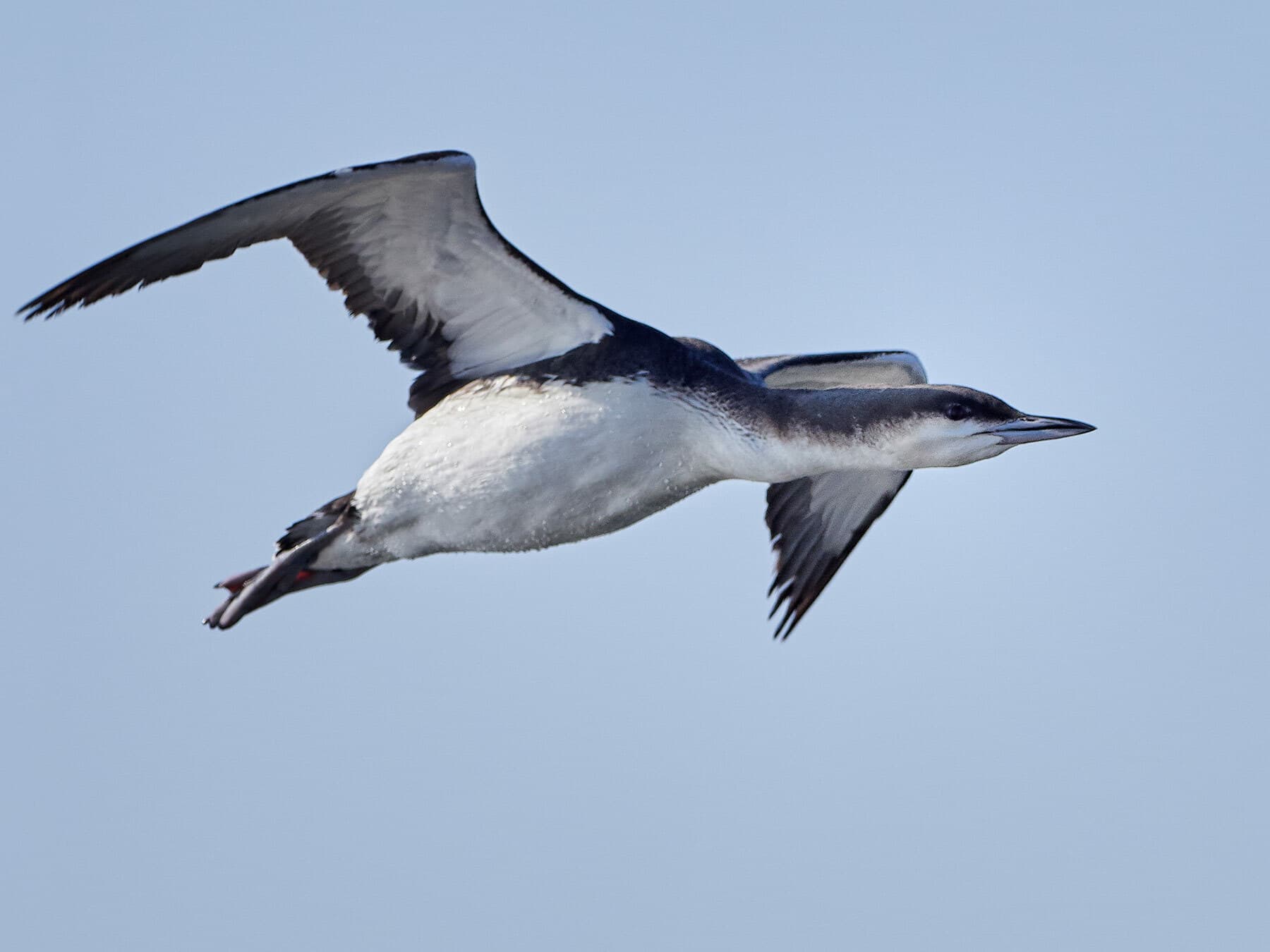
In winter, the plumage becomes duller, with the upper parts turning greyish-brown and the underparts white. Juveniles resemble winter adults but have a more mottled appearance on the back and wings.
Its size
Adults- Length
- 58–77 cm
- Wingspan
- 100–130 cm
- Weight
- 1500–3400 g
Its song and calls
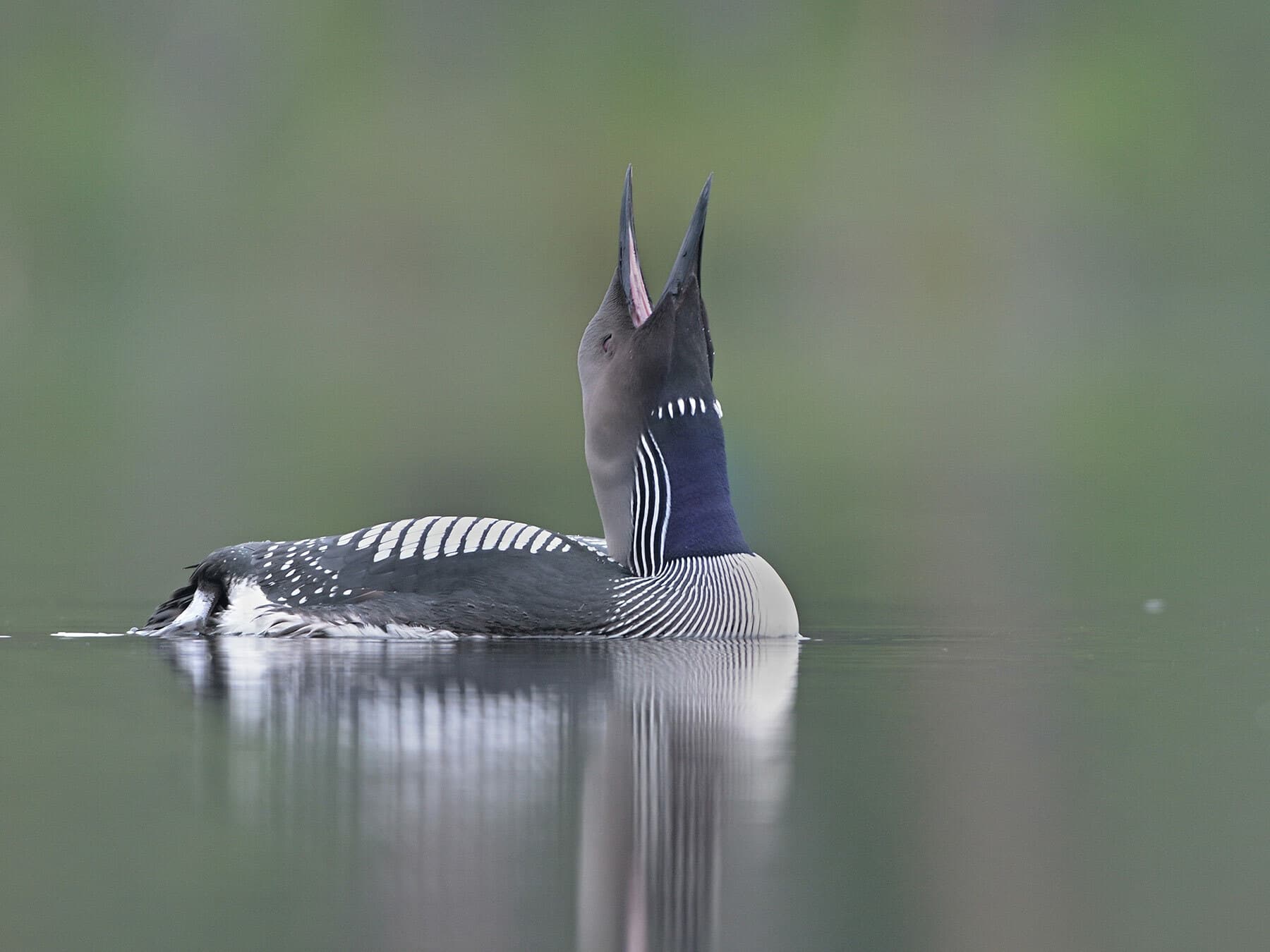
During the breeding season the adult male calls with a loud, long wailing sound similar to, ‘oooooweeee – oooooooweeee’. Outside of the breeding season arctic loons are silent.
- Song0:00 / 2:02
Recorded in Dalarnas län, Sweden · May 2023
When and where to see it
OctoberIn season
Most recorded in October
- 1. Moray0.30%
- 2. Eilean Siar0.18%
- 3. Argyll and Bute0.16%
- 4. Durham0.12%
- 5. Antrim0.12%
Each dot is a county, state or province: the bigger and darker, the larger the bird’s share of that place’s bird records that month. Grey dots: no regular records. The ringed point is the centre of the bird’s records this month; the arrow shows how it moved since last month, and the dashed loop its path through the year. “Arrivals” colours places where it becomes regular this month (orange) or is in its last regular month (grey). GBIF eBird Observation Dataset, 2019–2024. Map data: Natural Earth, US Census Bureau; place centres © OpenStreetMap contributors.
In your area
See when the Arctic Loon is recorded in your county, state or province.
How often the Arctic Loon turns up in the UK, Ireland and the United States through the year, from birdwatchers' records.
United Kingdom
Winter visitor · regularly Sep–May · most records in December
Ireland
Winter visitor · regularly Sep–May · most records in January
United States
Summer visitor · regularly May–Dec · most records in June
Show as a table
| Month | United Kingdom | Ireland | United States |
|---|---|---|---|
| January | 0.030% (regular) | 0.043% (regular) | <0.001% |
| February | 0.020% (regular) | 0.020% (regular) | – |
| March | 0.010% (regular) | 0.020% (regular) | – |
| April | 0.005% (regular) | 0.015% (regular) | – |
| May | 0.003% (regular) | 0.004% (regular) | <0.001% (regular) |
| June | <0.001% | – | 0.002% (regular) |
| July | <0.001% | 0.002% | <0.001% (regular) |
| August | <0.001% | <0.001% | <0.001% (regular) |
| September | 0.008% (regular) | 0.004% (regular) | <0.001% |
| October | 0.015% (regular) | 0.007% (regular) | <0.001% |
| November | 0.032% (regular) | 0.023% (regular) | <0.001% |
| December | 0.043% (regular) | 0.016% (regular) | <0.001% (regular) |
Recorded regularly in
Worldwide: recorded regularly in 45 countries
Countries where it was recorded in at least 3 of the 6 years 2019–2024. Linked countries have their own bird list.
Data: EOD – eBird Observation Dataset (Cornell Lab of Ornithology), accessed via GBIF.org, CC BY 4.0. Records from 2019–2024, aggregated and filtered by Birdfact. How these lists are made
The bird’s breeding region extends predominantly across Northern Eurasia from Scandinavia south to the United Kingdom and across arctic Russia and Siberia to Kamchatka.
Of the two sub-species, Gavia arctica viridigularis also breeds in Russia and in North West Alaska on the Seward Peninsula. This particular sub-species can be identified by its green-coloured throat.
It migrates to the North West pacific coast and also Korea whilst the nominate overwinters in the Baltic, Atlantic, North Sea coasts, South to the bay of Biscay and areas within the Mediterranean, Southeast China and Japan.
Signs and Spotting tips
Arctic Loons are generally solitary birds although will gather in small flocks during the summer. Breeding normally takes place on islands within large lakes which are remotely situated.
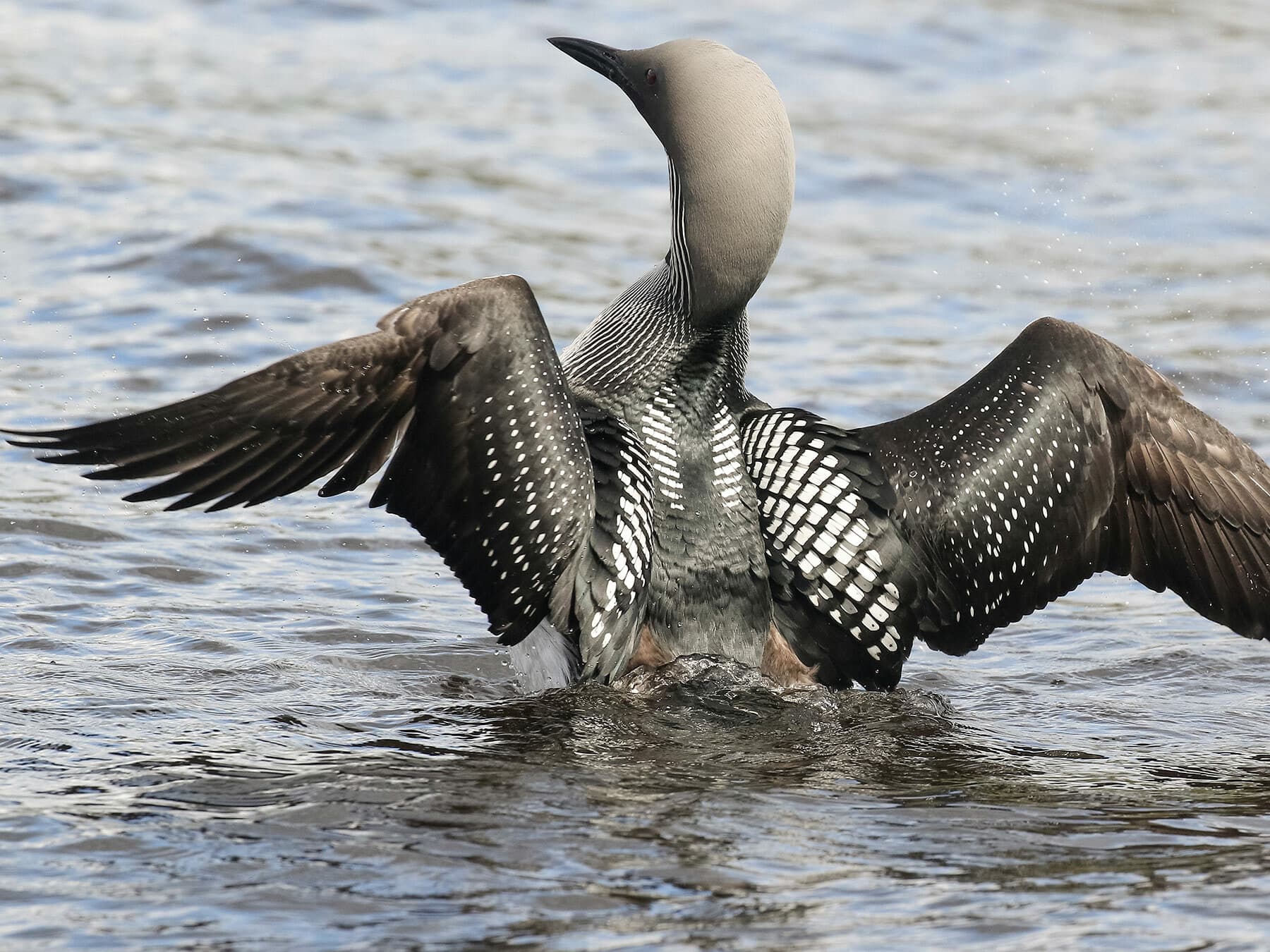
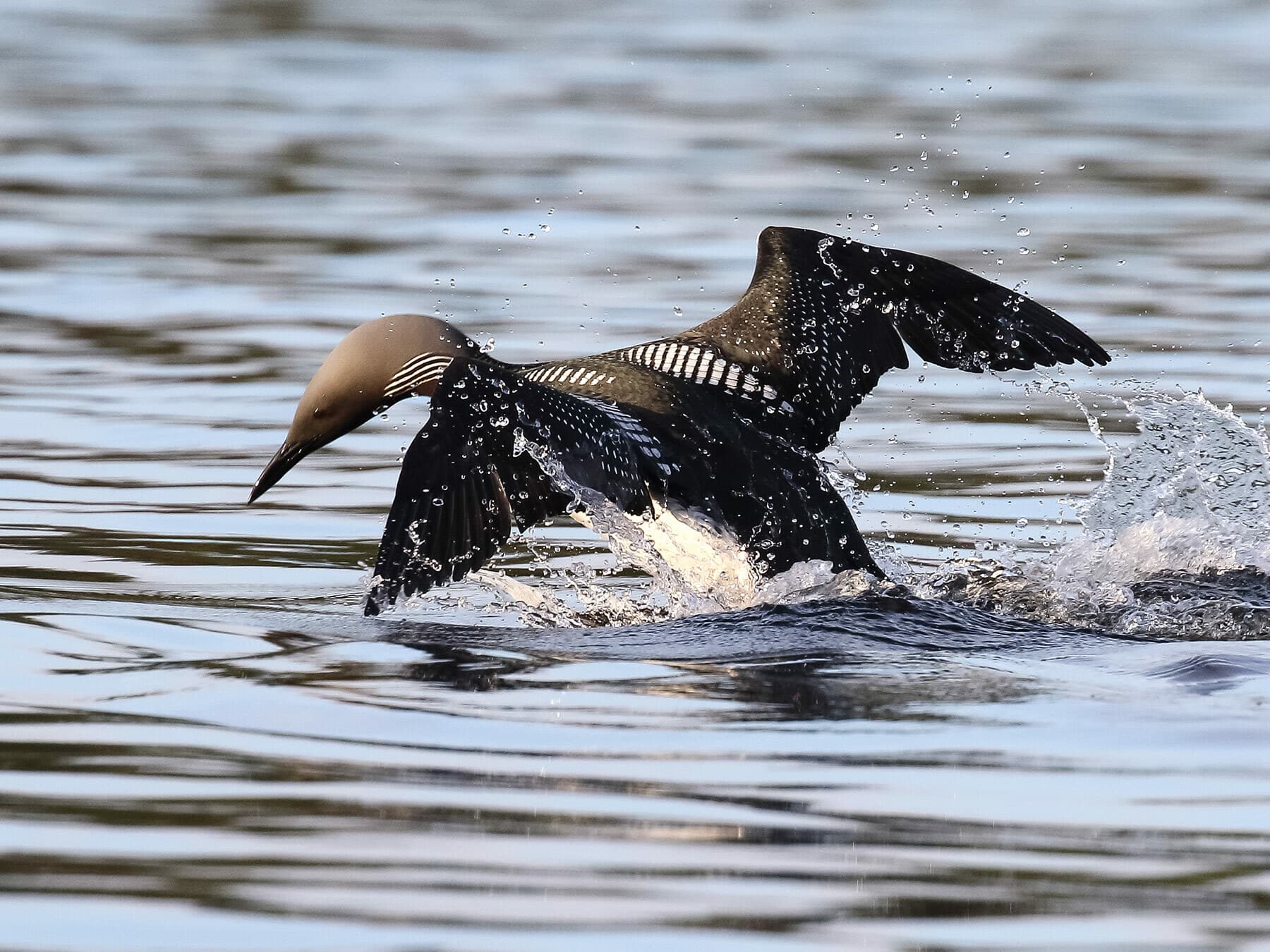
The bird is clumsy on land due to the position of its legs and has to take off and land on water, running along the surface whilst flapping its wings.
It is, therefore, rarely, whilst on dry land, far from the water’s edge. Whilst swimming, its sits quite low with the minimum amount of body above the surface.
What it eats
An extremely proficient diver, the arctic loon dives deep down for fish, its favoured diet, although it will also take aquatic invertebrates, crustaceans and plants.
Nesting and breeding
The start of the breeding season in the northernmost regions occupied by arctic loons is heavily dependent upon the Spring thaw. Those birds who breed in more southerly areas usually do so between April through to July.
A simple nest, consisting of a shallow scoop sited adjacent to the water’s edge or a more ambitious floating arrangement constructed from mud and waterside vegetation, are prepared by both parents.
One brood of 2 eggs variously shaded in brown are produced annually and incubated predominantly by the male for between twenty-three to twenty-eight days. Fledging occurs up to two months later.
Behaviour
Arctic Loons are exceptional divers, capable of staying submerged for up to a minute while hunting fish. On land, they move awkwardly because their legs are positioned far back on their bodies, an adaptation for efficient swimming.
During the breeding season, pairs engage in elaborate courtship displays, including synchronised swimming and haunting duets.
Lifespan and predators
The lifespan for an arctic loon is up to twenty years.
Conservation
While currently listed as Least Concern, Arctic Loons face threats from oil spills, fishing net entanglement, and habitat degradation. Climate change poses a significant long-term risk, potentially altering their breeding habitats and prey availability.
Conservation efforts focus on protecting breeding sites and migratory stopover points.
What does an Arctic Loon look like?
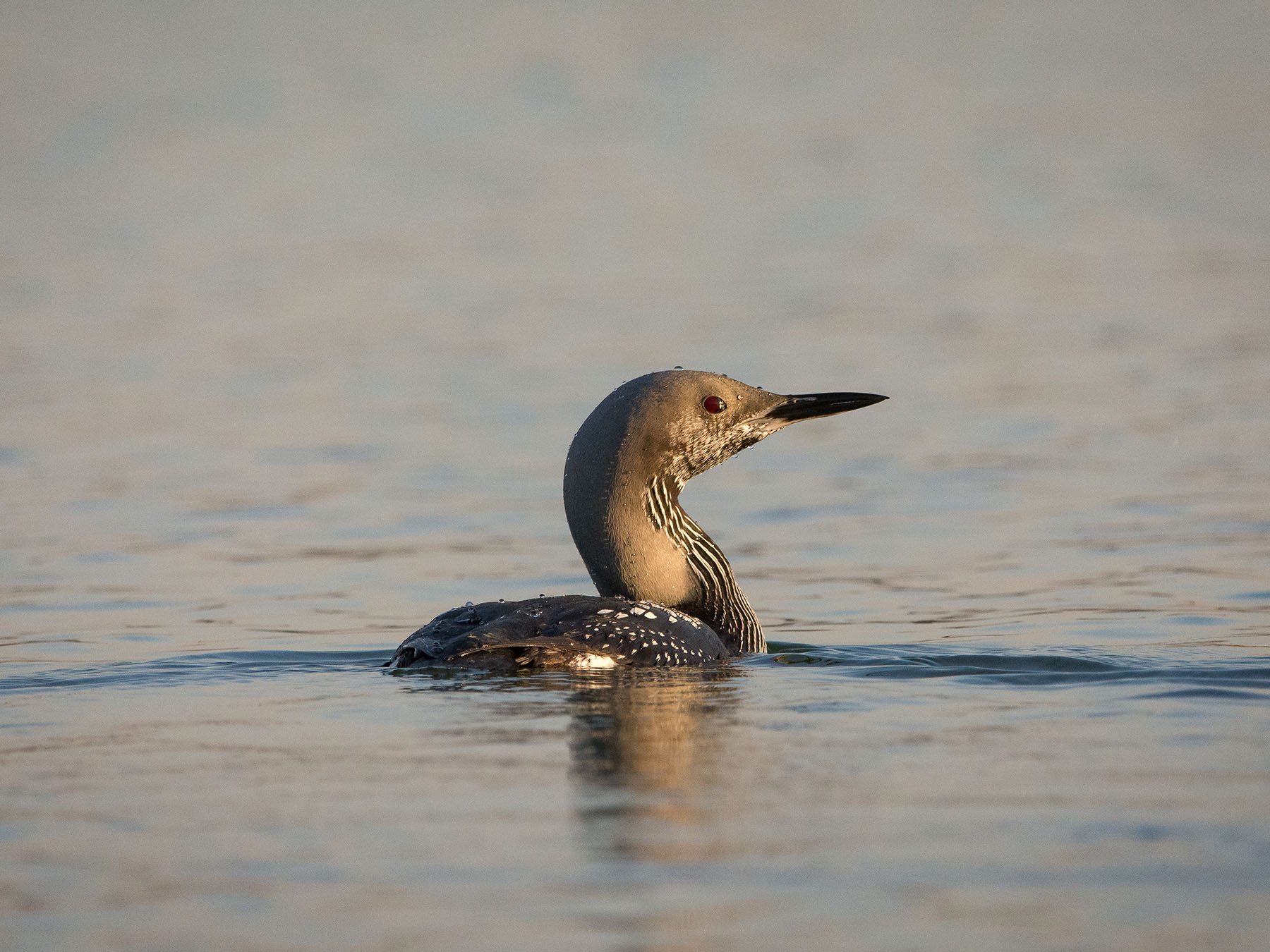
In adult breeding plumage, the upper parts are predominantly black with white squares across the mantle at the base of the neck and the shoulders. The head and neck are a soft grey with narrow black and white stripes on either side of the neck running vertically, from an area level with the chin, to almost in line with the top of the chest.
There are two sub-species, one having a black throat and the other a green throat. The base of the throat and top of the chest have thin white vertical parallel lines on black, morphing into a white middle chest and remaining underparts, including the flanks.
At the top of the throat, there is a short spotted necklace of white dots which run horizontally under the chin. The bill is dark grey, and the legs are black and set far back on the body, making walking difficult but swimming and diving an art form.
The iris is a dark red contrasting easily with the smoky grey head.
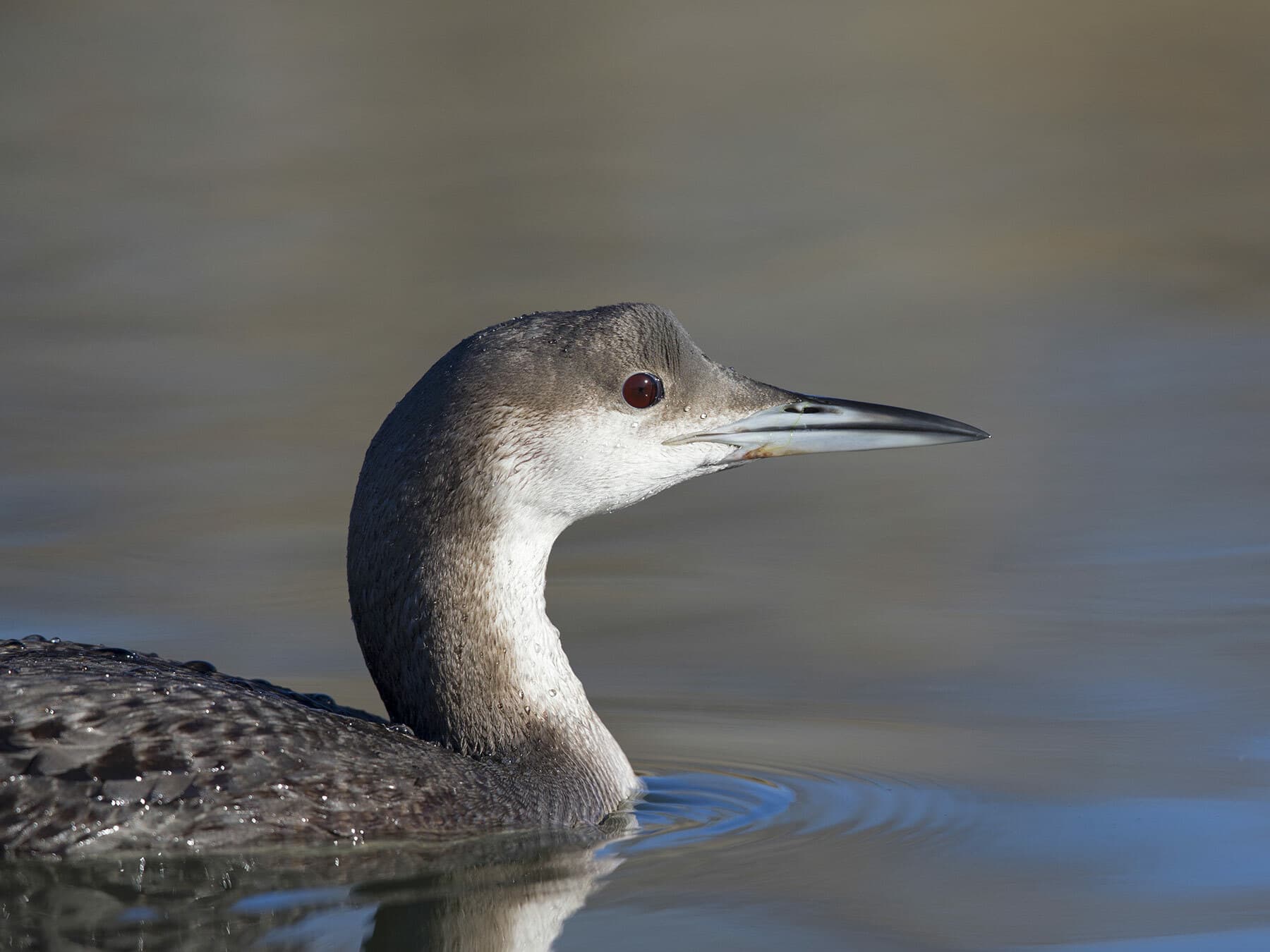
In non-breeding (winter) plumage, the adult has a white throat and loses the white patternation across the mantle and shoulders. The stripe patterns on the neck and chest disappear, and the back changes to a scaly dark brown or black with a medium to dark shaded cap extending downwards, almost to the level of the eyes.
Adult males and females are similar in both plumages. The juvenile bird is predominantly dark brown with a light brown head and white flanks.
Similar birds
Often mistaken for
More photos
3 photos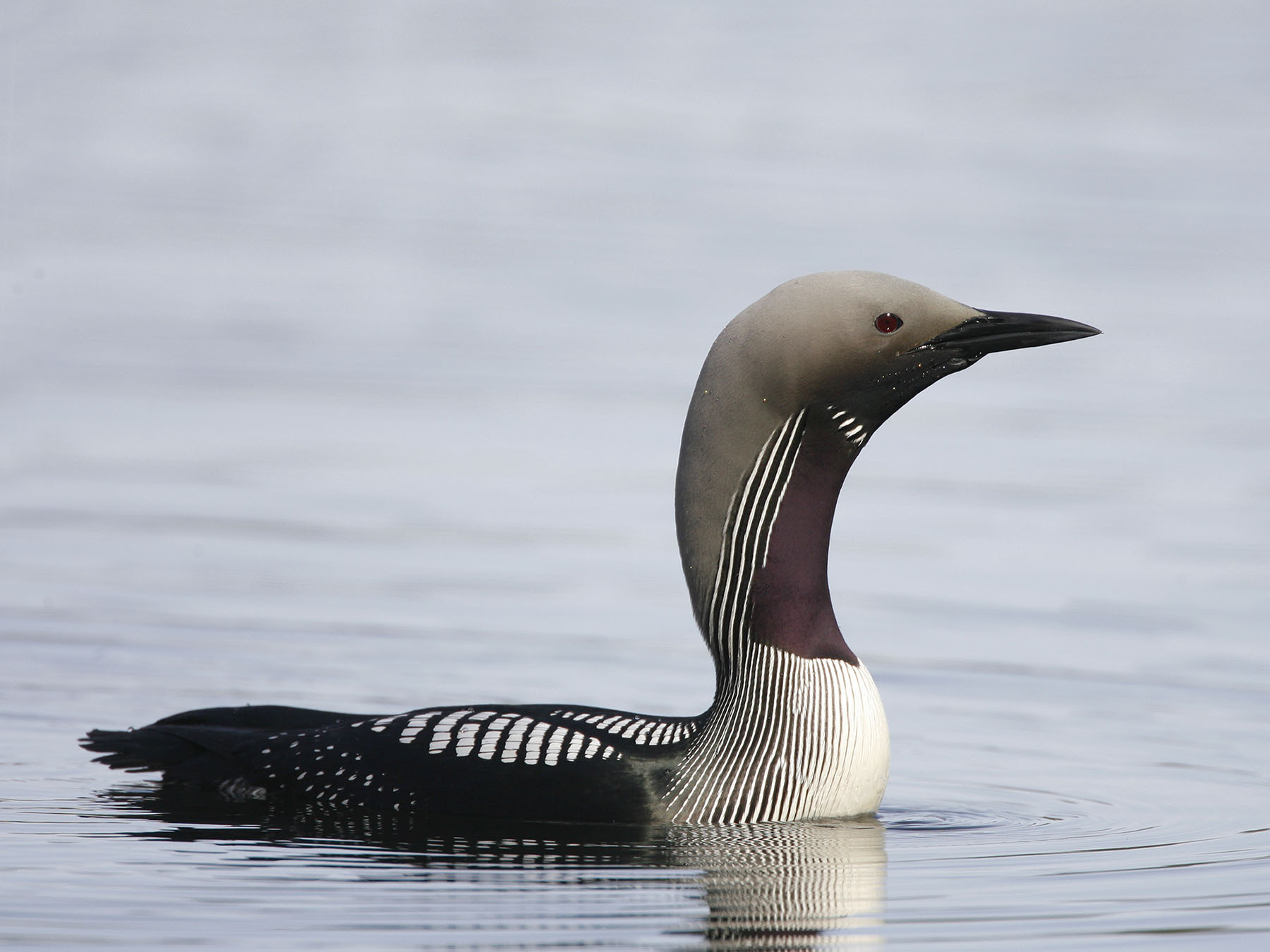
Quick facts
- Length
- 58–77 cm
- Wingspan
- 100–130 cm
- Weight
- 1500–3400 g
- Lifespan
- 20 years · oldest recorded 27.9 years
- Family
- Loons & Divers
- Migration
- Long-distance Migrant
- Global status (IUCN)
- Least Concern
- World population
- 275,000 - 1,500,000 individuals
- Population trend
- Decreasing
- Also called
- Black-throated Loon, Black-throated Diver
- Scientific name
- Gavia arctica
Sources
4- 1BirdLife International. 2018. Gavia arctica. The IUCN Red List of Threatened Species 2018: e.T22697834A132606505. Source (opens in a new tab)
- 2BirdLife International. 2018. Gavia arctica. The IUCN Red List of Threatened Species 2018: e.T22697834A132606505. Source (opens in a new tab)
- 3Wetlands International (2015)
- 4Fransson et al., EURING list of longevity records for European birds (2010) Source (opens in a new tab)

Checked by
Nathan Cope, founder and editor
Nathan founded Birdfact and leads its writers and contributors in the UK, the US and Canada. He has watched and studied birds for more than ten years, and checks every article and species guide before it’s published.