


Great Blue Heron
Great Blue, Blue Heron · Ardea herodias
By the Birdfact teamChecked by Nathan Cope
On this page13 sections
How to recognise it
Great Blue Herons are large, distinctive American waterbirds. Continue reading to learn their most important identifying features.
What do Great Blue Herons look like?
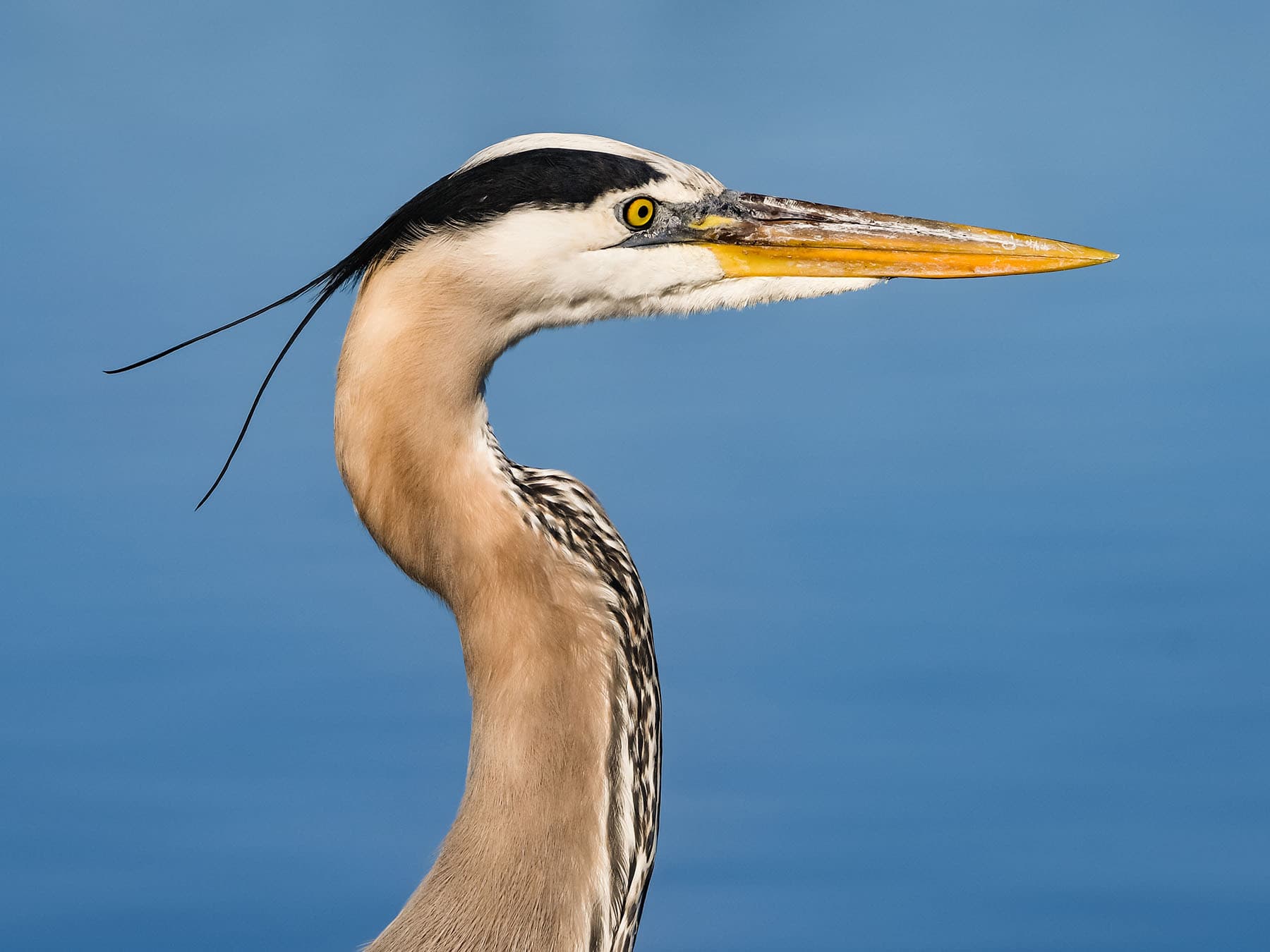
Great Blue Herons vary in appearance across their range. All are tall, upright birds with long legs and a long, S-shaped neck and head. They have large, dagger-like bills and a long, thin crest at the back of their head.
Most Great Blue Herons are blue-gray overall, with a white crown, prominent black stripes across the top of the head, a white face, and a yellow bill and eye. However, several subspecies are recognized, and interestingly, the birds from Florida, the Caribbean, and southeast Mexico have all-white plumage.
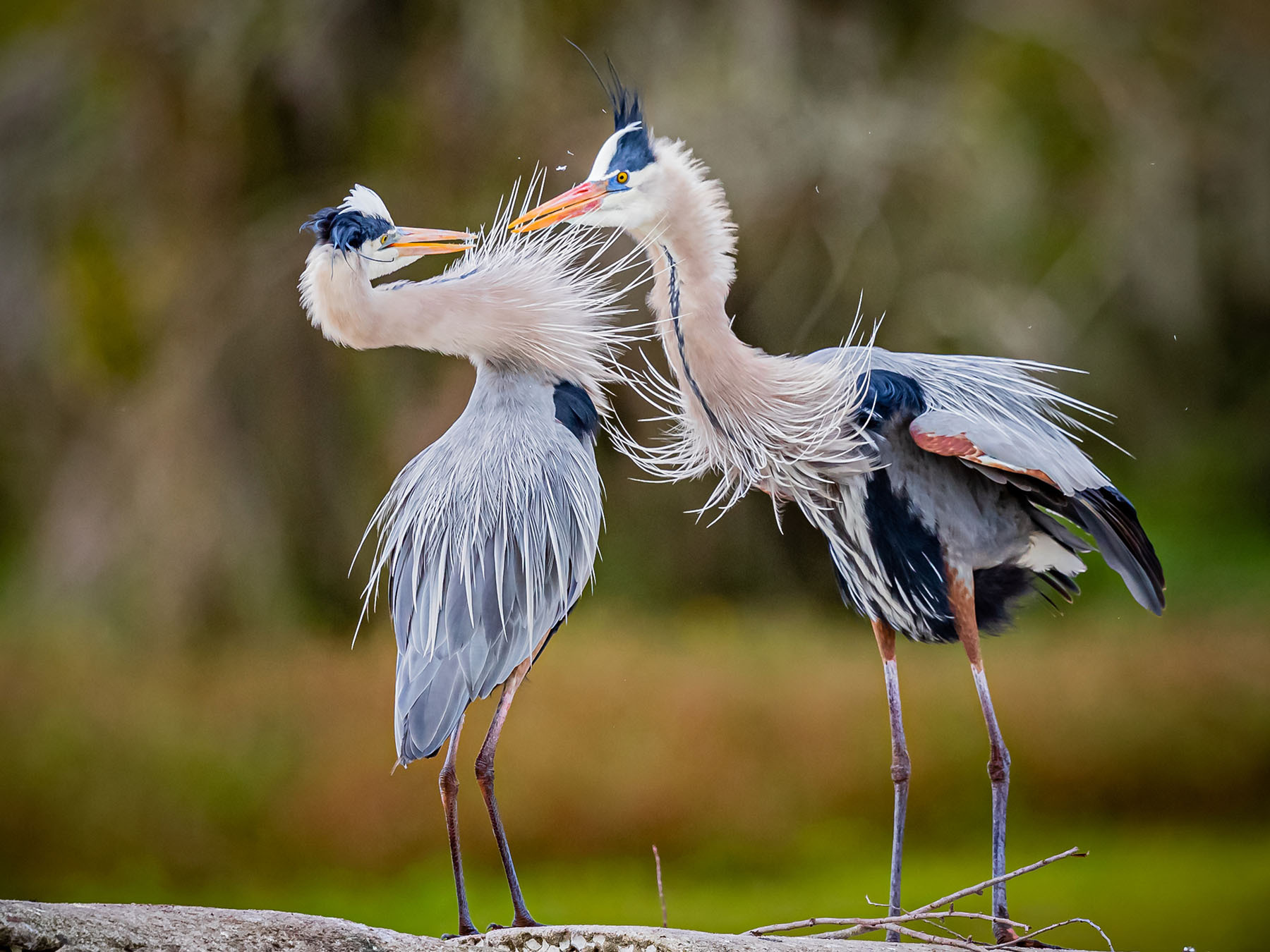
Male and female Great Blue Herons look alike, although males develop longer plumes in the breeding season. Look for these attractive, elongated feathers on the chest/lower neck and back. Juvenile and immature birds resemble adults but have shorter, duller plumage and dark gray rather than white crowns.

The Great Blue Heron is one of America’s tallest birds and one of the largest species in its family. Males are typically larger than females.
Length
Great Blue Herons stand about 4 feet (1.2 m) tall. They have a total body length of 38 to 54 inches (97 - 137 cm). The biggest individuals occur in the Southeast of their range.
Weight
Great Blue Herons weigh 4 ½ to 5 ½ pounds (2 - 2.5 kg). The males are significantly heavier than the females.
Wingspan
These birds have a wingspan of 5 ½ to 6 ½ feet (1.7 - 2 m).

Its size
Adults- Length
- 91–137 cm
- Wingspan
- 167–201 cm
- Weight
- 1820–2700 g
Its song and calls
Birds from the Heron family are not known for their singing abilities, and the Great Blue Heron is no exception. Keep reading to learn more about their vocalizations.
What sound does a Great Blue Heron make?
Great Blue Herons produce a variety of raucous calls, ranging from a series of brief squawks to more prolonged low-pitched grunts. These birds tend to vocalize most frequently in the breeding season when greeting their partner or when disturbed.
When and where to see it
OctoberIn season
Most recorded in October
- 1. Oklahoma2.4%
- 2. Mississippi2.0%
- 3. Arkansas1.9%
- 4. Kansas1.8%
- 5. Washington1.8%
Each dot is a county, state or province: the bigger and darker, the larger the bird’s share of that place’s bird records that month. Grey dots: no regular records. The ringed point is the centre of the bird’s records this month; the arrow shows how it moved since last month, and the dashed loop its path through the year. “Arrivals” colours places where it becomes regular this month (orange) or is in its last regular month (grey). GBIF eBird Observation Dataset, 2019–2024. Map data: Natural Earth, US Census Bureau; place centres © OpenStreetMap contributors.
In your area
See when the Great Blue Heron is recorded in your county, state or province.
How often the Great Blue Heron turns up in the United States and Canada through the year, from birdwatchers' records.
United States
Resident · all year · most records in August
Canada
Resident · all year · most records in August
Show as a table
| Month | United States | Canada |
|---|---|---|
| January | 1.2% (regular) | 0.46% (regular) |
| February | 0.97% (regular) | 0.42% (regular) |
| March | 0.96% (regular) | 0.49% (regular) |
| April | 0.96% (regular) | 0.78% (regular) |
| May | 0.86% (regular) | 0.72% (regular) |
| June | 0.92% (regular) | 0.81% (regular) |
| July | 1.2% (regular) | 1.2% (regular) |
| August | 1.5% (regular) | 1.6% (regular) |
| September | 1.4% (regular) | 1.6% (regular) |
| October | 1.3% (regular) | 1.3% (regular) |
| November | 1.3% (regular) | 0.86% (regular) |
| December | 1.2% (regular) | 0.50% (regular) |
Worldwide: recorded regularly in 44 countries
Countries where it was recorded in at least 3 of the 6 years 2019–2024. Linked countries have their own bird list.
Europe (1)
North America (40)
- Anguilla
- Antigua & Barbuda
- Aruba
- Bahamas
- Barbados
- Belize
- Bermuda
- British Virgin Islands
- Canada
- Caribbean Netherlands
- Cayman Islands
- Costa Rica
- Cuba
- Curaçao
- Dominica
- Dominican Republic
- El Salvador
- Grenada
- Guadeloupe
- Guatemala
- Haiti
- Honduras
- Jamaica
- Martinique
- Mexico
- Montserrat
- Nicaragua
- Panama
- Puerto Rico
- Sint Maarten
- St Barthélemy
- St Kitts & Nevis
- St Lucia
- St Martin
- St Pierre & Miquelon
- St Vincent & the Grenadines
- Trinidad & Tobago
- Turks & Caicos Islands
- United States
- US Virgin Islands
South America (3)
- Colombia
- Ecuador
- Venezuela
Data: EOD – eBird Observation Dataset (Cornell Lab of Ornithology), accessed via GBIF.org, CC BY 4.0. Records from 2019–2024, aggregated and filtered by Birdfact. How these lists are made
Great Blue Herons are one of the most widespread waterbirds in North America. Read on to learn more about where they live.
What is the habitat of a Great Blue Heron?
Great Blue Herons are aquatic birds that occur wherever shallow water and fish are available. They hunt along streams, rivers, marshes, swamps, ponds, lakes, mangroves, and coastal areas.
It's not unusual to find them hunting away from water in pastures, grassy areas, and prairie.
What is the range of a Great Blue Heron?
Great Blue Herons occur from Central America and the north coast of South America to the south Coast of Alaska. Birdwatchers in the US can spot these birds in each of the Lower 48 states, although they are absent in the winter in some parts of the Midwest and Northeast.
They visit the South of Canada to nest, but resident populations occur along the west coast of British Columbia.
Where do Great Blue Herons live?
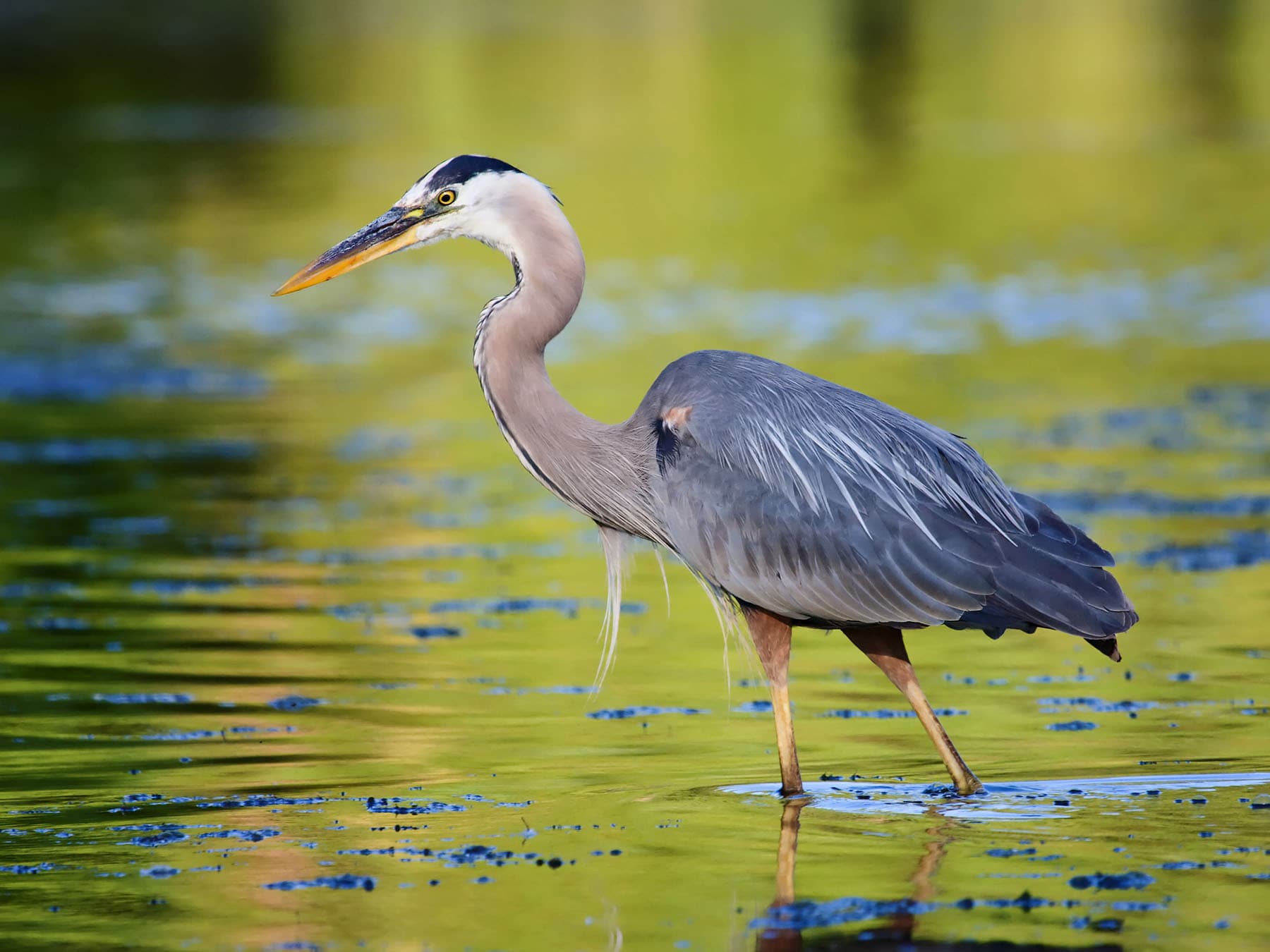
Great Blue Herons spend their time standing motionless or stalking along the shore of water bodies. They usually fly up to the safety of tall trees to sleep at night. In the nesting season, both sexes spend most of their time at the nest when not out hunting.
How rare are Great Blue Herons?
Great Blue Herons are not a rare species. Birdwatchers have a good chance of spotting these impressive birds in just about any aquatic habitat in North America.
Migration
Birds are mobile creatures that can move long distances in response to changing seasons. Great Blue Herons have varying strategies for dealing with the winter cold.
Do Great Blue Herons migrate?
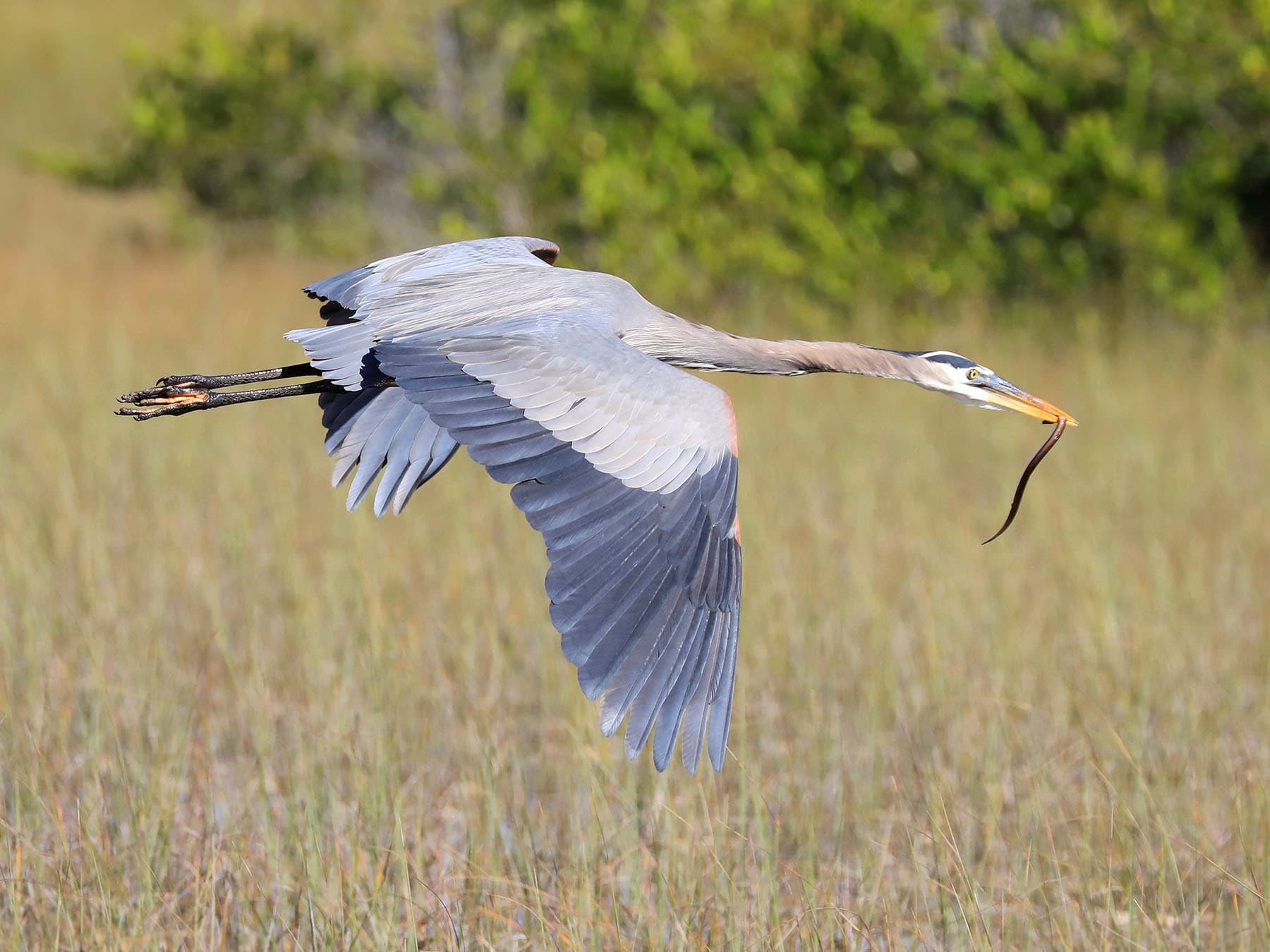
Great Blue Herons are partial migrants. In areas where waterways remain ice-free, these birds can make a living throughout the year since their food source remains relatively abundant.
For example, individuals that nest in Canada must head south for warmer climates. However, those that live along the Pacific coast as far as Alaska can persist since the coastal waters provide year-long hunting opportunities.
Birds that migrate south may overwinter in the Lower 48 or travel as far south as the Caribbean and the north coast of South America.
Tips for seeing it
- Look for them in wetlands, along shorelines, and in shallow waters
- Observe early morning or late afternoon when they're most active
- Listen for their distinctive harsh squawk
- In flight, note their large size and S-curved neck
- Check for nesting colonies in tall trees near water bodies
What it eats
Great Blue Herons are carnivores that are capable of swallowing surprisingly large animals. These fierce birds use stealth, speed, and an impressive spear-shaped bill to catch their prey.
What do Great Blue Herons eat?
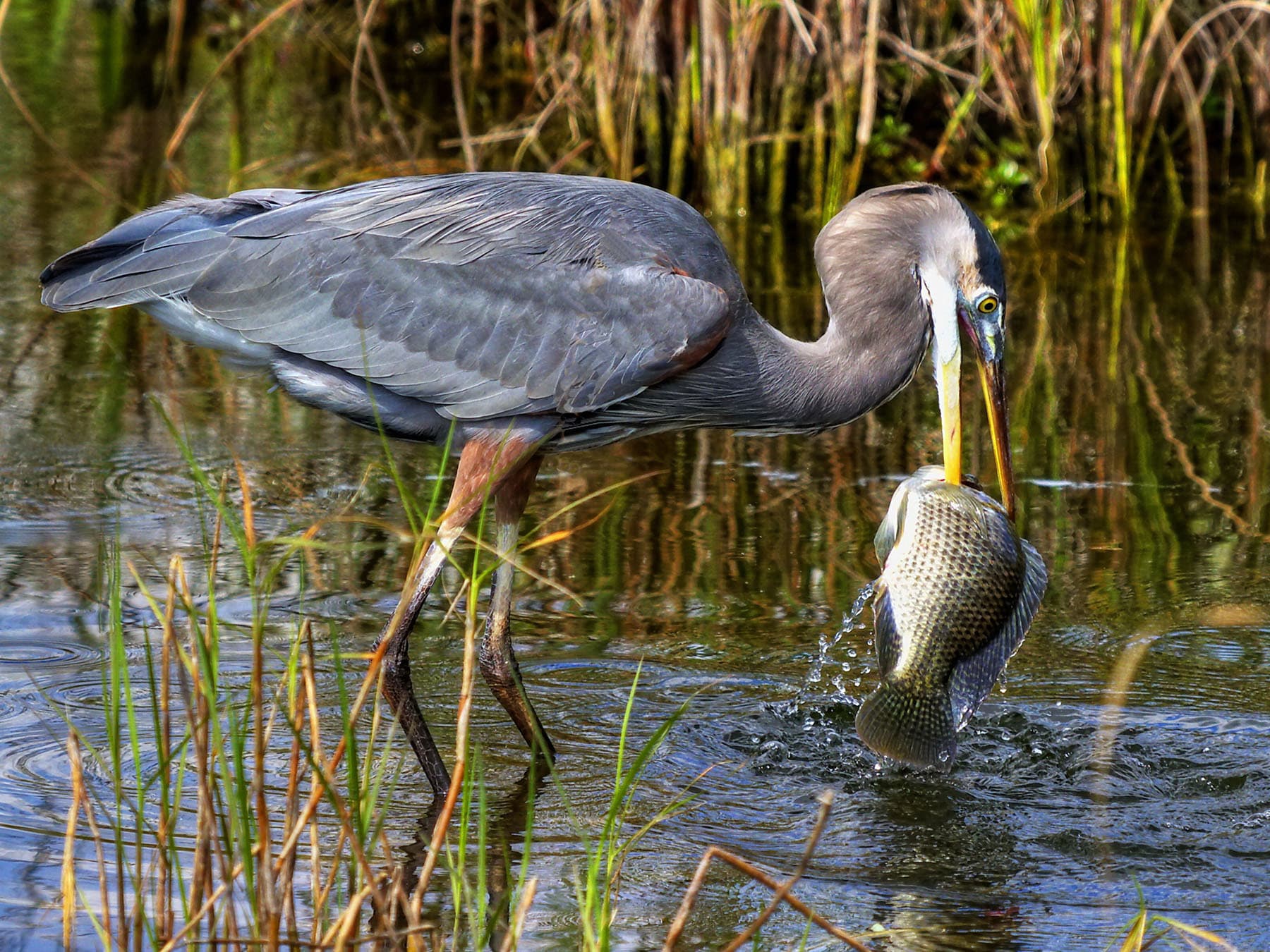
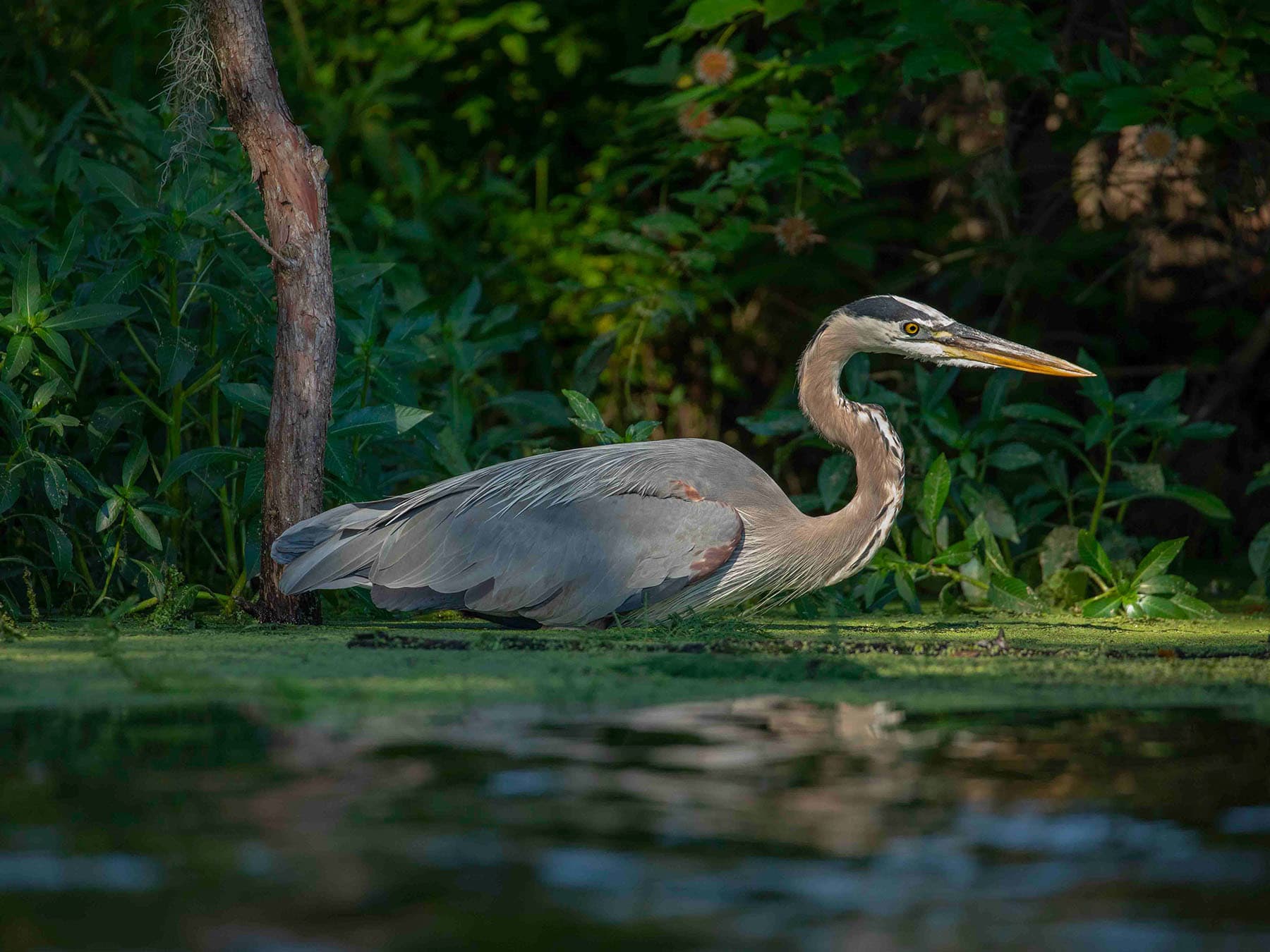
The Great Blue heron is, first and foremost, a fishing bird. They prefer to wade in shallow waters, poised to strike at fish up to about two feet long. However, these birds will not pass up the opportunity to hunt other prey like rodents, frogs, invertebrates, and smaller birds.
What do baby Great Blue Herons eat?
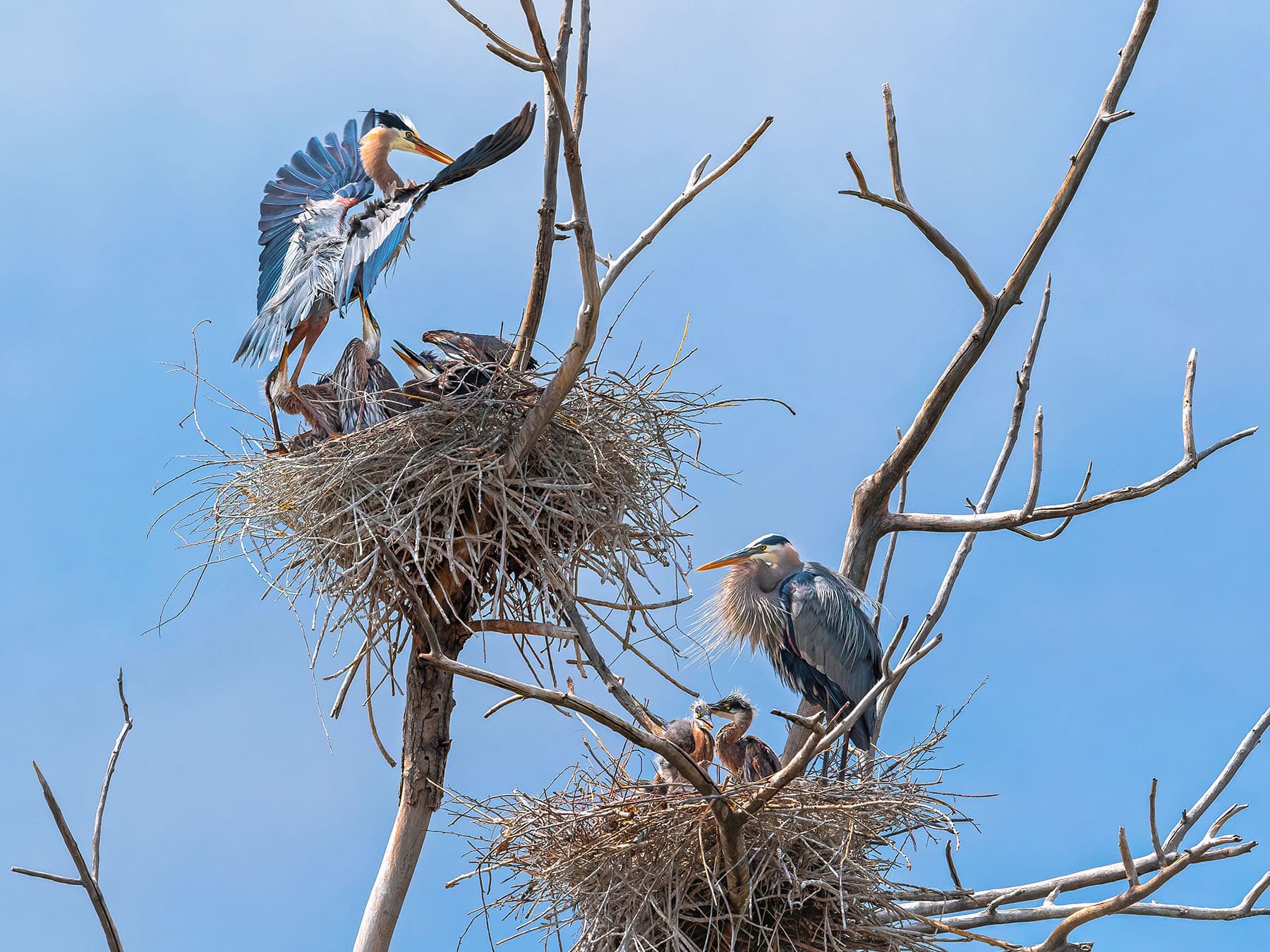
Baby Great Blue herons eat the same food as their parents - primarily fish. They are fed by regurgitation when the parent bird inserts its bill into the chick's open mouth, but they will also pick up food items deposited on the floor of the nest. Both parents feed the chicks.
Nesting and breeding
Great Blue Herons nest in the spring and summer, sometimes starting in the late winter. Both parents work together, usually producing a single clutch of two to six eggs, although second clutches have been recorded.
Where do Great Blue Herons nest?
Great Blue Herons nest across most of the Lower 48 states, southern Canada, and up to the south coast of Alaska. Pairs usually build their nests in trees, although they will nest on the ground on islands where they are safe from predators.
They typically nest in large colonies of up to 1000 pairs, although they will also nest alone.
What do Great Blue Heron eggs look like?
Great Blue Herons lay two to six pale blue eggs. Most eggs measure 61 to 65 mm (about 2 ½ inches) long and 45 to 46 mm (about 1¾ inches) wide.
Do Great Blue Herons mate for life?
Great Blue Herons do not mate for life, although they are monogamous during the nesting season. Pairs work together to raise their young but pair up with new partners in successive years.
Behaviour
Great Blue Herons are fascinating birds to observe, especially when hunting and during the nesting season. These birds may have an intimidating appearance, but bird watchers have little to fear from them.
Are Great Blue Herons aggressive?
Great Blue Herons are not aggressive toward humans, although they may strike out in self-defense if captured or cornered. They are generally peaceful towards their own species, although fights have been recorded on rare occasions.
Great Blue Herons may claim small territories in prime hunting areas, although they defend these areas with displays and chases, rarely engaging in physical combat.
Lifespan and predators
Despite their large size, Great Blue Herons do not have a particularly long life expectancy and are not immune to predation.
How long do Great Blue Herons live?
Great Blue herons can live for over twenty years. The oldest known individual lived to be 24 years and six months old. However, most will not live to see their first birthday, and those that reach maturity probably survive about five years on average.
What are the predators of Great Blue Herons?
Despite their large size and weapons, Great Blue Herons are vulnerable to some predators, including Bald Eagles. Their eggs and nestlings are eaten by a greater variety of birds and mammals, including Crows, Ravens, Turkey Vultures, Bears, and Raccoons.
Are Great Blue Herons protected?
Great Blue Herons are protected in the United States by the Migratory Bird Treaty Act of 1918. As such, it is a crime to harm, trap, or kill these magnificent waterbirds.
Are Great Blue Herons endangered?
Great Blue Herons are not endangered. This common and widespread species is considered to be increasing and the IUCN (International Union for Conservation of Nature) lists them as a ‘Least Concern’ species.

Conservation
While the Great Blue Heron is currently listed as Least Concern, it faces threats from habitat loss and degradation of wetlands. Conservation efforts focus on protecting and restoring wetland habitats, as well as reducing pollution in aquatic ecosystems where these birds feed and breed.
More photos
3 photos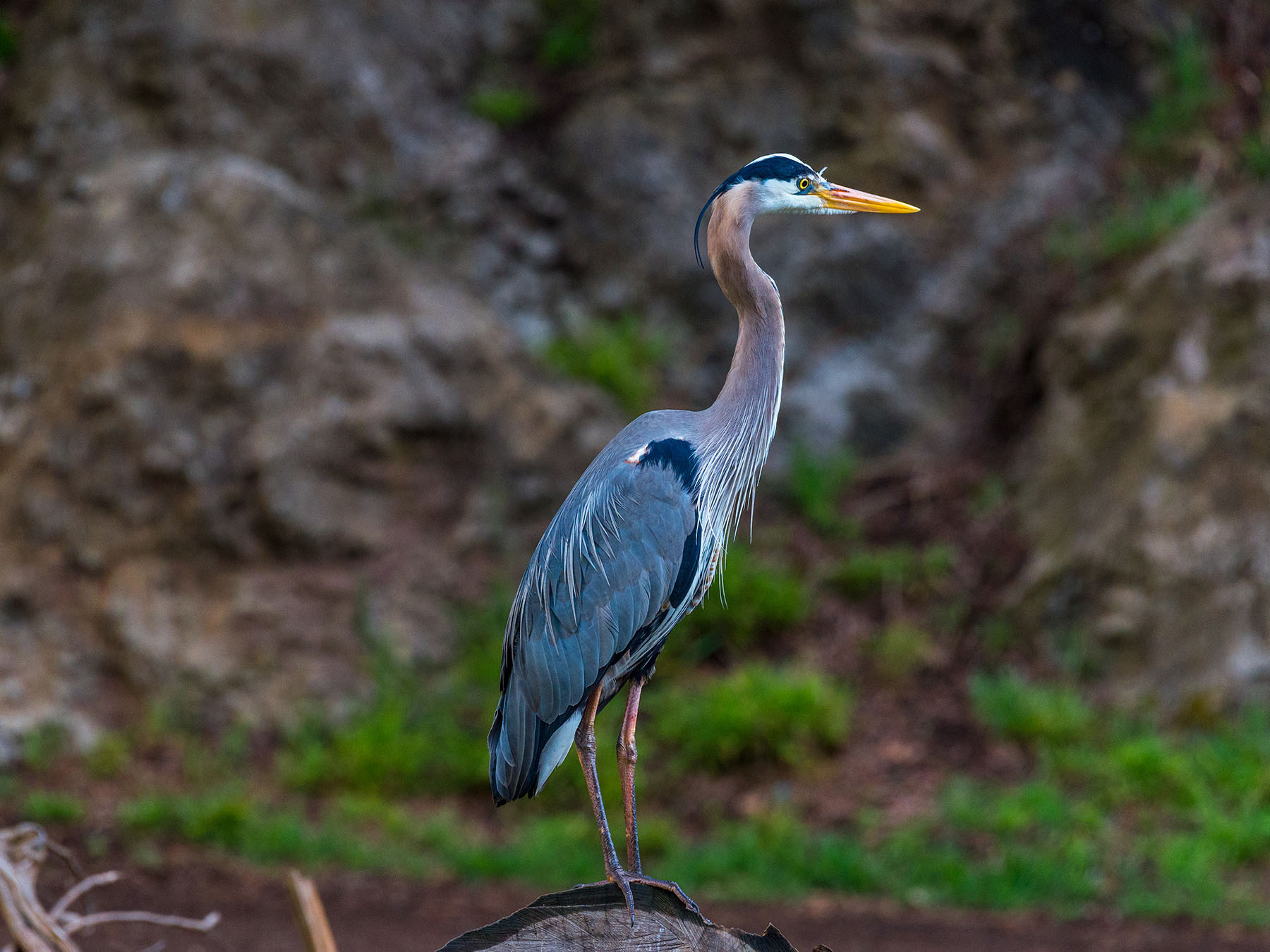

Great Blue Heron guides
5 guidesQuick facts
- Length
- 91–137 cm
- Wingspan
- 167–201 cm
- Weight
- 1820–2700 g
- Lifespan
- 15–20 years
- Family
- Herons & Egrets
- Migration
- Partial migrant
- Global status (IUCN)
- Least Concern
- World population
- 500,000 - 4,999,999 mature individuals
- Population trend
- Increasing
- Also called
- Great Blue, Blue Heron
- Scientific name
- Ardea herodias
Sources
3- 1BirdLife International. 2020. Ardea herodias. The IUCN Red List of Threatened Species 2020: e.T181500967A181565357. Source (opens in a new tab)
- 2Partners in Flight (2019)
- 3Partners in Flight (2019)

Checked by
Nathan Cope, founder and editor
Nathan founded Birdfact and leads its writers and contributors in the UK, the US and Canada. He has watched and studied birds for more than ten years, and checks every article and species guide before it’s published.