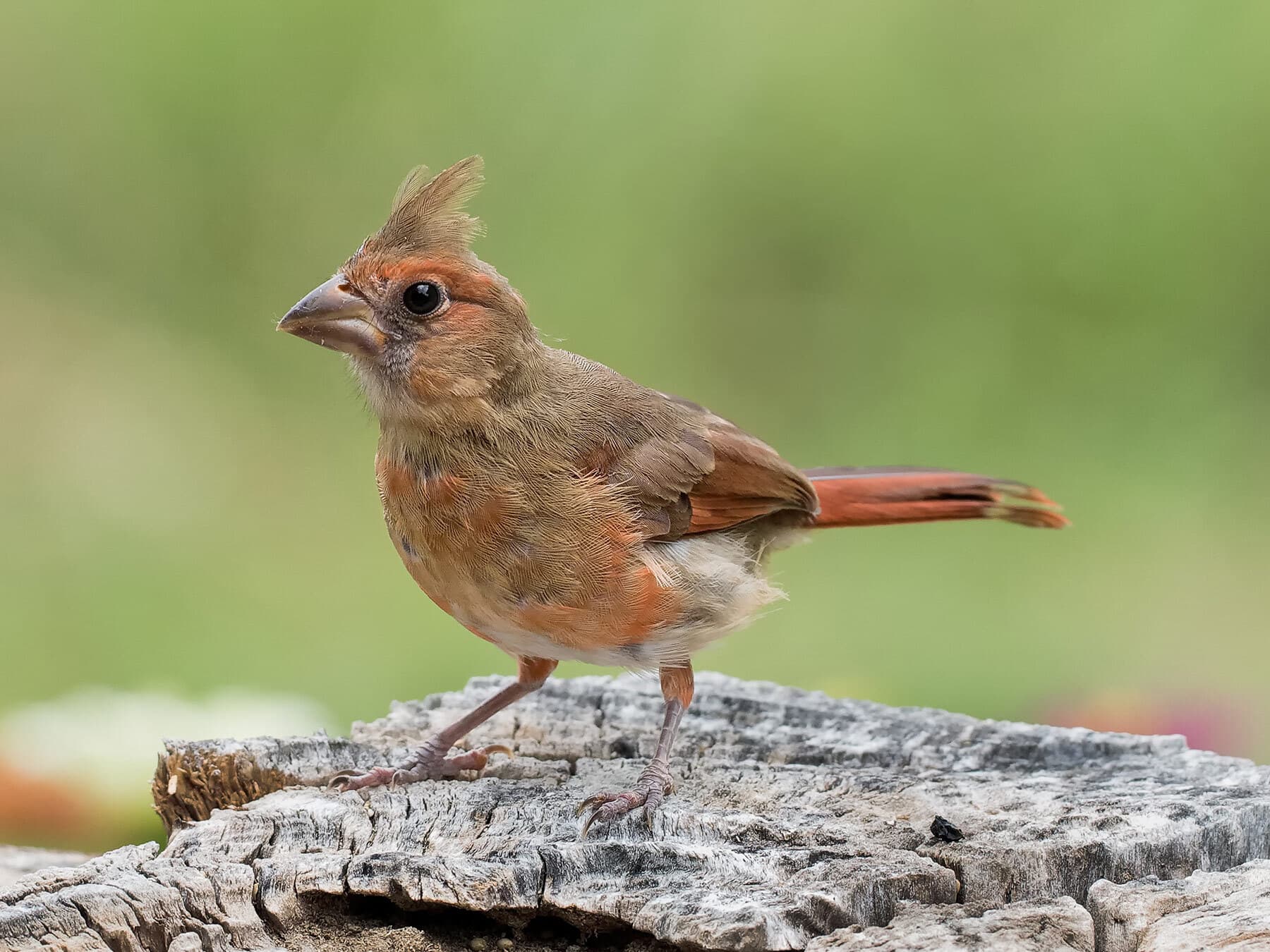
Facts · Updated 8 Oct 2026
What Is a Group of Cardinals Called? Flocks and Collective Nouns
By the Birdfact teamChecked by Nathan Cope
A group of cardinals is a flock, and lists of collective nouns also call it a college, a conclave or a Vatican, names borrowed from the cardinals of the Catholic Church. When cardinals flock, how big the flocks get, and who is in them.
On this page10 sections
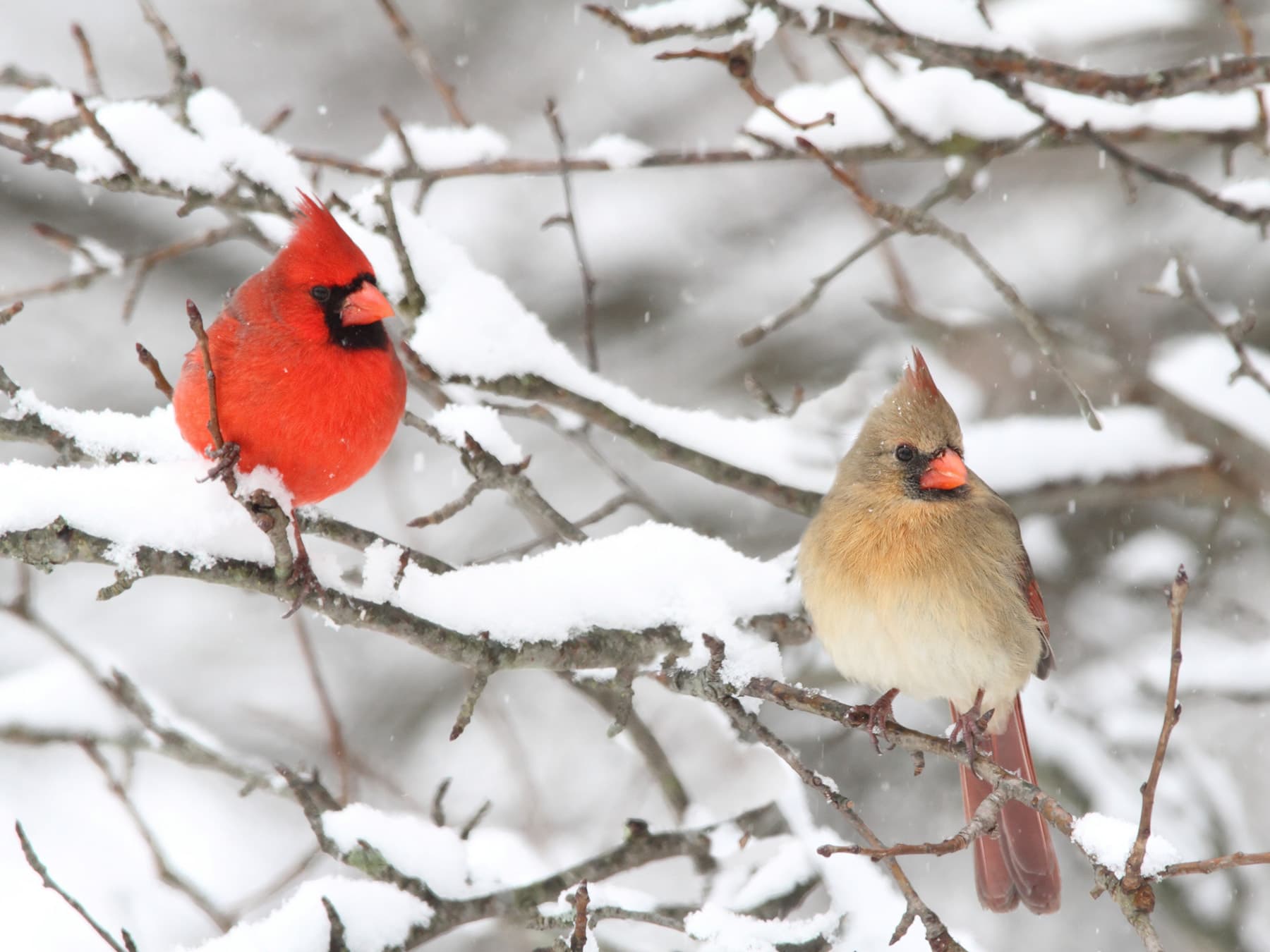
This page is about groups of Northern Cardinals: what to call them, and when cardinals actually flock. For the bird itself, see the Northern Cardinal guide.
What is a group of cardinals called?
Birders simply call it a flock. Lists of collective nouns give playful names instead: a group of cardinals can be called a college, a conclave or a Vatican.1
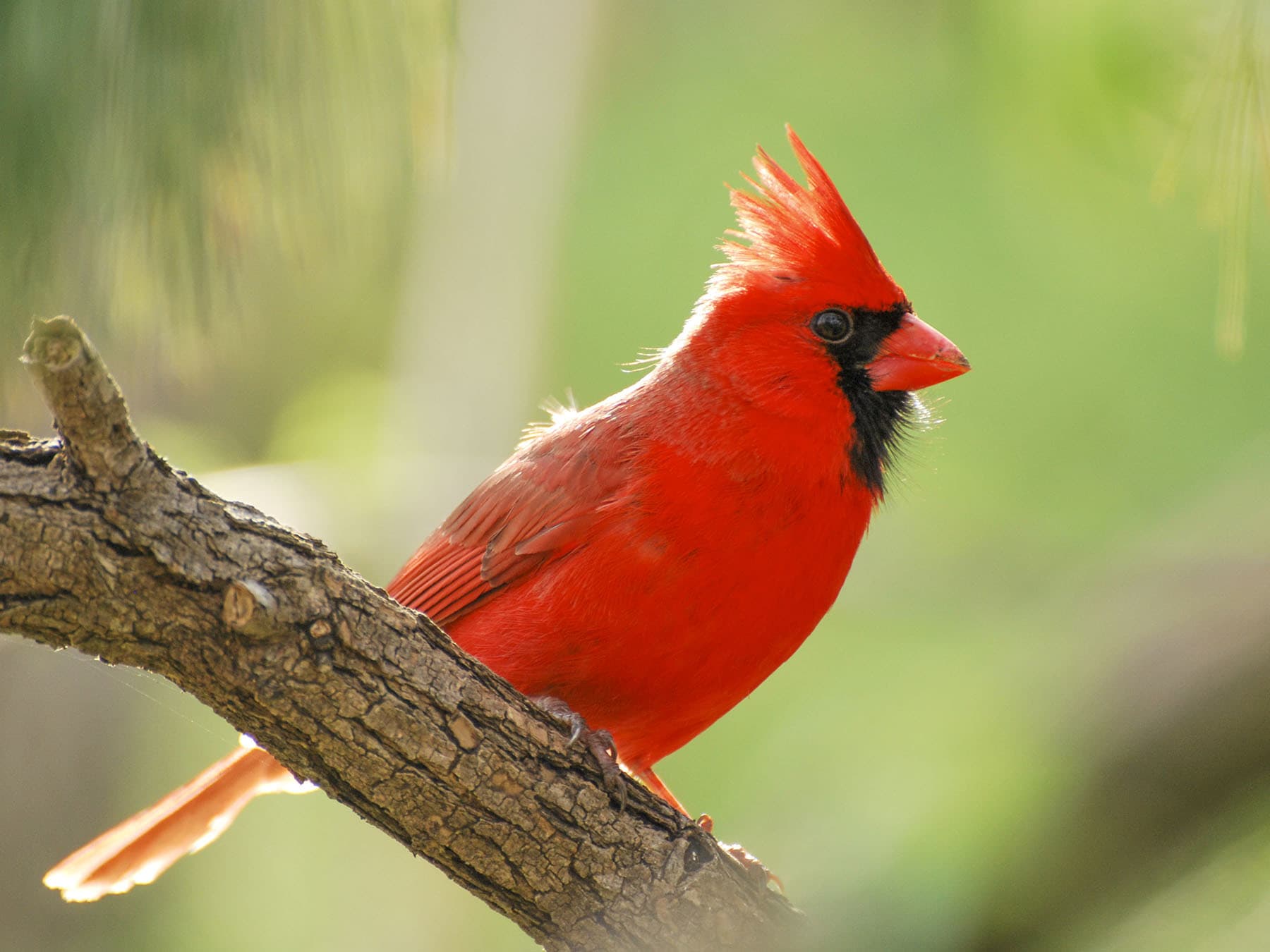
All three borrow from the Catholic Church. The cardinals of the church form the College of Cardinals, and a conclave is the secluded meeting at which they choose a pope.2 The bird itself is named after them: its color resembles the red robes the church's cardinals wear.
These names are informal, a bit of word play rather than something ornithologists use, so "a flock of cardinals" is always correct.
Do cardinals flock together?
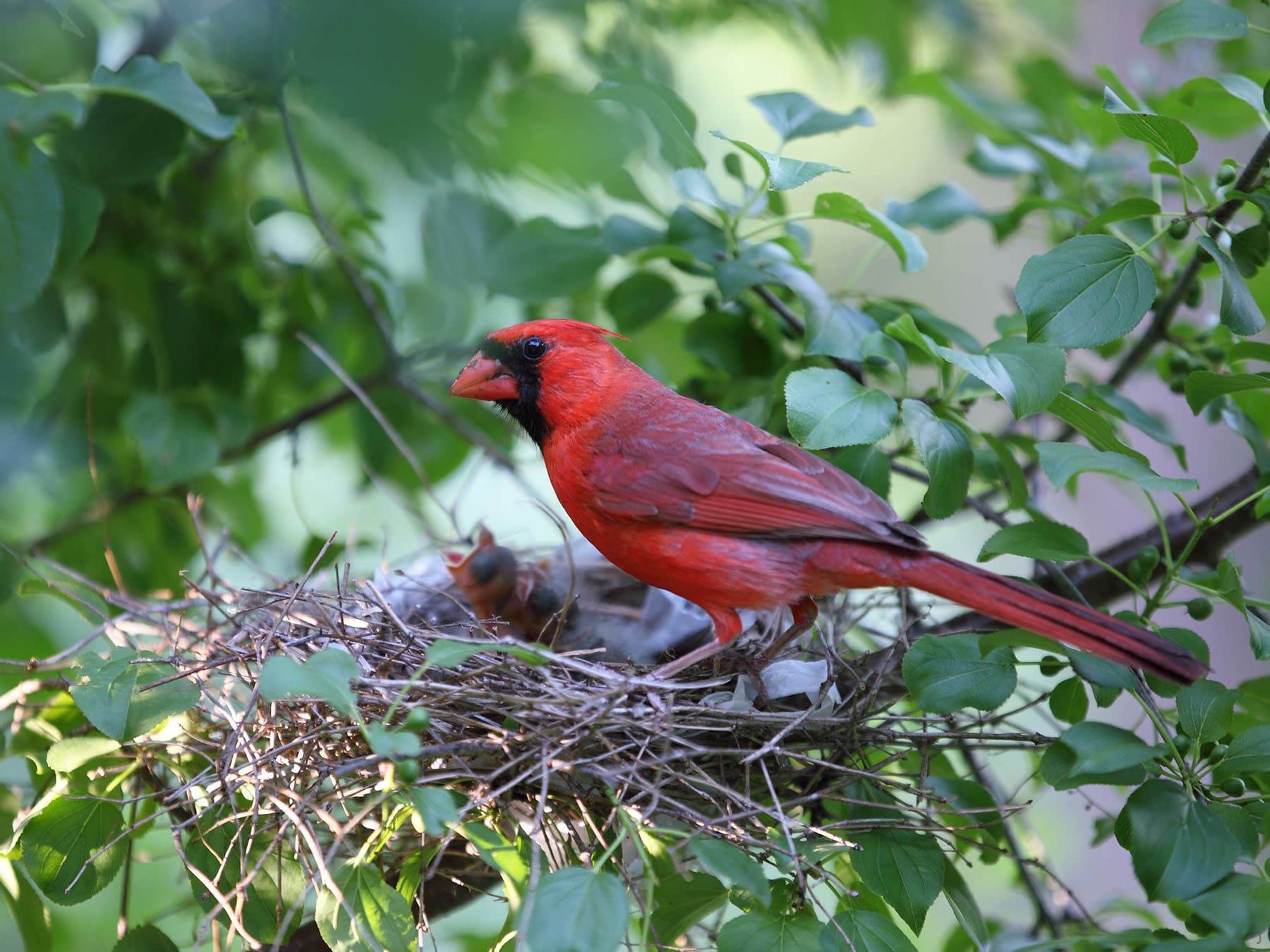
Yes, mainly outside the breeding season. In spring and summer cardinals live in pairs on their own territories and chase other cardinals away. In fall and winter they gather in loose flocks.
When flocks form
Flocks form in the fall, during or after the late-summer molt; in southern Indiana and Iowa they were first seen at the end of September. They break up between January and March, when pairs leave to set up territories.3
Flock size
Why they flock in winter
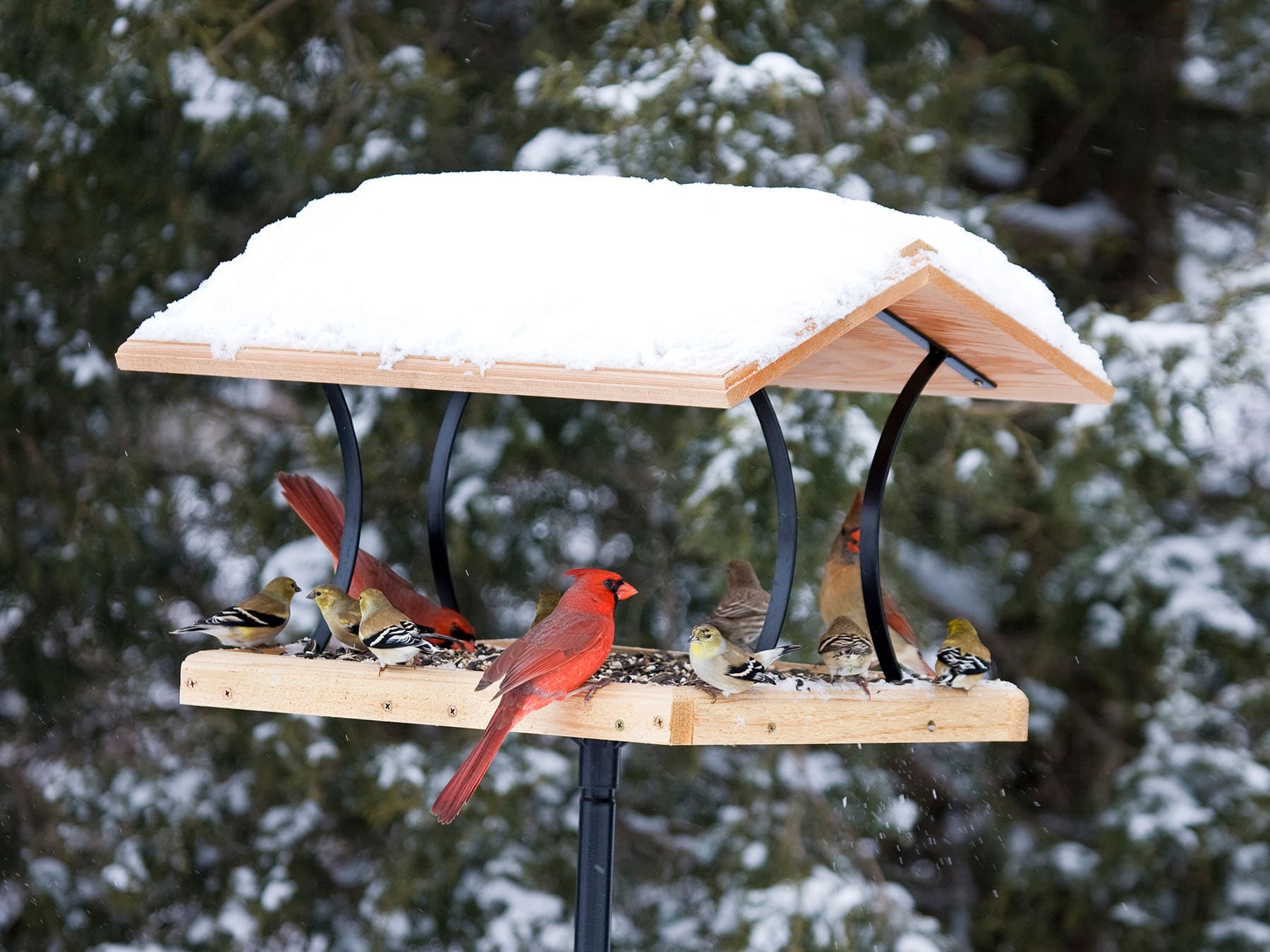
Winter flocks are feeding flocks. Birds that defend separate territories all summer gather where seeds and fruit are, at feeders and in thickets, and roost together at night in dense thickets or groves of conifers. Some pairs stay on their territory all winter and only join a flock as it passes through.
Families
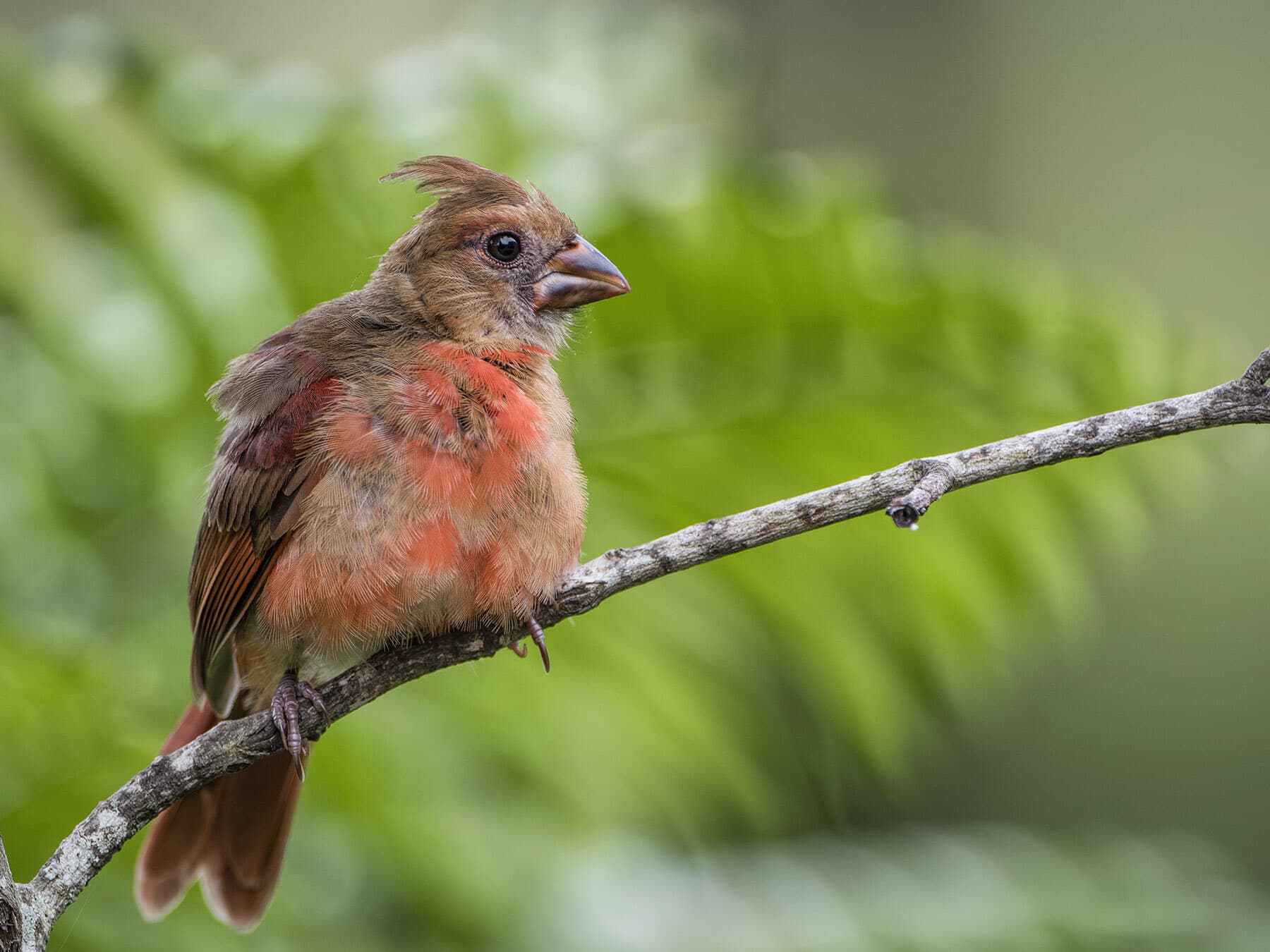
Young cardinals are fed by their parents for weeks after leaving the nest, and a winter flock may start as a family group, the parents and their last brood, that grows as neighbors and young birds join it. Most young birds leave the area where they hatched between 35 and 55 days after fledging. More: baby cardinals.
Who is in a flock
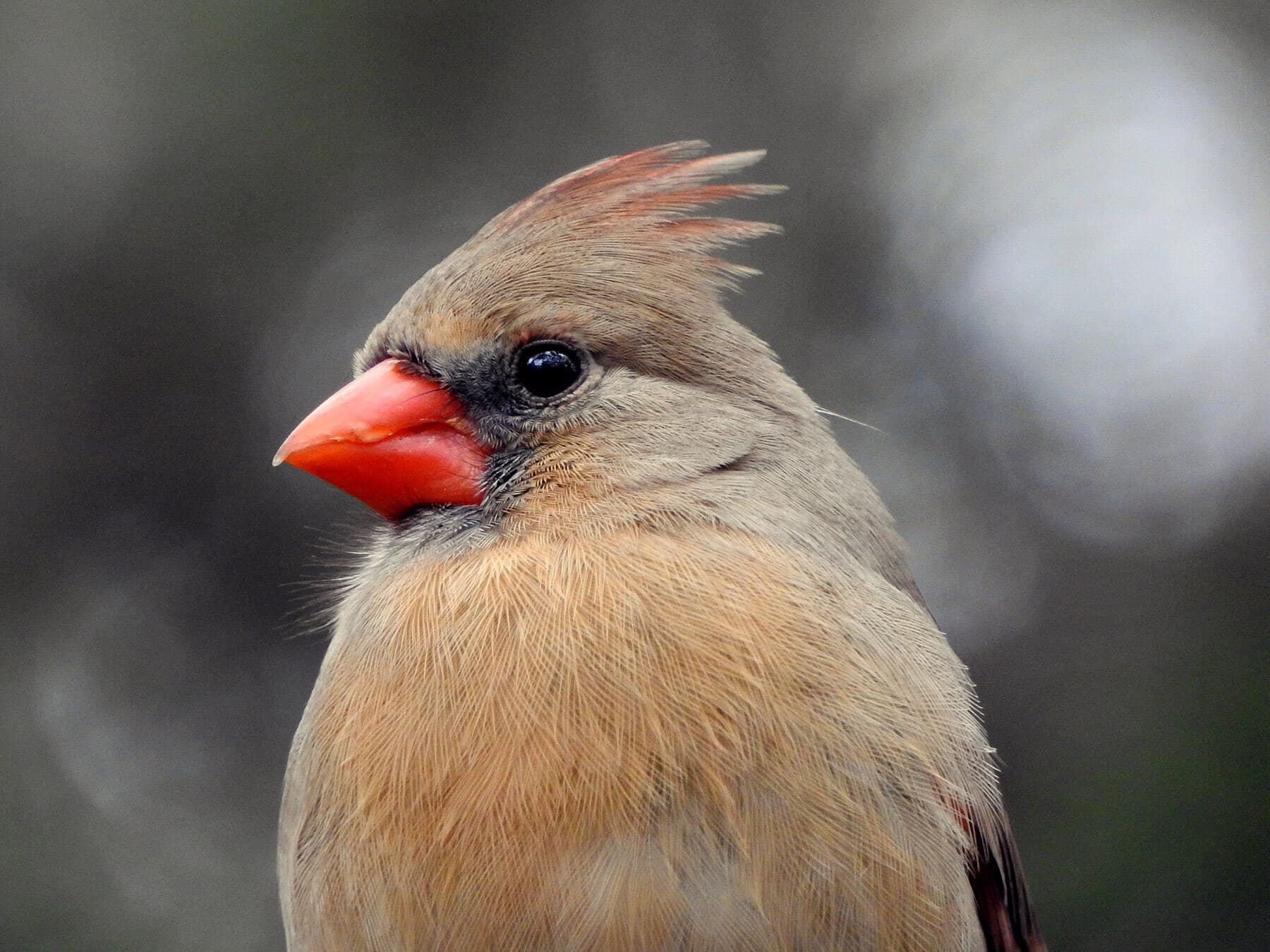
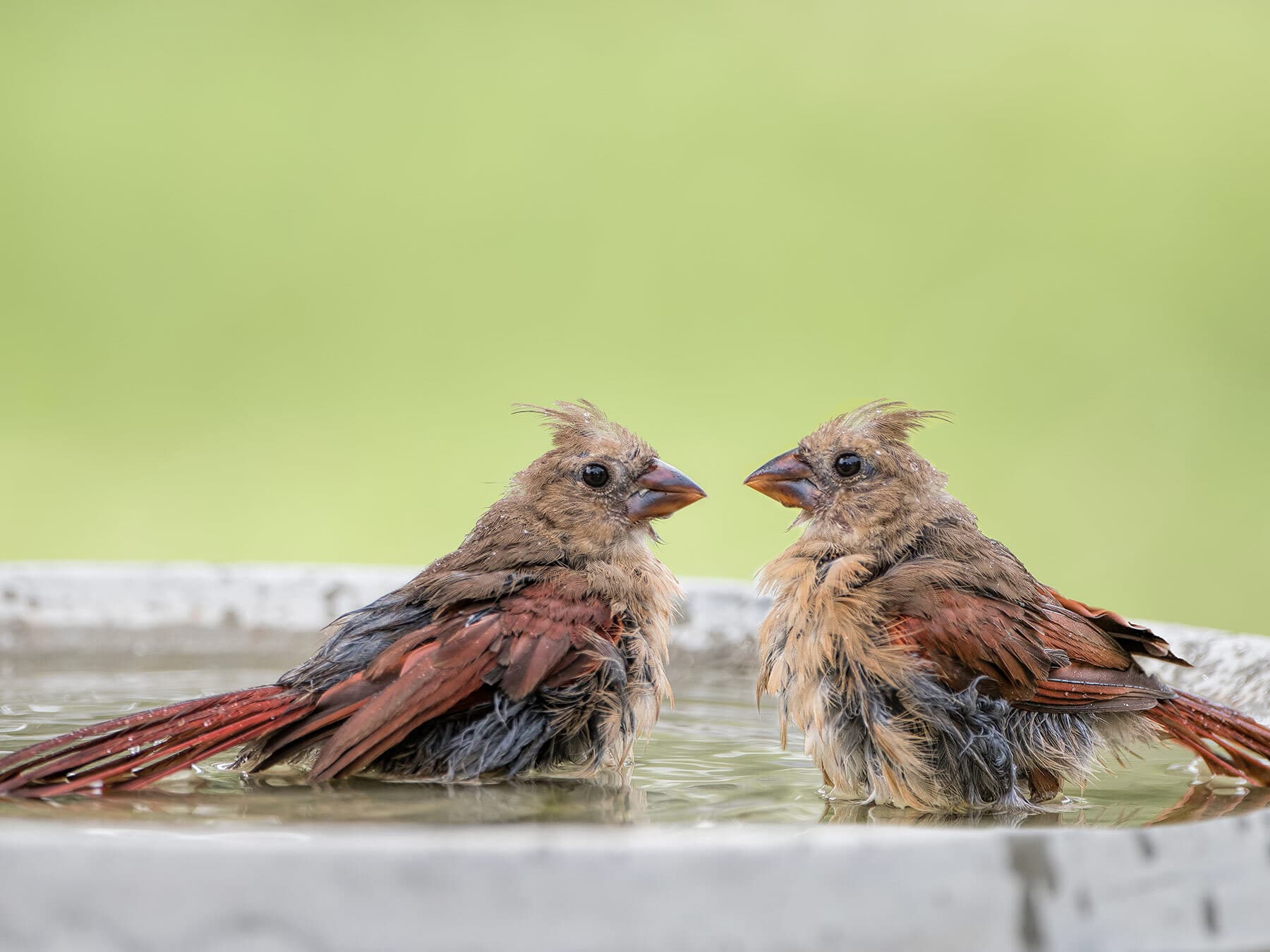
Both sexes and all ages, in roughly equal numbers of males and females. Membership changes all the time: banded birds have been seen to switch flocks within a few hours. Cardinal flocks often mix with other birds, such as Dark-eyed Juncos, White-throated Sparrows, Tufted Titmice and American Goldfinches.3
How a flock moves
A feeding flock moves along the ground in a "rolling" way: the birds at the back fly up and over the others to settle at the front, so the flock gradually rolls forward.
What a flock means
In nature, it usually means fall or winter, when cardinals gather in flocks. For the folklore of cardinals, see cardinal symbolism and meaning. More on winter flocks: cardinals in winter.
Sources
- Kahfi, K. (2023). 10 Fun Facts About the Northern Cardinal. Audubon magazine. Accessed 6 October 2026. Source
- Merriam-Webster. Conclave. Merriam-Webster.com Dictionary. Accessed 6 October 2026. Source
- Halkin, S. L., Shustack, D. P., DeVries, M. S., Jawor, J. M., Linville, S. U. (2021). Northern Cardinal (Cardinalis cardinalis), version 2.0. Birds of the World (P. G. Rodewald and B. K. Keeney, editors). Cornell Lab of Ornithology. doi:10.2173/bow.norcar.02
- Cornell Lab of Ornithology. Northern Cardinal: Life History. All About Birds. Accessed 6 October 2026. Source
- Merriam-Webster. Cardinal. Merriam-Webster.com Dictionary. Accessed 6 October 2026. Source