Facts · Updated 8 Oct 2026
Juvenile Cardinals: How to Identify Young Male and Female Cardinals
By the Birdfact teamChecked by Nathan Cope
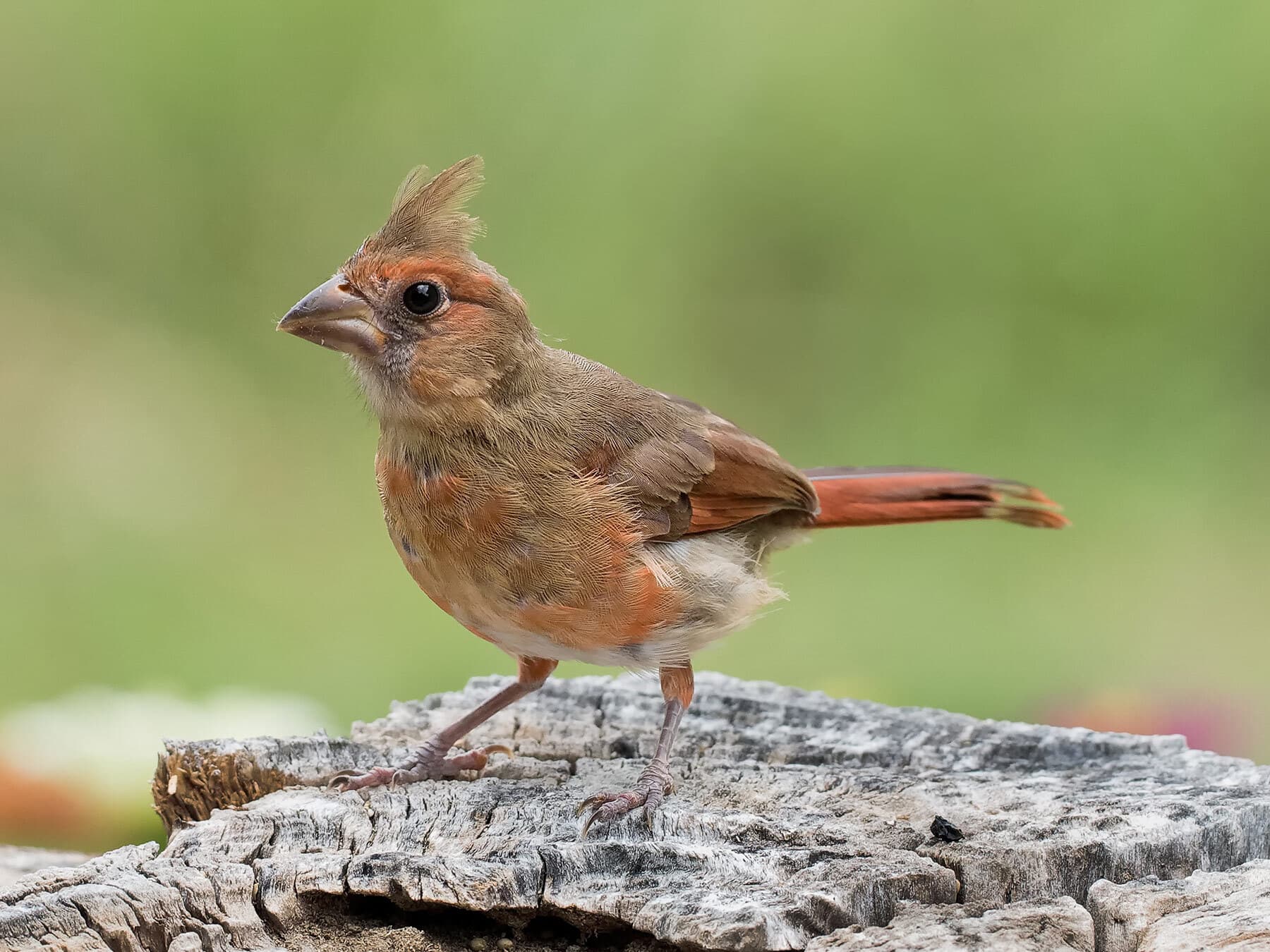
A juvenile Northern Cardinal looks like a dull brown female with a dark gray to black bill. How to recognize one, how to tell young males from young females once they start to molt, when they turn red, and when the bill turns orange.
On this page7 sections
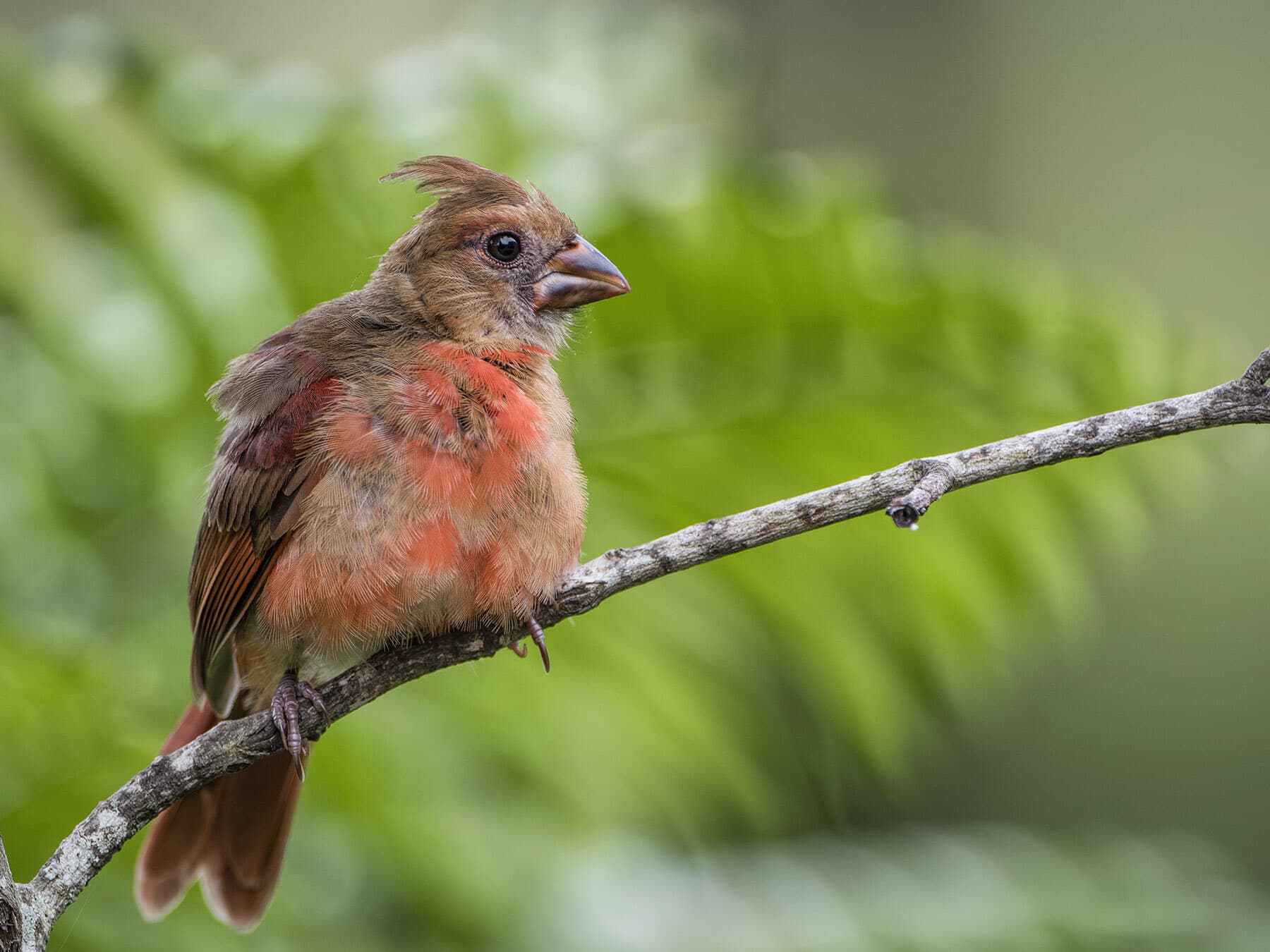
A juvenile is a young cardinal in its first feathers, out of the nest and flying, from late spring to fall. For chicks still in the nest, see baby cardinals.
How to identify a juvenile cardinal
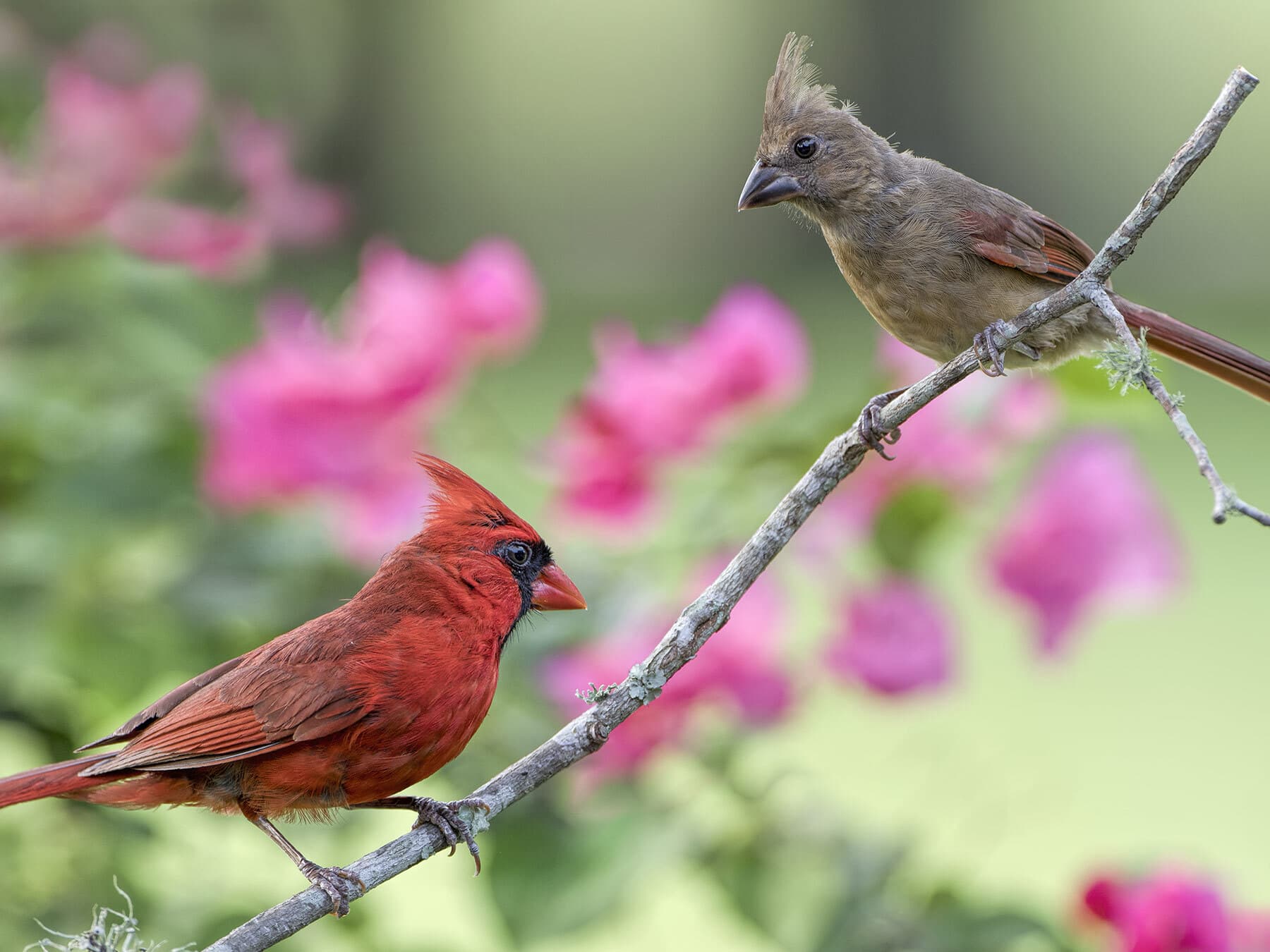
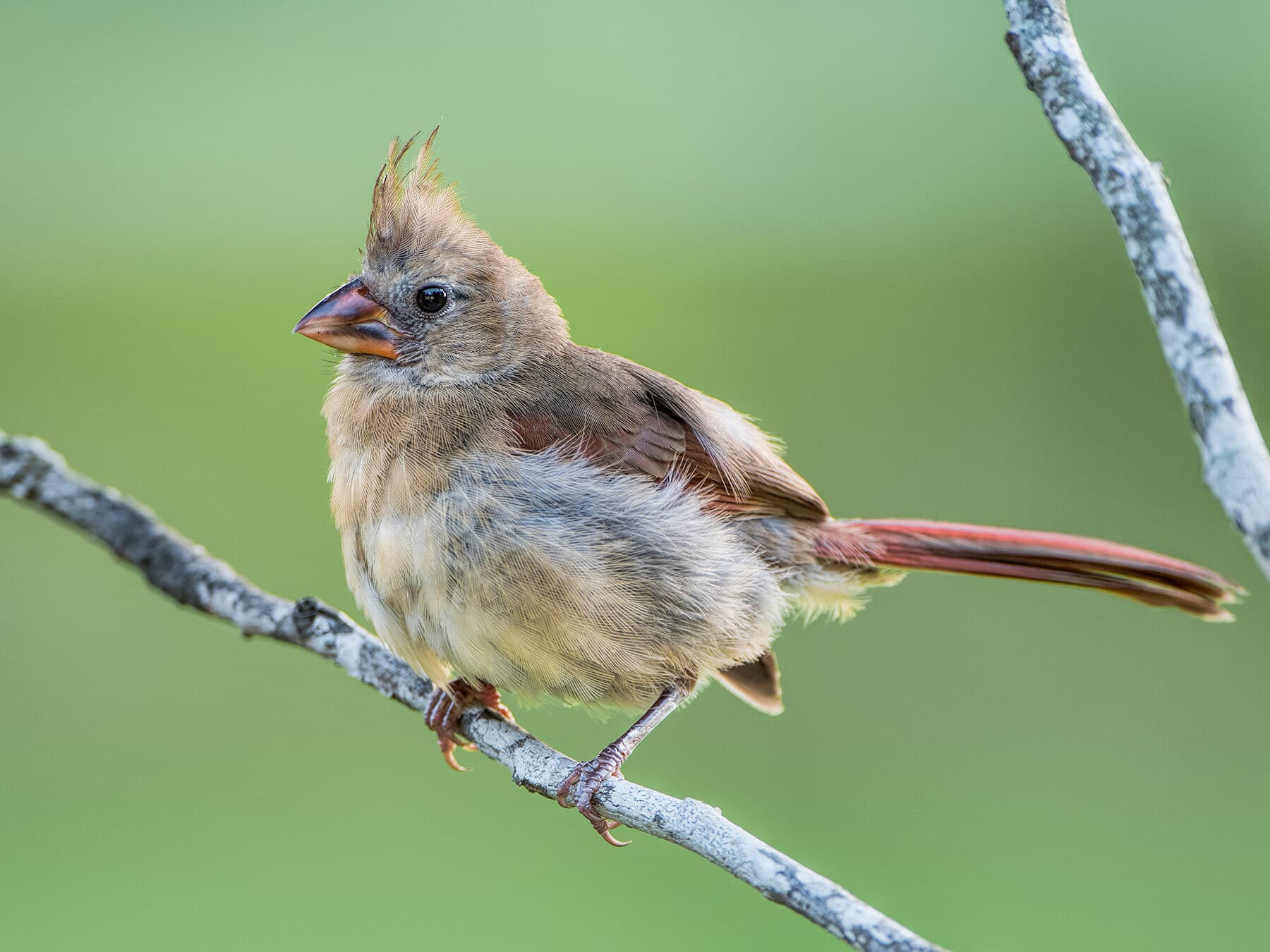
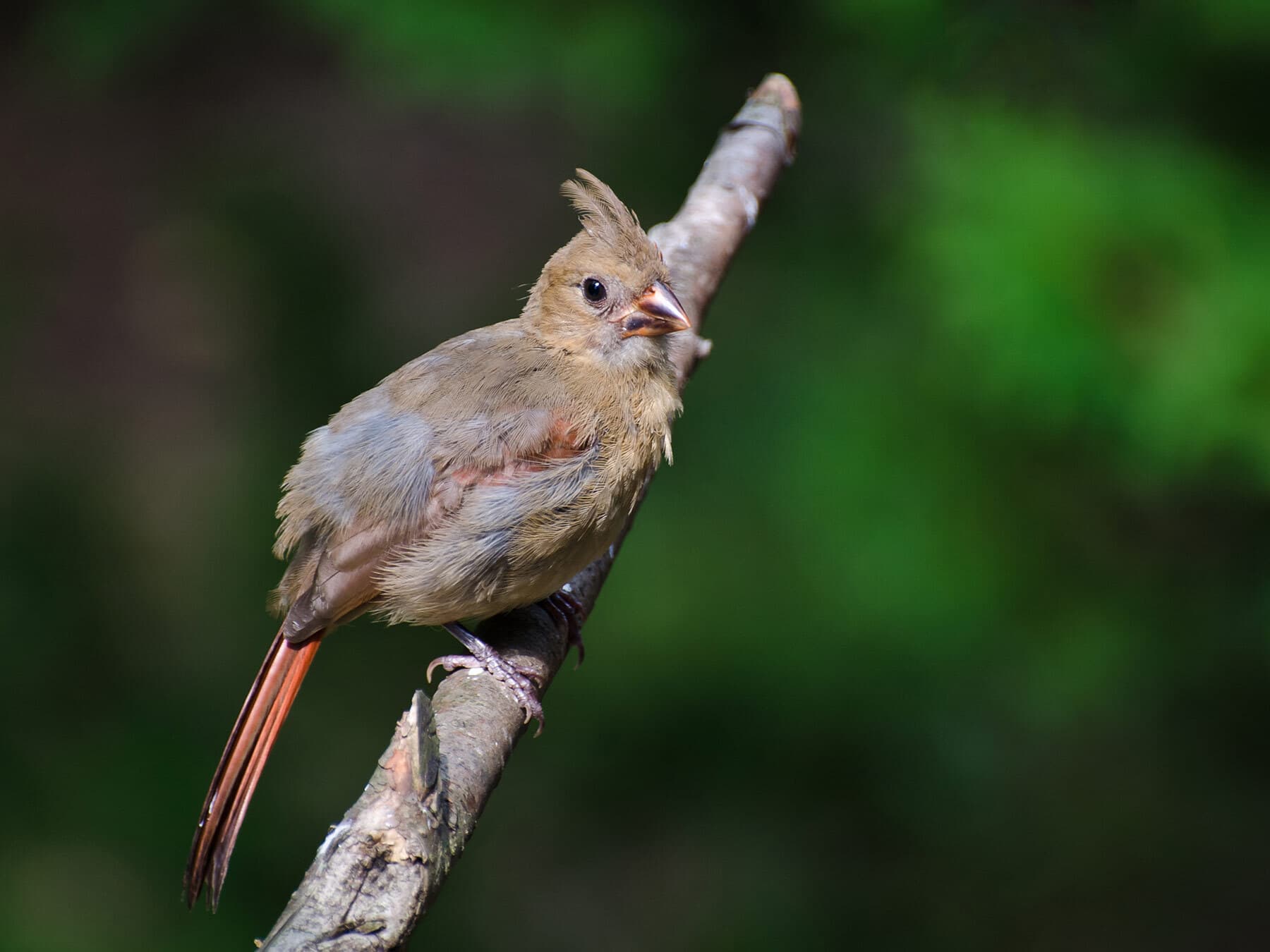
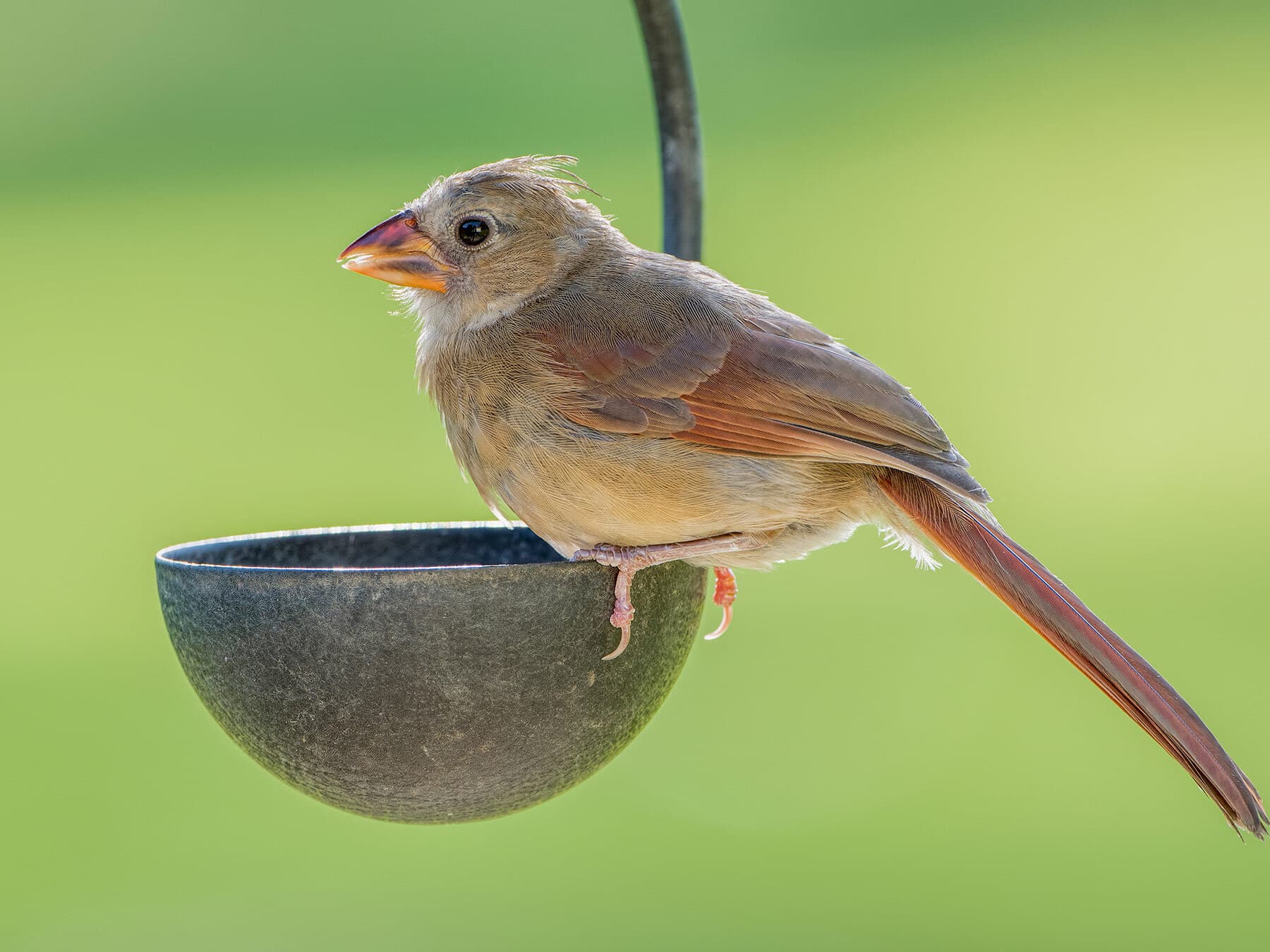
Look at the bill first. A juvenile's bill is dark gray to black, where an adult's is red-orange.1 The rest of the bird is like a female but duller: brown, with less red on the body, a shorter, often ragged crest and loose, fluffy feathers, especially under the tail. Juvenile plumage is seen mainly from April to August.2
Juvenile male vs female cardinal
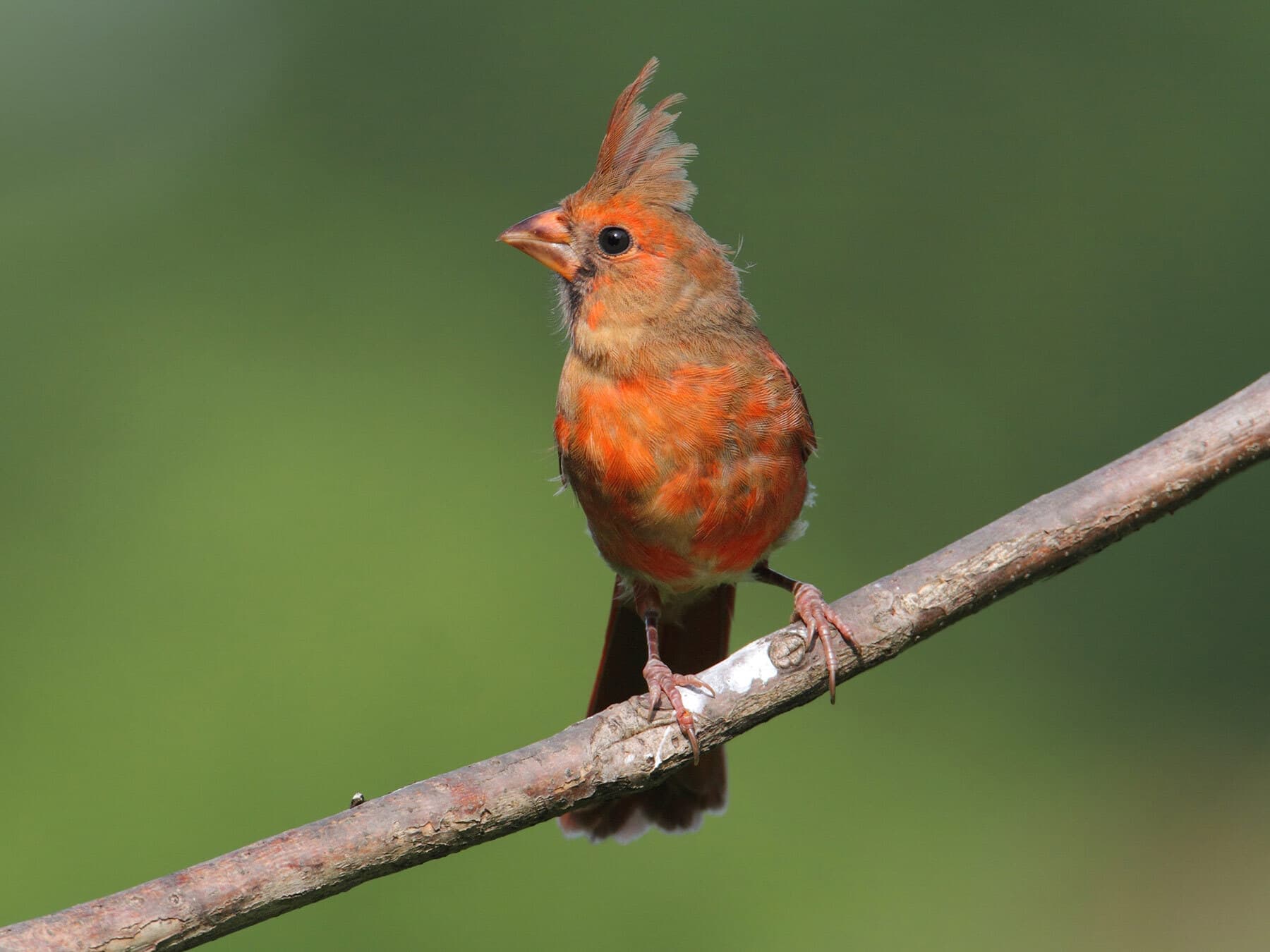
At first you cannot tell them apart: young males and females have the same brown plumage and dark bill. The difference shows once they start to molt into their first adult-like feathers. Young males grow bright red feathers in patches on the breast, head and back, and look blotchy for a while; young females molt into the tan plumage of an adult female, with red in the wings, tail and crest.2
So a blotchy red-and-brown cardinal in late summer or fall is usually a young male, and a plain brown cardinal with a dark bill could be either sex.
When do juvenile cardinals turn red?
During their first molt, which runs from June to November and is less complete in chicks hatched late in the year. How far it goes varies: of 196 young cardinals examined in Ohio and Kentucky, 58% replaced all their feathers, and the rest kept some of their juvenile wing or tail feathers. By winter, birds that have finished molting usually look like adults.2
Through their first year, many young cardinals can still be picked out by a few duller, browner wing or tail feathers among the new ones.
The bill
The bill changes from gray-black to orange and reaches its adult color 65 to 80 days after the bird hatched, though a dark tip can last for months and dark patches can remain until at least January.2
Telling a juvenile from a female
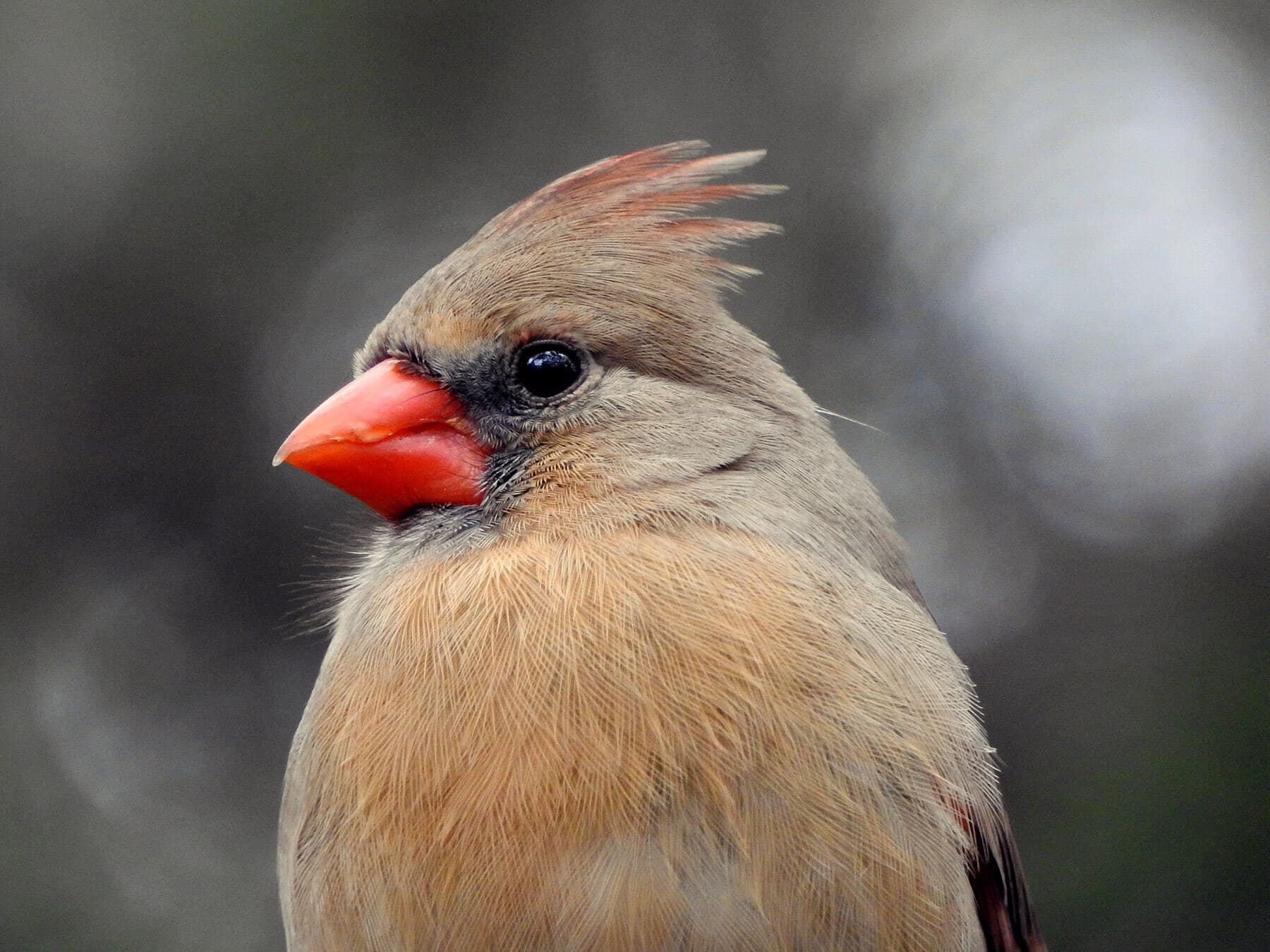
Check the bill. An adult female has the red-orange bill and a gray to blackish mask around it; a juvenile has a dark bill and looser, fluffier feathers. Females also have smoother, neater plumage. In the Southwest, the female Pyrrhuloxia is grayer, with a short yellow bill. More: female cardinals.
What young cardinals do
Juveniles stay near where they hatched for 35 to 55 days after leaving the nest, fed by their parents for part of that time, then move away. In Ontario, young males settled an average of about 1.55 km (1 mile) from where they hatched, and young females 2.61 km.2 In fall many join loose winter flocks, and they breed in their first spring.
Young cardinals start to practise song early, with soft warbles from about 3 weeks old, and sing adult songs by April of their first spring.

Sources
- Cornell Lab of Ornithology. Northern Cardinal: Overview and Identification. All About Birds. Accessed 6 October 2026. Source
- Halkin, S. L., Shustack, D. P., DeVries, M. S., Jawor, J. M., Linville, S. U. (2021). Northern Cardinal (Cardinalis cardinalis), version 2.0. Birds of the World (P. G. Rodewald and B. K. Keeney, editors). Cornell Lab of Ornithology. doi:10.2173/bow.norcar.02
- Kaufman, K.. Northern Cardinal. Audubon Guide to North American Birds (text adapted from Lives of North American Birds, 1996). Accessed 6 October 2026. Source