Facts · Updated 8 Oct 2026
Cardinal Nesting: When, Where and How Cardinals Nest
By the Birdfact teamChecked by Nathan Cope
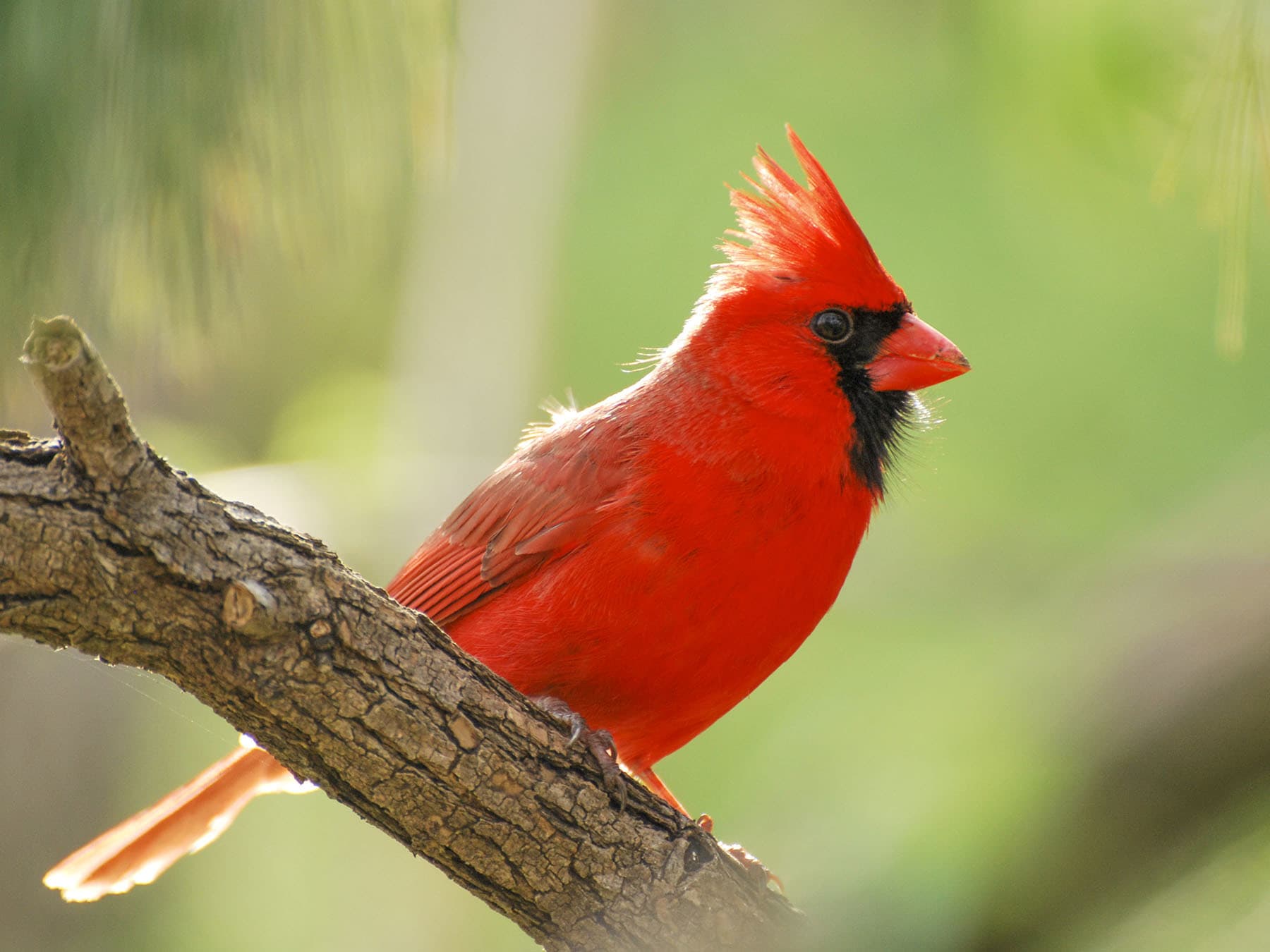
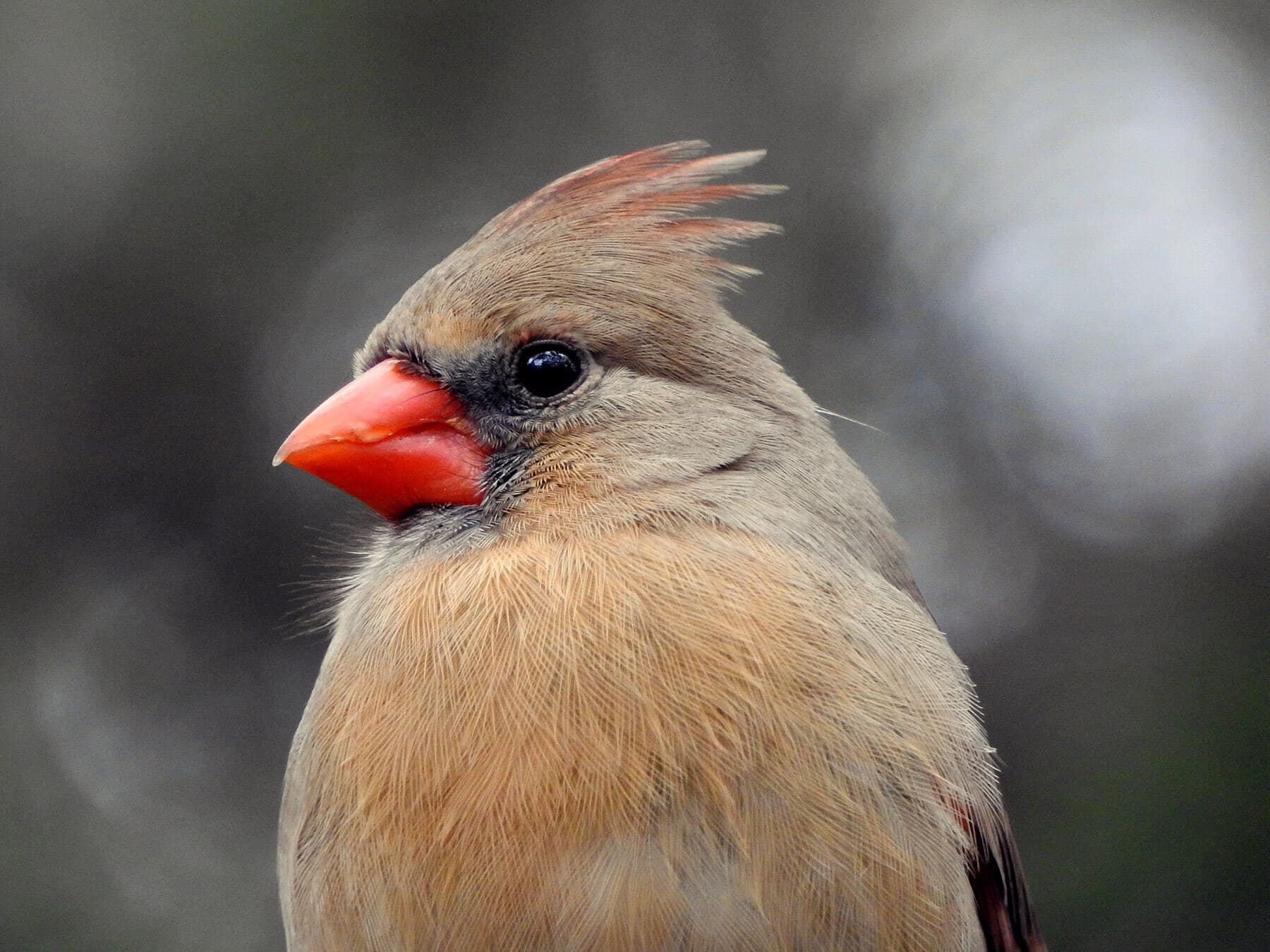
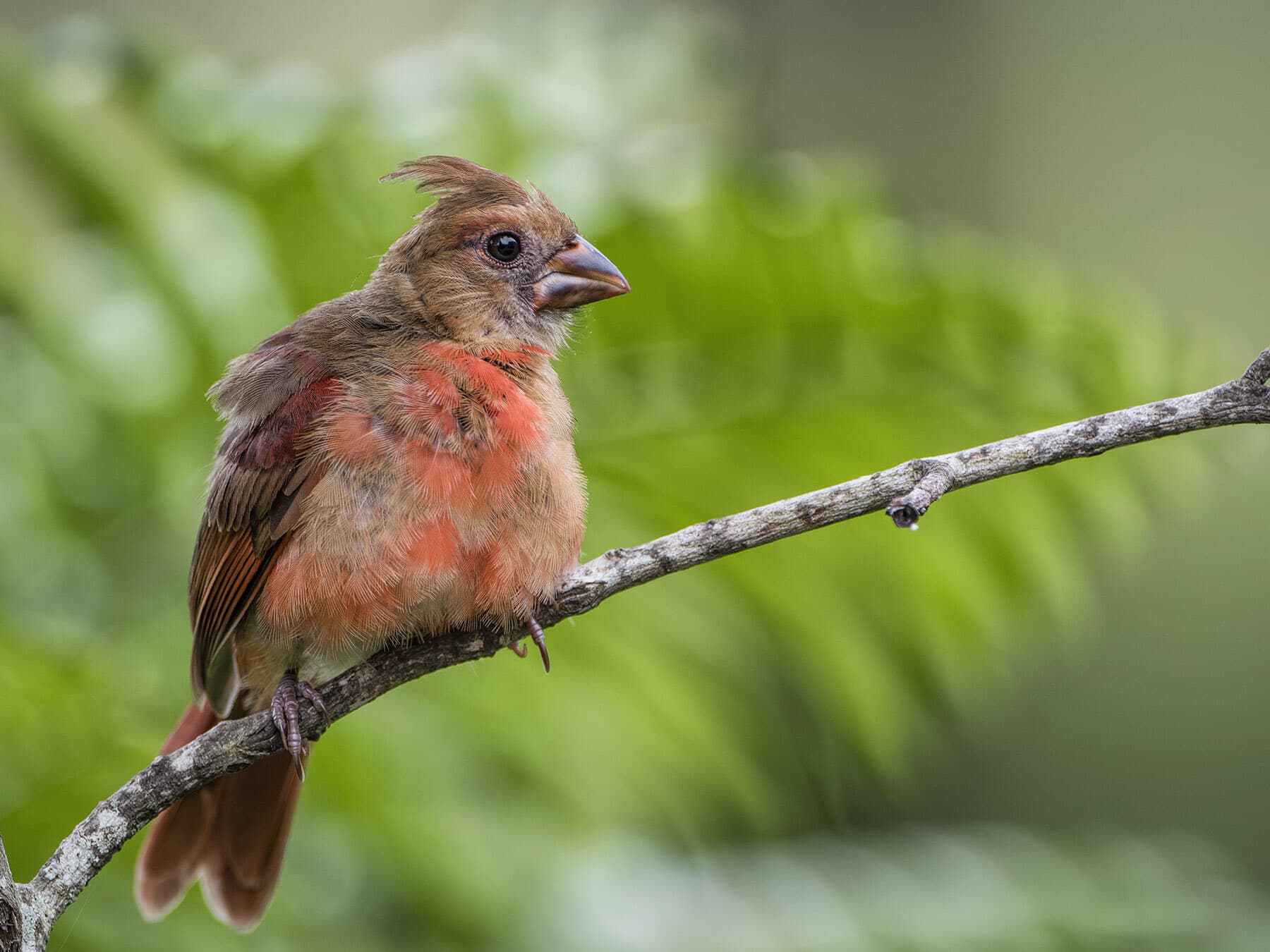
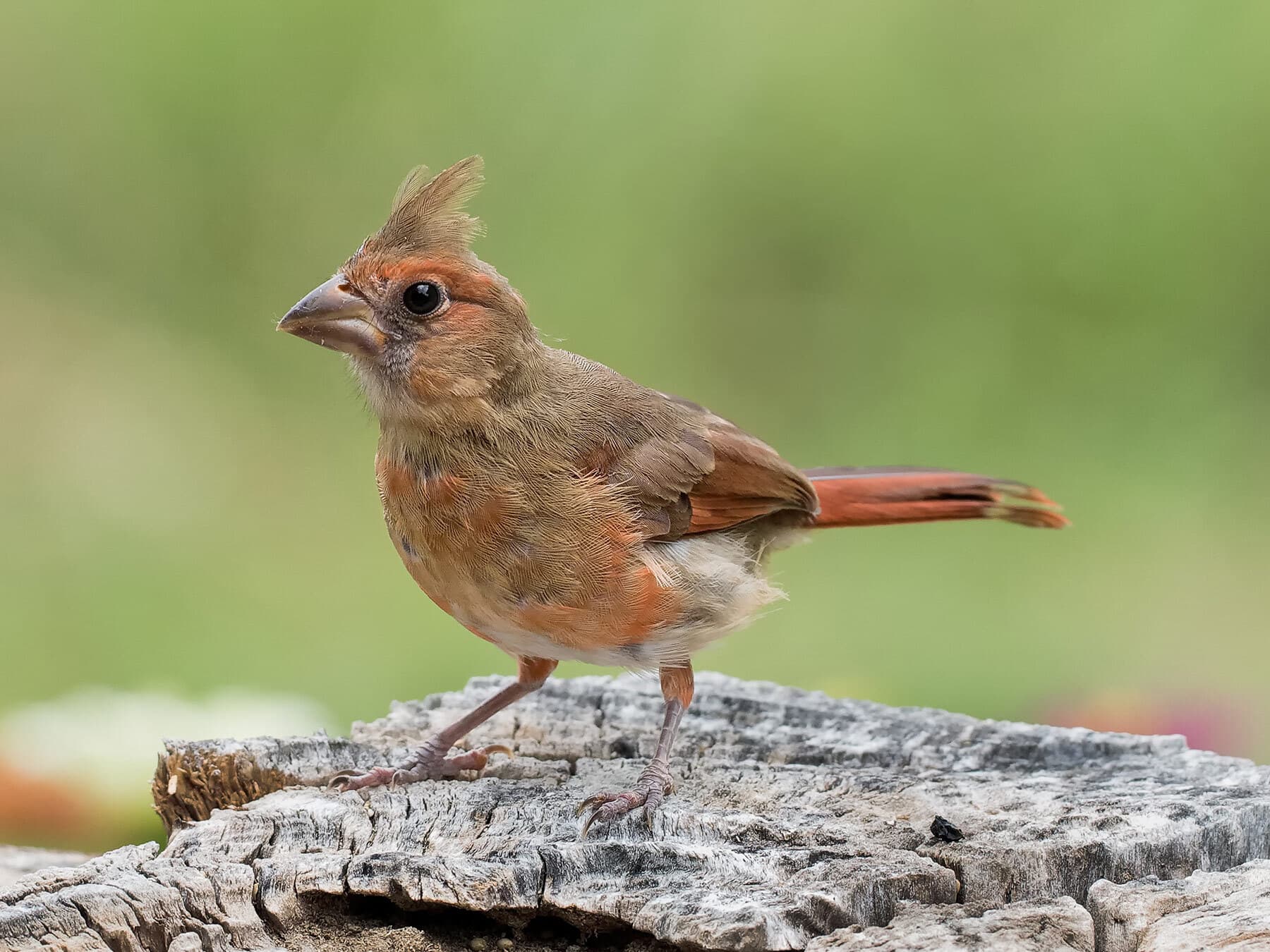
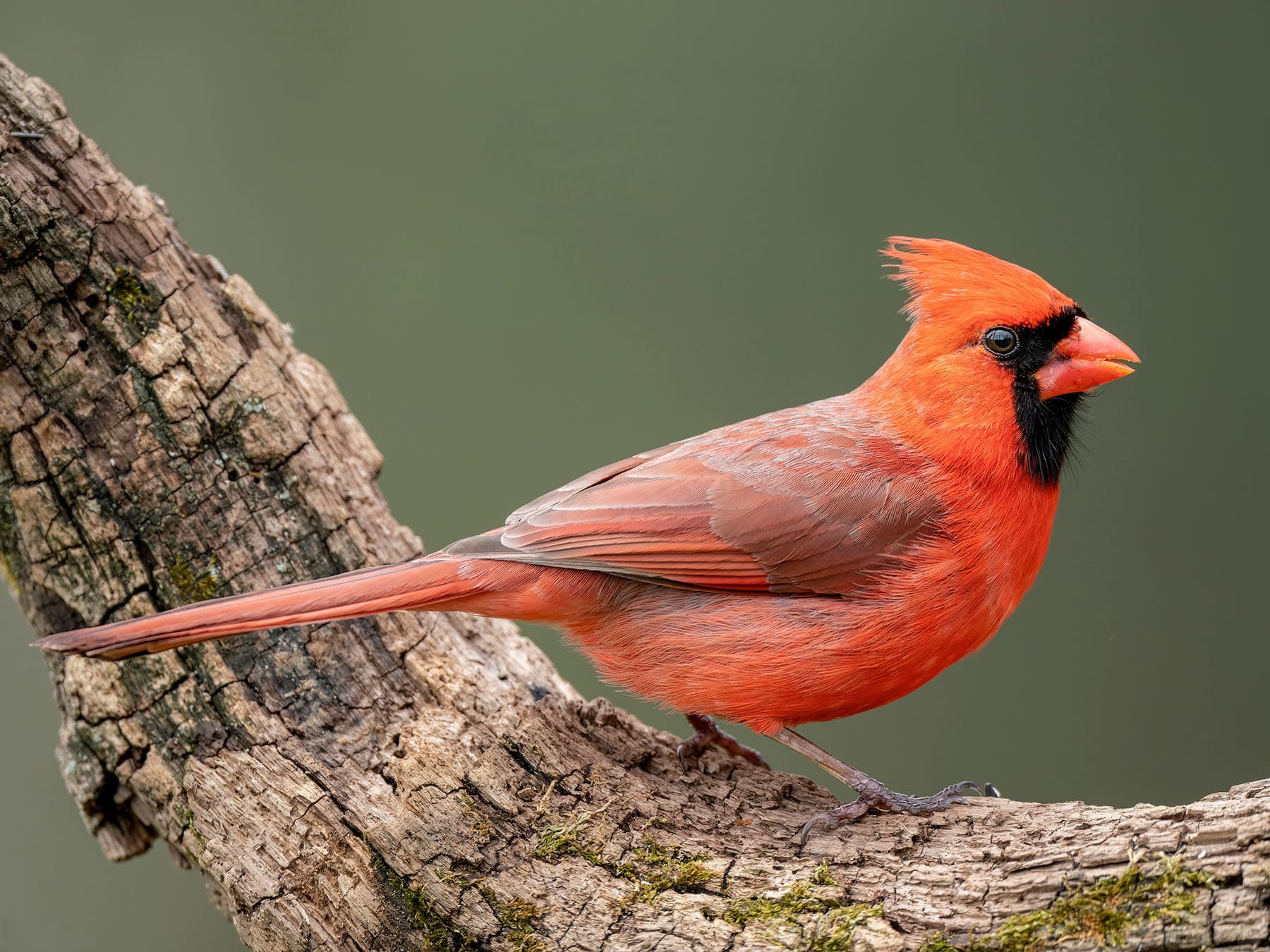
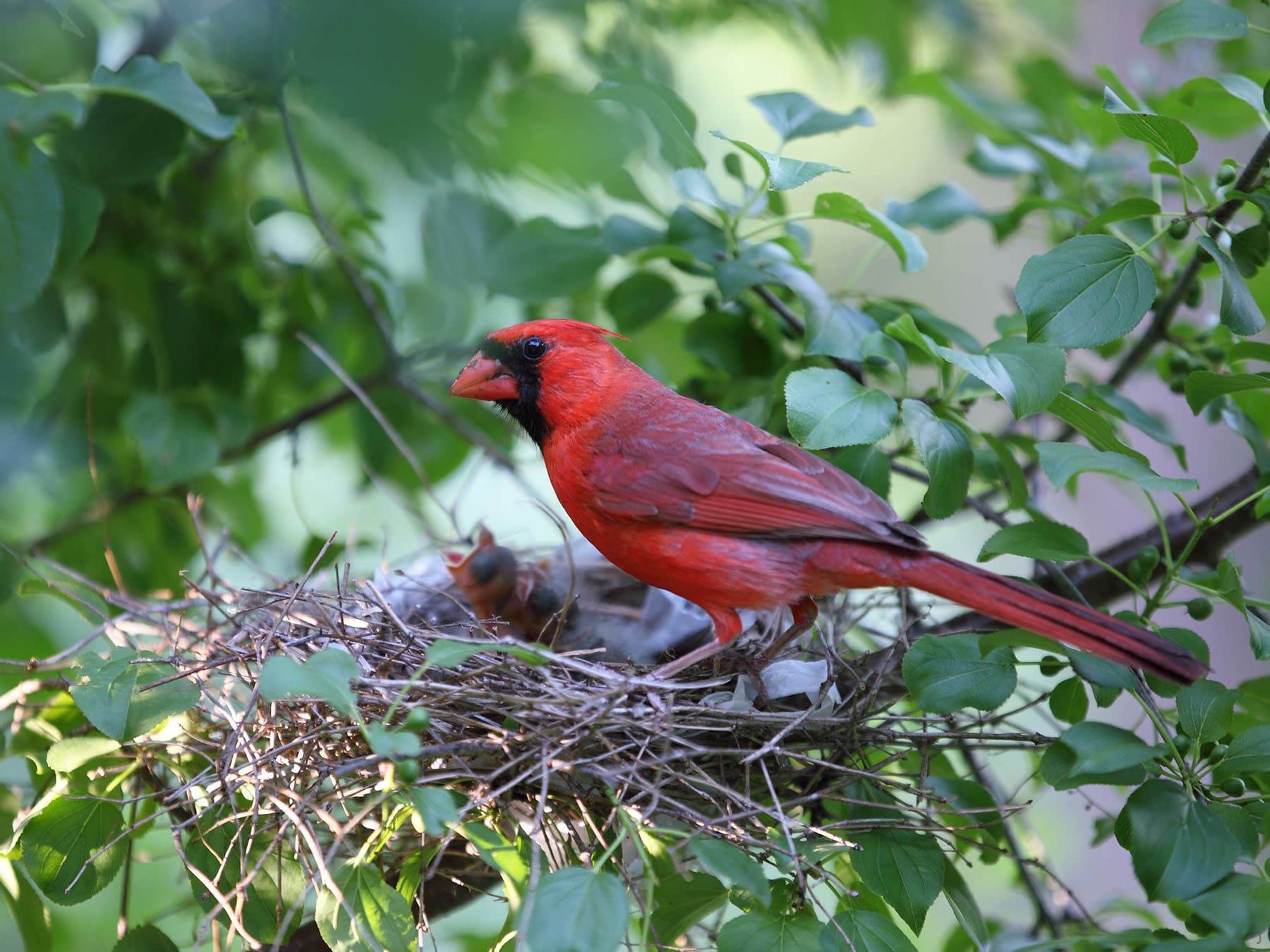
Northern Cardinals build an open cup low in dense shrubs and vines, from late February to late summer. The female lays 2 to 5 speckled eggs and incubates them for 11 to 13 days, and a pair may start 8 to 10 nests in a season because predators take most of them.
On this page11 sections
This page covers the nest and the eggs. For the chicks, see baby cardinals; for the species as a whole, the Northern Cardinal guide.
When do cardinals nest?
Nest building starts between late February and mid-April, in some places while there is still snow on the ground.1 The first eggs are laid in March or April, earlier in the south: the earliest dates on record are 24 March in Texas, 30 March in Florida, 13 April in Ontario and 20 April in Michigan. The last eggs are usually laid in late August.2
Where do cardinals nest?
In thick cover: dense shrubs, small trees, thickets and vine tangles such as honeysuckle, hawthorn, dogwood, rose, wild grape, blackberry, redcedar, privet, yew and ivy. The nest is wedged into a fork of small branches, hidden in foliage, 1 to 15 ft above the ground.3 After losing a nest, cardinals tend to put the next one somewhere better hidden.
Building the nest
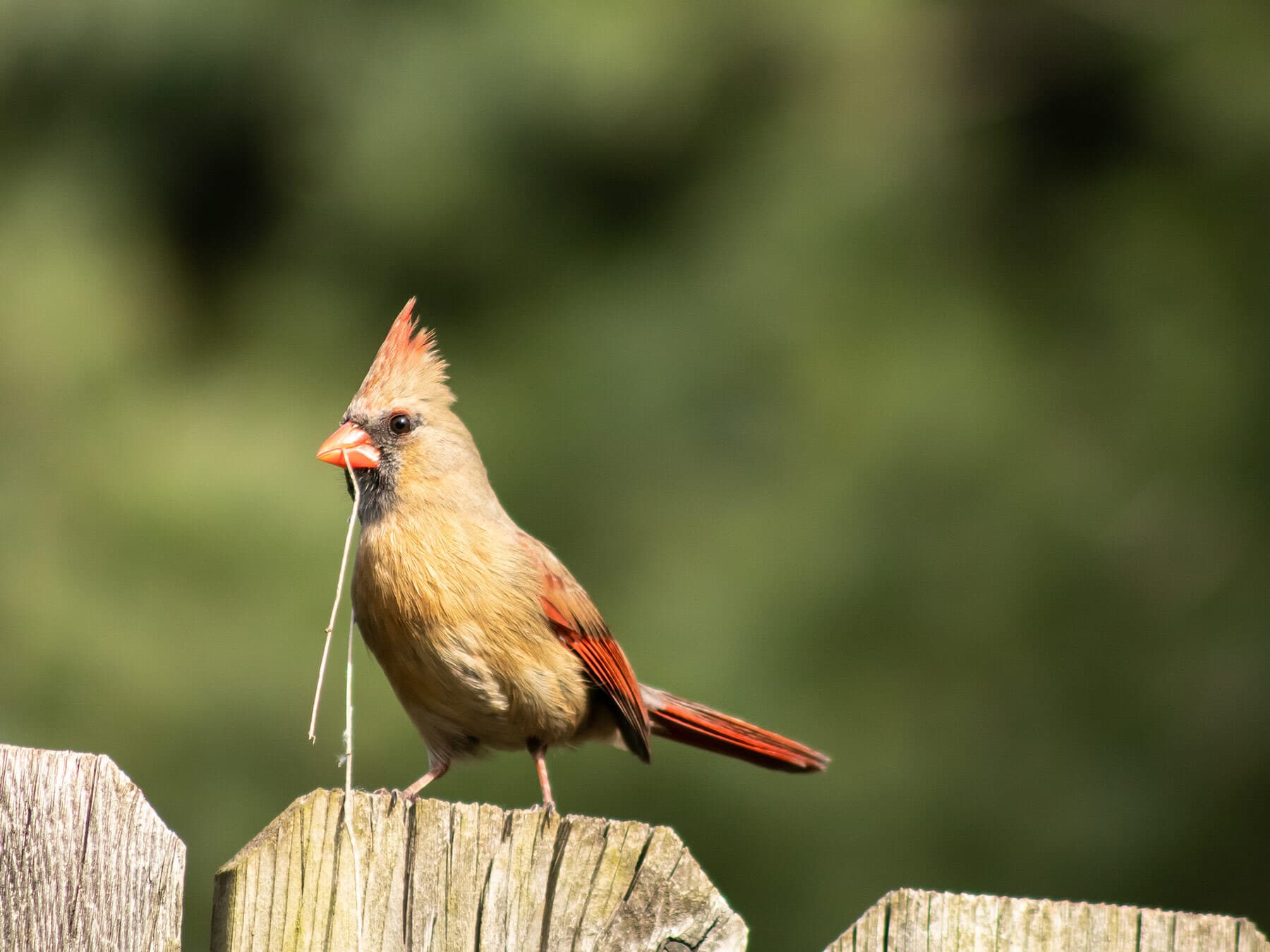
The pair choose the site together: the female visits possible spots, sitting and turning in each, while the male follows and both call. Then she builds, with the male sometimes bringing material and feeding her. She crushes twigs in her bill until they bend, turns in the nest to curve them around her body and pushes them into shape with her feet.
The finished cup has four layers: coarse twigs, a mat of leaves, strips of grapevine bark, and a lining of grass, stems, rootlets and pine needles. Paper and plastic often end up in the outer layer. It is 2 to 3 in tall and about 4 in across, with a hollow about 3 in wide, and takes 3 to 9 days to build.3 The first nest of the year can take two to three weeks.
Eggs
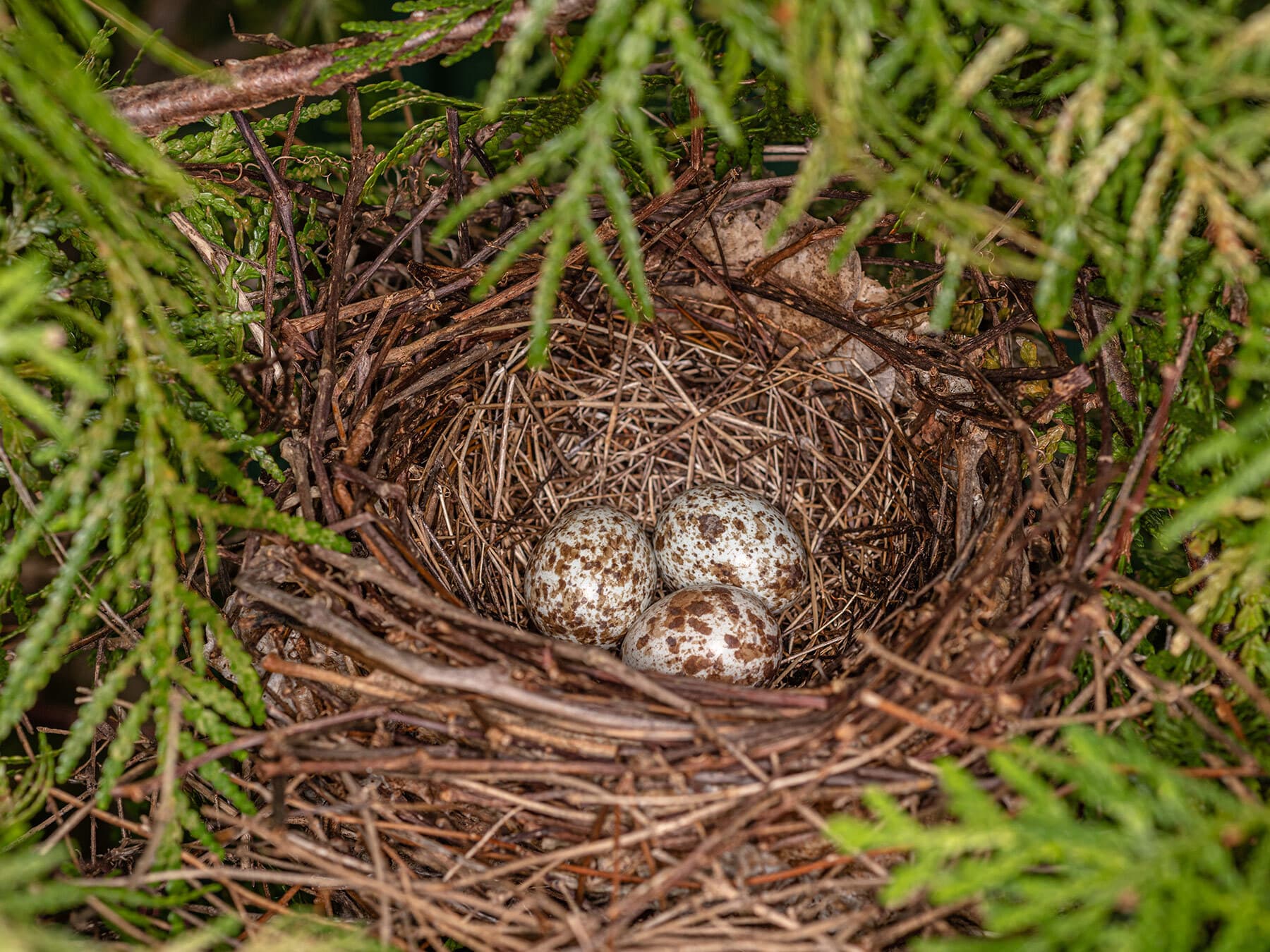
The female lays 2 to 5 eggs, usually 2 or 3, one a day early in the morning. They are grayish, buffy or greenish white, speckled with pale gray to brown, mostly at the wide end, and the last egg is usually more lightly marked than the others. Each is 0.9 to 1.1 in (2.2 to 2.7 cm) long.3
Incubation
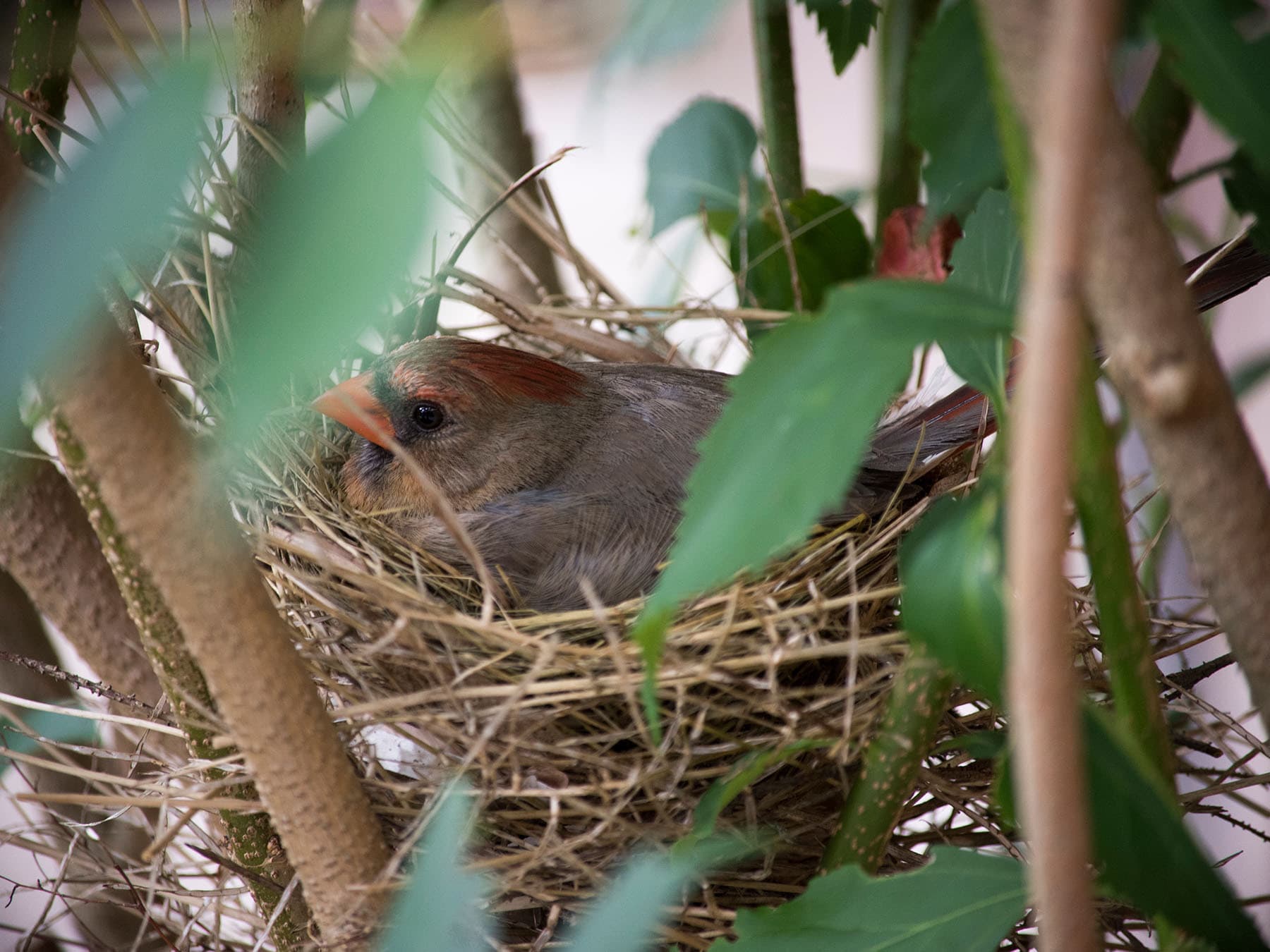
The female incubates alone for 11 to 13 days, starting when the last egg is laid, so the chicks usually hatch on the same day, early in the morning. The male brings her food, at or away from the nest.
Nesting attempts
Predators take about 70% of cardinal nests, so pairs keep trying: a female may start 8 to 10 nests in a season, though seldom more than 2 or 3 succeed. After losing a nest, she starts laying in a new one about 5.5 days later on average, and after a successful nest the next one follows within a few weeks.2
Nest predators and cowbirds
Snakes, Blue Jays, squirrels, chipmunks, raccoons, grackles, opossums, cats and Cooper's Hawks all take cardinal eggs or chicks. Brown-headed Cowbirds lay their eggs in cardinal nests and sometimes remove the cardinal eggs, but cowbird chicks rarely make it in a cardinal nest.
Do cardinals reuse their nests?
Rarely. They build a new nest for each attempt, though a good site may be used again once the old nest has fallen apart.
Nest boxes
Cardinals build open cups in shrubs, small trees and vines, not in boxes.1 To help them nest, plant or keep dense shrubs and vine tangles, and leave the undergrowth.
If you find a nest
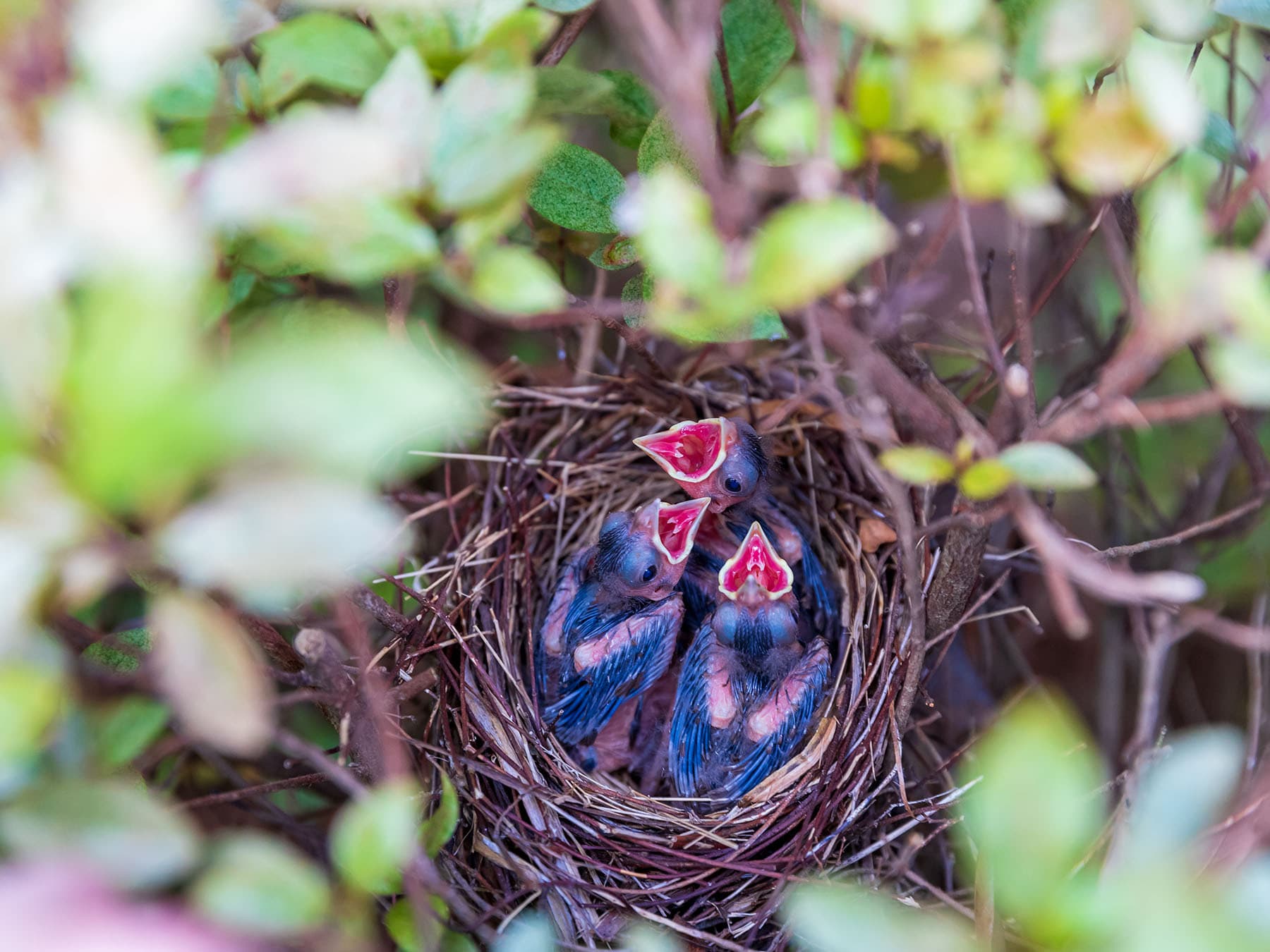
Watch from a distance. Cardinals, their nests and their eggs are protected under the Migratory Bird Treaty Act, and it is illegal to destroy a nest with eggs or young in it.4 Keep away in the last few days before the chicks are due to leave: disturbance can make them jump out early.
Sources
- NestWatch. Common Nesting Birds: Northern Cardinal. NestWatch, Cornell Lab of Ornithology. Accessed 6 October 2026. Source
- Halkin, S. L., Shustack, D. P., DeVries, M. S., Jawor, J. M., Linville, S. U. (2021). Northern Cardinal (Cardinalis cardinalis), version 2.0. Birds of the World (P. G. Rodewald and B. K. Keeney, editors). Cornell Lab of Ornithology. doi:10.2173/bow.norcar.02
- Cornell Lab of Ornithology. Northern Cardinal: Life History. All About Birds. Accessed 6 October 2026. Source
- U.S. Fish and Wildlife Service. Bird nests. U.S. Fish and Wildlife Service. Accessed 6 October 2026. Source
- Kaufman, K.. Northern Cardinal. Audubon Guide to North American Birds (text adapted from Lives of North American Birds, 1996). Accessed 6 October 2026. Source