Facts · Updated 8 Oct 2026
Cardinal Meaning and Symbolism: Lore and Legends of the Red Bird
By the Birdfact teamChecked by Nathan Cope
What it means when you see a cardinal, according to the beliefs people hold, and where those beliefs come from: the name borrowed from the Catholic Church, the Cherokee legend of the redbird as the Daughter of the Sun, and the real bird behind the symbol.
On this page10 sections
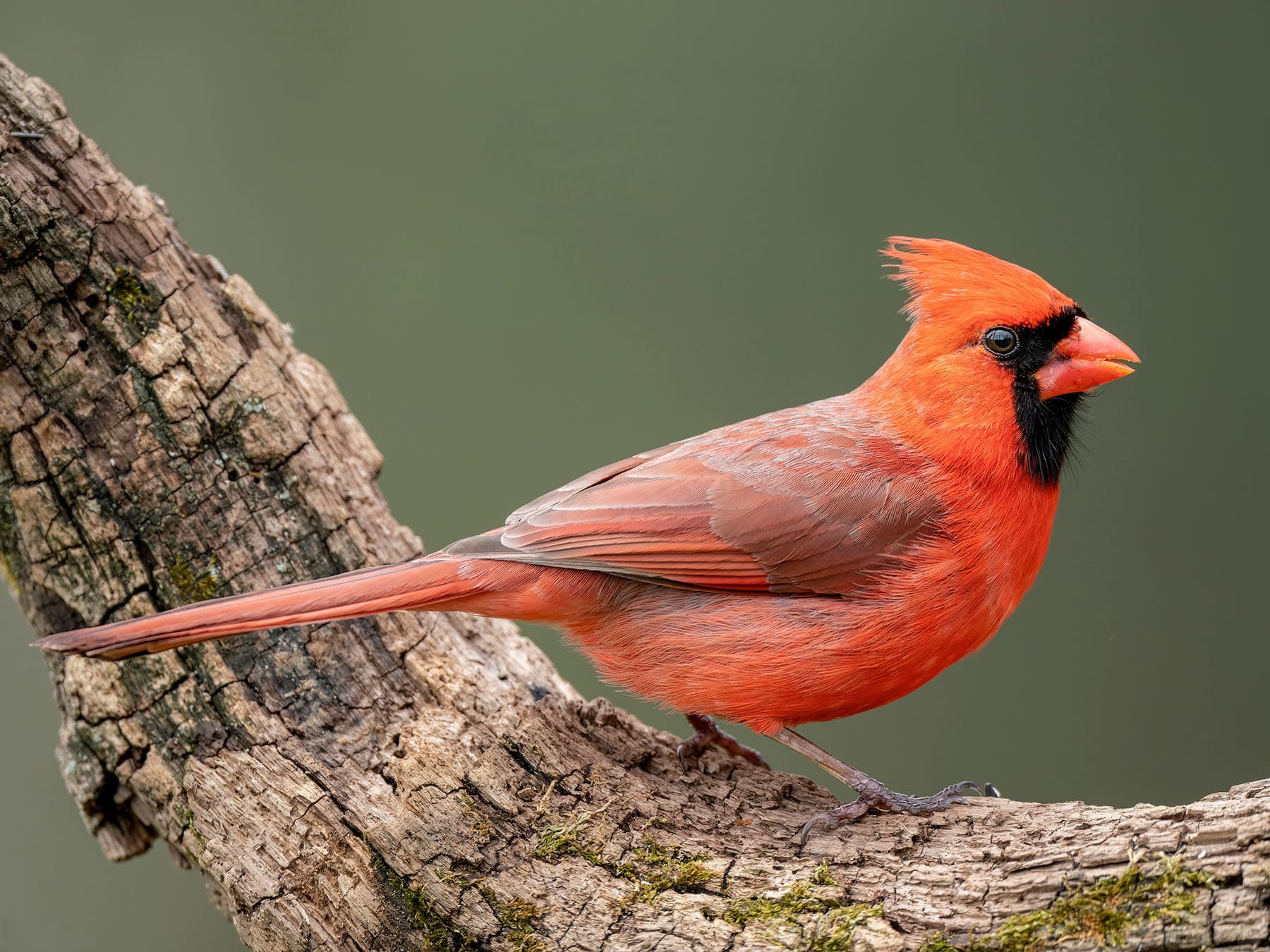
Cardinals carry a lot of meaning for many people. This page sets out what is documented: where the name comes from, the beliefs people hold and where they come from, the Cherokee legend of the redbird, and the real bird behind the symbols. For the bird itself, see the Northern Cardinal guide.
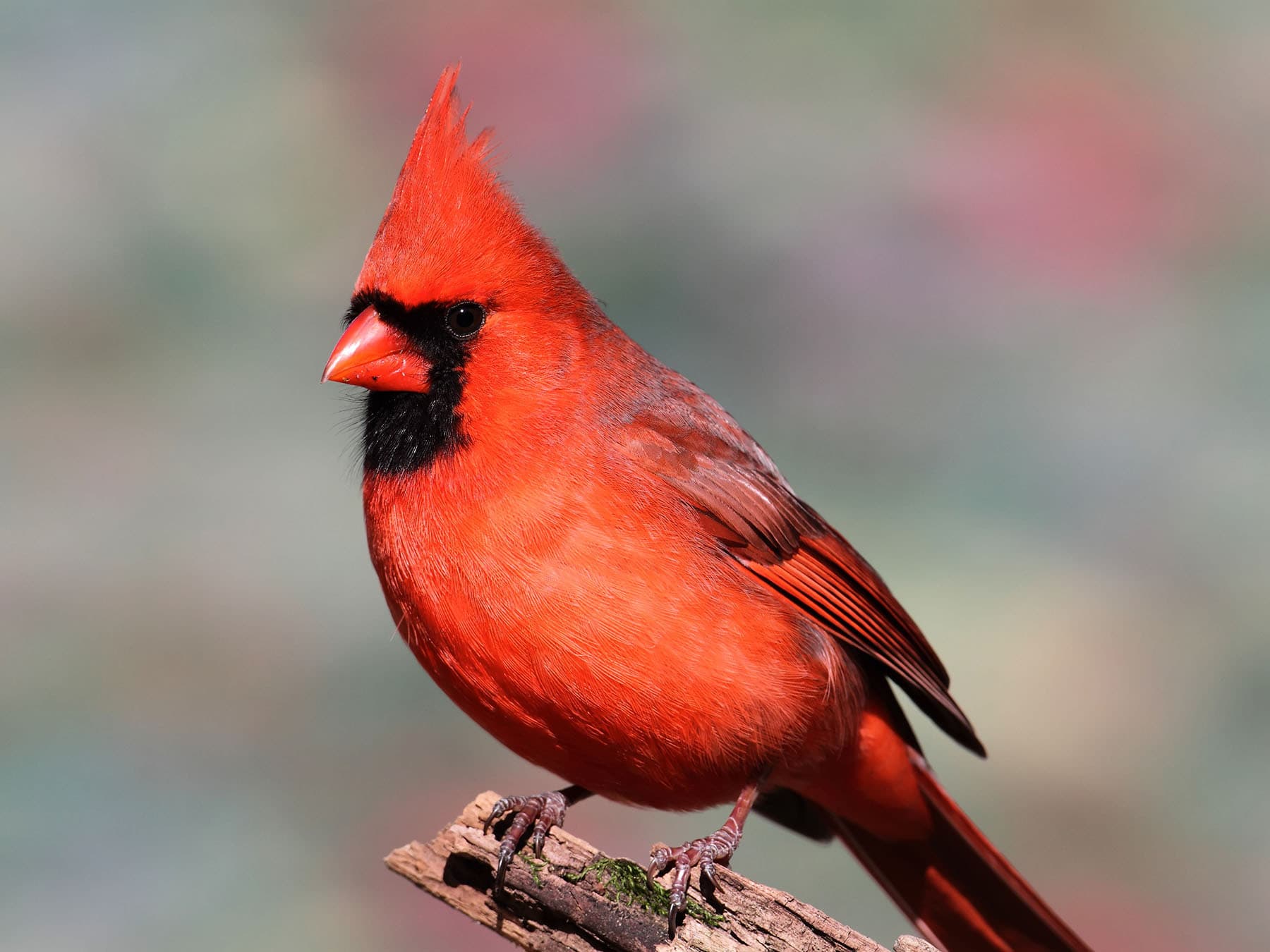
Why is it called a cardinal?
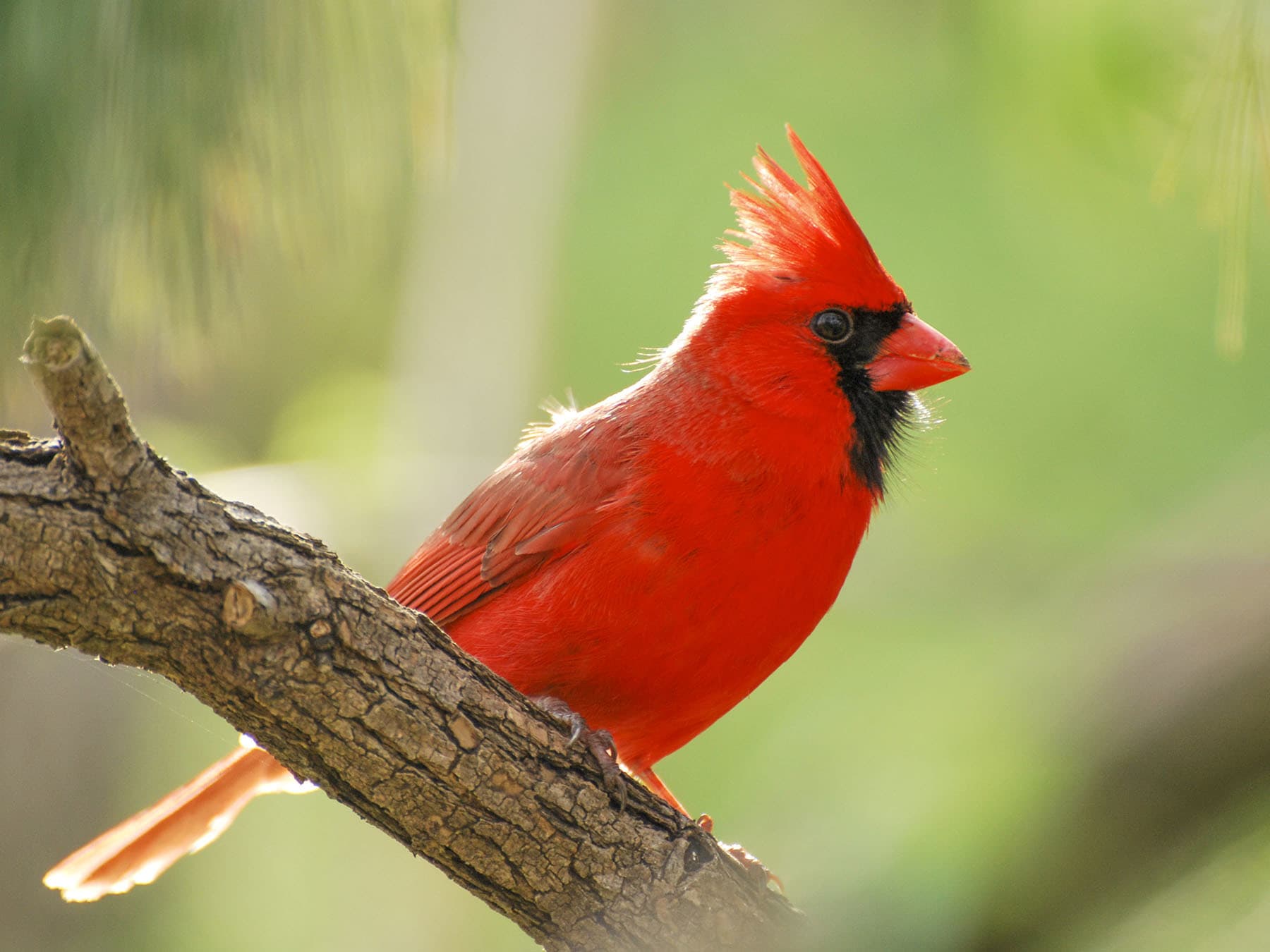
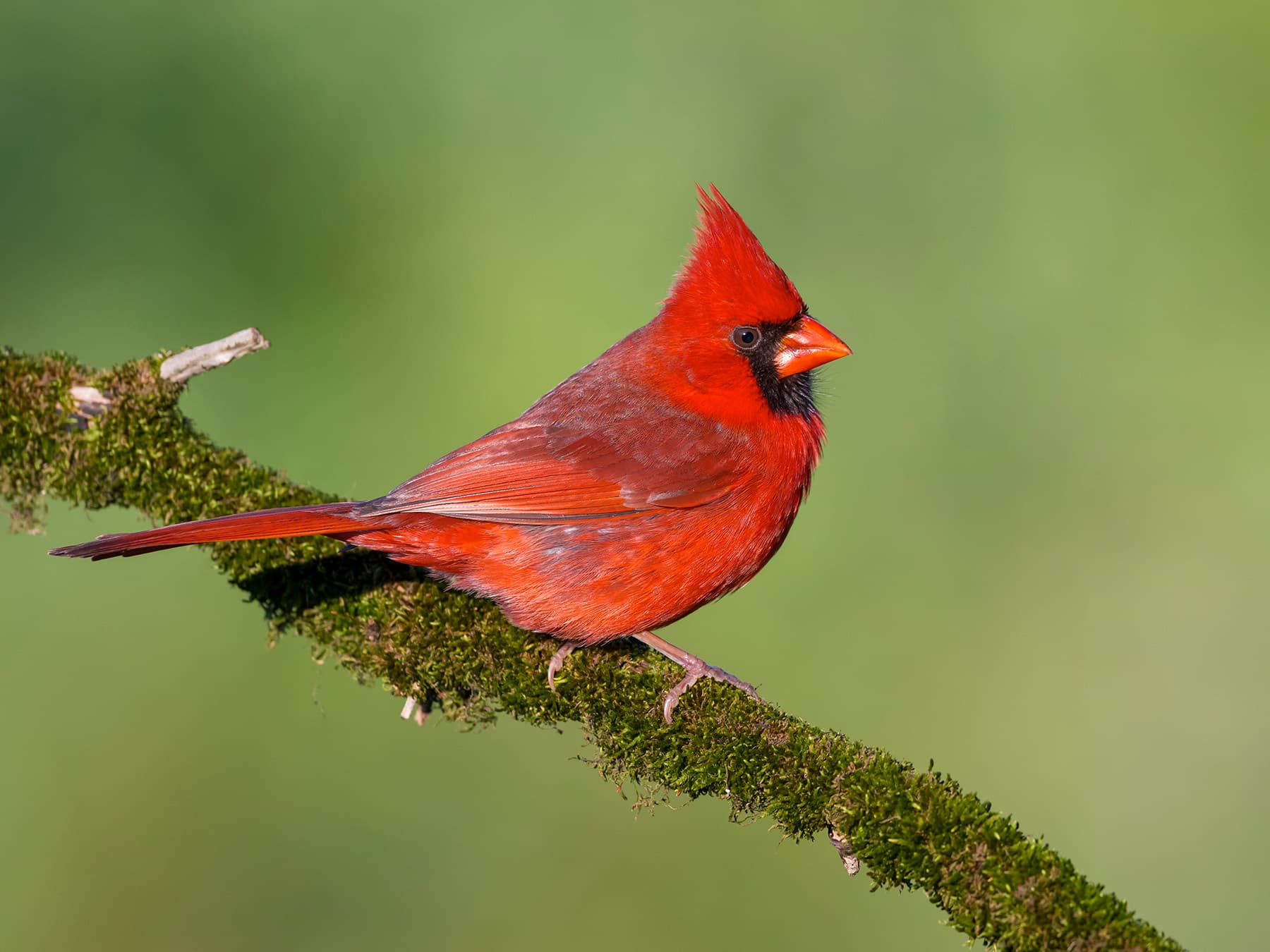
Because of its color. The bird is named after the cardinals of the Catholic Church, whose red robes its plumage resembles.1 The word "cardinal" goes back to Latin cardo, a hinge. Until 1982 the bird's official English name was simply Cardinal; "Northern" was added that year.
What does it mean when you see a cardinal?
The most widespread belief today is that a cardinal turning up near you is a message from someone you loved who has died. The Farmers' Almanac notes that this belief cannot be traced to a single source, and that birds have long stood for messengers or visitors from beyond.2
It is folklore, and many people find it comforting. The bird's habits help explain why the idea took hold: cardinals stay in the same yards all year, come to feeders around dawn and dusk, are bright red even in snow, and both males and females sing. A cardinal is a bird you notice, and keep noticing.
The legend of the cardinal in Cherokee tradition
In the Cherokee story "The Daughter of the Sun", published by the ethnologist James Mooney in 1900, the Sun's daughter has died, and seven men are sent to the Ghost country in the west to bring her back. They catch her, shut her in a box and are told not to open it until they are home. Close to home she begs for air, they lift the lid a little, and something flies out into the bushes with a redbird's cry. When they reach home the box is empty.3
"So we know the Redbird is the daughter of the Sun," the story ends, and because the box was opened, the dead can never be brought back. Mooney also recorded a shorter tale from one narrator in which a little brown bird paints itself red, but noted that the standard Cherokee story is the Daughter of the Sun.
Luck
Modern folklore links cardinals with love and luck.2 There is no way to test it; what is certain is that if you put out black-oil sunflower seed near dense shrubs, your luck with cardinals will improve. More: what cardinals eat.
A pair of cardinals
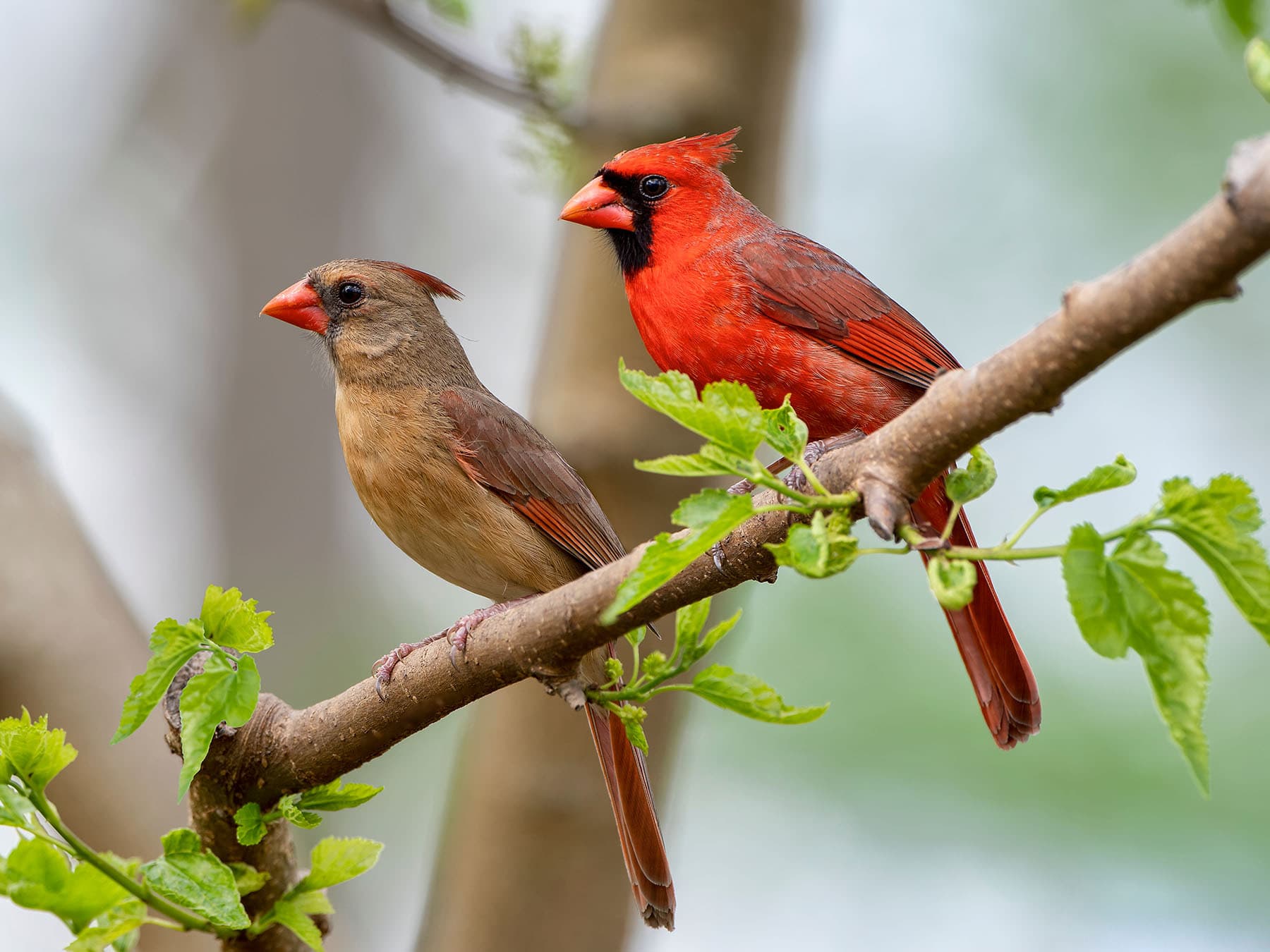
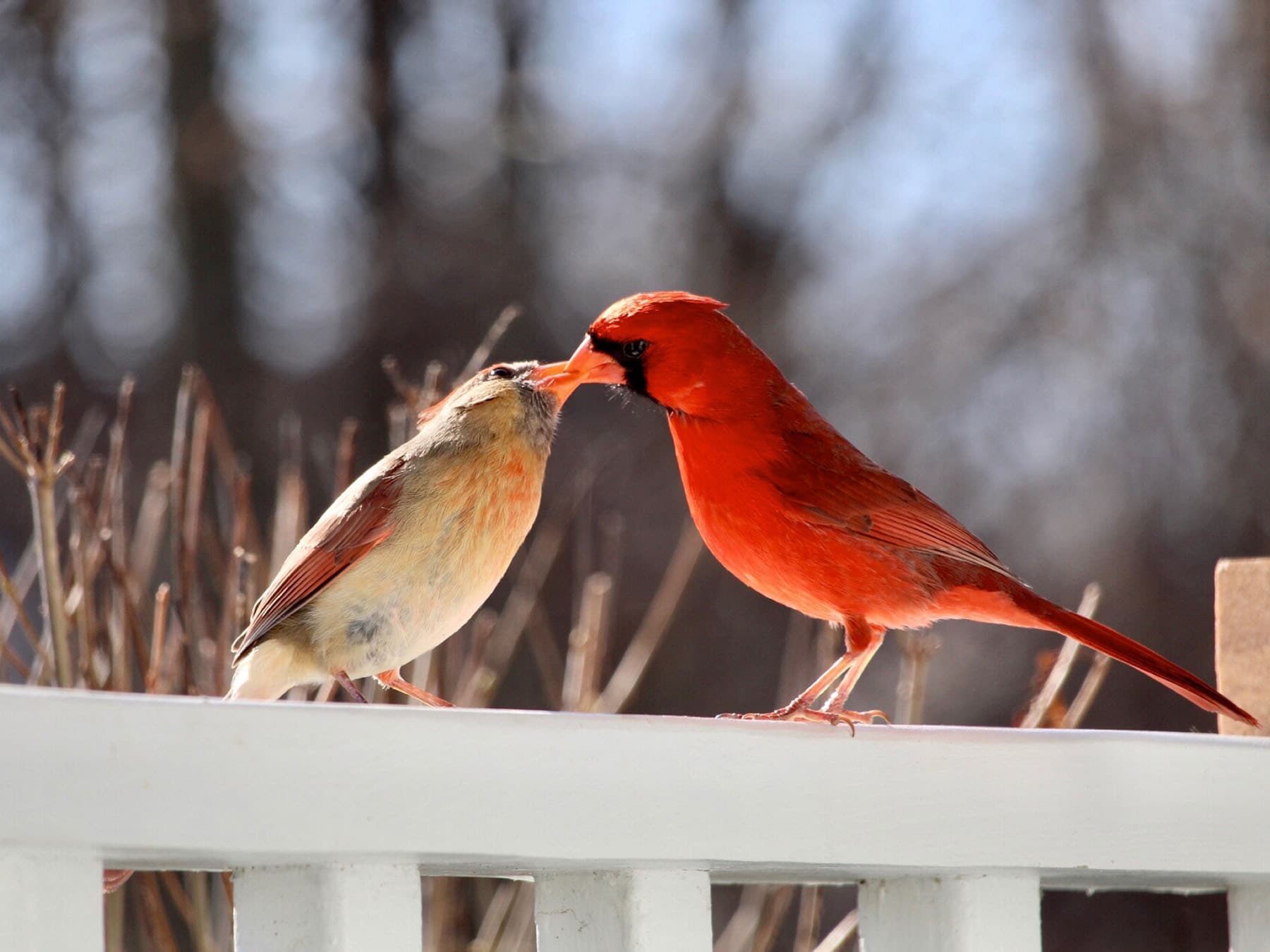
In the real bird, a pair is a partnership that often lasts beyond one season. Pairs can stay together through the winter, and All About Birds puts the share of pairs that split up by the next season at up to 20%.4 The male feeds the female beak to beak during courtship and while she sits on the eggs, which looks very like a kiss. More: female cardinals.
Cardinal feather meaning
Whatever a feather means to you, keep it where you found it. The Migratory Bird Treaty Act makes it unlawful to possess any part of a protected bird without a permit, and the Northern Cardinal is protected, so that includes its feathers.5
White cardinal meaning
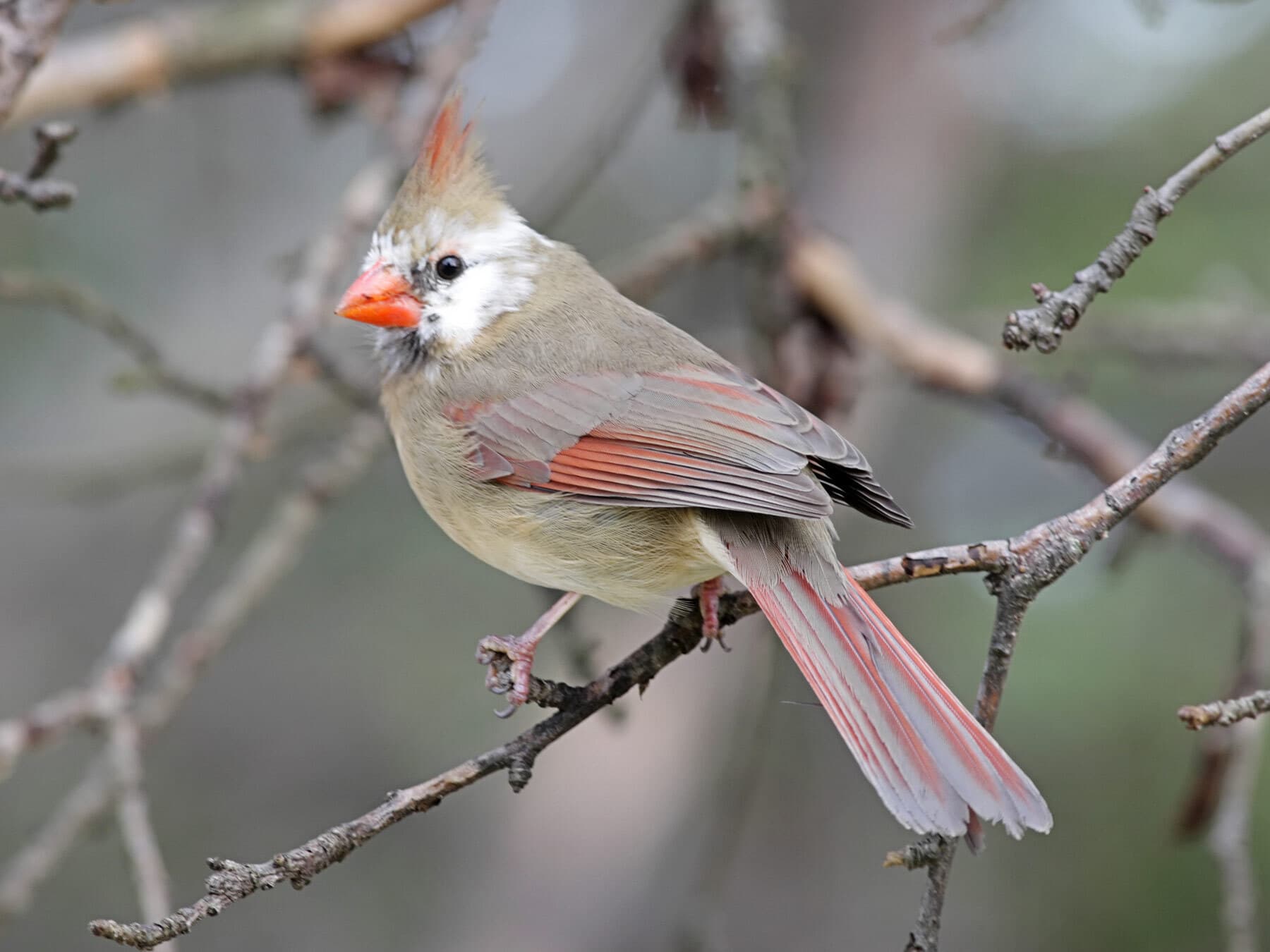
A white or white-patched cardinal is a cardinal with leucism, a condition that leaves some or all feathers without pigment. It is rare but real, and Birds of the World lists leucistic and partly leucistic cardinals among the unusual plumages on record.
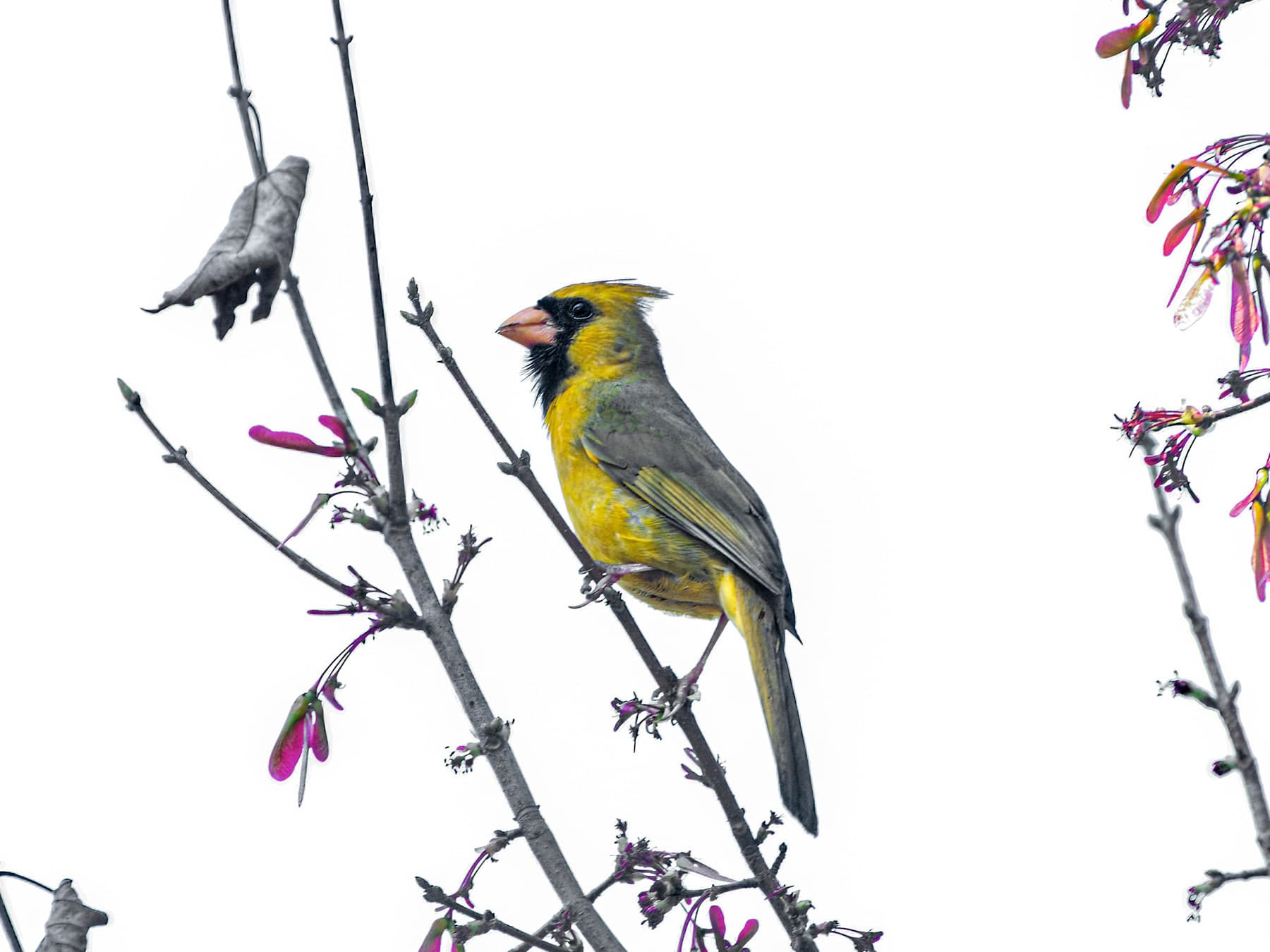
Yellow cardinal meaning
A yellow Northern Cardinal is rarer still. A yellow male that scientists studied had only yellow pigments in its feathers, which suggests it lacked the enzymes that turn yellow pigments red.6 Audubon has put such birds at an estimated one in a million.
The cardinal as a state bird
The Northern Cardinal is the state bird of seven states: Illinois, Indiana, Kentucky, North Carolina, Ohio, Virginia and West Virginia.7 See state birds.
Sources
- Merriam-Webster. Cardinal. Merriam-Webster.com Dictionary. Accessed 6 October 2026. Source
- Mayntz, M. (2026). Cardinal Meaning: Symbolism and Lore of the Red Bird. Farmers' Almanac. Accessed 6 October 2026. Source
- Mooney, J. (1900). Myths of the Cherokee. Nineteenth Annual Report of the Bureau of American Ethnology, 1897-98, Part 1. Government Printing Office, Washington. Accessed 6 October 2026. Source
- Cornell Lab of Ornithology. Northern Cardinal: Life History. All About Birds. Accessed 6 October 2026. Source
- U.S. Code. 16 U.S.C. 703: Taking, killing, or possessing migratory birds unlawful. Legal Information Institute, Cornell Law School. Accessed 6 October 2026. Source
- McGraw, K. J., Hill, G. E., Parker, R. S. (2003). Carotenoid pigments in a mutant cardinal: implications for the genetic and enzymatic control mechanisms of carotenoid metabolism in birds. The Condor 105: 587-592. doi:10.1093/condor/105.3.587
- Cornell Lab of Ornithology. Northern Cardinal: Overview and Identification. All About Birds. Accessed 6 October 2026. Source
- Halkin, S. L., Shustack, D. P., DeVries, M. S., Jawor, J. M., Linville, S. U. (2021). Northern Cardinal (Cardinalis cardinalis), version 2.0. Birds of the World (P. G. Rodewald and B. K. Keeney, editors). Cornell Lab of Ornithology. doi:10.2173/bow.norcar.02
- Kahfi, K. (2023). 10 Fun Facts About the Northern Cardinal. Audubon magazine. Accessed 6 October 2026. Source