Facts · Updated 8 Oct 2026
Cardinals in Winter: Where They Go and How They Survive
By the Birdfact teamChecked by Nathan Cope
Northern Cardinals do not migrate. In winter they roost in thickets, feed in loose flocks and visit feeders, and survive cold nights with extra fat, fluffed feathers and a lower body temperature at night. Where cardinals go, how they survive and what they eat in winter.
On this page10 sections
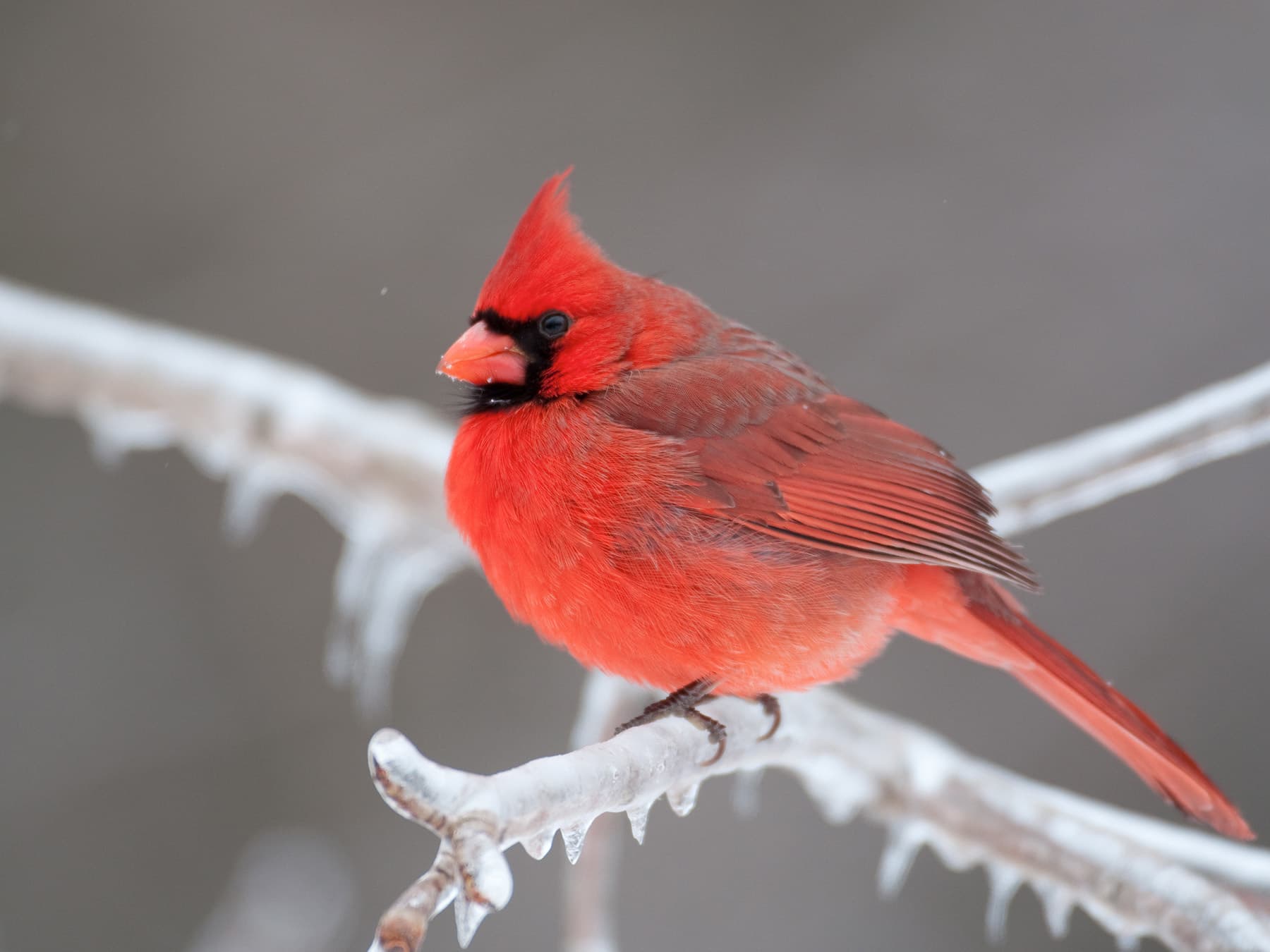
Cardinals stay put for the winter, so the cardinal at your feeder in January may well be a bird that nests nearby in spring. Here is where they spend the winter and how they get through the cold.
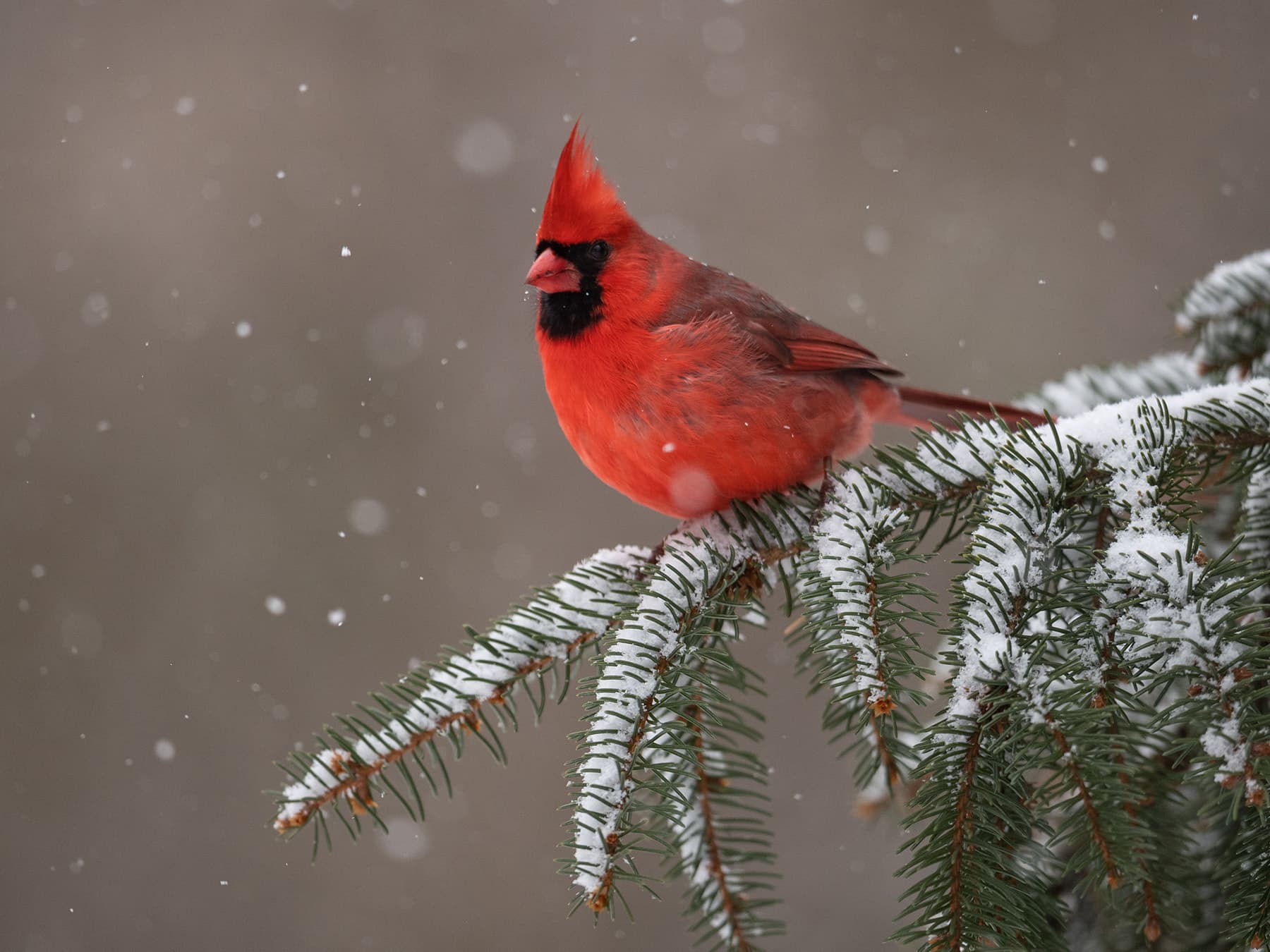
Do cardinals migrate or fly south for the winter?
No. Cardinals are year-round residents across their range. Nearly 90% of banded cardinals that were later found dead were in the same small block of latitude and longitude where they had been banded, with no sign of a seasonal direction.1
Some adults stay on their breeding territory all winter; others wander more widely if food or shelter runs short, for example to farms with grain when deep snow covers the ground.
Where do cardinals go in winter?
The same kind of places as in summer: thickets, shrubby edges, hedgerows and yards. Fewer cardinals are seen in woods in winter, probably because many leave their territories to join flocks or visit feeders. A winter home range is much larger than a summer territory: cardinals may travel between feeding stations up to 2.1 km (1.3 miles) apart.2
Winter flocks
Cardinal flocks form in the fall, after the molt, often starting as a family group that grows as neighbors and young birds join. All About Birds describes them as a dozen to several dozen birds.3 In Tennessee, flocks of 6 to 25 were typical, and flocks of more than 100 have been reported in West Virginia and southern Indiana.2
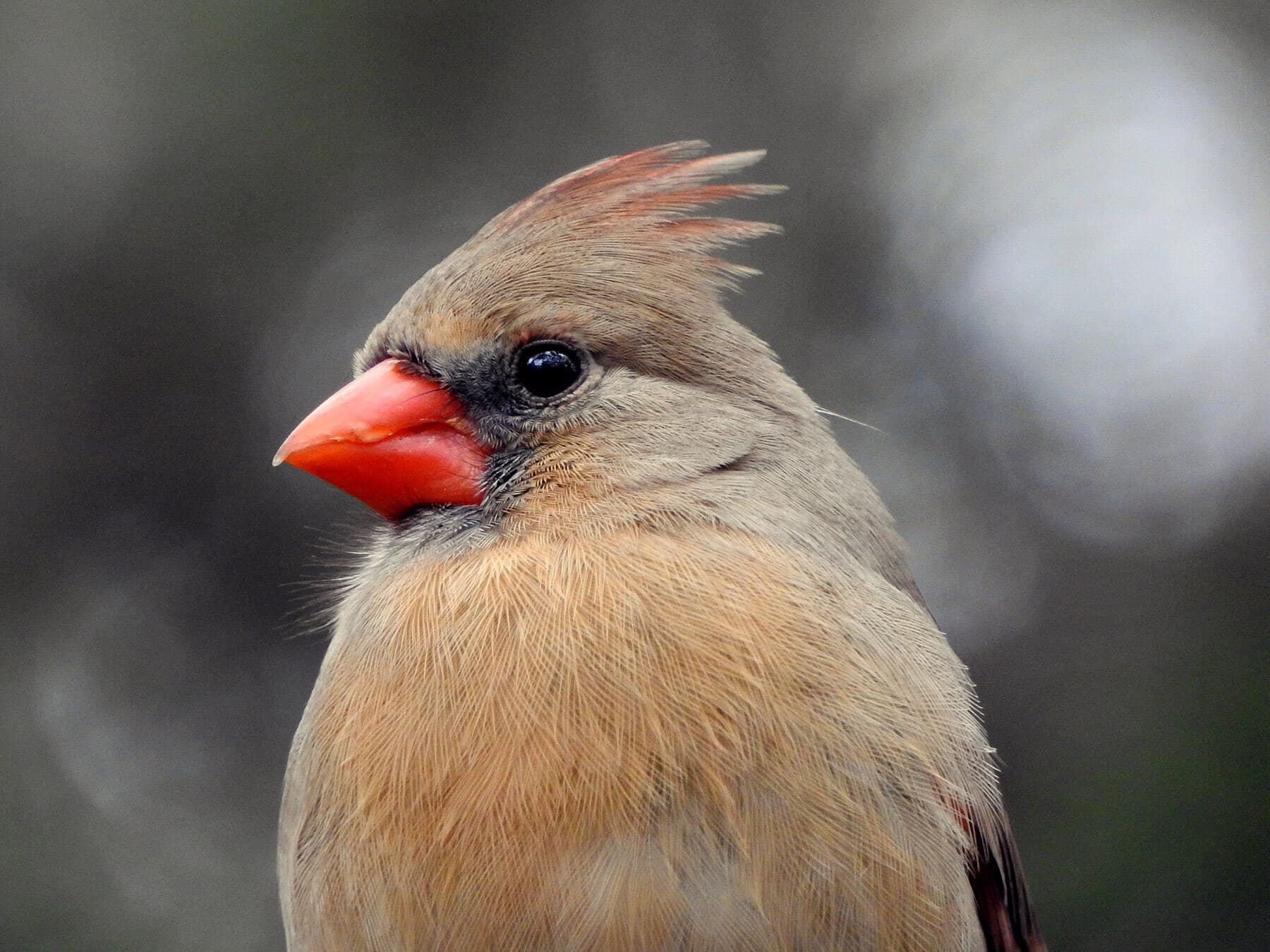
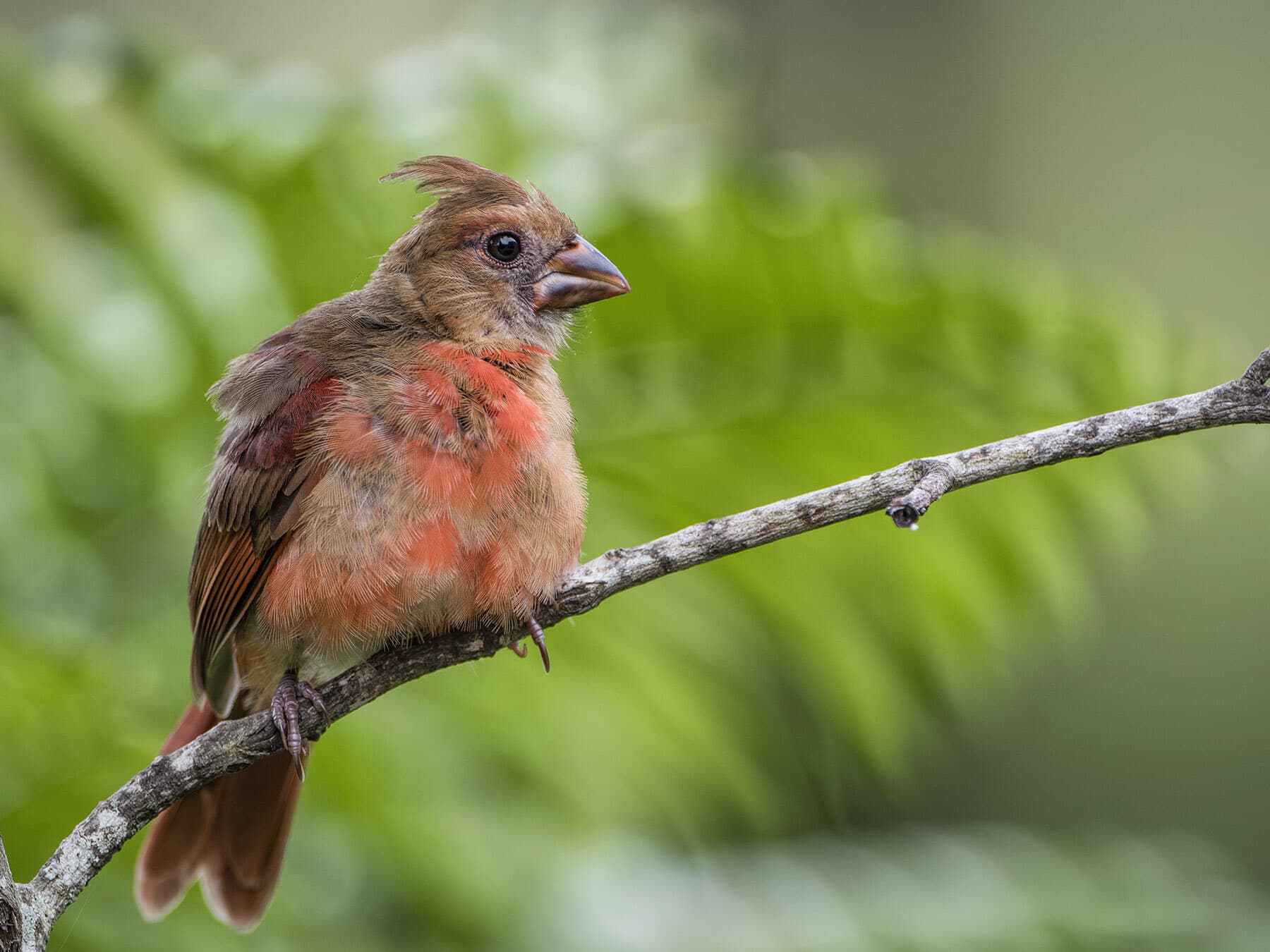
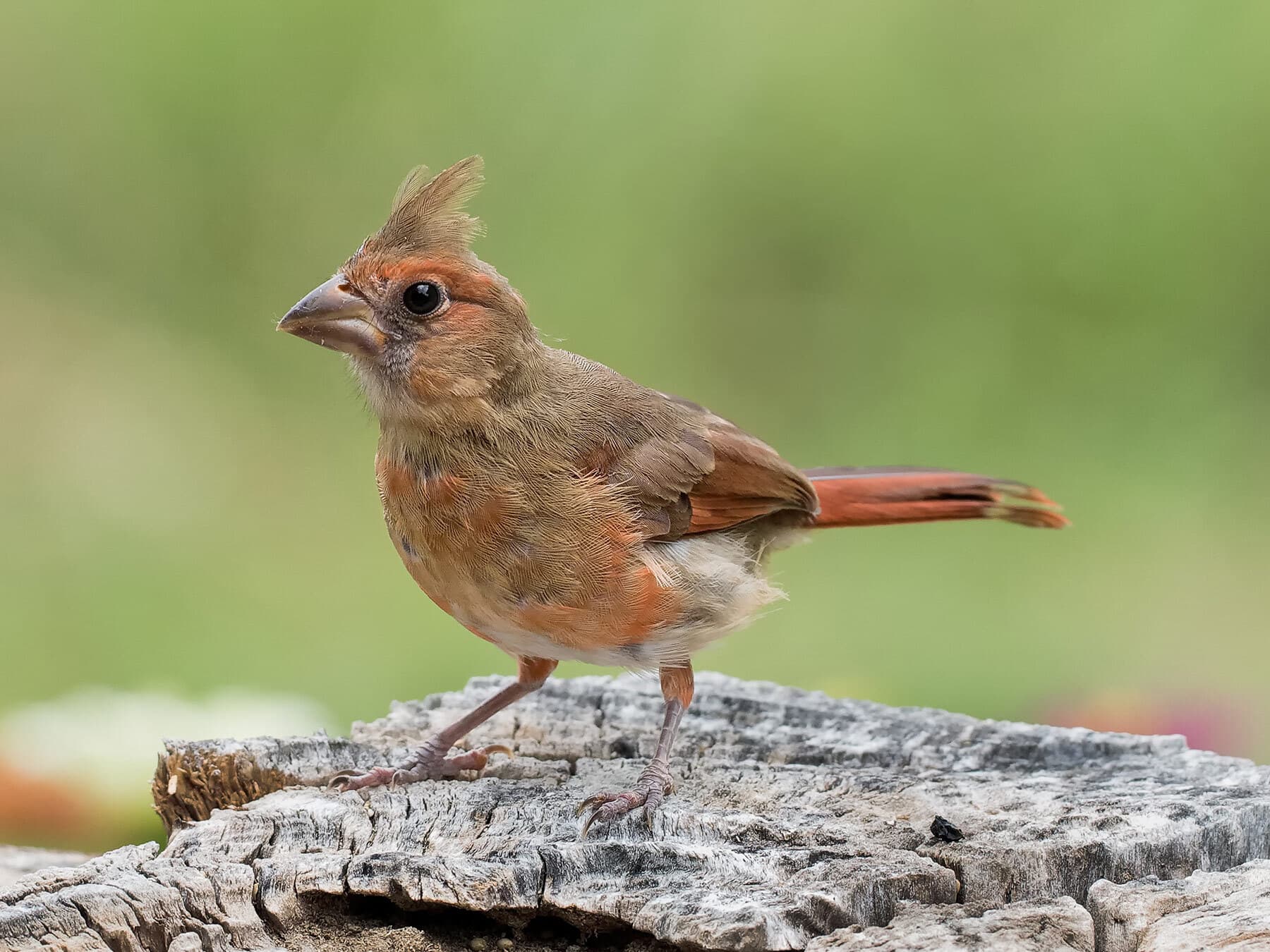
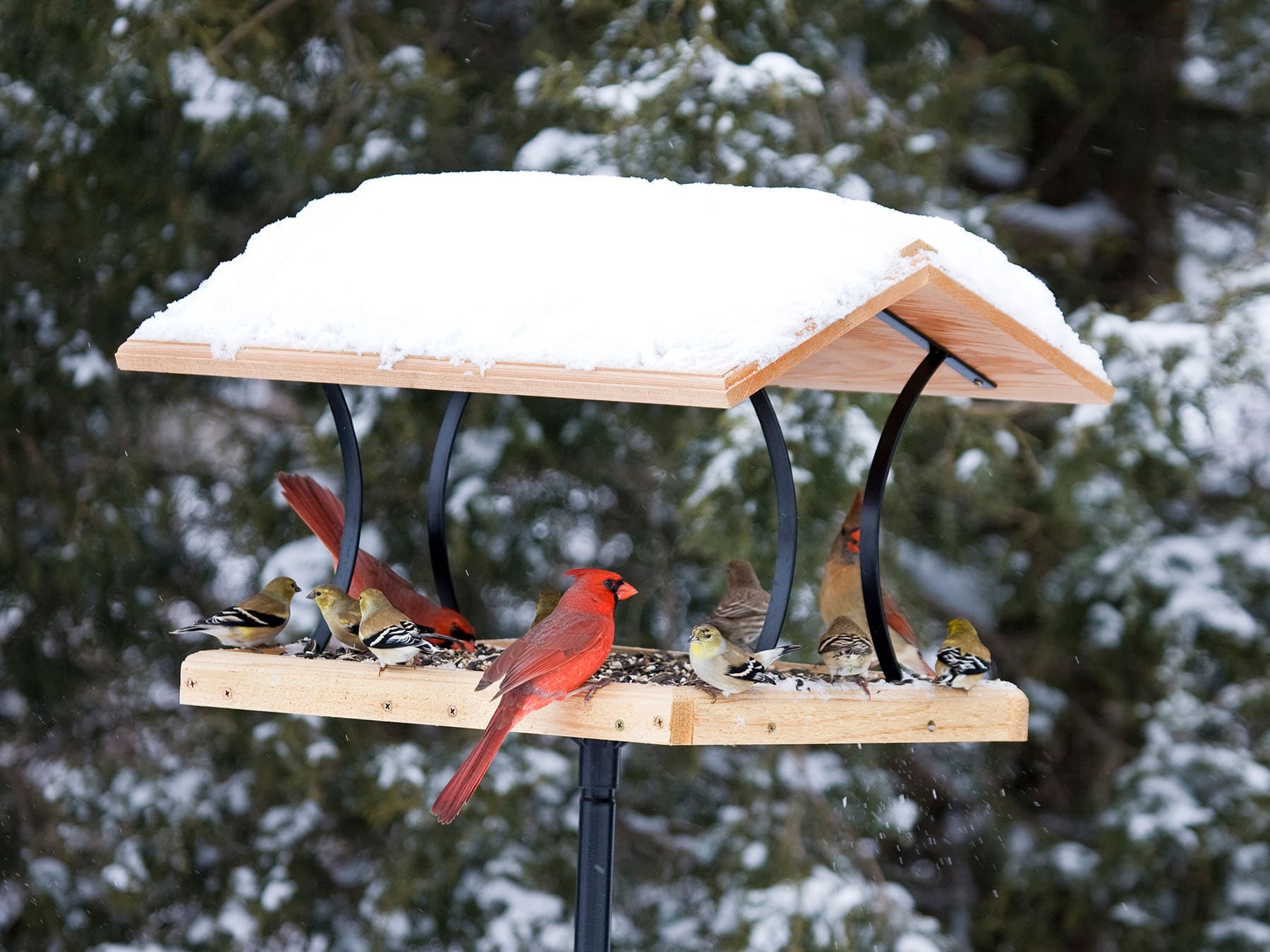
Winter flocks hold both sexes and young and old birds, often with juncos, White-throated Sparrows, Tufted Titmice and goldfinches. They break up between January and March as pairs settle on territories. More: what a group of cardinals is called.
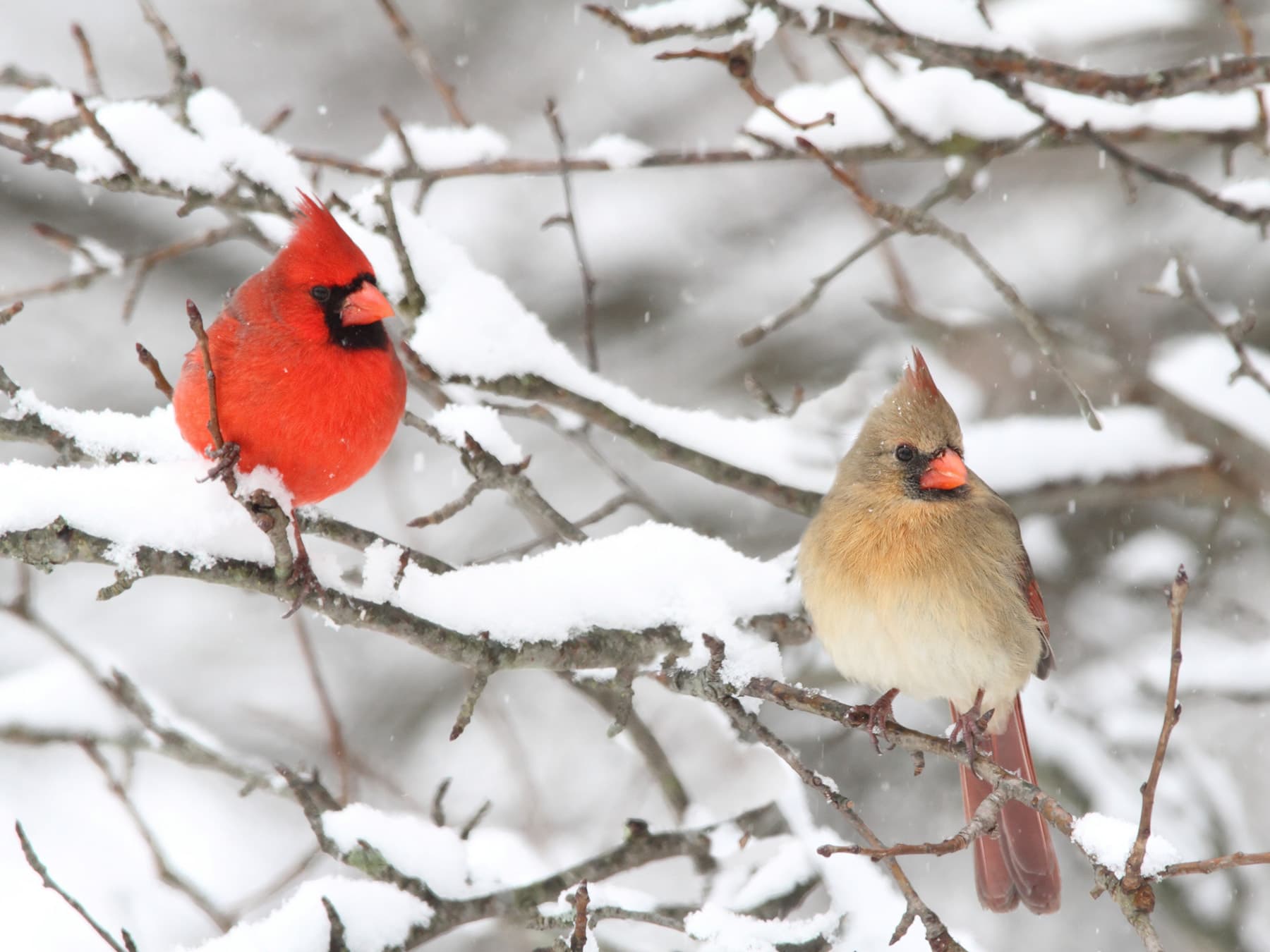
How do cardinals survive the winter?
Fat and feathers. Cardinals carry more fat in winter than in summer, fluff their feathers and tuck the bill into the back feathers to keep warm; in laboratory tests they held out at -40 degrees (Celsius and Fahrenheit) in still air. A cardinal's body temperature is 106 to 108.5°F (41 to 42.5°C) by day and drops to 101 to 104°F (38.5 to 40°C) at night, and in winter that daily rhythm is lowered further, which saves an estimated 10 to 16% of the energy it needs each day. Cardinals do not go into torpor.2
Long winter nights are the hard part: a cardinal burns nearly twice as much energy overnight in winter as on a short summer night. At the northern edge of the range, cardinals may be close to the limit of what they can survive.
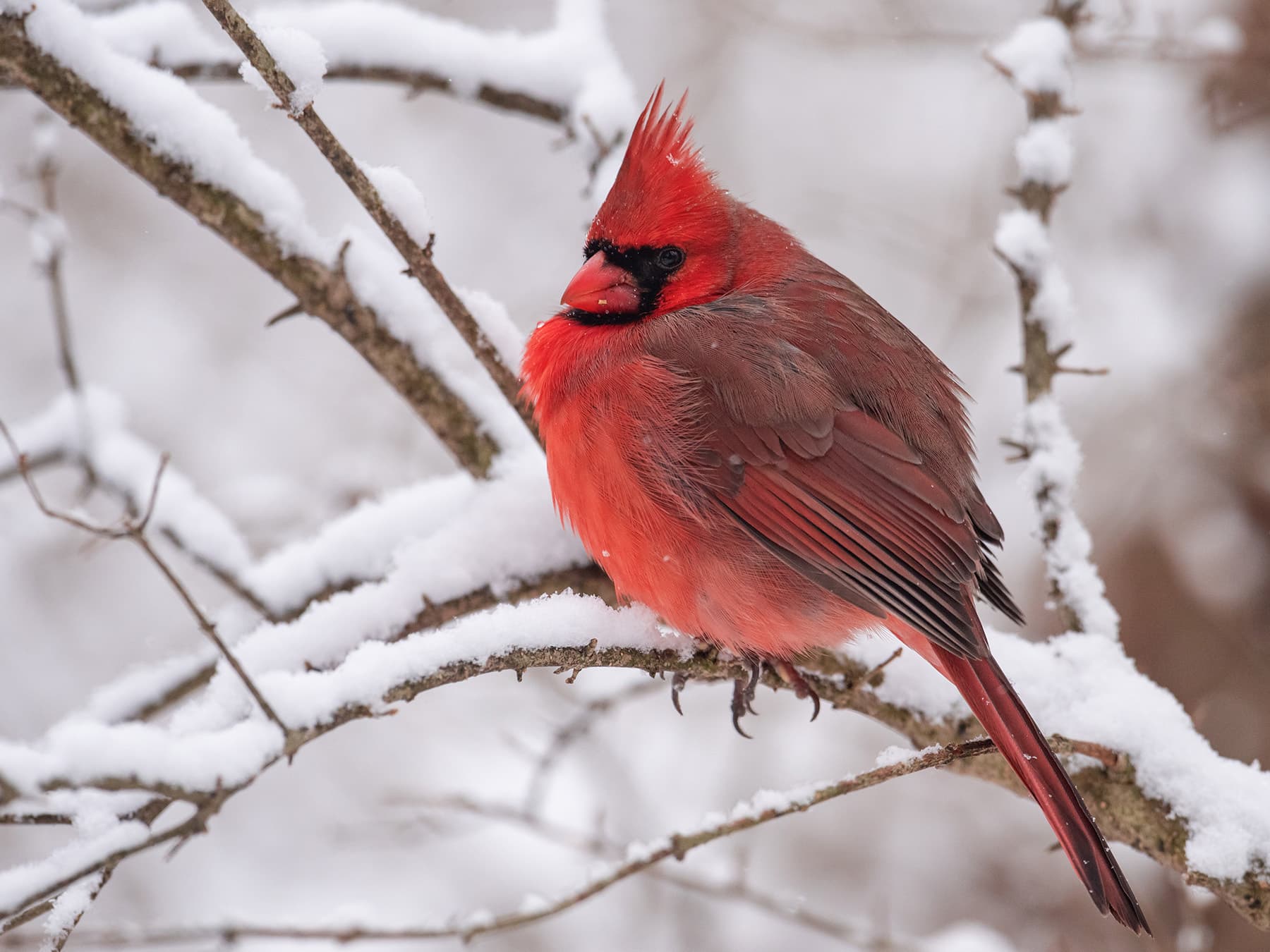
Winter roosts
Members of a winter flock roost together in thickets or groves of conifers, and pairs may roost close together. Cardinals go to roost late in the evening, and you often hear loud chip calls just before they settle.
Winter food
In winter they eat almost all plant food, about 88% of the diet: weed seeds, wild fruit and berries, and feeder seed. Winter feeding stations seem to have helped cardinals spread north over the last century. More: what cardinals eat.
Red against the snow
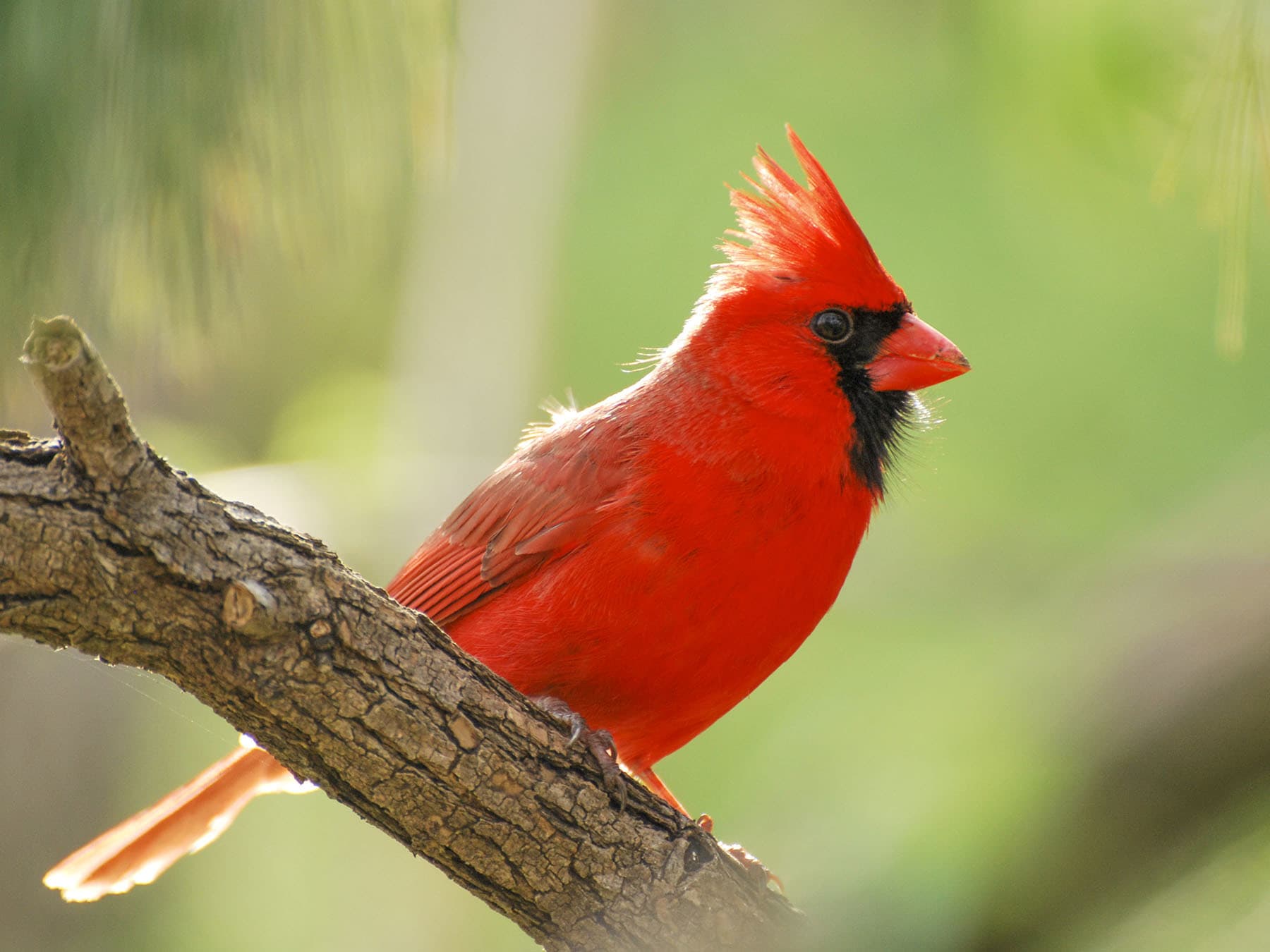
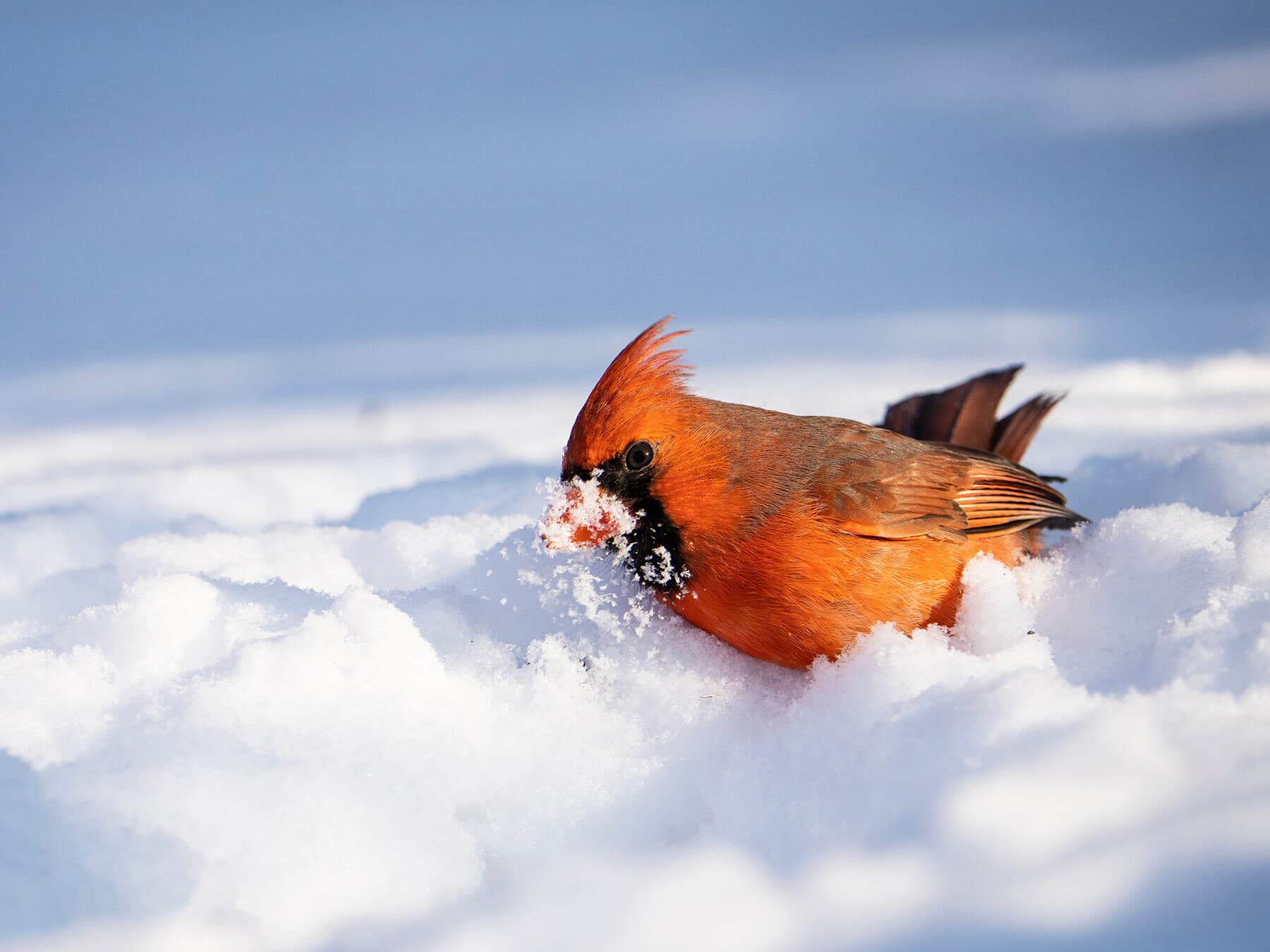
They stay, and they stay red. Cardinals do not migrate and do not molt into a dull winter plumage, so a male is as bright in a snowy yard as in summer.4
Winter song
Males sing in every month, but least in November and December. Song picks up again from late winter, and courtship can begin in January in the south and February farther north.
Helping cardinals in winter
Keep a feeder stocked with black-oil sunflower, leave dense shrubs and evergreens for roosting, and keep a birdbath open: cardinals bathe all year, even in winter.
Sources
- Dow, D. D., Scott, D. M. (1971). Dispersal and range expansion by the cardinal: an analysis of banding records. Canadian Journal of Zoology 49(2): 185-198. doi:10.1139/z71-028
- Halkin, S. L., Shustack, D. P., DeVries, M. S., Jawor, J. M., Linville, S. U. (2021). Northern Cardinal (Cardinalis cardinalis), version 2.0. Birds of the World (P. G. Rodewald and B. K. Keeney, editors). Cornell Lab of Ornithology. doi:10.2173/bow.norcar.02
- Cornell Lab of Ornithology. Northern Cardinal: Life History. All About Birds. Accessed 6 October 2026. Source
- Cornell Lab of Ornithology. Northern Cardinal: Overview and Identification. All About Birds. Accessed 6 October 2026. Source
- NestWatch. Common Nesting Birds: Northern Cardinal. NestWatch, Cornell Lab of Ornithology. Accessed 6 October 2026. Source