Facts · Updated 13 Oct 2026
What Do Mockingbirds Eat? Insects, Berries and Feeders
By the Birdfact teamChecked by Nathan Cope
Northern Mockingbirds eat insects in spring and summer and fruit in fall and winter, about half and half over a year. The most complete study of their diet, 417 stomachs, found grasshoppers, caterpillars and beetles, 35 kinds of wild fruit, three lizards and a snake, and no grain. What they eat, how they hunt, what they feed their young, and what to put out for them.
On this page14 sections
- A year of food
- Insects and other small animals
- Do mockingbirds eat lizards and snakes?
- How mockingbirds hunt
- Fruit and berries
- Spreading seeds
- Seeds and bird seed
- Winter: guarding the fruit
- Do mockingbirds eat other birds?
- What do baby mockingbirds eat?
- Feeding mockingbirds in your yard
- Do mockingbirds damage fruit crops?
- Water
- Sources
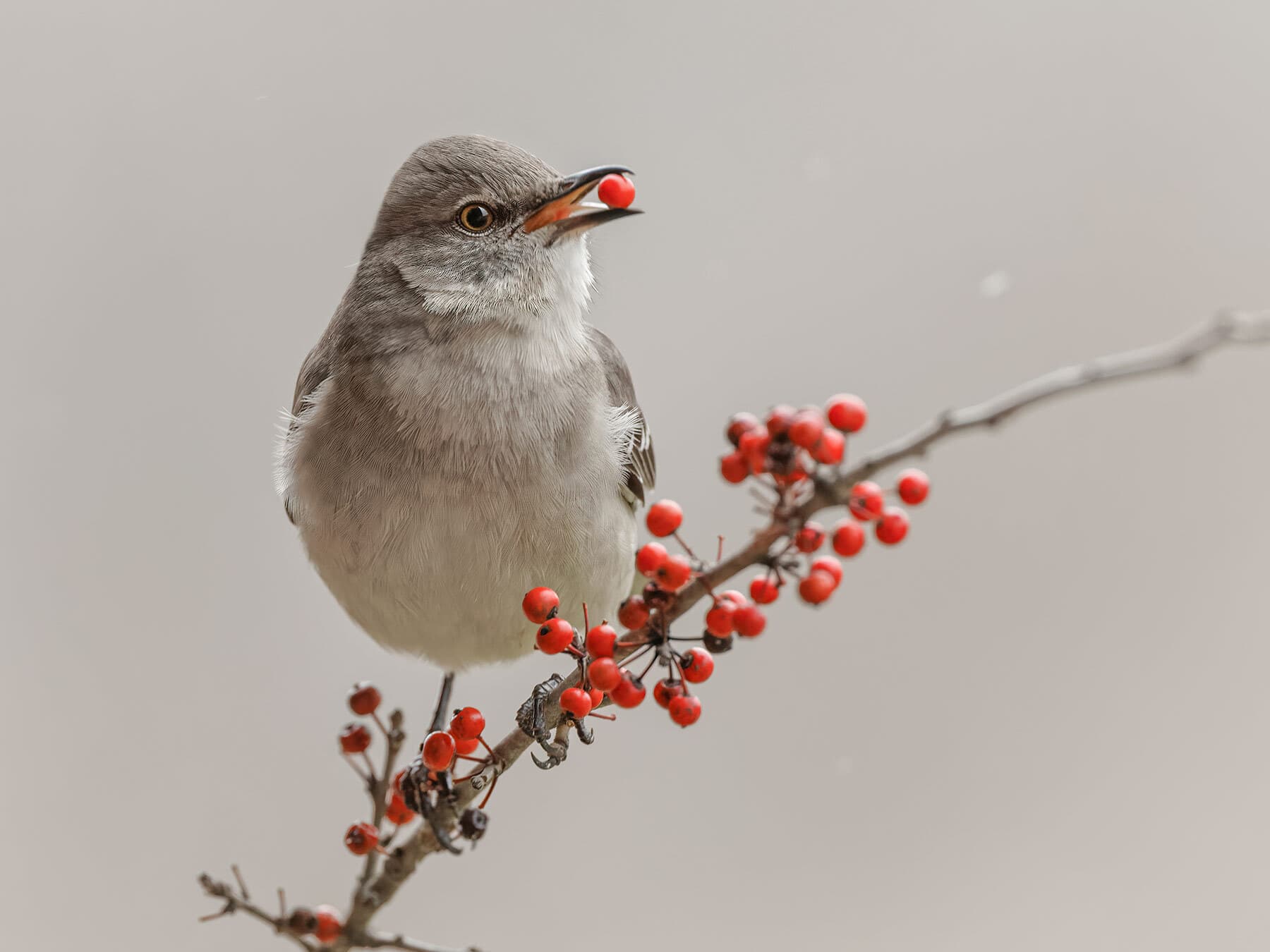
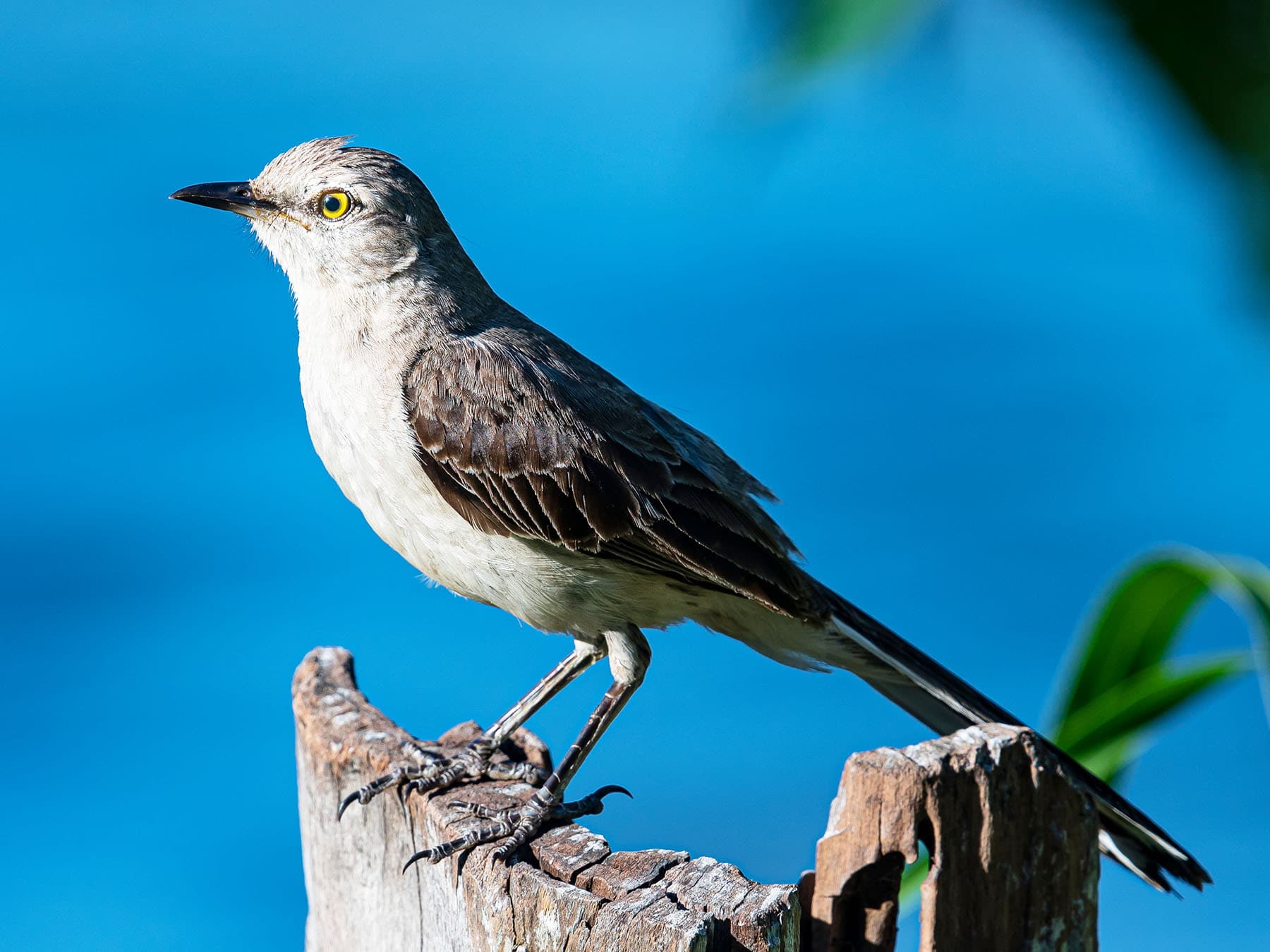
Northern Mockingbirds eat insects and other small animals in spring and summer, and fruit in fall and winter. Over a whole year the two come out about even: in the most complete study of their diet, 417 stomachs collected in every month across the southeastern United States, animal food made up 48% and plant food 52%.1 Birds of the World notes that no study since has been as extensive, and sees no reason to think the diet has changed much.2 This page covers what they eat through the year, how they find it, what they feed their young, and how to feed them in your yard. For the bird itself, see Northern Mockingbird identification and facts.
A year of food
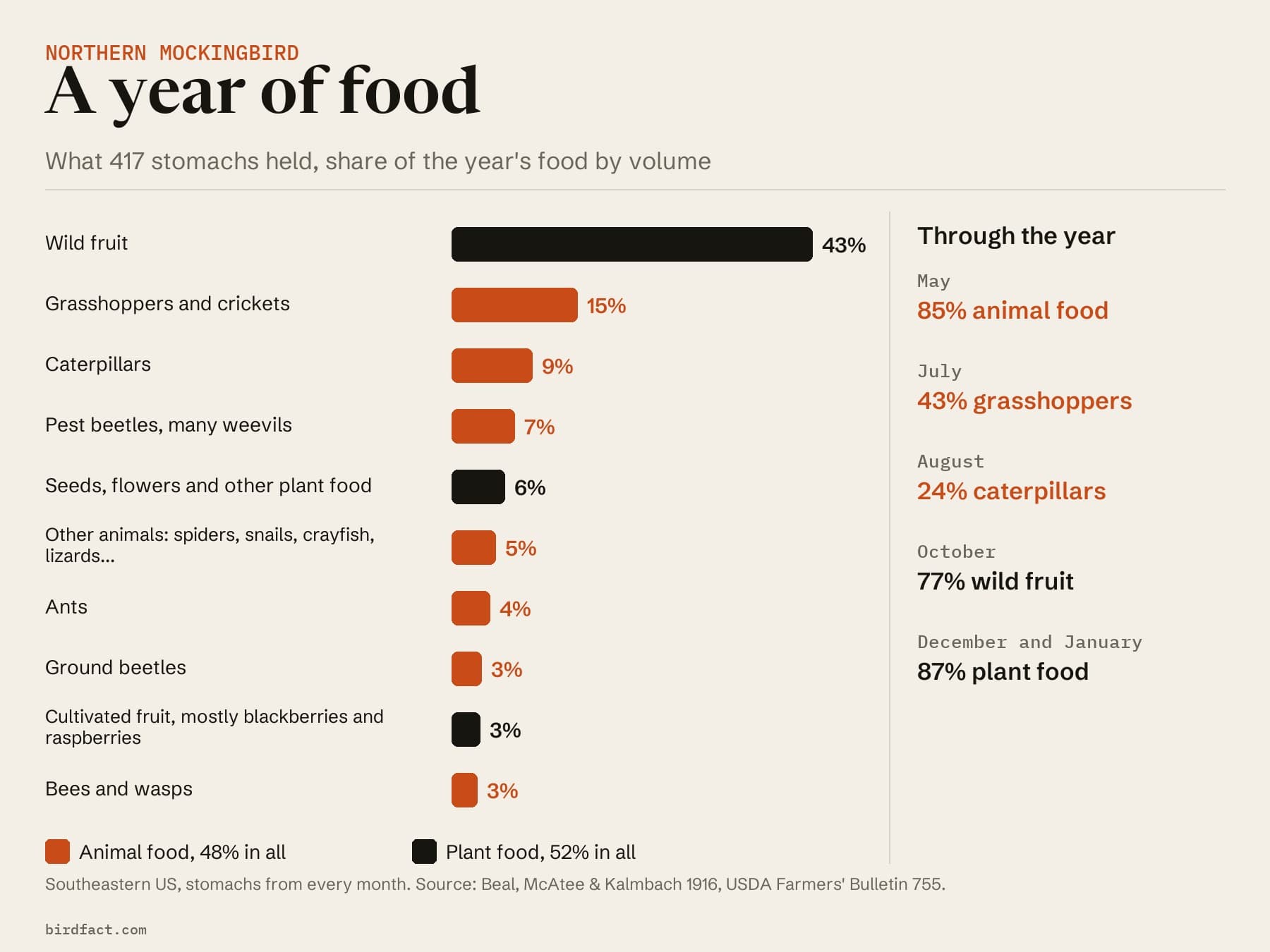
The 1916 study, a US Department of Agriculture bulletin, measured each stomach's contents by volume. Animal food peaked in May, at 85% of the diet, and plant food in December and January, at 87%. Wild fruit alone was 43% of the year's food and 77% in October. Grasshoppers, eaten in every month, were the favorite animal food: 15% of the year's diet and 43% in July.
Mockingbirds elsewhere can eat more fruit. In a California study, 34 stomachs taken in midsummer, all but one around Los Angeles, held 23% animal food and 77% plant food, mostly fruit; over all the stomachs examined it was 29% animal.3 A. C. Bent's life history, in 1948, still called the 1916 work the most complete study on record.4
Insects and other small animals
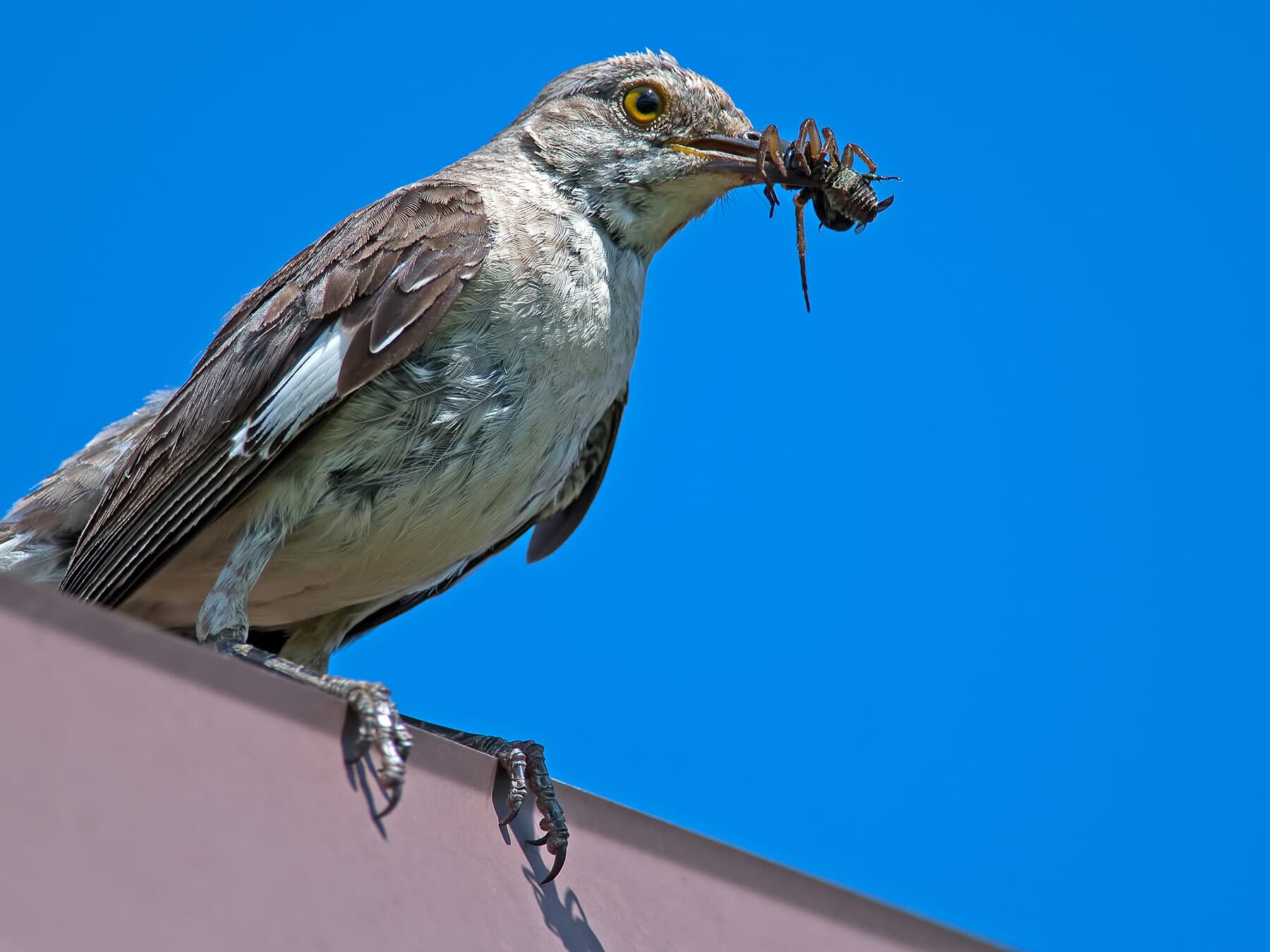
Grasshoppers and crickets come first, then caterpillars (9% of the year's food, and 24% in August), including the cotton leaf worm, found in 23 stomachs. Beetles made up about 11%: pest beetles found mostly on leaves, many of them weevils, among them nine cotton boll weevils in six stomachs and the 12-spotted cucumber beetle in about a dozen, and ground beetles. Ants turned up in 75 stomachs, a sign that the birds feed on the ground, and bees and wasps were 3% of the diet, probably picked off flowers. Spiders were eaten in small amounts in most months; flies hardly at all; and a few stomachs held millipedes, crayfish, sowbugs and snails.
All About Birds adds earthworms, moths and butterflies.5 Birds of the World notes that in south Florida they eat adult Zebra butterflies despite their warning colors, and that they can bring down a big cicada by striking it with the wings and chest. A Baltimore observer added the mockingbird to the list of birds that eat Japanese beetles, though from a single sighting.6 Some insects they leave alone: in an Indiana test, at least four mockingbirds took 16 mealworms but none of the dead velvet ants offered (a stinging wasp with bright warning colors), and struck at mealworms painted to look like velvet ants but never ate them.7
Do mockingbirds eat lizards and snakes?
Now and then. The 1916 study found three lizards and a small snake in four of its 417 stomachs, the most unusual items in the diet. Birds of the World lists small Anolis lizards as occasional food, and Florida parents feed anoles to their nestlings (see below). In Boynton Beach, Florida, in 2005, an adult was seen flying off with a young curlytail lizard about 2 inches (5 cm) long from snout to vent, which the observers took to be probable predation.8
Mockingbirds also attack snakes, but to drive them off. Bent's life history tells of one near St. Petersburg, Florida, in 1939 that landed again and again on the head of a coachwhip and pecked it until the snake hid under some bushes.
How mockingbirds hunt
Most insects are caught on the ground. Birds of the World describes a mockingbird running a short way, stopping and lunging, or dropping from a perch onto prey, killing and pulling it apart there or carrying it back up. Short grass suits it. In a comparison of two south Texas sites, where the grass was short and sparse 93% of feeding was on the ground or low plants; where it was tall and dense, birds fed on the ground only 64% of the time and caught much more from perches, and that site held about a quarter as many birds and fledged no young.9
Some insects are caught in the air. Birds of the World describes north Florida mockingbirds chasing flying insects acrobatically, one for up to 30 seconds over as much as 500 feet (150 m), birds clinging to tree trunks like woodpeckers to take insects there, and birds under bright city lights feeding until 11:30 at night.
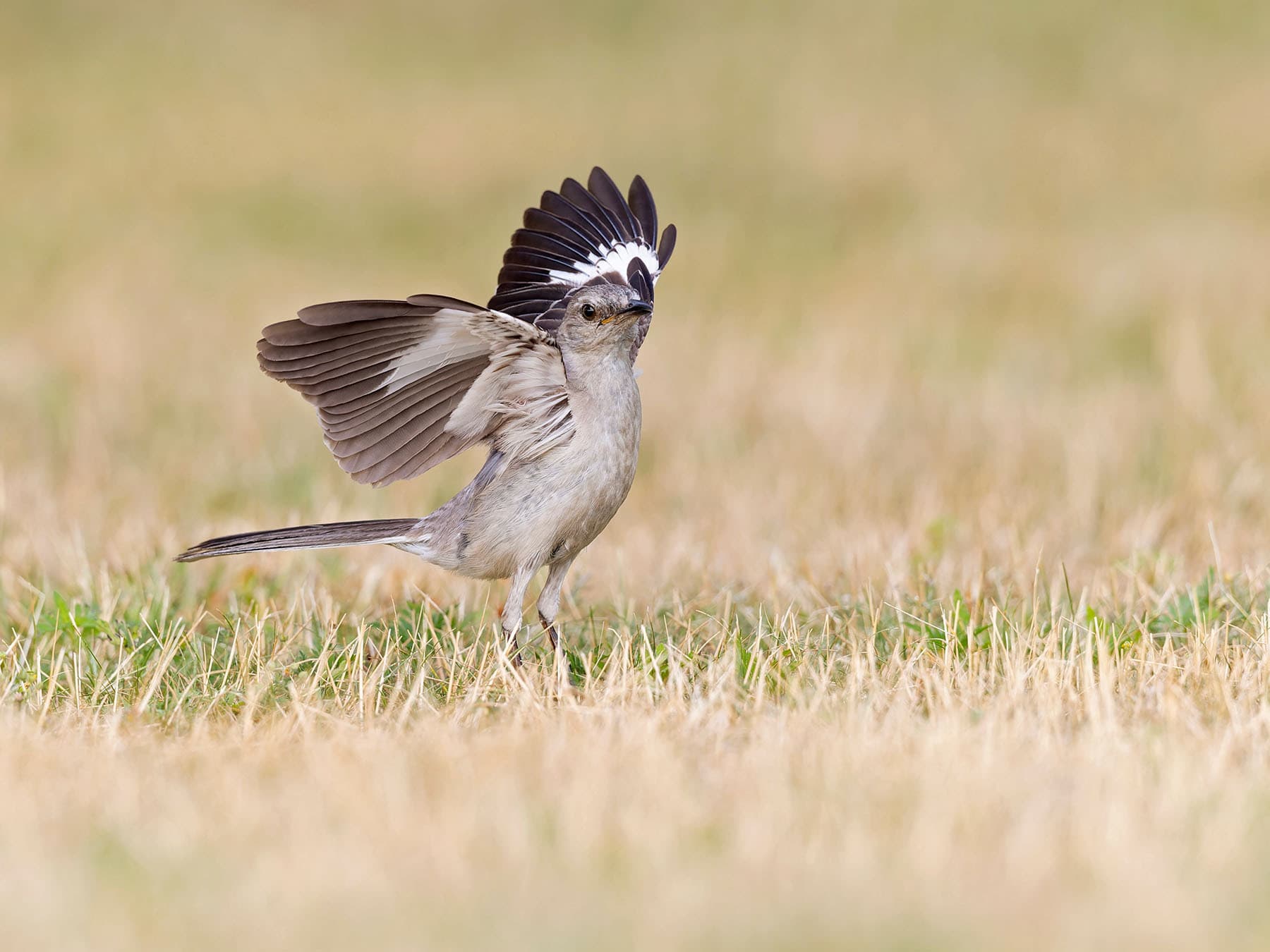
On the ground, a mockingbird often lifts and opens its wings in a few jerky steps between short runs, flashing the white patches. Whether this helps it find food is still argued. An observer in Pensacola in 1928 saw "grasshoppers or similar insects" fly up during the display and the bird chase them, but George Sutton concluded it was "not solely, nor even primarily, a means of obtaining food".10 In an Alabama study, the more a bird wing-flashed while foraging, the less often it attacked prey; flushing prey seemed unlikely, though the author suggested it might help a bird judge how its prey will react.11 Another study found no link with foraging success, and saw wing-flashing only at a model predator in the breeding season,12 and intense flashing is given by breeding adults facing a predator.13 Birds of the World calls the function unknown.
Fruit and berries
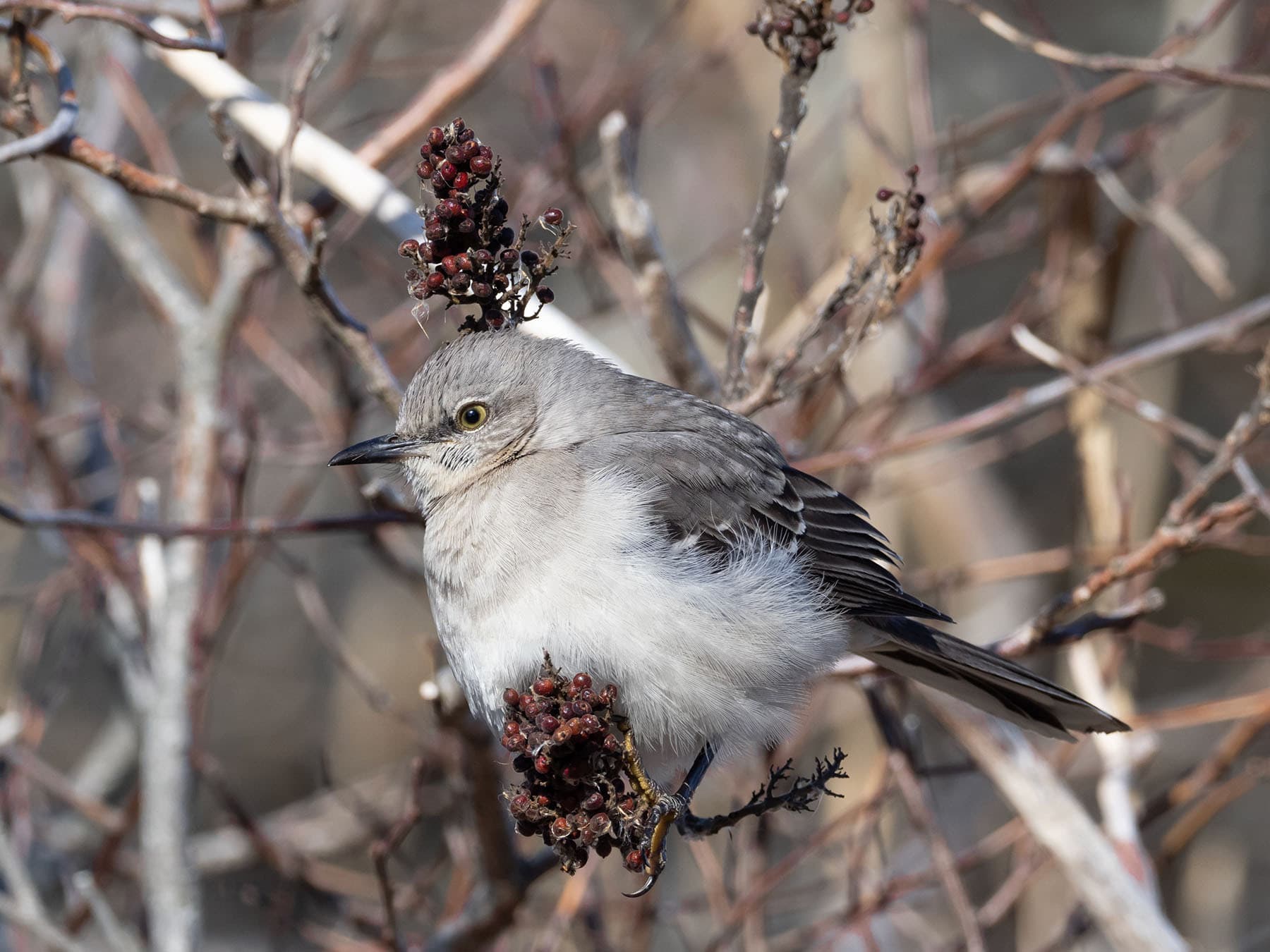
Wild fruit is the biggest single part of the diet. The 1916 study found it in 246 of the 417 stomachs, and in 76 nothing else; 35 kinds were identified, most often holly, smilax, woodbine, blackberry, pokeberry, elderberry, mulberry and sour gum. Cultivated fruit was only 3% of the year's food, mostly raspberries and blackberries that may as well have come from wild thickets as from gardens.
Florida records collected in Bent's life history add sumac, poison ivy, red cedar, wax myrtle, beautyberry, cabbage palm, prickly pear, wild fig, sea grape, yucca pods and small red peppers. In Beal's California study, birds took blackberries, raspberries, grapes and figs, and one stomach was entirely filled with poison oak seeds. In the Northeast, multiflora rose is the main winter food,14 and Birds of the World suggests that plantings of it may have helped the mockingbird spread north. In Nashville, A. R. Laskey watched them eat pokeberries, privet berries, pyracantha, bittersweet and hackberries in her garden.15
Birds of the World notes that a mockingbird usually picks fruit from a perch but also hovers for it, and tears apart large ripe fruit on the ground. It adds flowers of ornamental shrubs, sap from freshly pruned trees, and, in towns, scraps such as French fries.
Spreading seeds
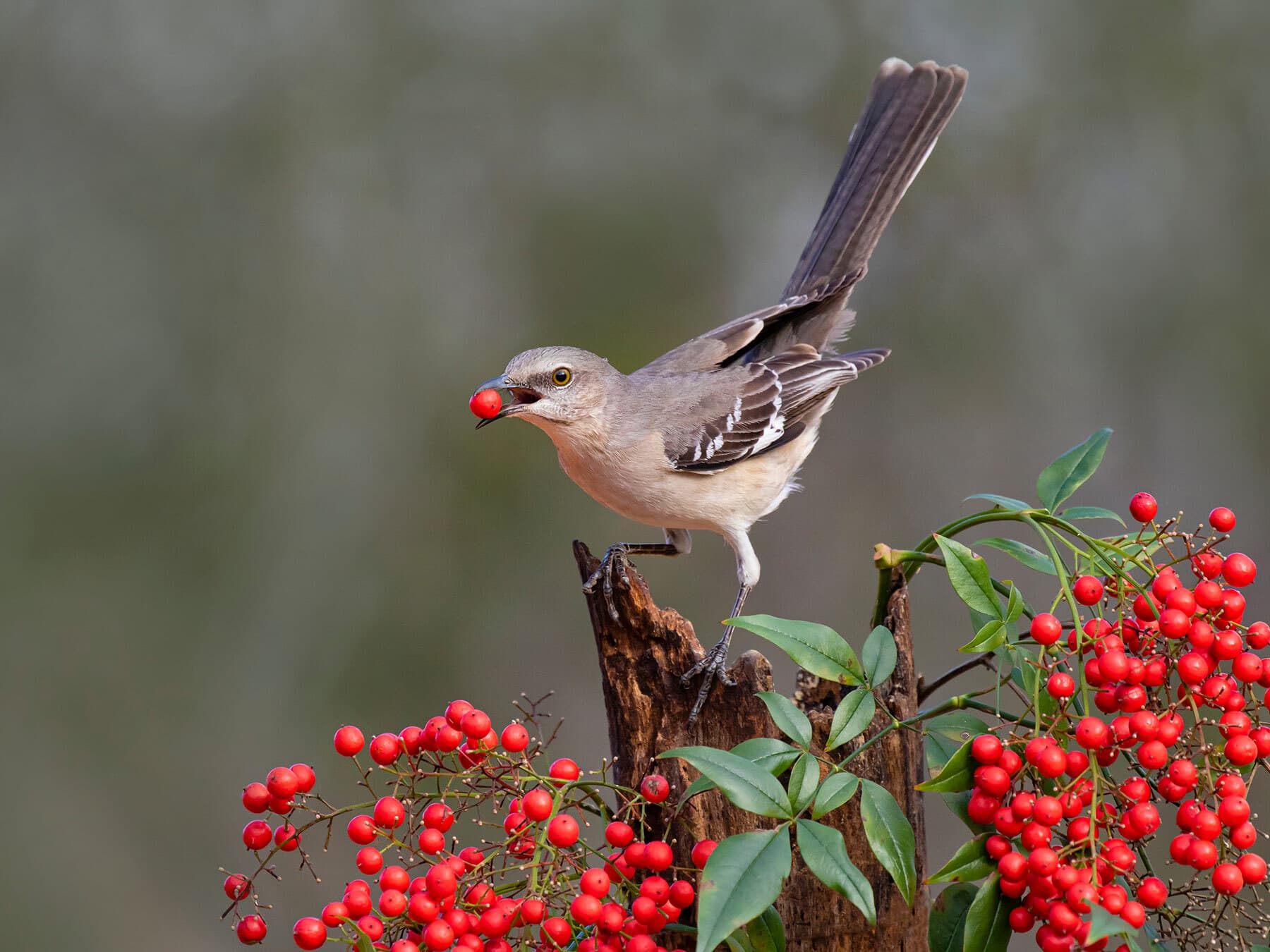
Birds of the World suggests that, living on fruit in winter, mockingbirds probably spread the seeds of many plants, native and invasive. Passing through a bird helps some seeds: pokeweed seeds that had passed through mockingbirds or Brown Thrashers germinated more often than seeds cleaned of pulp (88% against 67%), without losing viability, and those from mockingbirds germinated faster (4.2 days against 5.5).16
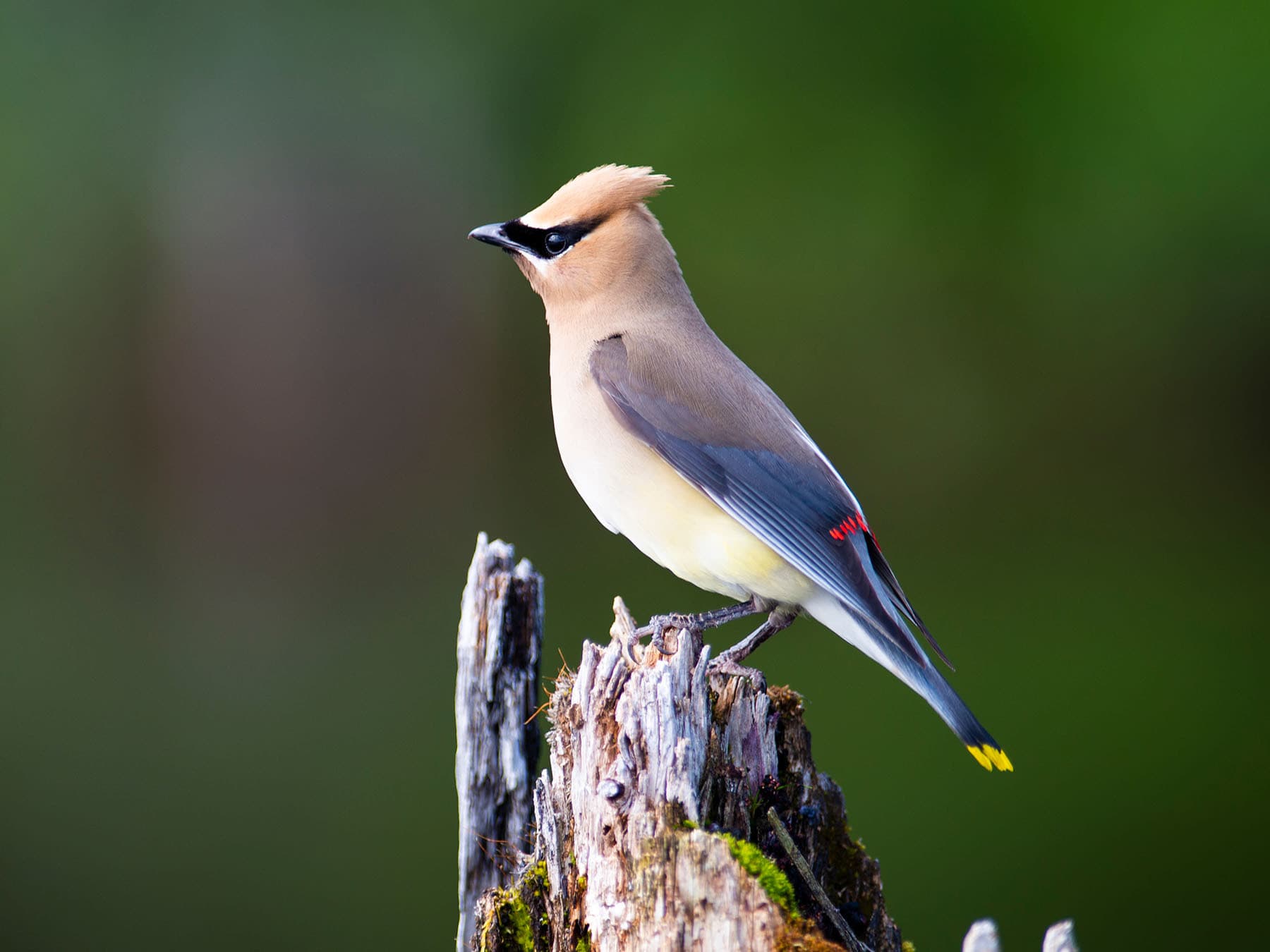
One planted shrub is a problem. Nandina, or heavenly bamboo, has red berries that mockingbirds eat, and it has spread into natural areas of the Southeast. In Georgia in April 2009, dozens of Cedar Waxwings were found dead; the five examined had eaten nothing but Nandina berries, and their injuries fit poisoning by the cyanide the plant contains. We found no report of mockingbird deaths.17 Florida's extension service suggests berry-free sterile kinds or, better, a native holly instead.18
Seeds and bird seed
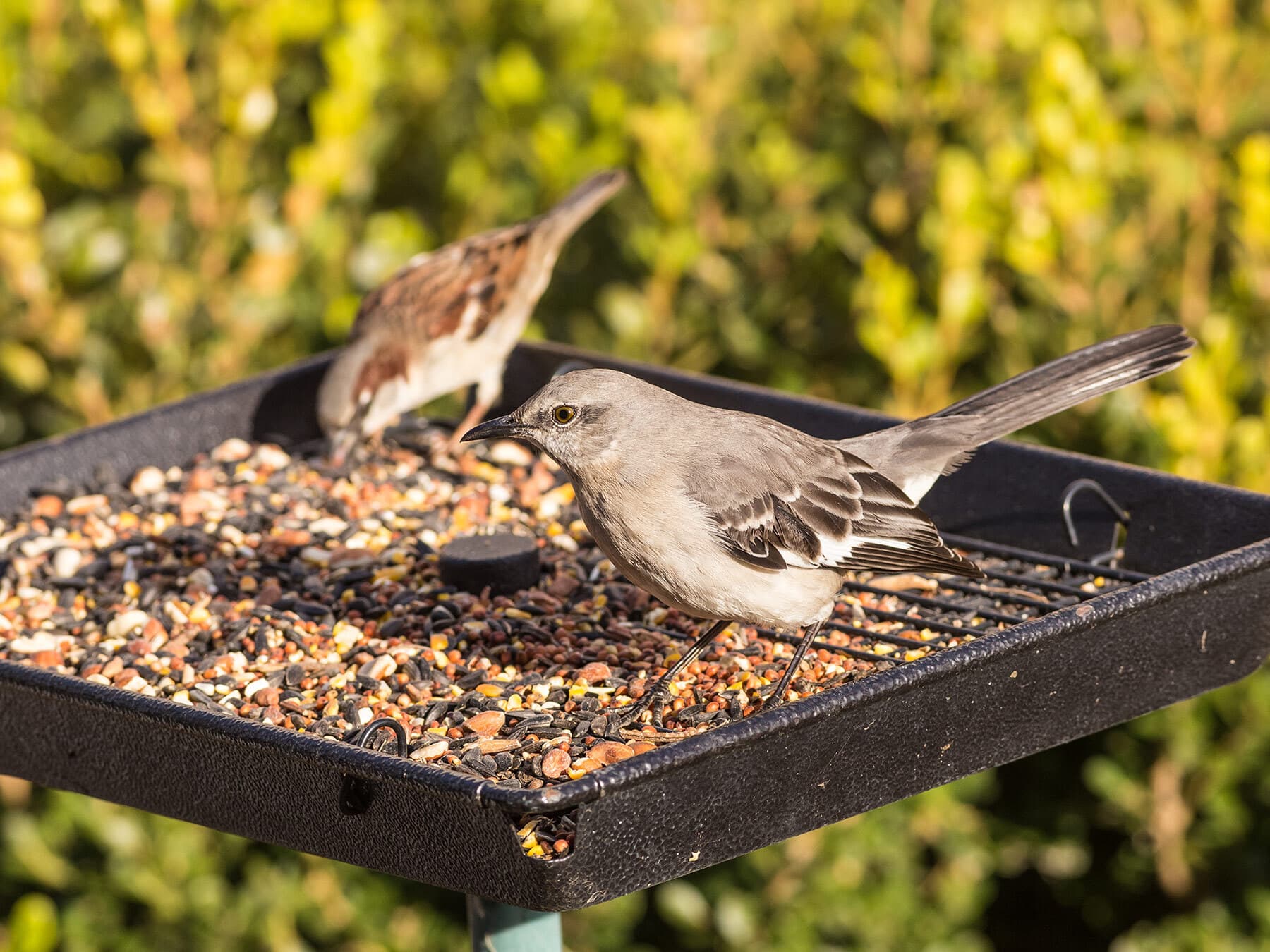
Seeds are a small part of a mockingbird's diet. In the 1916 study, weed seeds, sumac seeds and flower petals together made up only a small share of the year's food, and no grain of any kind was found. At feeders, though, they will take hulled sunflower seeds and peanut hearts (see Feeding mockingbirds in your yard, below).
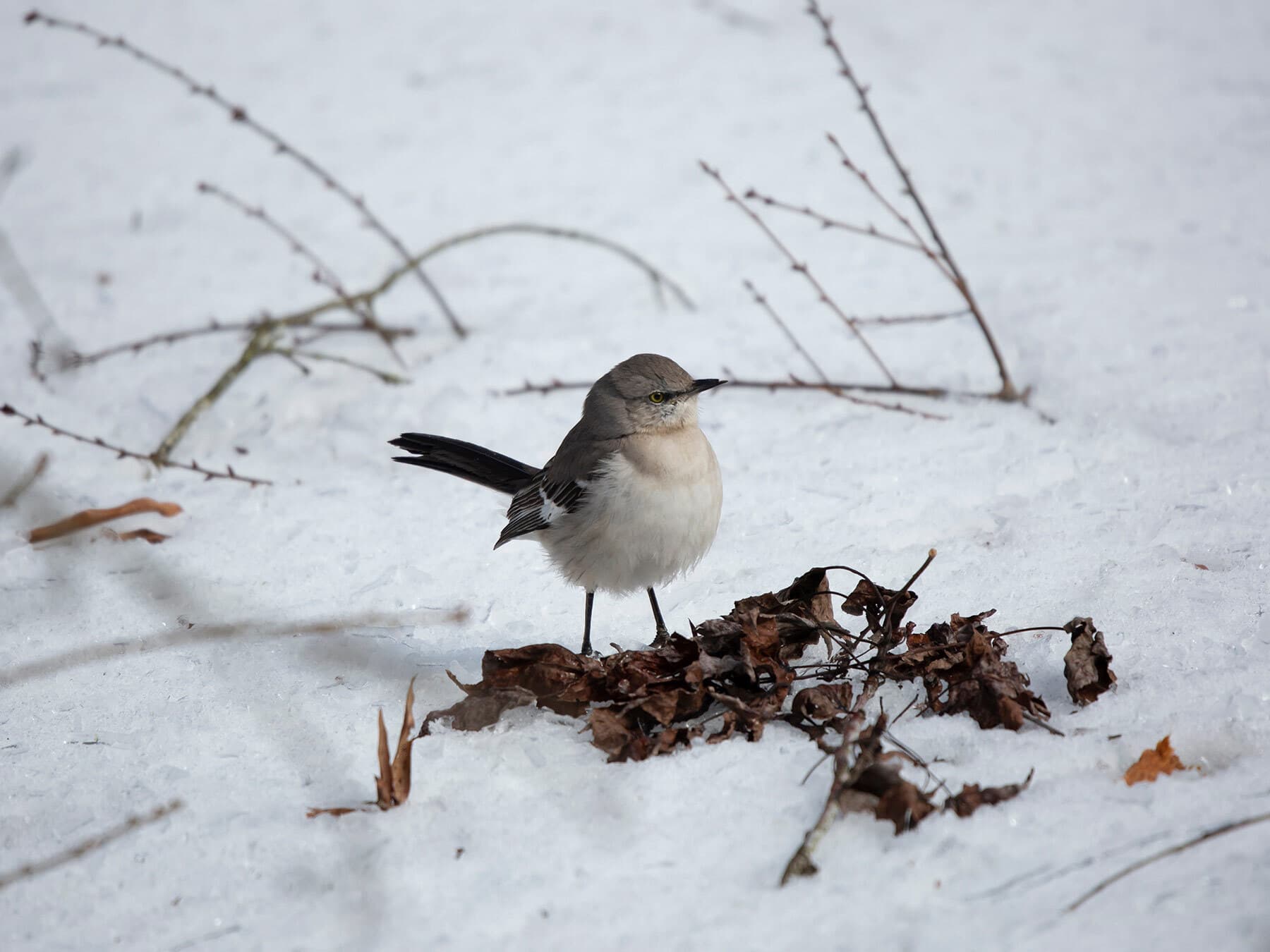
Winter: guarding the fruit
In fall and winter many mockingbirds hold a territory built around their food supply. A California study quoted by Bent found they seemed to defend it more vigorously than their summer territory. In piedmont South Carolina, birds defended fruit-laden trees and shrubs against fruit-eating birds and largely ignored birds that eat no fruit.19 In New York, Safina and Utter saw them chase only other mockingbirds, American Robins and European Starlings, the only birds seen eating the same fruit. In North Carolina, over 85% of attacks on other species were at fruit eaters.20
Fruit is not the whole story, though. In the same North Carolina study, territories shrank to about half their fall size in a cold winter but hardly at all in a warm one, and the shrinking was not a response to competitors; territory size is not simply related to how much fruit it holds. Birds of the World finds little compelling evidence that mockingbirds hold territories against other species, and another study found no link between other birds' visits, mockingbird attacks and how much their diets overlapped.
Cedar Waxwings, which travel in flocks and can strip a tree in hours, were driven off most often in the South Carolina study, though fights were rare. In Montgomery, Alabama, in February 1981, a mockingbird guarding a cherry-laurel chased a waxwing into a planter and killed it with blows of its bill; two more dead waxwings were found nearby.21 A crowd can beat the guard: at a strangler fig in Miami, about 54 to 61 mockingbirds made 1,131 visits in 1,037 minutes, arriving in bunches, probably to overwhelm the one bird defending it, which chased intruders out 86 times.22
When insects come out again in spring, mockingbirds switch back to them; in the New York study, the birds began feeding heavily on insects in March.
Do mockingbirds eat other birds?
Not that we could find. The 1916 study found no birds or eggs, and neither do Bent's life histories or Birds of the World. We searched the diet studies, Bent's life histories (including his volume on hummingbirds), Birds of the World and the journal literature we could reach, and found no record of a mockingbird eating a hummingbird, another bird, eggs or mice. The waxwings killed in Alabama were killed in a fight over fruit, not eaten.
What do baby mockingbirds eat?
Mostly insects. In a Miami study of 12 broods and 3,646 nest visits, 82% of the trips with food that could be identified brought animal food, almost all of it insects (grasshoppers and crickets, beetles, dragonflies, ants and wasps, moths and butterflies) and spiders. Nestlings one to six days old got almost nothing else. Fruit was rare before day 7 and made up 30 to 35% of the food by days 10 to 12; figs were the most common fruit. Parents also brought 13 Anolis lizards, and bits of limestone and snail shell. They carry food in the bill rather than bringing it up from the crop.23
Birds of the World adds that both parents feed the young, usually one item a trip, about three to five times an hour for each nestling in small broods, and that in north Florida beetle larvae were the commonest food during midsummer beetle outbreaks. In a week-old California nestling, Beal found 92% grasshoppers and crickets. And Bent's life history records a Gulf Coast observer who saw parents pull the legs off crickets and grasshoppers before carrying them to the nest. More: mockingbird nesting, eggs and young.
If you find a young mockingbird on the ground, leave it alone and watch from a distance: a fully feathered fledgling's parents are probably nearby and will feed it for a few weeks. Don't feed it or give it water, as the wrong food can make it ill or kill it, and don't try to keep or raise it. If it is hurt, call a certified wildlife rehabilitator.24
Feeding mockingbirds in your yard
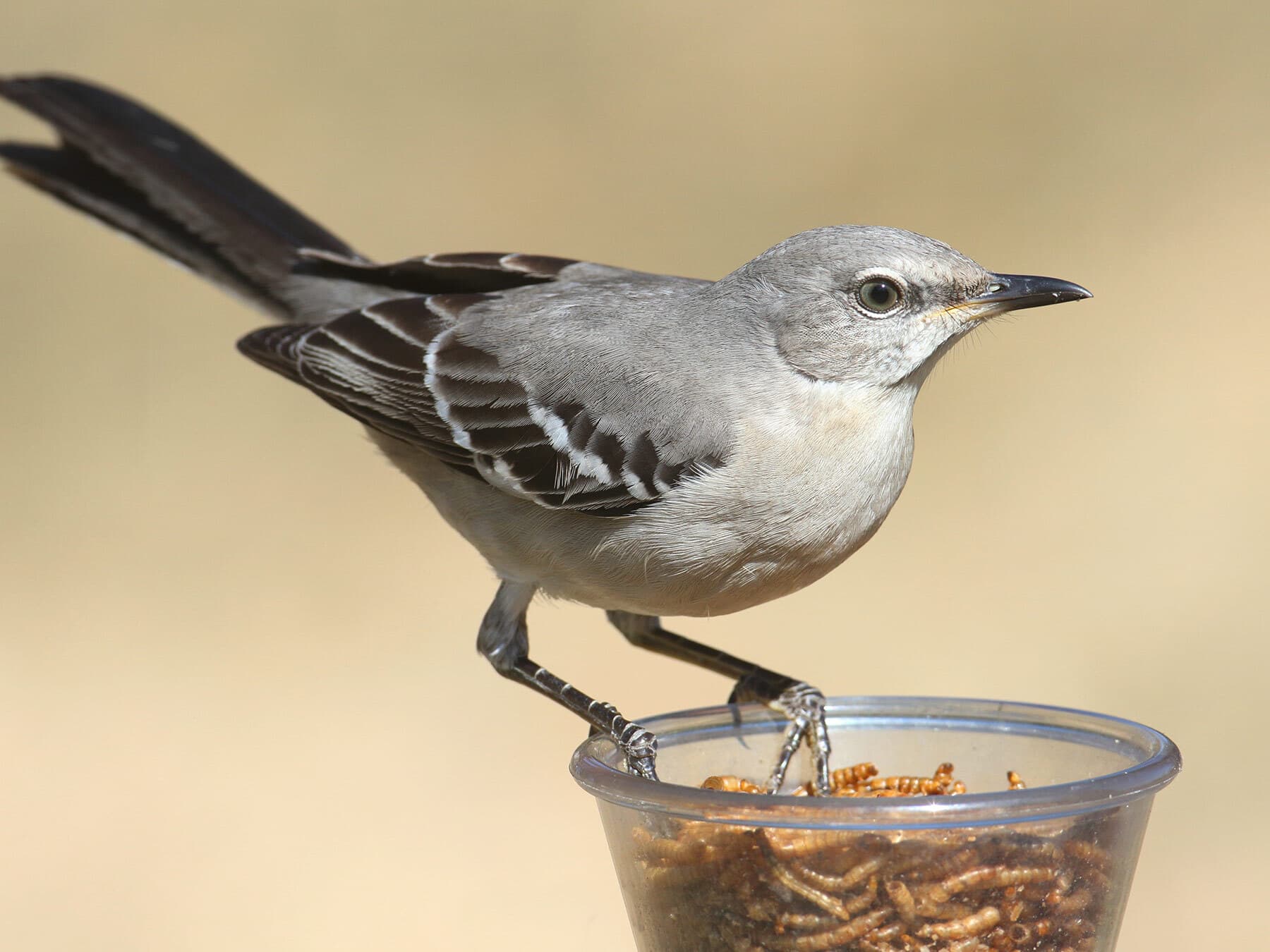
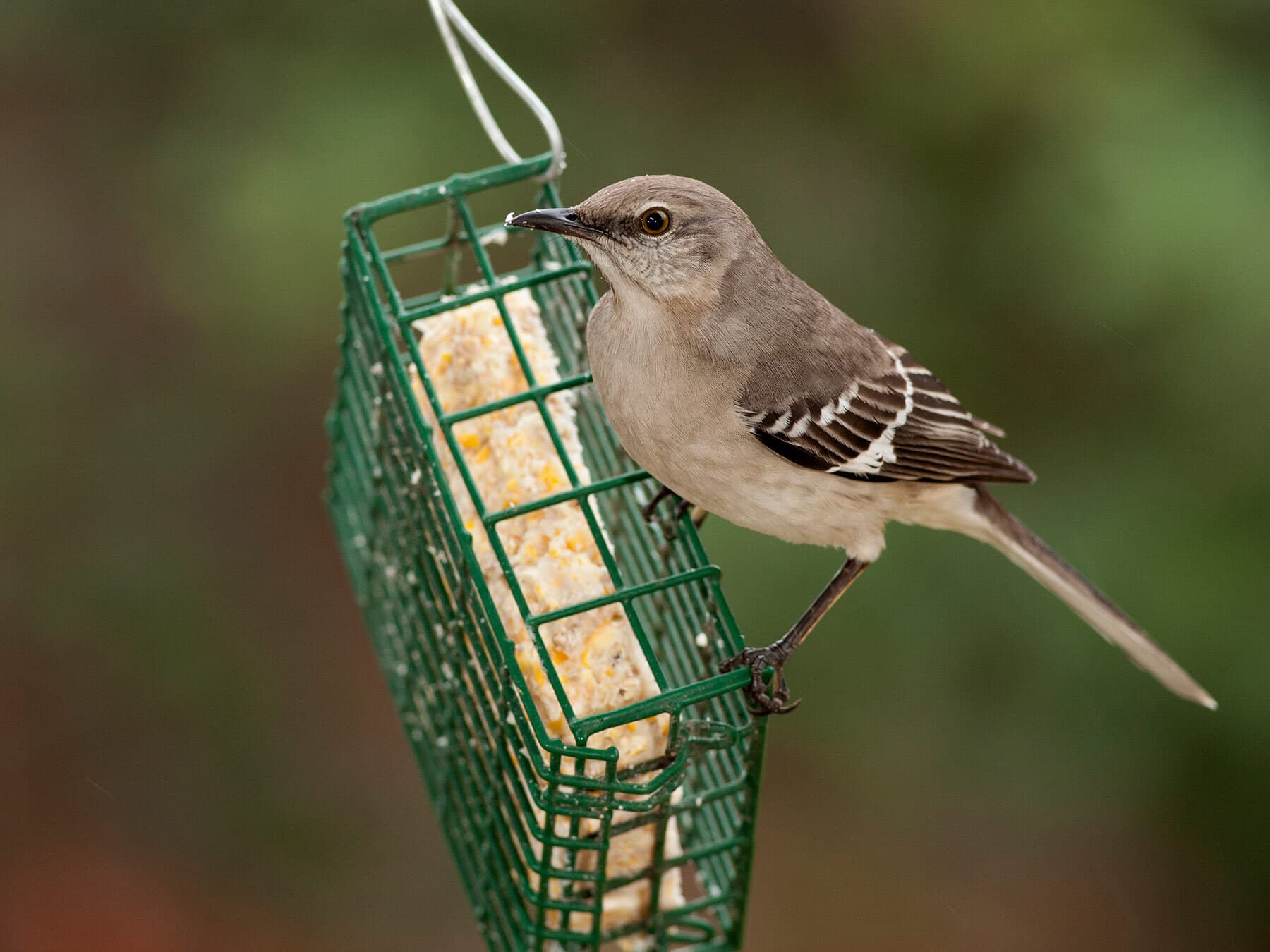
Mockingbirds are common in yards but don't visit feeders often. All About Birds suggests an open lawn with fruiting trees and bushes, such as mulberries, hawthorns and blackberry brambles. Project FeederWatch lists the foods they take at feeders: fruit, hulled sunflower seeds, mealworms, peanut hearts and suet, at platform feeders or on the ground.25
Fruit and raisins have worked for a long time. In Nashville in the 1930s, Laskey put out halved apples, suet and raisins; one male was so fond of raisins that he ranged at least 300 yards for them, and another ate the holly berries off a discarded Christmas wreath. In a mild January her birds almost ignored the apples and suet, because insects were about again. In Pasadena, a feeding station stocked with raisins drew 96 visits in 30 minutes on one day in May 1939, by at least 57 different banded birds, though one bird would eat only apple.26
Mealworms have even been used to test whether mockingbirds can tell fewer from more. Wild mockingbirds trained to pull bamboo sticks out of a mealworm feeder chose the end with fewer sticks when the choice was 1 against 6 or 2 against 5, but not 3 against 4.27
Do mockingbirds damage fruit crops?
Rarely, by the evidence, though they do take fruit. Growers once complained loudly: in Florida about grapes and oranges, in Texas about figs. But the 1916 study found cultivated fruit was only 3% of the diet and concluded there was "nothing to prove that the mockingbird eats domestic fruits to an injurious extent". In California, Beal had no complaints of damage and noted the birds did not seem to bother citrus, but some were "shot in the very act of pilfering blackberries", and he warned that where it is abundant the bird "may become a menace to the orchard and vineyard". Bent's life history repeats an 1862 report of a grape grower near St. Augustine, Florida, said to have killed 1,100 mockingbirds, and adds that the birds' attacks on orchards and groves are not serious. A survey of blueberry growers found starlings, robins and grackles were the main problem, and the mockingbird stayed a minor pest, as in the 1972 survey.28
Water
Birds of the World notes that mockingbirds drink from puddles and the edges of rivers and lakes, and from dew and raindrops on leaves, raising the head to swallow. Their song and calls: mockingbird sounds.
Sources
- Beal, F. E. L., McAtee, W. L., Kalmbach, E. R. (1916). Common Birds of Southeastern United States in Relation to Agriculture (Farmers' Bulletin 755). U.S. Department of Agriculture, Washington. Accessed October 12, 2026. Source
- Farnsworth, G., Londono, G. A., Martin, J. U., Derrickson, K. C., Breitwisch, R. (2020). Northern Mockingbird (Mimus polyglottos), version 1.0. Birds of the World (A. F. Poole, editor). Cornell Lab of Ornithology. doi:10.2173/bow.normoc.01
- Beal, F. E. L. (1907). Birds of California in Relation to the Fruit Industry, Part I (Biological Survey Bulletin 30). U.S. Department of Agriculture, Washington. Accessed October 12, 2026. Source
- Bent, A. C. (Eastern Mockingbird by A. Sprunt Jr.) (1948). Life Histories of North American Nuthatches, Wrens, Thrashers and Their Allies (U.S. National Museum Bulletin 195). Smithsonian Institution, Washington. Accessed October 12, 2026. Source
- Cornell Lab of Ornithology. Northern Mockingbird. All About Birds. Accessed October 12, 2026. Source
- Brackbill, H. (1947). Birds that eat Japanese beetles. The Auk 64(3): 458-459. Accessed October 12, 2026. Source
- Gall, B. G. et al. (2018). The indestructible insect: velvet ants from across the United States avoid predation by representatives from all major tetrapod clades. Ecology and Evolution 8(11): 5852-5862. doi:10.1002/ece3.4123
- Smith, H. T., Engeman, R. M., Meshaka, W. E., Jr. (2006). Leiocephalus carinatus armouri (Northern Curlytail Lizard). Predation. Herpetological Review 37(2). Accessed October 12, 2026. Source
- Roth, R. R. (1979). Foraging behavior of mockingbirds: the effect of too much grass. The Auk 96(2): 421-422. doi:10.1093/auk/96.2.421
- Sutton, G. M. (1946). Wing-flashing in the mockingbird. The Wilson Bulletin 58(4): 206-209. Accessed October 12, 2026. Source
- Hayslette, S. E. (2003). A test of the foraging function of wing-flashing in Northern Mockingbirds. Southeastern Naturalist 2(1): 93-98. doi:10.1656/1528-7092(2003)002[0093:ATOTFF]2.0.CO;2
- Peltier, S. K., Wilson, C. M., Godard, R. D. (2019). Wing-flashing by Northern Mockingbirds while foraging and in response to a predator model. Northeastern Naturalist 26(2): 251. doi:10.1656/045.026.0202
- Dhondt, A. A., Kemink, K. M. (2008). Wing-flashing in Northern mockingbirds: anti-predator defense? Journal of Ethology 26(3): 361-365. doi:10.1007/s10164-007-0070-z
- Safina, C., Utter, J. M. (1989). Food and winter territories of Northern Mockingbirds. The Wilson Bulletin 101(1): 97-101. Accessed October 12, 2026. Source
- Laskey, A. R. (1936). Fall and winter behavior of mockingbirds. The Wilson Bulletin 48(4): 241-255. Accessed October 12, 2026. Source
- Orrock, J. L. (2005). The effect of gut passage by two species of avian frugivore on seeds of pokeweed, Phytolacca americana. Canadian Journal of Botany 83(4): 427-431. doi:10.1139/b05-016
- Woldemeskel, M., Styer, E. L. (2010). Feeding behavior-related toxicity due to Nandina domestica in Cedar Waxwings (Bombycilla cedrorum). Veterinary Medicine International 2010: 818159. doi:10.4061/2010/818159
- UF/IFAS Gardening Solutions. Nandina. University of Florida IFAS Extension. Accessed October 12, 2026. Source
- Moore, F. R. (1978). Interspecific aggression: toward whom should a mockingbird be aggressive? Behavioral Ecology and Sociobiology 3(2): 173-176. doi:10.1007/BF00294988
- Logan, C. A. (1987). Fluctuations in fall and winter territory size in the Northern Mockingbird (Mimus polyglottos). Journal of Field Ornithology 58(3): 297-305. Accessed October 12, 2026. Source
- Hedrick, L. D., Woody, A. D. (1983). Northern Mockingbird kills Cedar Waxwing. The Wilson Bulletin 95(1): 157-158. Accessed October 12, 2026. Source
- Merritt, P. G. (1980). Group foraging by mockingbirds in a Florida strangler fig. The Auk 97(4): 869-872. Accessed October 12, 2026. Source
- Breitwisch, R., Merritt, P. G., Whitesides, G. H. (1984). Why do Northern Mockingbirds feed fruit to their nestlings? The Condor 86(3): 281-287. doi:10.2307/1366996
- NestWatch (Cornell Lab of Ornithology). What should I do if I see a young bird out of the nest? NestWatch FAQ. Accessed October 12, 2026. Source
- Project FeederWatch (Cornell Lab of Ornithology and Birds Canada). Common Feeder Birds: Northern Mockingbird. Project FeederWatch. Accessed October 12, 2026. Source
- Michener, J. R. (1951). Territorial behavior and age composition in a population of mockingbirds at a feeding station. The Condor 53(6): 276-283. Accessed October 12, 2026. Source
- Farnsworth, G. L., Smolinski, J. L. (2006). Numerical discrimination by wild Northern Mockingbirds. The Condor 108(4): 953-957. doi:10.1093/condor/108.4.953
- Avery, M. L., Nelson, J. W., Cone, M. A. (1992). Survey of bird damage to blueberries in North America. Proceedings of the Eastern Wildlife Damage Control Conference 5: 105-110. Accessed October 12, 2026. Source