Facts · Updated 7 Oct 2026
Male vs Female Dark-eyed Juncos: How to Tell Them Apart (and Juveniles)
By the Birdfact teamChecked by Nathan Cope
Female Dark-eyed Juncos have the same pattern as males but are paler and browner; in the western Oregon form the male's hood is black and the female's gray. Juveniles are streaked brown but already show the pale bill and white outer tail feathers. Photos and the details for each.
On this page8 sections
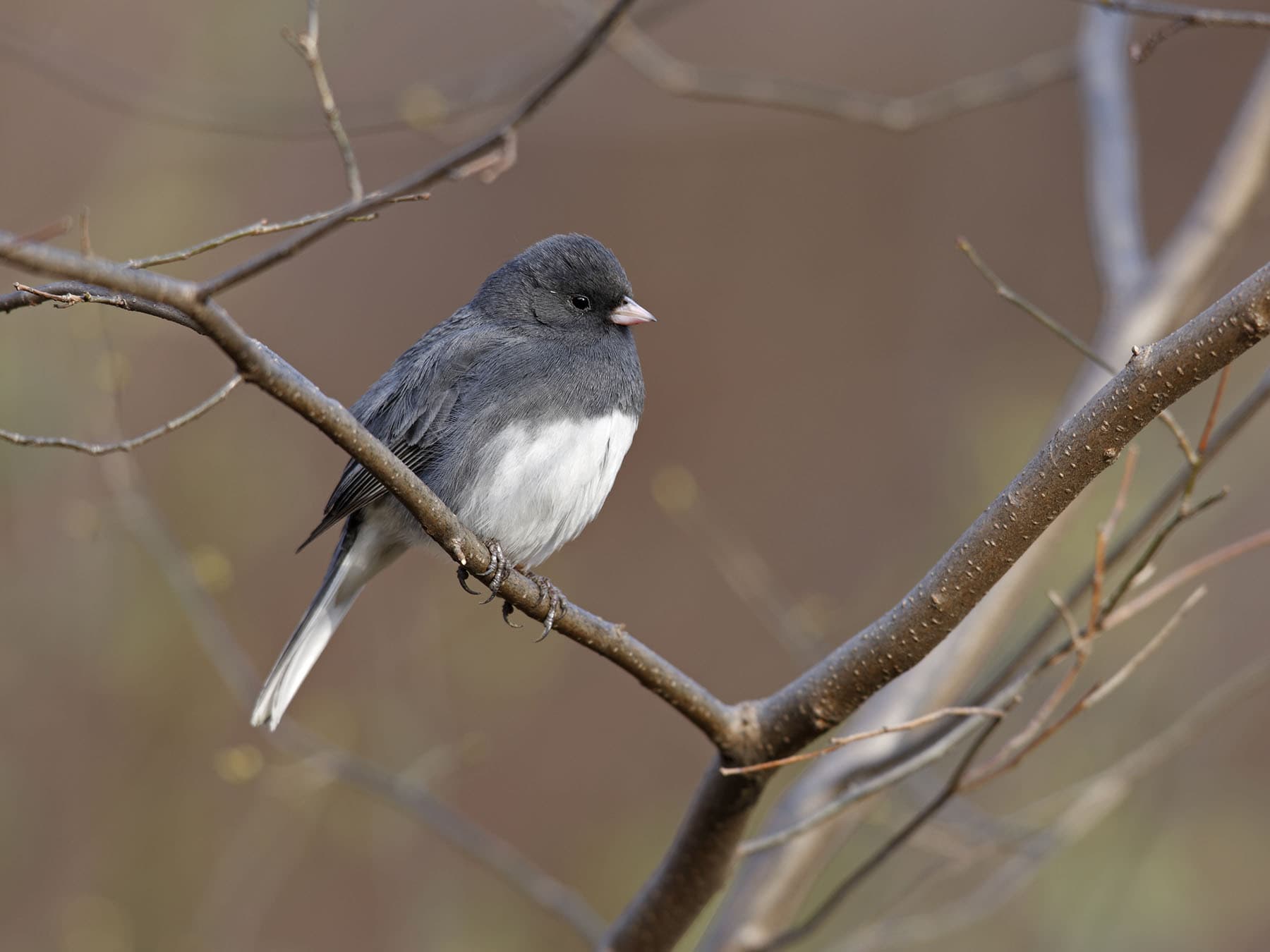
This page is about telling Dark-eyed Juncos apart: males, females, juveniles and first-winter birds, in the Slate-colored form of the East and the Oregon form of the West. For everything else about the bird, see Dark-eyed Junco identification, song and facts.
How to tell a male and female Dark-eyed Junco apart
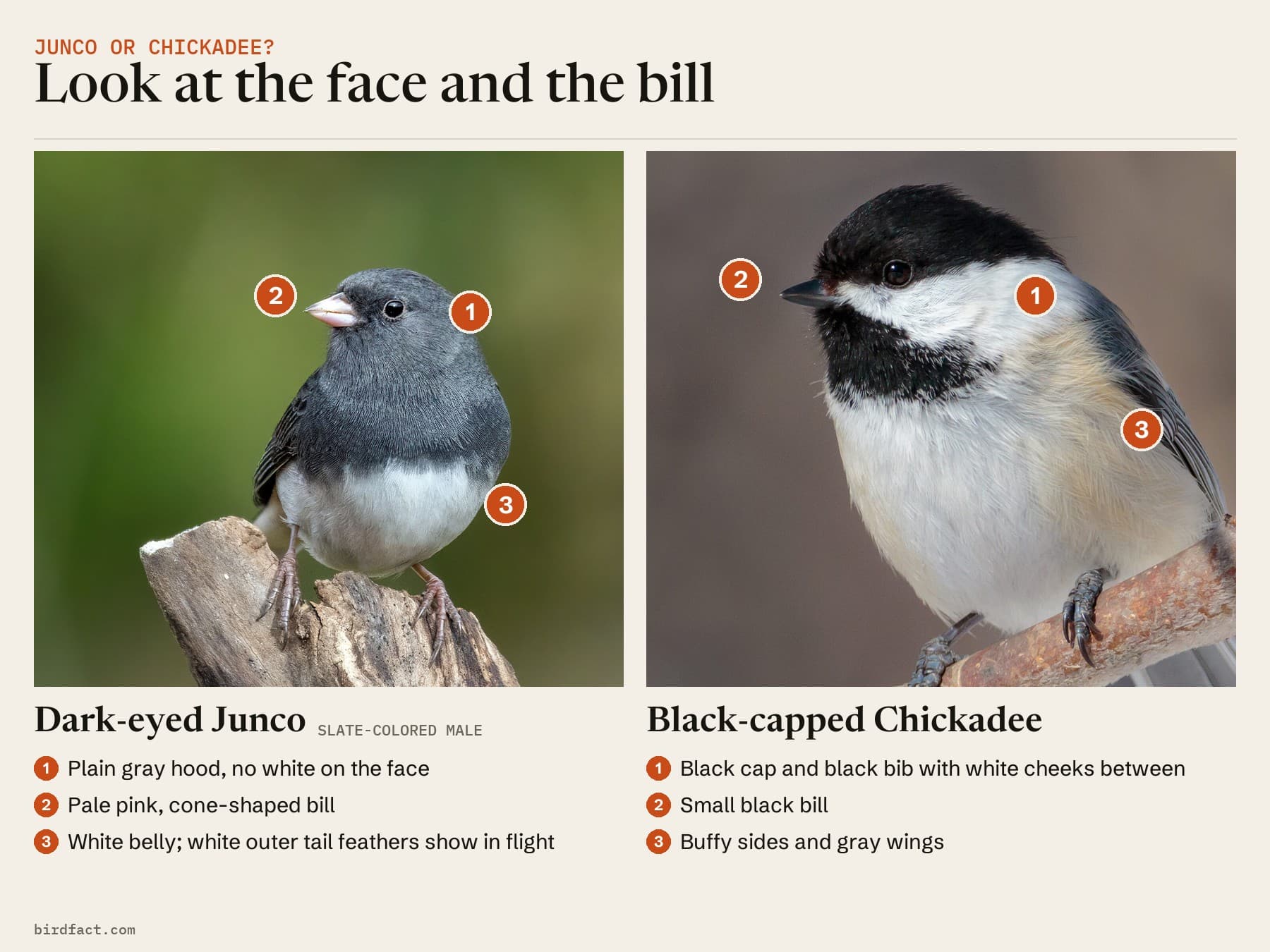
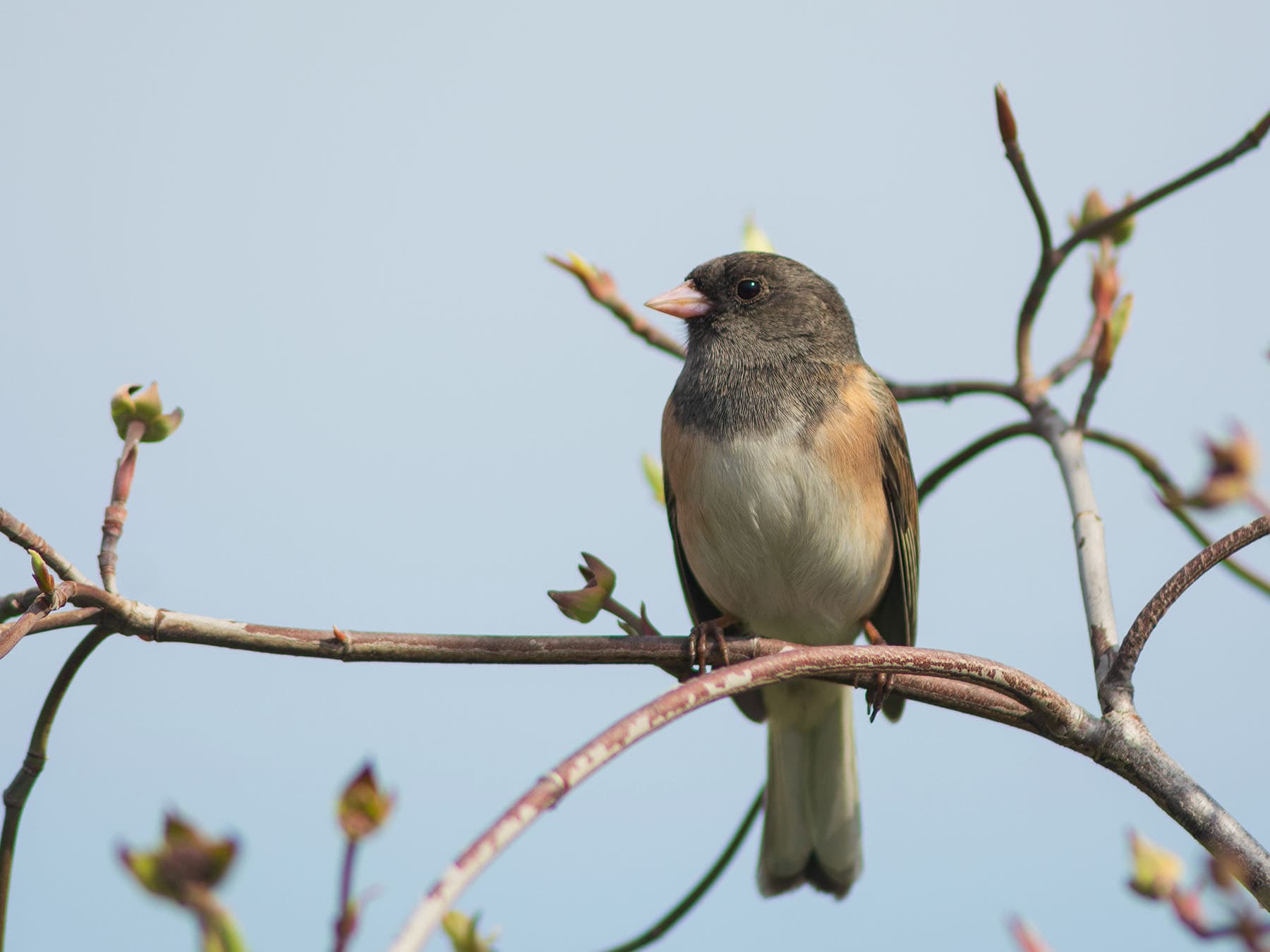
Look at the color, not the pattern. Both sexes have the same hood, white belly, pink bill and white outer tail feathers. Females are paler, with a brownish wash over the gray, especially on the back; their pale wing edges are browner too.1 A female Slate-colored can be much browner than a male.2
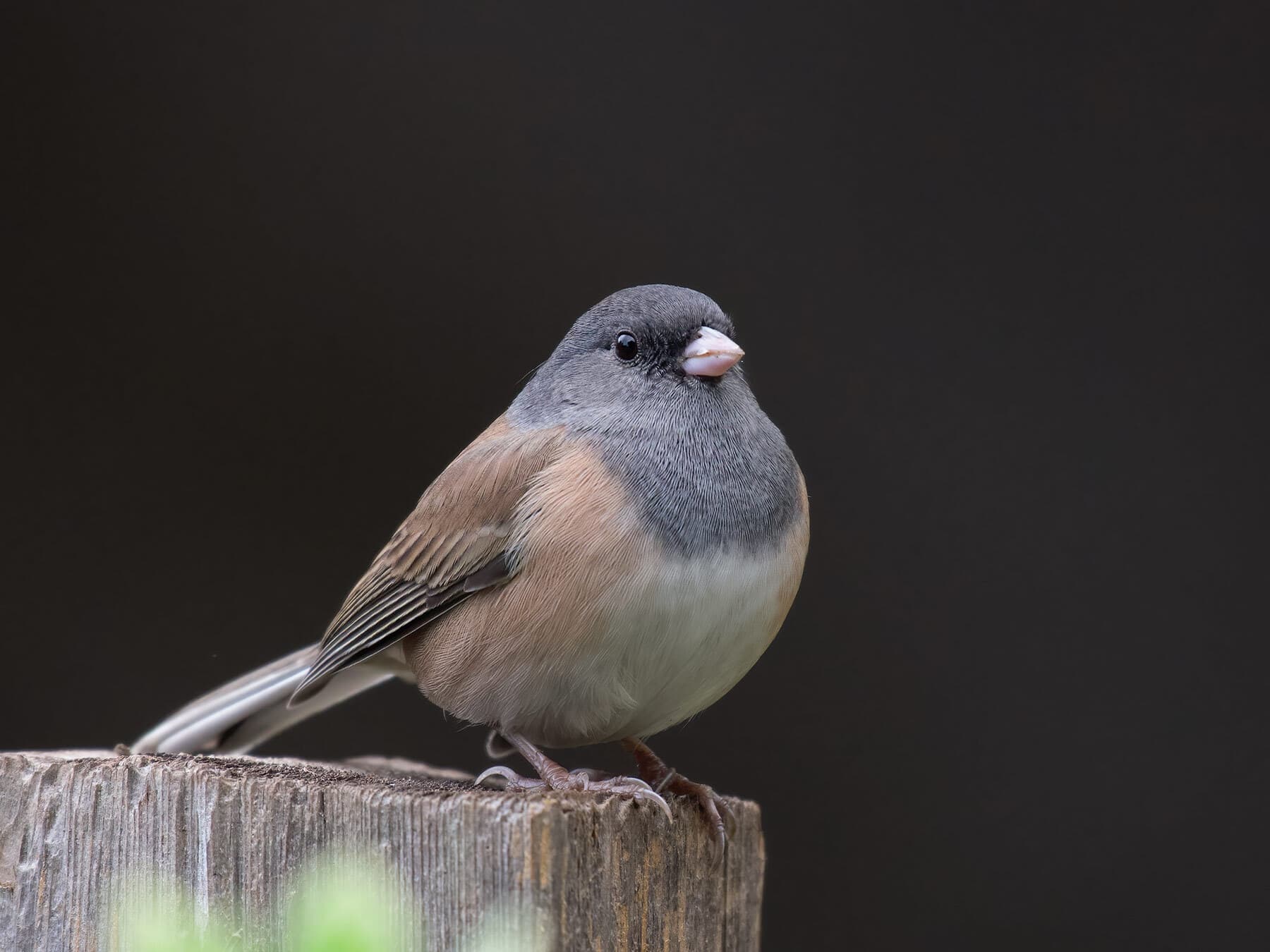
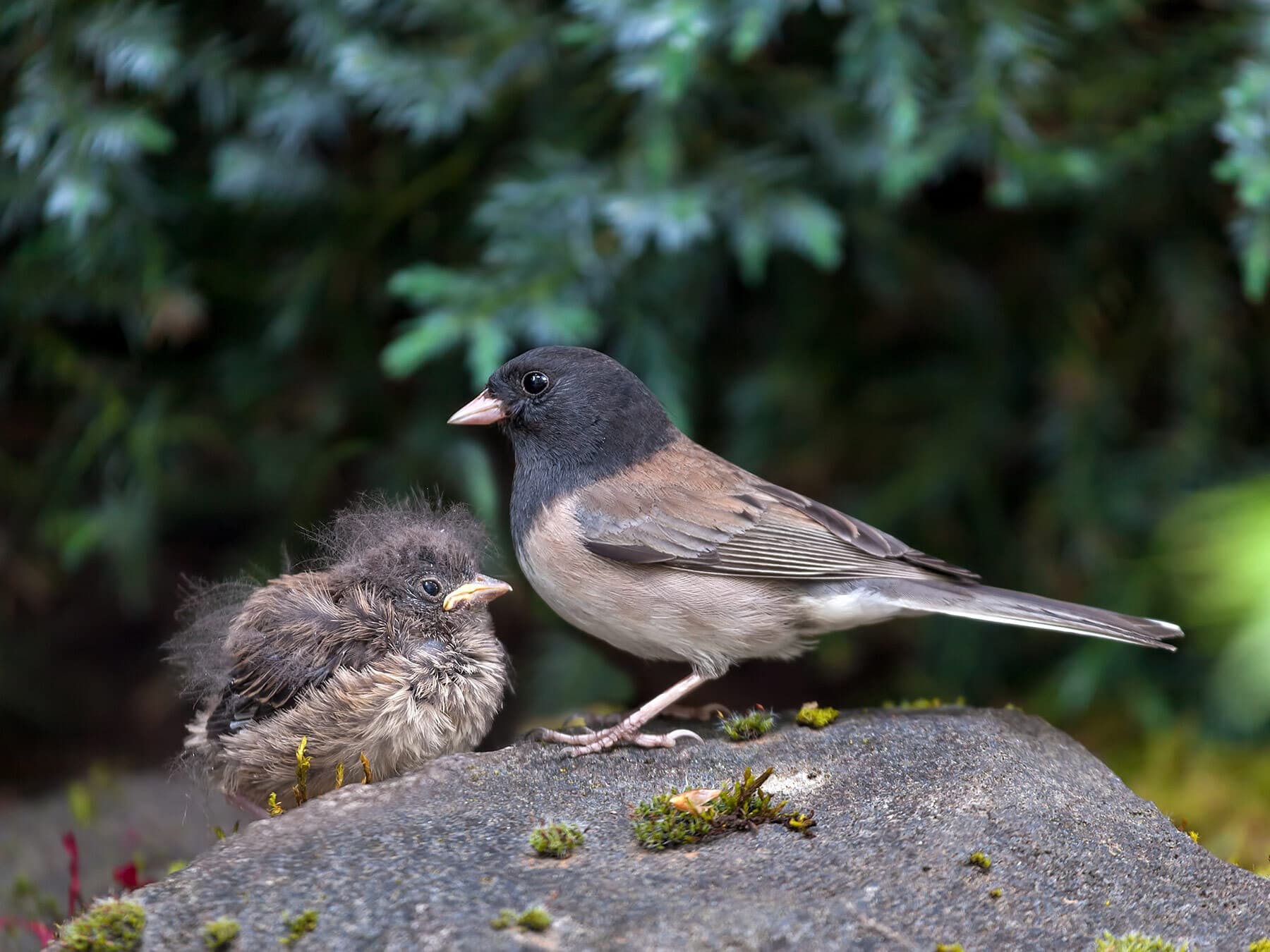
In the Oregon form the difference is clearer: the male's hood is black and sharply cut off, the female's is gray and contrasts less with her brown back and sides.
It is not always easy. Young birds in their first winter are browner than adults, so a young male can look like an adult female, and in some western forms, such as the Pink-sided, males and females differ less.
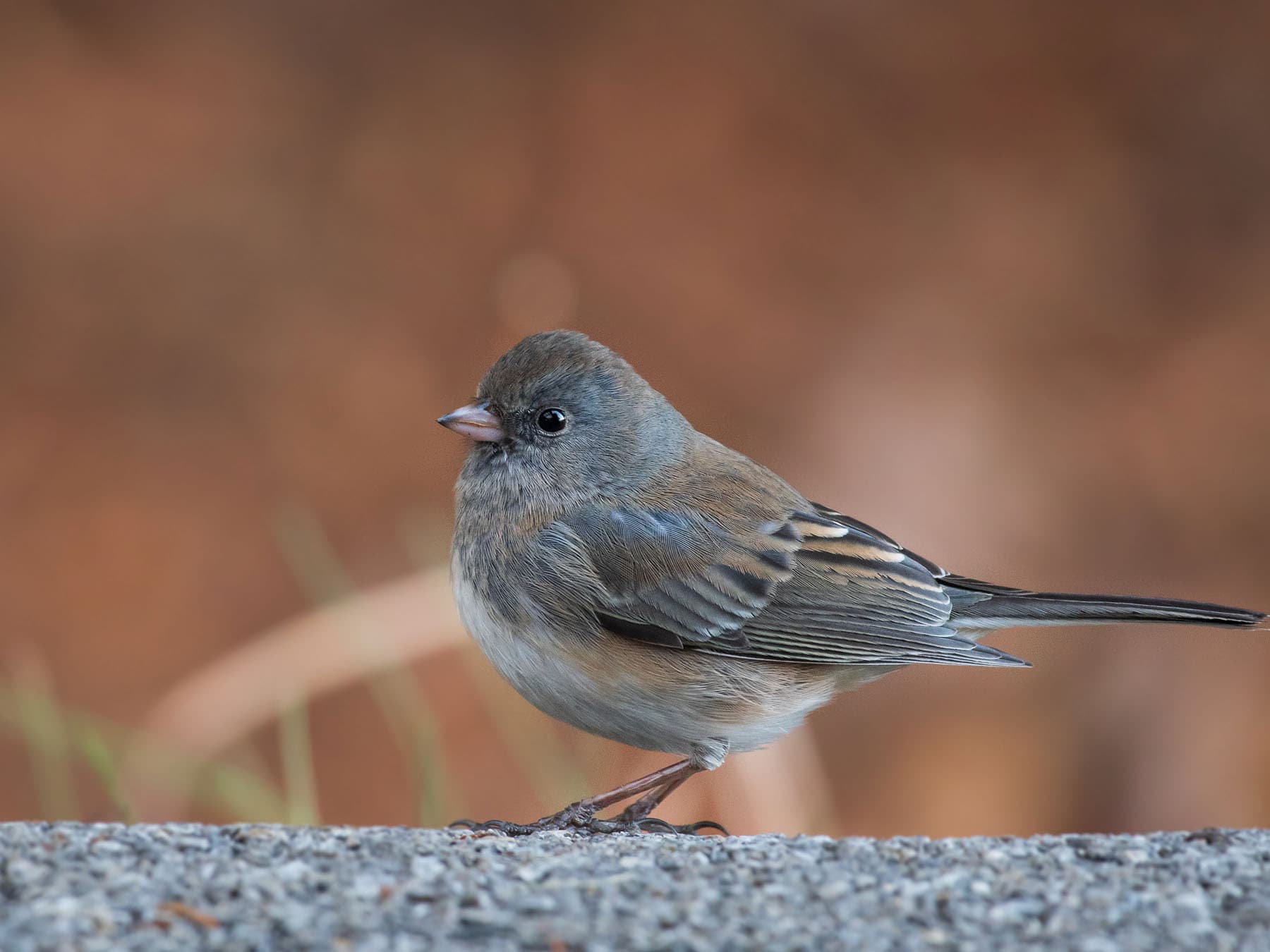
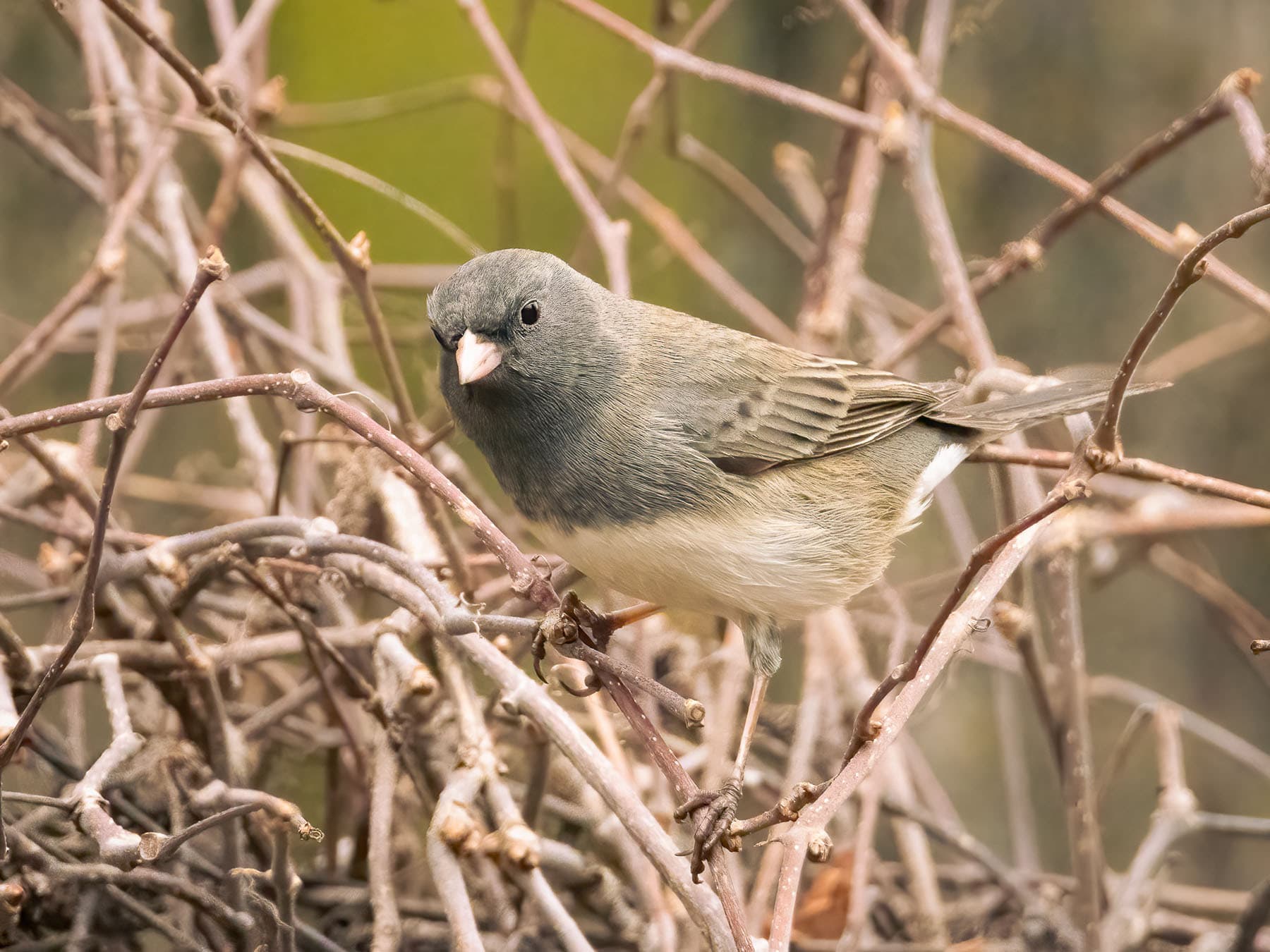
What does a female Dark-eyed Junco look like?
A female Slate-colored Junco is gray-brown above and on the breast, paler than a male, with the same white belly, pale pink bill and white outer tail feathers. On average her tail shows a little less white than a male's, though it varies too much to sex a bird by.
A female Oregon Junco has a gray hood, a brown back and buff-brown sides, with less contrast than the male.
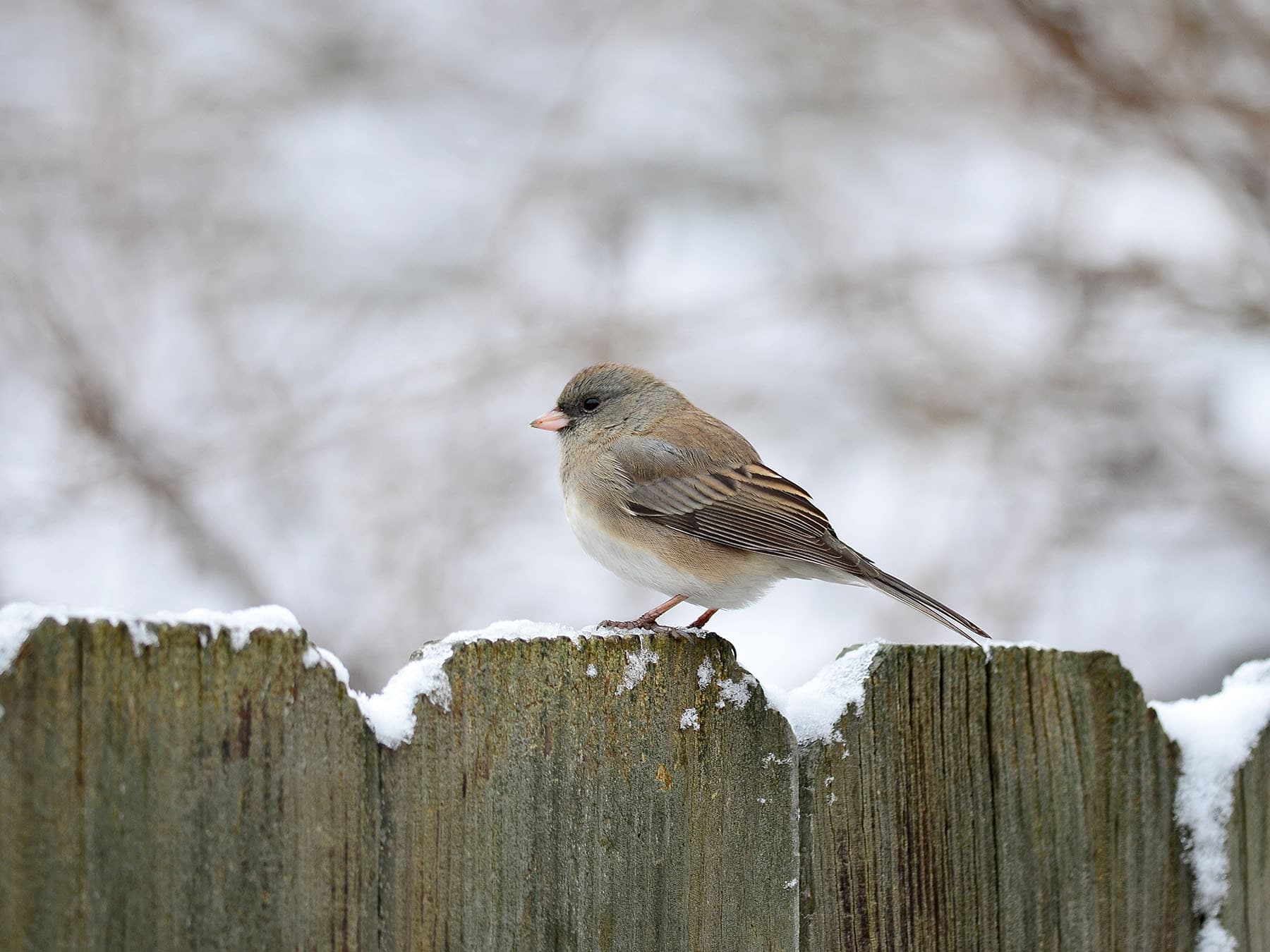
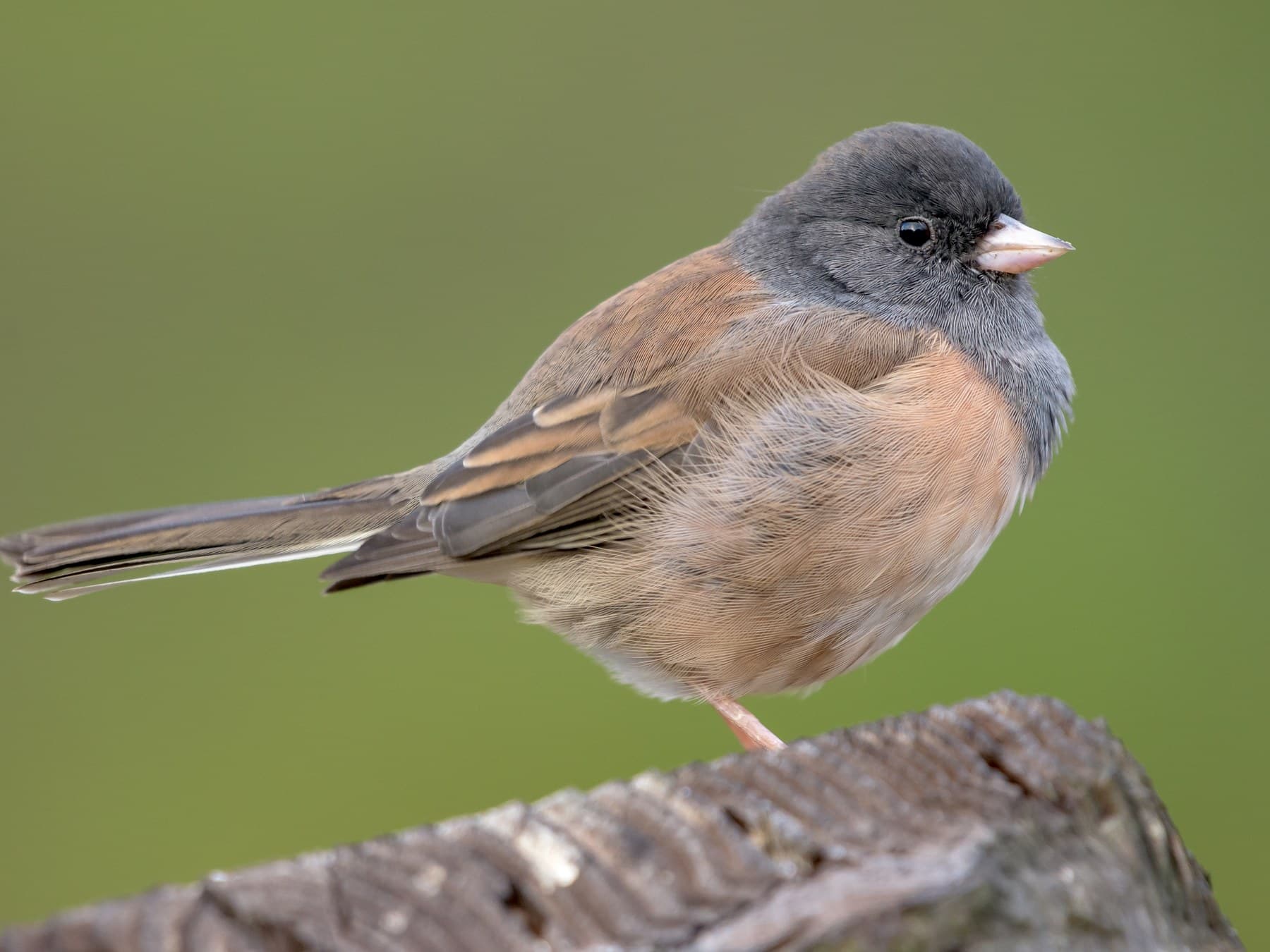
Male and female Oregon Juncos
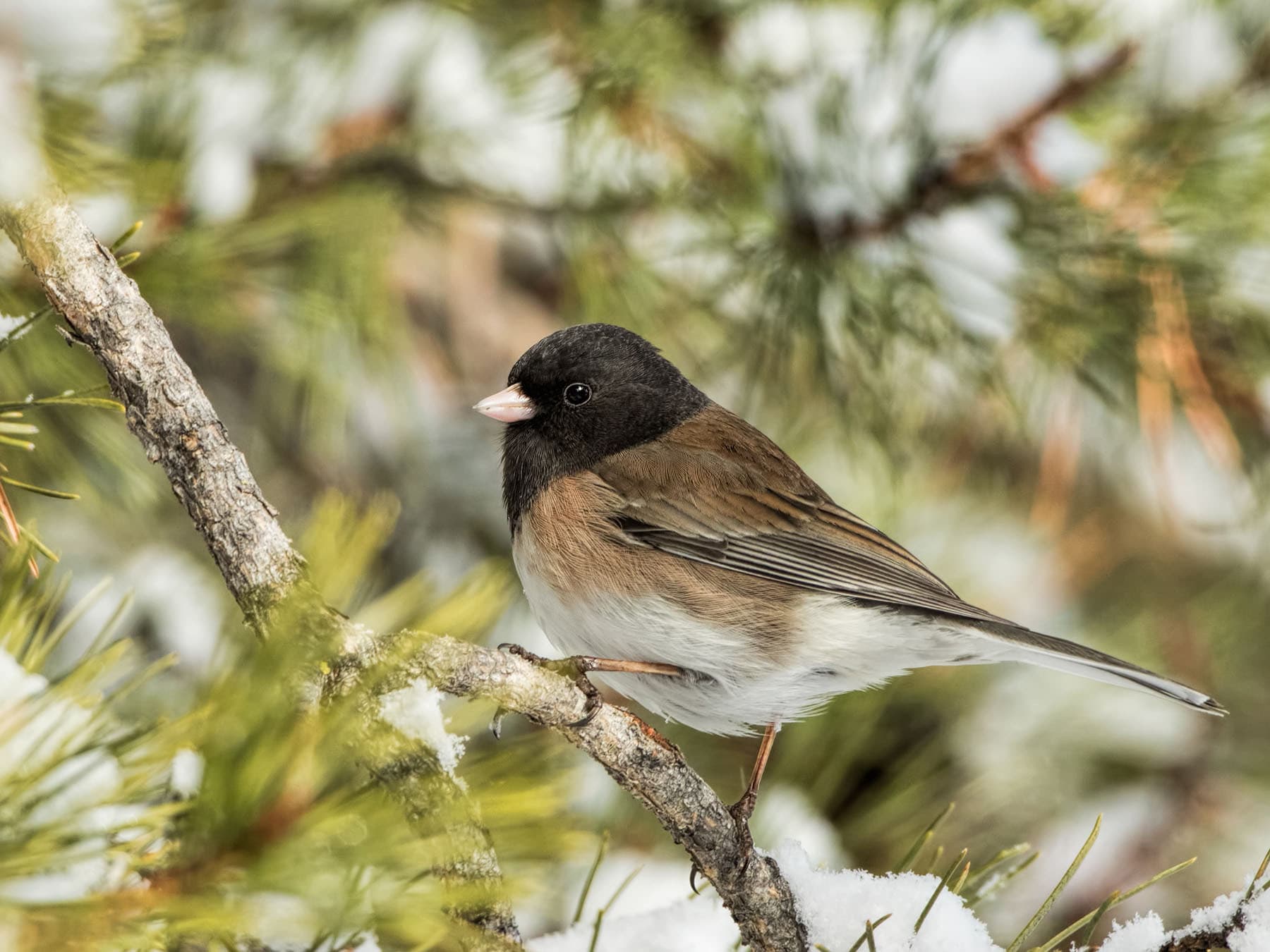
The male Oregon Junco has a black to dark grayish-brown hood, a warm brown back and pinkish-buff to rusty sides; the female has a gray hood and less contrast. The other forms, from Pink-sided to White-winged: Oregon Junco and the other forms.
Are female juncos smaller than males?
A little. In Pennsylvania, males averaged 20.4 g and females 18.8 g, and males have slightly longer wings.
The sexes also winter in different places. In the East, females migrate farther south than males, so in the South most wintering juncos are female, and in the North most are male.3
Juvenile Dark-eyed Juncos
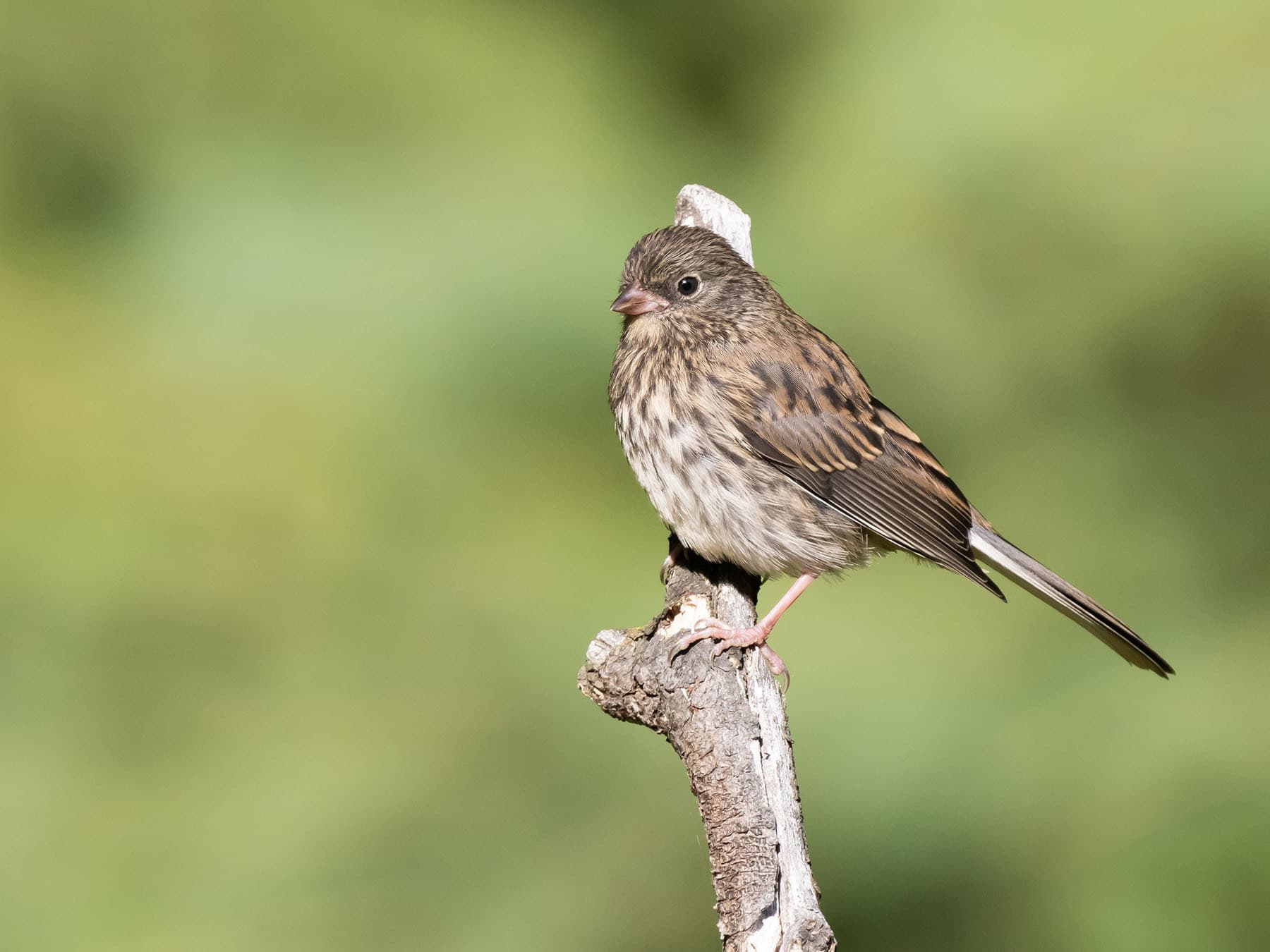
Juveniles, out of the nest in summer, look nothing like their parents at first glance: brown and heavily streaked on the head, back and underparts, with buff on the breast and buff tips to the wing coverts. They already have the small pale bill and the white outer tail feathers, which are the best clues.4 Their eyes are grayish brown.
From late summer into fall they molt into their first adult-like plumage. First-winter birds look like adults of their sex, but paler and browner, and their eyes darken to the adults' reddish brown over the winter.
Singing and calls: males and females
Only males are known to sing the trill in the wild. Both sexes sing a quiet, rambling song of whistles, trills and call notes, heard only within about 10 to 20 yards; females sing it less often, mostly while feeding on the ground. The calls of males and females are the same.
Behavior: what males and females do
In spring, the male defends a territory with his trill and courts the female by hopping around her with wings and tail fanned to flash the white. Females prefer males with more white in the tail.5
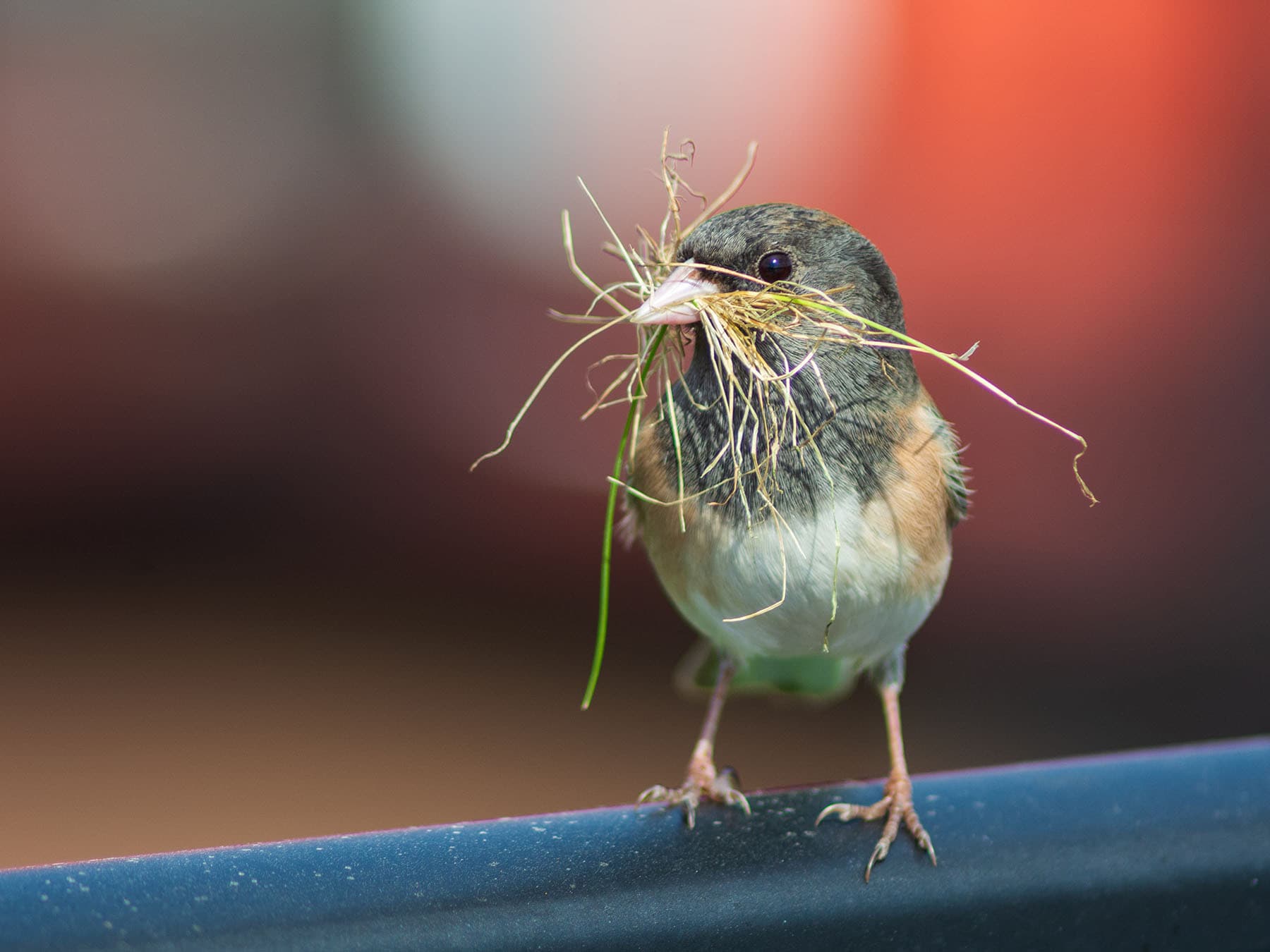
The female chooses the nest site, builds the nest and incubates the eggs alone. The male stays nearby, gives alarm calls and chases off chipmunks, and both parents feed the chicks in roughly equal shares. More: junco nesting.
Sources
- Nolan Jr., V., Ketterson, E. D., Cristol, D. A., Rogers, C. M., Clotfelter, E. D., Titus, R. C., Schoech, S. J., Snajdr, E. (2020). Dark-eyed Junco (Junco hyemalis), version 1.0. Birds of the World (A. F. Poole and F. B. Gill, editors). Cornell Lab of Ornithology. doi:10.2173/bow.daejun.01
- Cornell Lab of Ornithology. Dark-eyed Junco: Overview, Identification and Life History. All About Birds. Accessed 7 October 2026. Source
- Ketterson, E. D., Nolan Jr., V. (1976). Geographic variation and its climatic correlates in the sex ratio of eastern-wintering Dark-eyed Juncos (Junco hyemalis hyemalis). Ecology 57: 679-693. doi:10.2307/1936182
- National Audubon Society. Dark-eyed Junco. Audubon Guide to North American Birds. Accessed 7 October 2026. Source
- Hill, J. A., Enstrom, D. A., Ketterson, E. D., Nolan Jr., V., Ziegenfus, C. (1999). Mate choice based on static versus dynamic secondary sexual traits in the dark-eyed junco. Behavioral Ecology 10: 91-96. doi:10.1093/beheco/10.1.91