Facts · Updated 8 Oct 2026
What Do Juncos Eat? Diet and Feeding Juncos
By the Birdfact teamChecked by Nathan Cope
Dark-eyed Juncos eat seeds above all, especially weed and grass seeds, and add insects in summer, when they feed their chicks. At feeders they like millet scattered on the ground. What they eat through the year, what their chicks eat, and how to feed them.
On this page11 sections
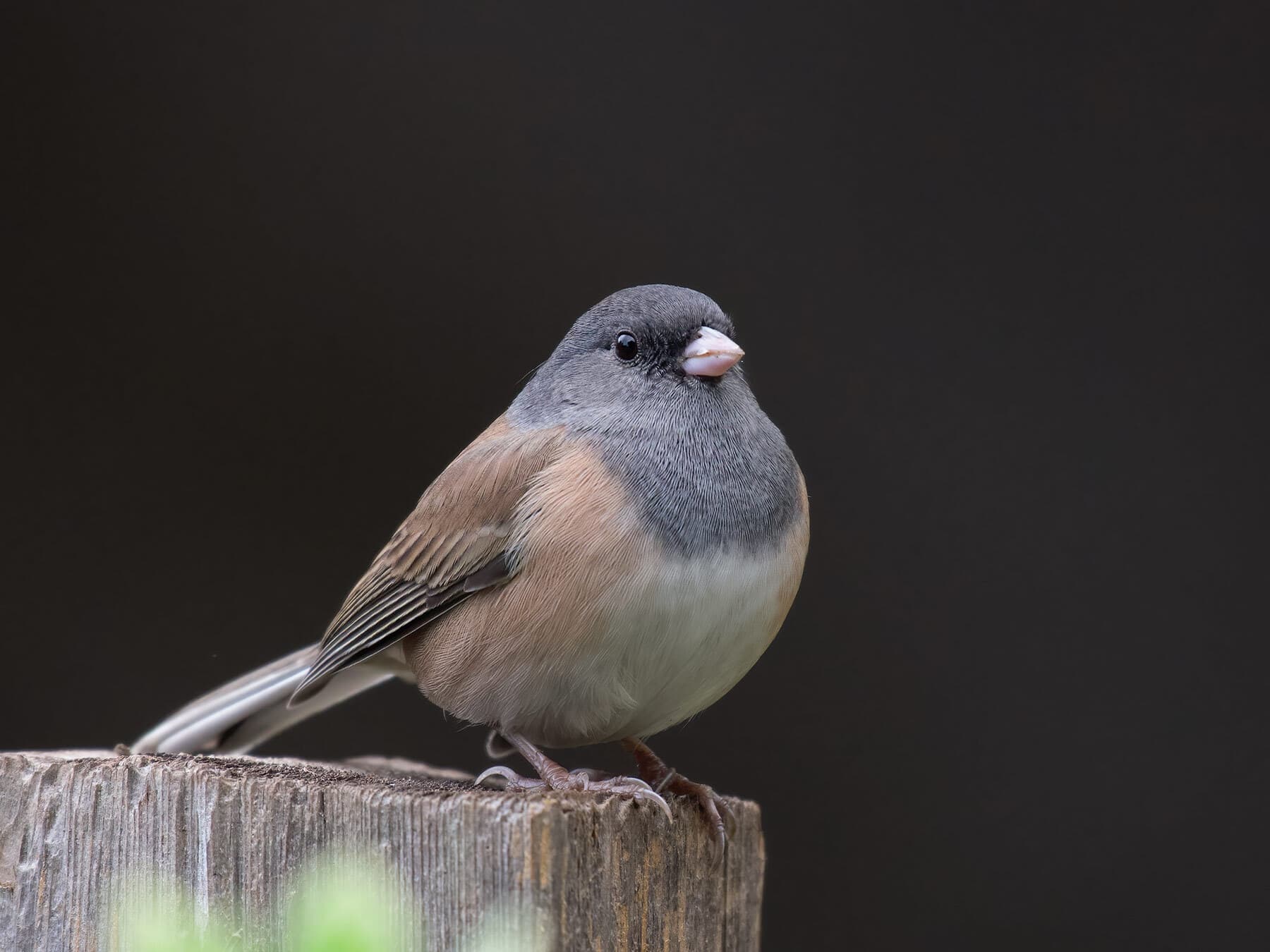
What Dark-eyed Juncos eat in the wild through the year, what their chicks are fed, and what to put out for them in your yard. For the bird itself, see Dark-eyed Junco identification, song and facts.
What do juncos eat?
Seeds, mostly. Seeds of weeds and grasses make up about three-quarters of a junco's diet over the year: chickweed, buckwheat, lamb's quarters and sorrel.1 In summer they add insects and spiders.
What do juncos eat in winter?
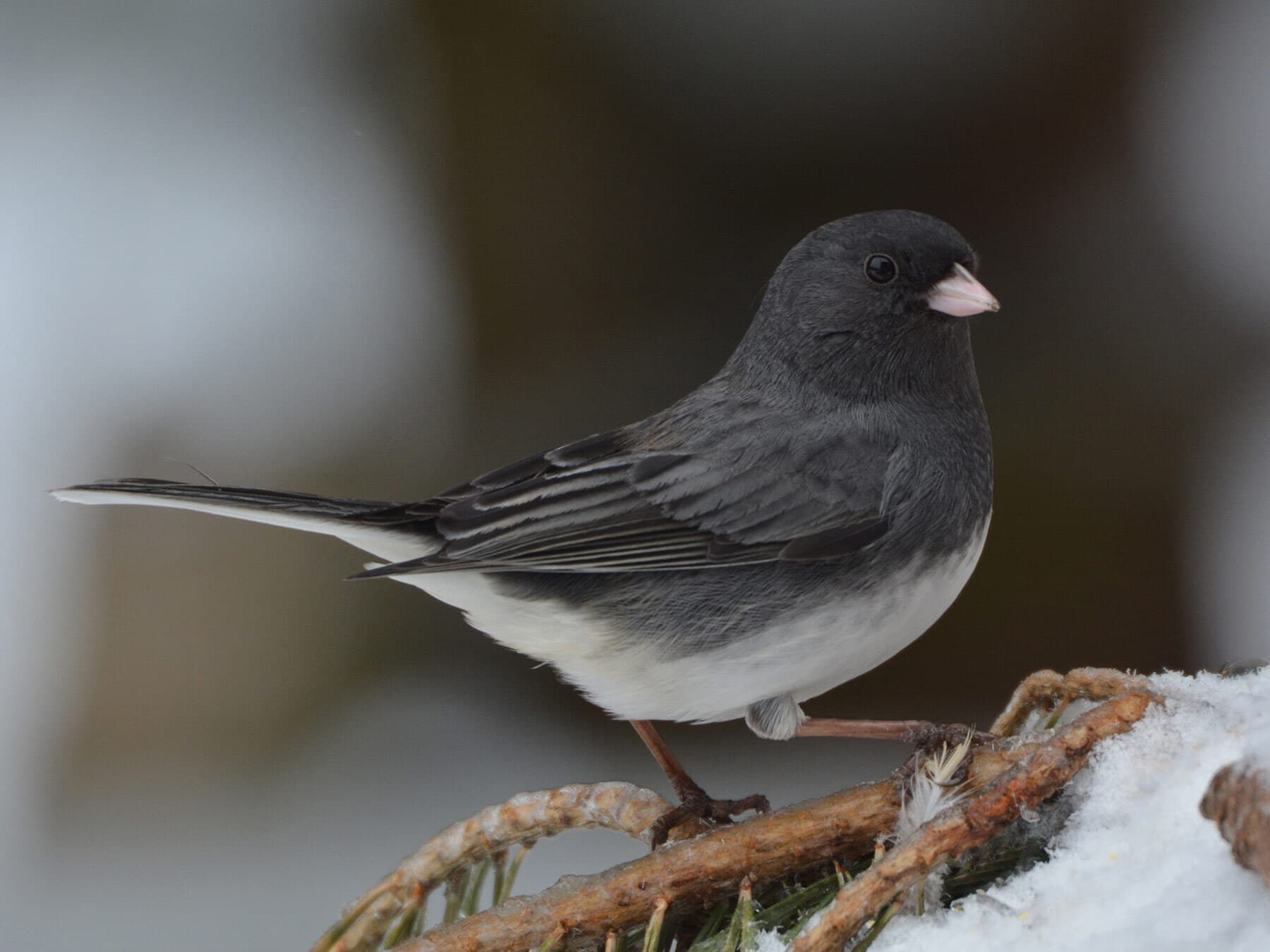
Almost nothing but seeds. In winter juncos feed in weedy fields, along roadsides and woodland edges and in yards, on seeds of ragweed, knotweed, pigweed, lamb's quarters, timothy and other weeds and grasses.2 In one North Carolina study, weed seed was so plentiful that the researchers thought juncos might never run short in winter.
Snow is the problem. After a snowfall juncos look for bare patches at the bases of trees, under dense shrubs and on south-facing slopes, and they put on fat quickly when it turns cold. They drink from streams and puddles, and eat snow.
Summer
A mix of seeds and insects. Close to half of an adult junco's summer diet is insects, such as caterpillars, beetles and grasshoppers.3 Moths, ants, wasps, flies and spiders are on the menu too. Juncos pick them from the ground and leaf litter, glean them from twigs and leaves in low shrubs, and sometimes fly up to catch them on tree trunks or in the air.
Food for the chicks
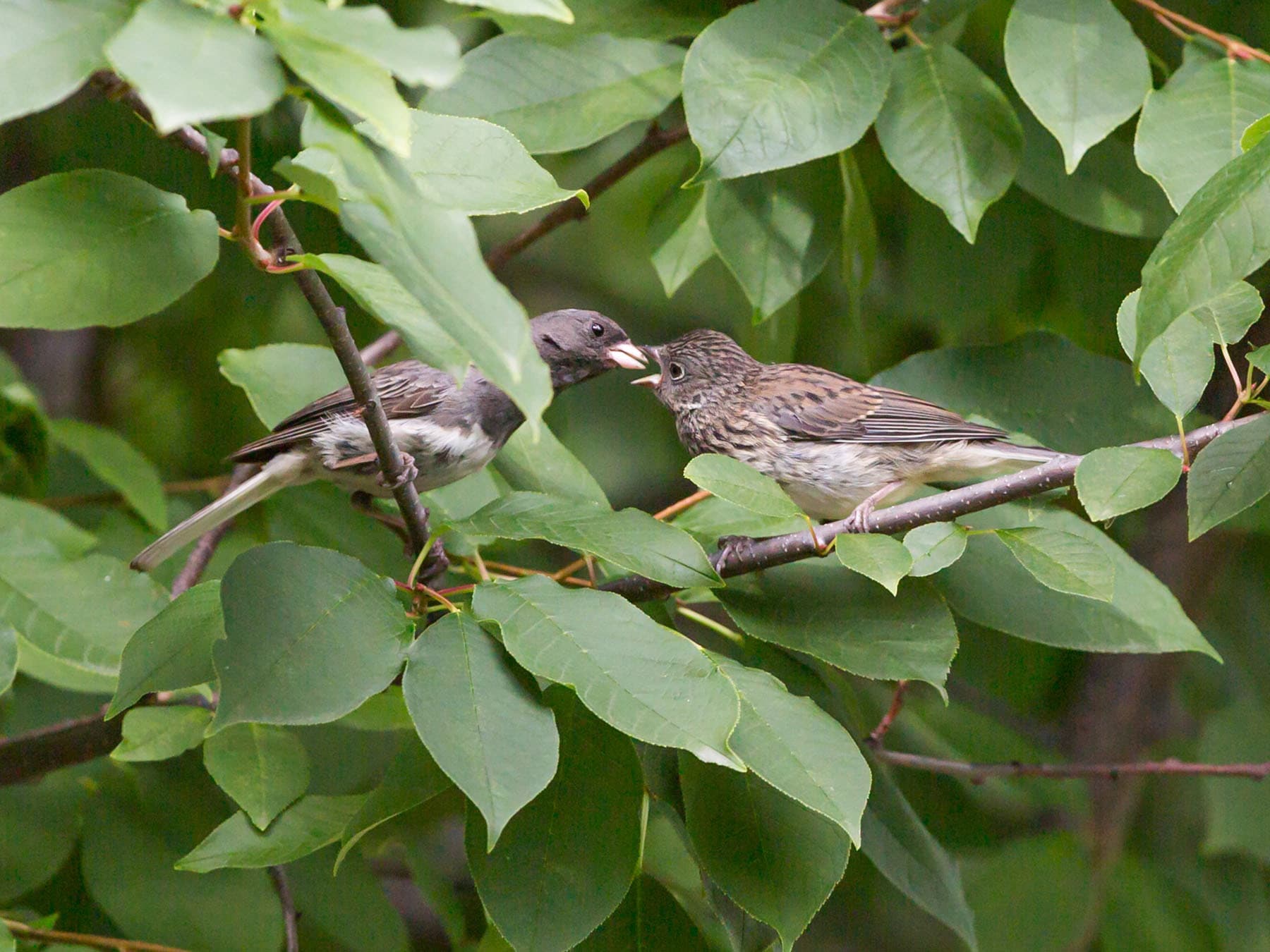
Insects and spiders, adults and larvae, with an occasional seed and some grit. Both parents feed the chicks, roughly equally; they pull the wings and legs off big insects first, and feed very young chicks partly by regurgitation. More: junco nesting.
How they find food
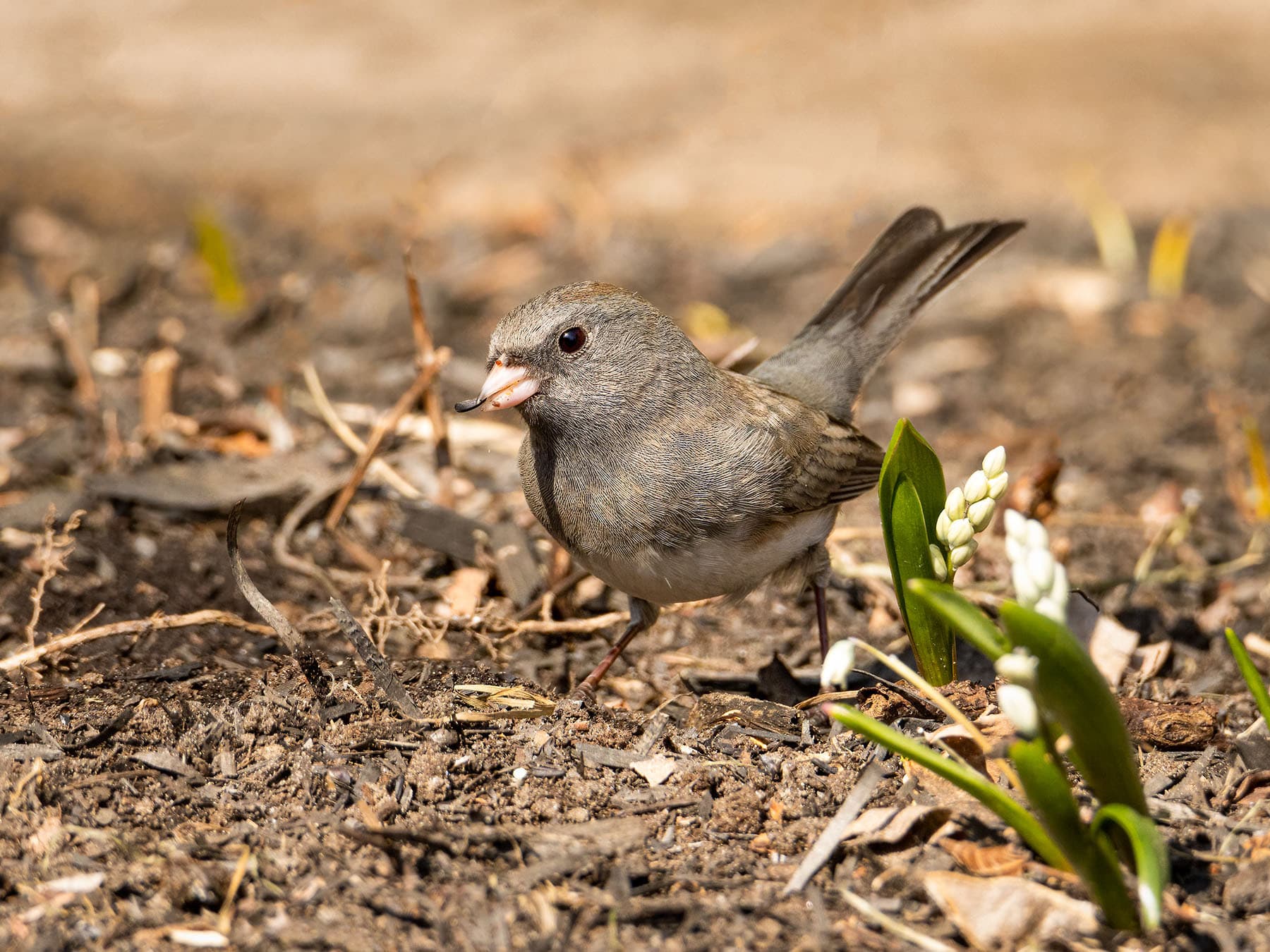
On the ground, mostly. Juncos hop about picking up seeds, and sometimes scratch in the leaf litter, hopping forward and kicking back with both feet at once. They stay close to cover, flying up into a shrub when alarmed. In winter they feed in flocks with a pecking order: bigger birds and birds that arrived first get the best spots. Juncos do not store food.
Feeding on the ground
They hop around the bases of trees and shrubs and out onto lawns looking for fallen seed, and at feeders you will usually see them on the ground underneath. They do visit feeders, but prefer to feed on the ground.
Feeding juncos in your yard
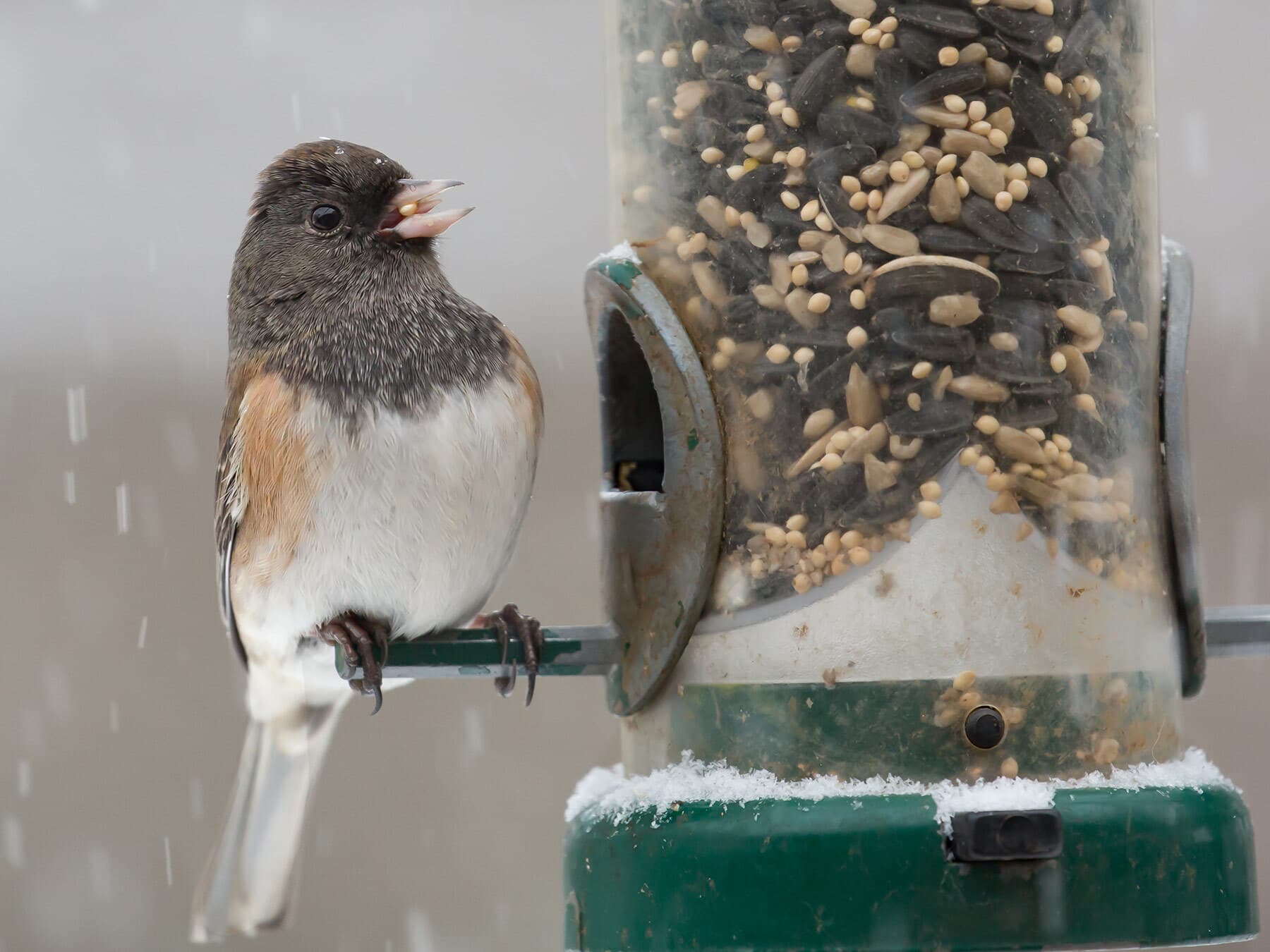
Millet is the junco food. Project FeederWatch's advice is simple: "A handful of millet sprinkled on the ground will keep your juncos and sparrows happy." For a mix, FeederWatch suggests cracked corn with millet, a scoopful on the ground or on a platform feeder; it names cracked corn as a food for doves, quail and sparrows.4
Juncos also take black oil sunflower seed, but in tests captive juncos chose millet over sunflower, and at feeders they seem to prefer it. Juncos visit feeders across most of the continent: in the Northeast in 2021-22 they came to 91.89% of FeederWatch sites.5
Do juncos eat safflower, suet, mealworms or peanuts?
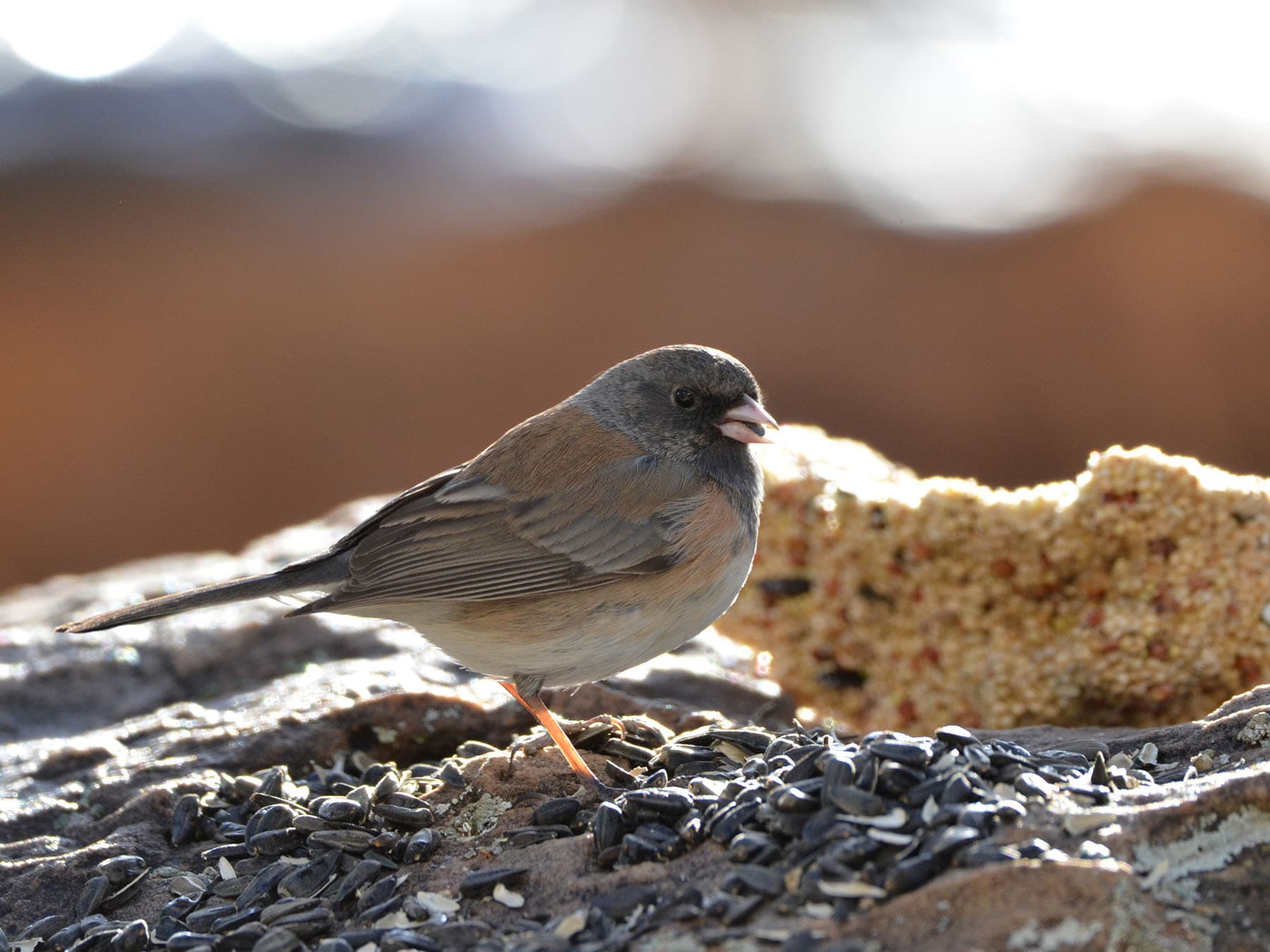
None of the sources we checked recommends these for juncos. Project FeederWatch describes safflower as a food for cardinals and other big-billed birds, suet as one for insect-eating birds, and mealworms for bluebirds. For juncos, the foods the sources name are millet and sunflower. If you offer peanuts to other birds, use raw or roasted, never salted or coated.
Keeping ground feeding clean
Feeding on the ground brings birds into contact with old seed and droppings. Rake up husks and droppings under feeders, especially if they are wet or moldy; on snow, scrape away the dirty layer. Clean seed feeders every two weeks or so with one part bleach to nine parts water, rinse and dry them, and twice as often if you see sick birds. Several feeders spread birds out.6
Water
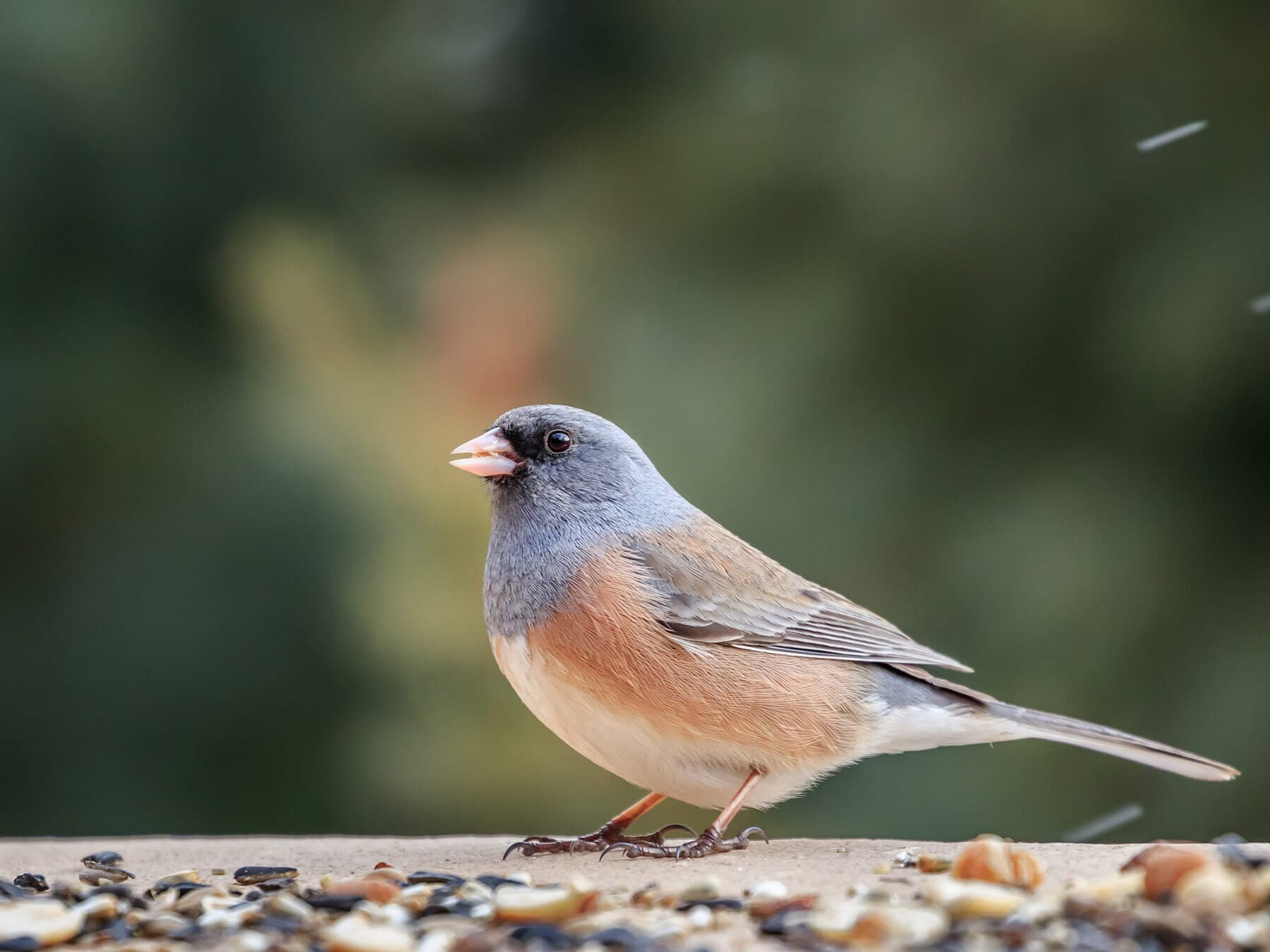
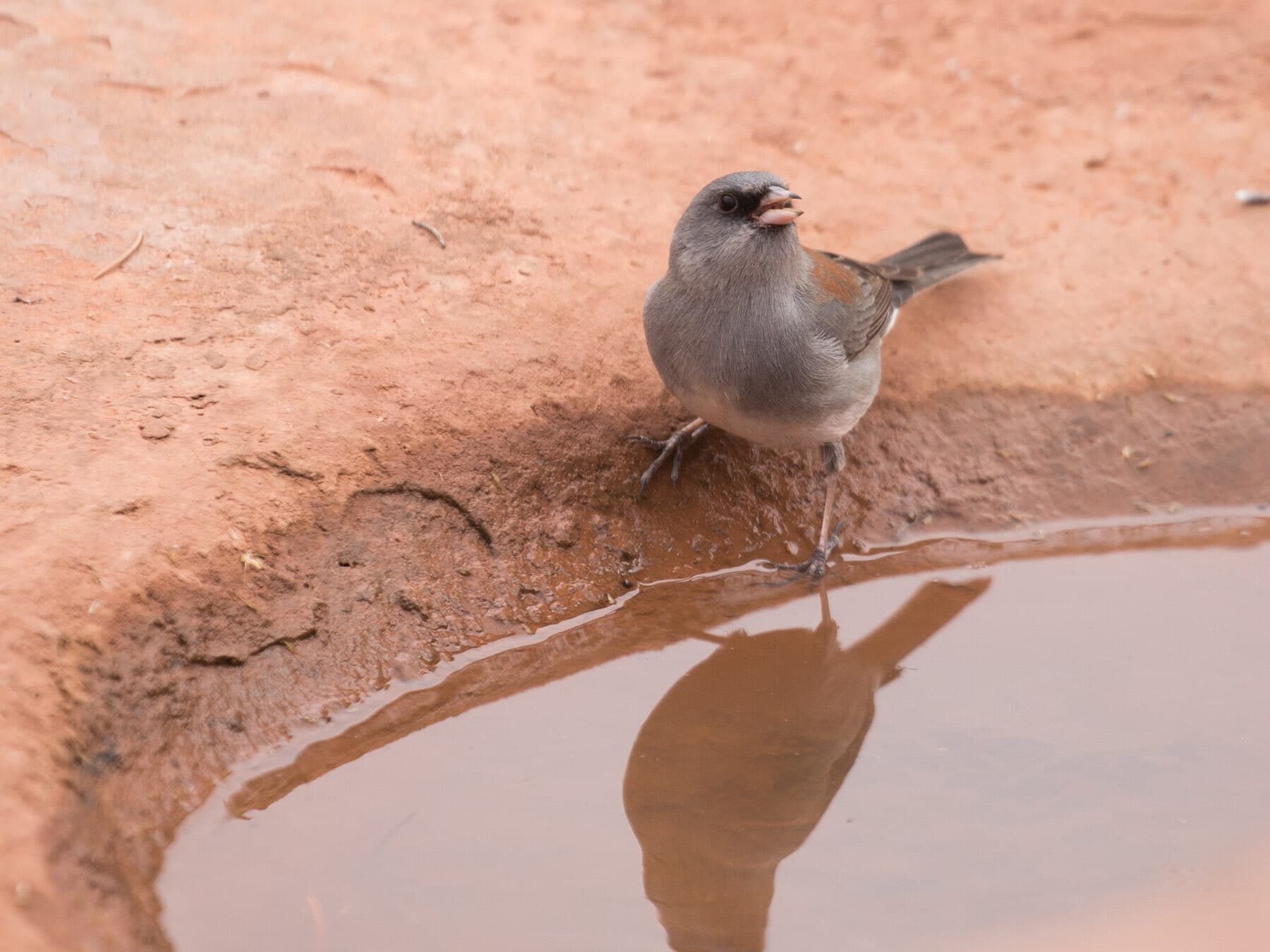
Juncos drink from streams, puddles and drops on leaves, and eat snow.
Sources
- Cornell Lab of Ornithology. Dark-eyed Junco: Overview, Identification and Life History. All About Birds. Accessed 7 October 2026. Source
- Nolan Jr., V., Ketterson, E. D., Cristol, D. A., Rogers, C. M., Clotfelter, E. D., Titus, R. C., Schoech, S. J., Snajdr, E. (2020). Dark-eyed Junco (Junco hyemalis), version 1.0. Birds of the World (A. F. Poole and F. B. Gill, editors). Cornell Lab of Ornithology. doi:10.2173/bow.daejun.01
- National Audubon Society. Dark-eyed Junco. Audubon Guide to North American Birds. Accessed 7 October 2026. Source
- Project FeederWatch. Food types. Project FeederWatch. Accessed 7 October 2026. Source
- Project FeederWatch (Cornell Lab of Ornithology and Birds Canada) (2022). Top 25 Feeder Birds, 2021-22, Northeast Region. Project FeederWatch. Accessed 7 October 2026. Source
- National Audubon Society (2024). Three easy but important ways to keep your bird feeders disease-free. Audubon. Accessed 7 October 2026. Source