Facts · Updated 14 Oct 2026
Female Blue Jays: Male vs Female Blue Jay
By the Birdfact teamChecked by Nathan Cope
Male and female Blue Jays look the same. Males average about 3% bigger, too little to see in the field. The clues are behavior: only the female gives the dry rattle call and incubates the eggs, and in spring the male feeds her.
On this page9 sections
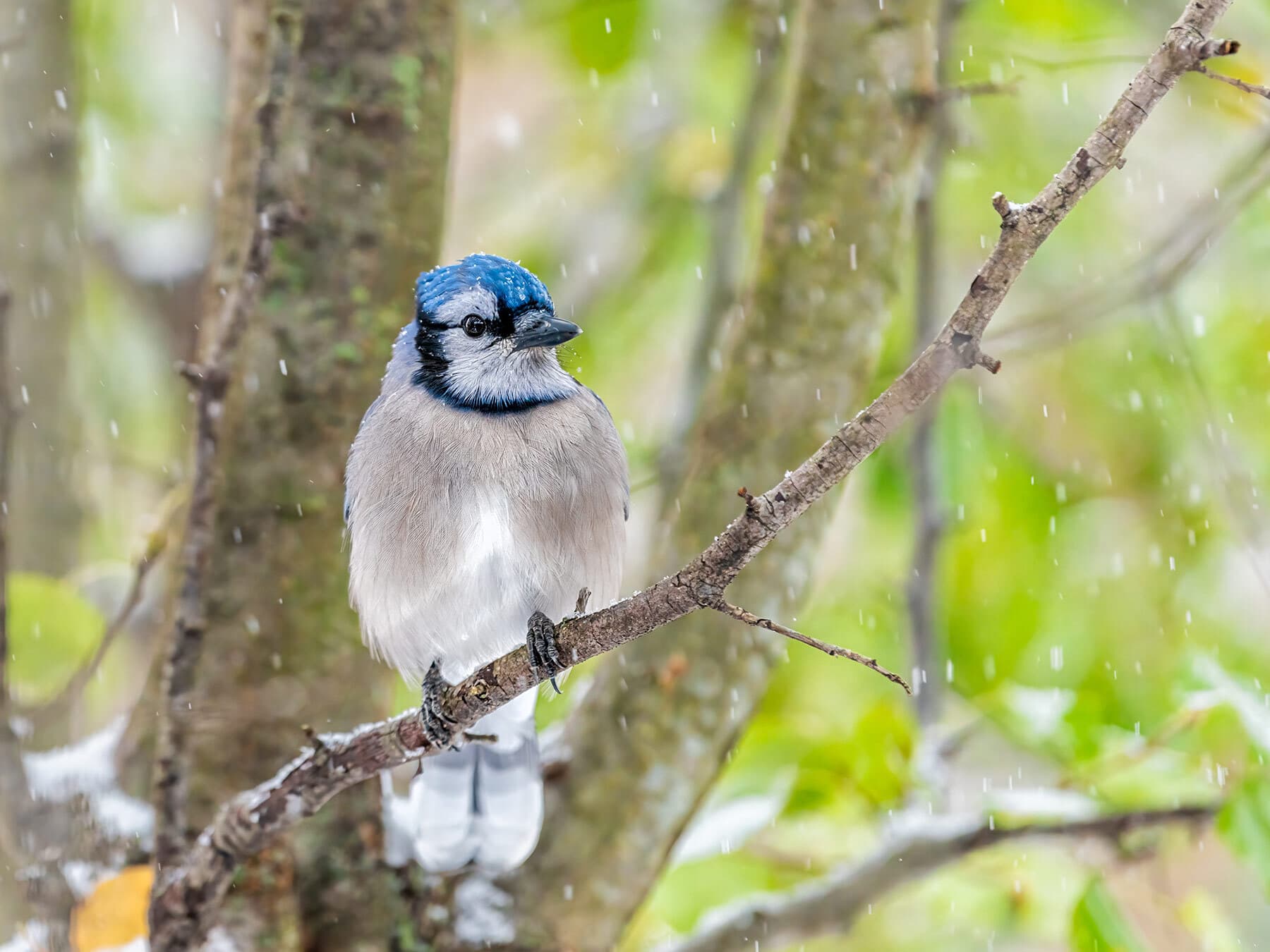
This page is about the Blue Jay, the crested blue-and-white jay of eastern and central North America. Males and females look the same, so telling them apart comes down to a small average difference in size and, mostly, to what each bird is doing. For the bird as a whole, see our Blue Jay guide; for nests and eggs, see Blue Jay nesting, and for the young, baby Blue Jays.
Can you tell male and female Blue Jays apart?
Not by their feathers. Birds of the World describes the sexes as alike in plumage and size at every age, with no difference in appearance or molt reported between them.1 A bird you see at the feeder could be either. What gives a female away is behavior: a particular call, sitting on eggs, or being fed by her mate in spring.
What a female Blue Jay looks like
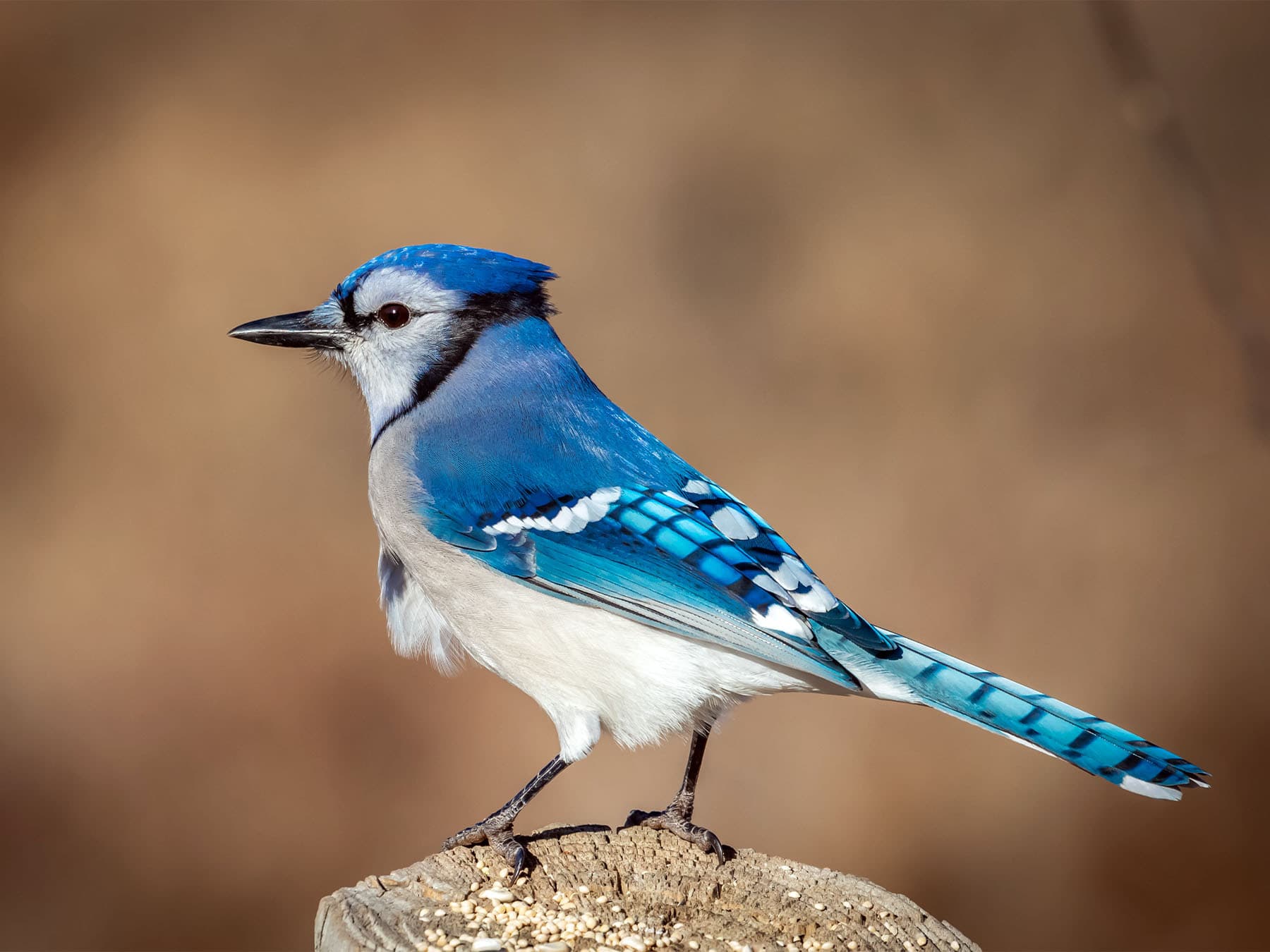
Exactly like a male. She is blue above, with a blue crest, and white to pale gray below, the breast and sides a little grayer. A black necklace runs across her upper breast, bordering a white throat, and up the sides of the neck to a black line through the eye and a black border behind the crest. Black bars cross the wings and tail, with a white wing bar, white tips to the inner flight feathers and big white corners to the tail.2 Her bill and legs are black and her eyes dark brown.1
The black bridle around the face varies a lot from bird to bird, and may help jays recognize one another, but Birds of the World adds that it is probably not related to sex.
Size
Males are about 3% larger than females on average, in both measurements and weight, but the ranges overlap widely.1 In a sample of banded birds from south-central Florida, adult males averaged about 2.6 ounces (73 g) and adult females about 2.5 ounces (70 g), with males a few millimeters longer in the head, wing and tail:
| Measurement (adults, Highlands County, Florida) | Males | Females |
|---|---|---|
| Weight | 72.8 g (76 birds) | 70.5 g (77 birds) |
| Head, bill tip to back of skull | 56.6 mm | 54.7 mm |
| Wing | 124.3 mm | 121.1 mm |
| Central tail feather | 120.0 mm | 115.2 mm |
Averages for birds after their second calendar year, from Birds of the World, Appendix 1. In the hand, a bander can sex south-central Florida jays with about 88% confidence from head and tail length together; in the field, a few millimeters cannot be seen. How big the gap is varies from place to place, and it is greatest in the Ohio River valley of Indiana and Ohio.
Female calls: the rattle
One sound is hers alone. The rattle is a fast run of dry, raspy clicks, often with a crisp click at the start and end, like a large cat's purr but quicker. It may be one long rattle of 2 to 3 seconds or two or three short ones, and the bird usually bobs up and down as she gives it. Observations of captive and color-banded wild jays indicate that only females make it.1 Females often rattle in early spring and fall flocks, when jays gather in excited groups, when a pair meets other jays, and perhaps when a predator or a person comes near. The call probably shares its origin with the female-only rattles of other members of the crow family.
Two other calls belong mostly to females. A few days before laying, and perhaps while laying, a female gives a soft, plaintive peep call in an even series, usually when her mate is foraging nearby. And she begs from him: a quiet kuet kuet rising to a whiny ennnyaa, with fluttering wings. Males rarely beg, though Birds of the World notes that a male may beg from his mate at a feeder.
Hear a rattle, and read the evidence for it being a female call, including one early study that heard it from both sexes: Blue Jay sounds.
Who builds, incubates and feeds
Both birds gather material and build the nest, but in one study the male appeared to do more of the gathering and the female more of the building, and males often hand twigs to their mates. Females have been seen rubbing their breast and belly on the spot that becomes the nest, though nobody knows whether the female always picks the site.
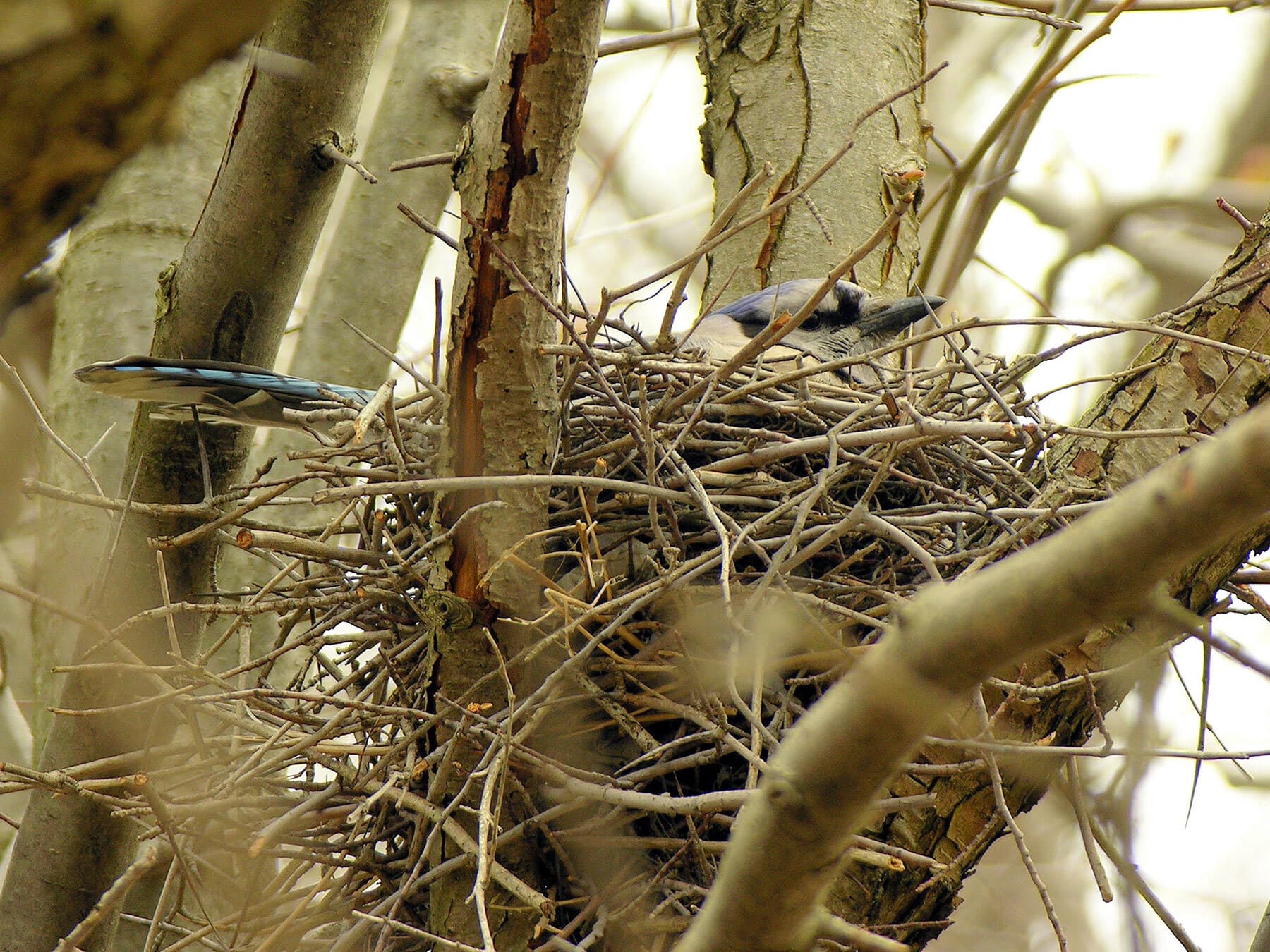
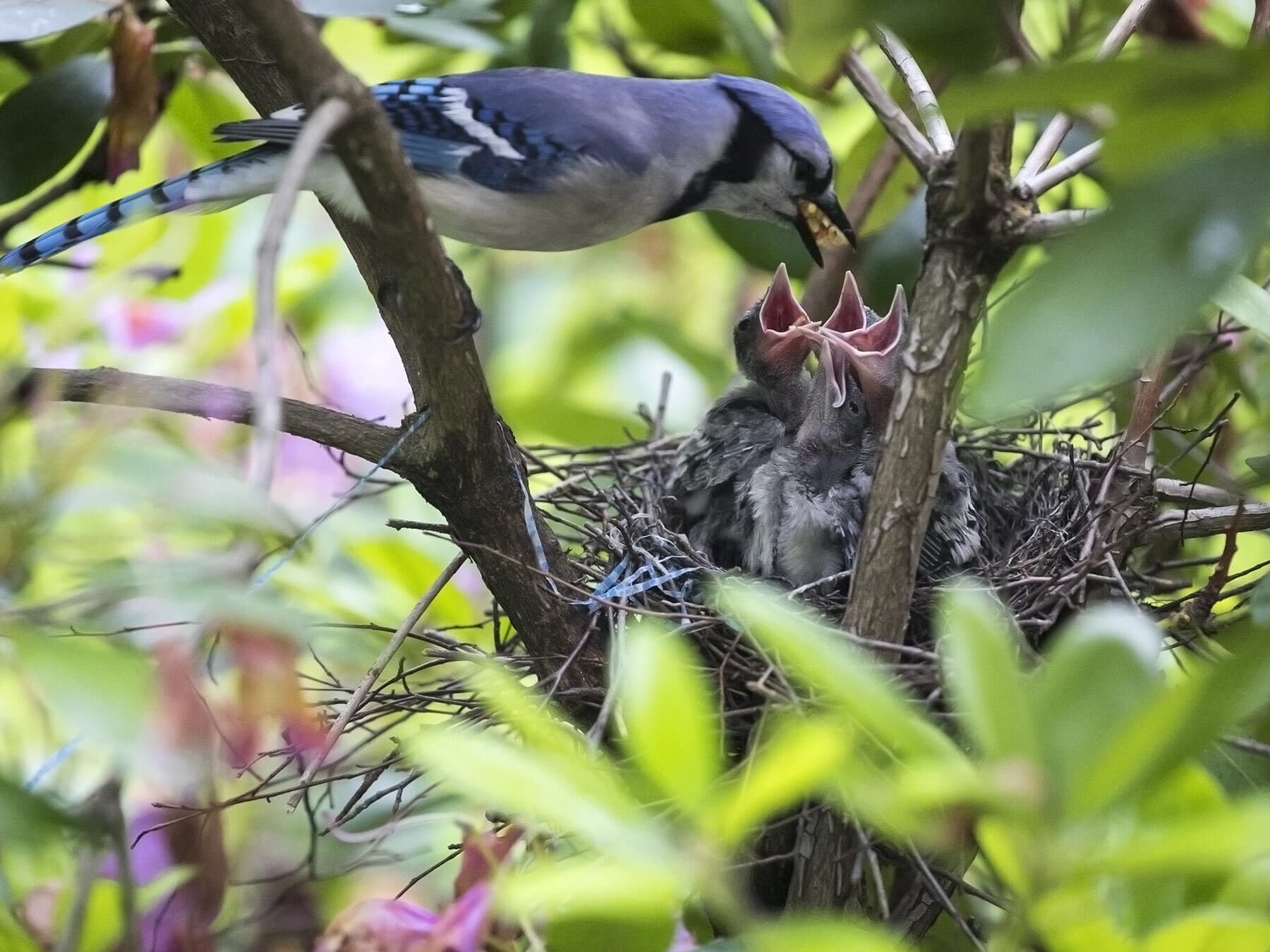
Only the female incubates the eggs, for 17 to 18 days, and only she has a brood patch, the bare, warm patch of skin on the belly. She sits at least 40 minutes in every hour early on and almost constantly near hatching, and the male brings her all her food. For the first 8 to 12 days after hatching she broods the chicks while he feeds both her and them. Midway through the nestling period she starts foraging too, but the male still brings more food. Both feed the young for one to two months after they leave the nest. More: nests and eggs and baby Blue Jays.
Courtship and pairs
Before nesting, the male often feeds the female, and once she is incubating he provides all her food. Mates nudge each other, pass twigs and touch bills in a "kiss", presumably without passing food. When she is ready to mate, the female crouches beside the male with her tail quivering and her wings flicking, calling softly.1
Blue Jays keep the same mate for years. Pairs probably split only when one bird dies, except in rare cases; in a Florida study, mates divorced in just 2 of 28 cases where both survived to the next season. More: do Blue Jays mate for life?
Which sex is the boss?
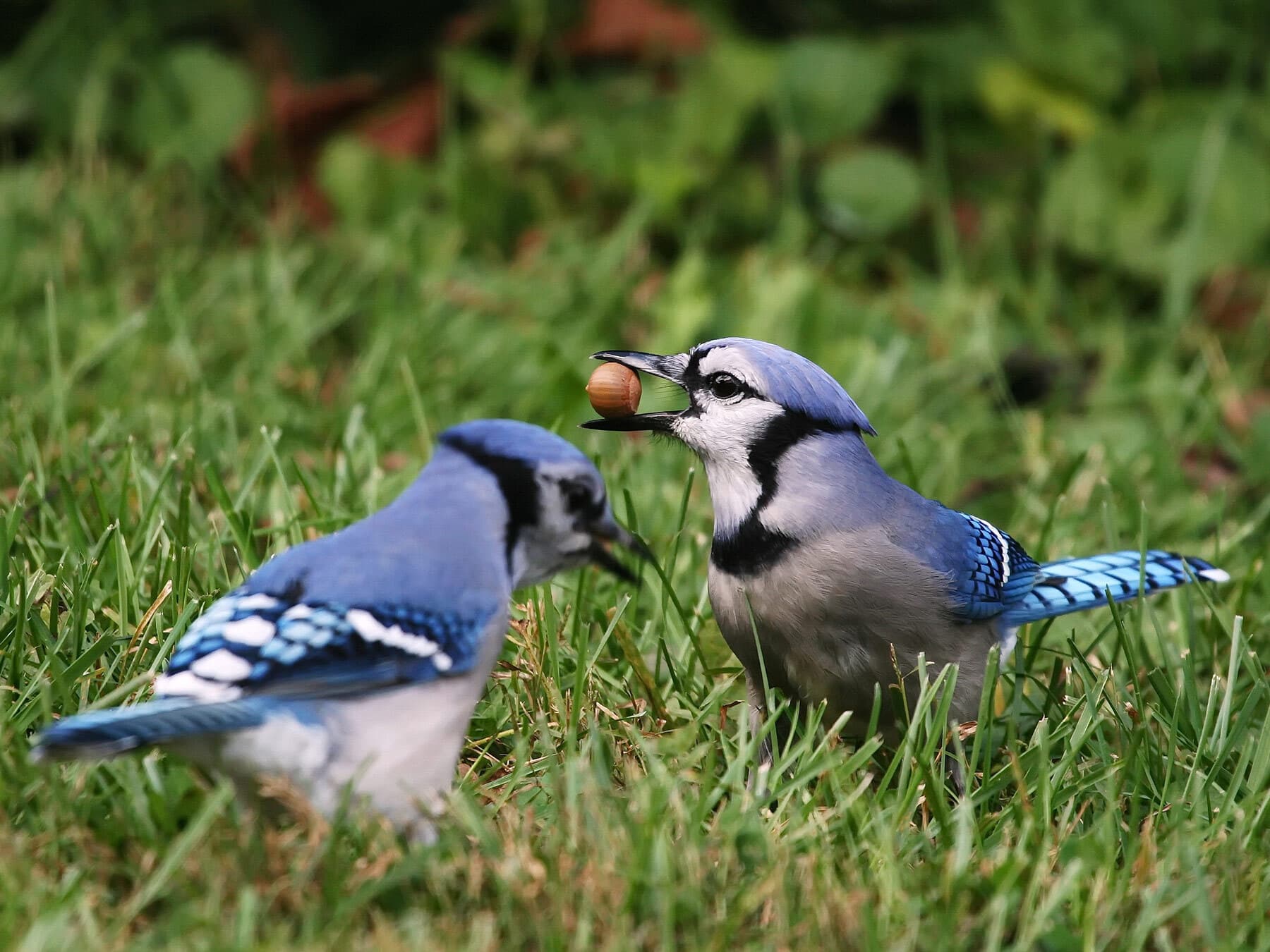
Males are dominant to females and more aggressive all year. Just before the breeding season the balance shifts a little, with females becoming more aggressive and males less, but males stay dominant.1 In a study at a Florida feeder, males dominated females in all 24 male-female pairings with a clear winner.3
The noisy spring groups of jays chasing each other through the trees were once described as several males competing for one female. Studies of color-banded birds found that they are mostly pairs that are already mated, so Birds of the World's authors think these displays are about space for breeding rather than mates.1
Young Blue Jays
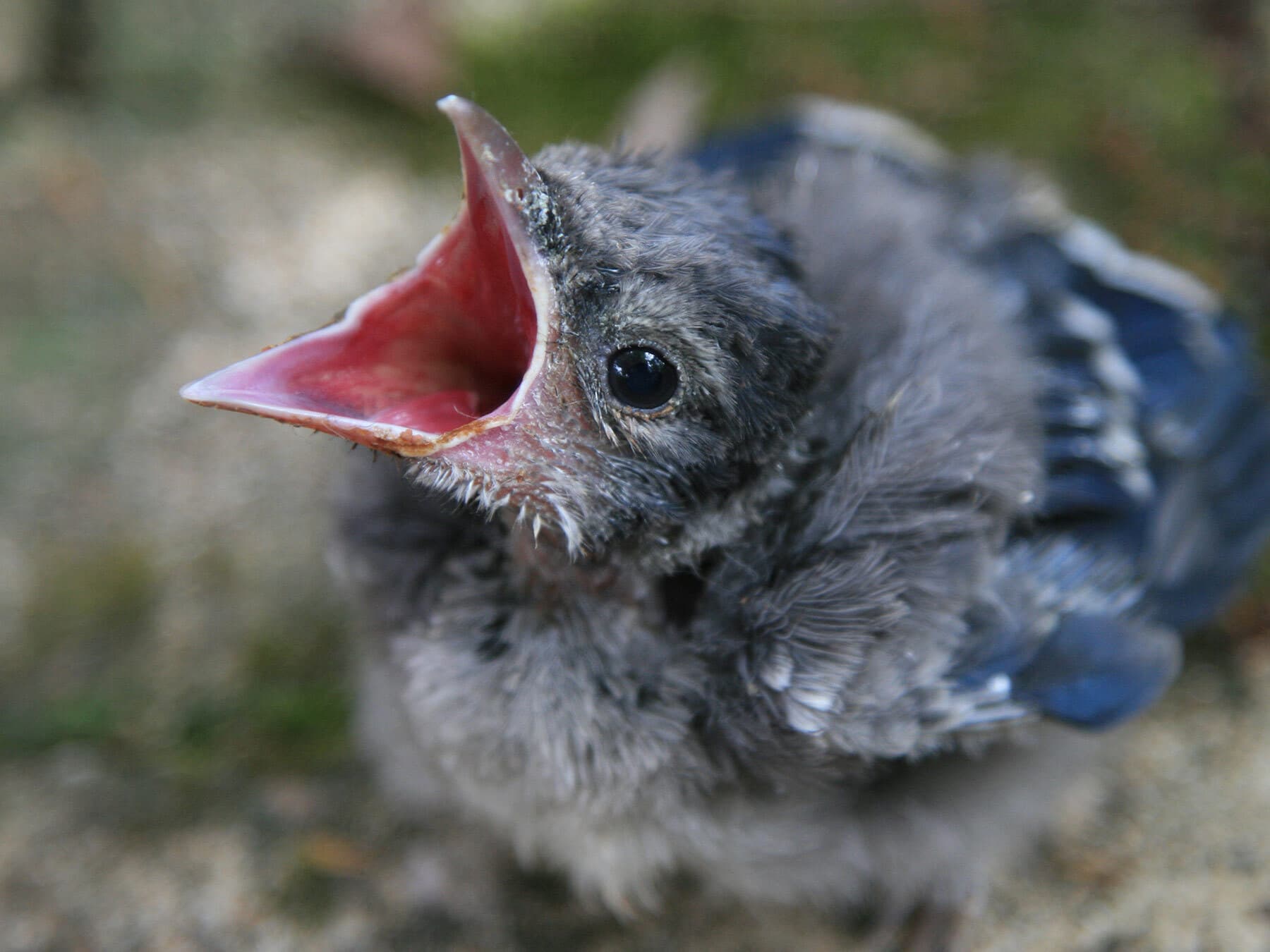
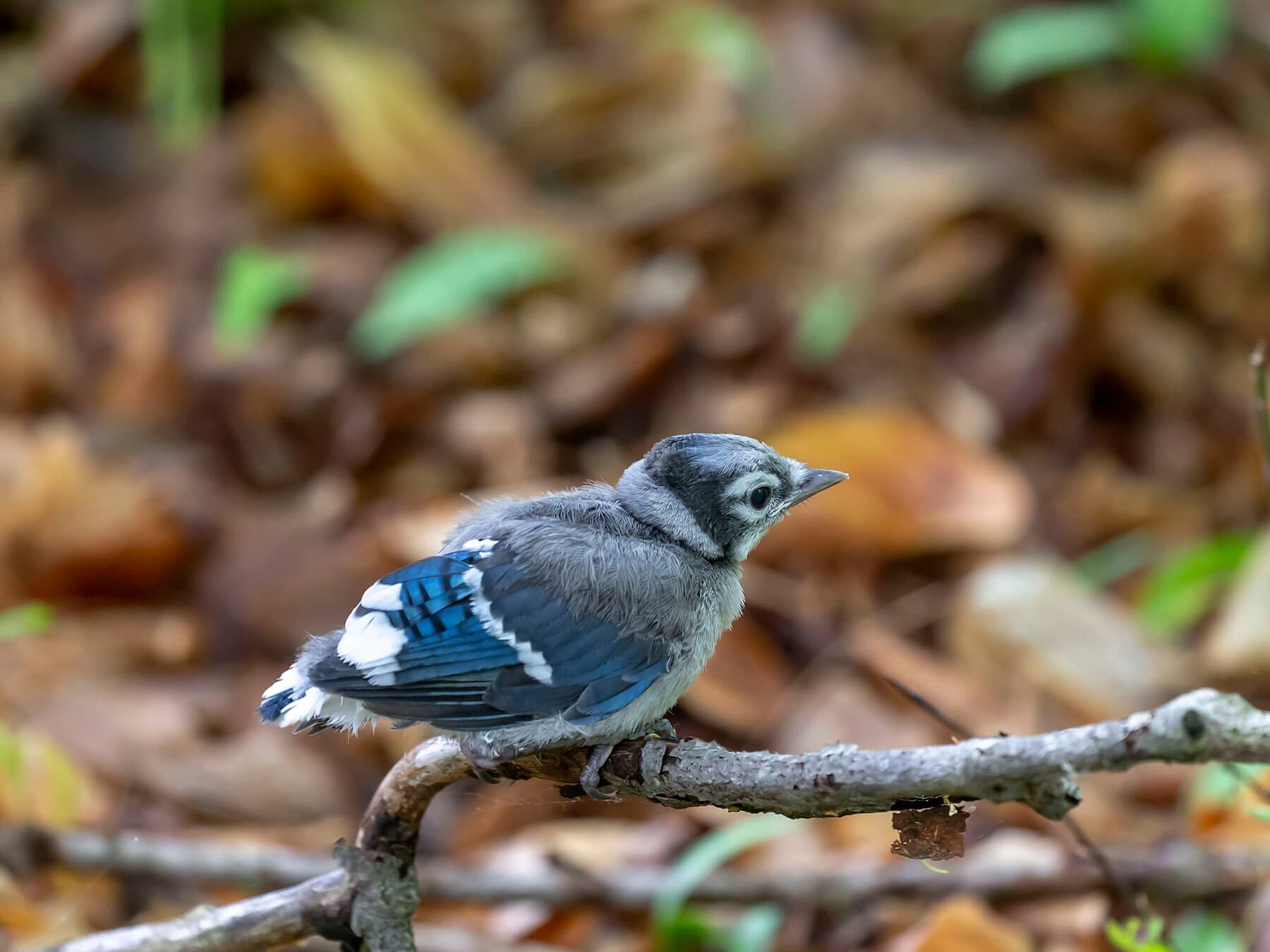
Young birds cannot be sexed by their feathers either. Juveniles look like duller adults, with a grayer head, a shorter crest, a softer, brownish-gray necklace and plain, unbarred blue patches on the folded wing, and both sexes look the same. Most look like adults by mid- to late fall. More: baby Blue Jays.
Sources
- Smith, K. G., Tarvin, K. A., Woolfenden, G. E. (2020). Blue Jay (Cyanocitta cristata), version 1.0. Birds of the World (A. F. Poole, editor). Cornell Lab of Ornithology. doi:10.2173/bow.blujay.01
- Cornell Lab of Ornithology. Blue Jay. All About Birds. Accessed October 14, 2026. Source
- Tarvin, K. A., Woolfenden, G. E. (1997). Patterns of dominance and aggressive behavior in Blue Jays at a feeder. The Condor 99(2): 434-444. doi:10.2307/1369950