Facts · Updated 14 Oct 2026
Do Blue Jays Mate for Life?
By the Birdfact teamChecked by Nathan Cope
Usually, yes. Blue Jay pairs stay together for several years and probably part only when one bird dies; in a Florida study, pairs divorced in 2 of 28 cases. Mates stay together all year, and the male feeds the female during courtship and incubation.
On this page9 sections
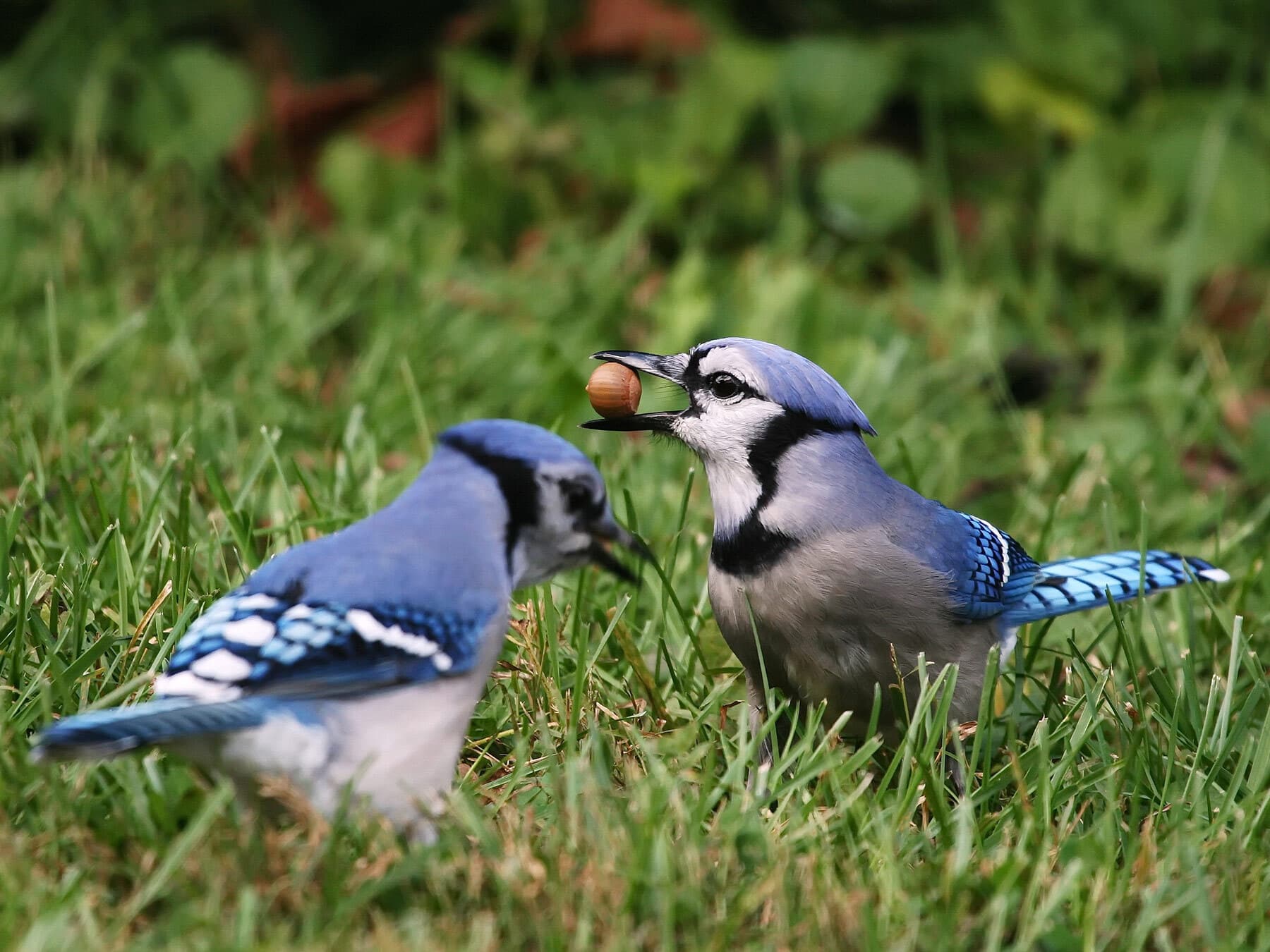
This page is about pairs in the Blue Jay, the crested blue-and-white jay of eastern and central North America: how long they last, how they court, and what they do together through the year. For telling the sexes apart, see male vs female Blue Jays.
Do Blue Jays mate for life?
Very often, yes. Blue Jays are socially monogamous over the long term: pairs last for years and, apart from rare cases, probably part only when one bird dies.1 All About Birds puts it simply: Blue Jays "often mate for life, remaining with their social mate throughout the year."2
The figures come from a population in south-central Florida, where researchers followed color-banded jays for more than a decade. Of 28 cases where both birds of a pair lived on to the following breeding season, the pair divorced in just 2, about 7%.1
Together all year
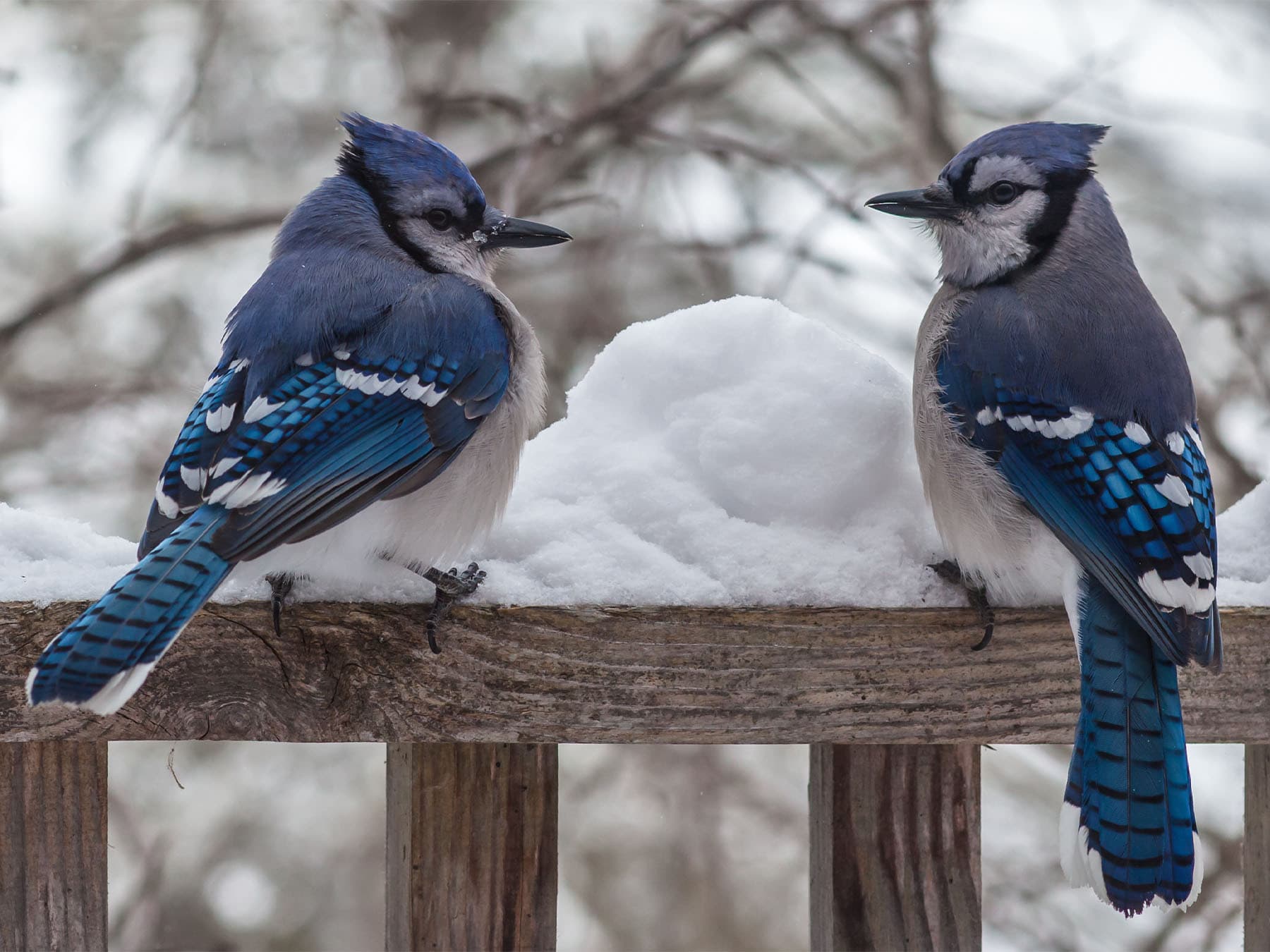
Pairs stay together after the breeding season: in the Florida population, which does not migrate, mates stayed together year-round, and Birds of the World expects the same elsewhere; All About Birds says they remain with their mate throughout the year. About 90% of surviving adults there stayed in the same area through the year and from year to year.
Pairs are not loners. They do not hold classic territories, and the home ranges of neighboring pairs overlap a lot. In fall up to 30 jays may gather at a good nut tree, likely each foraging on its own. In winter several pairs may rest together in shrubs by day, and in one Michigan study, winter jays shared a home range and roosted together at night but never moved as a unit. Ties above the pair are probably weak.1
How Blue Jays court
Courtship starts before the pair builds a nest and goes on until the eggs are laid. The male often feeds the female, and once she is incubating he brings all her food. Mates also nudge each other, pass twigs back and forth, and touch bills in a "kiss", presumably without passing food.
When she is ready to mate, the female sidles up to the male and crouches, her tail spread and quivering, the quivering running forward until her wings flick, while she gives soft whining calls. Then the male mounts. Mating lasts about 2 to 4 seconds. Sometimes the male starts it by sidling up and nudging her.1
The noisy spring groups
In early spring, groups of 3 to 20 or more Blue Jays move noisily through the trees, calling together, bobbing up and down and chasing each other, splitting up and joining again. Older accounts described these as courtship parties, with several males pursuing a female and the last one left winning her.
Studies of color-banded birds tell a different story. The groups are made up mostly of pairs that are already mated, from the local neighborhood, with one or a few jays from elsewhere. Birds of the World concludes that the displays probably concern space for breeding rather than mates.1
What happens when a mate dies?
Birds of the World does not say. Since pairs normally last until one bird dies, a widowed jay would have to find a new mate, but how quickly that happens, or whether the survivor stays in the same area, is not recorded in Birds of the World, which also describes no mourning behavior.
Working as a pair
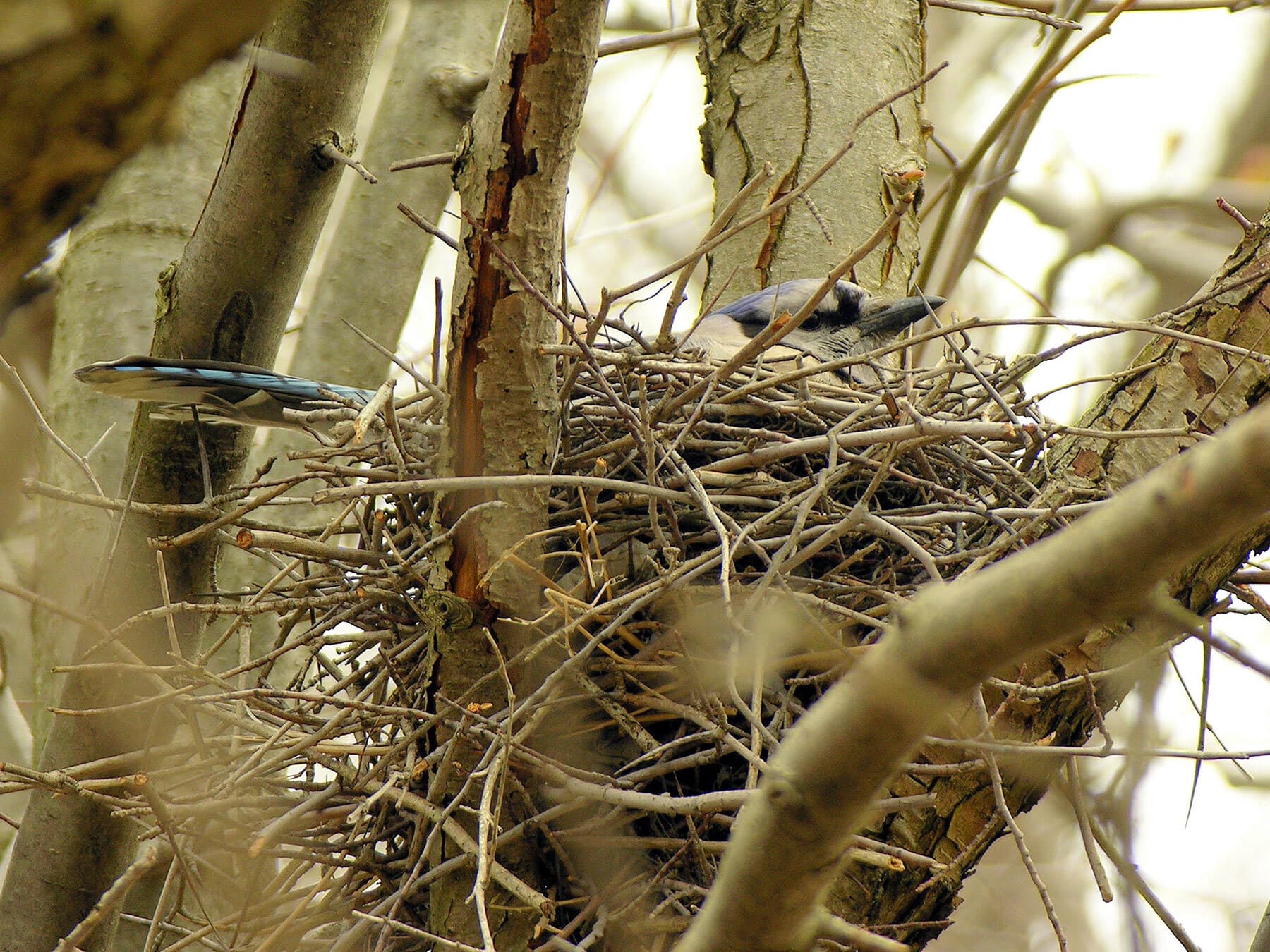
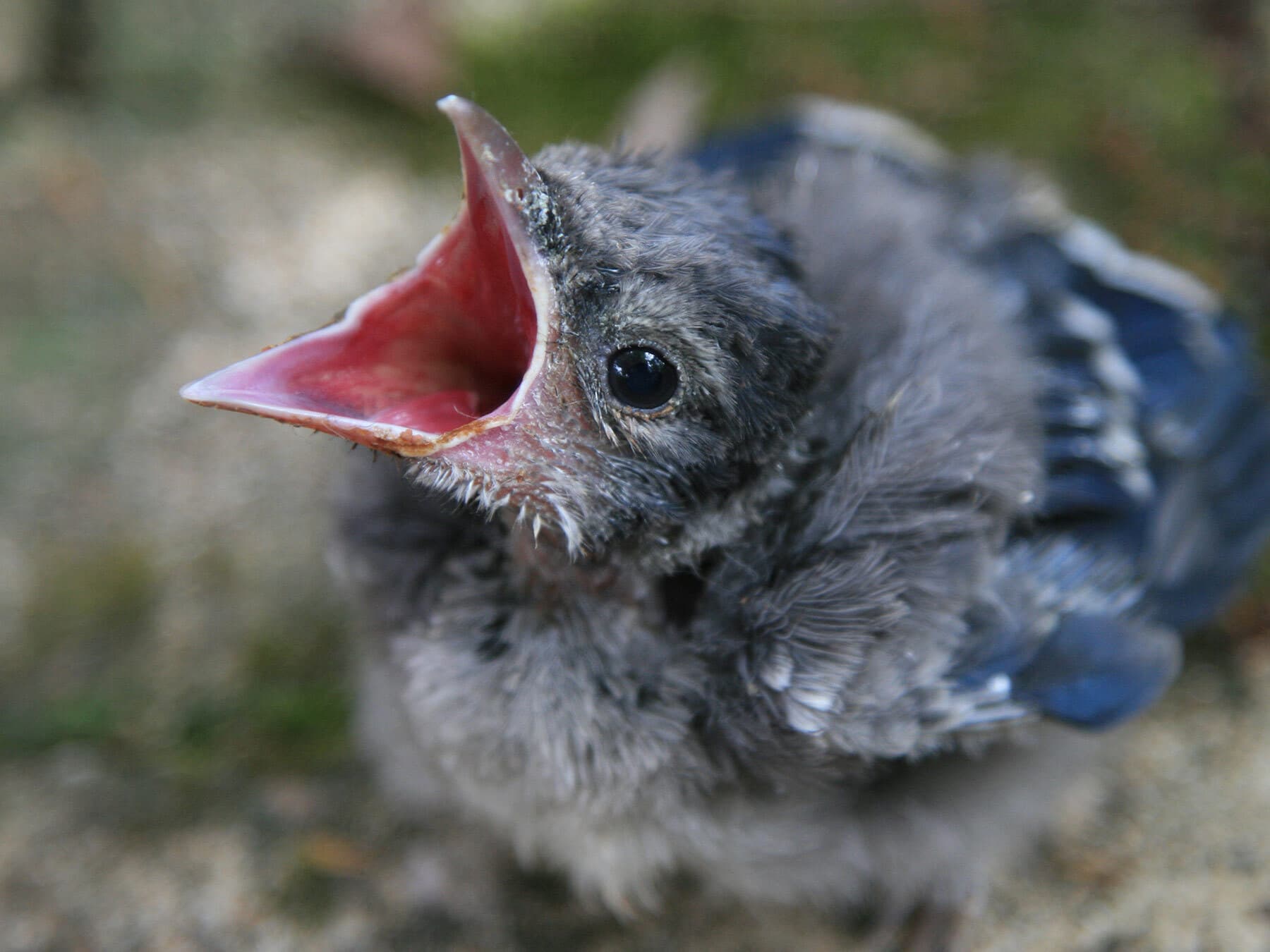
The pair shares the work of breeding, but not equally. Both gather material and build, the male appearing to do more of the gathering and the female more of the building. Only she incubates the eggs, for 17 to 18 days, and broods the small chicks, while he brings food for her and them. Both feed the young for one to two months after they leave the nest. More: Blue Jay nesting and baby Blue Jays.
Blue Jays do not breed cooperatively: four reports of an extra adult at a nest all look like odd cases, the help rare or unwanted.
Do Blue Jays mate more than once a year?
Usually they raise one brood a year. A pair whose nest fails often lays again, into July, but few pairs raise two broods: nesting takes about 40 days, and in natural habitats typically fewer than 40% of nests succeed. Second broods have been reported in suburbs, but with little direct evidence from banded birds.1
What we don't know
Birds of the World calls our understanding of Blue Jay breeding and social life poor, because it is very hard to mark and follow a large share of the jays in one place. Birds of the World reports no studies of whether Blue Jays mate outside the pair, or of mate-guarding, so whether every brood belongs to the pair that raises it is unknown.
Sources
- Smith, K. G., Tarvin, K. A., Woolfenden, G. E. (2020). Blue Jay (Cyanocitta cristata), version 1.0. Birds of the World (A. F. Poole, editor). Cornell Lab of Ornithology. doi:10.2173/bow.blujay.01
- Cornell Lab of Ornithology. Blue Jay. All About Birds. Accessed October 14, 2026. Source