Identification · Updated 11 Oct 2026
Black and White Birds in the UK (Identification Guide)
By the Birdfact teamChecked by Nathan Cope
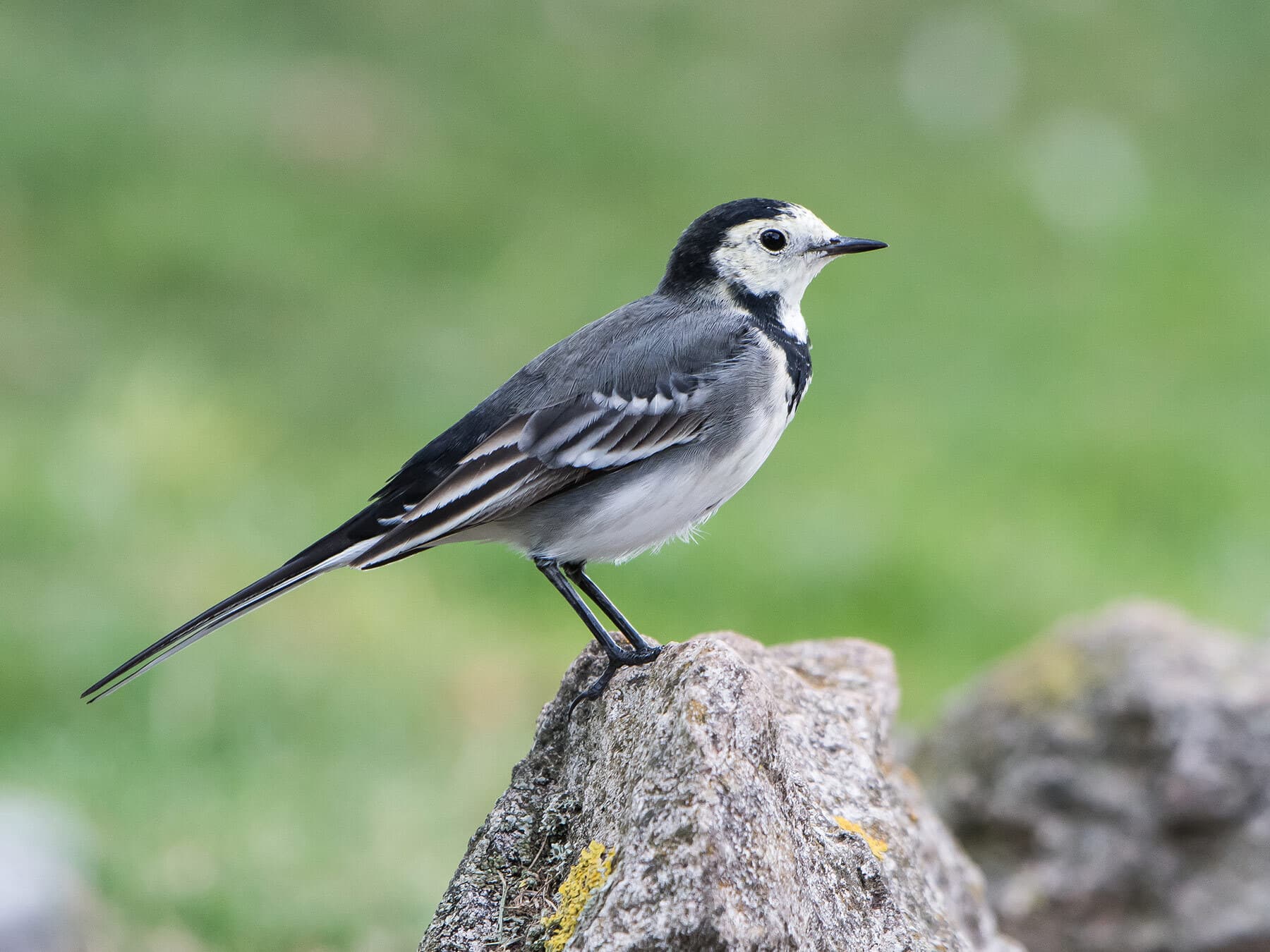
Black and white birds are very common in our gardens in the UK. Identifying which species of bird the black and white visitor to your garden is can be tricky, though. In fact, even veteran bird watchers with years of experience can struggle to identify these birds.
Below, we have descriptions of all the black and white birds that call the UK home to help you find out which ones may be in your garden. We have all the common culprits like magpies and coal tits, as well as slightly rarer black and white birds like the lesser spotted woodpecker.
The most likely suspects
Magpie
Pica pica
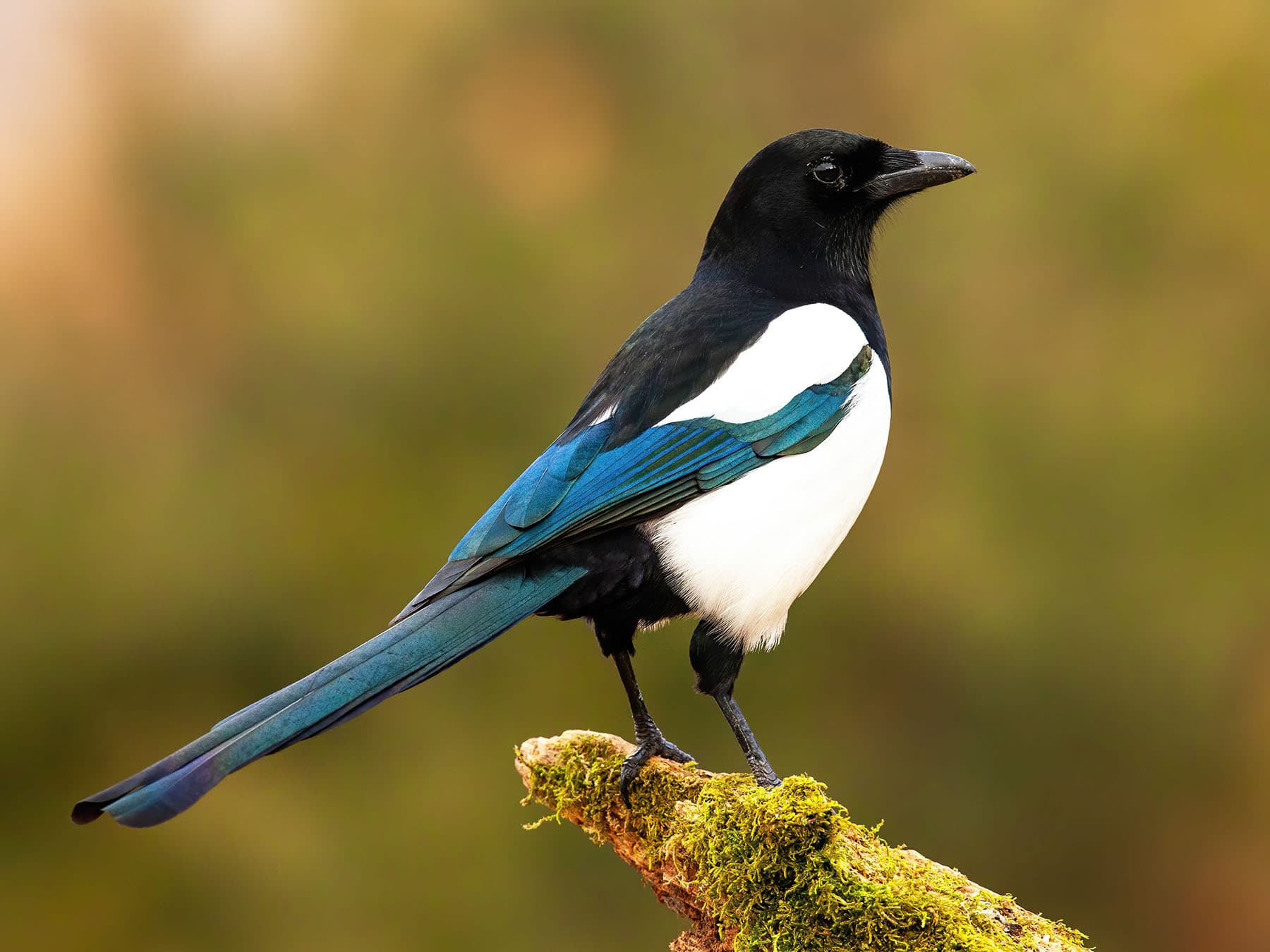
The Magpie is a black-and-white member of the crow family with a long, glossy tail and a loud, rattling chatter. It lives all year across most of Britain and Ireland, on farmland and in parks, gardens
Magpies are one of the most common black and white birds in the UK. They have mostly black and white feathers covering their bodies, but their tails and wings also have bluey, green, purple iridescent feathers too. Their beautiful iridescent wing and tail feathers are the easiest way to identify a magpie.
Pied Wagtail
Motacilla alba
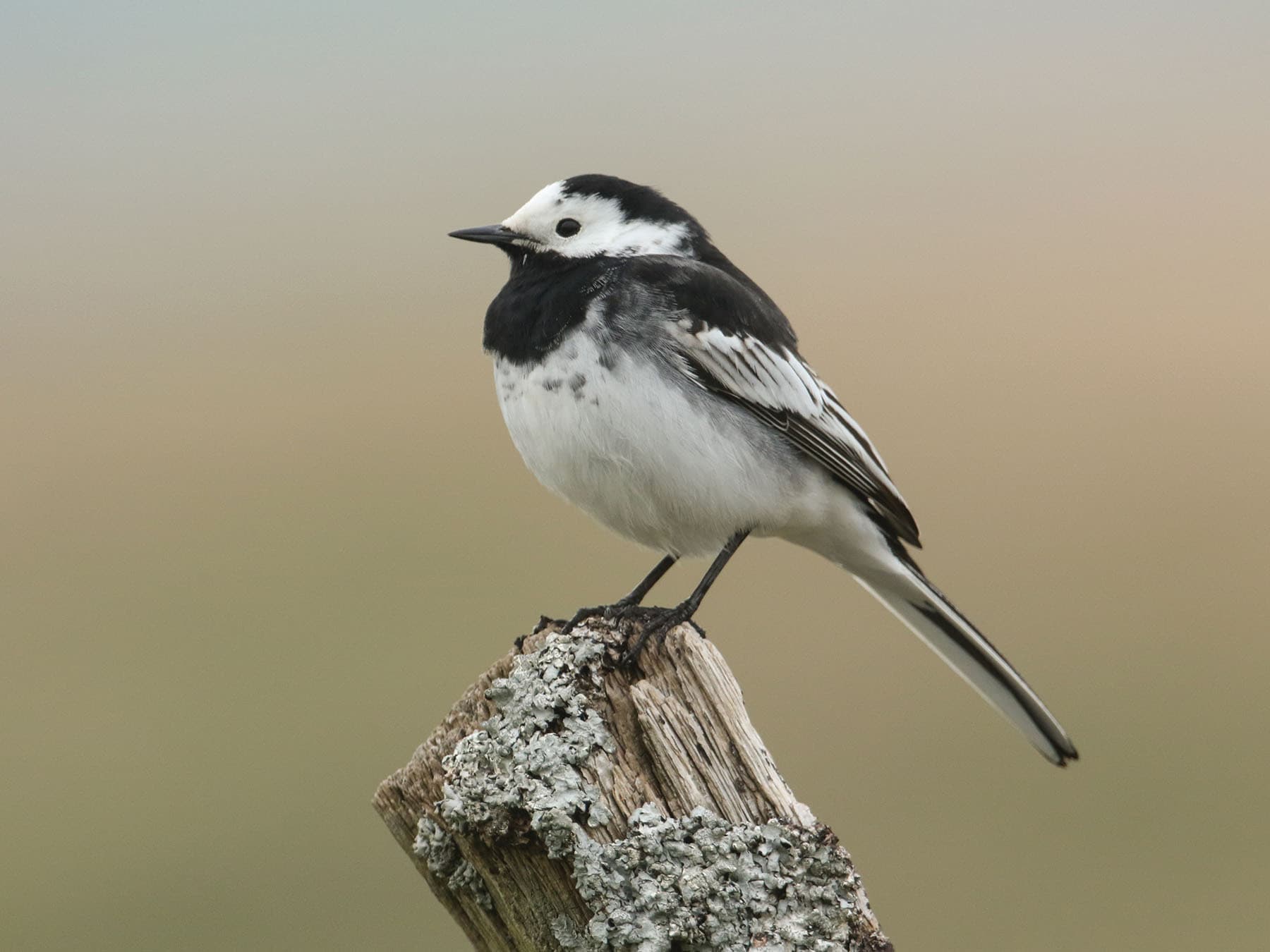
With its distinctive black-and-white plumage, this lively little bird can often be spotted bobbing and wagging its tail along UK riverbanks and in town centres.
Pied wagtails can be found all across the UK, but they are more common in northern areas of Scotland. They tend to flock and gather in large roosts, usually near water, but the roots can be seen in town centres as well.
Pied wagtails look like a black and white photo; they have no colouring at all. Their wings and tails have streaks of white and black, and their bodies are mainly grey. They have a white mask on their face with a black hat that runs down their back.
Long-tailed Tit
Aegithalos caudatus
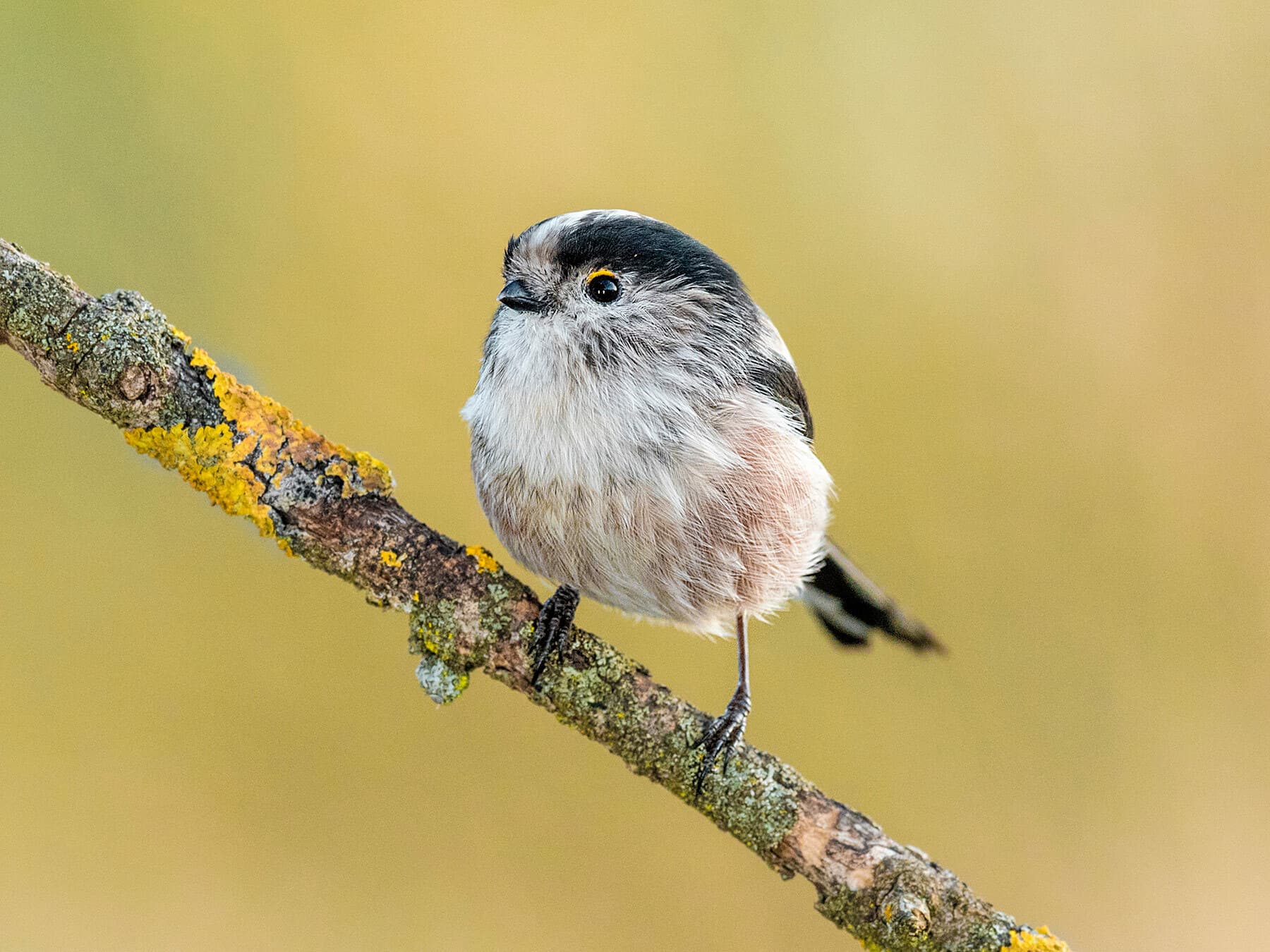
The Long-tailed Tit is a tiny, round bird with a tail longer than its body, in black, white and dusky pink. It lives in Britain and Ireland all year, in woods, hedges, scrub and gardens, and is usuall
Long-tailed tits are found across the UK, apart from in the west and far north of Scotland. These are very interesting looking birds. They have a tail longer than their body, puffy head feathers that give them an appearance of having no neck to speak of, and mostly black and white feathers with a soft pink flush on the shoulders and flanks.
They love a bird feeder but are cautious eaters, preferring to eat in the tops of trees and shrubs in the wild. So, long-tailed tits take some encouraging to get feeding at bird feeders.
Coal Tit
Periparus ater
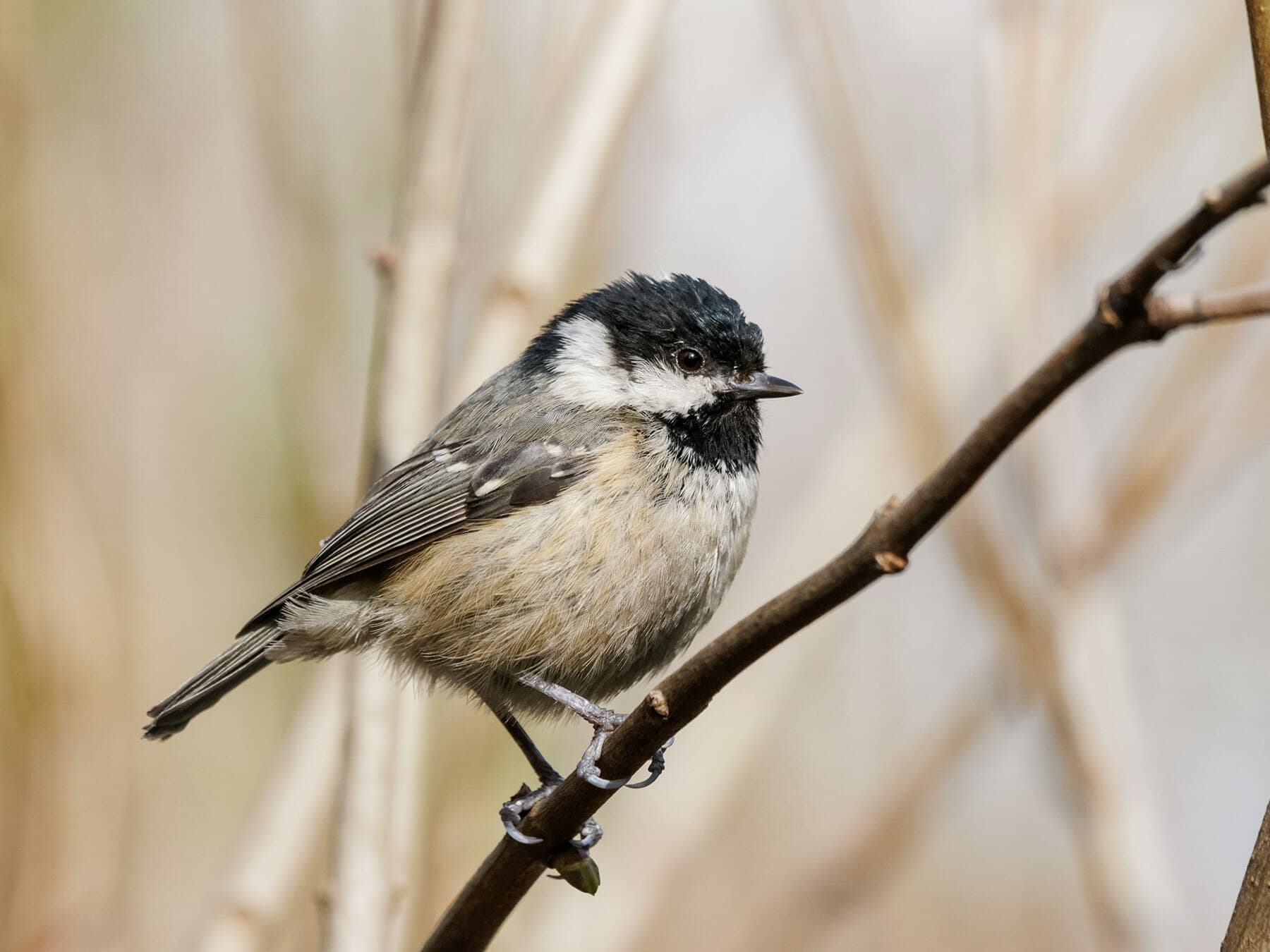
The Coal Tit is a tiny tit, about 9 g: a grey-backed bird with a black cap, white cheeks and a white patch on the back of its head. It lives in conifer woods, parks and gardens all year, and at the fe
Coal tits look as though you have taken a black and white photo of a blue tit. They have very similar markings to most other tits but almost entirely black and white feathers.
These tits spend much of their time in woodland around the UK. However, they do visit our gardens and public parks from time to time. If you have trees in or nearby your garden, coal tits are more likely to visit, but bird feeders alone can attract them as well.
Great Spotted Woodpecker
Dendrocopos major
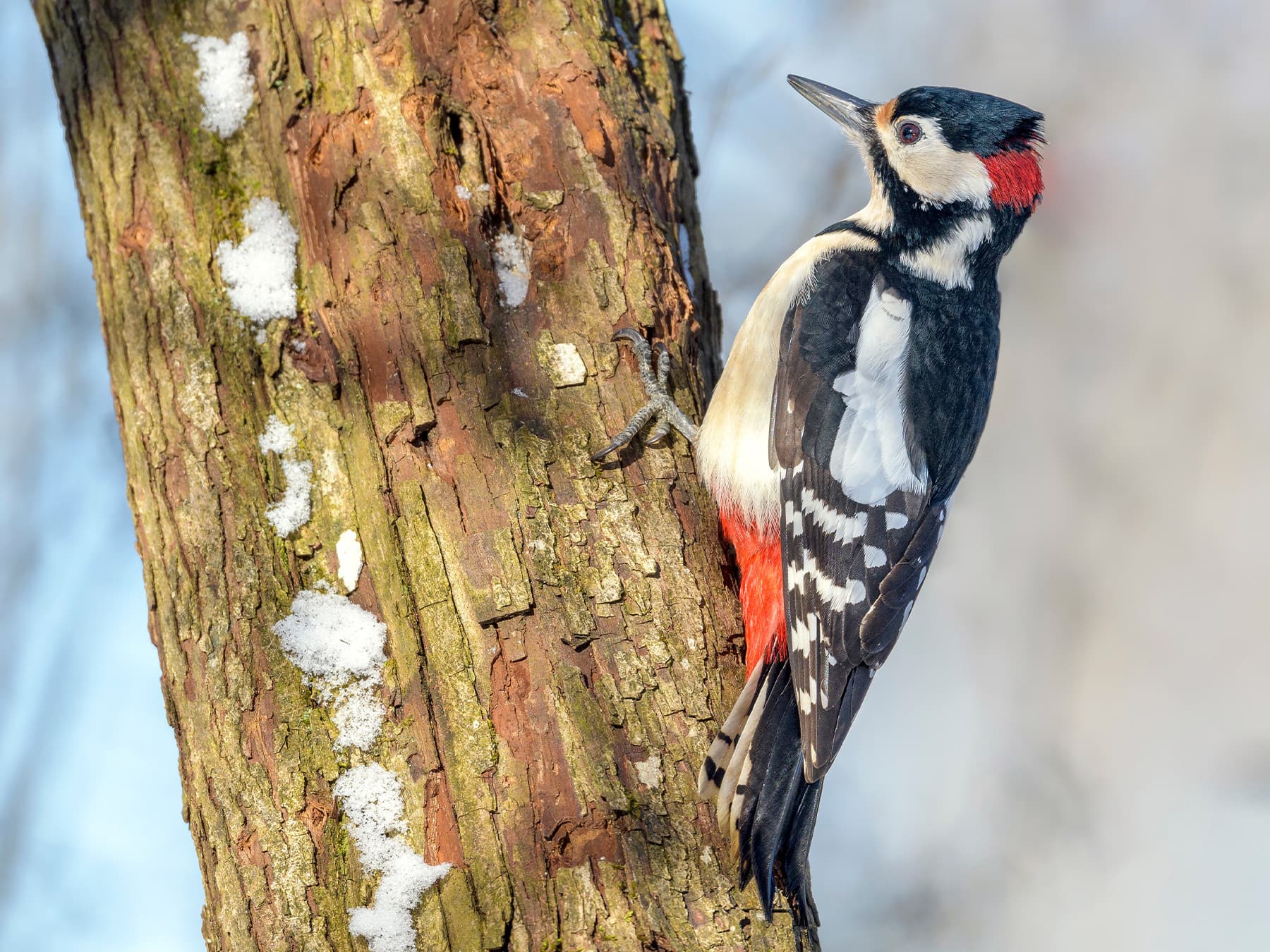
With its striking black-and-white plumage and bright red patches, this master drummer is a forest favourite worldwide.
We’re cheating slightly here. The great spotted woodpecker does have mostly black and white feathers, but they wear bright red underpants and have a sunburnt neck as well. Other than that, though, the rest of their feathers are black and white, and they have lovely chevron markings on their wings.
Like most woodpeckers, the great spotted woodpecker likes to be near woodland most of the time. This is where most of its food is, of course. However, great spotted woodpeckers have learnt the ways of bird feeders and rather enjoy them. So, it is possible to attract these woodpeckers to your garden. They love peanuts and suet balls and really enjoy apple cores as well.
Less likely
Northern Lapwing
Vanellus vanellus
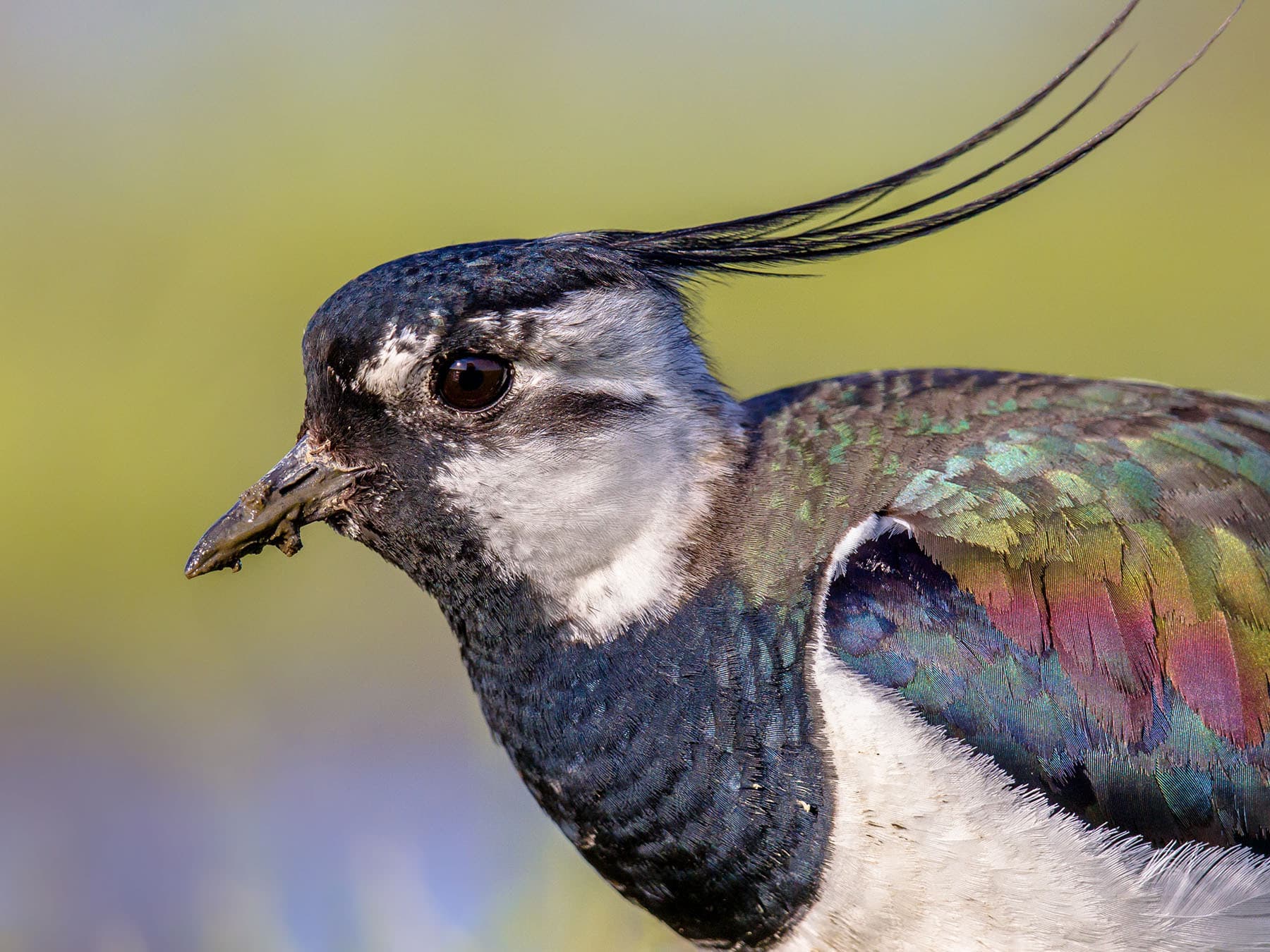
With its extravagant crest and acrobatic flight, this plover turns heads across Eurasia's fields and wetlands.
Lapwings are becoming increasingly rare in the UK, and this is largely due to farming changes. Farmland is the best habitat for lapwings, and the slow but steady changes to this environment have meant that fewer lapwings are being seen now. In fact, since 1960, the population of lapwings in England and Wales has dropped by over 80%.
Lapwings are most recognisable by the tuff of feathers that come out the top of their heads. They also have similar iridescent wings to a magpie but have much longer legs used for walking through marshes.
Eurasian Oystercatcher
Haematopus ostralegus
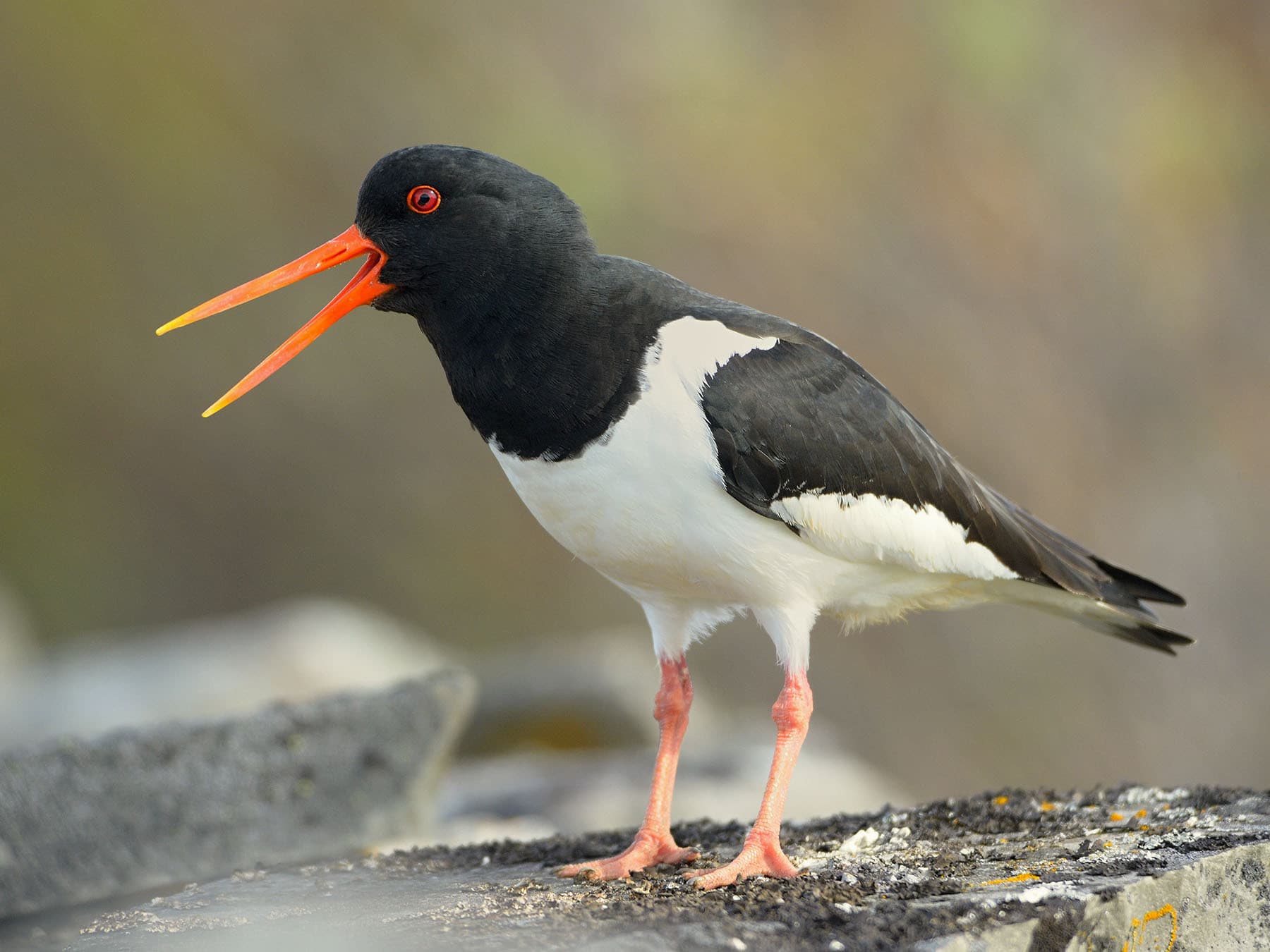
Striking black-and-white shorebirds with bright orange bills, these skilled hunters probe coastal mudflats for tasty bivalve molluscs.
If you see a bird near the coast that looks like it has a carrot for a beak and a jet black head, it is more than likely an oystercatcher. These are wading birds, so they have long, skinny legs and like to hang out near the sea.
Oystercatchers are coastal birds for the most part and can be found worldwide. In the UK, though, you see them on almost every coast. So, while they are a rare sight inland if you live by the sea, oystercatchers are likely one of the most common birds in your neighbourhood.
Barnacle Goose
Branta leucopsis
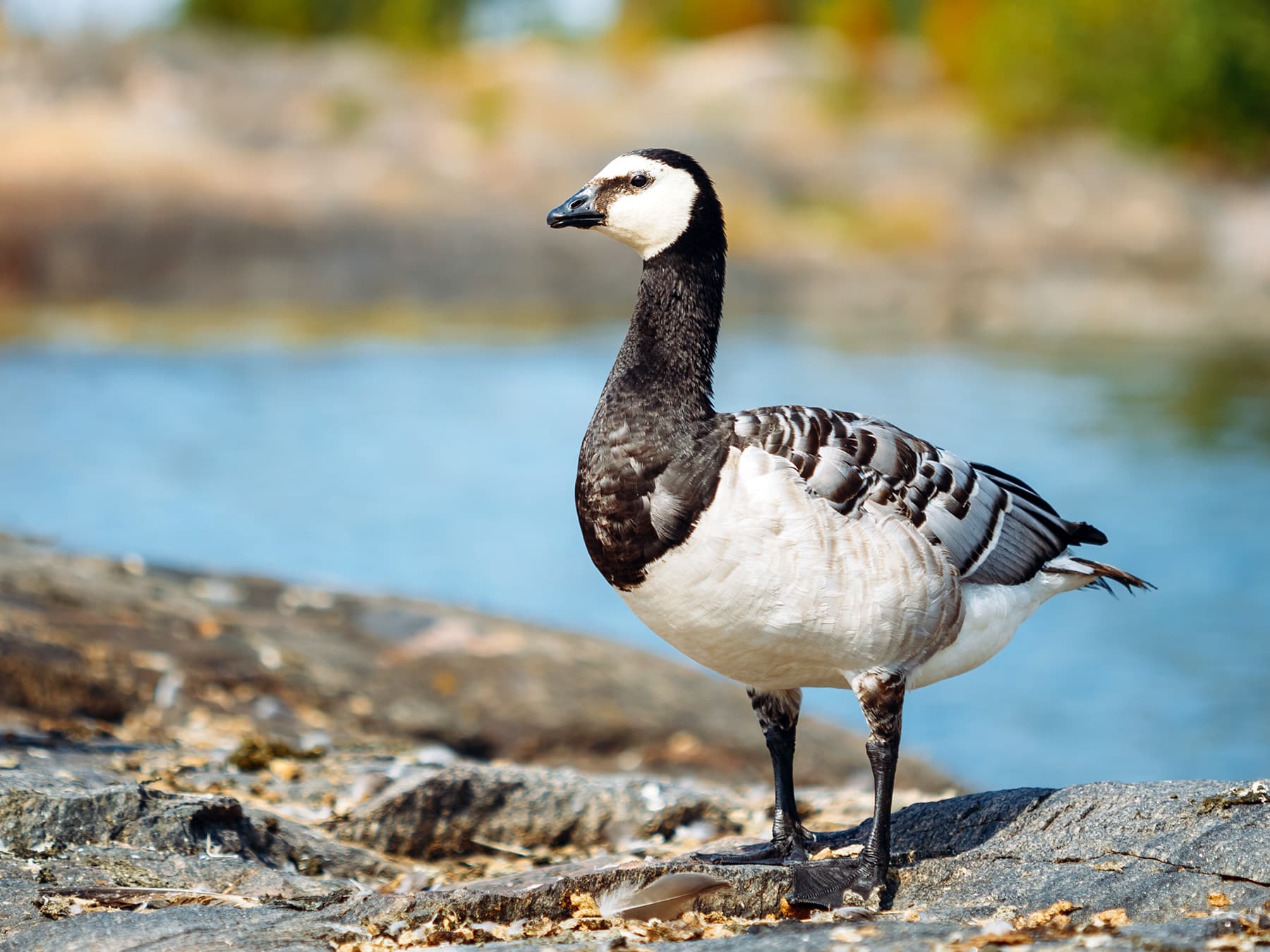
The Barnacle Goose, with its distinctive black and white plumage, is a winter visitor that transforms UK wetlands into lively Arctic outposts.
Barnacle geese are quite a rare sight in the UK, but their numbers are rising well. In 2021, a study into barnacle geese showed a 60% increase in numbers from the last assessment in 2011.
The reason they are called barnacle geese is quite strange. It was once believed that these geese went underwater in the summer and resurfaced in the winter after ‘developing’. So the name comes from them likely getting barnacles from being underwater in the summer.
Lesser Spotted Woodpecker
Dryobates minor
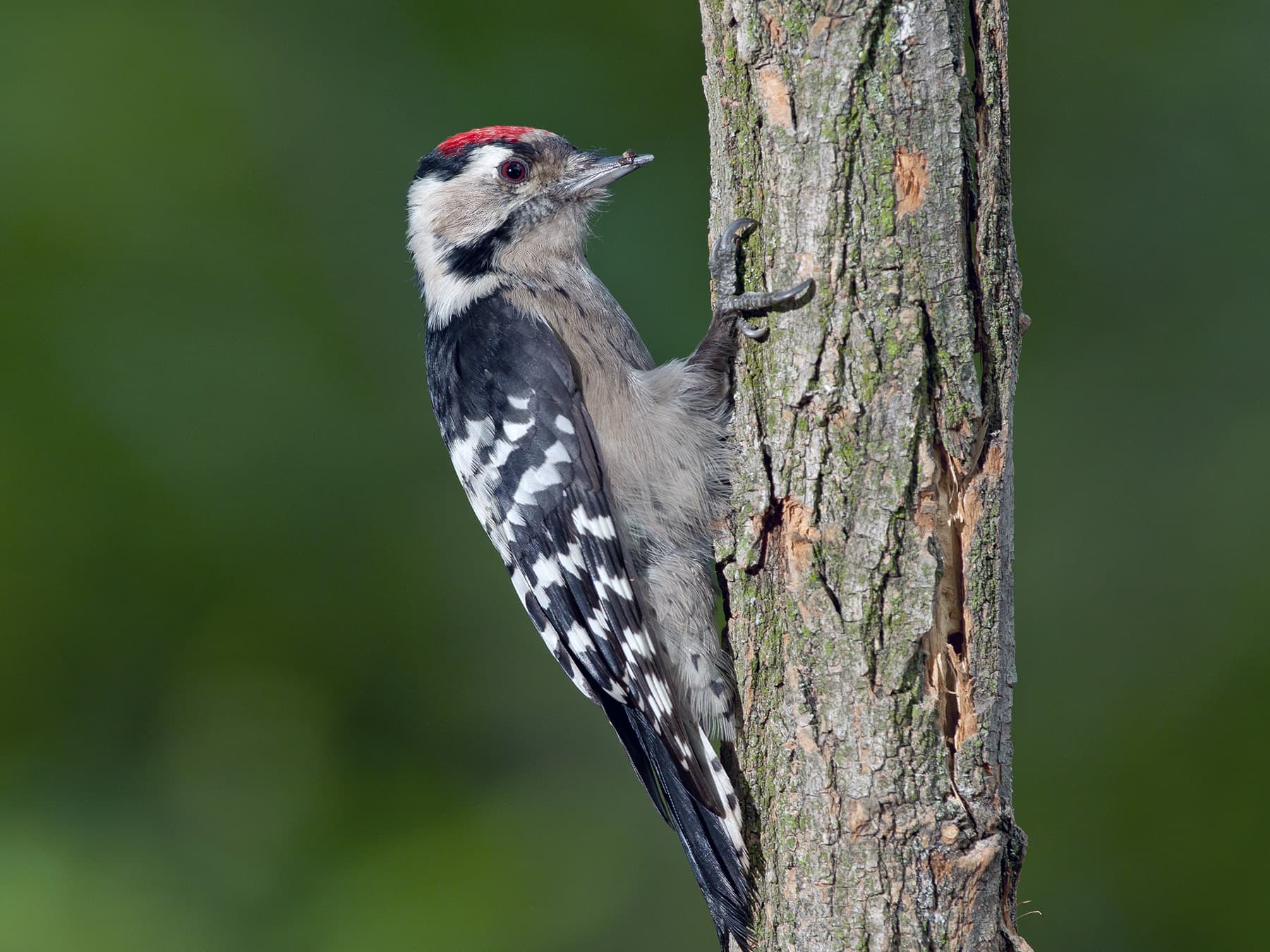
This tiny tree-tapper brings a burst of life to woodlands with its rapid drumming and acrobatic foraging skills.
The greatest number of lesser spotted woodpeckers are in southern England, but there are some pockets of population in Wales and slightly further north too. This bird is entirely absent from Scotland and Ireland, though.
The easiest way to separate the lesser spotted woodpecker and the great spotted woodpecker is the red hat that the lesser wears. The great spotted does have red markings, but not on the top of its head. The lesser also has a brownish colouring to its white chest feathers, which the great spotted lacks as well.
What is the most common black and white bird in the UK?
The most commonly seen black and white bird in the UK is the magpie. It's one of the most common birds overall in the UK, in fact. In a recent Big Garden Birdwatch put on by the RSPB, the magpie came in at number 9 in the most common birds spotted in our gardens.
This may not mean that magpies are the 9th most common bird in the UK, of course, but it gives an indication as to how prevalent they are in our gardens.
Birds in this article
9 birds- MagpiePica pica44–46 cm · crows & jays
- Pied WagtailMotacilla alba17–19 cm · wagtails & pipits
- Long-tailed TitAegithalos caudatus13–16 cm · long-tailed tits
See all 9 birds
- Coal TitPeriparus ater10–12 cm · tits & chickadees
- Great Spotted WoodpeckerDendrocopos major23–26 cm · woodpeckers
- Northern LapwingVanellus vanellus28–31 cm · plovers & lapwings
- Eurasian OystercatcherHaematopus ostralegus40–45 cm · oystercatchers
- Barnacle GooseBranta leucopsis58–70 cm · ducks, geese & swans
- Lesser Spotted WoodpeckerDryobates minor14–16 cm · woodpeckers