


Pied Wagtail
White Wagtail (subspecies) · Motacilla alba
By the Birdfact teamChecked by Nathan Cope
On this page15 sections
How to recognise it
The Pied Wagtail is one of three wagtail species in the UK. Although similar in shape and size, this species is easily identified by its monochrome plumage.
What do Pied Wagtails look like?
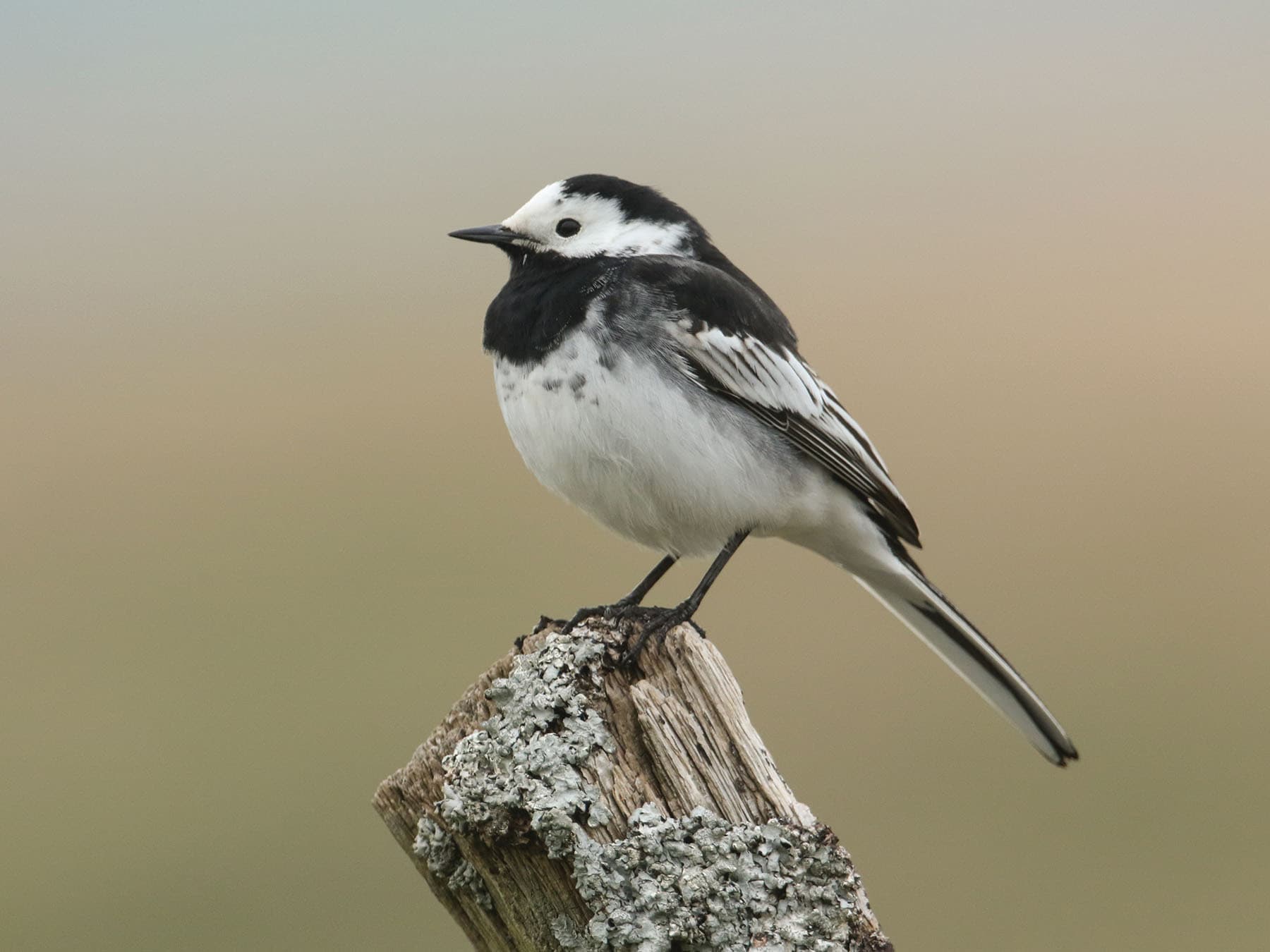
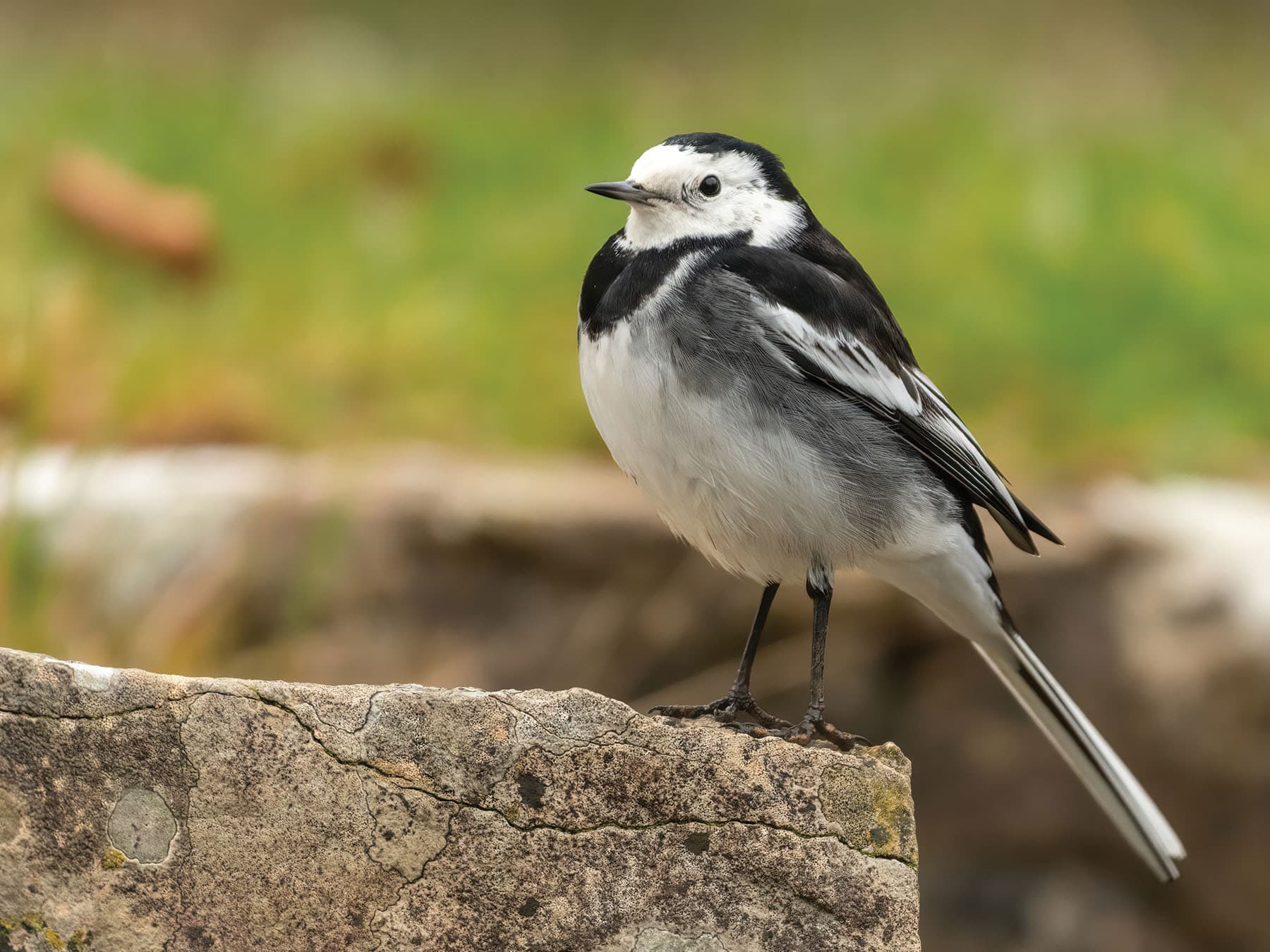
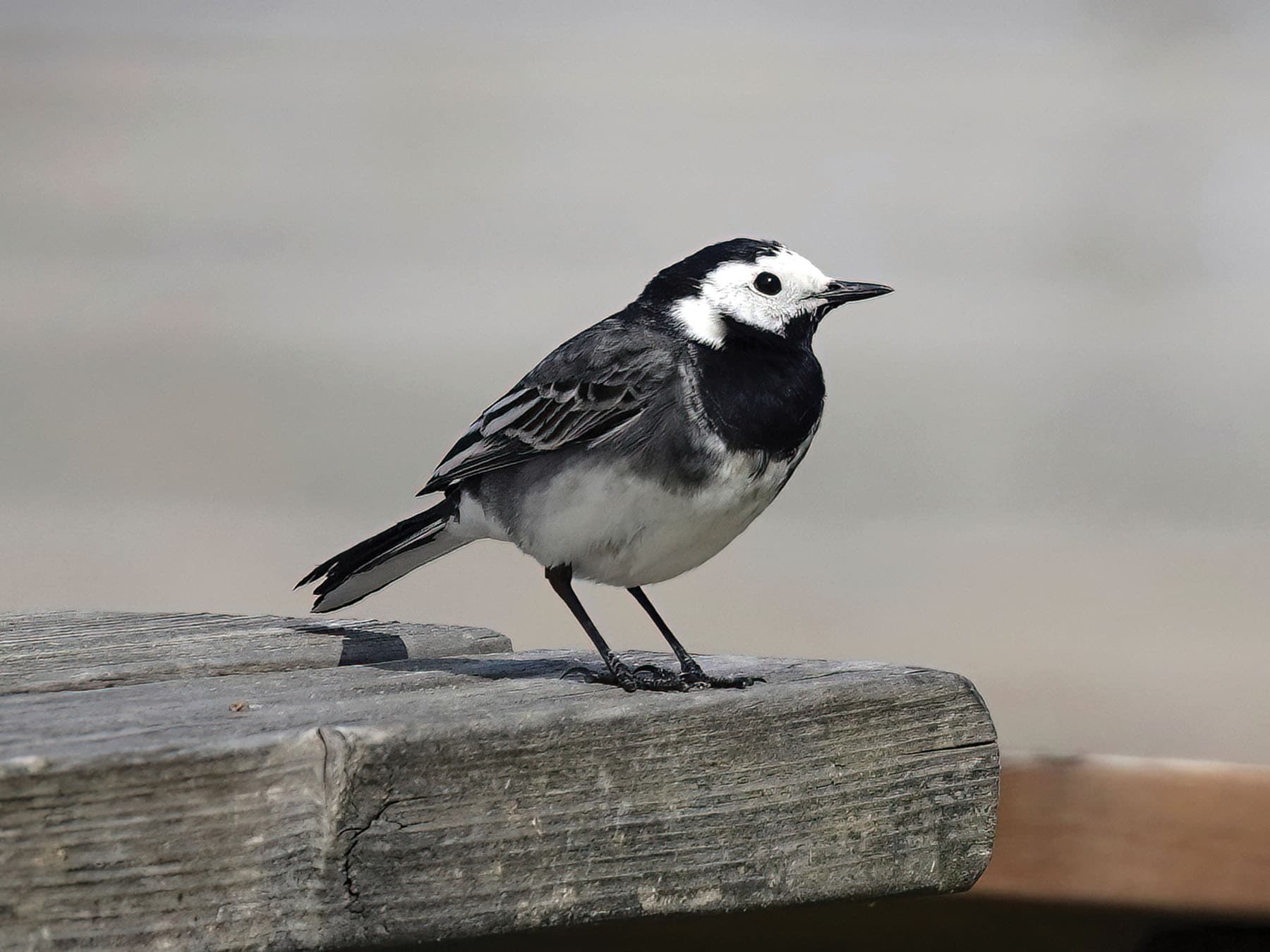
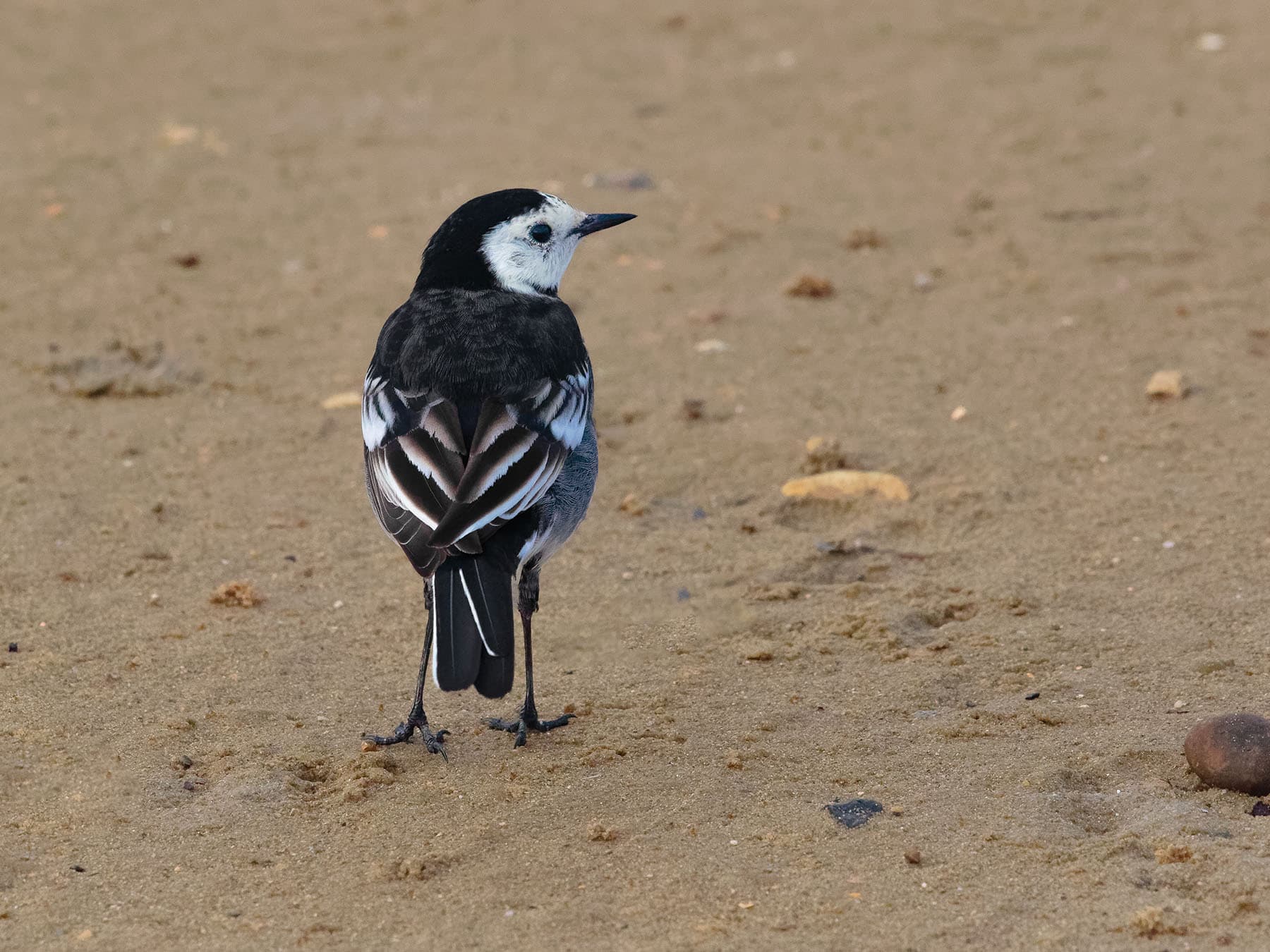
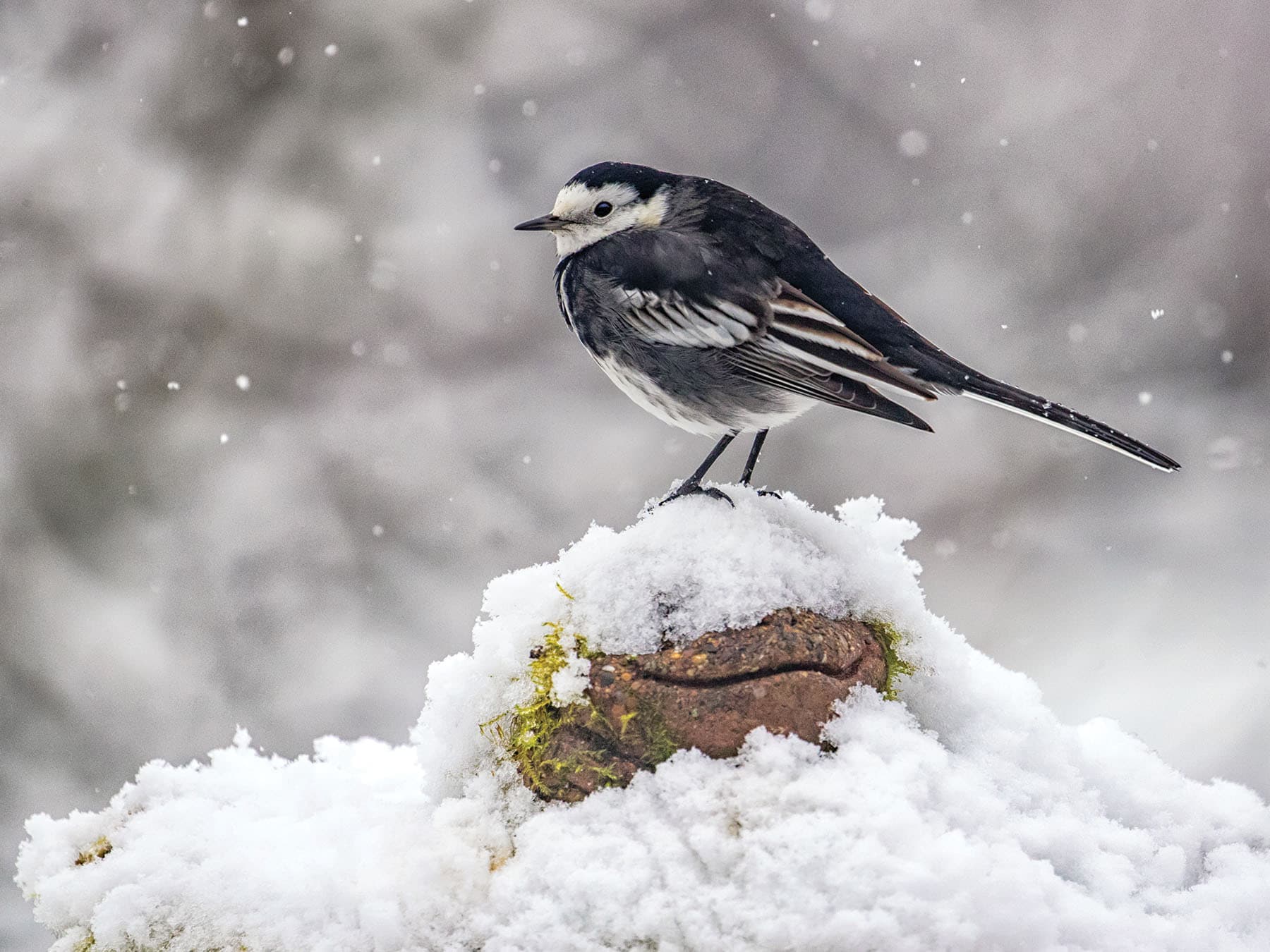
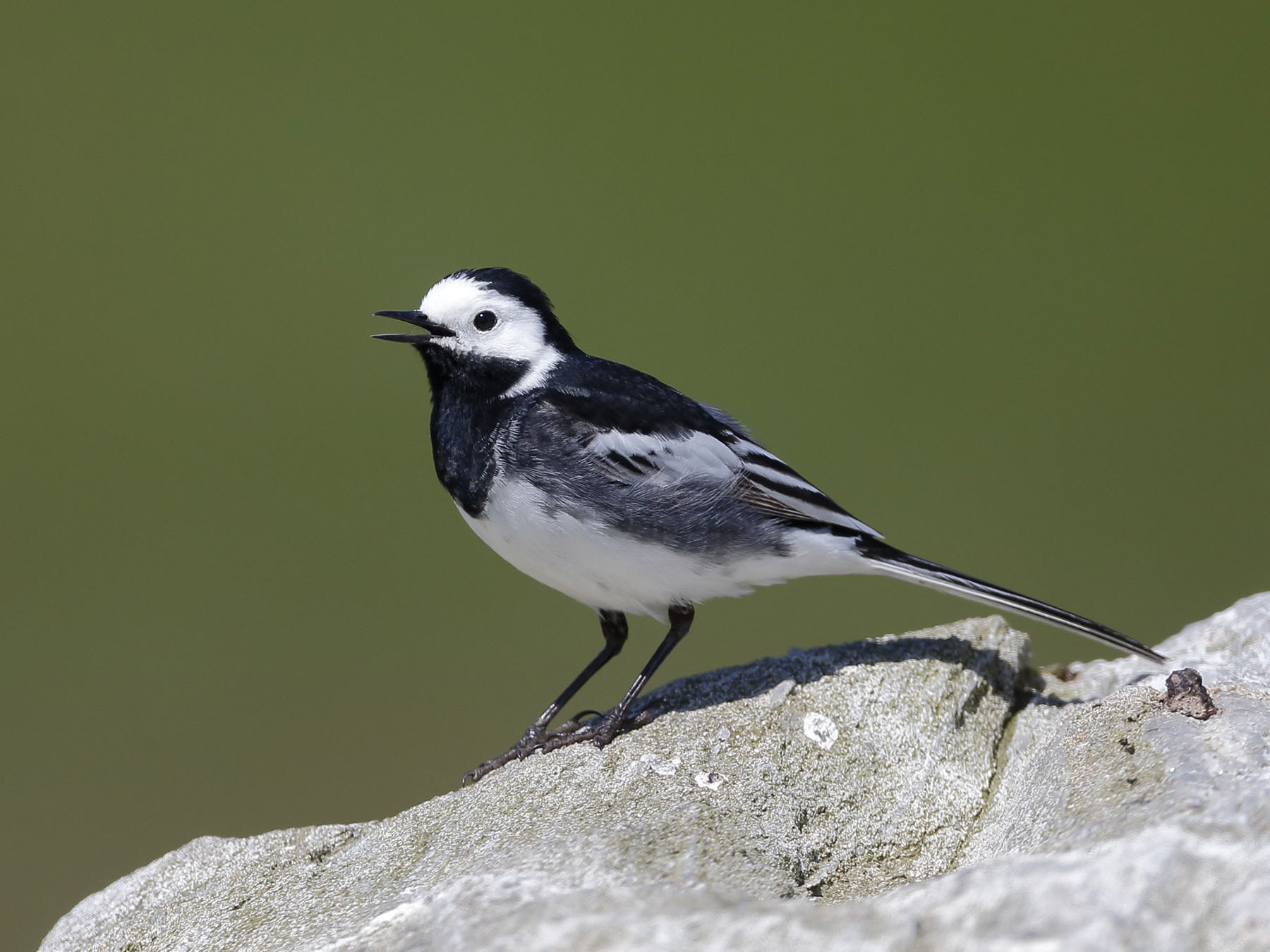
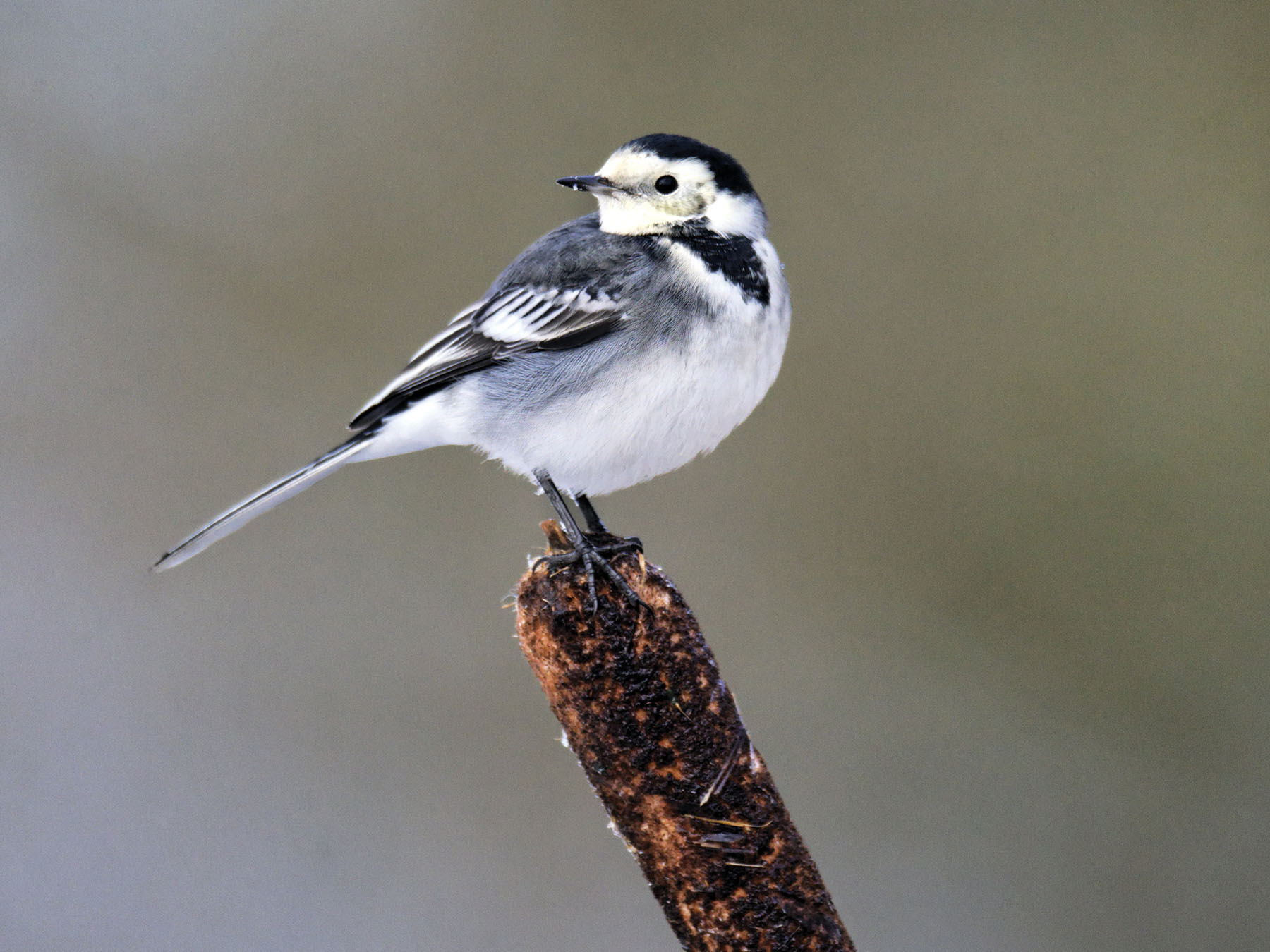
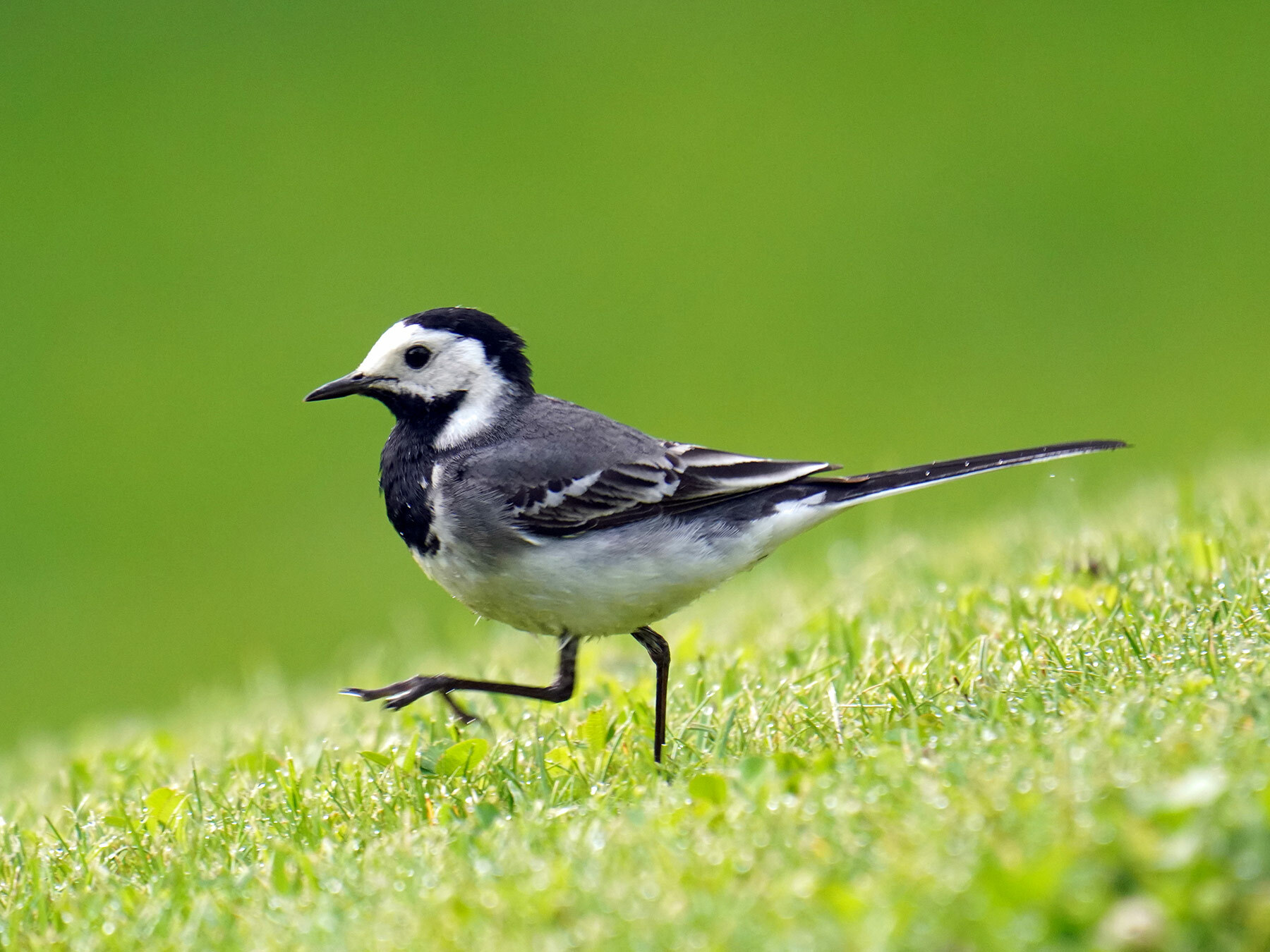
The Pied Wagtail is a distinctive species with a white face, a black crown and back, and a black throat and breast. Their underparts are whitish, and their tail is black with white edges. Like other wagtails, they have a long tail, a thin, straight bill, and slender legs.
Female Pied Wagtails are very similar to males but slightly greyer. They are also lighter on average, although this is difficult to notice in the field.
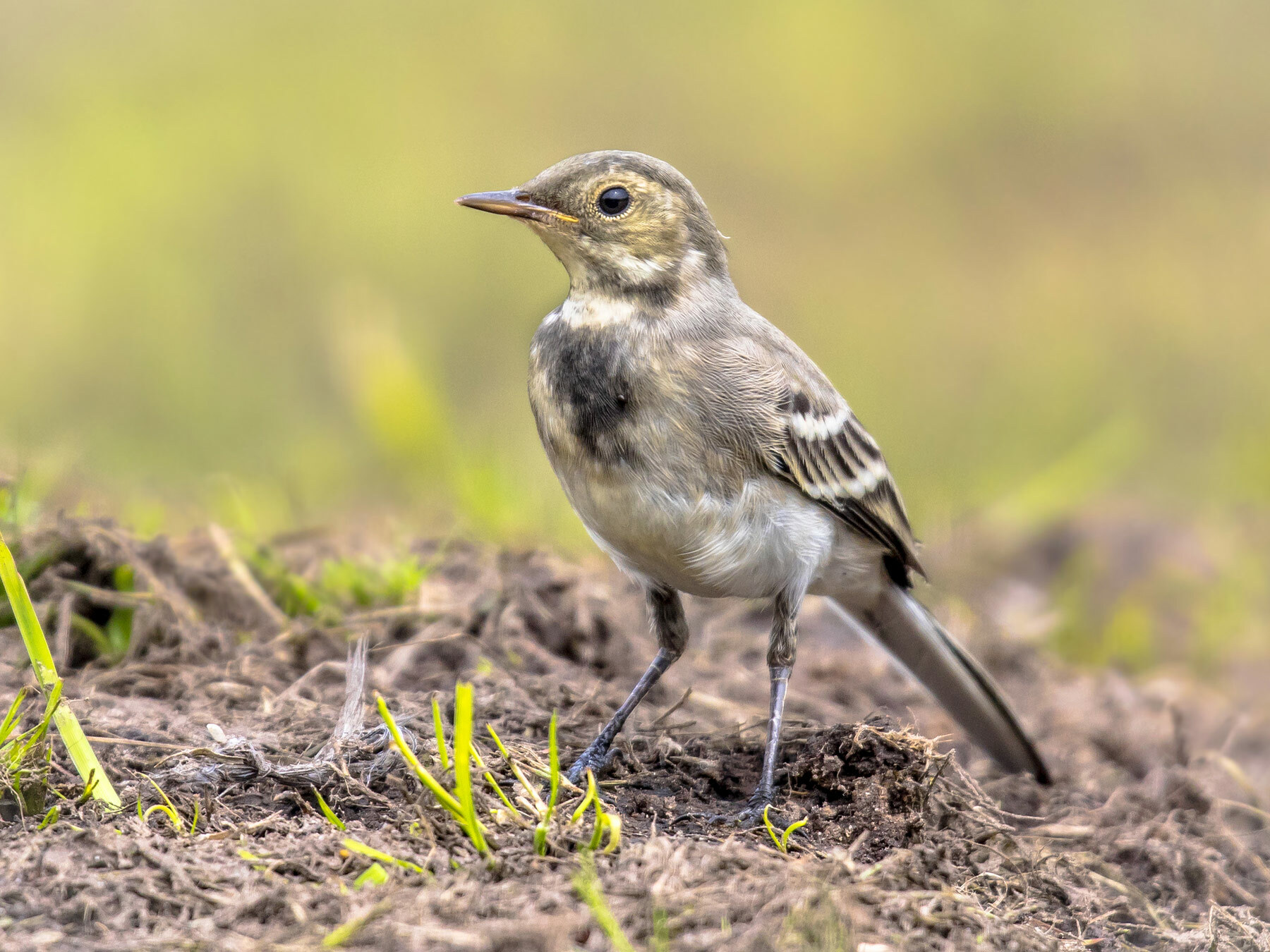
Juveniles are a paler grey shade, often with some yellowish plumage on the face and bill.
The continental subspecies of the White Wagtail (Motacilla alba alba) pass through the UK each year on migration. These birds are very similar to the Pied Wagtail but have paler plumage with grey (not black) backs and flanks.
How big are Pied Wagtails?
Pied Wagtails are small birds, about the same size as the robin but with a longer tail.
Length
Pied Wagtails have a total body length of 16.5 - 18 centimetres. Their long, ever-wagging tail makes up much of their length.
Weight
Pied Wagtails weigh 17 - 25 grams. Females are generally lighter, although there is some overlap.
Wingspan
Their wingspan is typically 25 to 35 centimetres.
Its size
Adults- Length
- 16.5–19 cm
- Wingspan
- 25–30 cm
- Weight
- 17–25 g
Its song and calls
The Pied Wagtails call is a familiar sound in various habitats across the UK.
What sound does a Pied Wagtail make?
The Pied Wagtail’s most familiar call is a sharp ‘chi-sik’ They also have a rapid twittering and warbling song uttered in flight or from a perch.
- Song and calls0:00 / 0:26
Recorded in Vaud, Switzerland · February 2019
- Call0:00 / 0:20
Recorded in Hauts-de-France, France · April 2025
When and where to see it
OctoberHere all year
Most recorded in October
- 1. Kerry3.9%
- 2. Tipperary3.5%
- 3. Mayo3.4%
- 4. Clare3.4%
- 5. Monmouthshire3.1%
Each dot is a county, state or province: the bigger and darker, the larger the bird’s share of that place’s bird records that month. Grey dots: no regular records. The ringed point is the centre of the bird’s records this month; the arrow shows how it moved since last month, and the dashed loop its path through the year. “Arrivals” colours places where it becomes regular this month (orange) or is in its last regular month (grey). GBIF eBird Observation Dataset, 2019–2024. Map data: Natural Earth, US Census Bureau; place centres © OpenStreetMap contributors.
In your area
See when the Pied Wagtail is recorded in your county, state or province.
How often the Pied Wagtail turns up in the UK, Ireland and the United States through the year, from birdwatchers' records.
United Kingdom
Resident · all year · most records in October
Ireland
Resident · all year · most records in September
United States
Resident · all year · most records in June
Show as a table
| Month | United Kingdom | Ireland | United States |
|---|---|---|---|
| January | 1.1% (regular) | 1.8% (regular) | <0.001% (regular) |
| February | 0.99% (regular) | 1.7% (regular) | <0.001% (regular) |
| March | 1.2% (regular) | 1.8% (regular) | <0.001% (regular) |
| April | 1.2% (regular) | 1.6% (regular) | <0.001% (regular) |
| May | 1.1% (regular) | 1.8% (regular) | <0.001% (regular) |
| June | 1.2% (regular) | 2.0% (regular) | 0.003% (regular) |
| July | 1.3% (regular) | 2.3% (regular) | <0.001% (regular) |
| August | 1.2% (regular) | 2.3% (regular) | <0.001% (regular) |
| September | 1.4% (regular) | 2.5% (regular) | 0.002% (regular) |
| October | 1.6% (regular) | 2.5% (regular) | <0.001% (regular) |
| November | 1.5% (regular) | 2.1% (regular) | 0.001% (regular) |
| December | 1.3% (regular) | 1.9% (regular) | 0.002% (regular) |
Recorded regularly in
Worldwide: recorded regularly in 115 countries
Countries where it was recorded in at least 3 of the 6 years 2019–2024. Linked countries have their own bird list.
Europe (51)
- Åland Islands
- Albania
- Andorra
- Austria
- Belarus
- Belgium
- Bosnia & Herzegovina
- Bulgaria
- Croatia
- Czechia
- Denmark
- Estonia
- Faroe Islands
- Finland
- France
- Germany
- Gibraltar
- Greece
- Guernsey
- Hungary
- Iceland
- Ireland
- Isle of Man
- Italy
- Jersey
- Kosovo
- Latvia
- Liechtenstein
- Lithuania
- Luxembourg
- Malta
- Moldova
- Monaco
- Montenegro
- Netherlands
- North Macedonia
- Norway
- Poland
- Portugal
- Romania
- Russia
- Serbia
- Slovakia
- Slovenia
- Spain
- Svalbard & Jan Mayen
- Sweden
- Switzerland
- Ukraine
- United Kingdom
- Vatican City
Africa (17)
Asia (45)
- Afghanistan
- Armenia
- Azerbaijan
- Bahrain
- Bangladesh
- Bhutan
- Cambodia
- China
- Cyprus
- Georgia
- Hong Kong SAR China
- India
- Iran
- Iraq
- Israel
- Japan
- Jordan
- Kazakhstan
- Kuwait
- Kyrgyzstan
- Laos
- Lebanon
- Macao SAR China
- Malaysia
- Mongolia
- Myanmar (Burma)
- Nepal
- Oman
- Pakistan
- Palestinian Territories
- Philippines
- Qatar
- Saudi Arabia
- Singapore
- South Korea
- Sri Lanka
- Taiwan
- Tajikistan
- Thailand
- Turkey
- Turkmenistan
- United Arab Emirates
- Uzbekistan
- Vietnam
- Yemen
North America (2)
- Greenland
- United States
Data: EOD – eBird Observation Dataset (Cornell Lab of Ornithology), accessed via GBIF.org, CC BY 4.0. Records from 2019–2024, aggregated and filtered by Birdfact. How these lists are made
The Pied Wagtail of the UK is one of about ten subspecies distributed across Asia and as far as Western Alaska.
What is the habitat of a Pied Wagtail?
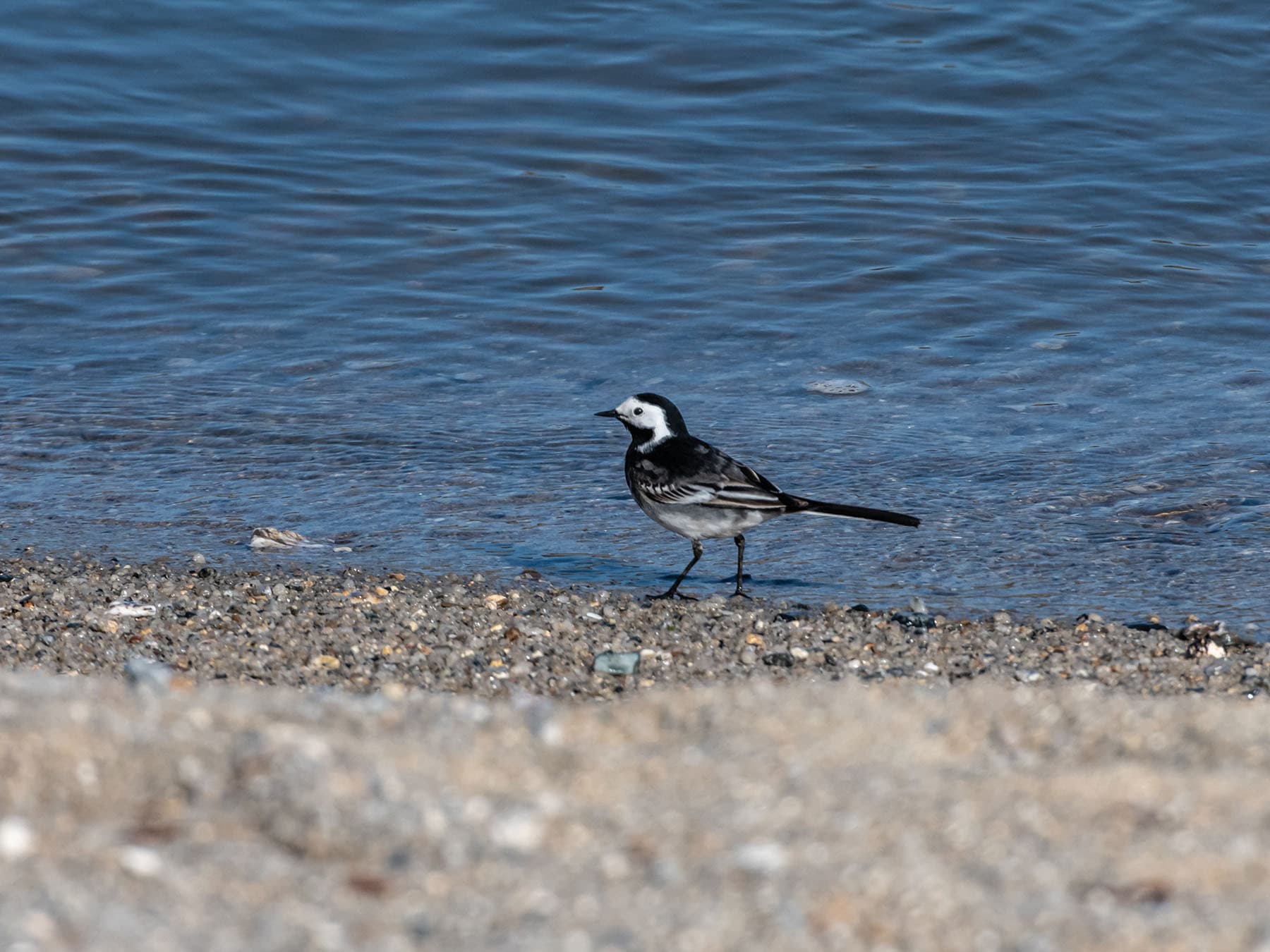
Pied Wagtails are common along the margins of rivers, lakes, and seashores. They are adaptable birds, however, and are quite at home in farmlands, gardens, and even city centres.
What is the range of a Pied Wagtail?
Pied Wagtails are widespread in the United Kingdom, occurring throughout England, Wales, Northern Ireland, and Scotland in the summer. However, they become scarce or absent from high-lying areas in Scotland in the winter.
Where do Pied Wagtails live?
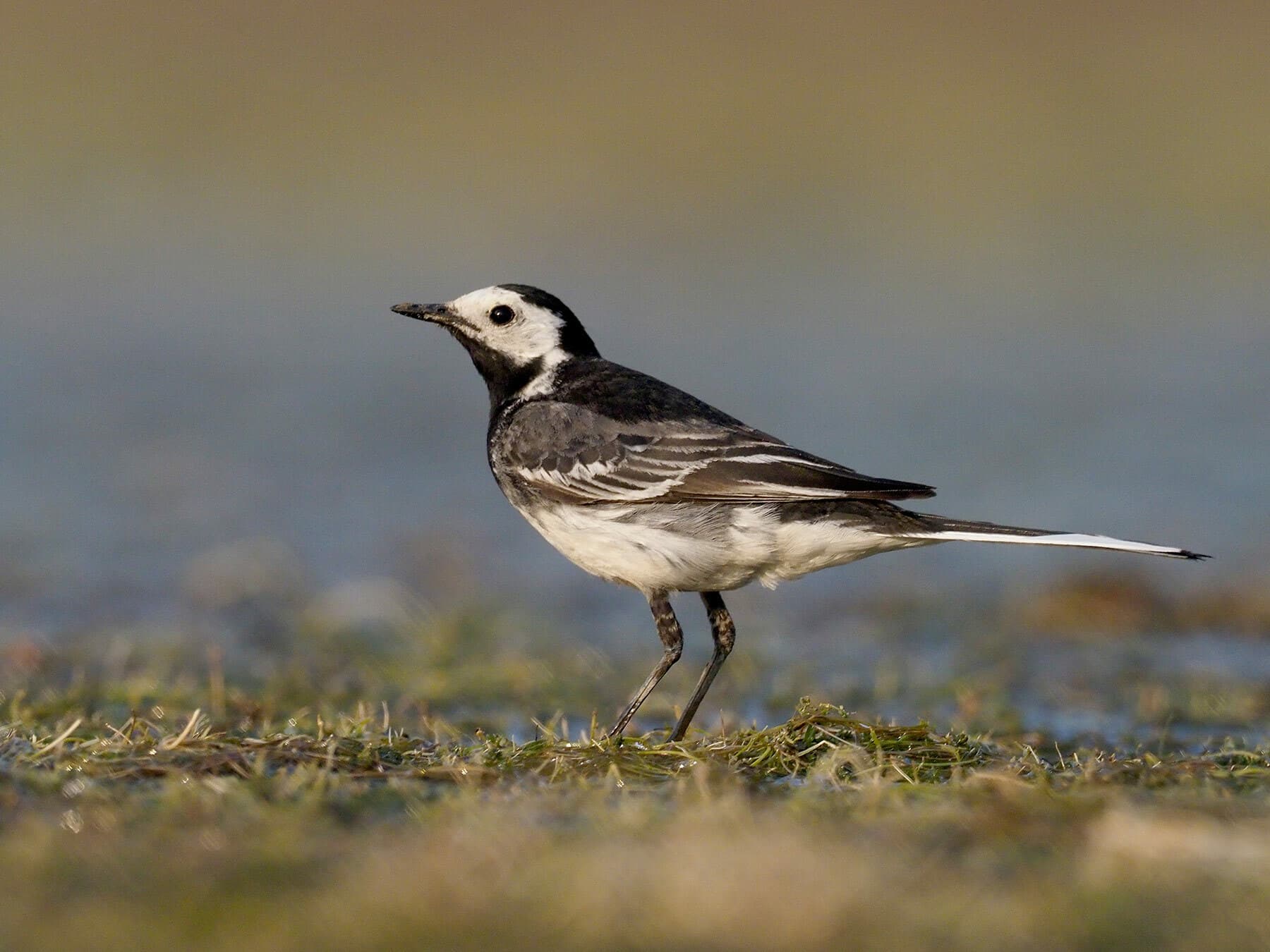
Pied Wagtails spend most of their time on the ground, although it’s not unusual to see them perched on posts, branches, and walls. They favour open habitats like lawns and sandy or rocky areas.
How rare are Pied Wagtails?
Pied Wagtails are not rare in the United Kingdom. The estimated population of breeding birds is just over a million individuals.
Where can you see Pied Wagtails in the UK?
Pied Wagtails are commensal birds that are quite at home around our villages, towns, and even cities. Birdwatchers can usually see these birds very close to home, although an outing to any open habitat may be rewarded, particularly near water.
Signs and Spotting tips
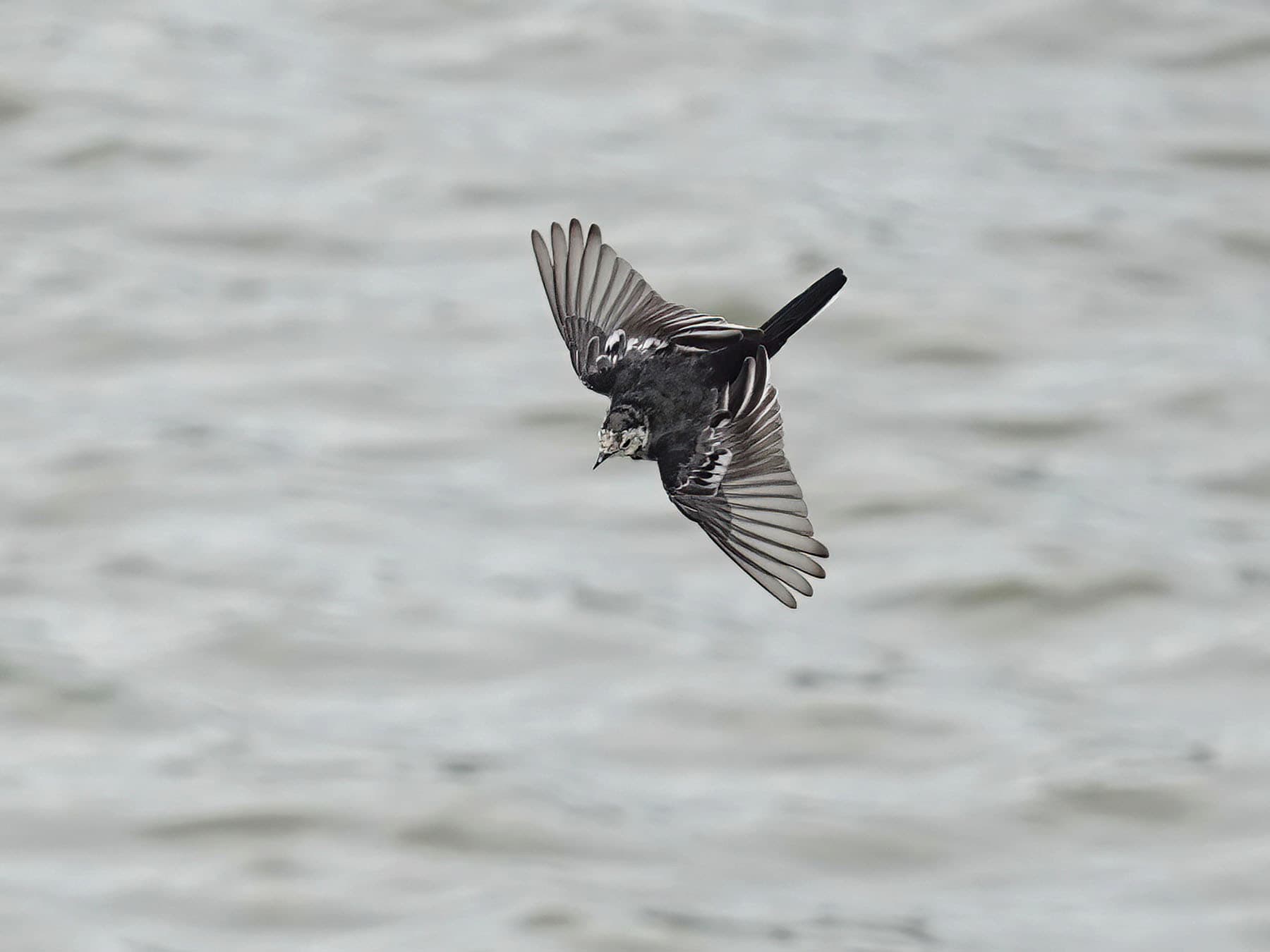
The pied wagtail generally draws attention to itself with striking plumage, active habits, bounding flight and loud calls. They are attracted to bare areas such as golf courses, grass lawns, roofs and roads.
They are fast-running birds that can easily see and catch insects. When hunting, the pied wagtail often rushes after prey only to pull up suddenly, tail bobbing excitedly. It has a deeply undulating flight.
Migration
Pied Wagtails find food throughout the year in the United Kingdom, although some choose to head south, and others merely pass through. Read on to learn more about Pied Wagtail migration in the UK.
Do Pied Wagtails migrate?
Pied Wagtails generally do not migrate in the UK, although those that breed in high-lying parts of Scotland will undertake short southward migrations for the summer. However, some Pied Wagtails will leave the UK, occasionally migrating as far as North Africa.
The White Wagtail (M. a. alba) is a similar subspecies that passes through the UK each spring and autumn. Most of these birds breed in Iceland and overwinter in Southern Europe.
Are Pied Wagtails native to the UK?
Pied Wagtails are native to the United Kingdom.
What it eats
What do Pied Wagtails eat?
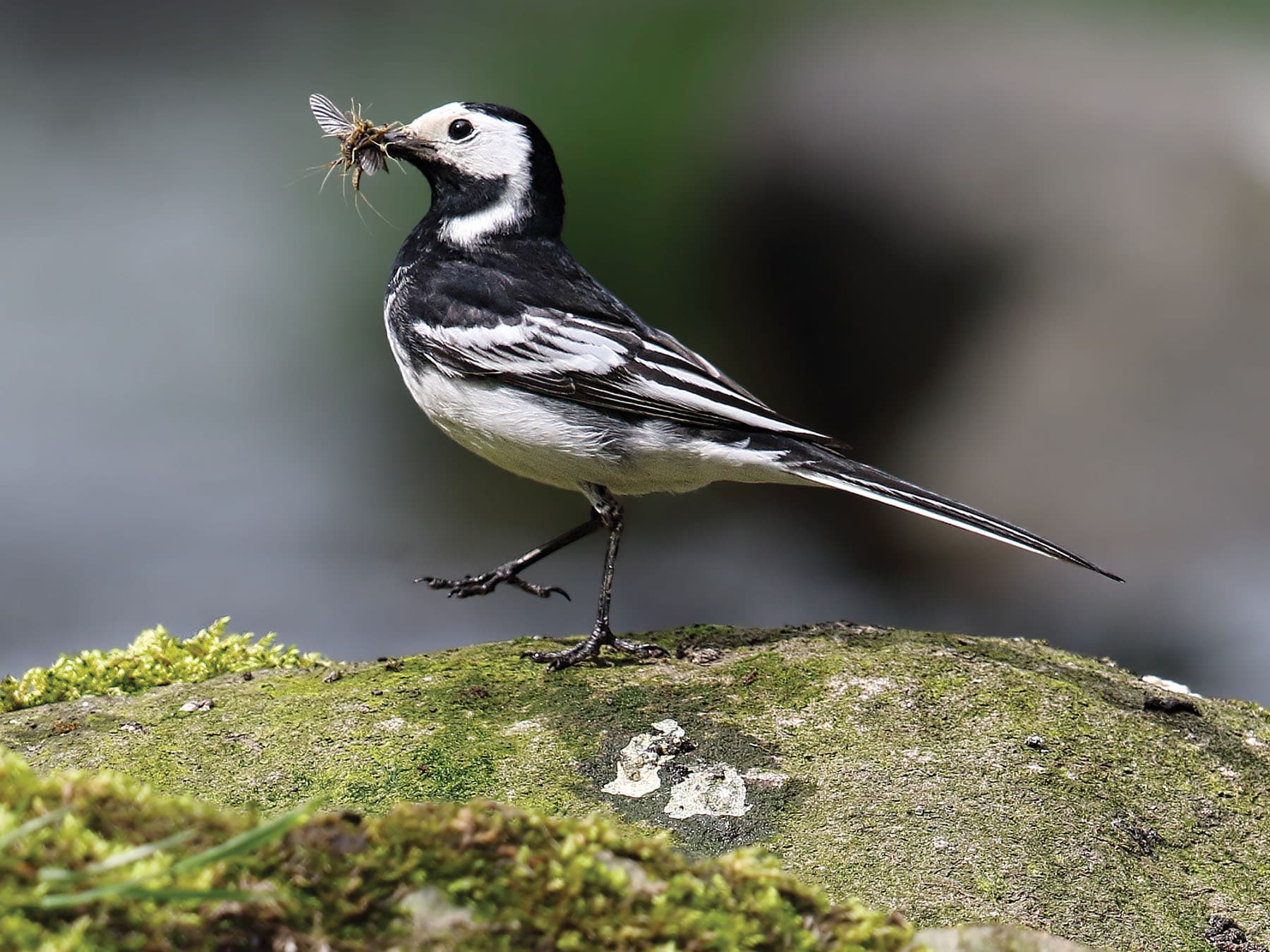
Pied Wagtails are primarily insect eaters and continue to hunt for live prey even in the winter. However, they will take berries and scraps when food is scarce.
These birds pick most of their food off the ground or water's edge, but they are also adept at catching flying insects out of the air.
Pied Wagtails feed predominantly on the following invertebrates:
- Flies
- Beetles
- Dragonflies
- Snails
- Worms
- Small fish
What do baby Pied Wagtails eat?
Both Parents feed Pied Wagtail chicks a diet of insects and other small invertebrates. The young birds leave the nest after about two weeks but will be fed for a further two weeks until they reach independence.
Nesting and breeding
Pied Wagtails are common breeding birds that build their nests in some rather surprising places. Their nest is built by both partners over about nine days and consists of a twig platform lined with softer materials like hair.
Where do Pied Wagtails nest?
Pied Wagtails look for sheltered areas to nest, such as holes and crevices. These can be natural structures like hollow logs and rock crevices or artificial sites like abandoned buildings and old machinery. Unusual nest sites include old swallow nests and even artillery barrels!
Check out our comprehensive guide on Pied Wagtail nesting behaviour.
What do Pied Wagtail eggs look like?
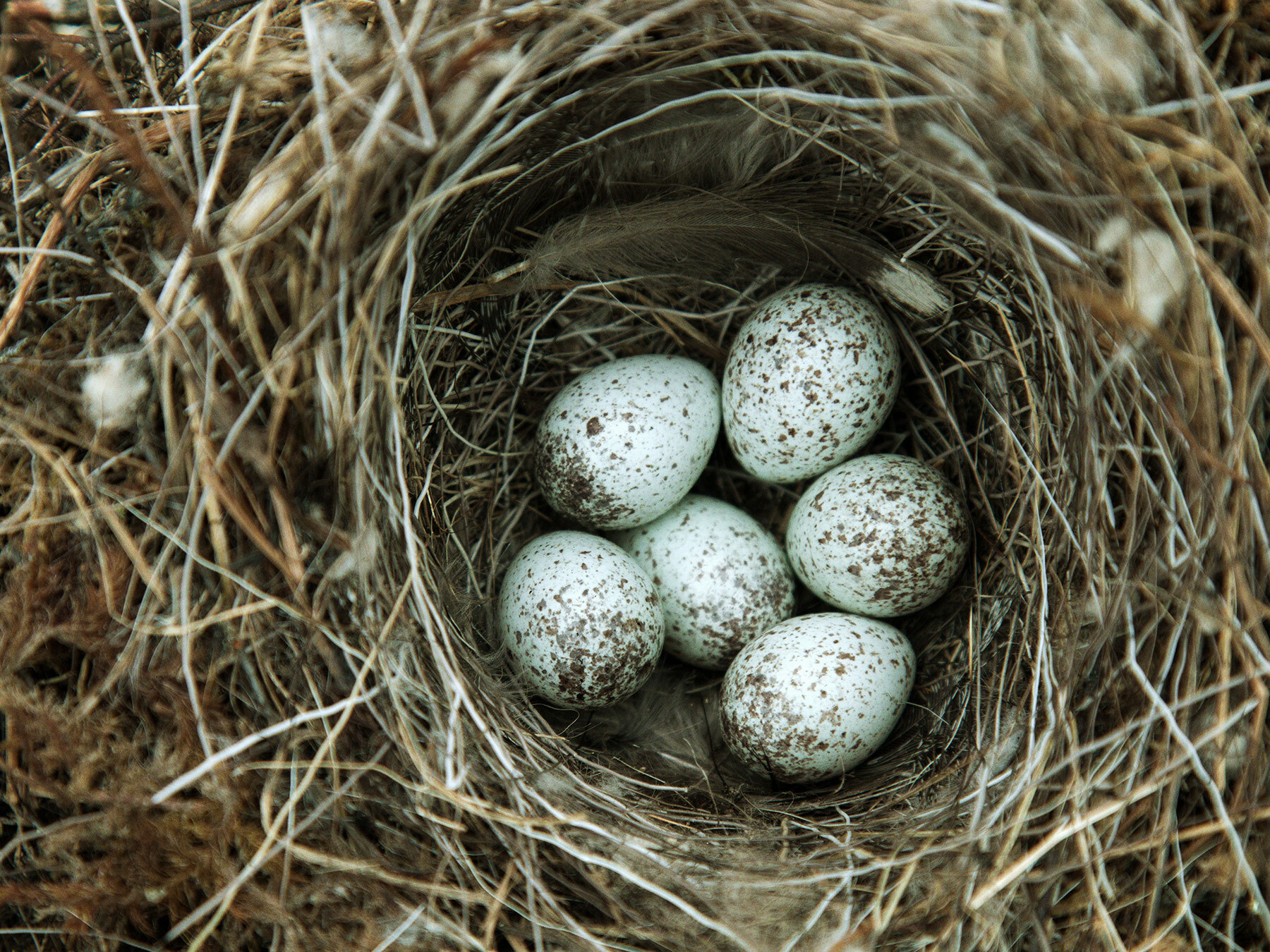
Pied Wagtail eggs are pale blueish-white and covered in light brown speckles. Each egg measures approximately 20 millimetres long and 15 millimetres wide.
Do Pied Wagtails mate for life?
Pied Wagtails are monogamous in the breeding season, although they are not known to mate for life.
Behaviour
One of the most conspicuous and intriguing behaviours of the Pied Wagtail is its constant tail-wagging. This behaviour is not fully understood, but it could be useful for flushing their insect prey or to signal their vitality and alertness to potential predators.
Are Pied Wagtails aggressive?
Pied Wagtails are highly aggressive and territorial in the breeding and non-breeding seasons, using display and physical fights to ward off competitors. They may chase other birds from bird feeders and sometimes even attack their own reflection in windows and mirrors.
Where do Pied Wagtails sleep at night?
Pied Wagtails sleep in flocks during the non-breeding season. They prefer the safety and shelter of reedbeds, although they will also roost in trees. Females will sleep on the nest in the breeding season.
Lifespan and predators
Pied Wagtails are relatively short-lived birds, although they remain a common species in the United Kingdom and have increased significantly in the last fifty years or so.
How long do Pied Wagtails live?
Nearly half of all Pied Wagtails perish in their first year. However, these birds can live for ten years or more in some cases.
What are the predators of Pied Wagtails?
Sparrowhawks and domestic cats are major predators of the Pied Wagtail. Their young are vulnerable to nest predators like the Magpie and nest parasites like the Cuckoo.
Are Pied Wagtails protected?
Pied Wagtails are protected by the Wildlife and Countryside Act of 1981.
Are Pied Wagtails endangered?
Pied Wagtails are not endangered. They have a green conservation status in the United Kingdom and are assessed as a ‘Least Concern’ species on the IUCN Red List.
Conservation
While the Pied Wagtail is currently listed as Least Concern, it faces challenges from habitat loss and climate change. Urban development and changes in agricultural practices can impact their breeding and foraging habitats.
Conservation efforts focus on maintaining suitable habitats and monitoring population trends.
Similar birds
Often mistaken for
More photos
6 photos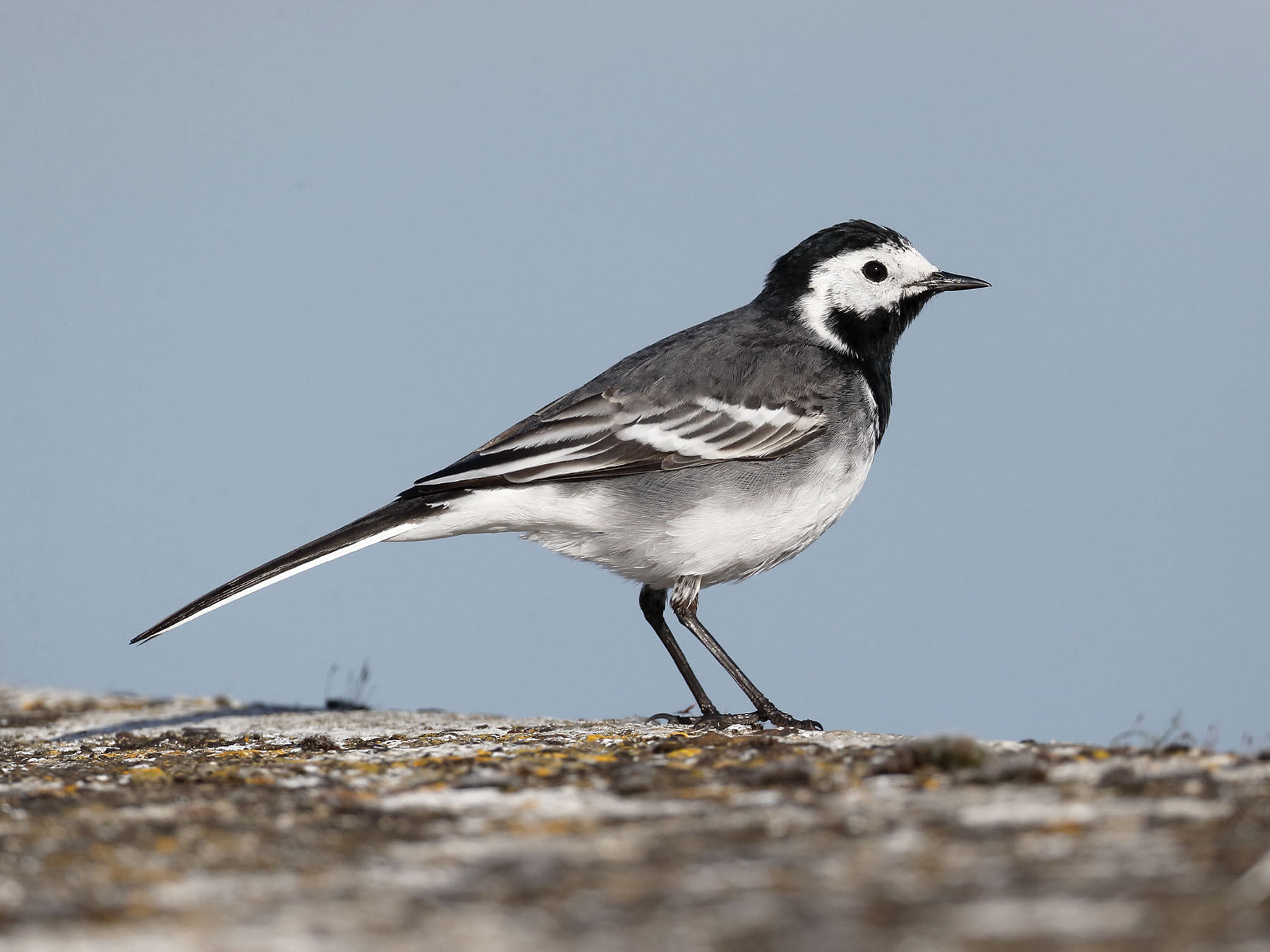
Pied Wagtail guides
2 guidesQuick facts
- Length
- 16.5–19 cm
- Wingspan
- 25–30 cm
- Weight
- 17–25 g
- Lifespan
- 2–7 years · oldest recorded 13 years
- Family
- Wagtails & Pipits
- Migration
- Partial migrant
- Global status (IUCN)
- Least Concern
- World population
- 1,000,000 mature individuals (UK Breeding)
- Population trend
- Stable
- Also called
- White Wagtail (subspecies)
- Scientific name
- Motacilla alba
Questions
3What is the difference between a Pied Wagtail and a White Wagtail?
All Pied Wagtails are White Wagtails, although the opposite is not true. While this may sound like a riddle, the simple answer is that Pied Wagtails are merely a ‘type’ of White Wagtail that is native to the UK.
Read on for a slightly more technical explanation.
The White Wagtail (Motacilla alba) has been split into at least ten different subspecies, each separated by physical differences and range differences.
The local Pied Wagtail is one of the White Wagtail subspecies and is characterised by darker plumage and its range on the British Isles.
How to attract Pied Wagtails
Pied Wagtails favour open habitats near water, making gardens with larger lawns and ponds or other water features especially attractive. These birds will also feed on breadcrumbs, cheese and mealworms sprinkled on the ground.
Are Pied Wagtails good luck?
The Pied Wagtail features in Roman Mythology as a symbol of good fortune. Whether you are superstitious or not, we can all agree that these are lovely birds to have around!
Sources
4- 1Fransson et al., EURING list of longevity records for European birds (2010) Source (opens in a new tab)
- 2BirdLife International. 2019. Motacilla alba. The IUCN Red List of Threatened Species 2019: e.T22718348A137417893. Source (opens in a new tab)
- 3BTO (2016) Source (opens in a new tab)
- 4EBCC (2015)

Checked by
Nathan Cope, founder and editor
Nathan founded Birdfact and leads its writers and contributors in the UK, the US and Canada. He has watched and studied birds for more than ten years, and checks every article and species guide before it’s published.