


Eurasian Oystercatcher
Common Oystercatcher, European Oystercatcher · Haematopus ostralegus
By the Birdfact teamChecked by Nathan Cope
On this page14 sections
How to recognise it
The Oystercatcher is a conspicuous, crow-sized wader with very colourful features. Continue reading to learn more about their appearance.
What do Oystercatchers look like?
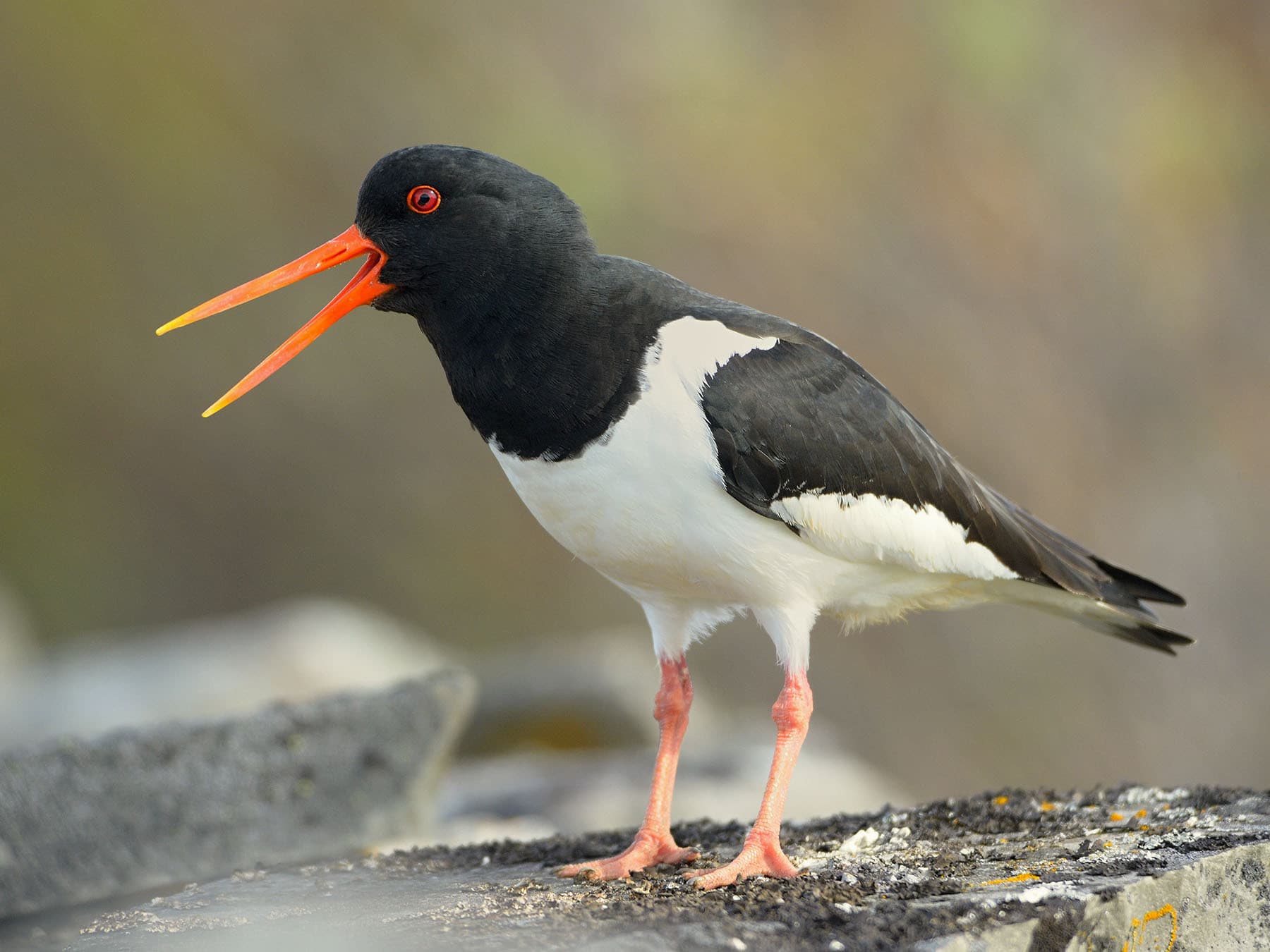
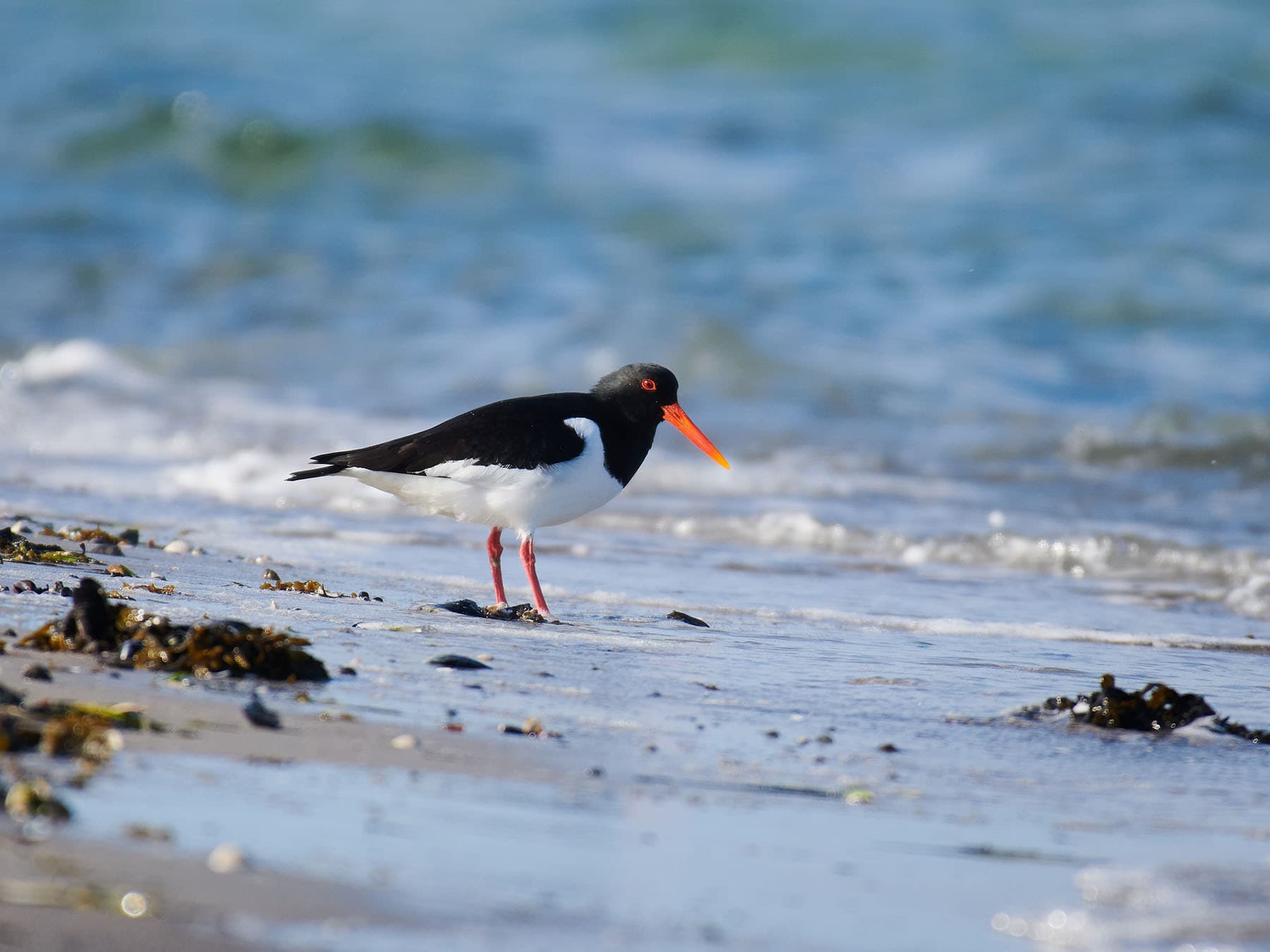
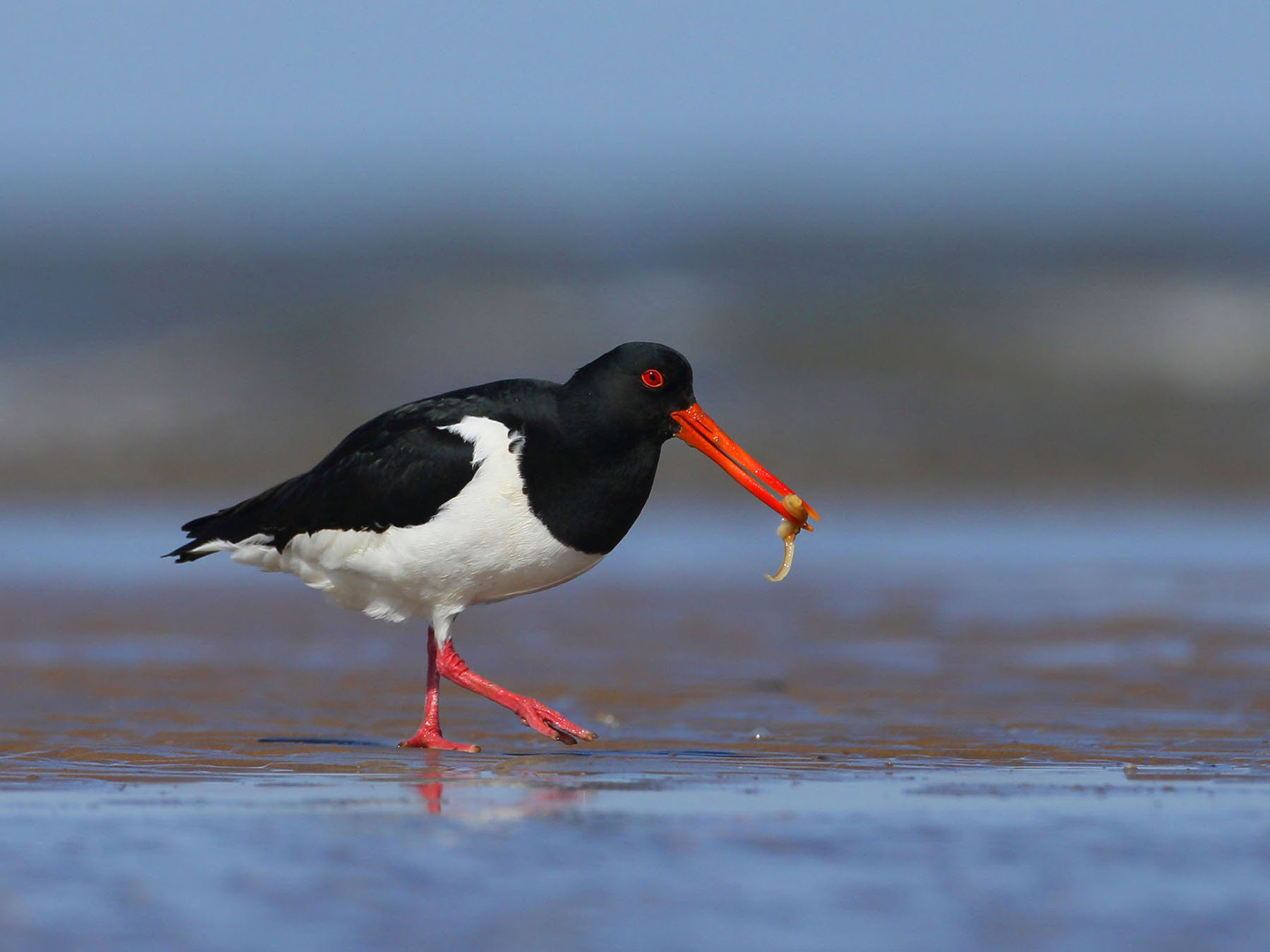
Oystercatchers are heavyset birds with longish, robust legs and a long straight bill. Their all-black upper parts and pure white underparts are easily recognised, even at a distance. They develop a prominent white collar during the non-breeding season.
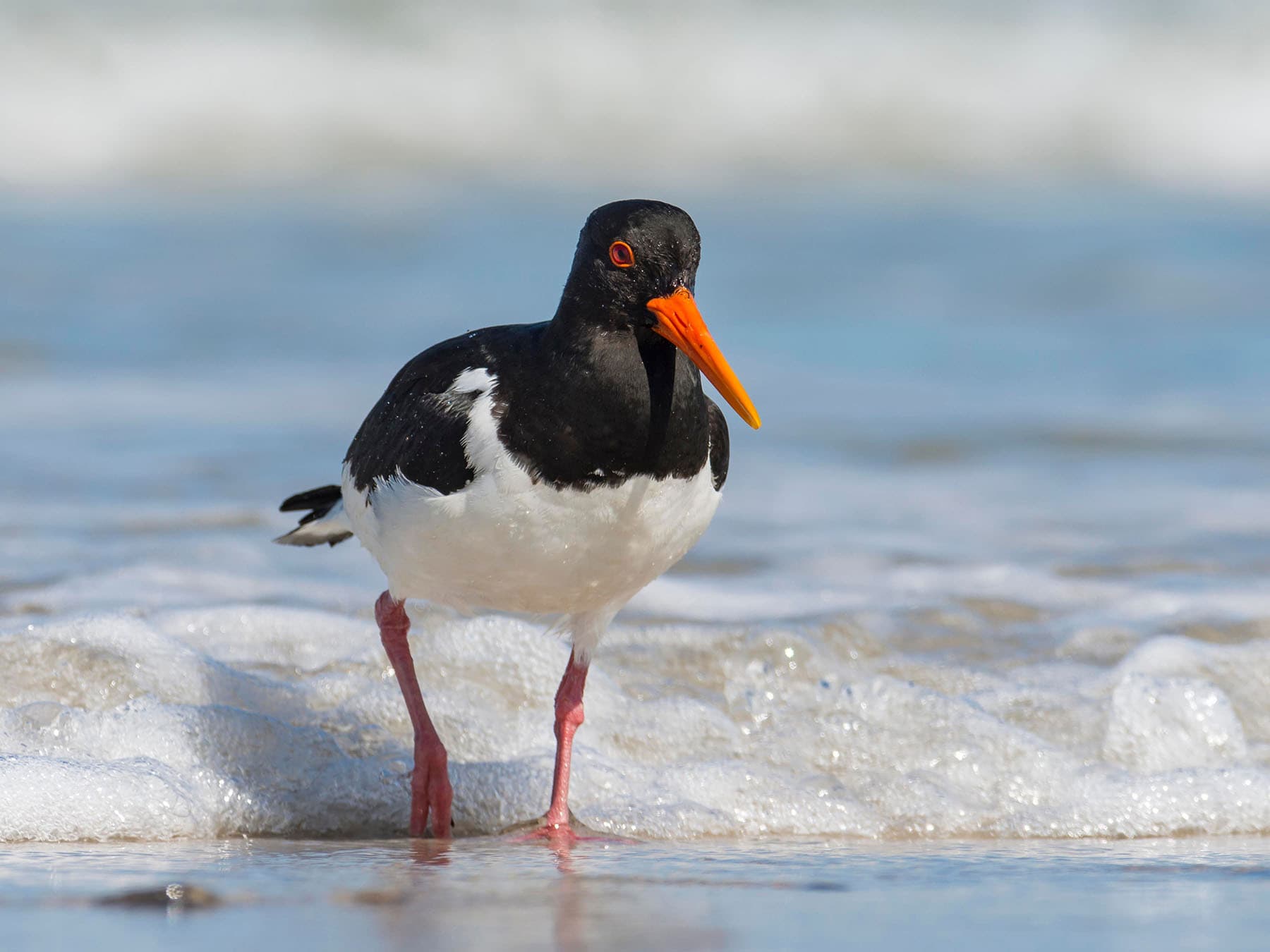
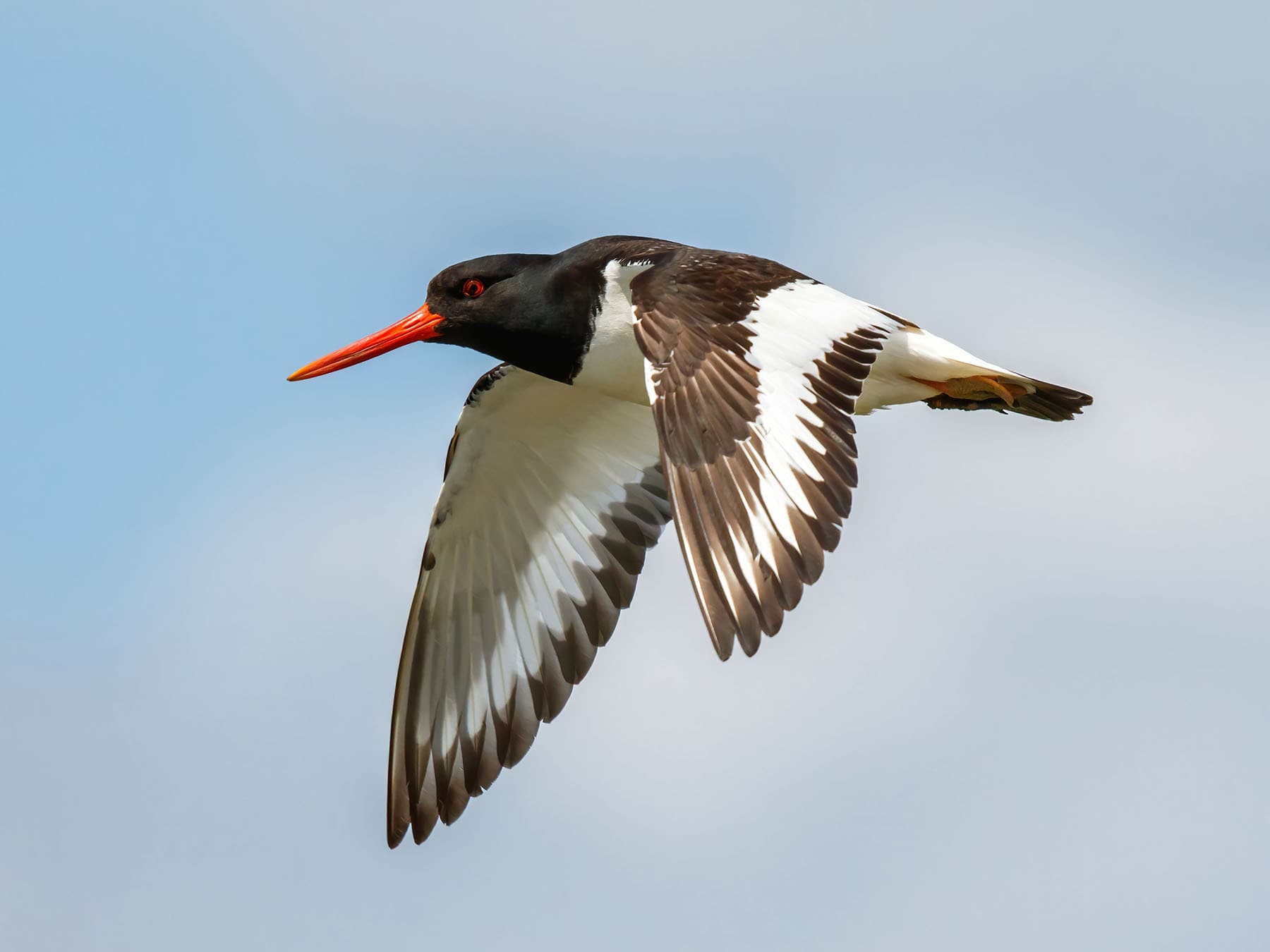
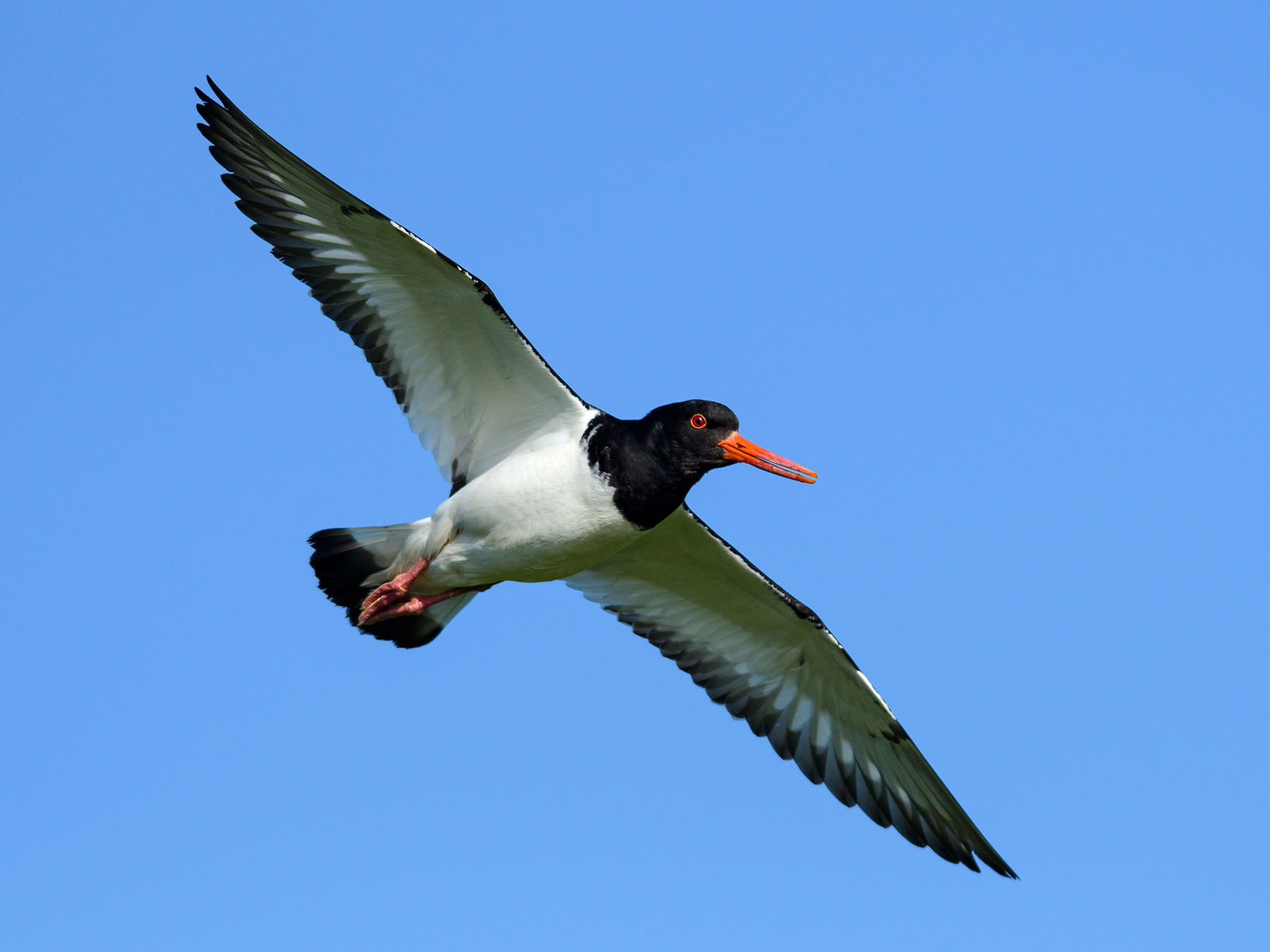
They have bright red eyes surrounded by a prominent red ring. Their bill is bright red becoming orange at the tip, and their long, heavily built legs are pink. Oystercatchers are equally striking in flight when their broad white wing bars are visible. The back is white when seen in flight, and their white tail has a black tip.
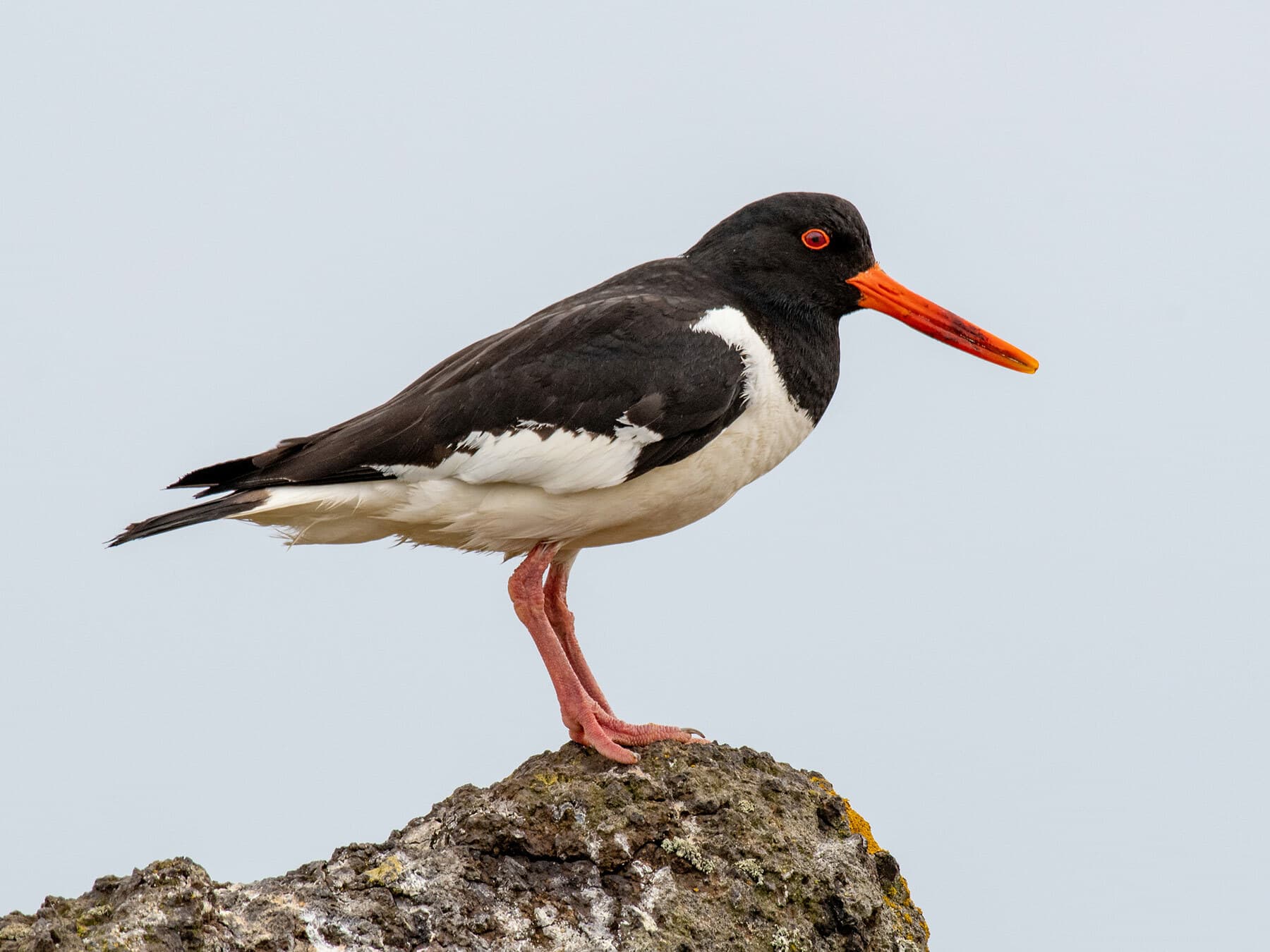
Females are difficult to distinguish from males, although they are slightly larger on average. They also have longer bills which may be used to access different food sources.
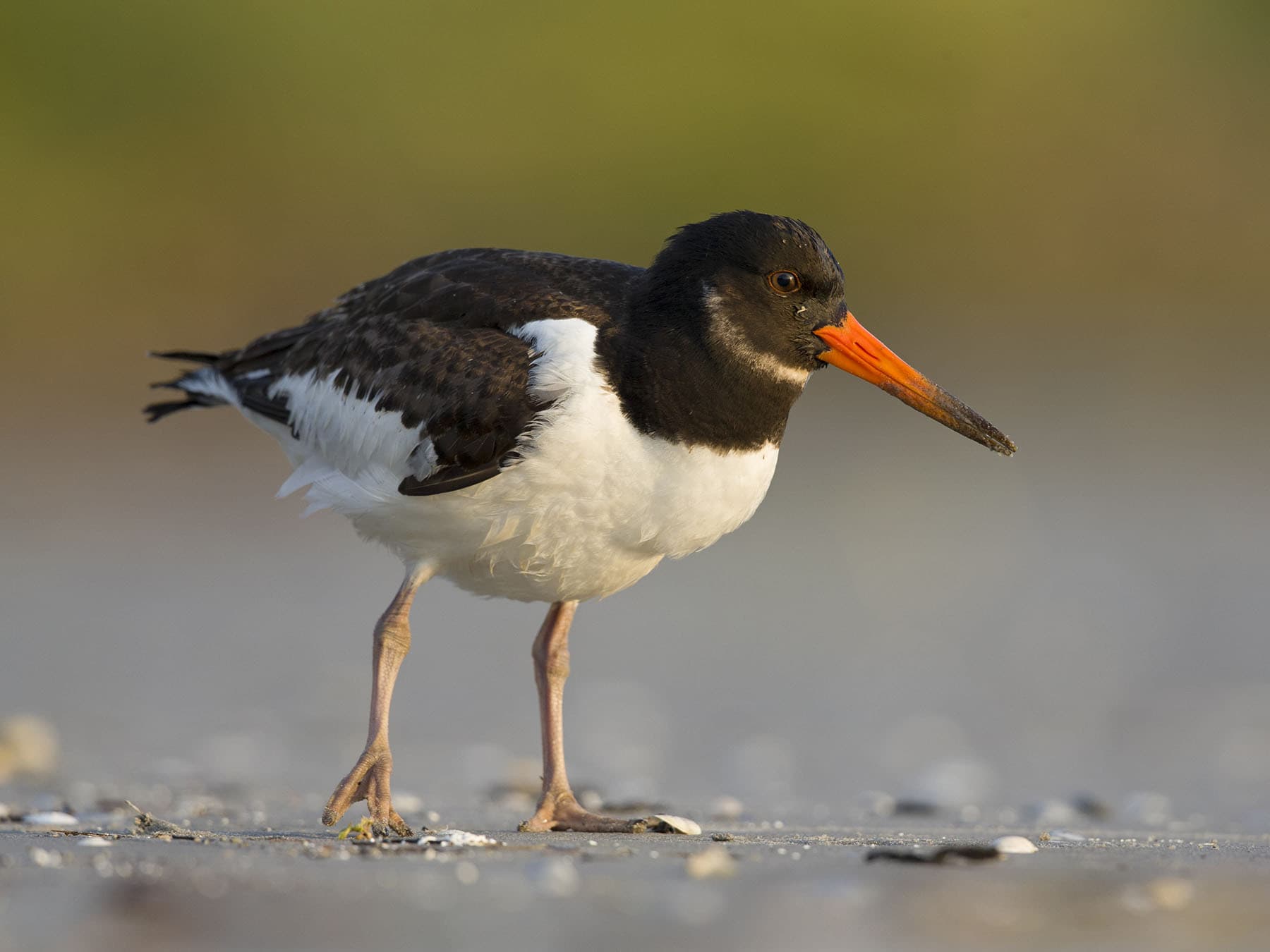
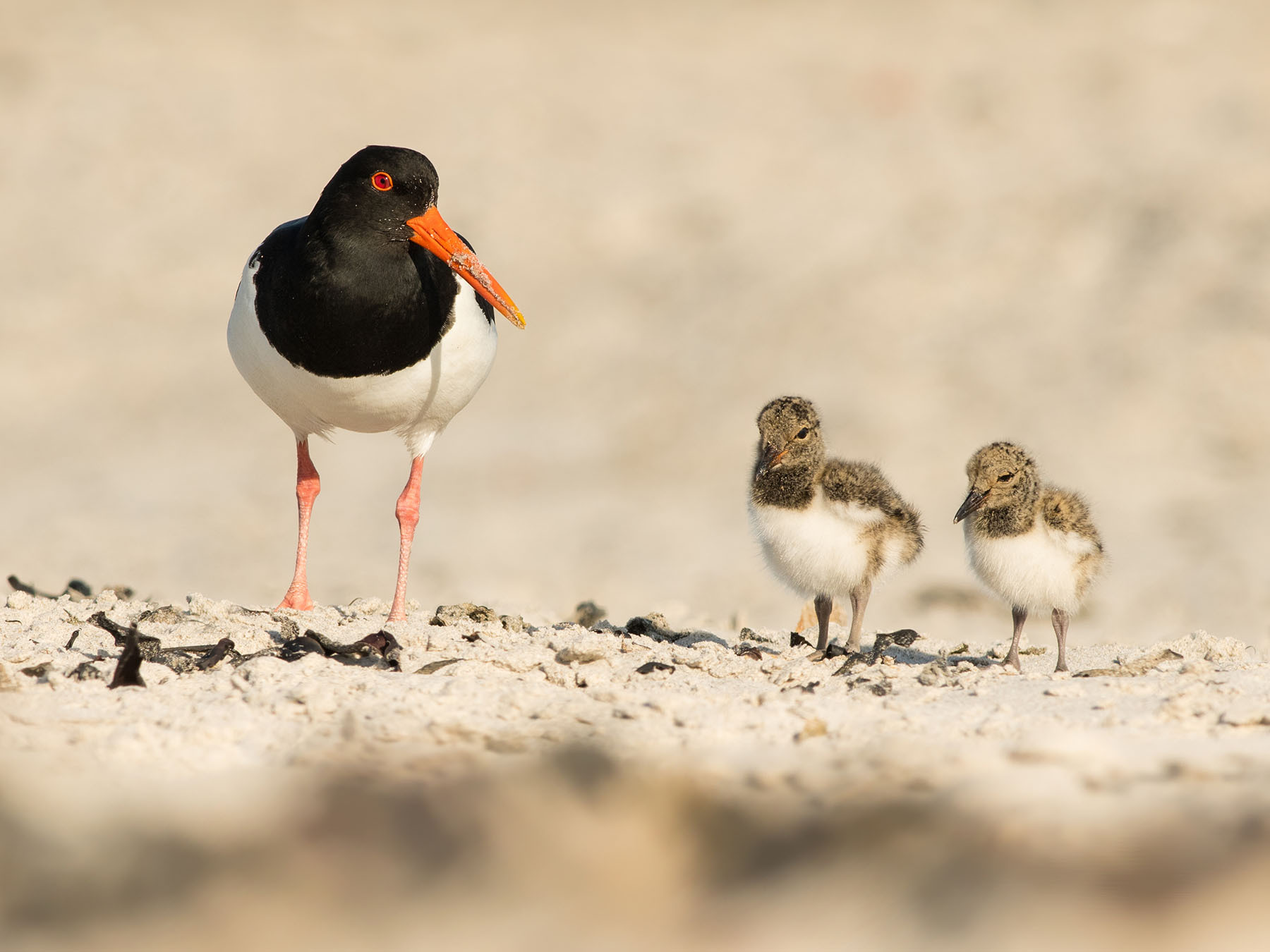
Juvenile Oystercatchers resemble adults but can be distinguished by generally duller plumage. Their legs are greyish, and they lack the bright red eye and eyering of the adults. Their bill tip is dark rather than orange.
How big are Oystercatchers?
Oystercatchers are large, heavily built waders about the size of a crow. They have fairly long, robust legs and large bills.
Length
Adult Oystercatchers have a body length of 40 to 47 centimetres.
Weight
The resident Oystercatcher subspecies in the UK is relatively heavy at 425 to 820 grams.
Wingspan
Oystercatchers have broad wings that taper to a point. Most have a wingspan of 76 to 86 centimetres.
Its size
Adults- Length
- 40–45 cm
- Wingspan
- 80–85 cm
- Weight
- 430–650 g
Its song and calls
The Oystercatcher call is a quintessential sound of coastal areas.
What sound does an Oystercatcher make?
The typical Oystercatcher call is a high-pitched ‘peep’ or ‘pi-eep’. They may also produce a sharp ‘wit’ note when alarmed. These birds call from the ground or in flight, either singly or during piping displays of groups of birds.
- Song0:00 / 0:34
Recorded in Uusimaa, Finland · July 2018
- Call0:00 / 1:35
Recorded in Kalmar län, Sweden · May 2024
When and where to see it
OctoberHere all year
Most recorded in October
Each dot is a county, state or province: the bigger and darker, the larger the bird’s share of that place’s bird records that month. Grey dots: no regular records. The ringed point is the centre of the bird’s records this month; the arrow shows how it moved since last month, and the dashed loop its path through the year. “Arrivals” colours places where it becomes regular this month (orange) or is in its last regular month (grey). GBIF eBird Observation Dataset, 2019–2024. Map data: Natural Earth, US Census Bureau; place centres © OpenStreetMap contributors.
In your area
See when the Eurasian Oystercatcher is recorded in your county, state or province.
How often the Eurasian Oystercatcher turns up in the UK and Ireland through the year, from birdwatchers' records.
United Kingdom
Resident · all year · most records in July
Ireland
Resident · all year · most records in August
Show as a table
| Month | United Kingdom | Ireland |
|---|---|---|
| January | 0.57% (regular) | 1.9% (regular) |
| February | 0.84% (regular) | 1.8% (regular) |
| March | 0.99% (regular) | 1.6% (regular) |
| April | 0.97% (regular) | 1.1% (regular) |
| May | 1.1% (regular) | 1.0% (regular) |
| June | 1.2% (regular) | 1.2% (regular) |
| July | 1.2% (regular) | 1.6% (regular) |
| August | 0.88% (regular) | 2.3% (regular) |
| September | 0.71% (regular) | 2.2% (regular) |
| October | 0.66% (regular) | 1.9% (regular) |
| November | 0.55% (regular) | 1.8% (regular) |
| December | 0.53% (regular) | 1.8% (regular) |
Recorded regularly in
Worldwide: recorded regularly in 78 countries
Countries where it was recorded in at least 3 of the 6 years 2019–2024. Linked countries have their own bird list.
Europe (41)
- Åland Islands
- Albania
- Austria
- Belarus
- Belgium
- Bulgaria
- Croatia
- Czechia
- Denmark
- Estonia
- Faroe Islands
- Finland
- France
- Germany
- Gibraltar
- Greece
- Guernsey
- Hungary
- Iceland
- Ireland
- Isle of Man
- Italy
- Jersey
- Latvia
- Lithuania
- Moldova
- Montenegro
- Netherlands
- Norway
- Poland
- Portugal
- Romania
- Russia
- Serbia
- Slovakia
- Slovenia
- Spain
- Sweden
- Switzerland
- Ukraine
- United Kingdom
Africa (14)
- Algeria
- Cape Verde
- Djibouti
- Egypt
- Gambia
- Guinea-Bissau
- Kenya
- Morocco
- Mozambique
- Senegal
- South Africa
- Tanzania
- Tunisia
- Western Sahara
Asia (23)
- Azerbaijan
- Bahrain
- China
- Cyprus
- Georgia
- Hong Kong SAR China
- India
- Iran
- Israel
- Japan
- Kazakhstan
- Kuwait
- Kyrgyzstan
- Oman
- Pakistan
- Qatar
- Saudi Arabia
- South Korea
- Sri Lanka
- Taiwan
- Turkey
- United Arab Emirates
- Uzbekistan
Data: EOD – eBird Observation Dataset (Cornell Lab of Ornithology), accessed via GBIF.org, CC BY 4.0. Records from 2019–2024, aggregated and filtered by Birdfact. How these lists are made
Oystercatchers are wading birds that spend their time near the shore. Continue reading to learn where you can spot them in the United Kingdom.
What is the habitat of an Oystercatcher?
Oystercatchers are most at home in estuaries and along sandy shores, although increasing numbers are venturing inland. Look out for them in the following habitats.
- Sand and shingle beaches
- Rocky shores
- Estuaries
- Saltmarshes
- Larger rivers
- Lakes
- Gravel pits
What is the range of an Oystercatcher?
Oystercatchers occur around virtually the entire coastline of the UK and Ireland. They also venture far inland, particularly in Scotland and Northern England. Elsewhere the species is widespread in parts of Asia and visits Africa’s west and east coasts.
Oystercatchers in the UK are of the subspecies H. o. ostralegus, which occurs from Iceland to western Russia and across to northern France.
Where do Oystercatchers live?
Oystercatchers are waders that spend their lives foraging along the coast and freshwater bodies. These birds live on the ground and never perch in trees or other vegetation. They often walk in shallow water, and although they can swim well, this behaviour is rarely seen.
How rare are Oystercatchers?
Oystercatchers are not rare in the UK, and they can be seen virtually anywhere along the coast. Over 90,000 Oystercatchers are estimated to live and nest in the UK, and their numbers increase by about 50% in the winter when birds arrive from Iceland and Northern Europe.
Where can you see Oystercatchers in the UK?
Birdwatchers can see Oystercatchers practically anywhere on the UK coastline and further inland in northern England and Scotland. The larger estuaries and sandy beaches hold good numbers in the winter.
Signs and Spotting tips
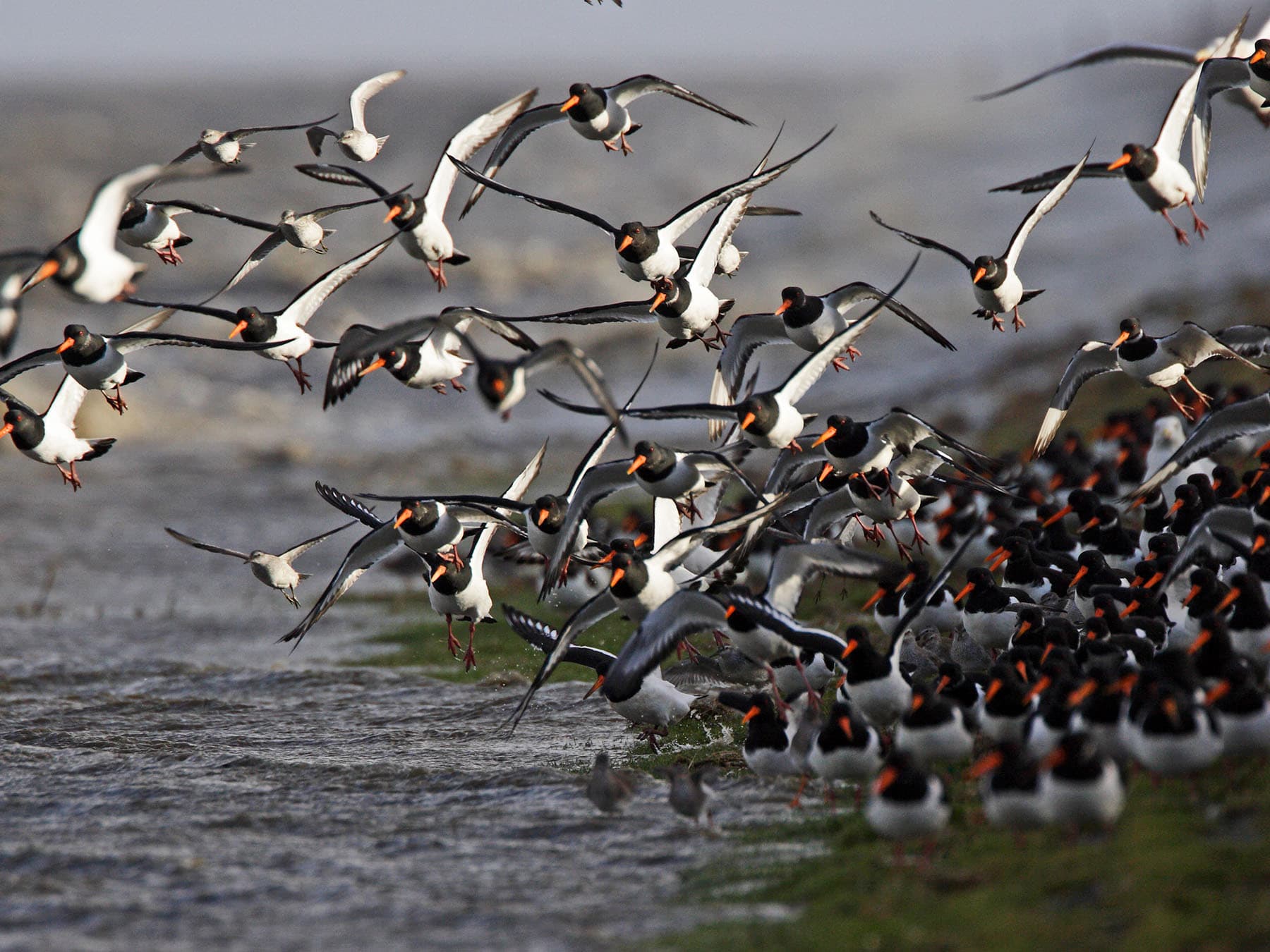
Oystercatchers roost communally, so are usually found in areas that provide safe height-tide roosts as well as good feeding areas.
Oystercatchers make a remarkable spectacle flying through the air in flocks in formations with their white wing bars flashing. Their flight is direct with quick wingbeats, somewhat recalling a duck. RSPB reserves on estuaries are a good place to see oystercatchers. Look out for them along mudflats, or along the warm shingle in summer.
Migration
Do Oystercatchers migrate?
Oystercatchers are partial migrants, although the UK population is present throughout the year. Breeding populations from Northern Europe join our birds in the winter to enjoy the milder weather, and those that breed inland return to the coast in the non-breeding season.
Elsewhere, the various subspecies migrate longer distances. Some even overwinter as far south as Central Africa after nesting in Central Asia.
Are Oystercatchers native to the UK?
Oystercatchers are native to the United Kingdom. More and more of these birds are moving inland to breed, although they have always been present around the coast.
What it eats
These birds feed on a range of creatures that live in mud, sand, and between the rocks. Continue reading to learn more about Oystercatcher feeding and foraging.
What do Oystercatchers eat?
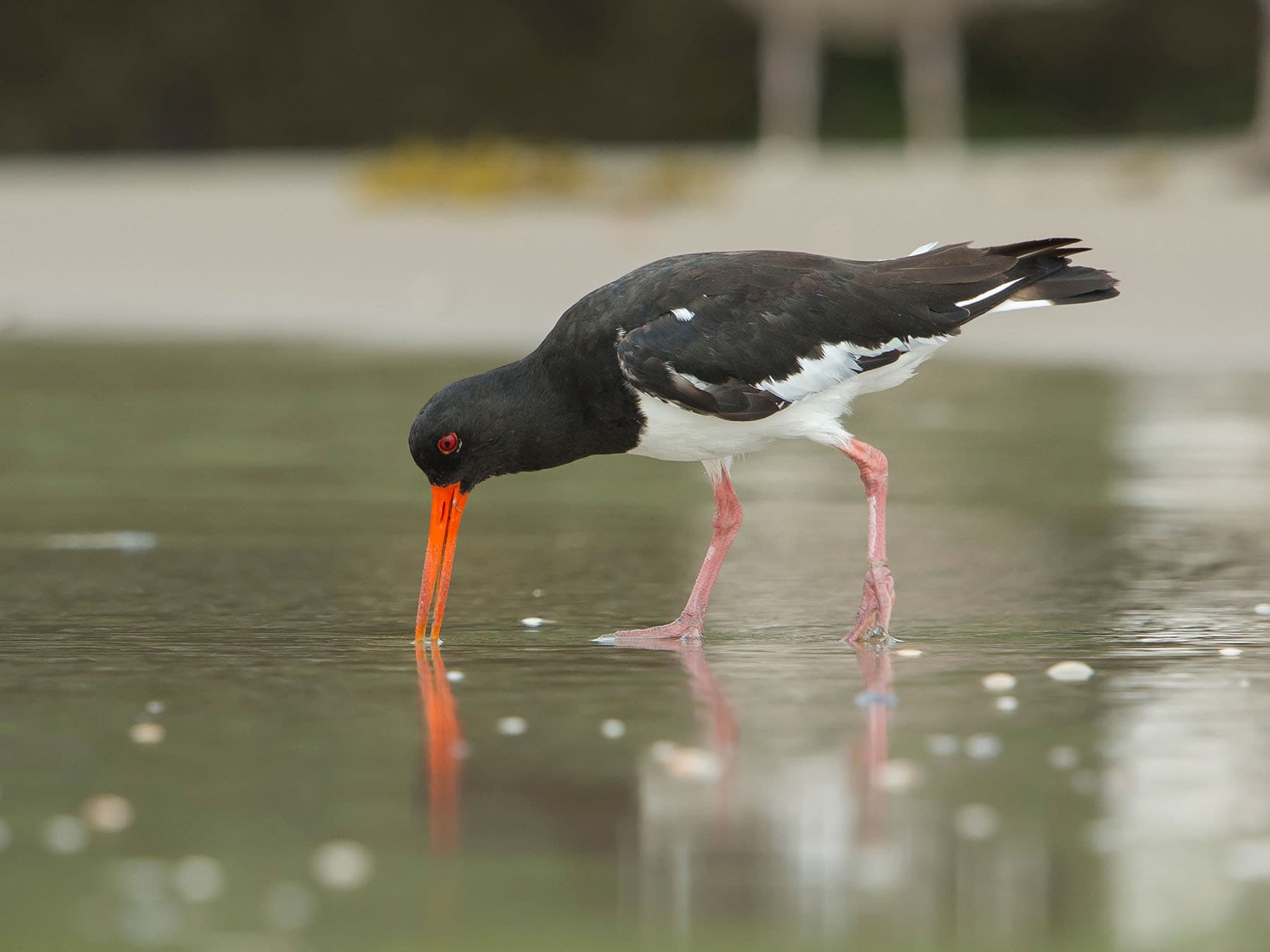
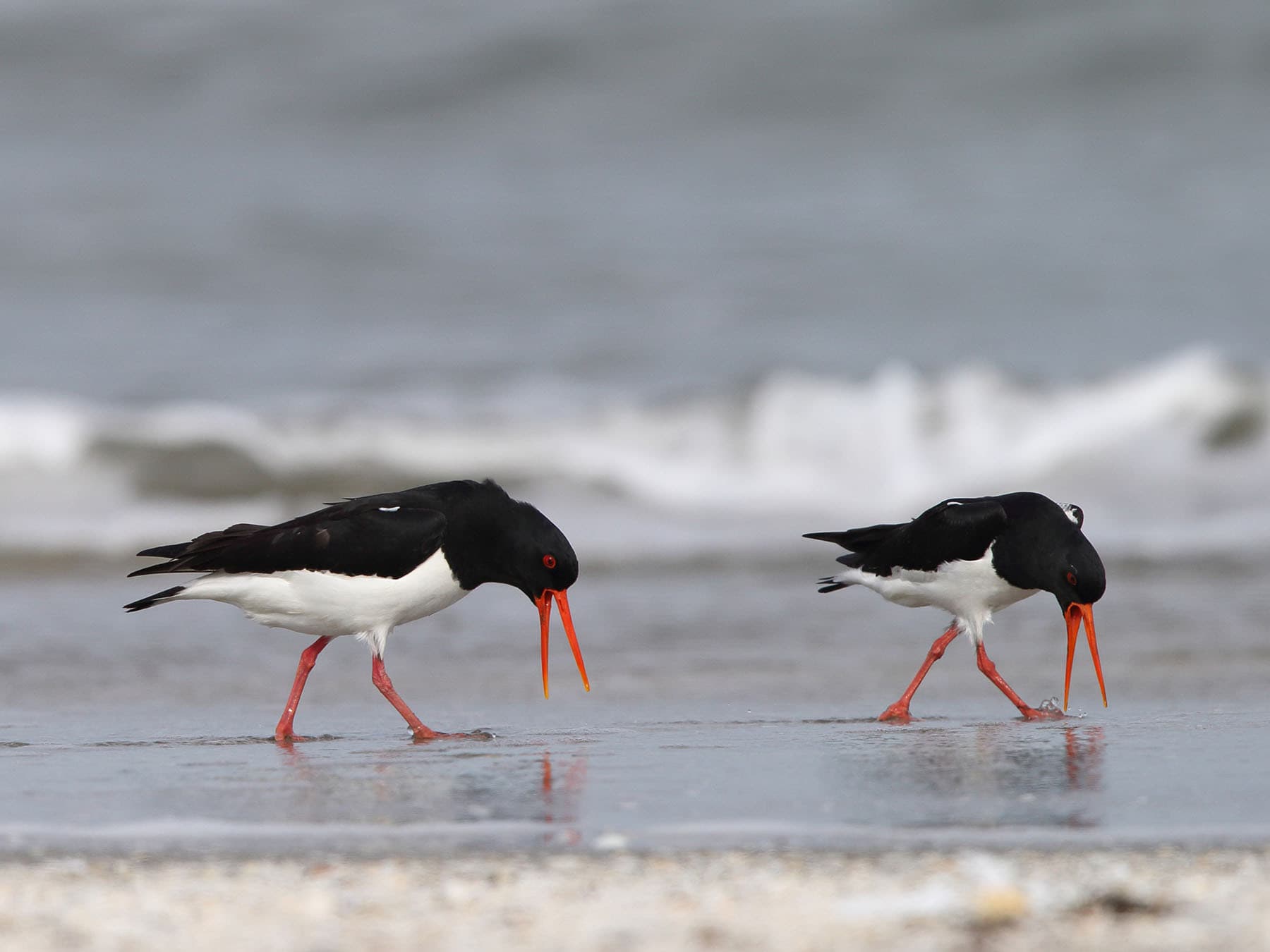
Despite their common name, oysters are not the most important component of the Oystercatcher's diet. Mussels and cockles are favoured, although these birds eat various marine, aquatic, and terrestrial invertebrates.
Other regular prey items include:
- Limpets
- Clams
- Whelks
- Crabs
- Marine Worms
- Earthworms
- Caterpillars
- Cranefly larvae
These birds access their prey in a variety of ways. They may stab, hammer, or prize shells open with their large, sturdy bills. Interestingly, differences in food preferences between juveniles, adult males, and adult females may limit competition for prey.
What do Oystercatcher chicks eat?
Oystercatcher chicks are nidifugous, meaning they leave their nest soon after hatching. Unlike other baby waders, the chicks do not feed themselves and rely on their parents for several weeks. Generally, young birds eat the same small shellfish and marine invertebrates as their parents.
Nesting and breeding
Oystercatchers are breeding residents in the United Kingdom. Continue reading to learn about their breeding and nesting habits.
Where do Oystercatchers nest?
Oystercatchers nest on the ground, either out in the open or between low vegetation. Most nests are located above the high tide mark on beaches, but they are increasingly nesting along stony rivers, gravel pit banks, and even in odd places like rooftops.
Their nest is a simple scrape, often lined with shells, rock flakes or other debris like animal droppings. Oystercatcher pairs maintain nesting territories that are separate from other pairs, and they usually return to nest in the same territory year after year.
What do Oystercatcher eggs look like?
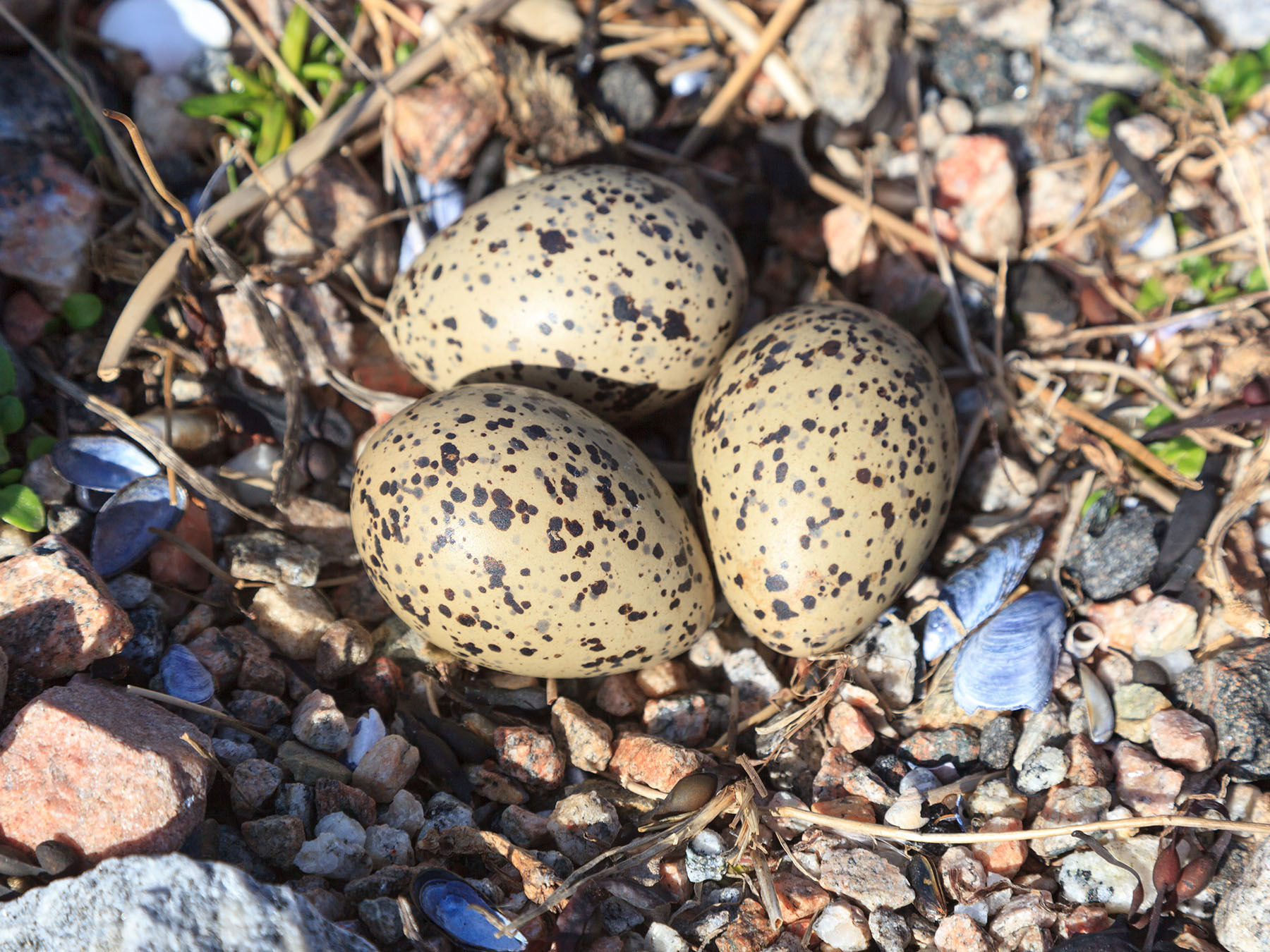
Oystercatchers lay three (2-5) eggs per clutch. Each egg is superbly camouflaged with a yellowish ground colour and dark speckles. Their eggs measure about 56 millimetres long and 40 millimetres wide.
Do Oystercatchers mate for life?
Oystercatchers probably mate for life, and successful pairs can last for 20 years. However, males will take on a second partner at times.
Behaviour
Are Oystercatchers aggressive?
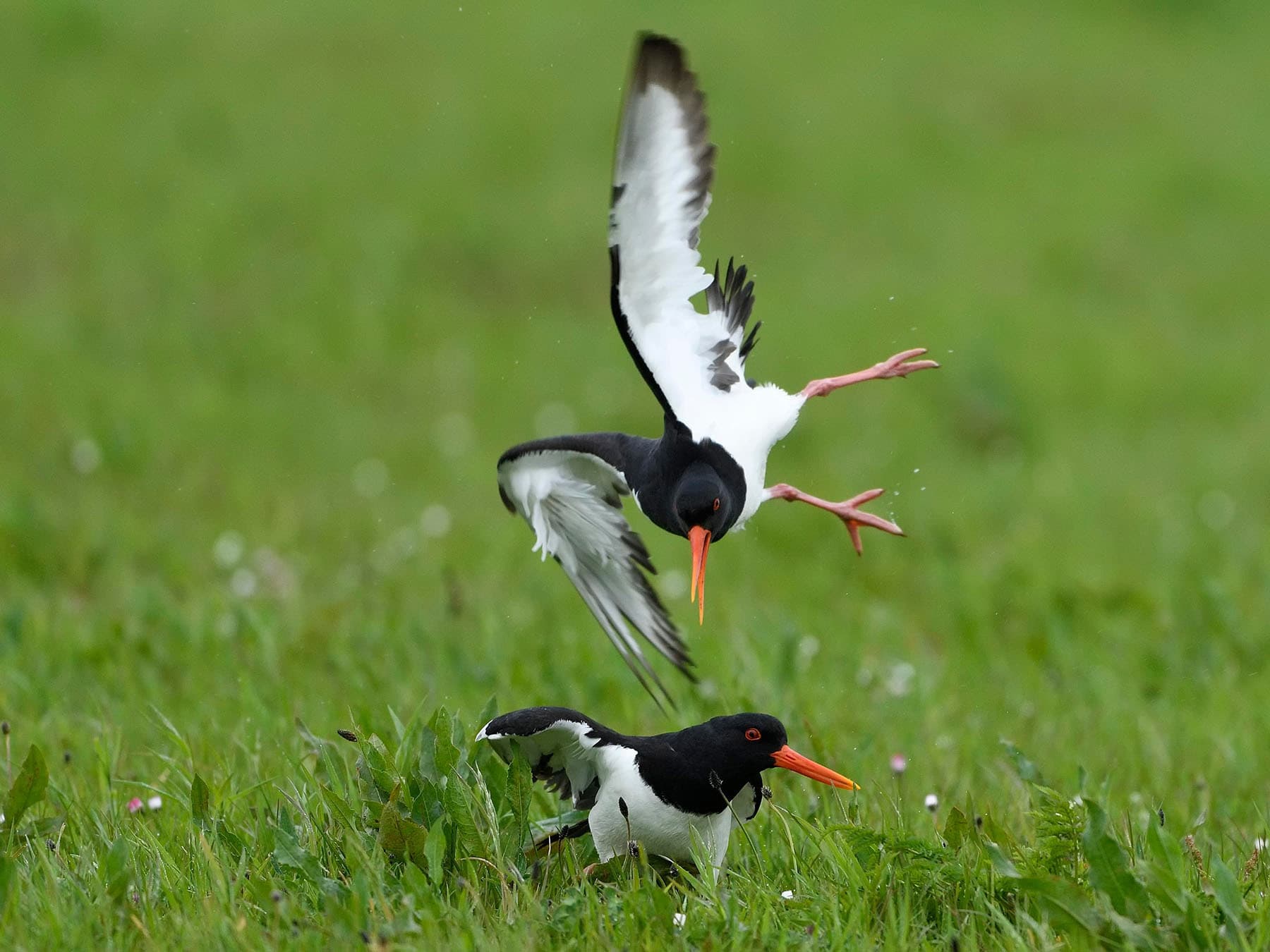
Oystercatchers can be rather aggressive towards each other when feeding and nesting. Dominant individuals may steal food from lower-ranking birds, and breeding pairs aggressively defend their nesting territory.
Where do Oystercatchers sleep at night?
Oystercatcher feeding times are dictated by the tides rather than the time of day, as high water submerges their feeding grounds. They will forage at low tide by day or night and roost above the high water mark at high tide, often communally in the winter.
Lifespan and predators
Oystercatchers are long-lived birds with few predators. Their greatest threat came from competition with us, although they are a protected species today.
How long do Oystercatchers live?
Oystercatchers have a relatively long average lifespan of about 12 years. The oldest known individual lived an impressive 40 years.
What are the predators of Oystercatchers?
Healthy Adult Oystercatchers have few predators, although they can fall prey to Peregrine Falcons. Their eggs and chicks are easier meals and may be vulnerable to the following mammal and bird species:
Are Oystercatchers protected?
Oystercatchers are protected by the Wildlife and Countryside Act of 1981.
Are Oystercatchers endangered?
Oystercatchers are not endangered, although they are declining globally. The IUCN classifies them as ‘Near Threatened’, and they have an amber conservation status in the United Kingdom.
Conservation
The Eurasian Oystercatcher is classified as Near Threatened due to population declines in parts of its range. Habitat loss, coastal development, and disturbance at breeding sites are significant threats.
Conservation efforts focus on protecting coastal habitats and managing human activities in key breeding areas.
More photos
5 photos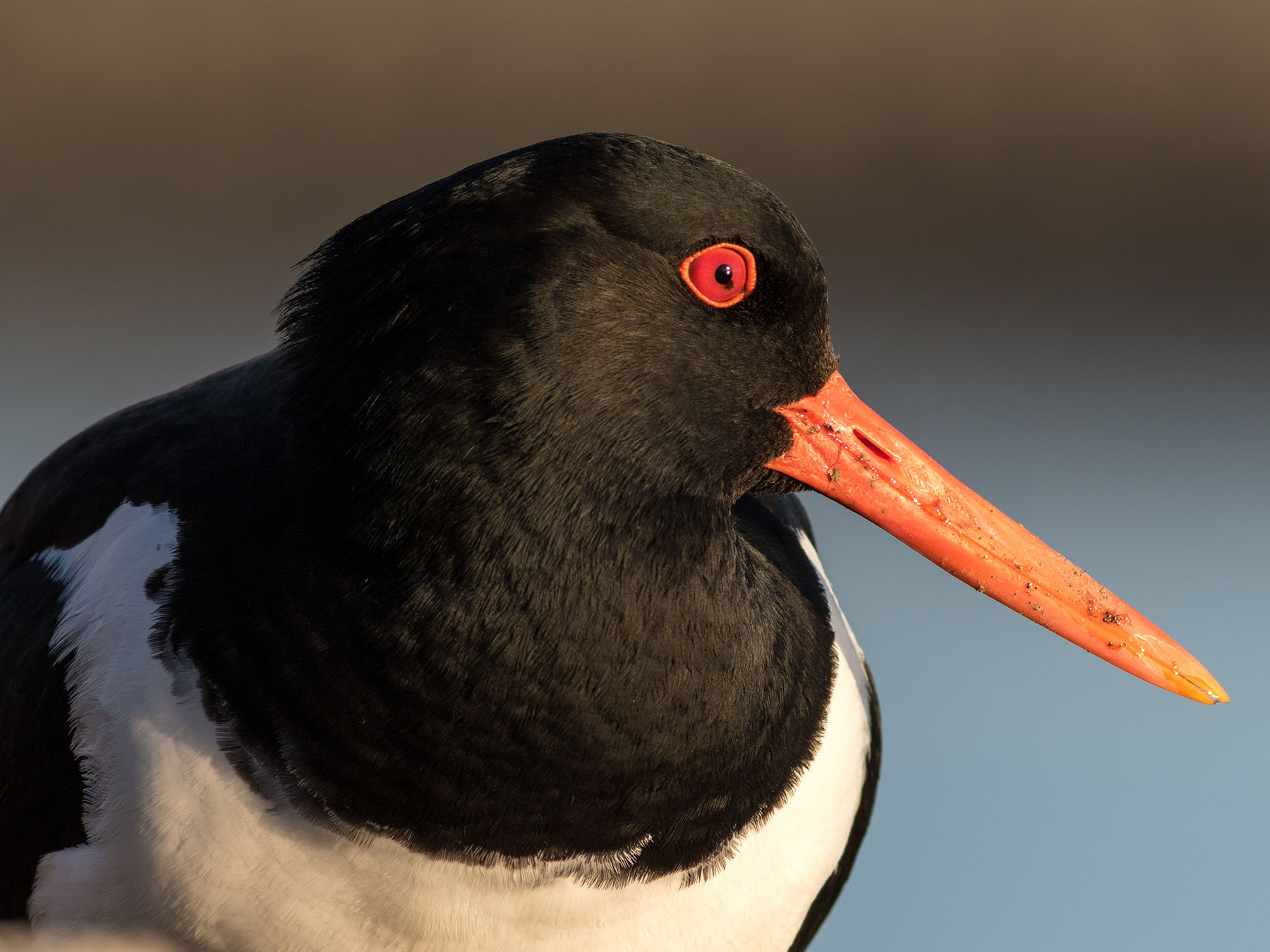
Eurasian Oystercatcher guides
1 guidesQuick facts
- Length
- 40–45 cm
- Wingspan
- 80–85 cm
- Weight
- 430–650 g
- Lifespan
- 12 years · oldest recorded 43 years
- Family
- Oystercatchers
- Migration
- Partial migrant
- Global status (IUCN)
- Near Threatened
- World population
- 925,000 - 1,030,000 individuals
- Population trend
- Decreasing
- Also called
- Common Oystercatcher, European Oystercatcher
- Scientific name
- Haematopus ostralegus
Questions
1Do Oystercatcher birds eat oysters?
Despite their common name, Oystercatchers rarely eat oysters in the UK. Other bivalve molluscs, such as mussels and cockles, are their major prey.
Sources
4- 1BirdLife International. 2019. Haematopus ostralegus. The IUCN Red List of Threatened Species 2019: e.T22693613A154998347. Source (opens in a new tab)
- 2Wetlands International (2019)
- 3Wetlands International (2019)
- 4Fransson et al., EURING list of longevity records for European birds (2010)

Checked by
Nathan Cope, founder and editor
Nathan founded Birdfact and leads its writers and contributors in the UK, the US and Canada. He has watched and studied birds for more than ten years, and checks every article and species guide before it’s published.