
Turkey Vulture
Turkey Buzzard · Cathartes aura
By the Birdfact teamChecked by Nathan Cope
On this page12 sections
How to recognise it
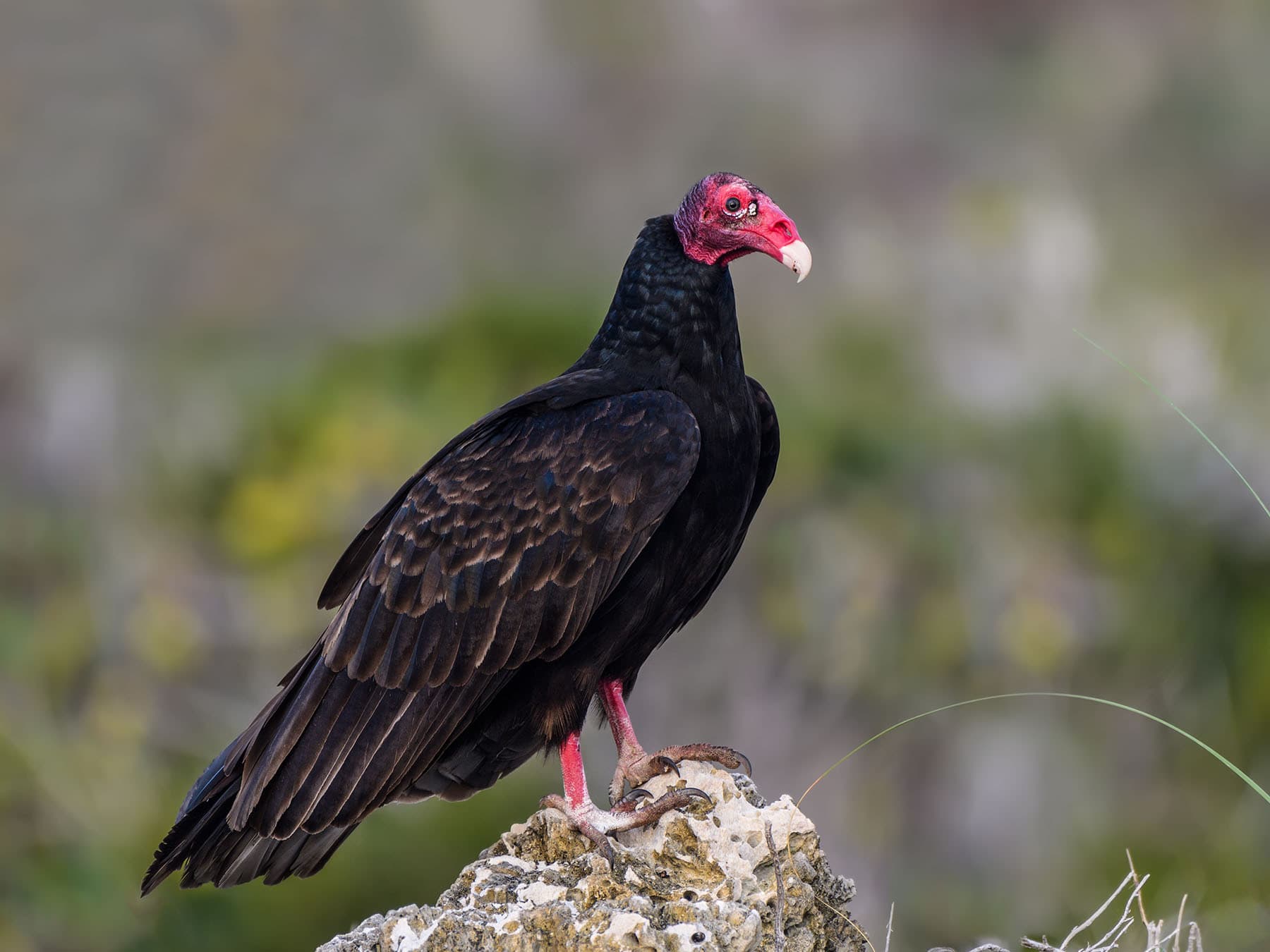
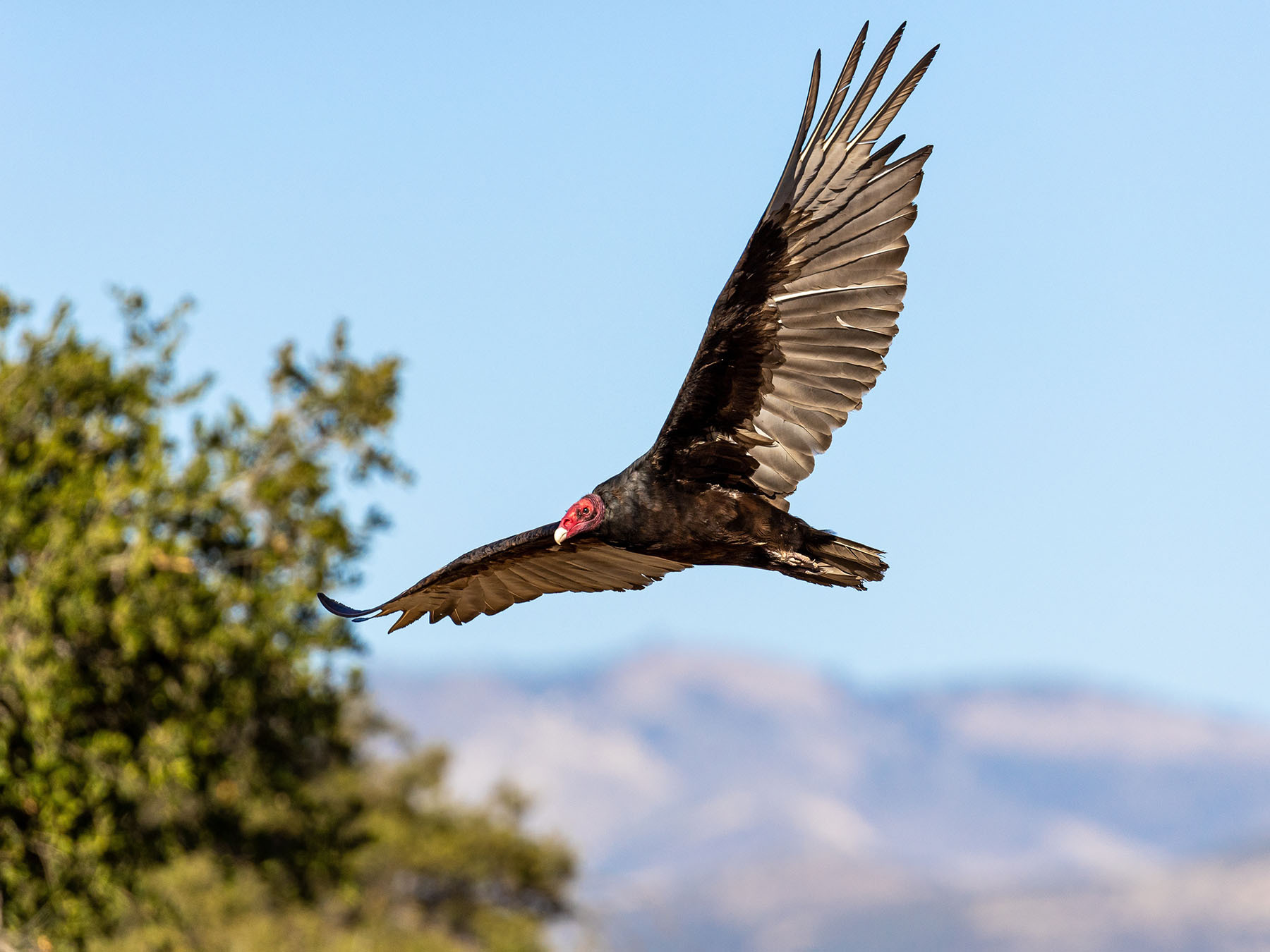
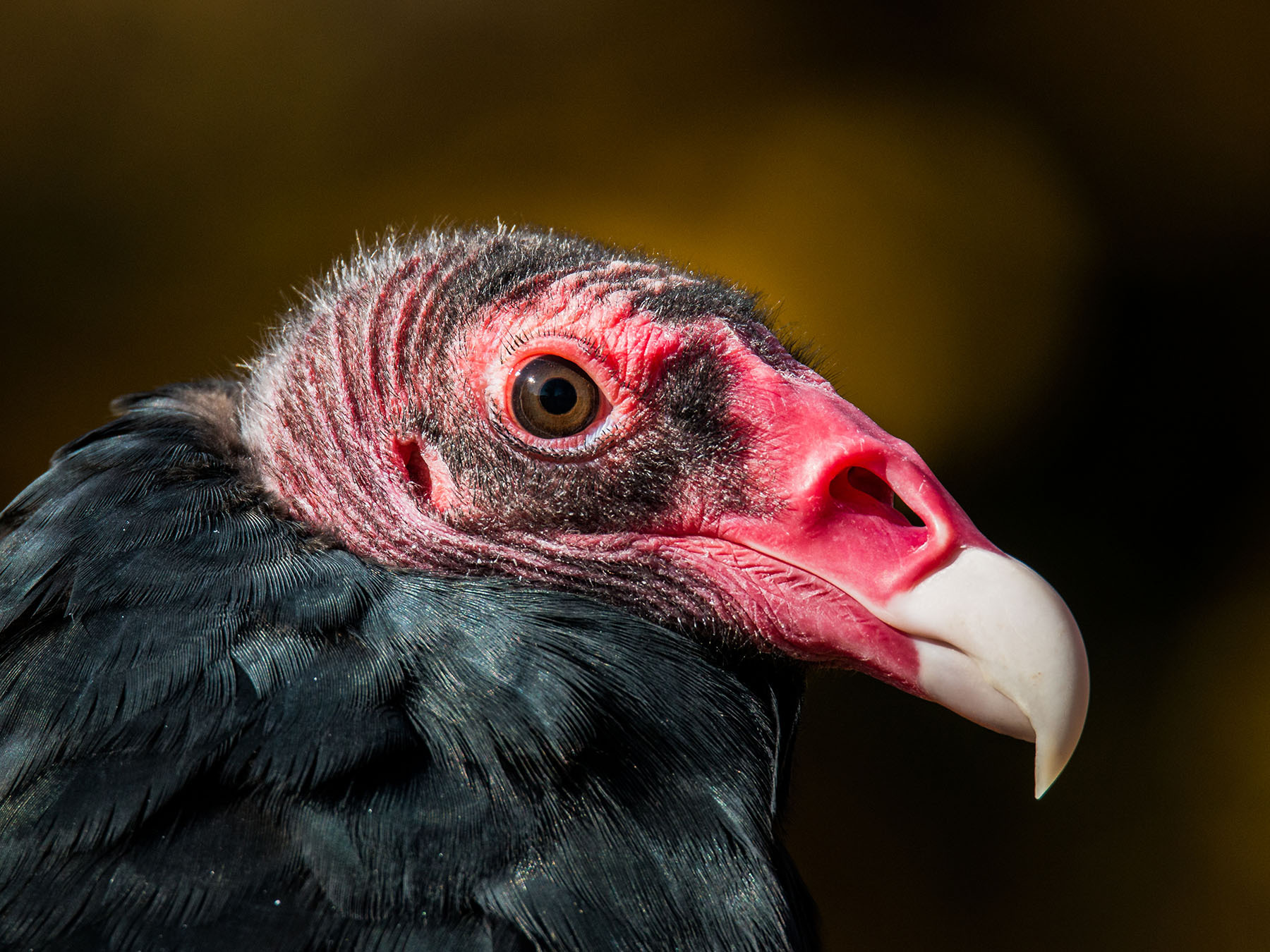
The Turkey Vulture is a large bird with a wingspan of up to 183 cm. Its body is covered in dark brown to black feathers, with a featherless red head and neck in adults. The underside of its wings appears silvery-gray when in flight.
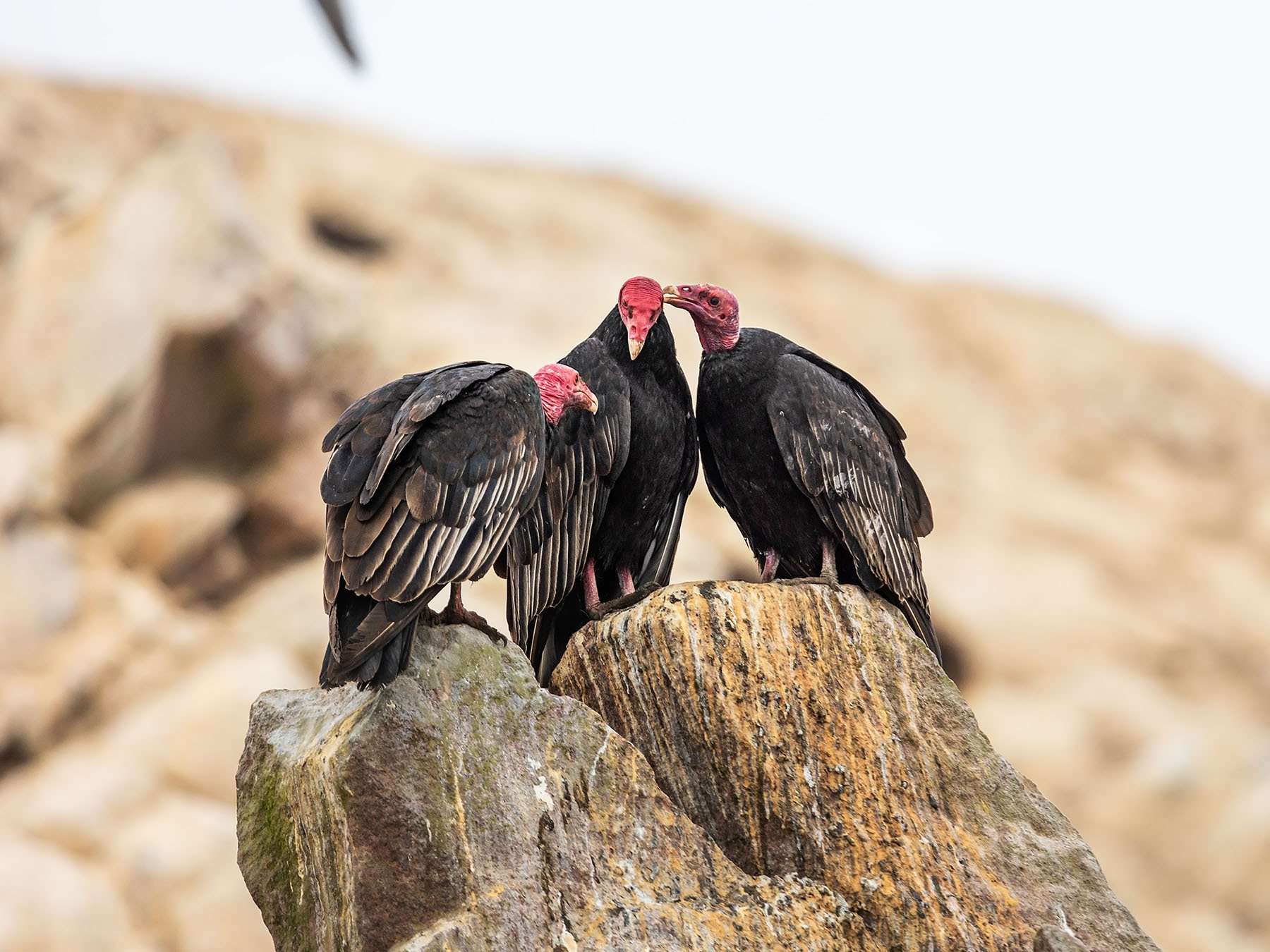
Juveniles have a dark gray head until about 5 months of age. Both sexes look alike, with no significant seasonal plumage changes. Their ivory-colored bill and pink legs are distinctive features.
Its size
Adults- Length
- 62–81 cm
- Wingspan
- 160–183 cm
- Weight
- 800–2300 g
Its song and calls
Turkey Vultures are mostly silent birds, lacking a syrinx (voice box). When disturbed or threatened, they may produce a low, raspy hiss or a guttural grunt.
During courtship or when approaching carcasses, they sometimes emit a low, nasal whine. Their quiet nature is unusual for such large birds.
- Recording0:00 / 0:19
When and where to see it
OctoberIn season
Most recorded in October
- 1. West Virginia2.8%
- 2. Arkansas2.8%
- 3. Oklahoma2.6%
- 4. Kentucky2.6%
- 5. Missouri2.5%
Each dot is a county, state or province: the bigger and darker, the larger the bird’s share of that place’s bird records that month. Grey dots: no regular records. The ringed point is the centre of the bird’s records this month; the arrow shows how it moved since last month, and the dashed loop its path through the year. “Arrivals” colours places where it becomes regular this month (orange) or is in its last regular month (grey). GBIF eBird Observation Dataset, 2019–2024. Map data: Natural Earth, US Census Bureau; place centres © OpenStreetMap contributors.
In your area
See when the Turkey Vulture is recorded in your county, state or province.
How often the Turkey Vulture turns up in the United States and Canada through the year, from birdwatchers' records.
United States
Resident · all year · most records in March
Canada
Summer visitor · all year · most records in April
Show as a table
| Month | United States | Canada |
|---|---|---|
| January | 1.2% (regular) | 0.073% (regular) |
| February | 1.3% (regular) | 0.10% (regular) |
| March | 1.7% (regular) | 0.77% (regular) |
| April | 1.6% (regular) | 1.4% (regular) |
| May | 1.2% (regular) | 0.98% (regular) |
| June | 1.3% (regular) | 0.85% (regular) |
| July | 1.3% (regular) | 0.93% (regular) |
| August | 1.4% (regular) | 0.96% (regular) |
| September | 1.5% (regular) | 1.2% (regular) |
| October | 1.4% (regular) | 0.88% (regular) |
| November | 1.2% (regular) | 0.15% (regular) |
| December | 1.1% (regular) | 0.090% (regular) |
Worldwide: recorded regularly in 32 countries
Countries where it was recorded in at least 3 of the 6 years 2019–2024. Linked countries have their own bird list.
North America (18)
- Bahamas
- Belize
- Canada
- Cayman Islands
- Costa Rica
- Cuba
- Dominican Republic
- El Salvador
- Guatemala
- Haiti
- Honduras
- Jamaica
- Mexico
- Nicaragua
- Panama
- Puerto Rico
- Trinidad & Tobago
- United States
Data: EOD – eBird Observation Dataset (Cornell Lab of Ornithology), accessed via GBIF.org, CC BY 4.0. Records from 2019–2024, aggregated and filtered by Birdfact. How these lists are made
Tips for seeing it
- Look for Turkey Vultures soaring in circles on thermals, especially during midday
- Observe their distinctive V-shaped wing posture when gliding
- Check open areas near roadsides where they may be feeding on carrion
- In the US, watch for them perched on fence posts or dead trees in the early morning
What it eats
Turkey Vultures are primarily scavengers, feeding mainly on carrion. They prefer freshly dead animals and can locate carcasses by smell, a rare ability among birds.
Their diet occasionally includes plant matter, and they may also feed on decaying vegetable matter. They play a crucial role in ecosystem health by disposing of dead animals.
Nesting and breeding
Turkey Vultures typically form long-term pair bonds. Breeding season varies by location but generally occurs from March to June in North America. They do not build elaborate nests, instead laying eggs directly on the ground in protected areas such as caves, hollow logs, or dense thickets.
Females usually lay two eggs, which are cream-colored with brown or purple spots. Both parents share incubation duties, which last about 38-41 days.
Chicks are altricial, covered in white down at hatching. They fledge after 60-84 days but may remain dependent on their parents for several months.
Behaviour
Turkey Vultures are known for their unique flying style, often seen soaring with wings held in a shallow V-shape, rocking side to side. They are highly social, roosting in large groups at night and feeding together on carrion.
These birds have a keen sense of smell, which they use to locate food from great distances.
Conservation
Turkey Vultures are currently listed as Least Concern due to their large range and stable population. However, they face threats from vehicle collisions, lead poisoning from ingesting contaminated carcasses, and habitat loss.
Conservation efforts focus on protecting roosting sites and educating the public about their ecological importance.
More photos
4 photos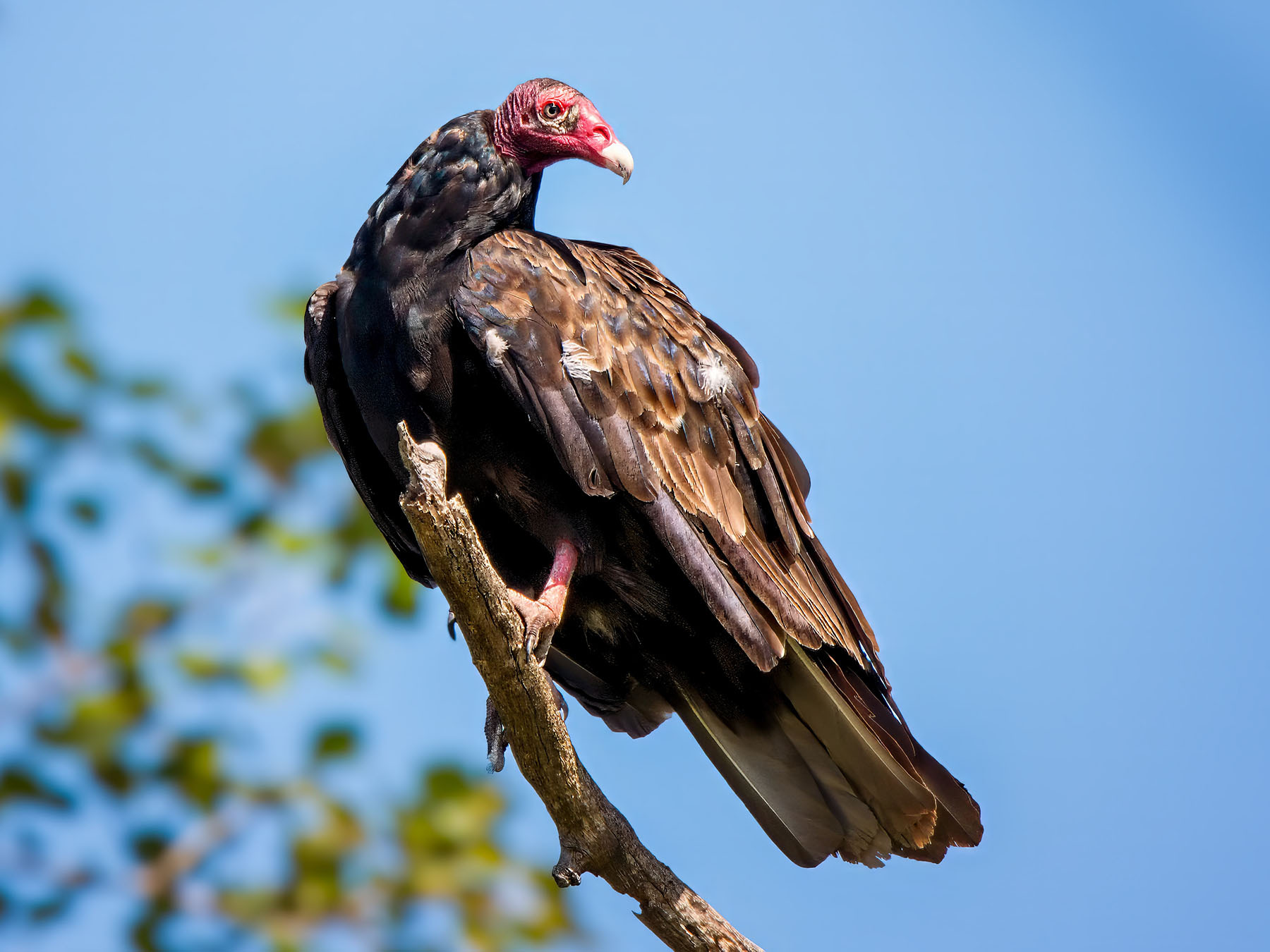
Turkey Vulture guides
4 guidesQuick facts
- Length
- 62–81 cm
- Wingspan
- 160–183 cm
- Weight
- 800–2300 g
- Lifespan
- 16 years · oldest recorded 20.8 years
- Family
- New World Vultures
- Migration
- Partial migrant
- Global status (IUCN)
- Least Concern
- World population
- 28,000,000 mature individuals
- Population trend
- Stable
- Also called
- Turkey Buzzard
- Scientific name
- Cathartes aura
Sources
4- 1BirdLife International. 2018. Cathartes aura. The IUCN Red List of Threatened Species 2018: e.T22697627A131941613. Source (opens in a new tab)
- 2Breeding Bird Survey and/or Christmas Bird Count: Butcher and Niven (2007)
- 3Partners in Flight (2022) Source (opens in a new tab)
- 4John Terres, The Audubon Society Encyclopedia of North American Birds (1980)

Checked by
Nathan Cope, founder and editor
Nathan founded Birdfact and leads its writers and contributors in the UK, the US and Canada. He has watched and studied birds for more than ten years, and checks every article and species guide before it’s published.