Facts · Updated 8 Oct 2026
What Do Goldfinches Eat? Diet and Feeding Goldfinches Safely
By the Birdfact teamChecked by Nathan Cope
Goldfinches eat small seeds above all, especially thistles, knapweeds, dandelions and teasels, plus birch and alder in winter. In gardens they prefer sunflower hearts, then nyjer; the RSPB advises seed only from November to April, in clean hanging feeders.
On this page7 sections
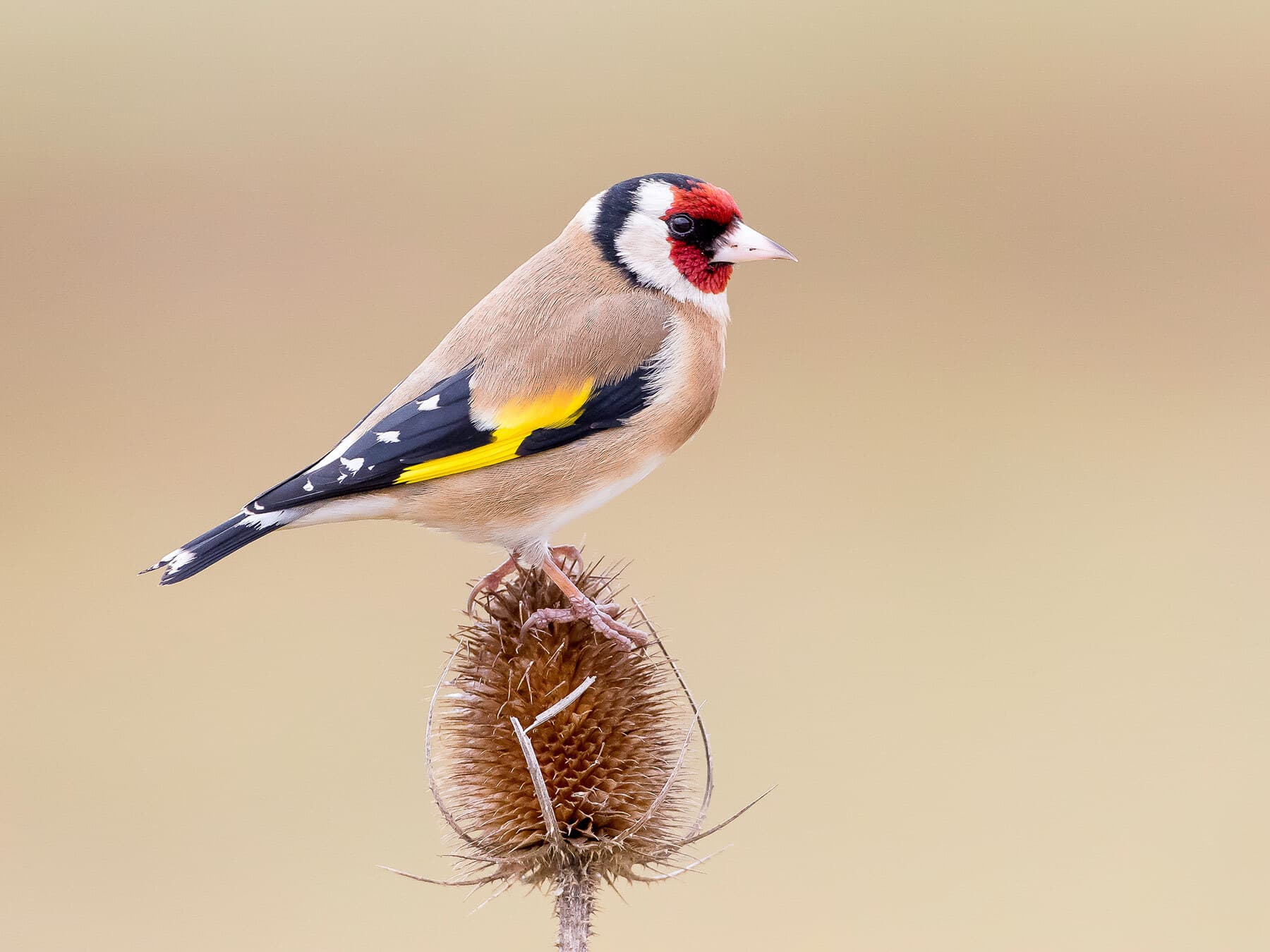
What European Goldfinches eat in the wild through the year, and how to feed them safely in the garden. For the bird itself, see European Goldfinch identification, song and facts.
What do Goldfinches eat?
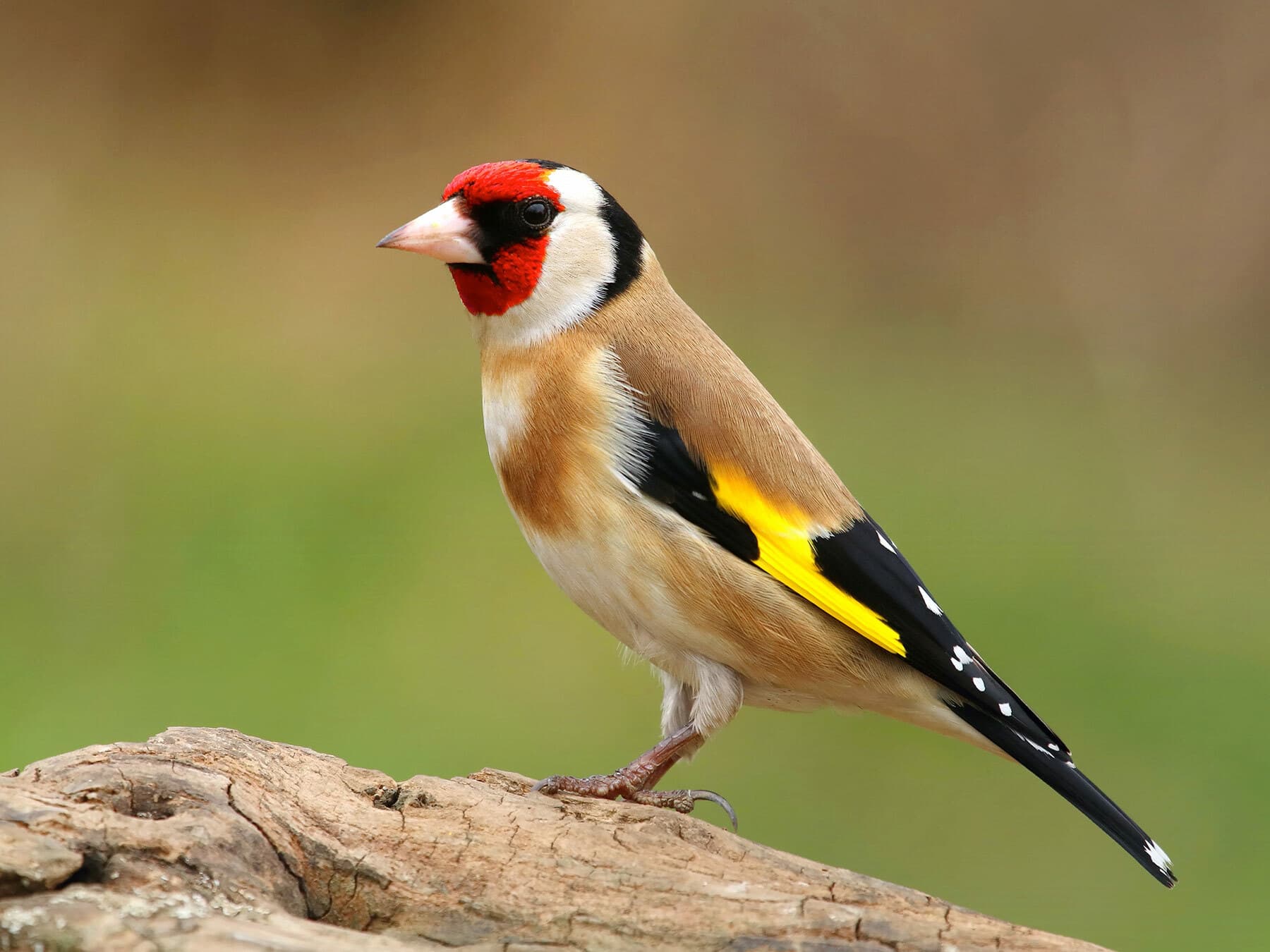
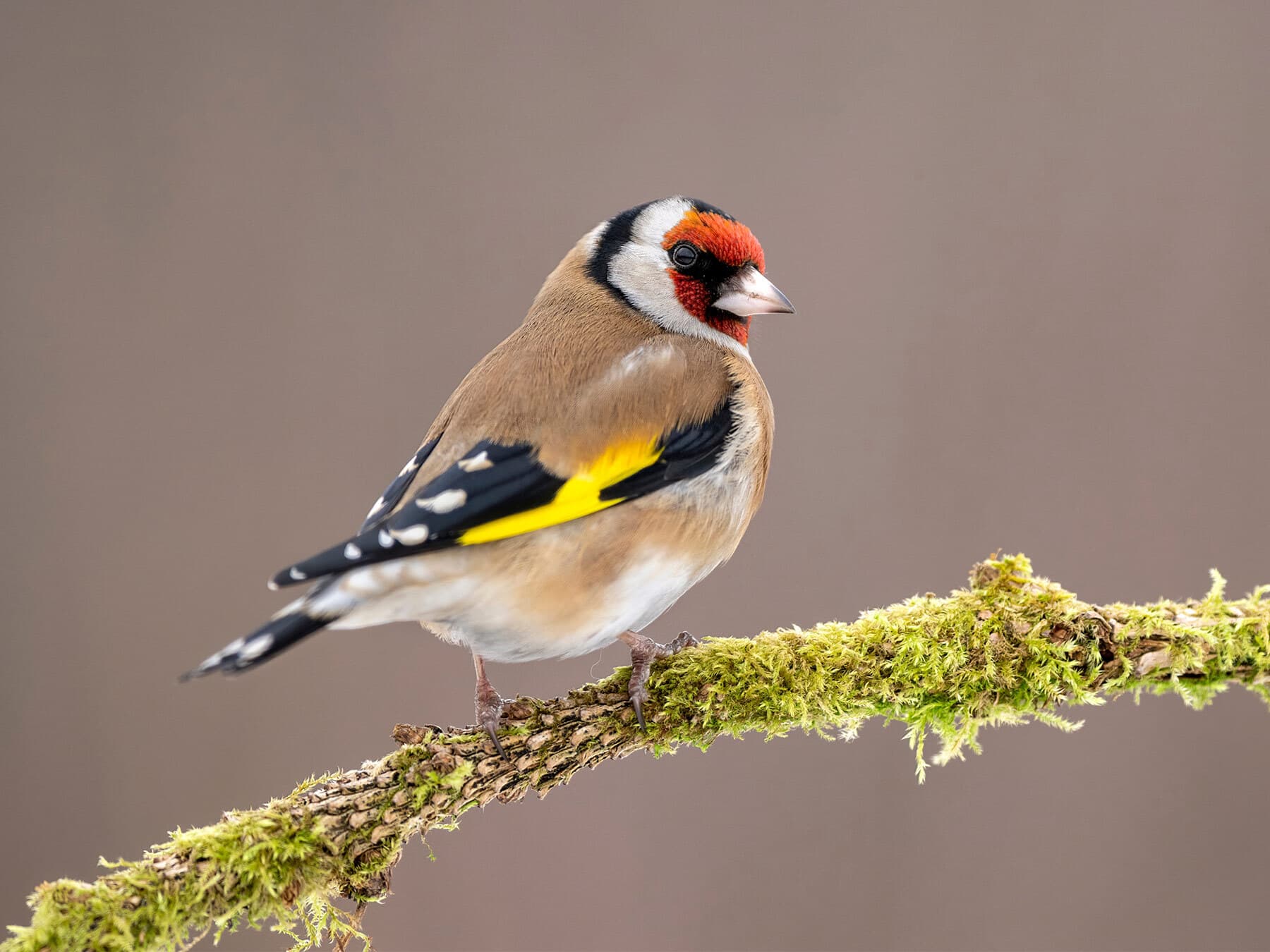
Seeds, above all small ones. Goldfinches eat mostly seeds, ripe and unripe, along with buds, flowers and a few insects.1 Their fine, pointed bill works like tweezers: it reaches seeds deep in a flower head and between the spines of thistles and teasels, and can pierce a closed head to get at seeds still ripening.
In a classic study of British finches, Ian Newton found that in the breeding season seeds made up 76% of the Goldfinch's diet, other plant material (mostly leaves) 21%, and insects just 3%.2
Seed plants
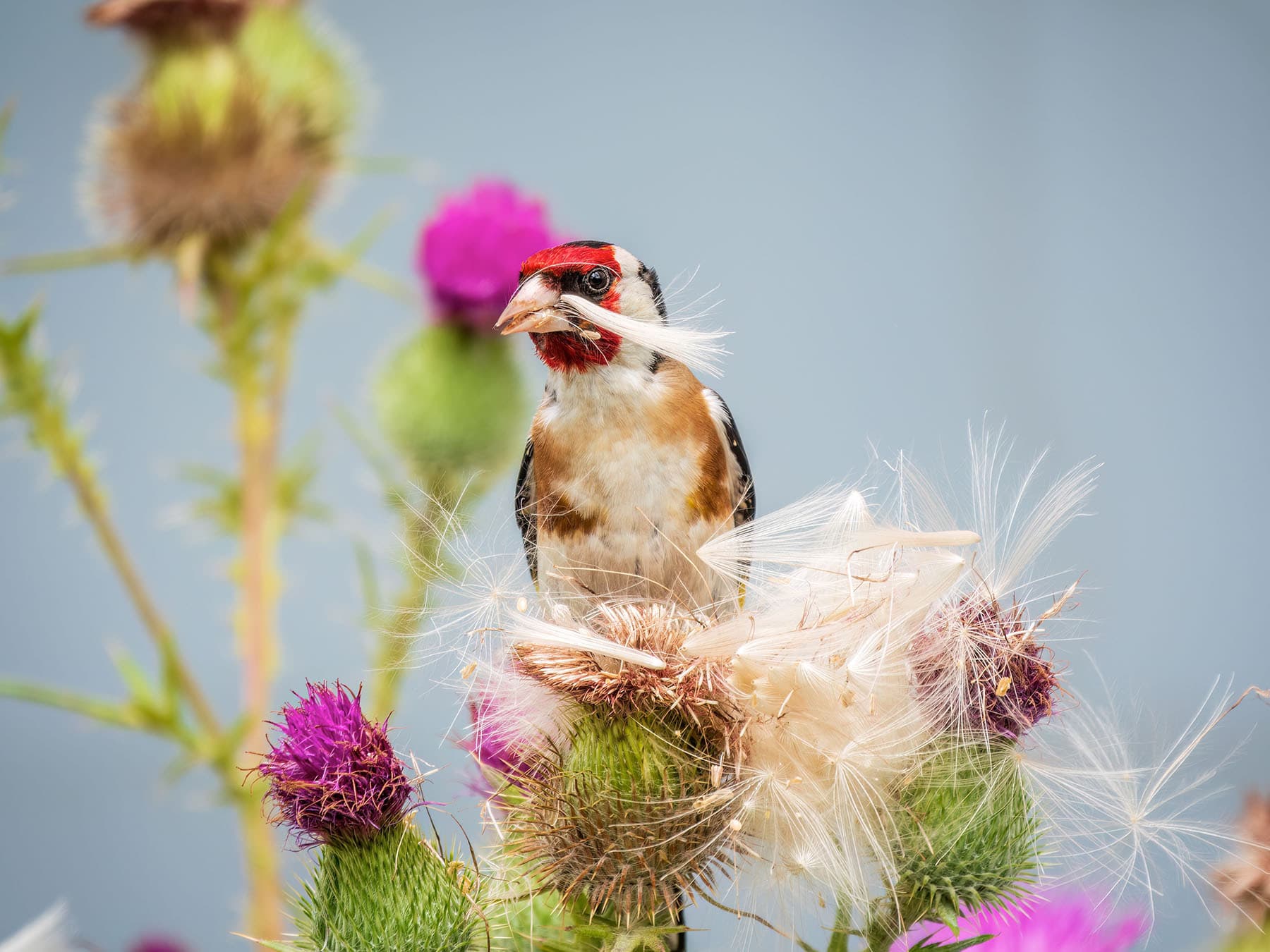
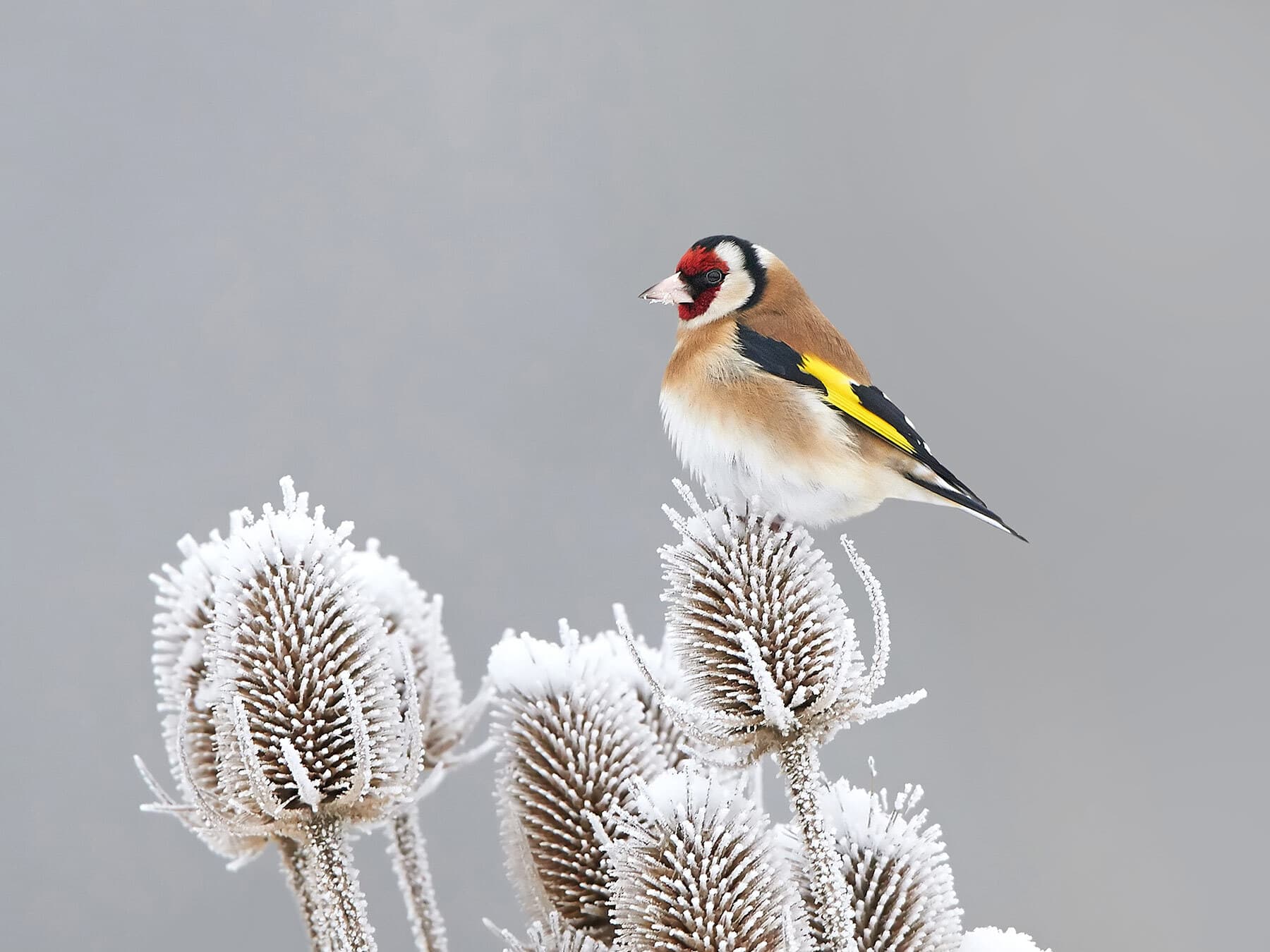
Goldfinches specialise in the seeds of the daisy family, and their numbers depend largely on them: thistles, knapweeds, dandelions, groundsel, ragwort, burdock, sow-thistles, hawkweeds and their relatives. They also take seeds from teasels, scabious, docks, chickweed, grasses and many others, and in winter from birch and alder trees.
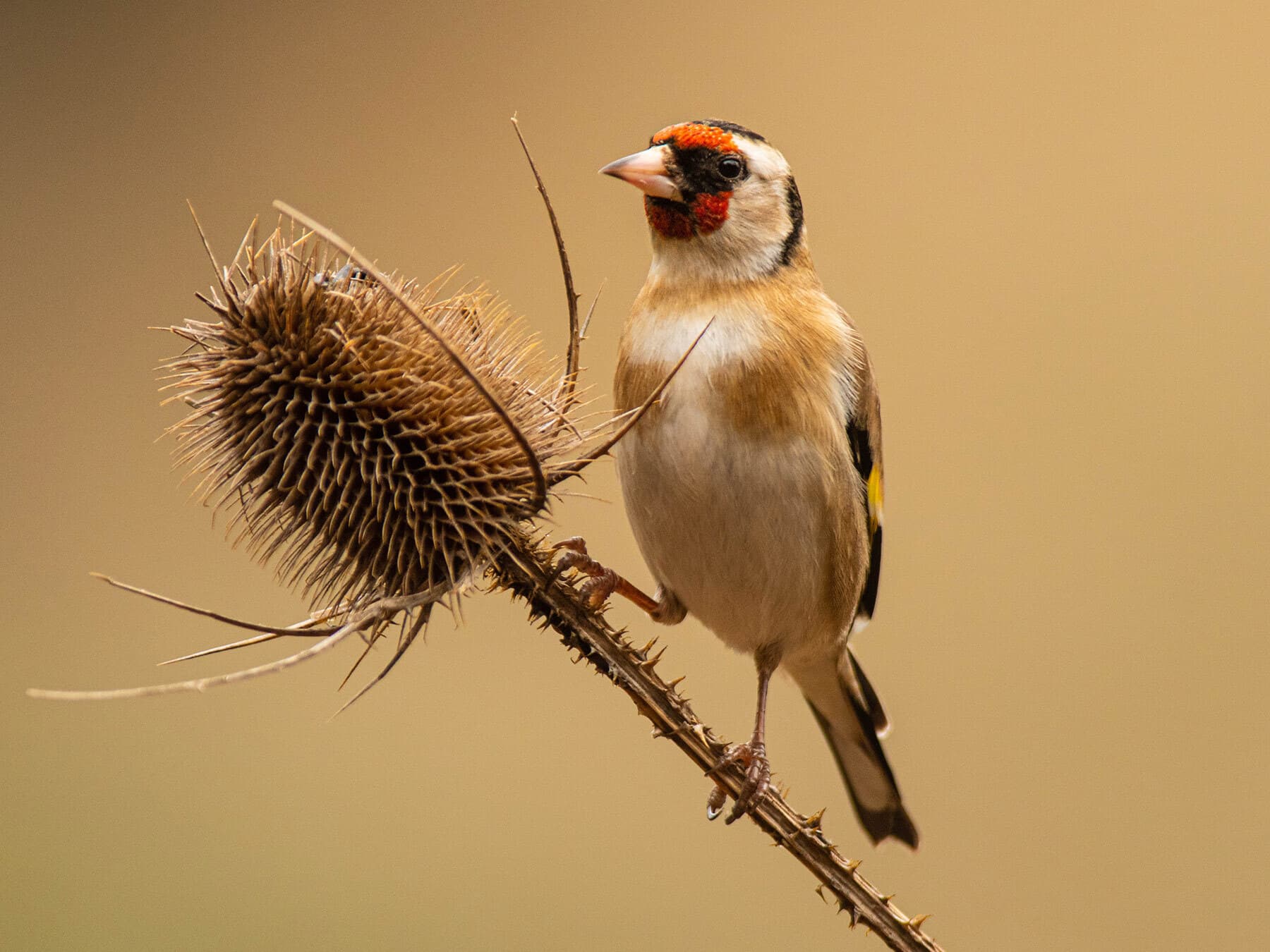
Watch one at work and you will see why it is called acrobatic: it perches on top of a seed head, or hangs upside down from a teasel or sunflower, picking the seeds out one by one.
Winter
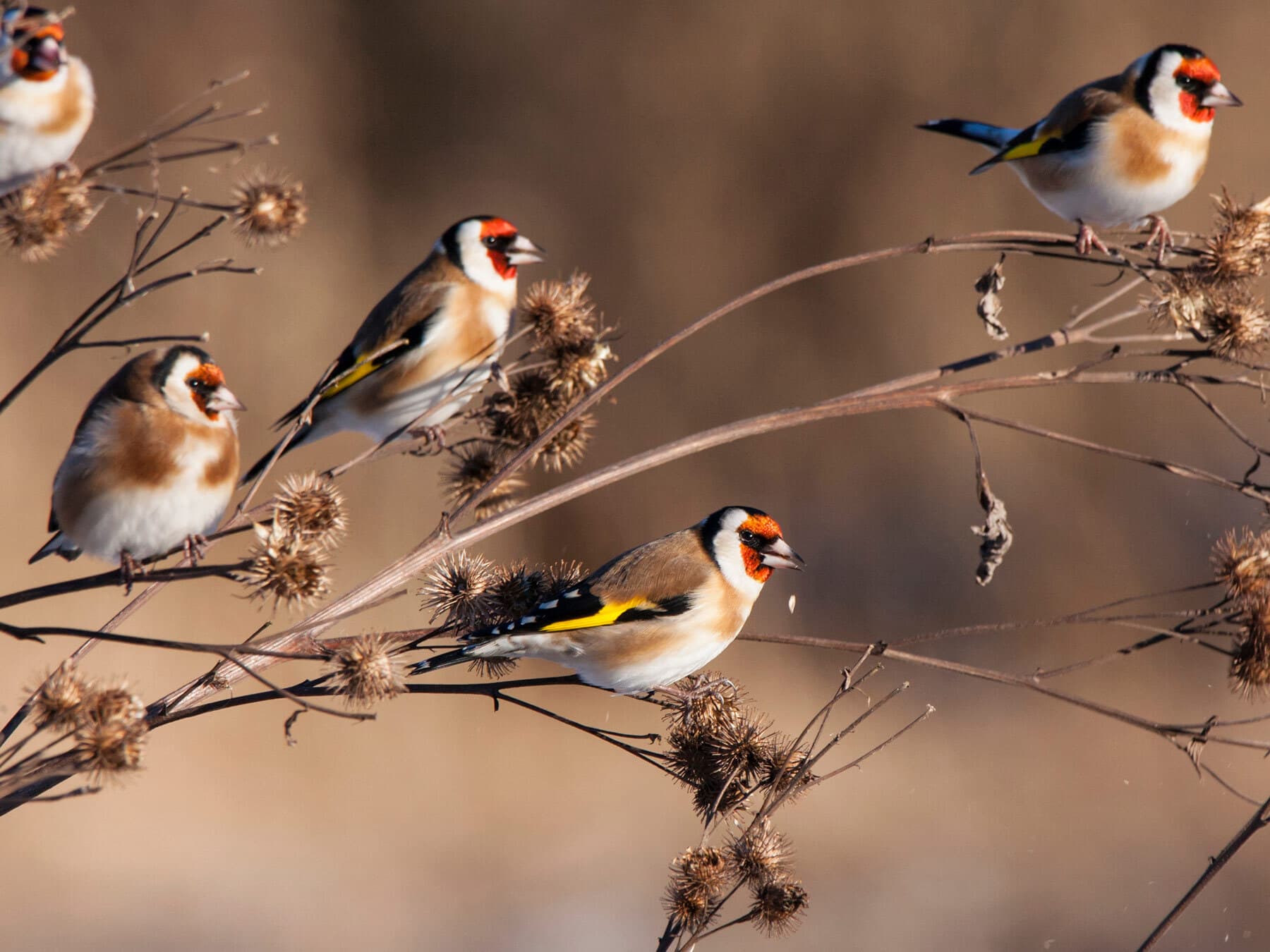
In winter they are less choosy and range more widely: birch and alder seeds in the treetops, weedy fields and stubbles, and, more and more, garden feeders. Some British Goldfinches leave altogether and spend the winter in Belgium, France or Spain; see do Goldfinches migrate.
Insects
A few, mainly caterpillars and aphids, and the larvae of other insects such as flies and beetles. Insects make up only a small part of what adults eat. What the chicks are fed is less clear: see baby Goldfinches.
Feeding Goldfinches in your garden
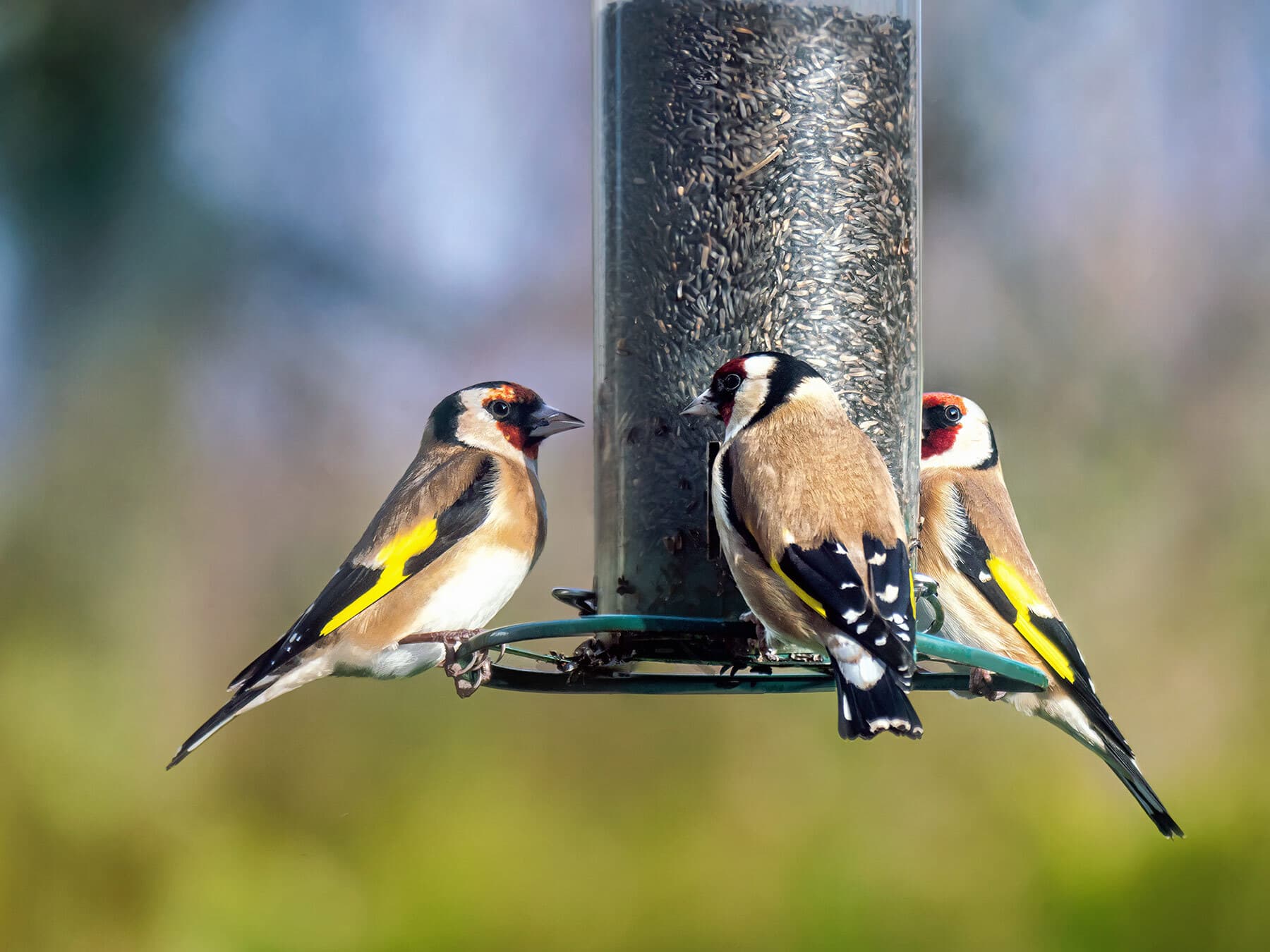
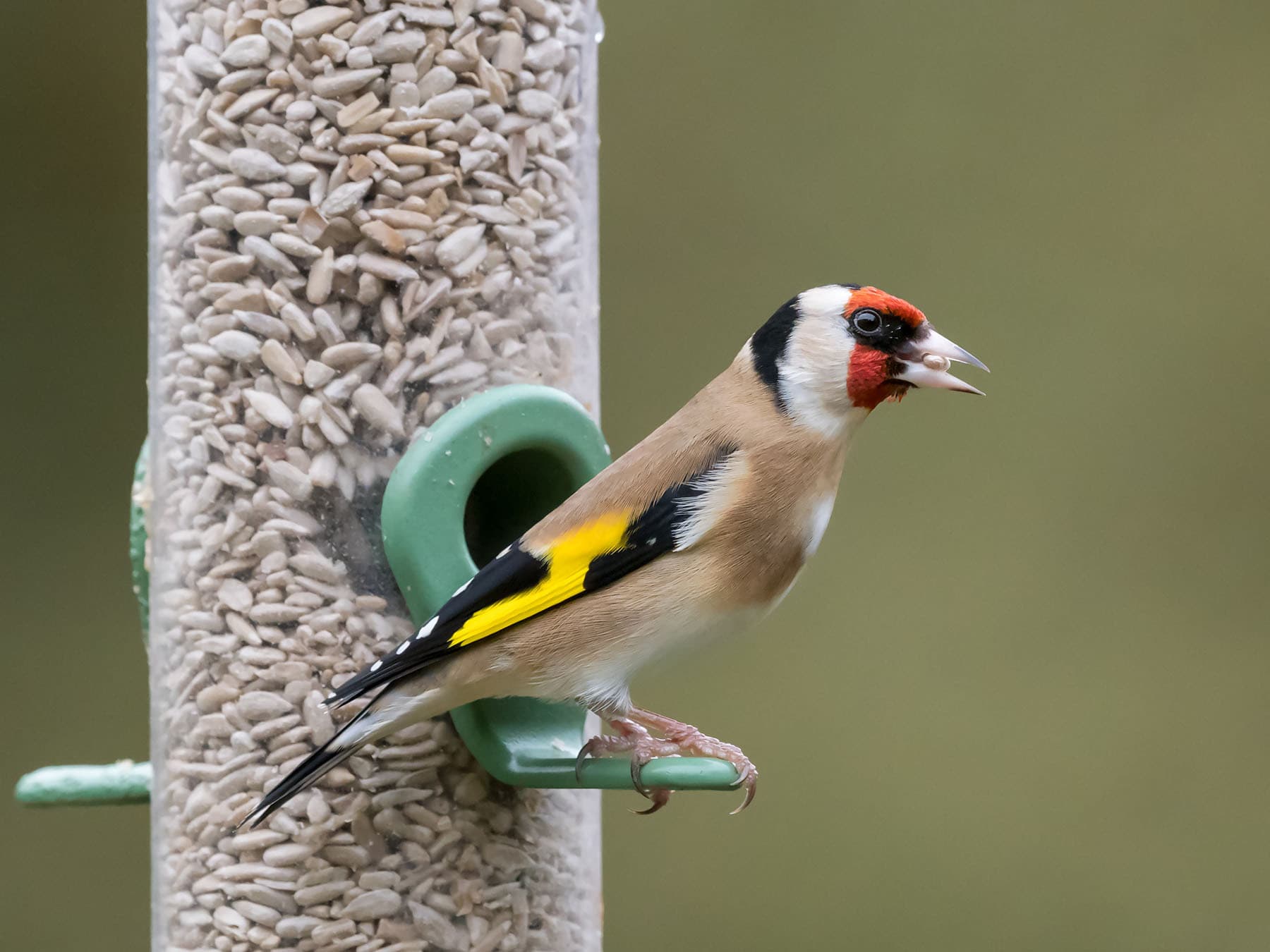
Goldfinches are now regular garden birds. In the winter of 2015/16, 5,183 households took part in the BTO's Goldfinch Feeding Survey, seeing eight Goldfinches at a time on average. Sunflower hearts were overwhelmingly the favourite food, with nyjer seed second; when the birds took natural food in gardens, teasel and thistles were their favourites. By then, 70% more Garden BirdWatch participants were reporting Goldfinches than 20 years earlier.3
Offer sunflower hearts (sunflower seeds with the husk removed) or nyjer, the tiny black seed sold for finches, in a hanging seed feeder. The RSPB recommends a hanging feeder of sunflower hearts for finches, sited a couple of metres from thick cover and out of reach of cats.4 The BTO thinks the variety of food in gardens has helped Goldfinches survive better, though the survey itself could not yet say whether bird food is behind the national rise.5
When to feed, and how to keep them healthy
The RSPB's current advice (July 2026) is to feed seasonally and safely, because disease spreads where birds crowd at feeders. From 1 May to 31 October, pause seed and peanuts (small amounts of suet or mealworms are fine); from 1 November to 30 April, feed seed as normal. Use hanging feeders, not bird tables, trays or window feeders, where contaminated food collects. Clean feeders and bird baths at least once a week, move feeders each week, and put out only as much seed as is eaten in a day or two.6
That matters for Goldfinches. The disease trichomonosis has devastated Greenfinches, and the BTO's view is that Goldfinches should keep doing well as long as they do not become susceptible to it.
Plants for Goldfinches
The RSPB suggests filling your garden with plants that feed birds naturally, such as sunflowers and teasels. Teasels, sunflowers, knapweeds and scabious are all Goldfinch food plants, and in the BTO's winter survey teasel was one of the natural foods Goldfinches took most in gardens. A patch of dandelions or thistles left to seed helps too.
Sources
- Kirwan, G. M., Moura, N., Clement, P., Pyle, P., Boesman, P. F. D. (2024). European Goldfinch (Carduelis carduelis), version 1.2. Birds of the World (G. M. Kirwan, B. K. Keeney and S. M. Billerman, editors). Cornell Lab of Ornithology. doi:10.2173/bow.eurgol.01.2
- Newton, I. (1967). The adaptive radiation and feeding ecology of some British finches. Ibis 109: 33-98. doi:10.1111/j.1474-919x.1967.tb00005.x
- BTO. Goldfinch Feeding Survey. BTO Garden BirdWatch. Accessed 7 October 2026. Source
- RSPB. How and what to feed your garden birds. RSPB. Accessed 7 October 2026. Source
- BTO. Goldfinch (Carduelis carduelis). BTO BirdFacts. Accessed 7 October 2026. Source
- RSPB (2026). Our latest guidance on feeding garden birds. RSPB news. Accessed 7 October 2026. Source
- RSPB. Goldfinch. RSPB Birds A-Z. Accessed 7 October 2026. Source
- Cornell Lab of Ornithology. European Goldfinch life history. All About Birds. Accessed 7 October 2026. Source