Facts · Updated 8 Oct 2026
Goldfinch Nesting: Nests, Eggs and Baby Goldfinches
By the Birdfact teamChecked by Nathan Cope
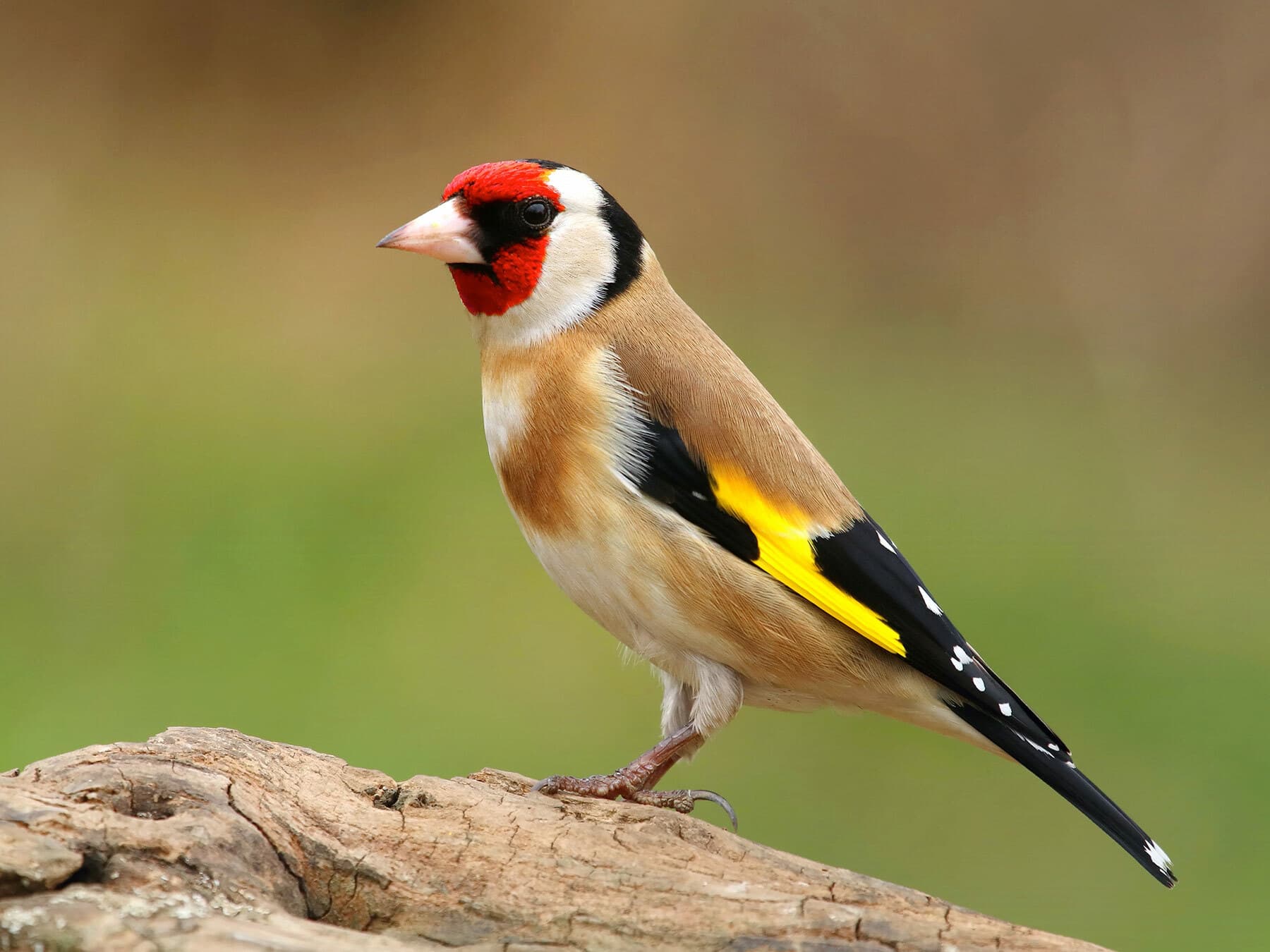
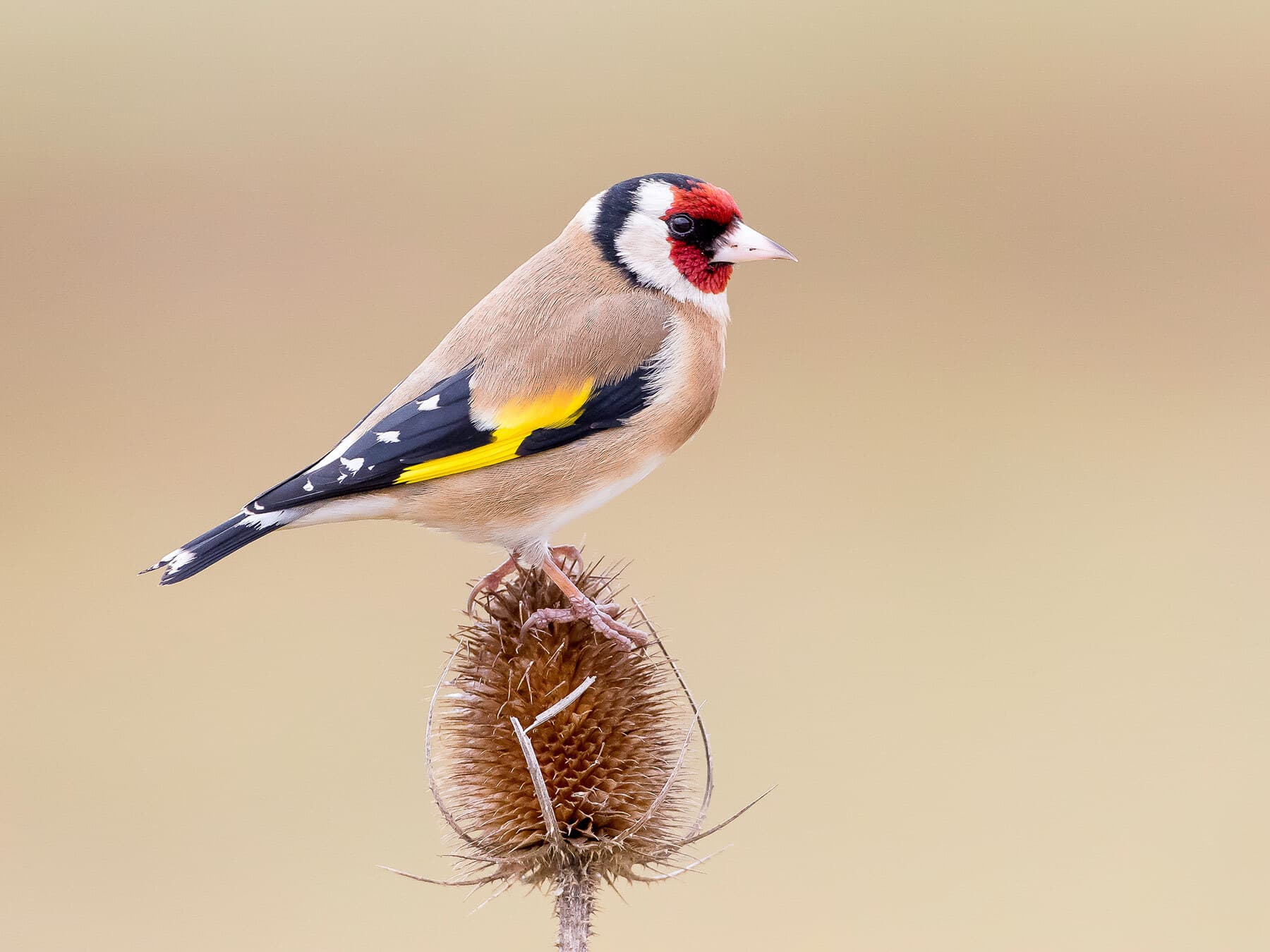
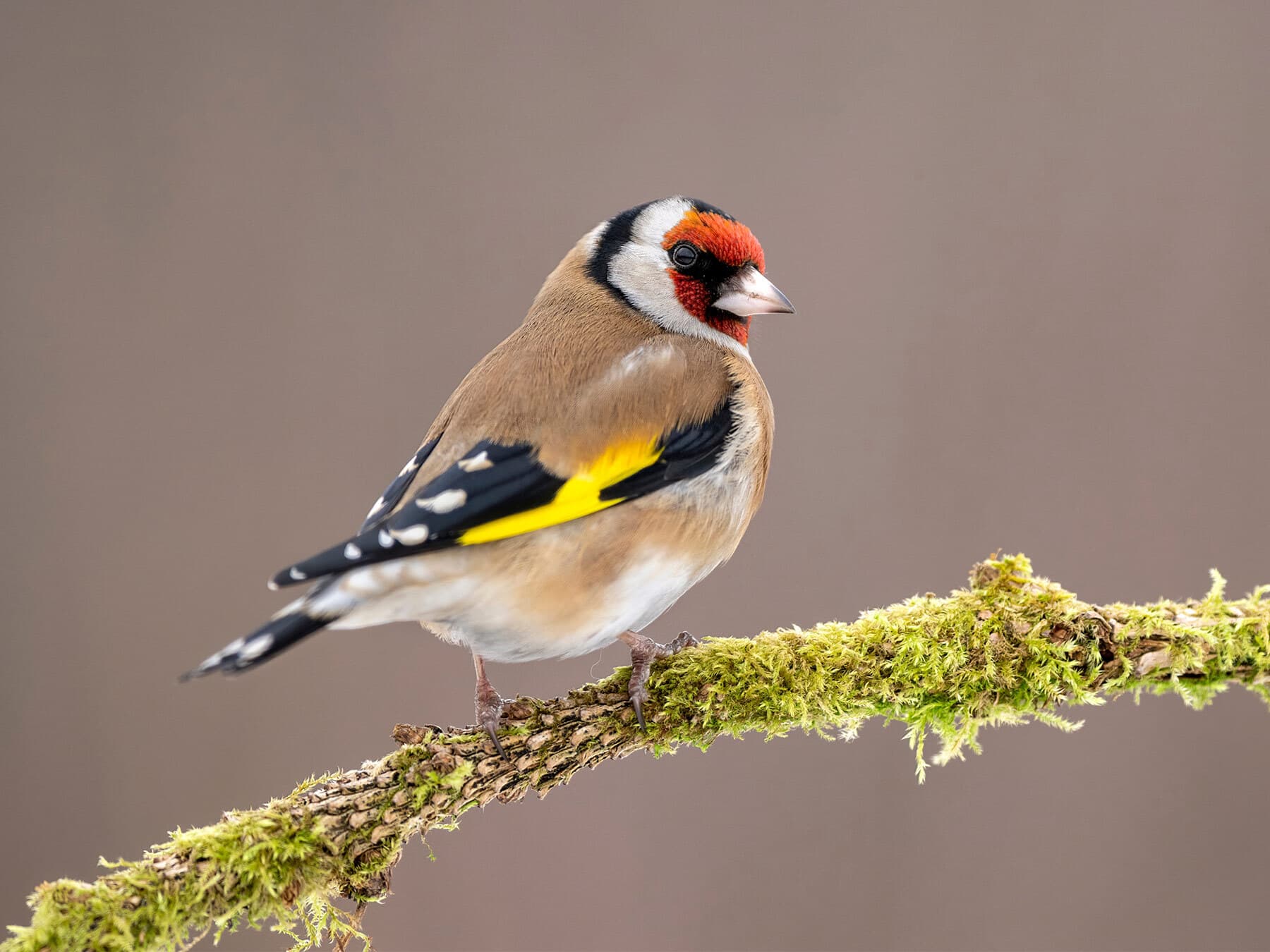
Goldfinches hide a neat cup of wool and plant down at the end of a twig, in a tree, bush or hedge. The female lays about 5 pale bluish eggs, the young leave the nest at about 15 days, and many pairs are still nesting in August.
On this page9 sections
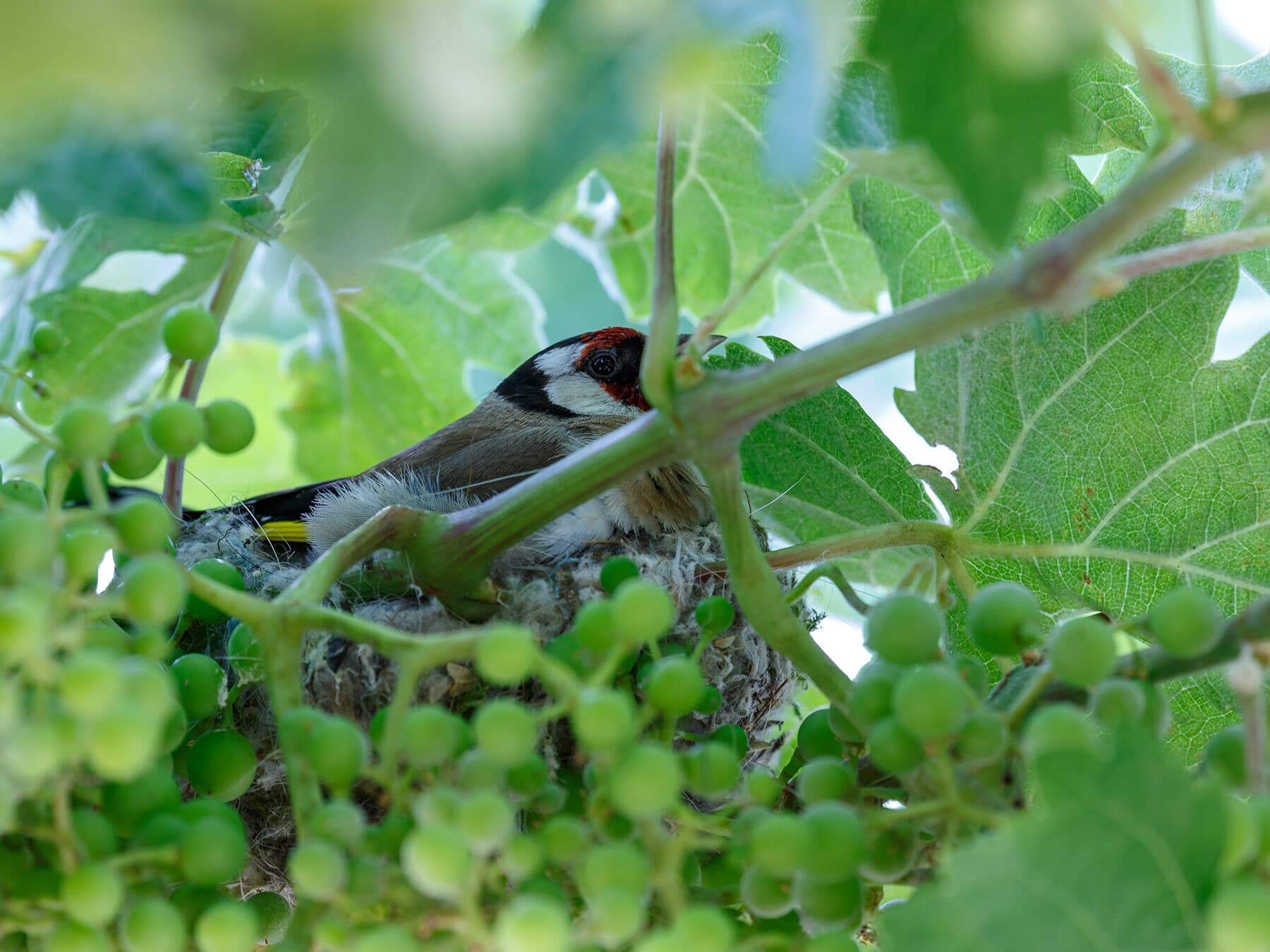
Everything about European Goldfinch nests: when and where they nest, the nest and eggs, the chicks and fledglings, nest boxes and the law. For the bird itself, see European Goldfinch identification, song and facts.
When do Goldfinches nest?
Pairs form in late winter, while the birds are still in flocks, and nesting runs from April to August. In Britain, the first clutch is laid on 25 May on average, but anywhere from late April to mid-July.1 Most pairs have two broods, and a few three, so nesting runs on late into summer.
In a BTO study of hedgerow birds in England, 9.9% of Goldfinch nests still held eggs or chicks after 31 July, and 16% counting young that had left the nest but were still being fed.2
Where do Goldfinches nest?
In trees, bushes and tall hedges, including fruit trees, avoiding dense woodland. The nest is usually well hidden in leaves at the hard-to-reach end of a twig, and is often several metres up: studies across its range have found nests at 1.5 to 10 m, many between 2 and 9 m.3
Pairs sometimes nest close to each other, in small loose groups of 2 to 5 pairs with nests as little as 10 m apart.
The nest
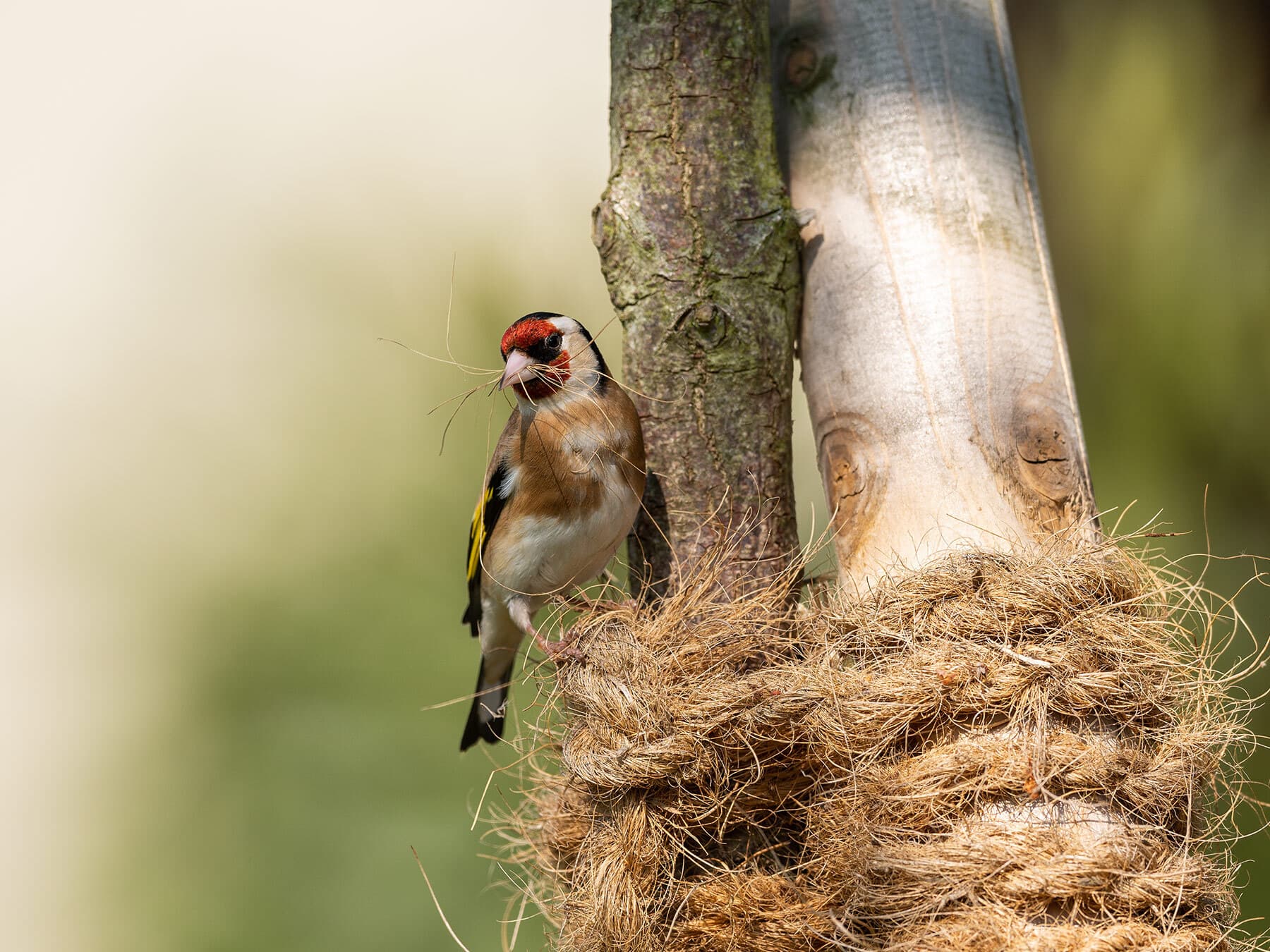
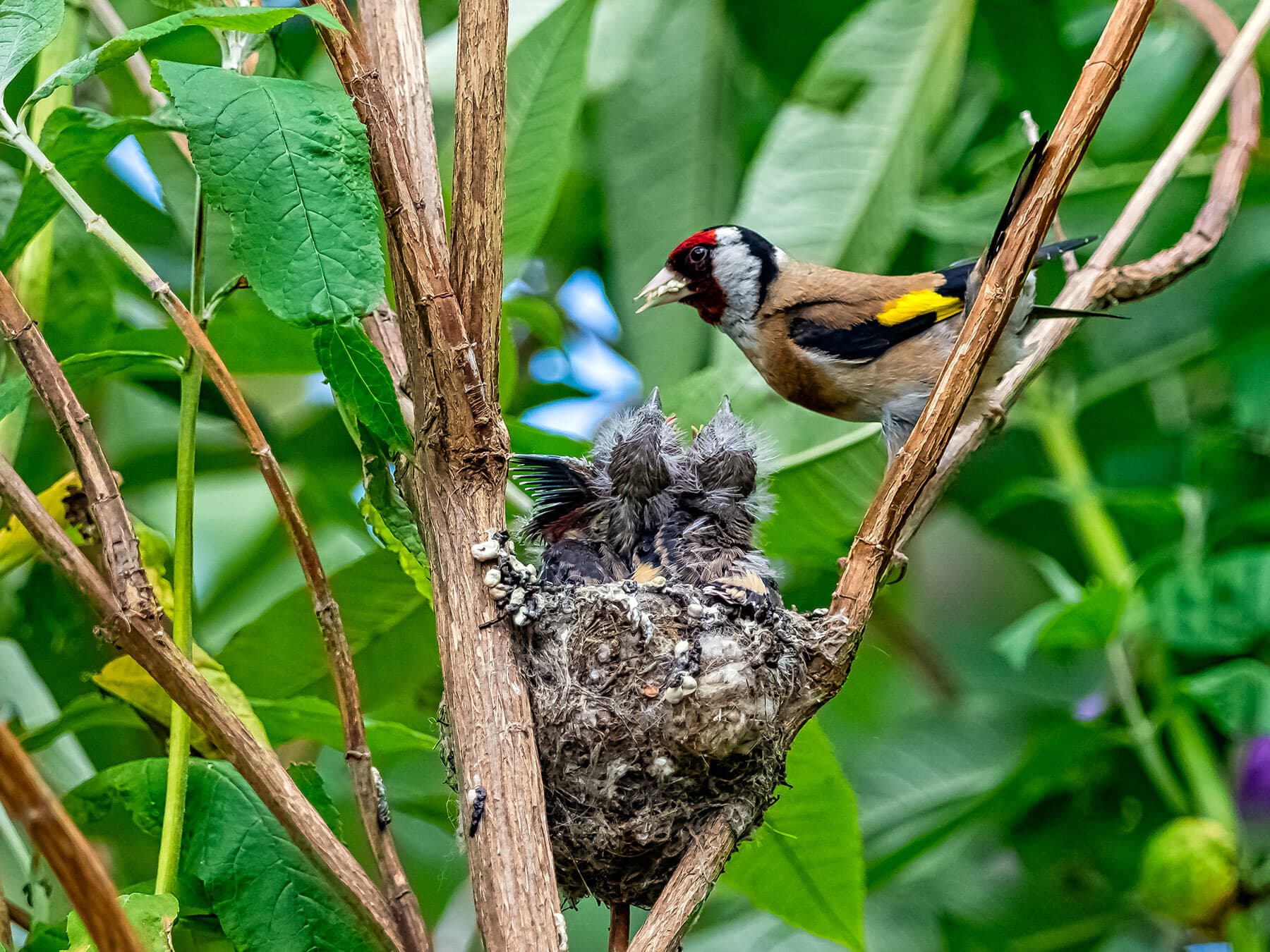
A small, neat, deep cup. The female starts it with spider silk, then weaves in wool, plant fibres, plant down and the fluffy seeds of dandelions, and lines it with soft plant down and wool, sometimes with hair and feathers. One study of ten nests found them 8 to 9 cm across, with a cup 5.5 to 6.3 cm wide and 2.6 cm deep.
She builds it alone, sometimes bringing material for hours a day. The male rarely carries anything; he goes with her and sings.
Eggs
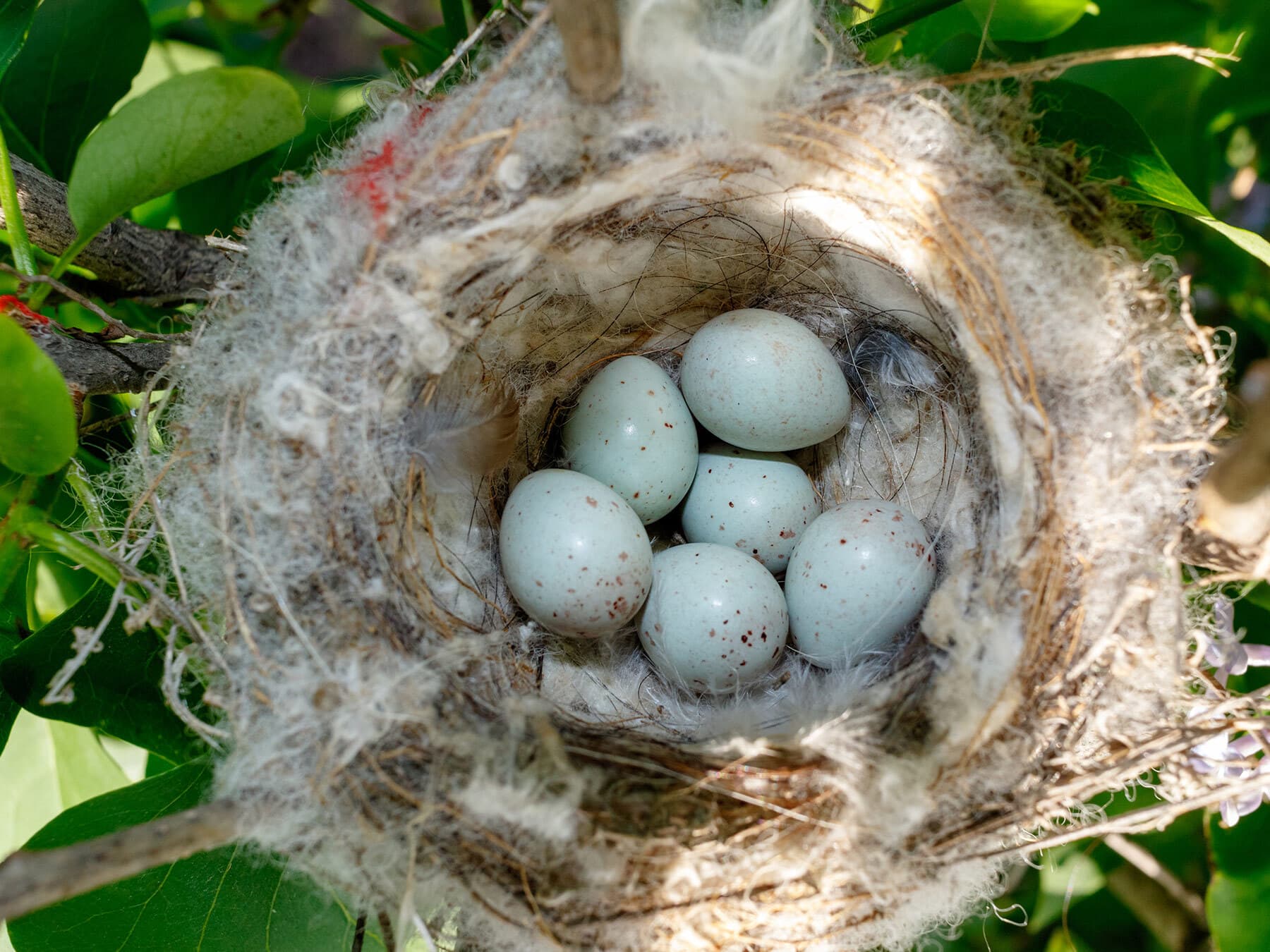
A clutch is usually 5 eggs, sometimes 4 or 6 and rarely as few as 2 or as many as 7. The eggs are small, about 17 by 13 mm, smooth and glossy, pale bluish-white with greyish-violet blotches and fine reddish to purple-brown spots, mostly in a ring around the broad end. Rarely they are plain.
Incubation
Only the female incubates, typically for 12 to 14 days in Britain. In one German study females sat for 30 to 80 minutes at a time and left for only 1 to 3 minutes; the male feeds her, bringing food up from his throat, on the nest or close by.
Baby Goldfinches
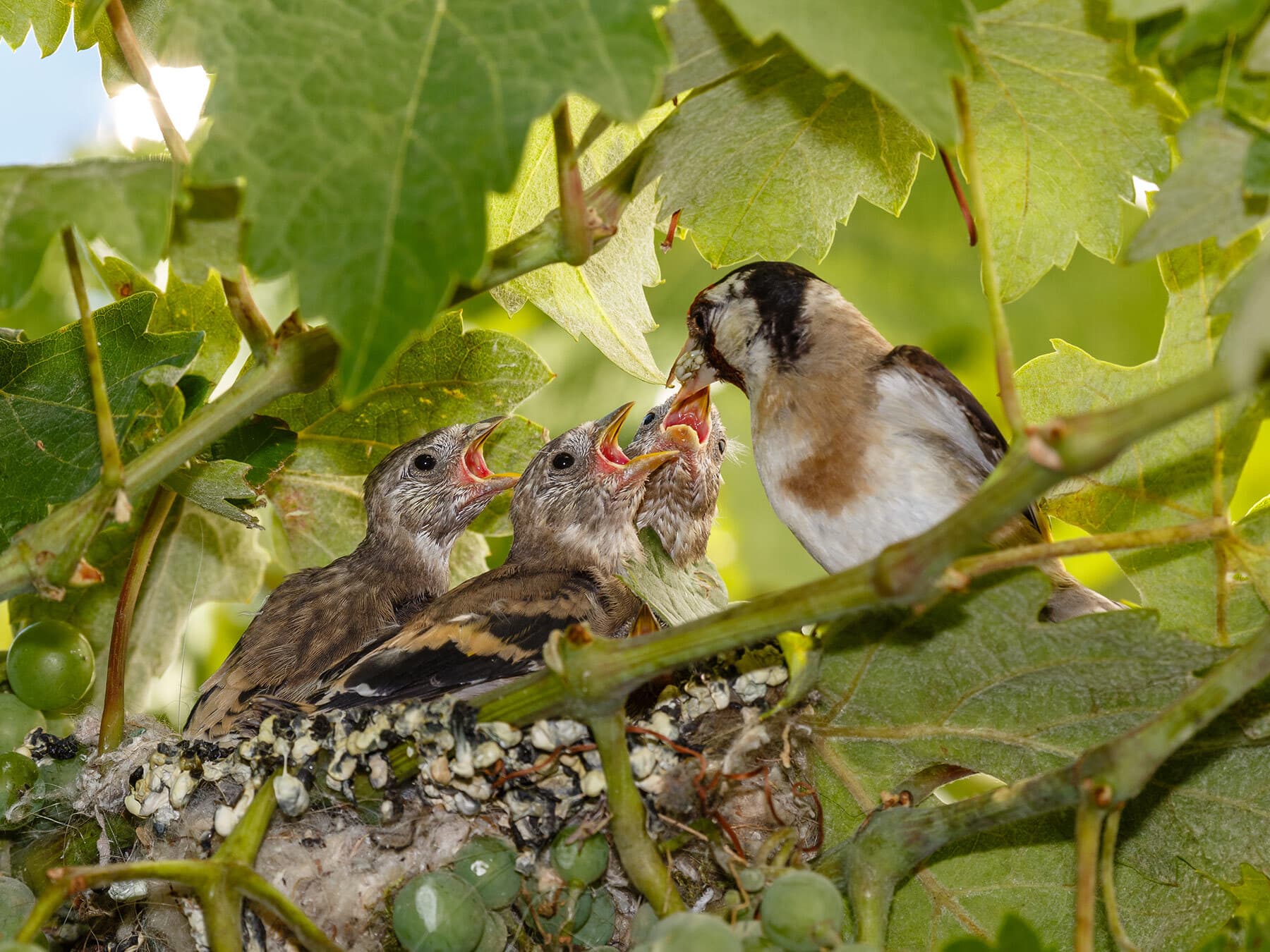
The chicks hatch naked and blind, with tufts of dark grey down. The female broods them for the first week or so while the male feeds her, and she passes the food on; after that both parents feed the chicks. Their eyes open after about six days.
What the chicks are fed is not settled. Cornell's All About Birds says the adults feed them mostly insects.4 But in a New Zealand study, where Goldfinches were introduced, animal food made up only 2.2% and 11.5% of the nestlings' food by volume in two study areas, more for young chicks and less as they grew; Ian Newton found the same pattern in other finches.5
The young leave the nest at about 15 days old (13.5 to 16.5 days is typical). For a while they stay close, begging from any Goldfinch nearby, and they leave the area for good about three weeks after hatching.
Nest boxes
Goldfinches build open cups out on twigs, and they are not on the BTO's list of birds that use nest boxes.6 The best way to give them somewhere to nest is a garden with trees, tall shrubs or a thick hedge, and plants left to seed for food.
Nests and the law
All wild birds' nests are protected. In England and Wales it is an offence intentionally to take, damage or destroy the nest of any wild bird while it is in use or being built. In Scotland the offence also covers doing so recklessly, and interfering with the nest.7 In Northern Ireland it covers doing so intentionally or recklessly.8 As Goldfinches nest into August, check hedges and trees before cutting them in late summer.
Sources
- BTO. Goldfinch (Carduelis carduelis). BTO BirdFacts. Accessed 7 October 2026. Source
- Hanmer, H. J., Leech, D. I. (2024). Breeding periods of hedgerow-nesting birds in England. BTO Research Report 762. British Trust for Ornithology, Thetford. Accessed 7 October 2026. Source
- Kirwan, G. M., Moura, N., Clement, P., Pyle, P., Boesman, P. F. D. (2024). European Goldfinch (Carduelis carduelis), version 1.2. Birds of the World (G. M. Kirwan, B. K. Keeney and S. M. Billerman, editors). Cornell Lab of Ornithology. doi:10.2173/bow.eurgol.01.2
- Cornell Lab of Ornithology. European Goldfinch life history. All About Birds. Accessed 7 October 2026. Source
- Campbell, P. O. (1972). The feeding ecology and breeding biology of the Goldfinch (Carduelis carduelis) at Havelock North, New Zealand (MSc thesis). Massey University. Accessed 7 October 2026. Source
- BTO. Nest boxes for birds. BTO, Helping birds. Accessed 7 October 2026. Source
- UK Parliament (1981). Wildlife and Countryside Act 1981, section 1. Accessed 7 October 2026. Source
- UK (1985). The Wildlife (Northern Ireland) Order 1985, article 4. Accessed 7 October 2026. Source
- RSPB. Goldfinch. RSPB Birds A-Z. Accessed 7 October 2026. Source