Published 7 Oct 2026
Song Sparrow or House Sparrow? How to Tell Them Apart
By the Birdfact teamChecked by Nathan Cope
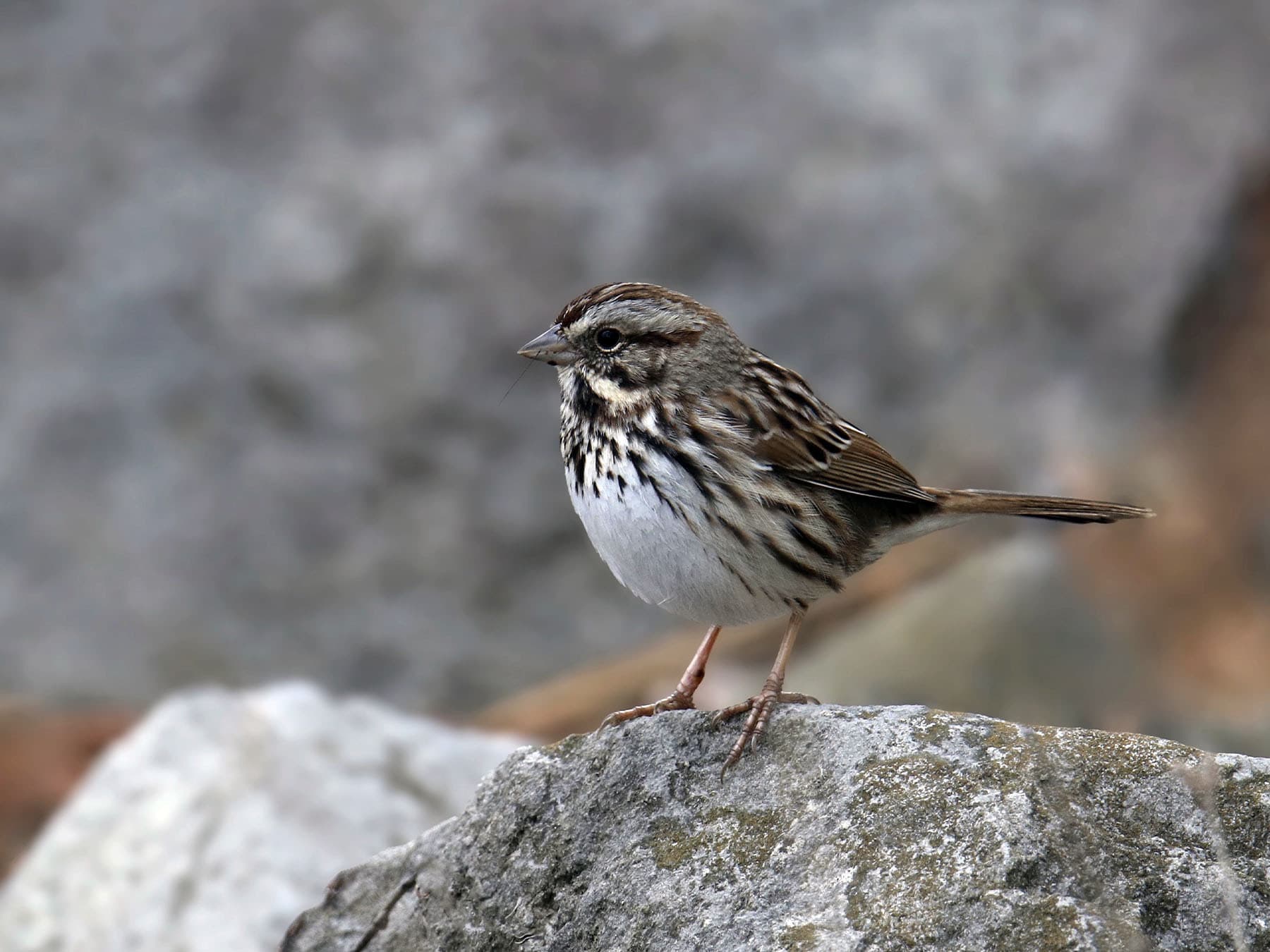
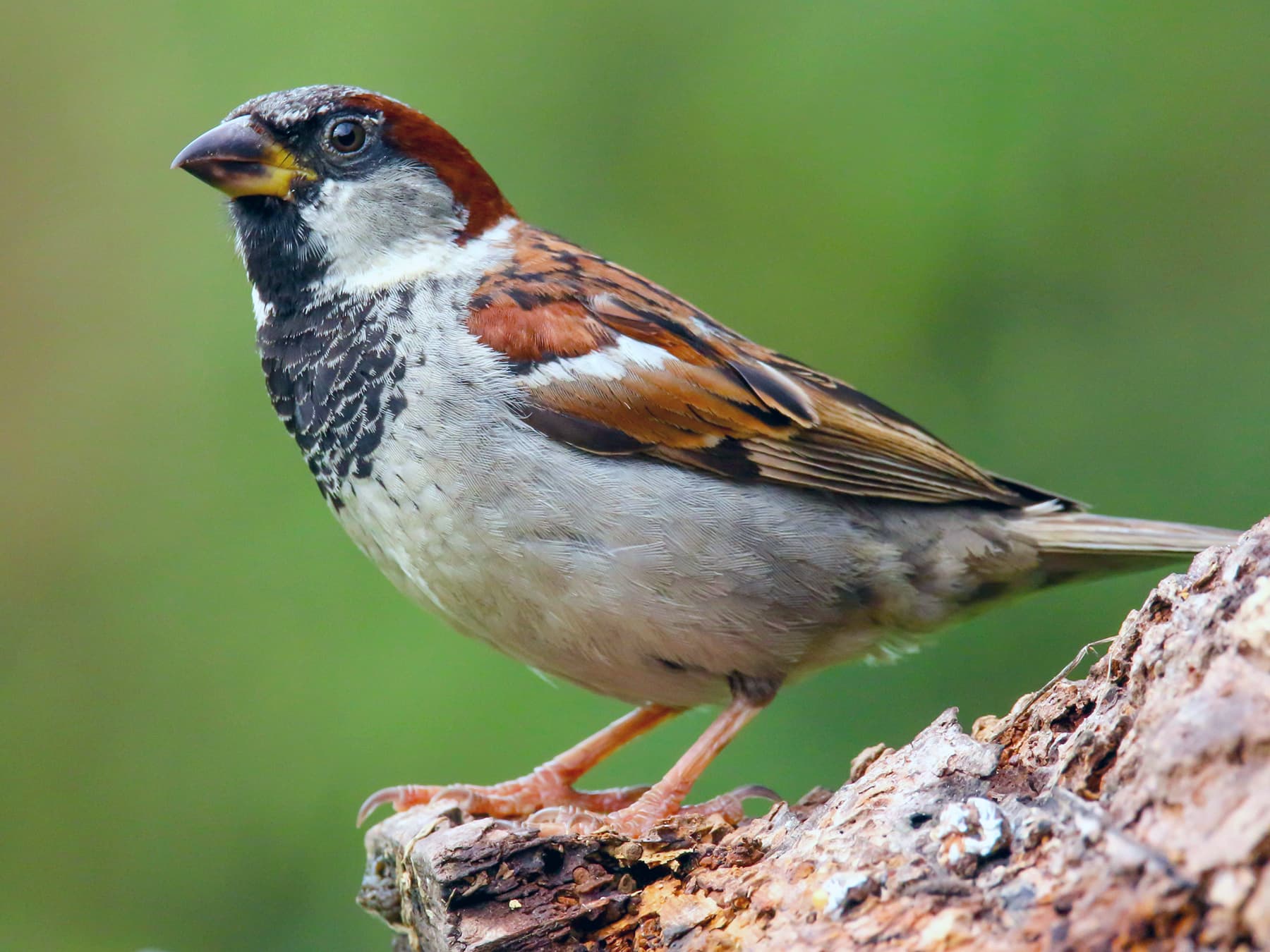
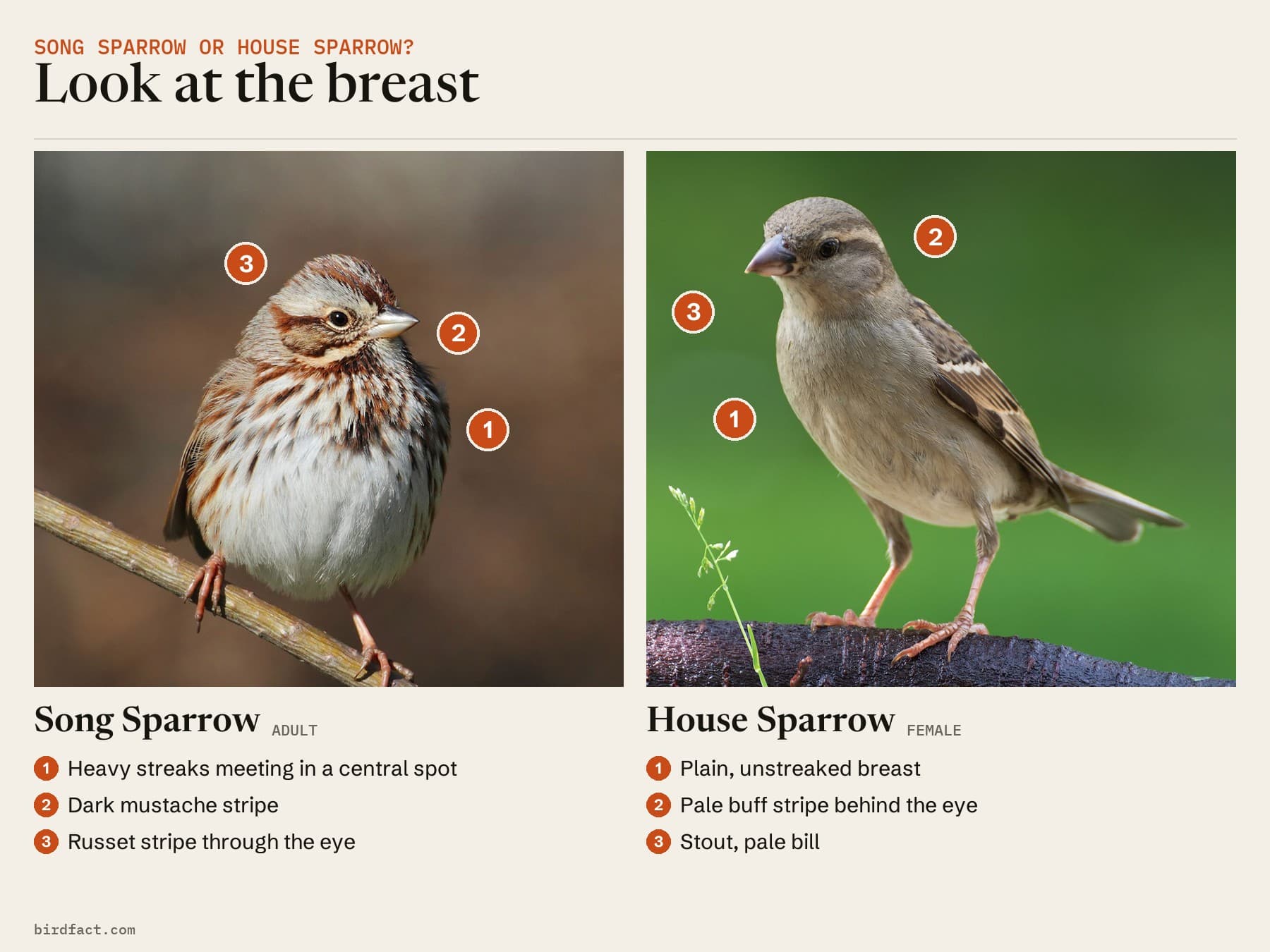
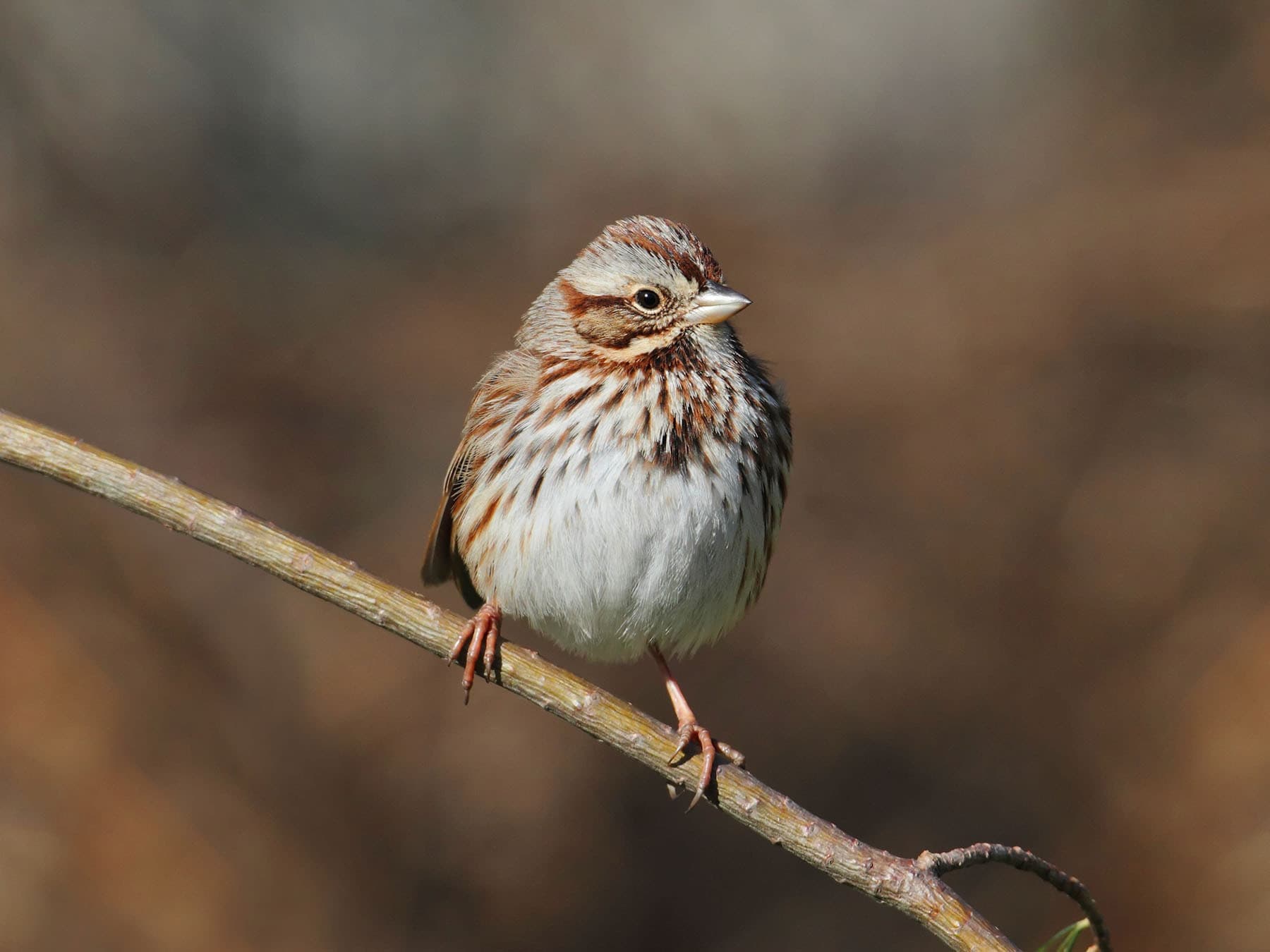
Look at the breast: a Song Sparrow's is heavily streaked, often with a dark central spot; a House Sparrow's is plain, with a black bib on the male. House Sparrows are stockier and live around buildings; Song Sparrows keep to brushy cover.
On this page10 sections
How to tell a Song Sparrow from a House Sparrow, male or female, with photos. For each bird in full, see Song Sparrow and House Sparrow.
The quick answer: look at the breast
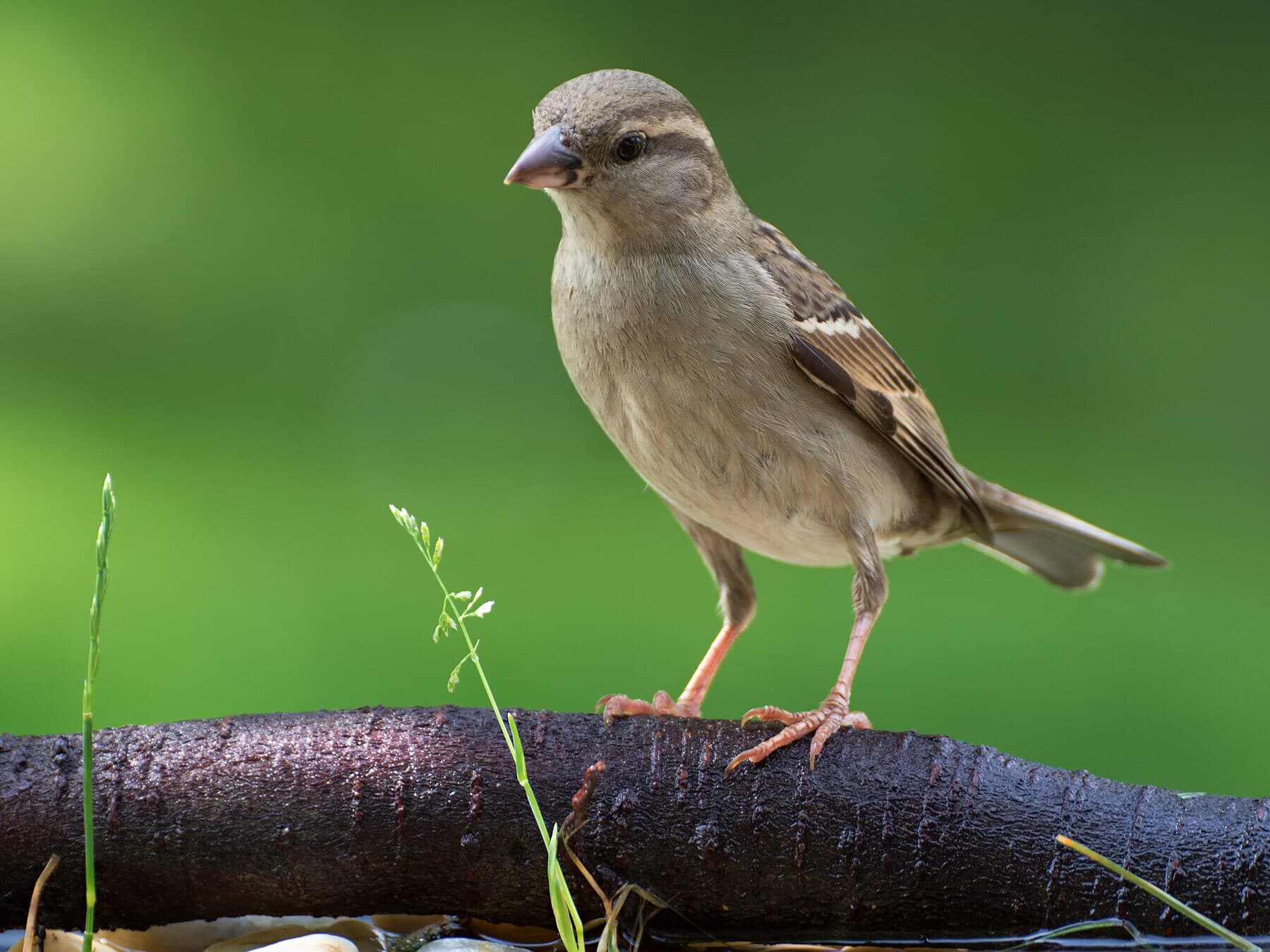
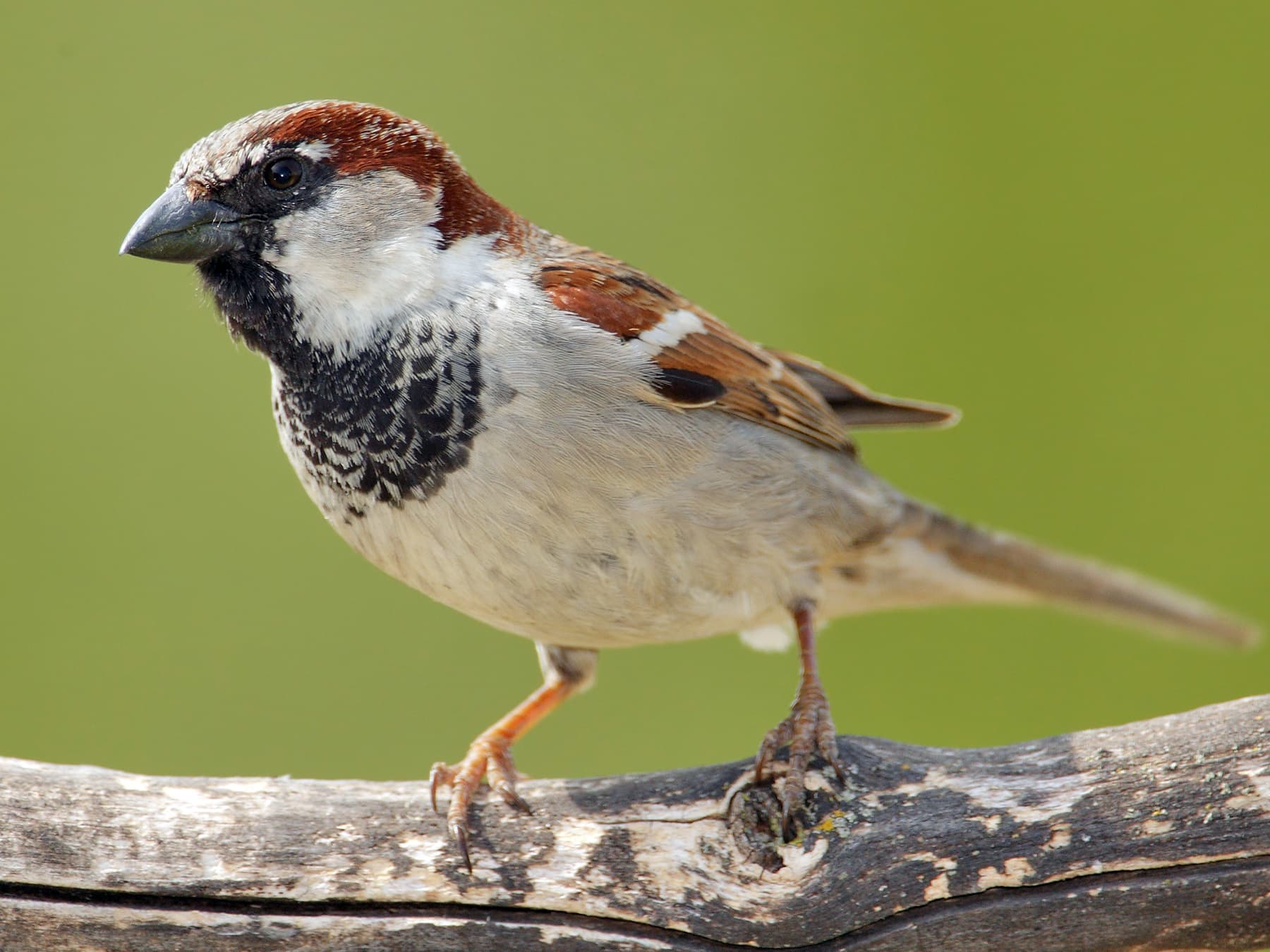
A Song Sparrow's breast is heavily streaked, with thick brown streaks that often run together into a dark central spot.1 A House Sparrow's breast has no streaks at all: the male has a black bib above plain underparts, the female is plain gray-brown below.2, 3
Then check the face. A Song Sparrow has a striped head, with a russet eye-stripe and a broad dark mustache stripe. A male House Sparrow has a gray crown, white cheeks and a chestnut nape; a female has a plain face with a pale buff stripe behind the eye.
Size and shape
They are about the same size, but a House Sparrow is stockier, with a fuller chest, and it has a stouter bill and a shorter tail than most American sparrows. A Song Sparrow looks longer-tailed, and pumps that long, rounded tail as it flies.
Male and female
Male and female Song Sparrows look alike. House Sparrows do not: the male has the gray crown, chestnut nape and black bib; the female is plain buffy-brown with a striped back. So it is the female House Sparrow that needs a second look, and the breast settles it: plain on her, streaked on a Song Sparrow.
Where you see them
House Sparrows live around people: city streets, parks and farms, and they are absent from undisturbed forest and grassland. Song Sparrows like brushy, weedy places, often near water: marsh edges, streamsides, hedgerows and the shrubby edges of yards.4
Behavior
House Sparrows are noisy and sociable, and often nest in small colonies. Song Sparrows are usually alone or in pairs in the breeding season, though young birds form loose flocks and winter birds often mix with other sparrows; they keep close to cover and fly low from bush to bush. Both feed on the ground and both come to feeders.
Voice
A Song Sparrow sings a bright, varied song that starts with a few loud notes and runs into buzzes and trills, and calls with a sharp chip. A House Sparrow's song is a string of plain "cheep" or "chirrup" notes.
Nests
Song Sparrows build an open cup on the ground or low in a shrub, and rarely use nest boxes. House Sparrows nest in holes and cavities: gaps in buildings, gutters and birdhouses. More: Song Sparrow nesting.
Not related
The two are not close relatives. The Song Sparrow is a native American sparrow. The House Sparrow belongs to the Old World sparrows: native to Europe, Asia and north Africa, it was first released in North America in New York in 1851.
Other lookalikes
A Lincoln's Sparrow is smaller, with finer streaks on a buff-washed breast. A Savannah Sparrow has a short, notched tail and yellowish lores, and usually lives in open fields. A female House Finch has a plain face and thick, blurry streaks below. More: birds that look like a Song Sparrow.
Sources
- Cornell Lab of Ornithology. Song Sparrow: Overview, Identification, Life History and Sounds. All About Birds. Accessed October 7, 2026. Source
- Cornell Lab of Ornithology. House Sparrow identification. All About Birds. Accessed October 7, 2026. Source
- National Audubon Society (text: Kaufman, Lives of North American Birds). House Sparrow. Audubon Guide to North American Birds. Accessed October 7, 2026. Source
- Arcese, P., Sogge, M. K., Marr, A. B., Patten, M. A. (2020). Song Sparrow (Melospiza melodia), version 1.0. Birds of the World (A. F. Poole and F. B. Gill, editors). Cornell Lab of Ornithology. doi:10.2173/bow.sonspa.01
- Lowther, P. E., Cink, C. L. (2020). House Sparrow (Passer domesticus), version 1.0. Birds of the World (S. M. Billerman, ed.). Cornell Lab of Ornithology. doi:10.2173/bow.houspa.01
- National Audubon Society (text: Kaufman, Lives of North American Birds). Song Sparrow. Audubon Guide to North American Birds. Accessed October 7, 2026. Source