Facts · Published 7 Oct 2026
Song Sparrow Nesting: Nests, Eggs and Baby Song Sparrows
By the Birdfact teamChecked by Nathan Cope
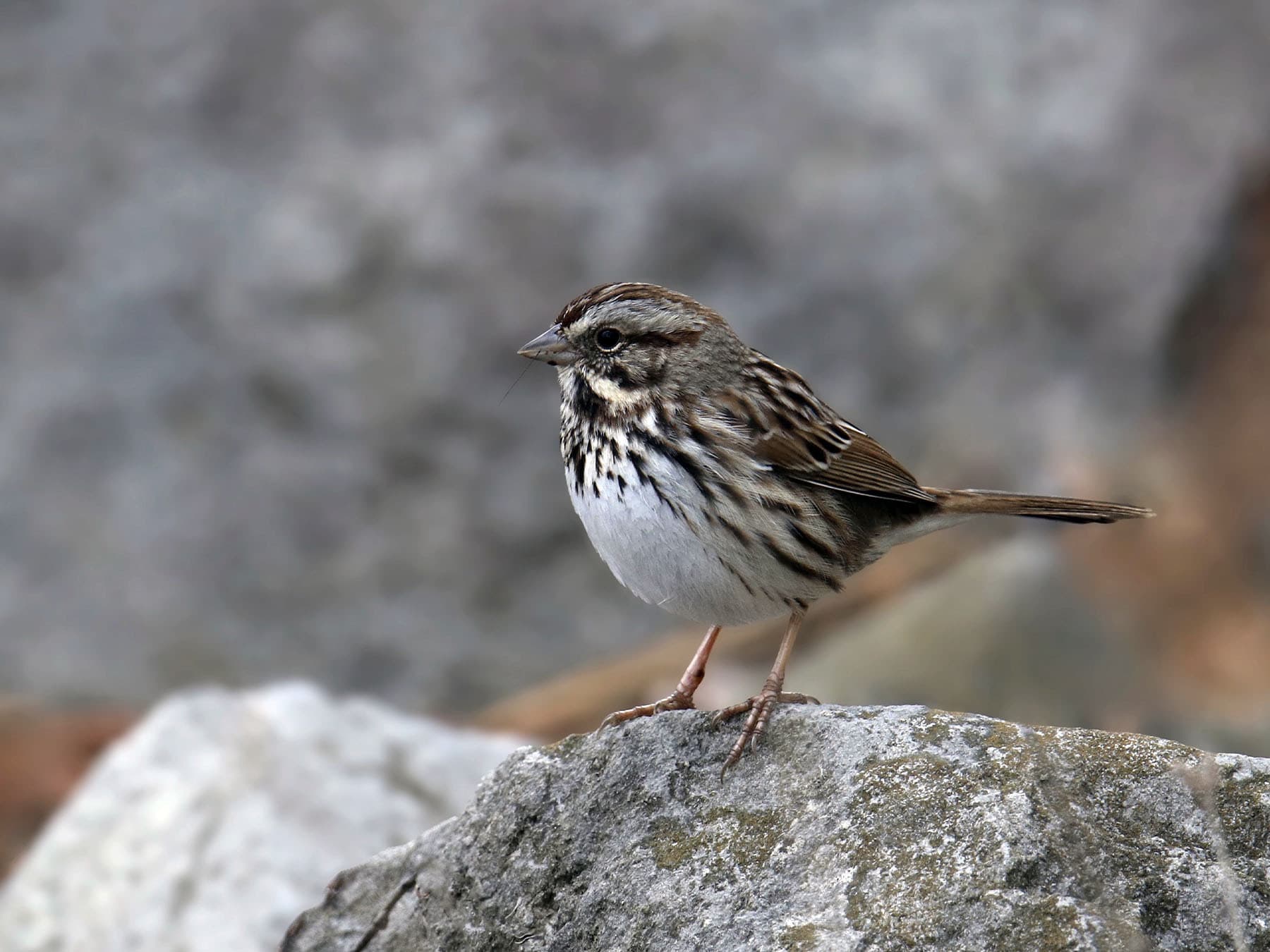
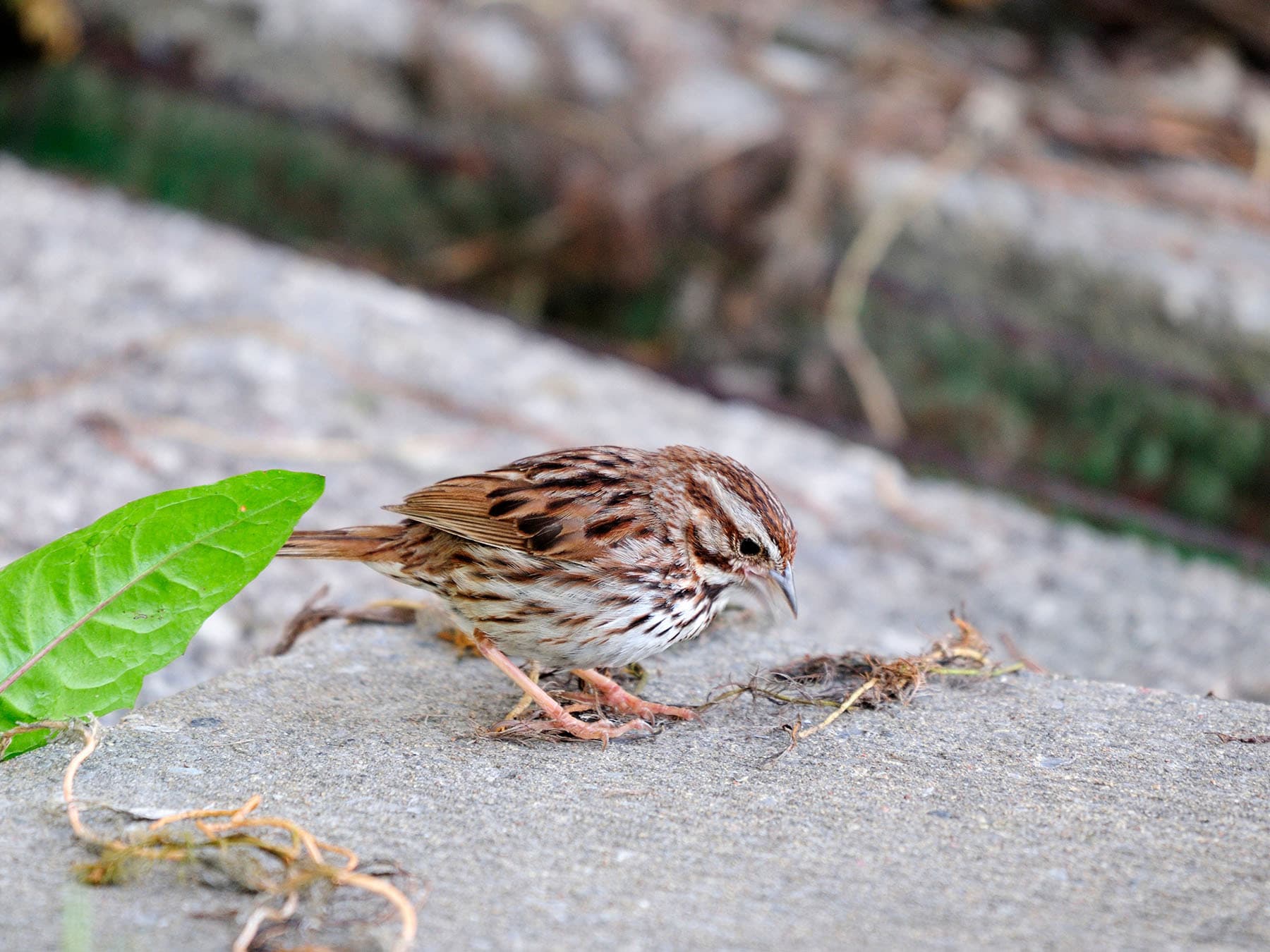
Song Sparrows build a sturdy cup on the ground or low in a shrub, often near water. The female lays usually 3 to 5 speckled blue-green eggs and incubates them for about two weeks, and pairs raise two or three broods a year.
On this page13 sections
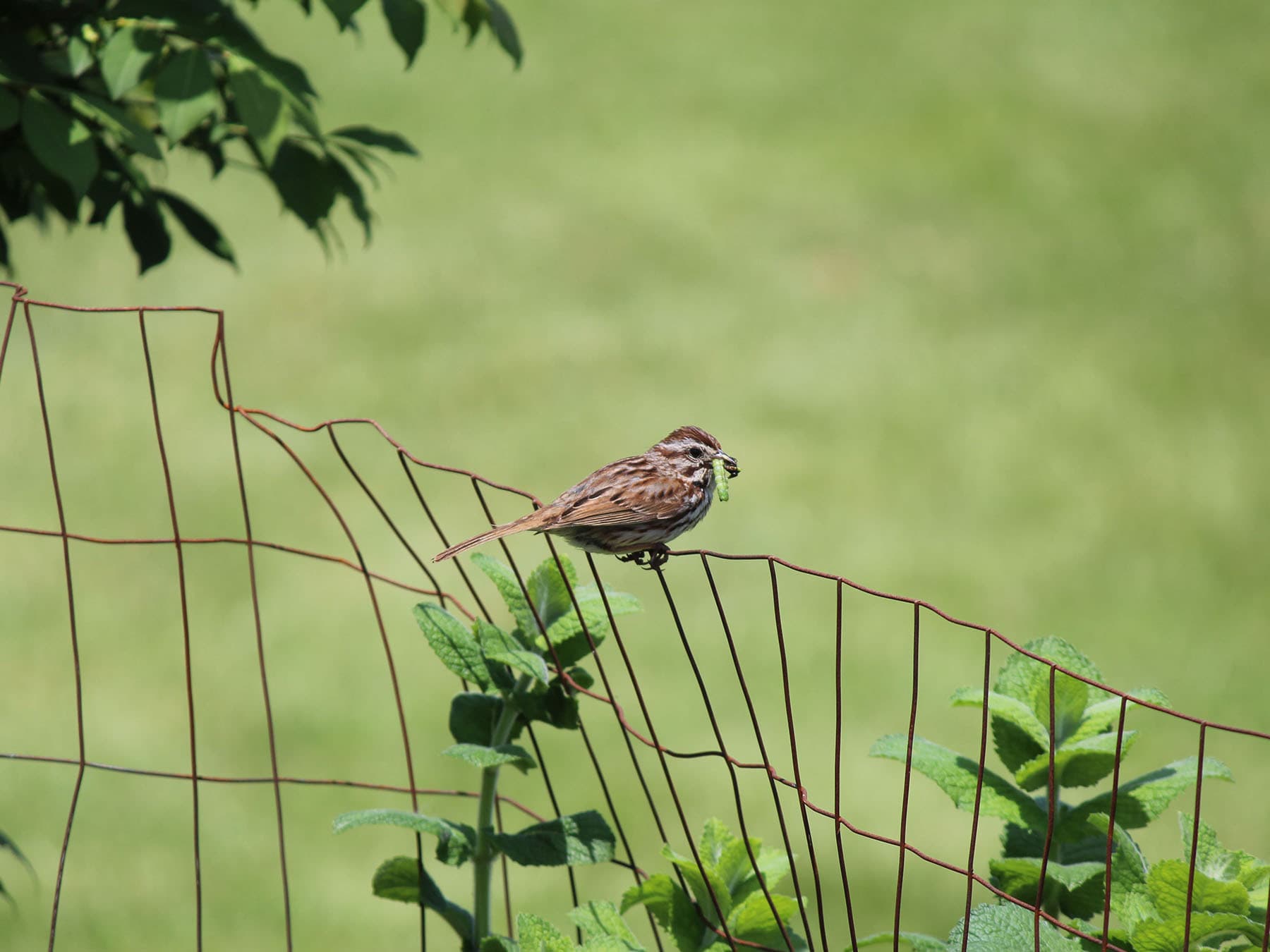
Everything about Song Sparrow nests: when and where they nest, the nest and eggs, the chicks, cowbirds, and what to do if Song Sparrows nest in your yard. For the bird itself, see Song Sparrow identification, song and facts.
When do Song Sparrows nest?
It depends on where they live. The earliest nests are in southern California, with eggs from the second week of February; the latest are in Alaska's Aleutian Islands, from mid-May. In Ohio, the first eggs were laid between April 10 and 23 over eight years of study, and on Long Island between May 5 and 17. Nesting ends between June and August, rarely in September.1
Warm springs and plenty of food bring the first eggs earlier. In one experiment, females given extra food laid two weeks before females without feeders.
Where do Song Sparrows nest?
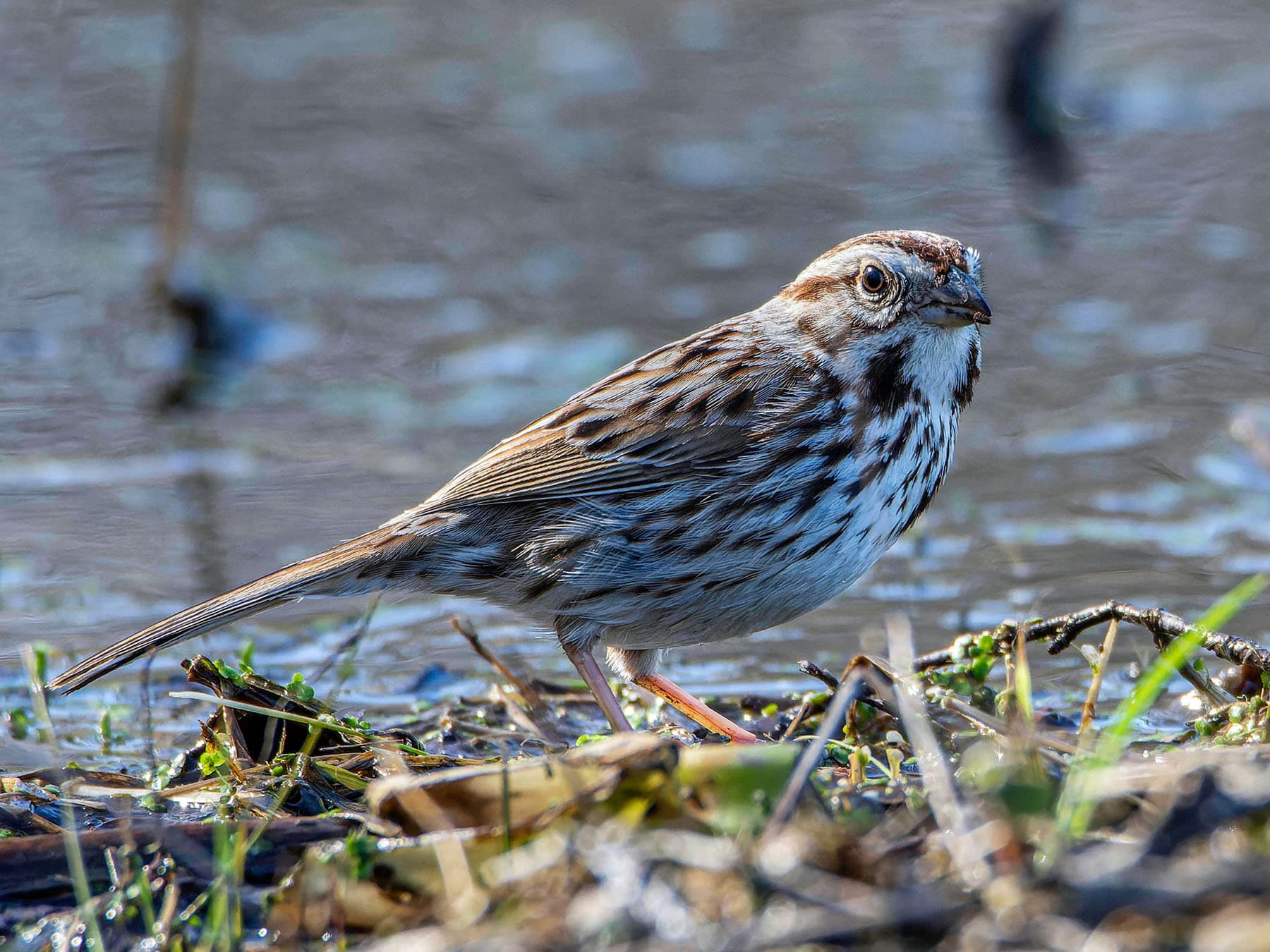
Low down, in thick cover. Most nests are on the ground under a tuft of grass or a shrub, or low in a bush, sedge, cattails or a small tree, often near or even over water. Later in the season, as the leaves grow, nests tend to be higher; most are below about 4 ft (1.2 m)2, but some are as high as 15 ft (4.6 m).3
Song Sparrows are not shy of people: they may nest in flower beds close to houses. Good spots get used again and again. Researchers working on the same land for years have found nests at the base of the same rose bush or under the same grass hummock, even after entirely new birds have taken over the territory.
So do they nest on the ground? Often, especially early in the year: most early nests are on or near the ground in grass and other low plants.
The nest
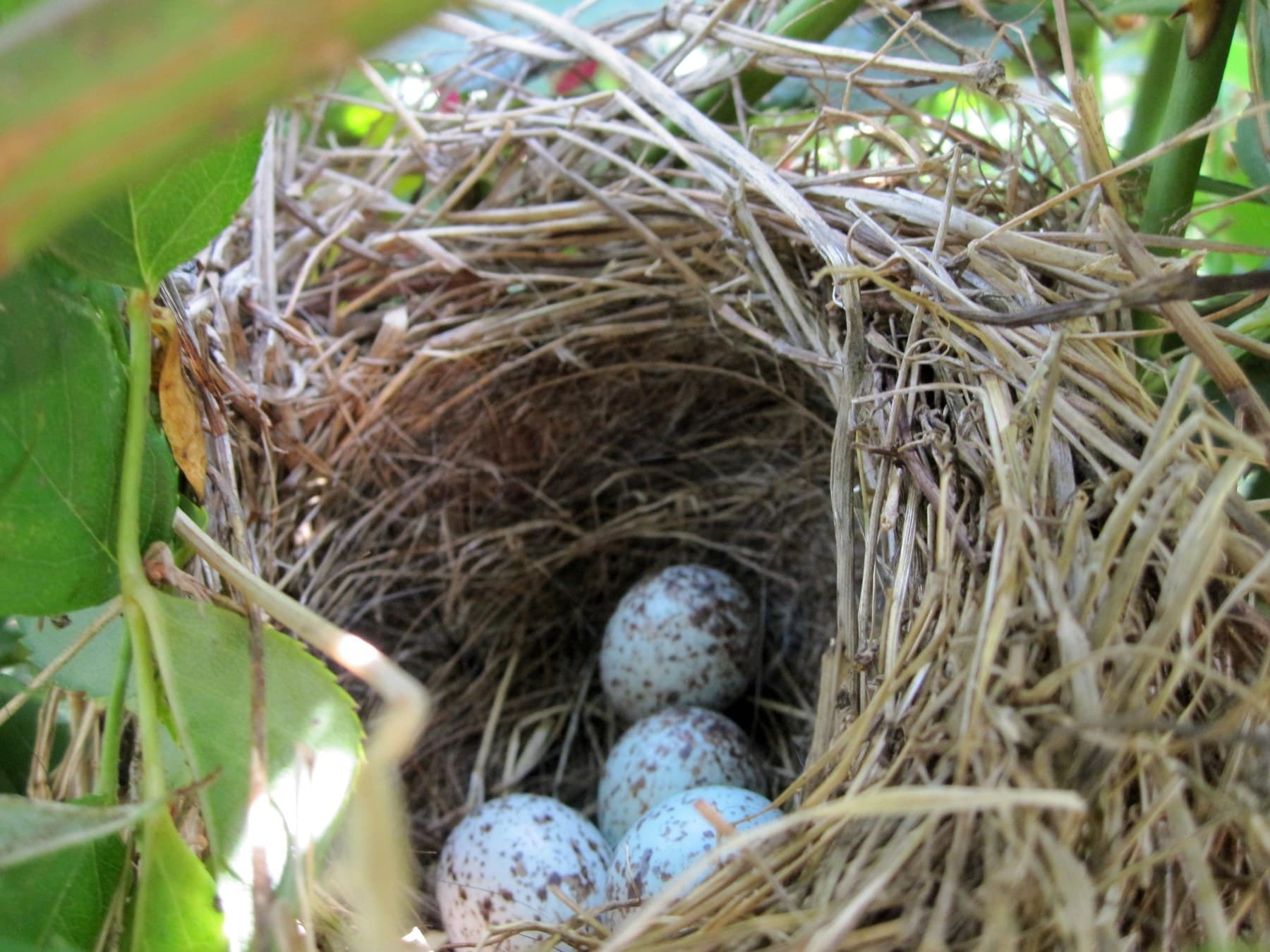
A sturdy open cup, looser on the outside than the inside: grass, weed stems, leaves and strips of bark, lined with fine grass, rootlets and sometimes animal hair. It measures about 4-8 in (10-20 cm) across, with a cup 2-2.5 in (5-6.5 cm) wide.
The female, mostly in the morning, in about 4 days. She may start and abandon one or two nests before the one she lays in.4 The male often follows her and watches, and sometimes picks up a piece of nest material, only to drop it.
Song Sparrow eggs
A clutch is usually 3 to 5 eggs, most often 4; in Nice's Ohio study the average was 4.1. The eggs are pale blue, blue-green or greenish gray, spotted with brown to reddish brown, rarely lilac, often most heavily at the large end. Each female's eggs look much the same through a season. They are about 0.8 x 0.6 in (20 x 15.5 mm).
Incubation and hatching
About 12 to 14 days, usually 12 or 13. Only the female incubates. In Nice's Ohio study she sat for 19-42 minutes at a time and was off the nest for 6-17 minutes.
Baby Song Sparrows
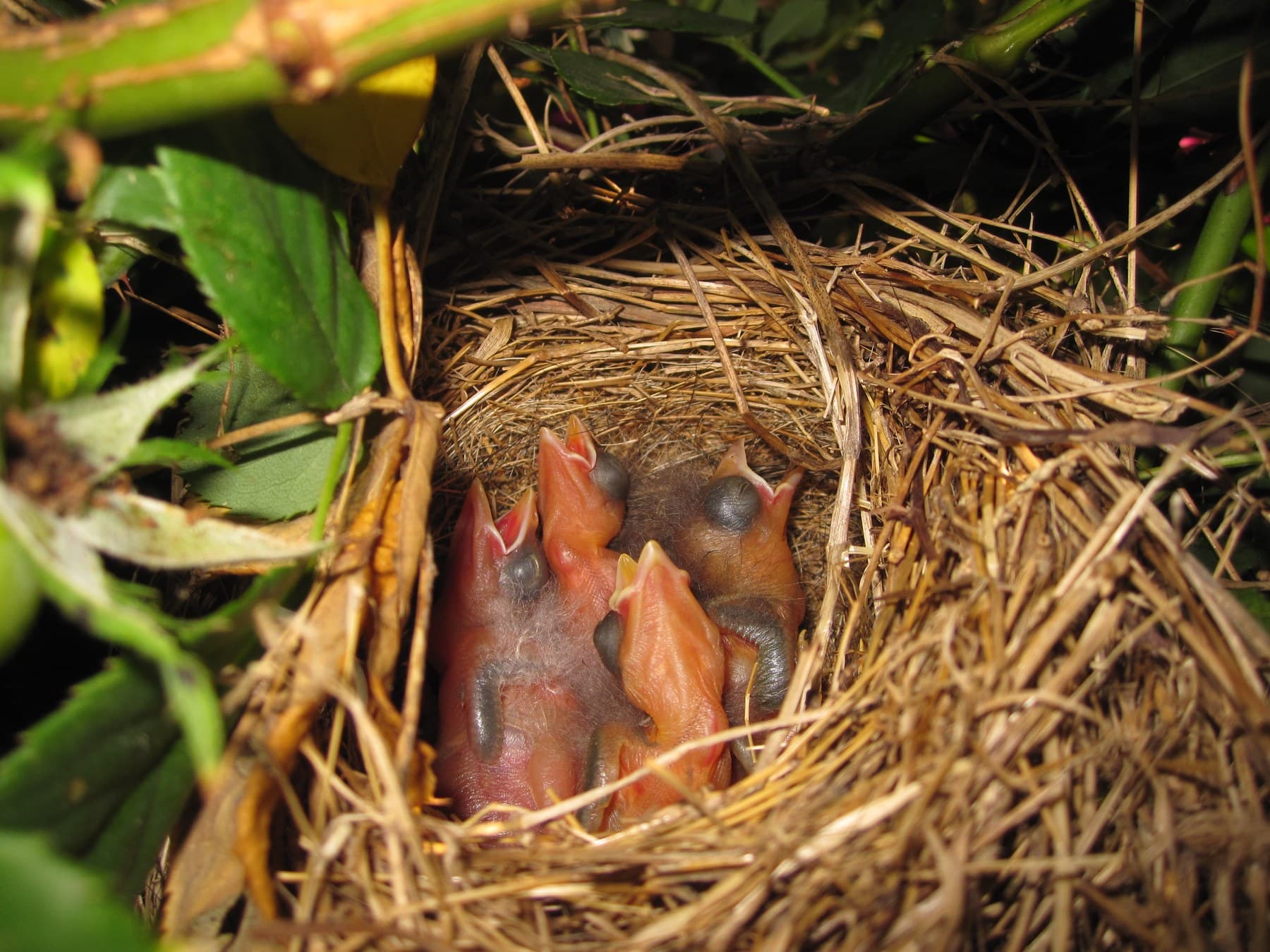
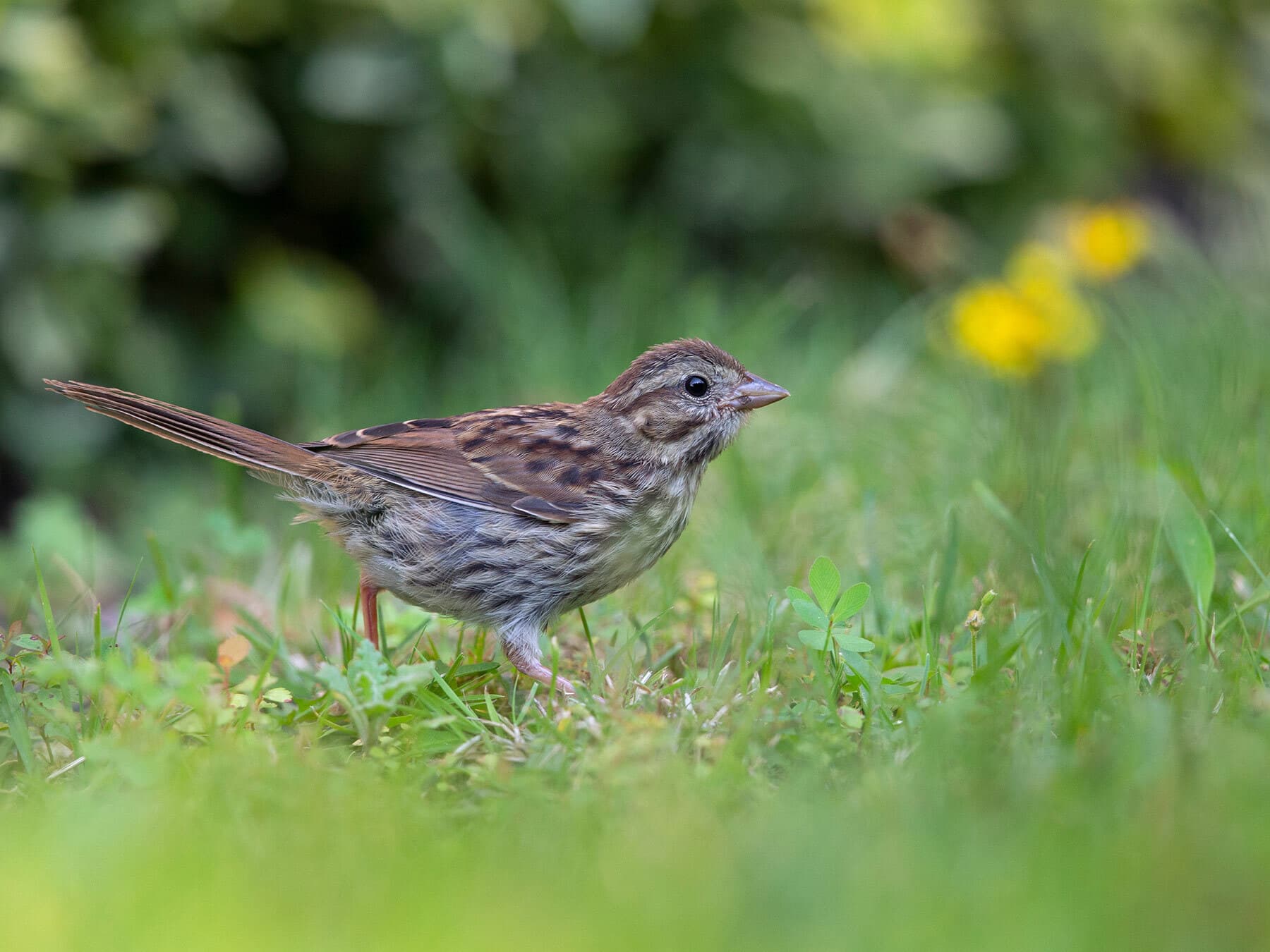
The chicks hatch naked apart from a little dark down, with their eyes closed. The female broods them closely for the first few days, and both parents feed them insects and spiders: caterpillars, flies, aphids, craneflies, grasshoppers, beetles and worms.
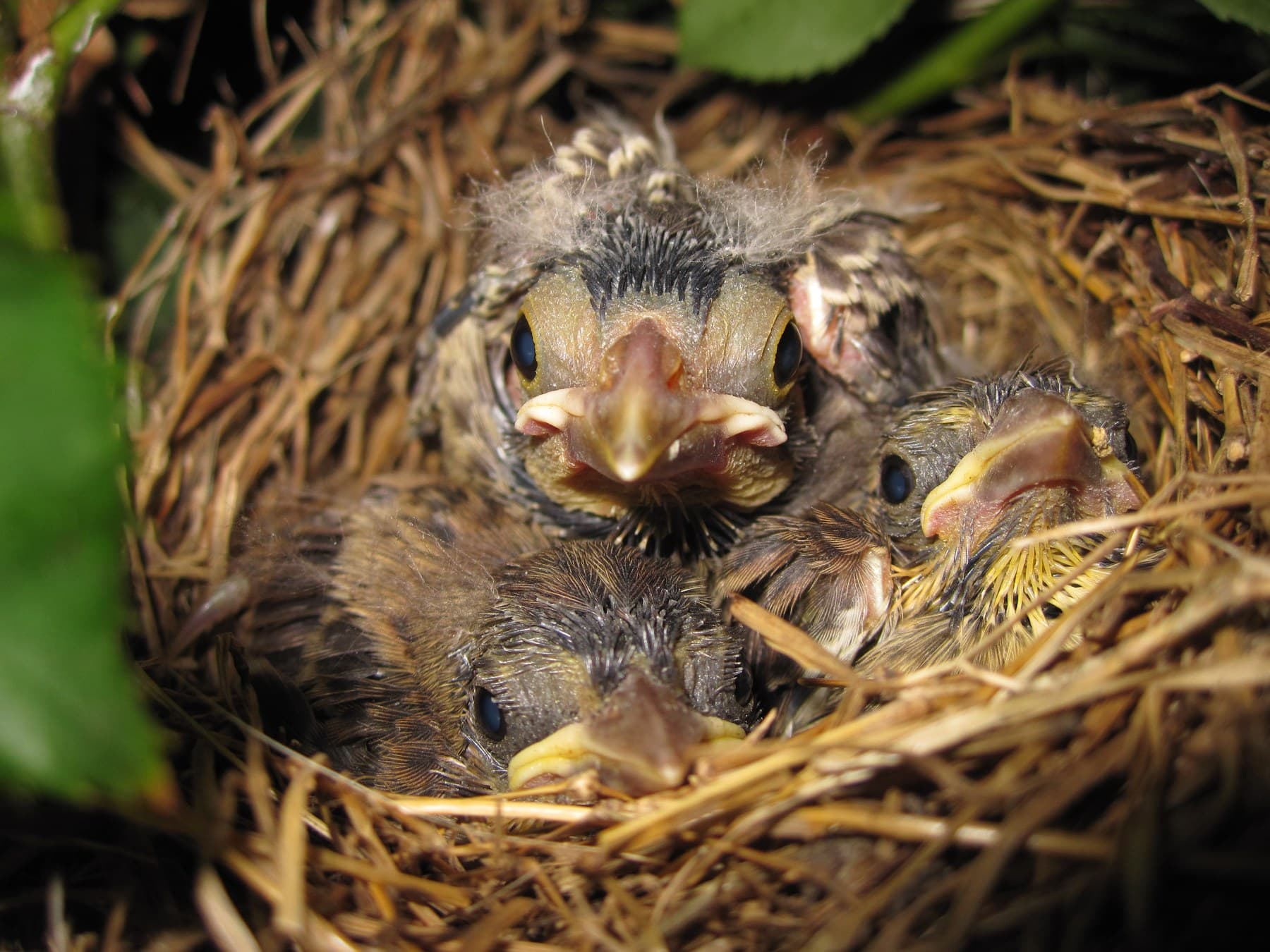
The young leave the nest at about 9 to 12 days old, usually around 10, before they can fly well. They are fed by their parents until they are 3-4 weeks old, and become independent at 22-32 days, usually 24-30.1
If you find a young Song Sparrow on the ground: a fully feathered fledgling that hops and flutters is normal, and its parents are nearby, so give it space. A featherless or eyes-closed nestling can be put back in the nest, and the parents will not reject it because you touched it. For an injured bird, find a licensed wildlife rehabilitator.5
Broods
Usually two or three a year. Where Song Sparrows live all year, a pair can raise up to four broods and make as many as seven nesting attempts in one season; a pair that loses a nest usually starts again within 5-8 days. The female often starts the next nest while the male is still feeding the last brood.
Do Song Sparrows reuse their nests?
Almost never. Song Sparrows build a new nest for each clutch: on Mandarte Island in British Columbia, not one of more than 2,500 nests was reused, though a few pairs in the East have used a nest twice.
Cowbirds
Song Sparrows are among the favorite hosts of the Brown-headed Cowbird, which lays its eggs in other birds' nests. Across North America, 9.5% of Song Sparrow nests in Cornell's nest records held a cowbird egg, over 20% in the Upper Midwest and under 5% in the East and Northeast; locally it can be far higher, 44% in Nice's Ohio study. Cowbirds also destroy Song Sparrow eggs and chicks, apparently to make the pair nest again.
Nest predators
Snakes, raccoons, squirrels, mice, crows and cats all take eggs or chicks, and losses are high: 25-60% of nests in a year where cowbirds are present. Song Sparrows are very tolerant of people, though: incubating females often sit tight with someone 3-10 ft (1-3 m) away. Older chicks, from about 7 days, may jump out of the nest if handled.
Do Song Sparrows use nest boxes?
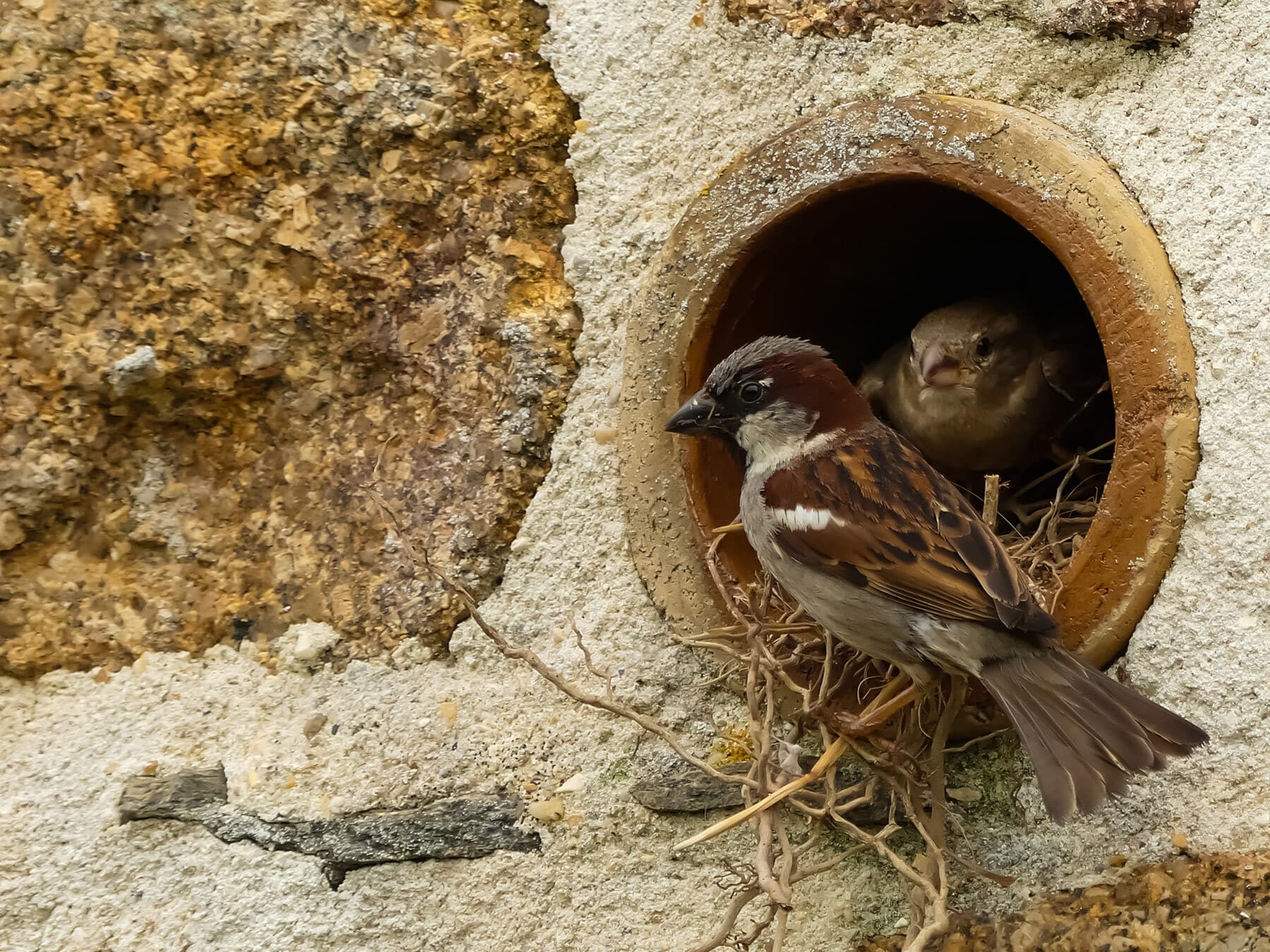
Rarely. Song Sparrows build open cups on the ground or low in thick cover, such as shrubs and tall grass, rather than in boxes or holes.
Nests and the law
Sources
- Arcese, P., Sogge, M. K., Marr, A. B., Patten, M. A. (2020). Song Sparrow (Melospiza melodia), version 1.0. Birds of the World (A. F. Poole and F. B. Gill, editors). Cornell Lab of Ornithology. doi:10.2173/bow.sonspa.01
- National Audubon Society (text: Kaufman, Lives of North American Birds). Song Sparrow. Audubon Guide to North American Birds. Accessed October 7, 2026. Source
- Cornell Lab of Ornithology. Song Sparrow: Overview, Identification, Life History and Sounds. All About Birds. Accessed October 7, 2026. Source
- NestWatch, Cornell Lab of Ornithology. Song Sparrow. NestWatch Common Nesting Birds. Accessed October 7, 2026. Source
- Shaw, T.. What to do if you find a baby bird, injured or orphaned wildlife. U.S. Fish and Wildlife Service. Accessed October 7, 2026. Source
- U.S. Fish and Wildlife Service. List of birds protected by the Migratory Bird Treaty Act. Code of Federal Regulations, 50 CFR 10.13. Accessed October 7, 2026. Source
- U.S. Fish and Wildlife Service. Bird nests. U.S. Fish and Wildlife Service. Accessed October 7, 2026. Source