Facts · Updated 8 Oct 2026
What Bird Lays The Largest Egg? (9 Biggest Bird Eggs in the World)
By the Birdfact teamChecked by Nathan Cope
On this page10 sections
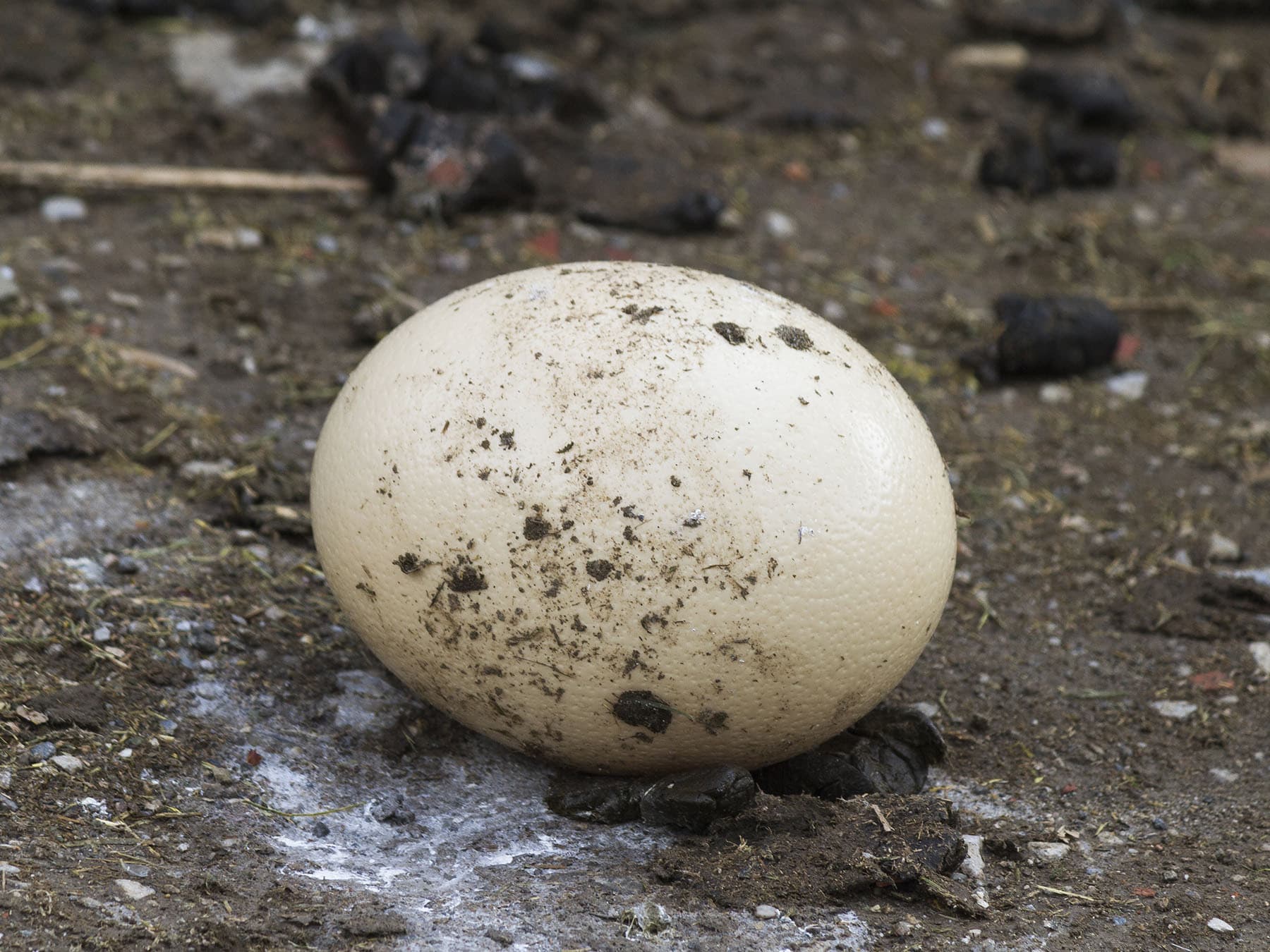
Eggs aren’t exclusive to birds, but all birds lay eggs. Eggs vary in shape, color, and other characteristics, but this article is all about size!
Which birds lay the biggest eggs, and do they have anything in common?
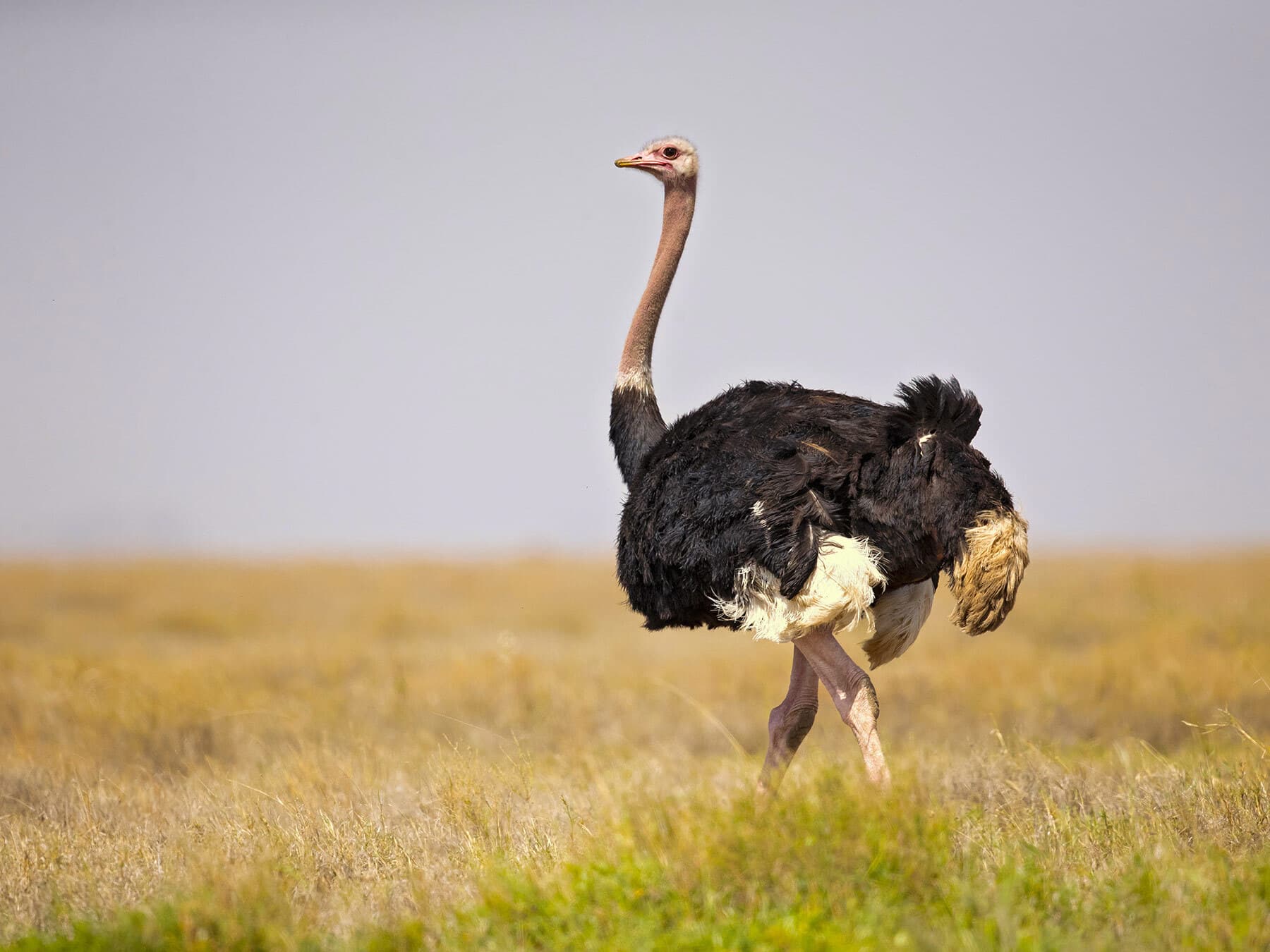
The largest bird in the world is the mighty ostrich, so it probably comes as no surprise that the ostrich lays the largest egg. 5cm (5in) in diameter.
There are species of ostrich - the Common ostrich and Somali ostrich - and they fill out spots 1 and 2 for the biggest eggs of any bird. Beyond the ostrich, other flightless birds from the ratite group, like cassowaries and emus, also have massive eggs.
Common and Somali ostriches
Female ostriches lay the largest eggs of any living bird. These gigantic birds are the biggest birds on the planet.
Adult females weigh 90 to 110kg (around 14 to 17 stone). The Common ostrich is slightly larger than the Somali ostrich, but there isn’t too much in it.
Ostrich eggs are large because the chicks are so large: a newly hatched chick weighs around 0.8 to 1.2kg (1.8 to 2.6lb).
Despite the ostrich egg being so large, they’re relatively small compared to the size and weight of the bird. For example, Ostrich eggs weigh less than 2% of the female ostrich. Different subspecies of ostriches have slightly different eggs too. For example, the Masai ostrich subspecies lays rounded grapefruit-size eggs, whereas other subspecies lay more ovular eggs.
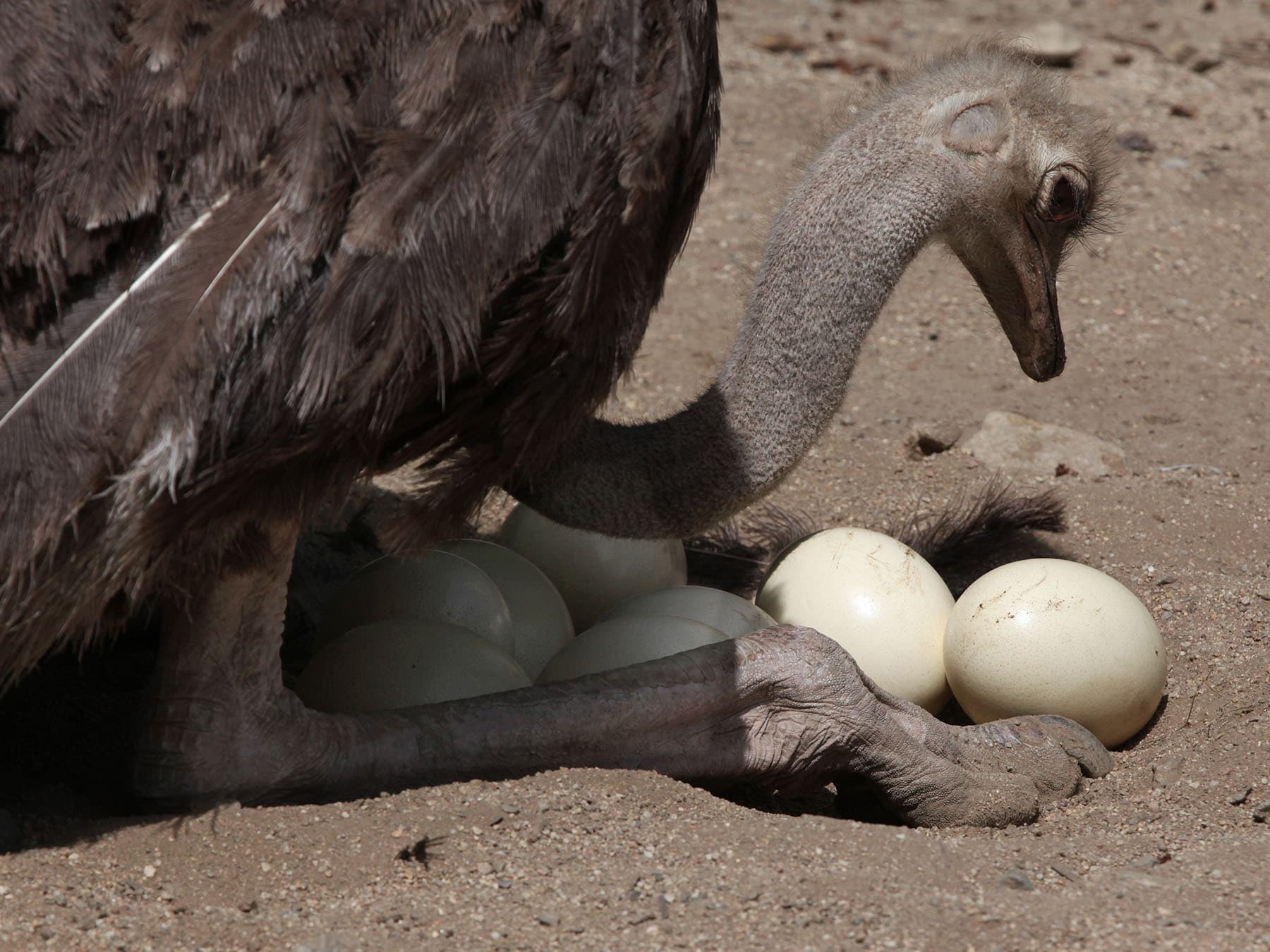
Not only are ostrich eggs exceptionally large, but they’re also super-strong. Ostrich eggs have an air sac or air shell that the chick breaks into first so it can gather some oxygen and strength to break through the main outer shell. The shell is so thick that it can take 220kg of weight vertically and 120kg horizontally - easily enough to support the weight of a human.
You can eat ostrich eggs, and they’ll feed around 10 people. Each egg contains approximately 2,000 calories and doesn't taste dissimilar to chicken eggs. However, they’re pretty impractical to cook. Emu eggs are a more common choice if you’re looking for super-sized edible eggs!
Ostrich egg dimensions
Ostrich eggs average 15 to 20cm (6 to 8in) long and 10 to 15cm (4 to 6in) in diameter, and weigh around 1.65 to 1.78kg (3lb 10oz to 3lb 14oz). The shell is about 1.5 to 2mm thick. They’re creamy white with small pits.
The heaviest egg on record weighed 2.589kg (5lb 11.36oz) and was laid at a farm in Borlänge, Sweden, on 17 May 2008.

Cassowaries
The cassowary is the second largest bird on average, though closely matched with the emu.
aggressive birds that live almost solely in New Guinea and some of its surrounding islands. They’ve been described as living dinosaurs due to their large head crest, called a casque.
live deep within the rainforests, and there are three species; the Northern, Southern, and Dwarf cassowaries. The Southern cassowary is the largest and most common member of the cassowary family, reaching a height of around 2m and a max weight of some 55kg.
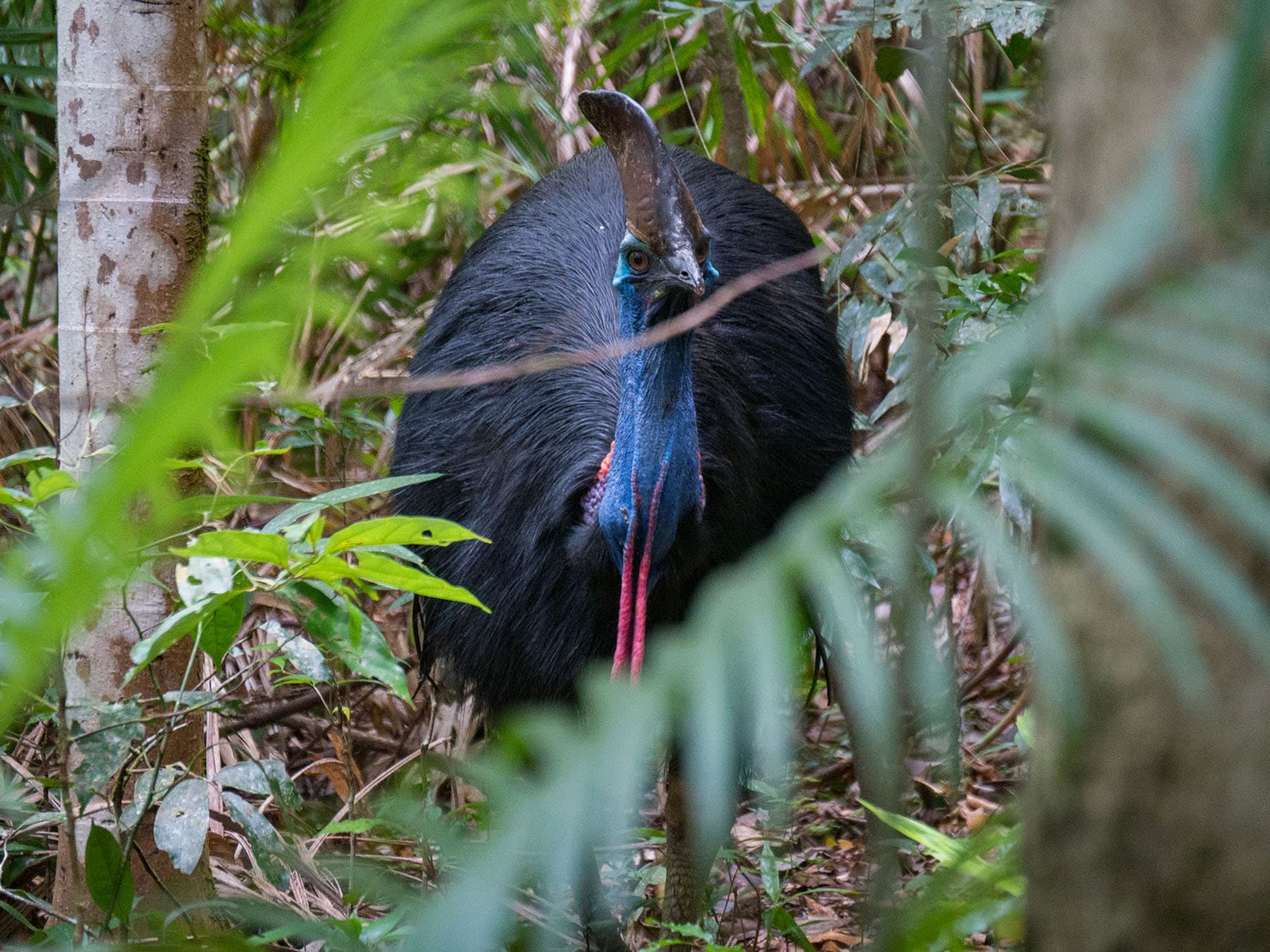
Like ostriches, cassowary incubation is long, taking around 50 days or so. Then, the male incubates the eggs and raises the young chicks with little to minimal assistance from the female.
Cassowary egg dimensions
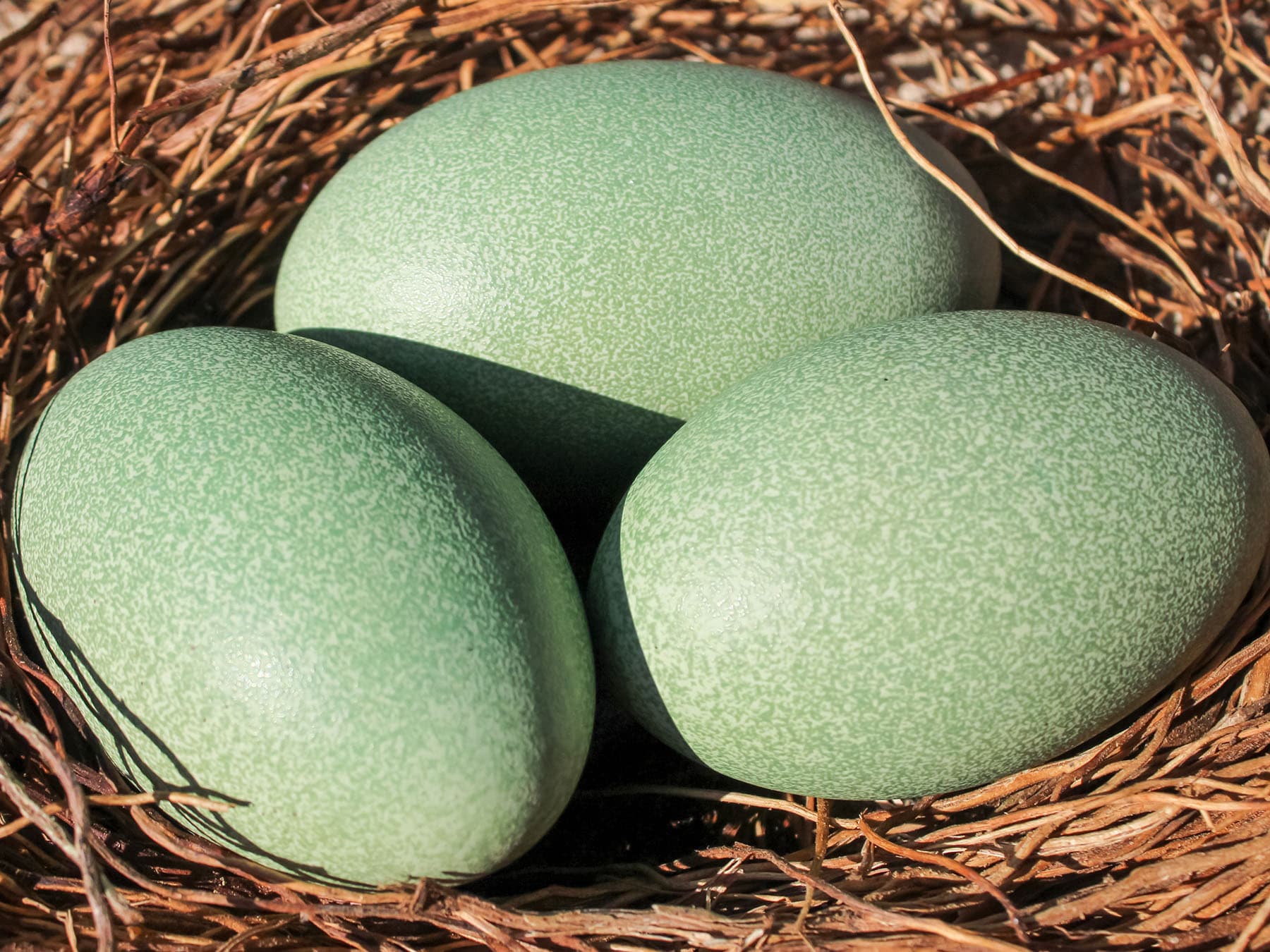
Southern cassowary eggs measure around 13.5 by 9.5cm (5.3 by 3.7in) and weigh around 450 to 650g (1 to 1.4lb). The eggs are a deep, strongly pigmented green color and have a rough granulated texture.
Emus
Emus are a similar size to the cassowary, though slightly lighter. These massive birds live solely in Australia and are relatively common across the entire country. They lay similar-sized eggs to cassowaries, to whom they’re related.
Emus are less aggressive than ostriches and cassowaries but are still massive birds. Just one emu species belongs to the same family as the cassowary, although they are not especially similar except for their size and stature. habitats.
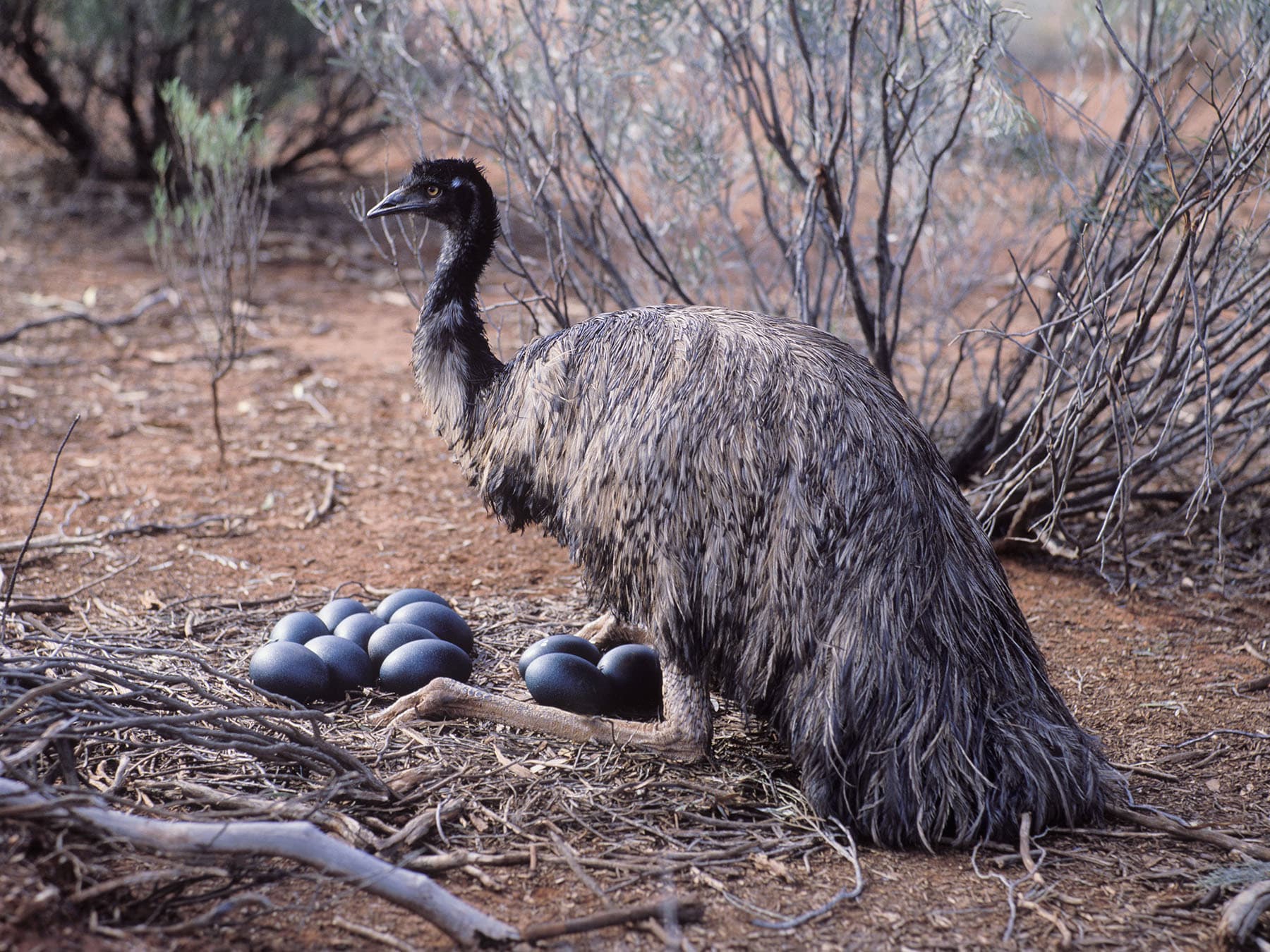
They have complex mating systems where the females are dominant over the males, similar to cassowaries but different from ostriches, where males are dominant.
Emu egg dimensions
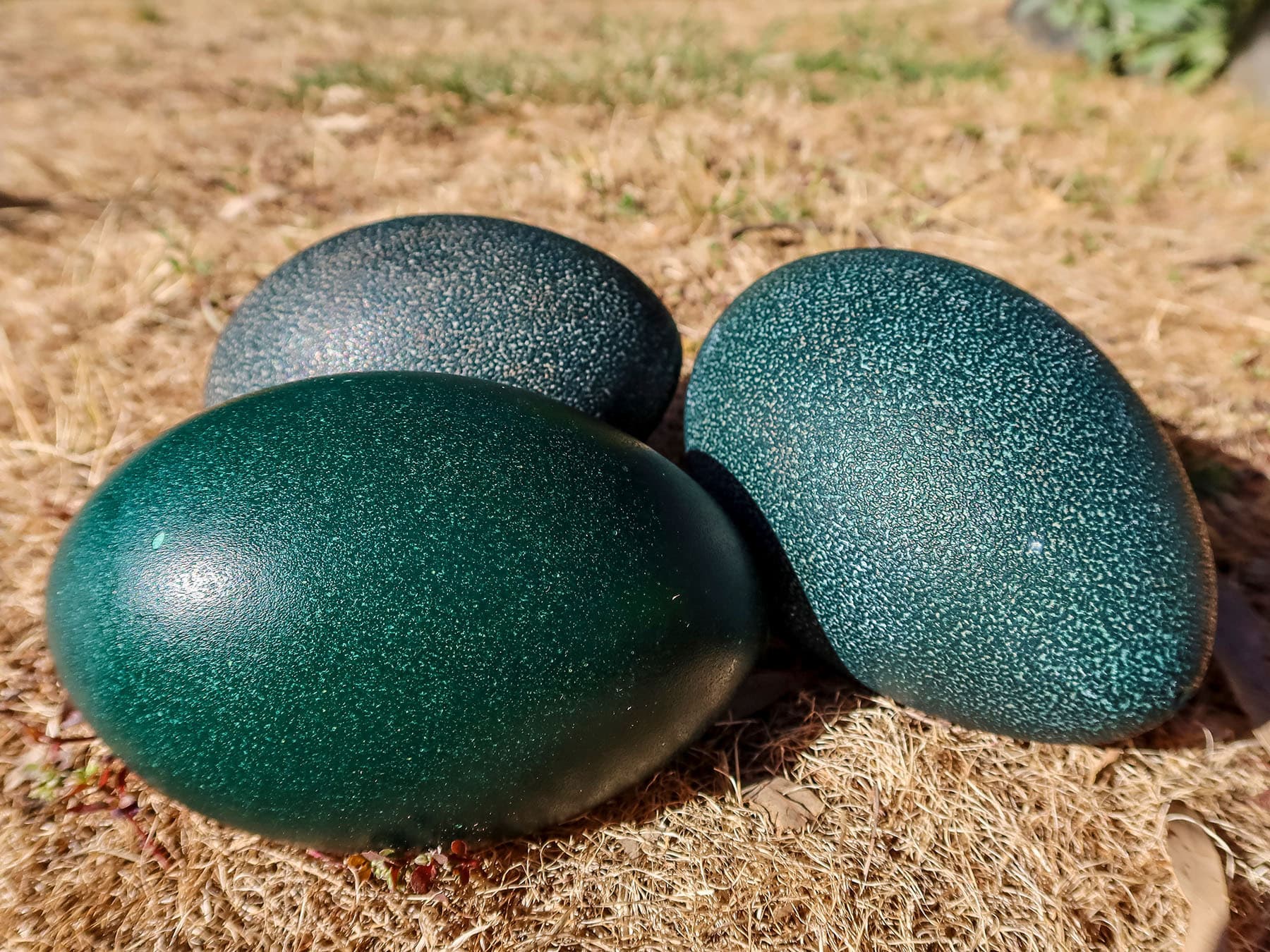
Emu eggs measure about 13cm (5in) long and 9cm (3.5in) wide and weigh 450 to 650g (1 to 1.4lb). They’re a striking dark green, emerald, or teal color and have a rough surface.
Greater Rhea
The Greater rhea is yet another large flightless bird, but this time, it lives in South America. Greater rheas are a similar size to emus and cassowaries but are slightly lighter at around 15 to 30kg. Again, they lay similar-sized eggs to cassowaries and emus.
The Greater rhea has rather long wings for a flightless bird and uses them to steer itself at high running speeds. Like emus and cassowaries, the Greater rheas have rather unusual breeding systems. The males are generally dominant over females, but the eggs are incubated exclusively by the male, who also raises the chicks.
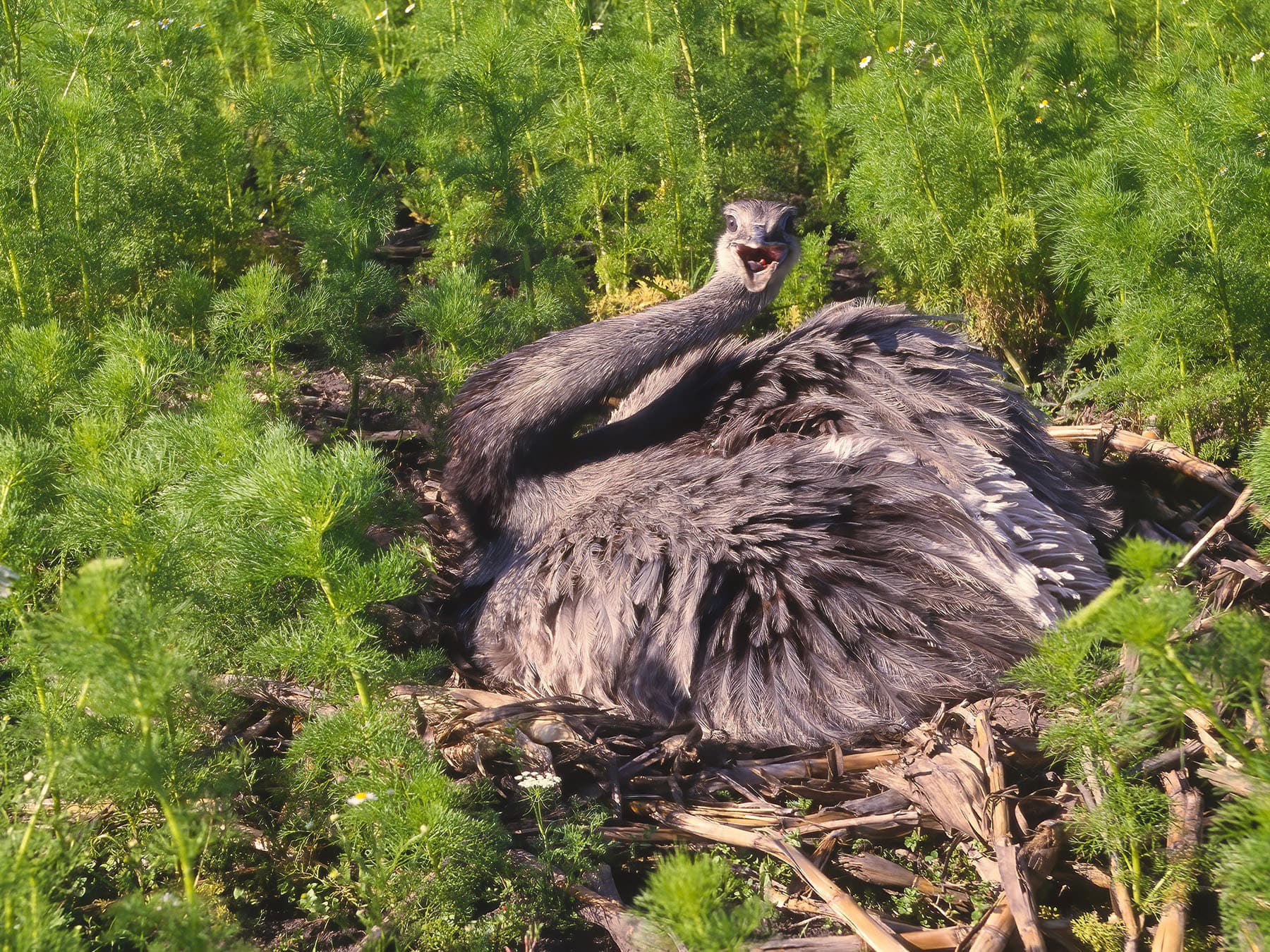
Rheas are both polygamous and polyandrous. Curiously, few males actually attempt to breed each year - just 5 to 6% in some places. Those that do breed do so with a long sequence of females. The resulting nest can contain as many as 50 eggs.
Greater rhea egg dimensions
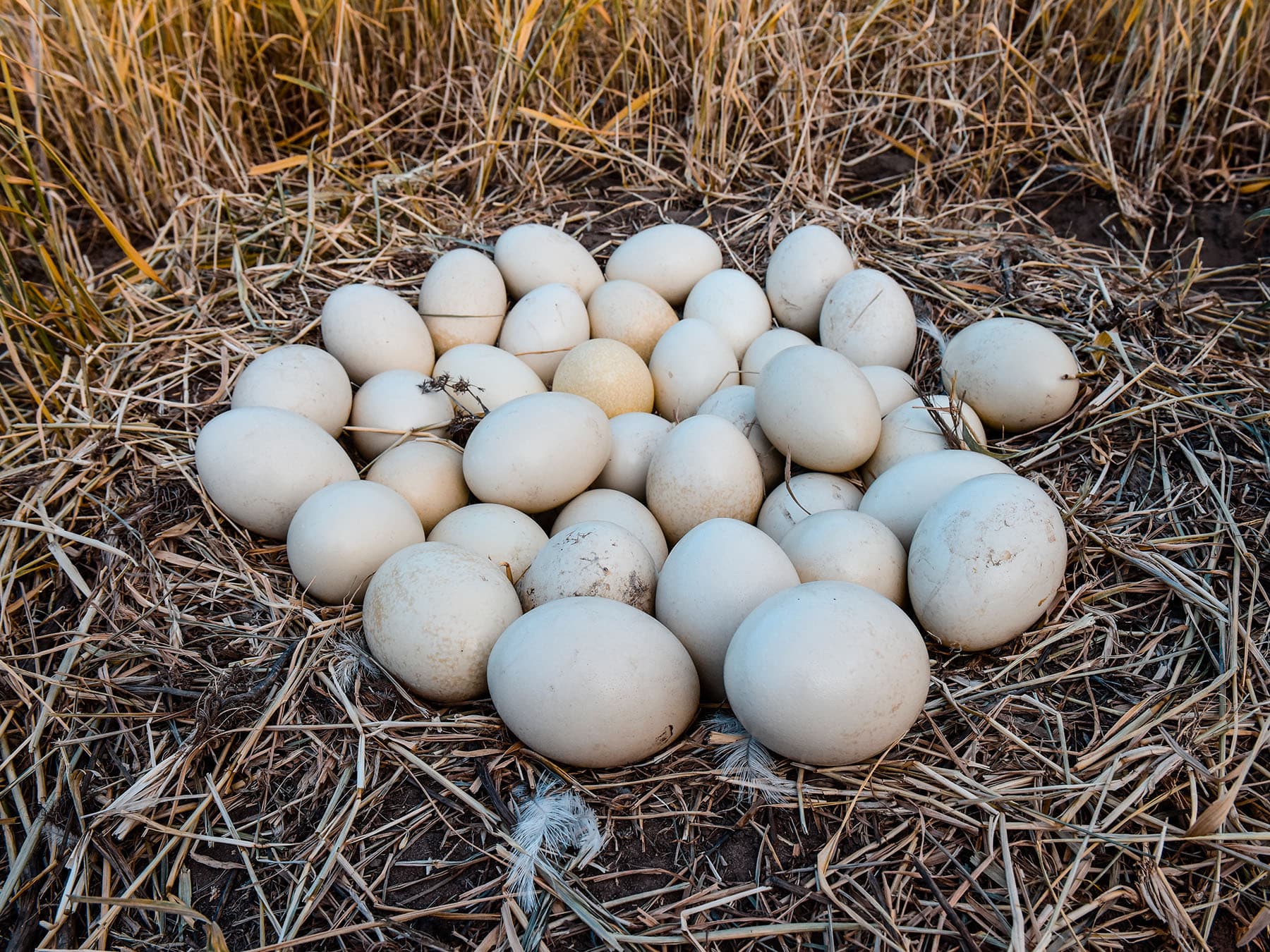
Greater rhea eggs weigh around 400 to 600g (up to 1.32lb). That's similar to emu and cassowary eggs but still much smaller than ostrich eggs. The eggs are creamy-white with thick shells.
Emperor Penguin
live in the deepest reaches of Antarctica and the sub-Antarctic. They’re superbly well-adapted to their ultra-cold environments and lay one large egg per year.
Female Emperor penguins lay just one egg a year, which the couple must look after extremely well if it’s to survive.
This involves a complex process whereby the male takes the egg from the female without it touching the icy floor and proceeds to incubate it on his feet for around 65 days. He won’t eat for that entire time as the female ventures out to sea to rejuvenate.
In fact, male Emperor penguins fast for around 4-months throughout this process.
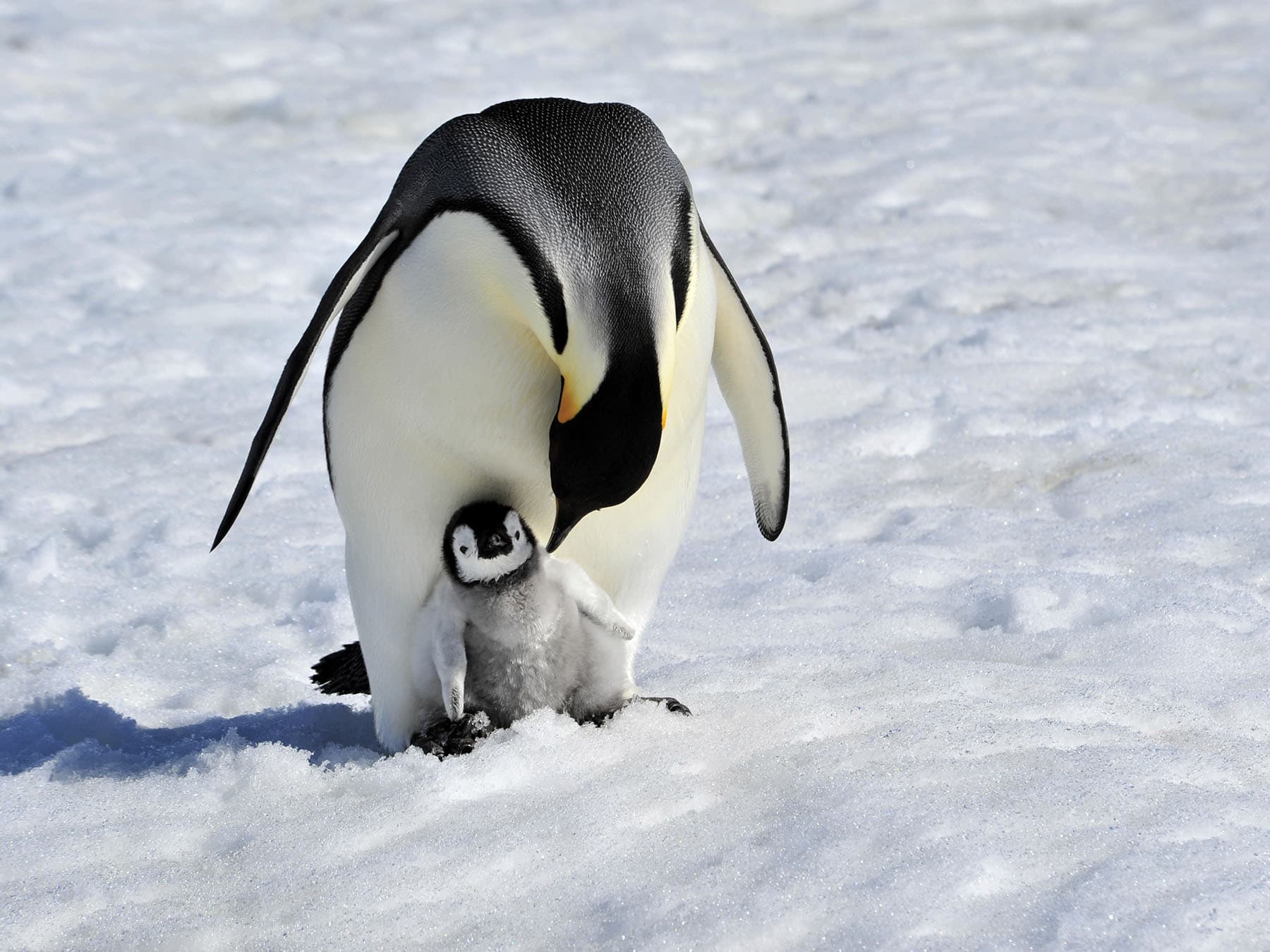
Once the female returns, the egg hatches shortly after, but the perils of raising a baby penguin are far from over. Raising the chick in the harsh Antarctic environment is very difficult, and many perish to the elements.
very large. Their large single egg enables the chick to hatch covered in the thick down it needs to survive the cold.
Emperor Penguin egg dimensions
Emperor penguin eggs measure around 12cm long by 8cm wide and weigh 345 to 515g (12 to 18oz) - the weight of up to around 13 Cadbury Creme Eggs. The eggs are pear-shaped and have a greenish tinge.

Trumpeter and Mute swans
Both Trumpeter and Mute swans are among the world’s largest flying birds. They lay the largest eggs of any flighted birds.
The heaviest Mute swan clocked in at around 23kg, which would probably make it the heaviest flying bird on record - even heavier than the Great bustard. Mute swans are heavier and bulkier, but Trumpeters have a bigger wingspan of up to 3m.
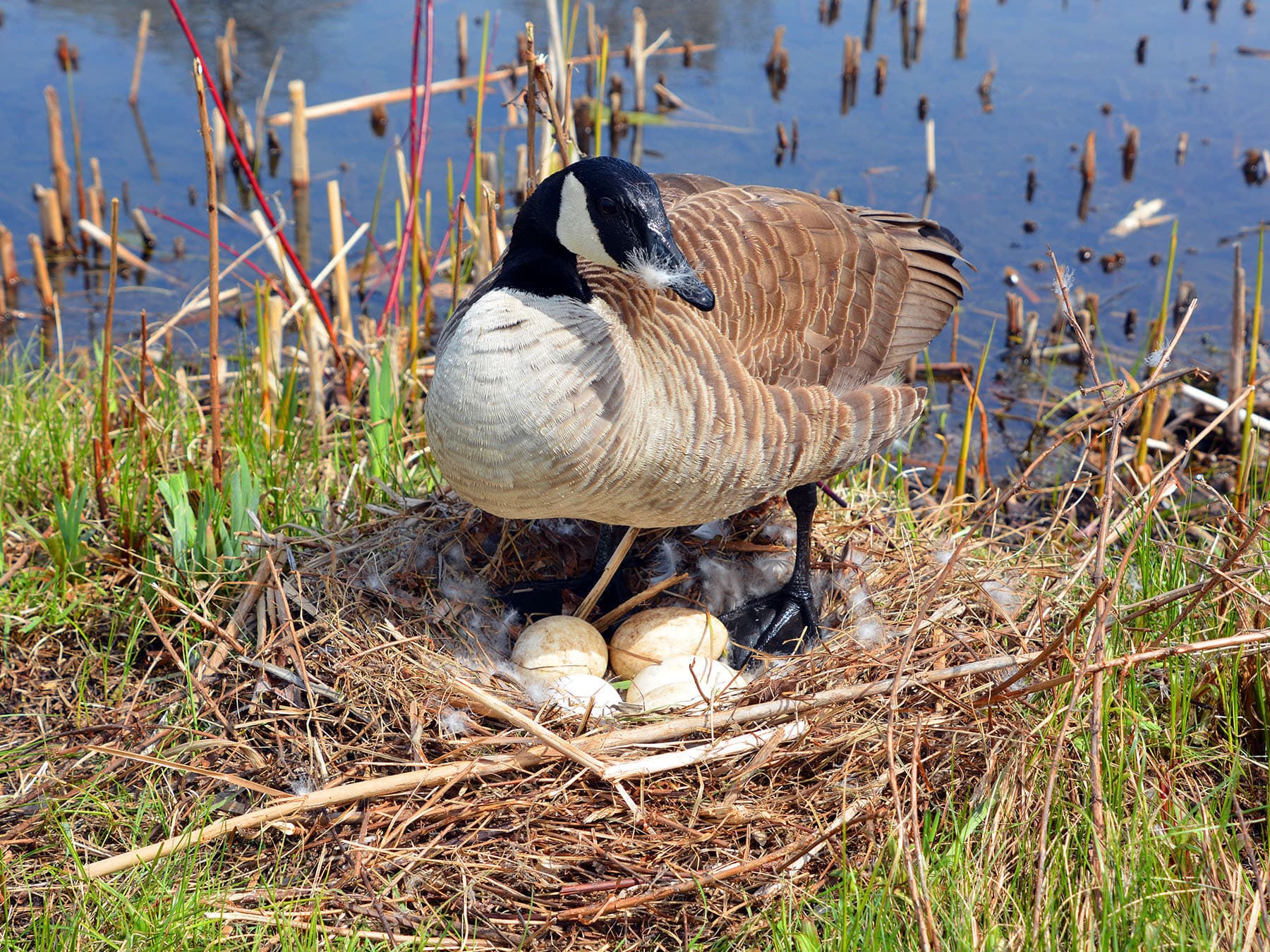
These large birds lay large eggs, partly because the swan itself is huge but partly also because the chicks are born precocial with thick downy coats. Swans are cold-dwelling animals, hence why the chicks need to be well-developed at the point they hatch. Even though other birds like the Great bustard are as big as swans, their eggs aren’t nearly half the size.
The Mute and Trumpeter swans have the largest eggs of any flying bird; even massive-flighted birds like condors, albatrosses, and eagles lay comparatively small eggs.
Trumpeter and Mute swan egg dimensions
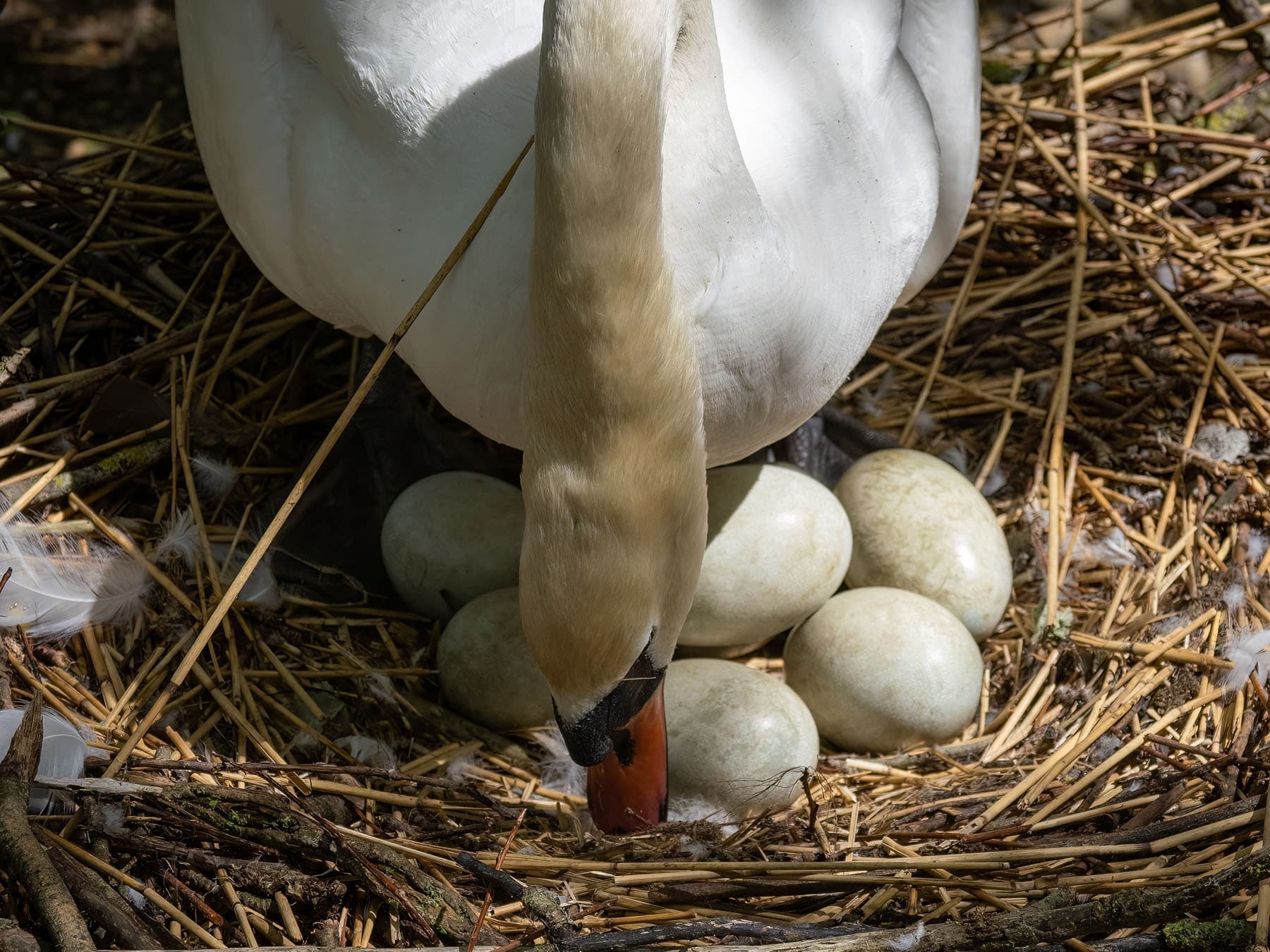
Trumpeter swan eggs are around 11.3cm (4.5in) long and weigh about 320g (11.3oz). Mute swan eggs are very similar, if a little heavier.
Swan eggs are over double the weight of Kori and Greater bustard eggs and some 20% heavier than Andean condor eggs.
North Island Brown Kiwi
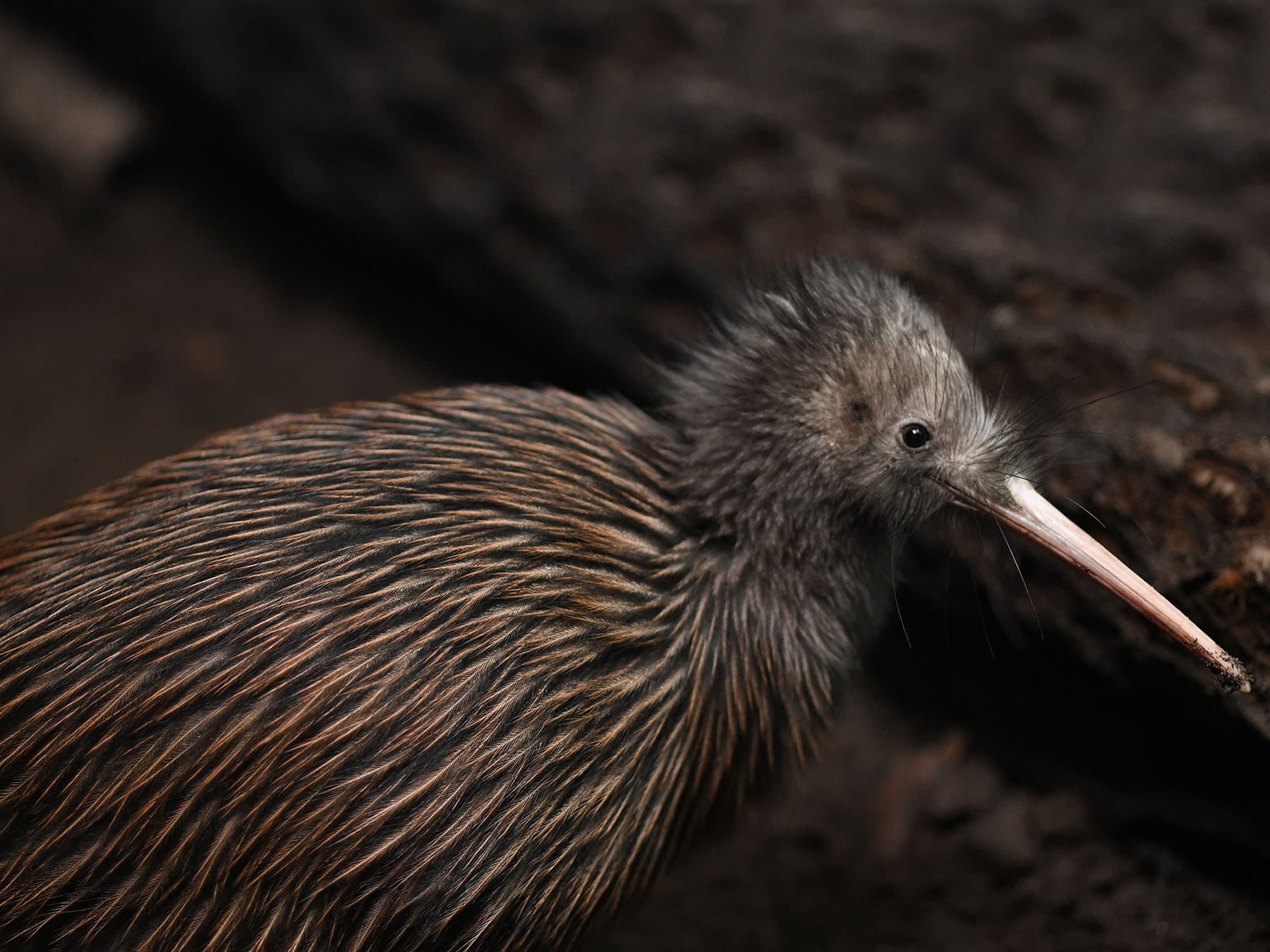
6 meters) and weigh up to around 3kg. That is considerably smaller than any bird on this list.
In fact, the female brown kiwi’s egg weighs up to 20% of its own body weight. This is by far the biggest egg relative to body size, equivalent to a woman giving birth to a 25lb (11kg) baby.
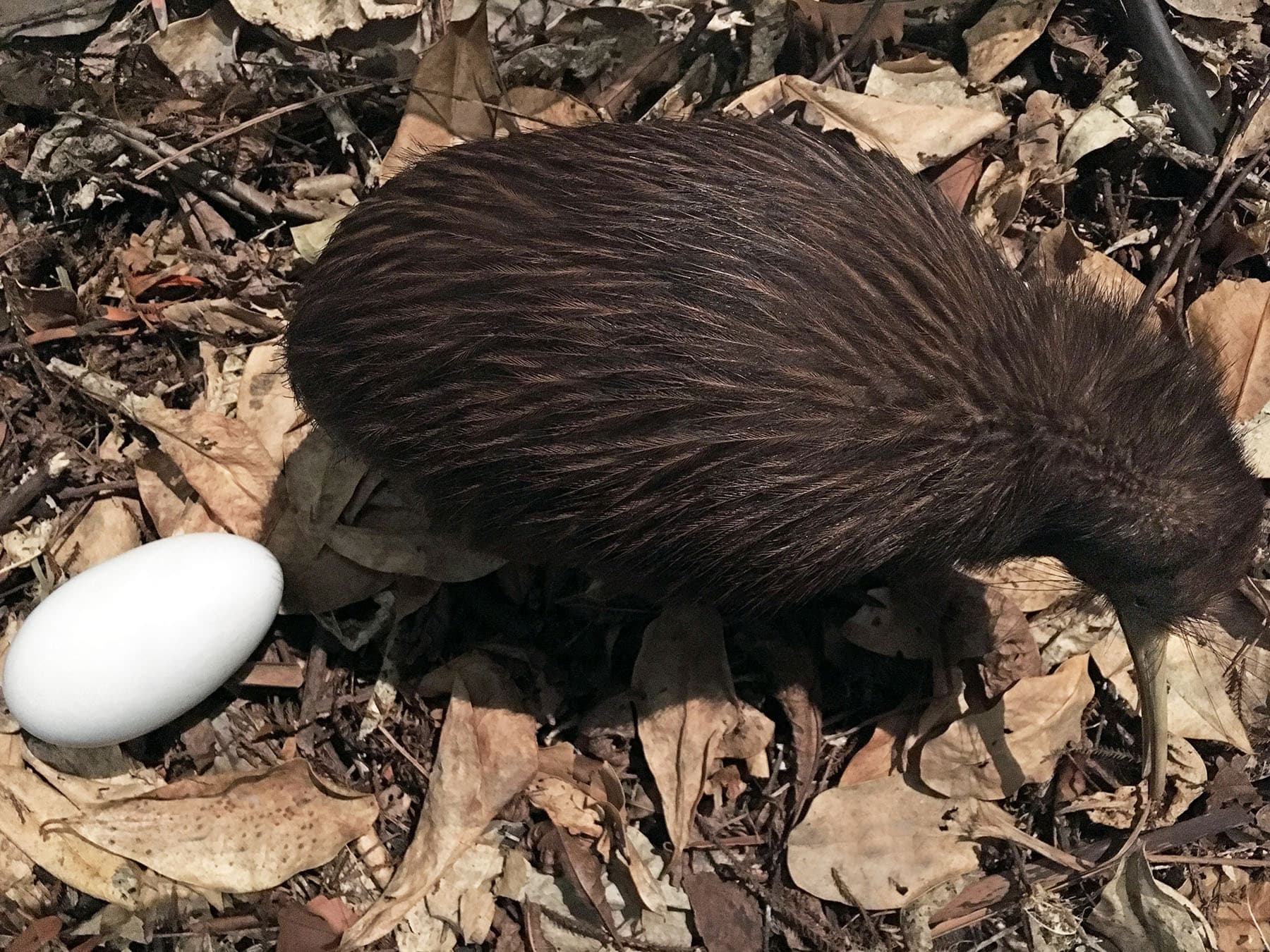
Brown kiwi eggs contain a huge amount of energy - as they are as much as 60% yoke - and seriously deplete the female’s energy reserves. In addition, the egg is so large that the kiwi can barely move for the last few days before laying, and she has to fast because she cannot eat - there’s simply no space for food.
How did this come to be? Scientists know that baby kiwis are very well-developed at birth and require very little parental care, especially with regard to feeding, as they can live for many days of the egg yolk they digest after hatching. Baby kiwis likely need to be this well-developed to survive, though evolution seems to have taken things to the extreme.
North Island Brown Kiwi egg dimensions
North Island brown kiwi eggs measure around 12.4cm long and 8cm wide and weigh about 430g (15oz), but some eggs have been reliably reported weighing up to 500g or so.
Elephant Bird
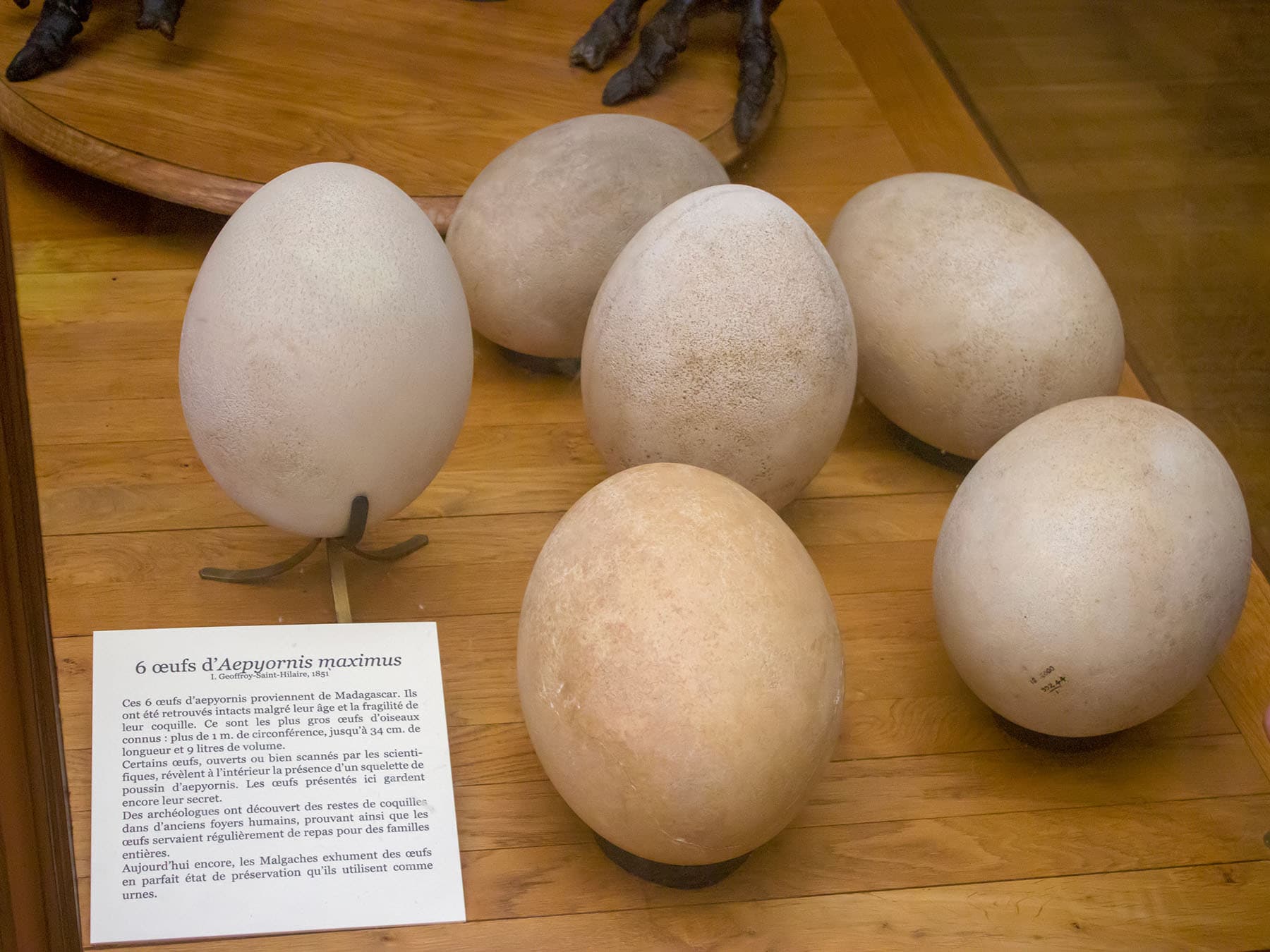
Just 1,000 years ago, a bird roamed the earth, making the ostrich look small. The largest elephant birds stood up to 3m (9.8 ft) in height and weighed over 500kg (1,100lb).
They became extinct around 1,000 years ago. To date, they hold the record as the largest bird to have ever lived.
The Elephant bird laid colossal eggs that measured over 30cm (12in) long. In some situations, they could have weighed over 10kg (22lb) - around five times heavier than an ostrich egg.
Elephant bird eggs are larger than most dinosaur eggs. However, some dinosaur eggs laid by species such as oviraptorosaur might have been 45cm long.
Elephant Bird egg dimensions
Elephant bird eggs were around 30cm (12in) long and could weigh over 10kg (22lb) in some situations.
Bigger birds don’t always lay bigger eggs
The largest eggs are laid by the largest, flightless birds, including ostriches, cassowaries, emus, rheas, and penguins. From there, there’s a lot of variation in what bird lays the biggest eggs.
For example, you might expect eagles to lay some of the largest eggs of any flighted bird, but some species of swans and geese lay much larger eggs.
It depends on whether the chicks are born altricial (undeveloped) or precocial (well-developed).
Precocial chicks are feathered and covered in down and are typically able to feed and walk within hours or even minutes of being born. , where food is sparse, in cold environments, or where extensive parental care is risky.
FAQs
Which bird lays the largest bird egg relative to body size?
Although the Ostrich lays the largest egg of any living bird species, the Kiwi lays the largest proportionate to their body size. If the size of a Kiwi egg was scaled proportionately to size, it would have the largest egg by over 6 times that of an Ostrich.
Which bird lays the biggest egg in the UK?
In the UK, the Mute Swan lays the largest egg. Mute swan eggs are around 11.3cm (4.5in) long and weigh about 345g (12oz).