


Southern Cassowary
Double-wattled Cassowary, Australian Cassowary · Casuarius casuarius
By the Birdfact teamChecked by Nathan Cope
On this page12 sections
How to recognise it
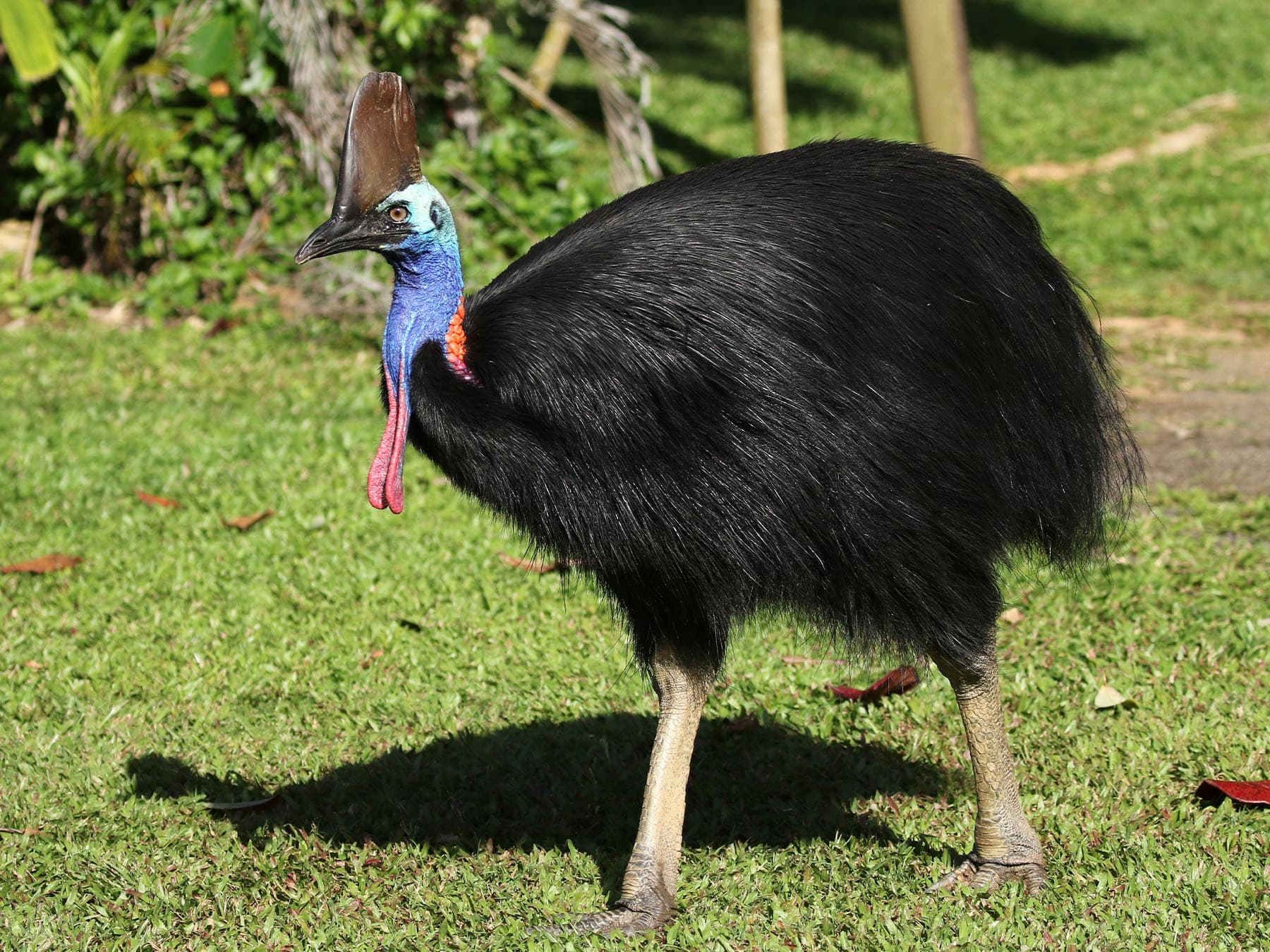
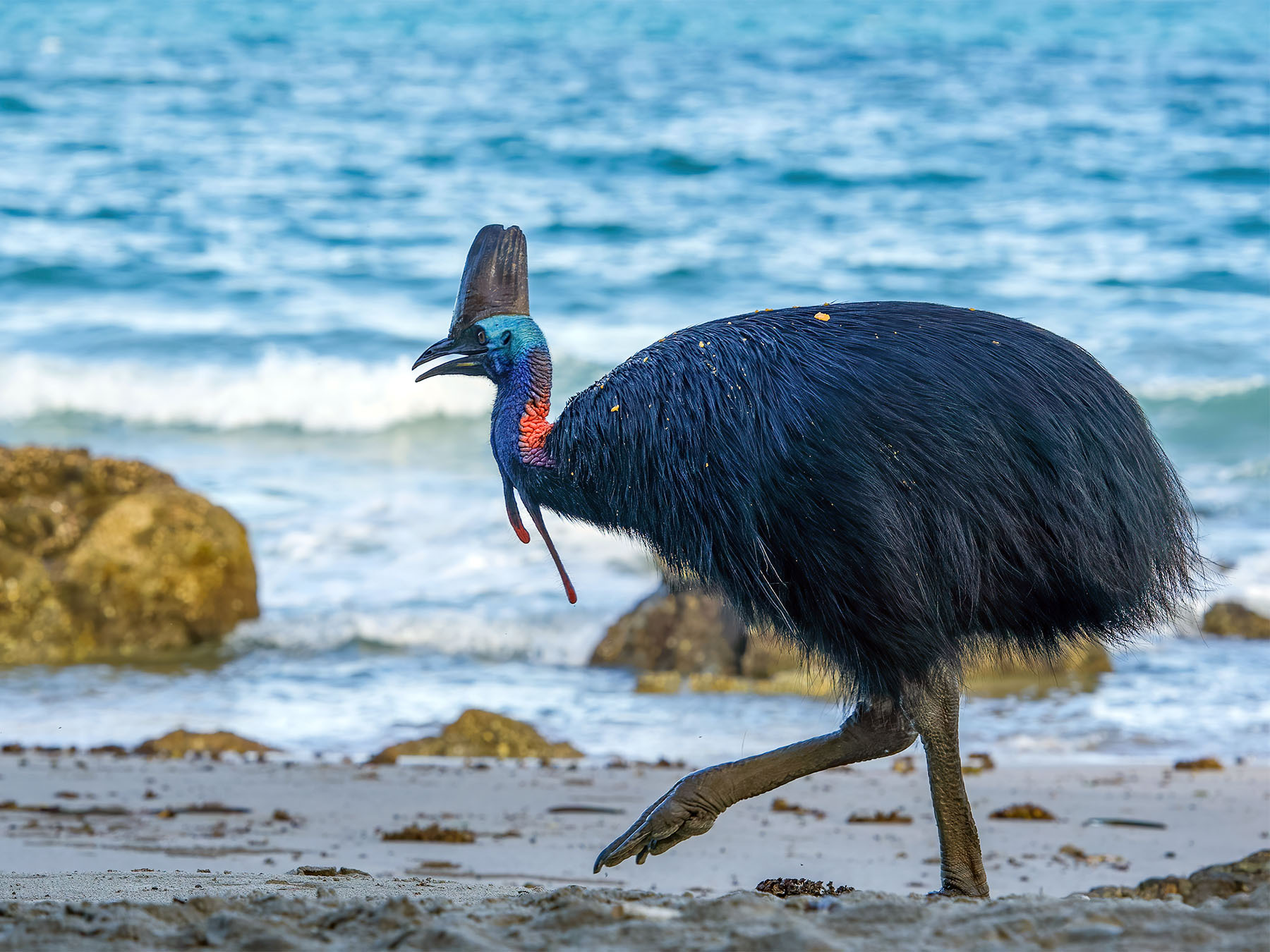
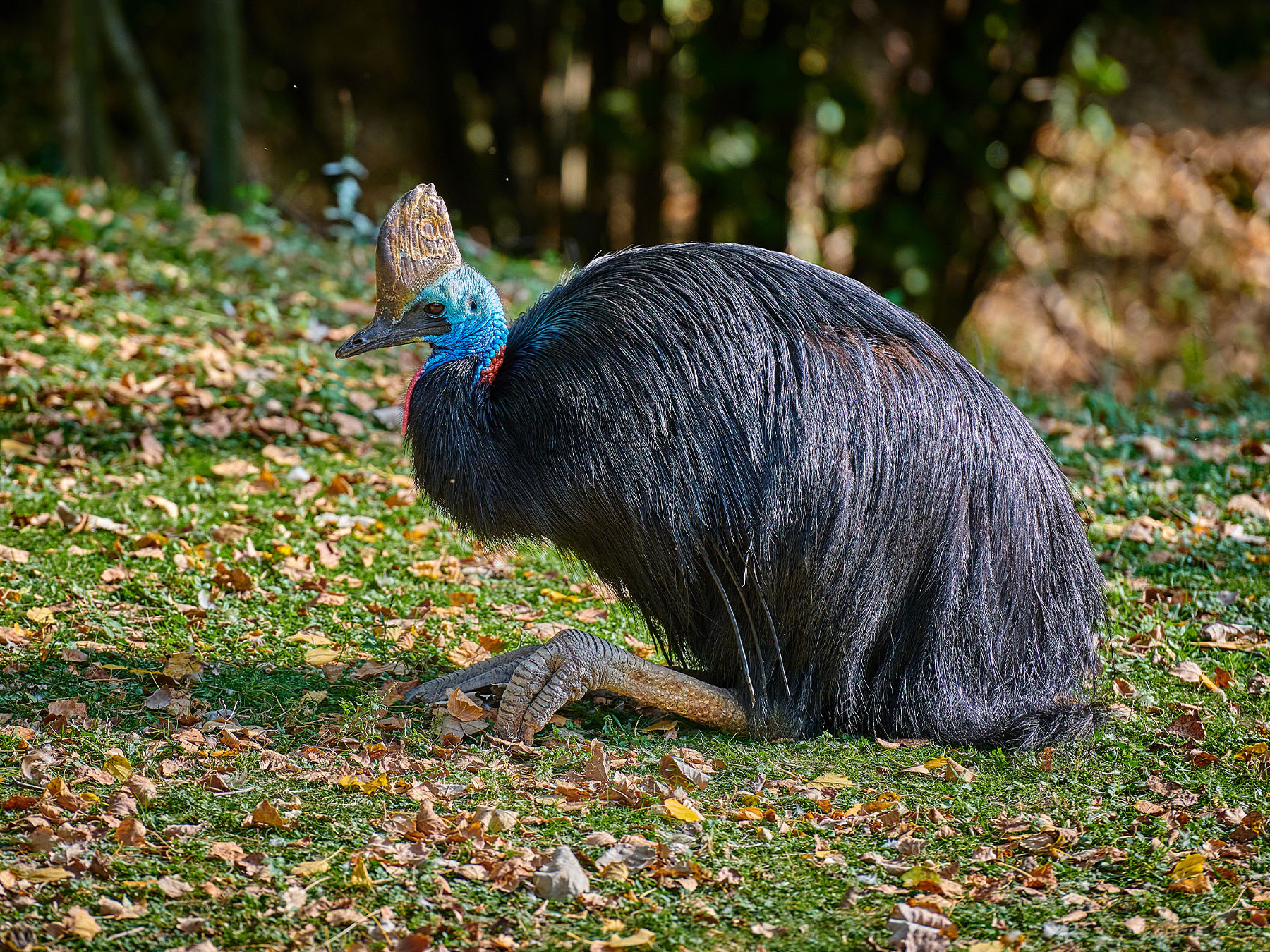
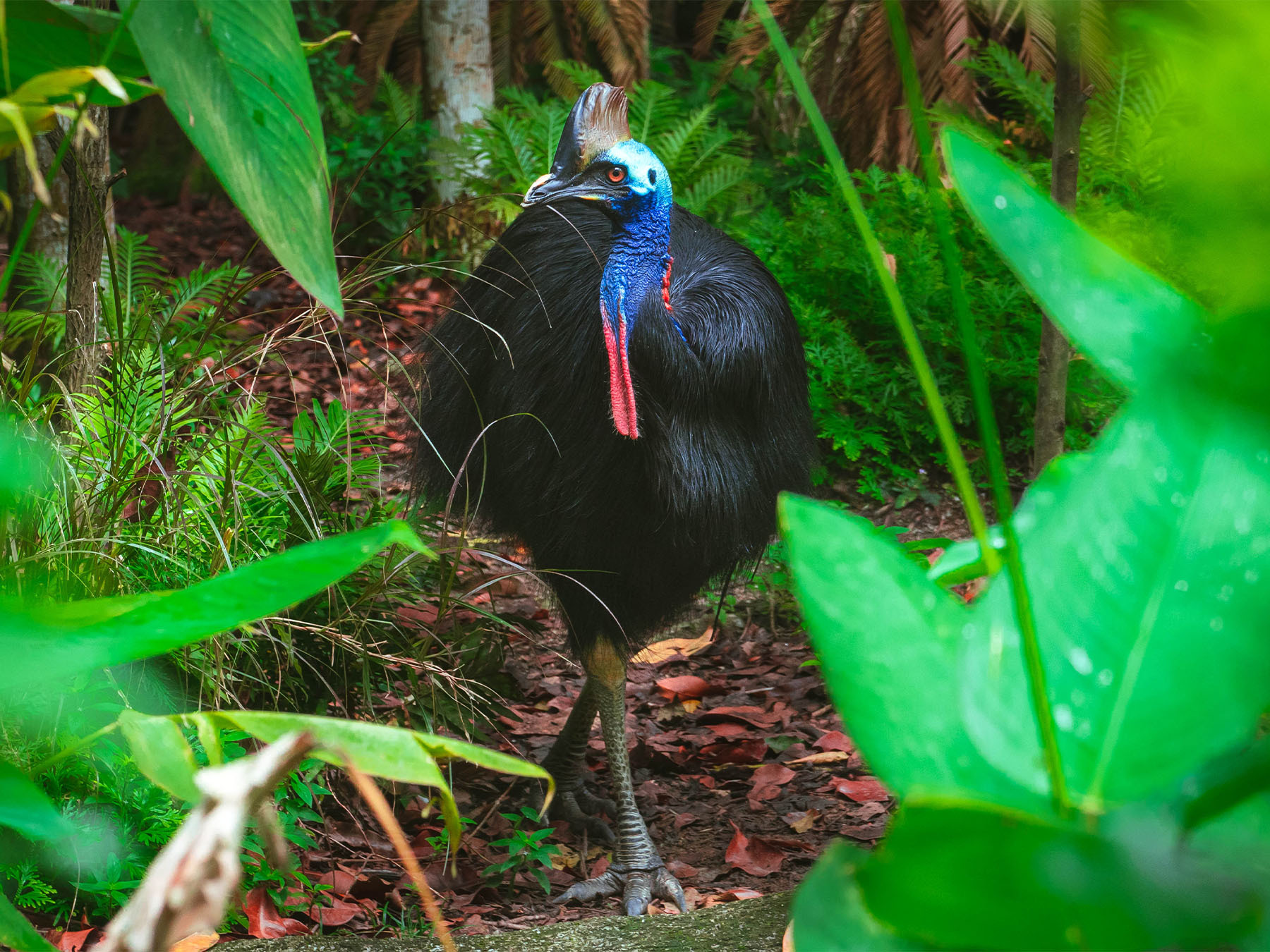
The Southern Cassowary is a striking, flightless bird with a tall, helmet-like casque atop its head. Its body is covered in glossy black feathers, with a vibrant blue neck, face, and two red wattles hanging from its throat. The bird stands up to 2 meters tall.
Females are typically larger than males, with a taller casque. Both sexes have powerful legs with dagger-like claws and small vestigial wings. Juveniles have brown plumage, gradually developing adult colouration as they mature.
Its size
Adults- Length
- 127–170 cm
- Wingspan
- 150–200 cm
- Weight
- 29000–58500 g
Its song and calls
Southern Cassowaries are known for their deep, booming vocalisations that can be felt as much as heard. Their calls include low-frequency rumbles, grunts, and hisses.
During threat displays, they produce a series of thunderous booms that resonate through the rainforest, sounding almost prehistoric.
When and where to see it
The Southern Cassowary is not recorded regularly in the UK, Ireland, the United States or Canada.
Worldwide: recorded regularly in 3 countries
Countries where it was recorded in at least 3 of the 6 years 2019–2024. Linked countries have their own bird list.
Asia (1)
- Indonesia
Oceania (2)
Data: EOD – eBird Observation Dataset (Cornell Lab of Ornithology), accessed via GBIF.org, CC BY 4.0. Records from 2019–2024, aggregated and filtered by Birdfact. How these lists are made
Tips for seeing it
- Look for cassowaries in dense rainforest undergrowth, especially near fruit-bearing trees
- Listen for their low-frequency booming calls, which can travel long distances
- Be cautious and maintain a safe distance, as cassowaries can be aggressive if threatened
- In Australia, visit the Daintree Rainforest or Mission Beach area for the best chances of spotting one
What it eats
Southern Cassowaries are primarily frugivorous, consuming a wide variety of rainforest fruits. They play a crucial role in seed dispersal, swallowing fruits whole and passing the seeds intact.
Their diet is supplemented with small vertebrates, invertebrates, and fungi when fruit is scarce.
Nesting and breeding
Breeding occurs during the Australian winter, typically from June to October. Males attract females with elaborate displays, including puffing up their feathers and producing low-frequency booming calls.
Females lay 3-5 large, pale green eggs in a simple nest on the forest floor, usually concealed by vegetation. The nest is a shallow depression lined with leaves and plant material.
Uniquely among large birds, male cassowaries perform all incubation and chick-rearing duties. They incubate the eggs for about 50 days and care for the chicks for up to 9 months, fiercely protecting them from predators.
Behaviour
Southern Cassowaries are solitary and territorial, patrolling their rainforest domains with a purposeful stride. They're known for their powerful kicks, used for defense against predators or rivals.
These birds are excellent swimmers, capable of crossing rivers and even venturing into the sea for short distances.
Conservation
Although the Southern Cassowary is listed as Least Concern, it faces threats due to habitat loss and fragmentation. Road accidents and attacks by domestic dogs also pose significant threats.
Conservation efforts focus on protecting and connecting rainforest habitats, as well as educating local communities about coexistence with these important seed dispersers.
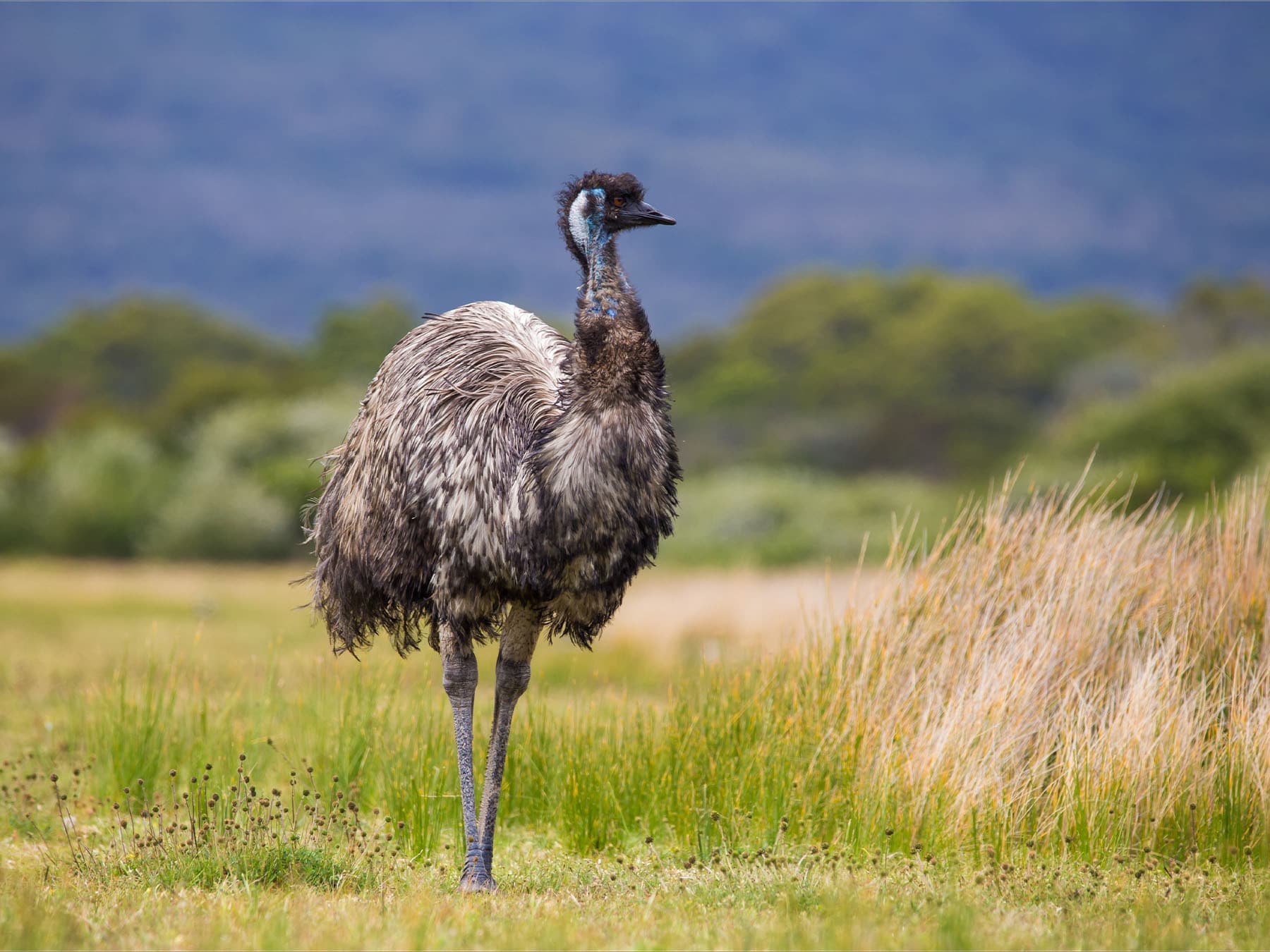
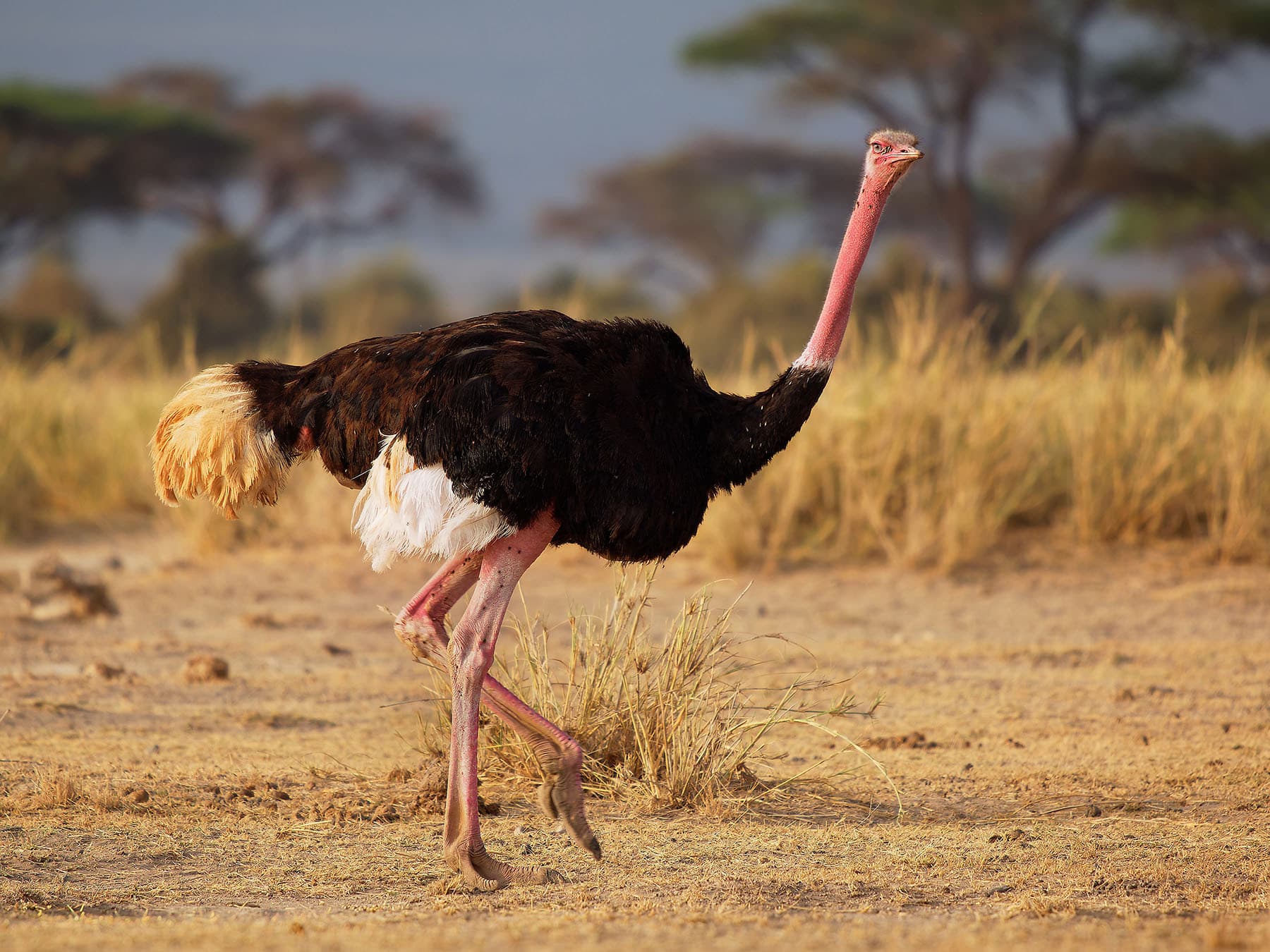
Similar birds
Often mistaken for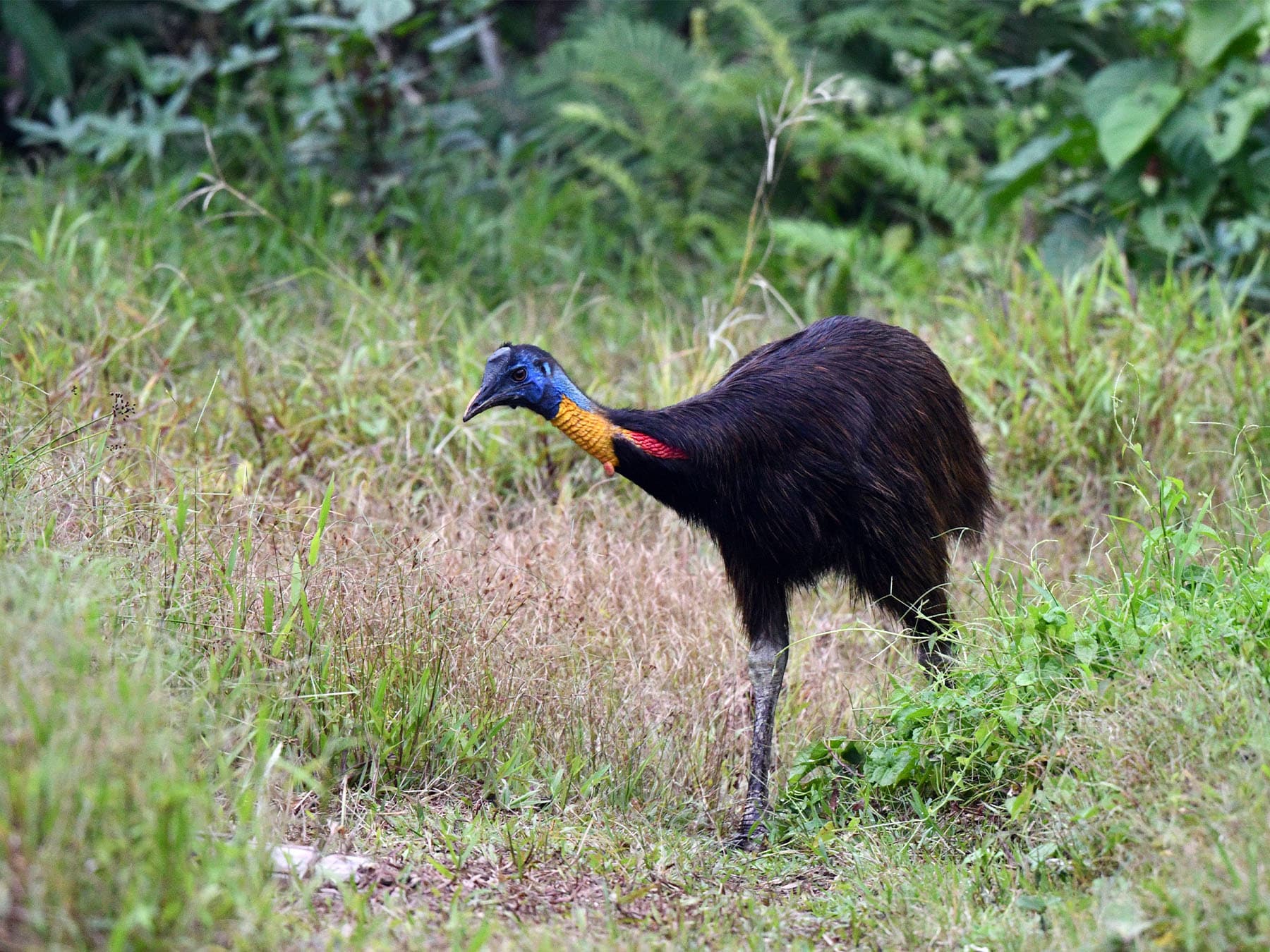
More photos
4 photos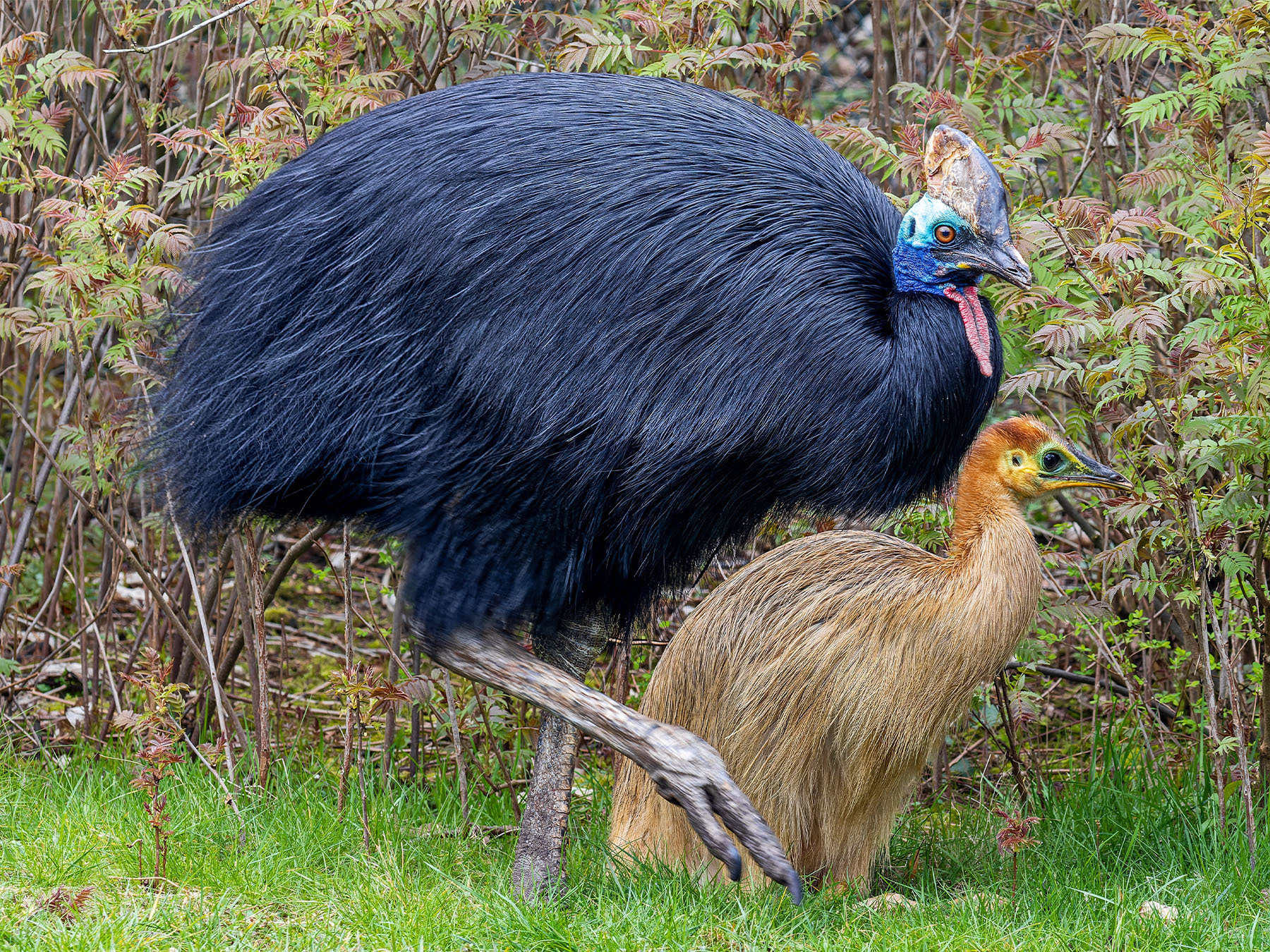
Quick facts
- Length
- 127–170 cm
- Wingspan
- 150–200 cm
- Weight
- 29000–58500 g
- Lifespan
- 18–20 years · oldest recorded 30 years
- Family
- Cassowaries & Emus
- Migration
- Resident
- Global status (IUCN)
- Least Concern
- World population
- 20,000 - 50,000 mature individuals
- Population trend
- Population decreasing due to habitat loss and other threats
- Also called
- Double-wattled Cassowary, Australian Cassowary
- Scientific name
- Casuarius casuarius
Sources
4- 1BirdLife International. 2018. Casuarius casuarius. The IUCN Red List of Threatened Species 2018: e.T22678108A131902050. Source (opens in a new tab)
- 2Dwyer et al. (2016)
- 3G. Dutson in litt. (2016)
- 4Kohler et al., Comparative mortality levels among selected species of captive animals, Dem Res, 15:413-434 (2016)

Checked by
Nathan Cope, founder and editor
Nathan founded Birdfact and leads its writers and contributors in the UK, the US and Canada. He has watched and studied birds for more than ten years, and checks every article and species guide before it’s published.