


Emu
Australian Emu · Dromaius novaehollandiae
By the Birdfact teamChecked by Nathan Cope
On this page13 sections
How to recognise it
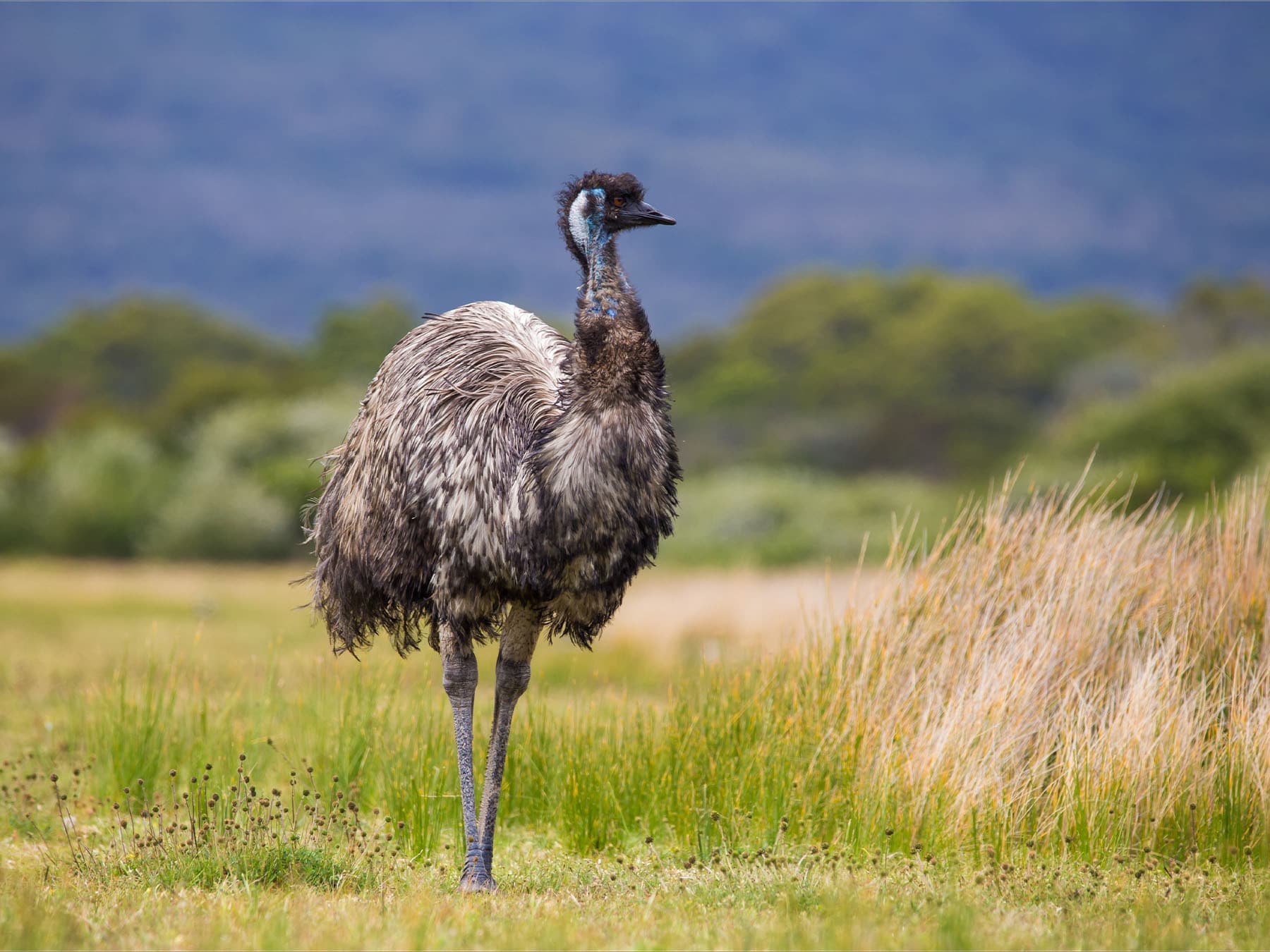
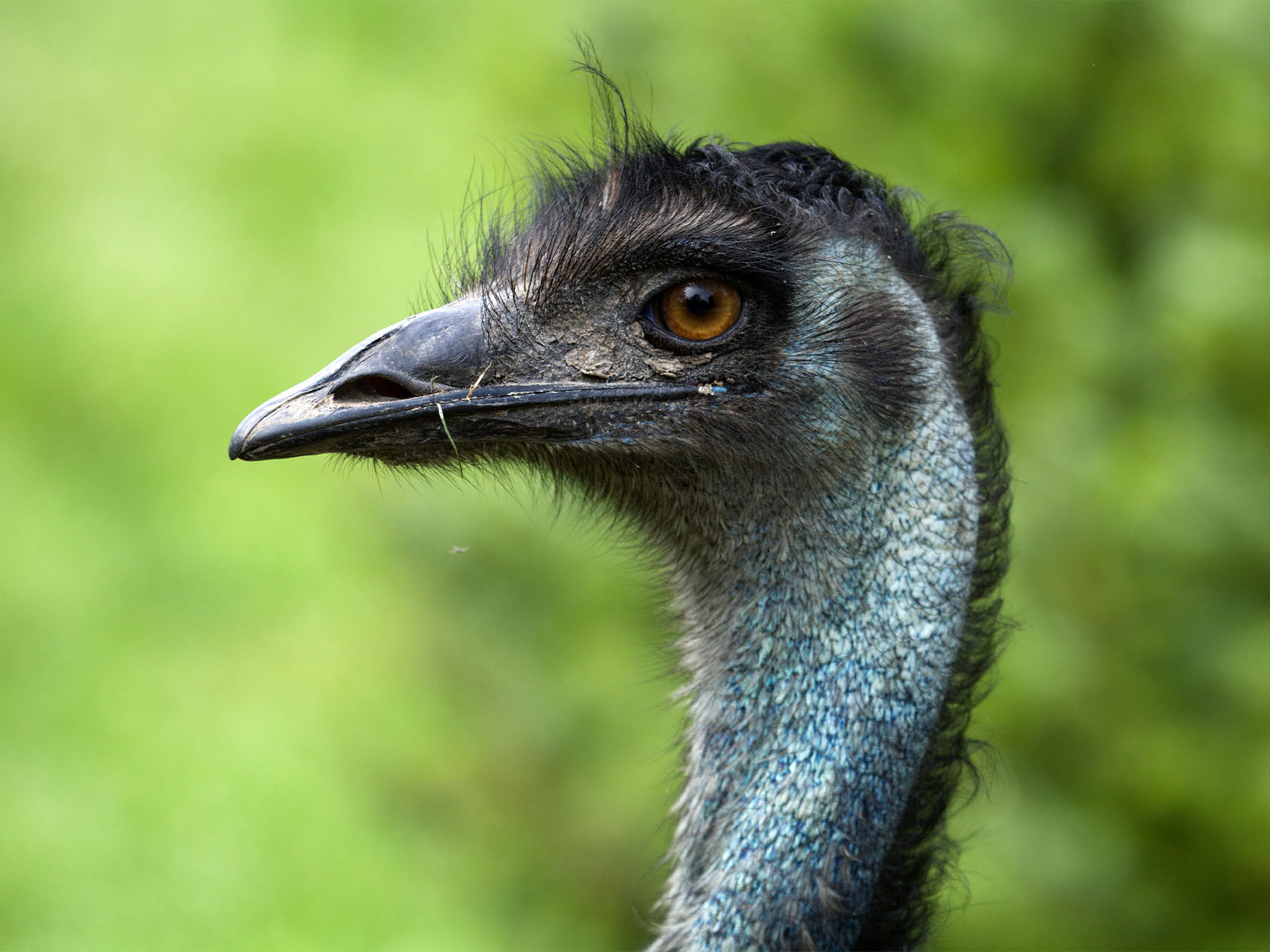
The Emu is a flightless bird with a tall, upright stance and long neck. Its body is covered in shaggy, greyish-brown feathers that resemble fur. The head and neck have sparse, black, bristly feathers, and its legs are long and powerful.
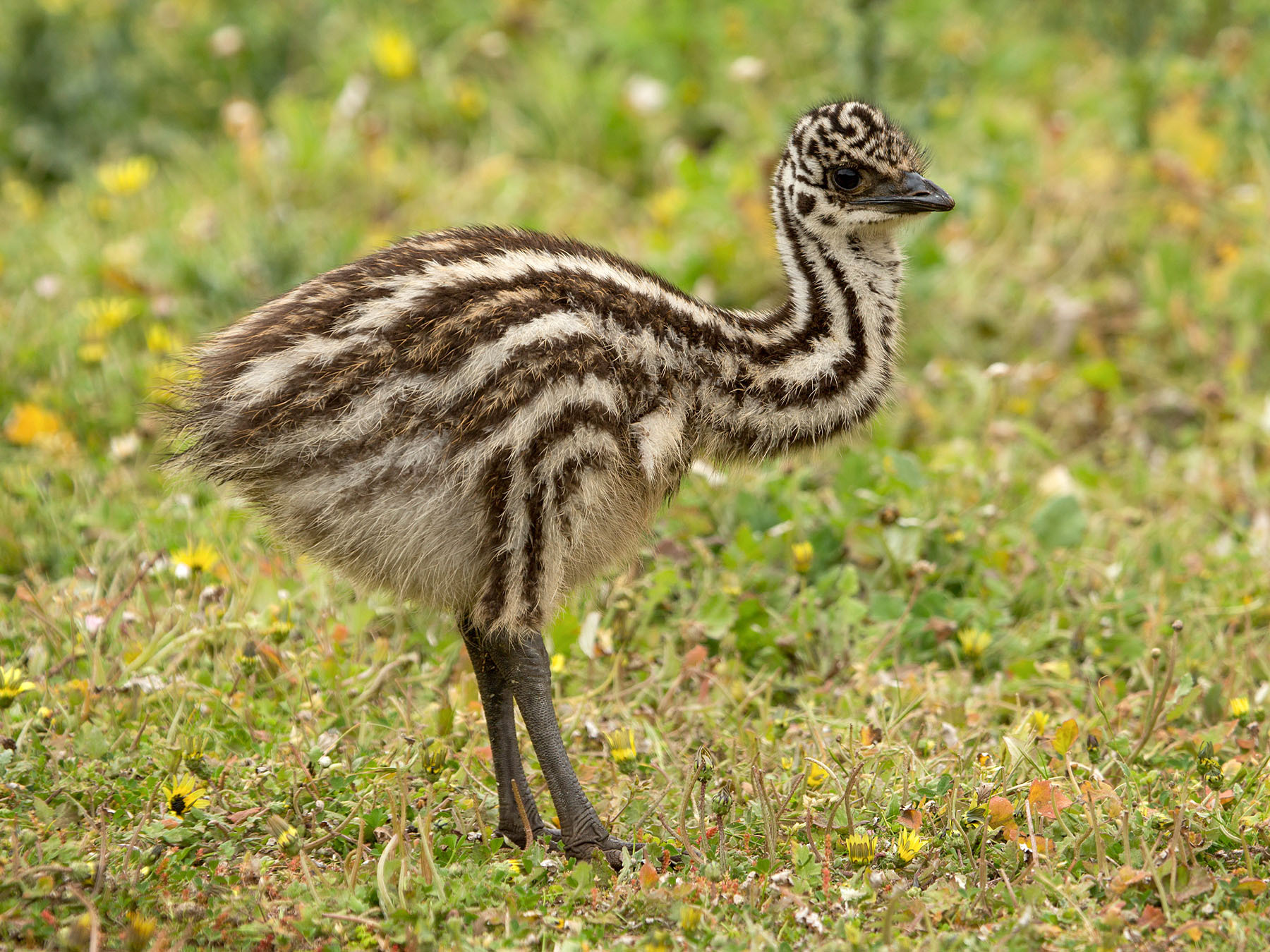
Adult Emus stand 1.5 to 1.9 meters tall. Both sexes look similar, though females are slightly larger on average. Juveniles have distinctive brown and cream striped plumage until about 3 months old.
Its size
Adults- Length
- 150–190 cm
- Wingspan
- 16–25 cm
- Weight
- 30000–55000 g
Its song and calls
Emus produce a variety of sounds, but their most distinctive vocalisation is a low, booming call that can be heard up to 2 kilometres away. This sound is created by inflating a neck sac and sounds like 'e-moo'. They also make grunts, hisses, and drumming noises, especially when threatened.
When and where to see it
The Emu is not recorded regularly in the UK, Ireland, the United States or Canada.
United States: recorded in 6 of the 6 years; Canada: recorded in 1 of the 6 years; United Kingdom: recorded in 1 of the 6 years. Too few years to count as a regular visitor.
Worldwide: recorded regularly in 2 countries
Countries where it was recorded in at least 3 of the 6 years 2019–2024. Linked countries have their own bird list.
Oceania (2)
Data: EOD – eBird Observation Dataset (Cornell Lab of Ornithology), accessed via GBIF.org, CC BY 4.0. Records from 2019–2024, aggregated and filtered by Birdfact. How these lists are made
Tips for seeing it
- Look for Emus in open grasslands, savannahs, and woodlands across Australia
- Listen for their distinctive booming, drumming calls
- Observe from a safe distance, as Emus can be territorial and potentially aggressive
- Visit national parks and reserves in Australia for the best chances of spotting Emus in the wild
What it eats
Emus are omnivorous, primarily feeding on plants, including fruits, seeds, and shoots. They also consume insects, small vertebrates, and animal droppings.
These birds require stones and pebbles to aid in grinding food in their gizzards, and they can go weeks without eating when food is scarce.
Nesting and breeding
Emus typically breed during the Australian winter and spring. To attract females, males perform elaborate courtship displays, including neck swelling and booming calls.
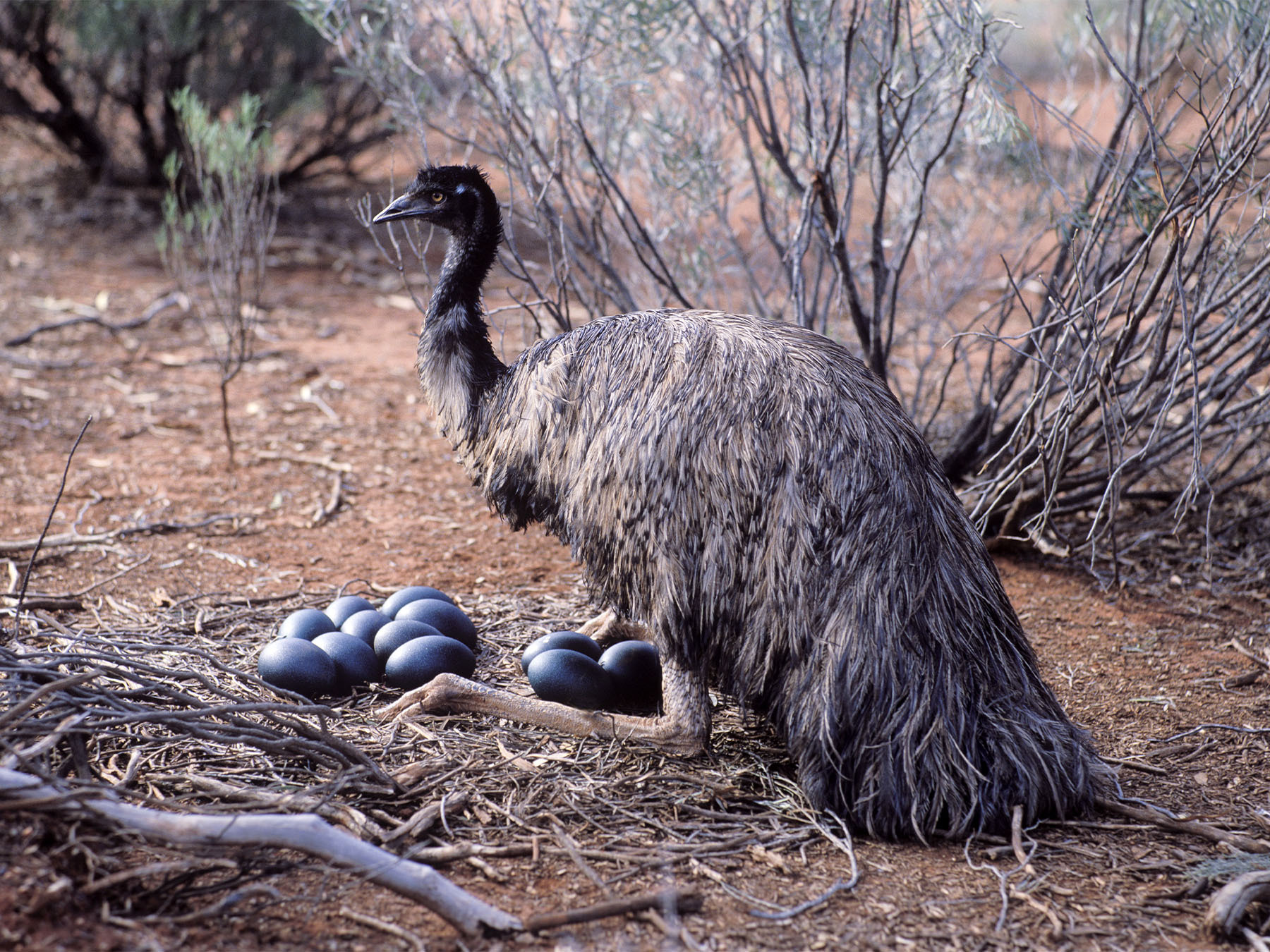
The male constructs a simple nest on the ground, often near a bush or tree for protection. Females lay 5-15 large, dark green eggs in the nest.
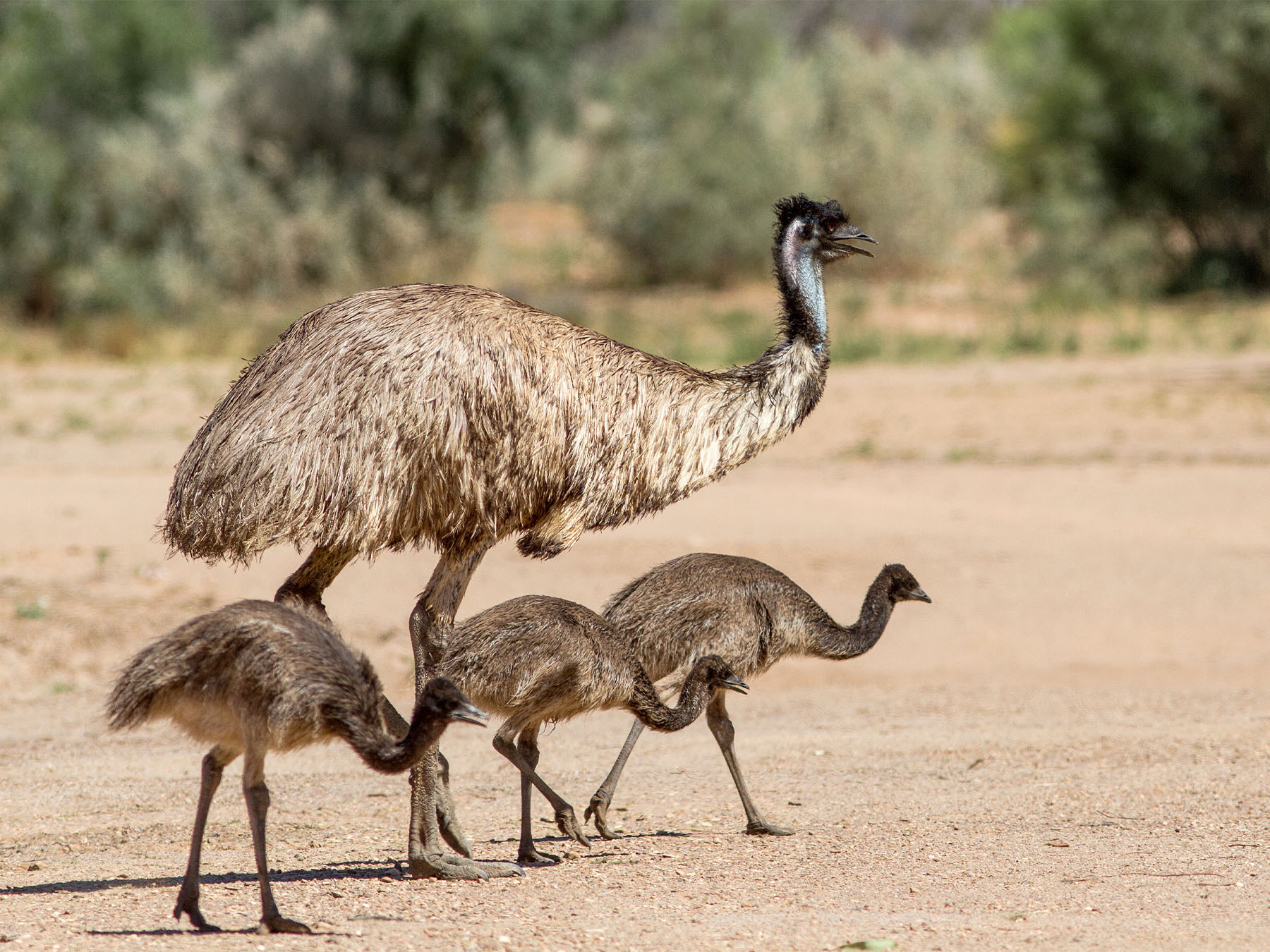
Unusually among birds, the male is solely responsible for incubation, which lasts about 8 weeks. He also cares for the chicks for up to 18 months, defending them against predators and teaching them to forage.
Behaviour
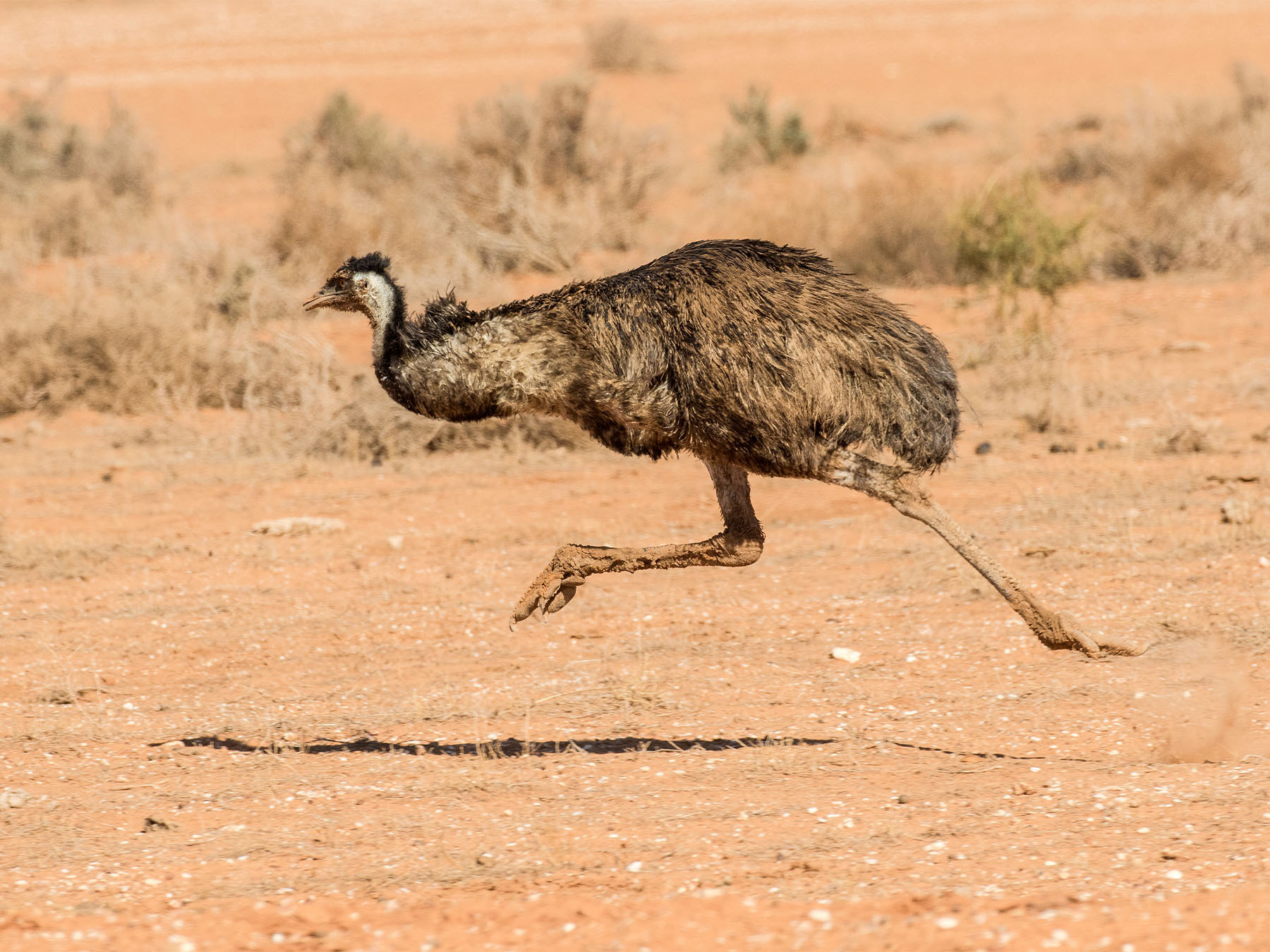
Emus are nomadic, travelling long distances in search of food and water. They are excellent runners, capable of sprinting at speeds up to 50 km/h. These birds are generally solitary but may form large flocks when food is abundant. They communicate through various vocalisations and are known for their curiosity towards unfamiliar objects.
Conservation
While listed as Least Concern globally, Emu populations face localised threats from habitat loss and fragmentation due to agriculture and urban development.
Some states in Australia have implemented conservation measures to protect Emu habitats and maintain sustainable populations.
Similar birds
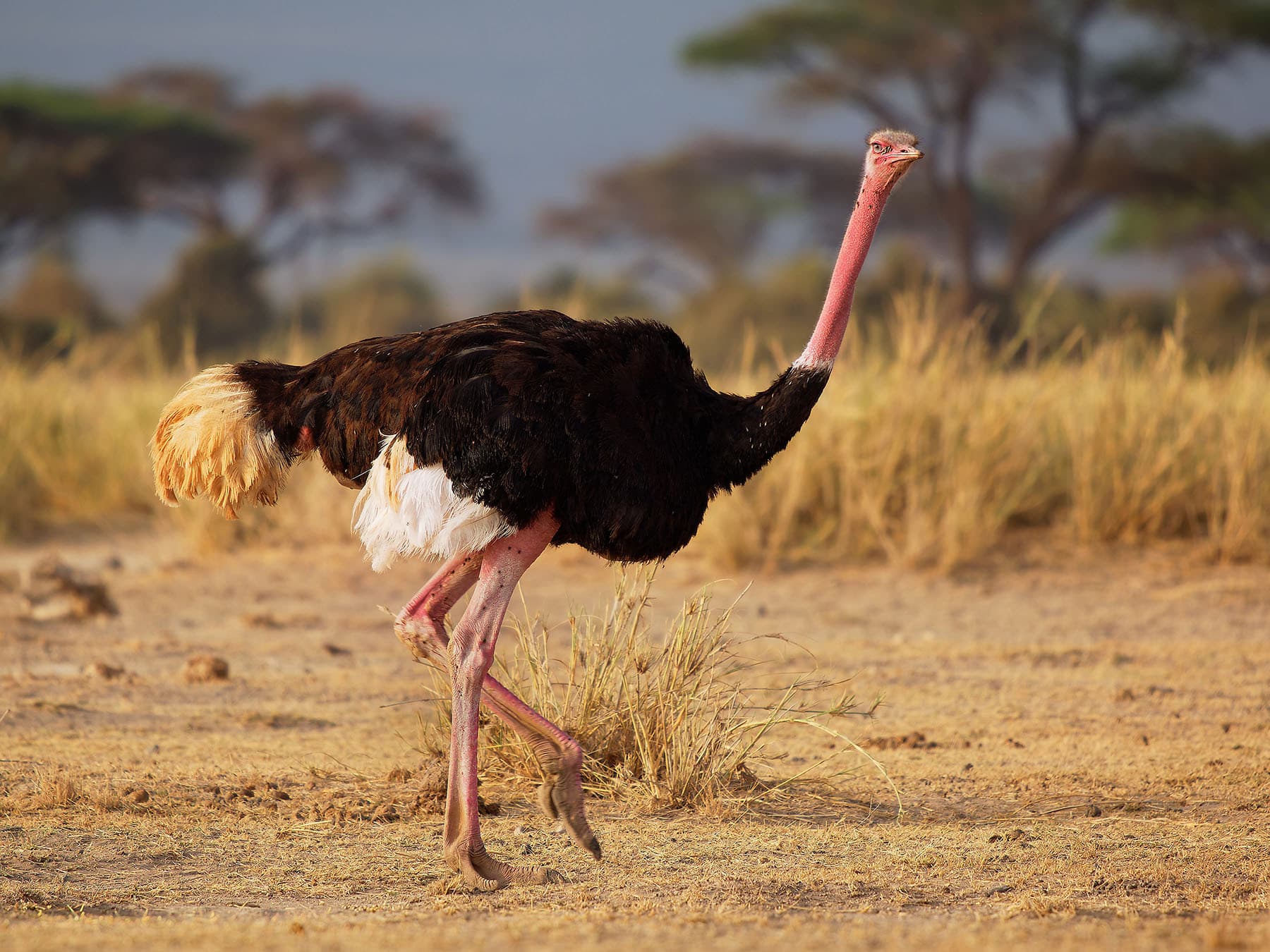
Often mistaken for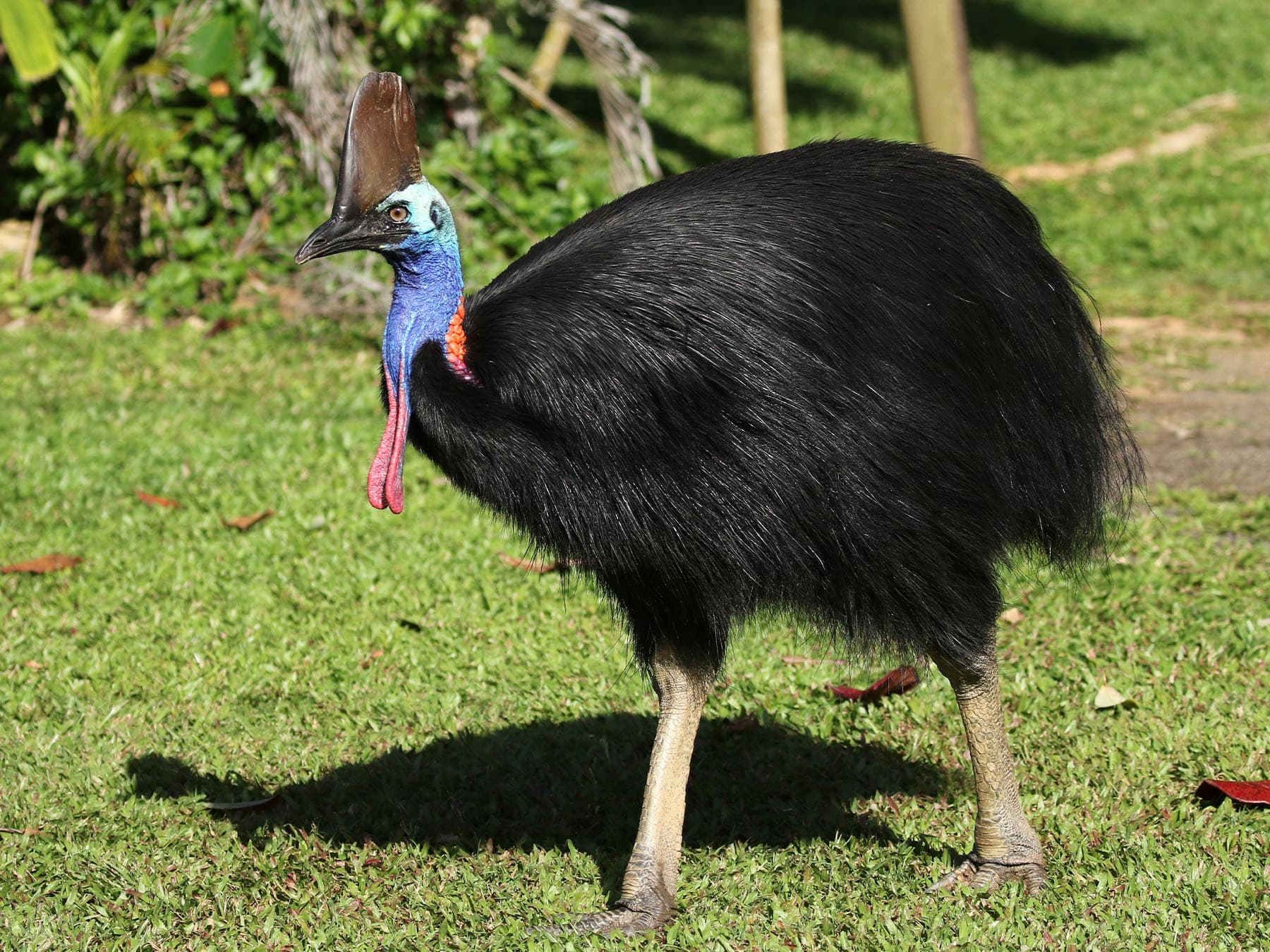
More photos
6 photos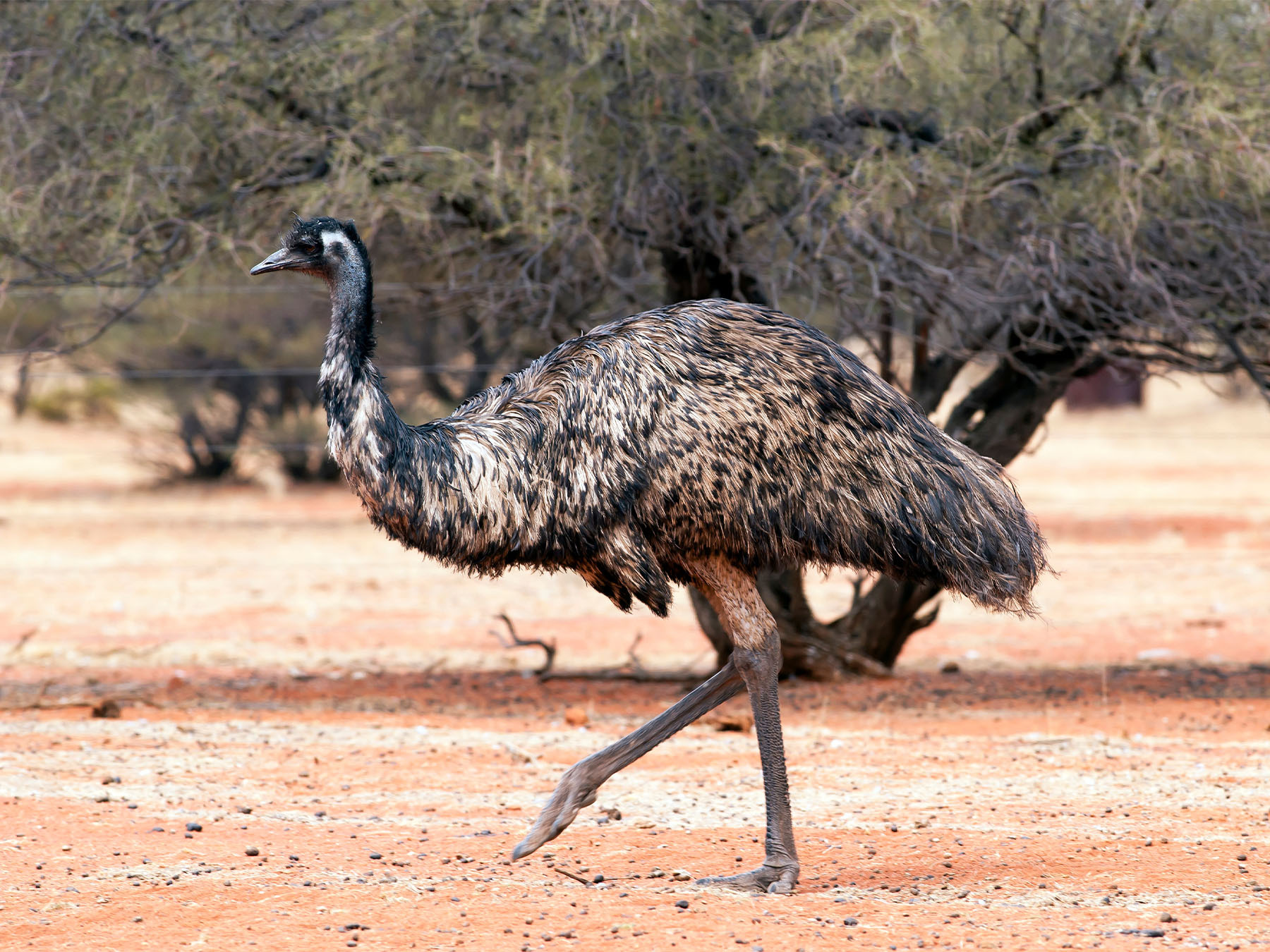
Emu guides
6 guidesQuick facts
- Length
- 150–190 cm
- Wingspan
- 16–25 cm
- Weight
- 30000–55000 g
- Lifespan
- 10–20 years
- Family
- Cassowaries & Emus
- Migration
- Nomadic
- Global status (IUCN)
- Least Concern
- World population
- 625,000 - 725,000 mature individuals
- Population trend
- Population is considered stable, no significant trends
- Also called
- Australian Emu
- Scientific name
- Dromaius novaehollandiae
Sources
3- 1BirdLife International. 2018. Dromaius novaehollandiae. The IUCN Red List of Threatened Species 2018: e.T22678117A131902466. Source (opens in a new tab)
- 2del Hoyo et al. (1992)
- 3AMO (2001)

Checked by
Nathan Cope, founder and editor
Nathan founded Birdfact and leads its writers and contributors in the UK, the US and Canada. He has watched and studied birds for more than ten years, and checks every article and species guide before it’s published.