Common Ostrich

Species Profile

Common Ostrich

Struthio camelus

Quick Facts

Conservation

LCLeast Concern

Lifespan

30–40 years

Length

210–275 cm

Weight

63000–145000 g

Wingspan

200–250 cm

Migration

Resident

This flightless giant, standing up to 9 feet tall, roams the African savanna with surprising speed and grace.

Also known as: Ostrich

Share

Think you've spotted a Common Ostrich?

Upload a photo and our AI will confirm it instantly

Confirm with a Photo

Gallery

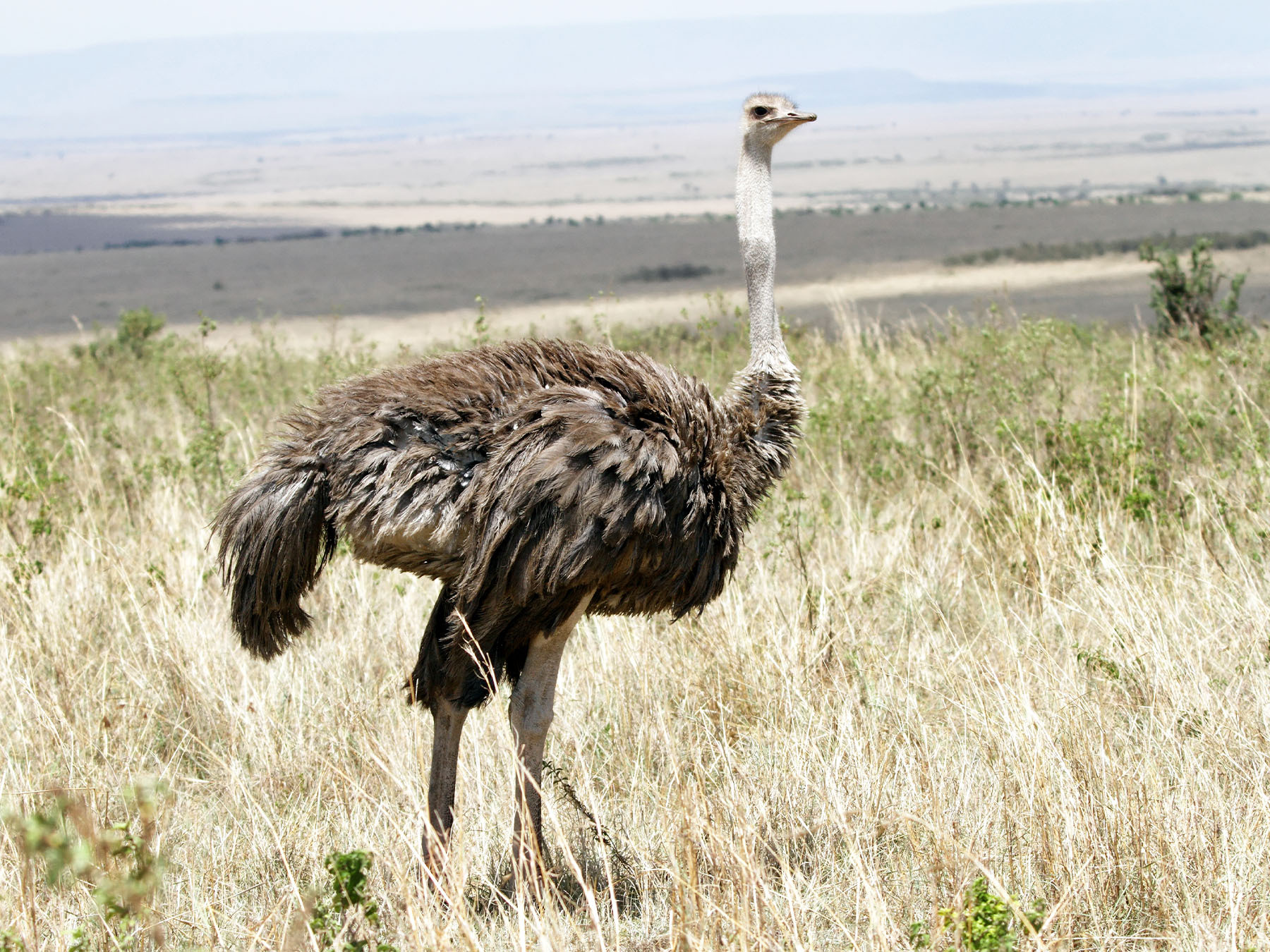
Female Common Ostrich
1 / 5
Female Common Ostrich

Appearance

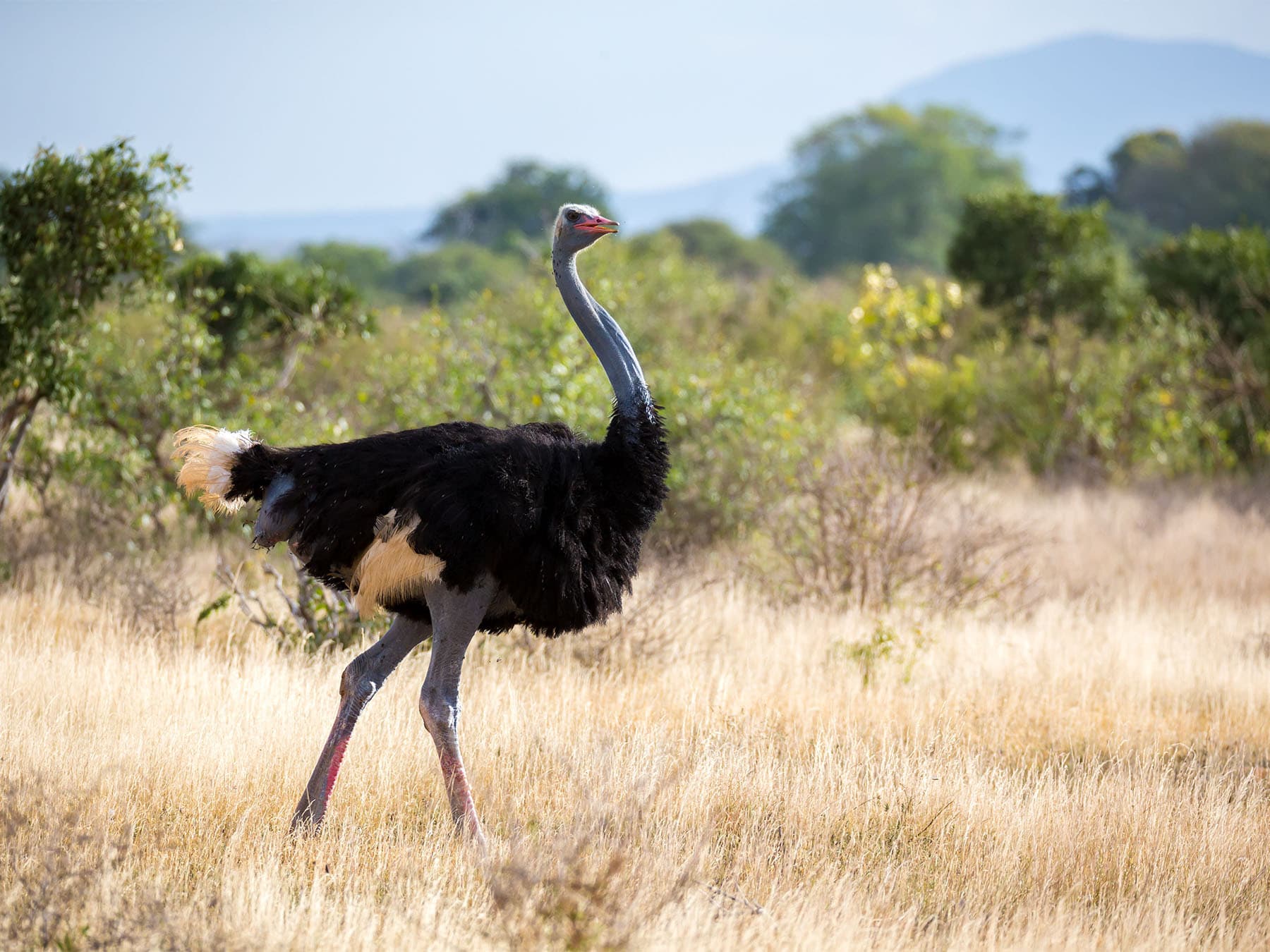
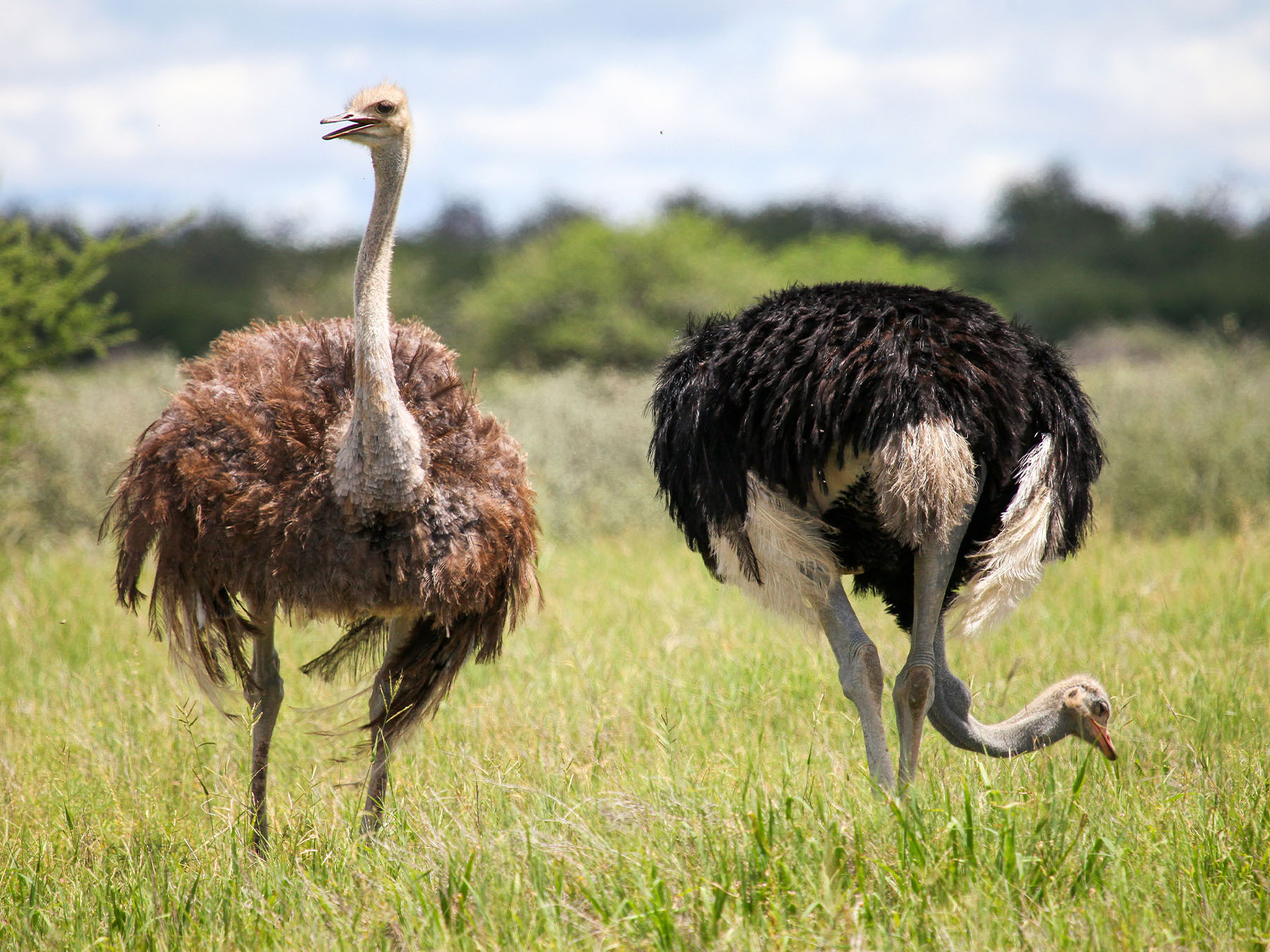
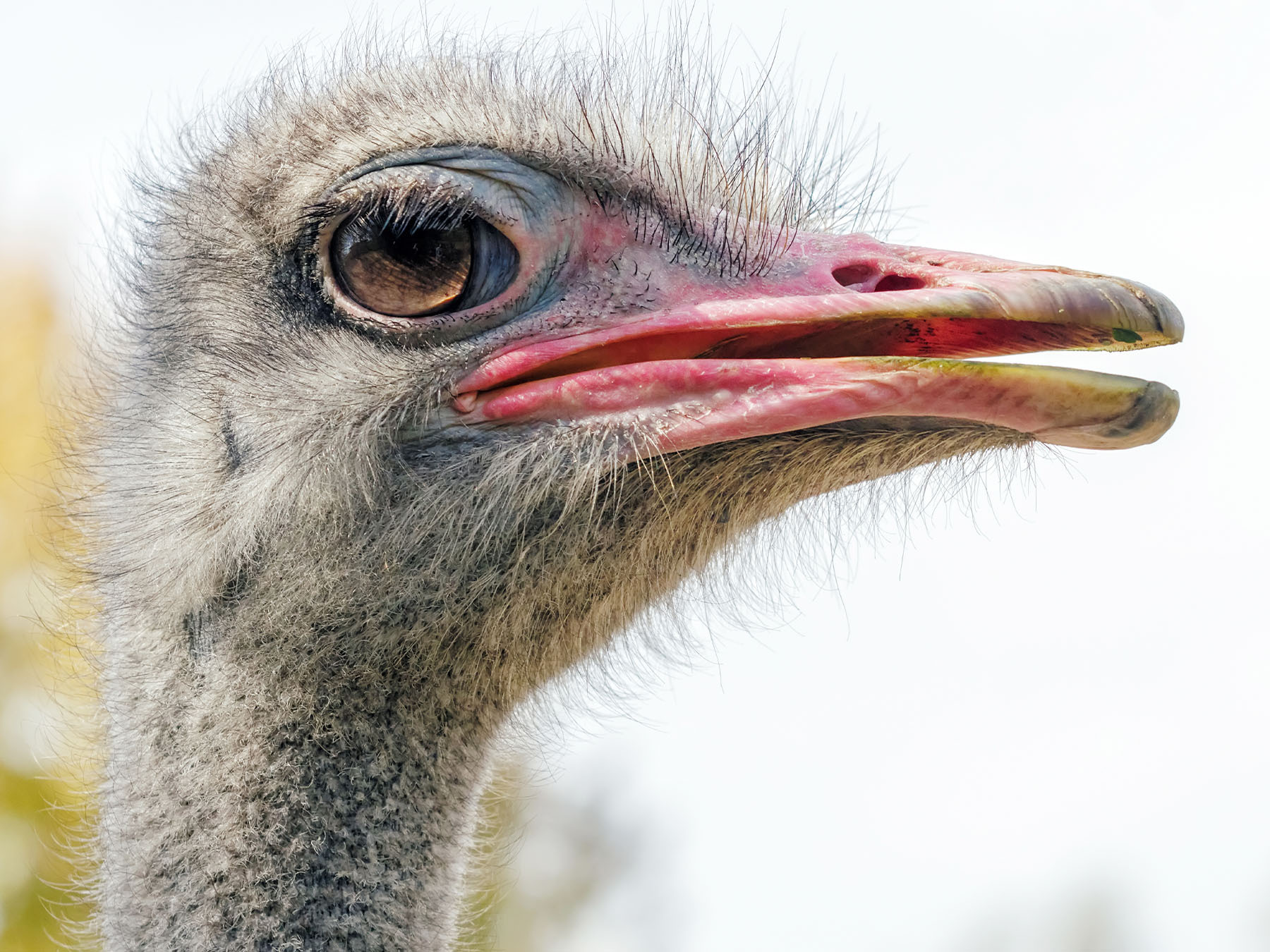
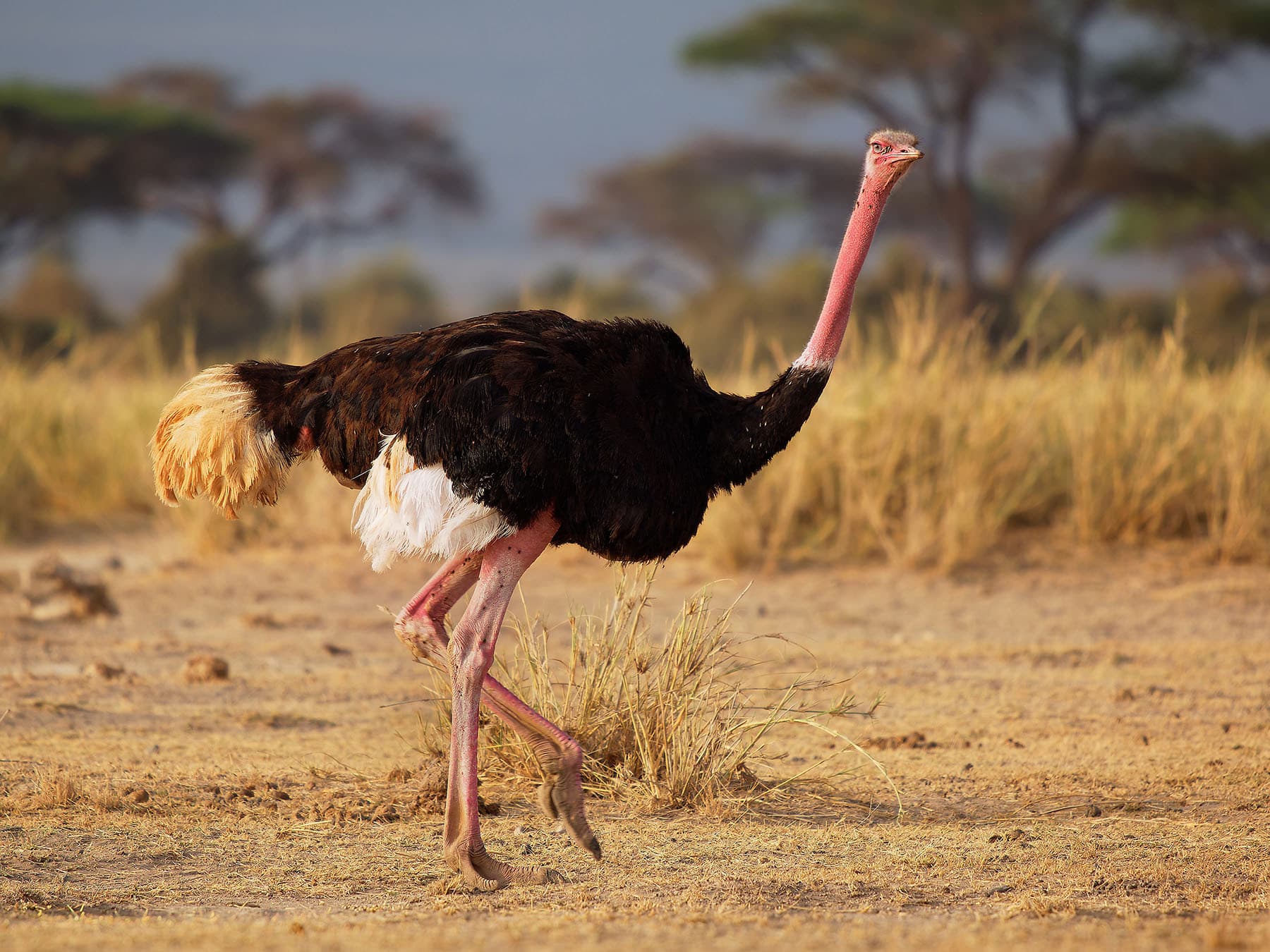
The Common Ostrich is a striking bird. Males boast black body feathers contrasted by white wing and tail plumes. Their long, bare necks and legs are pinkish-grey, and their heads are relatively small with large, expressive eyes.

Females are slightly smaller and have duller, brown-grey plumage. Juveniles resemble females but have streaked necks and legs. Both sexes have two-toed feet, which is unique among birds.

Identification & Characteristics

Male Colors

Primary
Black
Secondary
Brown
Beak
Pale Yellow
Legs
Pink

Female Colors

Primary
Brown
Secondary
White
Beak
Grey
Legs
Pink

Male Markings

Males have bold black and white plumage, females and young are more drab

Tail: Short and stumpy

Female Markings

Duller plumage compared to males, with brown-grey feathers

Tail: Short and less contrasting


Attributes

Agility85/100
Strength90/100
Adaptability75/100
Aggression70/100
Endurance80/100

Habitat & Distribution

Common Ostriches inhabit open, arid, and semi-arid landscapes across sub-Saharan Africa. They thrive in grasslands, savannas, and the fringes of deserts, where their excellent vision and speed are advantageous.

While primarily found in East and Southern Africa, including countries like Kenya, Tanzania, and South Africa, small populations also exist in West Africa. They are absent from densely forested areas and true deserts.

Distribution

Loading map...
Get a personalised bird guide for your area

Diet

Ostriches are omnivorous, primarily feeding on plants, including leaves, seeds, and fruits. They also consume insects, small reptiles, and rodents. Their diet is supplemented by pebbles, which they swallow to aid in grinding food in their gizzards.

Behaviour

Ostriches are highly social, often forming large flocks outside the breeding season. They are known for their impressive speed, using their powerful legs to outrun predators.

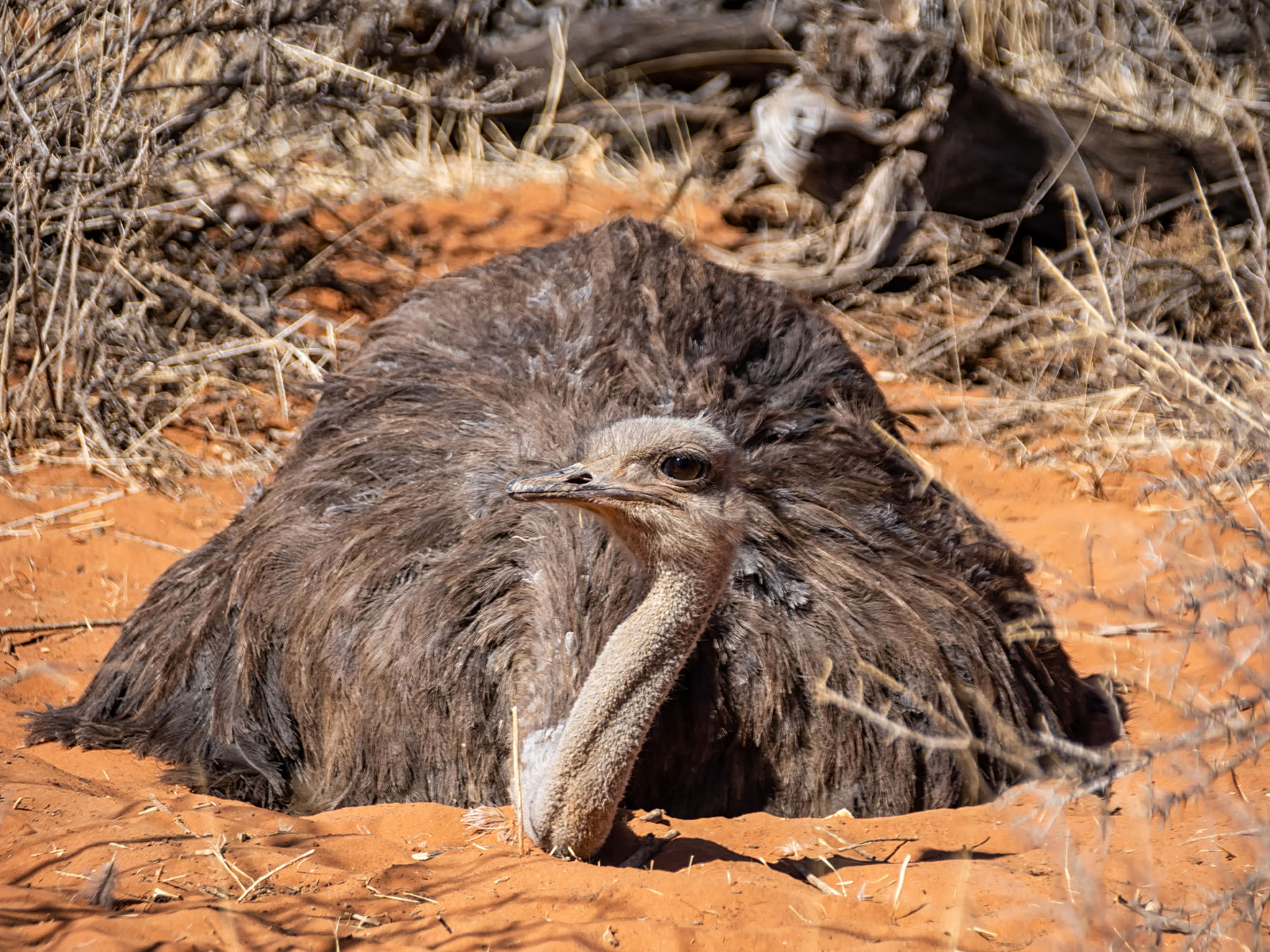
When threatened, they may also lie flat on the ground to blend in with their surroundings, contrary to the myth of burying their heads in sand.

Calls & Sounds

Despite their size, ostriches are relatively quiet birds. Males produce a deep, booming call during courtship or territorial disputes, often described as a 'boom' or 'hum'. Females and chicks make soft hissing or whistling sounds when alarmed.

Nesting & Breeding

Ostriches breed during the dry season. Males perform elaborate courtship displays to attract females. A dominant male may mate with several females, forming a harem.

Nests are simple scrapes in the ground, often in communal nesting areas. The dominant female lays 7-10 cream-coloured eggs, with subordinate females adding their eggs to the clutch, totalling up to 60 eggs per nest.

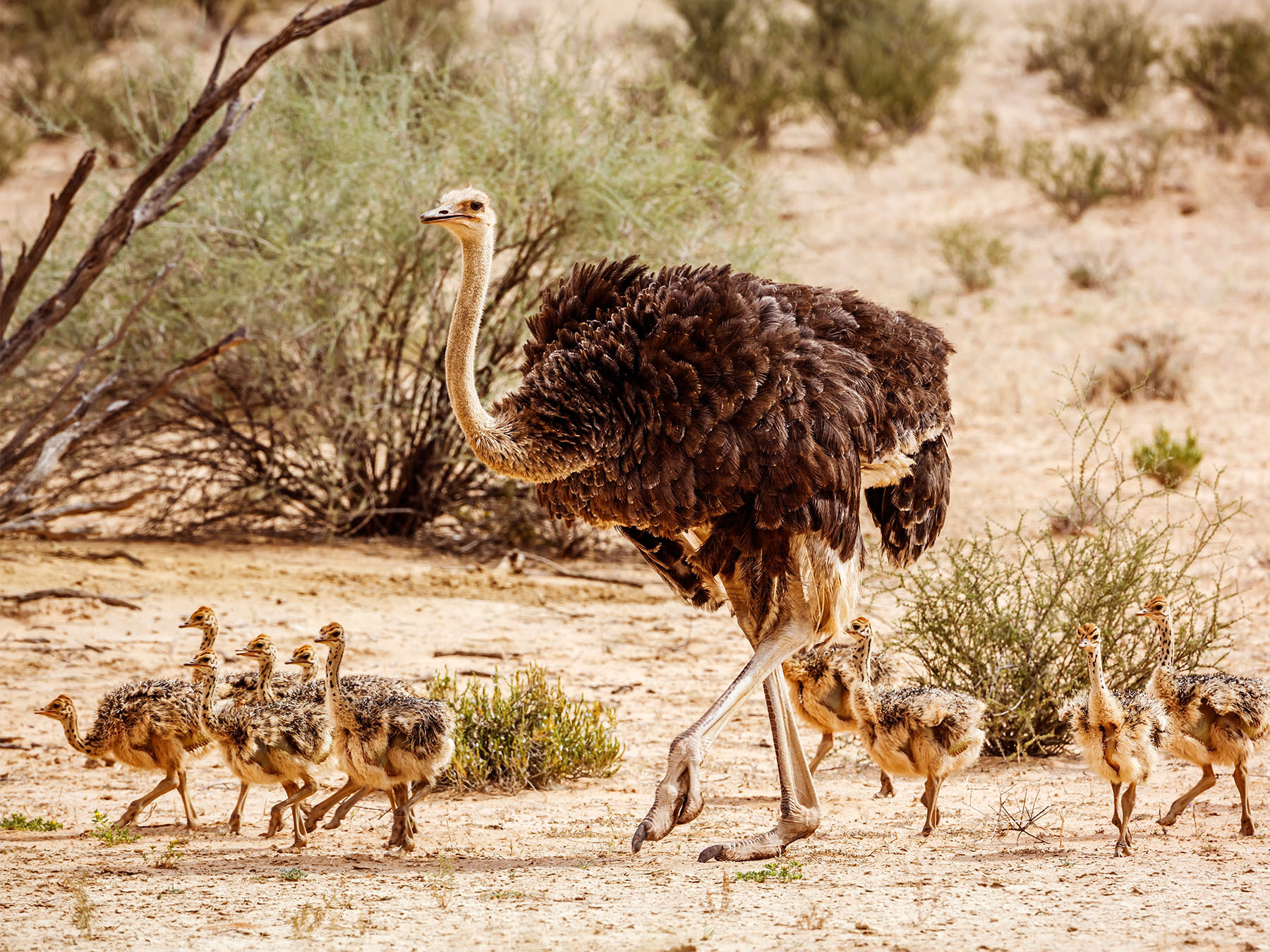
Incubation lasts about 42 days, with the male primarily incubating at night and the female during the day. Chicks are precocial, able to run within hours of hatching, and remain with their parents for up to a year.

Conservation

While listed as Least Concern globally, some ostrich populations face threats from habitat loss and hunting. Conservation efforts focus on sustainable farming practices and protecting wild populations in national parks and reserves across Africa.
LCLeast Concern
[1]

Population

Estimated: Unknown

Trend: Decreasing

Populations are decreasing due to habitat loss and hunting

Elevation

Up to 3,000 meters

Additional Details

Egg size:
15cm long and 13cm wide
Predators:
Adult ostriches have few natural predators due to their size and speed, but chicks and eggs are vulnerable to lions, hyenas, jackals, and large birds of prey.
Alarm calls:
Hissing when threatened
Breeding age:
2-4
Maturity age:
2-4
Feeding times:
Mainly in the cooler morning and evening hours
Major threats:
Habitat loss, hunting for feathers and meat, and egg collection
Parental care:
Females and males take turns incubating; males defend the nest
Primary calls:
Booming, hissing, and whistling
Social habits:
Gregarious, forming flocks with complex social structures
Egg appearance:
Glossy cream-colored with thick shells
Feeding habits:
Herbivorous and omnivorous, grazing on plants and occasionally consuming small animals
Breeding season:
Varies with location, usually during the dry season
Diet variations:
Depends on seasonal availability of food
Fledging period:
3-4 months
Average lifespan:
40-45
Call description:
Loud booming noises can be heard up to several kilometers away
Daily activities:
Diurnal, spending the day foraging, resting and dust-bathing
Nesting location:
Open ground
Number of broods:
Up to three, sometimes more
Incubation period:
35-45 days
Nest construction:
Shallow depression in earth, sometimes lined with grass and leaves
Migration patterns:
Nomadic movements in response to environmental conditions
Migratory patterns:
Non-migratory, but can travel extensively for food and water
Age related changes:
Males develop more vivid plumage as they mature
Prey capture method:
Pecking and grabbing with their beak
Conservation efforts:
Conservation areas and breeding programs in place in some regions
Territorial behavior:
Territorial during breeding season, with males defending their territories
Reproductive behavior:
Polygynous, with dominant males mating with multiple females
Special dietary needs:
Requires grit and pebbles to aid digestion
Clutch characteristics:
5-11 eggs, communal nests may have more
Interaction with other species:
Generally peaceful but can be aggressive during breeding season

Birdwatching Tips

  • Look for ostriches in open grasslands and savannas
  • Observe from a safe distance, as they can be aggressive if approached too closely
  • Watch for their distinctive gait and tall profile on the horizon
  • Visit wildlife reserves in East or Southern Africa for the best viewing opportunities

Did You Know?

  1. An ostrich's eye is bigger than its brain.
  2. They can survive without water for several days, obtaining moisture from their food.
  3. Ostrich eggs are the largest of any living bird, weighing up to 1.5 kg.

Records & Accolades

Fastest Running Bird

70 km/h (43.5 mph)

Fastest running speed of any bird

Largest Bird

Up to 2.75 m (9 ft) tall and weighing up to 156 kg (344 lb)

Largest and heaviest living bird

Community Photos

Be the first to share a photo of the Common Ostrich

Upload a Photo

Similar Species

Identify Any Bird Instantly

  • Upload a photo from your phone or camera
  • Get an instant AI identification
  • Ask follow-up questions about the bird

Monthly Birds in Your Area

  • Personalised for your location
  • Seasonal tips and garden advice
  • Updated every month with new species
Was this helpful?