


Somali Ostrich
Blue-necked Ostrich · Struthio molybdophanes
By the Birdfact teamChecked by Nathan Cope
On this page12 sections
How to recognise it
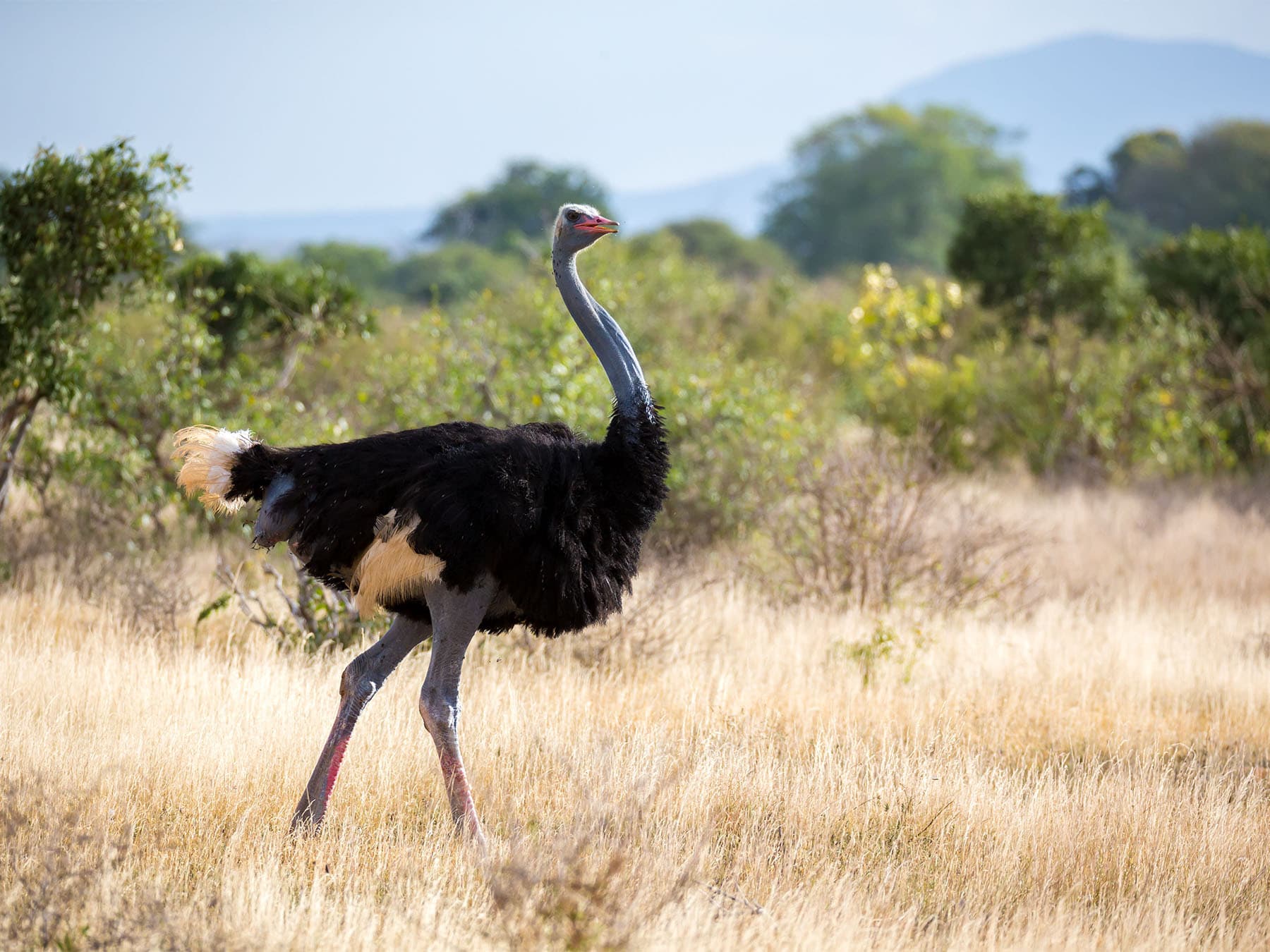
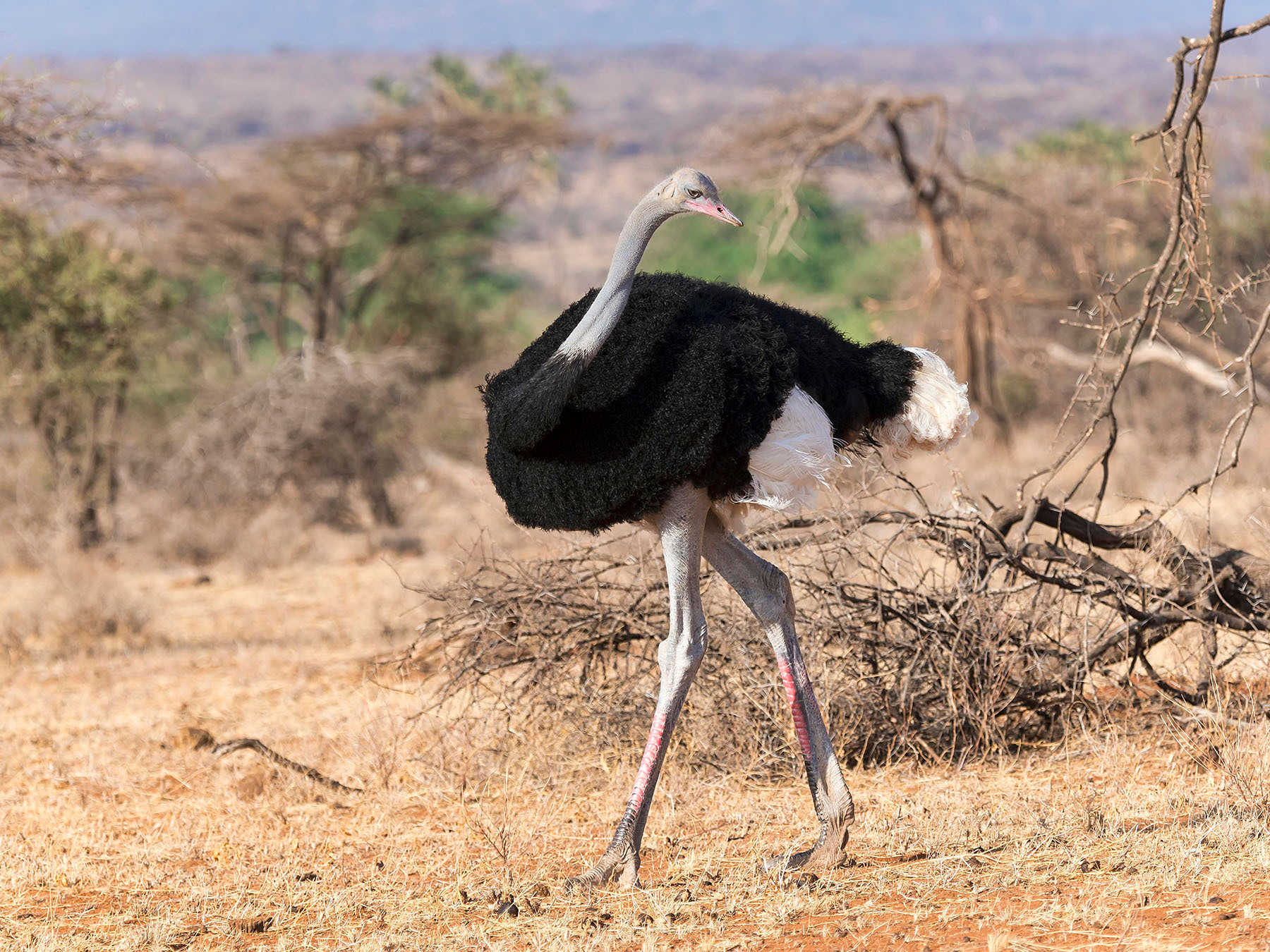
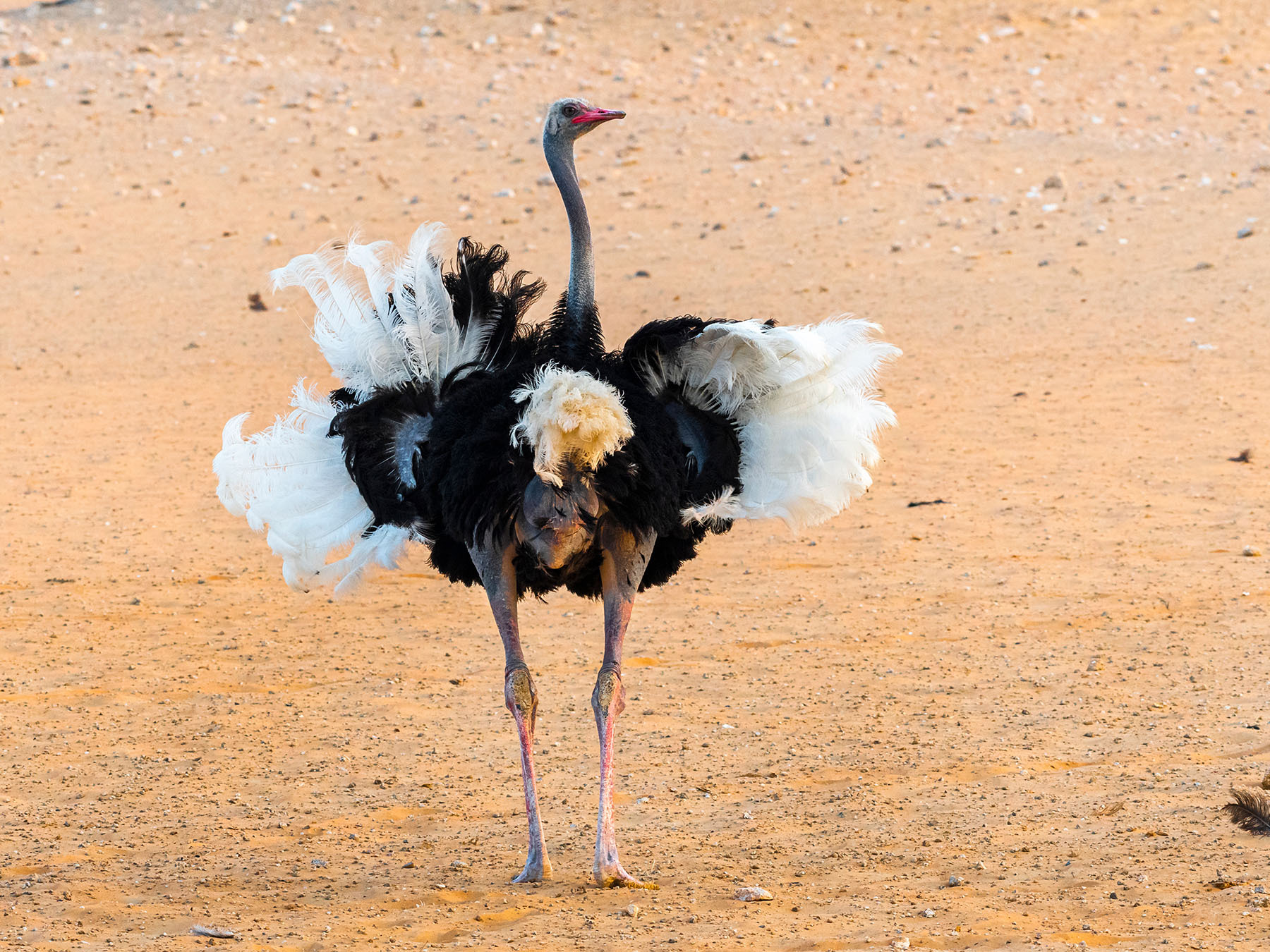
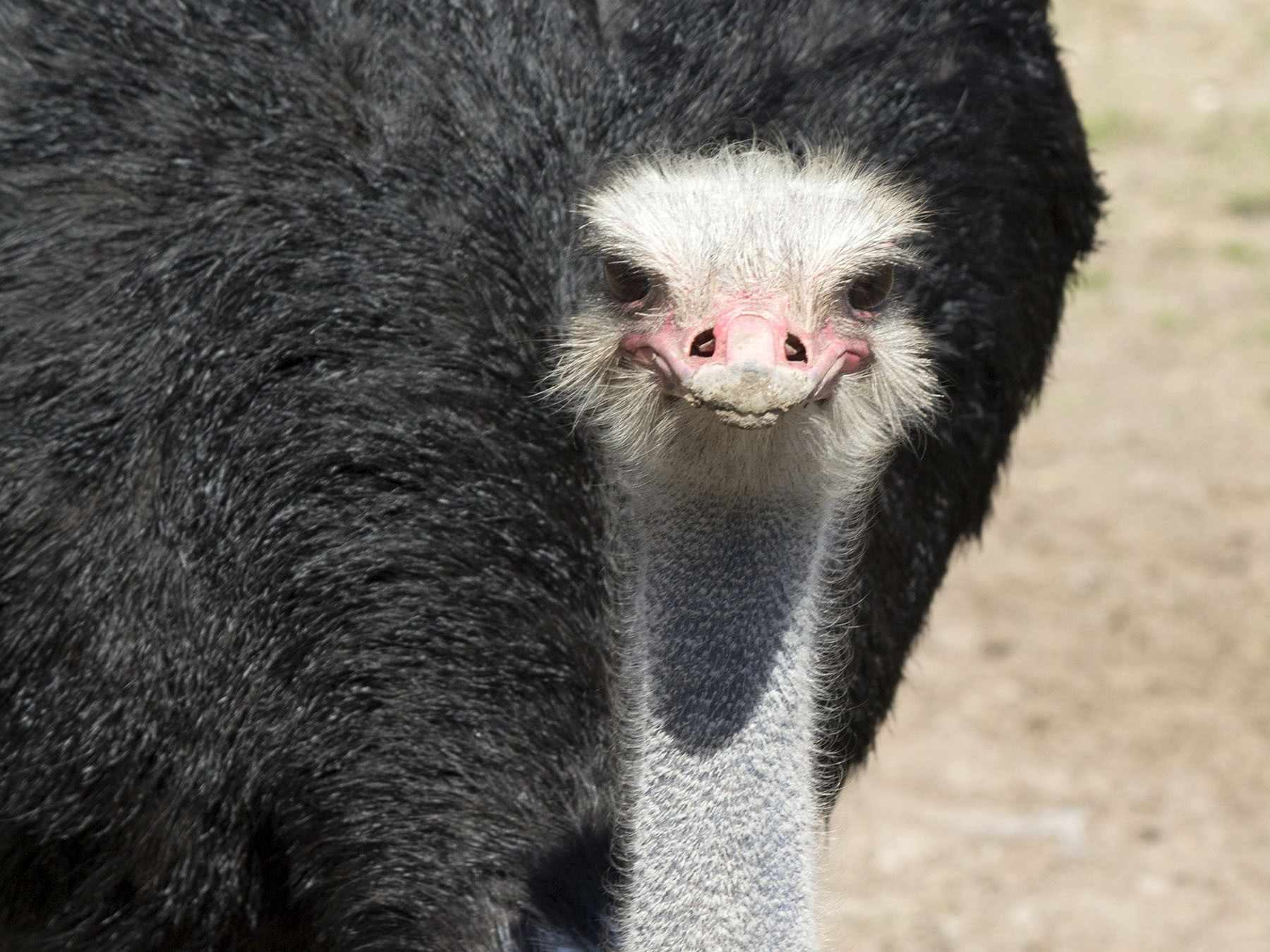
The Somali Ostrich is a massive, flightless bird with a long neck and powerful legs. Males have predominantly black plumage with white wing and tail feathers and a grey-blue neck and thighs. Their head and neck are nearly bare, with sparse downy feathers.
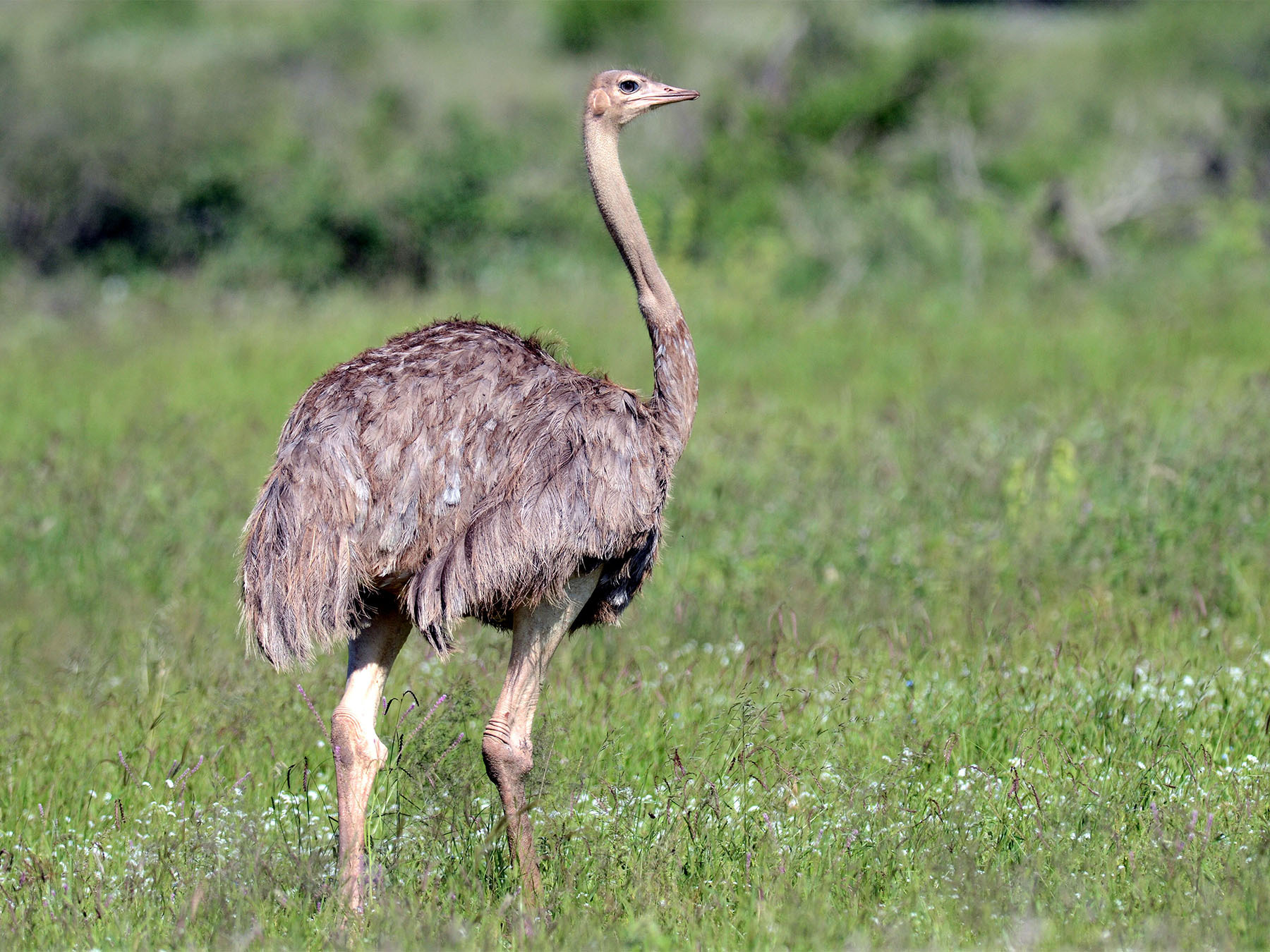
Females are smaller and have dull brown feathers. Both sexes have long eyelashes, large eyes, and a sharp beak. Juveniles resemble females but are slightly smaller and have streaked necks.
Its size
Adults- Length
- 210–275 cm
- Wingspan
- 200–250 cm
- Weight
- 90000–130000 g
Its song and calls
Somali Ostriches are generally quiet but can produce a variety of sounds. Males emit a deep, booming call during courtship or territorial disputes, often described as a 'boom-boom' sound.
When alarmed, they may hiss or produce a loud, snorting noise. Chicks emit soft chirps to communicate with adults.
When and where to see it
The Somali Ostrich is not recorded regularly in the UK, Ireland, the United States or Canada.
Worldwide: recorded regularly in 2 countries
Countries where it was recorded in at least 3 of the 6 years 2019–2024. Linked countries have their own bird list.
Data: EOD – eBird Observation Dataset (Cornell Lab of Ornithology), accessed via GBIF.org, CC BY 4.0. Records from 2019–2024, aggregated and filtered by Birdfact. How these lists are made
Tips for seeing it
- Look for Somali Ostriches in open savanna and grassland areas
- Observe from a safe distance, as they can be territorial during the breeding season
- Use binoculars to spot their distinctive long necks above tall grass
- Visit protected areas in Somalia, Ethiopia, or Kenya for the best chances of sighting
What it eats
Somali Ostriches are omnivorous, primarily feeding on plant matter such as seeds, leaves, and fruits. They also consume insects, small reptiles, and rodents when available.
Their diet varies seasonally, and they can survive without water for extended periods by obtaining moisture from their food.
Nesting and breeding
Breeding occurs during the dry season, typically between September and March. Males perform elaborate courtship displays, including wing-flapping and rhythmic movements, to attract females.
The dominant male creates a shallow nest scrape in the ground, where multiple females lay their eggs. A clutch can contain 15-60 cream-coloured eggs, each weighing about 1.5 kg.
The male incubates the eggs for 42-46 days, with occasional help from the dominant female. Chicks are precocial and can run shortly after hatching, staying with their father for up to a year.
Behaviour
Somali Ostriches are diurnal and highly social, often forming small groups or larger flocks outside the breeding season.
They are excellent runners, capable of reaching speeds up to 70 km/h (43 mph). When threatened, they may flee or, if cornered, defend themselves with powerful kicks.
Conservation
The Somali Ostrich is classified as Vulnerable due to habitat loss, hunting, and egg collection.
Conservation efforts focus on protecting their remaining habitats and reducing human-wildlife conflict. Sustainable eco-tourism initiatives are being developed to support local communities and ostrich conservation.
Similar birds
Often mistaken for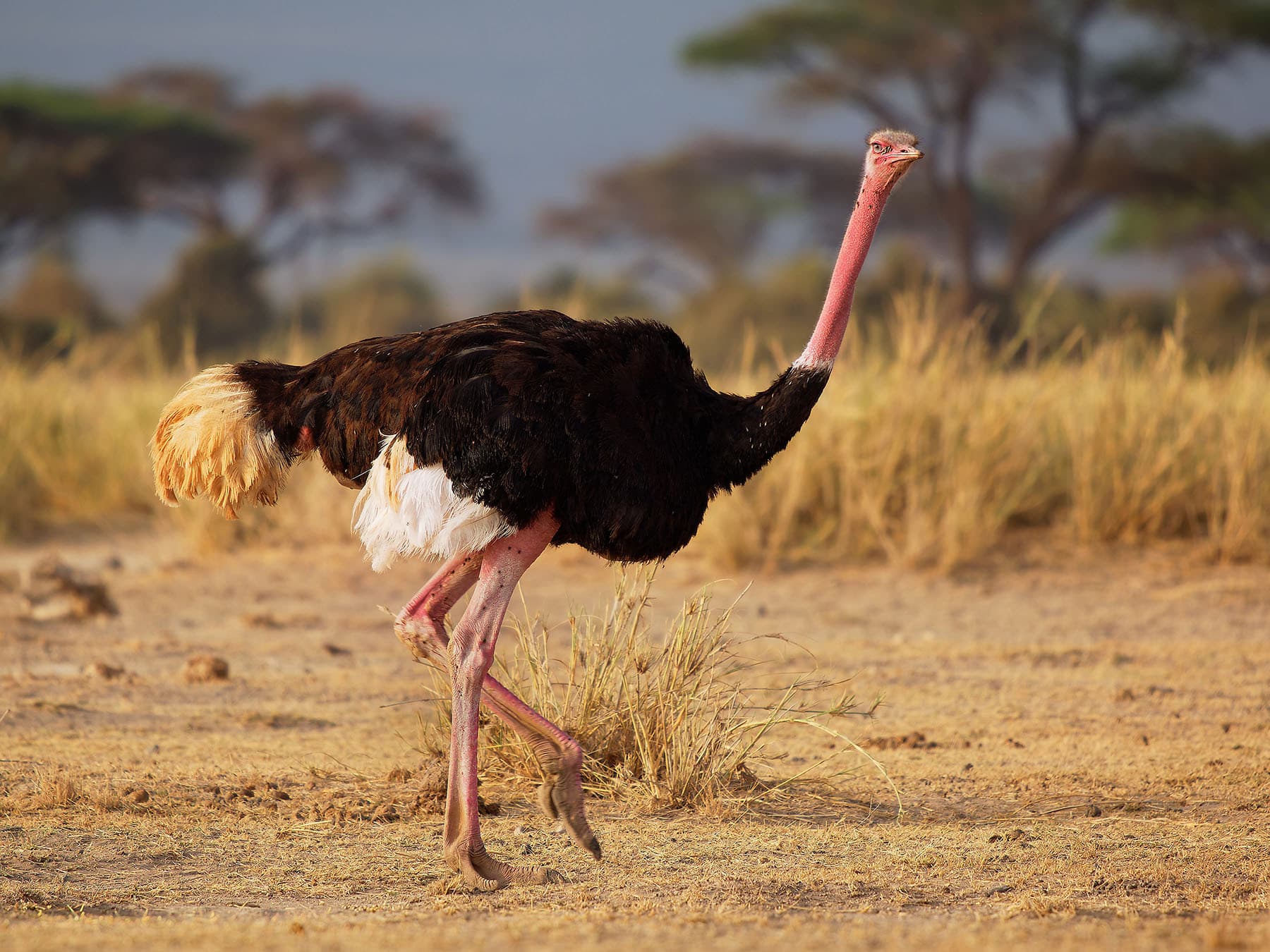
More photos
5 photos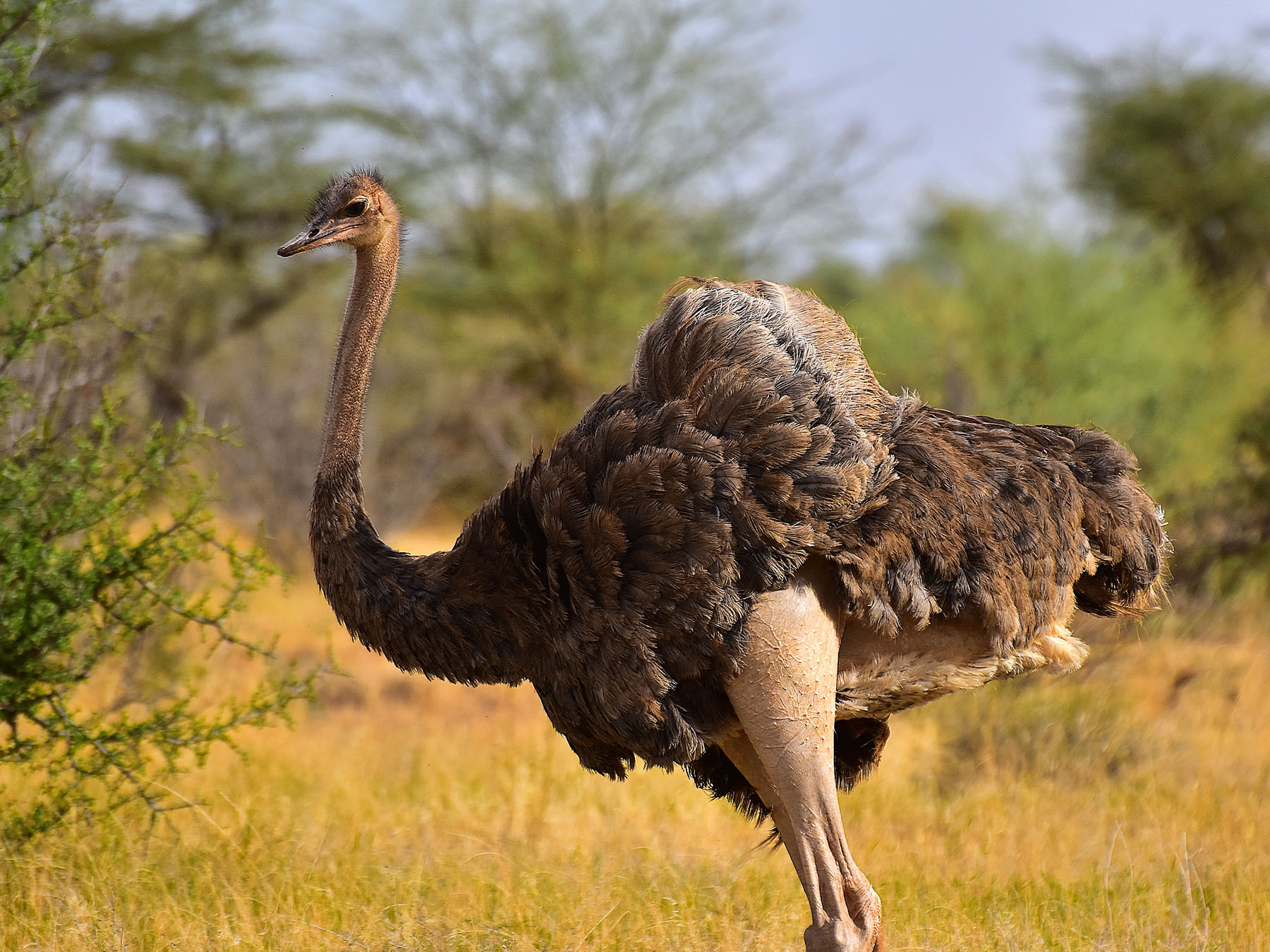
Quick facts
- Length
- 210–275 cm
- Wingspan
- 200–250 cm
- Weight
- 90000–130000 g
- Lifespan
- 30–40 years
- Family
- Ostriches
- Migration
- Resident
- Global status (IUCN)
- Vulnerable
- World population
- Unknown
- Population trend
- The population is believed to be decreasing due to various threats
- Also called
- Blue-necked Ostrich
- Scientific name
- Struthio molybdophanes
Sources
2- 1BirdLife International. 2022. Struthio molybdophanes. The IUCN Red List of Threatened Species 2022: e.T22732795A208237218. Source (opens in a new tab)
- 2Mutiga et al. 2016, Ripple et al. 2019

Checked by
Nathan Cope, founder and editor
Nathan founded Birdfact and leads its writers and contributors in the UK, the US and Canada. He has watched and studied birds for more than ten years, and checks every article and species guide before it’s published.