


Northern Cassowary
Single-wattled Cassowary · Casuarius unappendiculatus
By the Birdfact teamChecked by Nathan Cope
On this page12 sections
How to recognise it
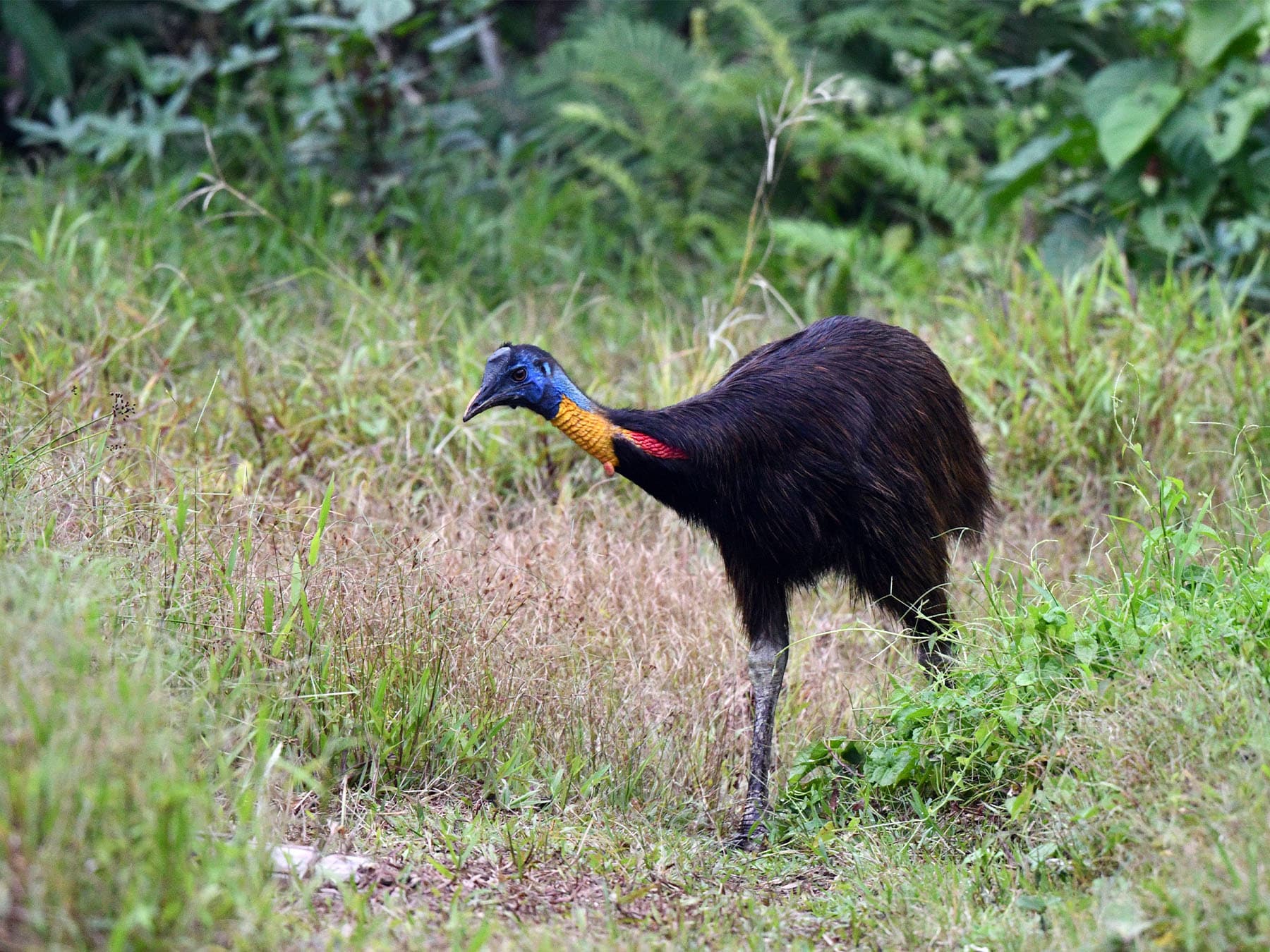
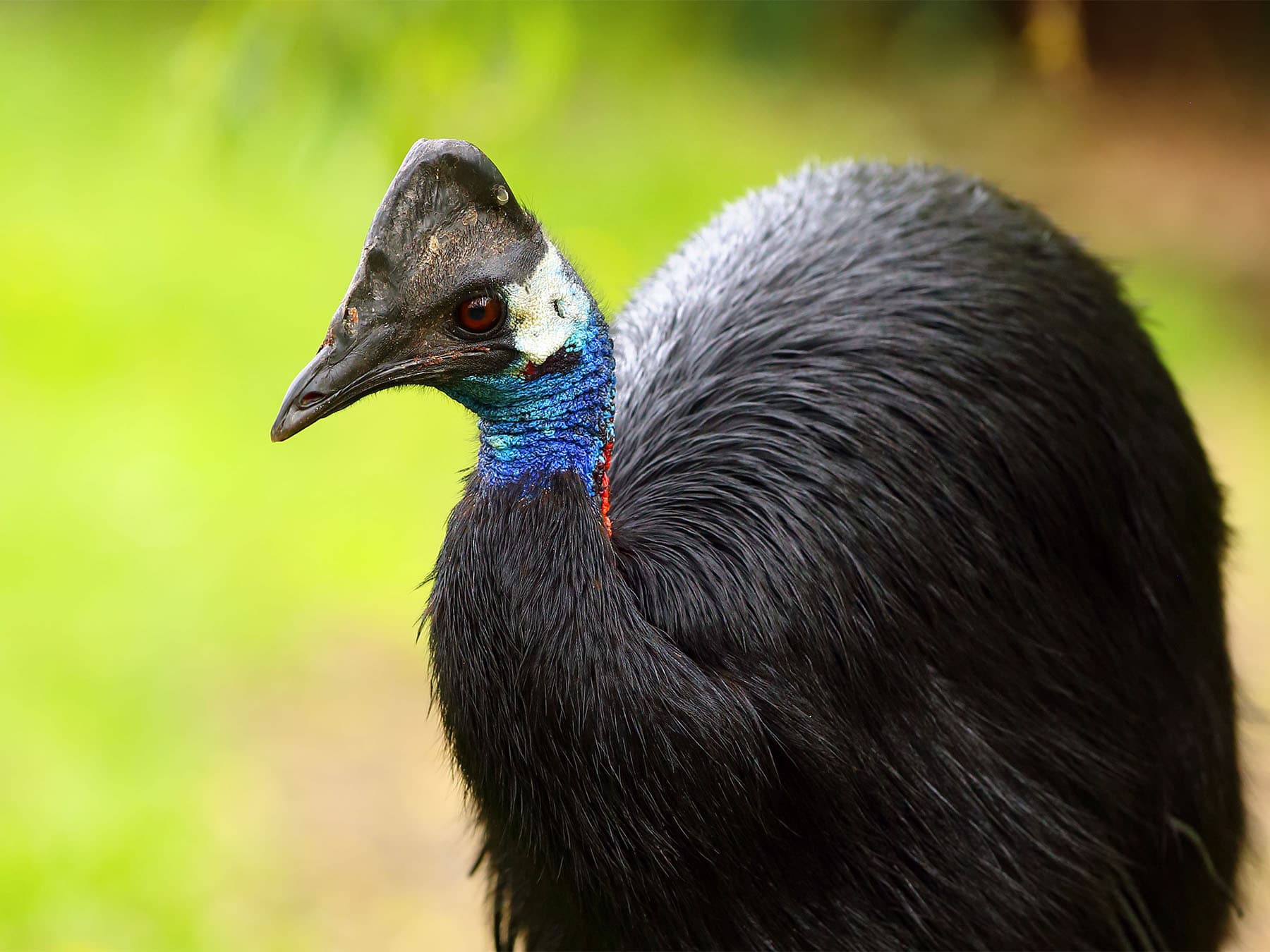
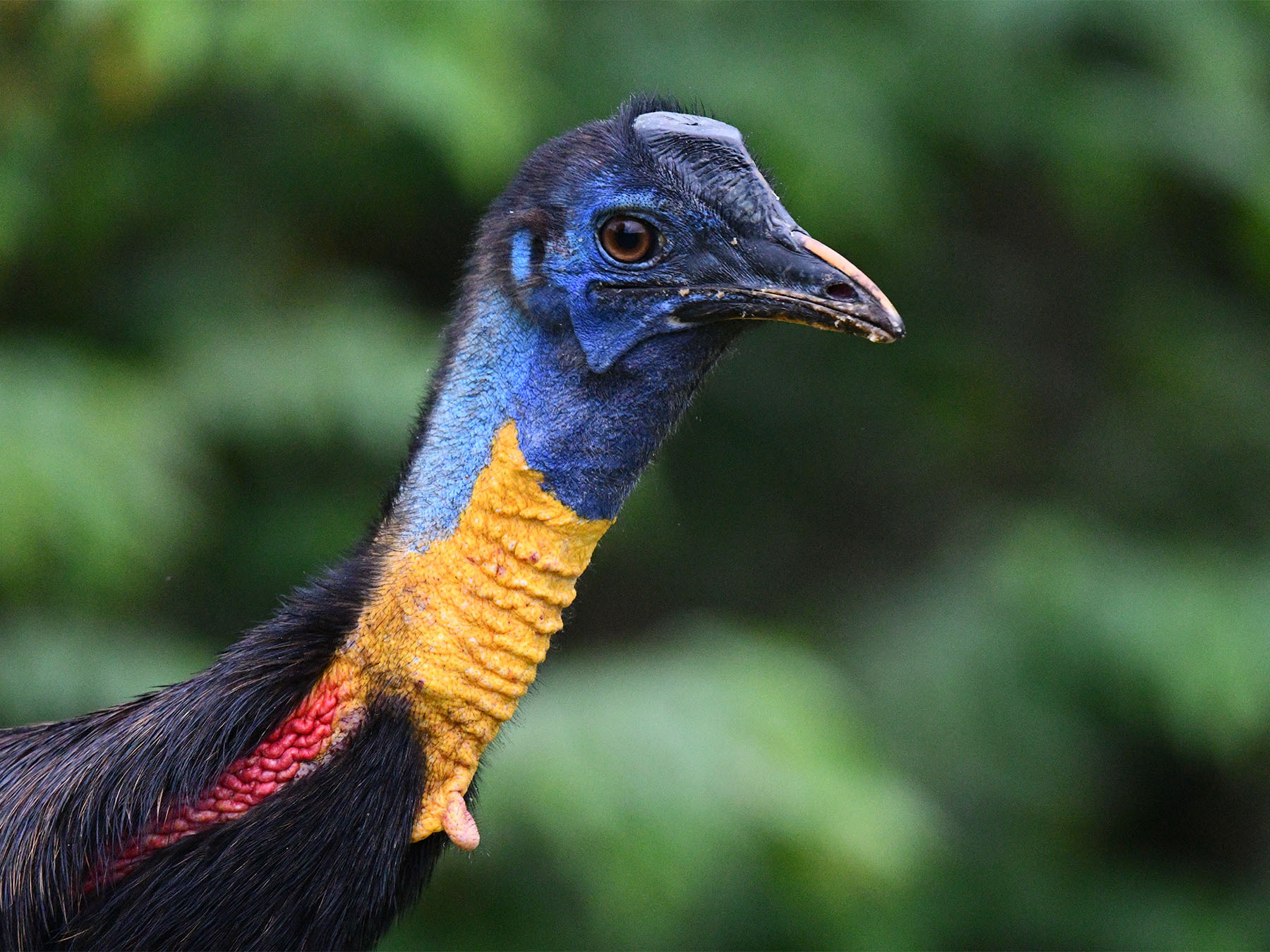
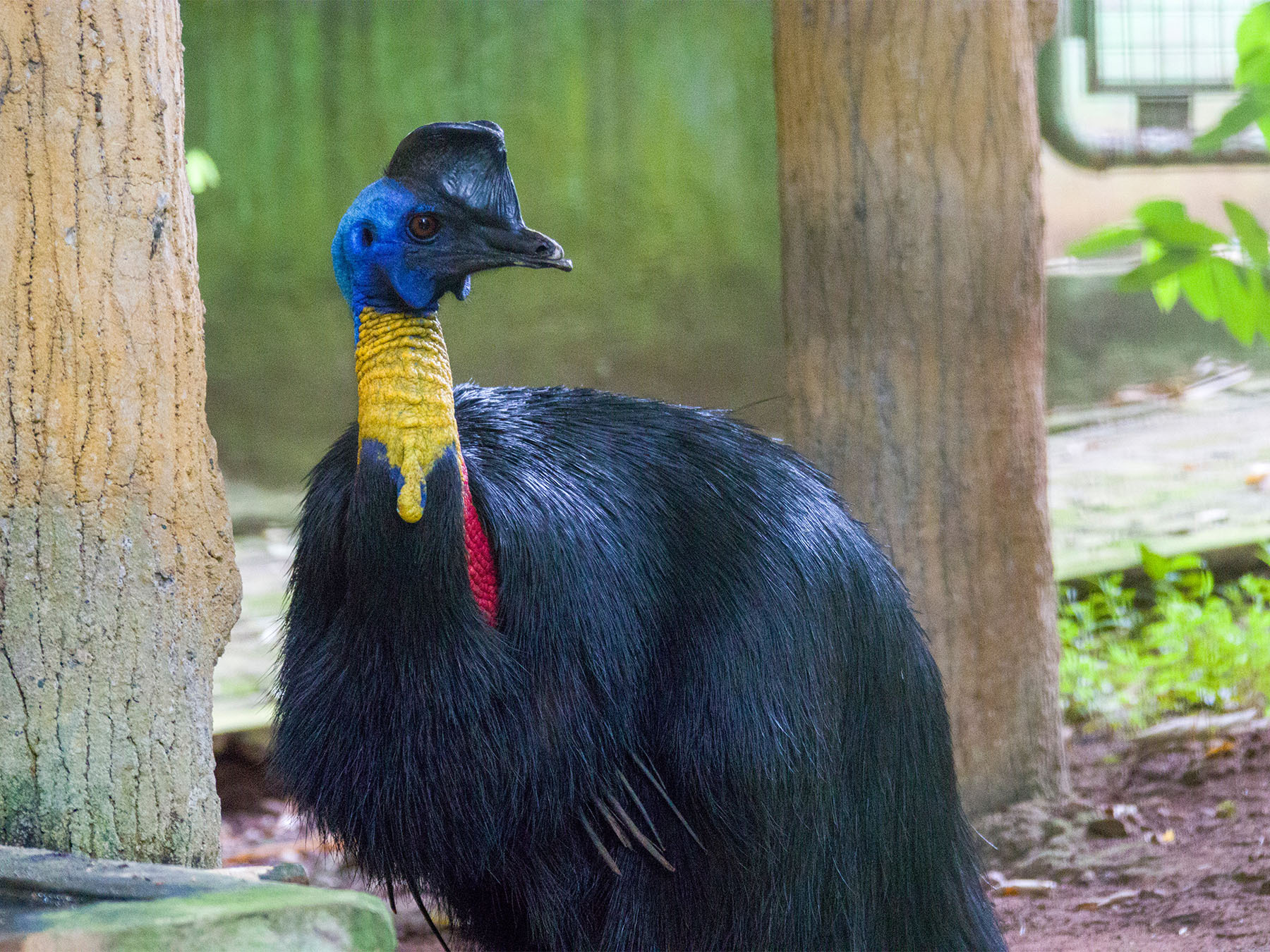
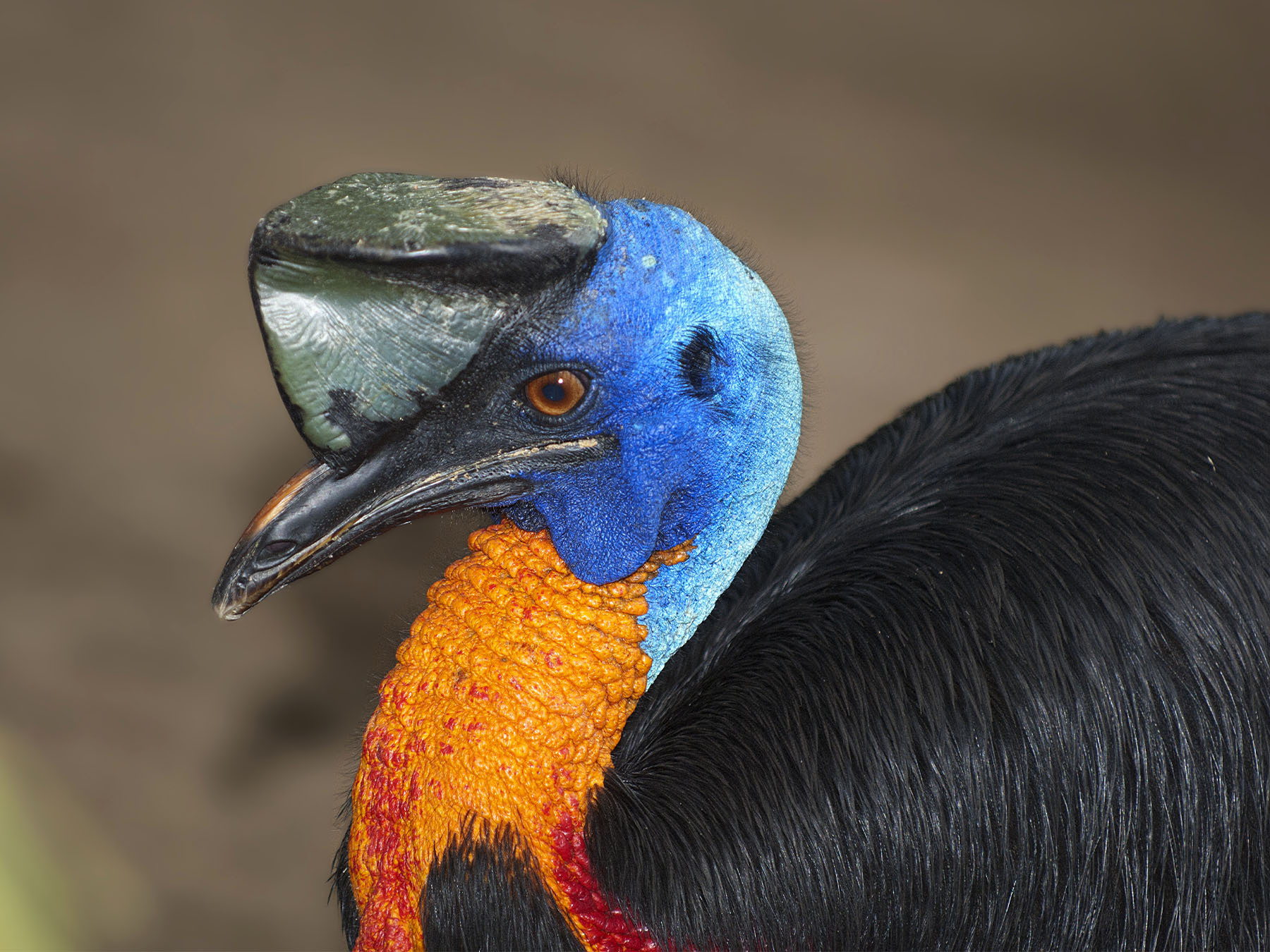
The Northern Cassowary is a striking, flightless bird with glossy black plumage and a vibrant blue head and neck. Its most distinctive feature is a large, horn-like casque atop its head, alongside a single red wattle hanging from its throat.
Both sexes look similar, with females slightly larger. Juveniles have brown plumage, lacking the bright colours and developed casque of adults.
Its size
Adults- Length
- 165–175 cm
- Wingspan
- 40–50 cm
- Weight
- 29000–58000 g
Its song and calls
Northern Cassowaries are known for their deep, booming calls, which can be heard up to a kilometre away. These low-frequency vocalisations, often described as a rumbling 'boom-boom-boom,' are used for communication and territorial displays. They also produce hisses and grunts when alarmed.
When and where to see it
The Northern Cassowary is not recorded regularly in the UK, Ireland, the United States or Canada.
Worldwide: recorded regularly in 1 country
Countries where it was recorded in at least 3 of the 6 years 2019–2024. Linked countries have their own bird list.
Asia (1)
- Indonesia
Data: EOD – eBird Observation Dataset (Cornell Lab of Ornithology), accessed via GBIF.org, CC BY 4.0. Records from 2019–2024, aggregated and filtered by Birdfact. How these lists are made
Tips for seeing it
- Look for them in dense, lowland rainforests
- Listen for their low-frequency booming calls
- Observe from a safe distance, as they can be aggressive when threatened
- Search for their large, three-toed footprints in muddy areas
What it eats
Northern Cassowaries are primarily frugivorous, consuming a wide variety of fallen fruits. They play a crucial role in seed dispersal for many rainforest plants. Their diet is supplemented with small vertebrates, invertebrates, and fungi when available.
Nesting and breeding
Breeding occurs year-round, with peak activity during the dry season. Males attract females with low-frequency booming calls and vibrant displays of their wattles and neck colours.
Females lay 3-5 large, pale green eggs in a simple ground nest of leaves and plant material. The male is solely responsible for incubation, which lasts about 50 days.
After hatching, the male cares for the chicks for up to 9 months, protecting them and teaching foraging skills. Young cassowaries reach sexual maturity at about three years of age.
Behaviour
Northern Cassowaries are solitary and territorial, patrolling their home ranges daily. They're known for their powerful kicks, capable of seriously injuring potential threats. These birds are excellent swimmers, often crossing rivers and venturing into coastal waters.
Conservation
Although the Northern Cassowary is classified as Least Concern, they face threats from habitat loss from deforestation and hunting. Conservation efforts focus on protecting remaining rainforest habitats and implementing stricter hunting regulations in their range.
Similar birds
Often mistaken for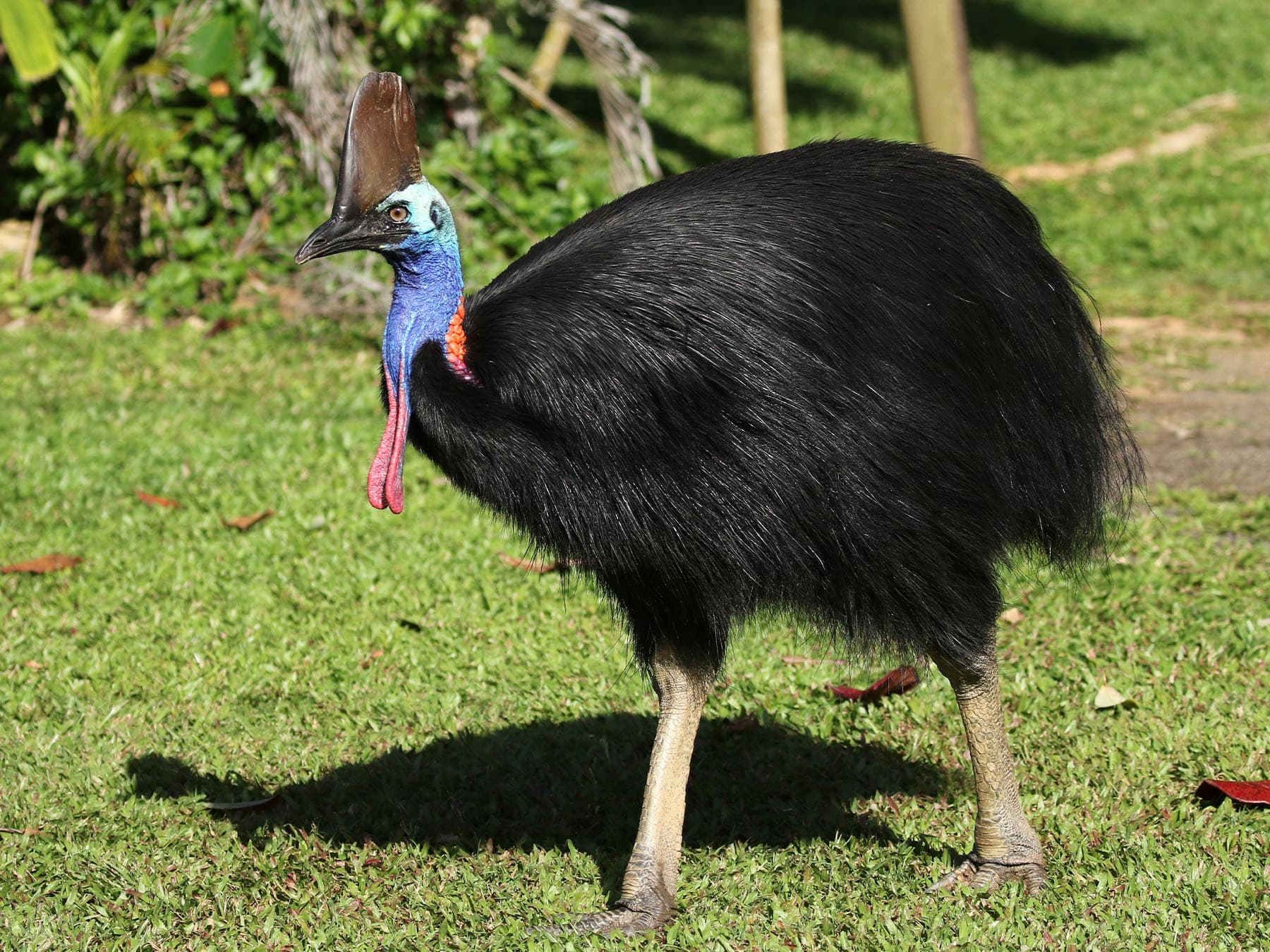
More photos
4 photos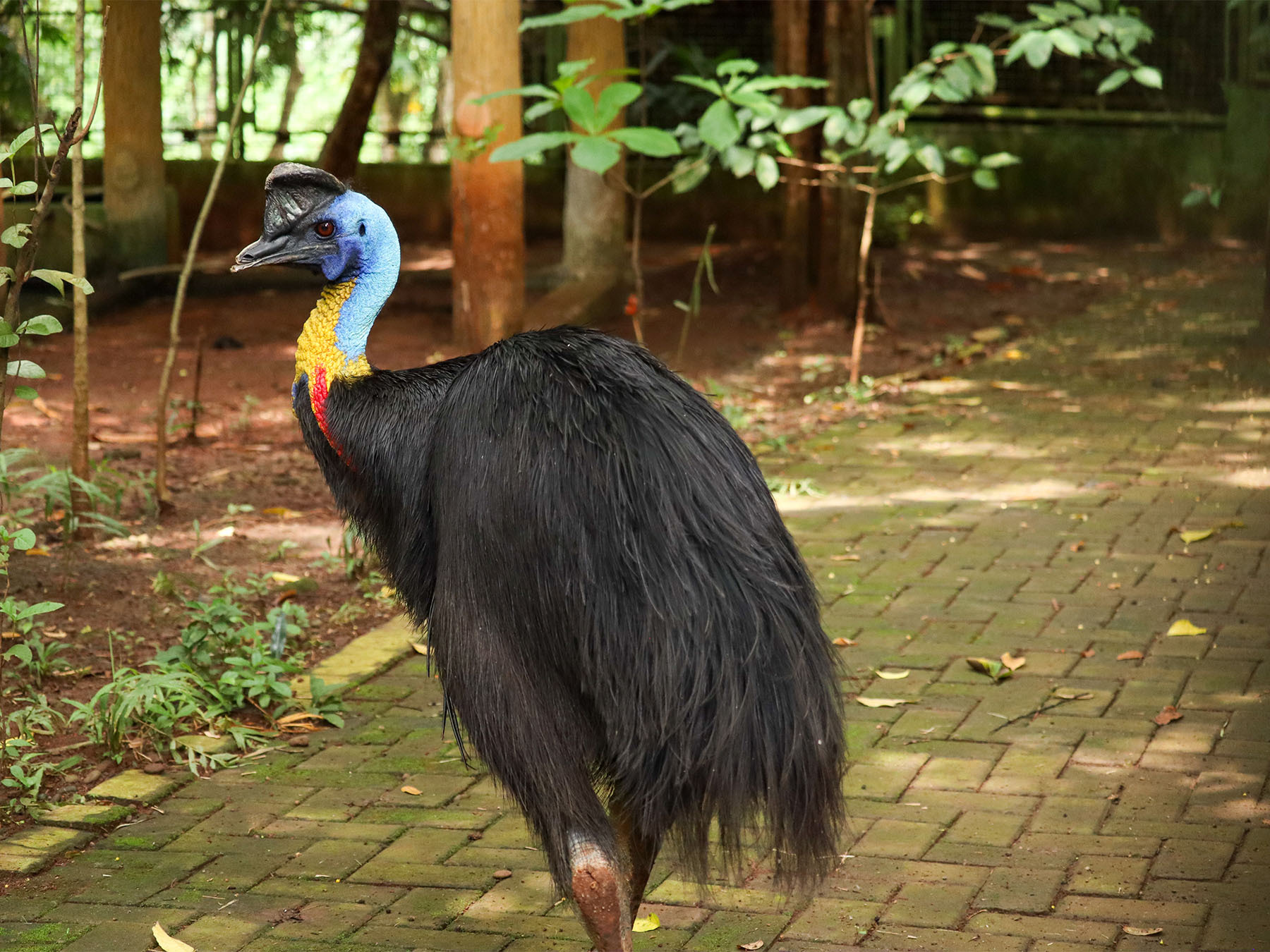
Quick facts
- Length
- 165–175 cm
- Wingspan
- 40–50 cm
- Weight
- 29000–58000 g
- Lifespan
- 18–20 years · oldest recorded 61 years
- Family
- Cassowaries & Emus
- Migration
- Resident
- Global status (IUCN)
- Least Concern
- World population
- 10,000 - 19,999 mature individuals
- Population trend
- Population is decreasing due to habitat loss and hunting
- Also called
- Single-wattled Cassowary
- Scientific name
- Casuarius unappendiculatus
Sources
4- 1BirdLife International. 2017. Casuarius unappendiculatus. The IUCN Red List of Threatened Species 2017: e.T22678114A118134784. Source (opens in a new tab)
- 2BirdLife International. 2017. Casuarius unappendiculatus. The IUCN Red List of Threatened Species 2017: e.T22678114A118134784. Source (opens in a new tab)
- 3G. Dutson in litt. (2016)
- 4Biggs and Cairns Tropical Zoo, 2013; Healey, 1985

Checked by
Nathan Cope, founder and editor
Nathan founded Birdfact and leads its writers and contributors in the UK, the US and Canada. He has watched and studied birds for more than ten years, and checks every article and species guide before it’s published.