


Dwarf Cassowary
Bennett's Cassowary, Mountain Cassowary · Casuarius bennetti
By the Birdfact teamChecked by Nathan Cope
On this page12 sections
How to recognise it
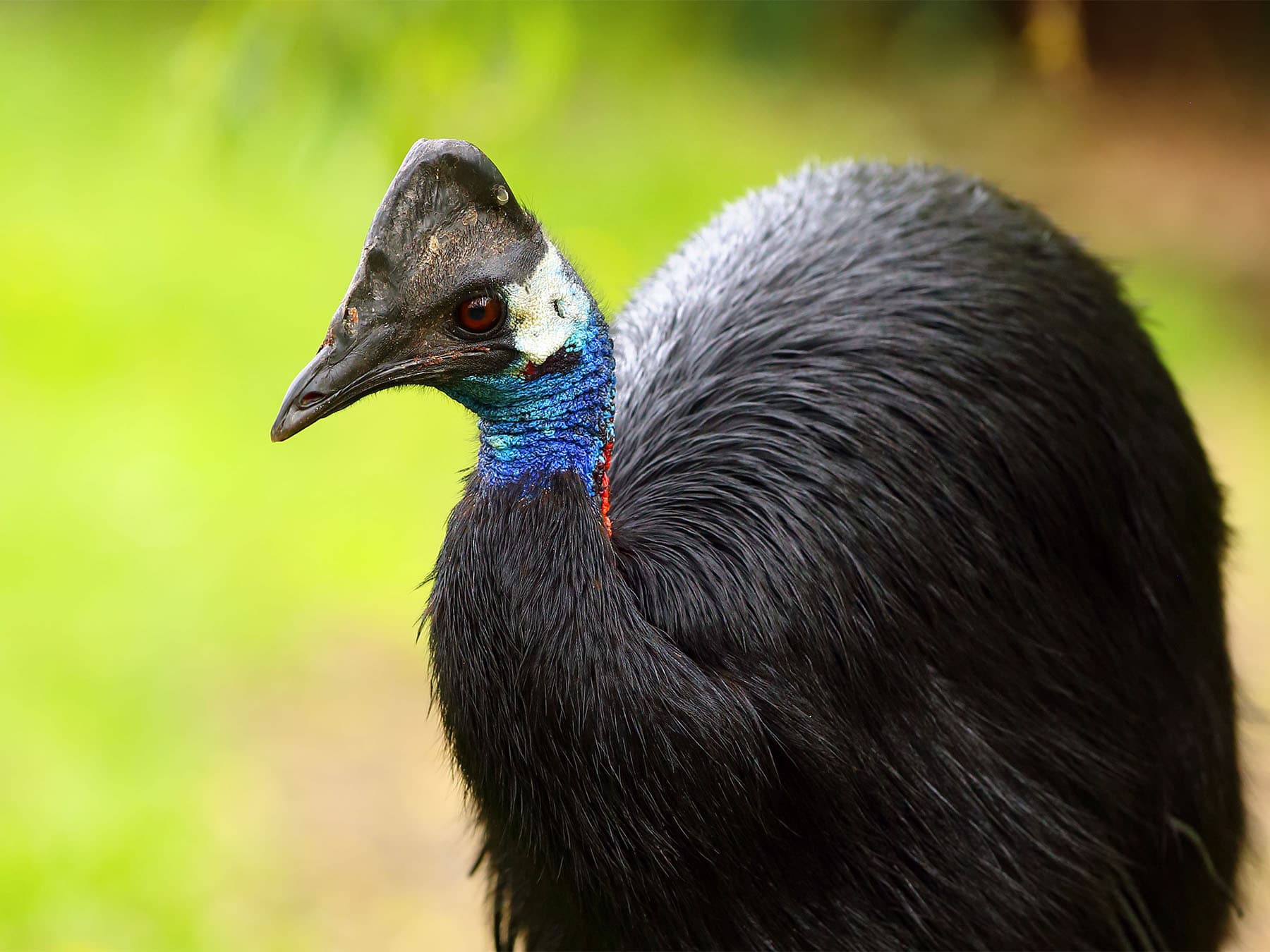
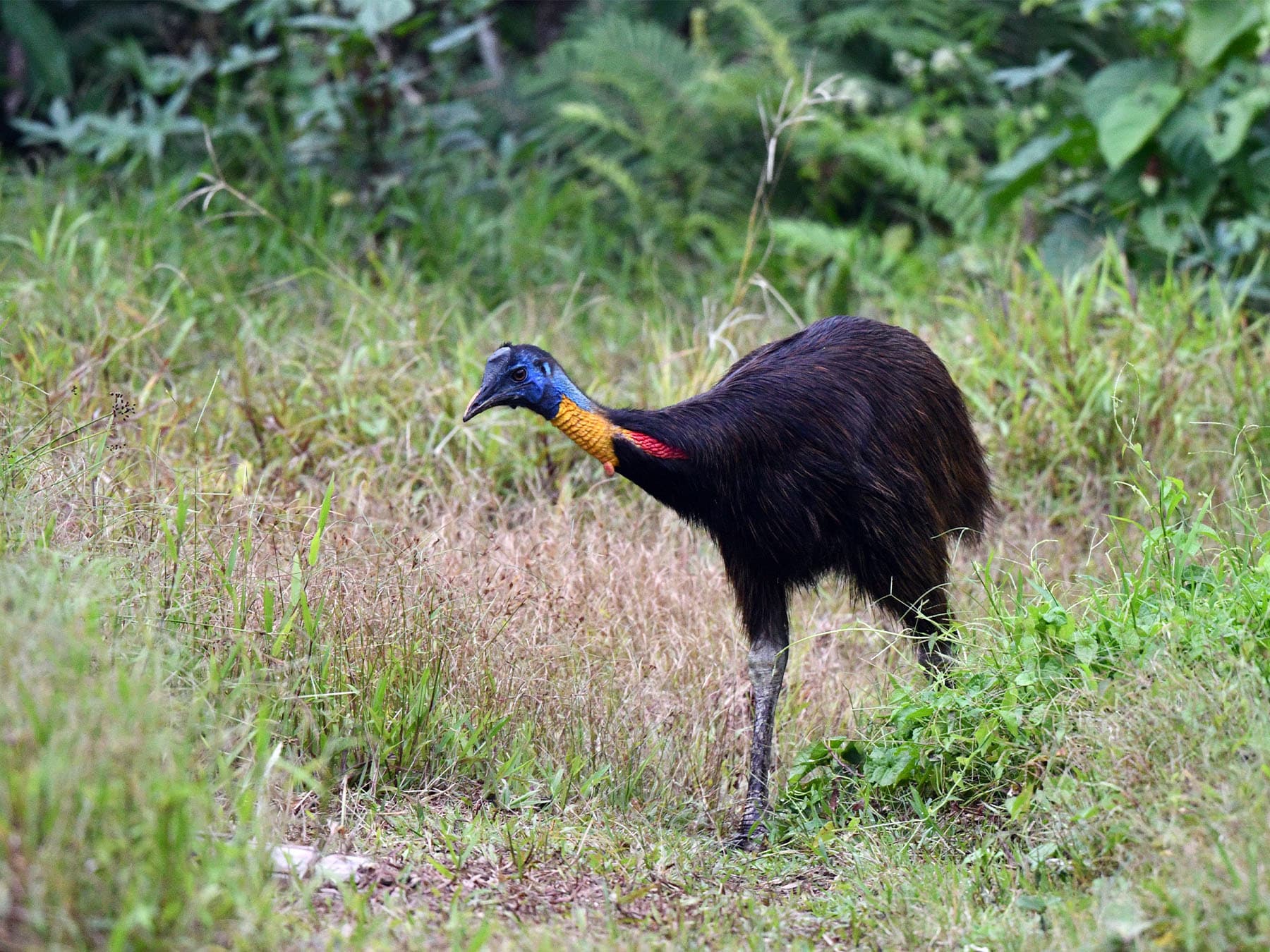
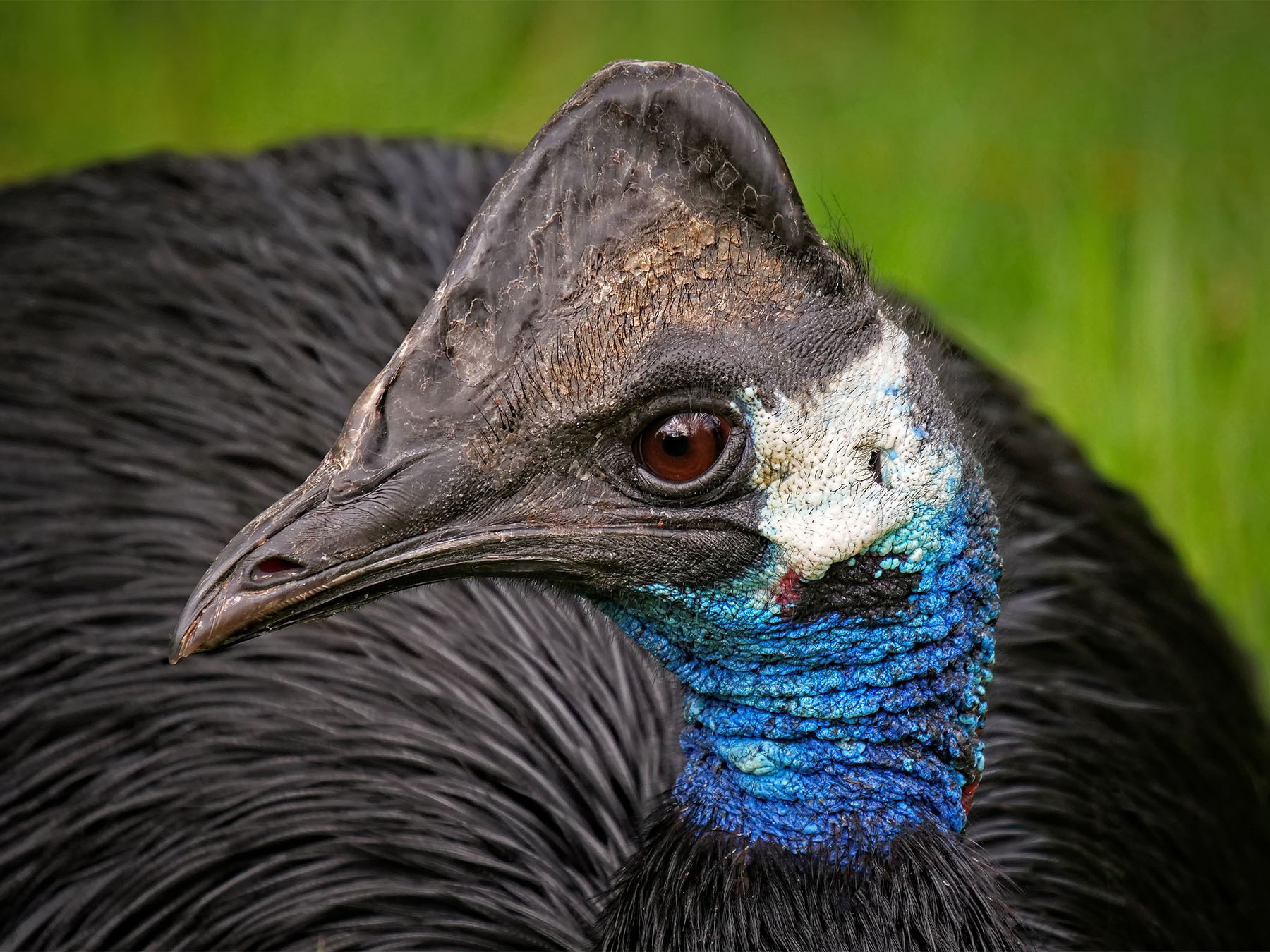
The Dwarf Cassowary is the smallest of the three cassowary species, yet it is still an imposing bird. It stands about 1-1.5 meters tall, with a predominantly black plumage and a distinctive blue neck and face. The head features a prominent casque (horn-like structure) and vibrant wattles.
Both sexes look similar, with females slightly larger. Juveniles have brown plumage, lacking the bright colours and developed casque of adults. The bird's powerful legs and dagger-like claws are notable features.
Its size
Adults- Length
- 99–150 cm
- Weight
- 17500–26000 g
Its song and calls
Dwarf Cassowaries produce deep, booming calls that can travel long distances through the forest. These low-frequency vocalisations, often described as a rumbling 'boom-boom-boom', are used for communication and territorial displays. They may also emit hisses or grunts when alarmed.
When and where to see it
The Dwarf Cassowary is not recorded regularly in the UK, Ireland, the United States or Canada.
Worldwide: recorded regularly in 1 country
Countries where it was recorded in at least 3 of the 6 years 2019–2024. Linked countries have their own bird list.
Oceania (1)
Data: EOD – eBird Observation Dataset (Cornell Lab of Ornithology), accessed via GBIF.org, CC BY 4.0. Records from 2019–2024, aggregated and filtered by Birdfact. How these lists are made
Tips for seeing it
- Look for them in the dense, mountainous rainforests of New Guinea
- Listen for low-frequency booming calls, especially during breeding season
- Search for distinctive three-toed footprints on forest floors
- Be cautious and maintain a safe distance if encountered
What it eats
Dwarf Cassowaries are primarily frugivorous, feeding on fallen fruits from rainforest trees. They play a crucial role in seed dispersal. Their diet also includes small vertebrates, invertebrates, and fungi. They use their strong feet to kick and break open tough-skinned fruits.
Nesting and breeding
Breeding occurs year-round, with a peak during the drier months. Males are responsible for nest building and constructing a simple ground nest of leaves and plant material.
Females typically lay 3-5 eggs, which are bright green. The eggs are large, weighing up to 650 grams each.
Male cassowaries take on all incubation and chick-rearing duties. The incubation period lasts about 50 days, with chicks remaining with the male for up to 9 months after hatching.
Behaviour
Dwarf Cassowaries are solitary and elusive, moving quietly through dense rainforest undergrowth. They are primarily terrestrial, capable of running at high speeds and jumping considerable heights when necessary.
These birds are generally shy but can be aggressive if threatened, using their powerful legs and claws for defence.
Conservation
Due to habitat loss and hunting pressures, the dwarf cassowary is classified as near threatened. Conservation efforts focus on protecting rainforest habitats and regulating hunting practices. Climate change poses an additional threat, potentially affecting mountain forest ecosystems.
Similar birds
Often mistaken for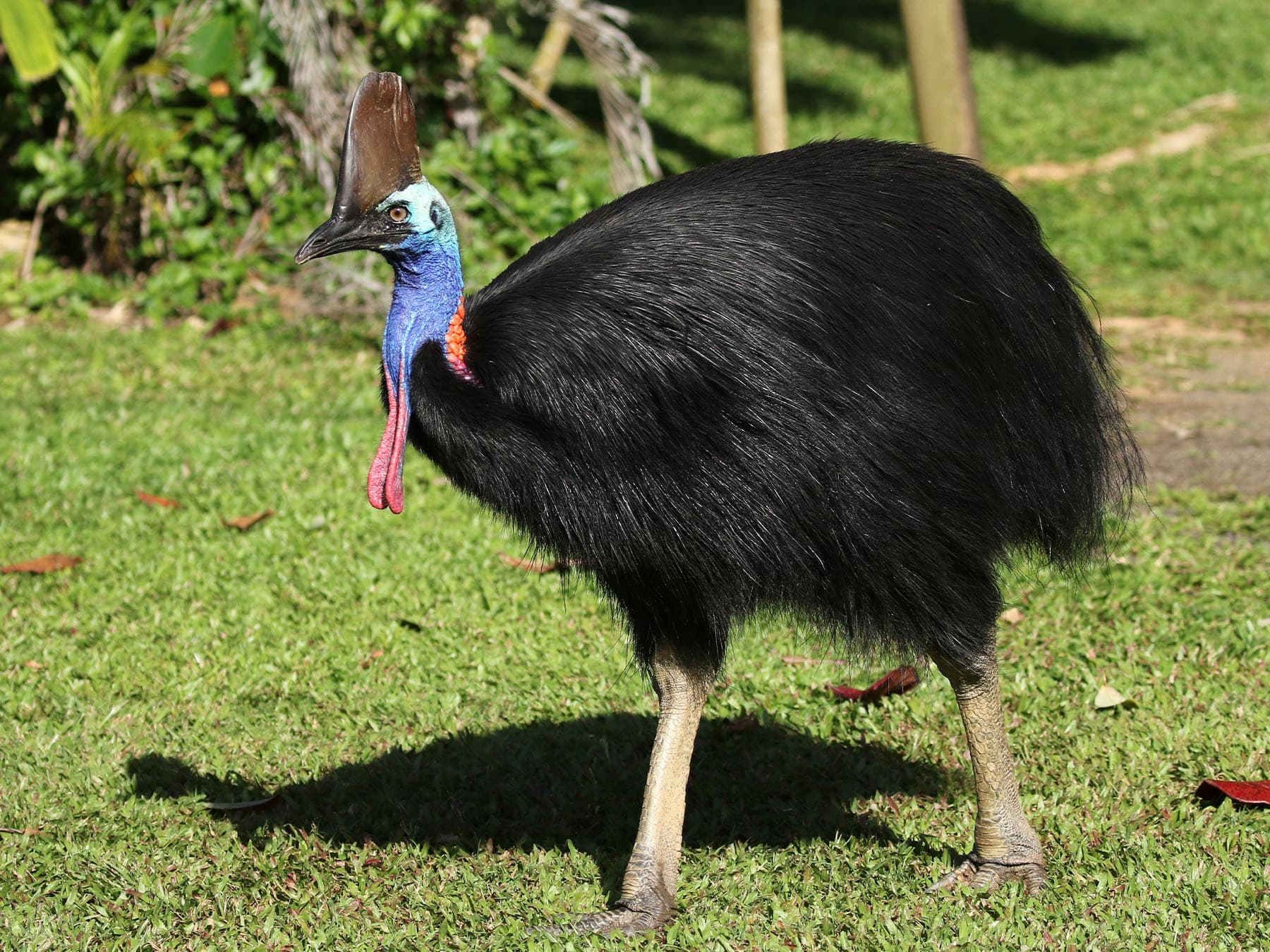
More photos
2 photos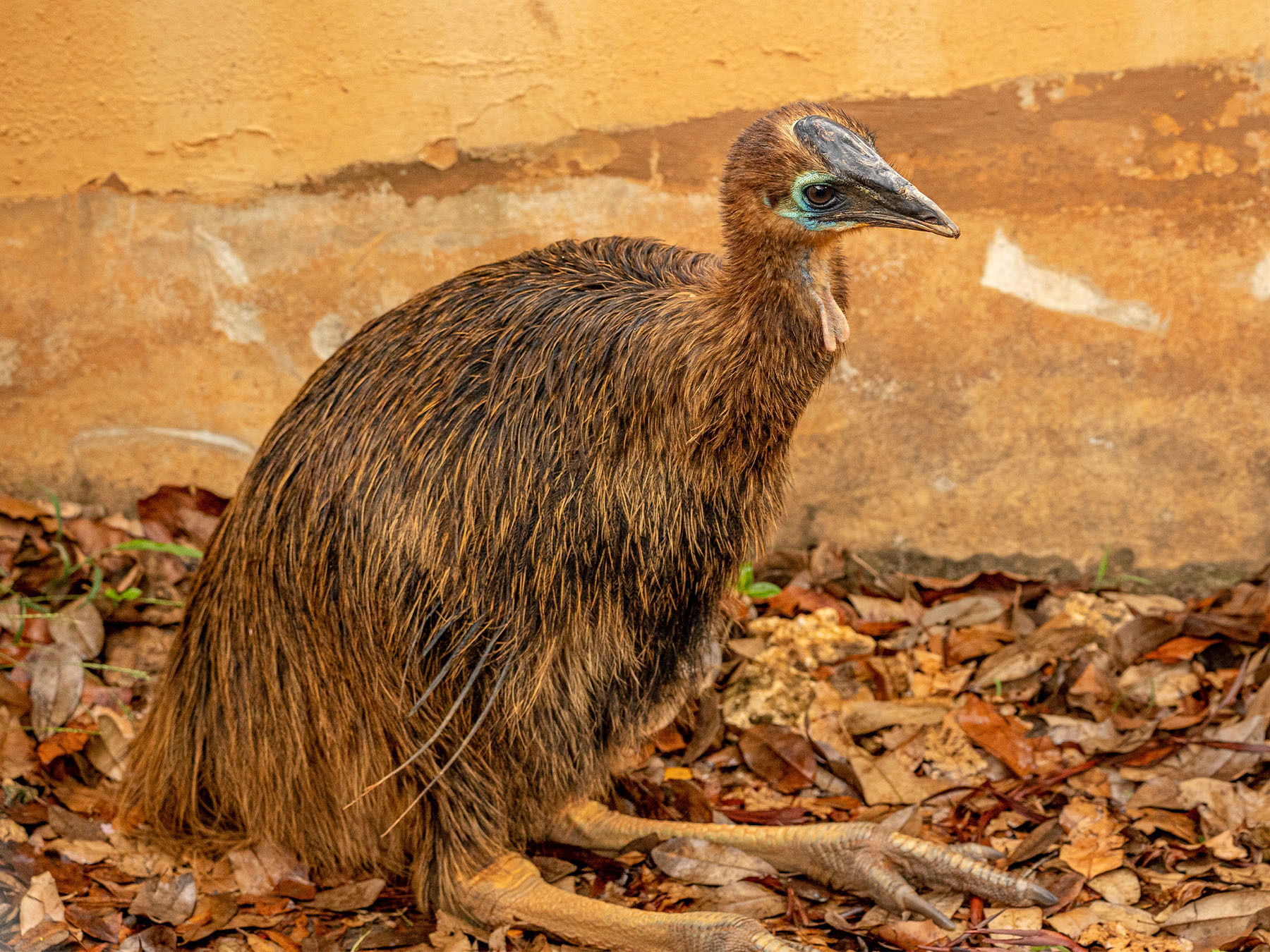
Quick facts
- Length
- 99–150 cm
- Weight
- 17500–26000 g
- Lifespan
- 20–40 years
- Family
- Cassowaries & Emus
- Migration
- Resident
- Global status (IUCN)
- Near Threatened
- World population
- Unknown
- Population trend
- Population is decreasing due to habitat loss and hunting
- Also called
- Bennett's Cassowary, Mountain Cassowary
- Scientific name
- Casuarius bennetti
Sources
2- 1BirdLife International. 2016. Casuarius bennetti. The IUCN Red List of Threatened Species 2016: e.T22678111A92755192. Source (opens in a new tab)
- 2B. Beehler in litt. (2012)

Checked by
Nathan Cope, founder and editor
Nathan founded Birdfact and leads its writers and contributors in the UK, the US and Canada. He has watched and studied birds for more than ten years, and checks every article and species guide before it’s published.