


Emperor Penguin
Imperial Penguin · Aptenodytes forsteri
By the Birdfact teamChecked by Nathan Cope
On this page12 sections
How to recognise it
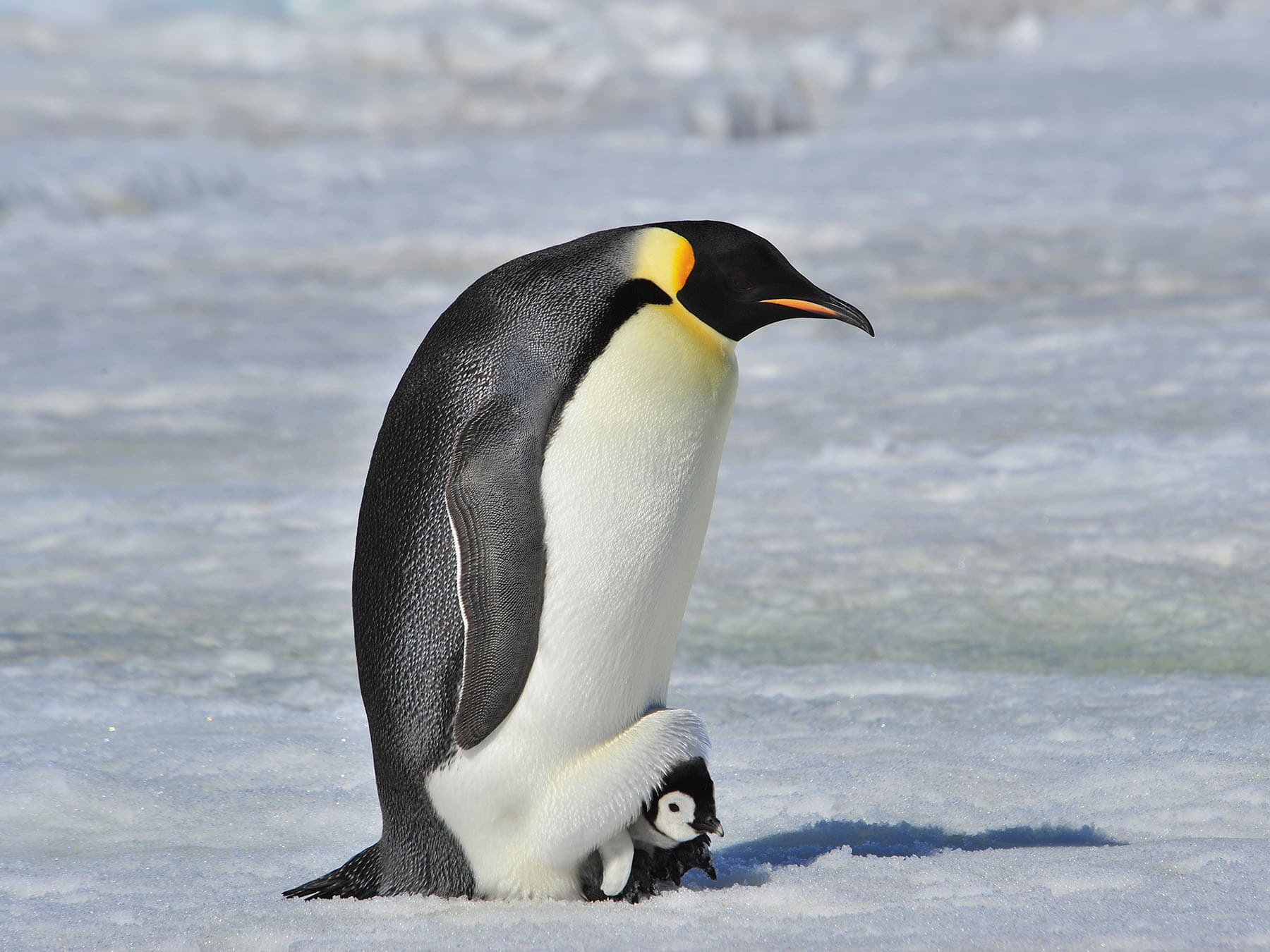
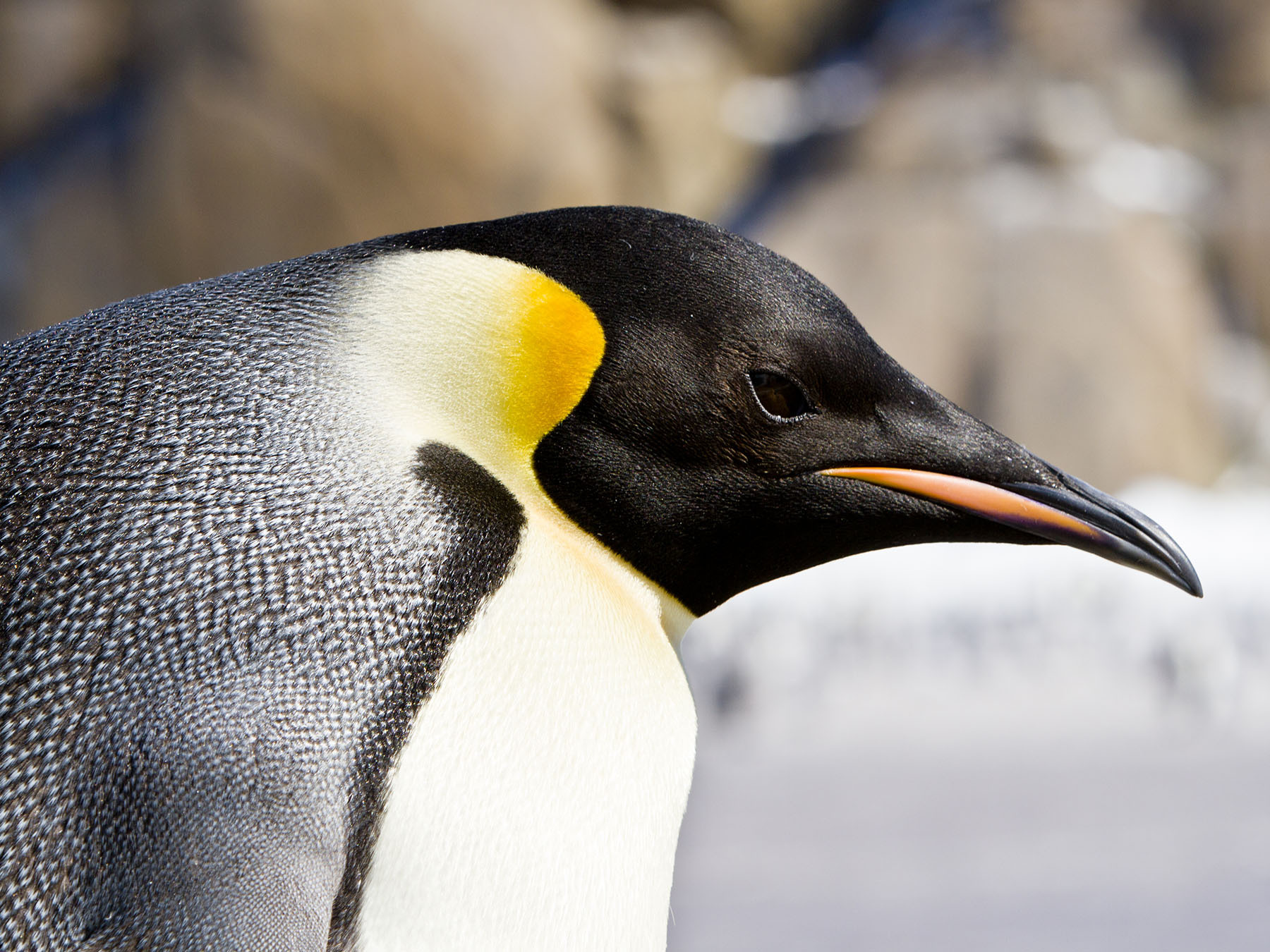
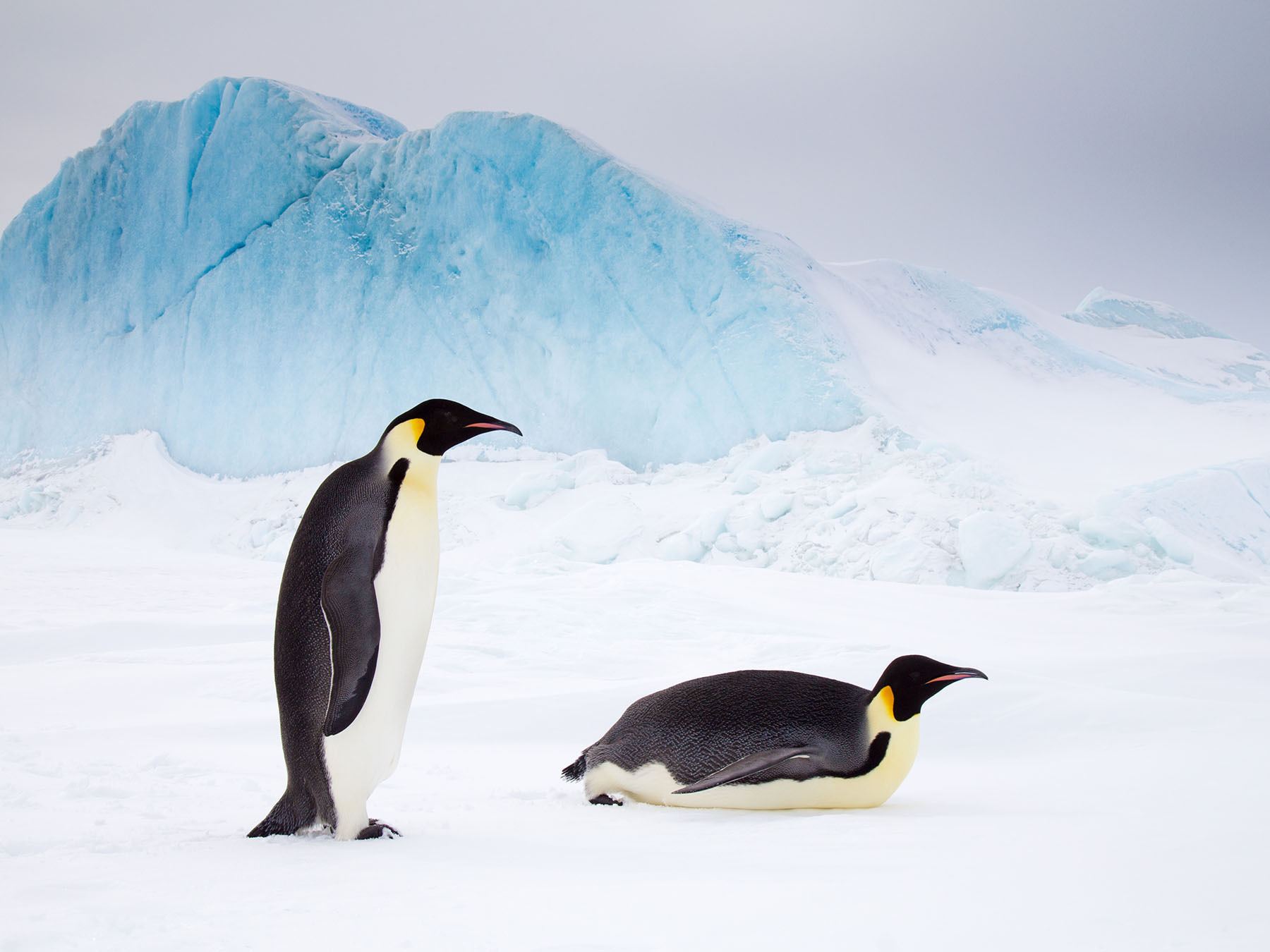
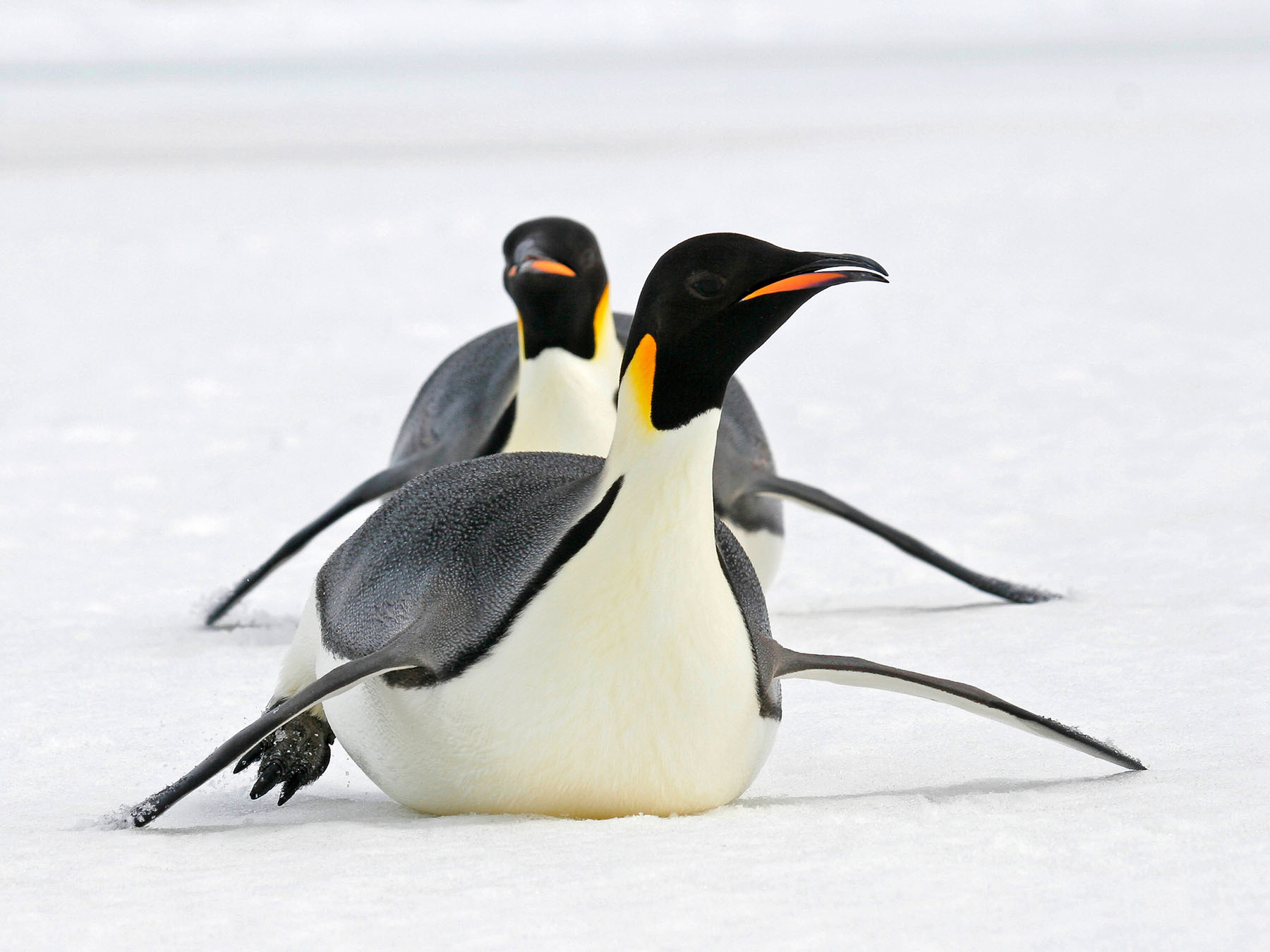
Emperor Penguins are the largest of all penguin species, with a distinctive black and white plumage. They have a black head with white ear patches, a black back, and a white belly. Their flippers are black on the outer side and white underneath.
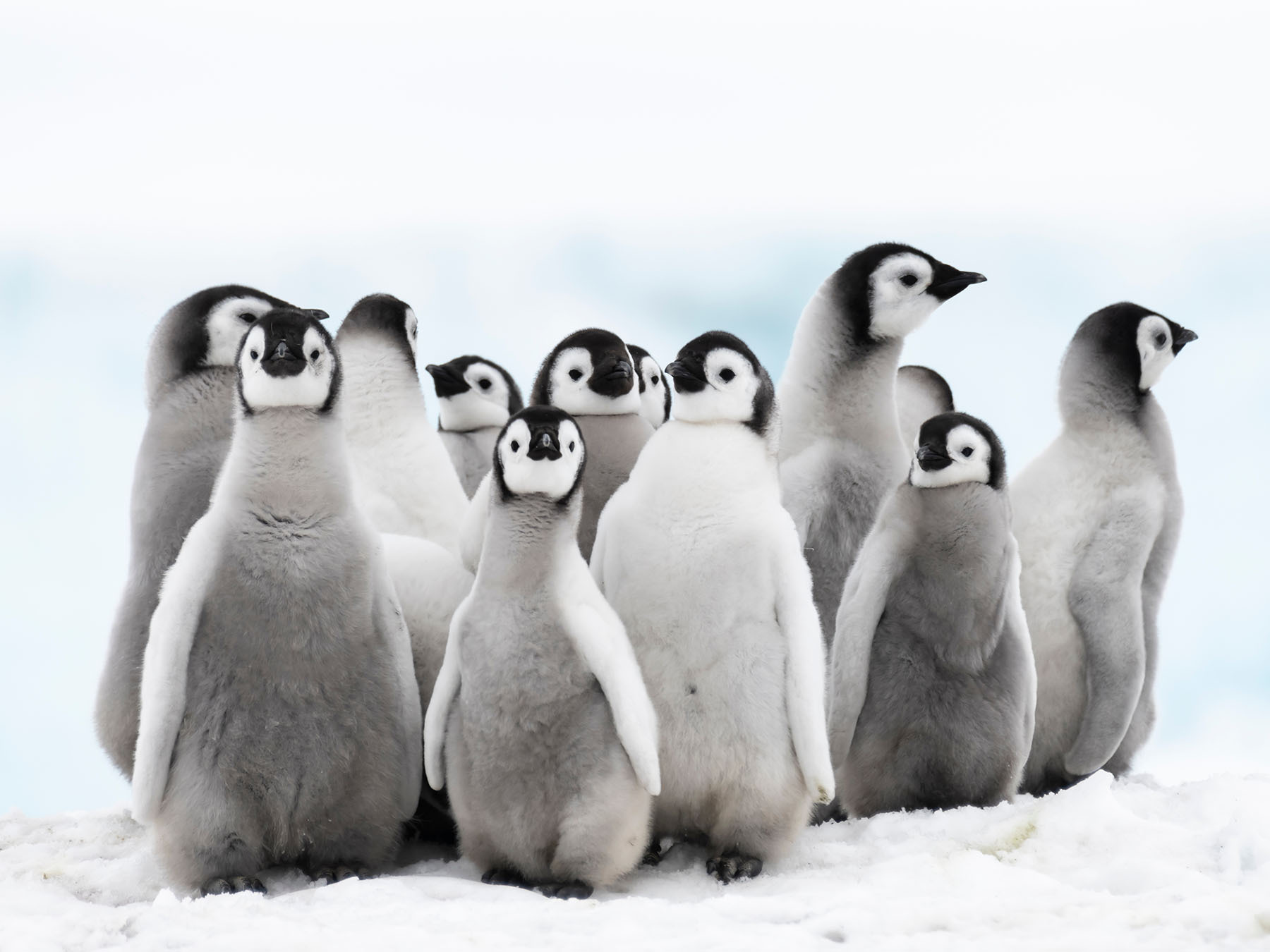
Both males and females look similar, with bright yellow-orange patches on the sides of their necks. Juveniles have lighter, greyer plumage and lack the vibrant neck patches of adults.
Its size
Adults- Length
- 100–130 cm
- Wingspan
- 76–89 cm
- Weight
- 22000–45000 g
Its song and calls
Emperor Penguins use a variety of vocalisations for communication. Their most distinctive call is a trumpet-like sound, often described as a loud 'oorr-oorr-oorr'. This call is used for individual recognition between mates and between parents and chicks in the crowded colony.
- Call0:00 / 0:06
Recorded in 63km south of Snow HIll Island, Antarctica · February 2024
When and where to see it
The Emperor Penguin is not recorded regularly in the UK, Ireland, the United States or Canada.
Worldwide: recorded regularly in 1 country
Countries where it was recorded in at least 3 of the 6 years 2019–2024. Linked countries have their own bird list.
Antarctica (1)
- Antarctica
Data: EOD – eBird Observation Dataset (Cornell Lab of Ornithology), accessed via GBIF.org, CC BY 4.0. Records from 2019–2024, aggregated and filtered by Birdfact. How these lists are made
Tips for seeing it
- Visit Antarctica during the austral summer (November to February) for the best viewing opportunities
- Look for large colonies on the sea ice near the Antarctic coast
- Observe from a distance to avoid disturbing breeding pairs and chicks
- Use binoculars or a spotting scope for detailed views without approaching too closely
What it eats
Emperor Penguins primarily feed on fish, particularly Antarctic silverfish, as well as squid and krill. They are adapted for deep diving, allowing them to forage at great depths.
During the breeding season, they may fast for extended periods, relying on stored body fat for energy.
Nesting and breeding
Emperor Penguins breed during the Antarctic winter, with pair formation occurring in March or April. They are monogamous for the breeding season but often choose new partners each year.
No nest is built; instead, the male incubates a single egg on his feet, covered by a feathered flap of skin called a brood pouch. The egg is laid in May or June and is about 12 cm long.
Incubation lasts about 65 days, during which the male fasts. After hatching, both parents take turns caring for the chick, which fledges after about 150 days.
Behaviour
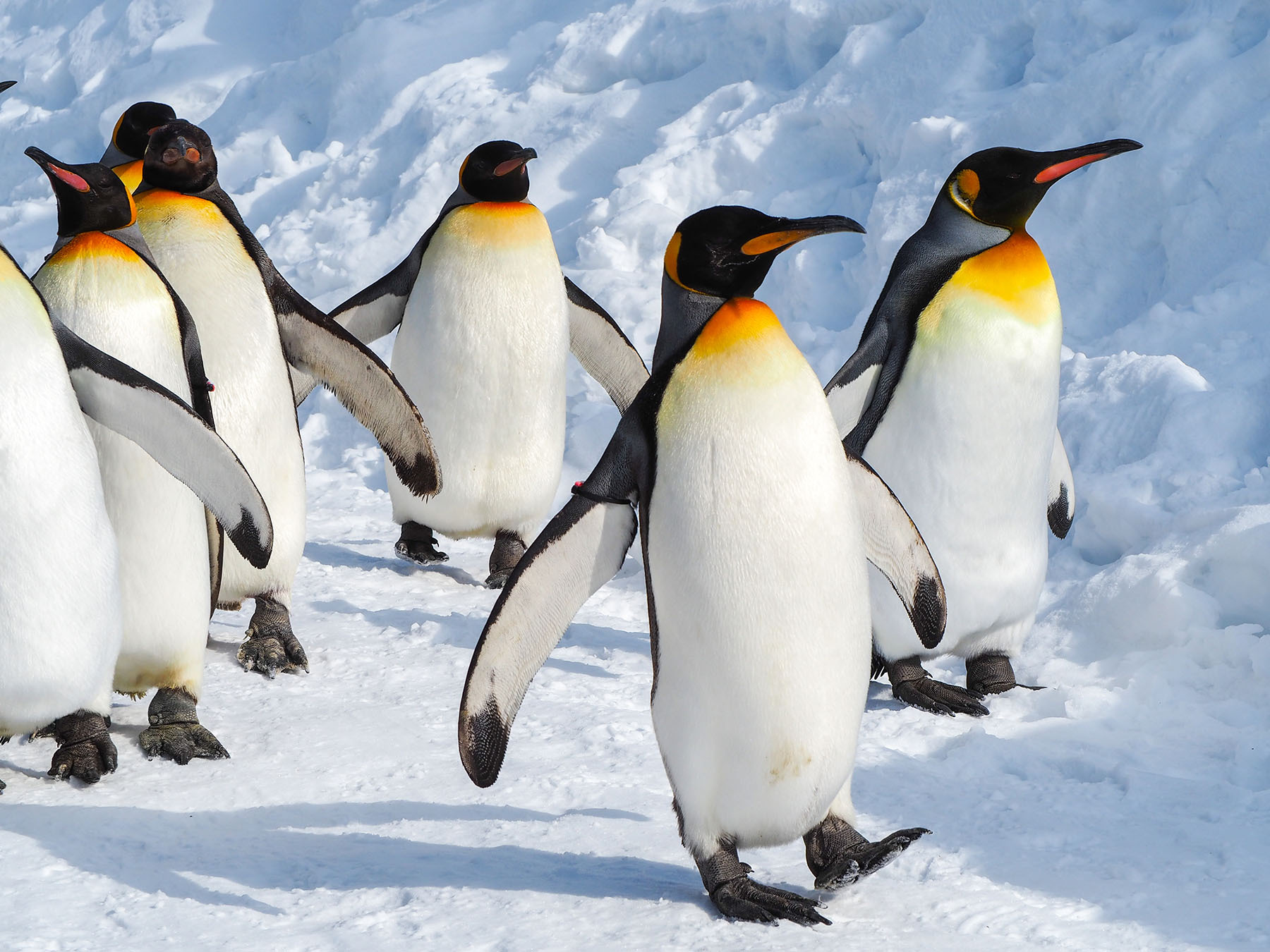
Emperor Penguins are known for their remarkable endurance, surviving harsh Antarctic winters. They huddle together in large groups to conserve heat, rotating positions to ensure all members benefit from the warmth.
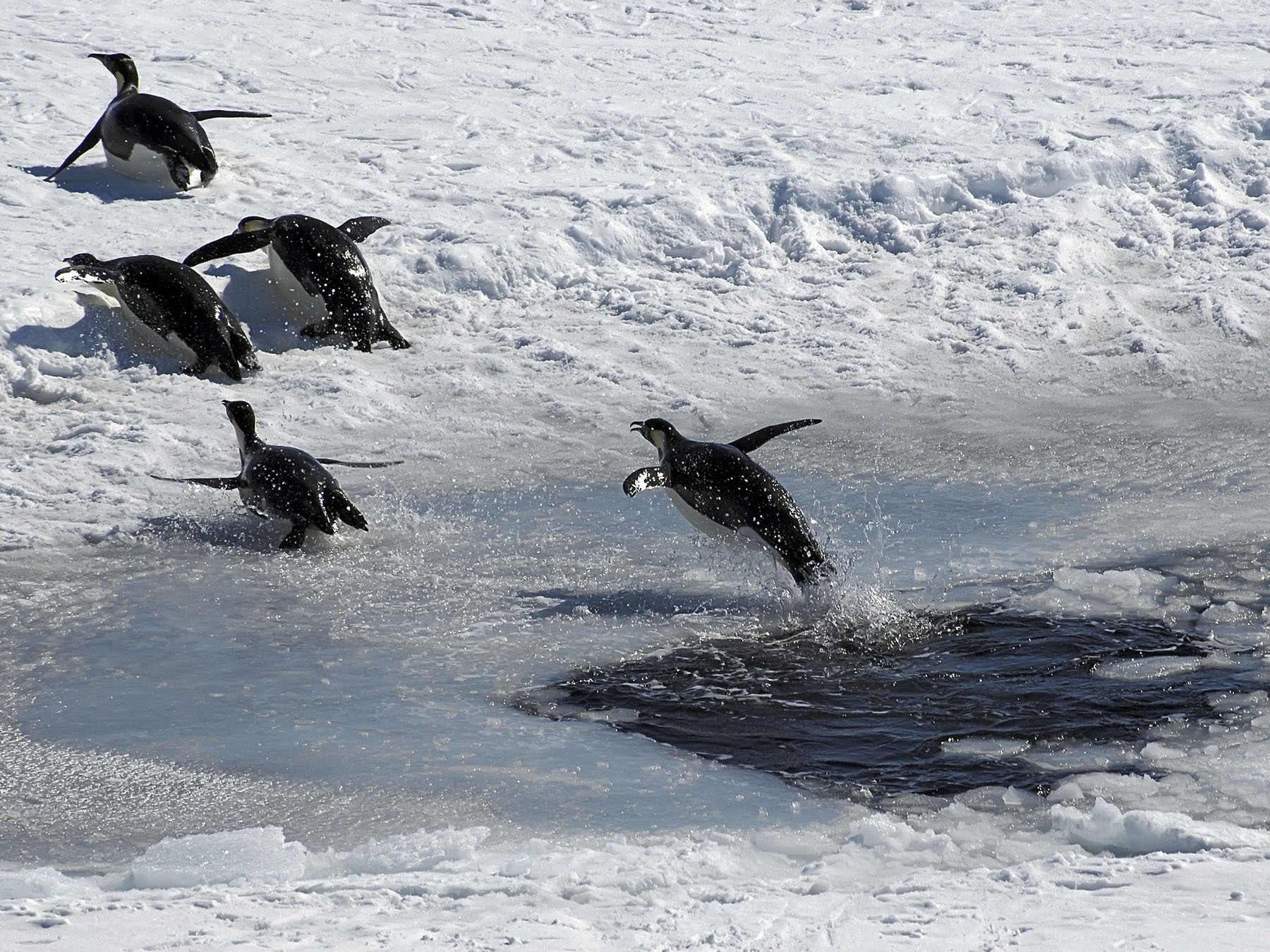
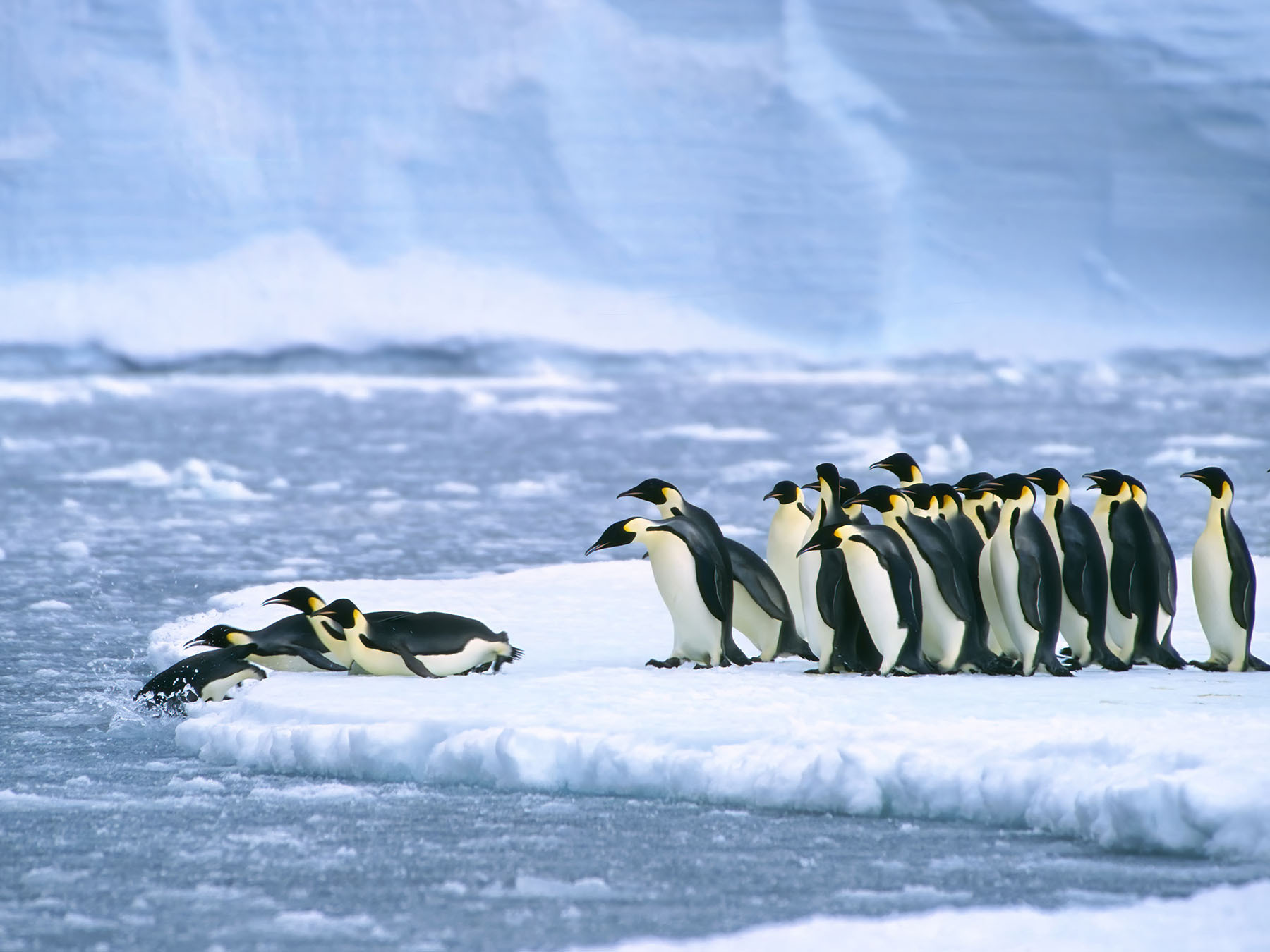
These penguins are excellent swimmers, capable of diving to depths of over 500 meters in search of food.
Conservation
Emperor Penguins face significant threats from climate change, which affects sea ice extent and stability. This impacts their breeding habitats and food availability.
Conservation efforts focus on protecting their breeding grounds and advocating for global climate action to preserve their icy habitat.
Similar birds
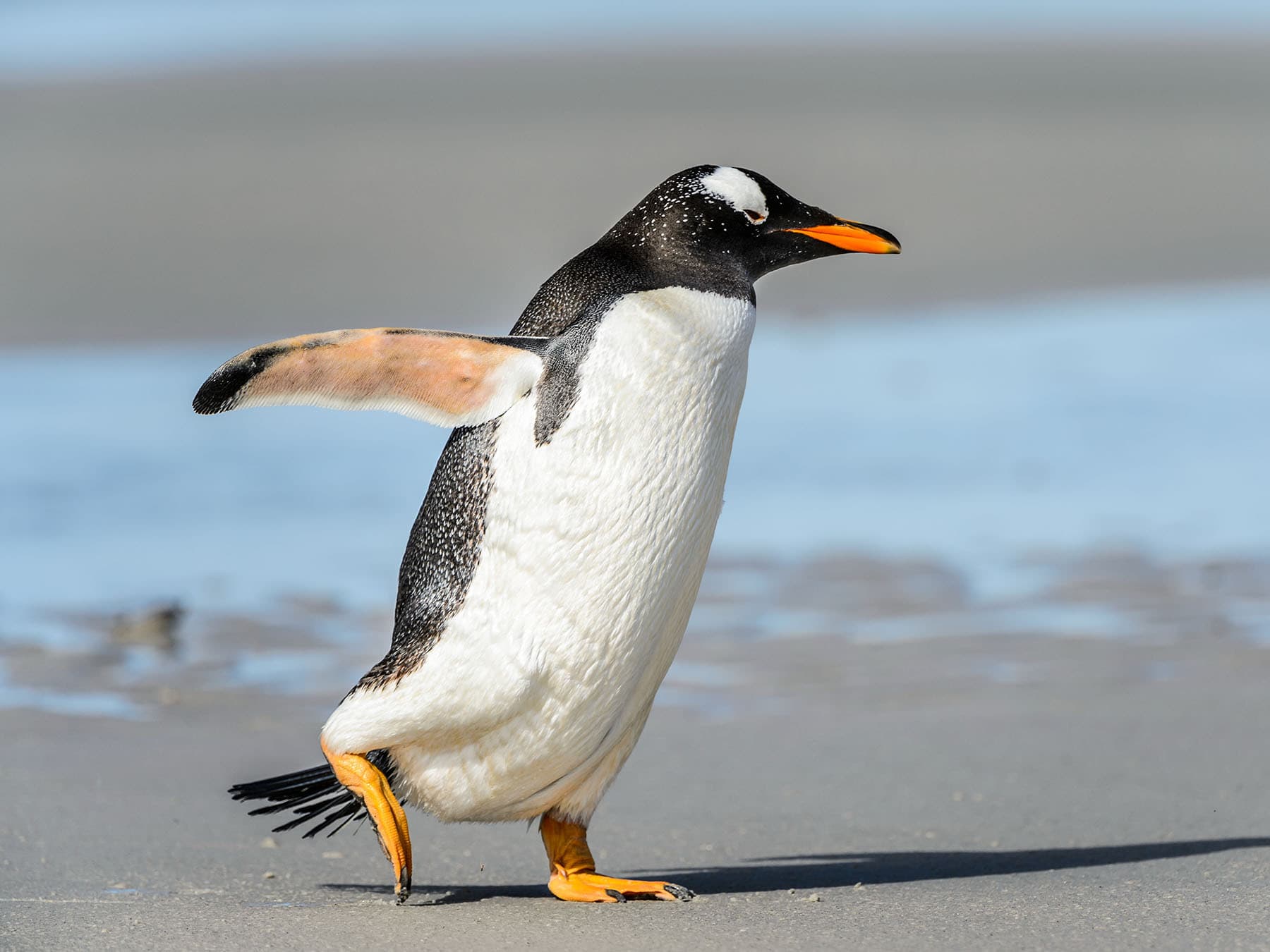
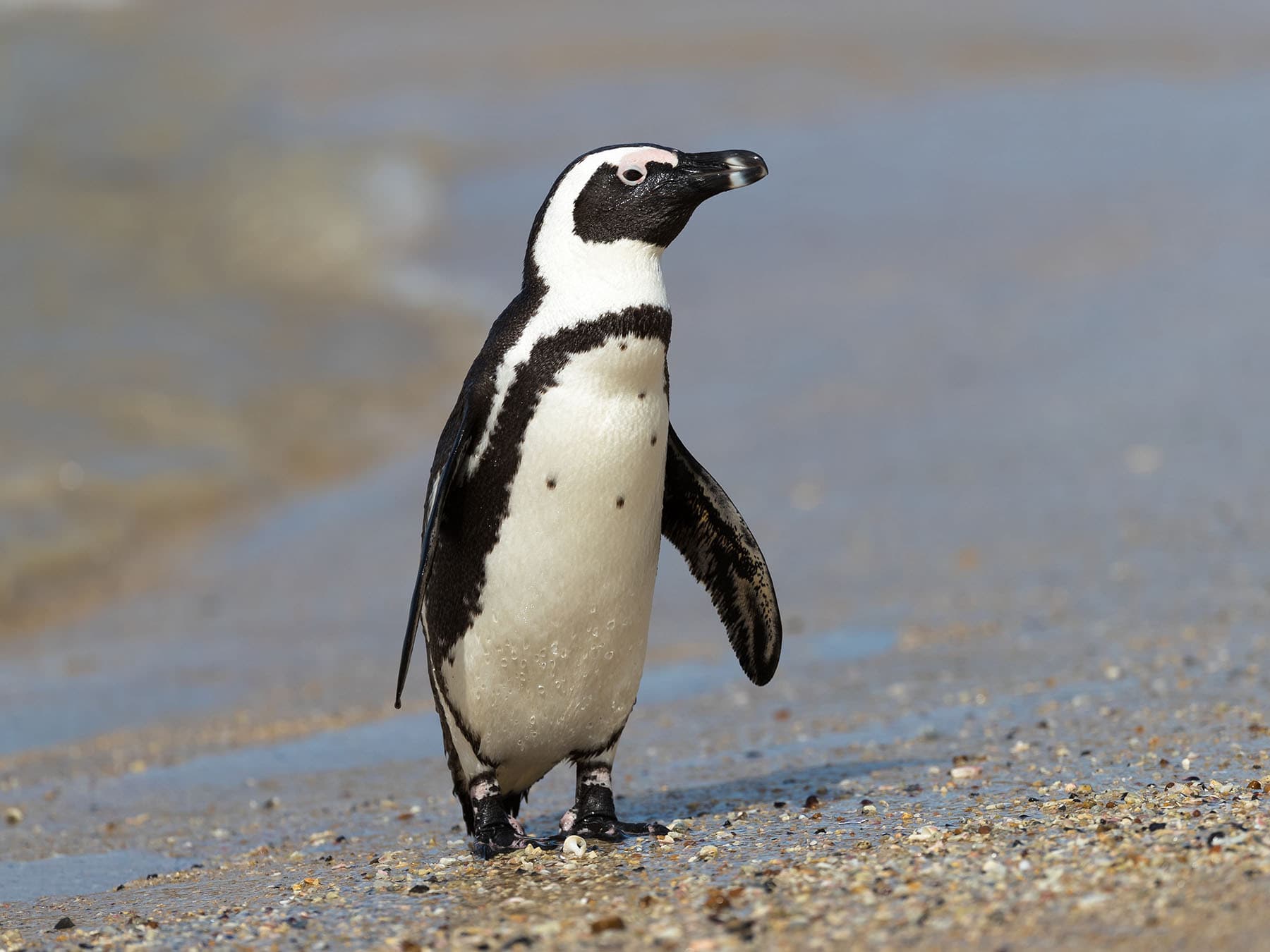
Often mistaken for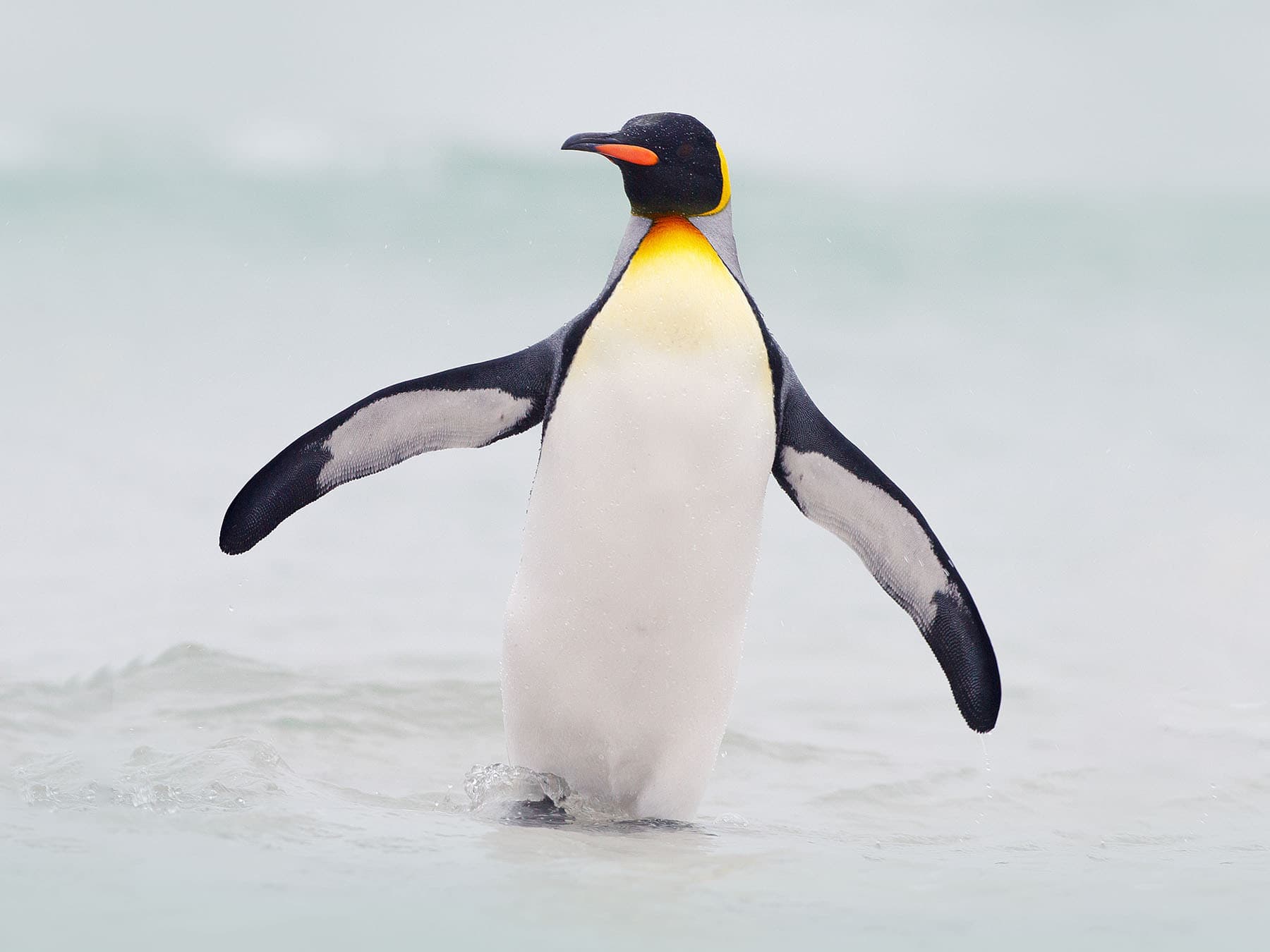
More photos
9 photos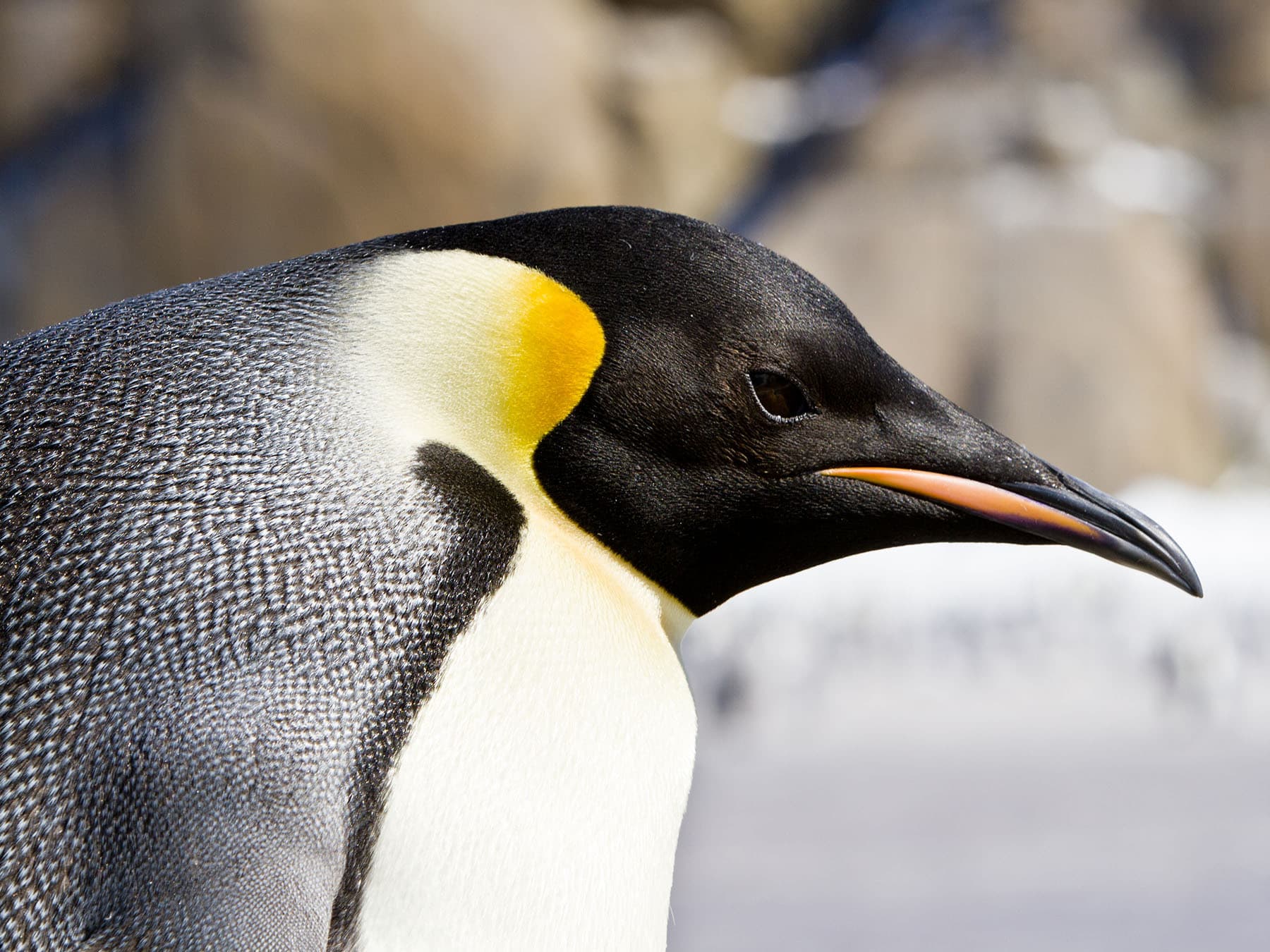 Close up portrait of an Emperor Penguin
 Emperor Penguin colony with young chicks
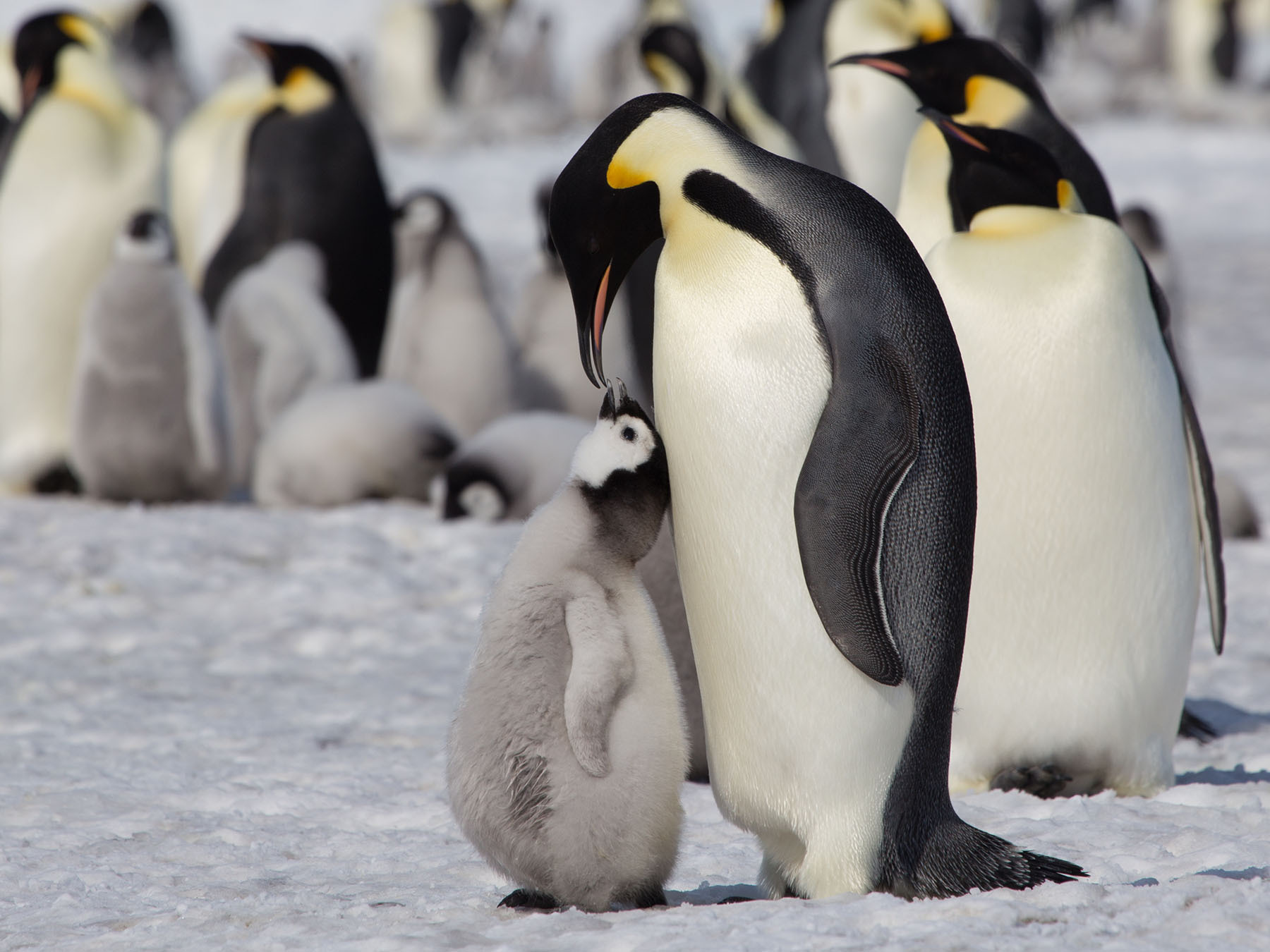
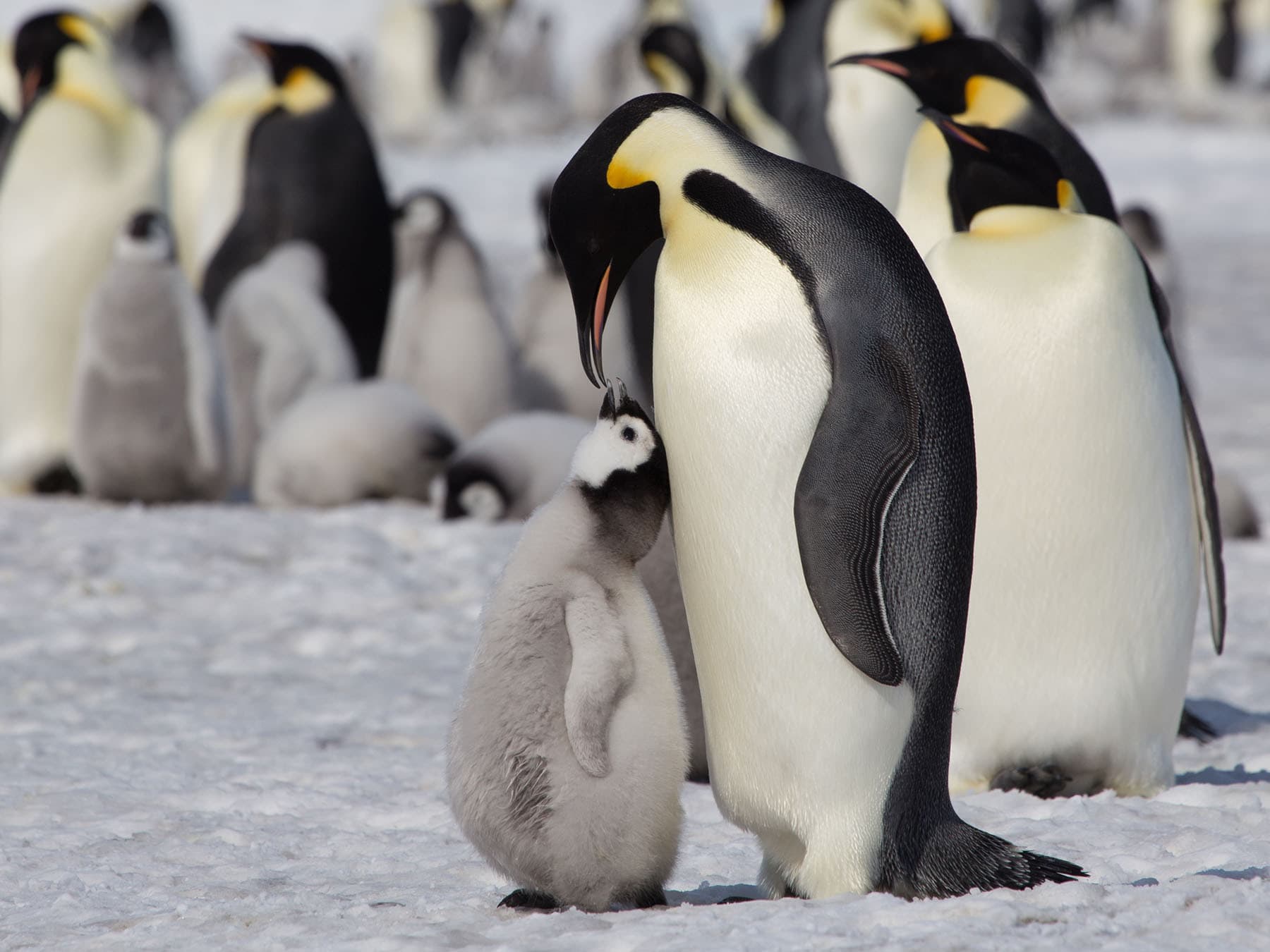 Emperor Penguin feeding chick
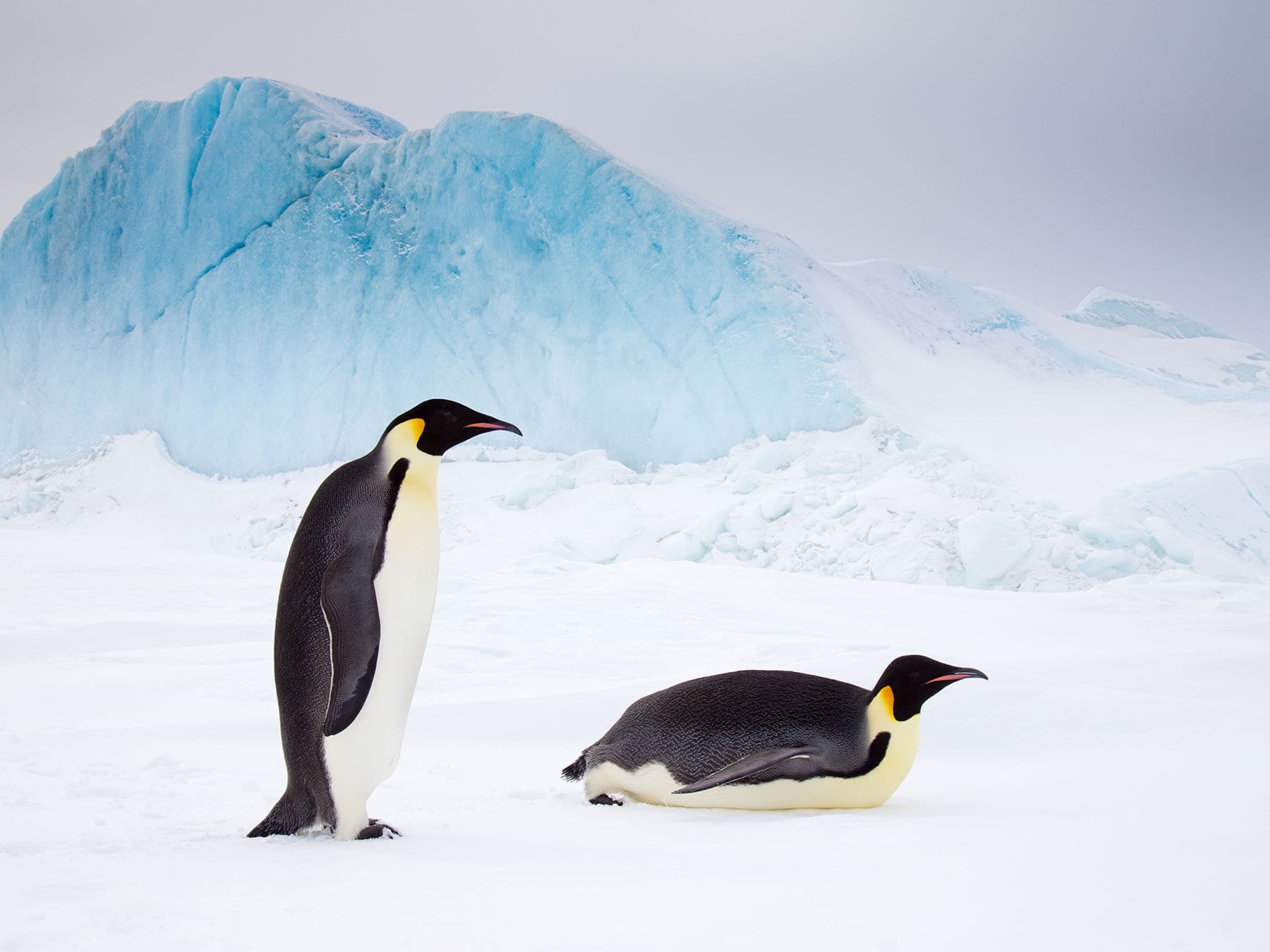 A pair of Emperor Penguins, one sliding along the ice, Antarctica
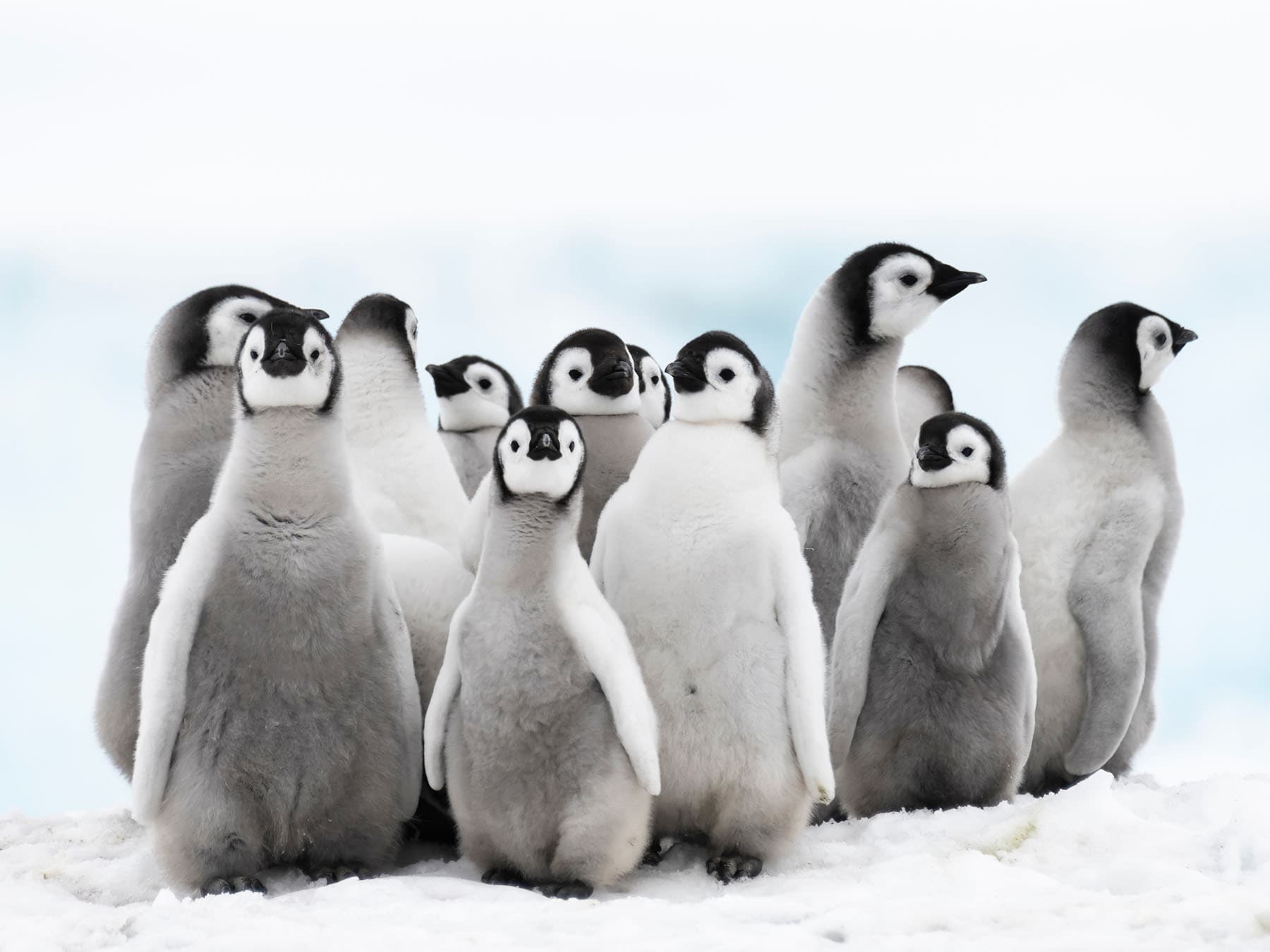 Emperor Penguin chicks in a 'creche'
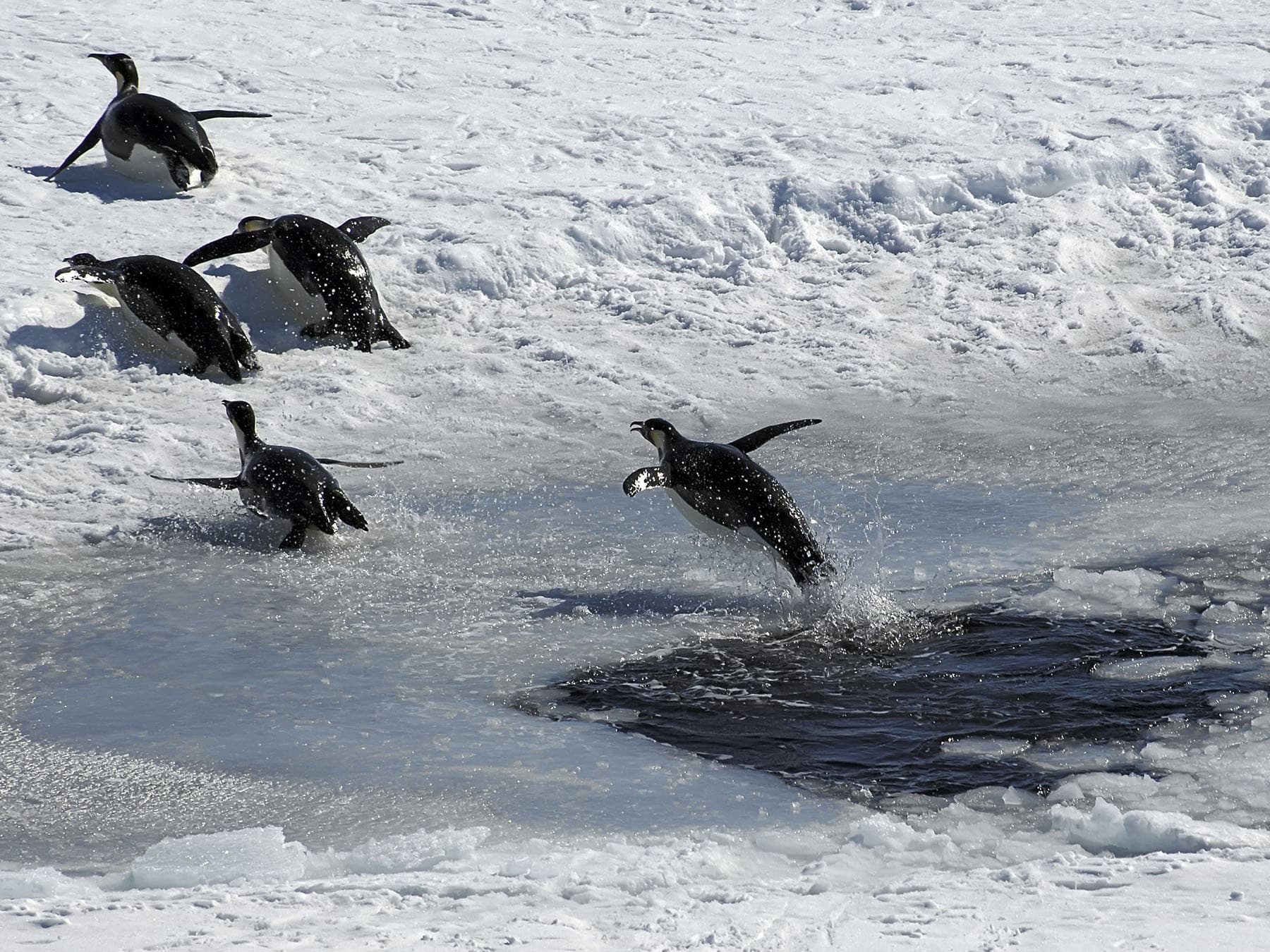 Emperor Penguins jumping out of the water
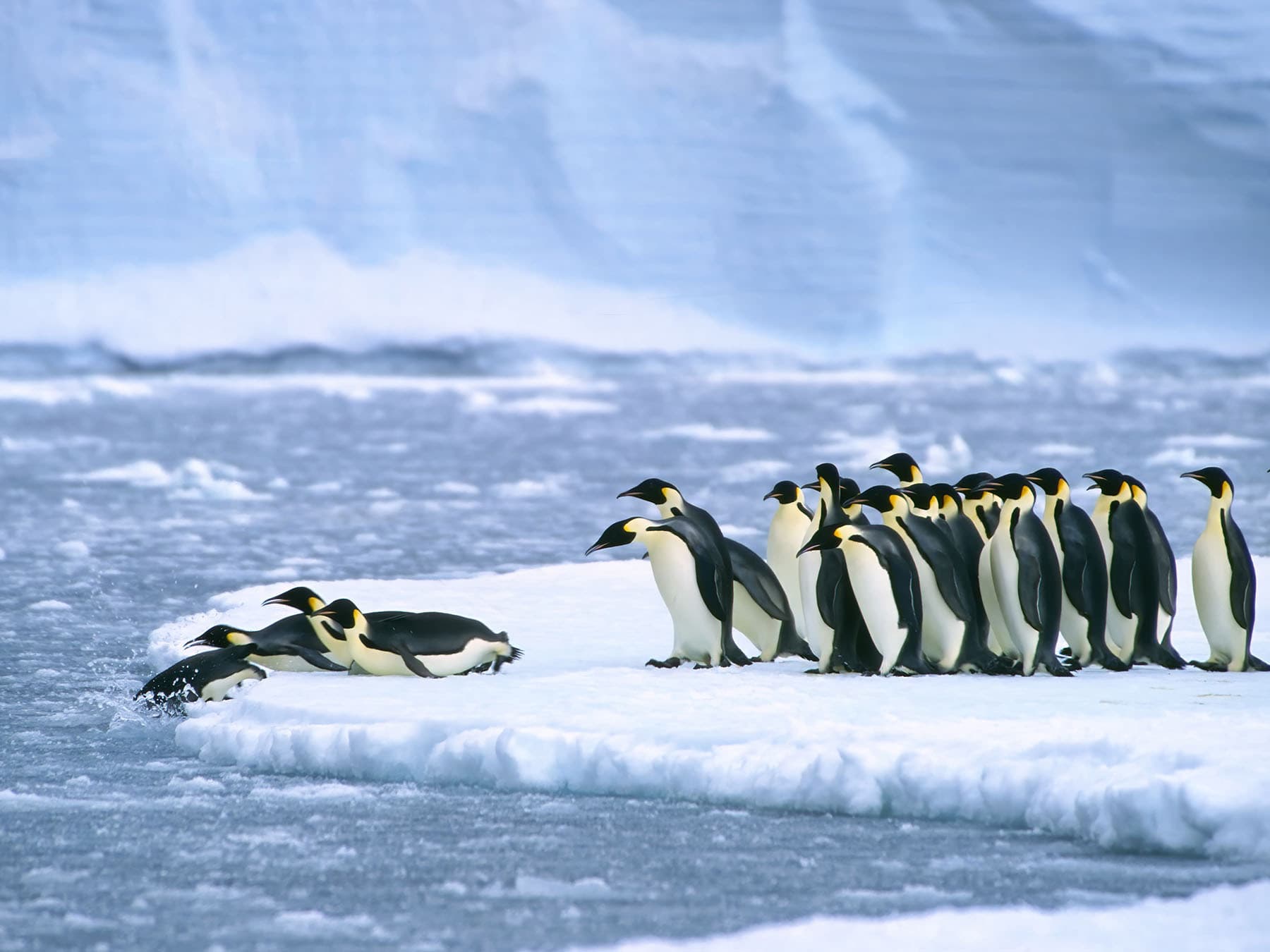 Emperor Penguins diving into the water
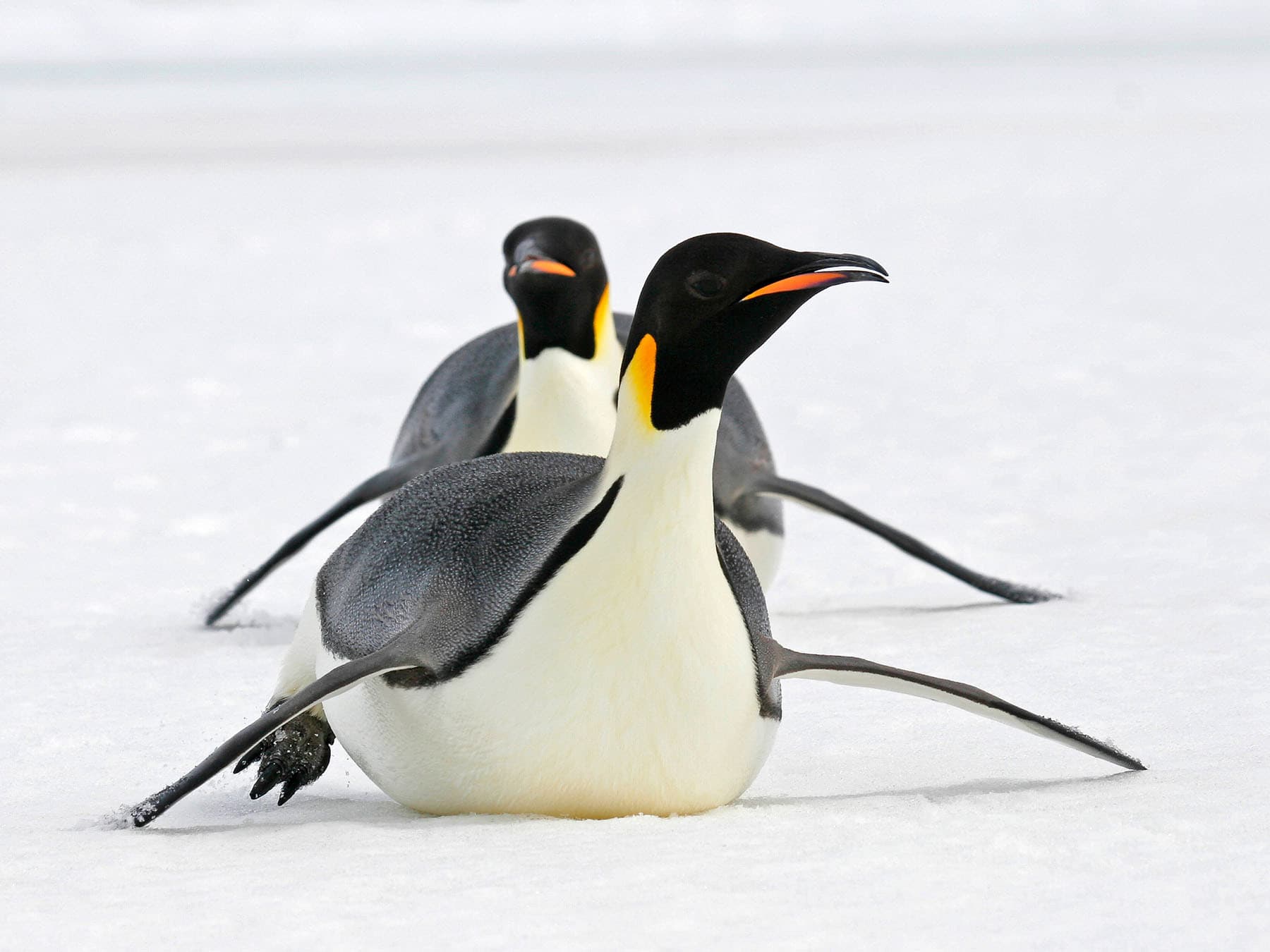 Emperor Penguins gliding along the frozen ground
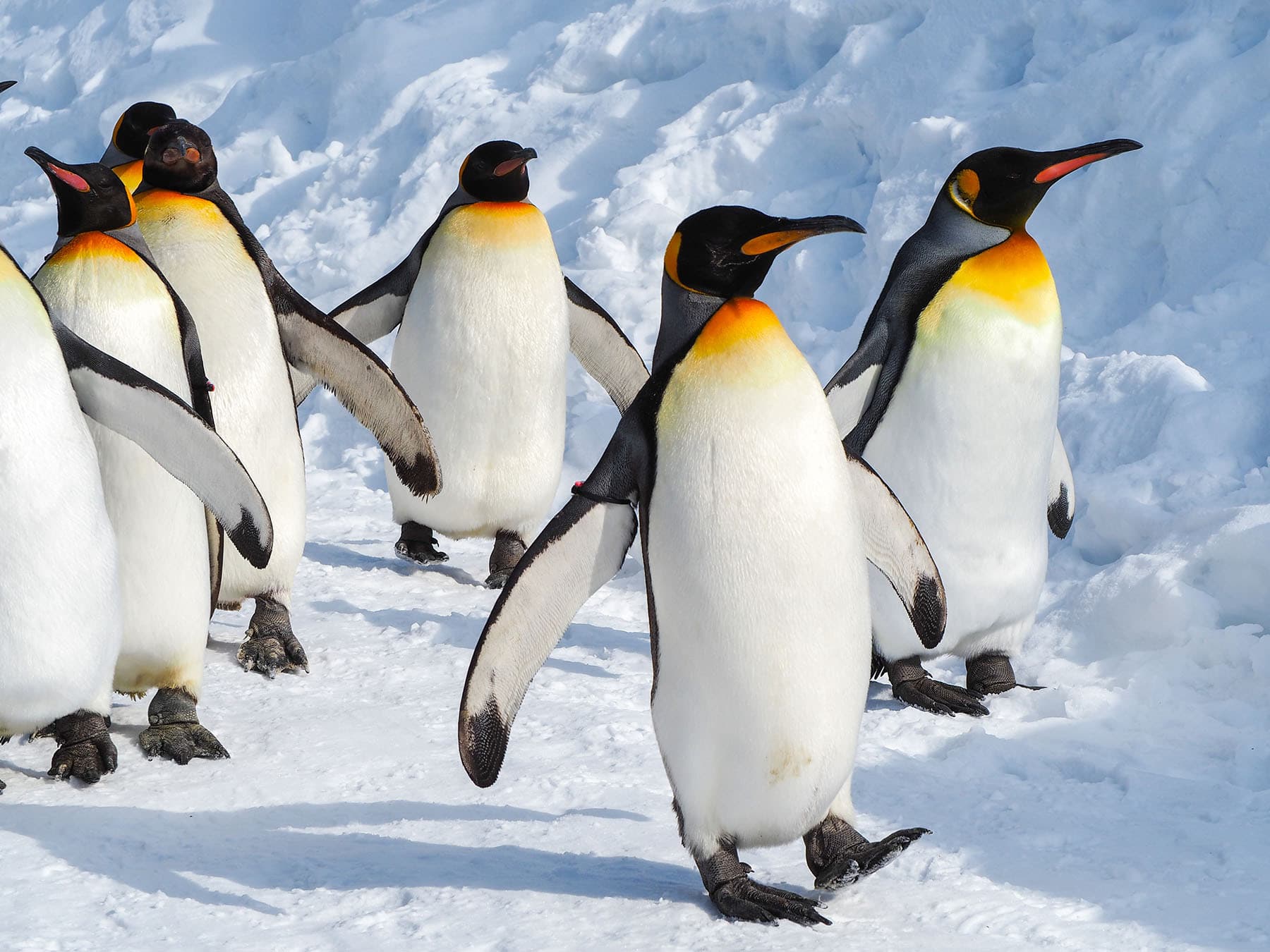 Group of Emperor Penguins walking on the snow

Quick facts
- Length
- 100–130 cm
- Wingspan
- 76–89 cm
- Weight
- 22000–45000 g
- Lifespan
- 15–20 years · oldest recorded 40 years
- Family
- Penguins
- Migration
- Partial migrant
- Global status (IUCN)
- Near Threatened
- World population
- 512,000 mature individuals
- Population trend
- Decreasing
- Also called
- Imperial Penguin
- Scientific name
- Aptenodytes forsteri
Sources
4- 1BirdLife International. 2020. Aptenodytes forsteri. The IUCN Red List of Threatened Species 2020: e.T22697752A157658053. Source (opens in a new tab)
- 2BirdLife International. 2020. Aptenodytes forsteri. The IUCN Red List of Threatened Species 2020: e.T22697752A157658053. Source (opens in a new tab)
- 3Trathan et al. (2019)
- 4Tony Williams, The Penguins, Oxford University Press (1995)

Checked by
Nathan Cope, founder and editor
Nathan founded Birdfact and leads its writers and contributors in the UK, the US and Canada. He has watched and studied birds for more than ten years, and checks every article and species guide before it’s published.