


Galápagos Penguin
Galapagos Islands Penguin · Spheniscus mendiculus
By the Birdfact teamChecked by Nathan Cope
On this page12 sections
How to recognise it
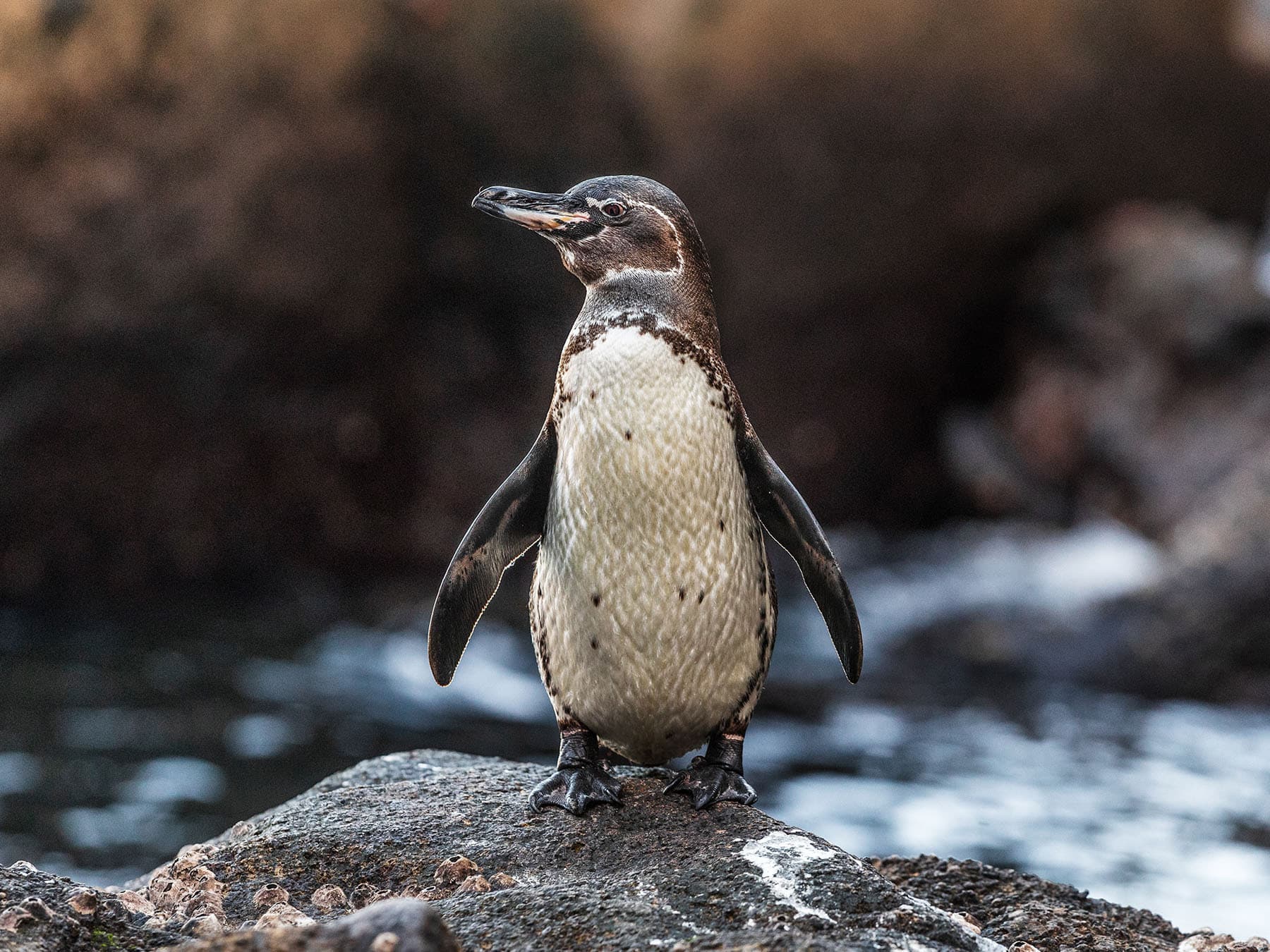
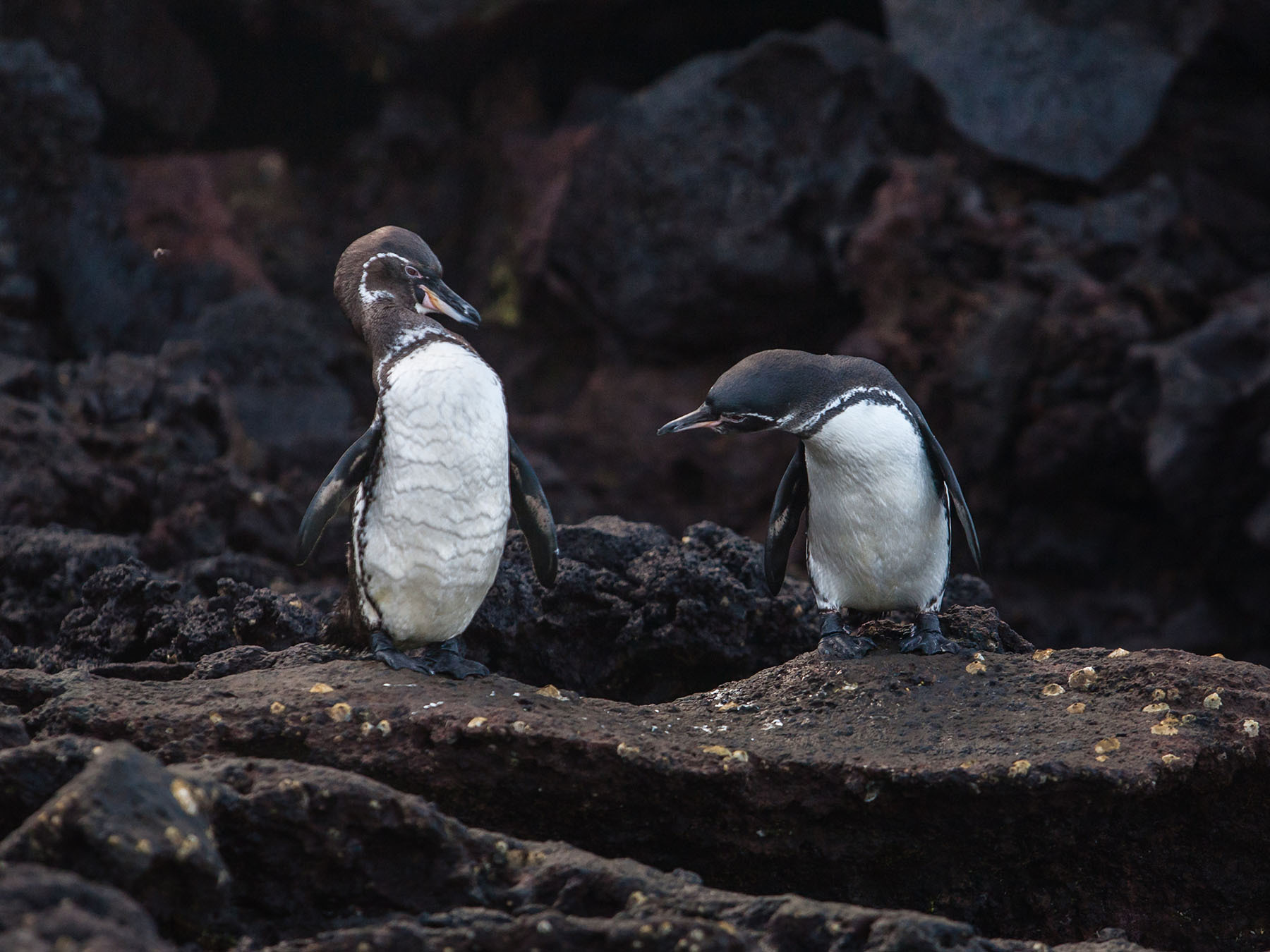
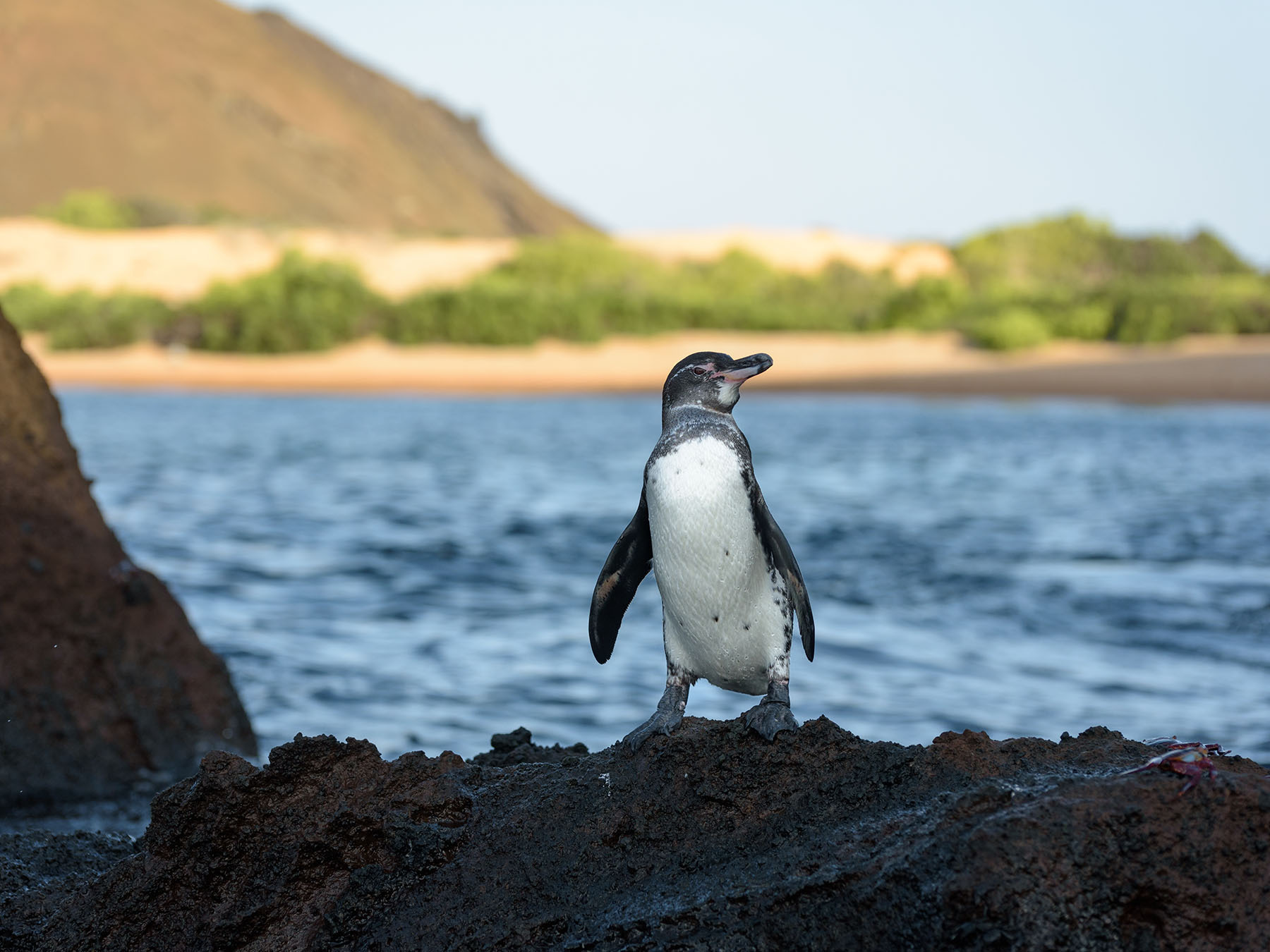
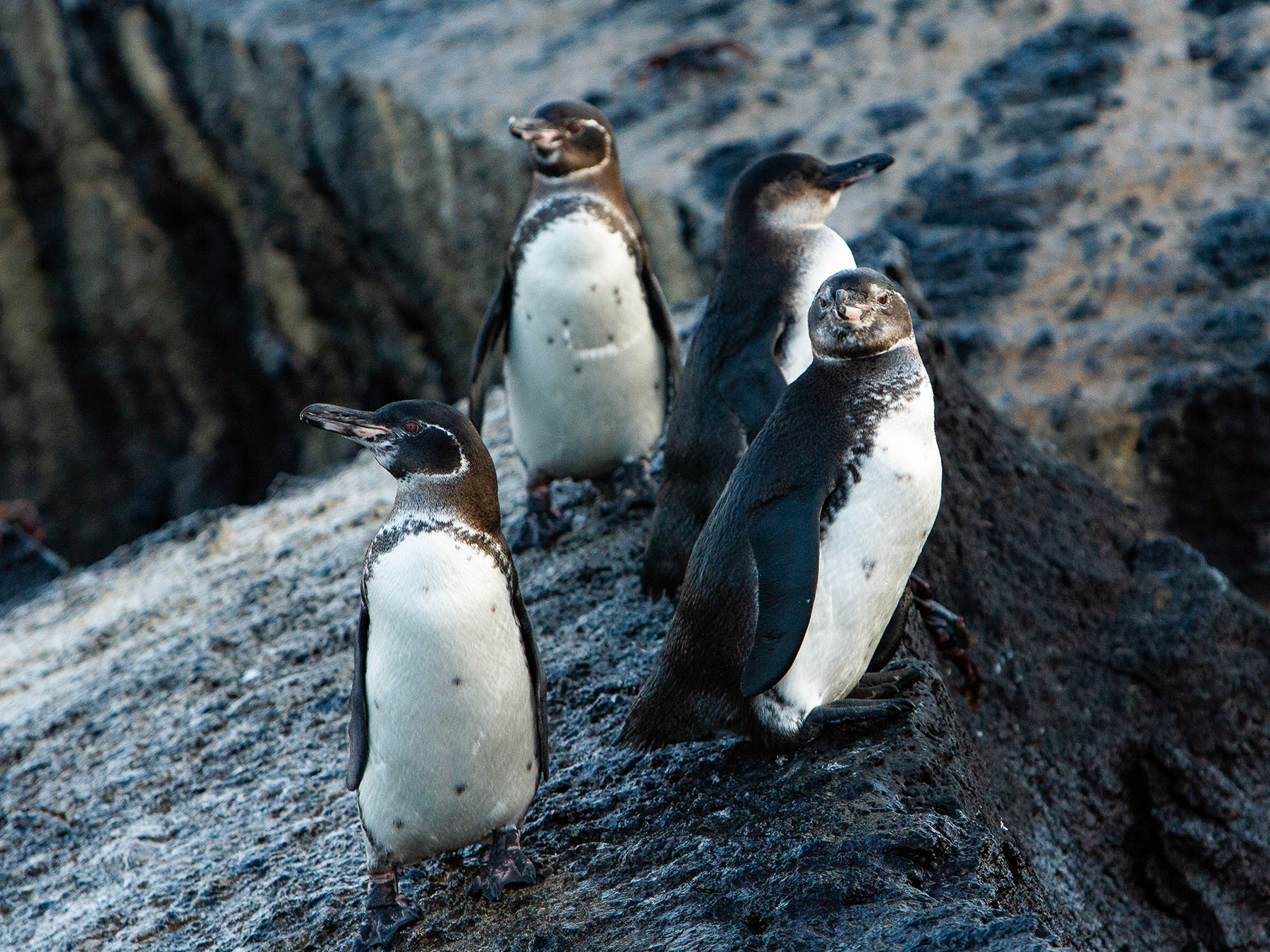
The Galapagos Penguin is the second smallest penguin species, characterised by its black upperparts and white underparts. It has a distinctive white band that runs from behind the eye, around the black ear coverts and chin, to join the white of the throat.
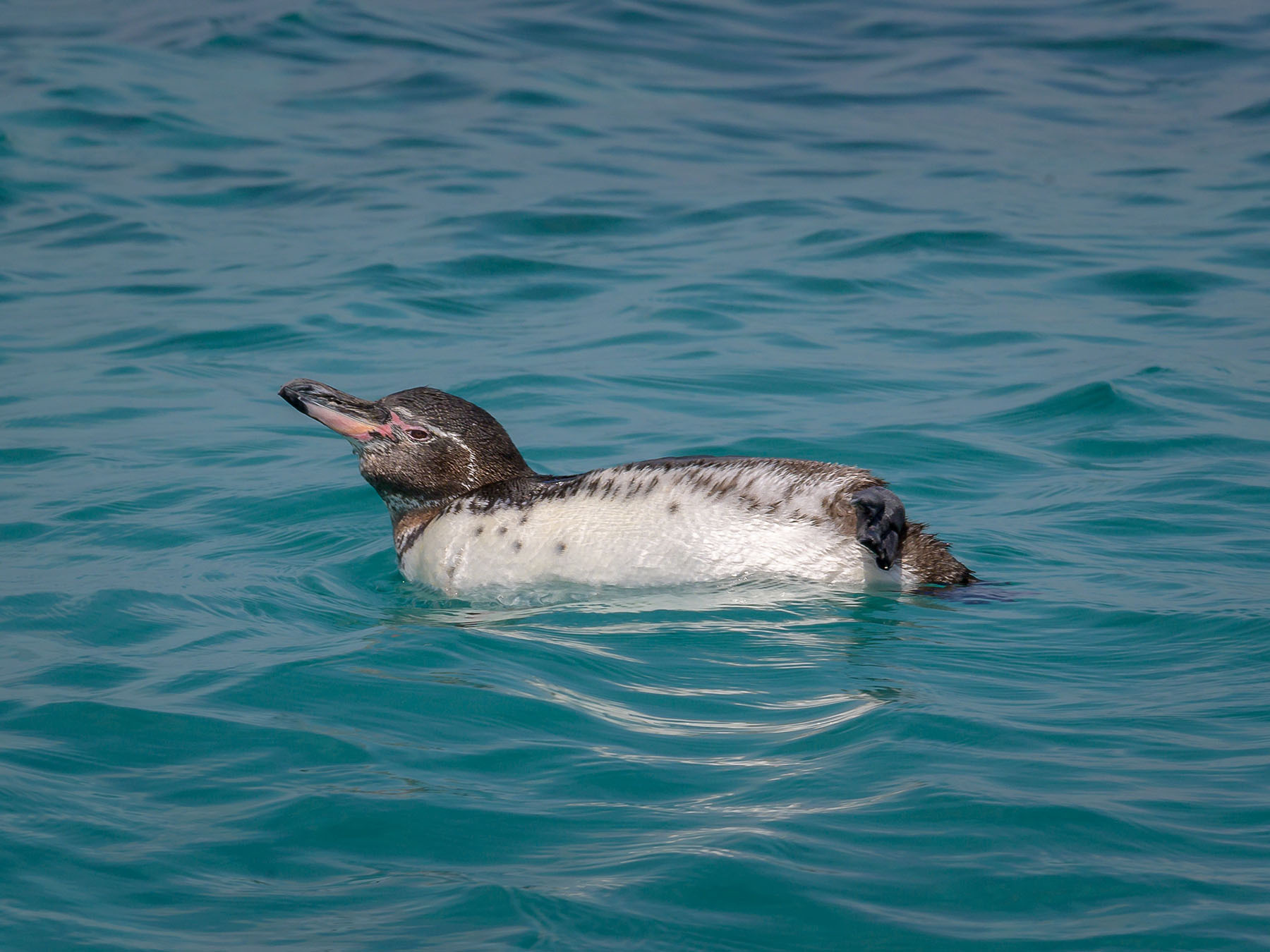
Both sexes look similar, with juveniles having a darker, more bluish-grey plumage. During the breeding season, adults develop a mottled appearance on their formerly white front due to moulting.
Its size
Adults- Length
- 48–53 cm
- Wingspan
- 40–45 cm
- Weight
- 1700–2600 g
Its song and calls
Galapagos Penguins have a variety of vocalisations. Their most common call is a loud, braying 'hee-haw' sound, similar to a donkey's bray.
During courtship, they produce softer, more musical whistles and trills. When alarmed, they emit sharp, staccato barks.
When and where to see it
The Galápagos Penguin is not recorded regularly in the UK, Ireland, the United States or Canada.
Worldwide: recorded regularly in 1 country
Countries where it was recorded in at least 3 of the 6 years 2019–2024. Linked countries have their own bird list.
South America (1)
- Ecuador
Data: EOD – eBird Observation Dataset (Cornell Lab of Ornithology), accessed via GBIF.org, CC BY 4.0. Records from 2019–2024, aggregated and filtered by Birdfact. How these lists are made
Tips for seeing it
- Look for them along the rocky shores of the Galapagos Islands, especially on Isabela and Fernandina.
- Best observed during early morning or late afternoon when they're most active.
- Watch for their distinctive diving behaviour near the shore.
- Join a guided tour for the best chances of spotting these rare penguins.
What it eats
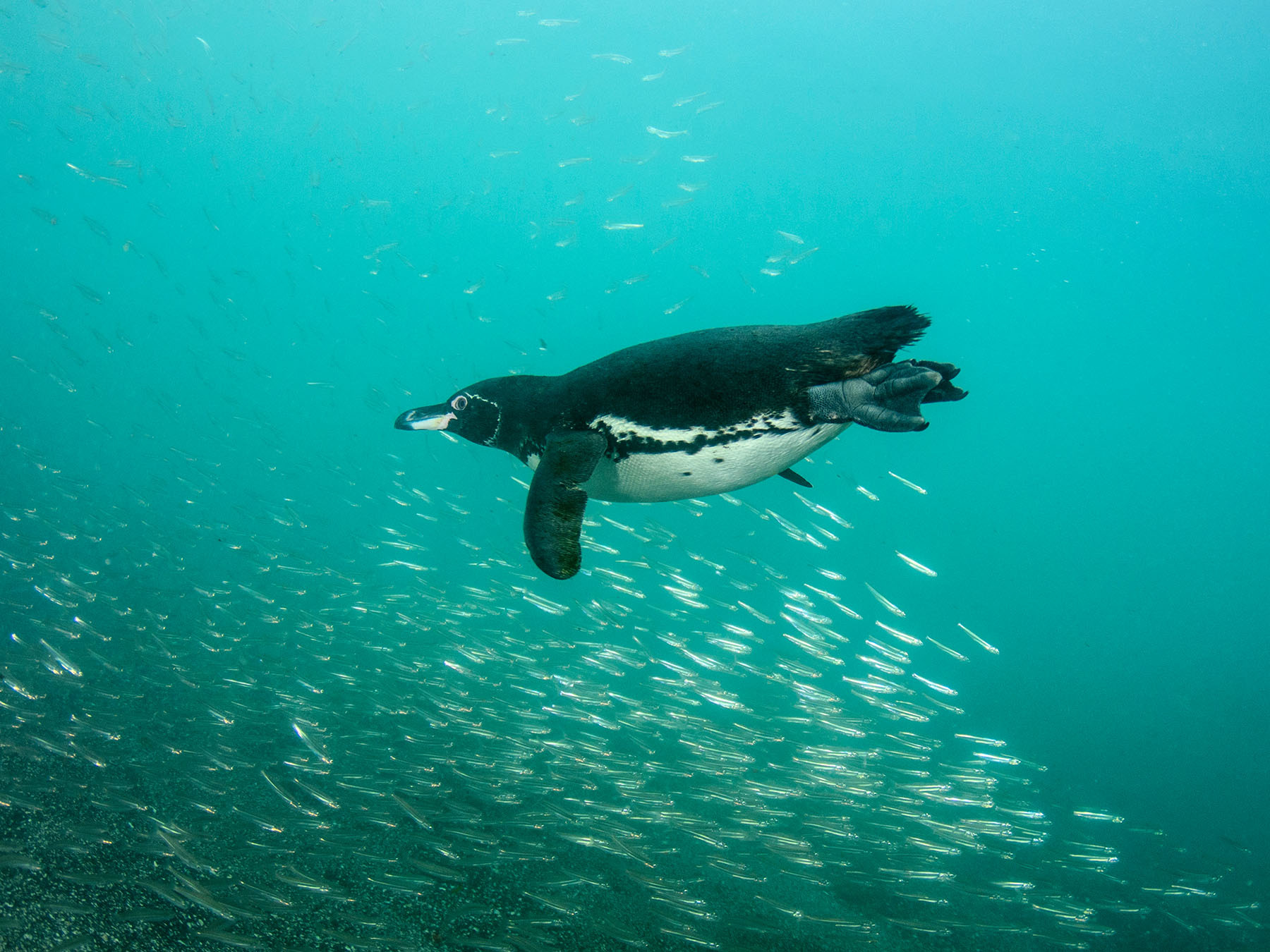
Galapagos Penguins primarily feed on small schooling fish such as anchovies, sardines, and mullet. They are opportunistic feeders, also consuming squid and crustaceans.
These penguins typically forage in shallow coastal waters, diving to depths of up to 30 meters to catch their prey.
Nesting and breeding
Galapagos Penguins form monogamous pairs and can breed year-round, though peak breeding occurs when marine food is abundant. Courtship involves mutual preening and vocalisations.
Nests are built in sheltered locations such as lava tubes, caves, or crevices in rocks. The female typically lays two eggs, though often only one chick survives.
Both parents share incubation duties for about 38-40 days. After hatching, chicks are guarded for about 30 days and fledge at around 7-8 weeks old, though parents continue to feed them for several more weeks.
Behaviour
Galapagos Penguins are excellent swimmers. When hunting, they use their flippers to 'fly' underwater at speeds up to 35 km/h. On land, they waddle upright or hop over rocks.
These penguins are social, often seen in small groups, and engage in mutual preening to strengthen bonds.
Conservation
The Galapagos Penguin is classified as Endangered due to its small population and limited range. Major threats include climate change, which affects food availability, and introduced predators.
Conservation efforts focus on habitat protection, predator control, and monitoring population trends.
Similar birds
Often mistaken for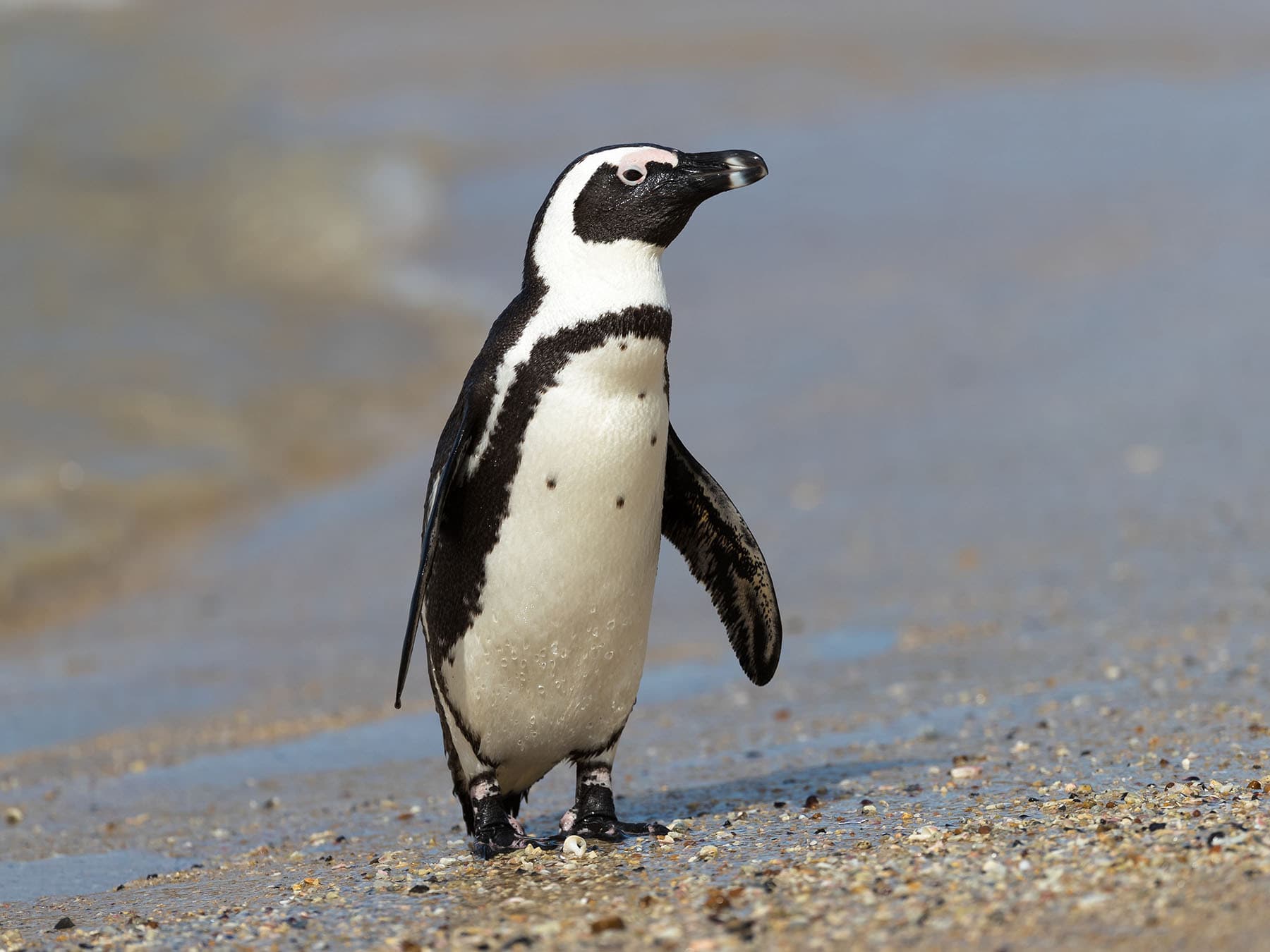
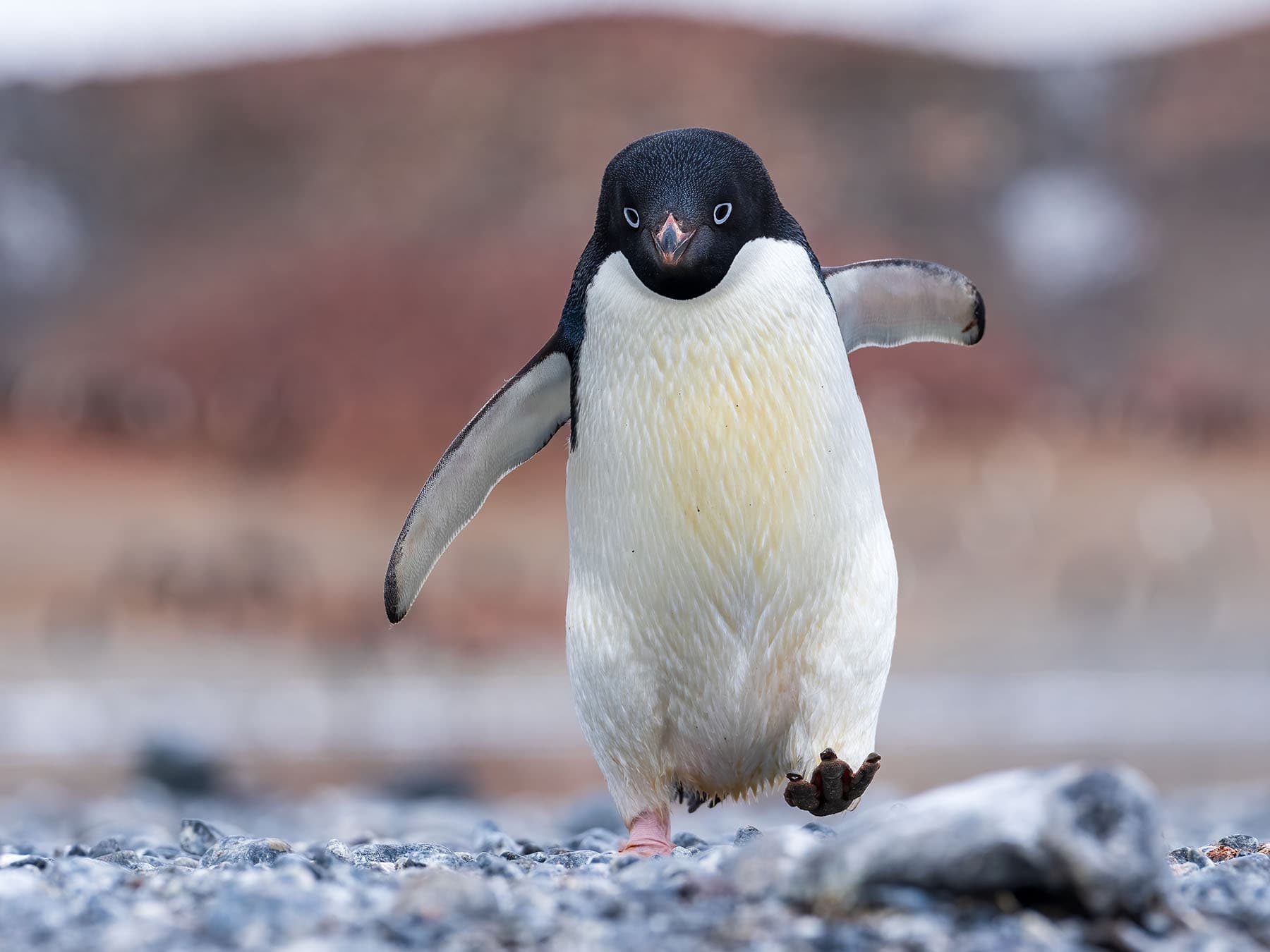
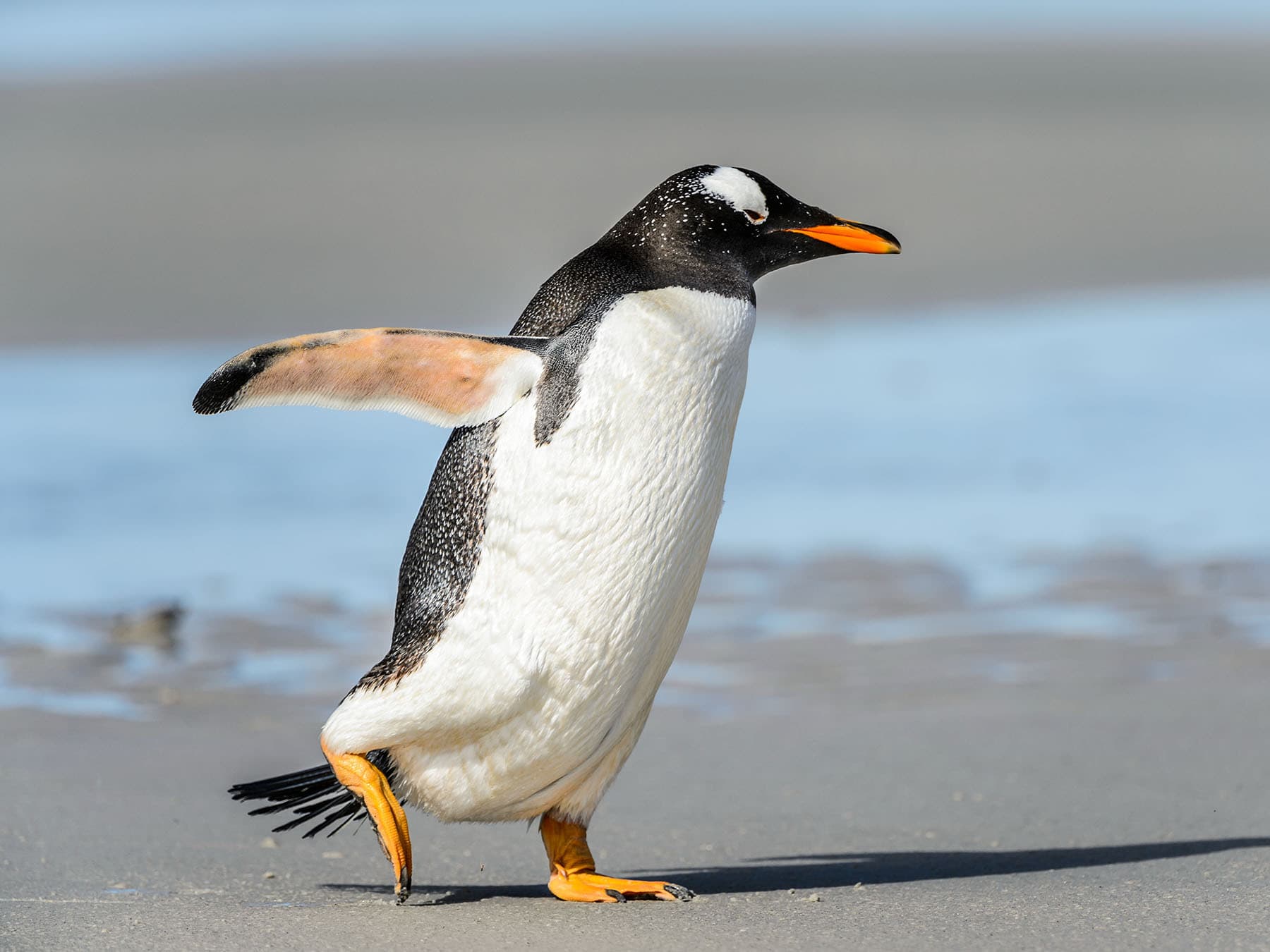
More photos
6 photos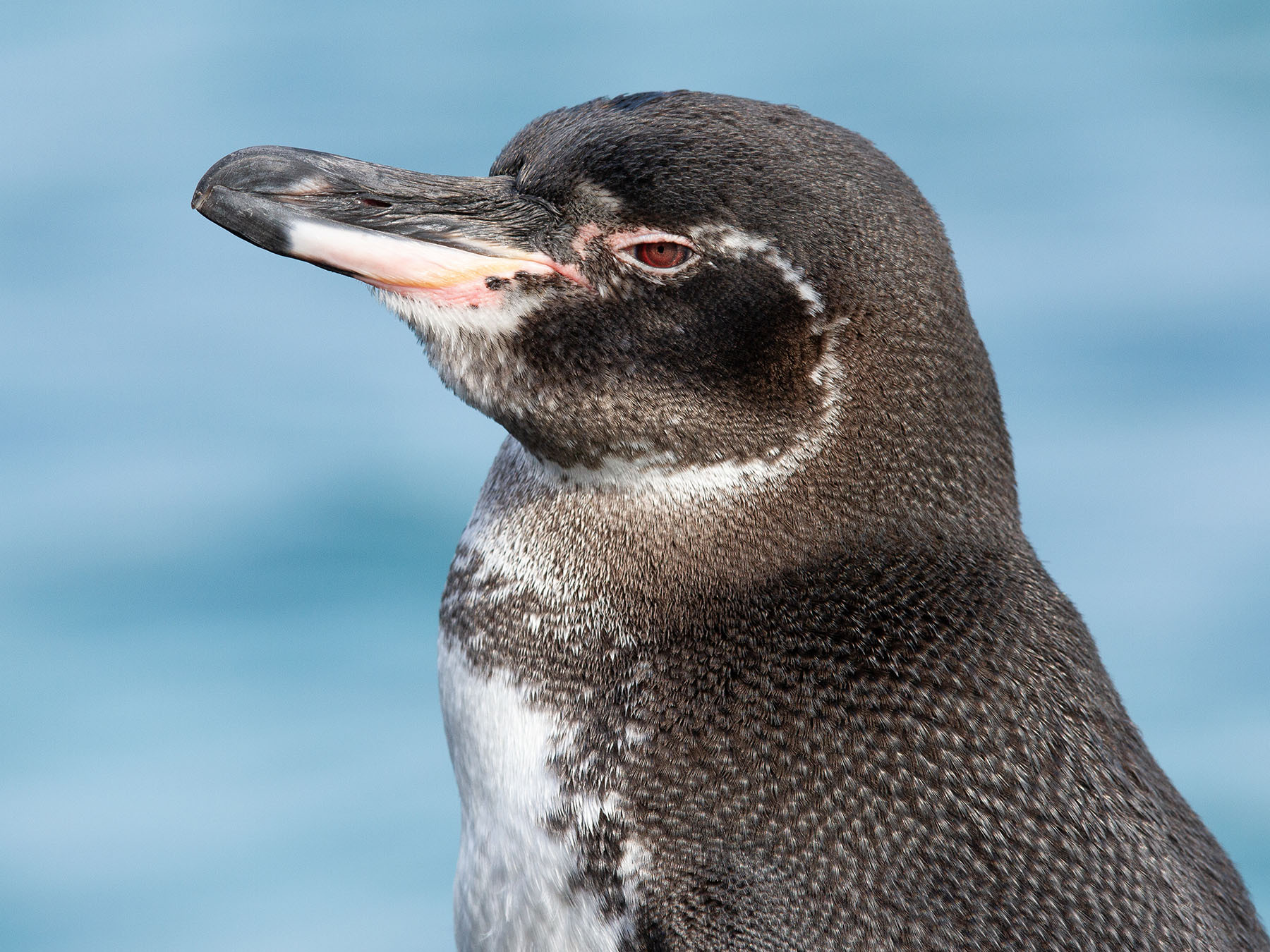
Quick facts
- Length
- 48–53 cm
- Wingspan
- 40–45 cm
- Weight
- 1700–2600 g
- Lifespan
- 15–20 years · oldest recorded 17.7 years
- Family
- Penguins
- Migration
- Resident
- Global status (IUCN)
- Endangered
- World population
- 1,800 - 4,700 individuals
- Population trend
- Decreasing
- Also called
- Galapagos Islands Penguin
- Scientific name
- Spheniscus mendiculus
Sources
4- 1BirdLife International. 2020. Spheniscus mendiculus. The IUCN Red List of Threatened Species 2020: e.T22697825A182729677. Source (opens in a new tab)
- 2BirdLife International. 2020. Spheniscus mendiculus. The IUCN Red List of Threatened Species 2020: e.T22697825A182729677. Source (opens in a new tab)
- 3Boersma et al. 2013, 2015
- 4Jimenez-Uzcategui and Vargas, Maximum observed ages of Galapagos Penguins, Marine Ornithology, 47:243-246 (2019)

Checked by
Nathan Cope, founder and editor
Nathan founded Birdfact and leads its writers and contributors in the UK, the US and Canada. He has watched and studied birds for more than ten years, and checks every article and species guide before it’s published.