


Adélie Penguin
Black-throated Penguin, Adelie Penguin · Pygoscelis adeliae
By the Birdfact teamChecked by Nathan Cope
On this page12 sections
How to recognise it
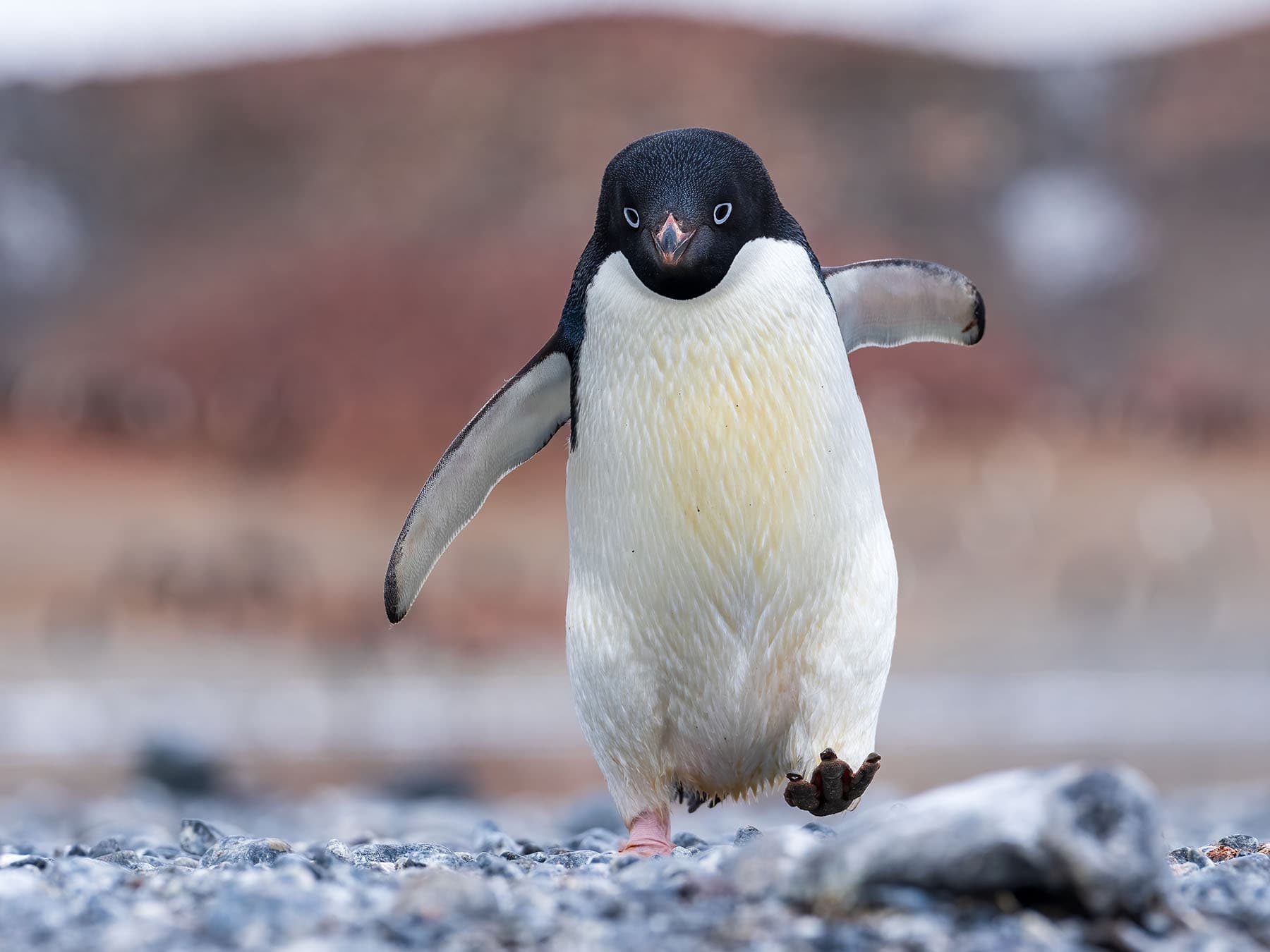
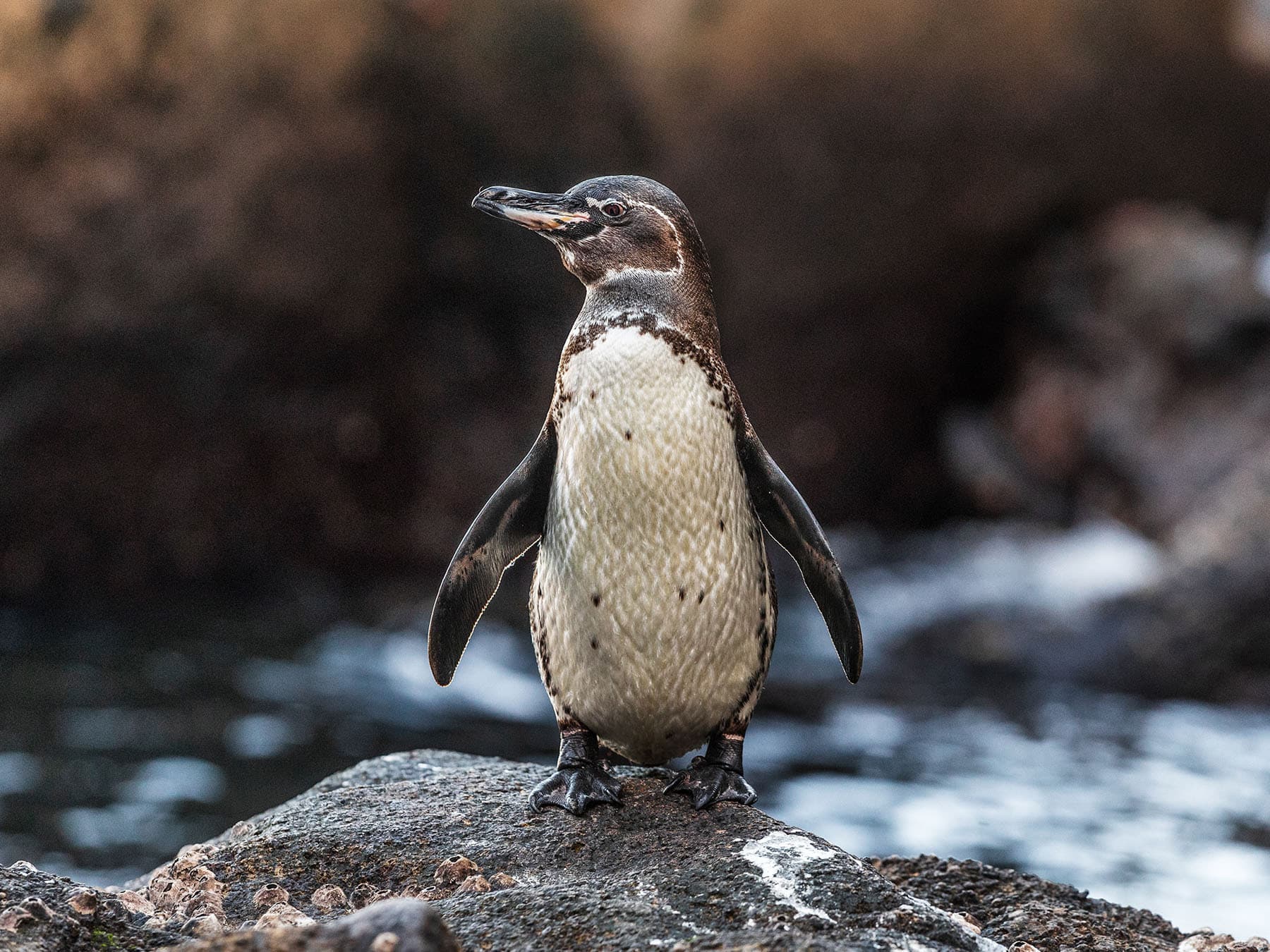
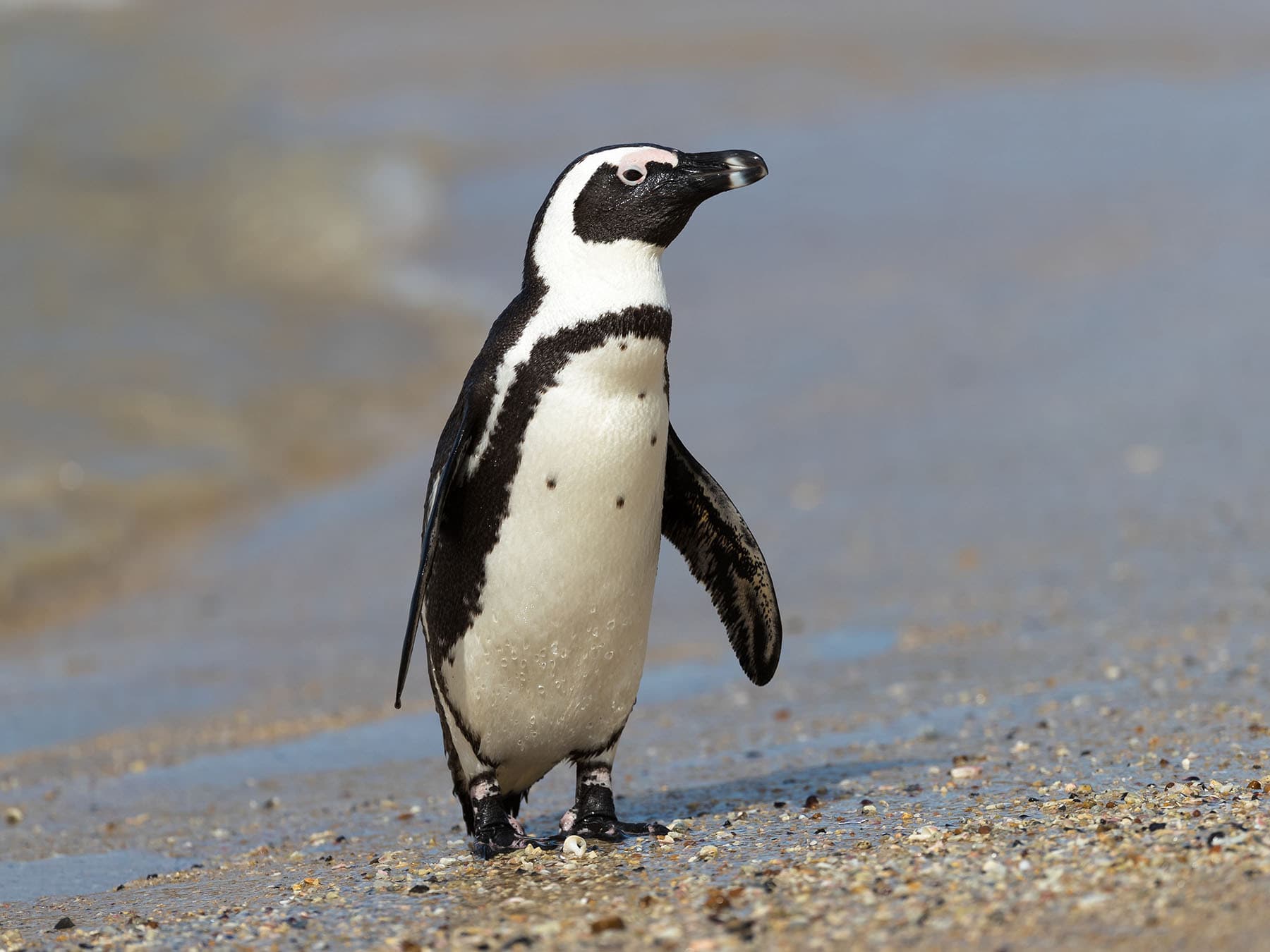
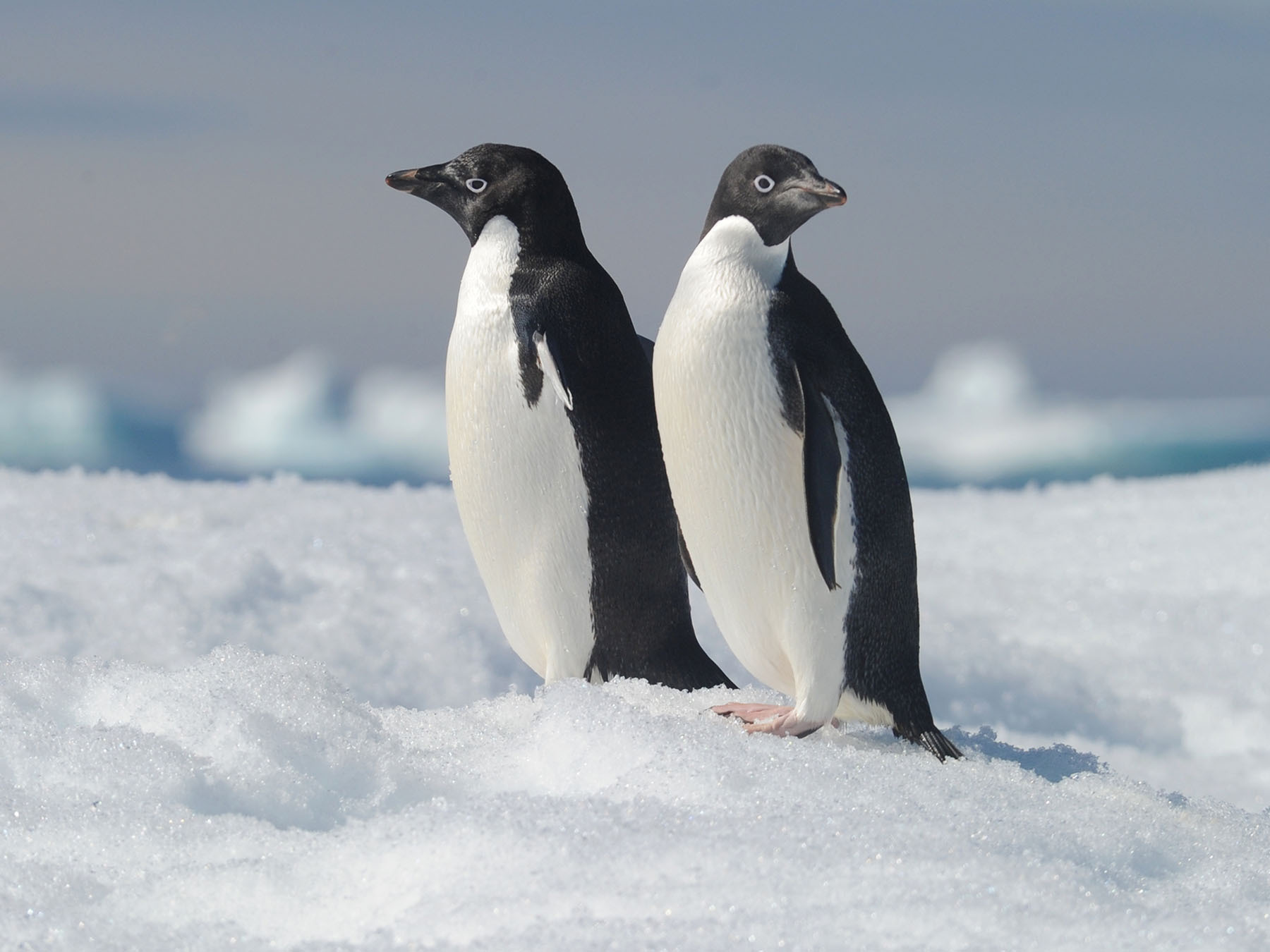
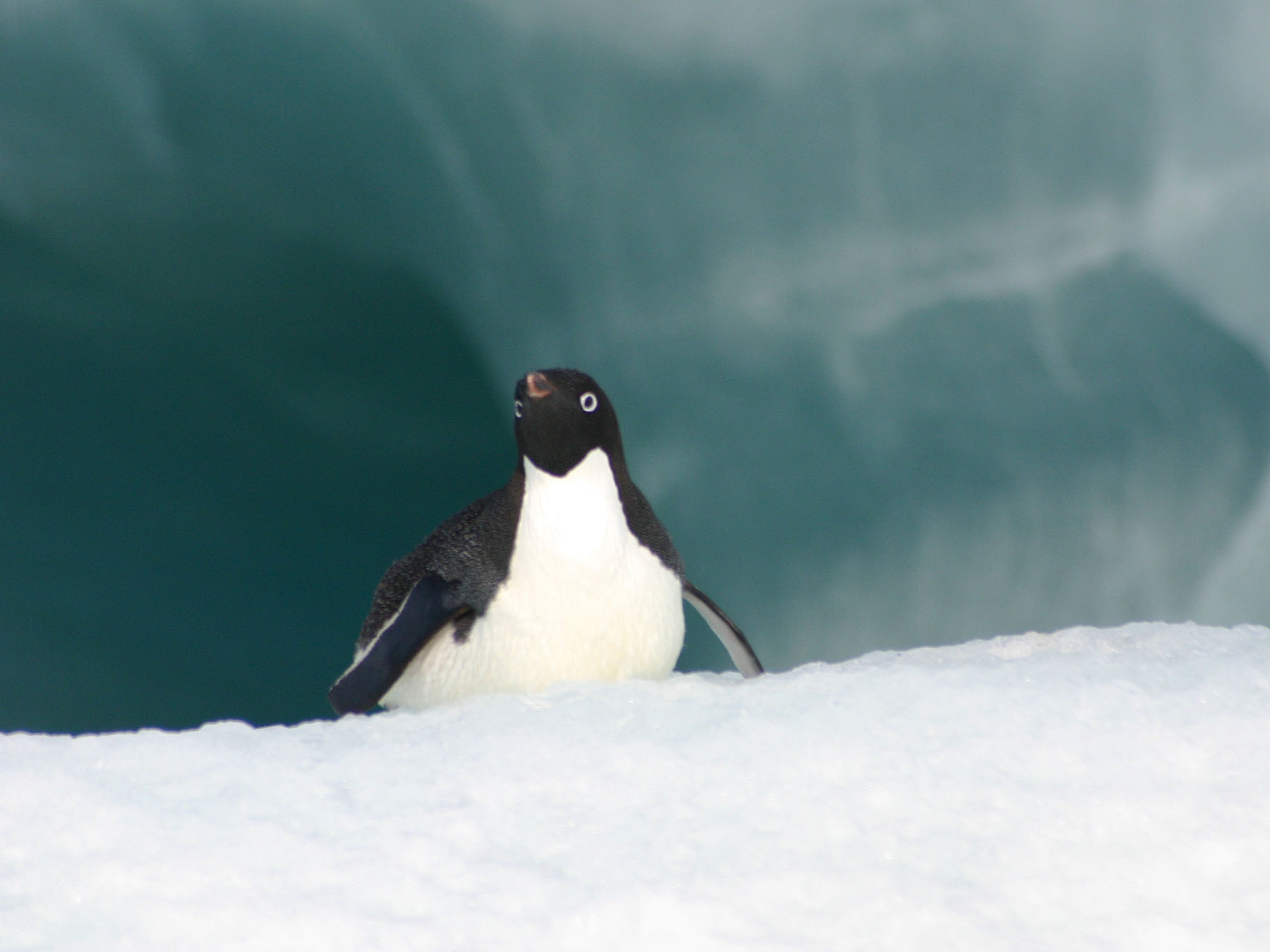
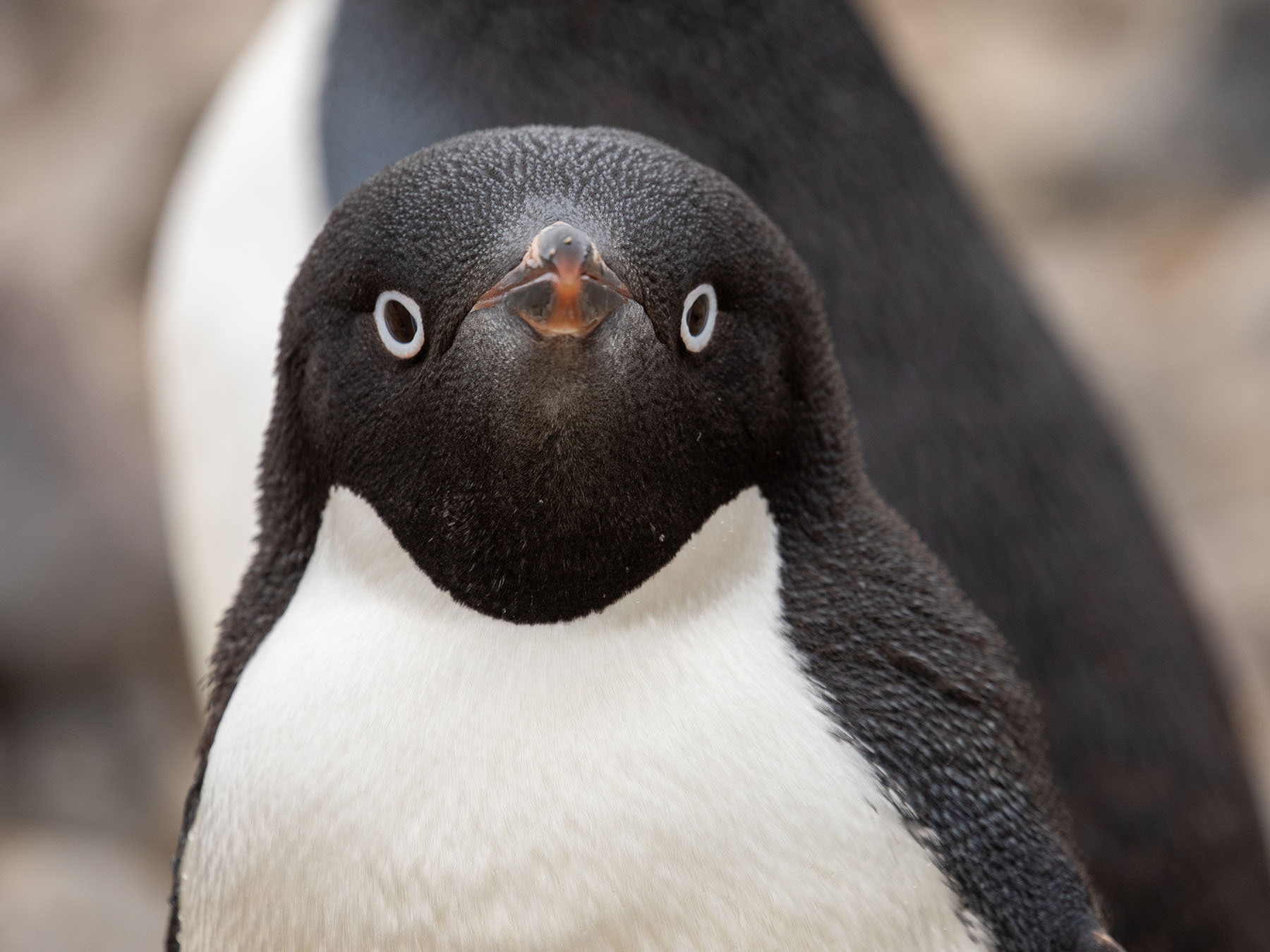
Adélie Penguins are distinctive medium-sized penguins with a classic tuxedo-like appearance. They have a black head, back, and wings contrasting sharply with a white chest and belly. Their most striking feature is the white ring around each eye.
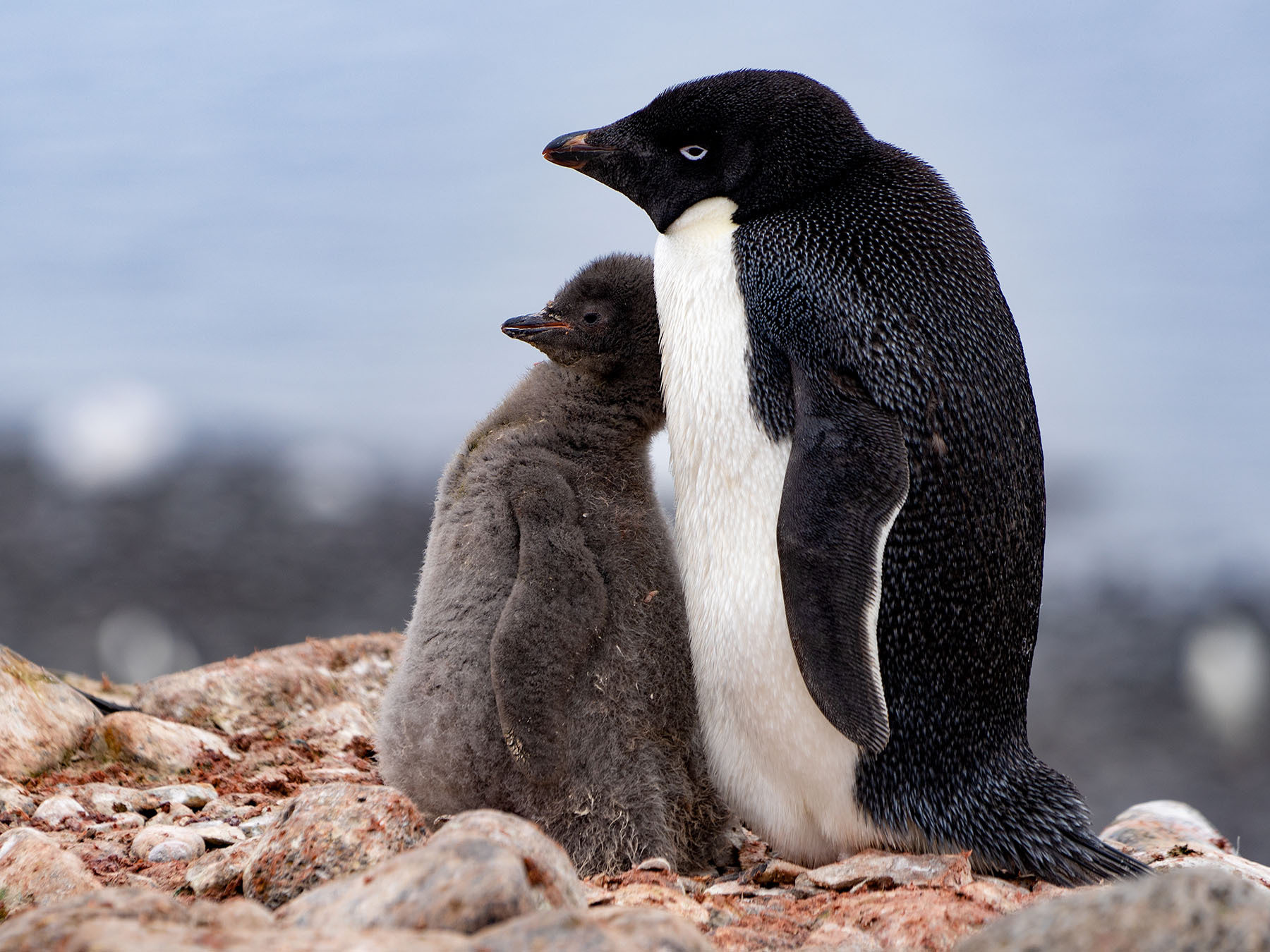
Both males and females look alike, with no seasonal plumage changes. Juveniles are similar but have a blue-grey throat and chin instead of the adults' black colouration.
Its size
Adults- Length
- 70–71 cm
- Wingspan
- 75–80 cm
- Weight
- 3000–6000 g
Its song and calls
Adélie Penguins are known for their loud, raucous calls. Their vocalisations include a variety of squawks, growls, and trumpeting sounds.
During courtship, males produce a distinctive 'ecstatic display call,' which sounds like a series of loud, rhythmic squawks: 'aah-aah-aah-AAAH-aah.'
- Recording0:00 / 0:05
Recorded in Petermann Island, Antarctica · December 2025
When and where to see it
The Adélie Penguin is not recorded regularly in the UK, Ireland, the United States or Canada.
Worldwide: recorded regularly in 2 countries
Countries where it was recorded in at least 3 of the 6 years 2019–2024. Linked countries have their own bird list.
Antarctica (2)
- Antarctica
- South Georgia & South Sandwich Islands
Data: EOD – eBird Observation Dataset (Cornell Lab of Ornithology), accessed via GBIF.org, CC BY 4.0. Records from 2019–2024, aggregated and filtered by Birdfact. How these lists are made
Tips for seeing it
- Visit Antarctica or sub-Antarctic islands during the austral summer (November to February)
- Look for large colonies on rocky, ice-free coastal areas
- Observe from a distance to avoid disturbing nesting birds
- Listen for loud, raucous calls that help identify the species
What it eats
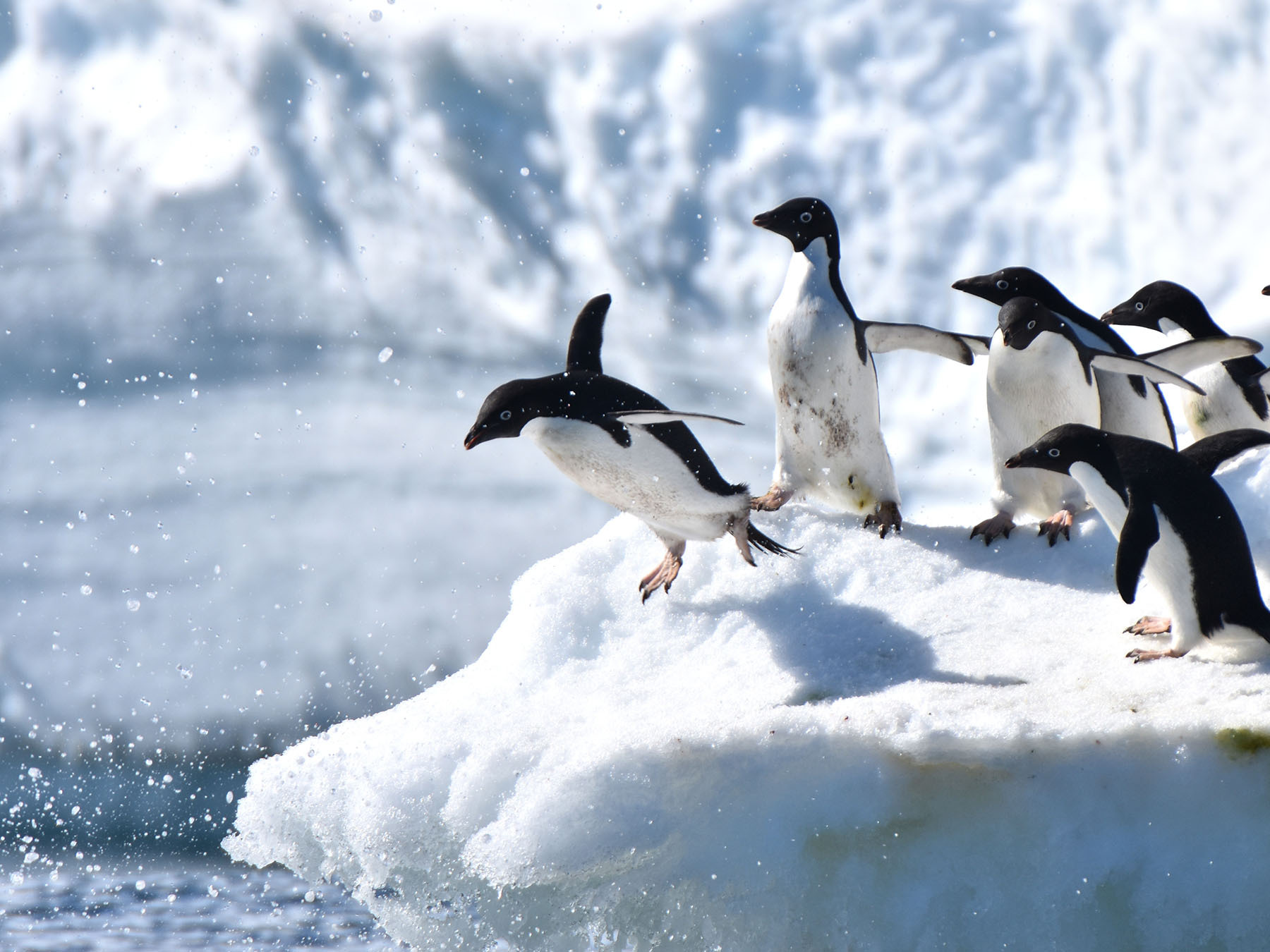
Adélie Penguins primarily feed on krill, small fish, and occasionally squid. They are pursuit divers, catching prey during underwater 'flights' that can last up to 180 seconds.
Their diet varies seasonally, with a higher proportion of fish consumed during chick-rearing periods.
Nesting and breeding
Adélie Penguins form monogamous pairs and breed during the austral summer. They return to the same nesting sites each year, often reuniting with previous mates. Courtship involves mutual bowing and stone presentations.
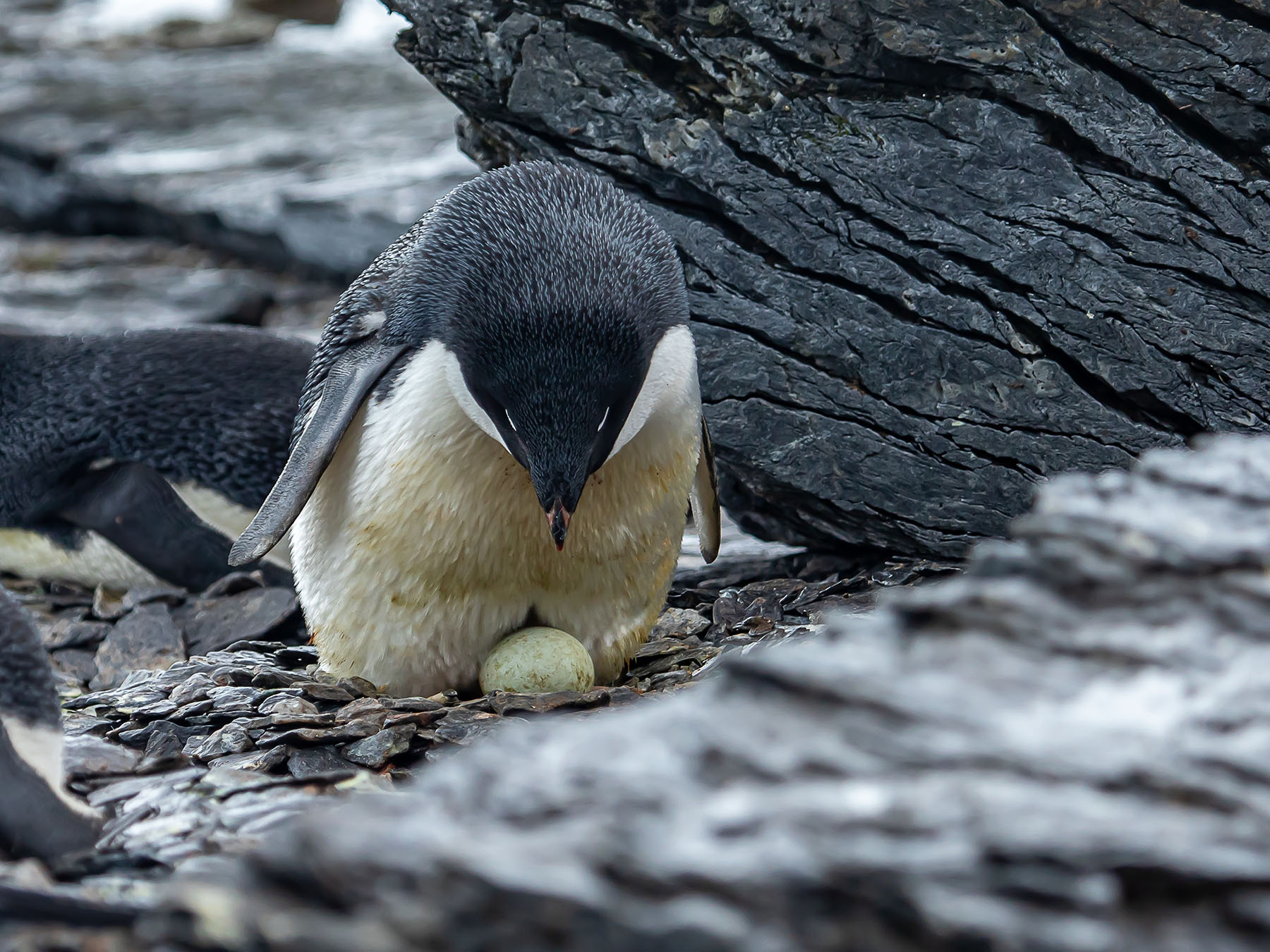
Nests are simple depressions in rocky ground, lined with small stones. Females typically lay two eggs, which are pale green to white in colour. Both parents take turns incubating the eggs.
Incubation lasts about 32-34 days. Chicks fledge at 7-9 weeks old, forming crèches while parents forage. They become independent at about 50-60 days old.
Behaviour
Adélie Penguins are highly social birds, forming large colonies during breeding season. They are excellent swimmers, using their flippers to 'fly' underwater at speeds up to 8 km/h.
On land, they waddle upright or toboggan on their bellies across the ice, using their flippers for balance and propulsion.
Conservation
Although listed as Least Concern, they face threats due to climate change impacting their habitat and food sources. Warming temperatures are causing shifts in sea ice patterns, affecting their breeding and foraging grounds.
Conservation efforts focus on protecting their breeding sites and monitoring population trends.
Similar birds
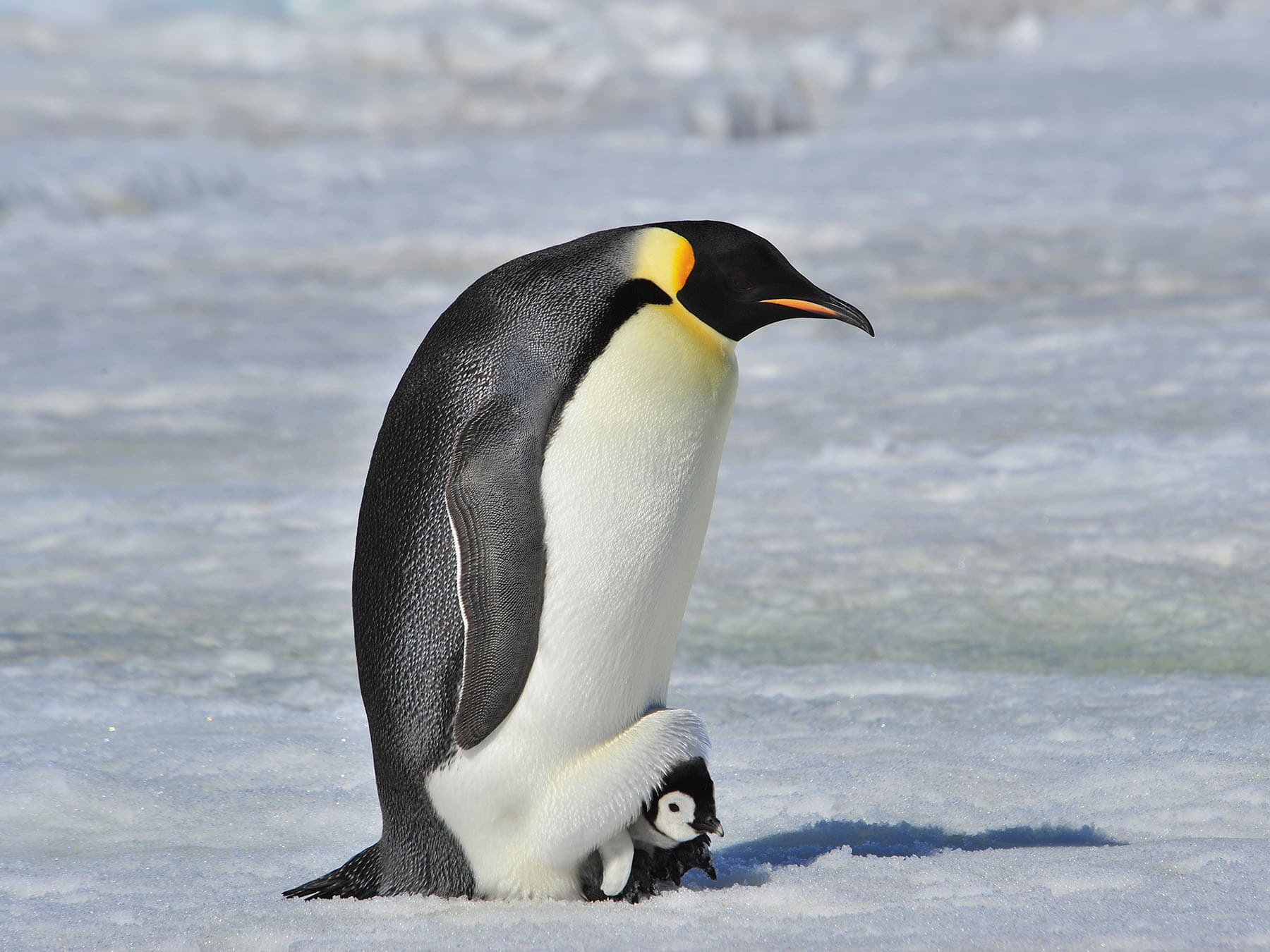
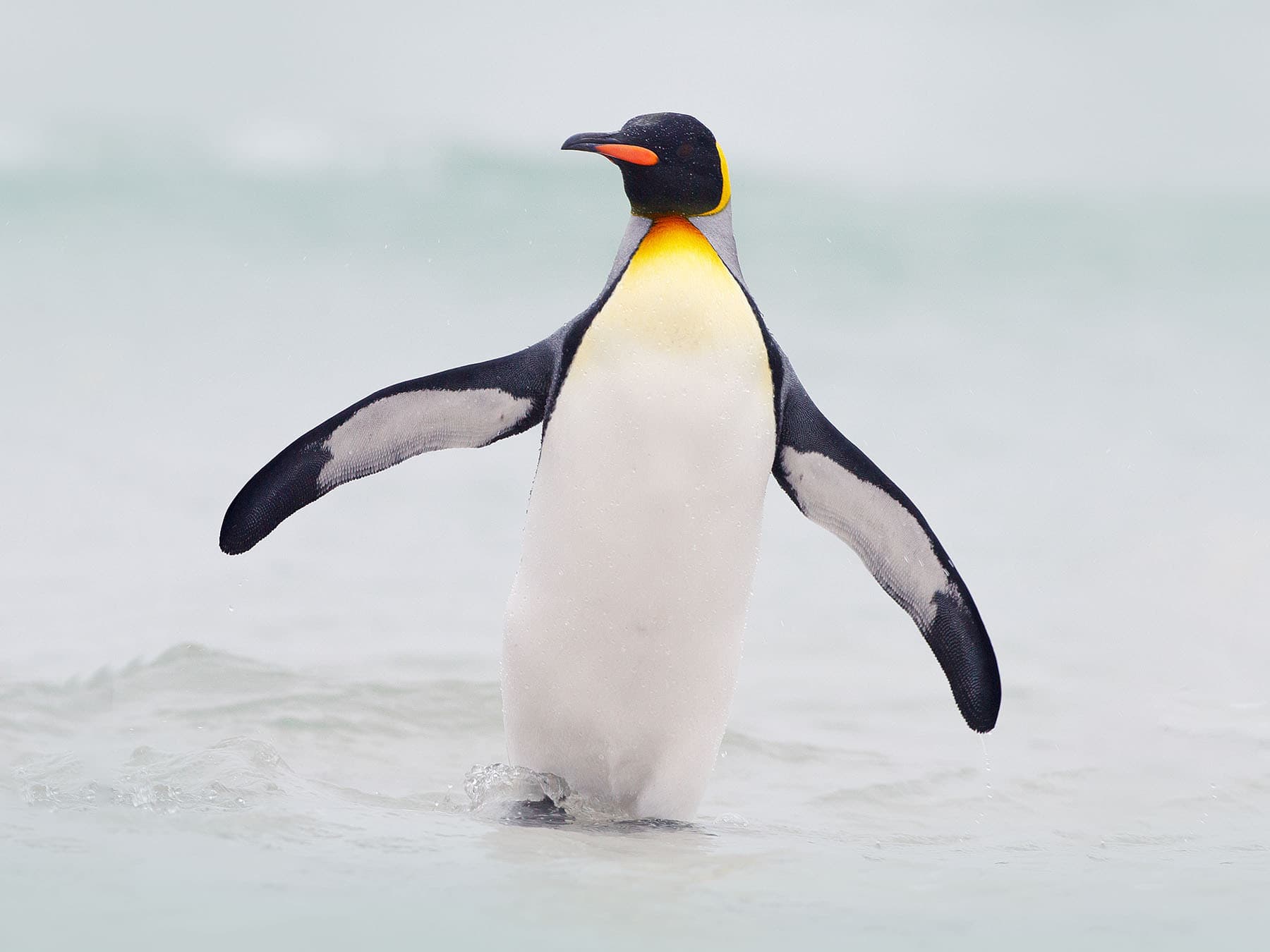
Often mistaken for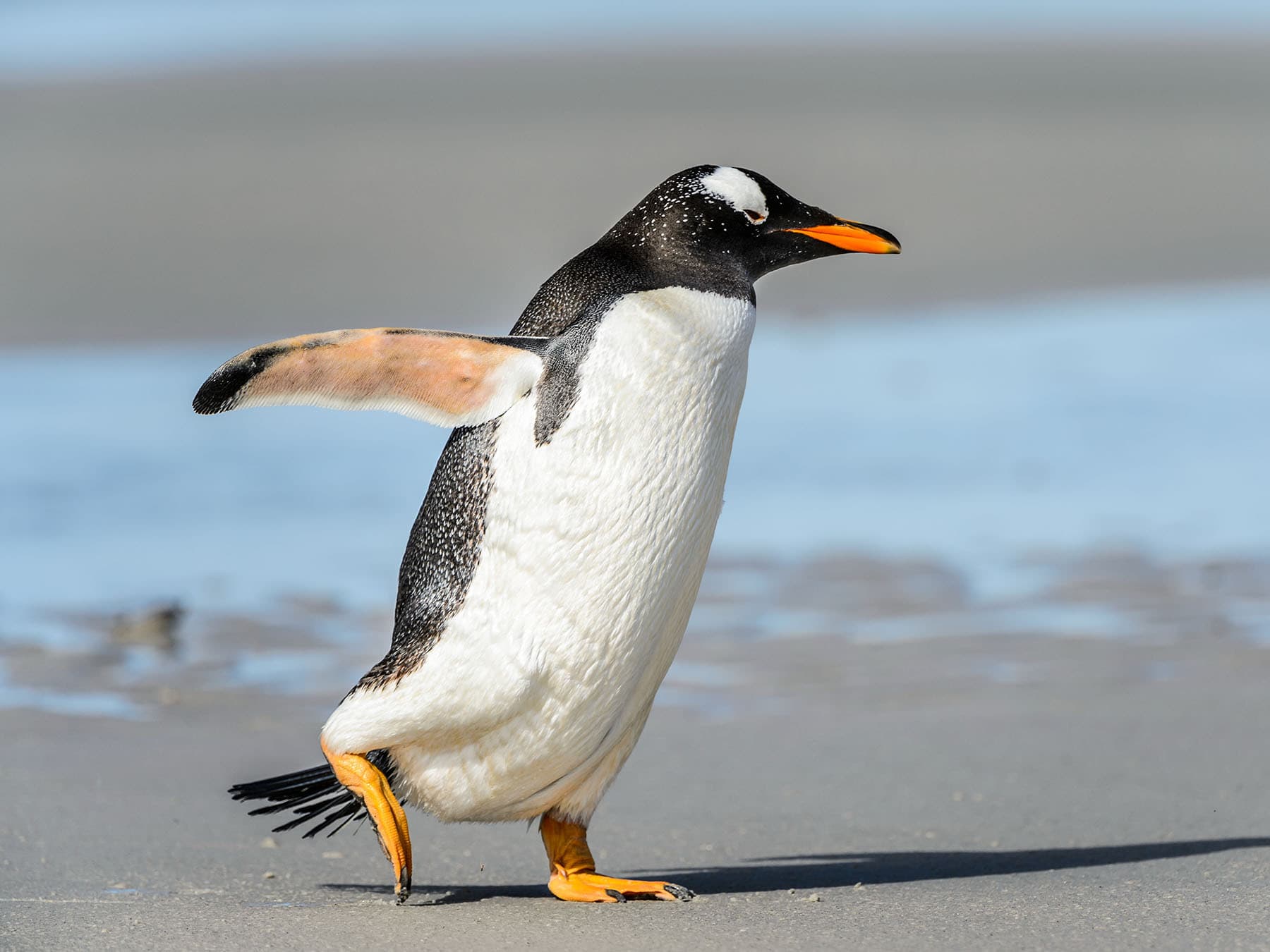
More photos
7 photos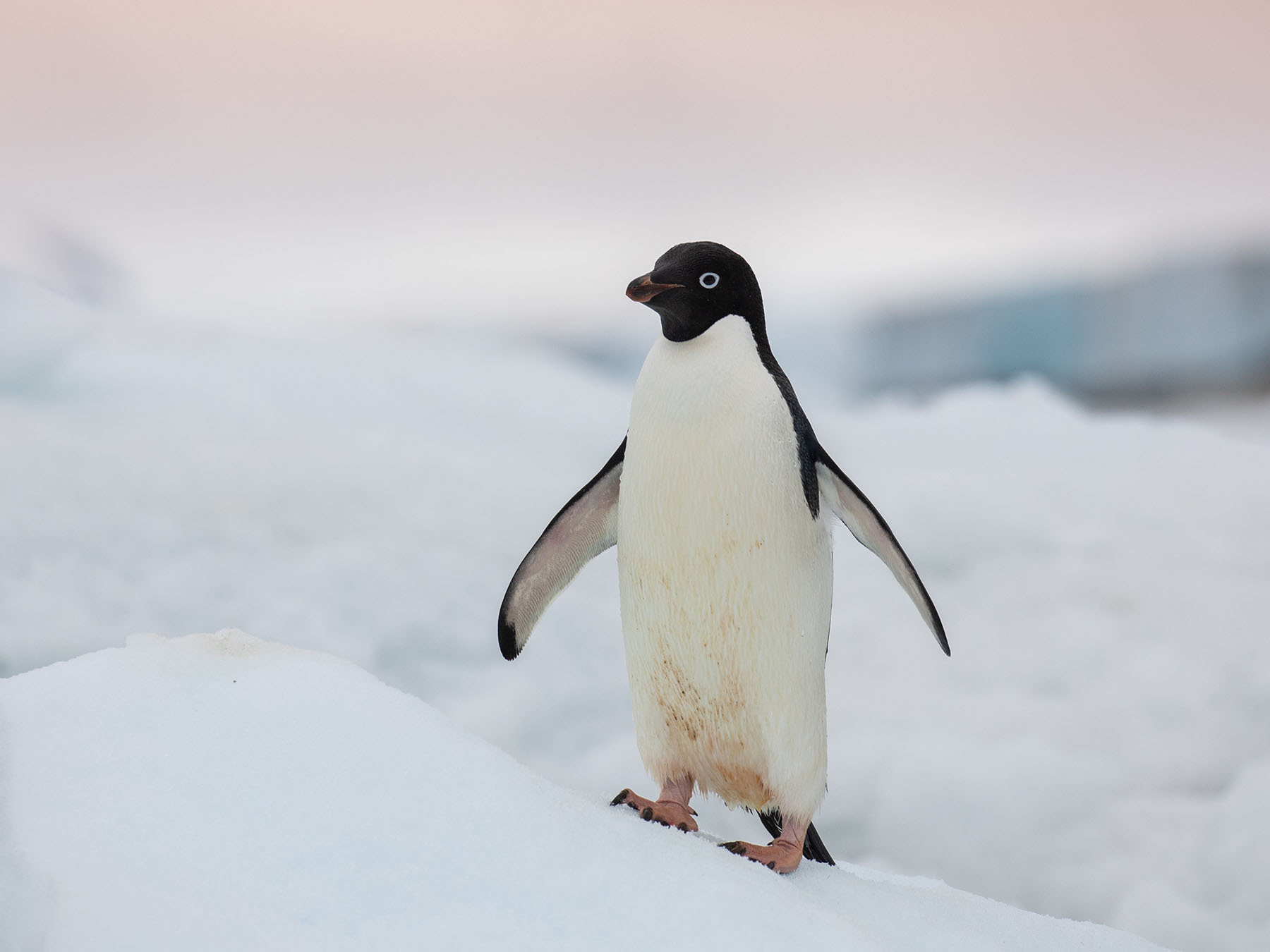
Quick facts
- Length
- 70–71 cm
- Wingspan
- 75–80 cm
- Weight
- 3000–6000 g
- Lifespan
- 10–20 years · oldest recorded 25 years
- Family
- Penguins
- Migration
- Short-distance migrant
- Global status (IUCN)
- Least Concern
- World population
- 10,000,000 mature individuals
- Population trend
- Increasing
- Also called
- Black-throated Penguin, Adelie Penguin
- Scientific name
- Pygoscelis adeliae
Sources
3- 1BirdLife International. 2020. Pygoscelis adeliae. The IUCN Red List of Threatened Species 2020: e.T22697758A157660553. Source (opens in a new tab)
- 2Woehler 1993, Woehler and Croxall 1997, Lynch and La Rue 2014
- 3Southwell et al. (2017)

Checked by
Nathan Cope, founder and editor
Nathan founded Birdfact and leads its writers and contributors in the UK, the US and Canada. He has watched and studied birds for more than ten years, and checks every article and species guide before it’s published.