


King Penguin
Woolly Penguin · Aptenodytes patagonicus
By the Birdfact teamChecked by Nathan Cope
On this page12 sections
How to recognise it
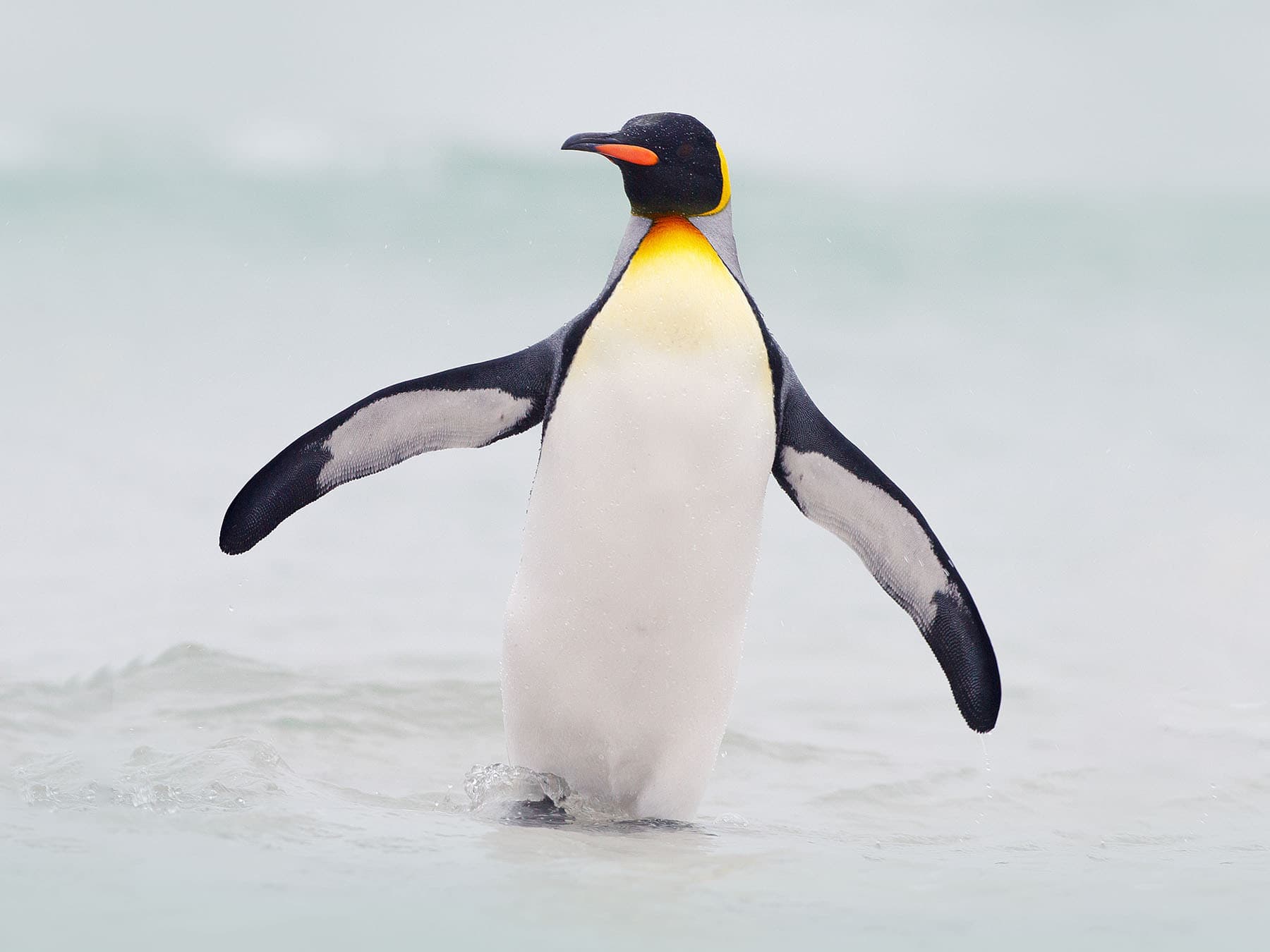
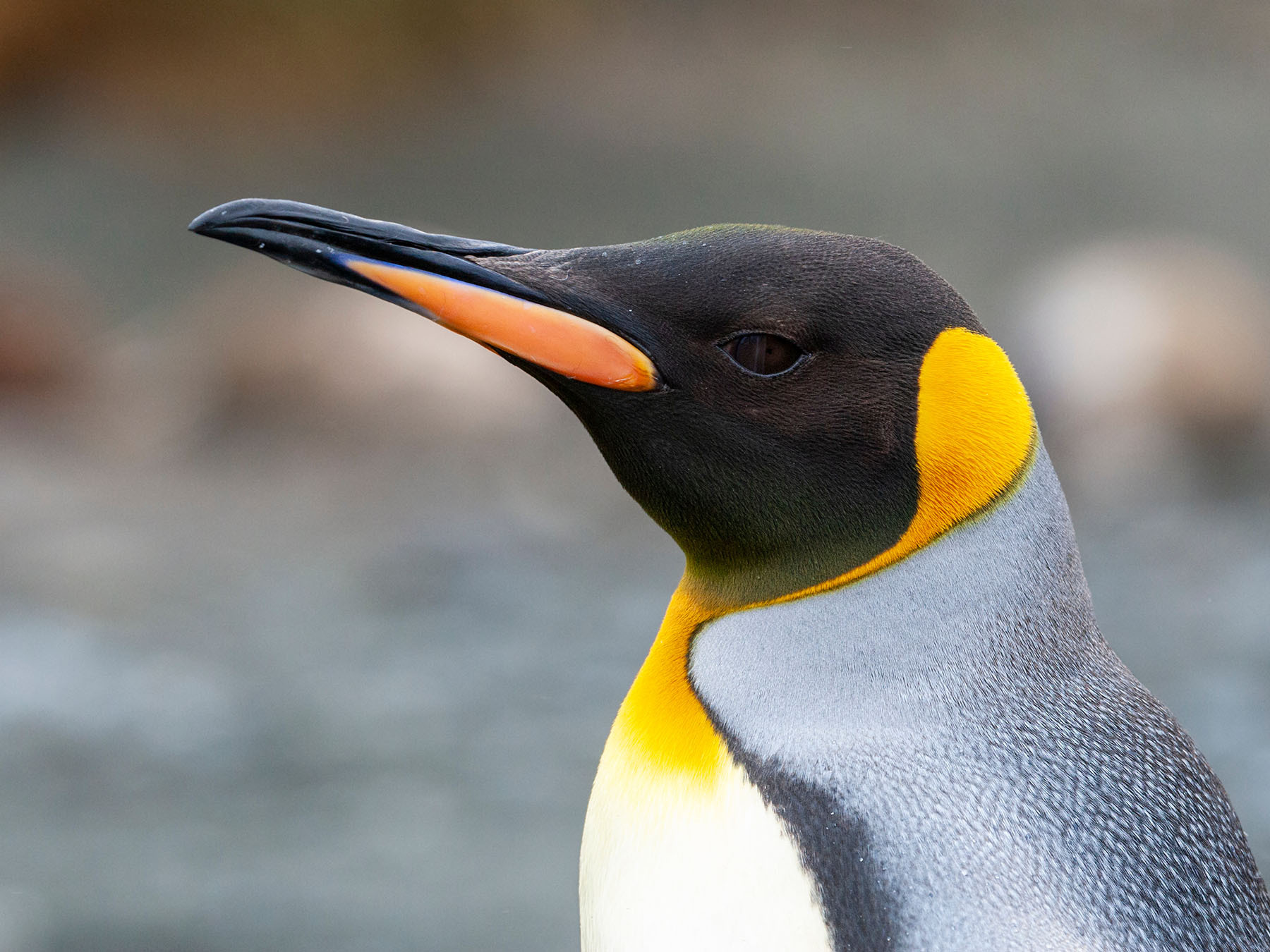
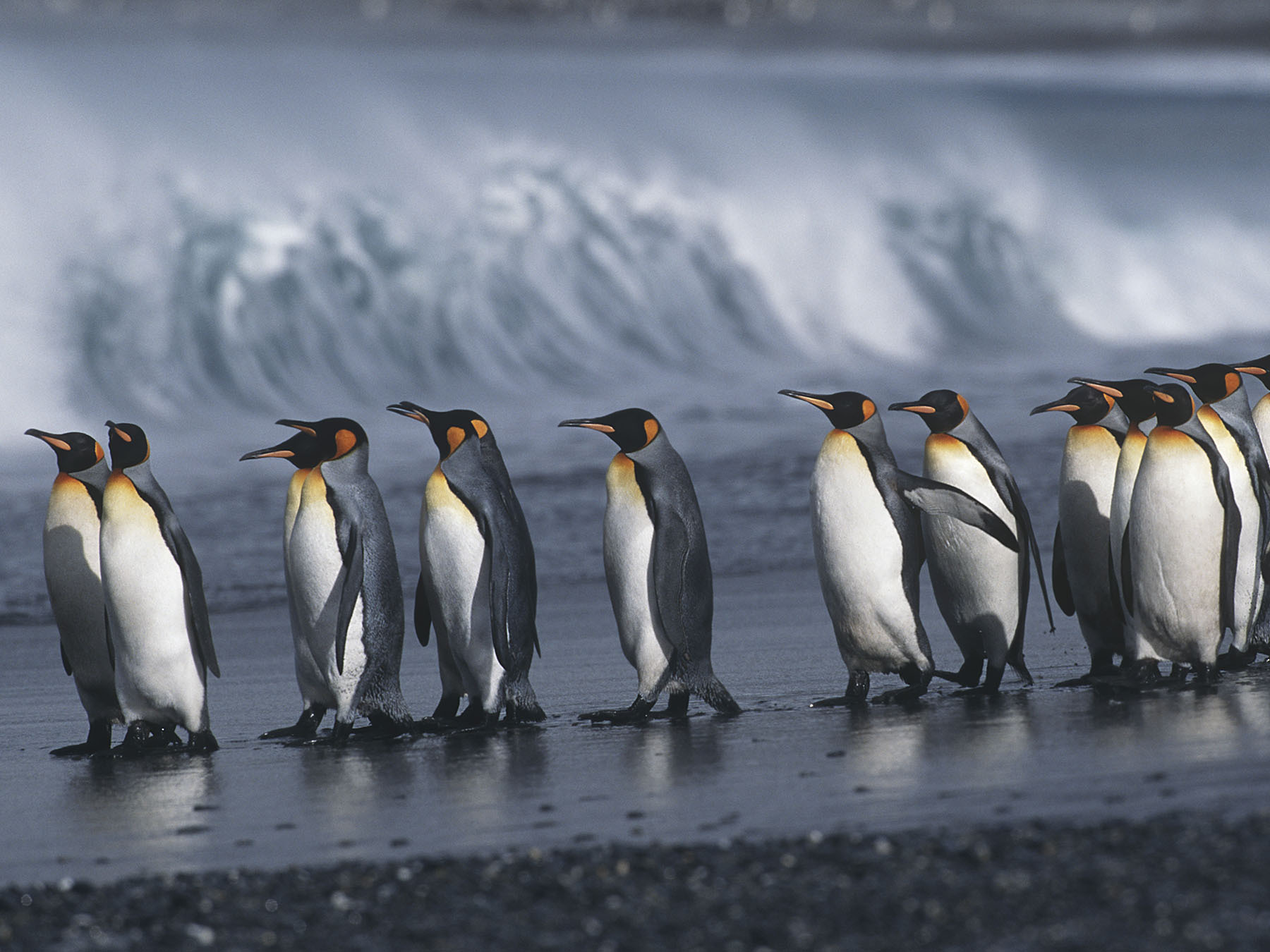
King Penguins are striking birds with a distinctive black and white plumage, accented by vibrant orange-yellow patches on their head and neck. They have a sleek, streamlined body with flipper-like wings adapted for swimming.
Adults display a silvery-grey back, contrasting with their white belly. The orange ear patches and throat fade to pale yellow down the neck. Juveniles have a duller plumage, lacking the bright colours of adults.
Its size
Adults- Length
- 70–100 cm
- Wingspan
- 80–100 cm
- Weight
- 9500–16000 g
Its song and calls
King Penguins are known for their loud, trumpet-like calls, which are essential for partner and chick recognition in crowded colonies. Their vocalisations include a variety of whistles, grunts, and squawks.
The most distinctive sound is a high-pitched 'mew' followed by a lower 'moo', often described as 'oui-oui'.
- Recording0:00 / 0:29
When and where to see it
The King Penguin is not recorded regularly in the UK, Ireland, the United States or Canada.
Worldwide: recorded regularly in 8 countries
Countries where it was recorded in at least 3 of the 6 years 2019–2024. Linked countries have their own bird list.
Africa (1)
South America (3)
- Argentina
- Chile
- Falkland Islands
Oceania (1)
Antarctica (3)
- Antarctica
- French Southern Territories
- South Georgia & South Sandwich Islands
Data: EOD – eBird Observation Dataset (Cornell Lab of Ornithology), accessed via GBIF.org, CC BY 4.0. Records from 2019–2024, aggregated and filtered by Birdfact. How these lists are made
Tips for seeing it
- Look for King Penguins on subantarctic islands and beaches
- Observe from a distance to avoid disturbing breeding colonies
- Listen for their distinctive trumpet-like calls
- Visit during the breeding season (November to March) for the best viewing opportunities
What it eats
King Penguins primarily feed on small fish, particularly lanternfish, and squid. They are deep divers, capable of reaching depths of 360 meters to catch prey.
Their foraging trips can last several days and cover hundreds of kilometres from their breeding sites.
Nesting and breeding
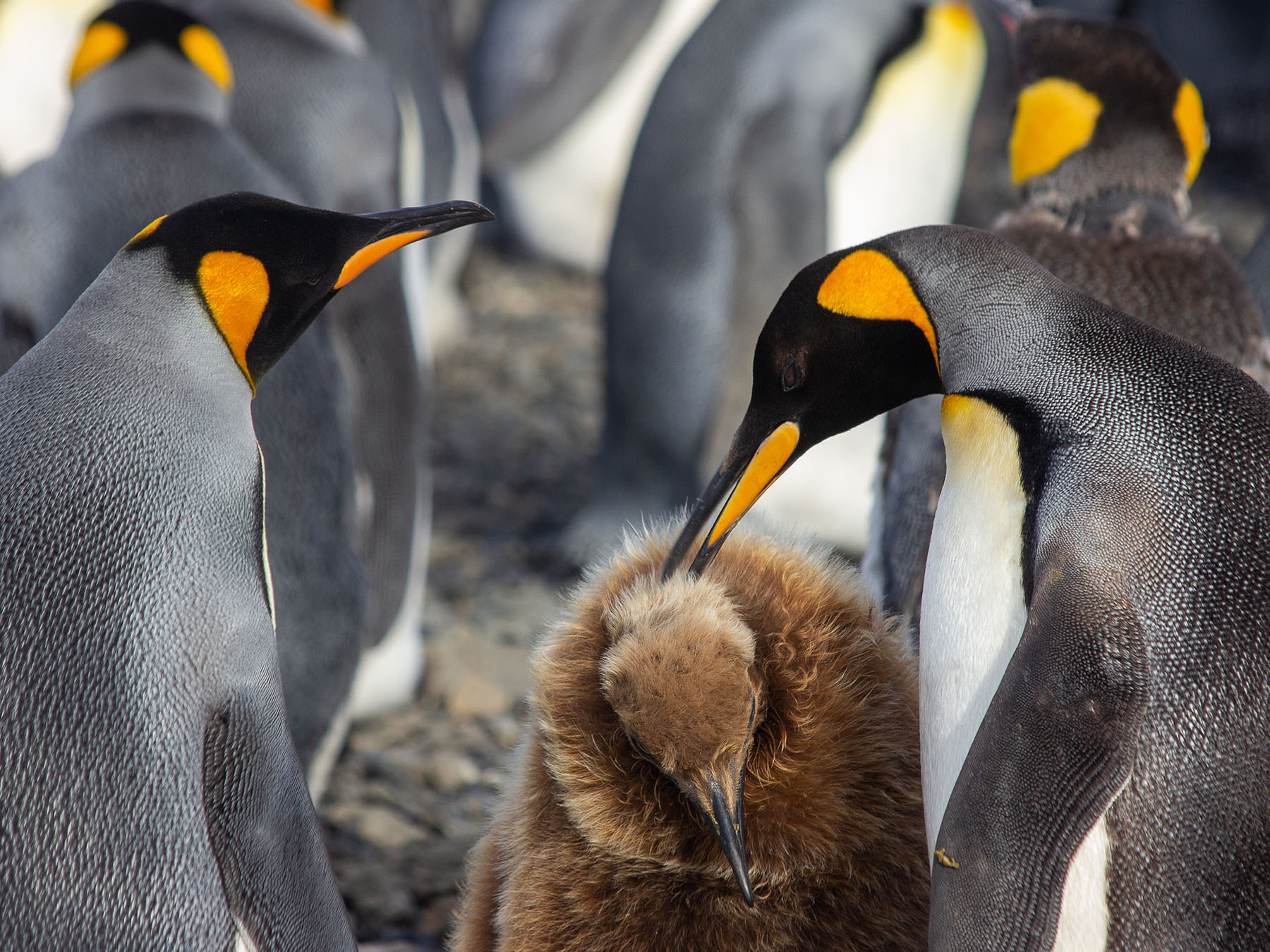
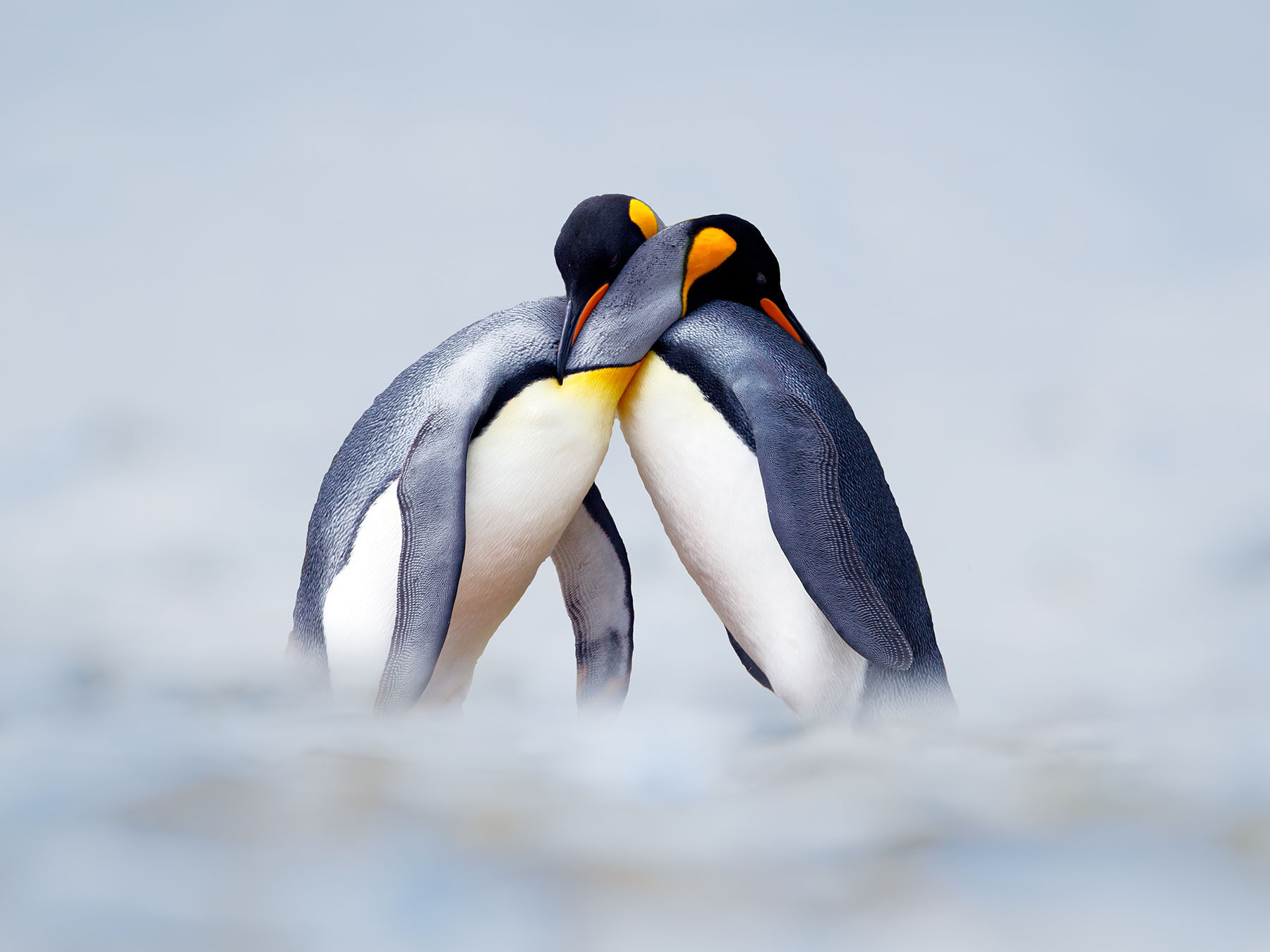
King Penguins have a unique breeding cycle that spans 14-16 months. Pairs form long-term bonds and engage in elaborate courtship displays involving mutual preening and vocalisations.
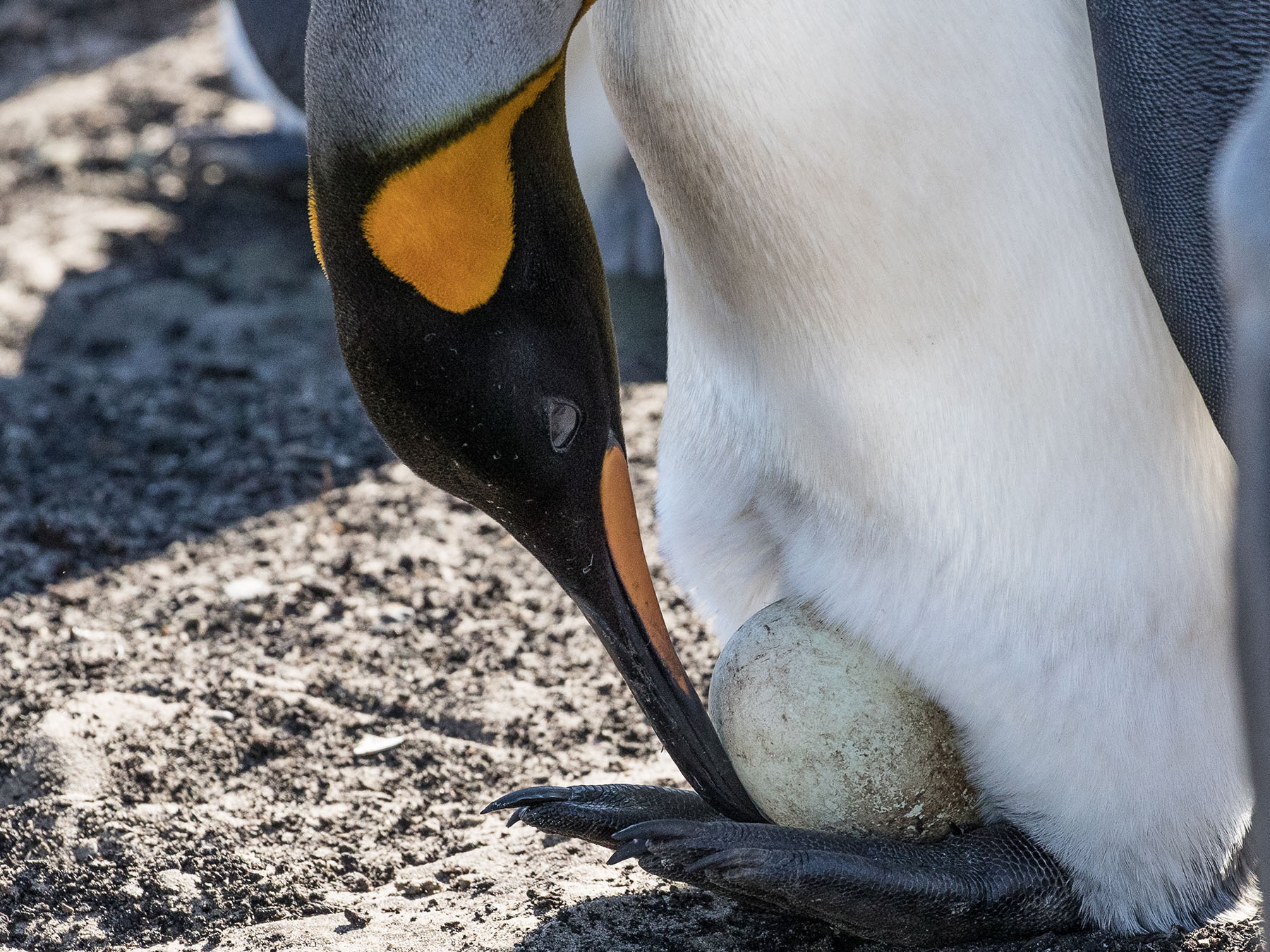
Unlike most birds, King Penguins don't build nests. Instead, they incubate a single egg on their feet, covered by a fold of abdominal skin. The egg is pear-shaped to prevent rolling if dislodged.
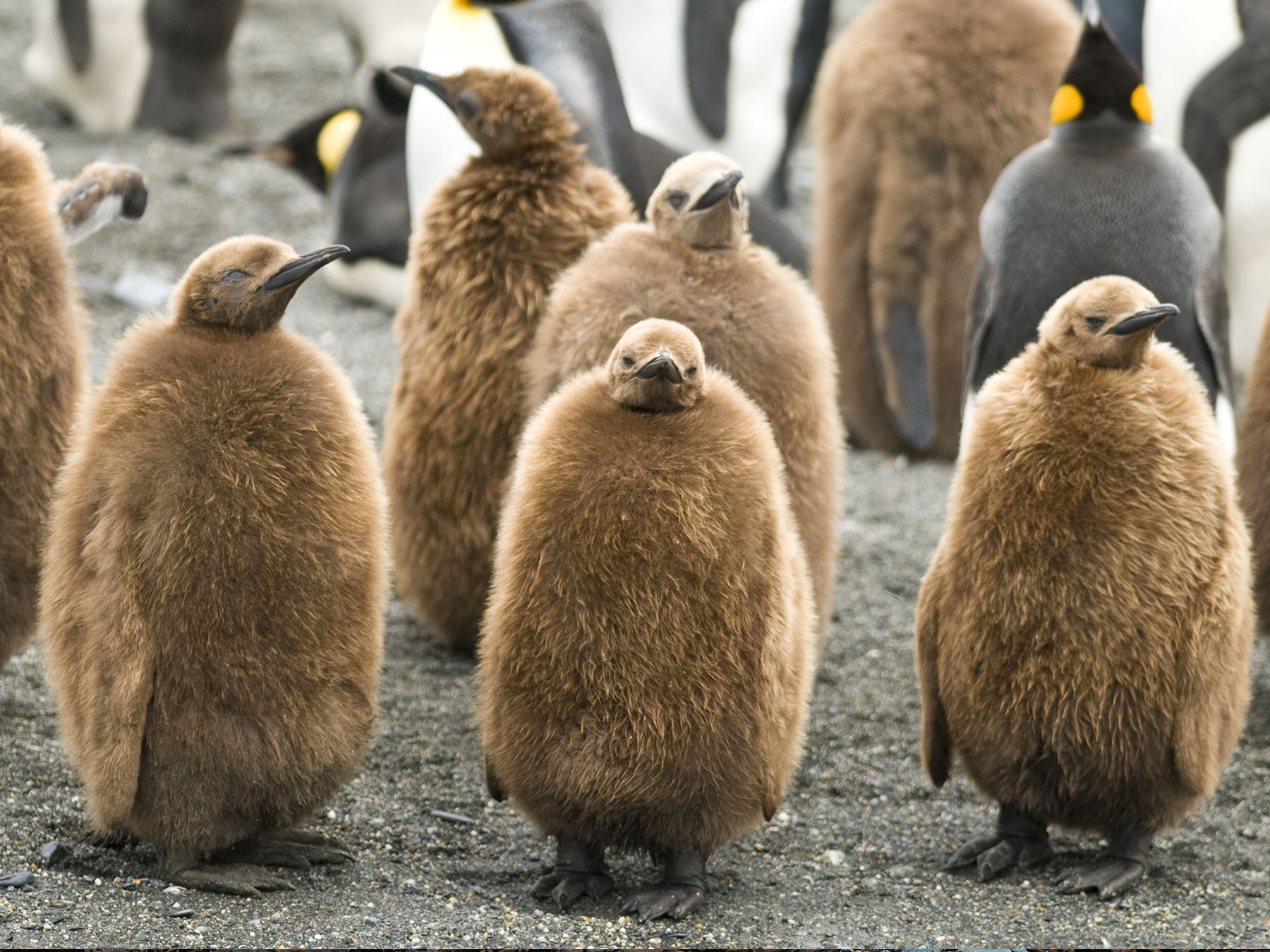
Both parents take turns incubating the egg for about 55 days. After hatching, chicks are cared for in crèches while parents forage. Fledging occurs after 10-13 months, an exceptionally long period for birds.
Behaviour
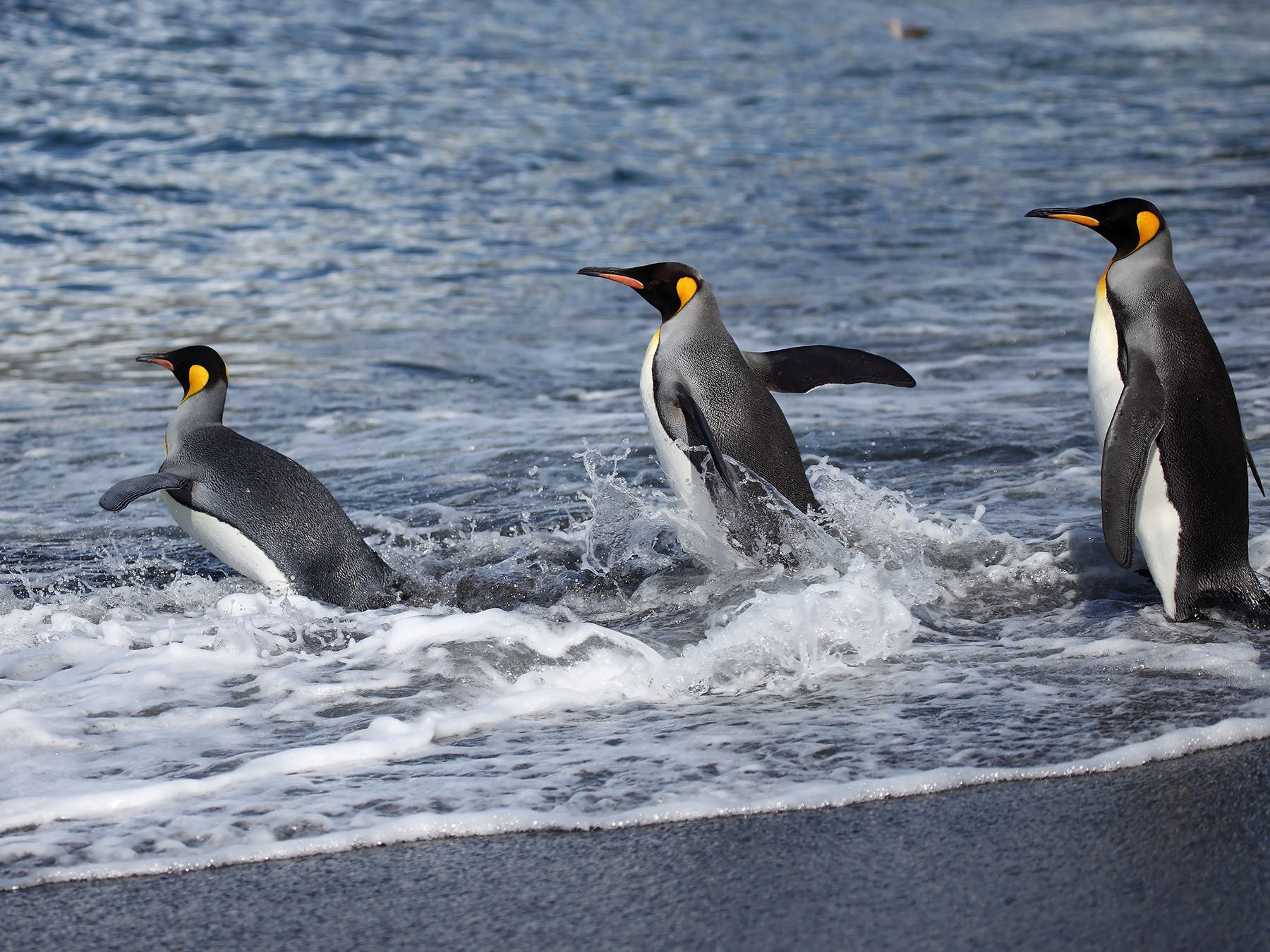
King Penguins are excellent swimmers, using their powerful flippers to 'fly' underwater at speeds up to 12 km/h. On land, they walk upright with a characteristic waddle.
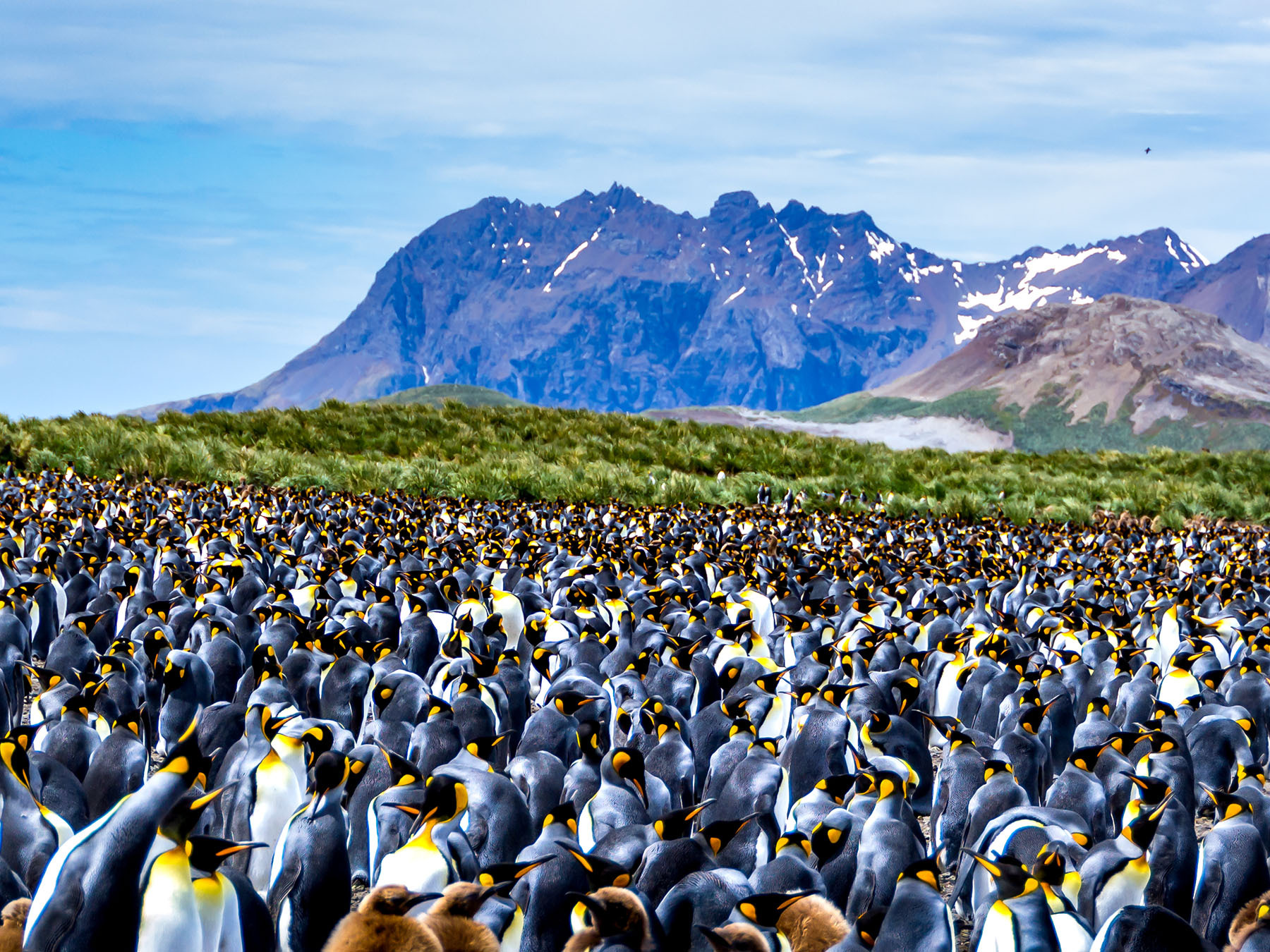
They are highly social, forming large colonies during the breeding season, where they engage in complex courtship displays and vocalisations.
Conservation
While currently listed as Least Concern, King Penguins face threats from climate change, which affects their food sources and breeding habitats. Ocean pollution and overfishing also pose risks.
Conservation efforts focus on protecting their breeding grounds and monitoring population trends.
Similar birds
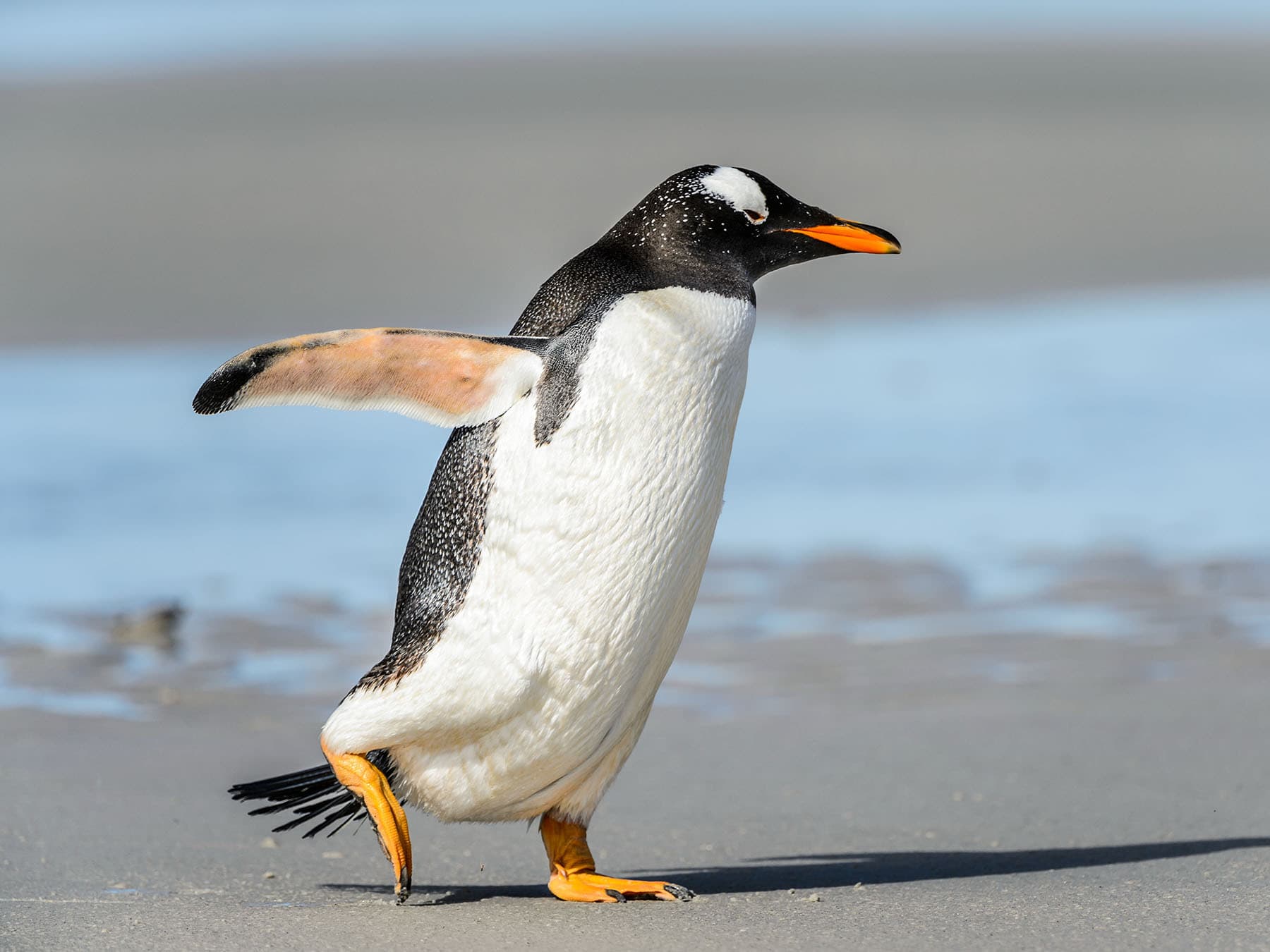
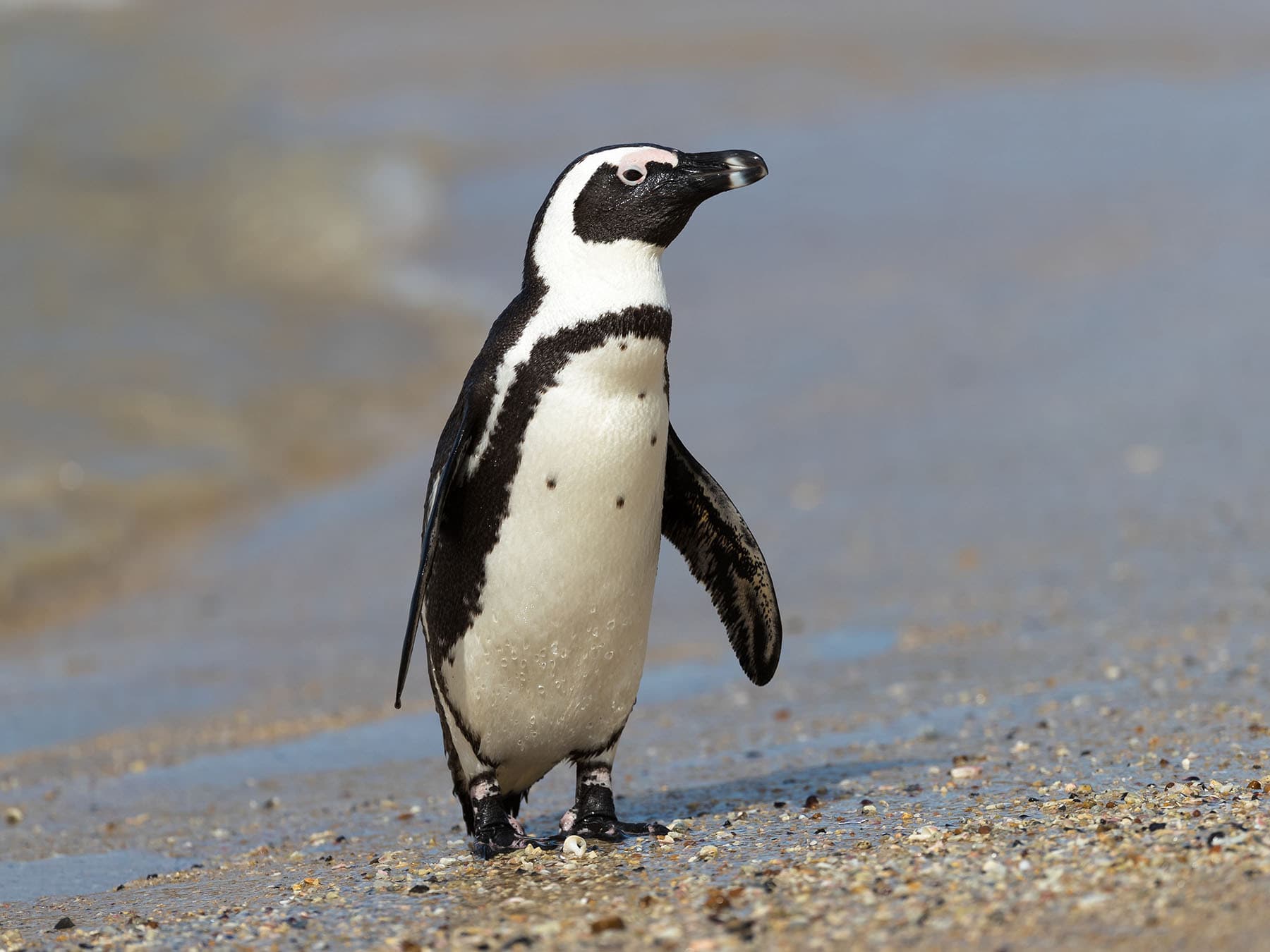
Often mistaken for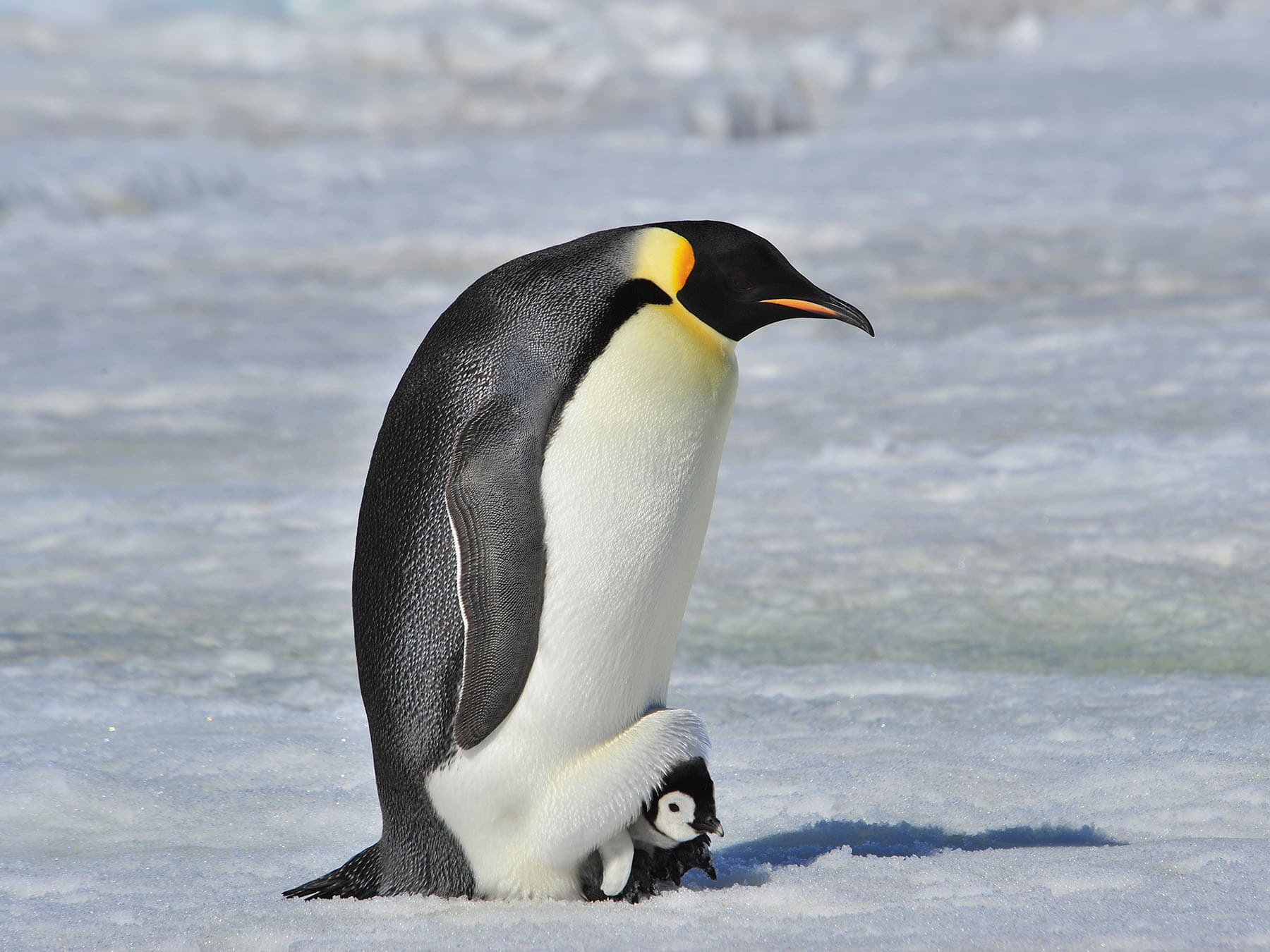
More photos
10 photos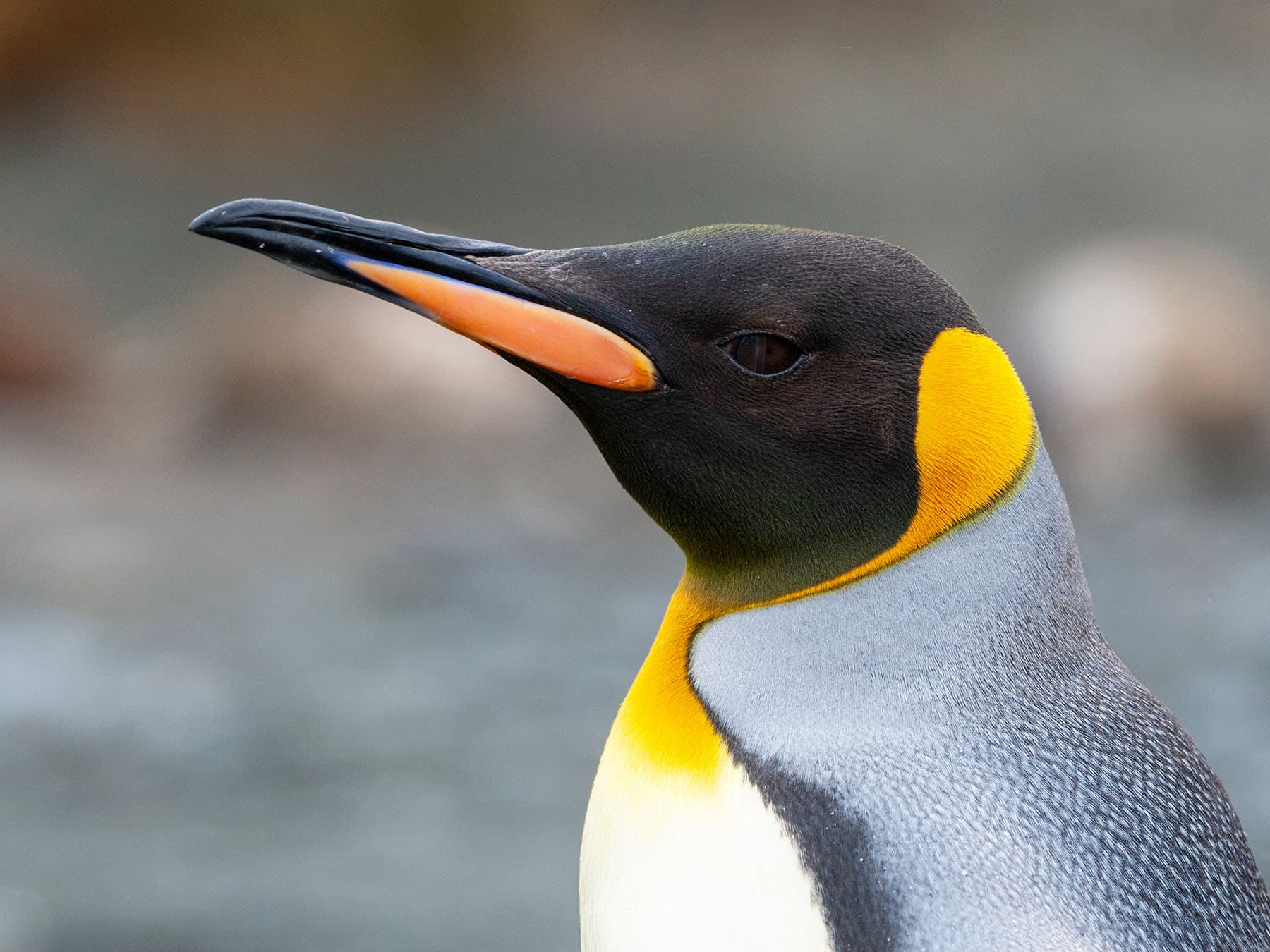 Close up of a King Penguin
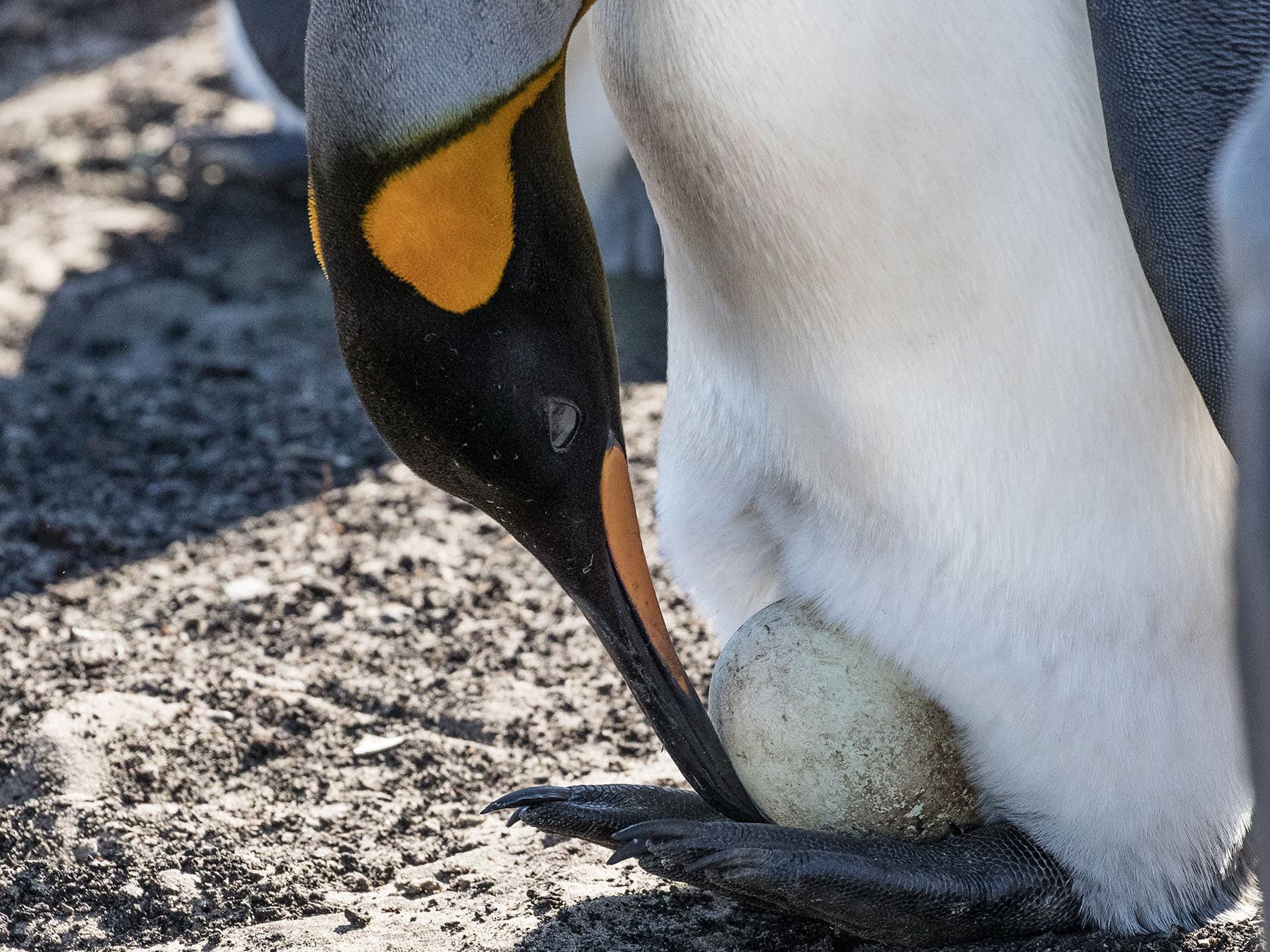 King Penguin incubating egg
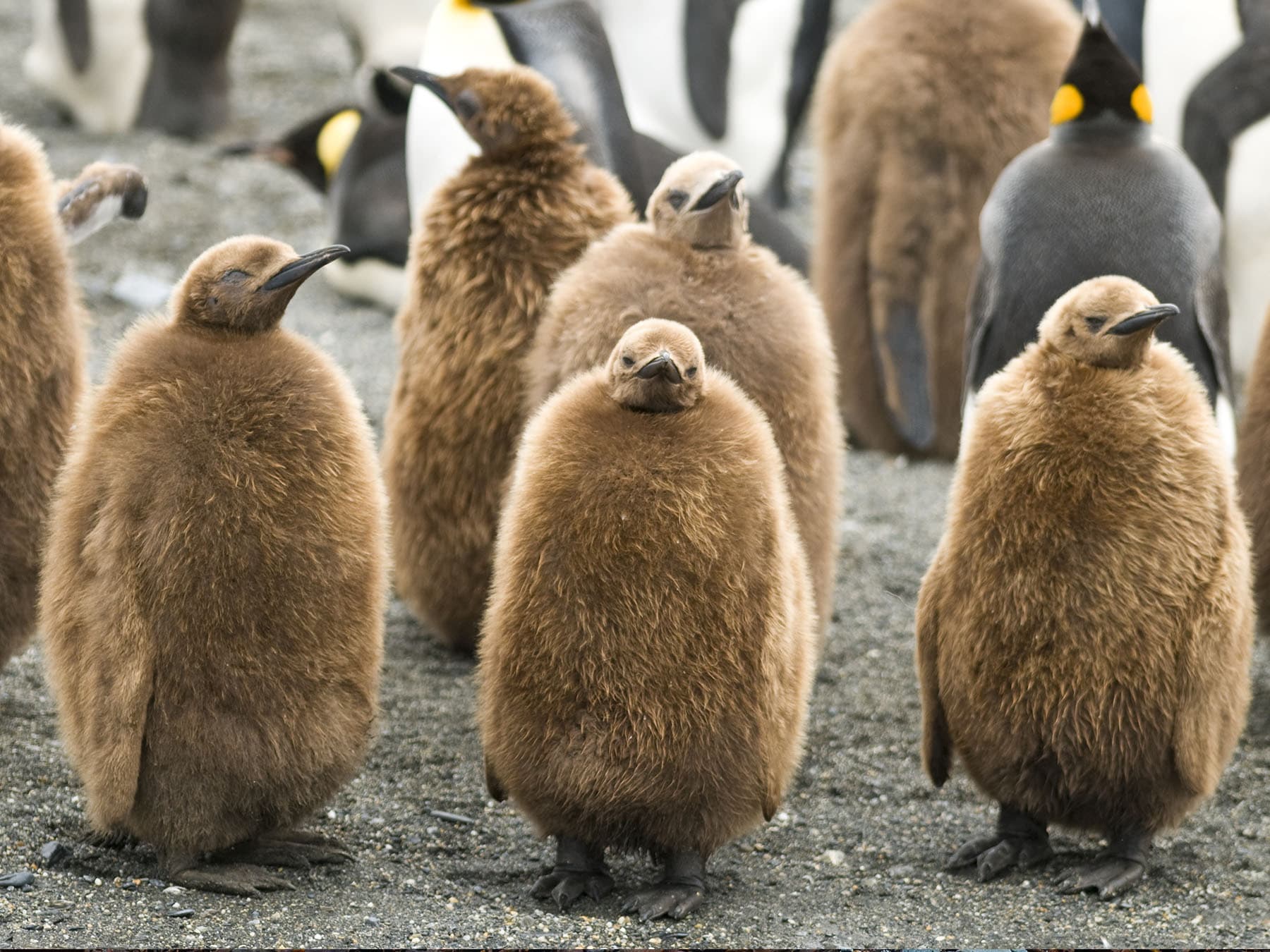 King Penguin chicks
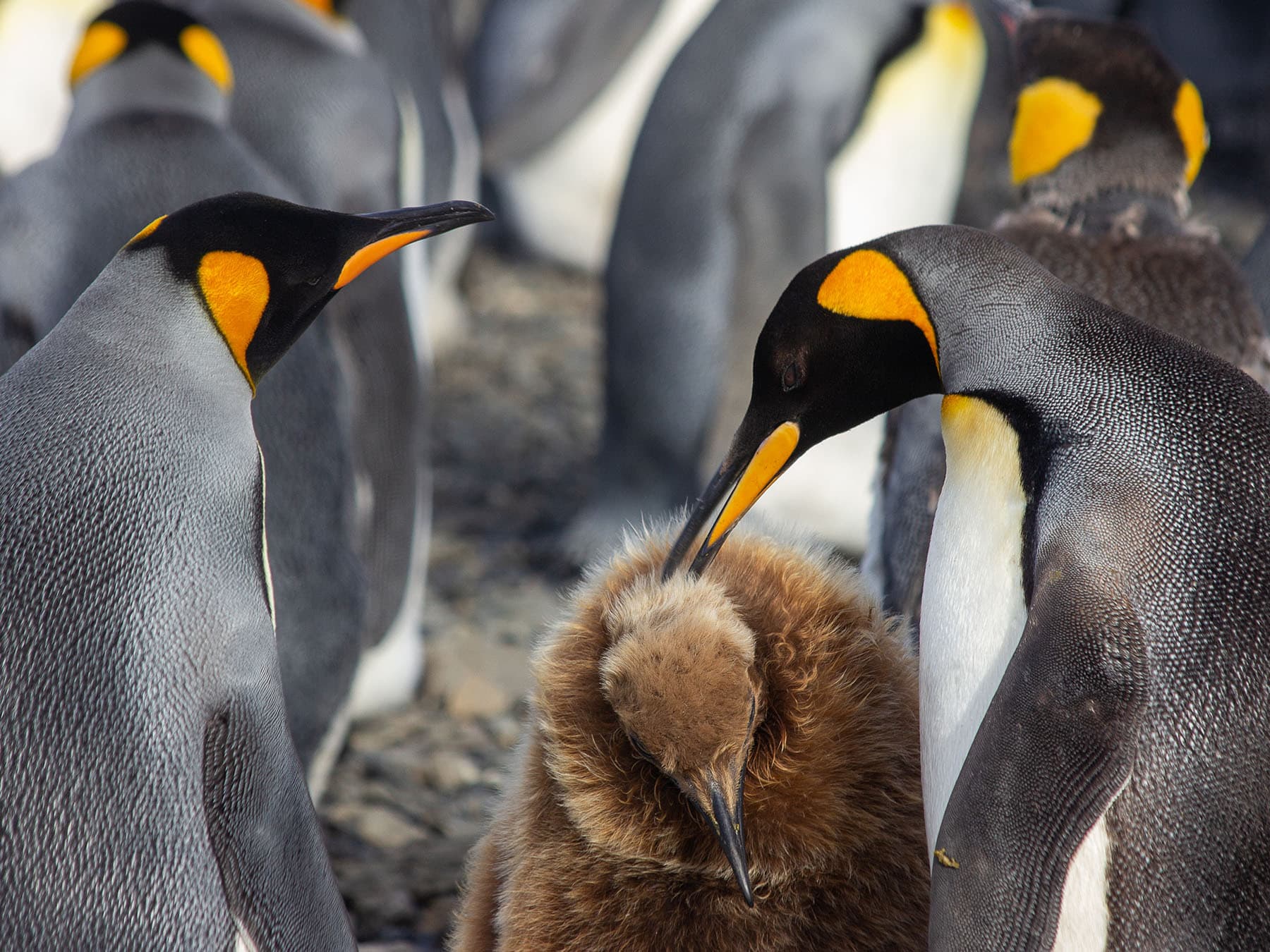 King Penguin mother cleaning young chick
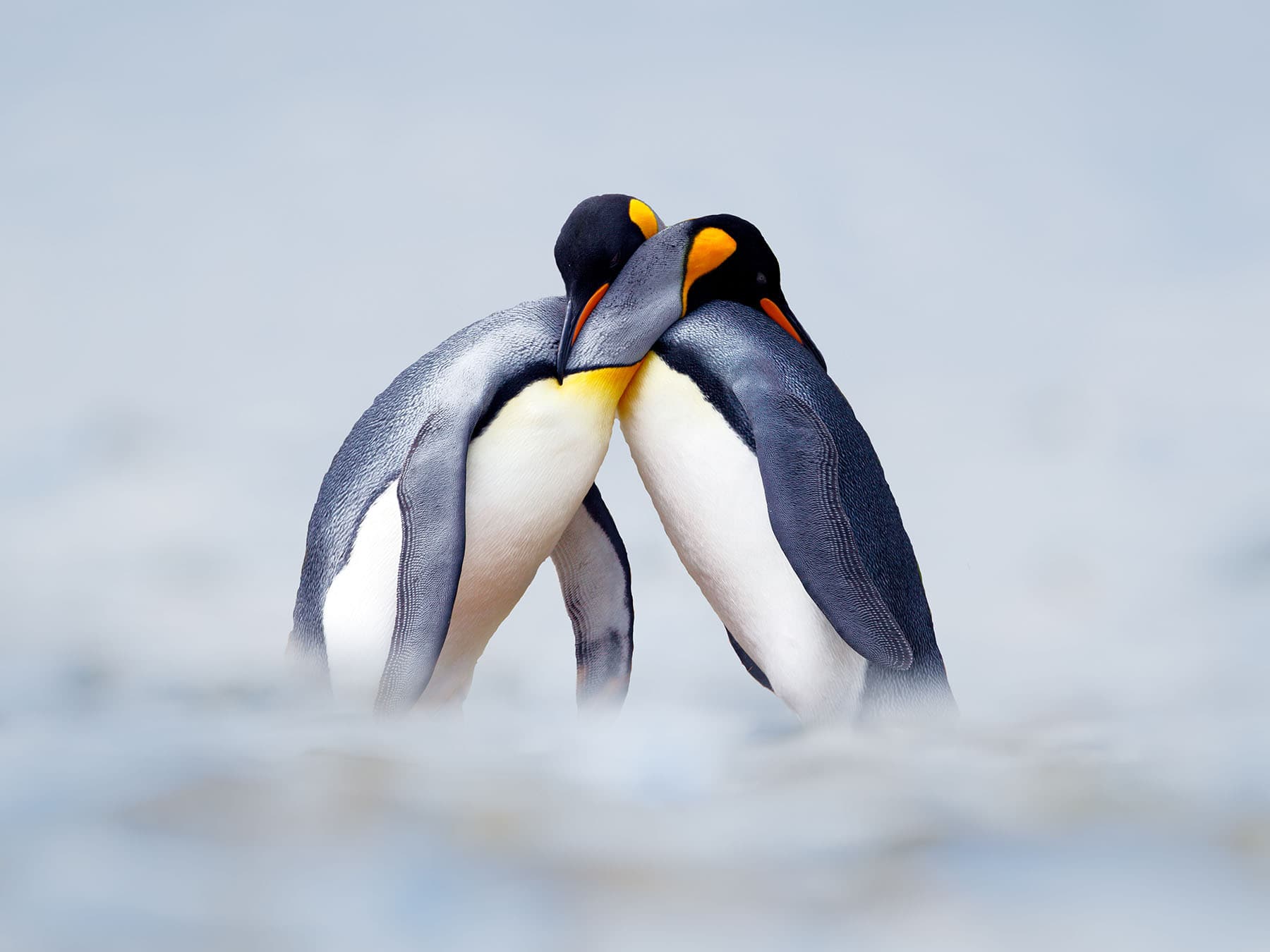 King Penguin courtship ritual
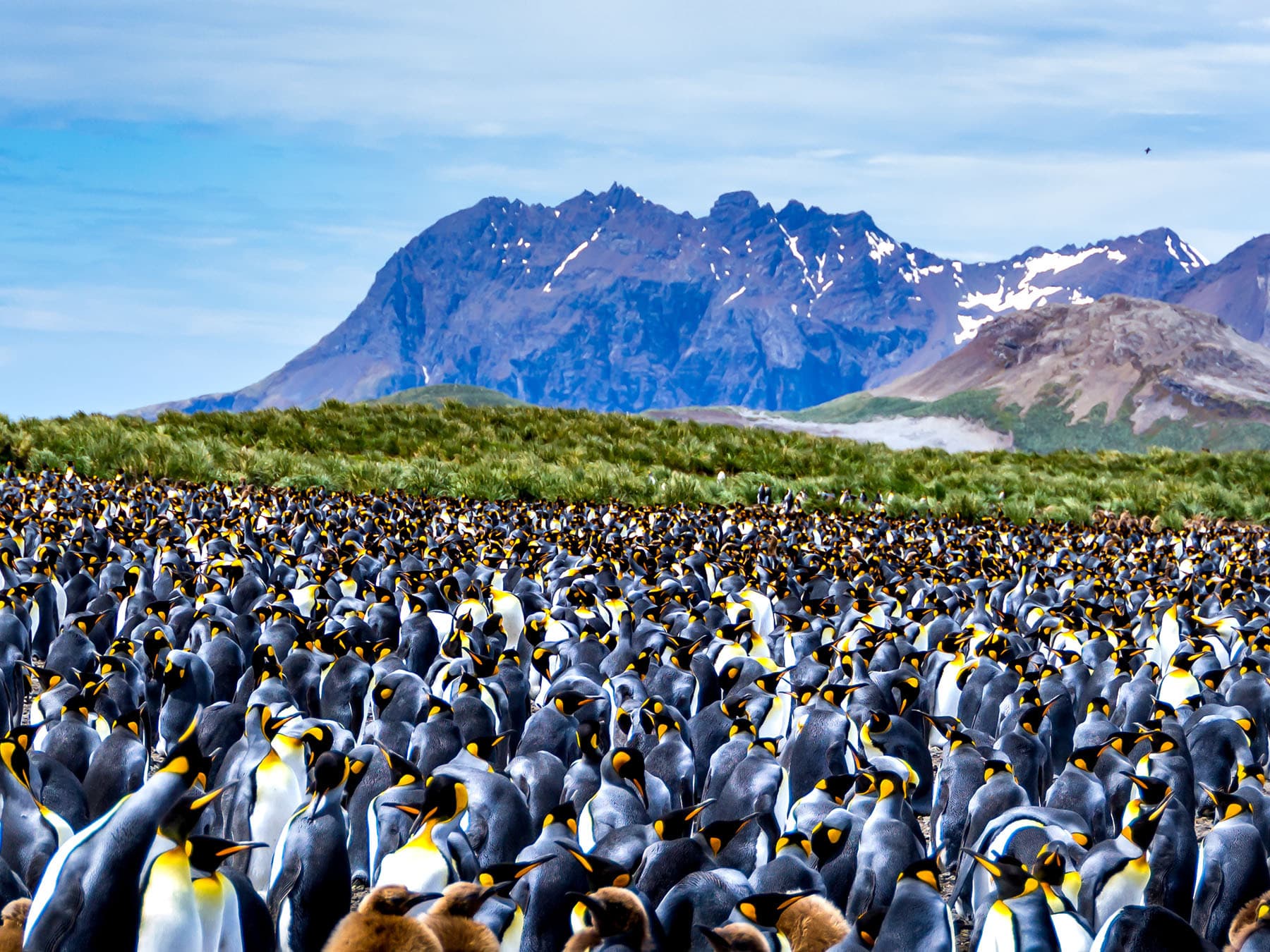 Large King Penguin colony, South Georgia, Antarctic
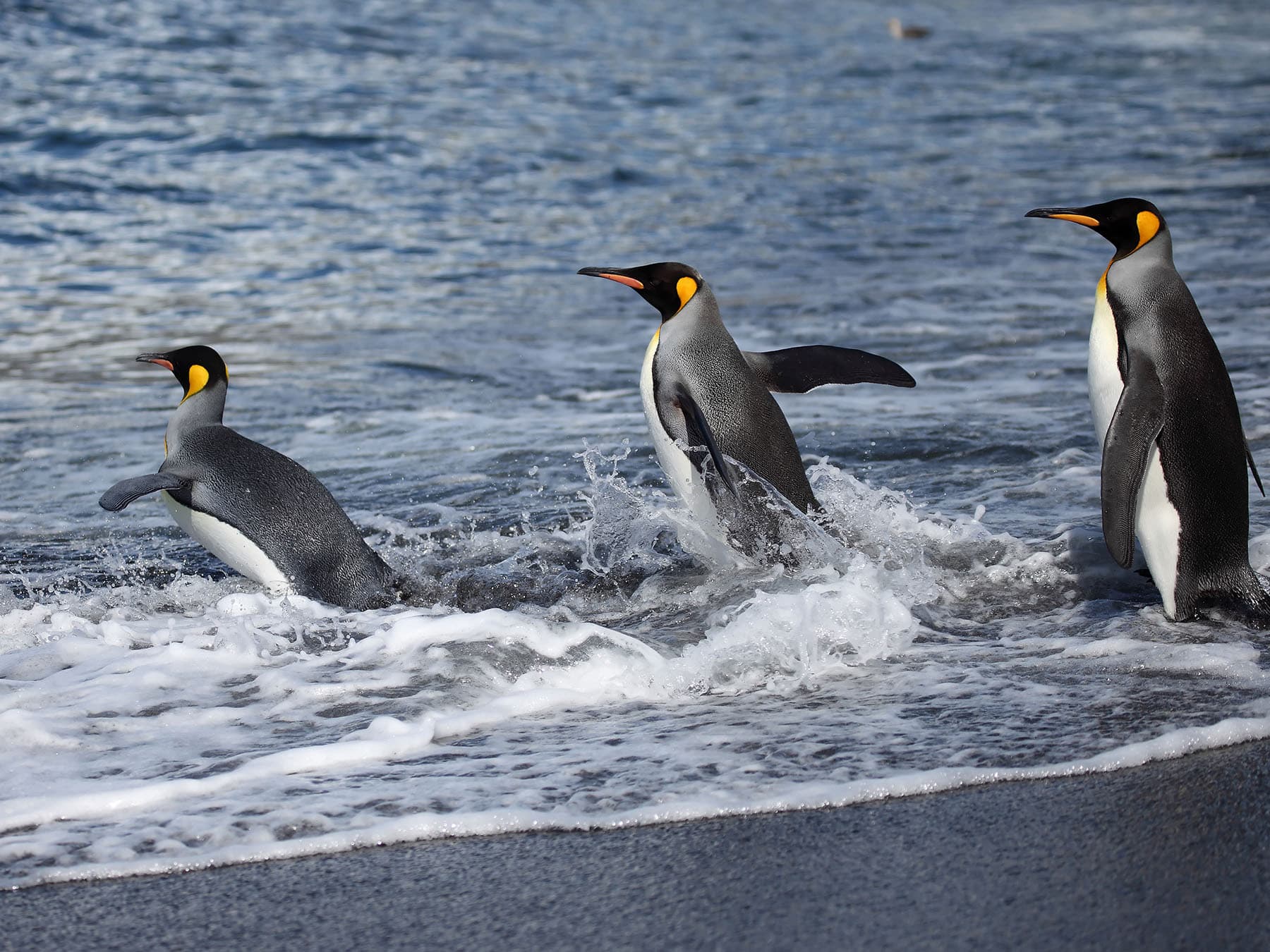 King Penguins going off into the sea
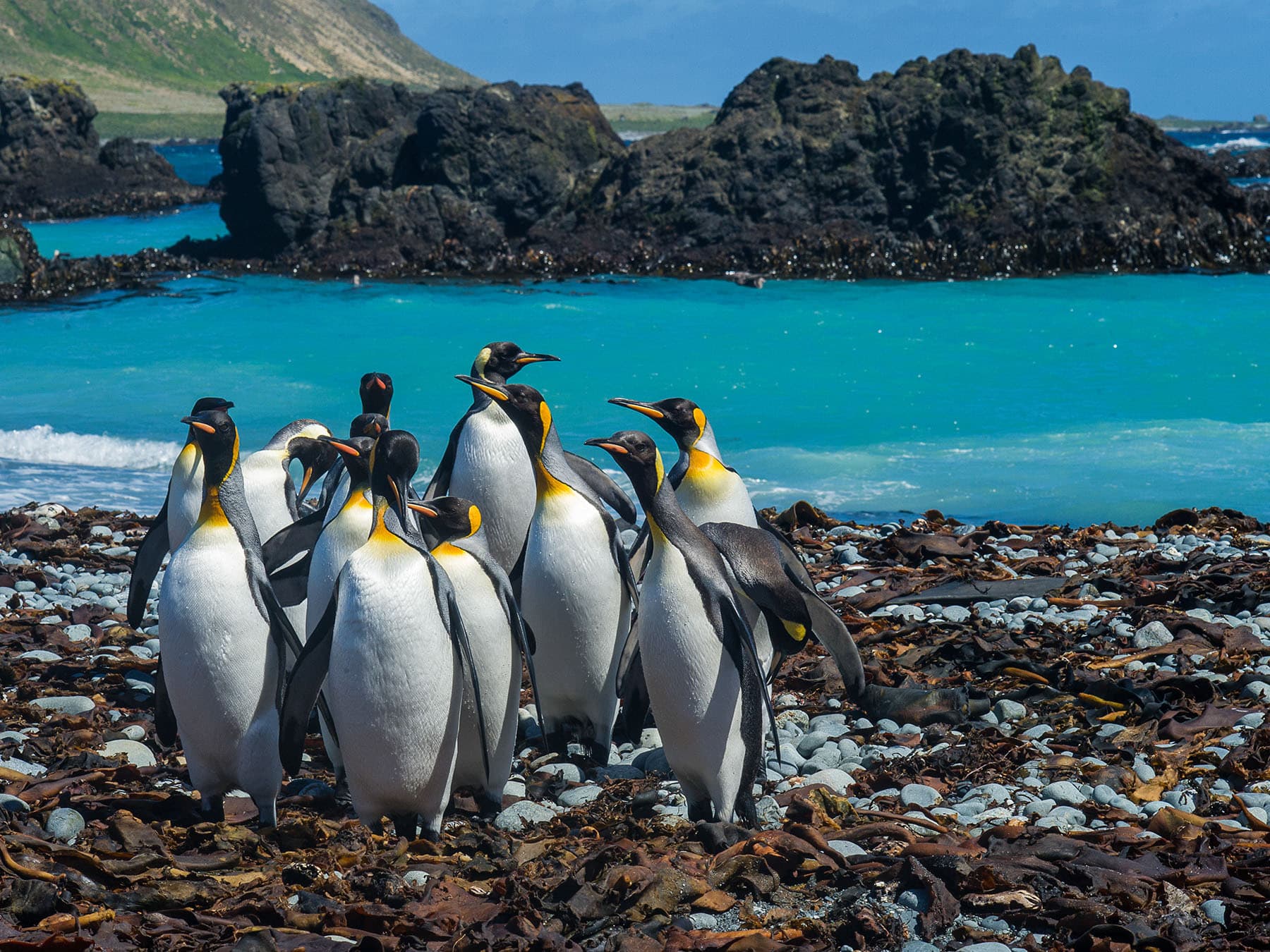 King Penguins, Macquarie Island, between Australia and Antarctica
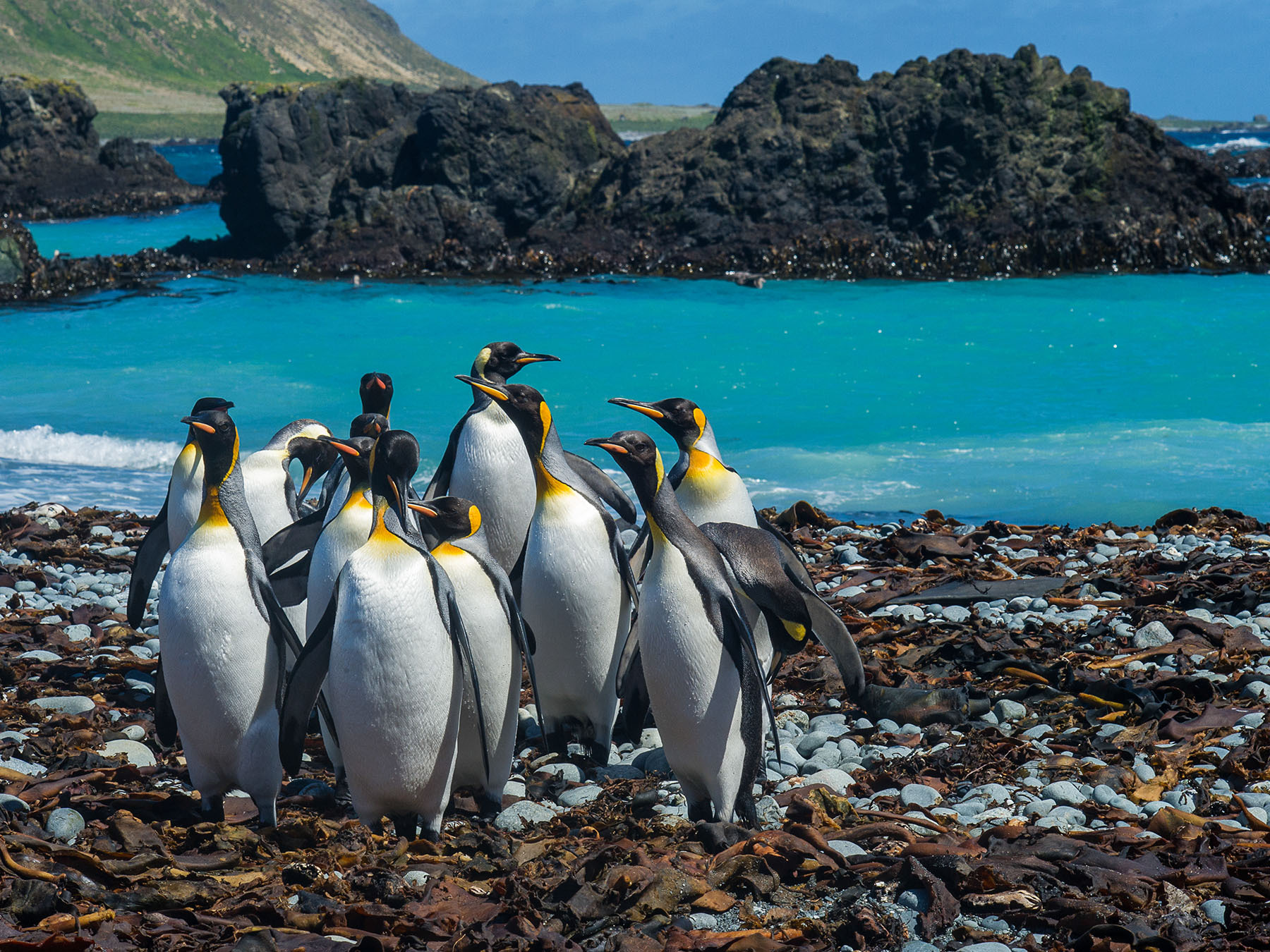
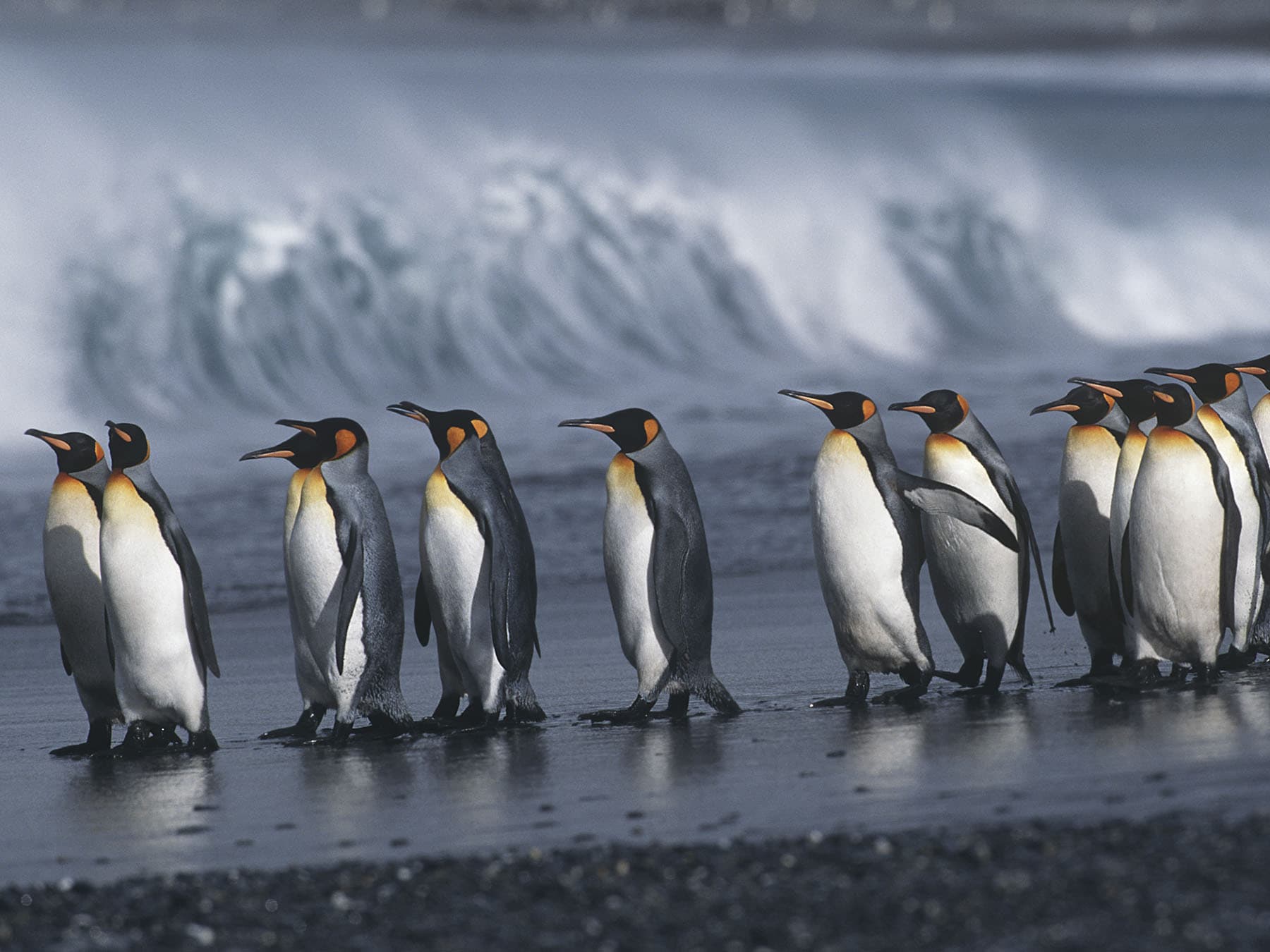 Small group of King Penguins
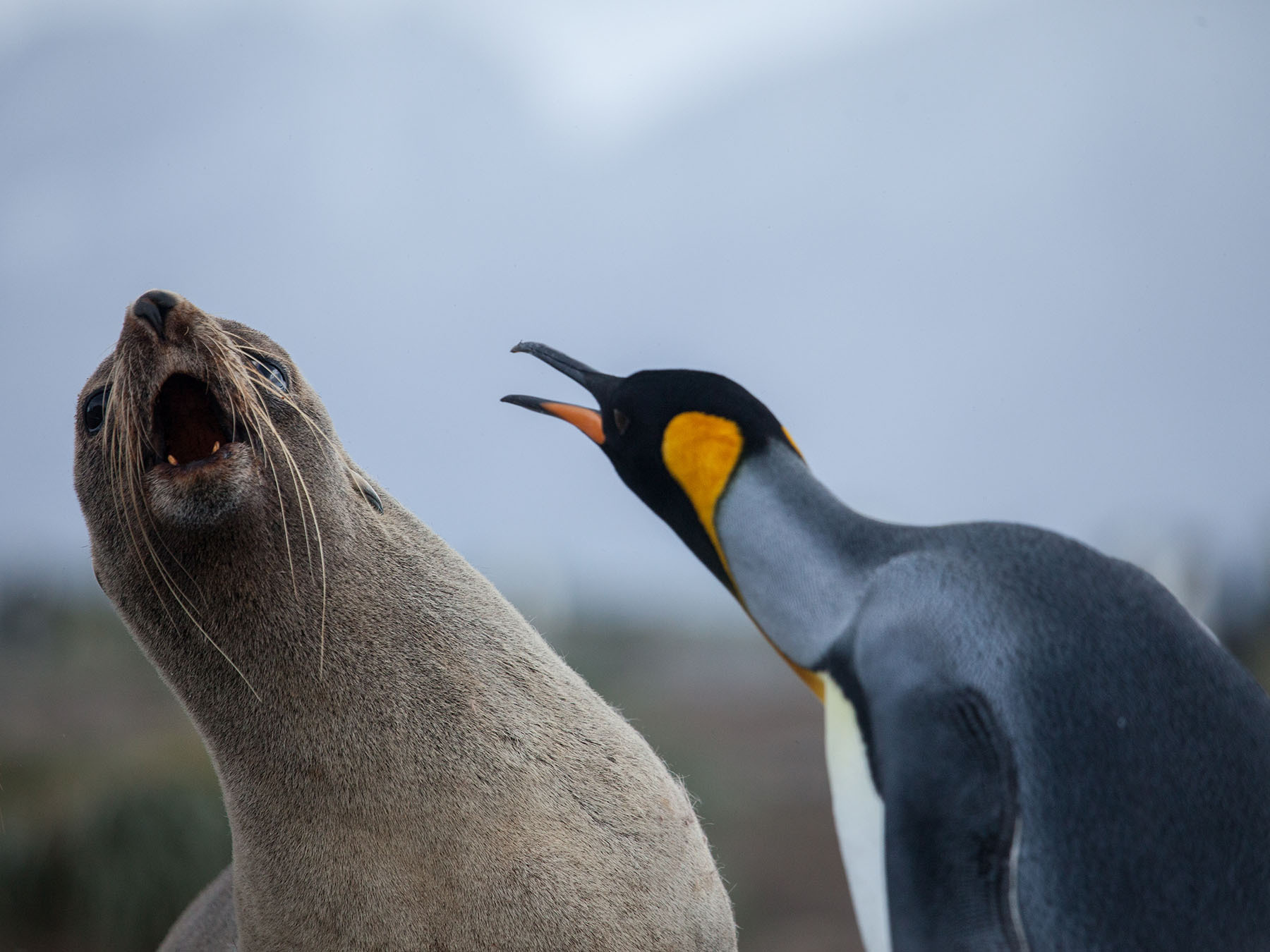
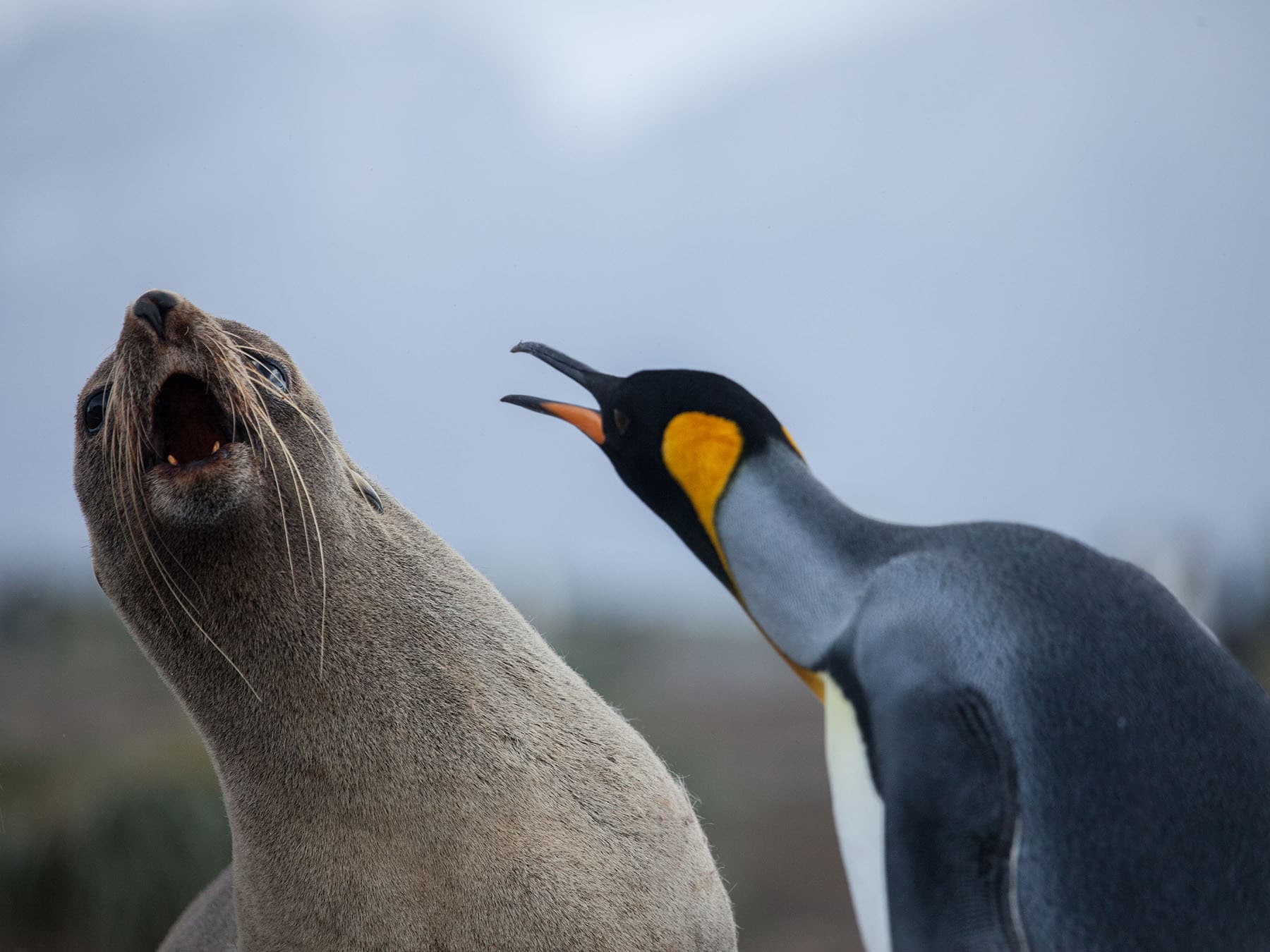 King Penguin attacking a Fur Seal
Quick facts
- Length
- 70–100 cm
- Wingspan
- 80–100 cm
- Weight
- 9500–16000 g
- Lifespan
- 15–26 years · oldest recorded 27 years
- Family
- Penguins
- Migration
- Partial migrant
- Global status (IUCN)
- Least Concern
- World population
- 2,200,000 mature individuals
- Population trend
- Increasing
- Also called
- Woolly Penguin
- Scientific name
- Aptenodytes patagonicus
Sources
4- 1BirdLife International. 2020. Aptenodytes patagonicus. The IUCN Red List of Threatened Species 2020: e.T22697748A184637776. Source (opens in a new tab)
- 2BirdLife International. 2020. Aptenodytes patagonicus. The IUCN Red List of Threatened Species 2020: e.T22697748A184637776. Source (opens in a new tab)
- 3Bost et al. 2013, Weimerskirch et al. 2018
- 4ABBBS - Australian Bird and Bat Banding Scheme Source (opens in a new tab)

Checked by
Nathan Cope, founder and editor
Nathan founded Birdfact and leads its writers and contributors in the UK, the US and Canada. He has watched and studied birds for more than ten years, and checks every article and species guide before it’s published.