


Gentoo Penguin
Johnny penguin, John penguin · Pygoscelis papua
By the Birdfact teamChecked by Nathan Cope
On this page12 sections
How to recognise it
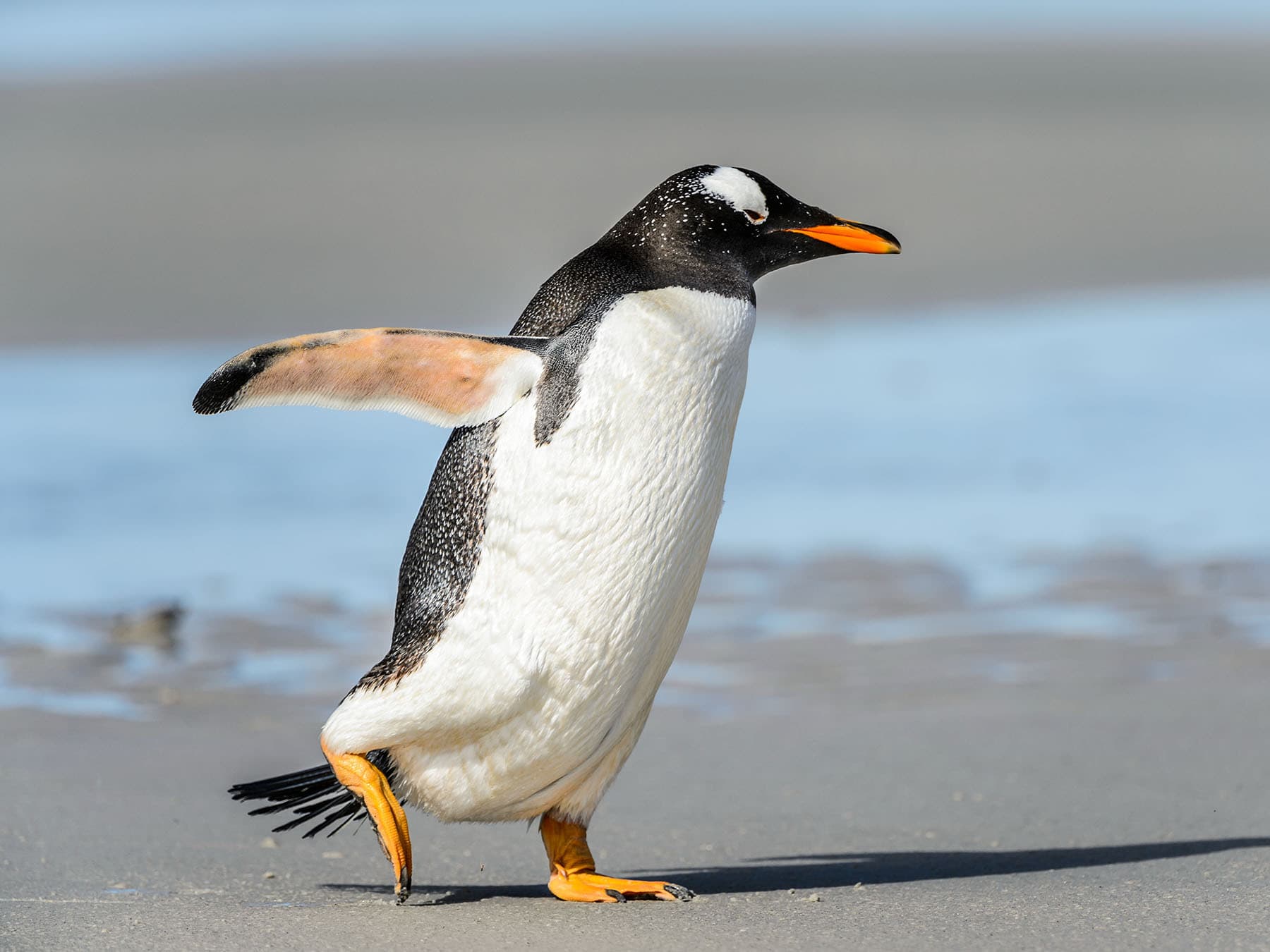
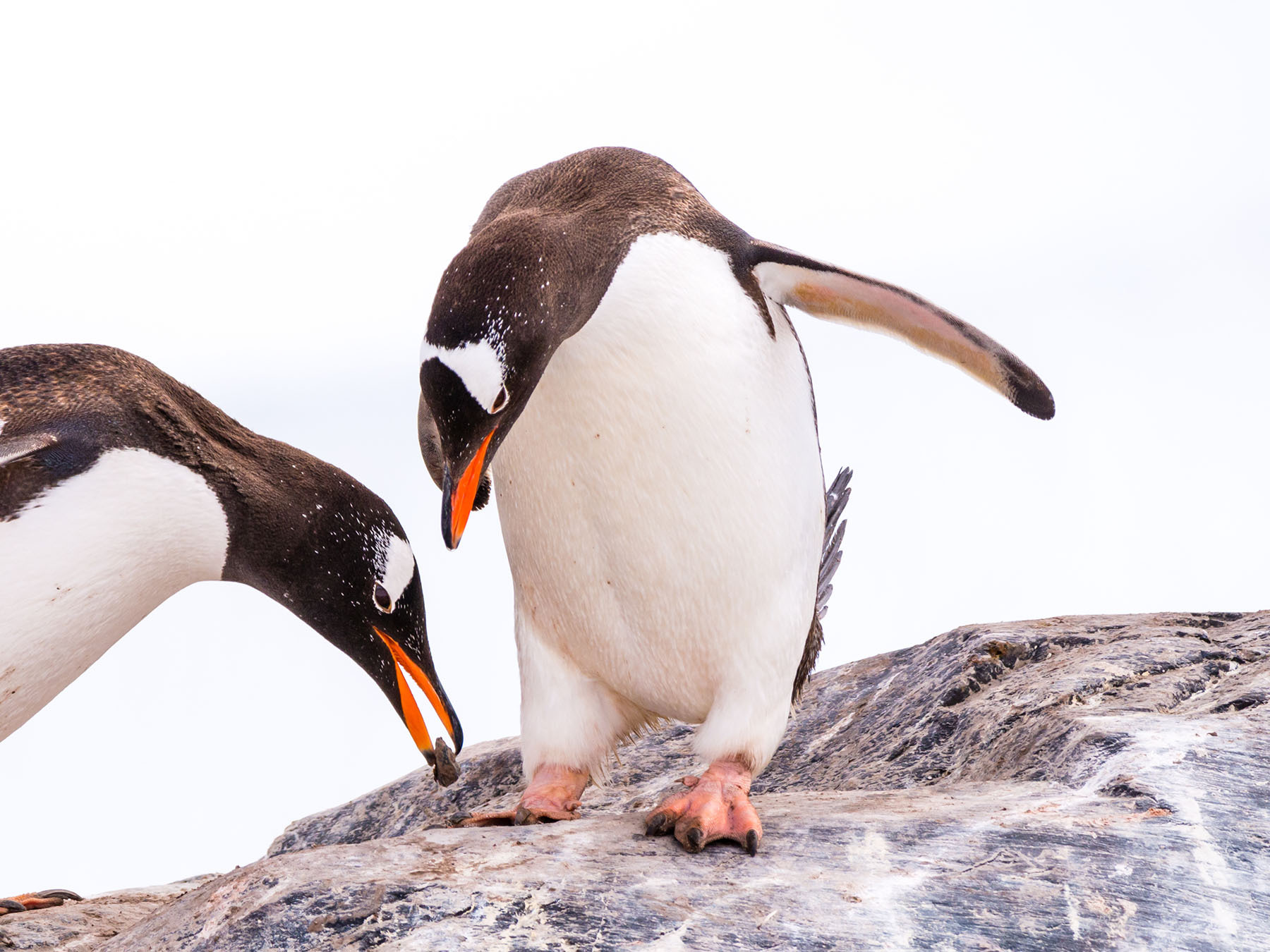
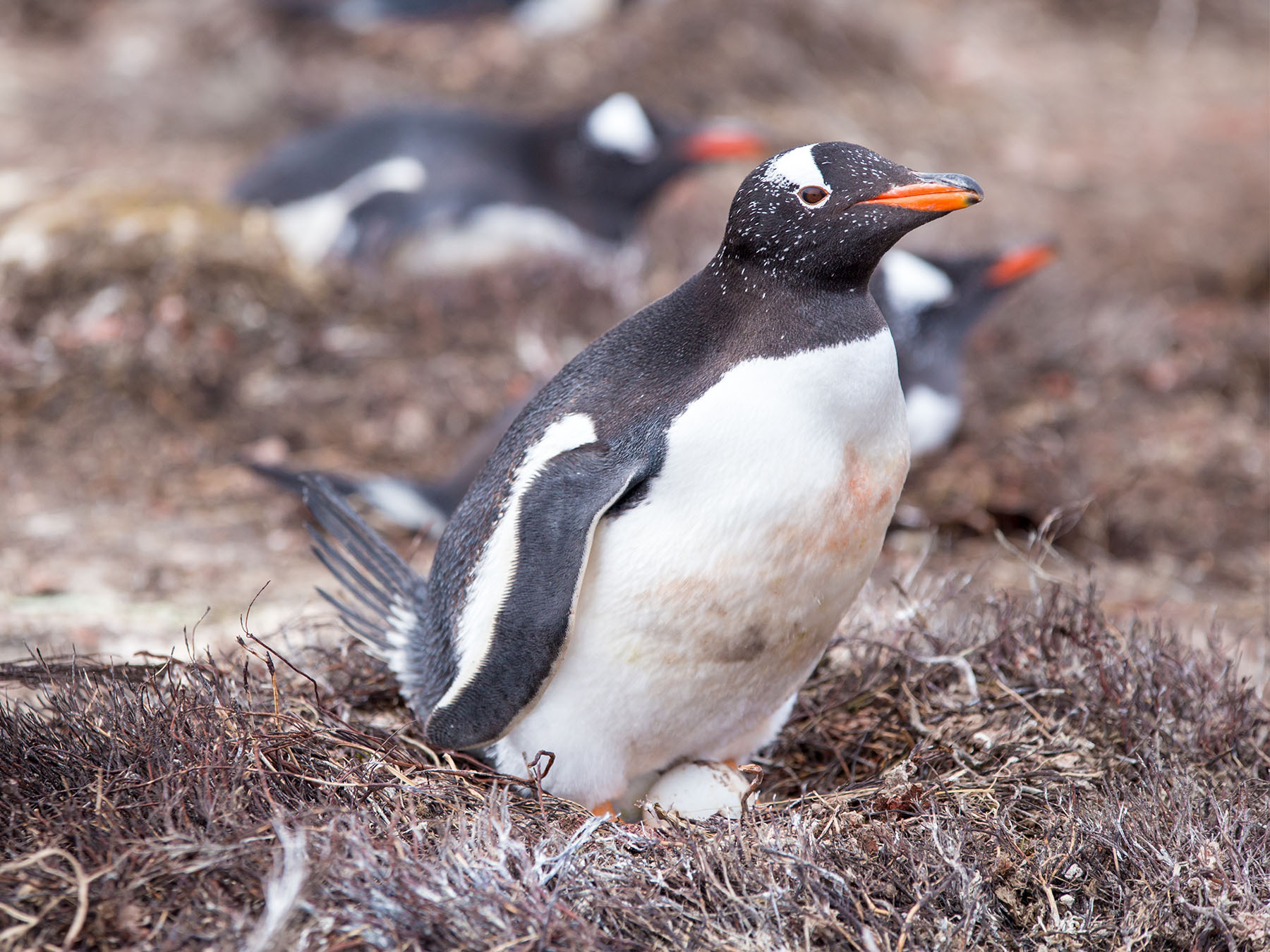
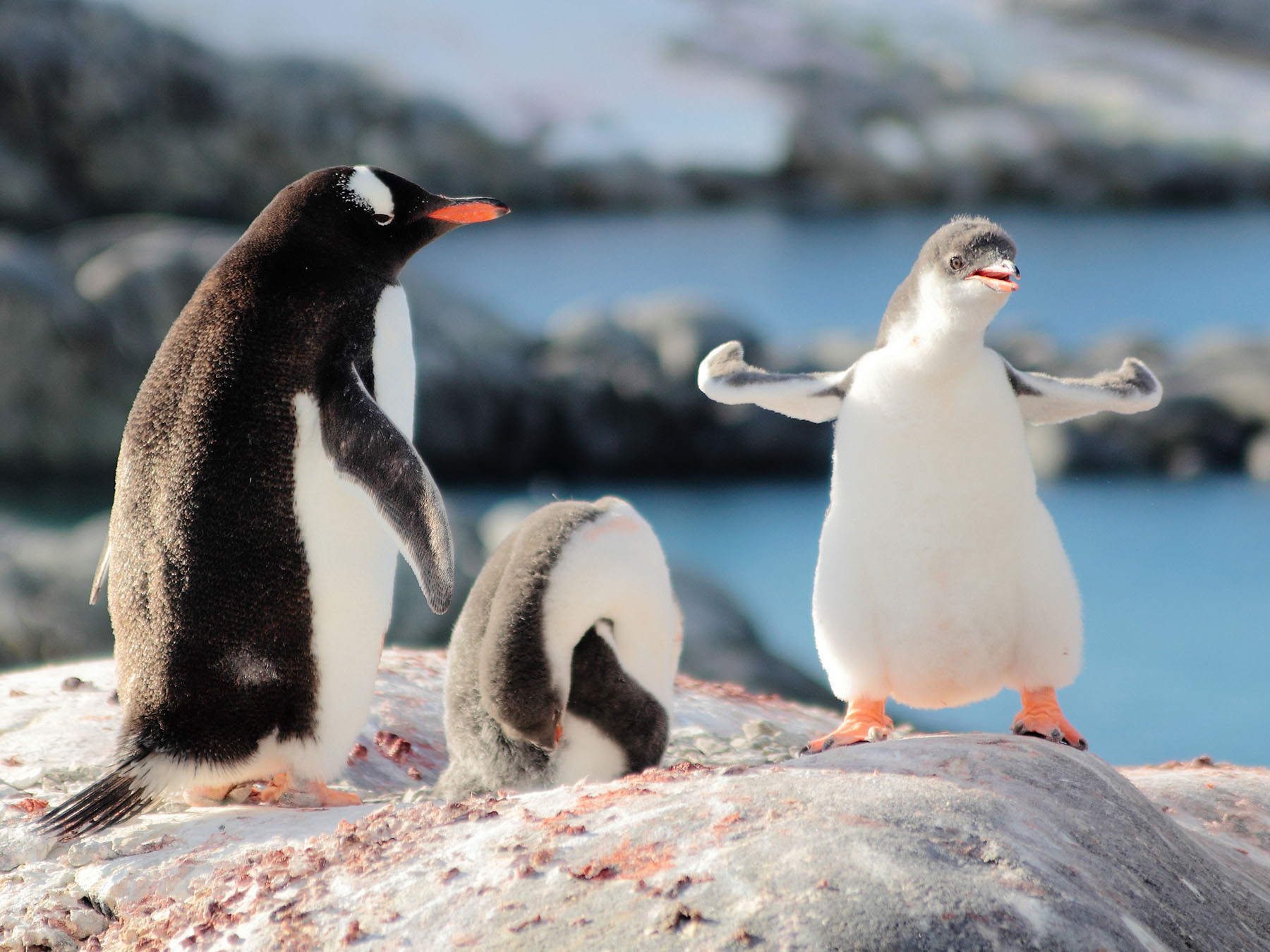
Gentoo Penguins are distinctive with their black back, white front, and bright orange-red bill. They have a white patch behind each eye extending to meet on top of the head, creating a cap-like appearance. Their flippers are black on top and white underneath.
Adults and juveniles share similar colouration, though juveniles may have slightly duller bills. There is no significant seasonal variation in their plumage.
Its size
Adults- Length
- 75–90 cm
- Wingspan
- 84–91 cm
- Weight
- 4500–8500 g
Its song and calls
Gentoo Penguins are vocal birds known for their loud, trumpeting calls. During courtship and territorial displays, they produce a series of rhythmic braying sounds, often described as 'donkey-like.'
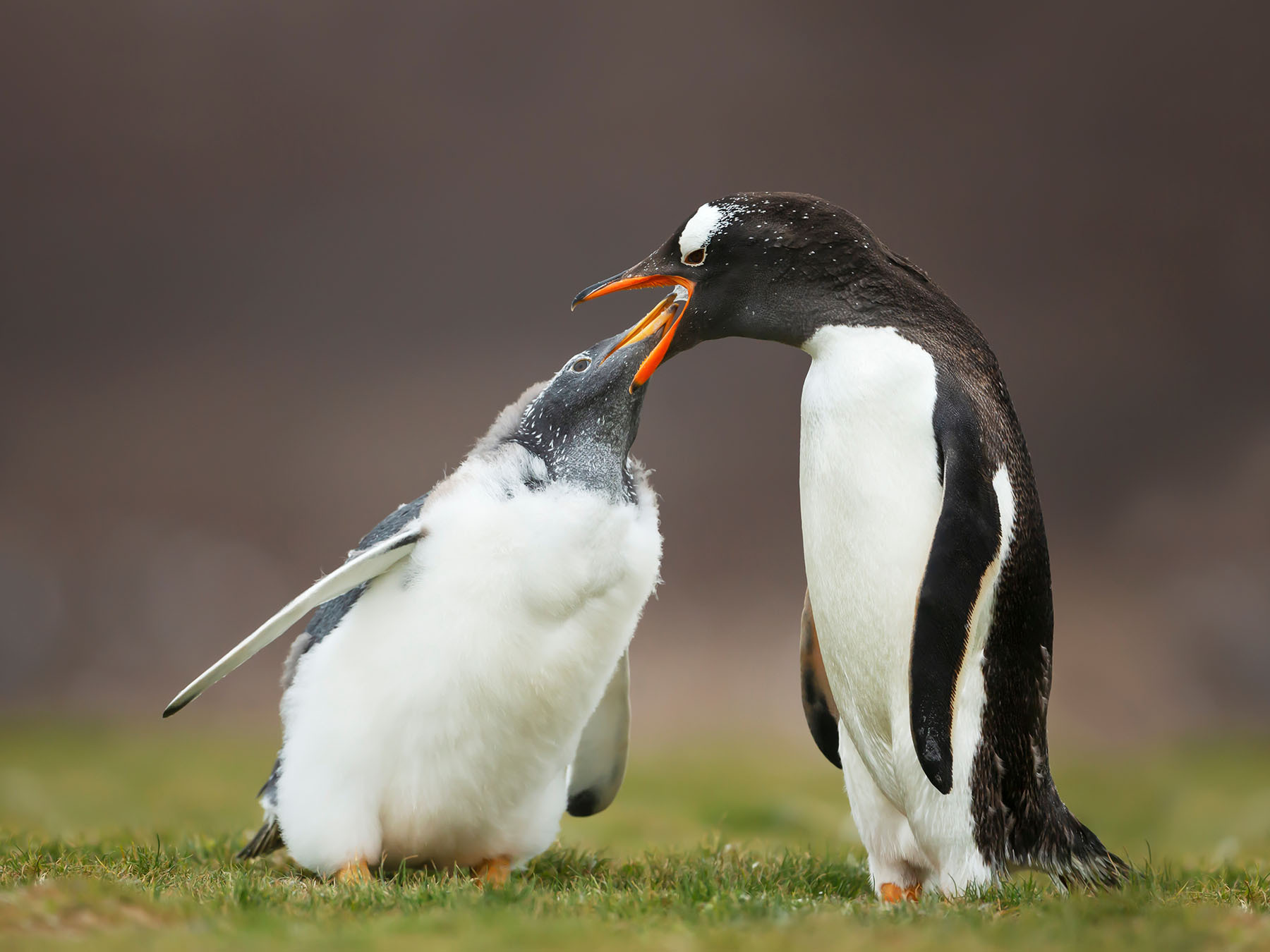
Chicks emit high-pitched whistles when begging for food from their parents.
- Call0:00 / 0:23
Recorded in Neko Harbor, Antarctica · November 2024
When and where to see it
The Gentoo Penguin is not recorded regularly in the UK, Ireland, the United States or Canada.
Worldwide: recorded regularly in 8 countries
Countries where it was recorded in at least 3 of the 6 years 2019–2024. Linked countries have their own bird list.
Africa (1)
South America (3)
- Argentina
- Chile
- Falkland Islands
Oceania (1)
Antarctica (3)
- Antarctica
- French Southern Territories
- South Georgia & South Sandwich Islands
Data: EOD – eBird Observation Dataset (Cornell Lab of Ornithology), accessed via GBIF.org, CC BY 4.0. Records from 2019–2024, aggregated and filtered by Birdfact. How these lists are made
Tips for seeing it
- Look for Gentoo Penguins on rocky, ice-free areas near the shore
- Observe their distinctive waddling gait and upright posture on land
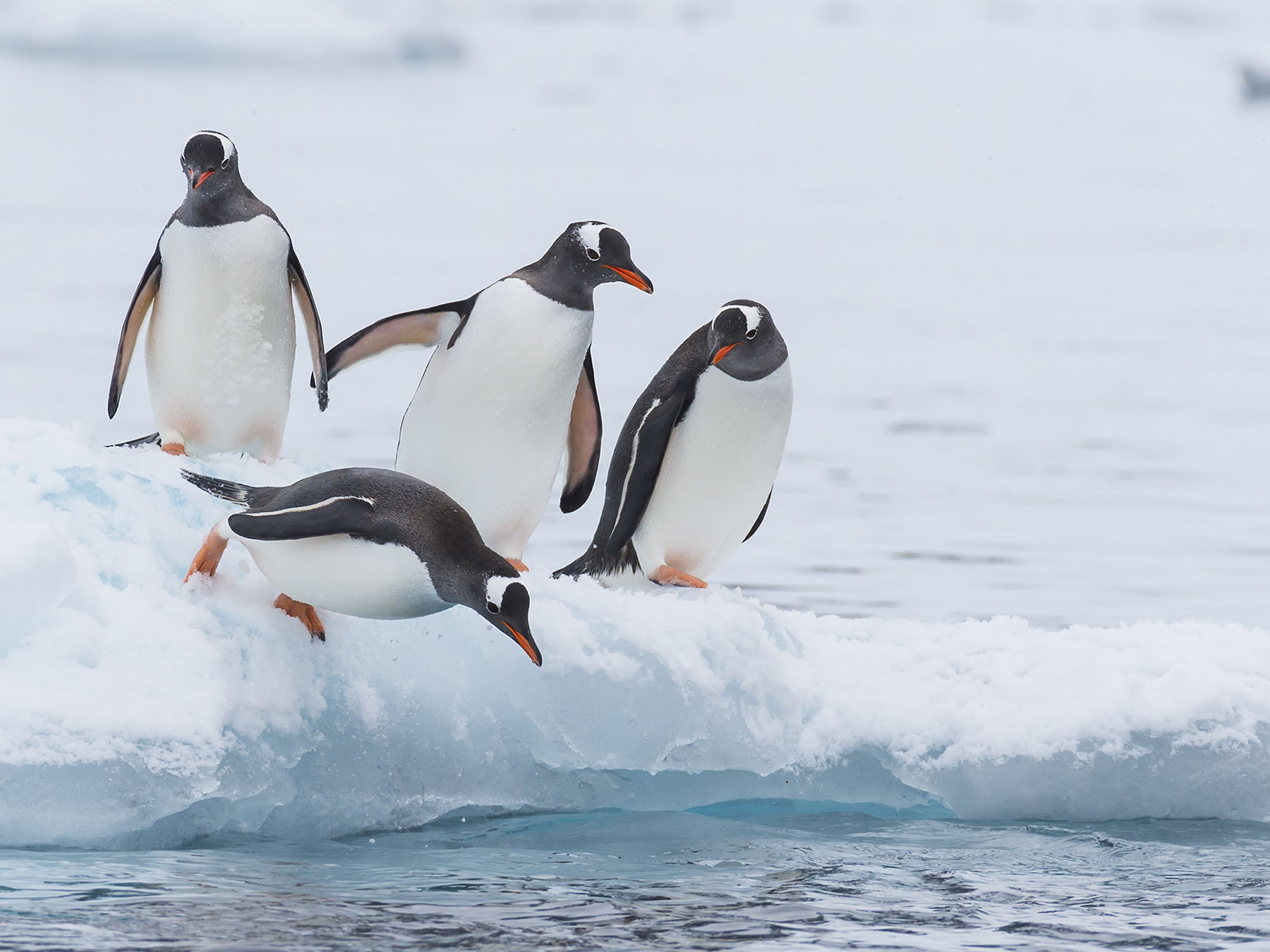
- Watch for their porpoising behaviour when swimming near the surface
- Listen for their loud, trumpeting calls, especially in breeding colonies
What it eats
Gentoo Penguins primarily feed on crustaceans, particularly krill, as well as small fish and squid. They are opportunistic feeders, adapting their diet based on local prey availability.
These penguins can dive up to 200 meters deep in search of food, though most dives are shallower.
Nesting and breeding
Gentoo Penguins typically form monogamous pairs and breed annually. The breeding season varies by location but generally occurs during the austral spring and summer, from October to March.
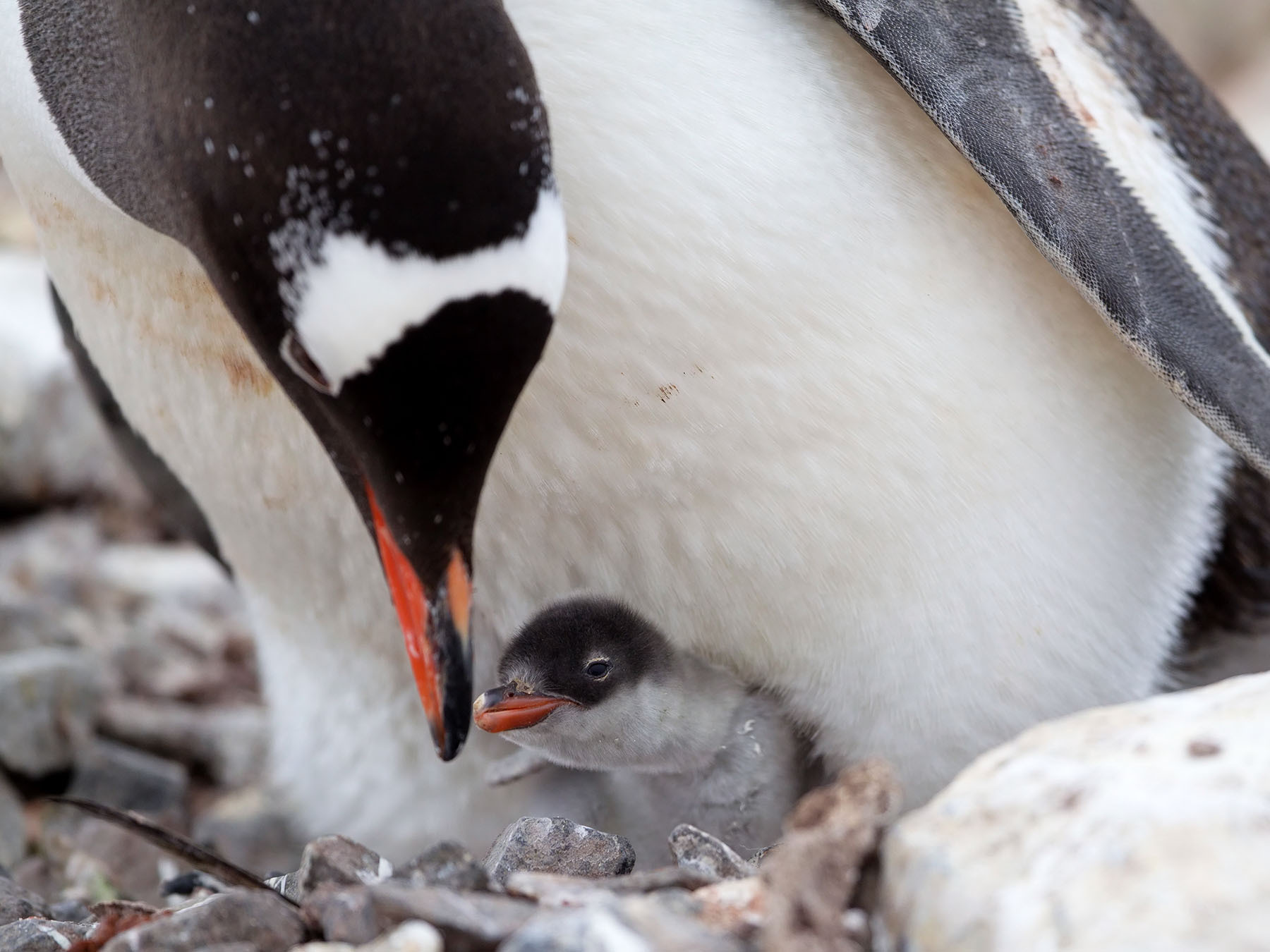
Nests are simple circular structures made of pebbles, grass, and feathers. Females usually lay two eggs, which are greenish-white and spherical. Both parents take turns incubating the eggs.
Incubation lasts about 34-36 days. Chicks fledge at 85-117 days old, depending on food availability. Parents continue to feed the chicks for several weeks after they leave the nest.
Behaviour
Gentoo Penguins are excellent swimmers, capable of reaching speeds up to 36 km/h (22 mph) underwater. They are known for their waddling gait on land and their habit of using their tails as a prop when standing.
These penguins are generally colonial but less gregarious than other penguin species, often nesting in smaller, more dispersed groups.
Conservation
While listed as Least Concern globally, some Gentoo Penguin populations are declining due to climate change impacts on their habitat and food sources.
Conservation efforts focus on protecting breeding sites and monitoring population trends to inform management strategies.
Similar birds
Often mistaken for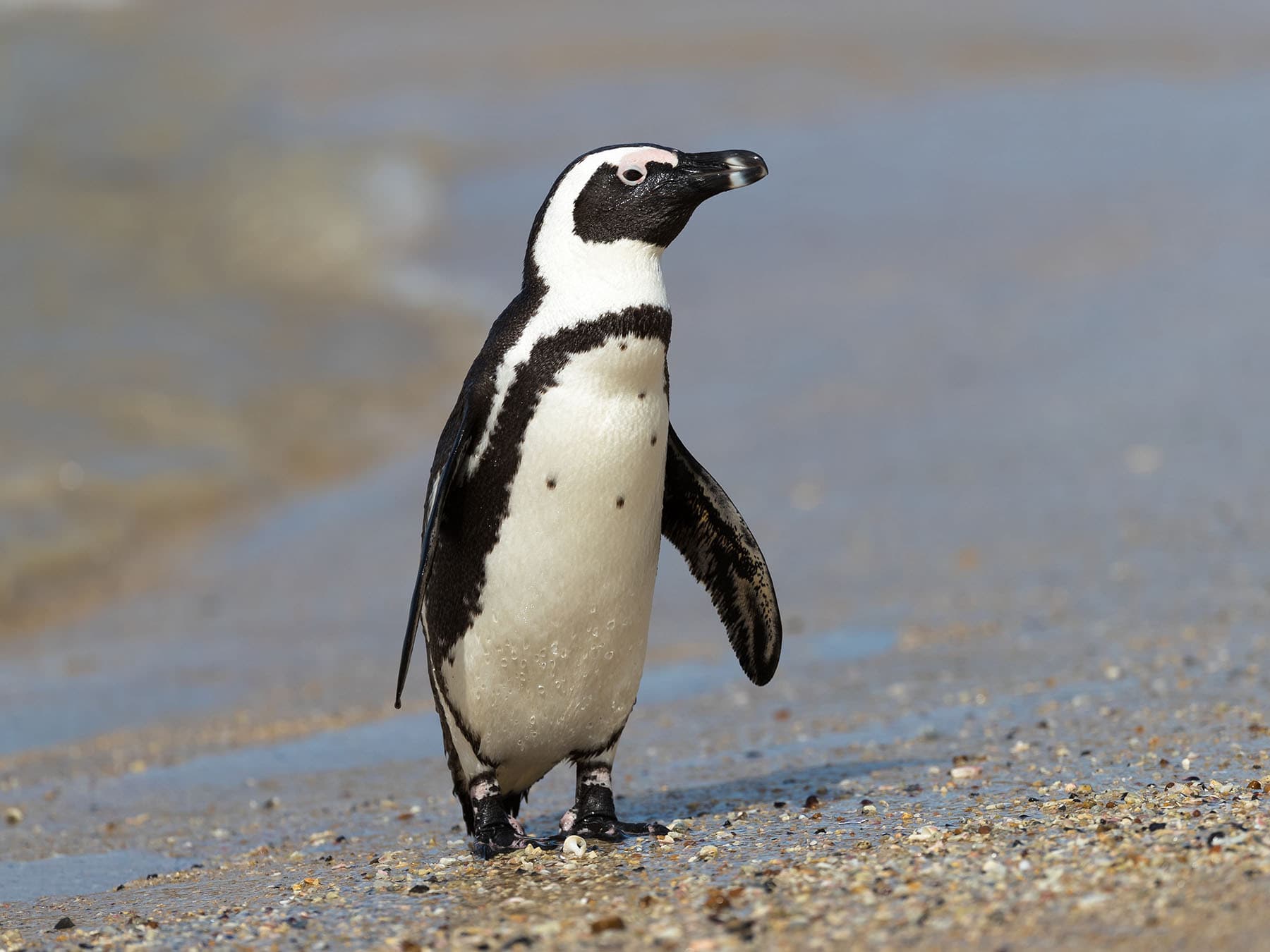
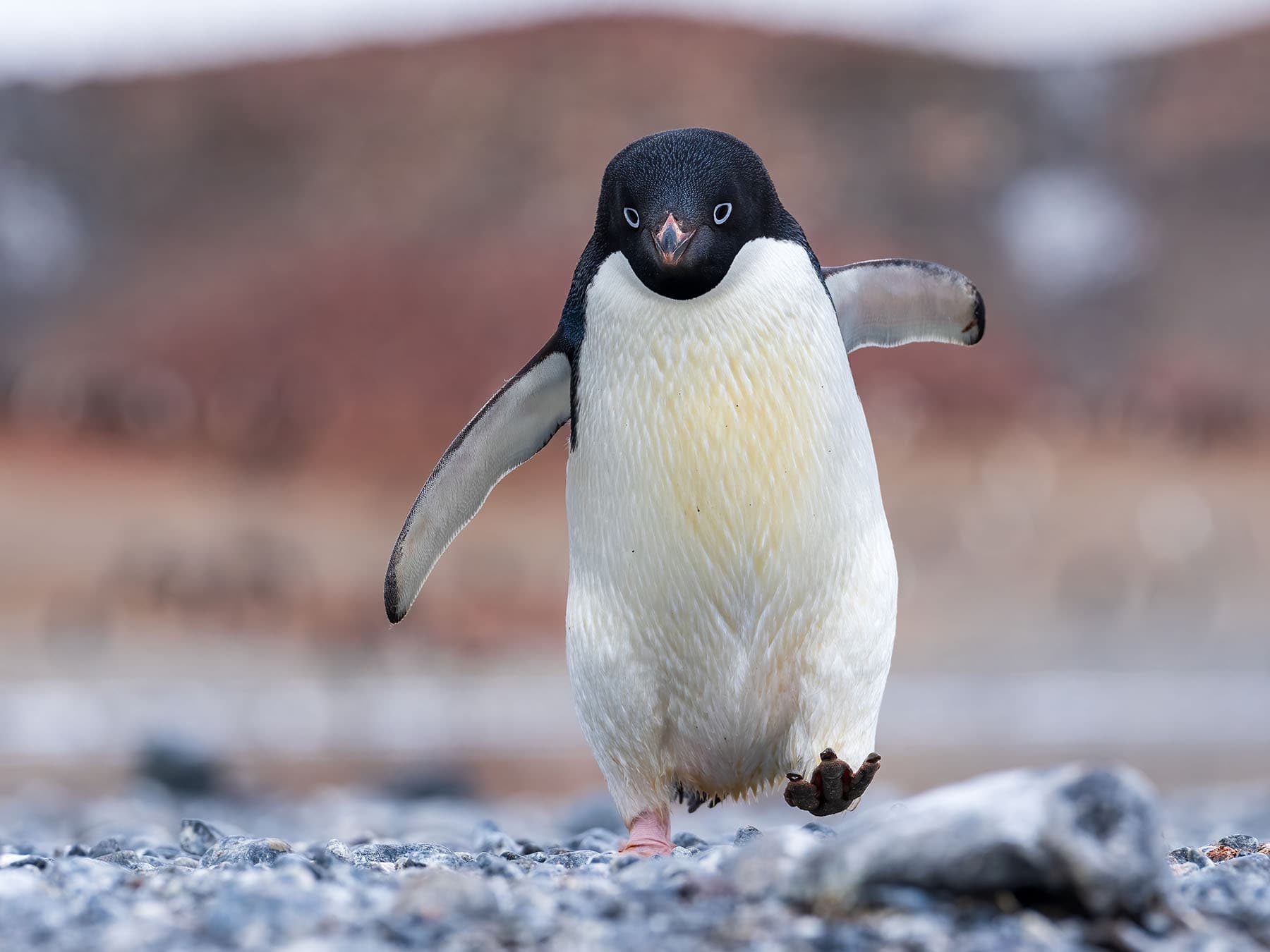
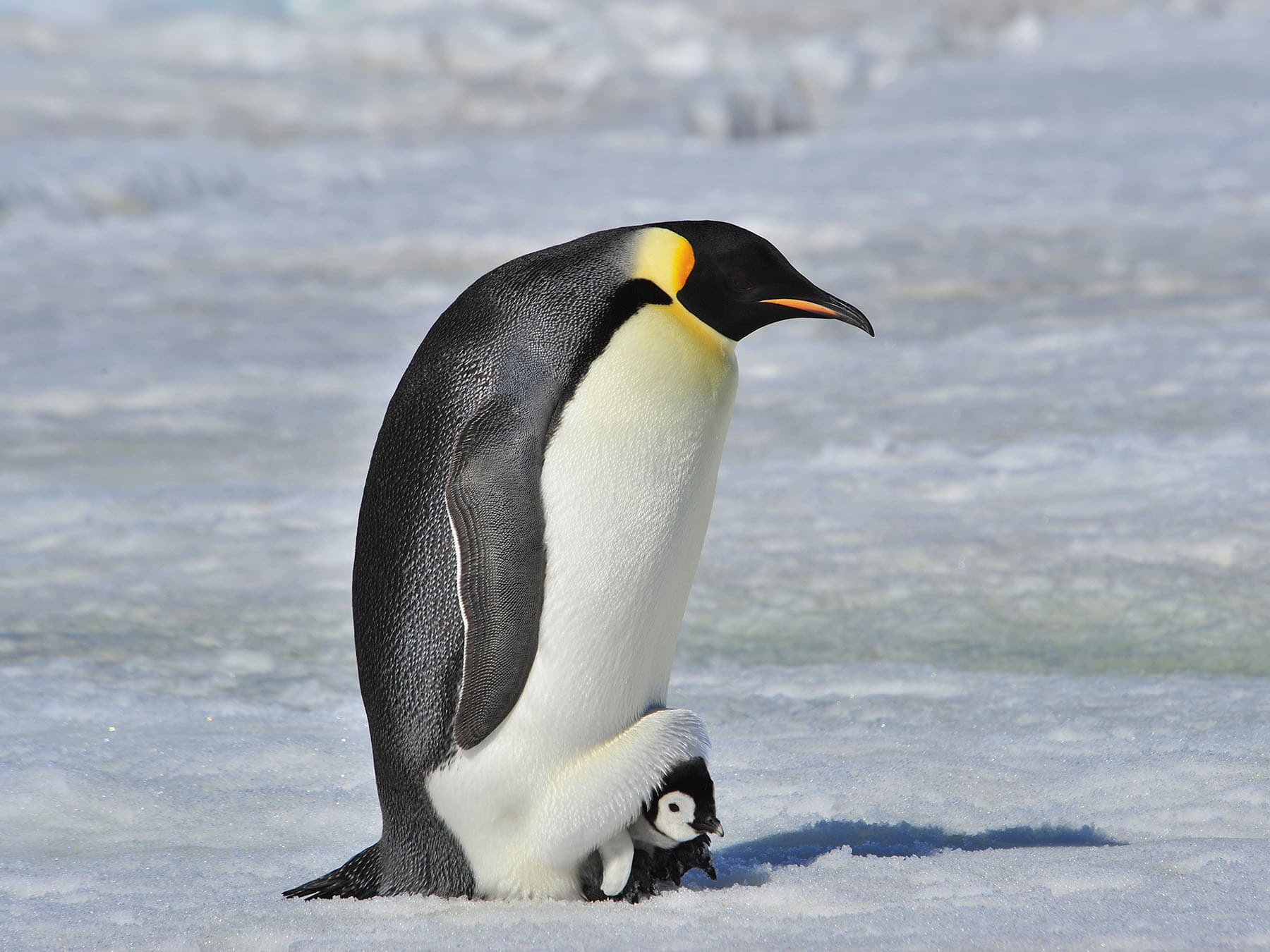
More photos
7 photos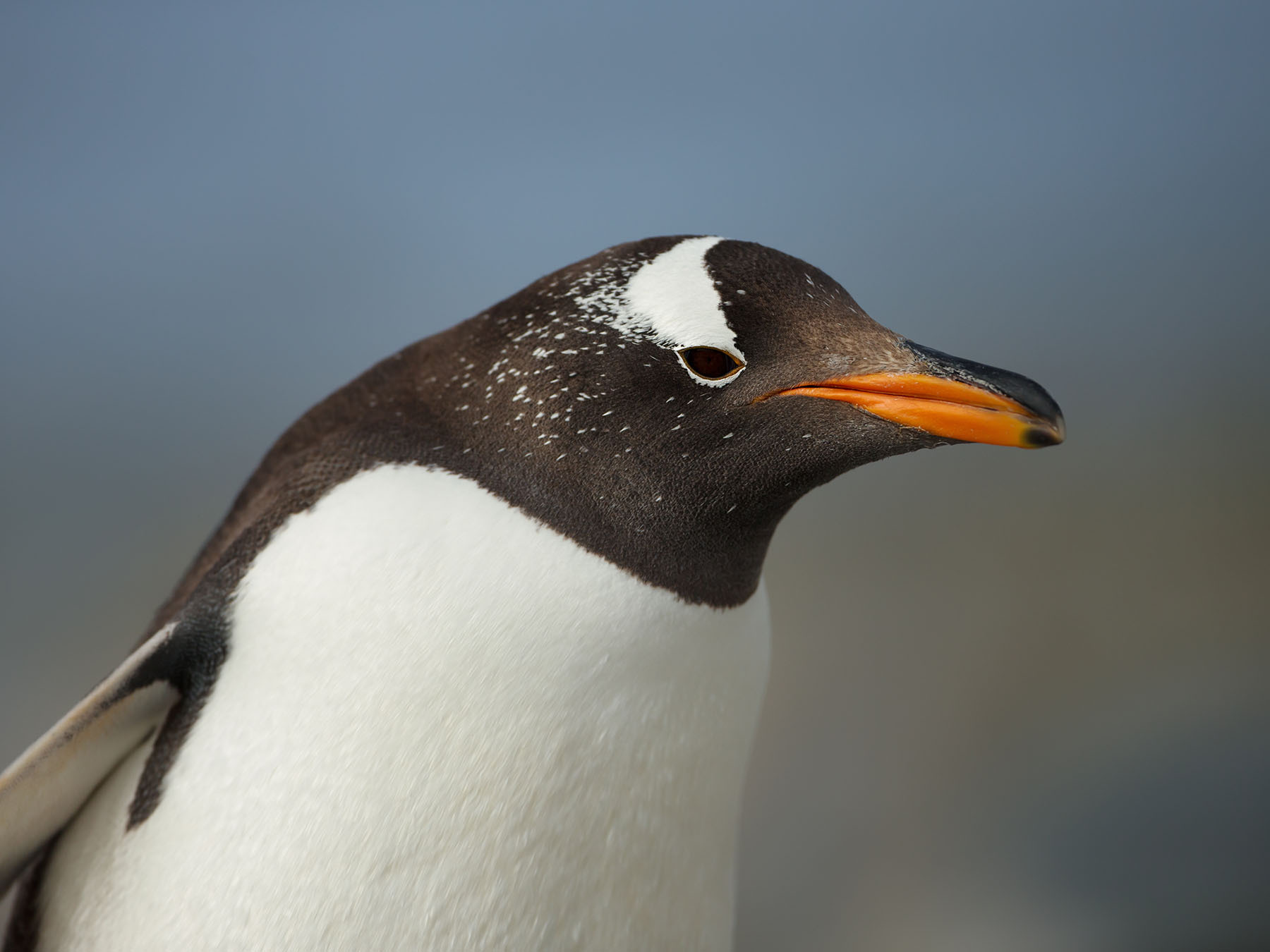
Quick facts
- Length
- 75–90 cm
- Wingspan
- 84–91 cm
- Weight
- 4500–8500 g
- Lifespan
- 12–15 years · oldest recorded 41 years
- Family
- Penguins
- Migration
- Resident
- Global status (IUCN)
- Least Concern
- World population
- 774,000 mature individuals
- Population trend
- Stable
- Also called
- Johnny penguin, John penguin
- Scientific name
- Pygoscelis papua
Sources
4- 1BirdLife International. 2020. Pygoscelis papua. The IUCN Red List of Threatened Species 2020: e.T22697755A157664581. Source (opens in a new tab)
- 2BirdLife International. 2020. Pygoscelis papua. The IUCN Red List of Threatened Species 2020: e.T22697755A157664581. Source (opens in a new tab)
- 3Lynch (2013)
- 441-year-old penguin from Danish zoo breaks record with her extraordinary age Source (opens in a new tab)

Checked by
Nathan Cope, founder and editor
Nathan founded Birdfact and leads its writers and contributors in the UK, the US and Canada. He has watched and studied birds for more than ten years, and checks every article and species guide before it’s published.