Published 7 Oct 2026
Goldfinch Song and Calls: What Goldfinches Sound Like
By the Birdfact teamChecked by Nathan Cope
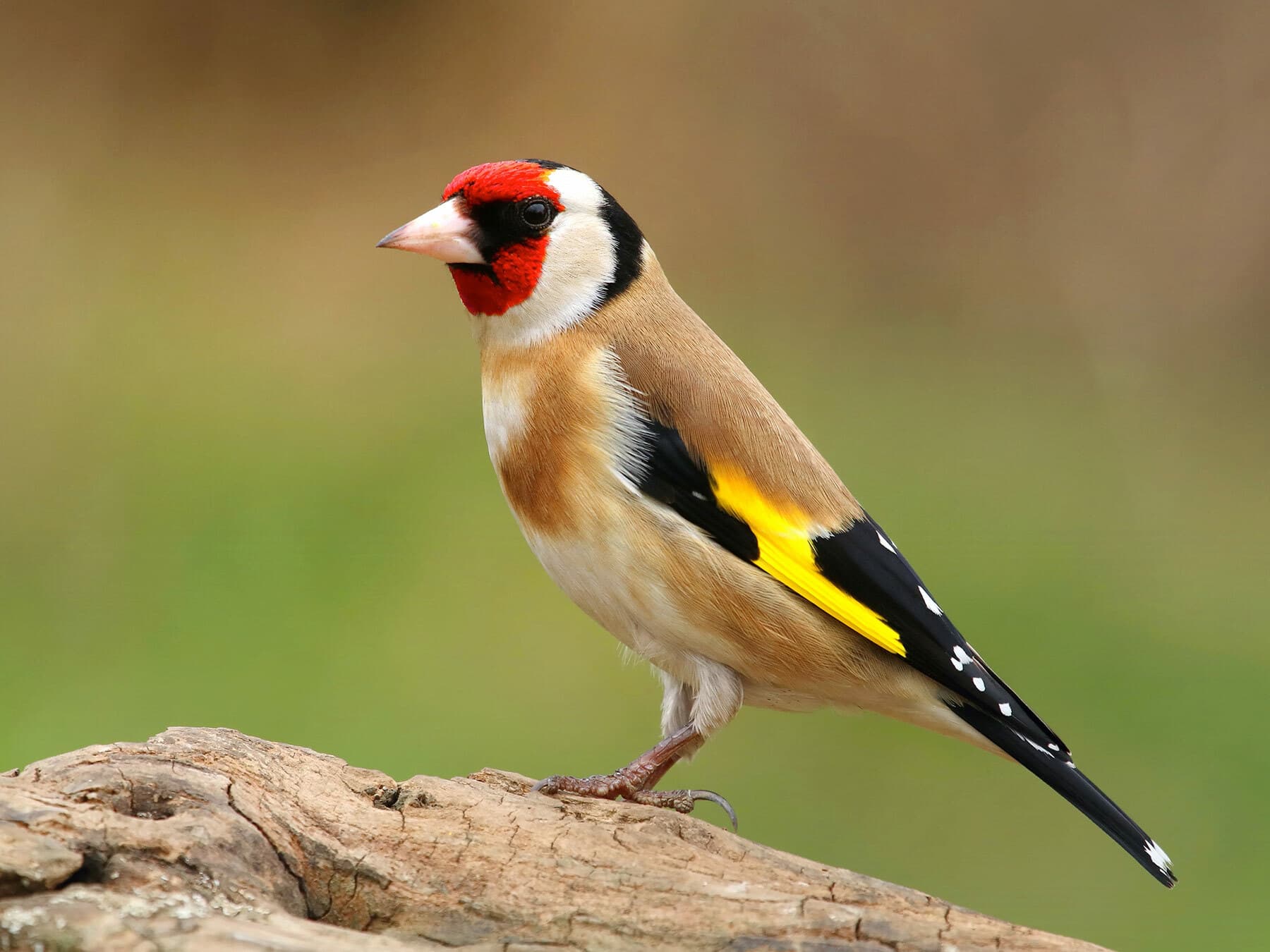
A Goldfinch sounds tinkling: a quick two- or three-note call and a fast, liquid song of twitters, trills and buzzes. Listen to recordings of the song, calls and young birds, and learn when, where and how Goldfinches sing.
On this page11 sections
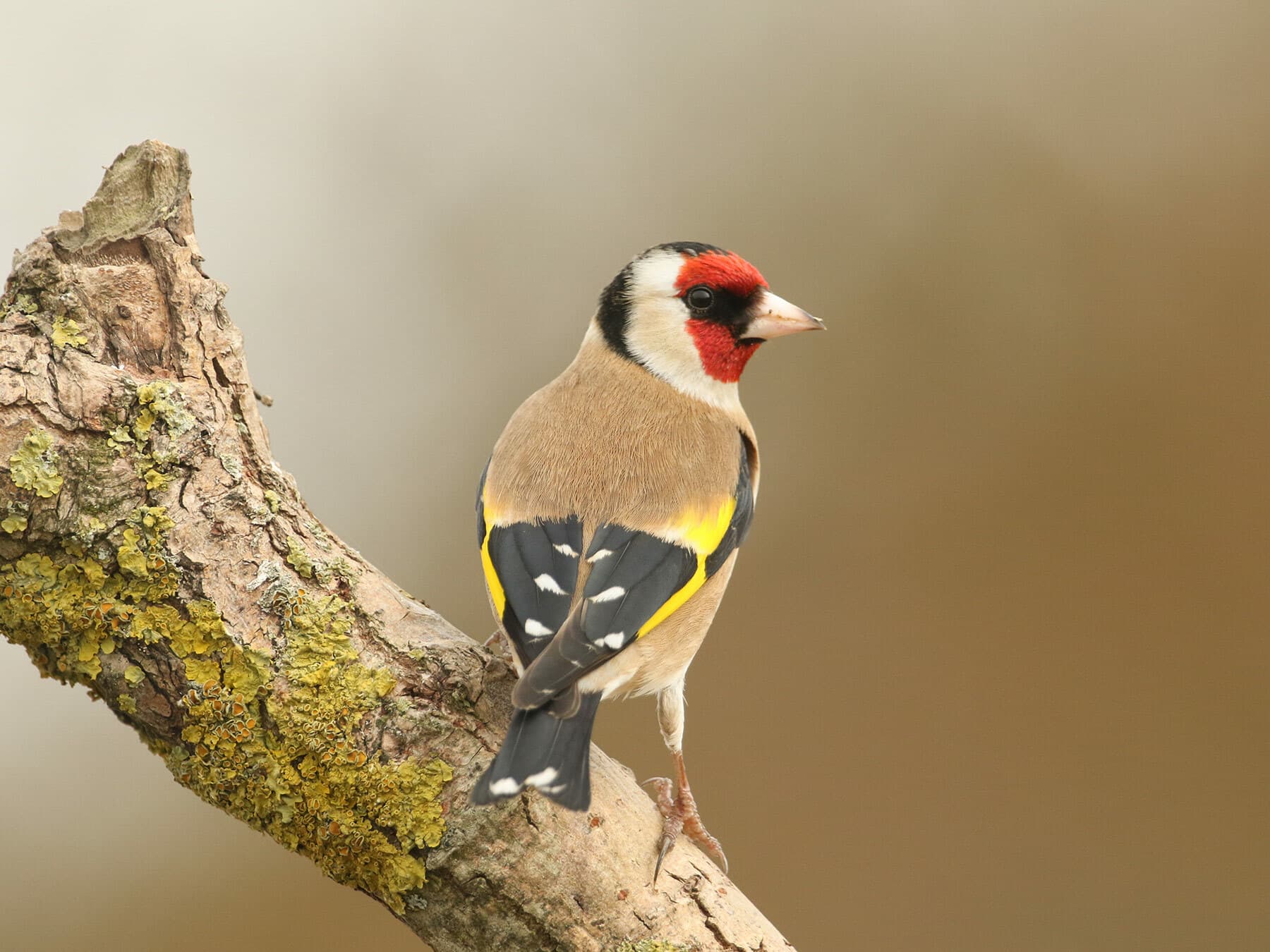
What the European Goldfinch sounds like: its song, its calls and the calls of its young, with recordings. This is the red-faced Goldfinch of Britain and Europe; the American Goldfinch is a different bird (see American Goldfinch). For everything else, see European Goldfinch identification, song and facts.
What does a Goldfinch sound like?
Tinkling. Goldfinches are often heard before they are seen, and the sound that gives them away is a quick, liquid two- or three-note call, given whenever the birds are active, perched and in flight. A flock calling together makes a continuous, tinkling chatter. The song is a longer, faster run of the same kind of notes, with twitters, trills and a few buzzes.1
The RSPB describes the song as "long verses of a twinkling, fast-paced tune", and a group of Goldfinches singing together as less a tune than the babbling of a brook.2
Goldfinch song
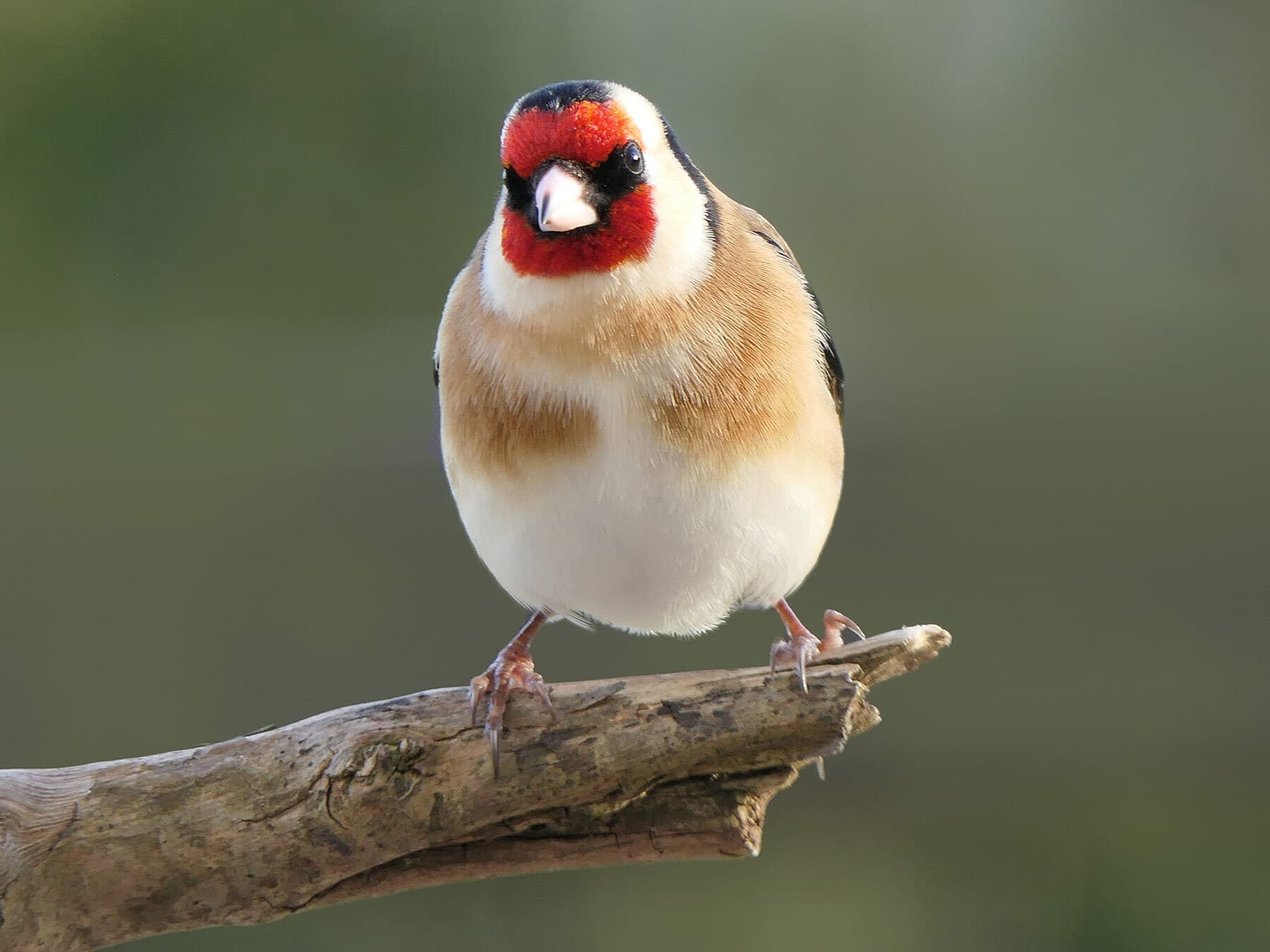
The song is a fast, flowing series of phrases made of rising and falling liquid twitters and tinkling notes, with harsher buzzing notes and higher trills mixed in. A Goldfinch may sing on and on, or with short pauses between phrases, and one phrase can be the same as the last or slightly different.
Listen closely and the song has a rhythm. A study of captive birds found that it is built from rhythmic repeats of one sound, grouped into phrases with silent gaps between them, and that this rhythmic plan stays much the same across the birds it compared.3
When do Goldfinches sing?
Mostly from mid-March to mid-July, but Goldfinches can be heard singing in any month, on migration and in winter too. In winter flocks, from January, males that have fed in the morning rest in taller trees and may spend 2 to 3 hours singing quietly. In the breeding season, singing starts early in the morning, before the birds bathe and feed.
Where and how Goldfinches sing
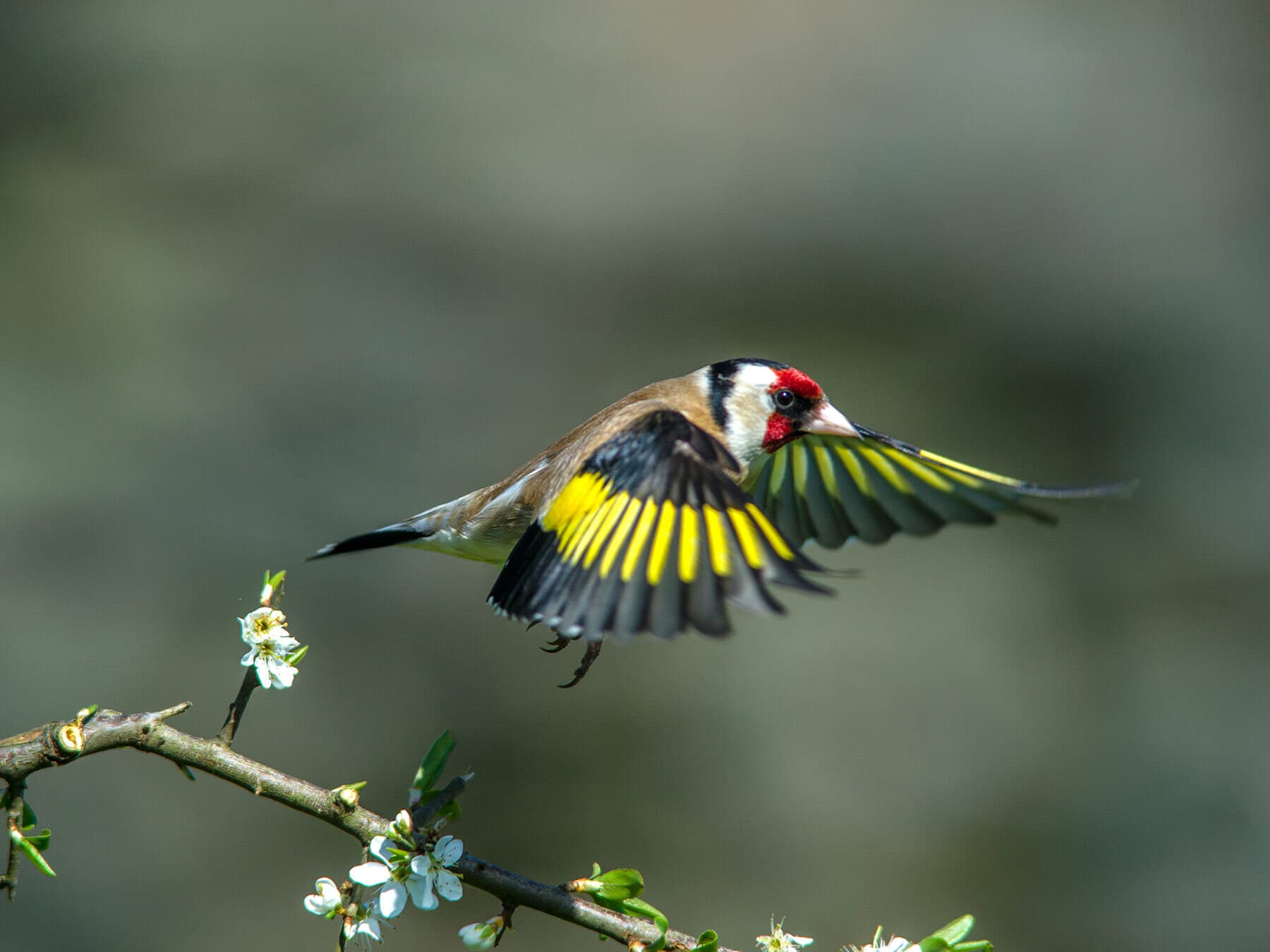
Usually from an open, fairly prominent perch. Goldfinches also have a song flight, singing as they fly slowly with deep, hesitant wingbeats, sometimes called a butterfly flight.1
The male sings most intensely while the female is building the nest, even escorting her on her trips to collect material, and keeps singing while she lays and incubates. Song helps him hold his territory and keep his mate. After a dispute with a neighbour, the owner often goes back to a perch to sing or makes a song flight.
Do female Goldfinches sing?
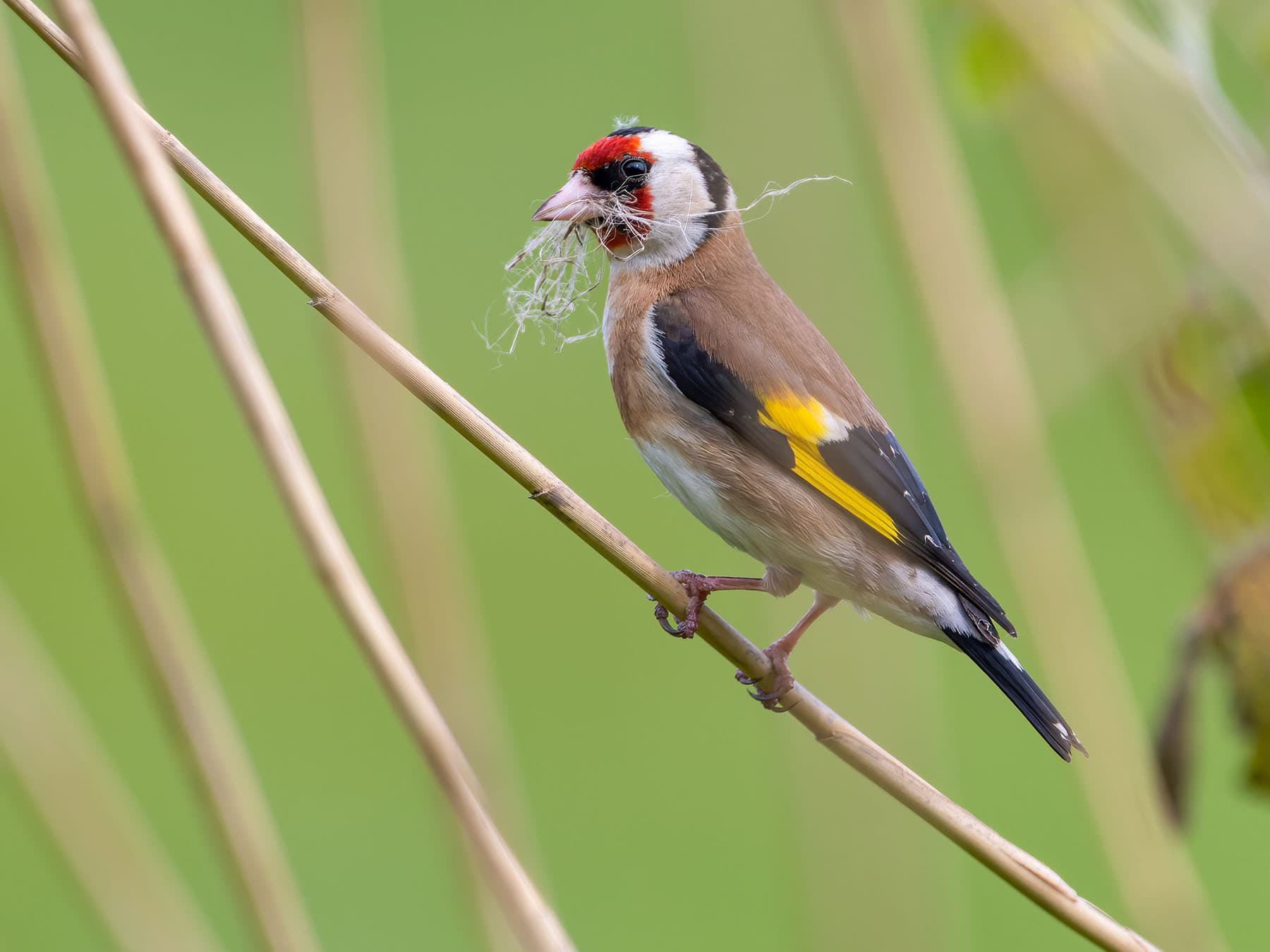
Yes. Both sexes sing. Males are said to sing more often, though a study of captive birds found less difference, and a female's song is like a male's but less vigorous and in shorter bouts. Singing alone is no way to tell the sexes apart; see male and female Goldfinches.
Goldfinches singing together
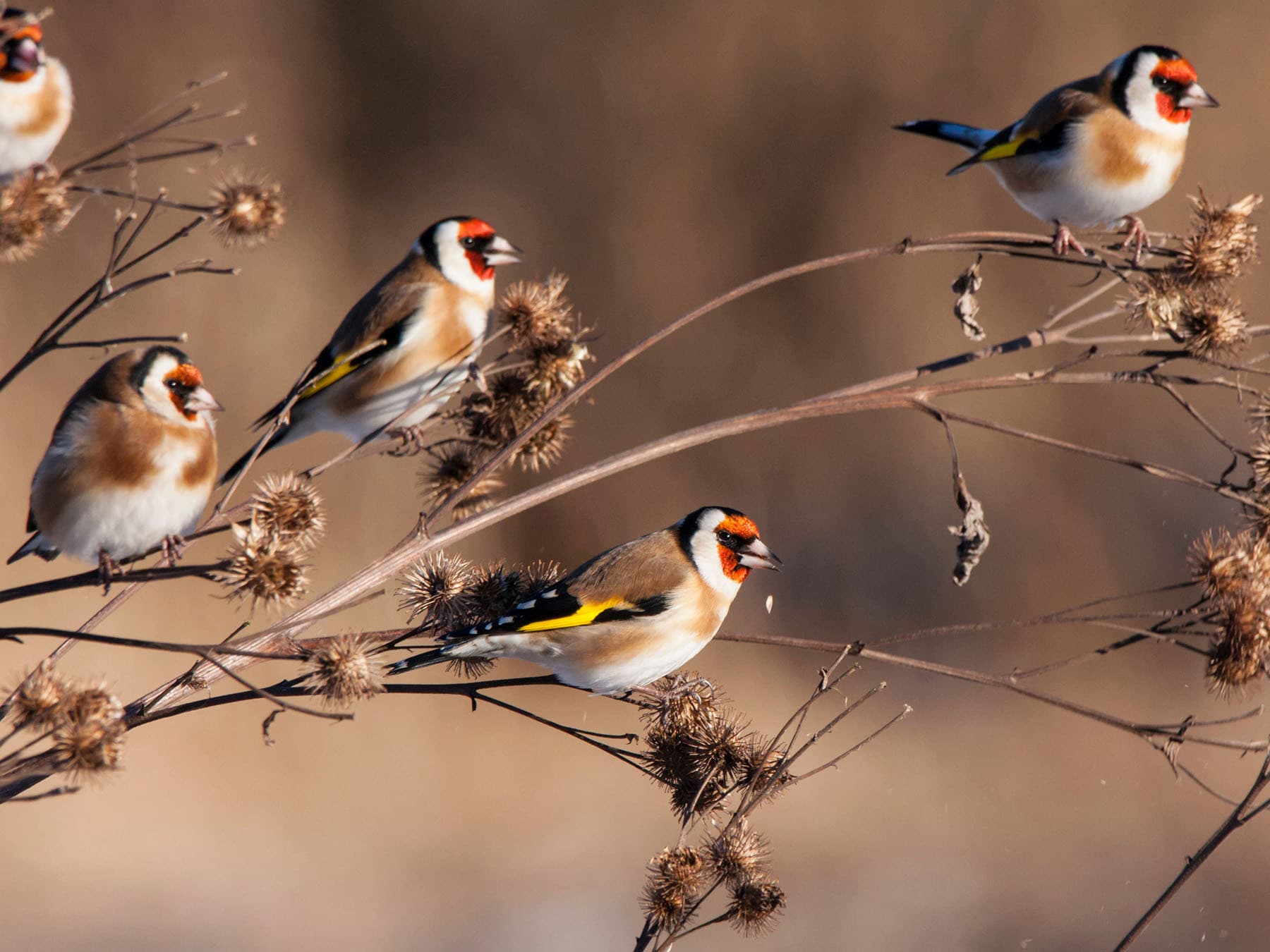
Goldfinches often sing in company. This recording is of one bird in a group singing inside a tree in a village, about 3 m from the microphone.4
Goldfinch calls
The call you will hear most is the contact call, a quick tinkle of two or three short notes at different pitches, written as "tee-tit" or "sti-ge-lit". It varies a lot but is easy to recognise. Goldfinches use it to keep in touch while perched, feeding and flying, and it is their flight call. The German name for the Goldfinch, Stieglitz, imitates it.1
Other calls include a longer, slurred "tu-weep", from sweet to nasal, given when excited or mildly alarmed, and a harsh, repeated "zeez" in squabbles, chases and alarm. Up to 15 call types have been described in all.
Calls of young Goldfinches
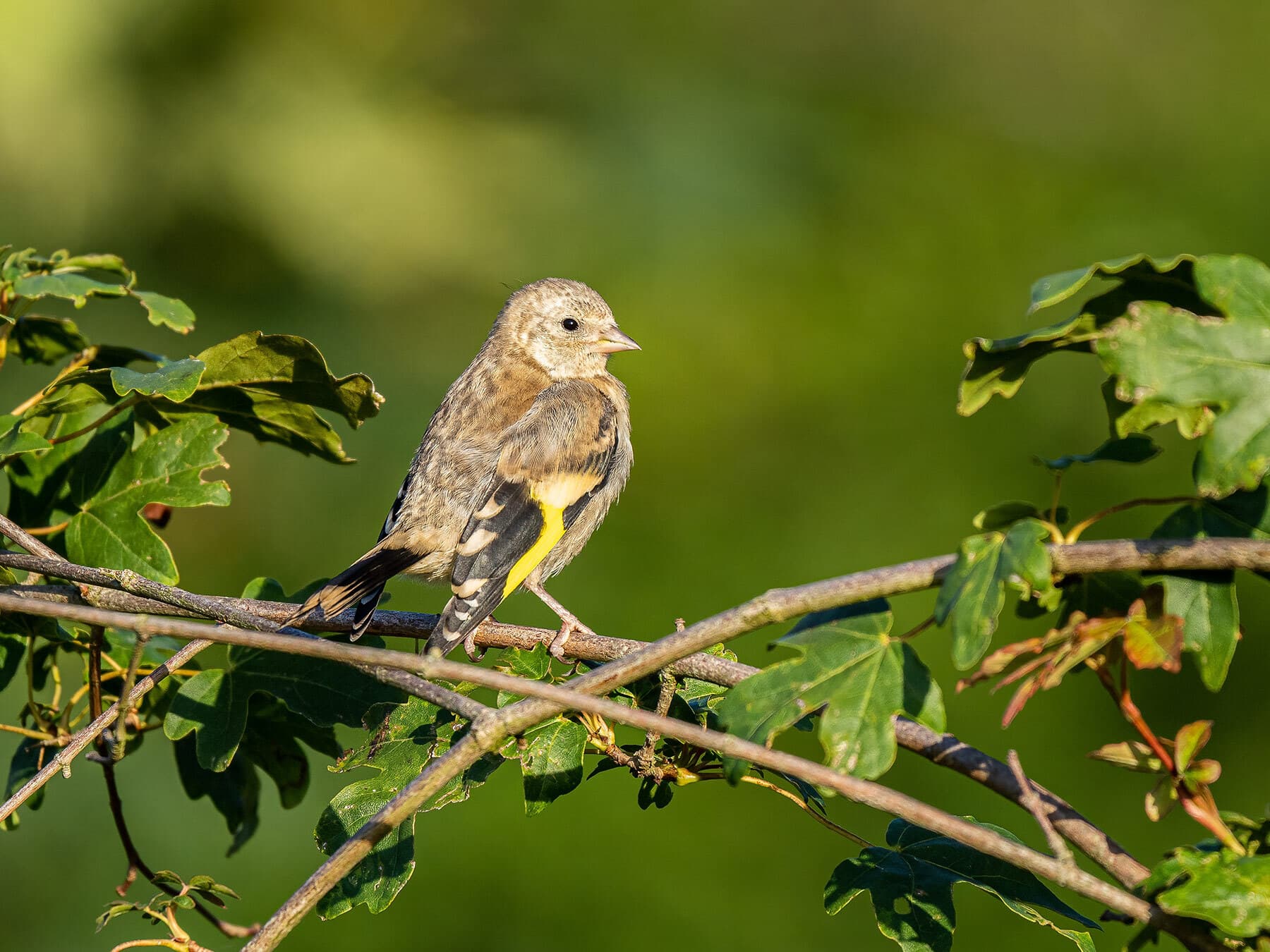
Nestlings beg with a squeaky "ee ee". Once they leave the nest, young Goldfinches give double and triple calls like the adults' contact call. Their typical call, written "dee-wit-wit", starts even before they fledge and can be heard well into the autumn.1
Goldfinch or another finch?
A Greenfinch sings a twittering song too, but a wheezing one.5 In the captive birds Güttinger compared, the Goldfinch's song fell into phrases separated by gaps and the Greenfinch's did not.3 More: Greenfinch song and calls.
Further east, the Grey-crowned Goldfinch of Central Asia, treated as a separate species by Birds of the World, sings mostly series of repeated notes, without the tinkling quality of European Goldfinches.6 Goldfinches introduced to Australia more than a century ago still sing the European song.1
About these recordings
Every recording here was chosen after reading the recordist's notes and looking at its spectrogram, and the recordists logged every bird but the British Library one as seen. The British song is from the British Library's collection of British wildlife recordings, made in 1976; the others are from xeno-canto, all under licences that allow their use here. The recordings of British Goldfinches on xeno-canto that we checked are shared for non-commercial use only, so they are not used on this page.
Sources
- Kirwan, G. M., Moura, N., Clement, P., Pyle, P., Boesman, P. F. D. (2024). European Goldfinch (Carduelis carduelis), version 1.2. Birds of the World (G. M. Kirwan, B. K. Keeney and S. M. Billerman, editors). Cornell Lab of Ornithology. doi:10.2173/bow.eurgol.01.2
- RSPB. Goldfinch. RSPB Birds A-Z. Accessed 7 October 2026. Source
- Güttinger, H. R. (1978). Verwandtschaftsbeziehungen und Gesangsaufbau bei Stieglitz (Carduelis carduelis) und Grünlingsverwandten (Chloris spec.). Journal für Ornithologie 119: 172-190. doi:10.1007/BF01644587
- xeno-canto contributors, British Library. Recordings of Carduelis carduelis used on the song page. xeno-canto; Wikimedia Commons (British Library). Accessed 7 October 2026. Source
- RSPB. Greenfinch. RSPB Birds A-Z. Accessed 7 October 2026. Source
- Boesman, P. F. D. (2016). Notes on the vocalizations of European Goldfinch (Carduelis carduelis). Birds of the World Ornithological Notes 356. doi:10.2173/bow-on.100356
- BTO. Goldfinch (Carduelis carduelis). BTO BirdFacts. Accessed 7 October 2026. Source