


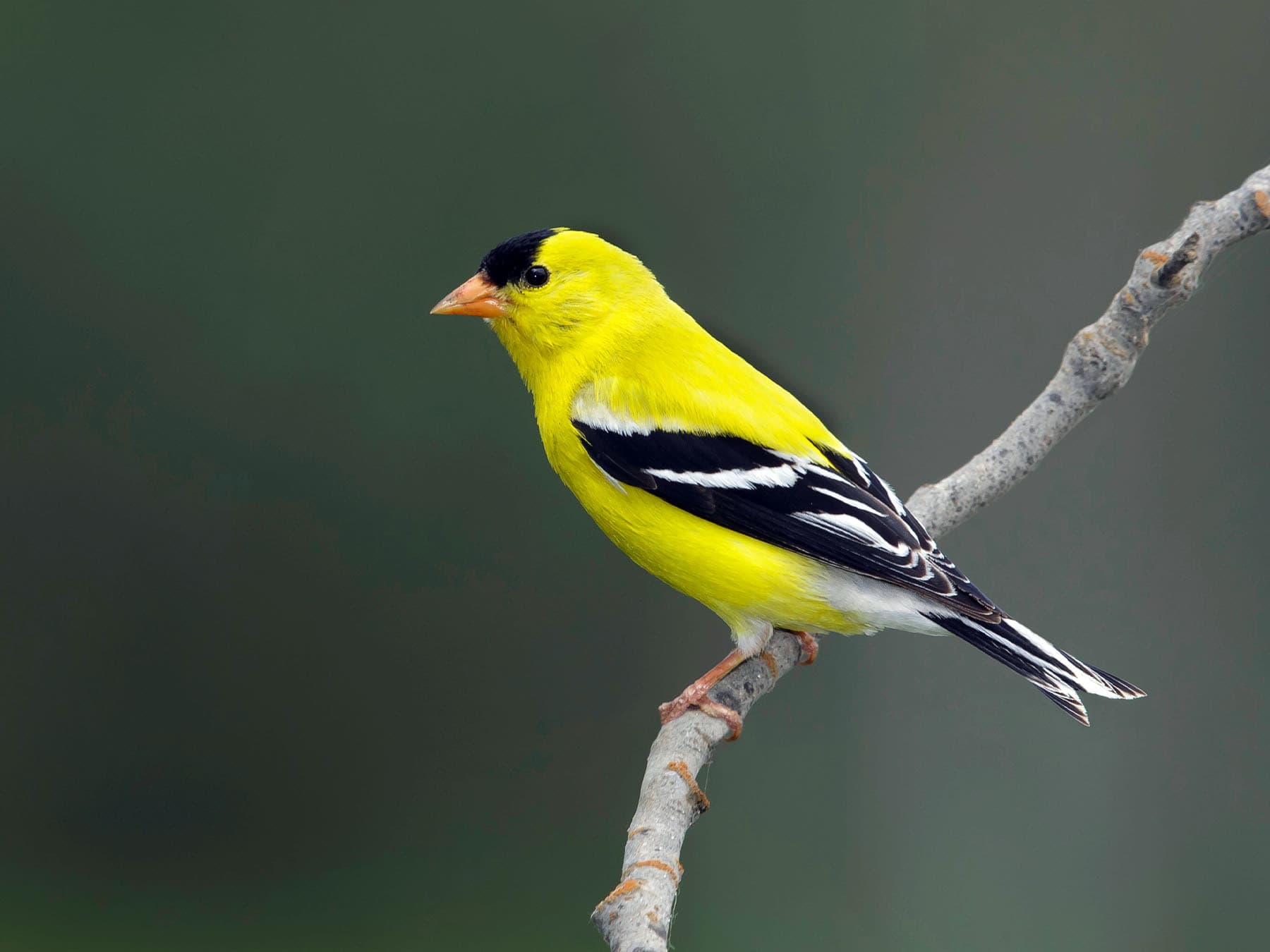
American Goldfinch
Wild Canary, Eastern Goldfinch · Spinus tristis
By the Birdfact teamChecked by Nathan Cope
See it in 3D
3 plumages
An American Goldfinch (Breeding male) is 4.5–5 in (11–13 cm) long, bill to tail.
Breeding male
© 2026 NC Digital Limited (Birdfact). All rights reserved. This 3D model may be viewed on this page and shared by link only. Downloading, extracting, copying or reusing it, or using it to train machine-learning models, is not permitted without our written permission. Using our models
On this page12 sections
How to recognise it
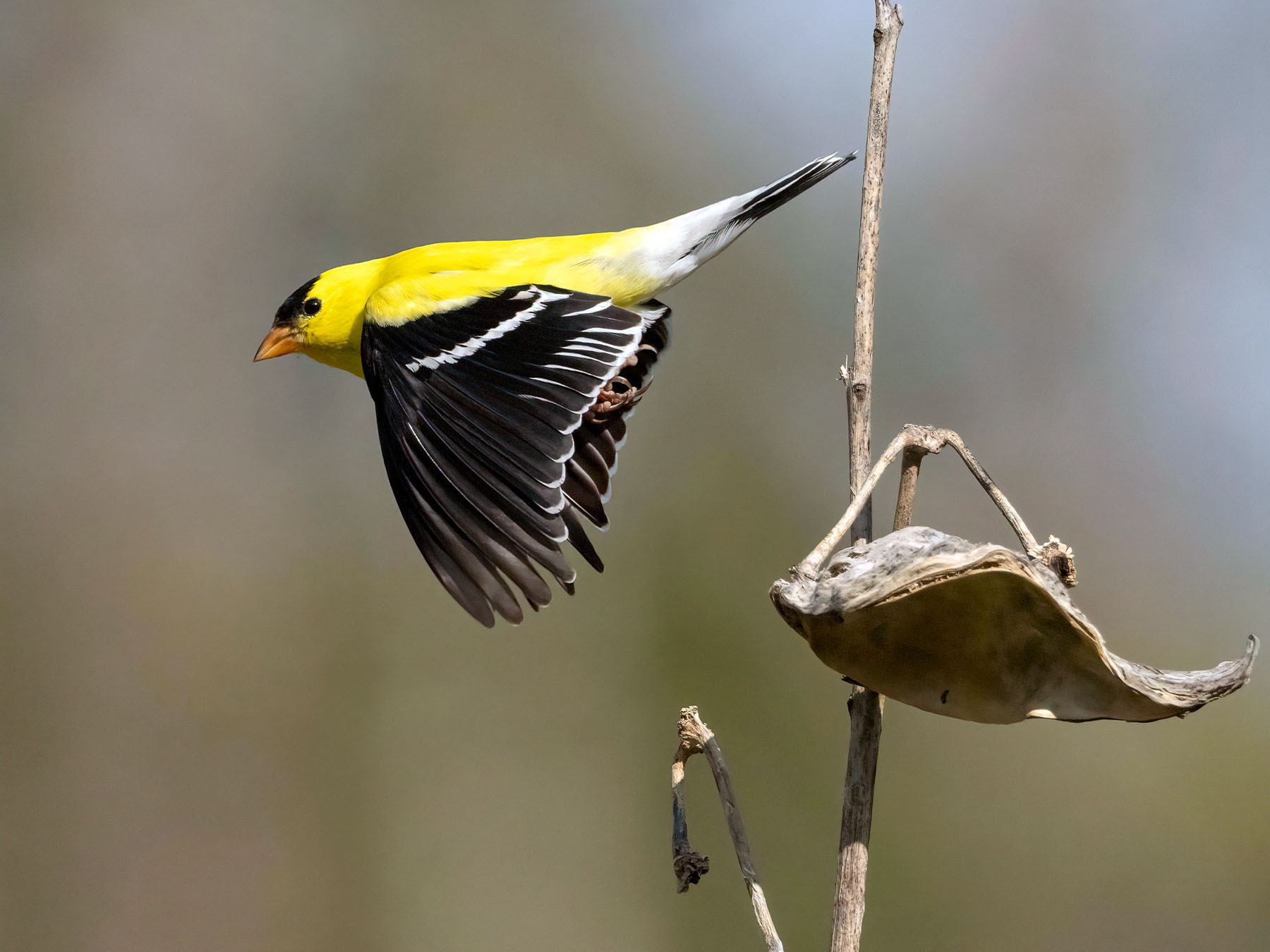
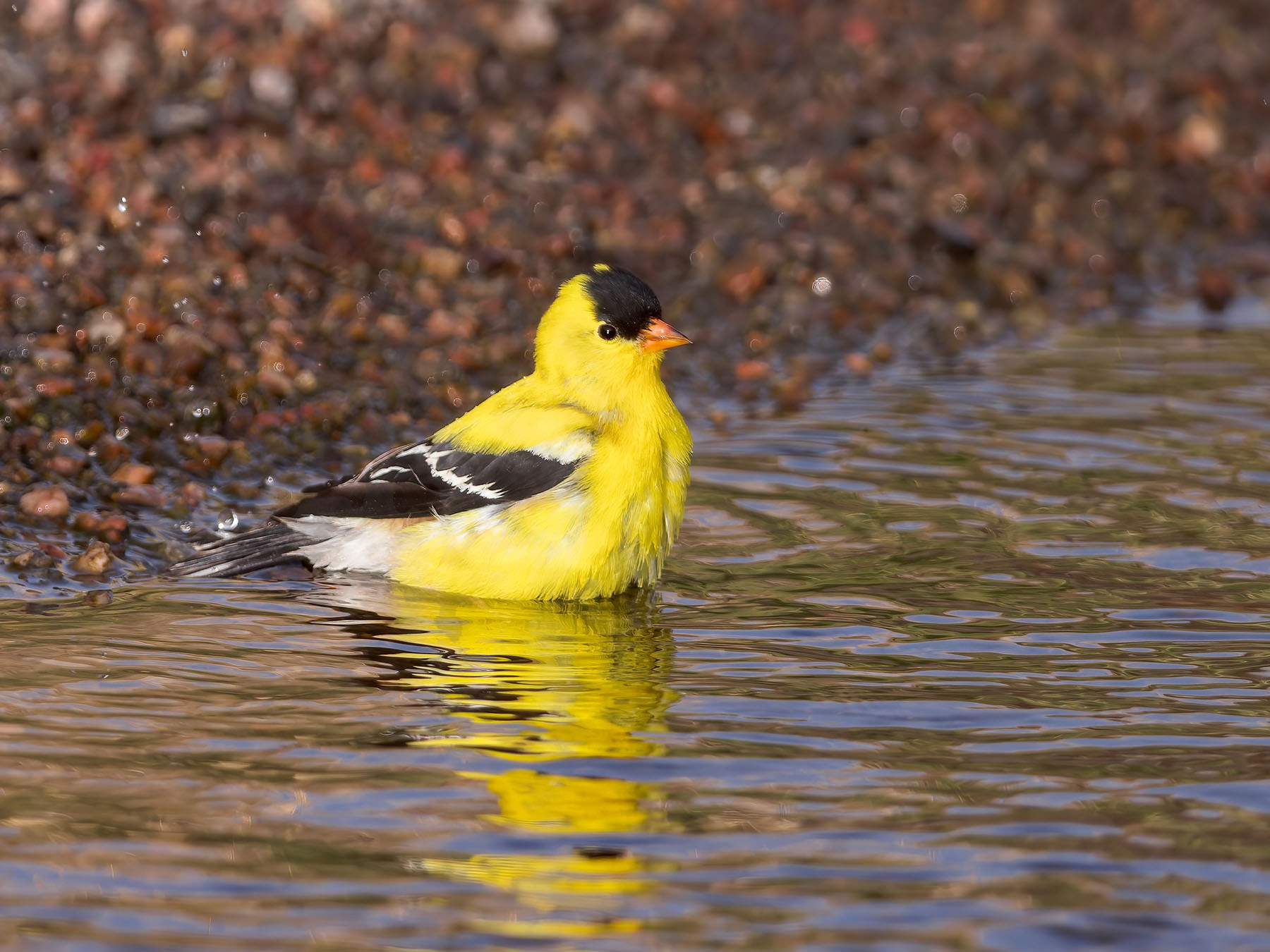
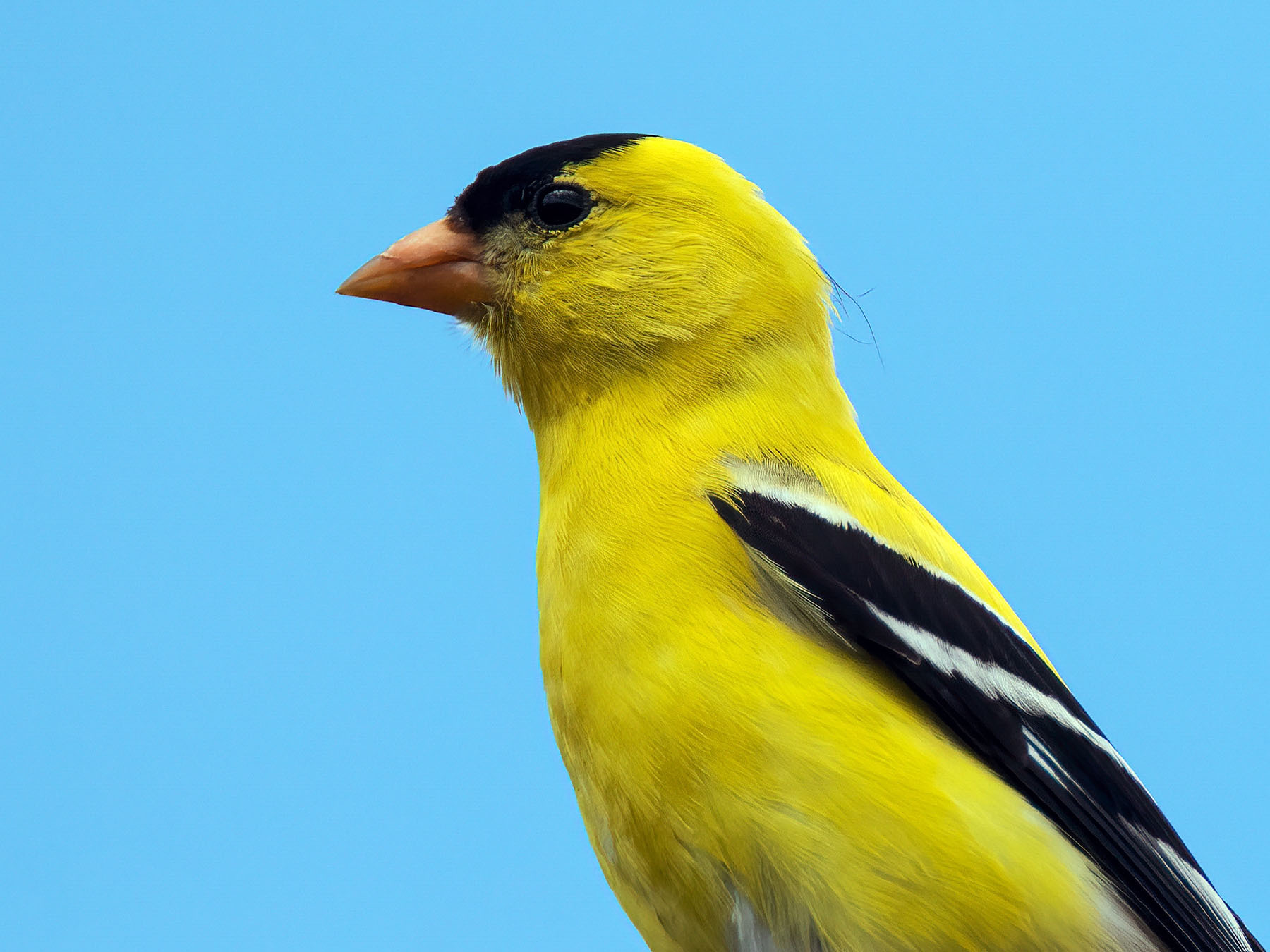
The American Goldfinch is a small, vibrant finch with a distinctive appearance. Males in breeding plumage display bright lemon-yellow bodies with contrasting black wings, tail, and forehead. Their wings feature white bars, adding to their striking pattern.
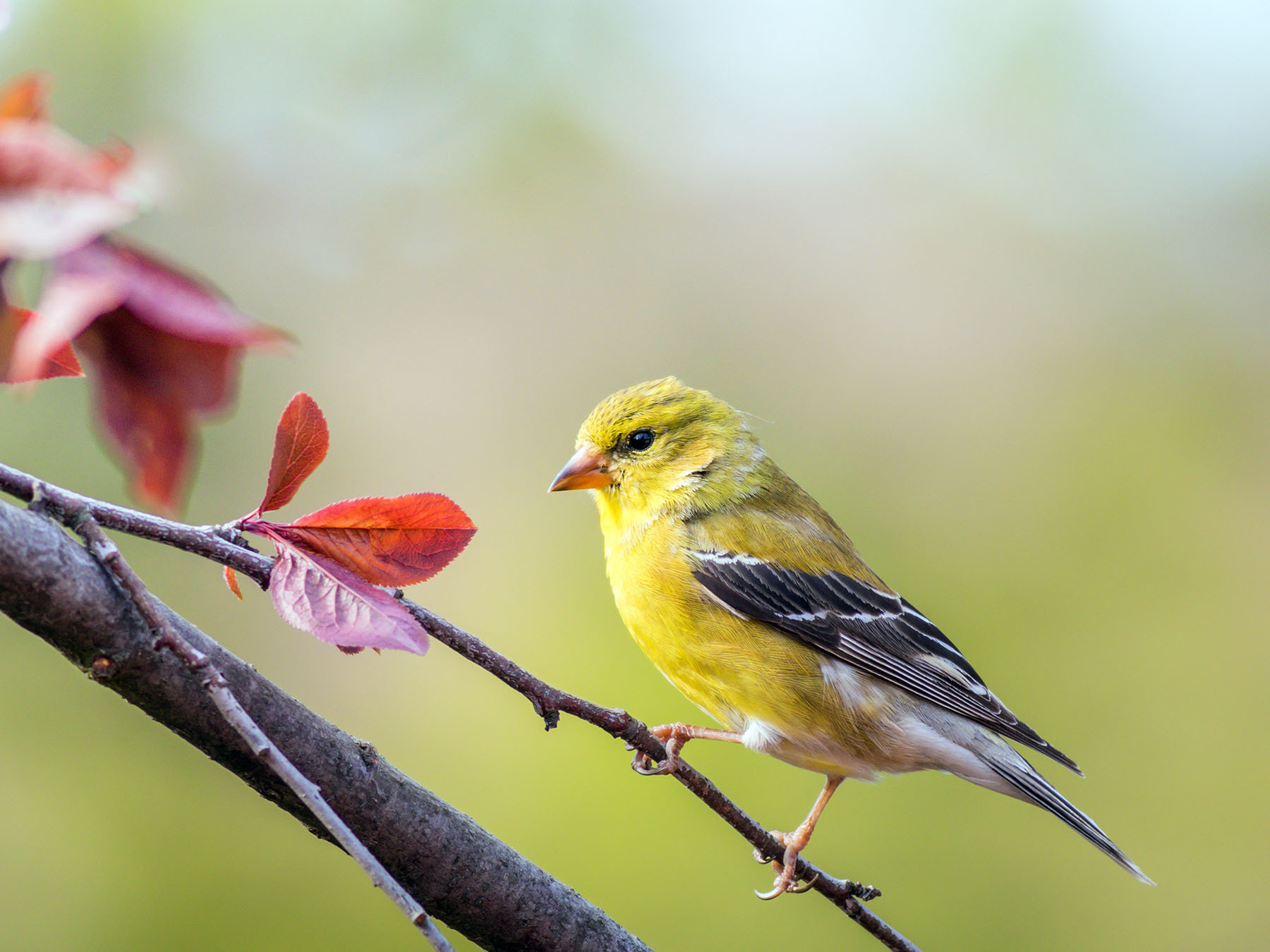
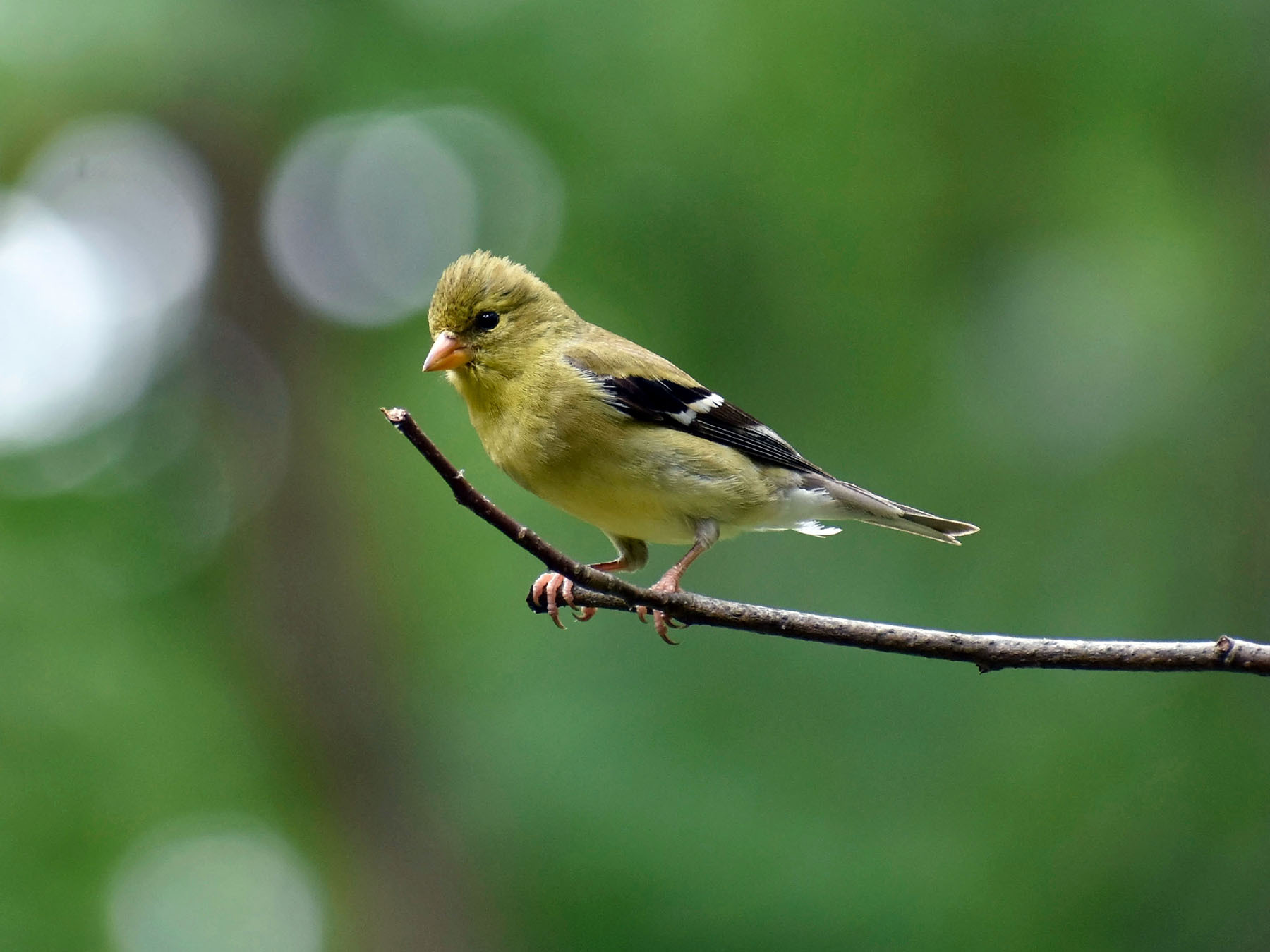
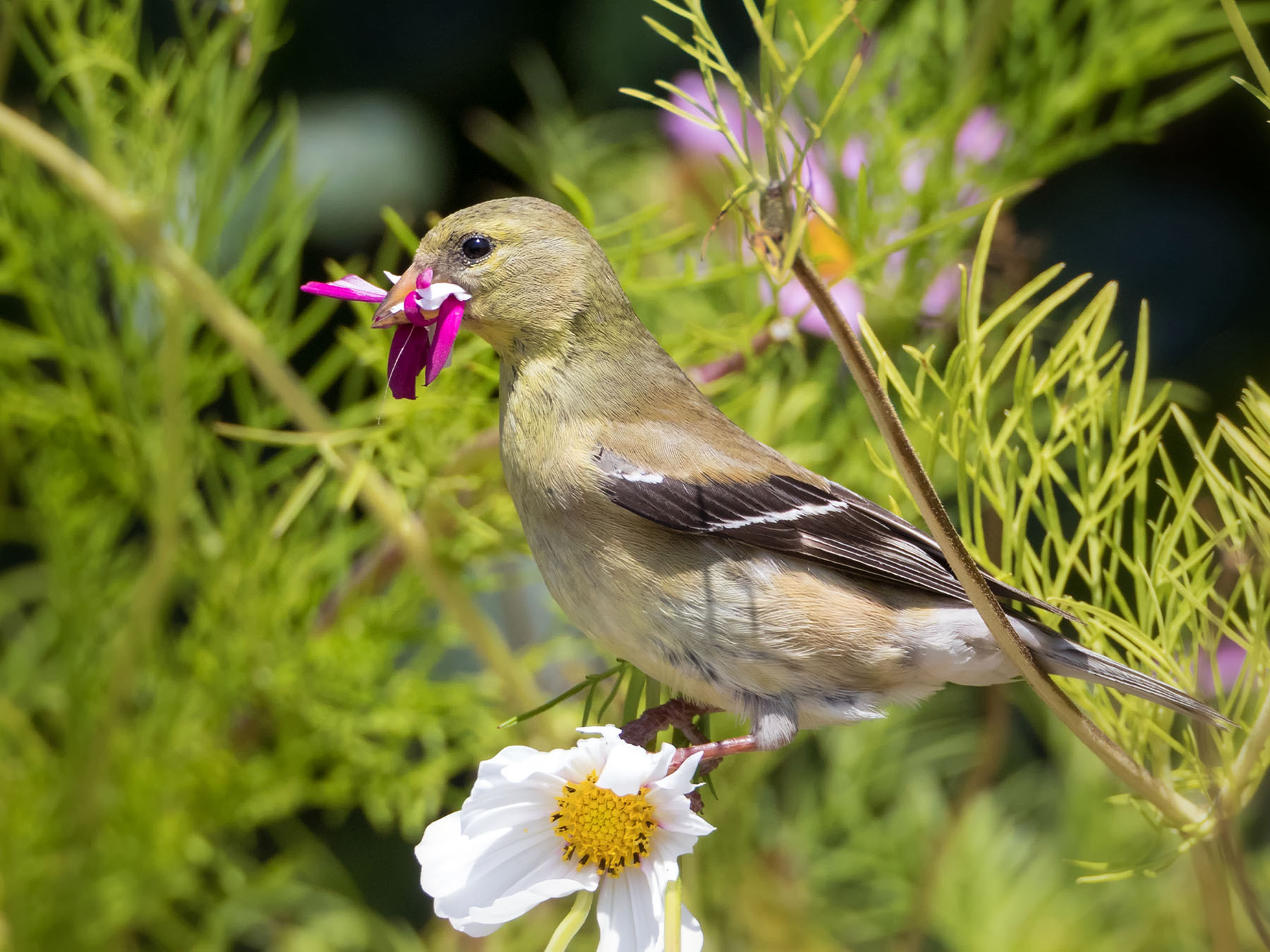
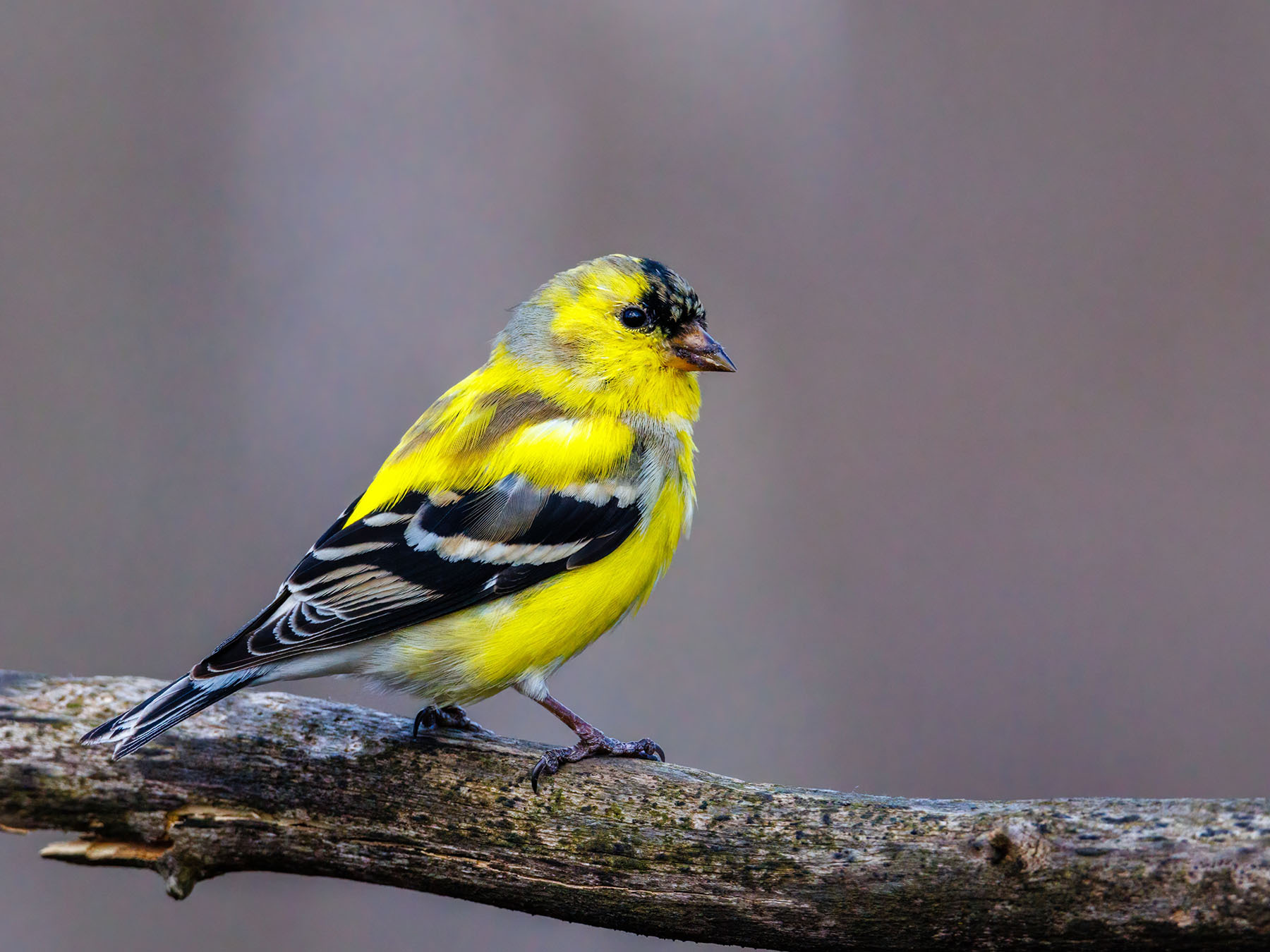
Females and winter males are duller, with olive-brown upperparts and yellowish underparts. All birds have conical orange beaks and pink legs. Juveniles resemble winter adults but appear more buff-colored.
Not sure it’s a American Goldfinch? Check your photo: Birdfact names the bird and shows the look-alike side by side.
Its size
Adults- Length
- 11–13 cm
- Wingspan
- 19–22 cm
- Weight
- 11–20 g
Its song and calls
The American Goldfinch has a variety of vocalizations. Their most recognizable call is a musical, warbling 'po-ta-to-chip' or 'per-chic-o-ree'. During flight, they emit a series of twittering notes. Males sing a complex, canary-like song, especially during the breeding season and while in flight.
Heard one and not sure? Let the bird song identifier listen.
When and where to see it
NovemberArriving
Most recorded in November
- 1. Wisconsin3.9%
- 2. Vermont3.8%
- 3. New Hampshire3.7%
- 4. Nova Scotia3.6%
- 5. Maine3.5%
Each dot is a county, state or province: the bigger and darker, the larger the bird’s share of that place’s bird records that month. Grey dots: no regular records. The ringed point is the centre of the bird’s records this month; the arrow shows how it moved since last month, and the dashed loop its path through the year. “Arrivals” colours places where it becomes regular this month (orange) or is in its last regular month (grey). GBIF eBird Observation Dataset, 2019–2024. Map data: Natural Earth, US Census Bureau; place centres © OpenStreetMap contributors.
In your area
See when the American Goldfinch is recorded in your county, state or province.
How often the American Goldfinch turns up in the United States and Canada through the year, from birdwatchers' records.
United States
Resident · all year · most records in August
Canada
Resident · all year · most records in August
Show as a table
| Month | United States | Canada |
|---|---|---|
| January | 1.3% (regular) | 2.5% (regular) |
| February | 1.4% (regular) | 2.5% (regular) |
| March | 1.1% (regular) | 1.8% (regular) |
| April | 1.4% (regular) | 1.9% (regular) |
| May | 1.6% (regular) | 2.0% (regular) |
| June | 1.6% (regular) | 2.2% (regular) |
| July | 2.1% (regular) | 2.9% (regular) |
| August | 2.3% (regular) | 3.1% (regular) |
| September | 1.7% (regular) | 2.2% (regular) |
| October | 1.3% (regular) | 1.7% (regular) |
| November | 1.5% (regular) | 2.4% (regular) |
| December | 1.4% (regular) | 2.6% (regular) |
Worldwide: recorded regularly in 4 countries
Countries where it was recorded in at least 3 of the 6 years 2019–2024. Linked countries have their own bird list.
North America (4)
Data: EOD – eBird Observation Dataset (Cornell Lab of Ornithology), accessed via GBIF.org, CC BY 4.0. Records from 2019–2024, aggregated and filtered by Birdfact. How these lists are made
Tips for seeing it
- Look for bright yellow birds with black wings in summer
- Listen for their distinctive 'po-ta-to-chip' call
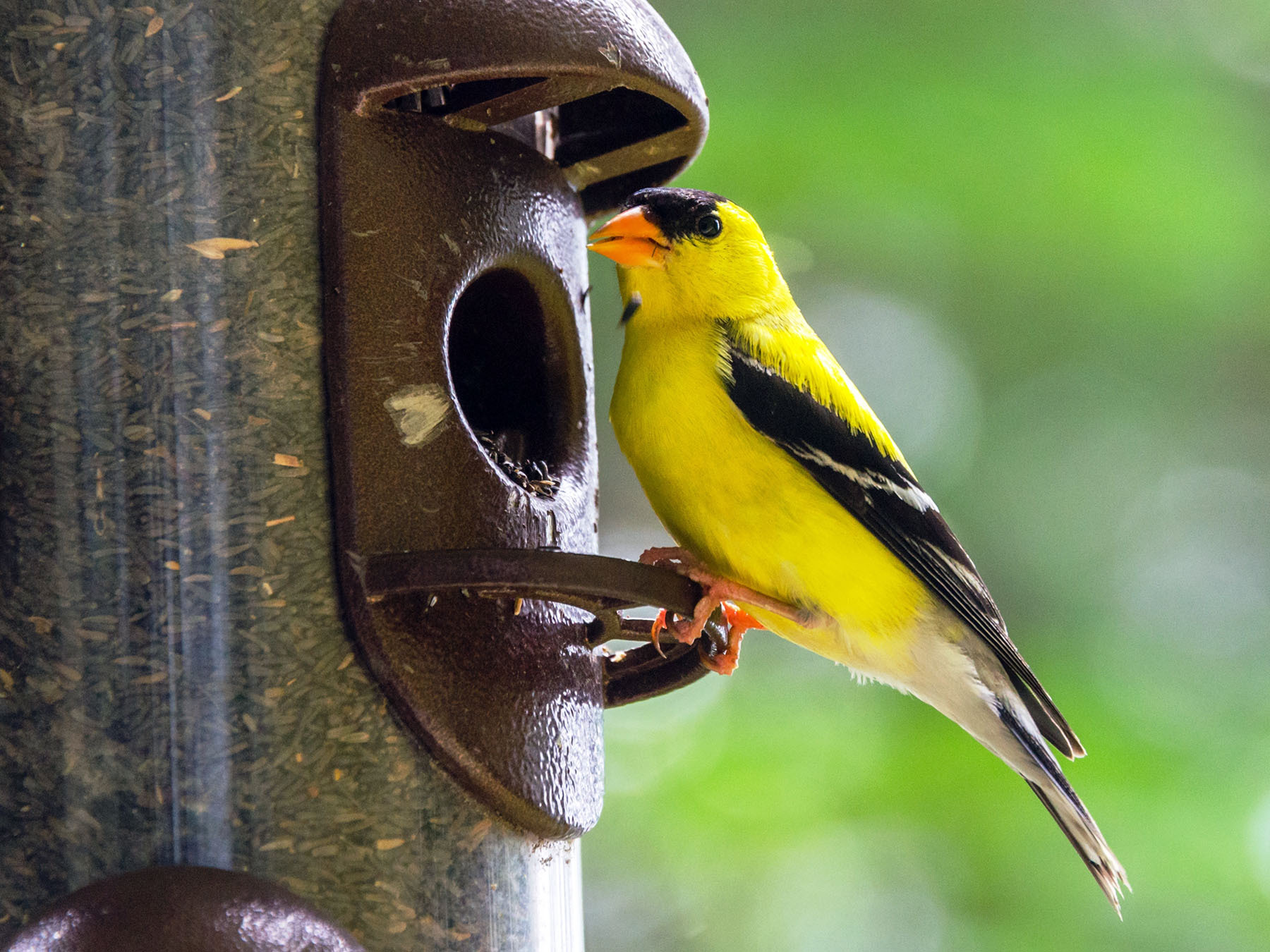
- Check thistle and sunflower feeders, where they often gather
- Observe their undulating flight pattern
- In winter, look for olive-brown birds with faint yellow wash
What it eats
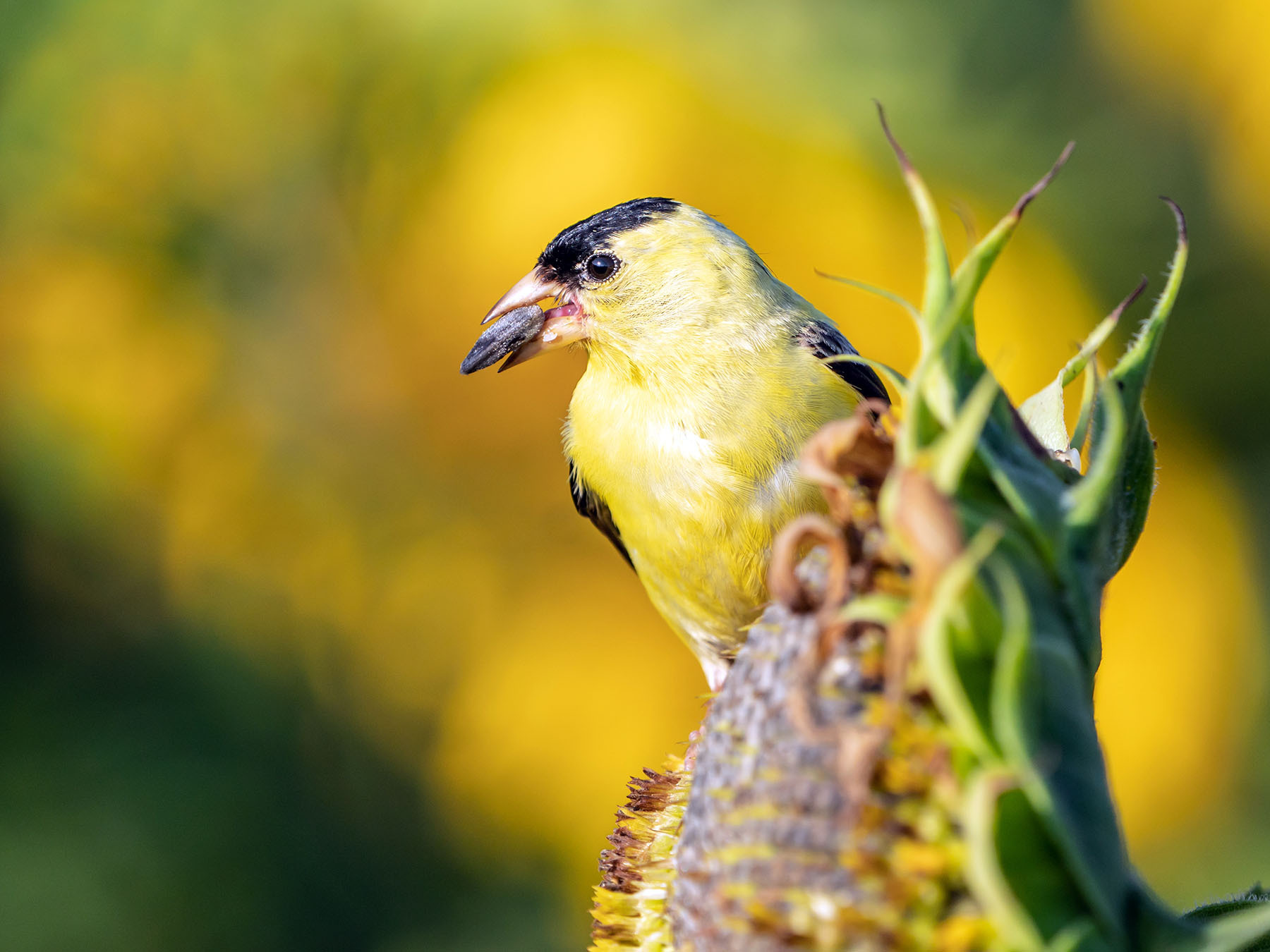
American Goldfinches are primarily seed-eaters, with a strong preference for thistle and sunflower seeds. They also consume seeds from dandelions, ragweed, and various grasses. During the breeding season, they supplement their diet with some insects, which are fed to nestlings for added protein.
Nesting and breeding
American Goldfinches breed later than most North American birds, typically from late June to early August. Males perform elaborate courtship displays, including aerial chases and singing.
Females construct cup-shaped nests in shrubs or small trees, using plant fibers and spider silk. They lay 4-6 pale blue eggs, which are incubated for about 12-14 days.
Both parents feed the nestlings, which fledge after 11-17 days. Young birds continue to be fed by their parents for several weeks after leaving the nest.
Behaviour
American Goldfinches are highly social, often seen in flocks outside the breeding season. They have an undulating flight pattern, dipping and rising as they fly. These birds are known for their acrobatic feeding habits, often hanging upside down on seed heads to extract seeds with their specialized beaks.
Conservation
While the American Goldfinch is currently listed as Least Concern, habitat loss due to urbanization and agricultural intensification poses a threat. Conservation efforts focus on maintaining diverse habitats with native plants, particularly those producing seeds that goldfinches rely on for food.
More photos
9 photos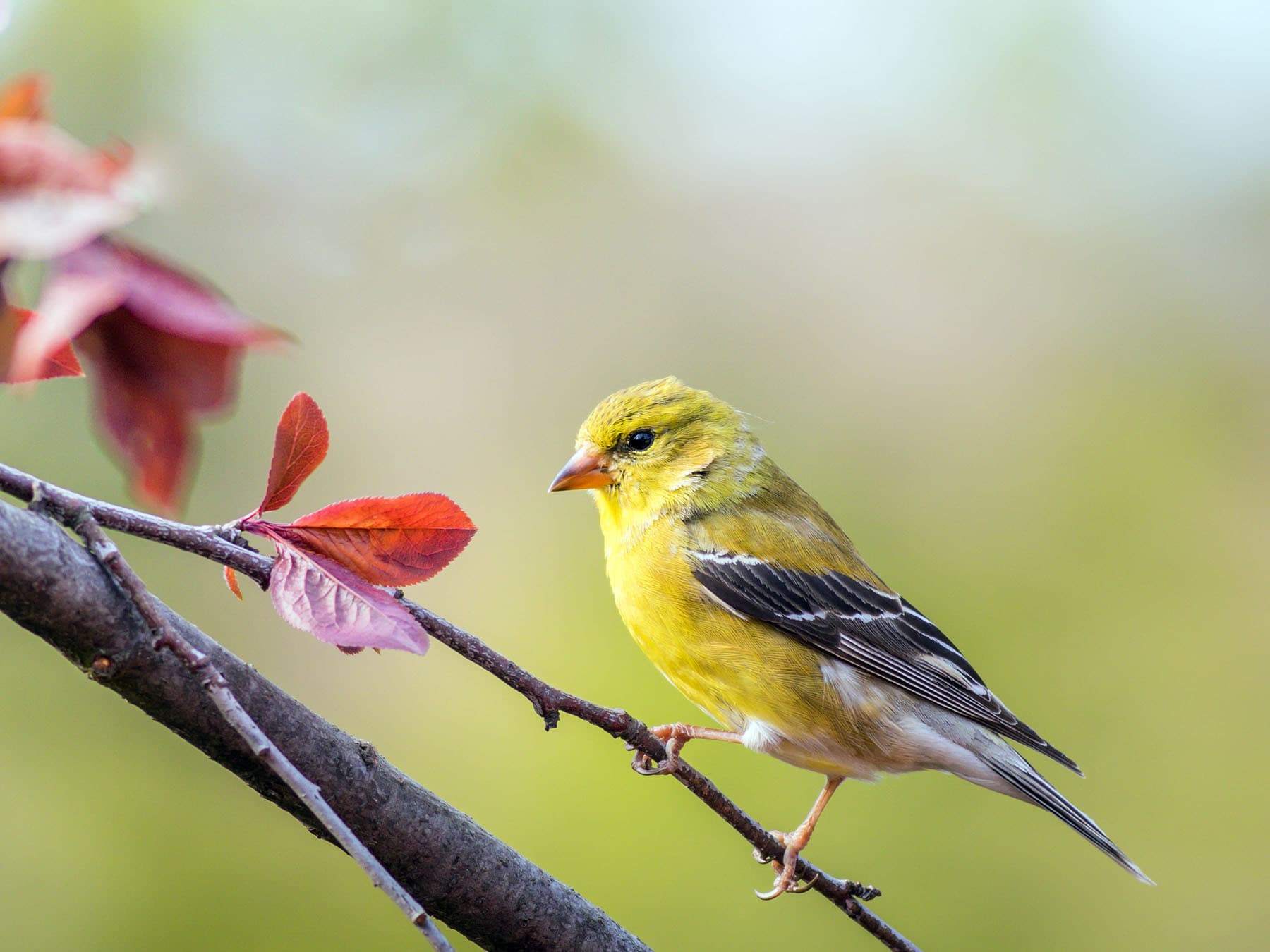 Female American Goldfinch
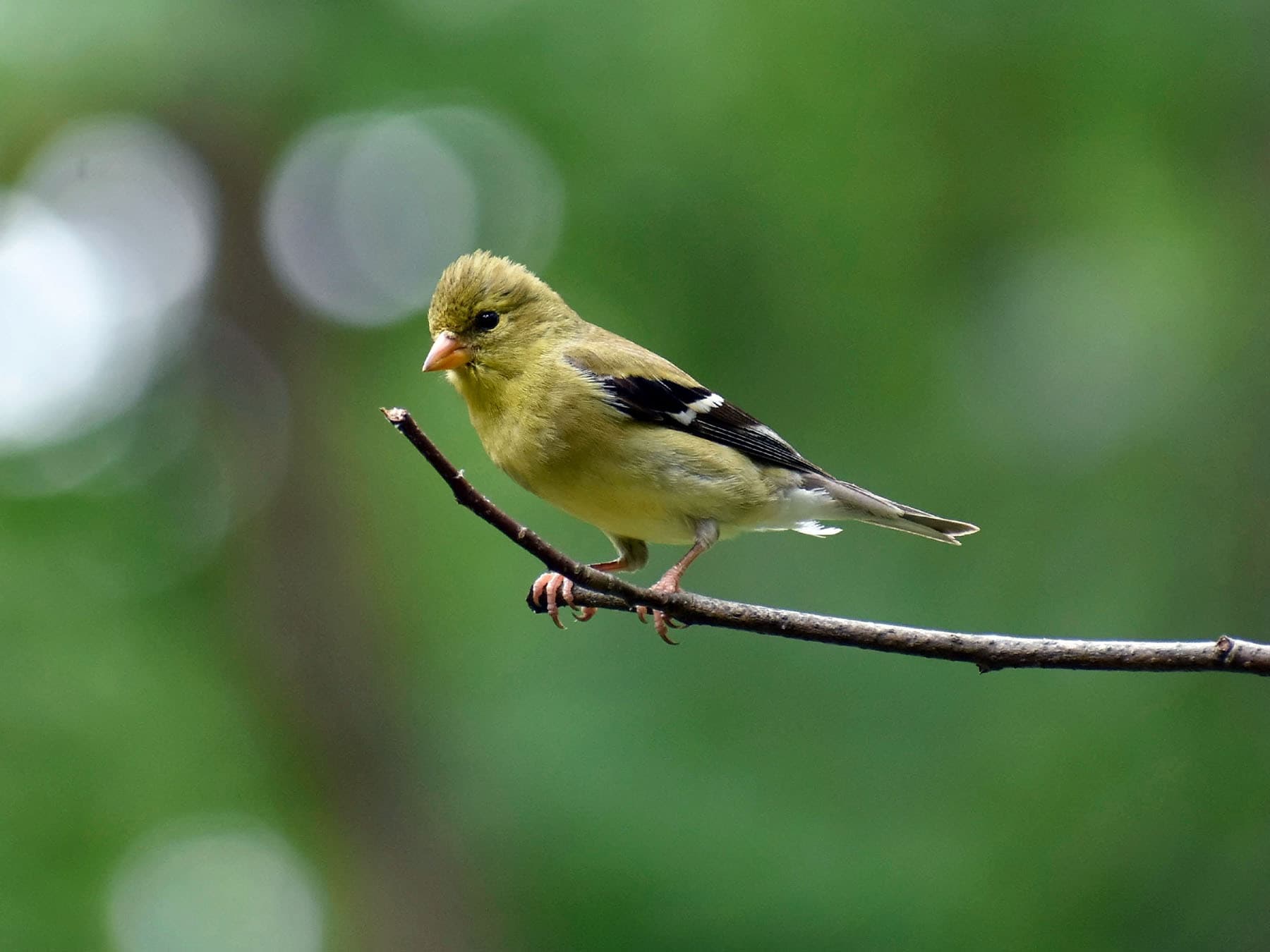 Juvenile American Goldfinch
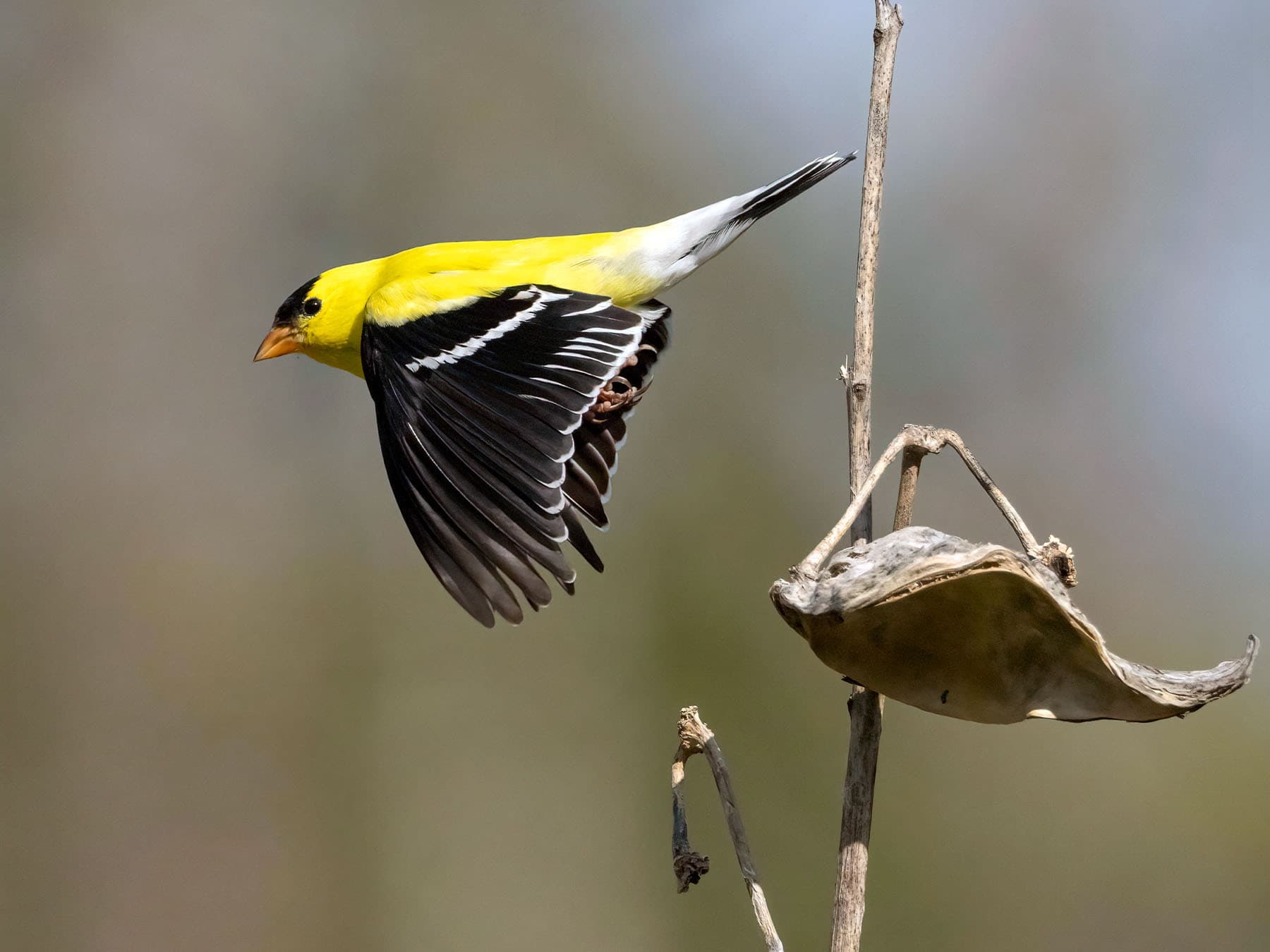 American Goldfinch in-flight
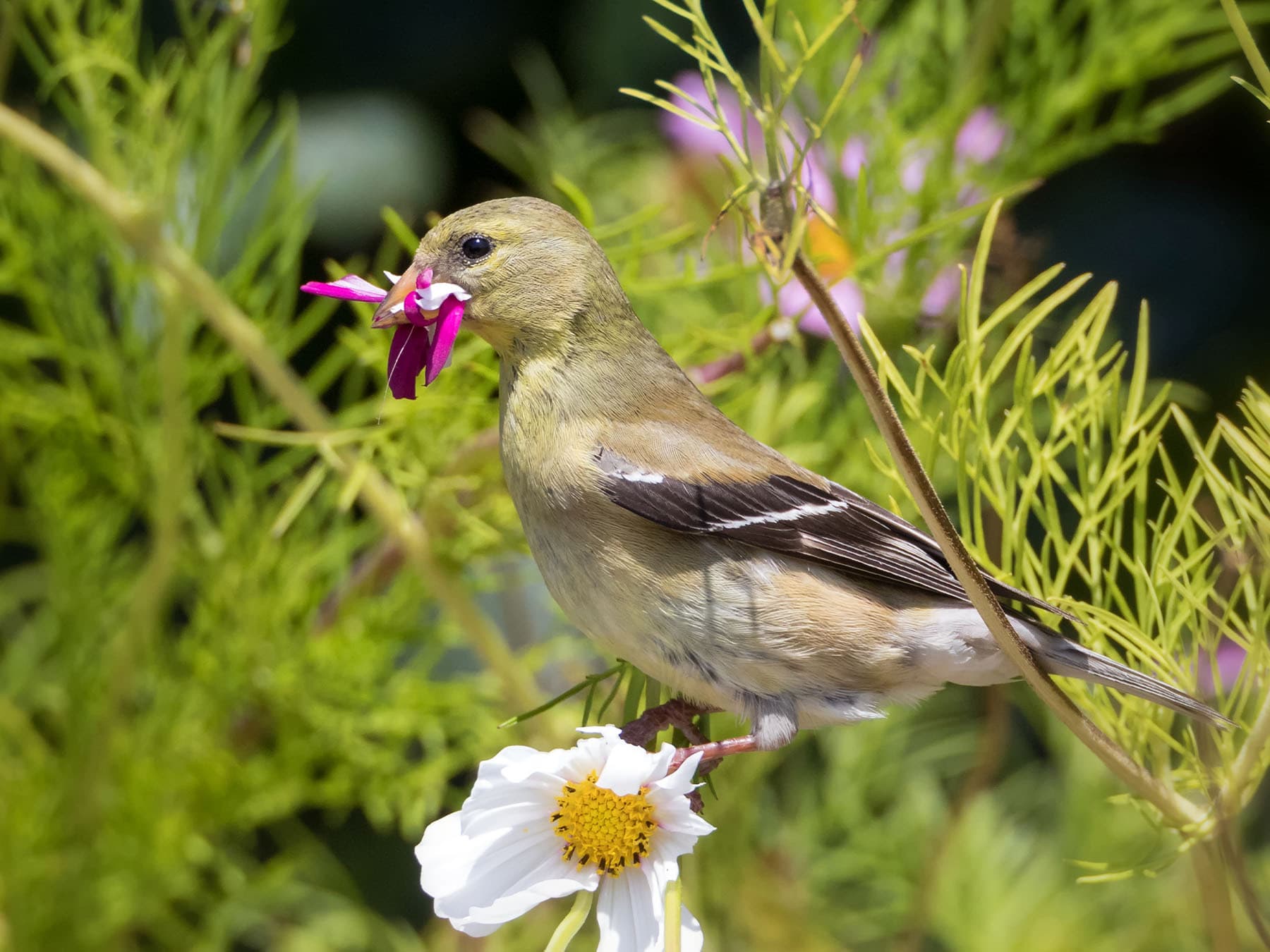 Female American Goldfinch gathering nesting materials
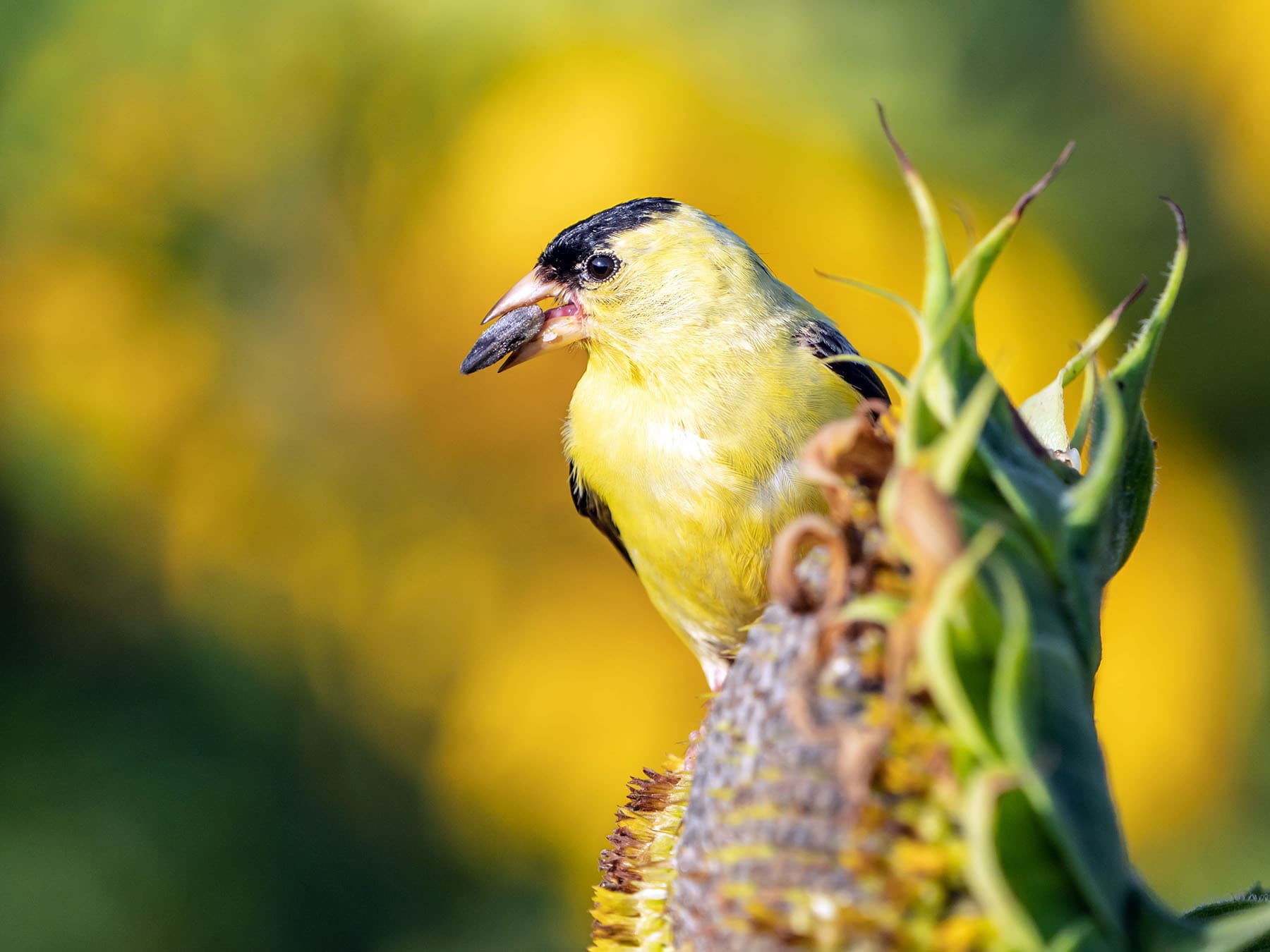 American Goldfinch feeding on sunflower seeds
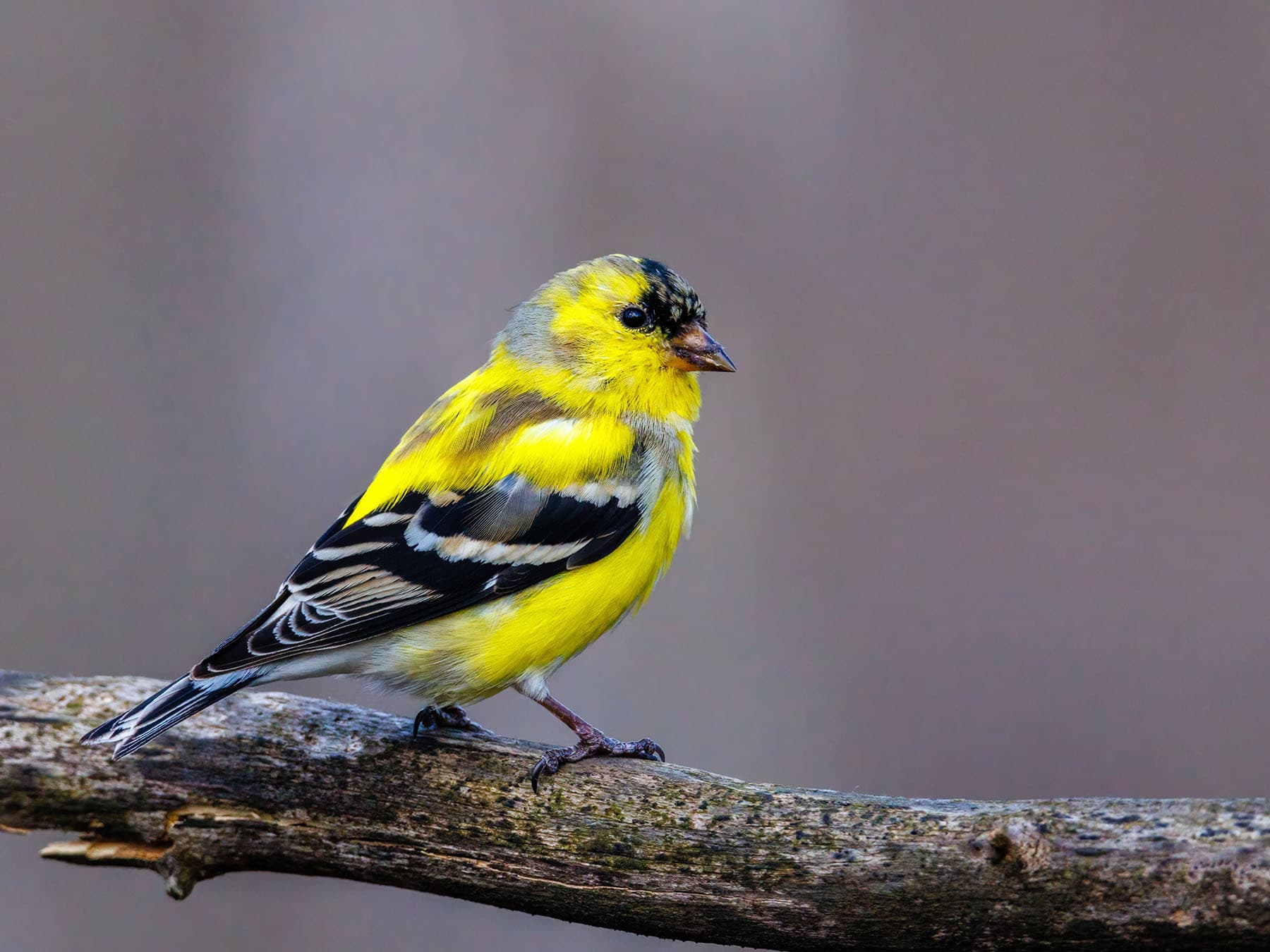 American Goldfinch molting into breeding plumage
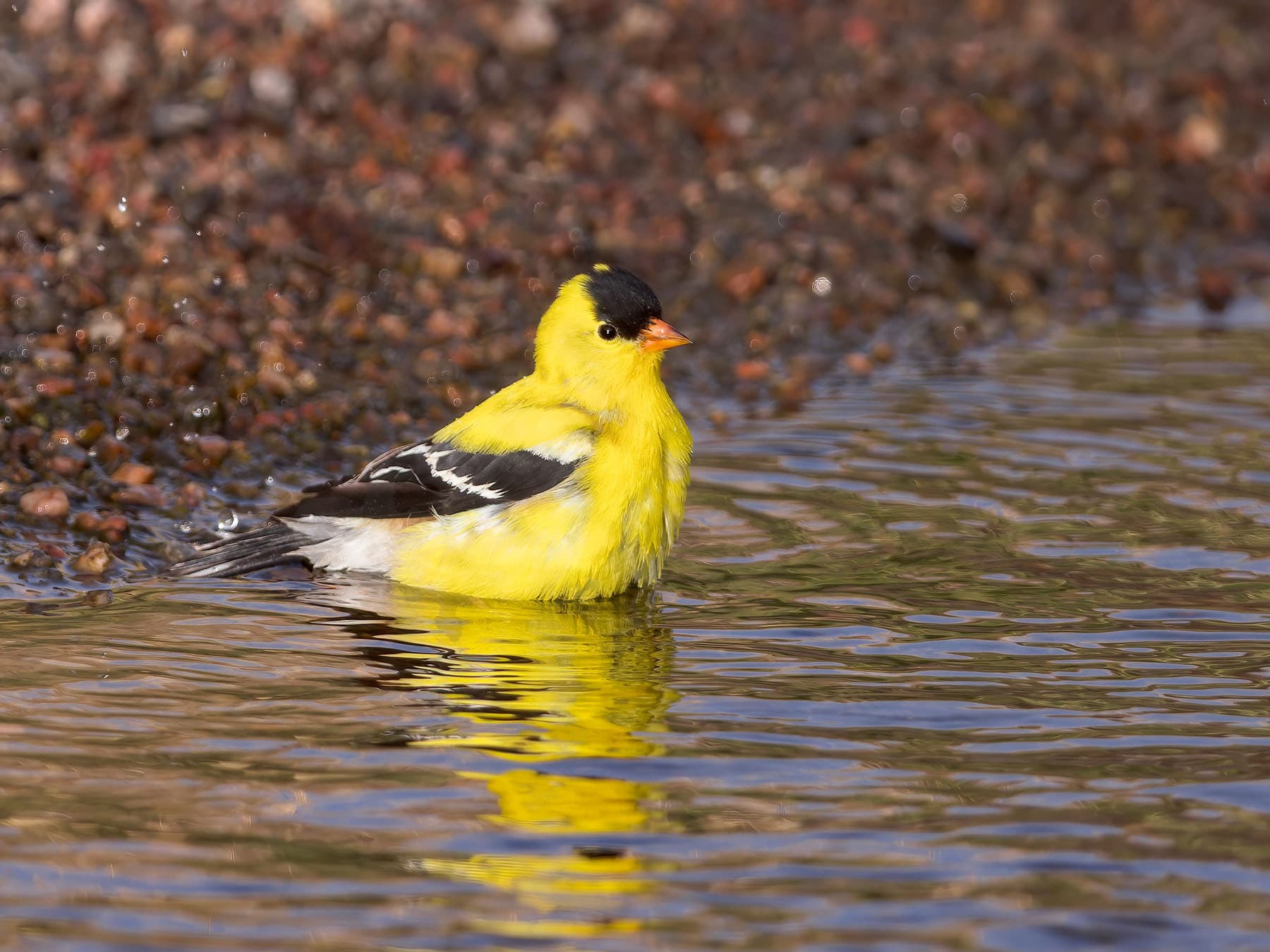 American Goldfinch bathing in a small creek
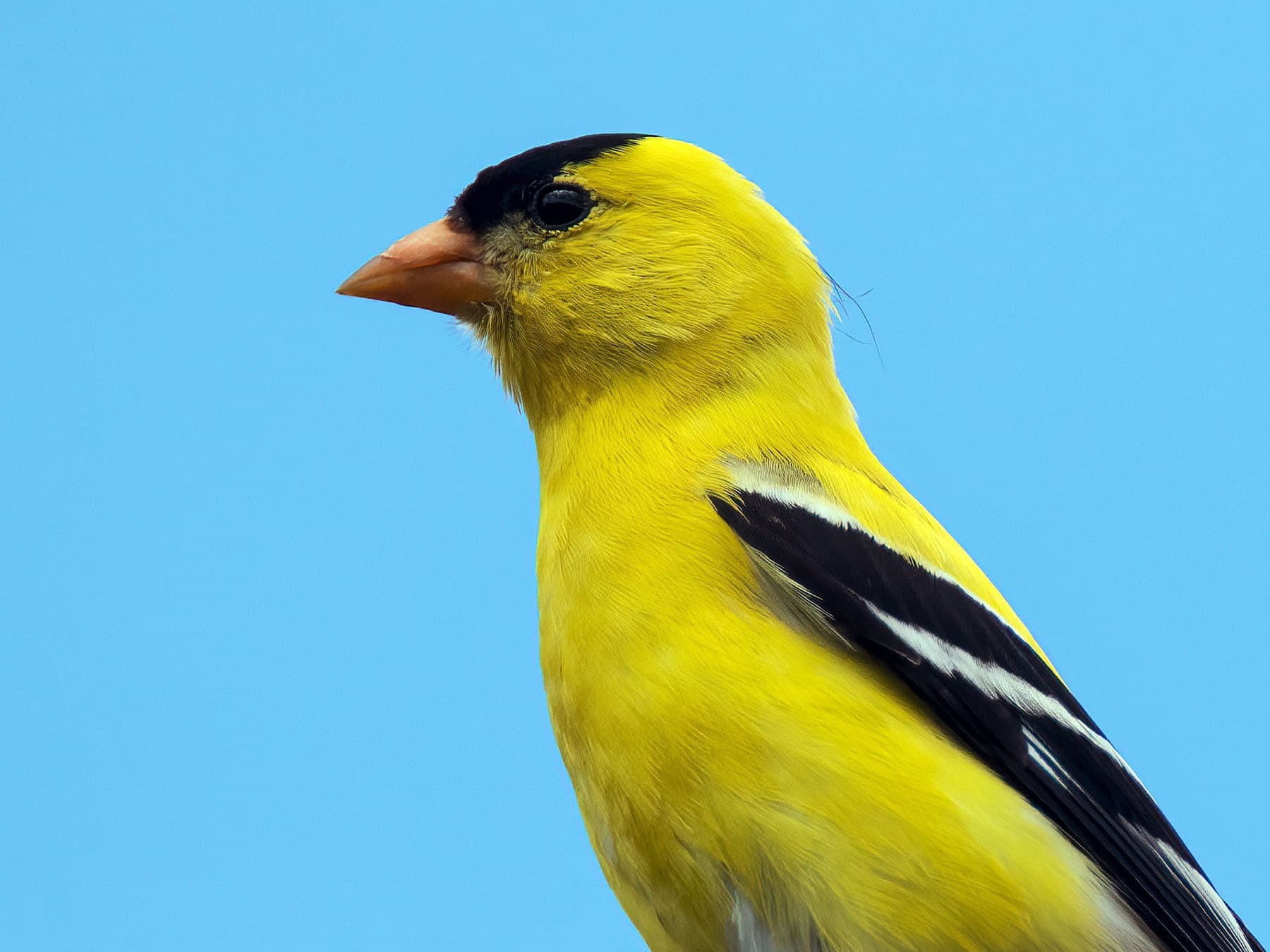 Portrait of an American Goldfinch
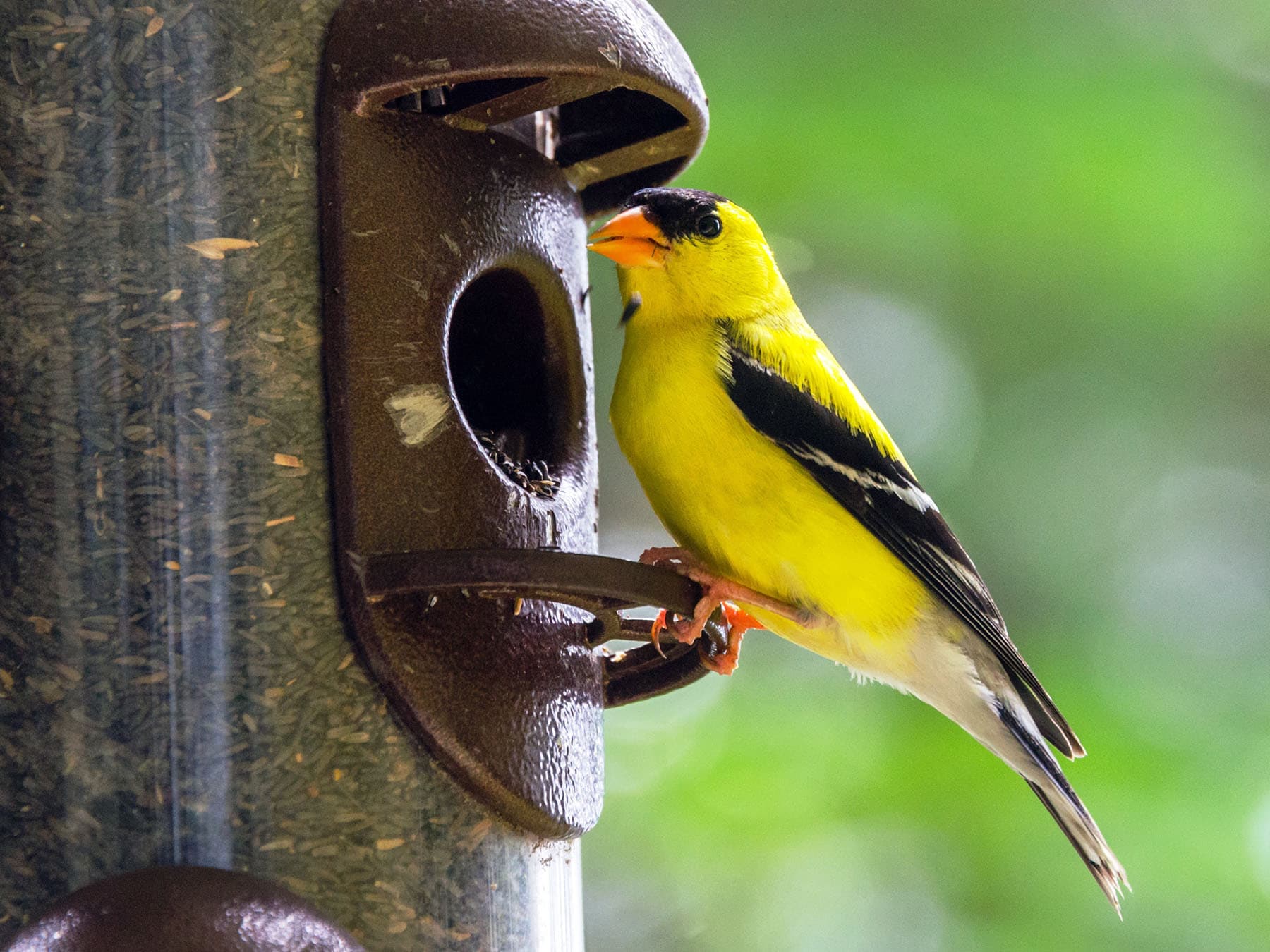 American Goldfinch feeding at a garden bird feeder
American Goldfinch guides
2 guidesQuick facts
- Length
- 11–13 cm
- Wingspan
- 19–22 cm
- Weight
- 11–20 g
- Lifespan
- 3–6 years
- Family
- Finches
- Migration
- Short-distance migrant
- Global status (IUCN)
- Least Concern
- World population
- Unknown
- Population trend
- Stable
- Also called
- Wild Canary, Eastern Goldfinch
- Scientific name
- Spinus tristis

Checked by
Nathan Cope, founder and editor
Nathan founded Birdfact and leads its writers and contributors in the UK, the US and Canada. He has watched and studied birds for more than ten years, and checks every article and species guide before it’s published.