Facts · Updated 8 Oct 2026
Male vs Female Song Sparrows: How to Tell Them Apart
By the Birdfact teamChecked by Nathan Cope
Male and female Song Sparrows look the same. Males are a little larger on average, but behavior is the real clue: the bird singing from a perch is almost always a male, and the bird building the nest or sitting on the eggs is the female.
On this page10 sections
How to tell a male Song Sparrow from a female, and how to recognize the young. For the bird itself, see Song Sparrow identification, song and facts.
Can you tell male and female Song Sparrows apart?
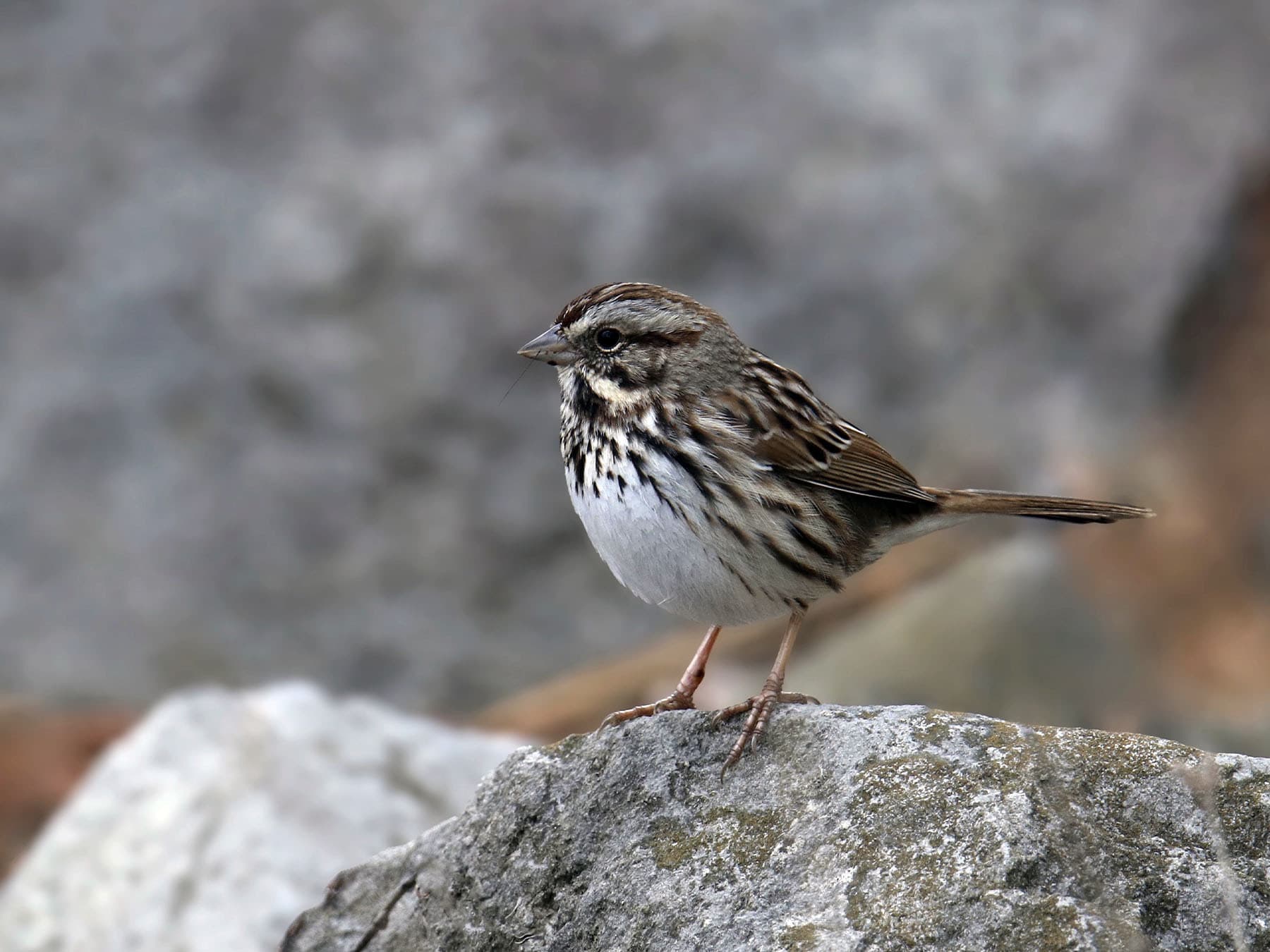
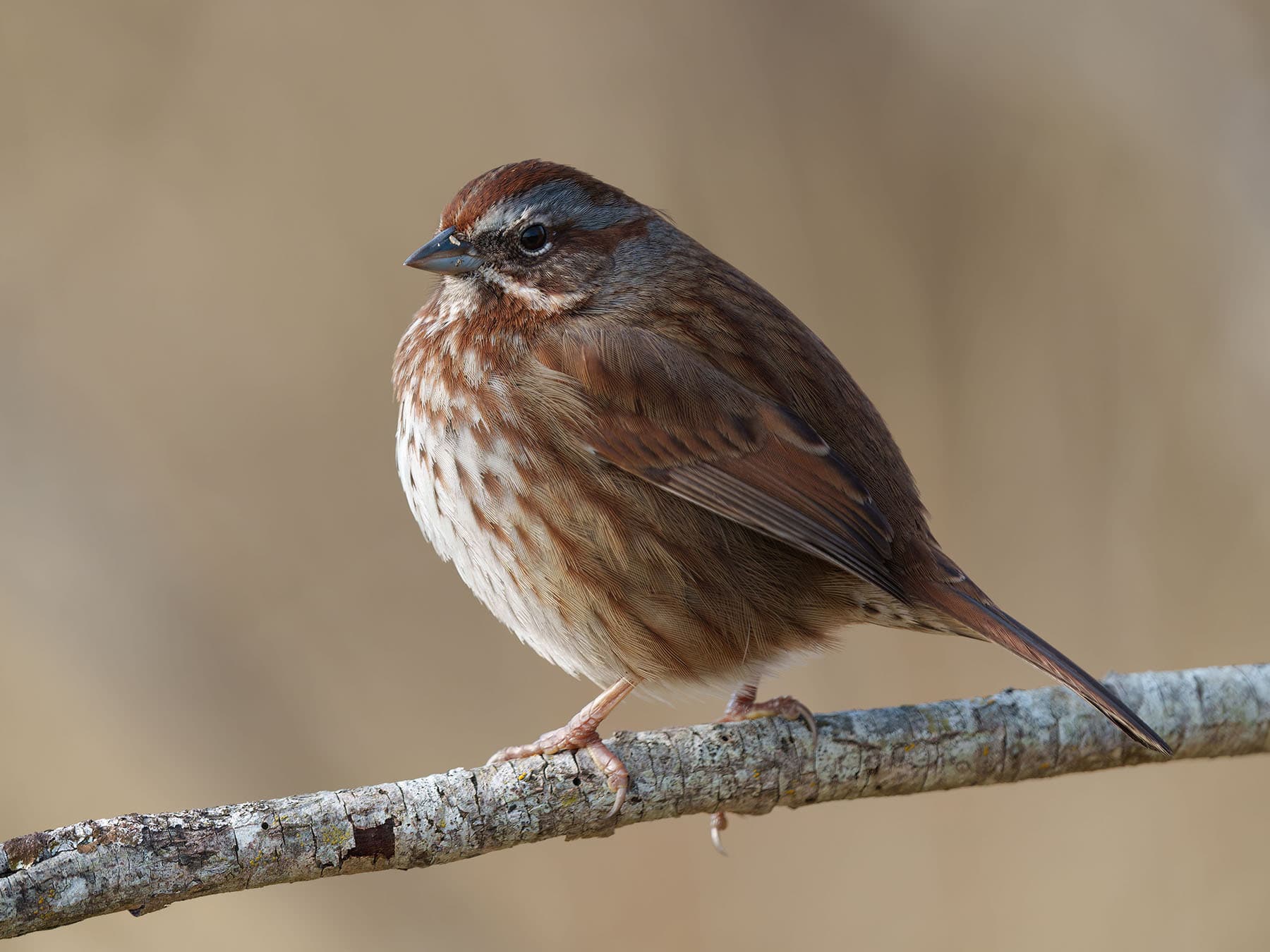
Not by their feathers. Male and female Song Sparrows look the same: streaky brown, with thick streaks on a white chest that often run together into a central spot, a grayish face with a russet eye-stripe, and a broad dark mustache stripe.1 The differences are in size, and above all in behavior.
Size
Males are larger than females on average, with longer wings and tails, but the sizes overlap. Even researchers measuring birds in the hand cannot sex 5-10% of them by size alone, so in the field size is no help.2
Behavior: the best clues
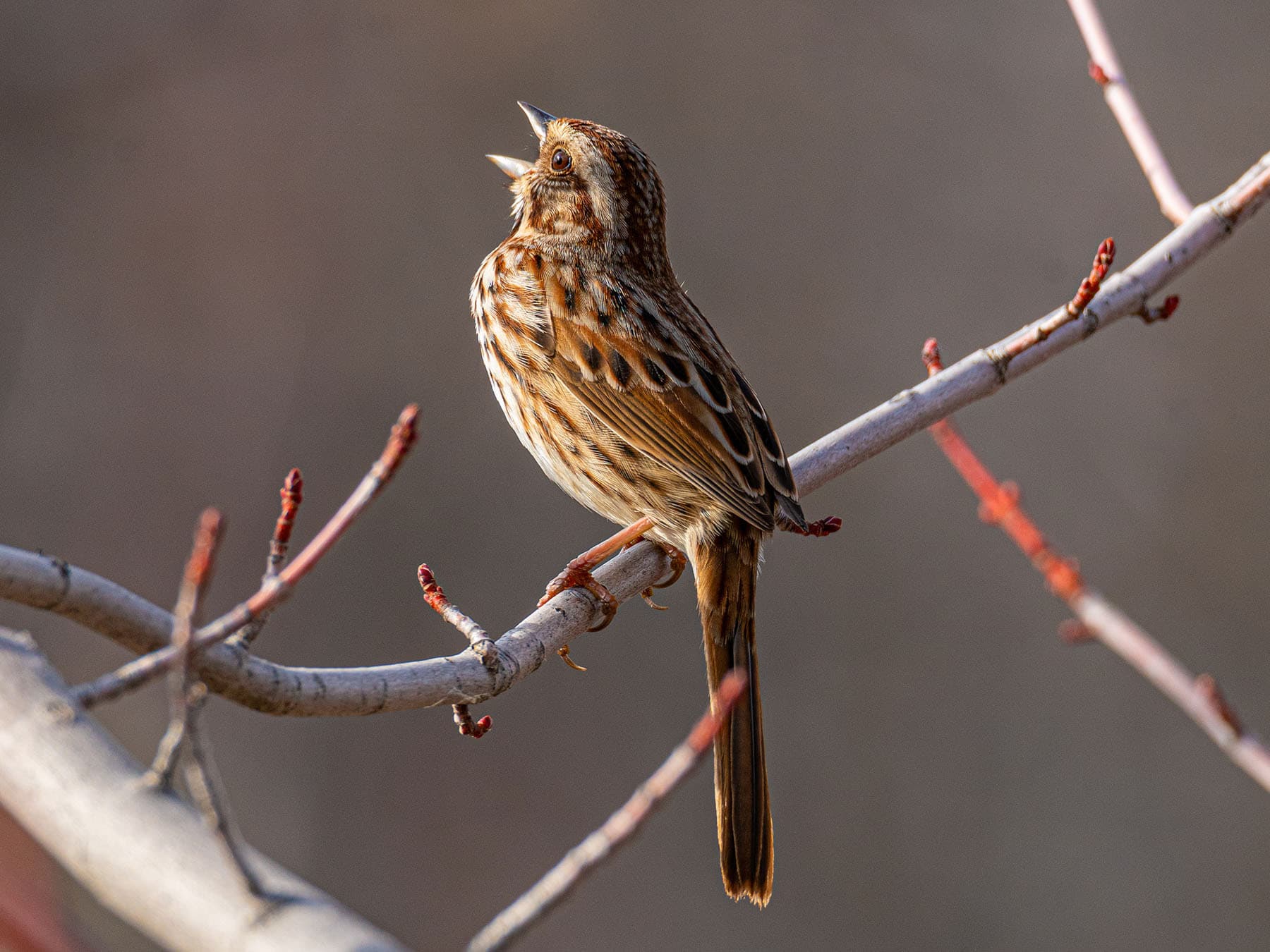
Singing. The bird singing from the top of a bush or fence is almost certainly a male. Males sing for much of the year; females sing only rarely (see below).
Nest building. The female builds the nest, mostly in the morning, quietly. The male often follows and watches her, and may pick up nest material and drop it again.
Incubating. Only the female incubates the eggs; only she has a brood patch, the bare, warm skin on the belly that keeps the eggs warm. A bird sitting on the eggs is the female.
Close company. For 10 days to 3 weeks before she starts incubating, the pair feed and perch close together, within about 10 ft (3 m). He sings much less in this time and stays close to her while she is fertile.
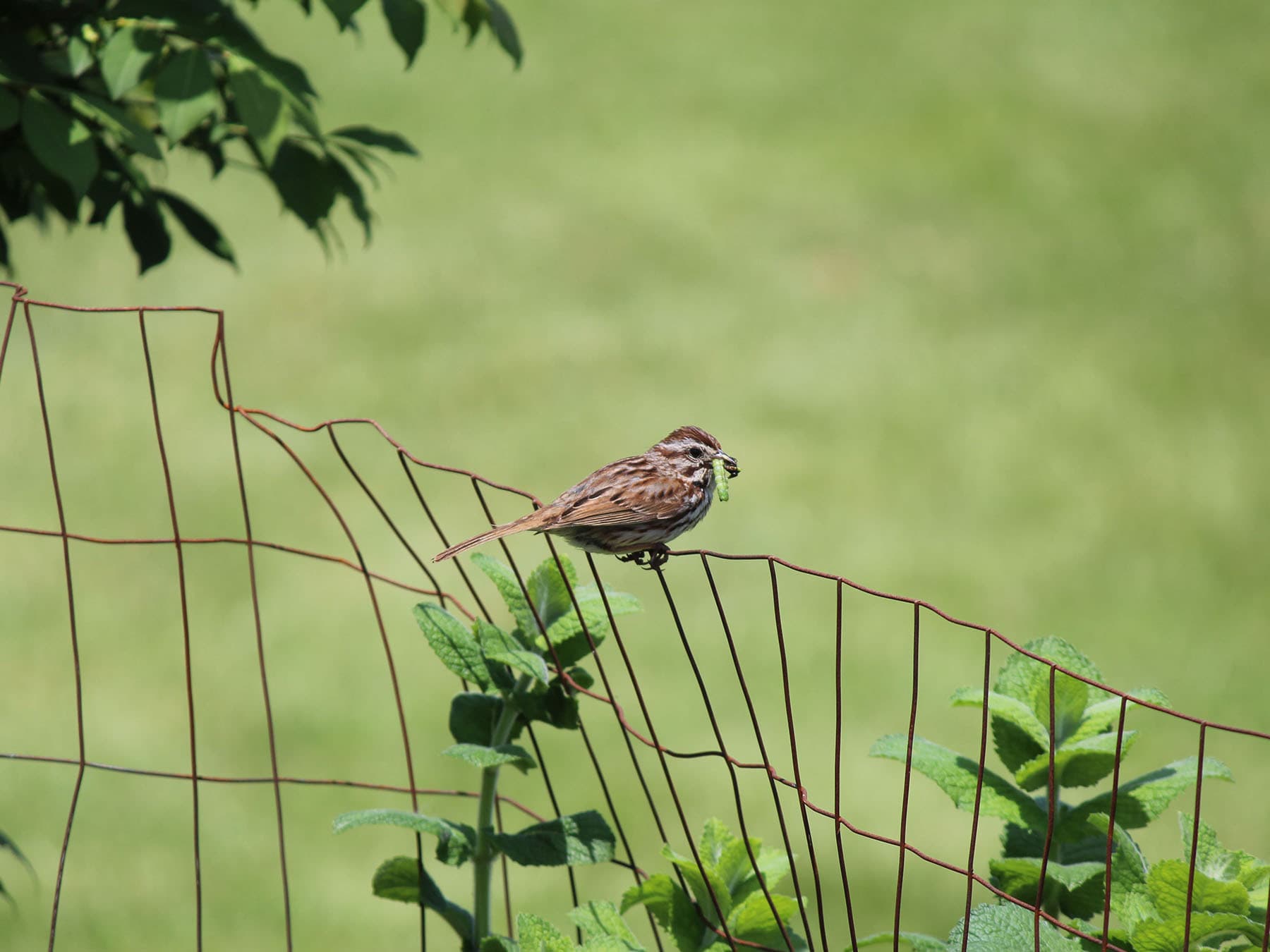
Feeding the young. Both parents feed the chicks. Once the young leave the nest, the male often looks after them while the female starts the next nest.
Do female Song Sparrows sing?
Yes, but rarely. In Margaret Morse Nice's Ohio study only 11 of 200 breeding females were heard singing, and in British Columbia 12 of 140. Most female song comes in spring, in disputes with other females, and it is usually simpler than a male's.2 Listen to the male's songs: Song Sparrow song and calls.
Female calls
Females have calls of their own. A harsh chatter, up to a few seconds long, is aimed at the male during nest building or at a rival female; a sharp twitter, "chi-chi-chi-chit-chit-chit", is given as she leaves the nest; and a nasal, trilled "ee-ee-ee" goes with mating. Both sexes give the sharp alarm chip.1
Pairs and partners
Song Sparrows are mostly socially monogamous: one male, one female. But at least 15% of young are fathered by a male other than the female's mate, in a Washington study always a neighbor, and at least once in their lives, up to 21% of females and 13% of males nest in a group with more than one partner. When a male has two mates, he usually feeds only the first brood to hatch, and the female raising young without his help fledges about half as many.
Juveniles and young Song Sparrows
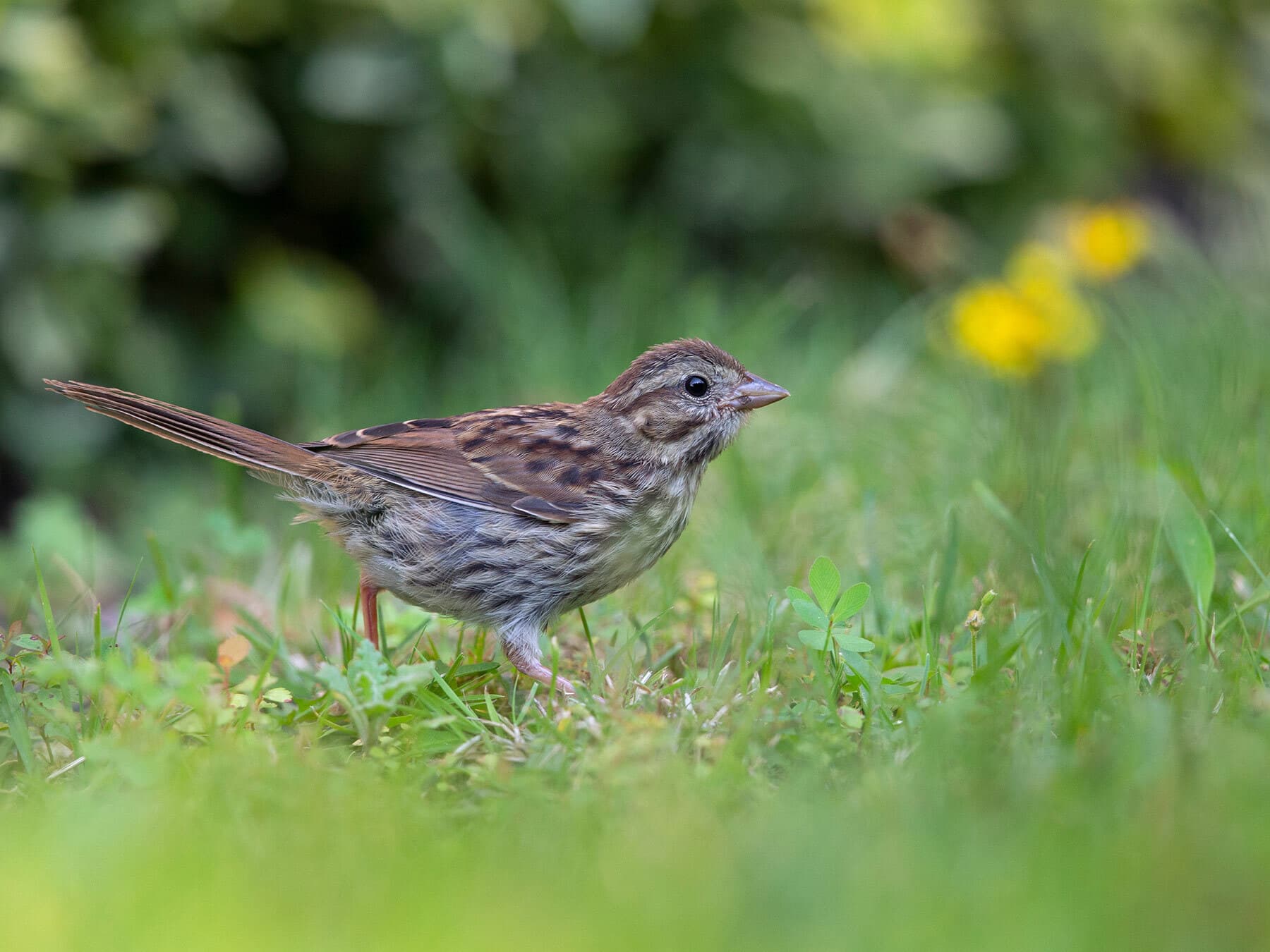
Juveniles, this year's young, are drabber and buffier than adults, with fuzzier streaks on the face and underparts, weaker head stripes, no rusty tones on the crown, and a buff ring around the eye. Recently fledged young also have a yellow gape at the corners of the bill.
The first molt begins at 6-7 weeks old and takes about 3 weeks. On Mandarte Island, birds hatched early in the year often look like adults by mid-September; birds in their first winter have a strong mustache stripe and rich chestnut streaks.
Regional differences are bigger than male and female
Where a Song Sparrow lives changes its looks far more than its sex does. Desert birds of the Southwest are small and pale with rusty streaks, birds of the Pacific Northwest are dark and rufous with heavy, blurry streaks, and Aleutian birds are big and grayish.1, 2 A dark Song Sparrow in Washington and a pale one in Arizona can both be males.
Similar birds
A female House Sparrow can look similar at a glance, but she is plain below, with no streaks, a pale buff stripe behind the eye and a stout, pale bill. See Song Sparrow or House Sparrow? A Lincoln's Sparrow is smaller, with finer streaks on a buff-washed breast; a Savannah Sparrow has a short, notched tail and yellowish lores.
Sources
- Cornell Lab of Ornithology. Song Sparrow: Overview, Identification, Life History and Sounds. All About Birds. Accessed October 7, 2026. Source
- Arcese, P., Sogge, M. K., Marr, A. B., Patten, M. A. (2020). Song Sparrow (Melospiza melodia), version 1.0. Birds of the World (A. F. Poole and F. B. Gill, editors). Cornell Lab of Ornithology. doi:10.2173/bow.sonspa.01