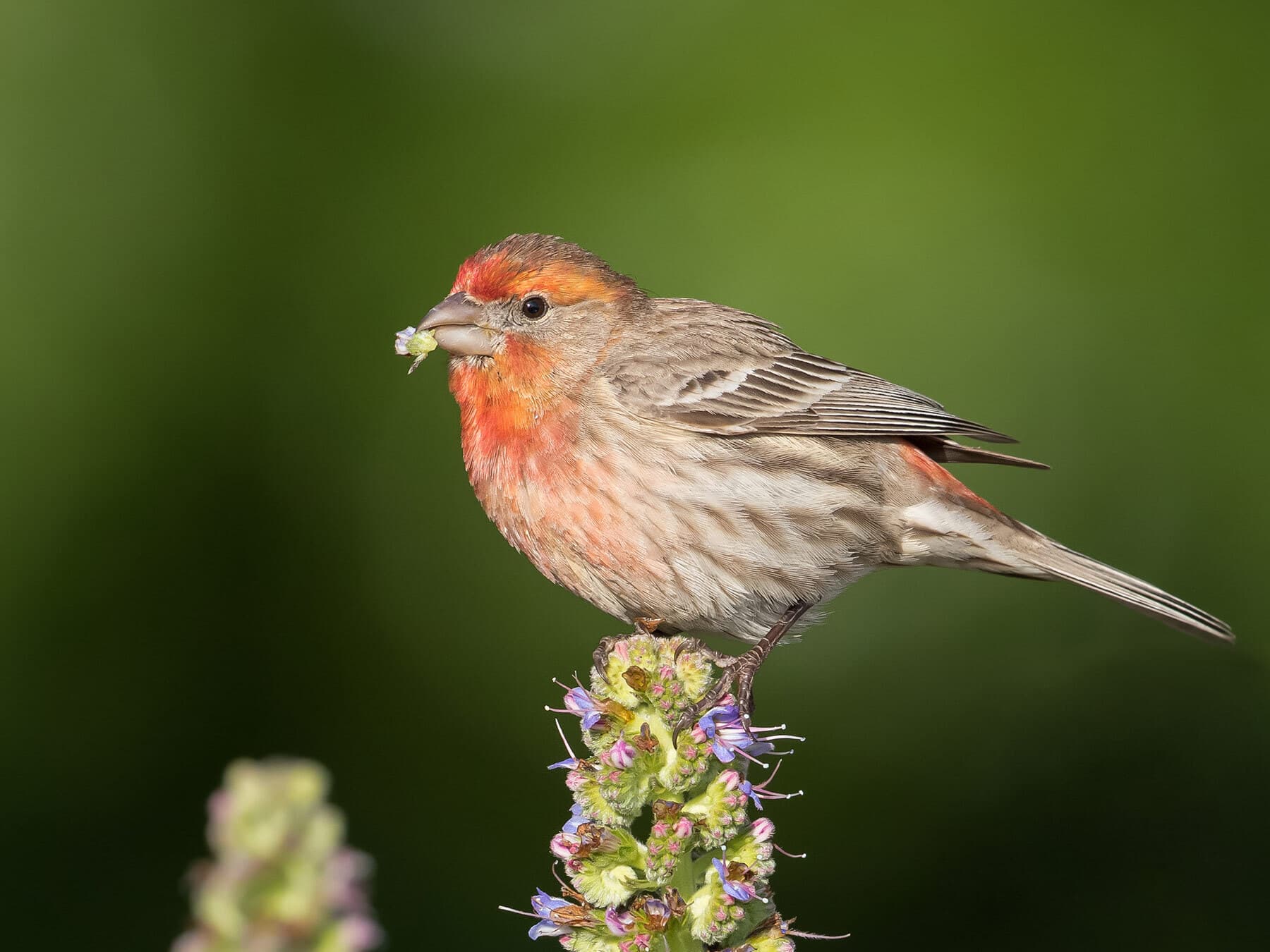
Facts · Updated 11 Oct 2026
Do House Finches Migrate? Range and Introduction
By the Birdfact teamChecked by Nathan Cope
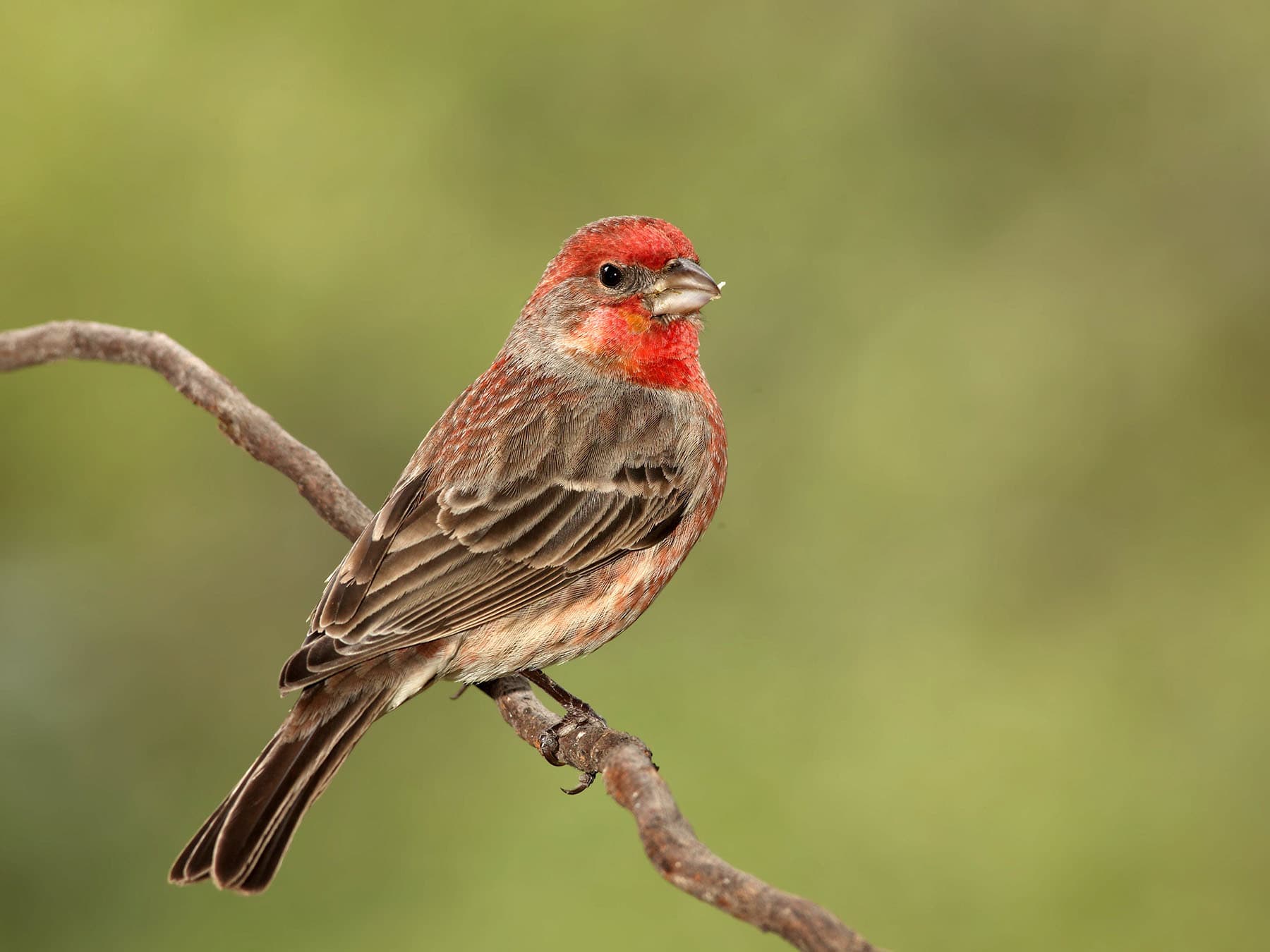
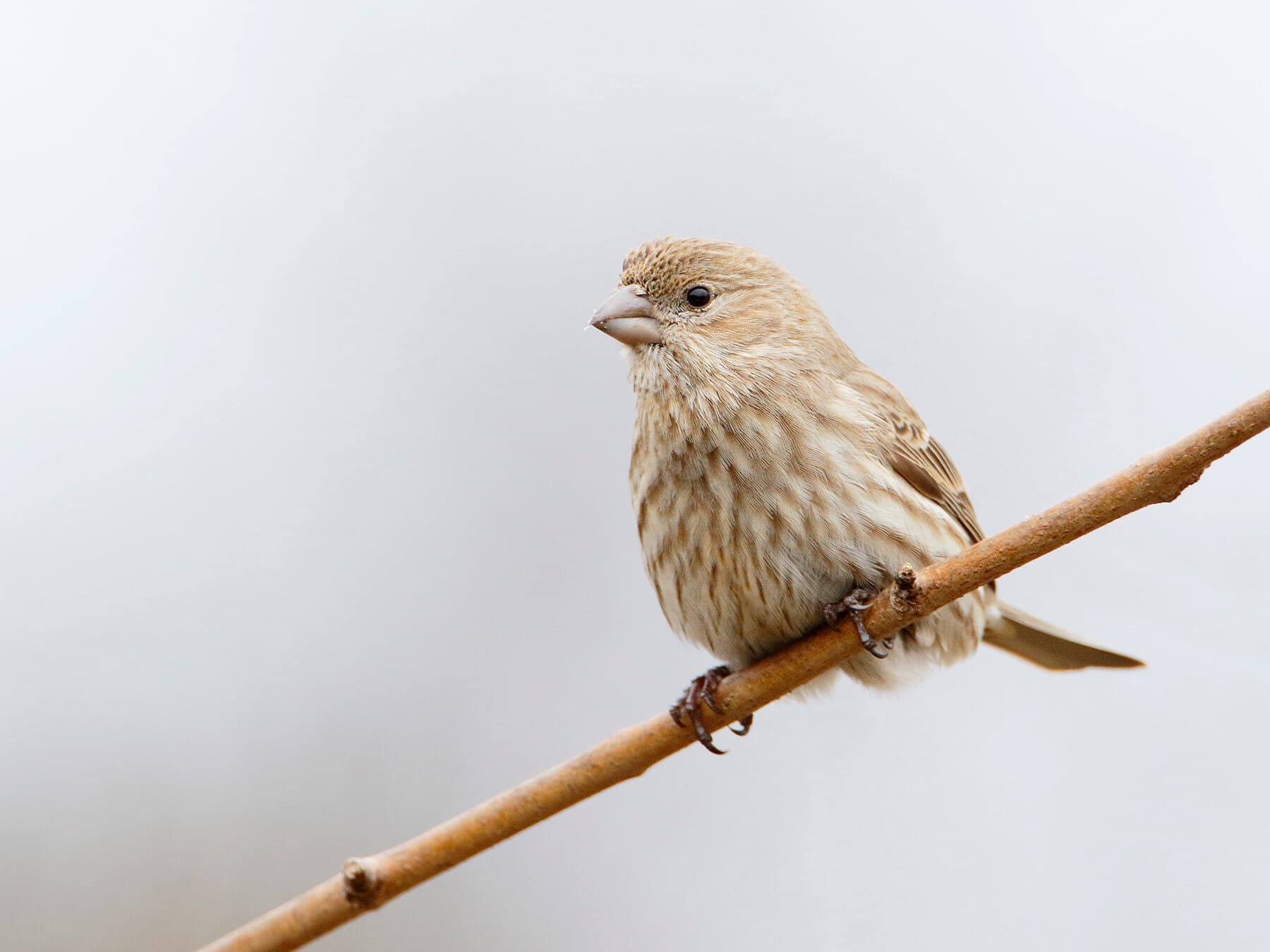
Most western House Finches stay put all year, apart from short moves to lower ground or, in newly settled northern areas, into towns. Eastern House Finches, descended from caged "Hollywood Finches" released on Long Island around 1940, became partly migratory within a few decades, many moving southwest for the winter.
On this page11 sections
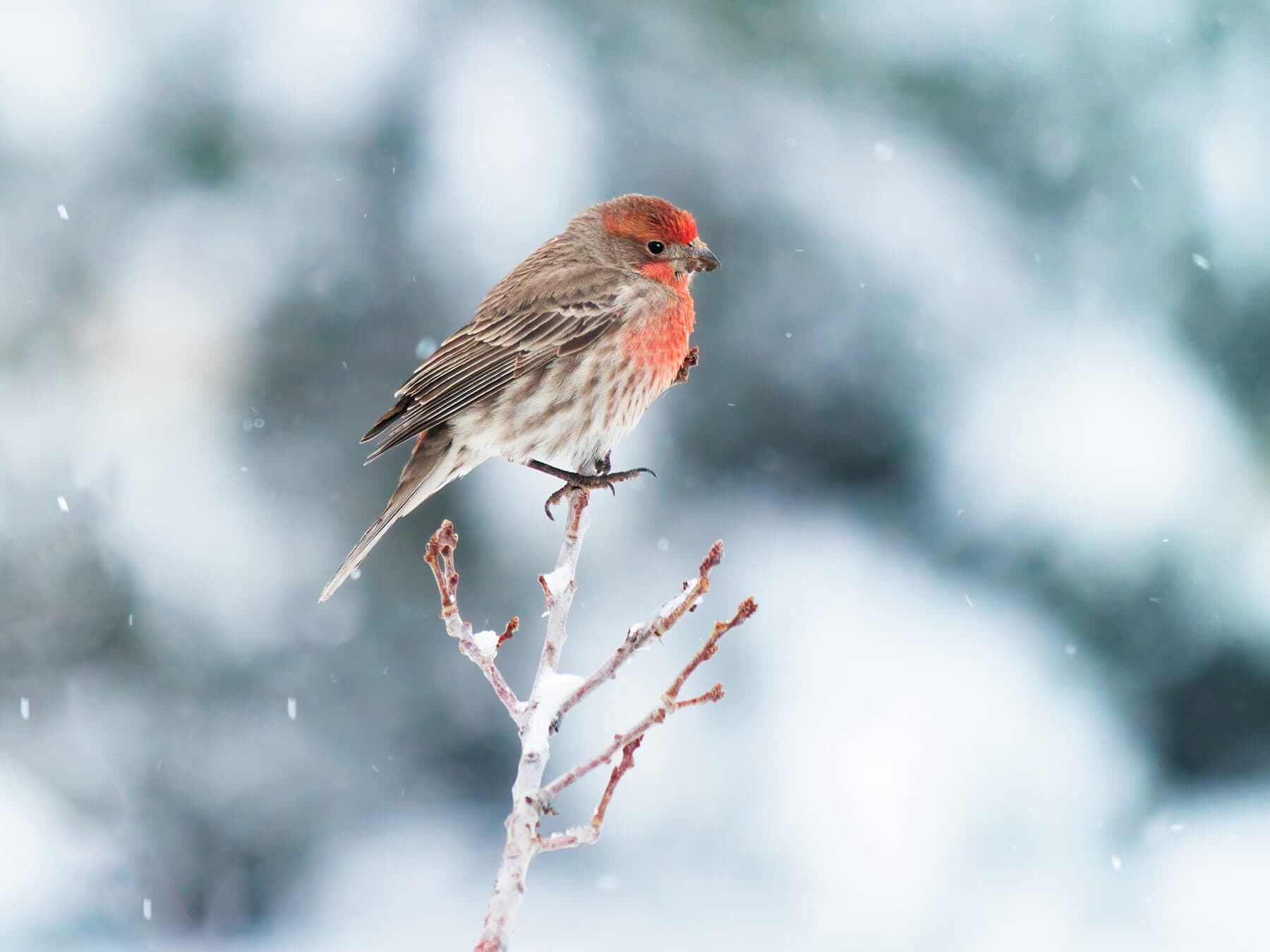
Do House Finches migrate? Where they live, how caged birds released in New York made them an eastern bird, how the eastern birds started to migrate, and whether they are invasive. For the bird itself, see House Finch identification, song and facts.
Do House Finches migrate?
Some do. In the West, where House Finches are native, they are year-round residents: there is no migration in the Sonoran Desert or anywhere in California, and town birds move less than 3 miles (5 km). Some western birds do move short distances in winter, to valleys and lower ground.1
In the East, where House Finches were introduced, many birds became migrants. By the early 1960s, 36% of eastern House Finches were found more than 50 miles (80 km) from where they had been banded, and since then the share has varied between 28% and 54%.2 They are partial migrants: not every bird migrates, a bird that migrates one winter may stay the next, and young birds migrate more than adults.
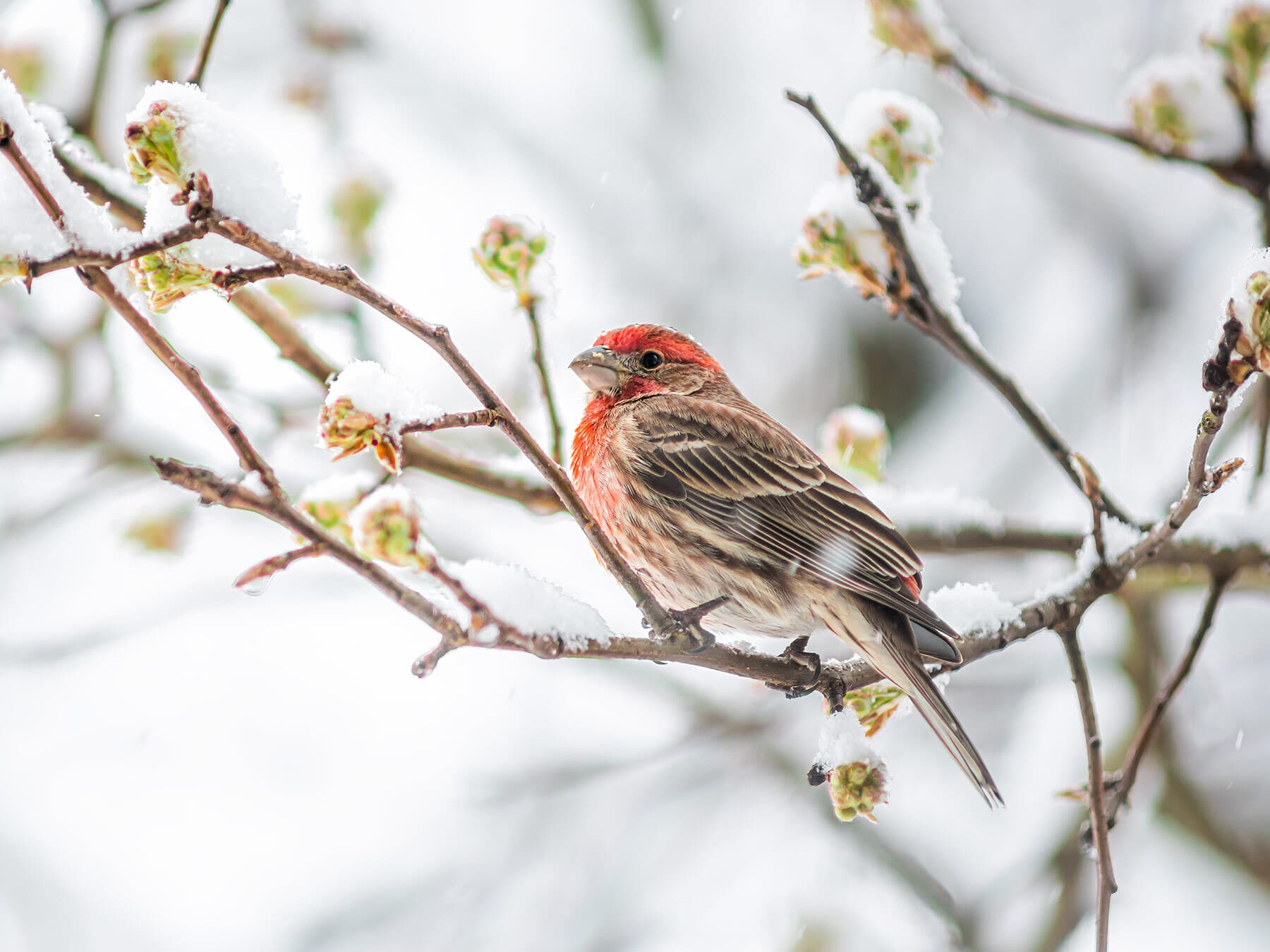
Where do House Finches go in winter?
Eastern birds that migrate head southwest. Birds banded in the breeding season and found again in winter had moved mostly to the southwest, and those banded in winter and found in summer had moved northeast.2 One bird banded at Fergus, Ontario, in August 1986 was caught in Marion, Indiana, in March 1987, more than 350 miles (560 km) away.1
In newly settled areas in the north, birds move into towns. Where snow lies, House Finches leave natural habitat for the first town with snow-free ground and feeders, sometimes over 125 miles (200 km) away, and in winter they gather at feeders more than in summer. New northern populations usually become year-round residents within 5 to 10 years.
Timing
In the northern West, birds that move can leave in September and October and return in late February or early March. In southeast Michigan, numbers are lowest from November to January, rise from mid-February and peak by early April. House Finches apparently migrate by day, like other finches.
How the eastern birds became migrants
The change was fast. The eastern House Finches descend from birds presumed to come from southern California, where, by Able and Belthoff's estimate, about 80% never move at all. Yet within a few decades the eastern population migrated, and the average distance kept growing. Areas colonized later had long migrations and many migrants from the start, which suggests migration evolved in the eastern population itself. A few western birds had made long moves in migratory directions, so the ability was already there.2
Their wings may have changed too: in one study, eastern House Finches had shorter inner primaries and a longer outermost primary than western birds, perhaps a thinner, more pointed wing, though wing length was the same.3
The range today
House Finches now live across most of the United States, southern Canada and Mexico: one of the most common birds over much of the continent, from the edges of the northern forest to the coasts and city centers. In the West House Finches live in deserts, desert grassland, chaparral, oak savanna, juniper woodland, streamside trees and open conifer forest, subalpine scrub up to about 11,500 ft (3,500 m), and towns and farms. In the East they live almost only around people: towns, suburbs and farmyards.
The native range has spread north as well. House Finches had a colony south of Penticton, British Columbia, before 1935 and reached Victoria by 1937, and they settled in Missoula, Montana, from 1966.
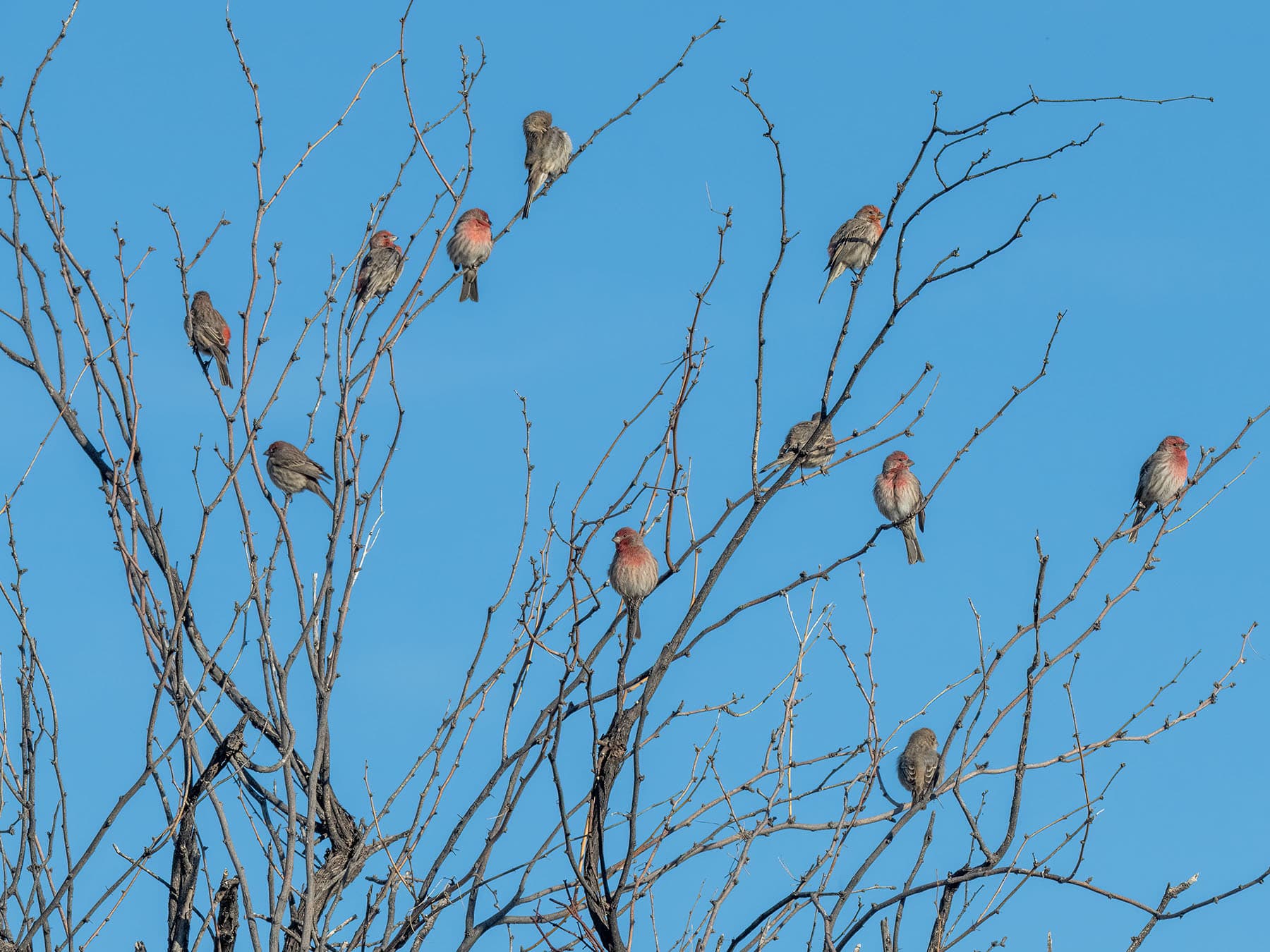
How they came to the East
Until about 1940 there were no House Finches in eastern North America. In the 1930s pet dealers trapped western House Finches, shipped them east and sold them as "Hollywood Finches"; one California shipper told the ornithologists John Elliott and Robert Arbib that many thousands had gone east, guessing 100,000 or more, about ten males to every female. In January 1940 a Brooklyn bird store had 20 for sale. House Finches had been protected since 1936 under the migratory bird treaty with Mexico, and that year federal officials confirmed that the trade was illegal and stopped the trapping, shipping and sales. Elliott and Arbib concluded, from circumstantial evidence, that unsold birds were probably released, perhaps by a single New York dealer.4
The first recorded wild House Finch in the East was a bright male at Jones Beach, Long Island, on April 11, 1941. In 1942 a few appeared at a tree nursery at Babylon, Long Island, where the first nest, with four young, was found on May 28, 1943, and by 1951 there were about 280 birds on Long Island.
How fast they spread
After about ten years near western Long Island, the eastern House Finches spread fast, fastest to the west and southwest. The range grew about 2 miles (3.5 km) a year in the 1940s and about 13 miles (20.7 km) a year from 1962 to 1979, partly in long jumps. By 1993 they bred commonly across most of the eastern United States and southeastern Canada; the eastern and western populations have since met.1
All eastern House Finches descend from those few released birds, so they have less genetic variety than western birds, but All About Birds says the two populations differ little in shape, size or color.5
Hawaii
House Finches were taken to Hawaii before 1870, probably to Oahu and probably birds from around San Francisco Bay. By 1901 they were abundant on all the main islands, and today they live in towns, farmland, grassland and native forests. In Hawaii they are known as the "papaya bird", for their liking for the fruit.
Are House Finches invasive?
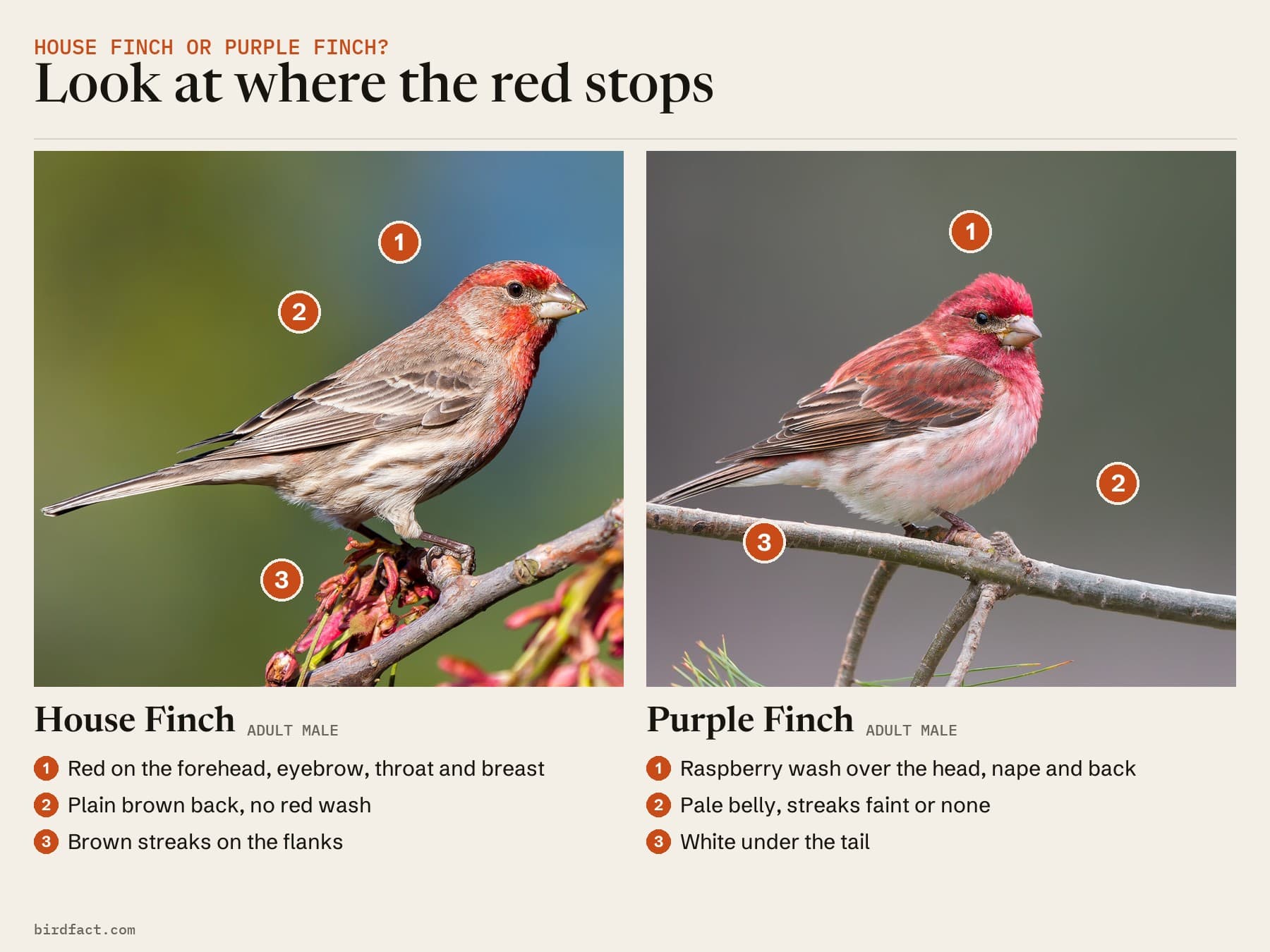
The House Finch is a native North American bird. In the East and Hawaii it was introduced by people, but the Cornell Lab's Birds of the World finds that House Finches do not seem to compete with native birds for nest sites or food away from feeders, and that they nest in different habitat from their relatives, the Purple and Cassin's Finches.1 The Audubon guide notes that in parts of the East House Finches may compete with Purple Finches.6
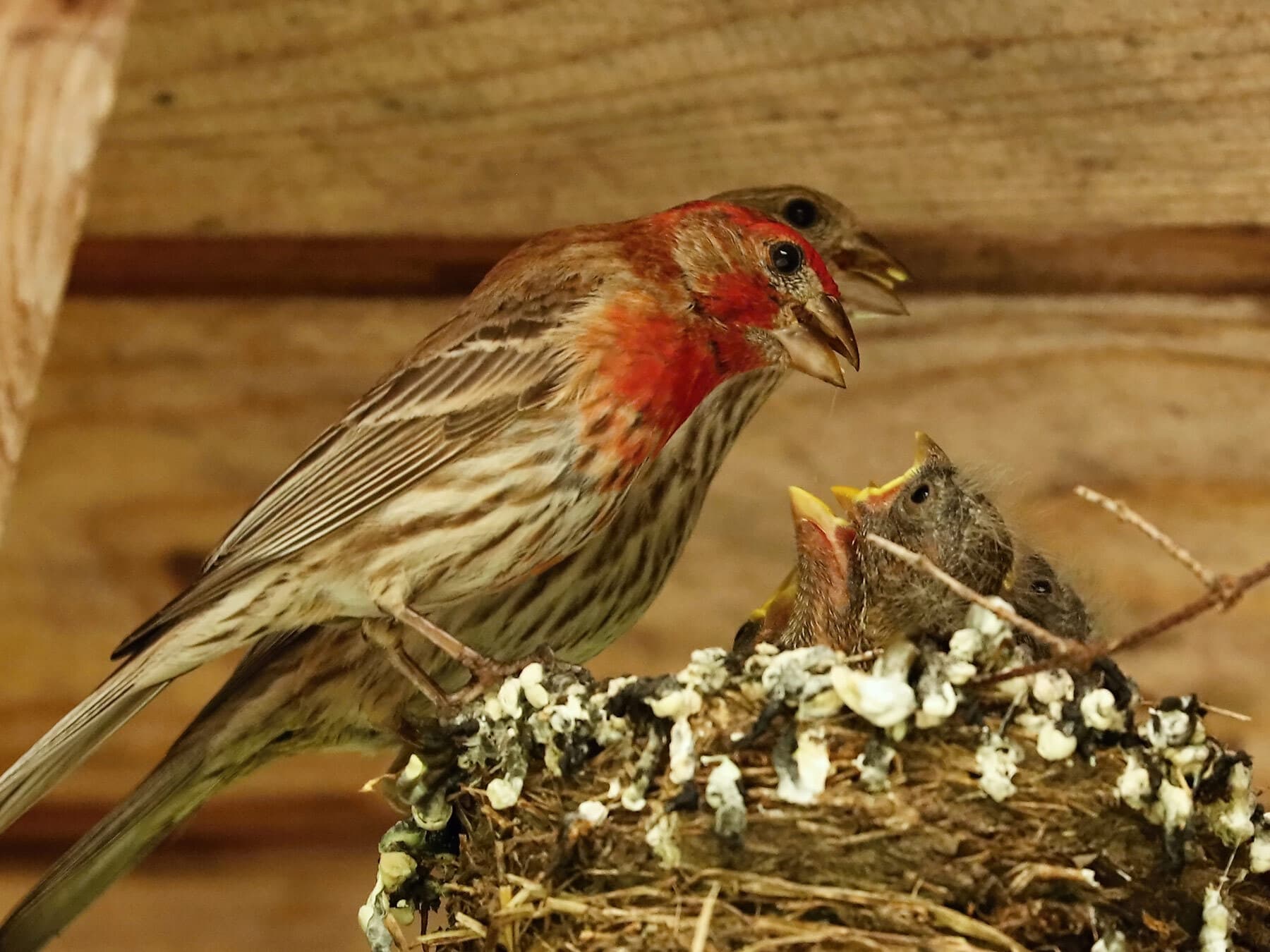
When House Finches spread east, some people feared they would take over nest boxes and tree holes; NestWatch reports that this has not happened, because House Finches rarely use enclosed boxes.7 Birds of the World calls the House Finch a minor pest of fruit in parts of the West, and it is not reported as an agricultural pest in the East. House Finches are protected under the Migratory Bird Treaty Act.8
Native to the West
House Finches are native to western North America and Mexico, where they are an old part of the bird life: fossils show they lived in California and New Mexico during the Pleistocene. The eastern and Hawaiian birds descend from introductions. More: where to see House Finches.
Sources
- Badyaev, A. V., Belloni, V., Hill, G. E. (2020). House Finch (Haemorhous mexicanus), version 1.0. Birds of the World (A. F. Poole, editor). Cornell Lab of Ornithology. doi:10.2173/bow.houfin.01
- Able, K. P., Belthoff, J. R. (1998). Rapid 'evolution' of migratory behaviour in the introduced house finch of eastern North America. Proceedings of the Royal Society B 265: 2063-2071. doi:10.1098/rspb.1998.0541
- Egbert, J. R., Belthoff, J. R. (2003). Wing shape in House Finches differs relative to migratory habit in eastern and western North America. The Condor 105: 825-829. doi:10.1650/7275
- Elliott, J. J., Arbib, R. S., Jr. (1953). Origin and status of the House Finch in the eastern United States. The Auk 70: 31-37. doi:10.2307/4081056
- Cornell Lab of Ornithology. House Finch: Overview, Identification and Life History. All About Birds. Accessed October 11, 2026. Source
- National Audubon Society (text: Kaufman, Lives of North American Birds). House Finch. Audubon Guide to North American Birds. Accessed October 11, 2026. Source
- Bailey, R. (2022). NestWatchers document rare use of nest boxes by House Finches. NestWatch, Cornell Lab of Ornithology. Accessed October 11, 2026. Source
- U.S. Fish and Wildlife Service. List of birds protected by the Migratory Bird Treaty Act. Code of Federal Regulations, 50 CFR 10.13. Accessed October 11, 2026. Source