


Northern Cardinal
Redbird, Common Cardinal · Cardinalis cardinalis
By the Birdfact teamChecked by Nathan Cope
On this page13 sections
How to recognise it
Northern Cardinals are unmistakable birds. Although each of the 18 subspecies varies to some extent in size and appearance, each has the same distinguishing characteristics. Read on to learn more about their size and appearance.
What do Northern Cardinals look like?
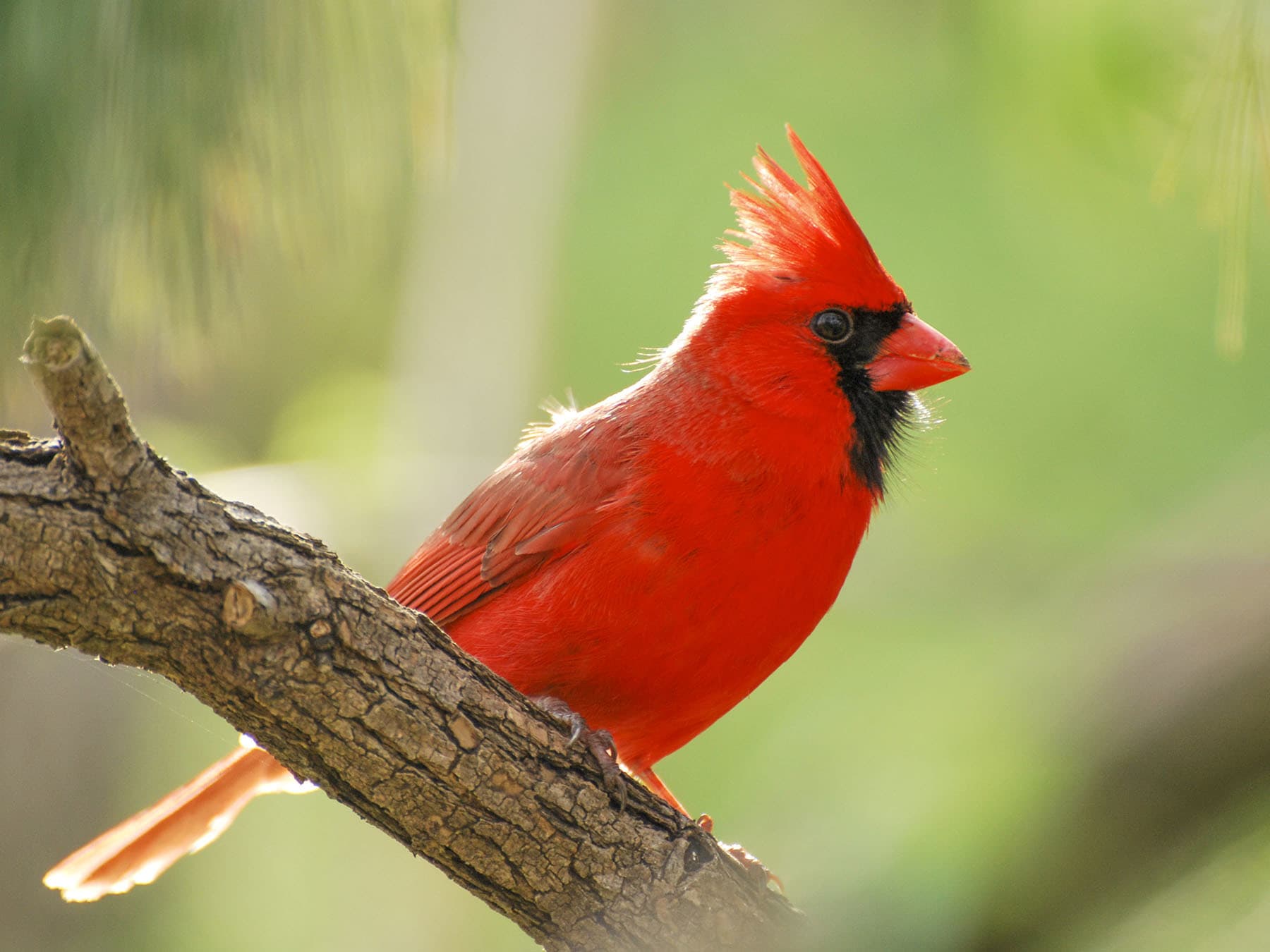
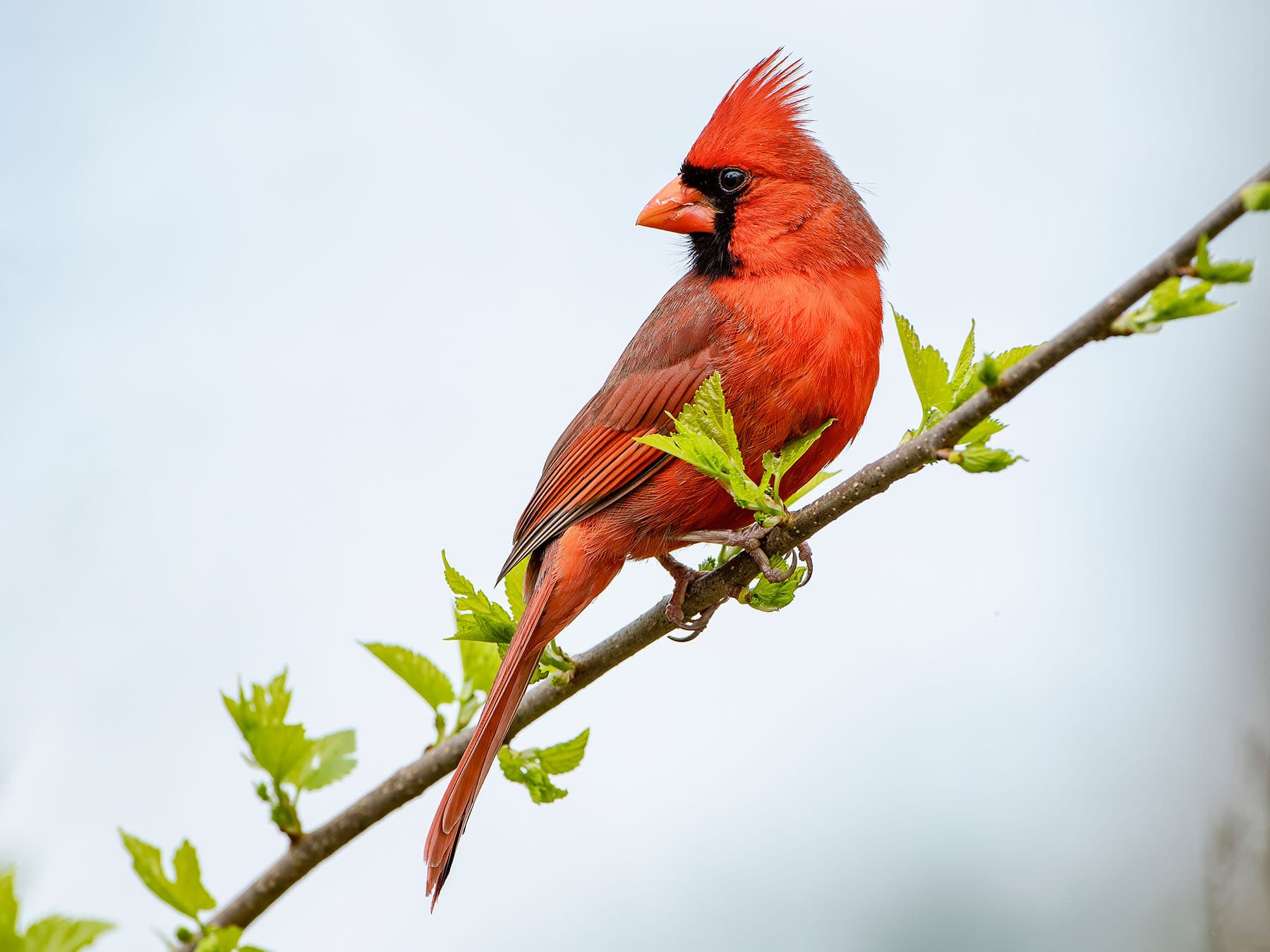
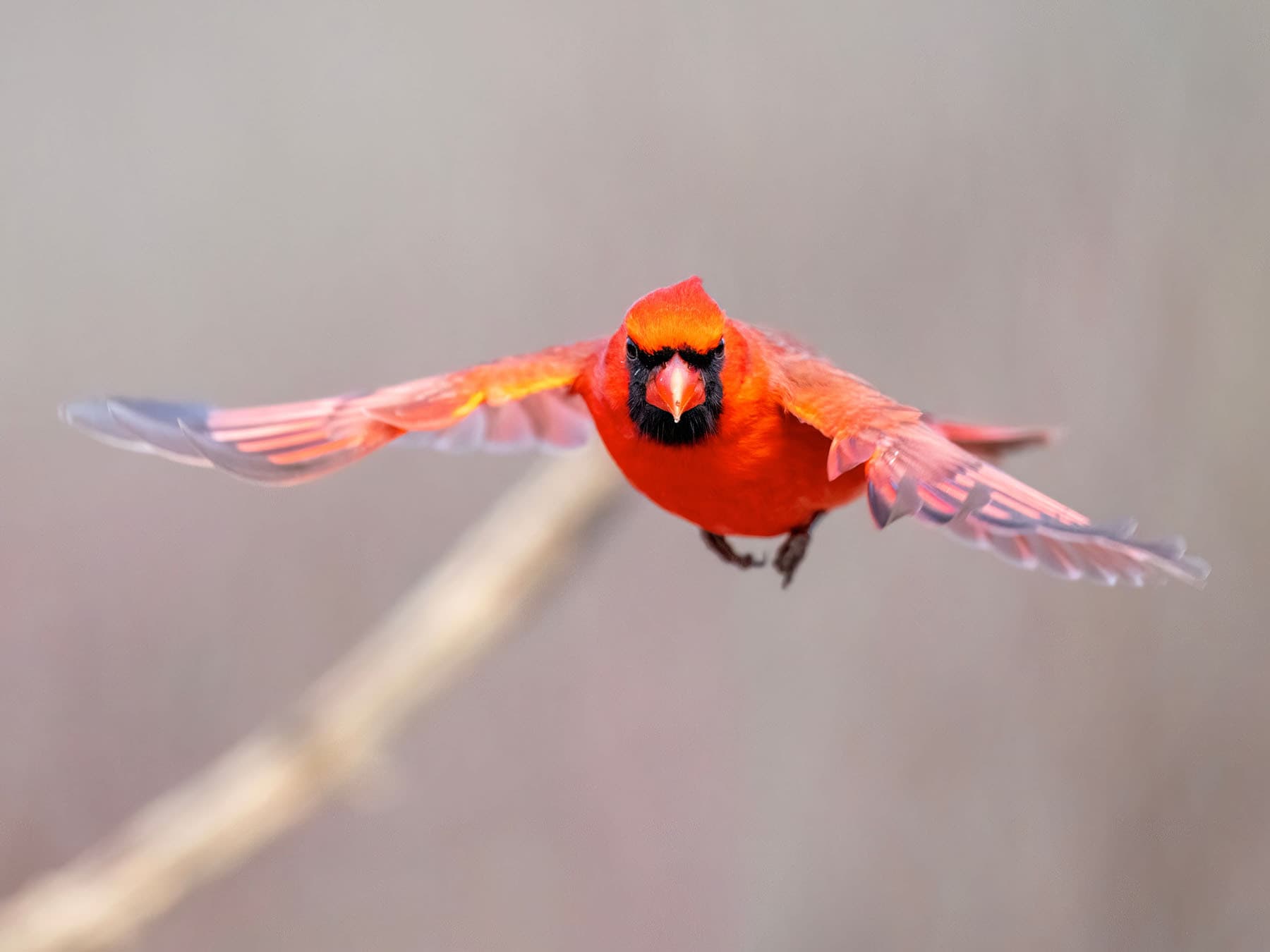
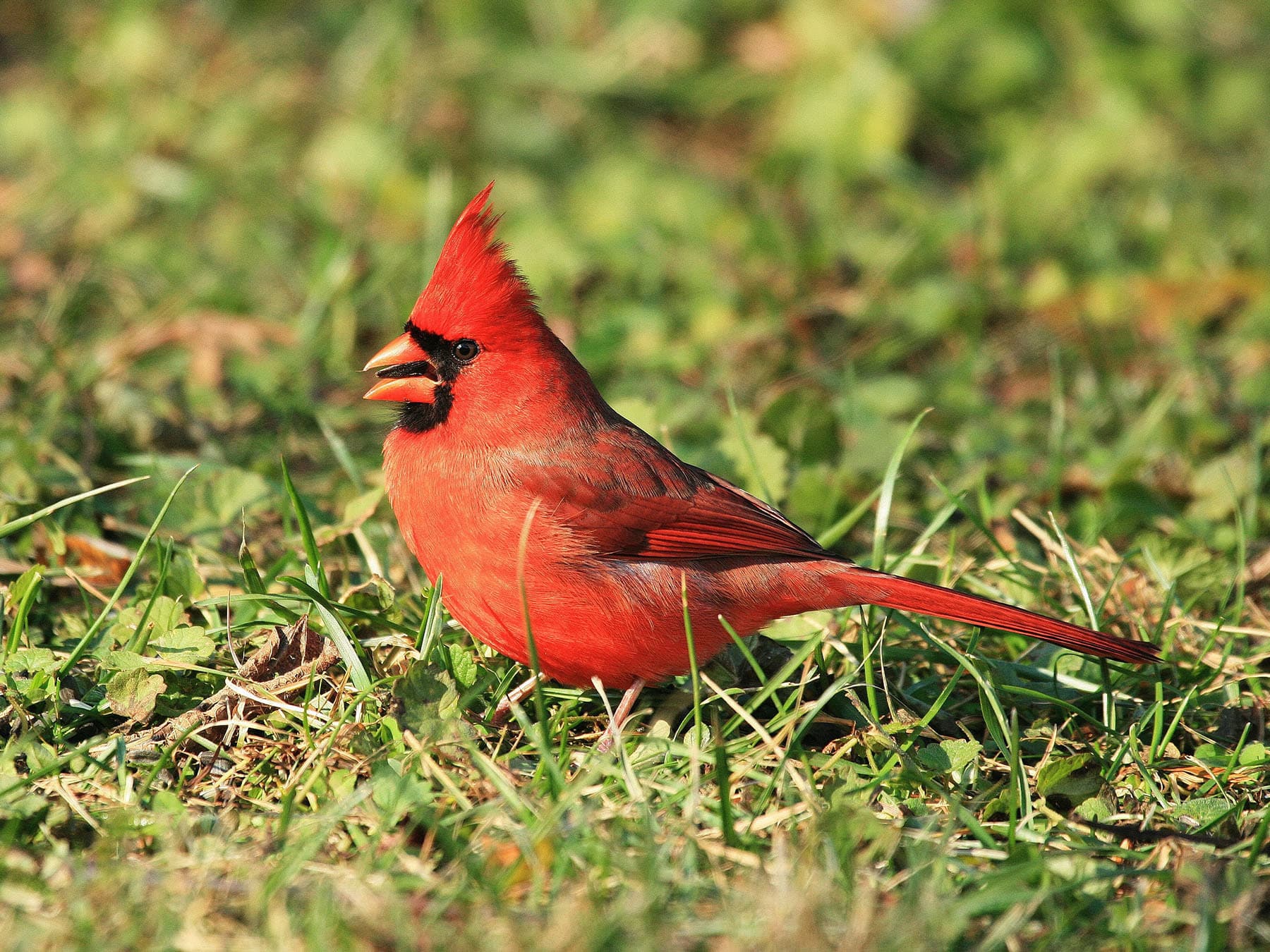
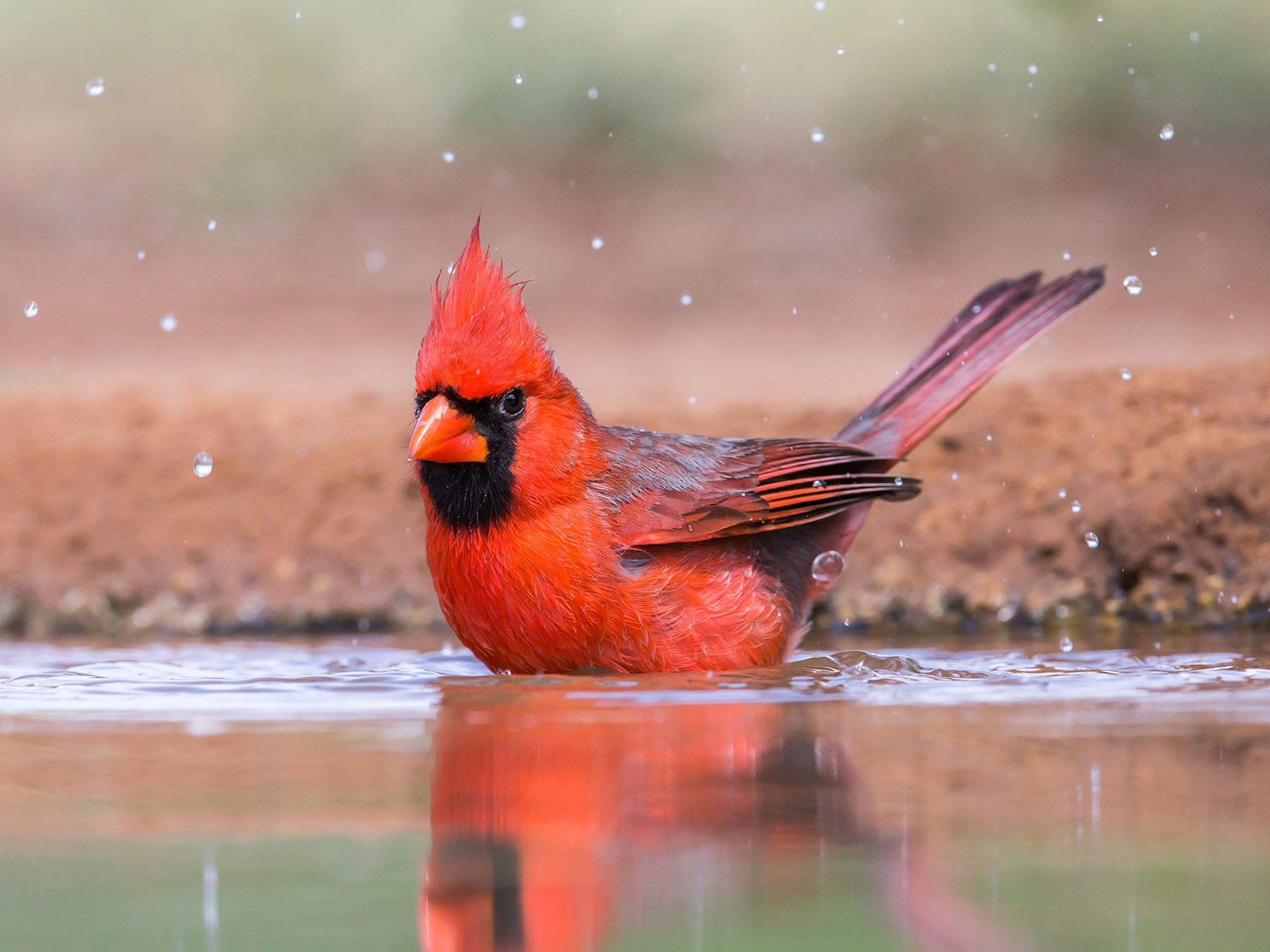
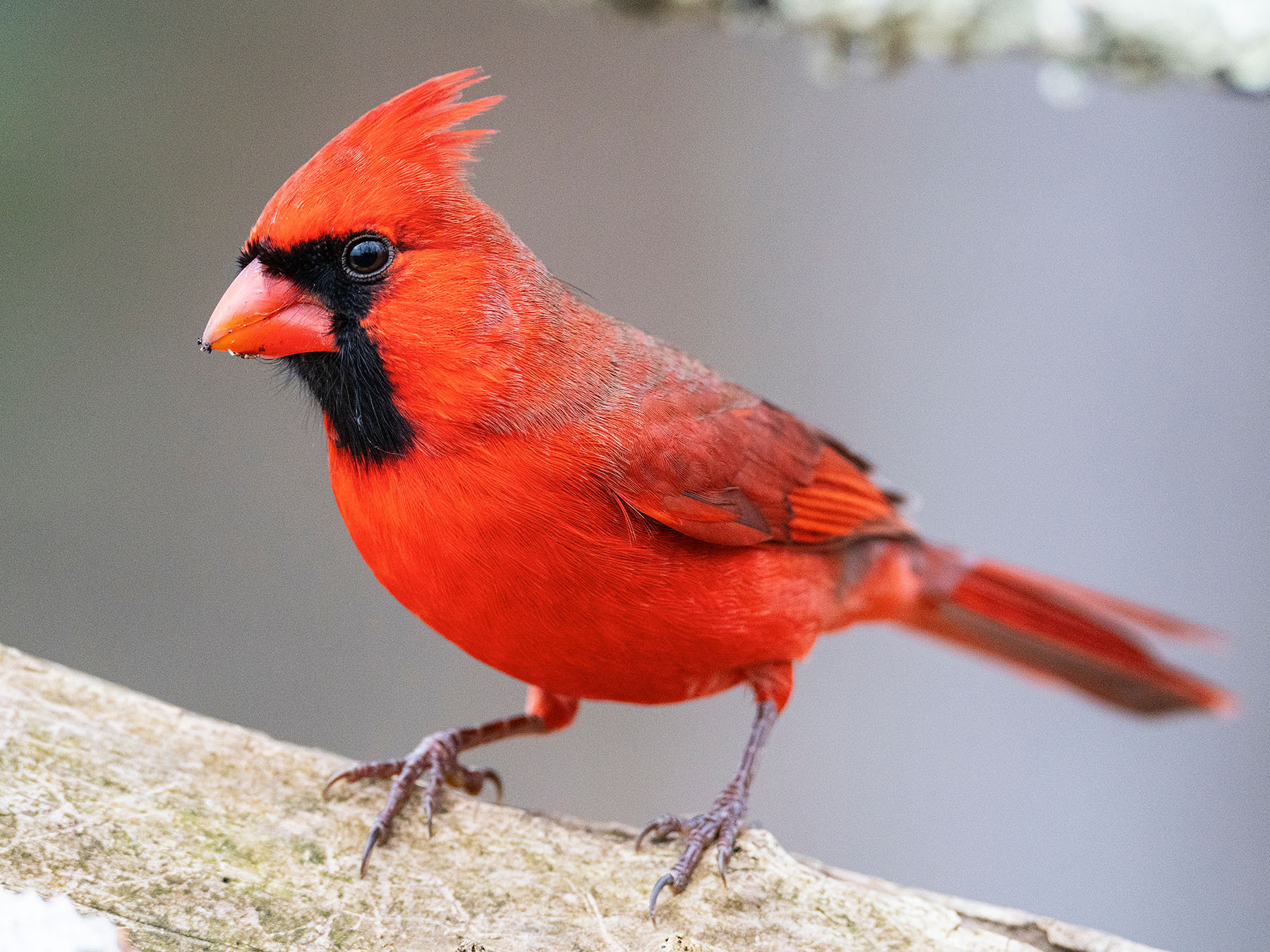
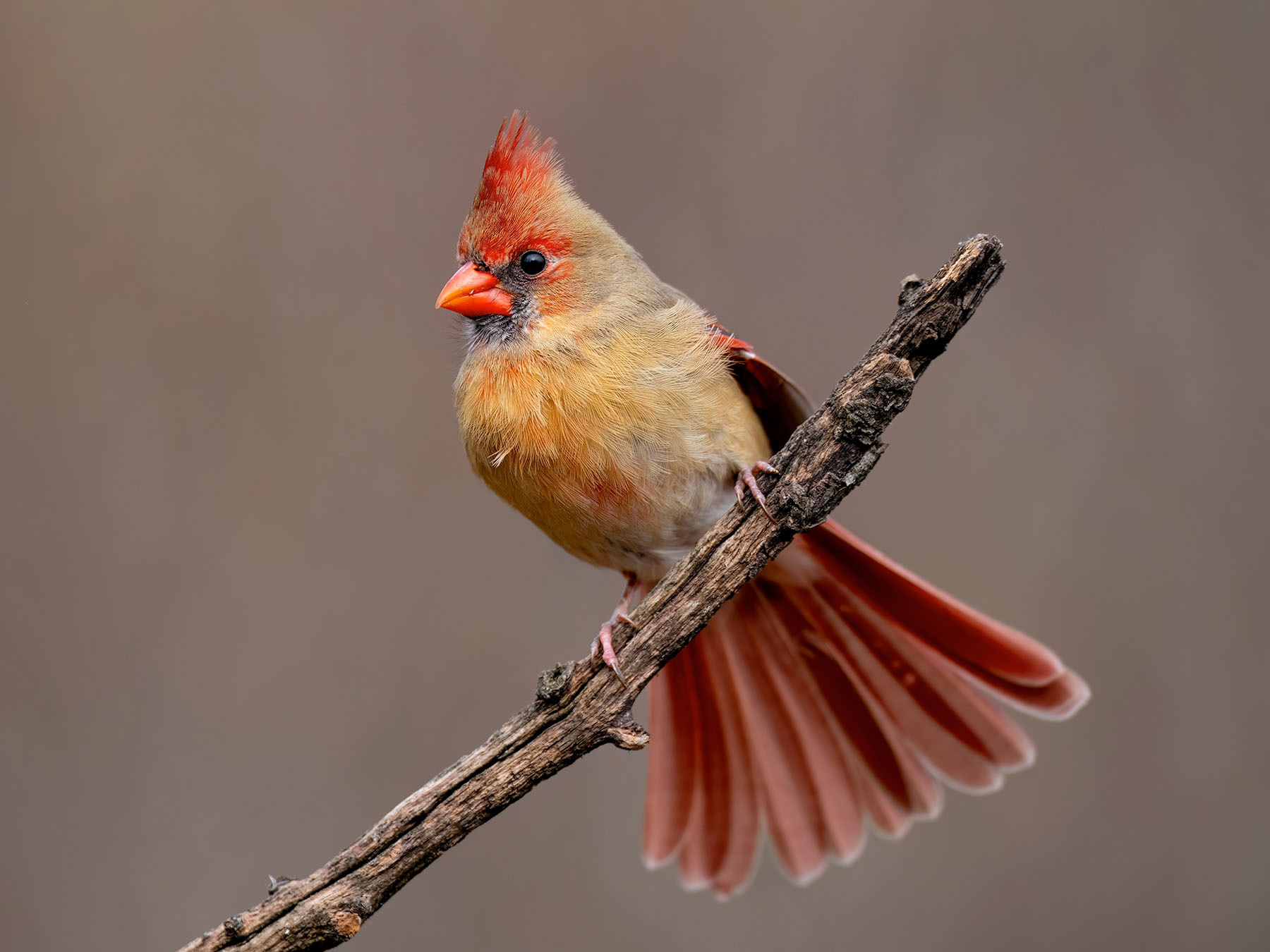
The Northern Cardinal is a medium-sized songbird with a stout bill and a prominent crest. Males stand out with all crimson-red plumage except for a small black face mask.
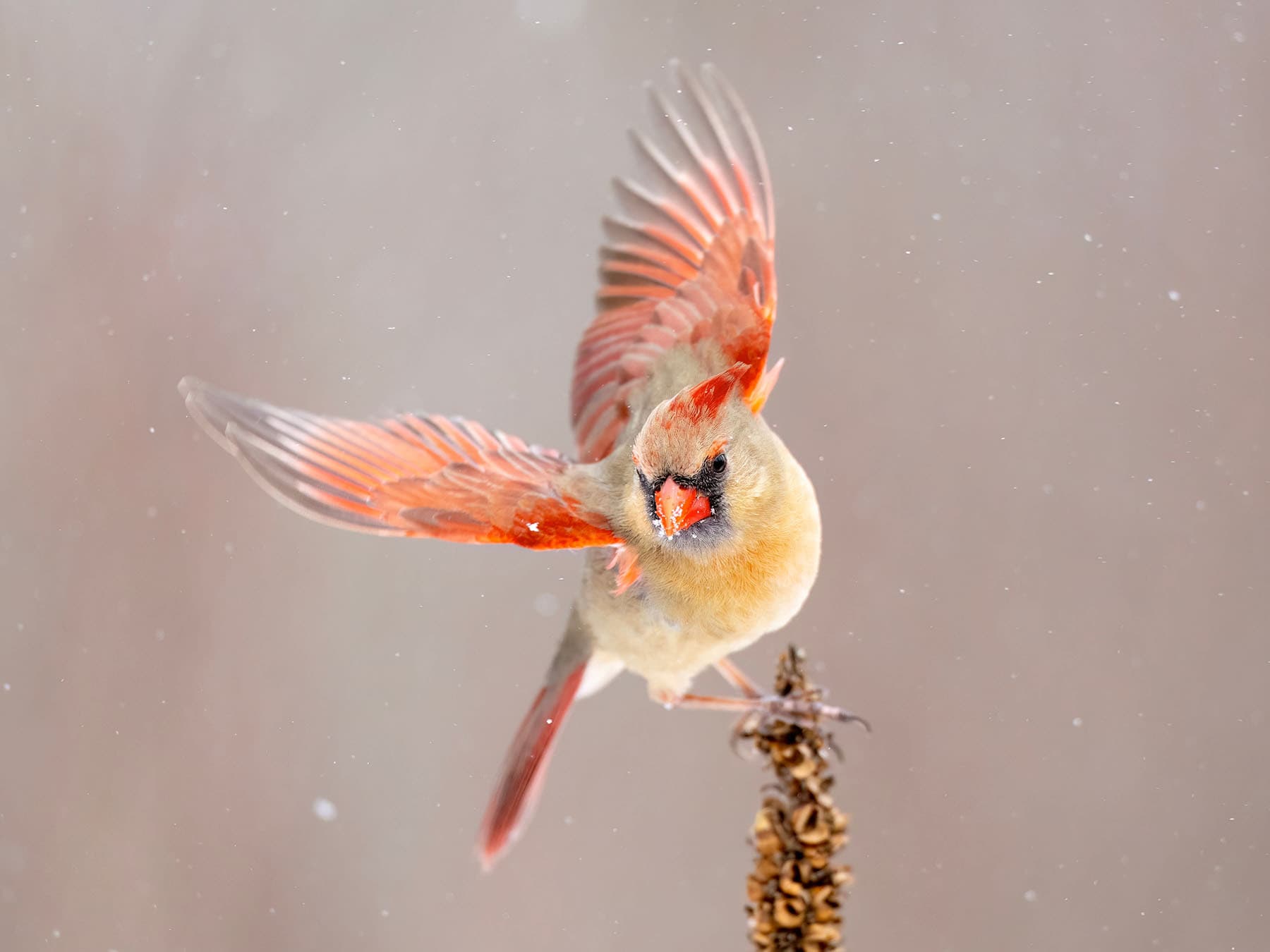
Female Northern Cardinals are easily identified by their black face mask, red crest, wings, and bills. Female Cardinals are undeniably beautiful birds, despite being less colorful than their male counterparts.
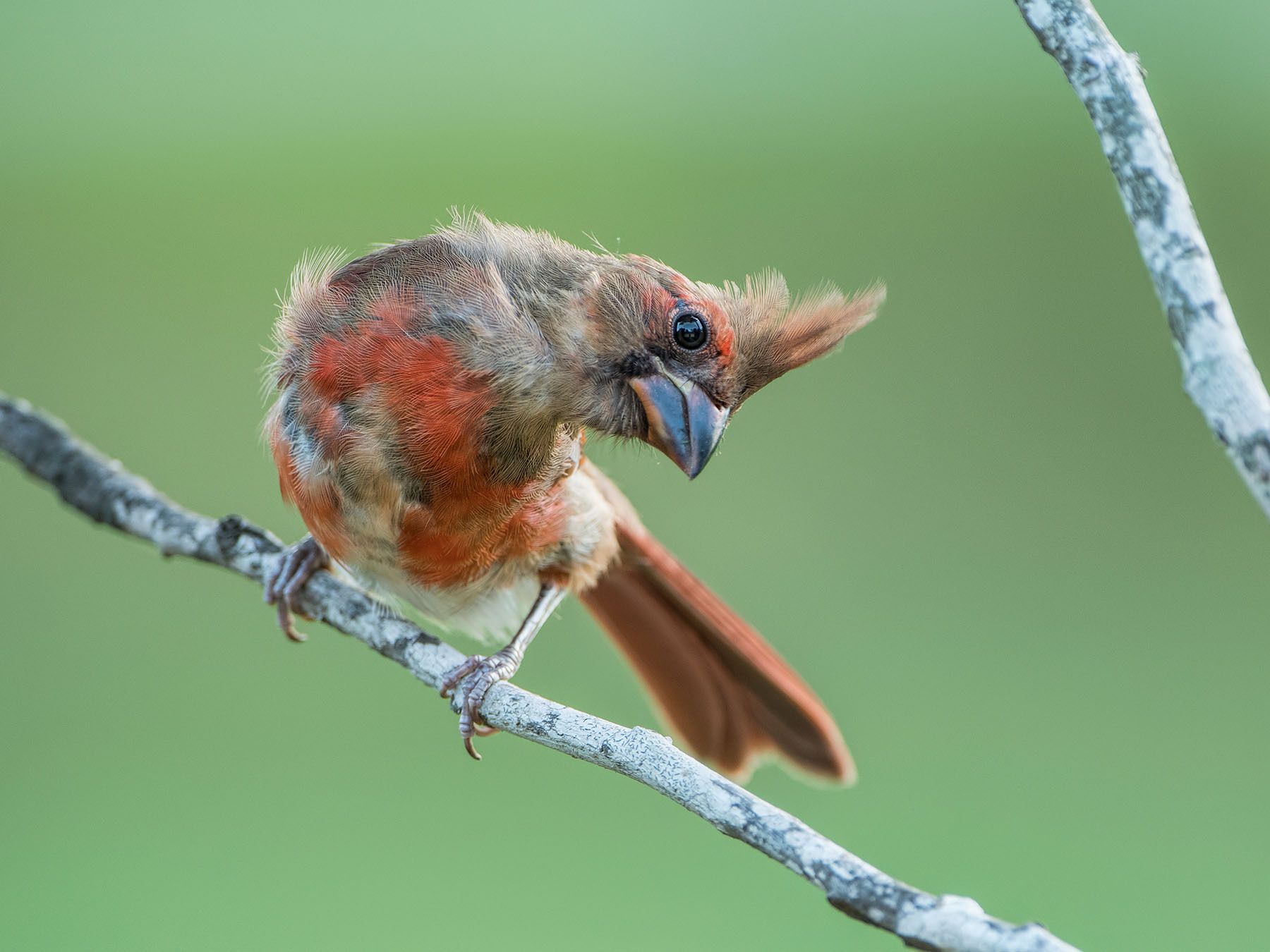
Juveniles have a similar appearance to females, although they can be told apart by their dark bills.
Rare yellow cardinals and birds with half-male and half-female plumage turn up from time to time, and Northern Cardinals often have a scruffy appearance when molting and sometimes even go bald.
Northern Cardinals are somewhere between an American Robin and a House sparrow in size. The various subspecies vary slightly in size, and the largest Northern Cardinals come from the Southwest in northern Mexico, Arizona, and New Mexico.
Length
Northern Cardinals are medium-sized songbirds with a body length of up to about 9 inches (23 cm), nearly half of which is made up by their fairly long tails.
Mass
Despite their size, Northern Cardinals weigh about as much as a golf ball. Adults weigh an ounce and a half or slightly more (42 - 48g), and there is no real difference between the sexes.
Wingspan
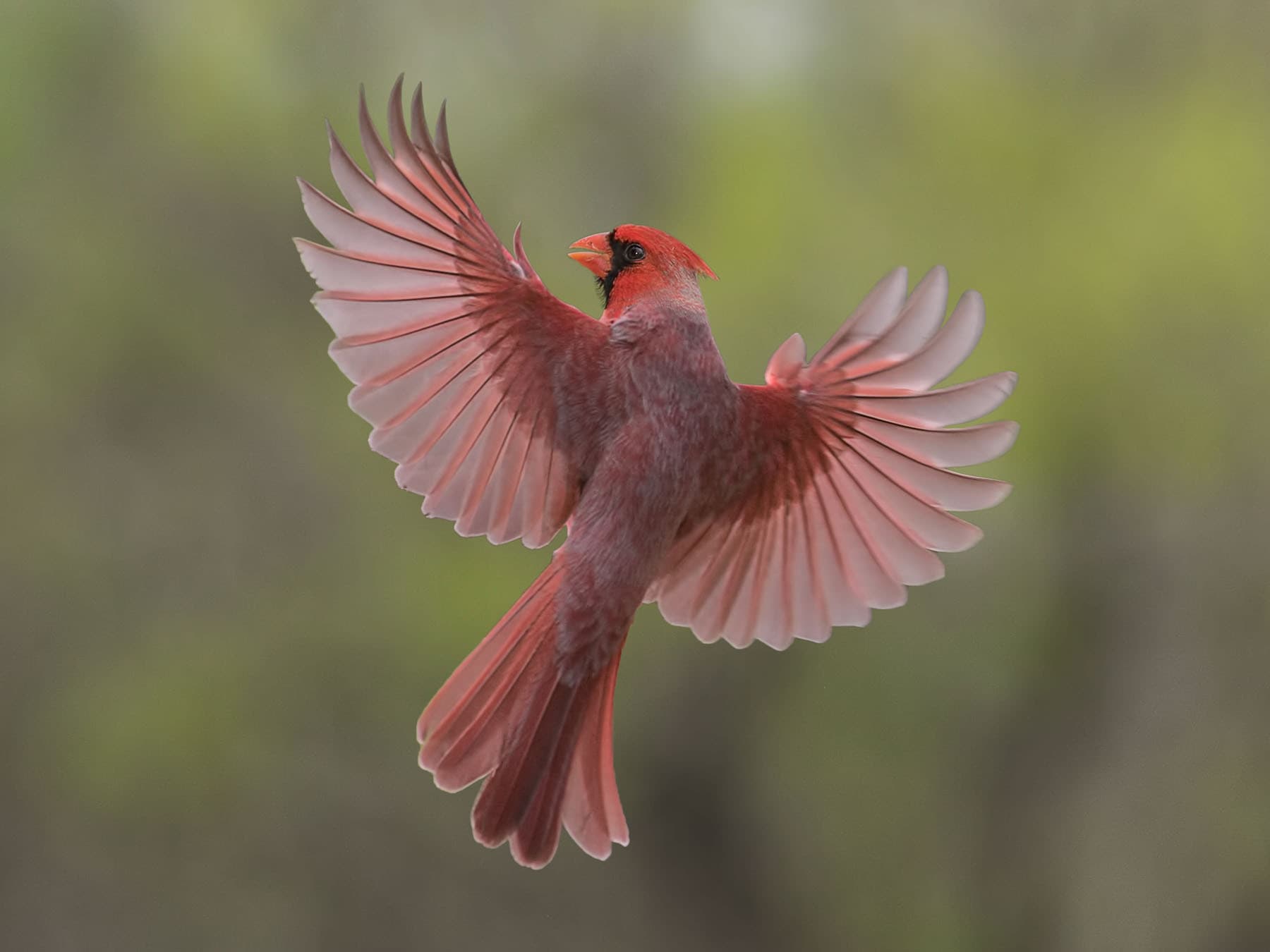
The Northern Cardinal does not travel long distances or fly to any great heights or speeds. Their wingspan varies from about ten to twelve inches (25 - 30 cm).
Its size
Adults- Length
- 21–23 cm
- Wingspan
- 25–31 cm
- Weight
- 42–48 g
Its song and calls
The calls and songs of the Northern Cardinal are a familiar sound across the eastern half of the United States.
What sound does a Northern Cardinal make?
Northern Cardinals produce a variety of calls, and both sexes sing. You might hear their typical ‘cheer cheer’ song at any time of the year, although males are particularly vocal in the spring. Their most common call is a high-pitched metallic ‘chip’ note.
- Song0:00 / 0:20
Recorded in North Carolina, United States · May 2023
- Call0:00 / 0:26
Recorded in Minnesota, United States · May 2011
When and where to see it
OctoberHere all year
Most recorded in October
- 1. Kentucky4.3%
- 2. Georgia4.2%
- 3. Arkansas4.1%
- 4. Tennessee4.1%
- 5. Alabama4.0%
Each dot is a county, state or province: the bigger and darker, the larger the bird’s share of that place’s bird records that month. Grey dots: no regular records. The ringed point is the centre of the bird’s records this month; the arrow shows how it moved since last month, and the dashed loop its path through the year. “Arrivals” colours places where it becomes regular this month (orange) or is in its last regular month (grey). GBIF eBird Observation Dataset, 2019–2024. Map data: Natural Earth, US Census Bureau; place centres © OpenStreetMap contributors.
In your area
See when the Northern Cardinal is recorded in your county, state or province.
How often the Northern Cardinal turns up in the United States and Canada through the year, from birdwatchers' records.
United States
Resident · all year · most records in February
Canada
Resident · all year · most records in February
Show as a table
| Month | United States | Canada |
|---|---|---|
| January | 2.5% (regular) | 2.4% (regular) |
| February | 2.9% (regular) | 2.8% (regular) |
| March | 2.9% (regular) | 2.5% (regular) |
| April | 2.7% (regular) | 1.9% (regular) |
| May | 2.3% (regular) | 1.4% (regular) |
| June | 2.2% (regular) | 0.98% (regular) |
| July | 2.4% (regular) | 1.2% (regular) |
| August | 2.3% (regular) | 1.2% (regular) |
| September | 2.2% (regular) | 1.1% (regular) |
| October | 2.3% (regular) | 1.4% (regular) |
| November | 2.2% (regular) | 1.8% (regular) |
| December | 2.4% (regular) | 2.2% (regular) |
Worldwide: recorded regularly in 6 countries
Countries where it was recorded in at least 3 of the 6 years 2019–2024. Linked countries have their own bird list.
Data: EOD – eBird Observation Dataset (Cornell Lab of Ornithology), accessed via GBIF.org, CC BY 4.0. Records from 2019–2024, aggregated and filtered by Birdfact. How these lists are made
Northern Cardinals are widely distributed in North America, and birdwatchers can spot them in a variety of habitats. Continue reading for a more detailed account.
What is the habitat of a Northern Cardinal?
Befitting their wide distribution, Northern Cardinals occupy a variety of woody and shrubby vegetation types. They are at home in parks, suburban backyards, old agricultural fields, swamps, and forest edges. These birds are more common along drainage lines and shrubby areas in dry, open habitats.
What is the range of a Northern Cardinal?
Northern Cardinals are native to North America. Most of their range falls within the contiguous United States, although they also occur in southern Canada to the north and Mexico and Central America to the south.
Northern Cardinals are widespread in the eastern half of the United States. They occur across the Midwest, Northeast, Southeast, and in parts of the Southwest. The species was also introduced outside their native range, and today, birdwatchers can spot Northern Cardinals in Hawaii and Bermuda.
Where do Northern Cardinals live?
Northern Cardinals spend most of their time perched or hopping through the branches of shrubs and trees or foraging on the ground.
At night, Cardinal pairs roost together in shrubs and trees, although the male moves off a short distance when the female is incubating eggs in the nesting season.
How rare are Northern Cardinals?
Northern Cardinals are abundant birds across much of their range. They are most common in the Southeast, although their numbers have increased in the north, perhaps due to the expansion of human development and an increased abundance of food from bird feeders.
Migration
Long after many colorful songbirds depart for the warm south, birdwatchers can still see Northern Cardinals in their backyards. Keep reading to learn about their movements.
Do Northern Cardinals migrate?
Cardinals are a non-migratory species. Unlike many other colorful species that head south for the winter, these steadfast songbirds tough it out all through the year, even surviving the freezing conditions of Southern Canada and the upper Midwest.
Tips for seeing it
- Look for bright red males perched on exposed branches or feeders
- Listen for their clear, whistling song, often described as 'cheer-cheer-cheer'
- Check dense shrubs and low trees where they often nest
- Visit bird feeders early morning or late afternoon when they're most active
What it eats
Northern Cardinals have conical bills, typical of seed-eaters, although their varied diet changes depending on food availability across the seasons. Continue reading to discover what they eat in the wild and what you can feed them in your backyard.
What do Northern Cardinals eat?
Northern Cardinals feed primarily on seeds, although they supplement their diet with fruits and insects. These birds are regular visitors to bird feeders. More than two-thirds of their diet consists of plant material, although insects and their larvae are important in the late spring and summer.
Cardinals readily visit bird feeders, especially in the early morning and late afternoon. They will feed on suet, cracked corn, peanuts, and mealworms, but they prefer sunflower seeds over other types.
What do baby Northern Cardinals eat?
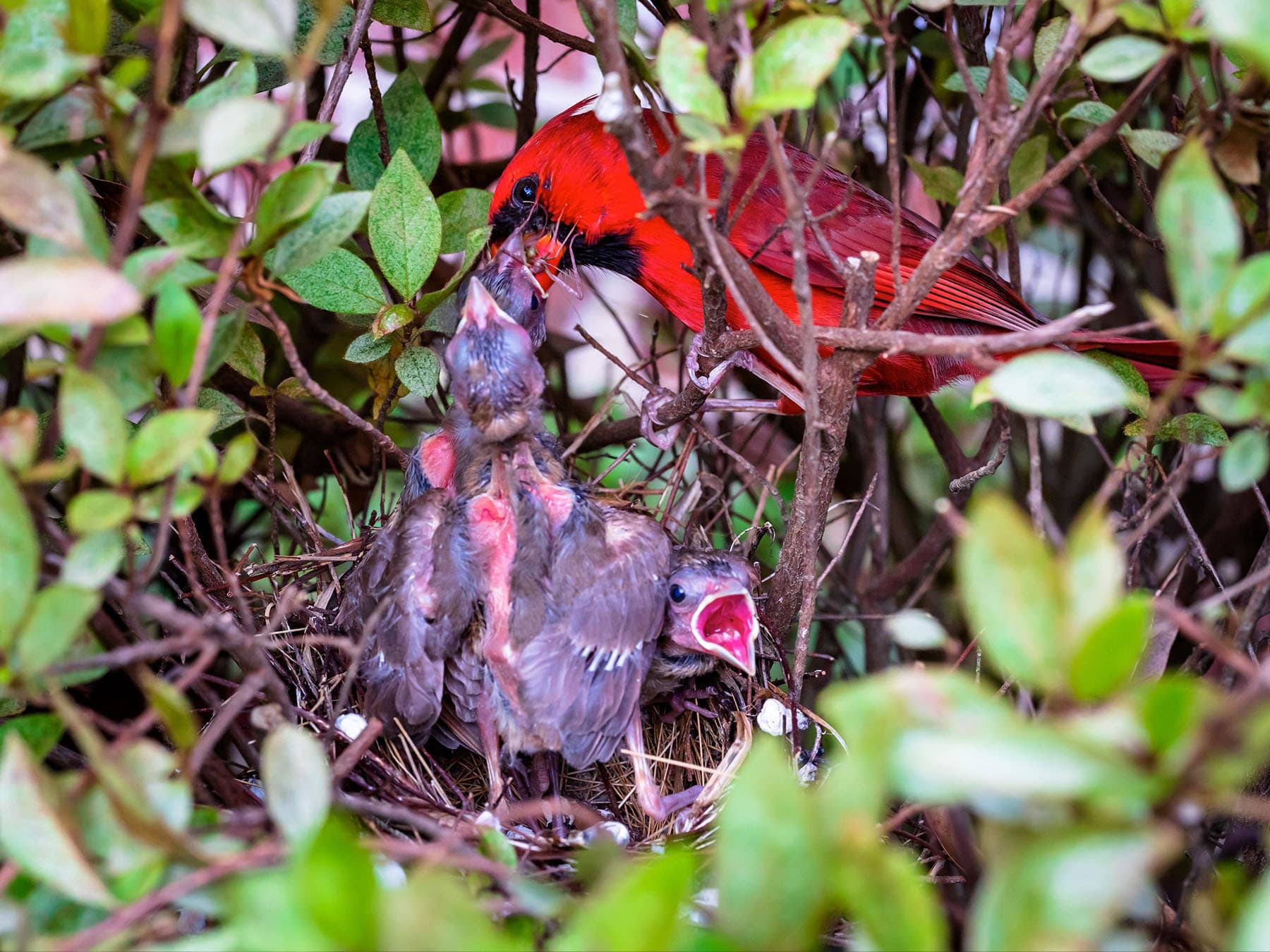
Baby Northern Cardinals hatch out as helpless chicks, completely unable to feed themselves. Both parents provide a steady supply of nutritious, protein-rich insects like caterpillars.
The adult birds continue to feed their chicks for several weeks after fledging until they become fully independent.
Nesting and breeding
Northern Cardinals nest in the spring and summer each year, producing one or two broods. They may start their nesting as early as February and continue into the start of fall. Cardinals often nest in backyards, so keep a lookout for a nesting pair on your property this year.
Where do Northern Cardinals nest?
Cardinals are resident birds, and they nest throughout their range. Females build their nests above the ground in dense shrubs and small trees. Some individuals build their nests as high as 40 feet (12m), although the average height is between three and seven feet (1 - 2m ).
What do Northern Cardinal eggs look like?
Most female Cardinals lay two or three eggs per clutch. The eggs are whitish, grayish, or greenish, with variable gray or brown speckling. Each egg measures approximately 1 inch long and ¾ inch across (25 mm x 19 mm).
Do Northern Cardinals mate for life?
Northern Cardinals pair up to raise a family together. Pair bonds can last more than one season, so at least some Northern Cardinals will mate for life.
However, monogamy in the bird world does not always imply fidelity. Northern Cardinals often mate with other partners during the nesting season.
Behaviour
Male Northern Cardinals have the heart-warming habit of feeding their partners, an action that looks very much like an affectionate kiss. However, these colorful songbirds can be pretty feisty too.
Are Northern Cardinals aggressive?
Northern Cardinals can be pretty aggressive during the breeding season. Of course, people have nothing to fear from them, but other cardinals who enter their territory will be chased and attacked if necessary.
Cardinals can get so worked up that they will attack their own reflections in windows and car mirrors. You can prevent this behavior by temporarily covering your windows and mirrors in the spring.
Lifespan and predators
The world is a dangerous place for a small, colorful songbird. So how long do Northern Cardinals live, and what threats do they have? Read this section to learn more about their lifespan, predators, and conservation status.
How long do Northern Cardinals live?
Northern Cardinals can live for over 15 years, although most individuals probably live for just two or three years.
There are many potential causes of mortality for Northern Cardinals, including:
- Parasites and disease
- Extreme weather and exposure
- Collisions
- Predation
What are the predators of Northern Cardinals?
Northern Cardinals have a wide variety of natural enemies, including mammals, birds, and even reptiles. In urban and suburban areas, domestic and feral cats can be a major threat to Cardinals, although wild species like Cooper’s and Sharp-shinned Hawks often share our towns and cities.
Many other species will prey on Adult Northern Cardinals and their eggs and chicks, including the following birds and animals:
- Eastern Screech-Owls and other owl species
- Falcons
- Shrikes
- Raccoons
- Opossums
- Ratsnakes
Are Northern Cardinals protected?
Northern Cardinals are protected under the Migratory Bird Treaty Act of 1918, which makes it illegal to catch, keep, or kill these birds.
Are Northern Cardinals endangered?
Northern Cardinals are not endangered. The species is listed as ‘Least Concern’ by the IUCN (International Union for Conservation of Nature), and their numbers are increasing.
Conservation
Northern Cardinals are currently listed as Least Concern due to their large range and stable population. However, they face threats from habitat loss in some areas and collisions with windows. Conservation efforts focus on maintaining suitable habitats in urban and suburban areas.
More photos
5 photos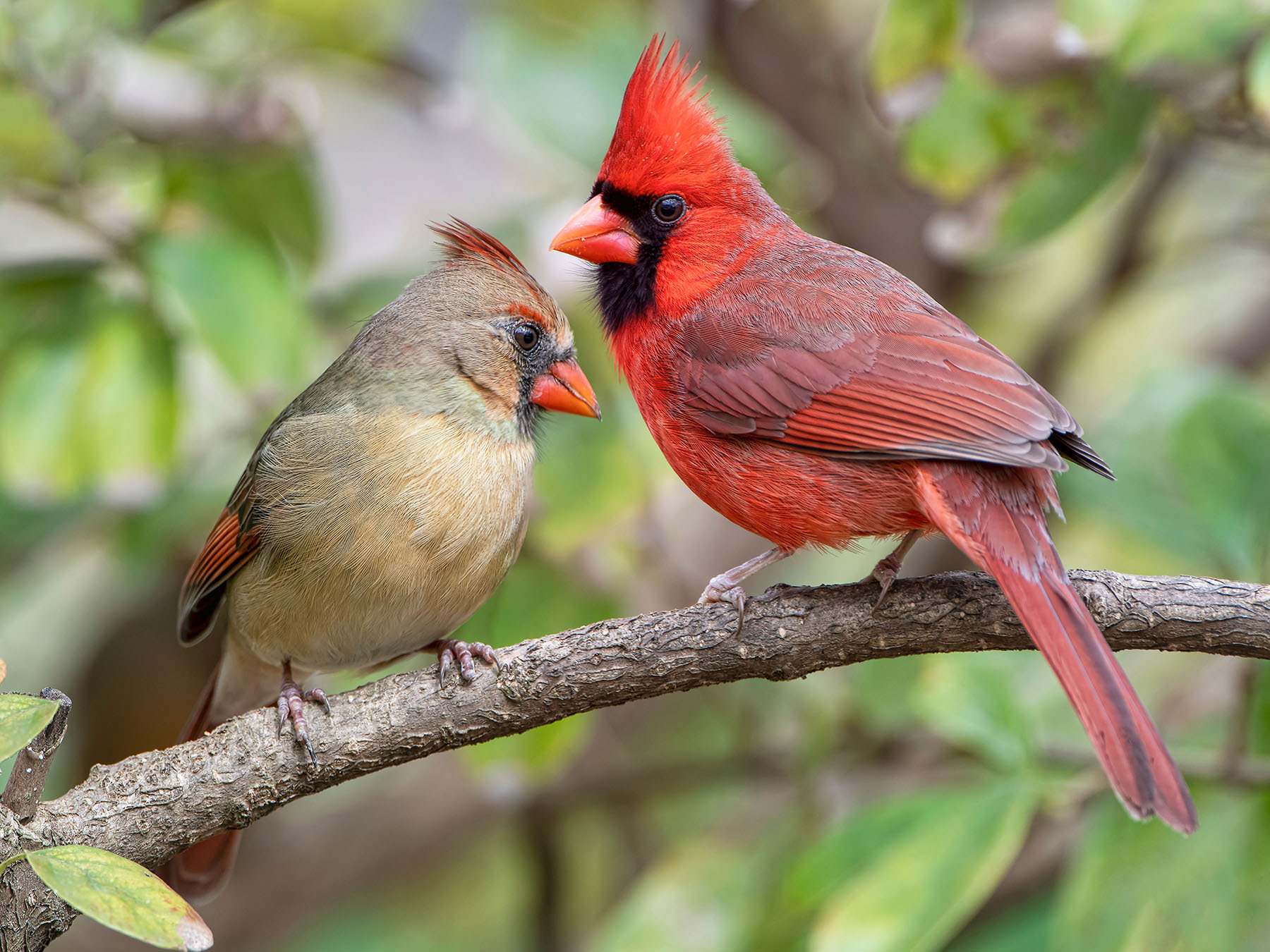
Northern Cardinal guides
5 guidesQuick facts
- Length
- 21–23 cm
- Wingspan
- 25–31 cm
- Weight
- 42–48 g
- Lifespan
- 2–3 years · oldest recorded 15.9 years
- Family
- Cardinals & Grosbeaks
- Migration
- Resident
- Global status (IUCN)
- Least Concern
- World population
- 130,000,000 individuals
- Population trend
- Stable
- Also called
- Redbird, Common Cardinal
- Scientific name
- Cardinalis cardinalis
Sources
4- Conservation statusBirdLife International. 2018. Cardinalis cardinalis. The IUCN Red List of Threatened Species 2018: e.T22723819A132024136. Source (opens in a new tab)
- Population trendBreeding Bird Survey and/or Christmas Bird Count: Butcher and Niven (2007)
- Population estimatePartners in Flight (2022) Source (opens in a new tab)
- Max lifespanLongevity Records Of North American Birds. Version 2023.1 Source (opens in a new tab)

Checked by
Nathan Cope, founder and editor
Nathan founded Birdfact and leads its writers and contributors in the UK, the US and Canada. He has watched and studied birds for more than ten years, and checks every article and species guide before it’s published.