Facts · Updated 8 Oct 2026
Baby Blackbirds: Chicks, Fledglings and Young Blackbirds
By the Birdfact teamChecked by Nathan Cope
Blackbird chicks hatch after 12 to 14 days, leave the nest at about two weeks and are fed by their parents for about three weeks more. What they look like at each stage, what they eat, and what to do if you find one on the ground.
On this page9 sections
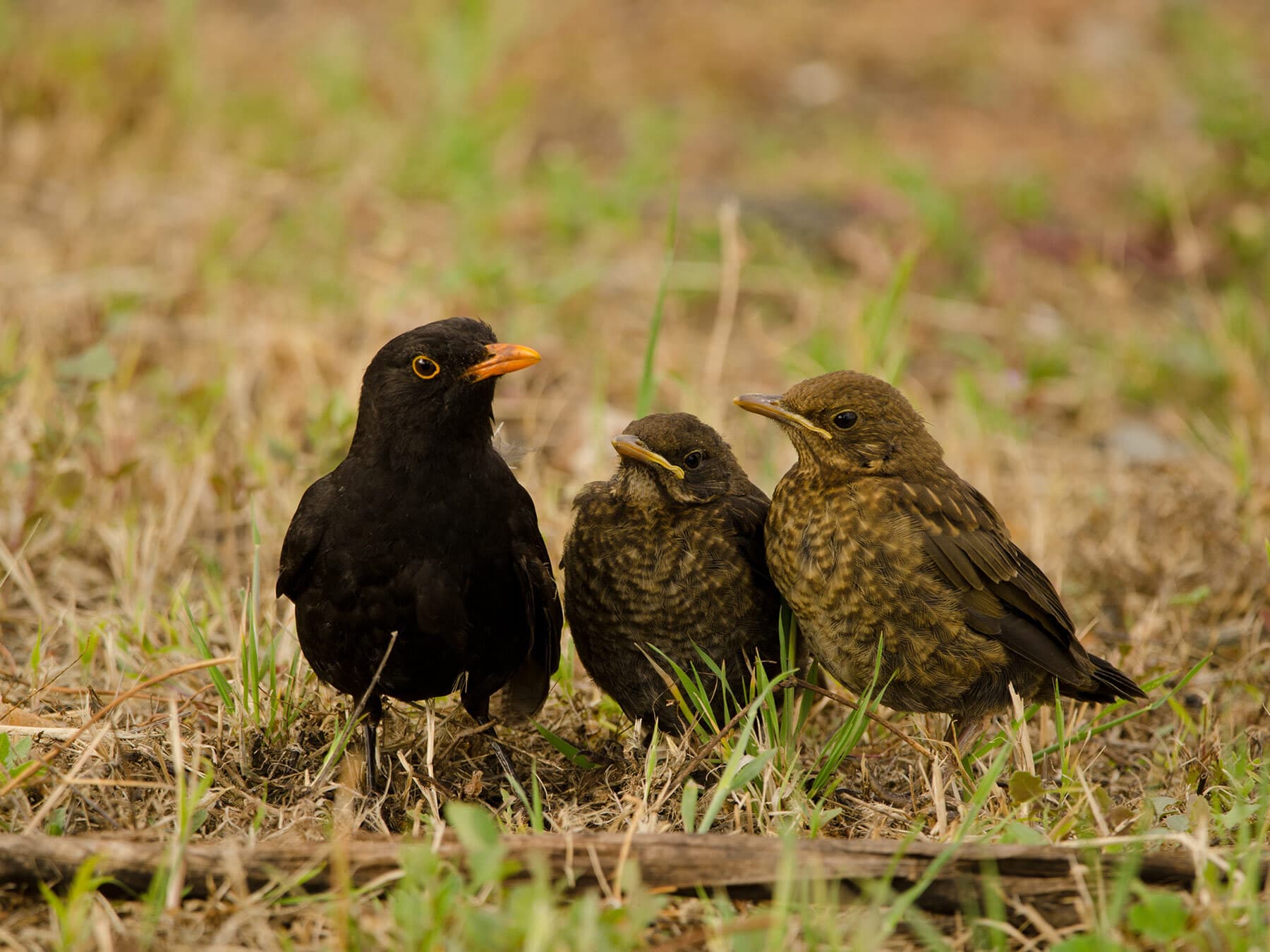
This page follows young Blackbirds from hatching to independence: what they look like at each stage, what they are fed, and what to do if you find one on the ground. For nests and eggs see Blackbird nesting; for adults, the Blackbird. It is about the Blackbird of Britain and Europe; for the North American bird, see juvenile Red-winged Blackbirds.
When do baby Blackbirds hatch?
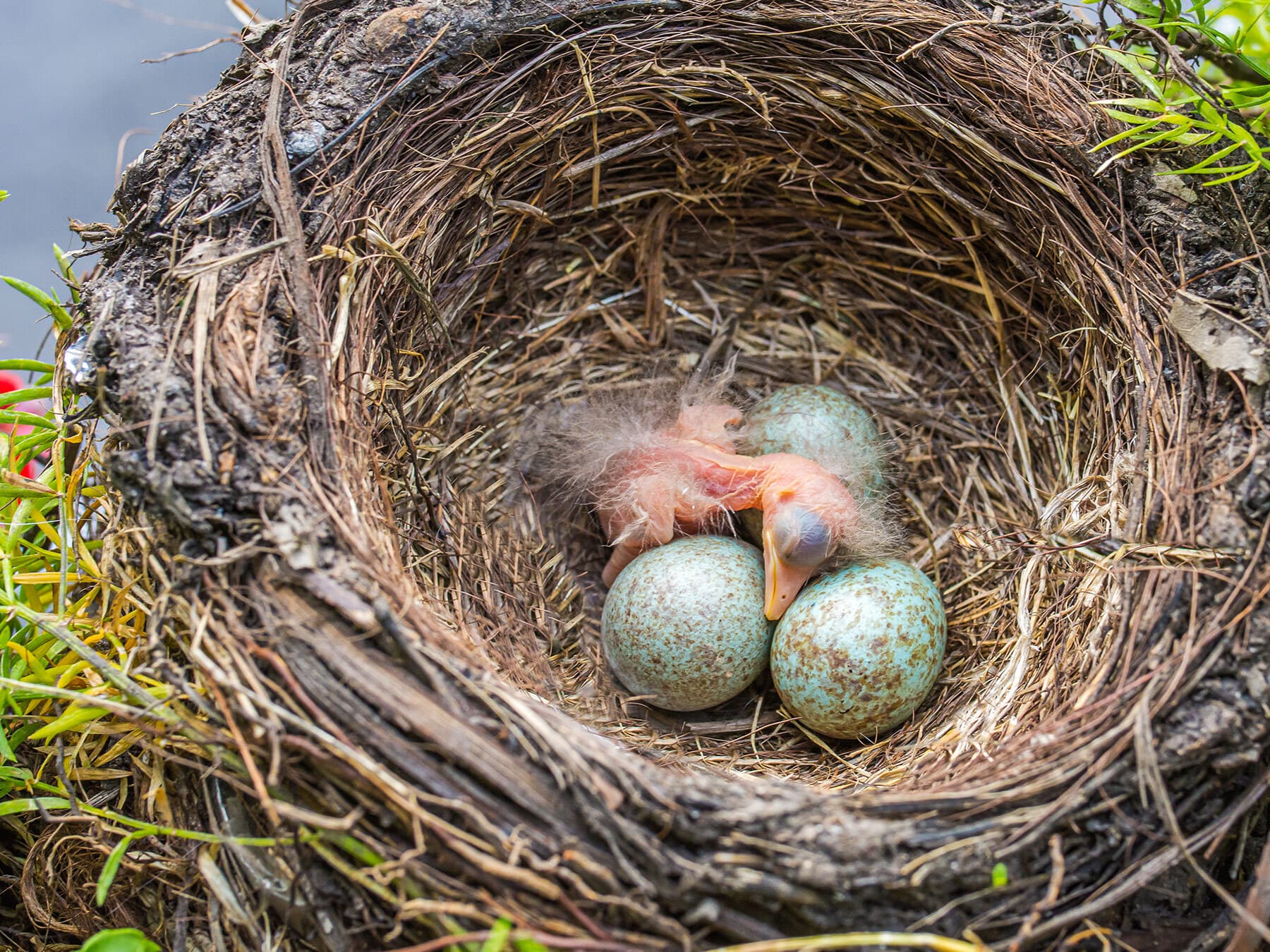
The female sits on her 3 to 4 eggs for 12 to 14 days before they hatch. In Britain first clutches are laid around 22 April on average, anywhere between late March and mid-June, and most pairs go on to raise 2 or 3 broods through the summer.1
Newly hatched chicks are helpless, with only a covering of down.
Nestlings: the first two weeks
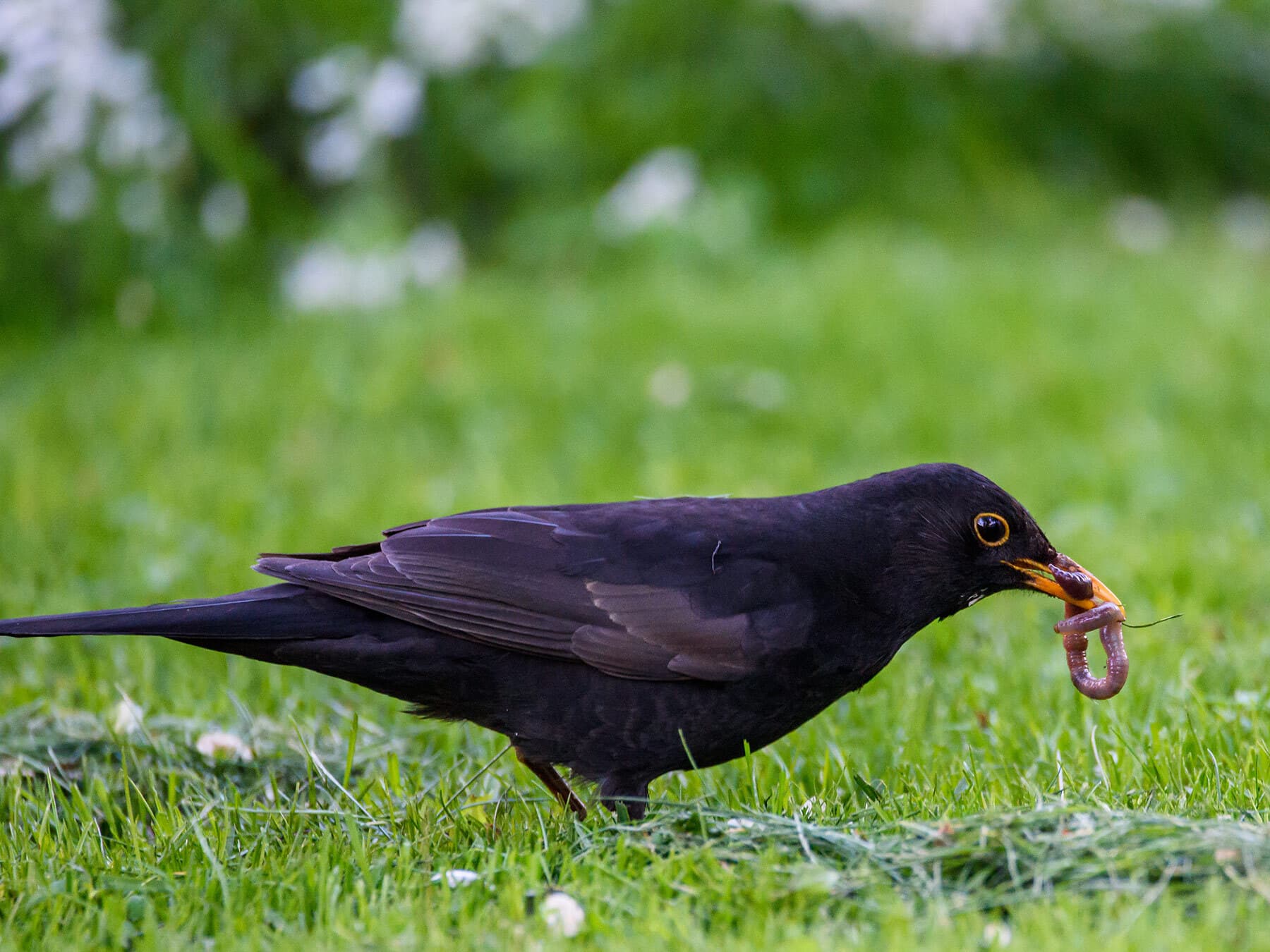
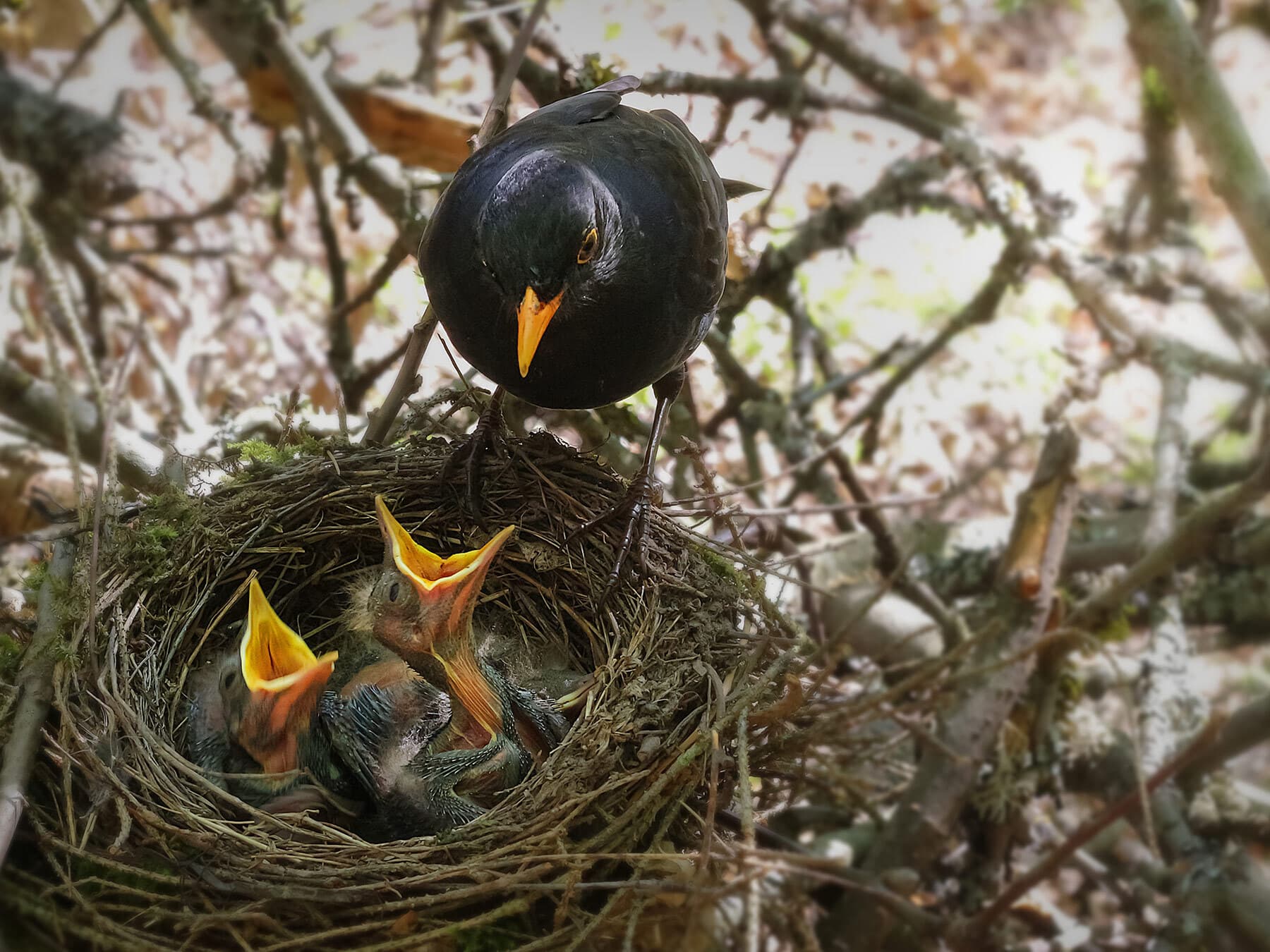
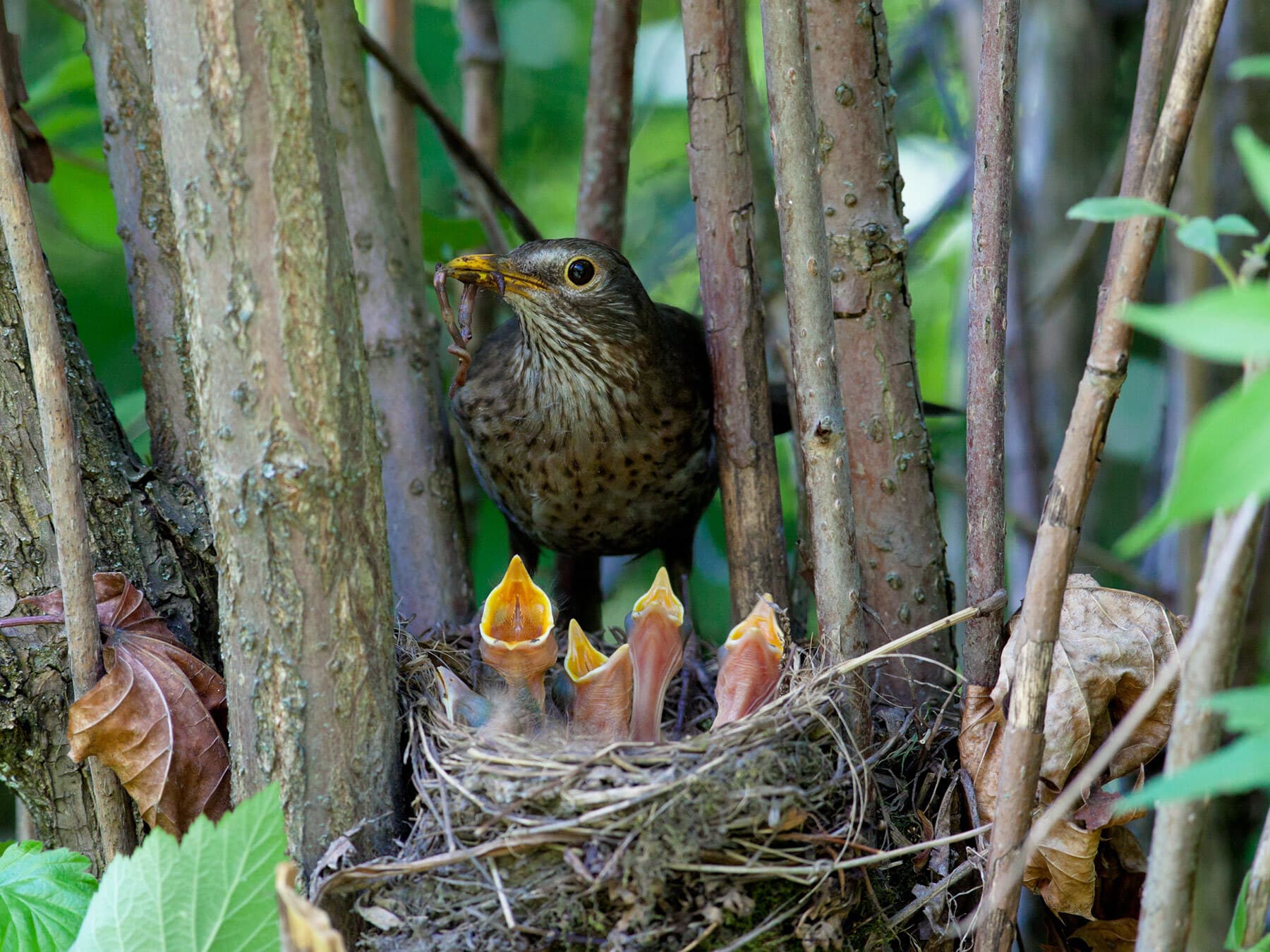
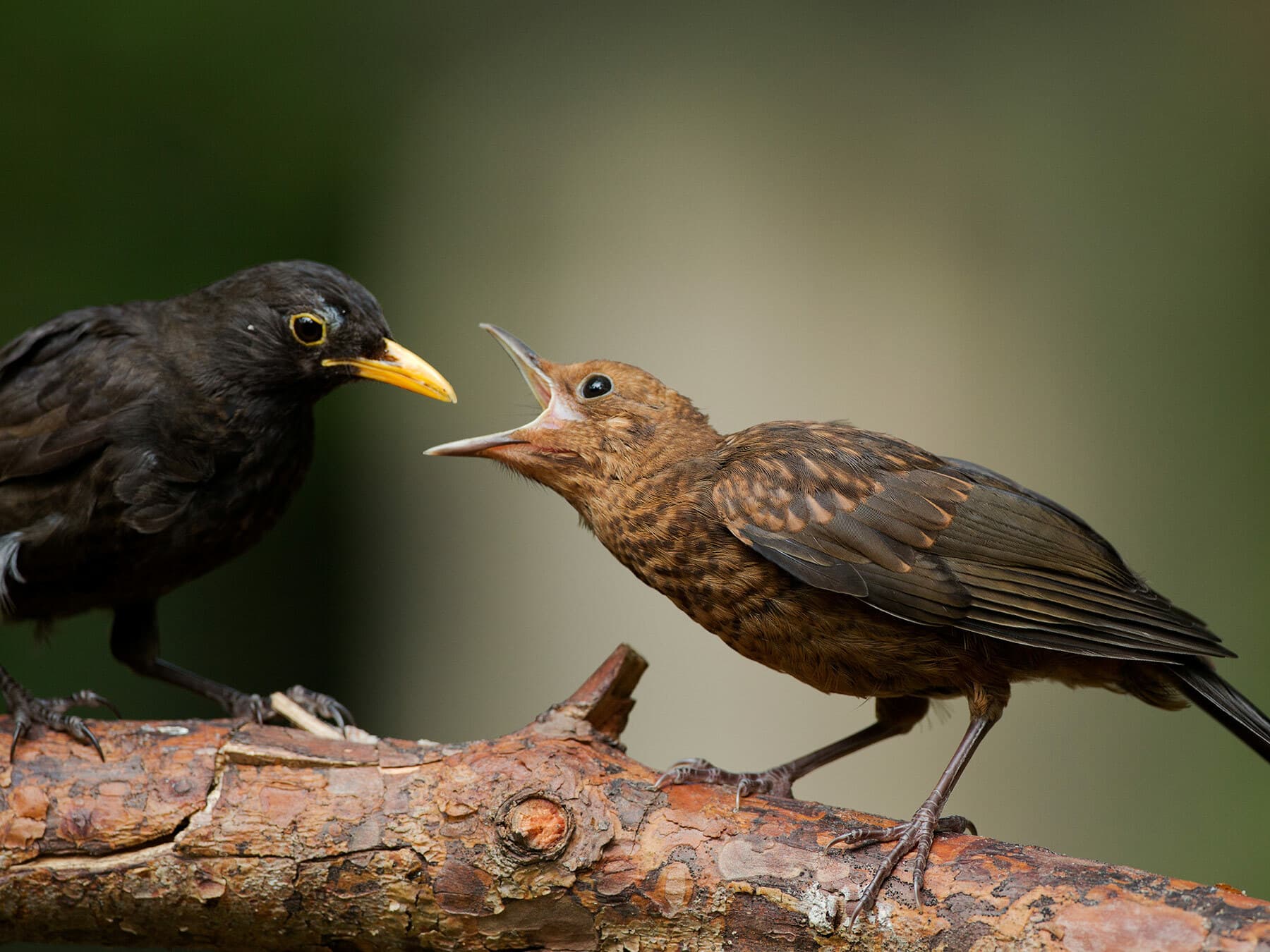
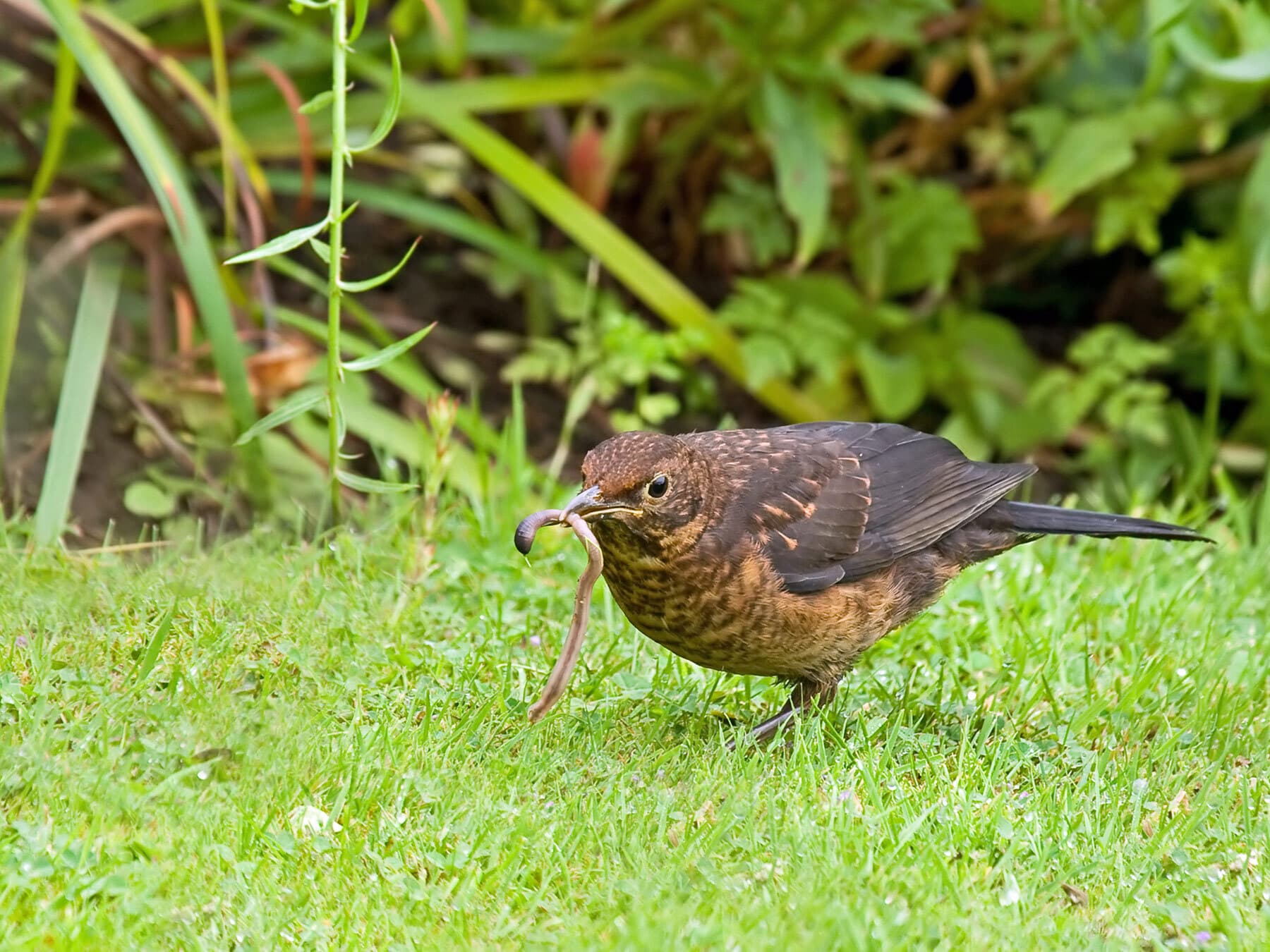
Both parents feed the chicks. They bring mainly earthworms and caterpillars: in one study, caterpillars were the main food of chicks in woodland and earthworms in suburban gardens.
The chicks leave the nest at 13.5 to 16 days old, about two weeks; the average in British nest records is 14.64 days.1
Nights at the nest
In a radio-tracking study in Dorset, a female stayed on the nest at night while she was sitting on the eggs, but her mate went off each evening to a communal roost in a nearby thicket. When the chicks were 11 days old, both parents spent the night at the roost and came back just before dawn; the young left the nest later that day and slept close to it. The youngest bird to join the roost itself did so 34 days after leaving the nest.2
Fledglings: out of the nest
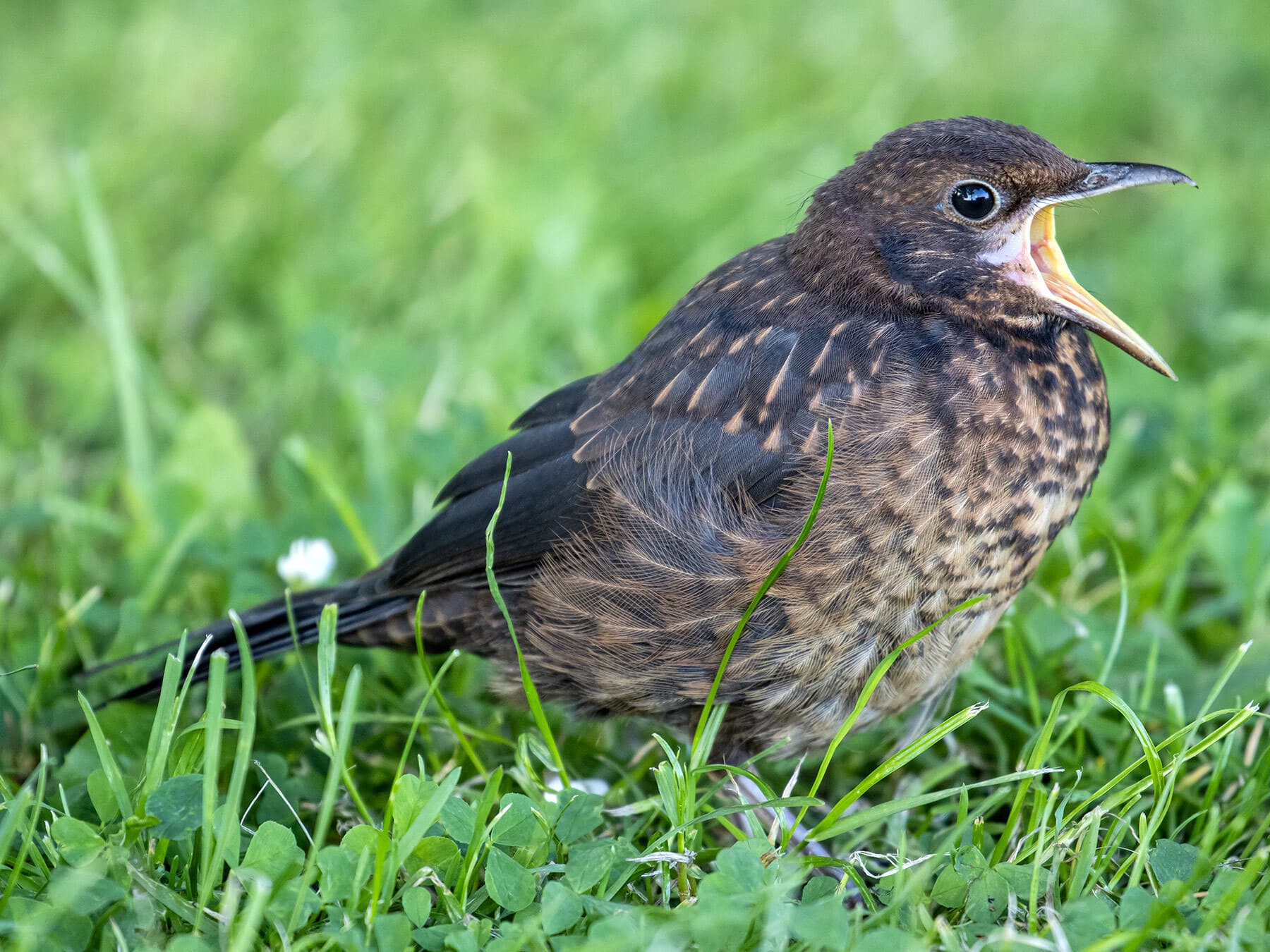
A fledgling is a young bird that has left the nest but cannot fly well yet. It spends from a few days to a week or so on the ground while its flight feathers finish growing, and its parents keep feeding it.3
A Blackbird fledgling is warm brown, spotted and streaked with buff, with a dark bill. The parents feed it for about three weeks after it leaves the nest. This is perhaps the hardest time for garden Blackbirds: young birds have to cope with cats, and earthworms are hard to find when dry weather drives them deep into the soil.
What to do if you find a baby Blackbird
If it has feathers, leave it where it is. A fledgling on the ground is normal, and its parents are usually nearby, feeding it. Keep people and pets away. If it is in danger, move it a short distance into cover, such as under a hedge, but keep it within earshot of where you found it: the parents find their young by their calls.3
If it has no feathers, it is a nestling and should not be out of the nest: put it back if you can. If a young bird is injured, or you are sure it has been abandoned, contact a wildlife rescue.
What to feed a baby Blackbird
A healthy fledgling needs nothing from you: its parents feed it. To help the parents, the RSPB suggests mealworms soaked in water in spring and summer, which are easier for chicks to eat and give them water, and no bread or dry, hard food in those months, as chicks can choke on it.4
Juveniles
From July the young moult into adult-like plumage, which takes just over a month. Young males are a little darker than young females, especially on the wings and tail; after the moult they look black but keep browner wings, and many keep a dark bill into the winter. See female and young Blackbirds.
Juveniles turn up in fewer gardens than you might expect. In the BTO's 2024 survey they were reported from only about a quarter of gardens, mostly in June and July, before they moulted and moved away.5
Survival
Many nests fail. Of 1,428 British nests in one sample, at least one chick hatched in 56% and at least one young bird left the nest in 41%. Losses are generally higher in towns, where there is more disturbance and there are more cats, and wherever Magpies and other crows are numerous. Of the young that leave the nest, about 56% survive their first year.1
Sources
- BTO. Blackbird (Turdus merula). BTO BirdFacts. Accessed 6 October 2026. Source
- Hill, I. F., Cresswell, B. (1997). The use of a communal summer roost by radio-tagged Blackbirds Turdus merula. Bird Study 44: 114-116. doi:10.1080/00063659709461044
- RSPB. What to do if you find a baby bird. RSPB. Accessed 6 October 2026. Source
- RSPB. How and what to feed your garden birds. RSPB. Accessed 6 October 2026. Source
- Hanmer, H. (2025). Blackbirds in Gardens. Bird Table (BTO Garden BirdWatch magazine) 121: 20-22. Accessed 6 October 2026. Source
- Collar, N., Christie, D. A. (2020). Eurasian Blackbird (Turdus merula), version 1.0. Birds of the World (J. del Hoyo, A. Elliott, J. Sargatal, D. A. Christie and E. de Juana, editors). Cornell Lab of Ornithology. doi:10.2173/bow.eurbla.01
- Toms, M. (2013). Blackbird: species focus. Bird Table (BTO Garden BirdWatch magazine) 76: 18-20. Accessed 6 October 2026. Source
- RSPB. Blackbird. RSPB Birds A-Z. Accessed 6 October 2026. Source