Identification · Updated 8 Oct 2026
Female Blackbirds: How to Identify Them, and Male vs Female
By the Birdfact teamChecked by Nathan Cope
A female Blackbird is dark brown, not black, with a paler, mottled breast and a bill that can be brown or yellow. Here is how to recognise her, tell her from young birds and a Song Thrush, and what she does in the breeding season.
On this page8 sections
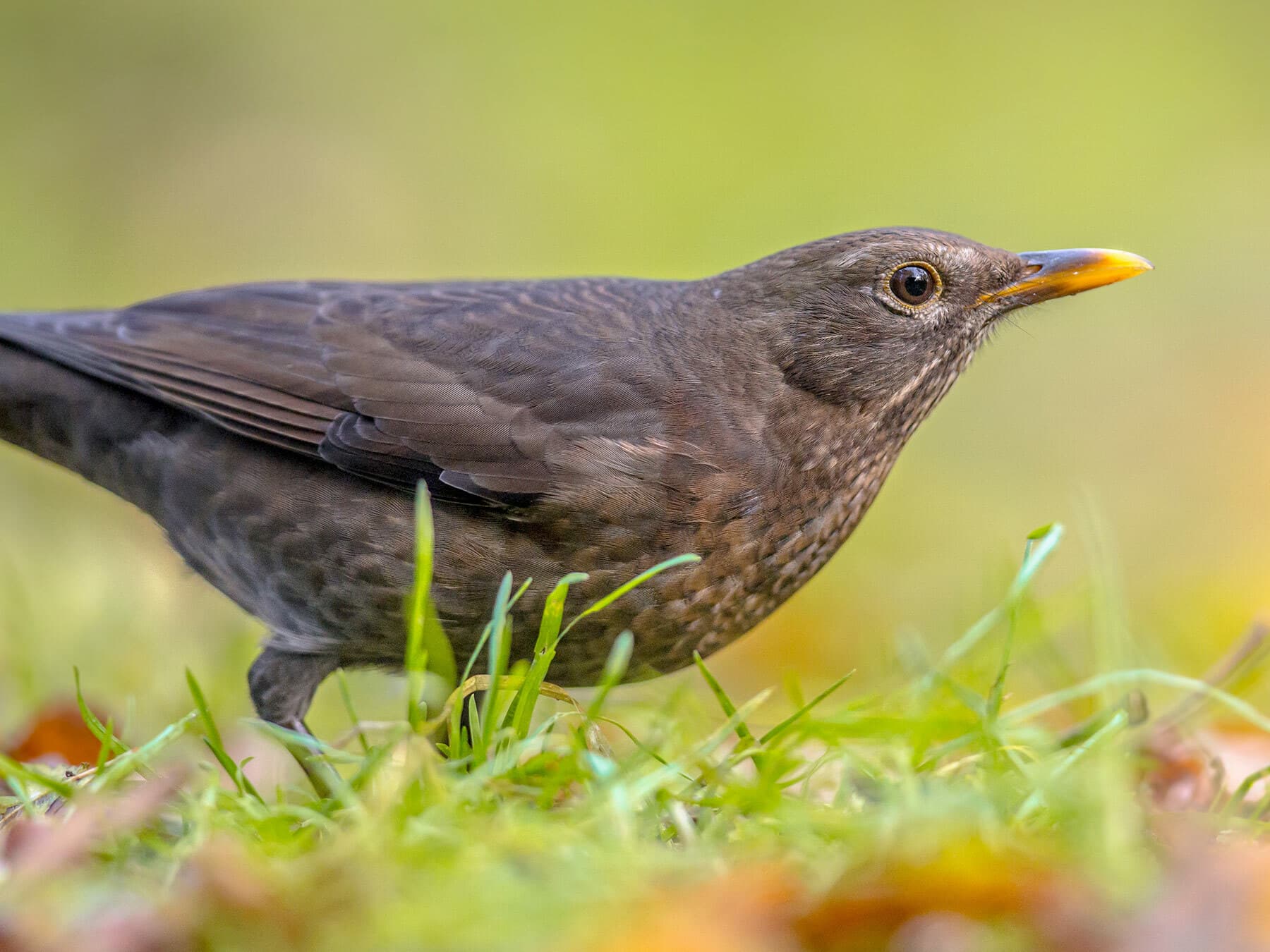
This page covers the female Blackbird: how to recognise her, how she differs from the male and from young birds, whether she sings, and the birds she is mistaken for. For the Blackbird in general, see Blackbird identification, song and facts.
What does a female Blackbird look like?
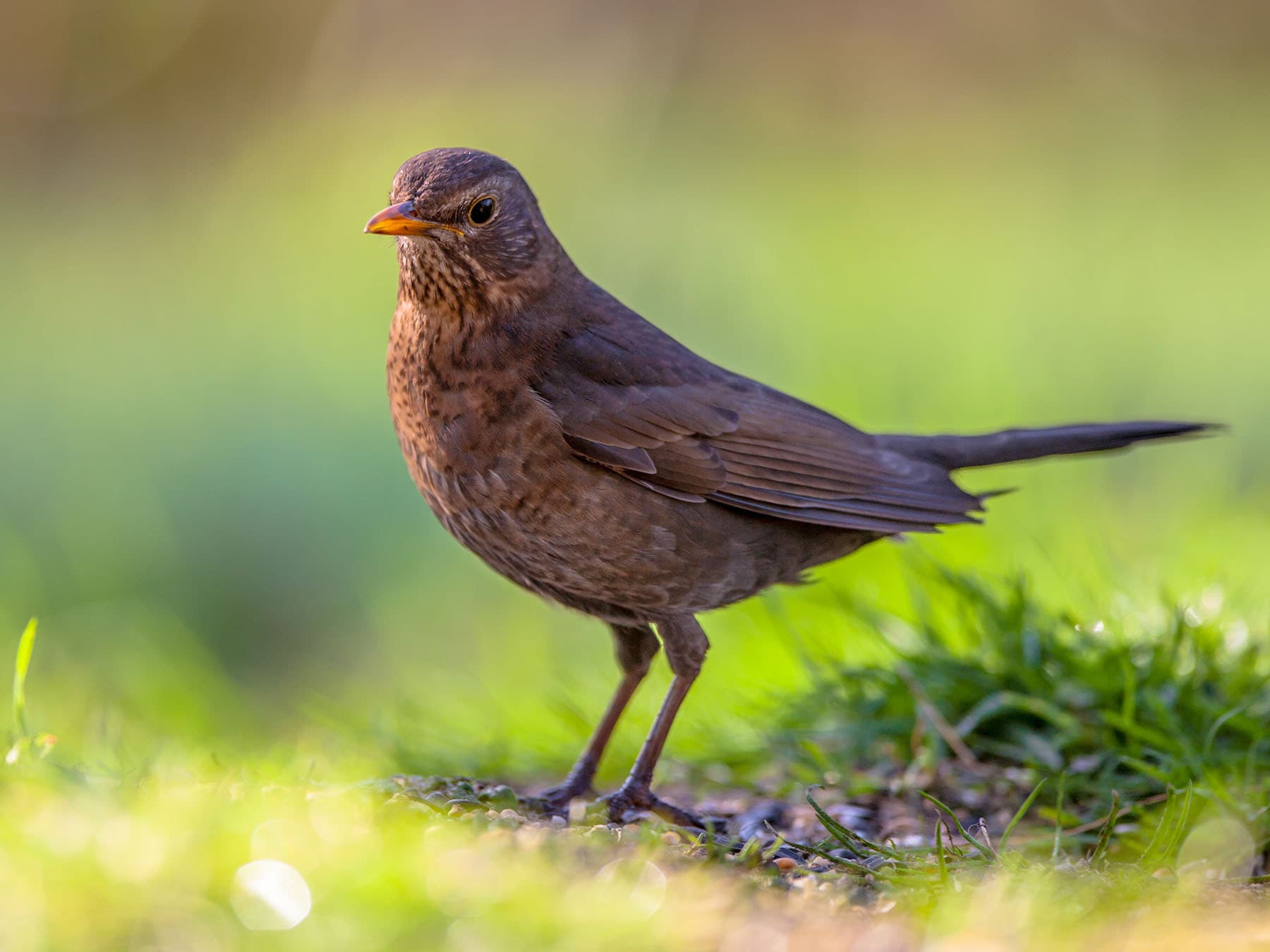
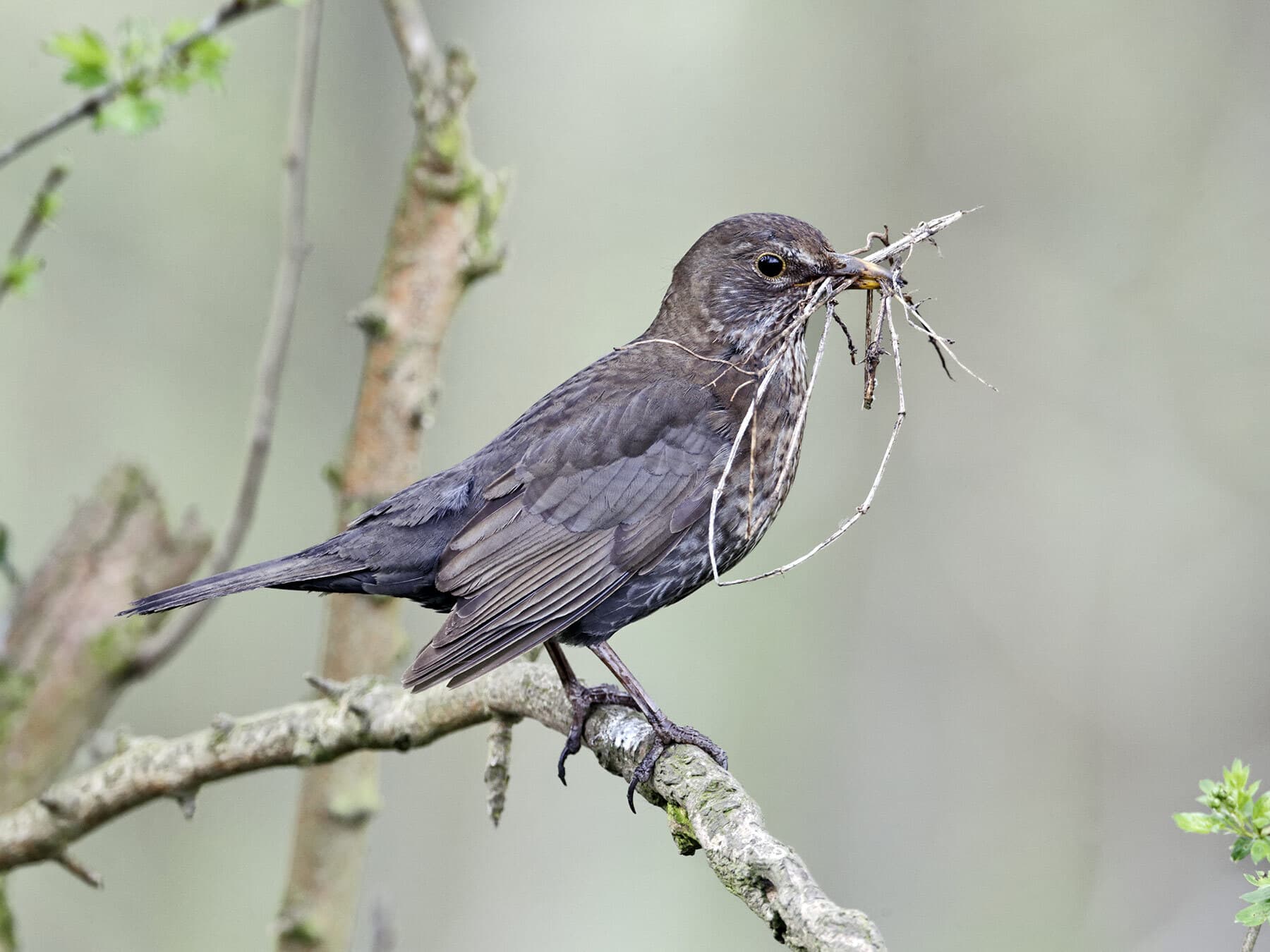
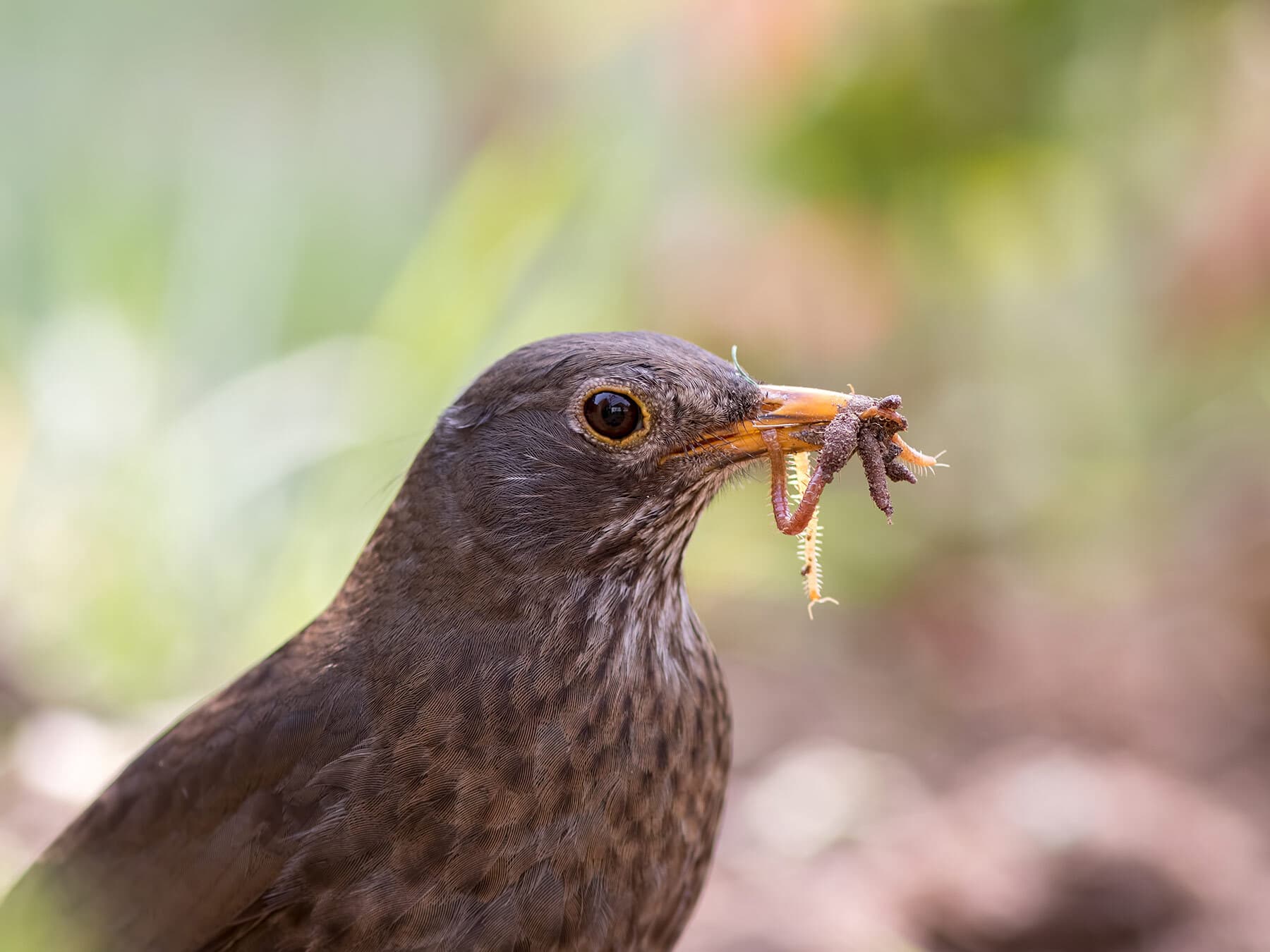
Brown, not black. A female Blackbird is dull dark brown with a slight reddish tinge, a little paler underneath, with darker spots, streaks or mottling on the breast and a pale, streaked throat. She has the same shape as the male: a plump, long-tailed thrush, 24 to 25 cm long.
Do female Blackbirds have yellow beaks?
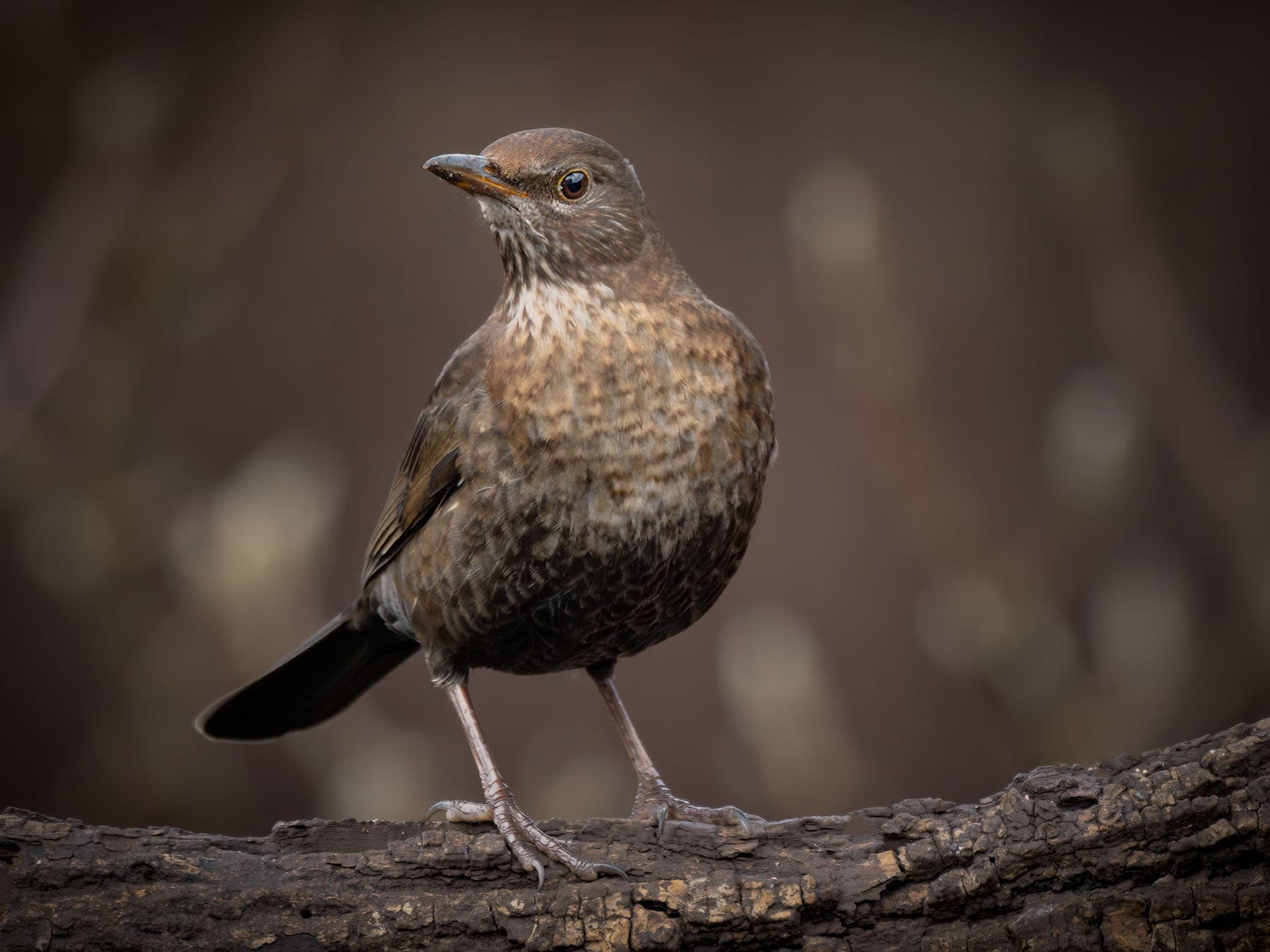
Some do. A female's bill can be anything from brown to yellow; many are brownish with dull yellow at the base. Her eye-ring is dull. In Blackbirds, bill colour is strongest in the breeding season and in older birds.1
Male vs female Blackbird
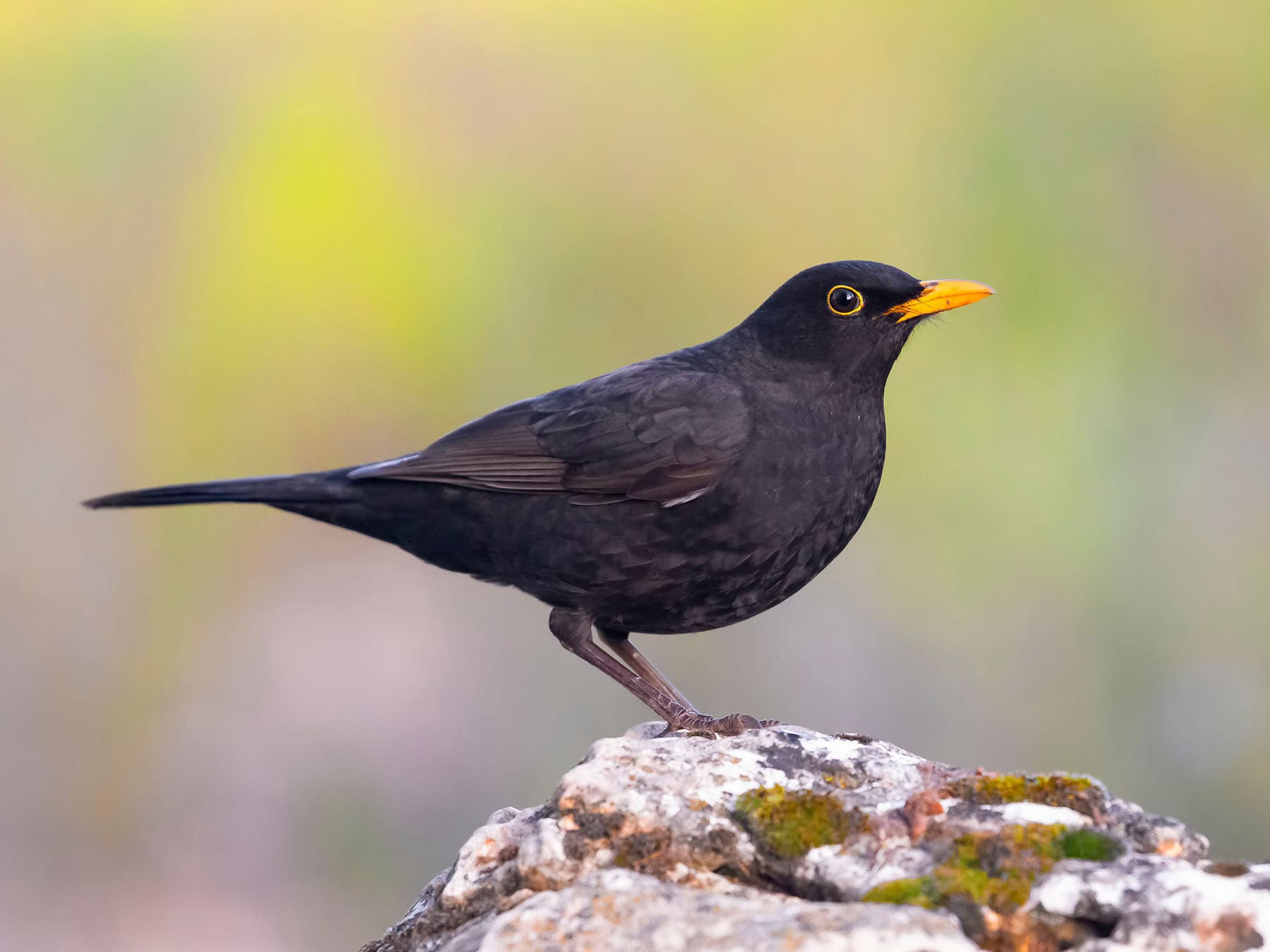
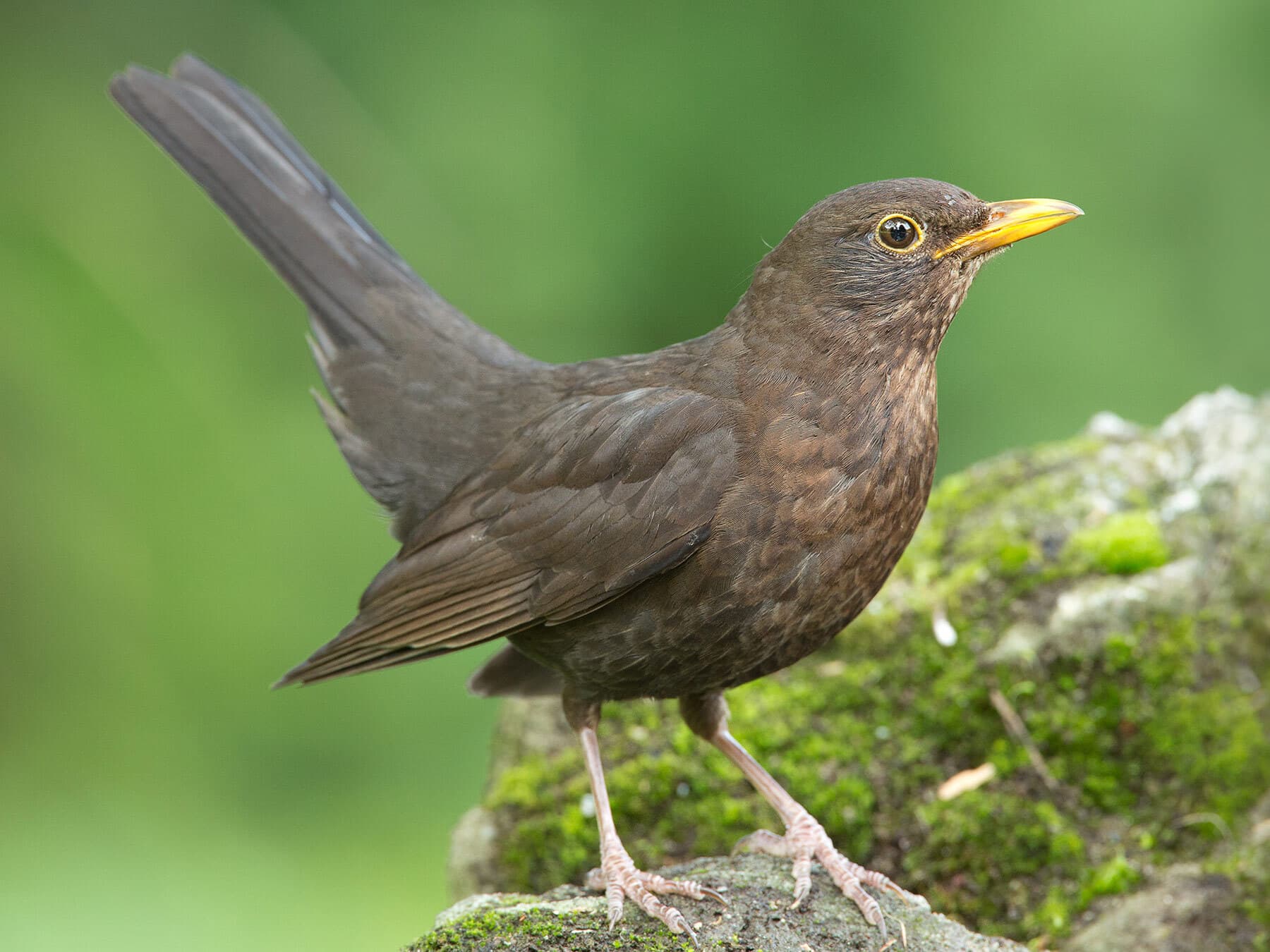
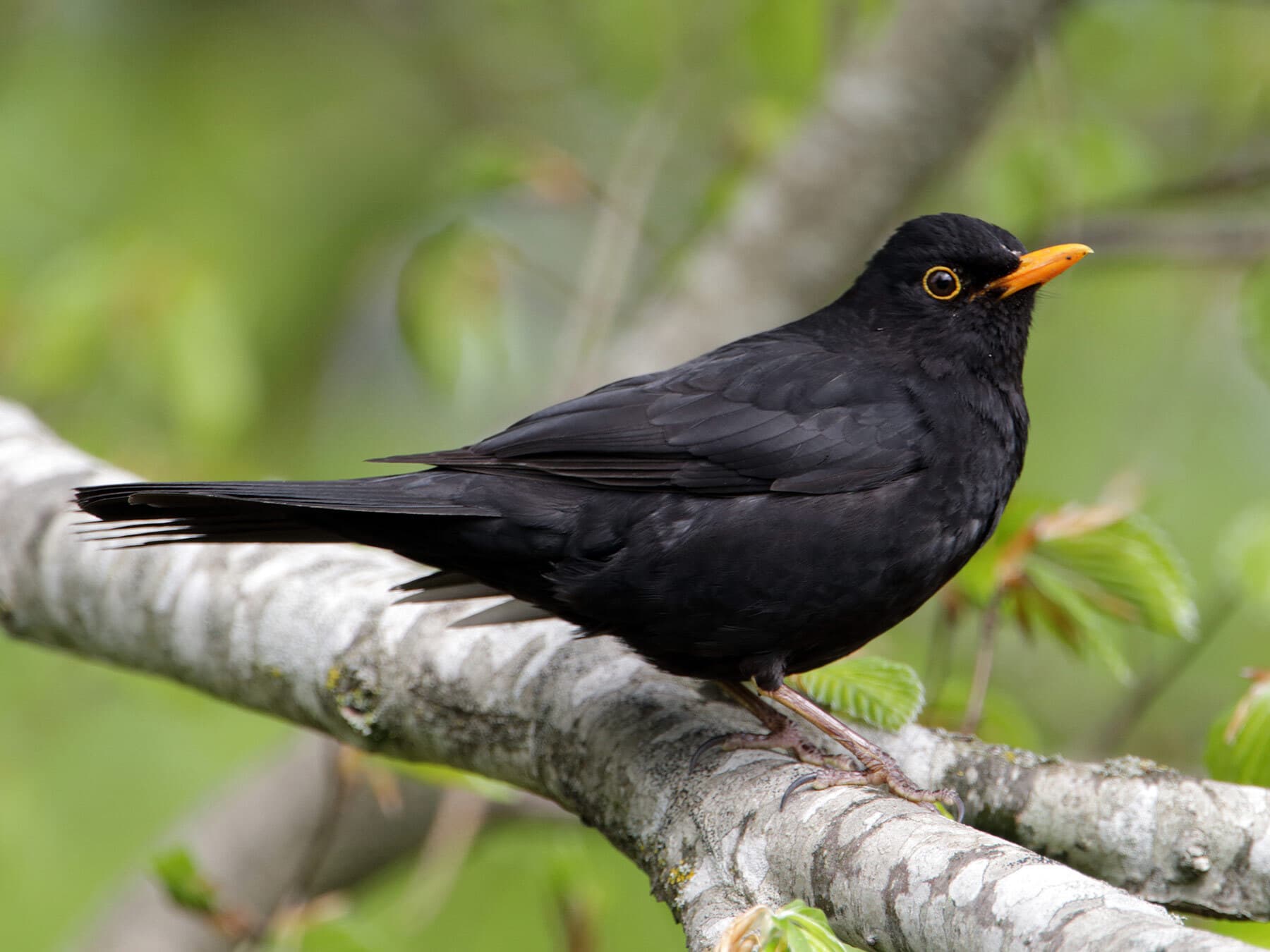
The male is black all over, with an orange-yellow bill and a yellow eye-ring; the female is dark brown with a mottled breast. They are much the same size. Weighed by BTO ringers, live adult males averaged 102.5 g and females 101.1 g, and males' wings averaged 132.9 mm against 128.6 mm for females.2
Young Blackbirds and young males
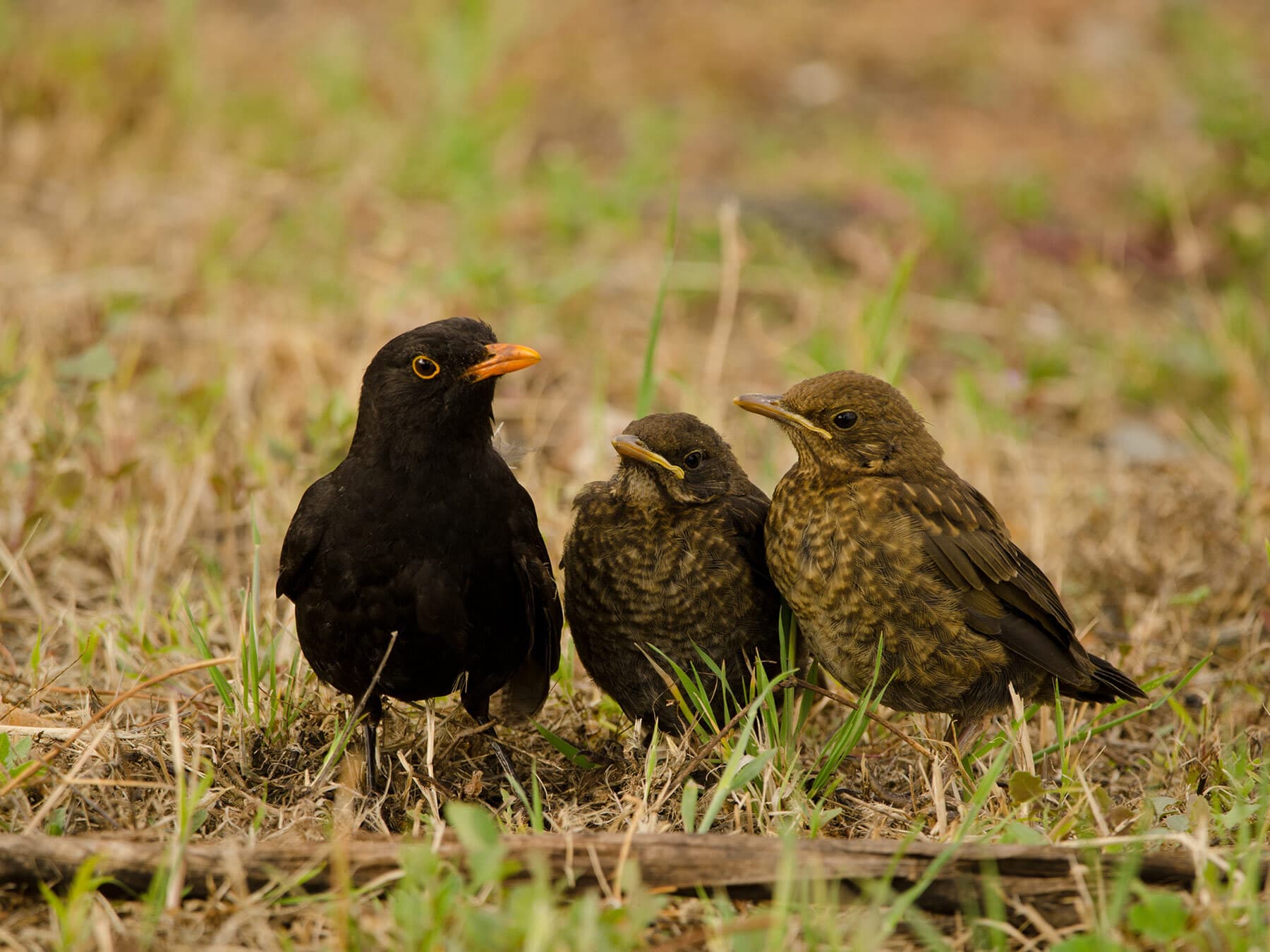
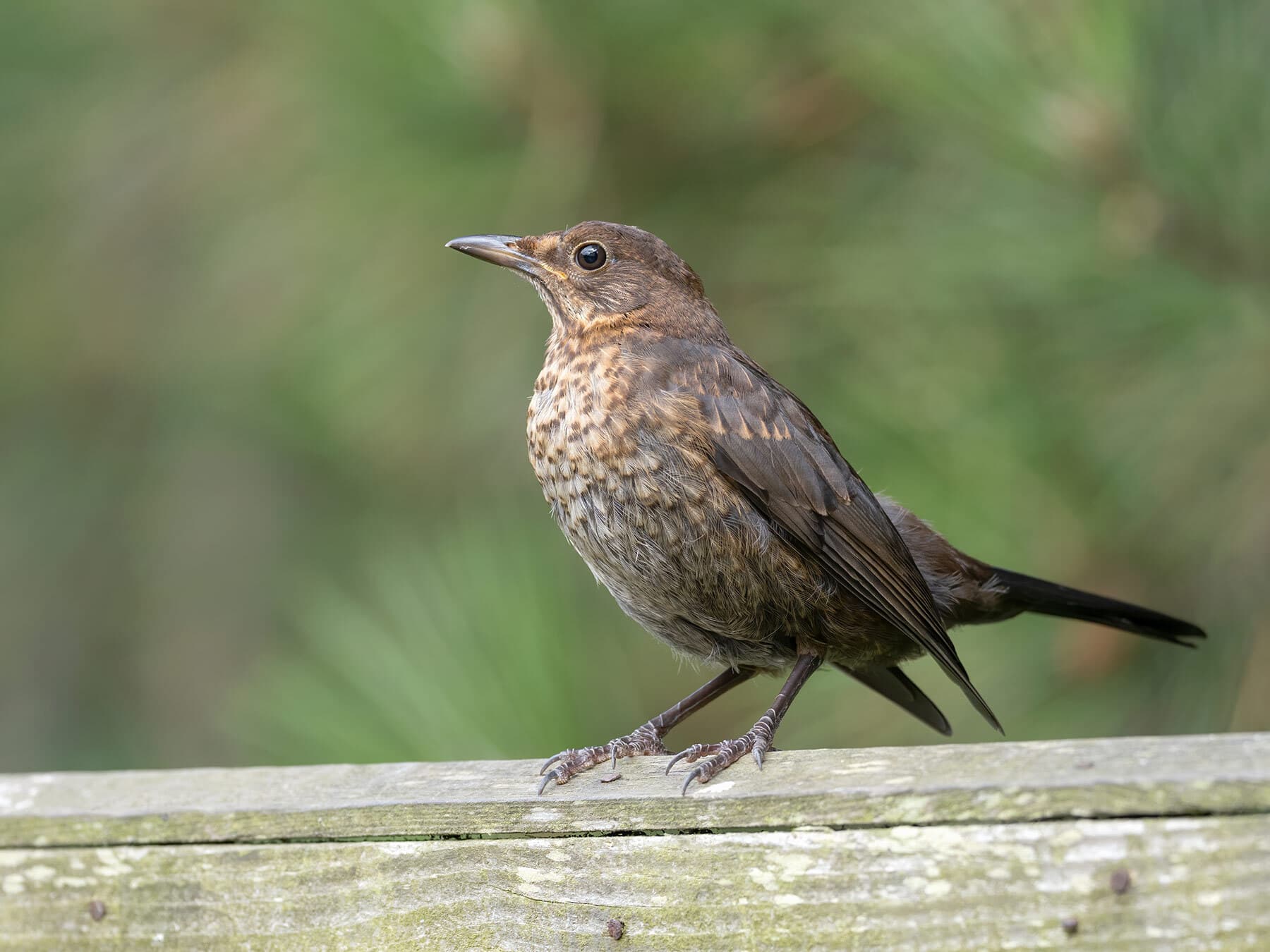
Not every brown Blackbird is a female. Juveniles, out of the nest in spring and summer, are warm brown with buff streaks on the back and heavy dark mottling below, and a dark bill. Young males are a little darker than young females, especially on the wings and tail.
From July the young moult into adult-like plumage, which takes just over a month. A young male then looks black but keeps browner wings, and his bill and eye-ring stay dark: some show a yellowish base to the bill by September, others not until the next spring.1 For chicks and fledglings, see baby Blackbirds.
Telling her from a Song Thrush
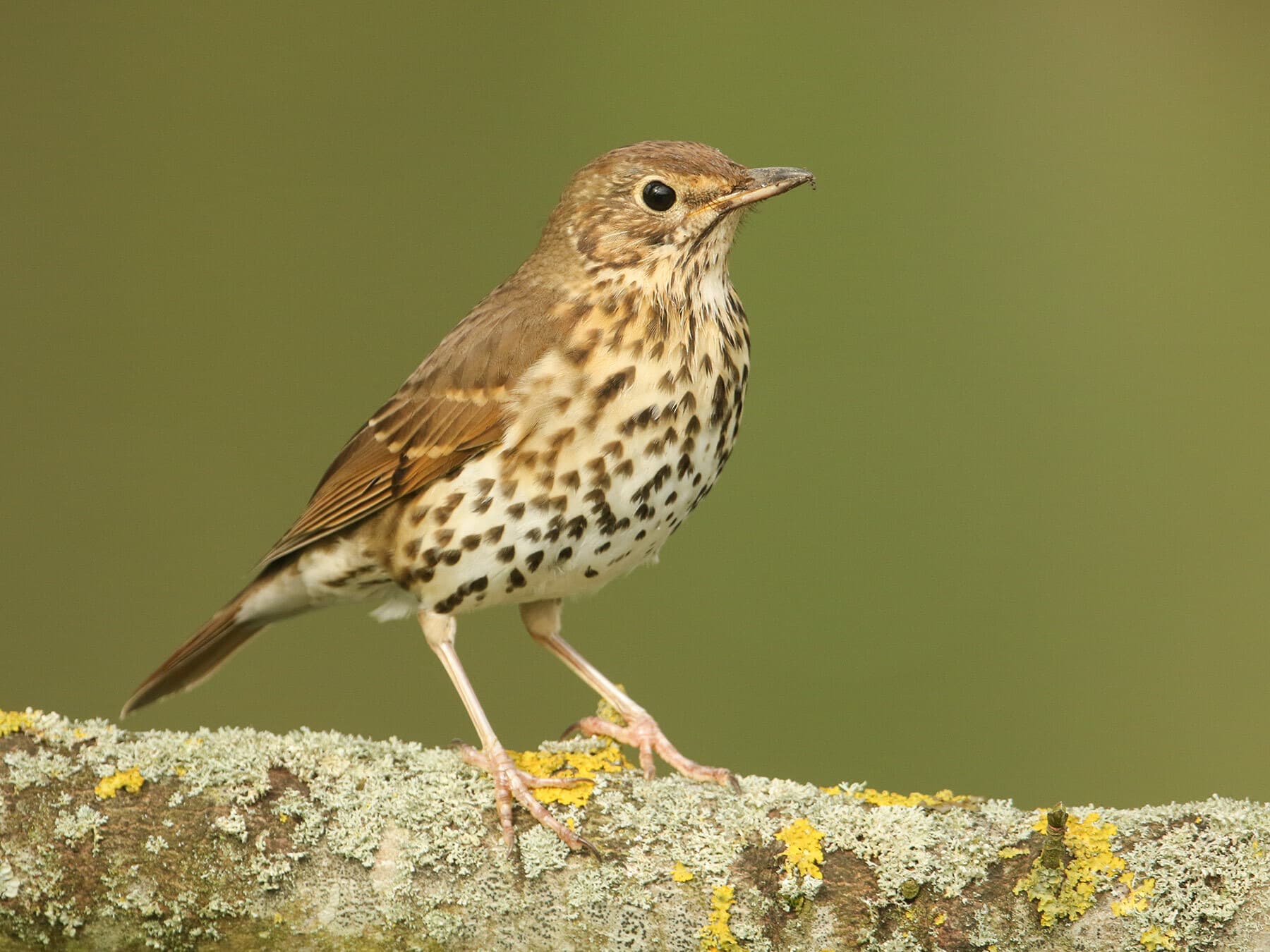
A Song Thrush is smaller, warm brown above, with neat dark spots like upside-down hearts on a creamy white breast.3 A female Blackbird is darker brown all over, and her breast markings are blurred mottles and streaks on a brown background, not neat spots on white.
A female Ring Ouzel, an upland summer visitor, is browner than the male but has a creamy band across the breast and a pale panel in the wing.
Song and calls
Females do not sing the full song: that is the male's. A female gives only a quiet subsong during courtship. She does call, though, with the same calls as the male. Mike Toms of the BTO has heard the low, nervous chook from females building a nest while they were being watched.1
What female Blackbirds do
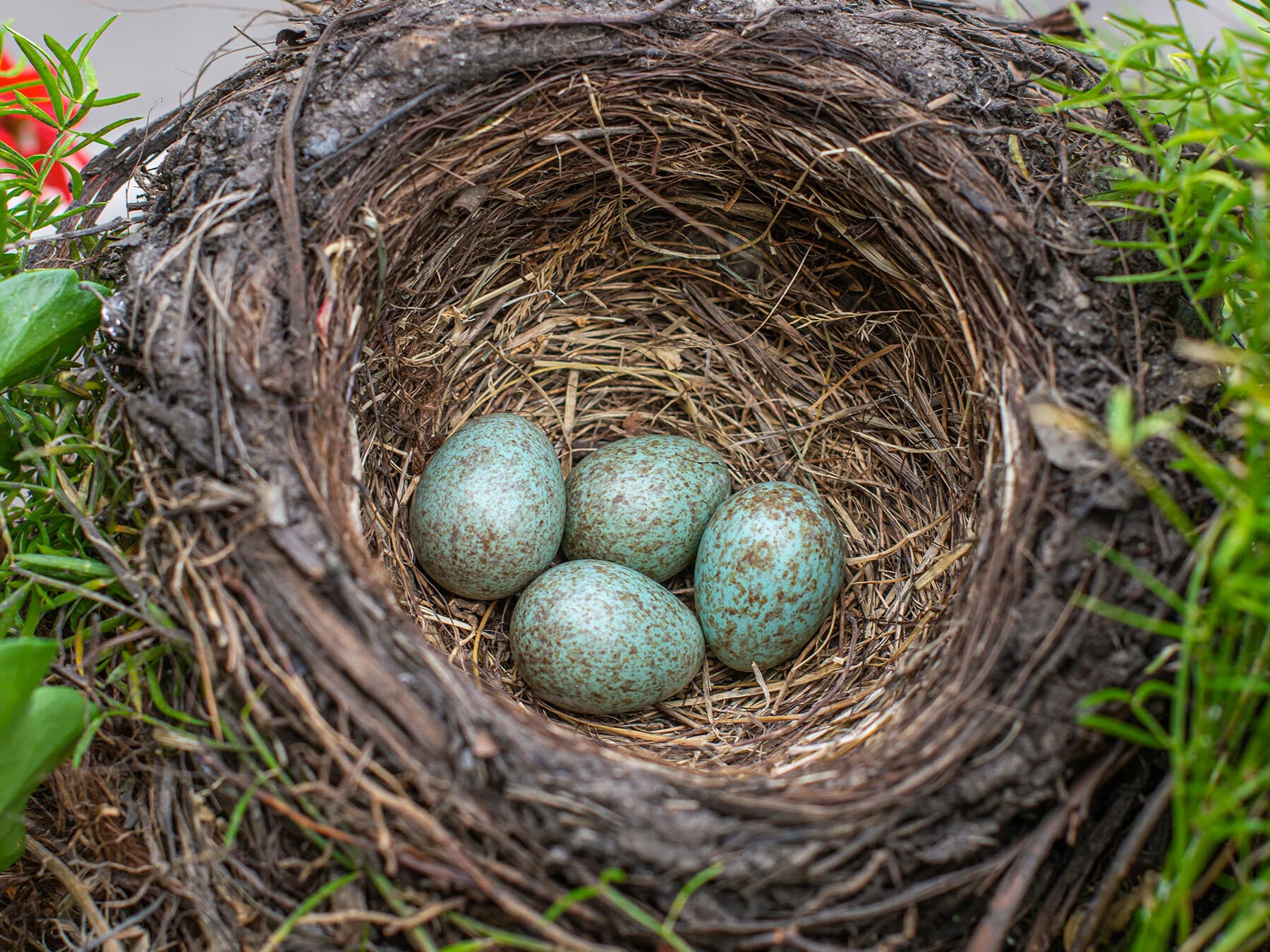
She builds the nest almost on her own and sits on the eggs alone for 12 to 14 days; both parents feed the chicks. She lays 3 to 4 eggs at a time and may raise 2 or 3 broods a year, building a new nest for each.2 More: Blackbird nesting.
In winter the male and female of a garden pair tend to stay on their territory but use different parts of it.1
Sources
- Toms, M. (2013). Blackbird: species focus. Bird Table (BTO Garden BirdWatch magazine) 76: 18-20. Accessed 6 October 2026. Source
- BTO. Blackbird (Turdus merula). BTO BirdFacts. Accessed 6 October 2026. Source
- RSPB. Song Thrush. RSPB Birds A-Z. Accessed 6 October 2026. Source
- Collar, N., Christie, D. A. (2020). Eurasian Blackbird (Turdus merula), version 1.0. Birds of the World (J. del Hoyo, A. Elliott, J. Sargatal, D. A. Christie and E. de Juana, editors). Cornell Lab of Ornithology. doi:10.2173/bow.eurbla.01
- RSPB. Blackbird. RSPB Birds A-Z. Accessed 6 October 2026. Source
- RSPB. Ring Ouzel. RSPB Birds A-Z. Accessed 6 October 2026. Source