Facts · Updated 8 Oct 2026
What Do Blackbirds Eat? Diet Through the Year and Garden Feeding
By the Birdfact teamChecked by Nathan Cope
Blackbirds eat earthworms and insects all year, caterpillars in early summer and fruit from July to December. In gardens they take mealworms, soaked sultanas and windfall apples. Here is what they eat each season, what they feed their chicks, and how to feed them safely.
On this page9 sections
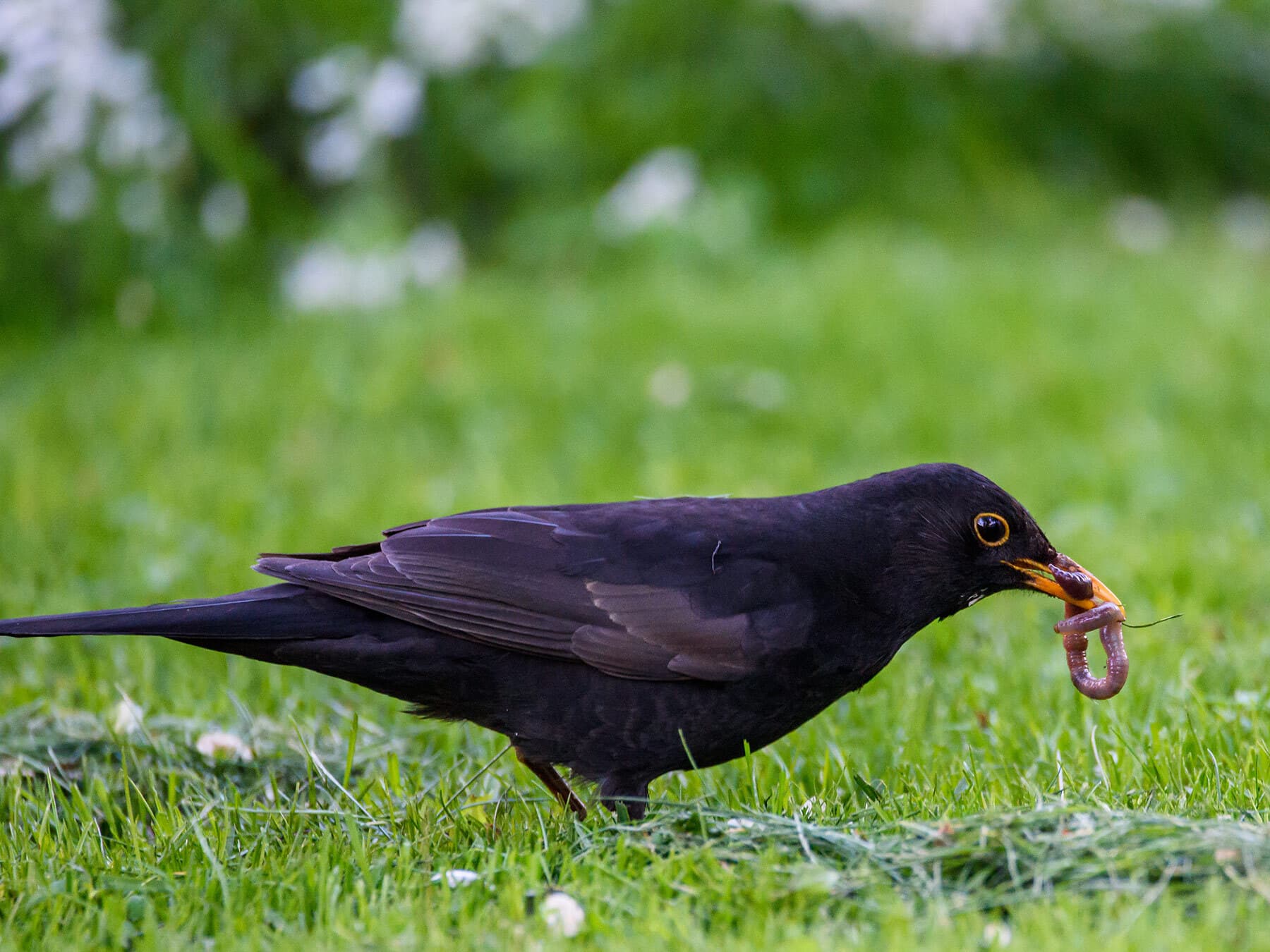
This page covers what Blackbirds eat through the year, how they find it, what they feed their chicks, and how to feed them in a garden. For the Blackbird in general, see Blackbird identification, song and facts.
What do Blackbirds eat?
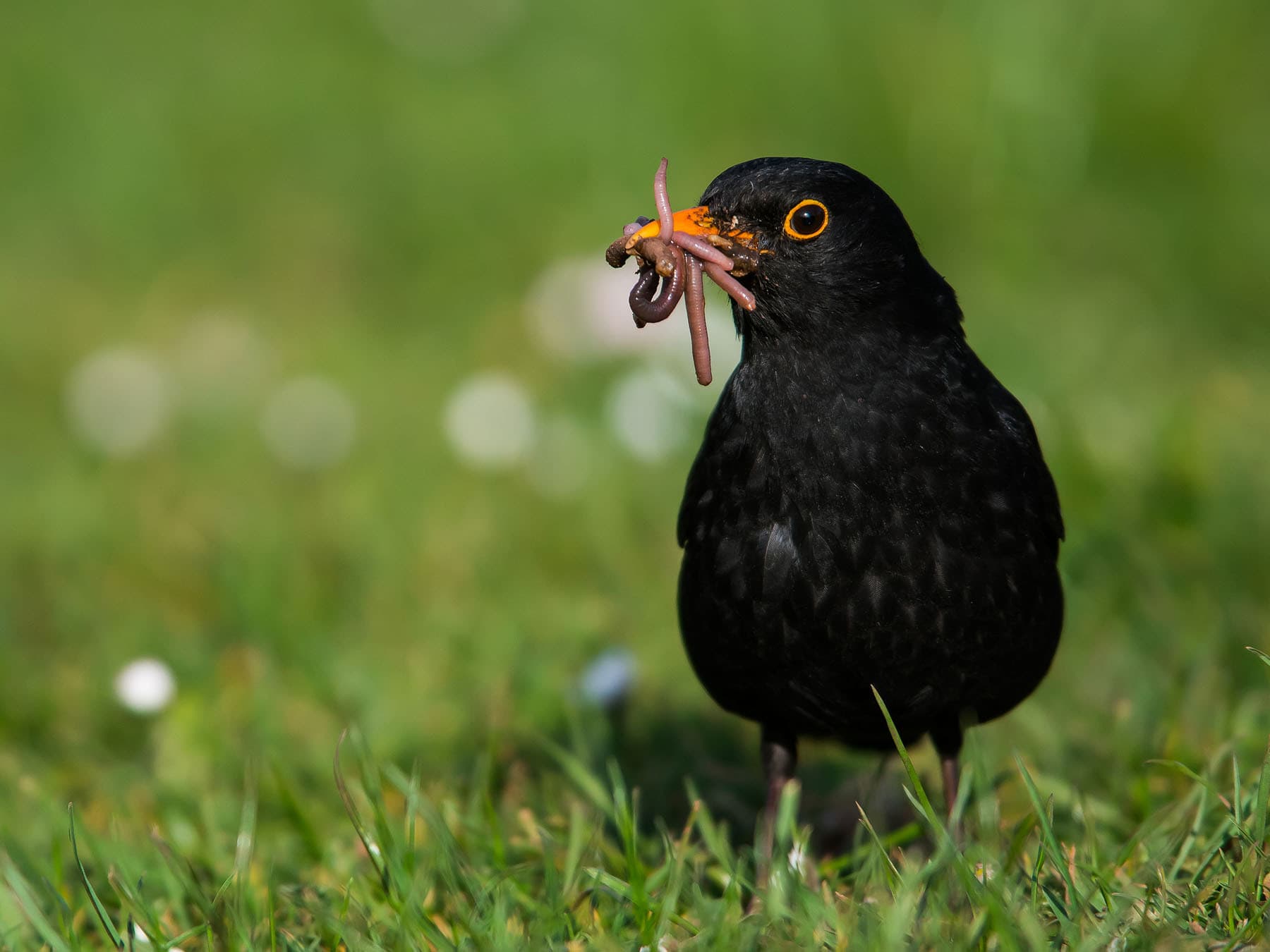
Earthworms, insects and fruit, with a long list of other small animals. Beetles, caterpillars, flies, spiders, woodlice, millipedes and small snails are all taken, and now and then something bigger: newts, small frogs, tadpoles, lizards, even small snakes. A Blackbird cannot live on fruit alone for long.
Through the year
In Britain the diet shifts with the seasons.
| Food | When |
|---|---|
| Earthworms | All year, especially late summer and autumn |
| Insects and other small animals from leaf litter | All year |
| Caterpillars and adult insects | Mainly late spring and early summer |
| Fruit and berries | July to December, especially October and November |
| Food put out by people | All year |
How Blackbirds find worms
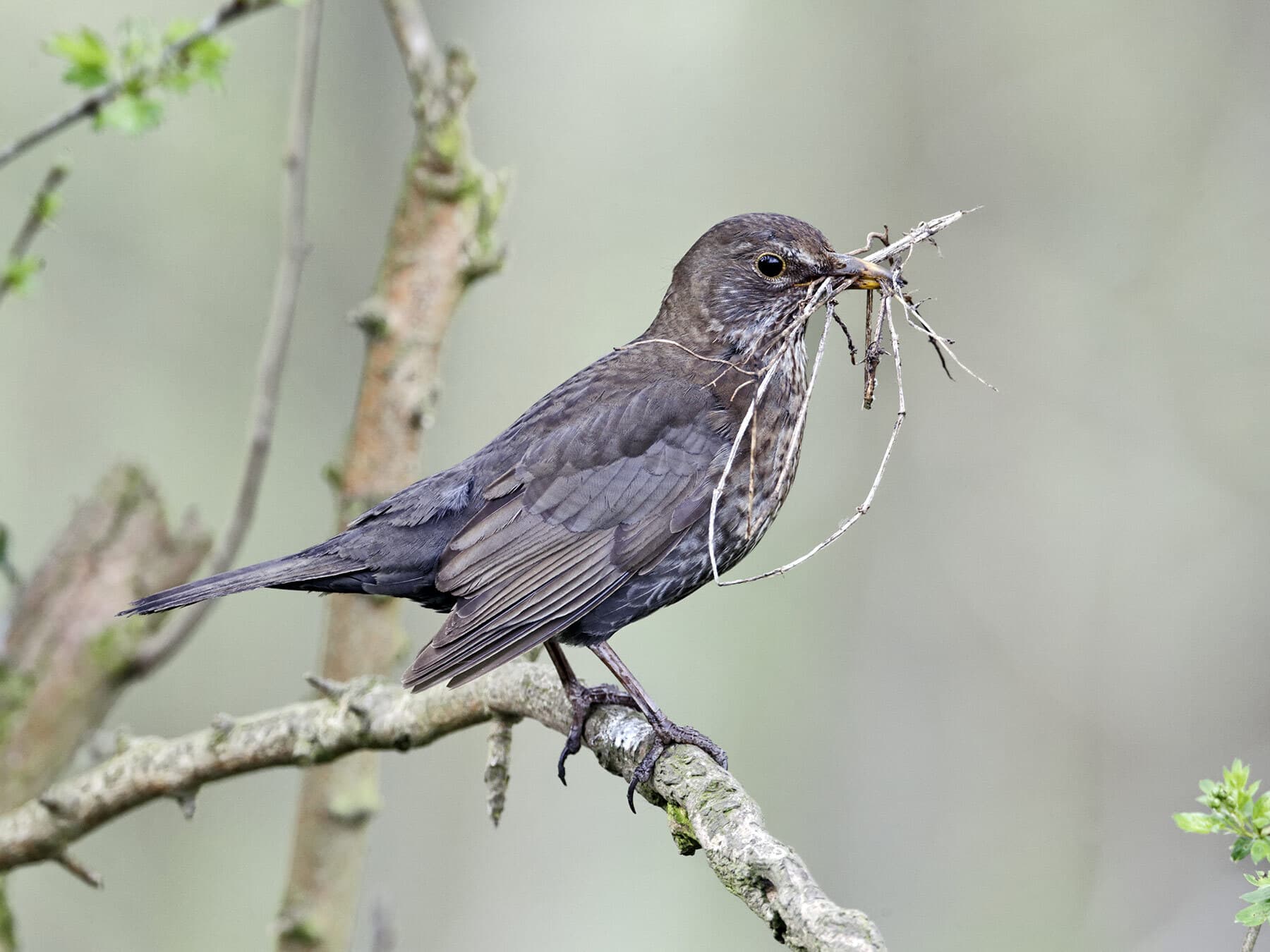
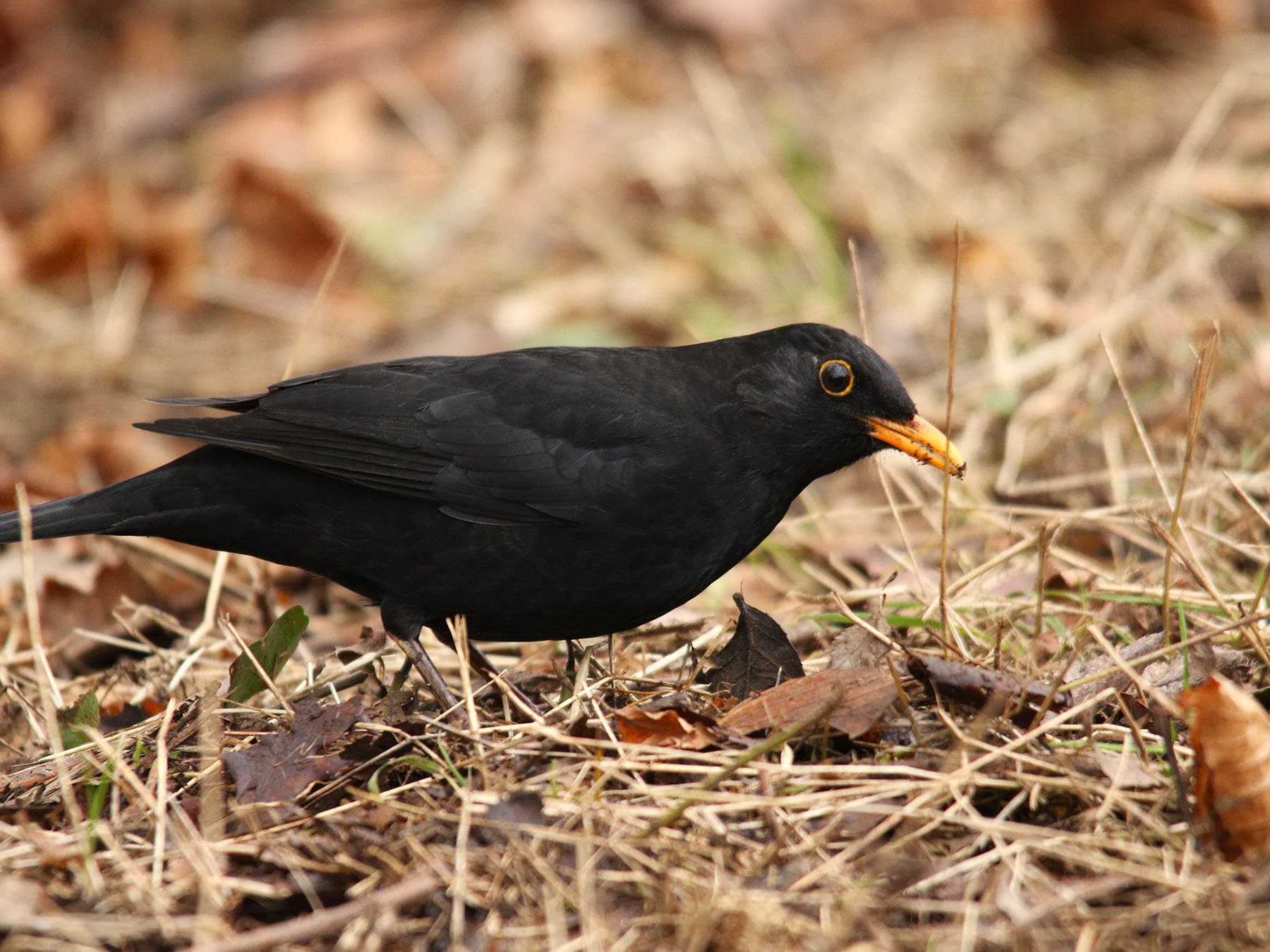
On grass a Blackbird makes short runs with pauses, watching and listening, then stabs or digs at the ground. Under shrubs it flicks dead leaves and moss aside with sideways sweeps of its bill. It also feeds in trees and bushes, especially on fruit.
Do Blackbirds eat slugs, snails and ants?
Yes. Small molluscs, which include snails and slugs, are among the foods recorded, and so are ants. On Heligoland, in Germany, the animal food of spring migrants was mostly snails and beetles.
Fruit and berries
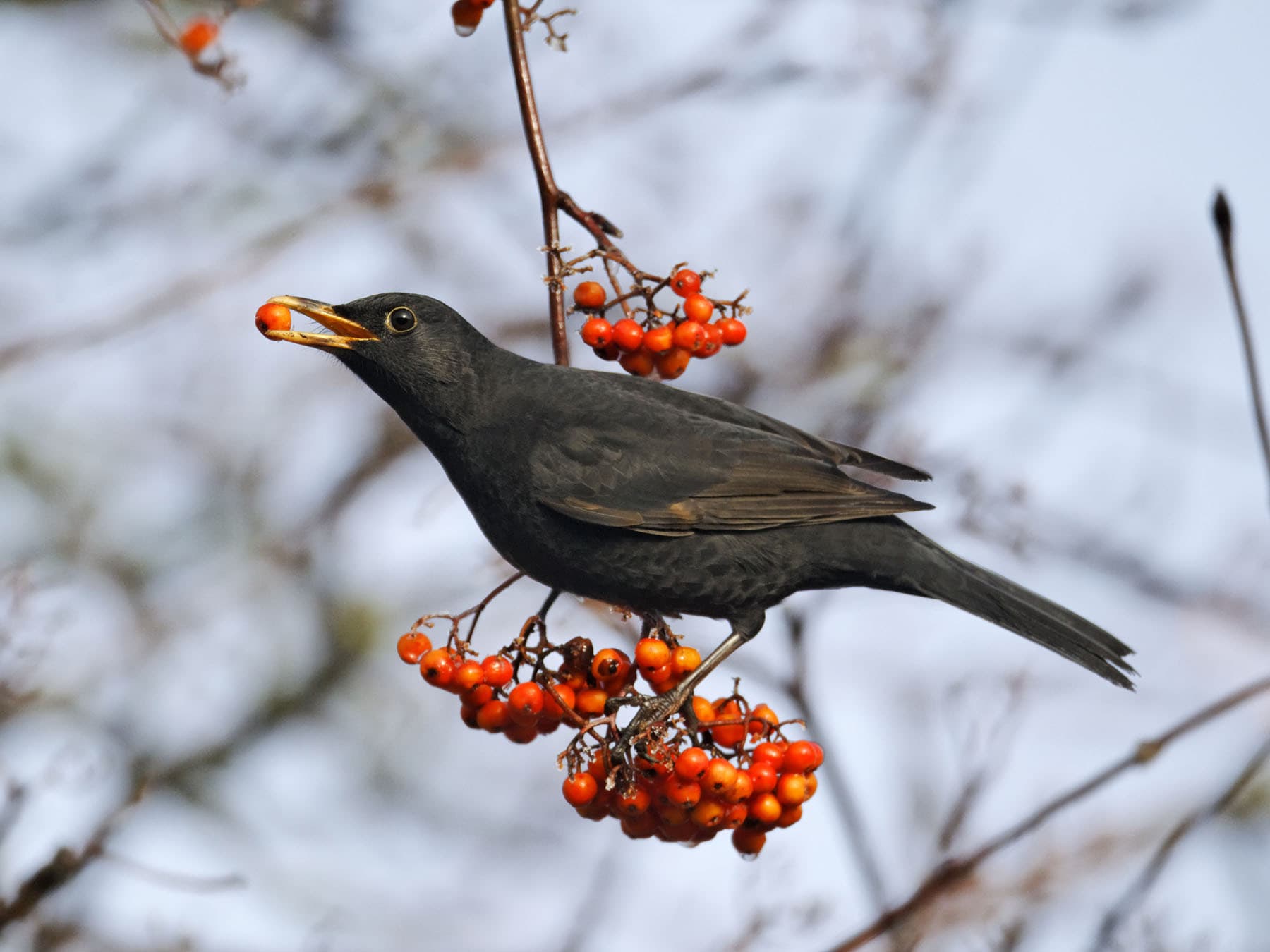
From July to December fruit becomes a big part of the diet. Blackbirds eat the berries of hawthorn, rowan, elder, bramble, ivy, yew, privet and honeysuckle, and apples, pears and cherries. In autumn many leave gardens for a while to feed on hedgerow berries in the countryside.
Food for the chicks
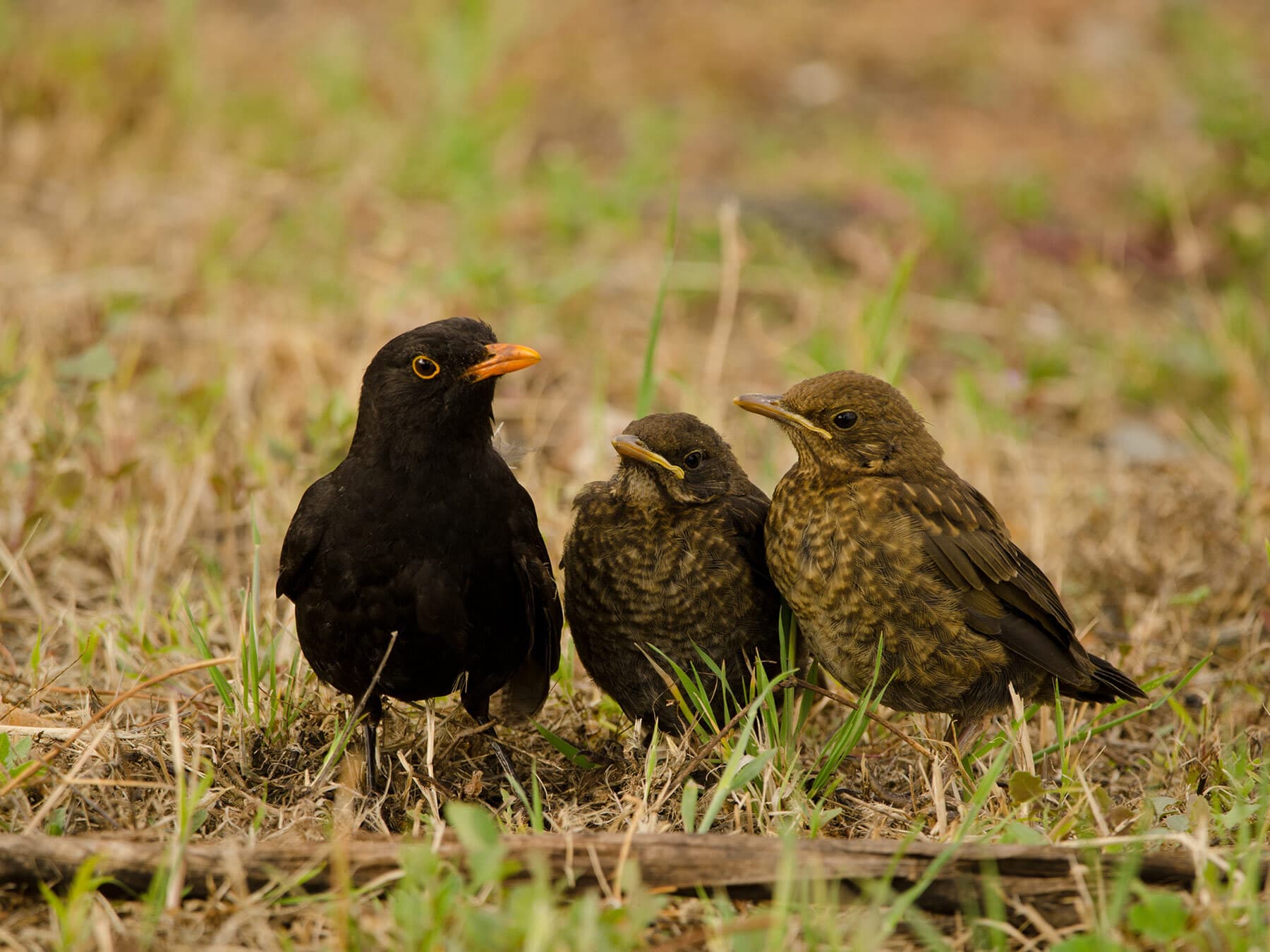
The chicks get mainly earthworms and caterpillars. One study found caterpillars were the main food of chicks in woodland, and earthworms in suburban gardens. More: baby Blackbirds.
Feeding Blackbirds in your garden
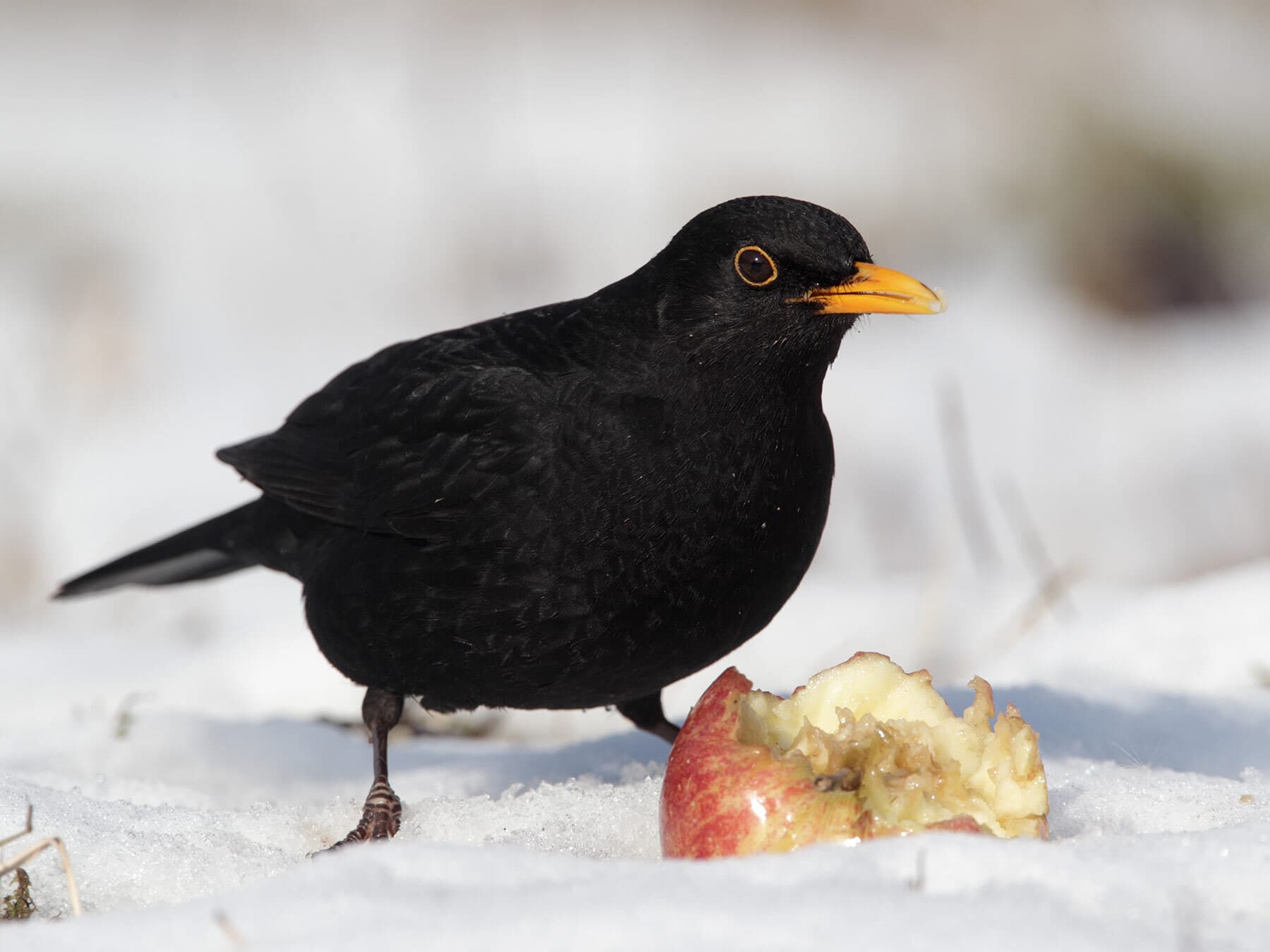
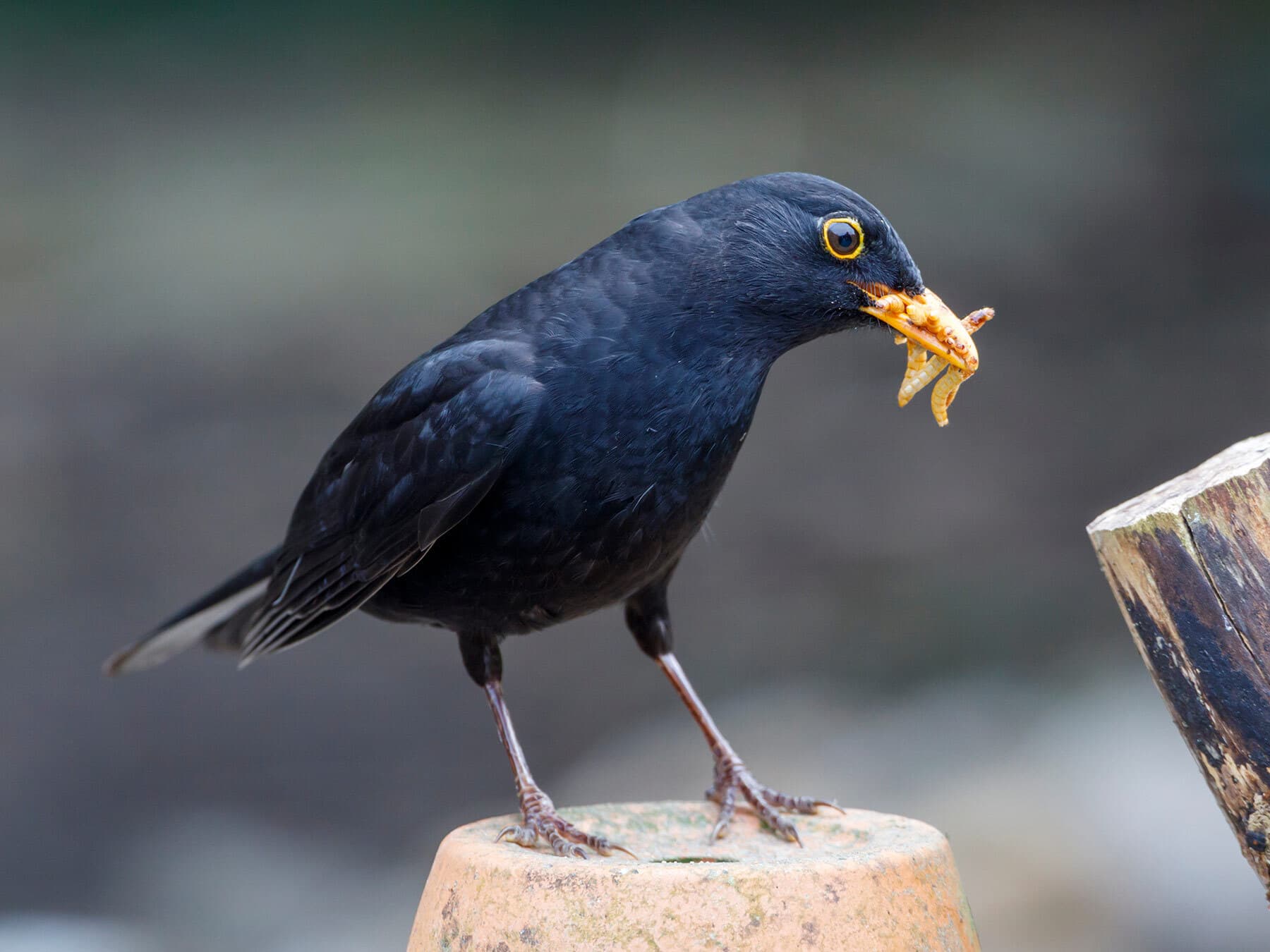
Blackbirds take most of their food on the ground. Mealworms are readily taken, in a hanging mealworm feeder or a small scatter on the ground, and sultanas, soaked in water first, are good for them; windfall apples are useful, especially in winter. Keep dried fruit away from dogs: grapes, raisins, sultanas and currants can poison them.1
The RSPB's July 2026 advice: from 1 May to 31 October, offer only small amounts of mealworms, fat or suet, and pause seed and peanuts. Clear away any mealworms not eaten by dusk, especially on the ground. Use hanging feeders rather than flat tables or trays, clean feeders and bird baths every week, and change the water every day.2
In spring and summer, soak mealworms so chicks can swallow them and get water from them. Avoid bread and dry, hard food then, as chicks can choke on it, and do not put out salted or cooked food.3
Gardens that suit Blackbirds
In a BTO survey of gardens in 2024, Blackbirds were commoner in larger, greener, wilder gardens, especially ones with a pond. They used food put out for them most in the morning, and found their own natural food through the rest of the day.4
In towns and villages Blackbirds need well-grown shrubs and open spaces. A lawn, leaf litter under the shrubs and berry-bearing plants such as hawthorn, rowan and ivy cover the foods they eat through the year.
Sources
- BTO. Feeding garden birds. BTO, Helping birds. Accessed 6 October 2026. Source
- RSPB (2026). How to help garden birds. RSPB news. Accessed 6 October 2026. Source
- RSPB. How and what to feed your garden birds. RSPB. Accessed 6 October 2026. Source
- Hanmer, H. (2025). Blackbirds in Gardens. Bird Table (BTO Garden BirdWatch magazine) 121: 20-22. Accessed 6 October 2026. Source
- Collar, N., Christie, D. A. (2020). Eurasian Blackbird (Turdus merula), version 1.0. Birds of the World (J. del Hoyo, A. Elliott, J. Sargatal, D. A. Christie and E. de Juana, editors). Cornell Lab of Ornithology. doi:10.2173/bow.eurbla.01
- RSPB. Blackbird. RSPB Birds A-Z. Accessed 6 October 2026. Source
- Toms, M. (2013). Blackbird: species focus. Bird Table (BTO Garden BirdWatch magazine) 76: 18-20. Accessed 6 October 2026. Source