


Red-bellied Woodpecker
Zebra-backed Woodpecker · Melanerpes carolinus
By the Birdfact teamChecked by Nathan Cope
On this page14 sections
How to recognise it
What do Red-bellied Woodpeckers look like?
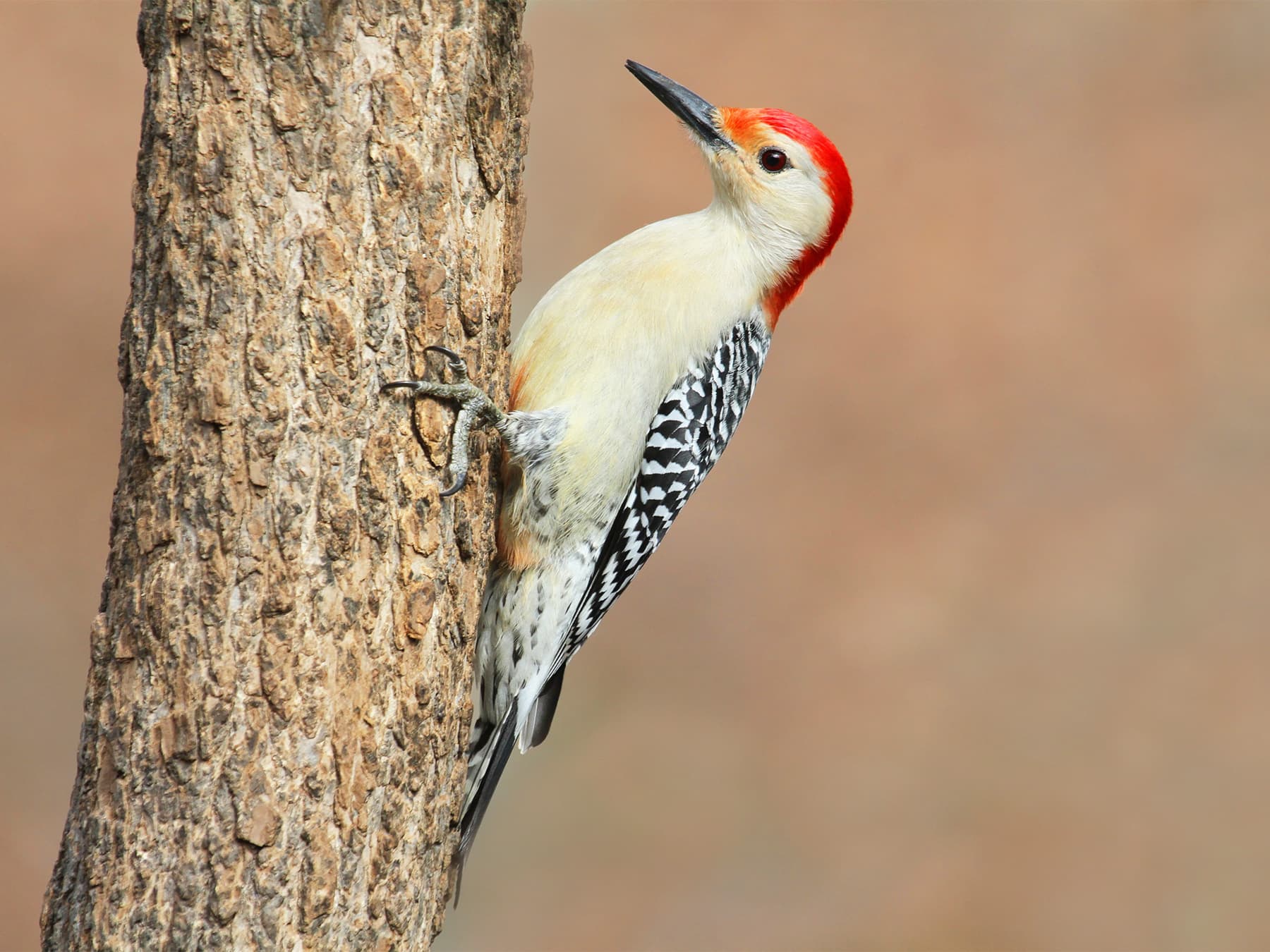
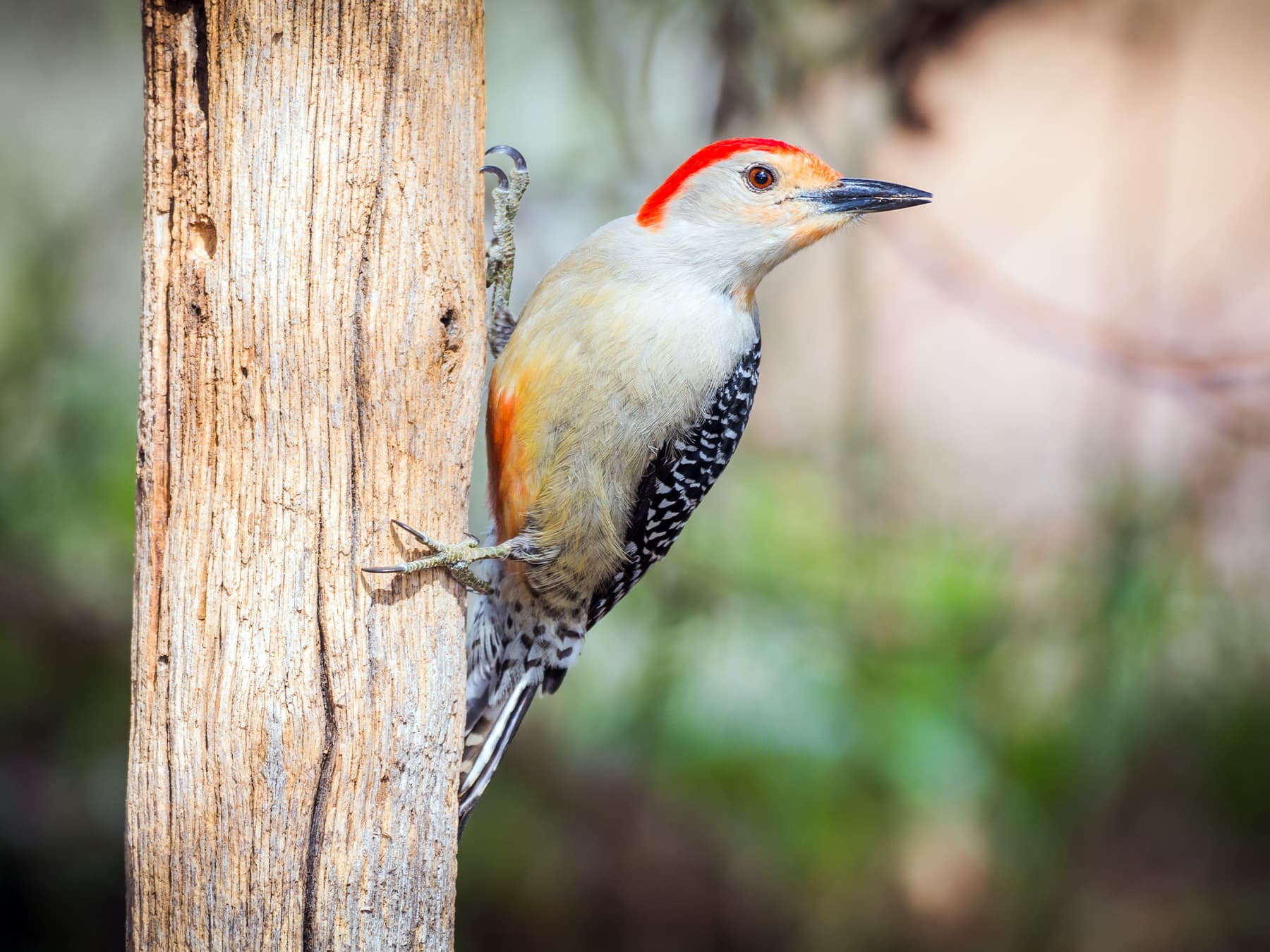
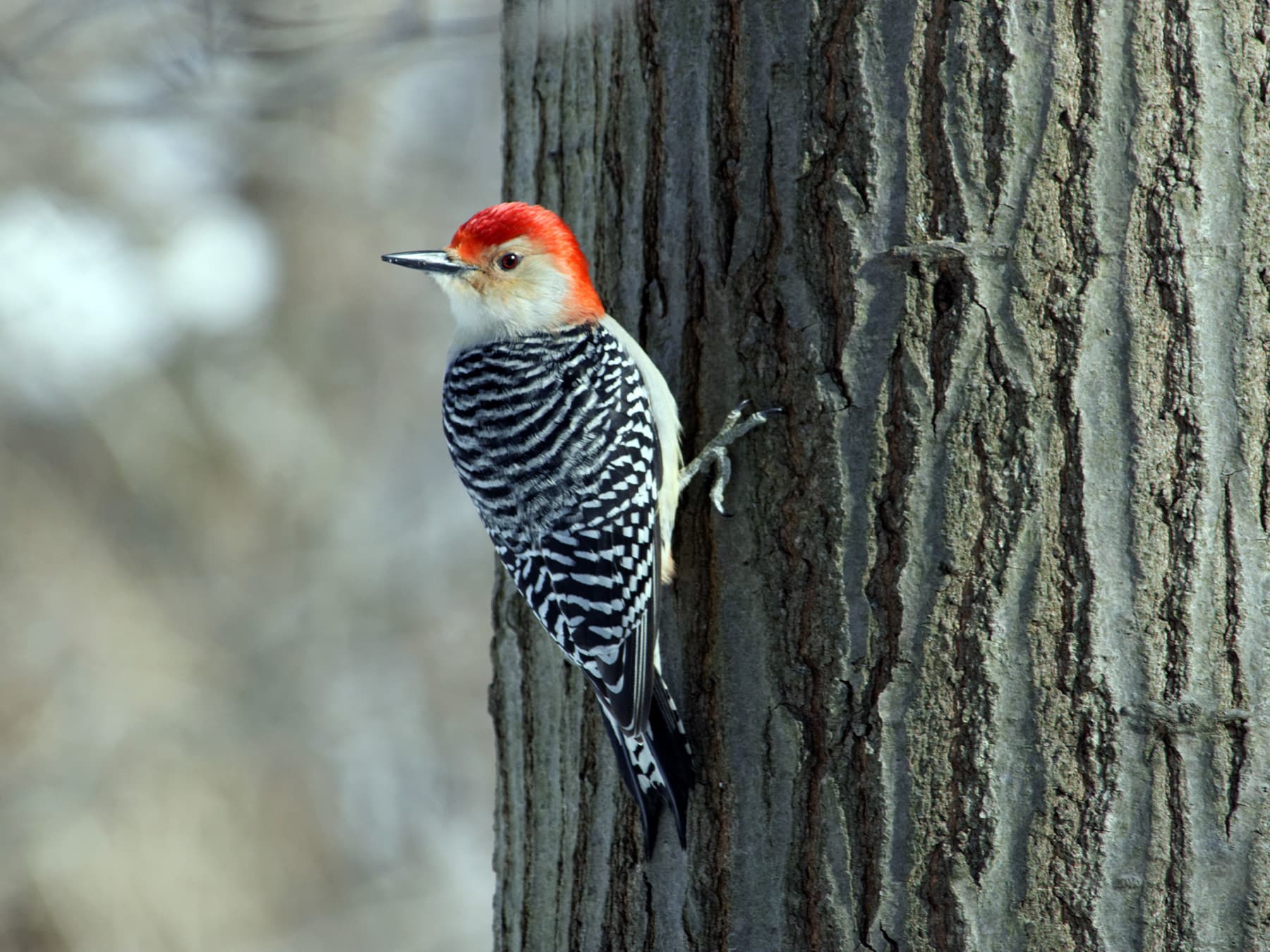
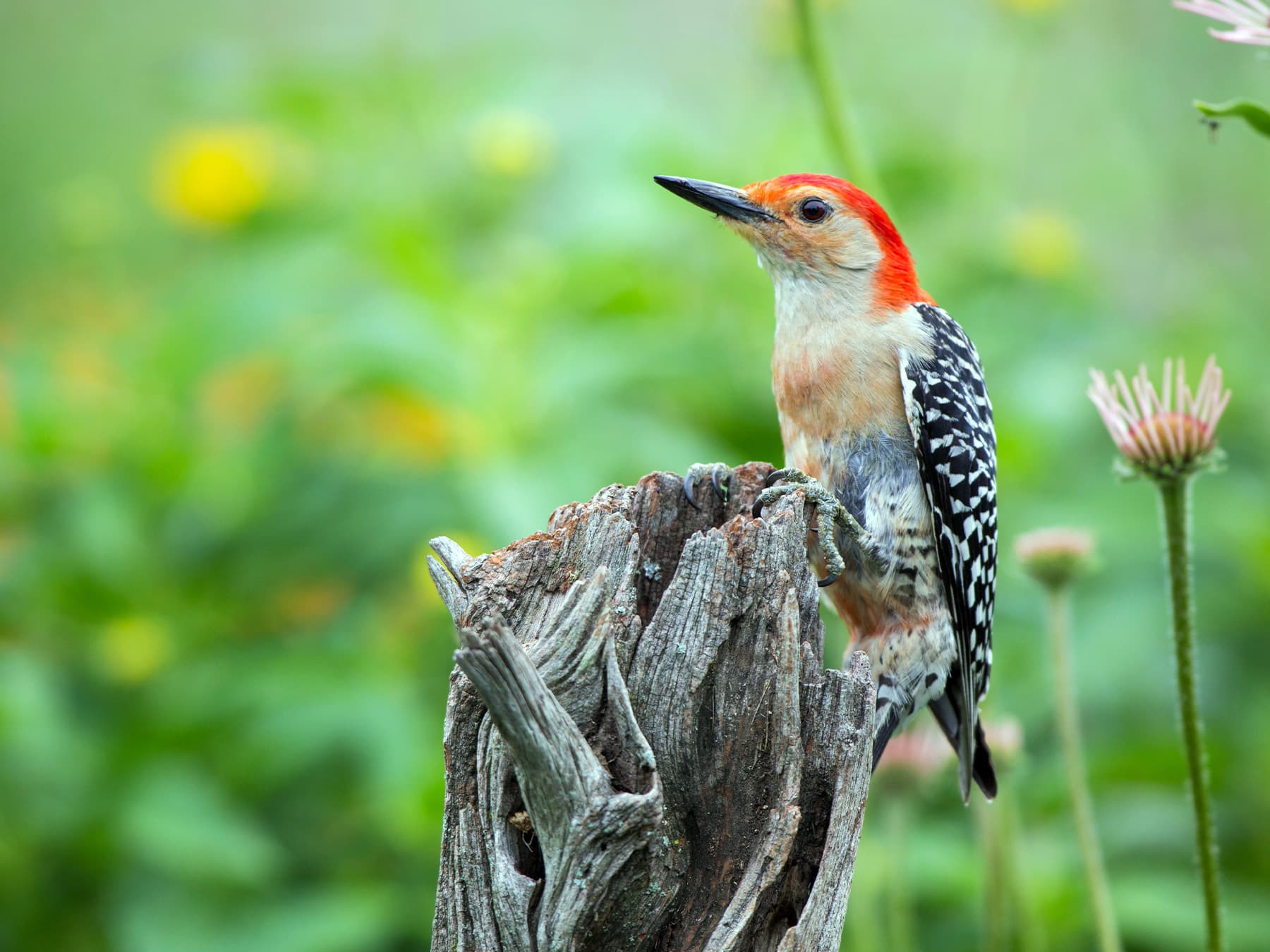
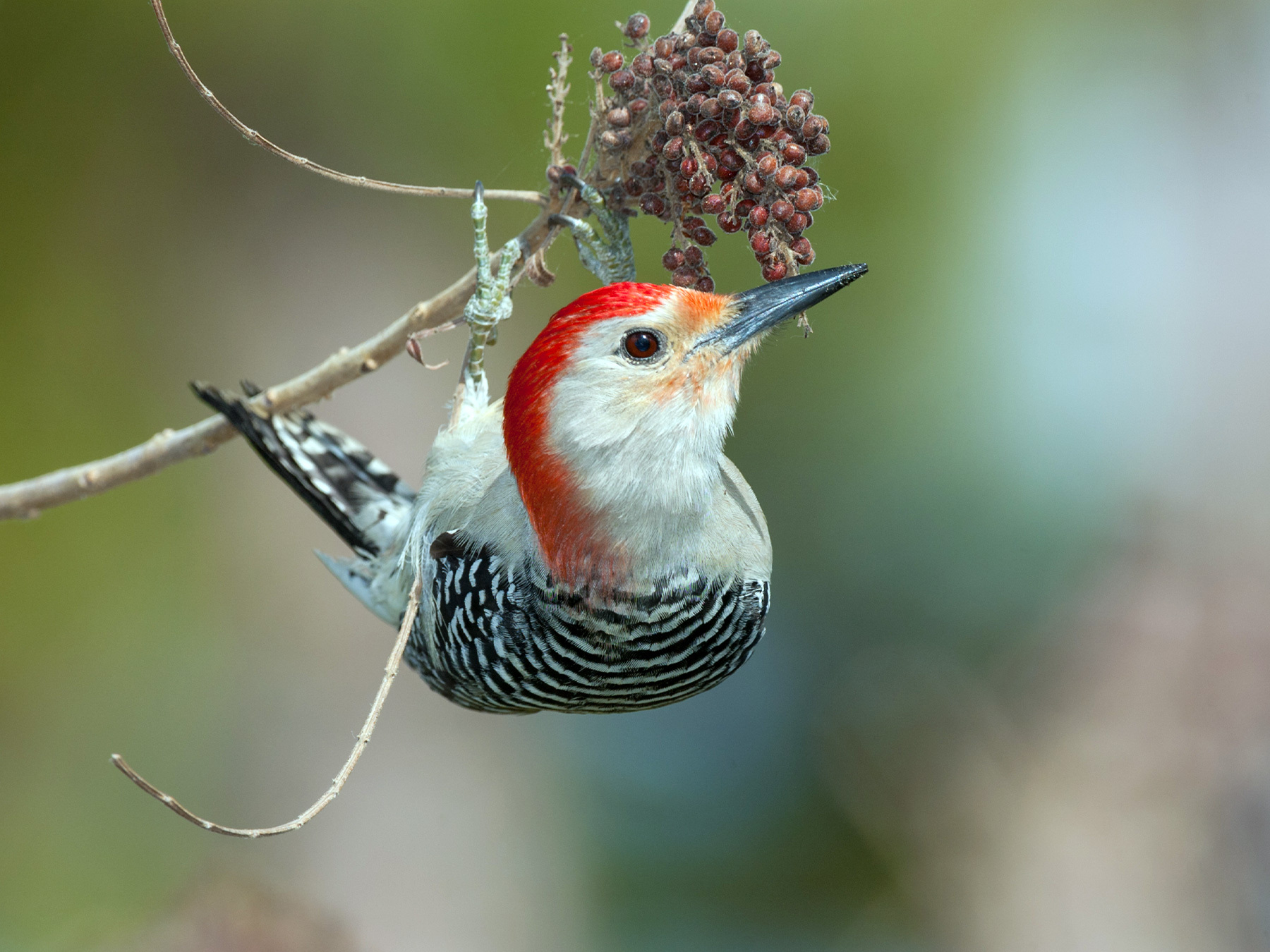
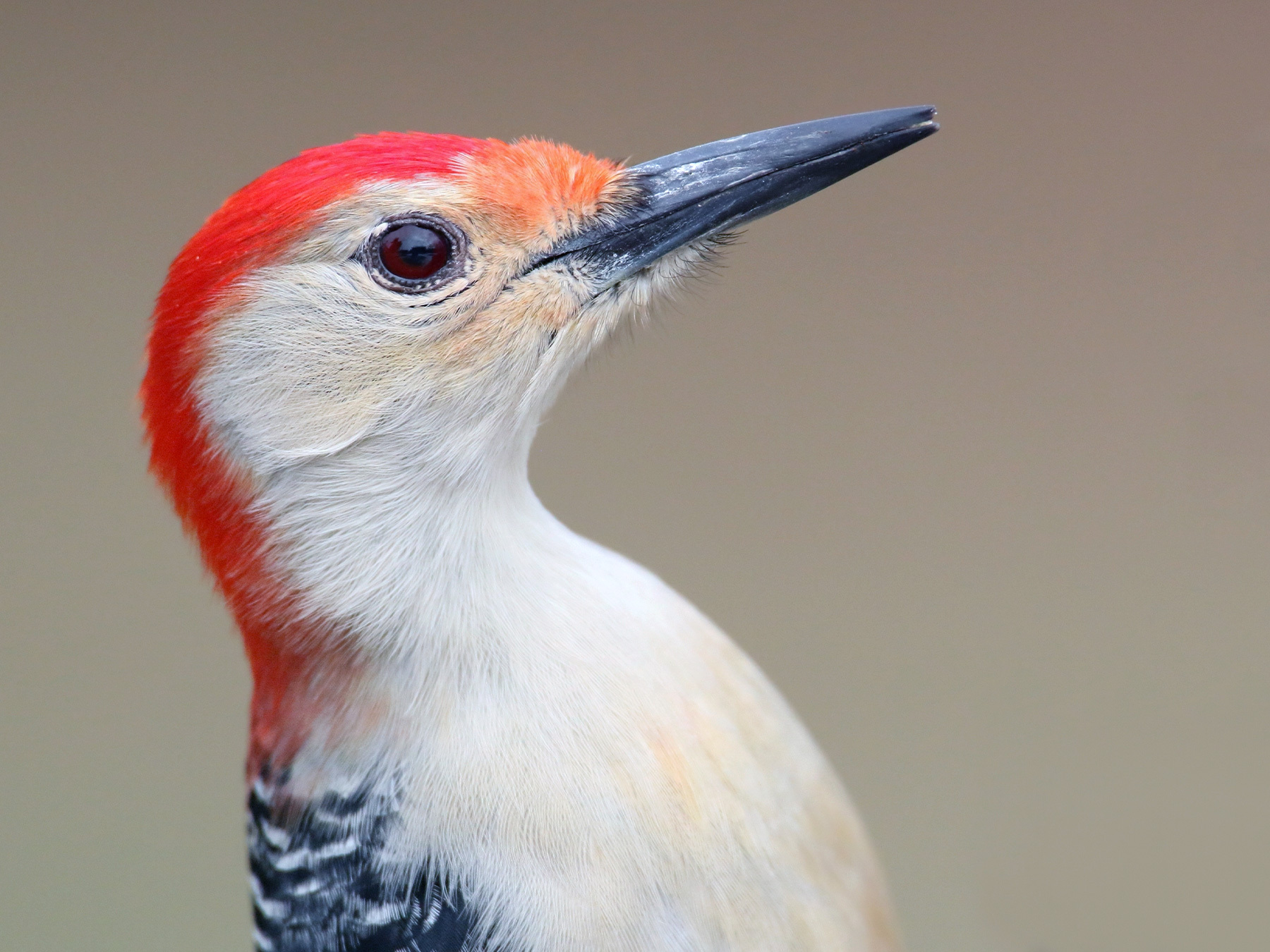
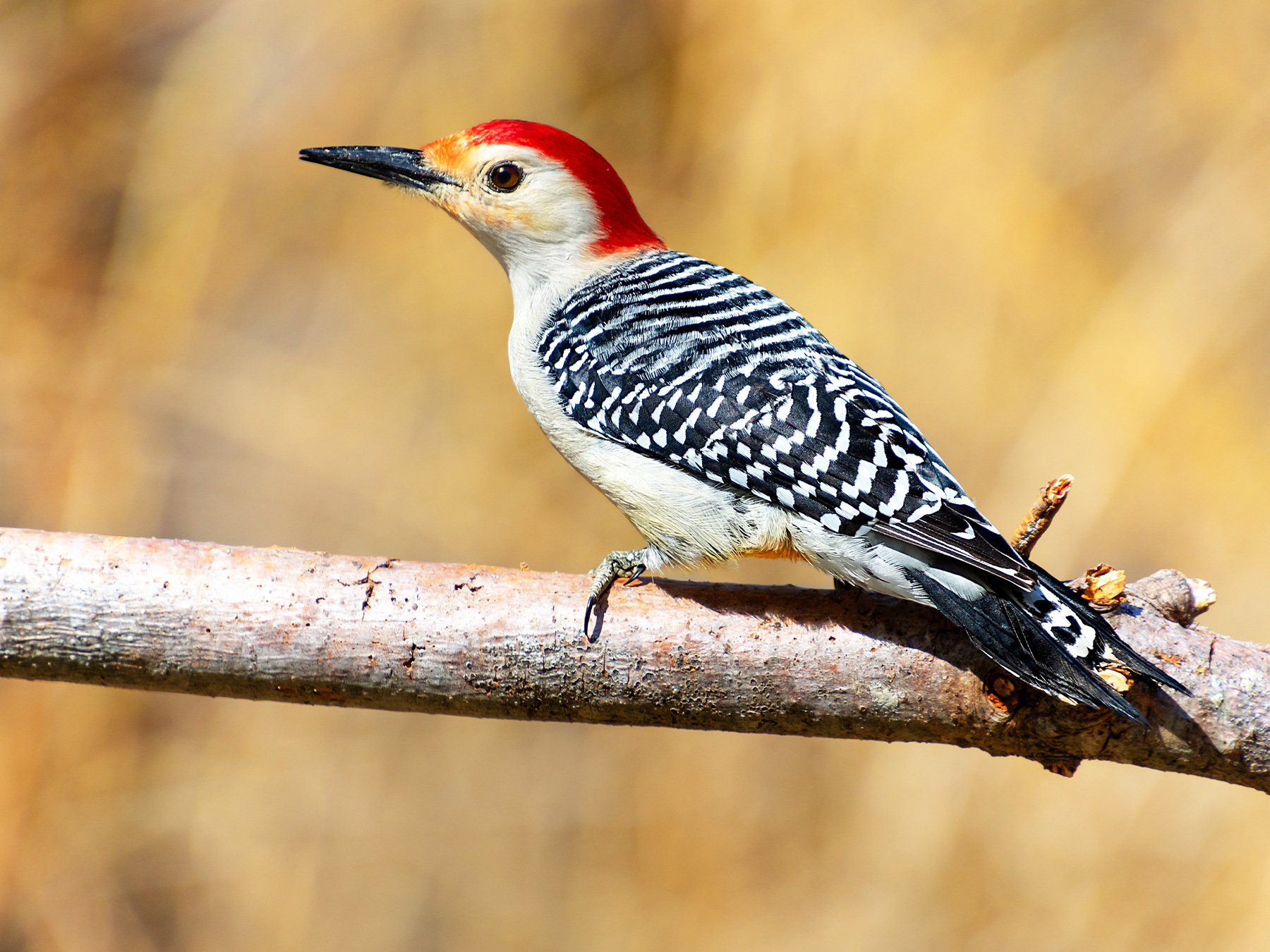
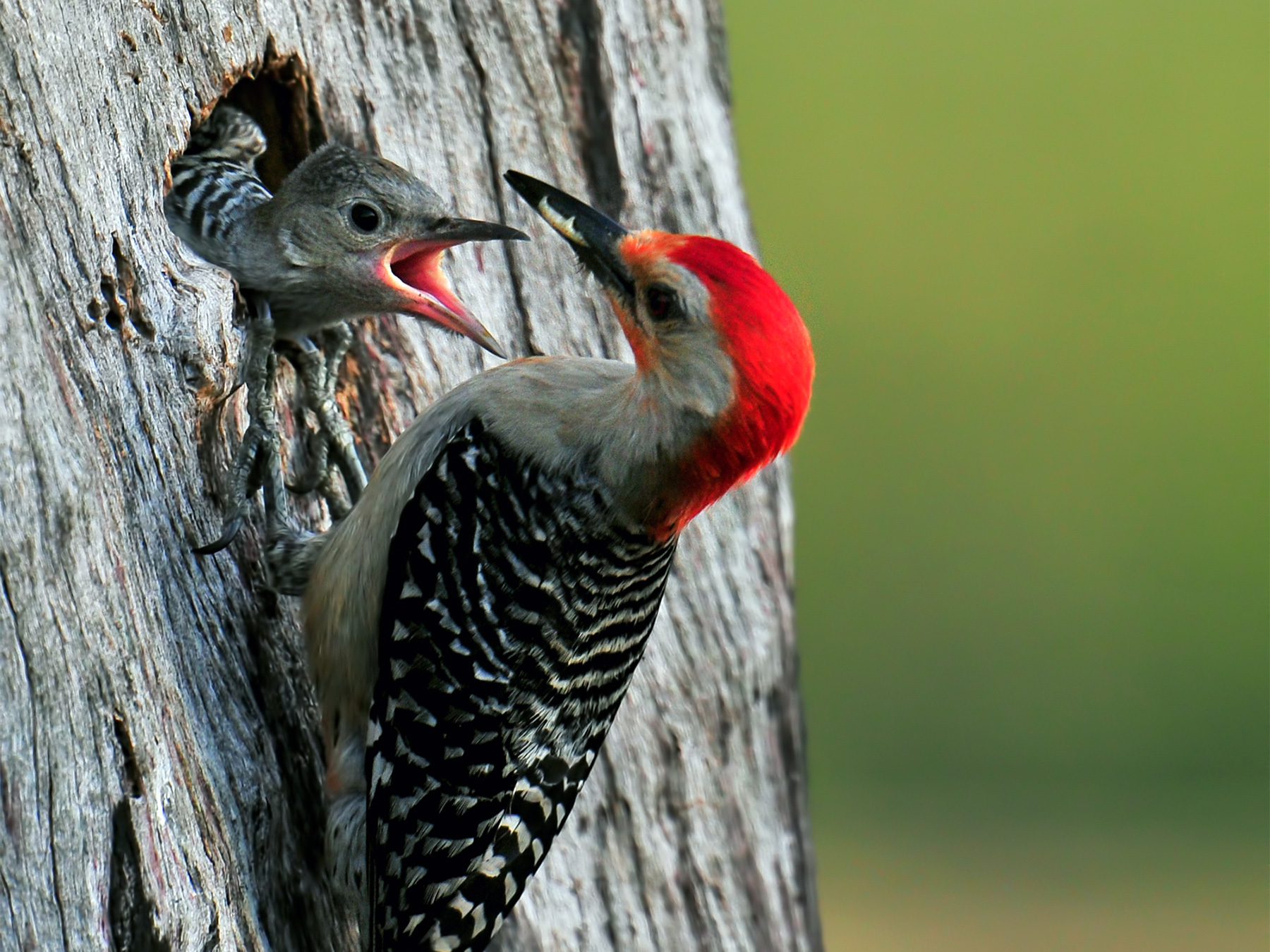
Male red-bellied woodpeckers have a solid red crown that extends from the base of the bill around the back of the head to the nape. Its face is dusky white, with coloring that extends through the chin, throat, and upper breast. A faint patch of pinkish feathers is visible on the lower belly but is not always obvious.
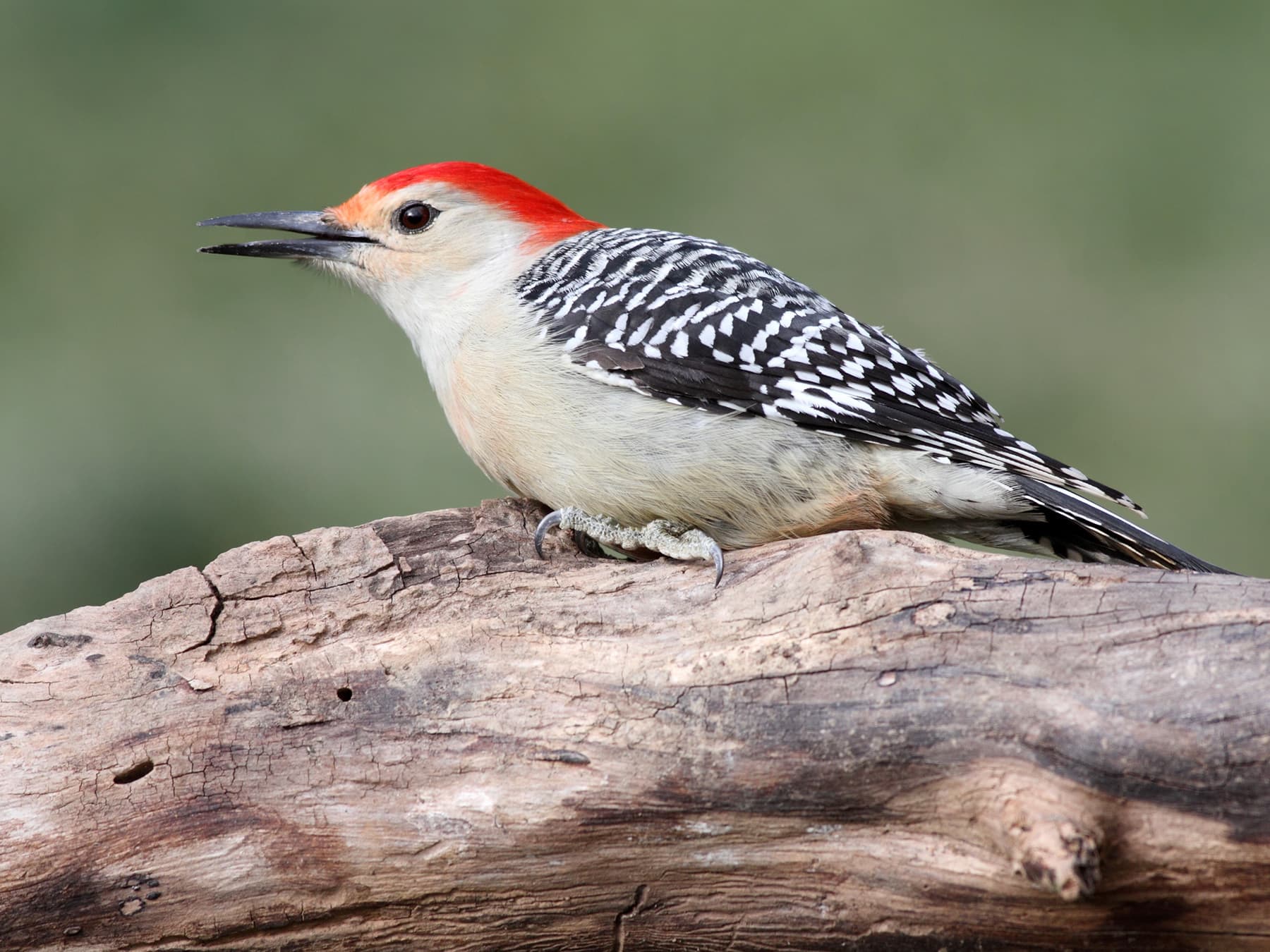
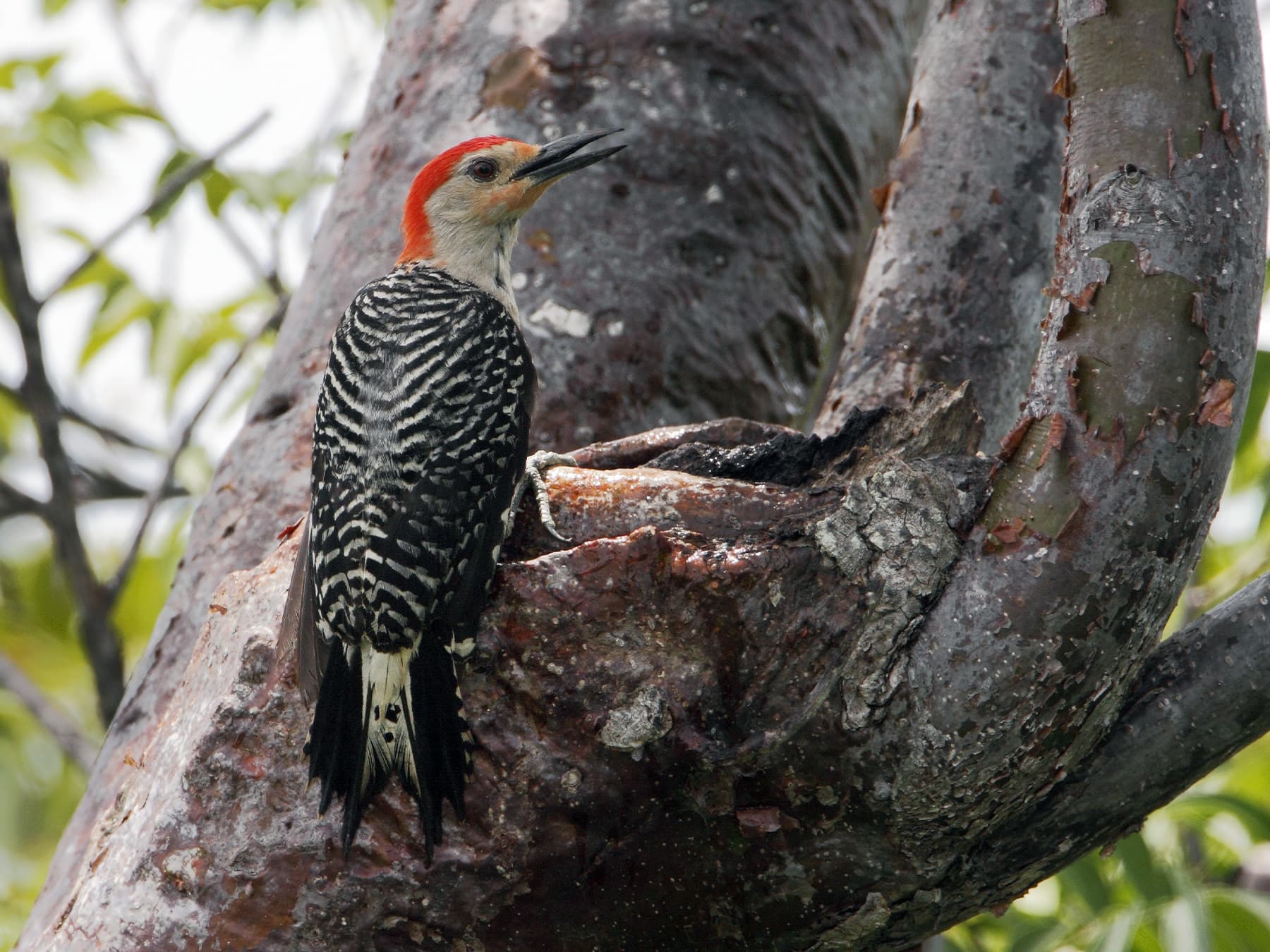
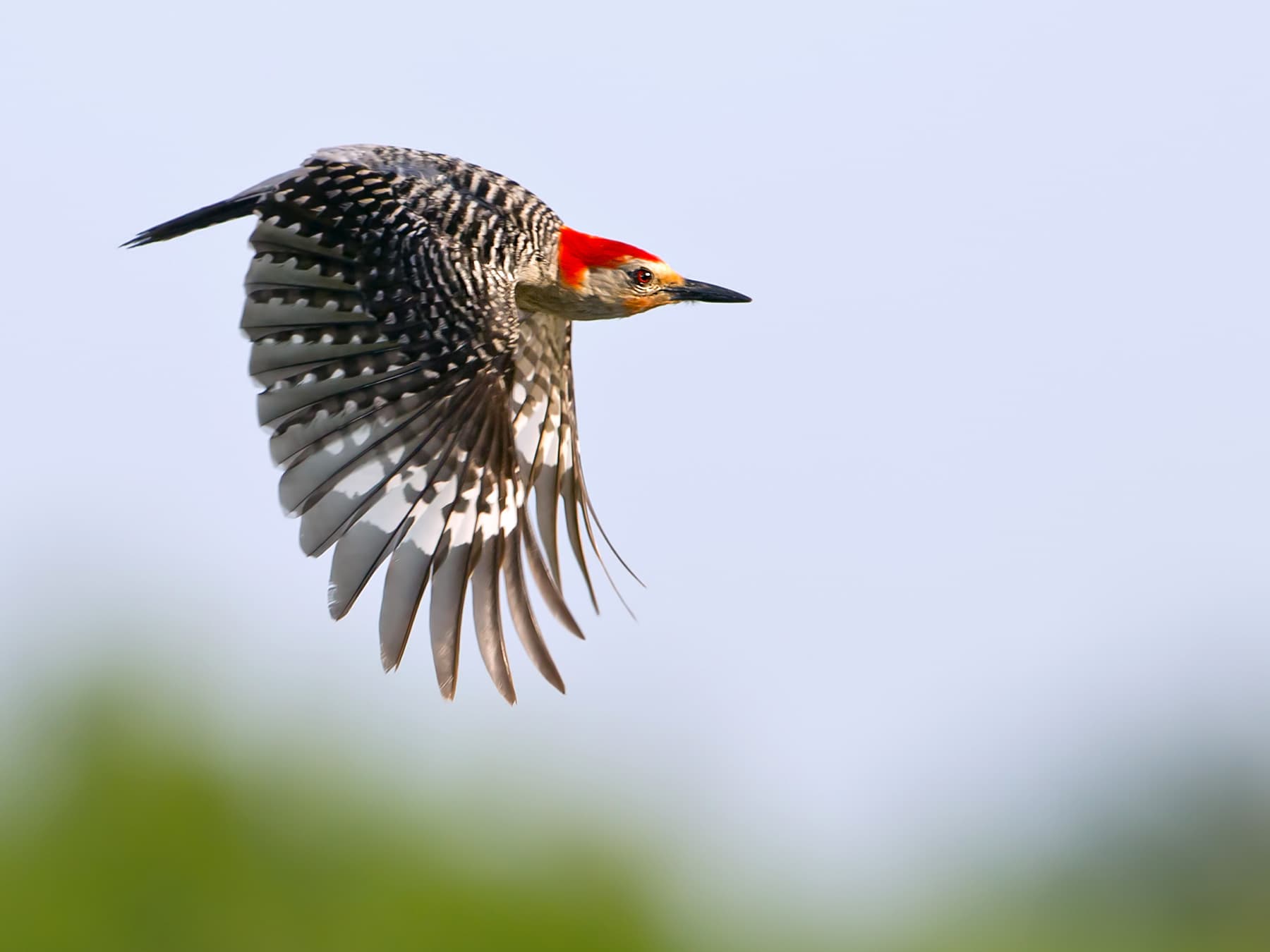
Their wings, back, and tail are heavily barred with black and white, and a white wing patch can be seen in flight. The bill is long, sharp and black. Legs are grayish-green and eyes are a deep brownish-red.
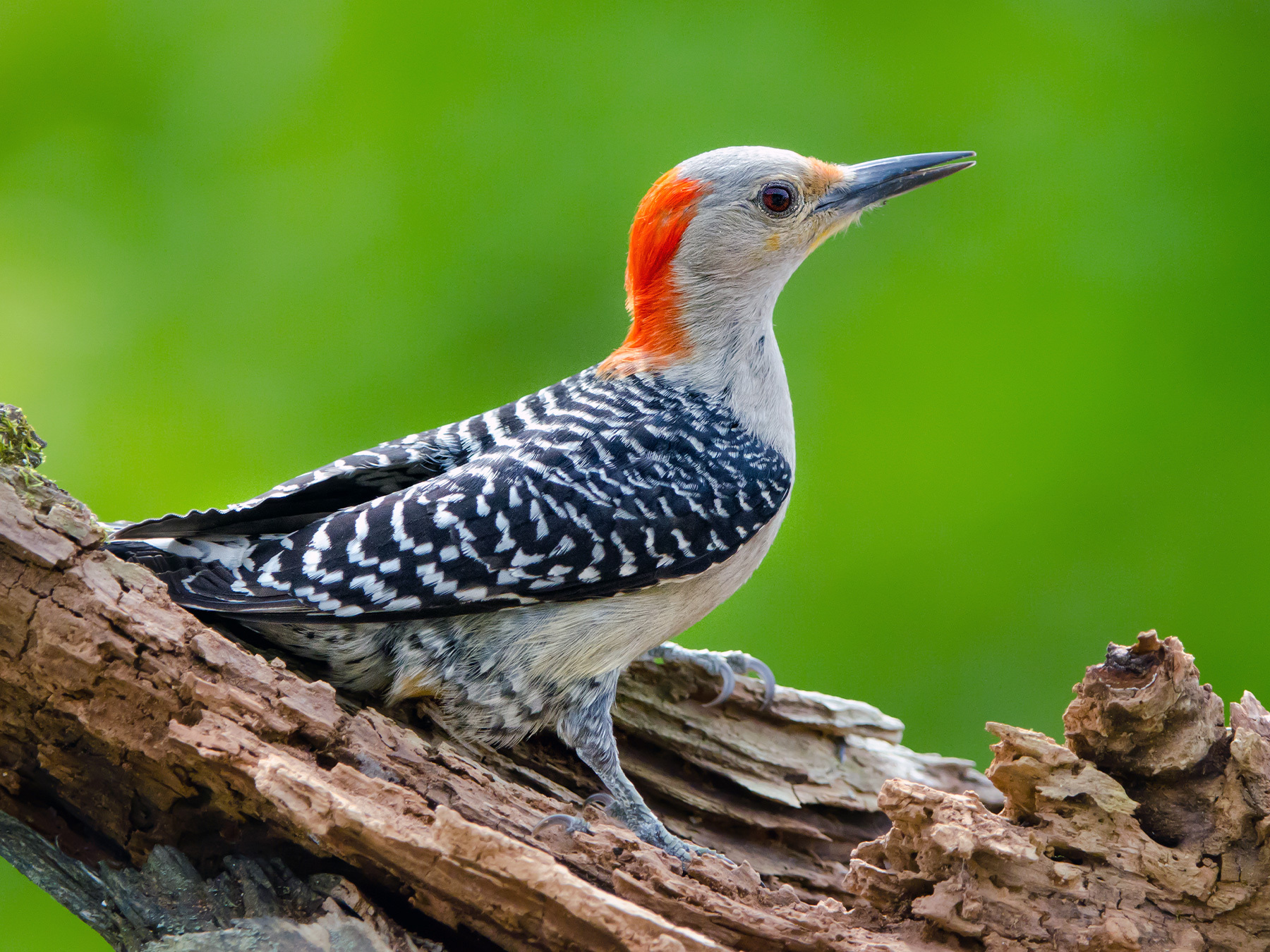
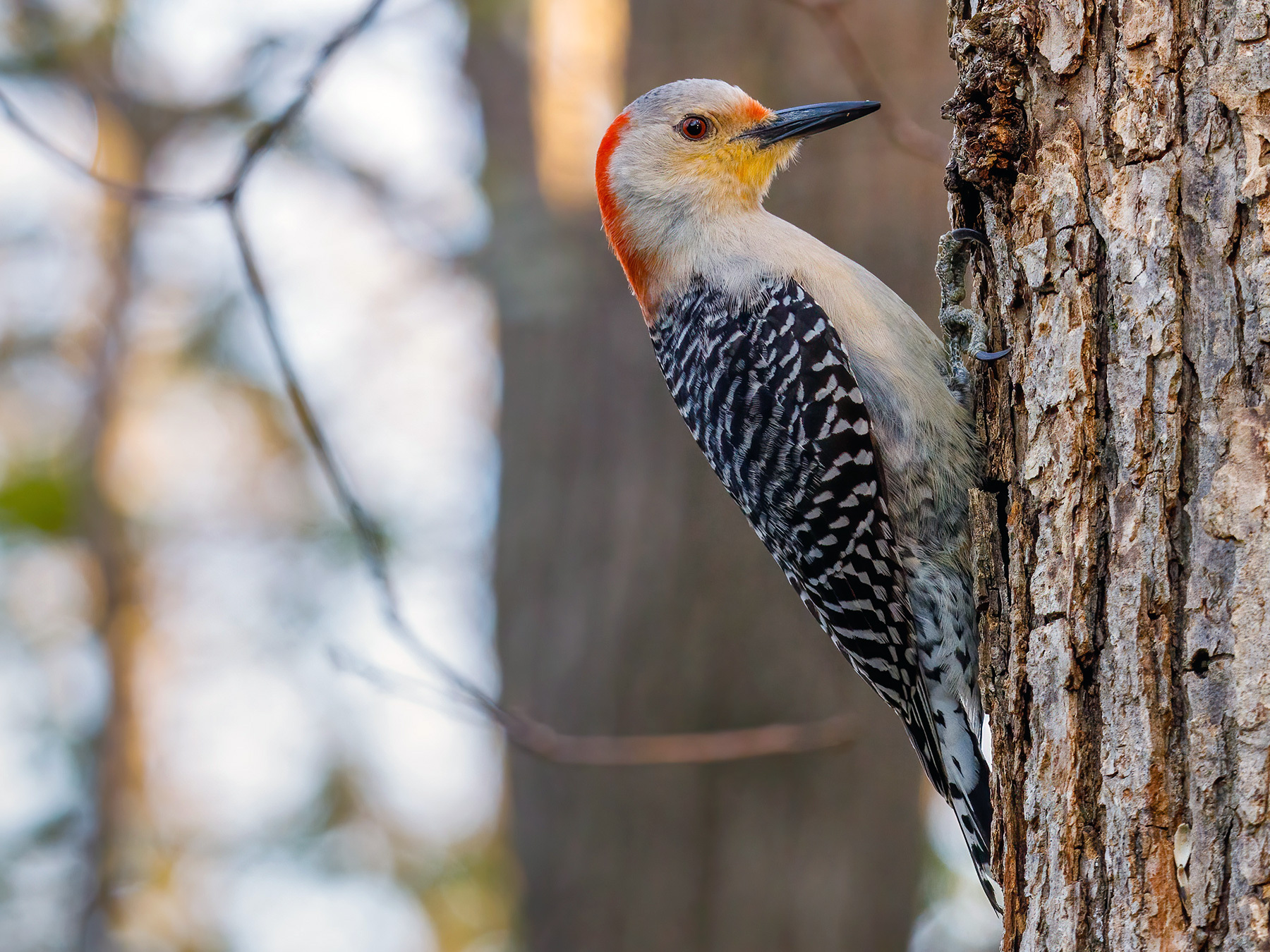
Females are similar to males, but their crowns and forehead are grayish-white instead of bright red. They have the same scarlet nape as males, and they also have a light pinkish stripe above the bill.
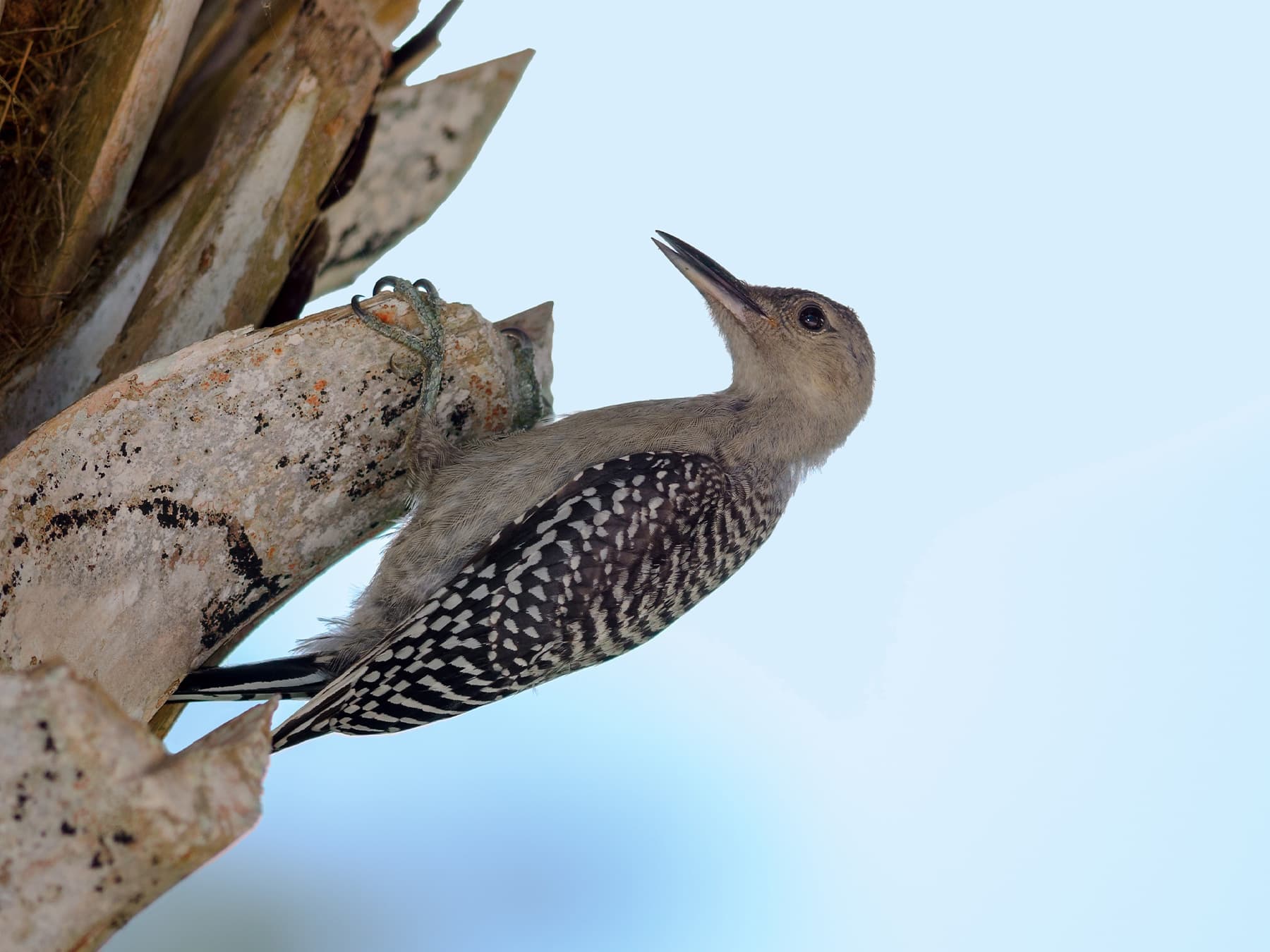
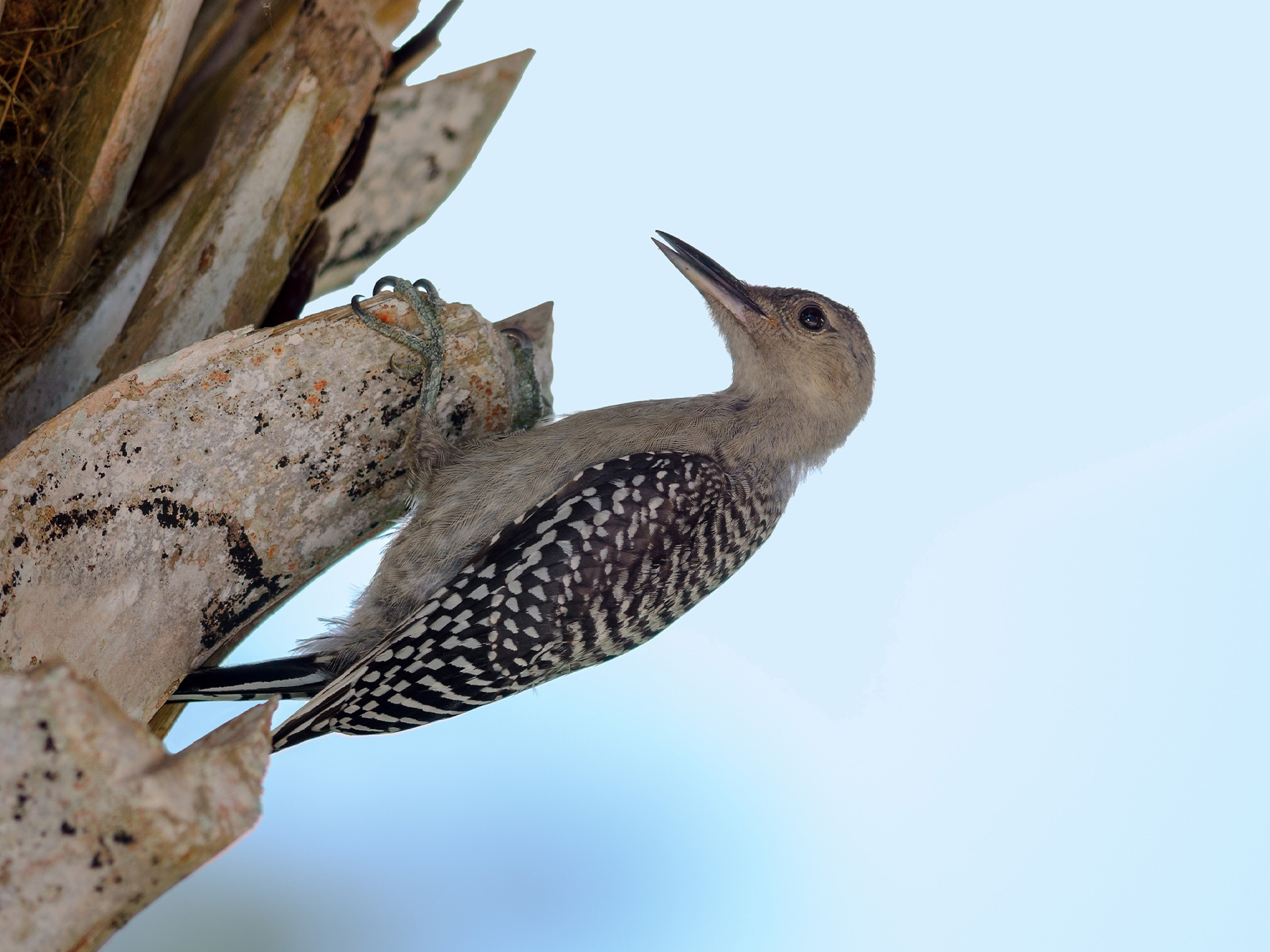
Juvenile red-bellied woodpeckers lack any red coloring, instead showing brownish-mottled plumage, with barring less clearly marked than in adult birds.
Check out this in-depth guide to Red-bellied Woodpecker Male vs Female identification for more information.
How big are Red-bellied Woodpeckers?
As well as there being distinct differences in plumage between male and female red-bellied woodpeckers, there is also a noticeable difference in size, with males being around 8 to 9 percent larger on average.
- Length: 23 cm to 27cm (9 in to 10.5 in)
- Wingspan: 38 cm to 46 cm (15 in to 18 in)
- Weight: 2 oz to 3.2 oz (56 g to 91 g)
Its size
Adults- Length
- 23–26 cm
- Wingspan
- 38–46 cm
- Weight
- 56–91 g
Its song and calls
What sound does a Red-bellied Woodpecker make?
A rolling ‘churr’ is the most common call of a red-bellied woodpecker, heard as a repeated series of notes during the breeding season. A gruff ‘cha-cha-cha’ sound is used as a contact call between mates.
Drumming and tapping can be heard all year round but becomes especially intense during the breeding season.
- Call0:00 / 0:27
Recorded in Minnesota, United States · February 2011
- Drumming0:00 / 0:52
Recorded in North Carolina, United States · February 2024
When and where to see it
OctoberIn season
Most recorded in October
- 1. Arkansas3.6%
- 2. Missouri3.4%
- 3. Kentucky3.4%
- 4. Pennsylvania3.3%
- 5. Georgia3.2%
Each dot is a county, state or province: the bigger and darker, the larger the bird’s share of that place’s bird records that month. Grey dots: no regular records. The ringed point is the centre of the bird’s records this month; the arrow shows how it moved since last month, and the dashed loop its path through the year. “Arrivals” colours places where it becomes regular this month (orange) or is in its last regular month (grey). GBIF eBird Observation Dataset, 2019–2024. Map data: Natural Earth, US Census Bureau; place centres © OpenStreetMap contributors.
In your area
See when the Red-bellied Woodpecker is recorded in your county, state or province.
How often the Red-bellied Woodpecker turns up in the United States and Canada through the year, from birdwatchers' records.
United States
Resident · all year · most records in October
Canada
Resident · all year · most records in February
Show as a table
| Month | United States | Canada |
|---|---|---|
| January | 1.7% (regular) | 0.60% (regular) |
| February | 1.8% (regular) | 0.64% (regular) |
| March | 1.6% (regular) | 0.46% (regular) |
| April | 1.5% (regular) | 0.37% (regular) |
| May | 1.4% (regular) | 0.37% (regular) |
| June | 1.1% (regular) | 0.17% (regular) |
| July | 1.0% (regular) | 0.13% (regular) |
| August | 1.1% (regular) | 0.12% (regular) |
| September | 1.6% (regular) | 0.21% (regular) |
| October | 1.8% (regular) | 0.36% (regular) |
| November | 1.7% (regular) | 0.51% (regular) |
| December | 1.7% (regular) | 0.59% (regular) |
Worldwide: recorded regularly in 2 countries
Countries where it was recorded in at least 3 of the 6 years 2019–2024. Linked countries have their own bird list.
North America (2)
Data: EOD – eBird Observation Dataset (Cornell Lab of Ornithology), accessed via GBIF.org, CC BY 4.0. Records from 2019–2024, aggregated and filtered by Birdfact. How these lists are made
What is the habitat of a Red-bellied Woodpecker?
In recent years, red-bellied woodpeckers have become an increasingly adaptable species, and are present in forests, woodlands, orchards, parks, and gardens, as long as there are plenty of mature trees for nesting and foraging.
Mixed woodlands, with coniferous and deciduous trees and interspersed with areas of open terrain, are preferred. Popular choices for nest construction include patches of well-established tree cover in landscapes close to water, with rivers, streams and wetland environments.
What is the range of a Red-bellied Woodpecker?
The range of red-bellied woodpeckers is located almost wholly within the United States, with only a very small area in the southwest of the Canadian province of Ontario also home to resident birds of this species.
Red-bellied woodpeckers are year-round residents in the entire eastern US, as far west as Minnesota, eastern Nebraska, and Kansas, and as far south as eastern Texas and Florida. The species has no presence outside of North America.
Where do Red-bellied Woodpeckers live?
A population of up to 15 million red-bellied woodpeckers is estimated for Canada and the United States, with the vast majority in the United States. Canada’s population is in the tens of thousands only. The southeastern states of the US are home to the largest numbers, particularly Florida, Georgia, Alabama and Mississippi.
How rare are Red-bellied Woodpeckers?
Red-bellied woodpeckers are one of the eastern United States’ most abundant species of woodpecker, and their distinctive plumage makes them easy to spot against their woodland habitats and also relatively straightforward to identify.
From the central states westward, sightings become scarce. In Canada, they are highly uncommon, with only a small, but increasing, population in Ontario.
Where can you see Red-bellied Woodpeckers in the US?
The southeastern coastal plain of the US has the highest rates of relative abundance of red-bellied woodpeckers. A good spot for potential sightings is along the Mississippi Alluvial Valley, where red-bellied woodpeckers are particularly widespread and abundant.
Where can you see Red-bellied Woodpeckers in Canada?
The southwestern tip of Ontario is home to Canada’s small breeding population of red-bellied woodpeckers, and sightings outside of this region are especially rare.
Migration
Do Red-bellied Woodpeckers migrate?
Largely a resident and sedentary species, some movement among red-bellied woodpecker populations in the extreme north of their range or at higher altitude elevations may occur post-breeding.
Are Red-bellied Woodpeckers native to the US?
Red-bellied woodpeckers are native to the US and are widespread throughout eastern and central regions. A small number are found in the southwestern corner of Ontario, but aside from these, the entire population of the species can be found in the United States.
Tips for seeing it
- Listen for their distinctive rolling 'churr' call
- Look for their zebra-like back pattern when perched on tree trunks
- Check bird feeders, especially those offering suet or nuts
- In the eastern United States, scan deciduous forests and suburban areas with mature trees
What it eats
What do Red-bellied Woodpeckers eat?
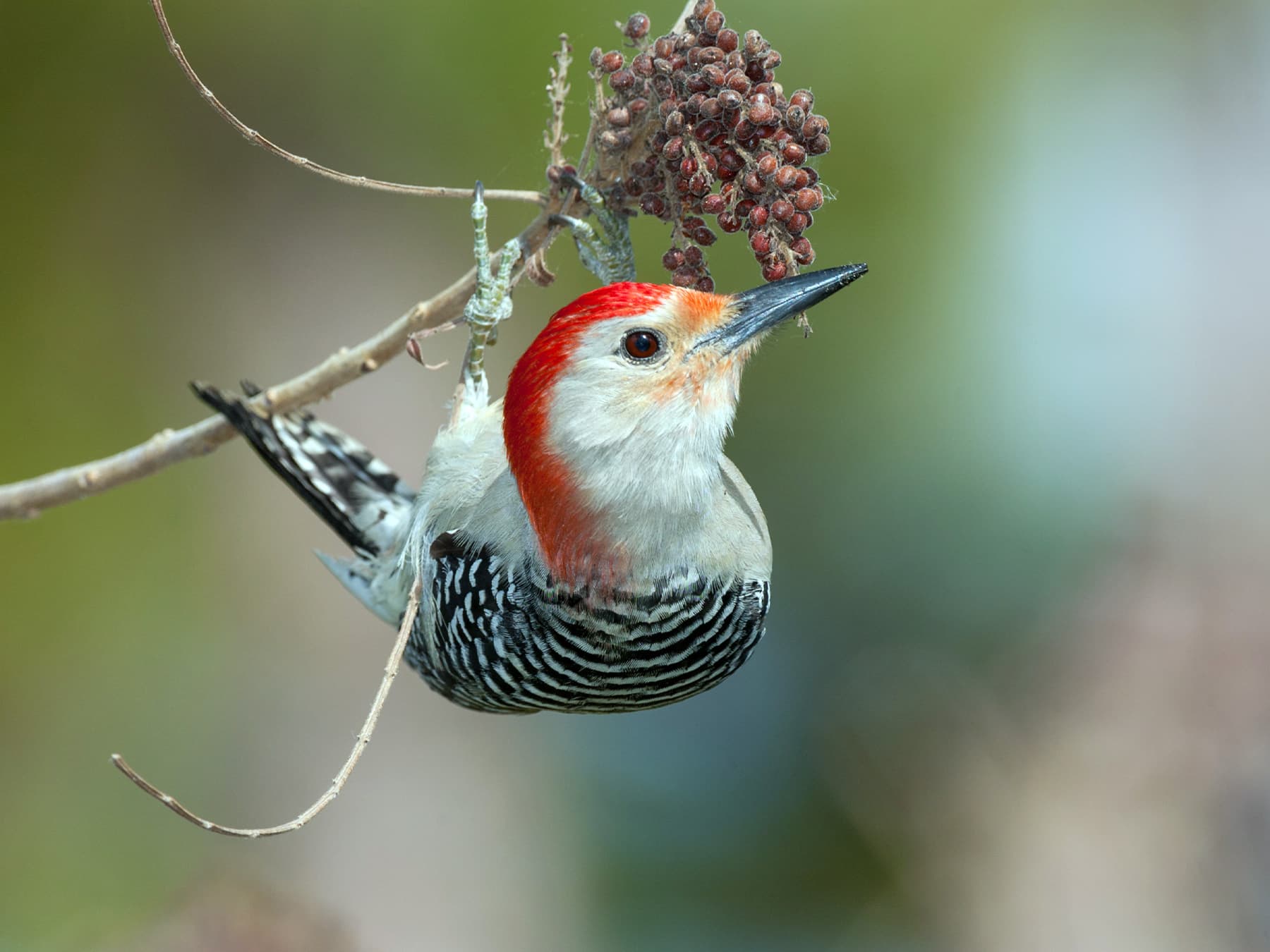
Red-bellied woodpeckers follow an omnivorous diet, eating insects, fruits, nuts and seeds. Insects may be caught in flight as well as extracted from beneath the bark of tree trunks, especially beetles, grasshoppers, ants, flies and caterpillars. Larger prey is also frequently caught, including small birds, lizards and amphibians.
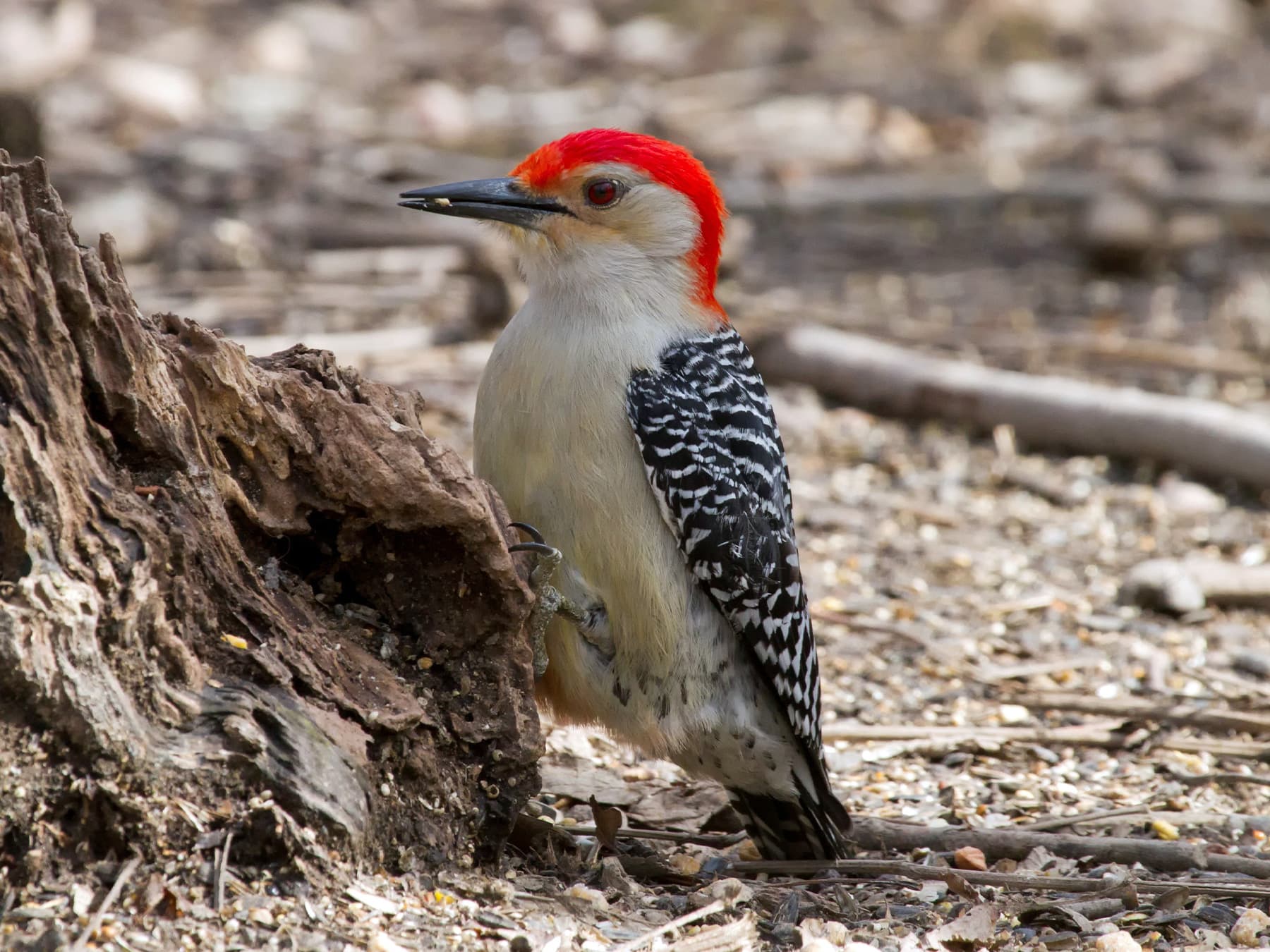
They forage for fruit, acorns, pecans, hazelnuts, and beech nuts, both on the floor and among the branches of trees, and small pieces of hard mast may be stored in natural tree crevices as a future winter supply. Sap may also be eaten.
What do Red-bellied Woodpecker chicks eat?
Young red-bellied woodpeckers are fed small insects, fruits, nuts, seeds, and sap by their parents in the nest.
Nesting and breeding
Where do Red-bellied Woodpeckers nest?
Nest cavities are hollowed out by both males and females, usually taking around 2 weeks to complete the process. Nest sites are chosen on the underside of large rotting branches, close to the trunk, or on leaning tree trunks. Both hardwood and softwood trees may be used, including oaks, hickories, maple, sycamore, ash, and cottonwoods are popular species.
Nests are typically built at a height of between 5 and 31 m (16 to 100 ft). Nest boxes may also occasionally be used if available.
When do Red-bellied Woodpeckers nest?
Earliest nesting preparations begin in January when pairs start to form, and nest sites are surveyed. Nest construction may begin from March onwards, with laying commencing in late April. Incubation, shared between mates, takes 12 to 14 days, and one sole brood is raised each season.
What do Red-bellied Woodpecker eggs look like?
A typical red-bellied woodpecker clutch consists of 2 to 6 eggs, with 4 being the most usual number. Eggs are smooth and plain white, measuring on average 25 mm by 19 mm (1 in by 0.7 in).
Do Red-bellied Woodpeckers mate for life?
Pairs form early in the year, and bonds are cemented by mutual tapping during courtship and the female giving approval to a nest cavity chiseled out by the male. After raising one brood together, it’s usual for pairs to separate. They may reunite the following year, but may also seek a new mate to breed with.
Behaviour
Are Red-bellied Woodpeckers aggressive?
Aggressive displays may be observed when intruders enter the established territory of a red-bellied woodpecker, with hostile posturing, chasing, and even physical grappling between rivals.
Where do Red-bellied Woodpeckers sleep at night?
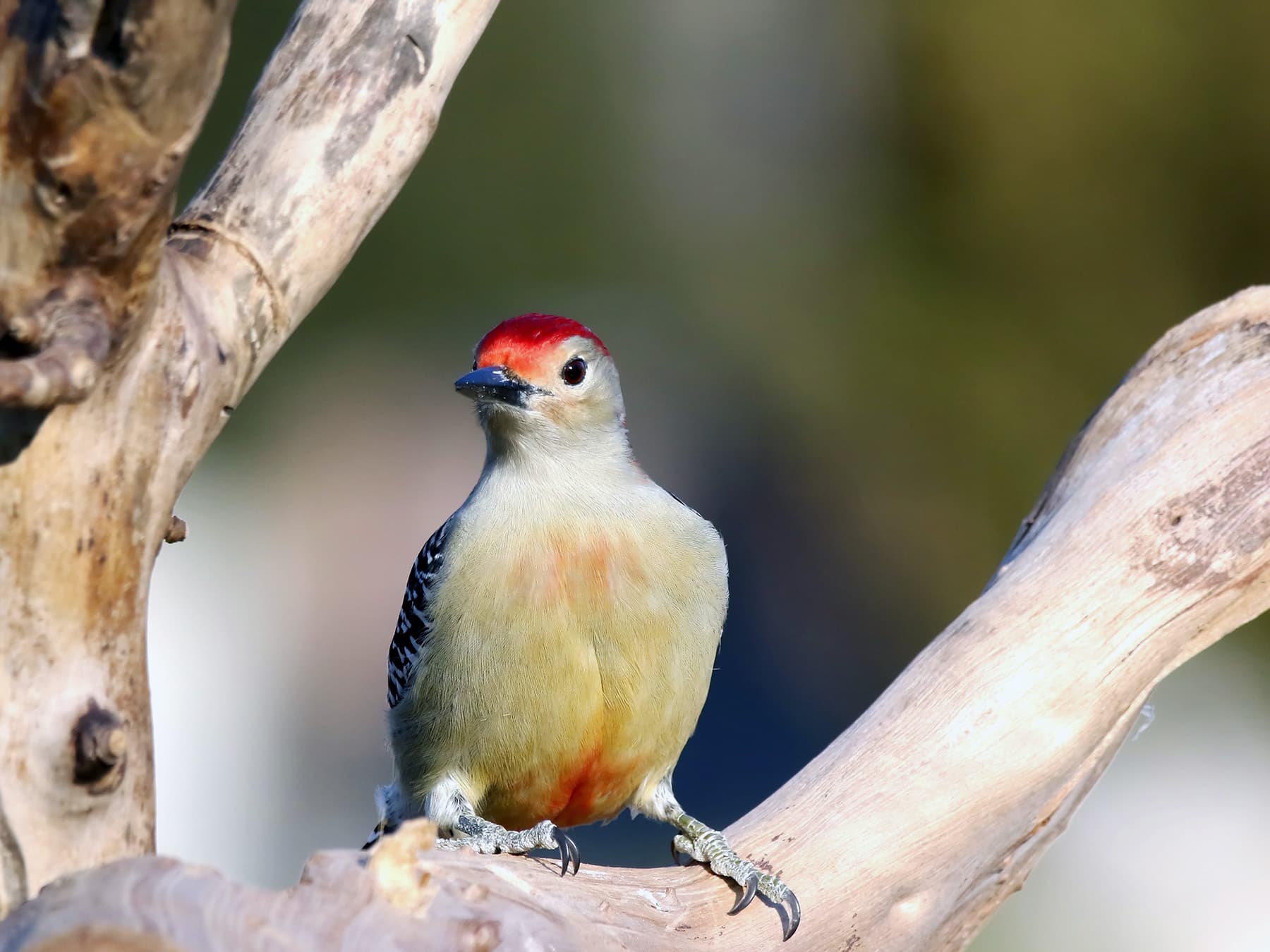
Immediately after fledging, red-bellied woodpeckers roost in the open, finding spots close to the trunk of a tree to rest on overnight. Adult birds roost individually in empty cavities, either one they have excavated themselves but not pursued as a nest choice or in a hollow created naturally or by another species.
Lifespan and predators
How long do Red-bellied Woodpeckers live?
The average lifespan of a red-bellied woodpecker is believed to be at least 8 years, with the oldest identified individual recorded at 12 years and 3 months. No data is available for the first breeding age, although it is thought to be one year.
What are the predators of Red-bellied Woodpeckers?
Hawks (sharp-shinned and Cooper’s) are the leading avian predators of adult and fledgling red-bellied woodpeckers, which may also be targeted by black rat snakes and domestic cats. Nests are sometimes attacked by starlings, red-headed woodpeckers, pileated woodpeckers and snakes.
Are Red-bellied Woodpeckers protected?
The Migratory Bird Treaty Act safeguards red-bellied woodpeckers against being killed, injured, traded for sale, or taken into captivity from the wild. Their nests, eggs, and young are also protected from being destroyed or damaged.
Are Red-bellied Woodpeckers endangered?
With a large geographical range and the ability to survive in a diverse range of habitats, red-bellied woodpeckers are not currently to be considered to be facing any threats to their future survival. Hence they have been rated as a species of least concern globally.
Conservation
Red-bellied Woodpeckers are currently of Least Concern due to their stable population trends and large range. However, they face challenges from habitat loss due to urbanization and competition with invasive species like European Starlings for nesting cavities.
Conservation efforts focus on preserving mature forests and promoting urban green spaces.
More photos
8 photos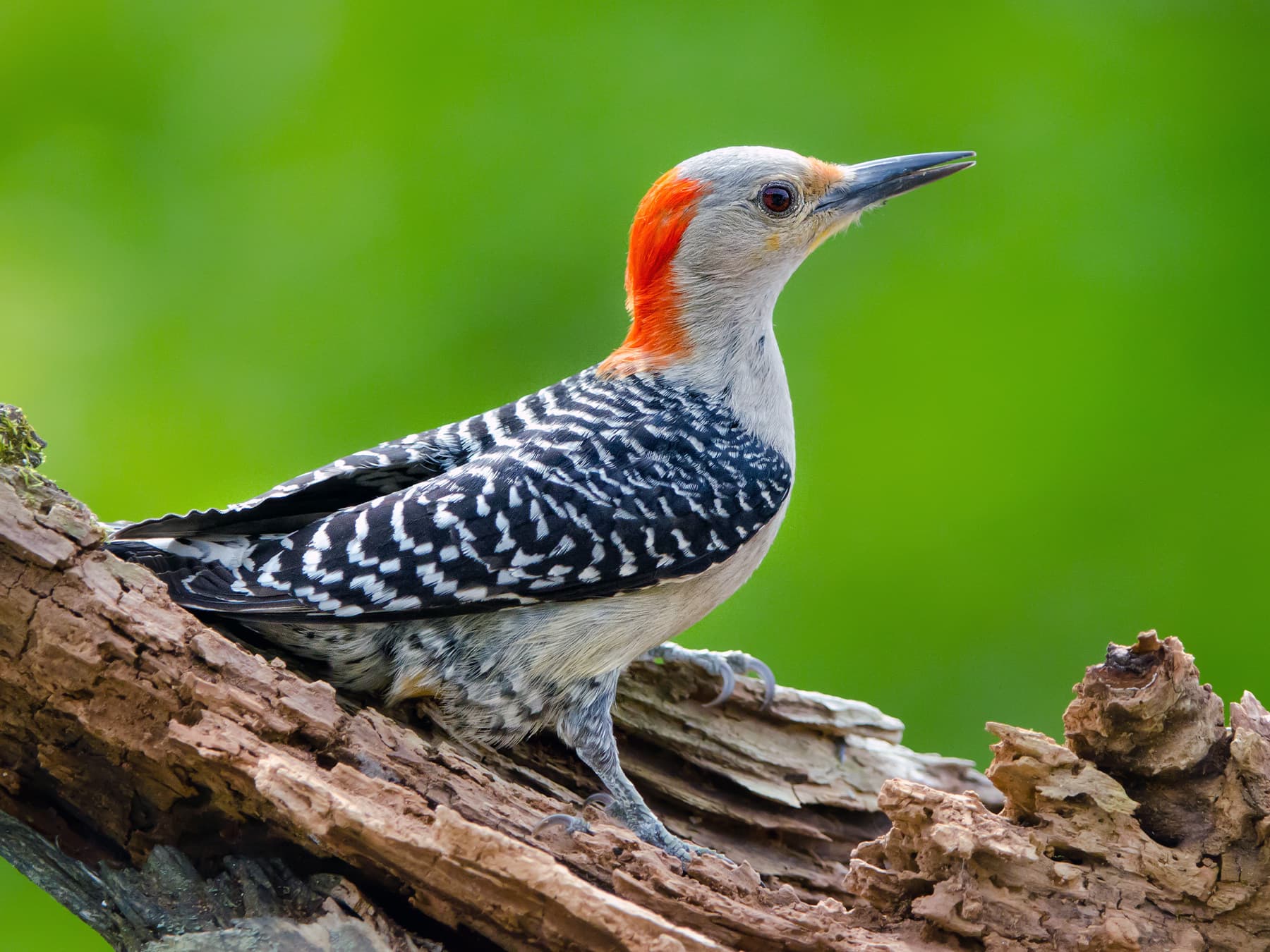 Female Red-bellied Woodpecker
 Juvenile Red-bellied Woodpecker
 Red-bellied Woodpecker feeding on berries
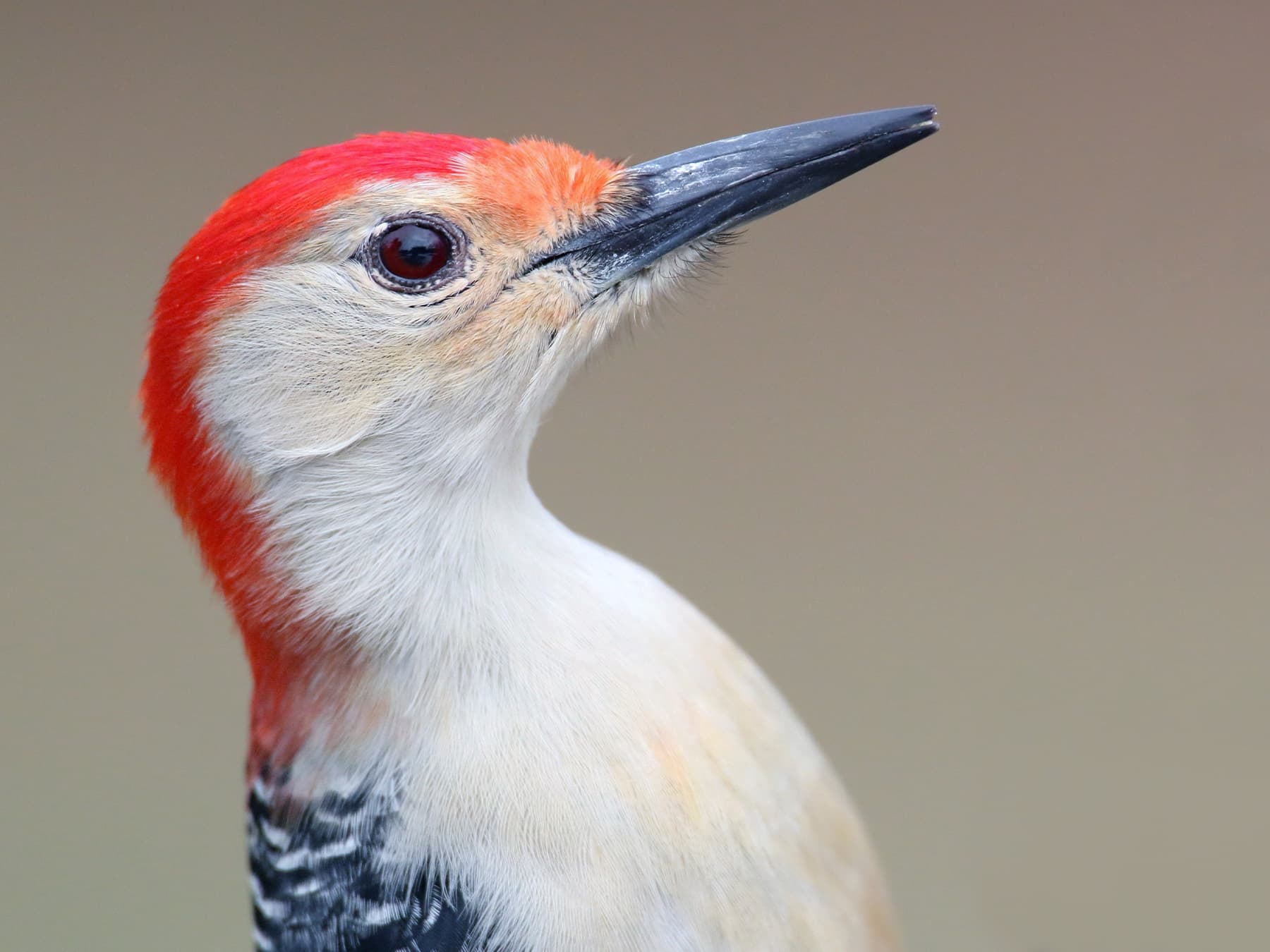 Portrait of a Red-bellied Woodpecker
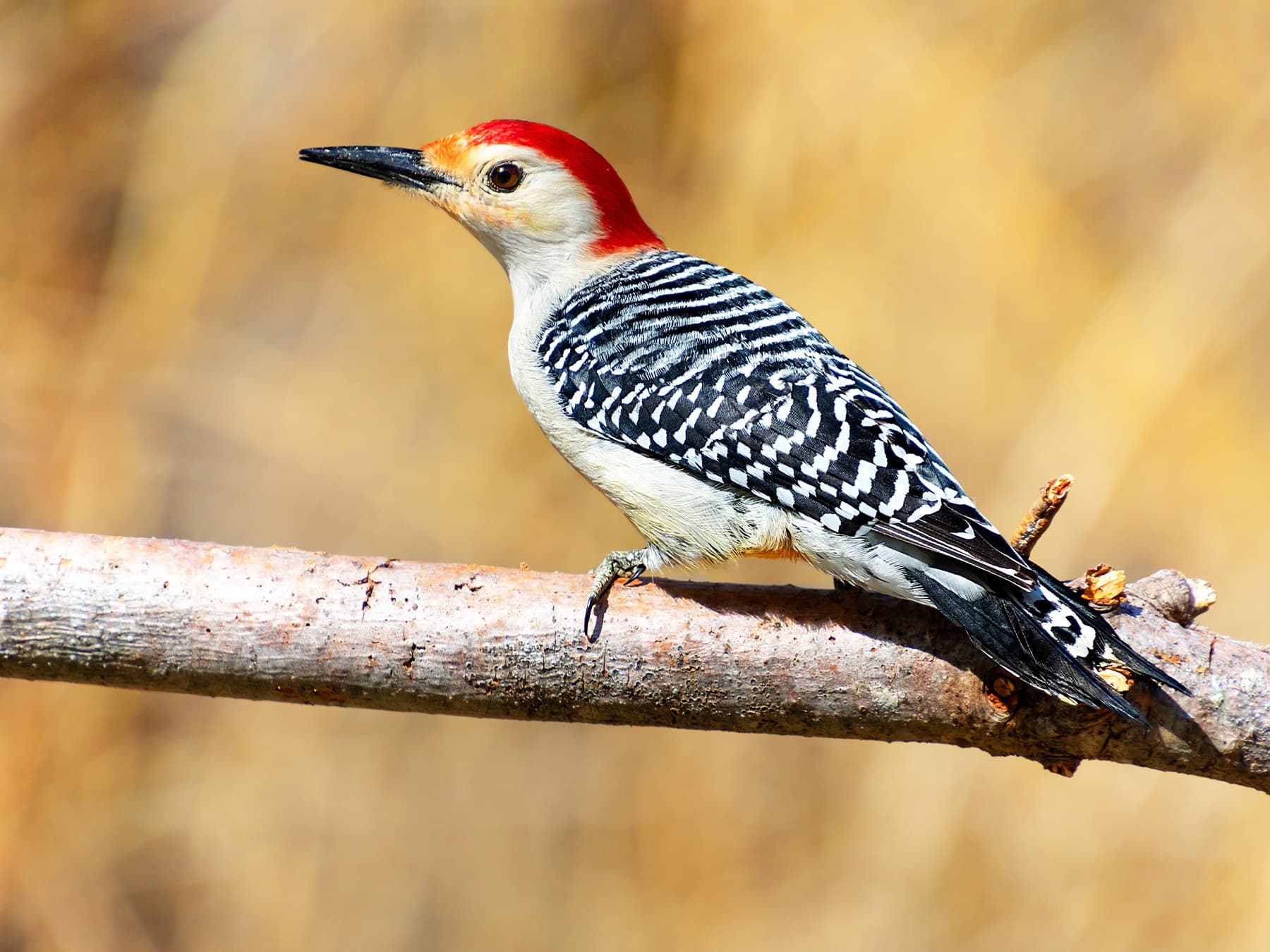 Red-bellied Woodpecker Male
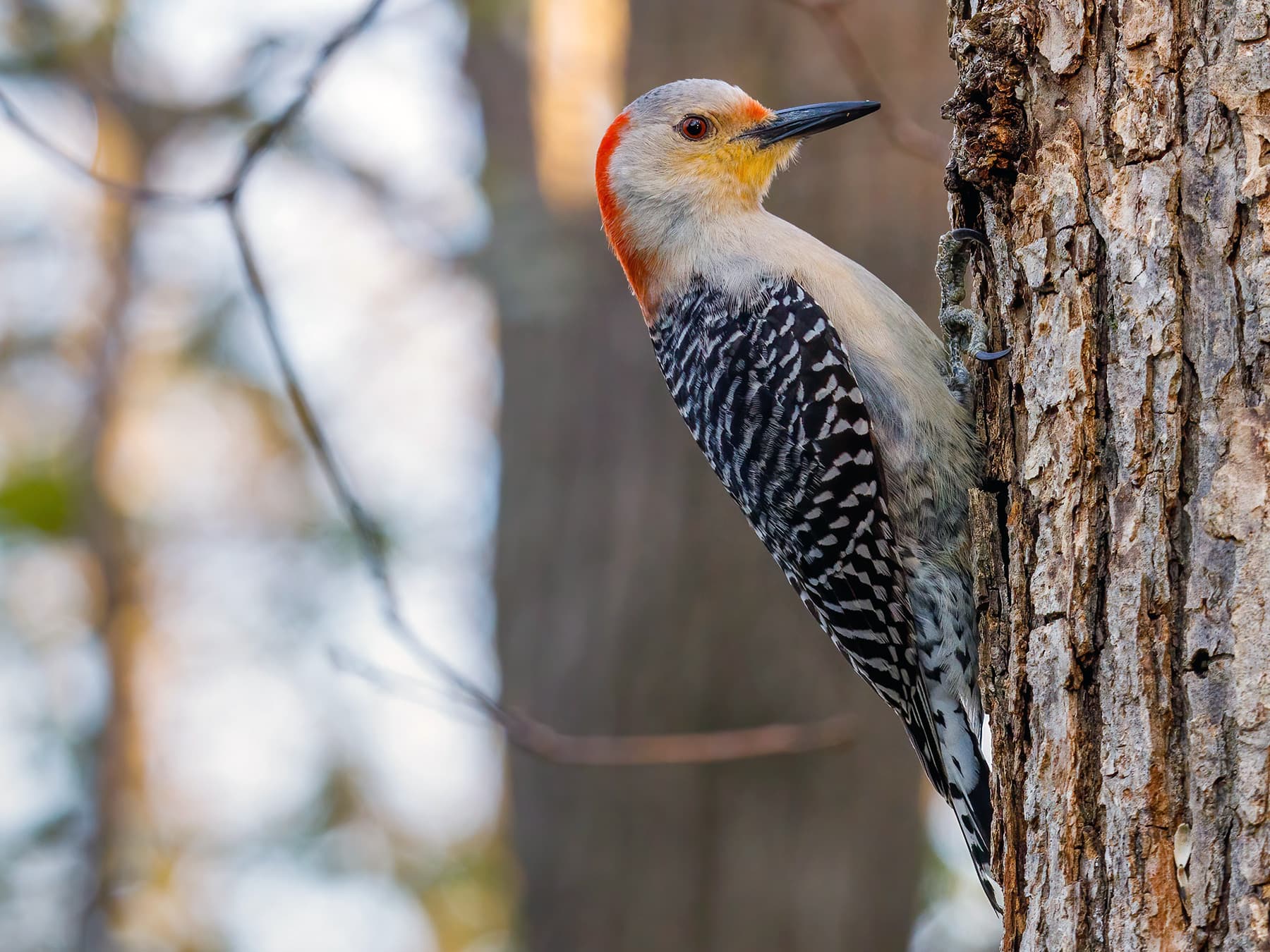 Red-bellied Woodpecker Female
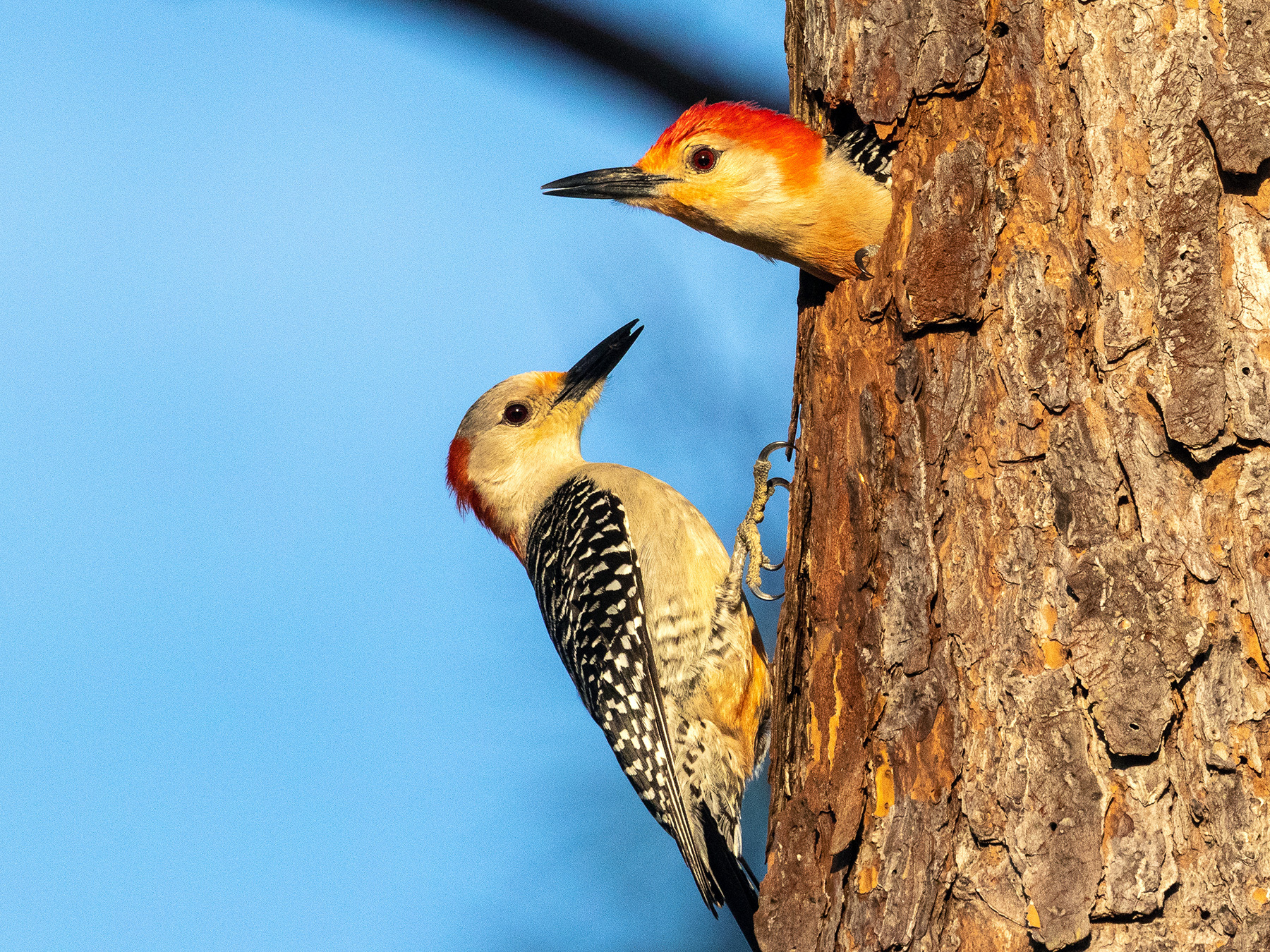
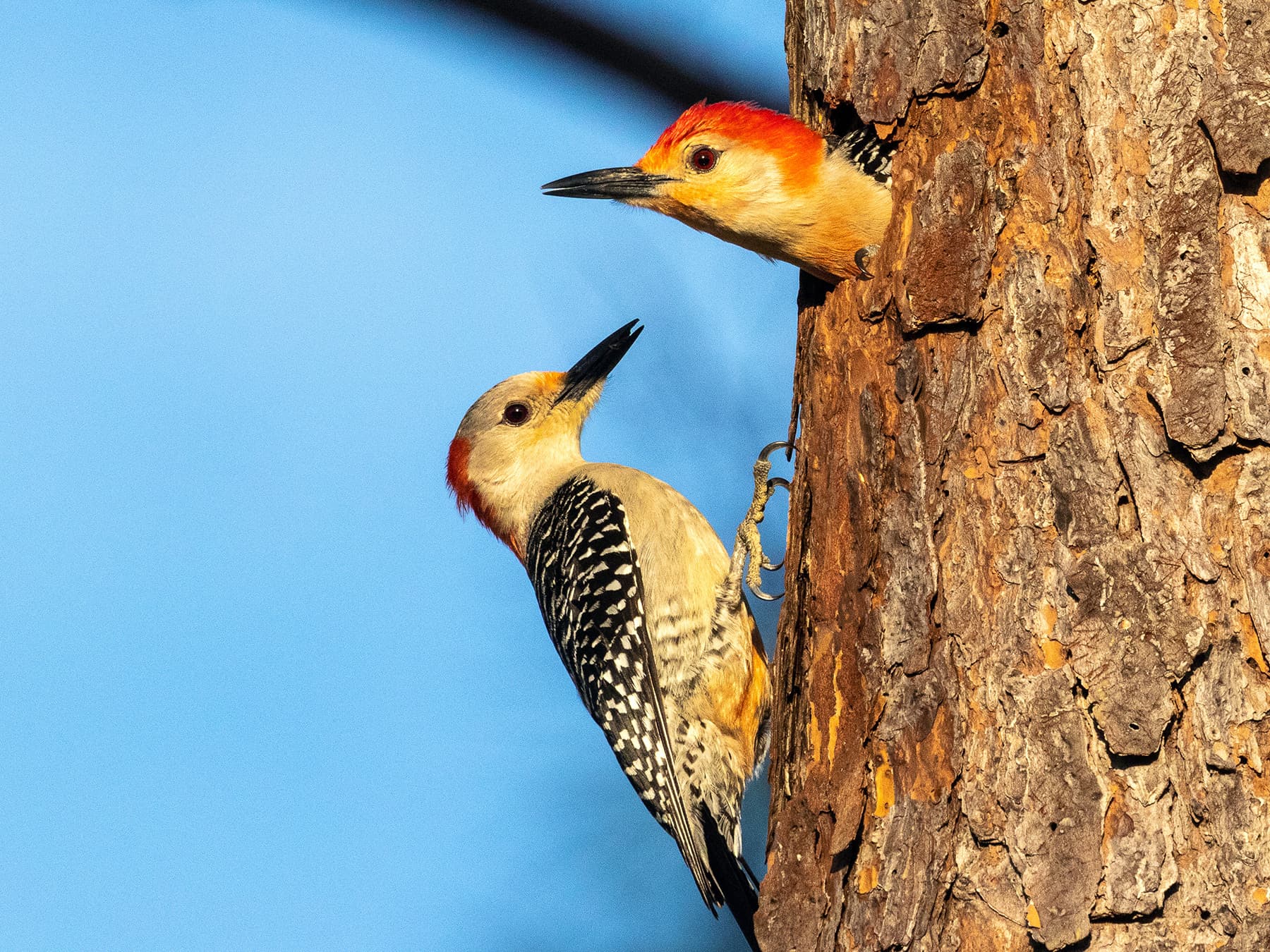 Red-bellied Woodpecker Female (left) and Male (right) at the nest
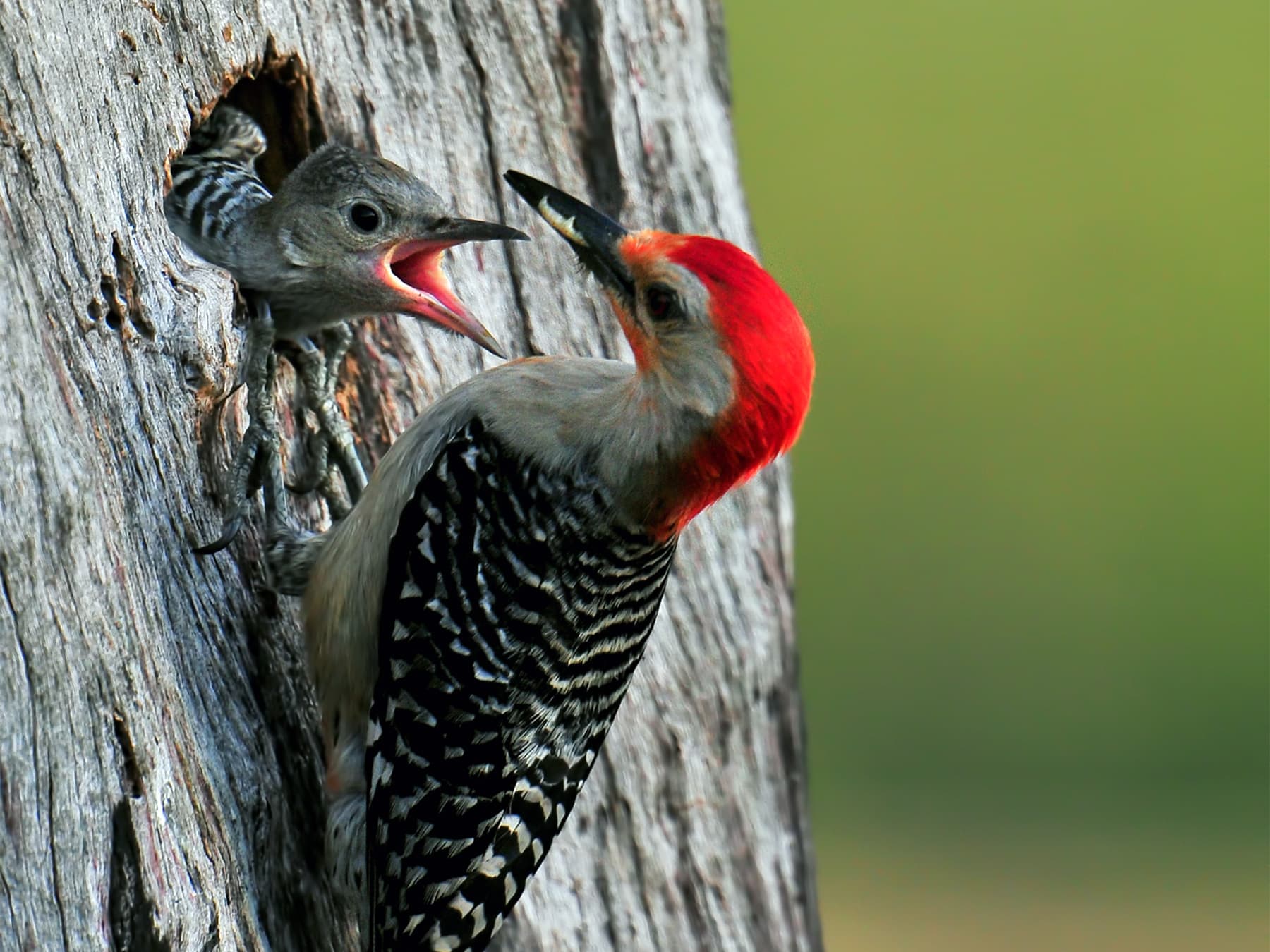 Red-bellied Woodpecker feeding its young at the nest
Red-bellied Woodpecker guides
2 guidesQuick facts
- Length
- 23–26 cm
- Wingspan
- 38–46 cm
- Weight
- 56–91 g
- Lifespan
- 8–10 years · oldest recorded 20 years
- Family
- Woodpeckers
- Migration
- Resident
- Global status (IUCN)
- Least Concern
- World population
- 16,000,000 mature individuals
- Population trend
- Increasing
- Also called
- Zebra-backed Woodpecker
- Scientific name
- Melanerpes carolinus
Questions
2What attracts Red-bellied Woodpeckers?
Red-bellied woodpeckers are known to visit backyard feeders, particularly in winter, where they are drawn to suet, fruits (especially oranges, grapes, and apples), peanuts and mealworms.
What are the benefits of Red-bellied woodpeckers?
Despite being seen by some as a pest species due to their hammering and drilling habits, red-bellied woodpeckers are in fact good to have around. They control insect populations by feasting on bugs and play an important role in the wider food chain, with their eggs and nestlings serving as prey for several predators.
The cavities they drill in trees are hugely beneficial to many other wildlife species that are unable to excavate their own hollows but require a safe chamber in which to lay their own eggs and raise their young.
In addition, as fruit and seed eaters, red-bellied woodpeckers play a key role in biodiversity, with seed dispersal and the subsequent regeneration of plant-rich habitats.
Sources
4- 1BirdLife International. 2016. Melanerpes carolinus. The IUCN Red List of Threatened Species 2016: e.T22680856A92882598. Source (opens in a new tab)
- 2Breeding Bird Survey and/or Christmas Bird Count: Butcher and Niven (2007)
- 3Partners in Flight (2022) Source (opens in a new tab)
- 4John Terres, The Audubon Society Encyclopedia of North American Birds (1980)

Checked by
Nathan Cope, founder and editor
Nathan founded Birdfact and leads its writers and contributors in the UK, the US and Canada. He has watched and studied birds for more than ten years, and checks every article and species guide before it’s published.