


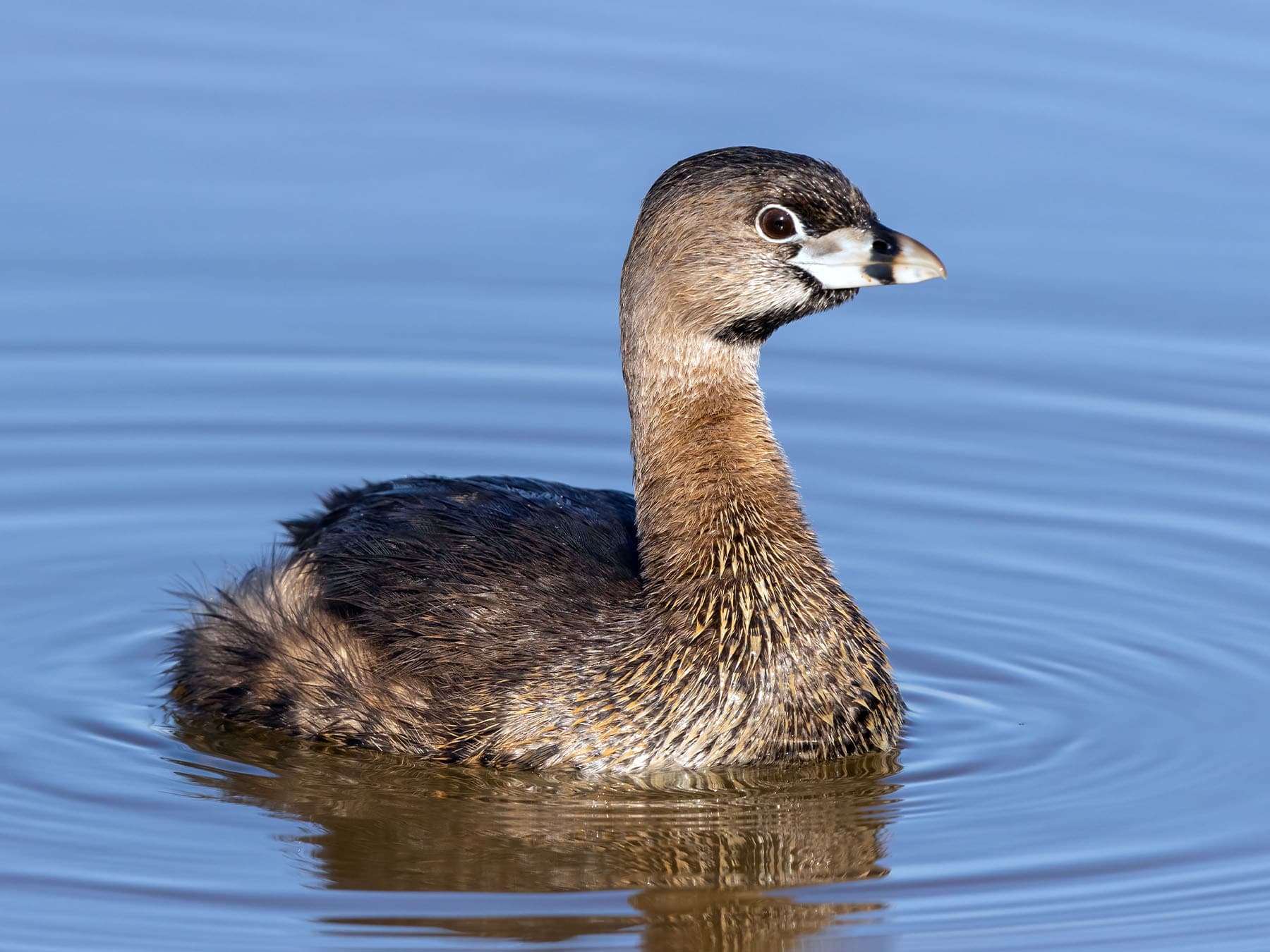
Pied-billed Grebe
American Dabchick, Dabchick, Carolina Grebe, Devil-diver, Dive-dapper, Hell-diver, Pied-billed Dabchick, Thick-billed grebe, Water Witch · Podilymbus podiceps
By the Birdfact teamChecked by Nathan Cope
On this page11 sections
How to recognise it
The Pied-billed Grebe is a small, chunky waterbird with a distinctive thick, compressed bill. Its plumage is primarily brown and grey, with white underneath and on the undertail. During the breeding season, the bill develops a black ring, and the throat becomes black, giving the bird its name.
In winter, the plumage becomes duller brown, and the black ring on the bill typically fades. Juveniles resemble non-breeding adults but often have striped faces and necks, with an orange-reddish bill instead of the adult's bluish-white.
Its size
Adults- Length
- 31–38 cm
- Wingspan
- 45–62 cm
- Weight
- 253–568 g
Its song and calls
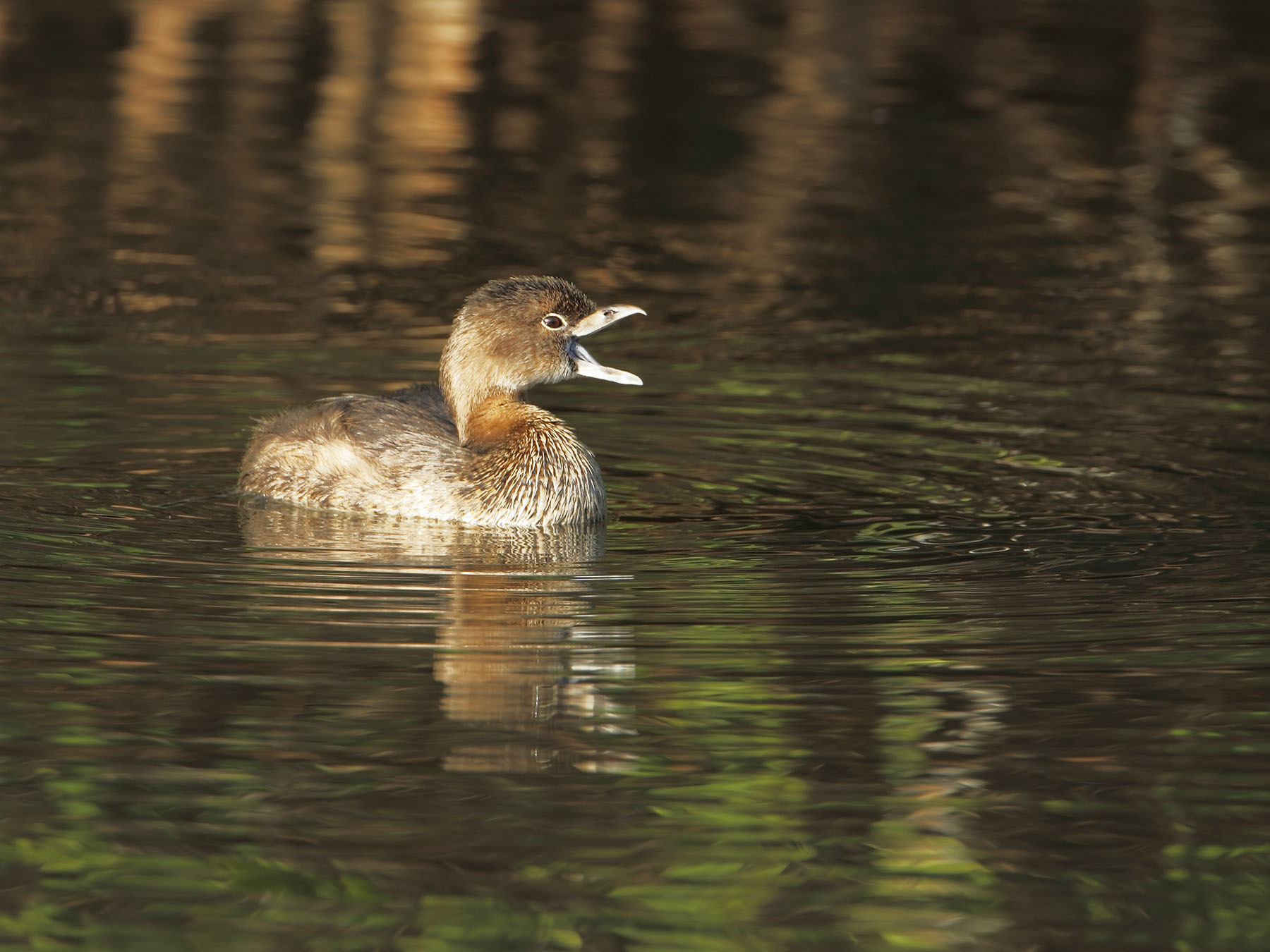
The Pied-billed Grebe has a distinctive vocalization, often described as a series of cow-like notes: 'cow-cow-cow-cow-cow-cow-cow'.
During the breeding season, they also produce a loud, descending 'whoop, whoop, whoop' call. In alarm, they emit a sharp 'kek-kek-kek' sound.
When and where to see it
OctoberArriving
Most recorded in October
- 1. Nebraska1.3%
- 2. Nevada1.1%
- 3. Oklahoma1.1%
- 4. Colorado1.1%
- 5. Utah1.0%
Each dot is a county, state or province: the bigger and darker, the larger the bird’s share of that place’s bird records that month. Grey dots: no regular records. The ringed point is the centre of the bird’s records this month; the arrow shows how it moved since last month, and the dashed loop its path through the year. “Arrivals” colours places where it becomes regular this month (orange) or is in its last regular month (grey). GBIF eBird Observation Dataset, 2019–2024. Map data: Natural Earth, US Census Bureau; place centres © OpenStreetMap contributors.
In your area
See when the Pied-billed Grebe is recorded in your county, state or province.
How often the Pied-billed Grebe turns up in the United States and Canada through the year, from birdwatchers' records.
United States
Winter visitor · all year · most records in November
Canada
Resident · all year · most records in October
Show as a table
| Month | United States | Canada |
|---|---|---|
| January | 0.64% (regular) | 0.13% (regular) |
| February | 0.52% (regular) | 0.12% (regular) |
| March | 0.49% (regular) | 0.15% (regular) |
| April | 0.34% (regular) | 0.30% (regular) |
| May | 0.14% (regular) | 0.20% (regular) |
| June | 0.12% (regular) | 0.17% (regular) |
| July | 0.17% (regular) | 0.19% (regular) |
| August | 0.25% (regular) | 0.27% (regular) |
| September | 0.33% (regular) | 0.34% (regular) |
| October | 0.53% (regular) | 0.41% (regular) |
| November | 0.73% (regular) | 0.26% (regular) |
| December | 0.61% (regular) | 0.15% (regular) |
Recorded regularly in
Worldwide: recorded regularly in 48 countries
Countries where it was recorded in at least 3 of the 6 years 2019–2024. Linked countries have their own bird list.
Europe (1)
North America (35)
- Anguilla
- Antigua & Barbuda
- Aruba
- Bahamas
- Barbados
- Belize
- Bermuda
- British Virgin Islands
- Canada
- Caribbean Netherlands
- Cayman Islands
- Costa Rica
- Cuba
- Curaçao
- Dominican Republic
- El Salvador
- Grenada
- Guadeloupe
- Guatemala
- Haiti
- Honduras
- Jamaica
- Martinique
- Mexico
- Nicaragua
- Panama
- Puerto Rico
- Sint Maarten
- St Kitts & Nevis
- St Lucia
- St Martin
- St Pierre & Miquelon
- Turks & Caicos Islands
- United States
- US Virgin Islands
Data: EOD – eBird Observation Dataset (Cornell Lab of Ornithology), accessed via GBIF.org, CC BY 4.0. Records from 2019–2024, aggregated and filtered by Birdfact. How these lists are made
Tips for seeing it
- Look for them in freshwater ponds, lakes, and slow-moving rivers
- Listen for their distinctive 'cow-cow-cow-cow-cow-cow-cow' call
- Observe early morning or late evening when they're most active
- Watch for their sudden disappearances as they dive underwater
- In the US, they're year-round residents in many southern states
What it eats
Pied-billed Grebes are opportunistic feeders, primarily consuming small fish, aquatic insects, and crustaceans. They use their strong bill to crush hard-shelled prey like crayfish.
These birds often dive to catch food, sometimes staying submerged for up to 30 seconds.
Nesting and breeding
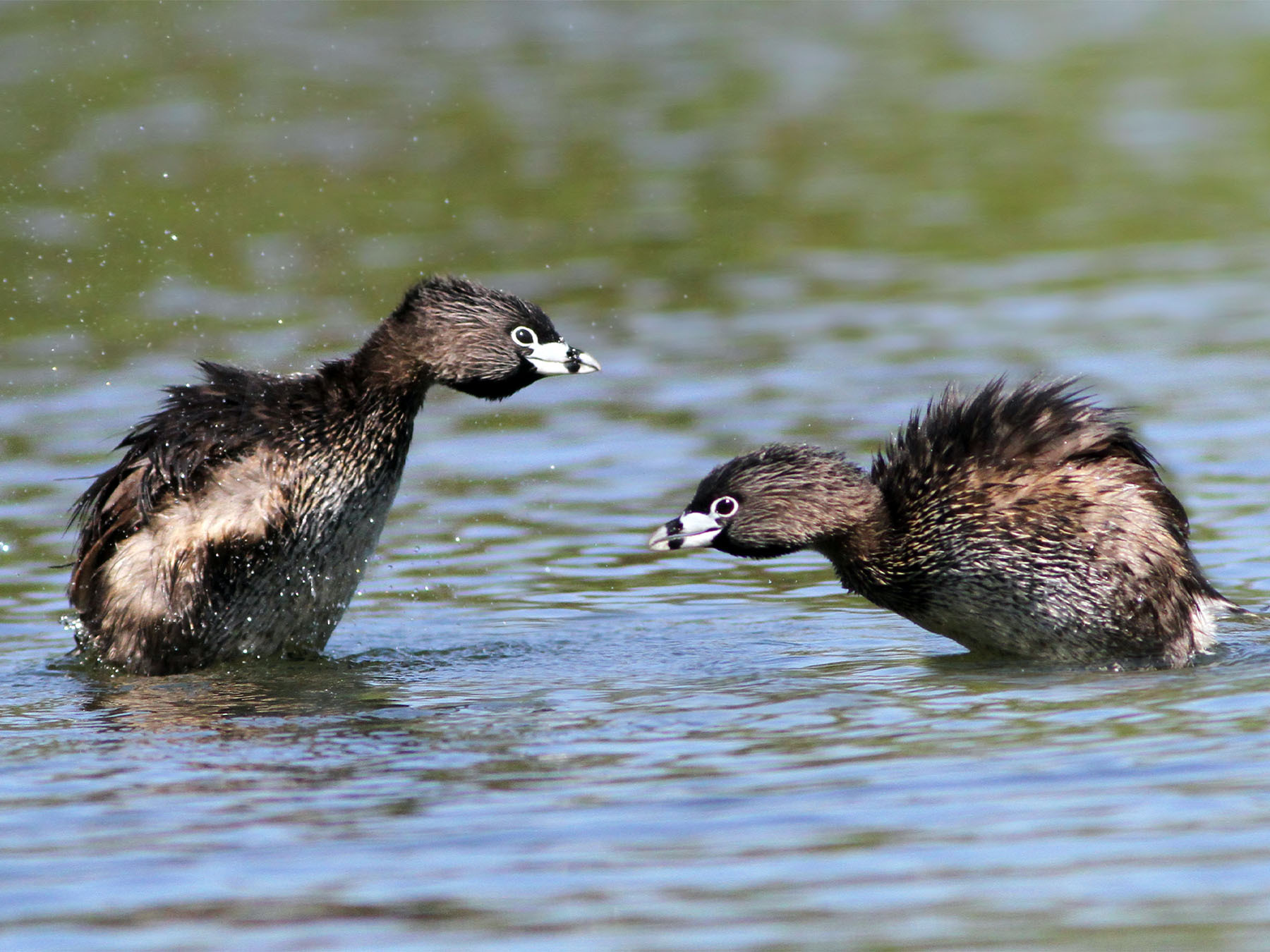
Breeding season for Pied-billed Grebes typically occurs from spring to early summer. Pairs form monogamous bonds and engage in courtship displays, including synchronized diving and platform-building.
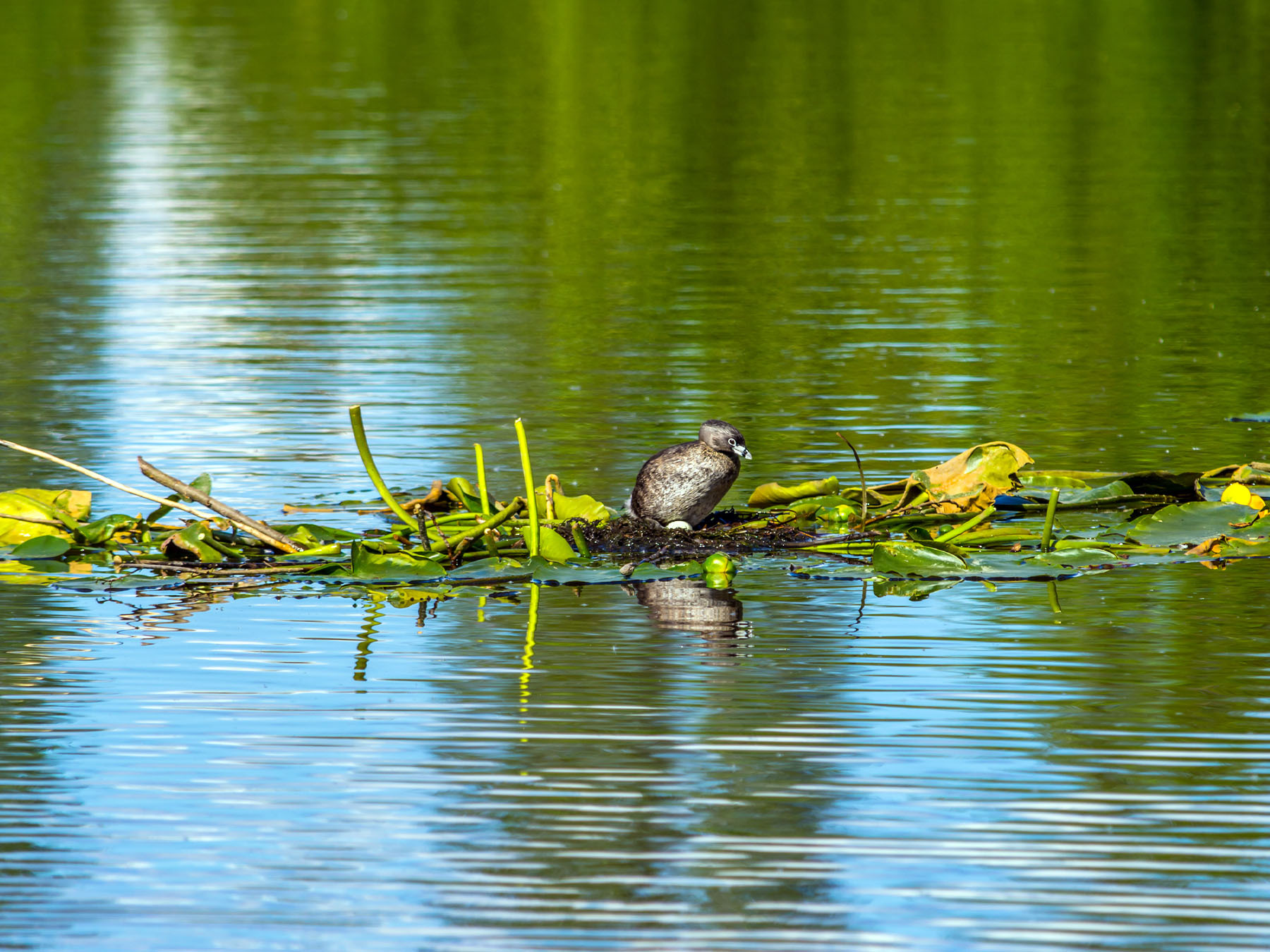
Nests are floating platforms of aquatic vegetation anchored to standing plants. Females lay 2-10 pale blue eggs, which become stained brown over time. Both parents take turns incubating the eggs.
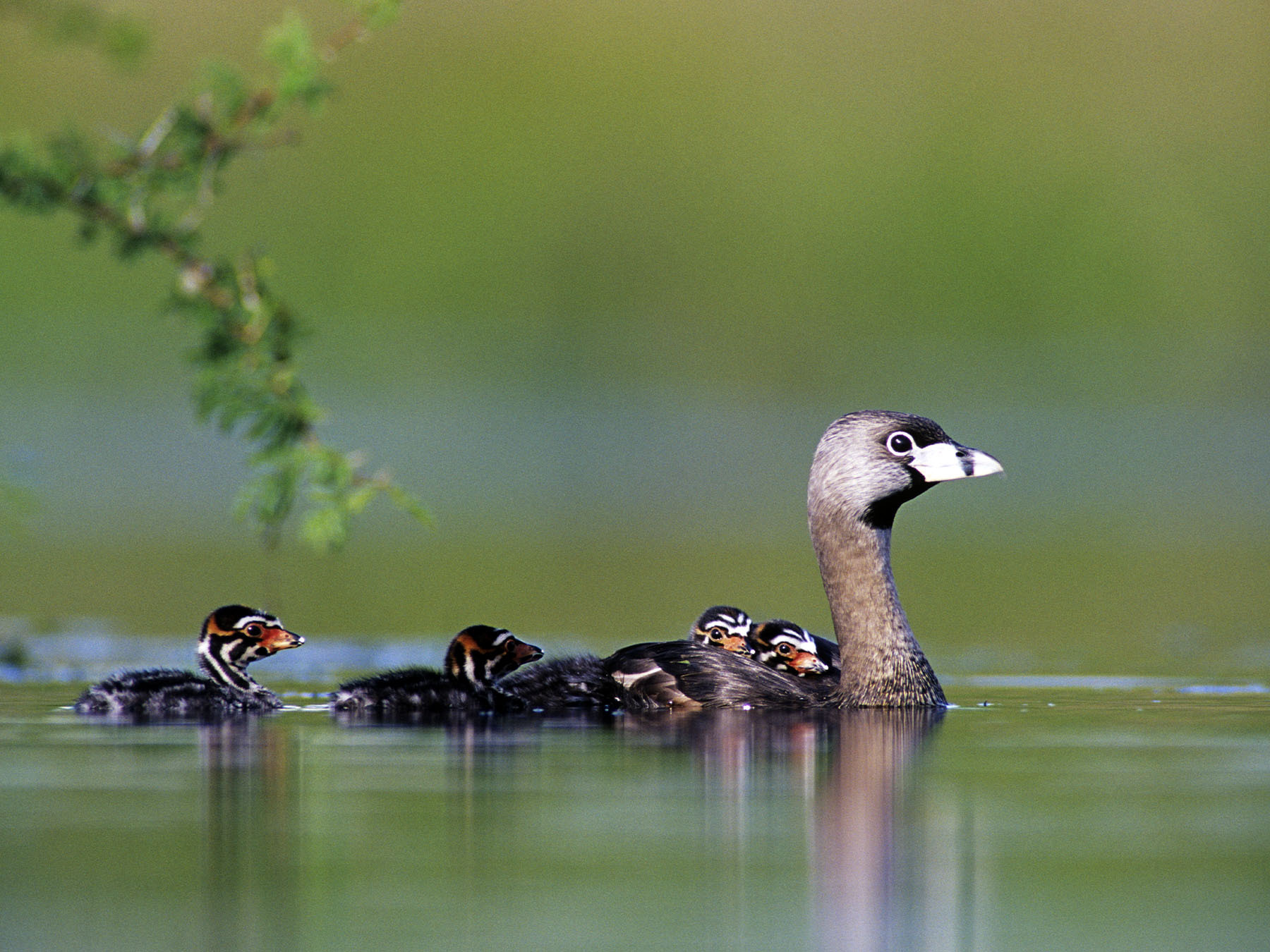
Incubation lasts about 23 days. Chicks are precocial, able to swim shortly after hatching, but often ride on their parents' backs for protection. They fledge at 3-4 weeks but may be fed by parents for up to 10 weeks.
Behaviour
Pied-billed Grebes are excellent swimmers and divers, often submerging quietly rather than flying when disturbed. They have the unique ability to control their buoyancy, sometimes floating with only their head above water.
These birds are generally solitary or found in pairs, rarely forming large flocks.
Conservation
While the Pied-billed Grebe is currently listed as Least Concern, it faces threats from habitat loss due to wetland drainage and pollution. Climate change may also impact its breeding habitats.
Conservation efforts focus on protecting and restoring wetland ecosystems.
More photos
8 photos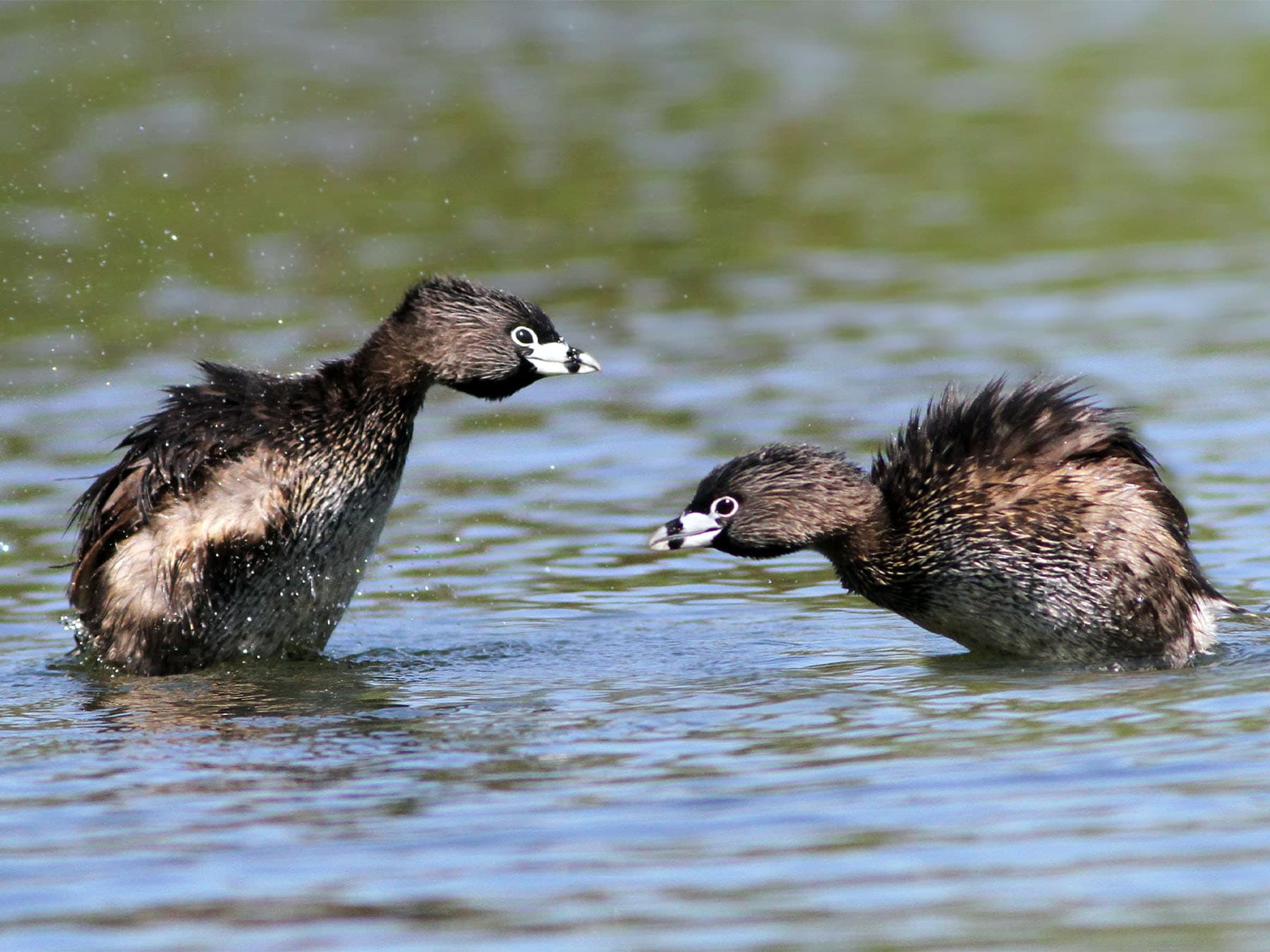 Pair of Pied-billed Grebes during the breeding season
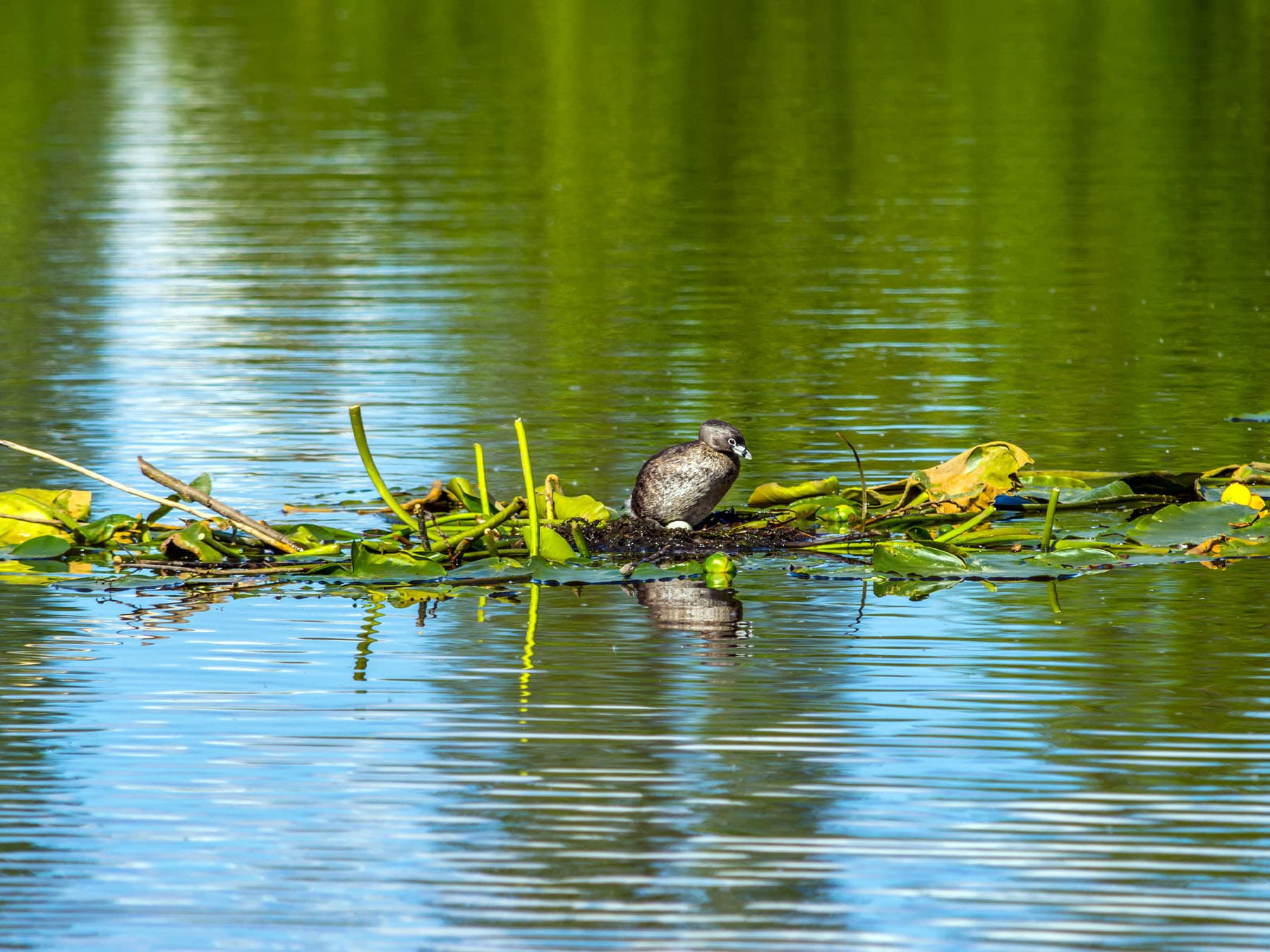 Pied-billed Grebe sitting on the nest with one egg showing
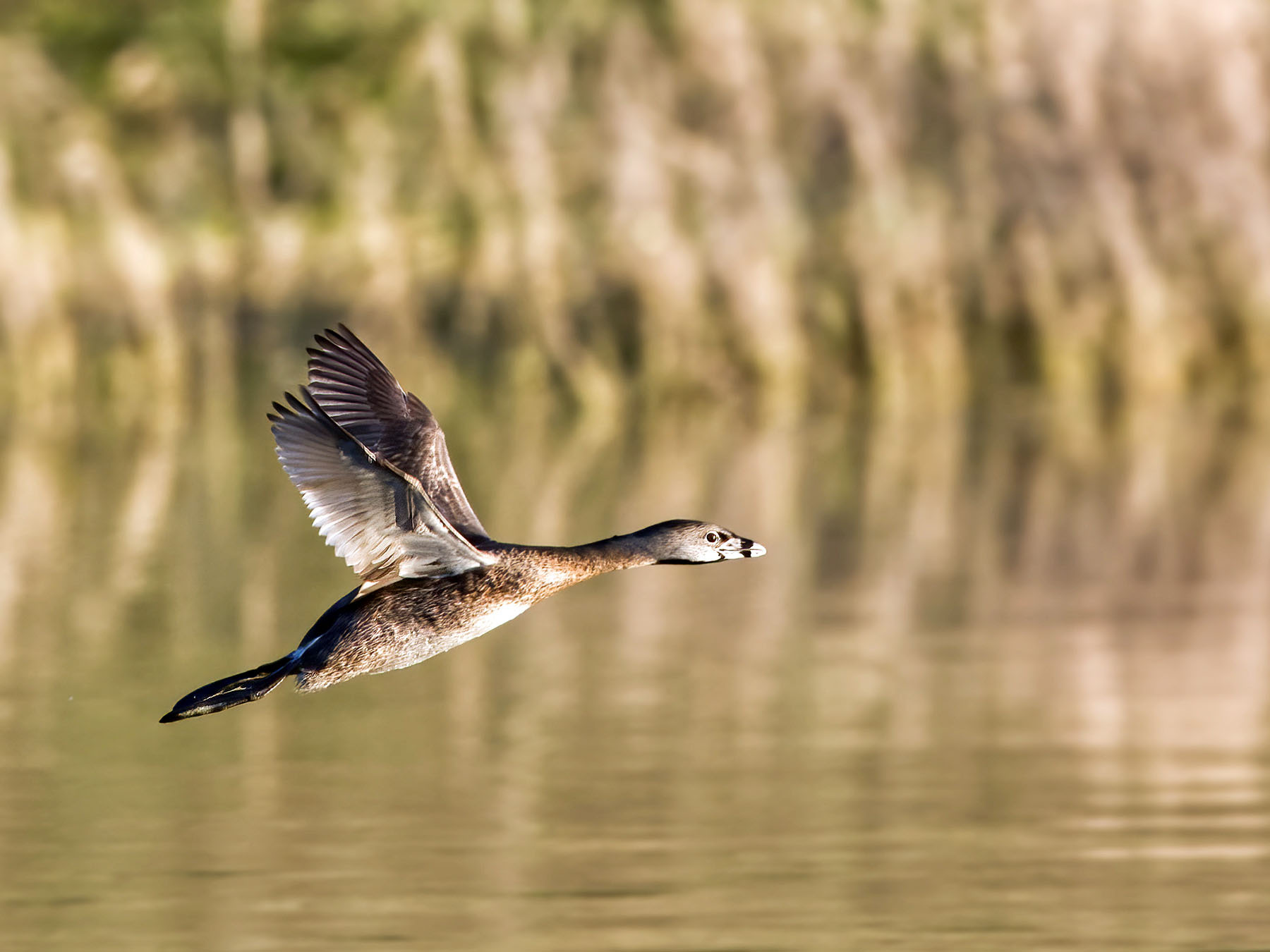
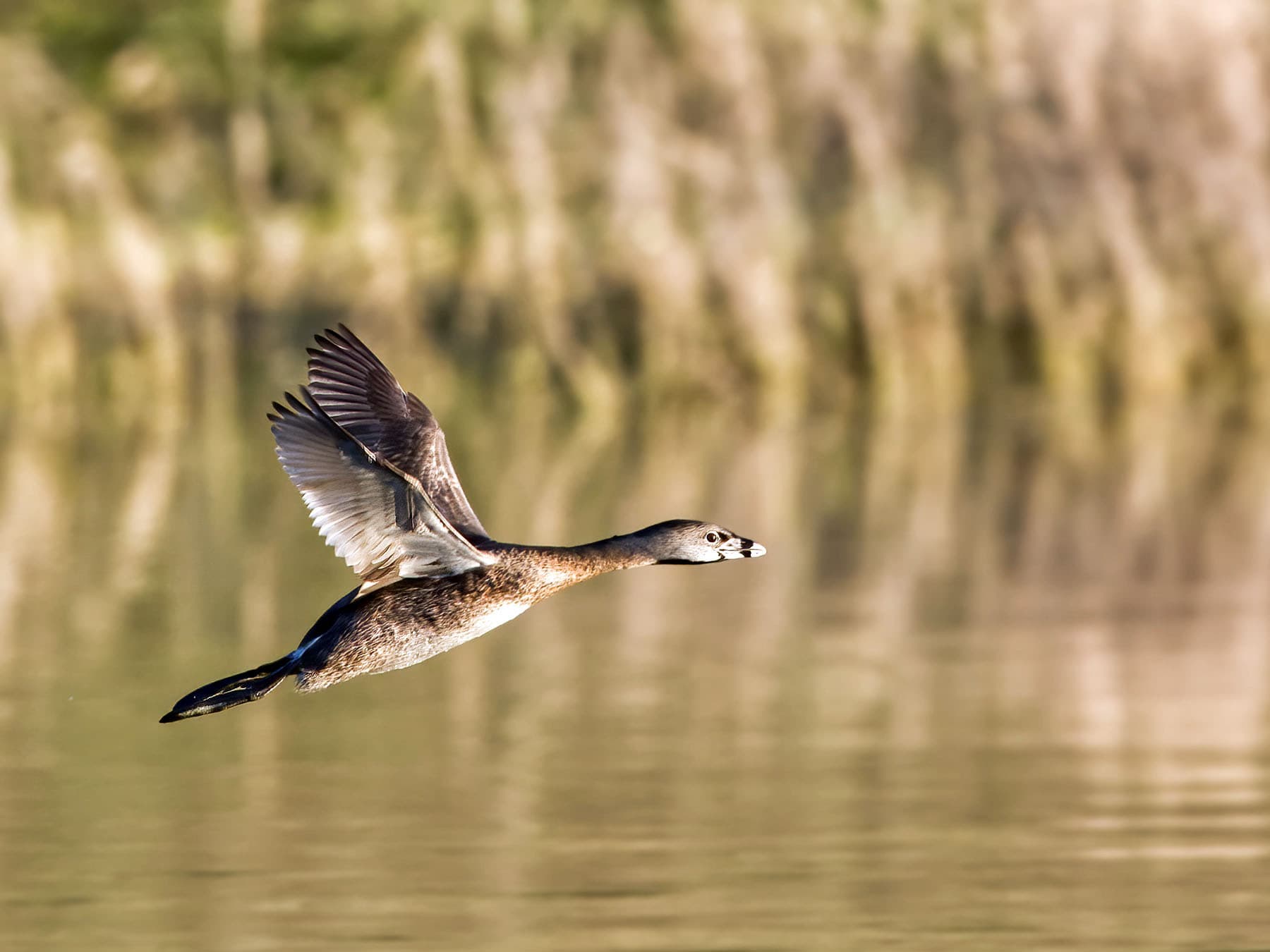 Pied-billed Grebe in-flight
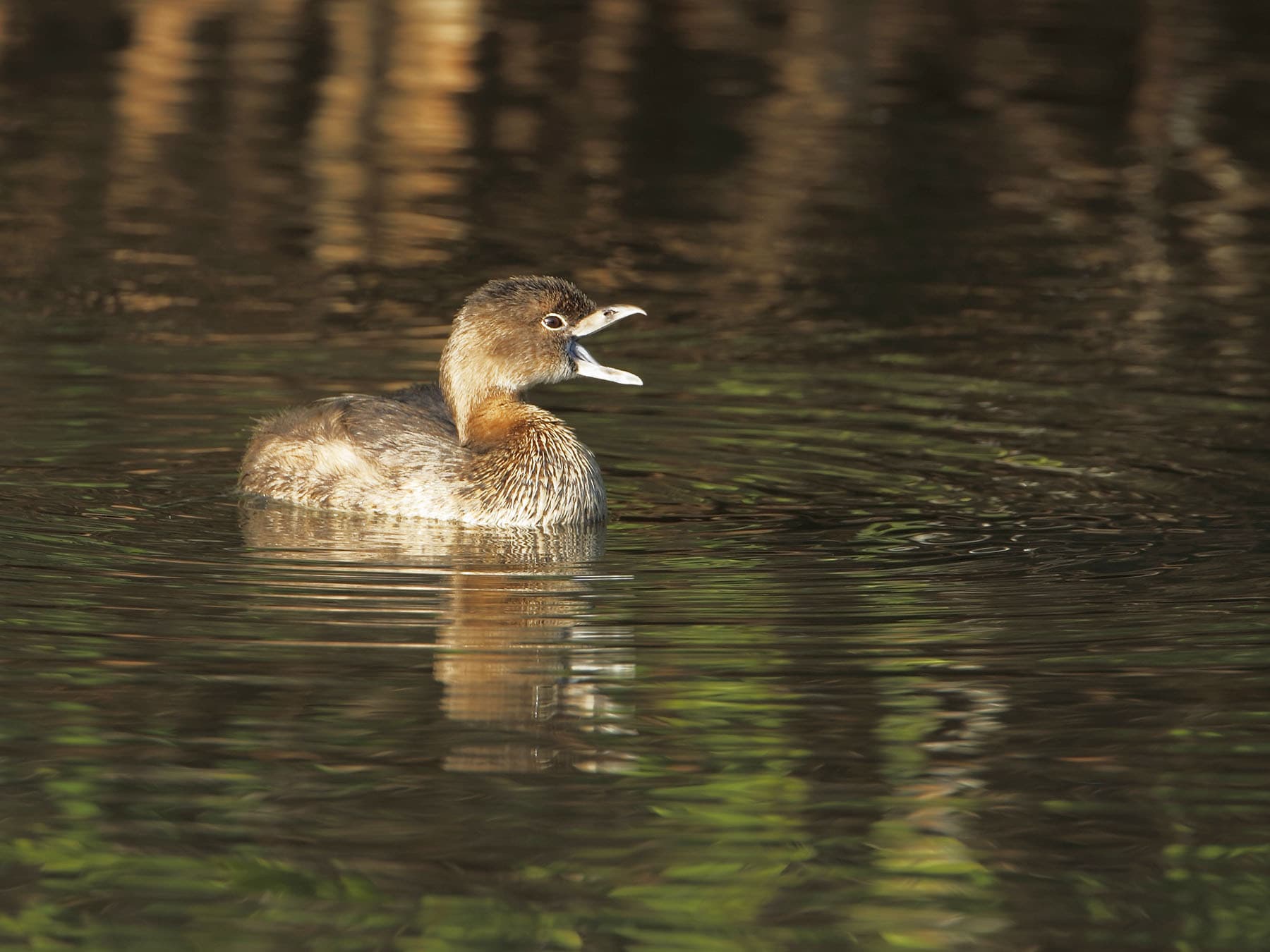 Pied-billed Grebe swimming in the lake during the early morning calling
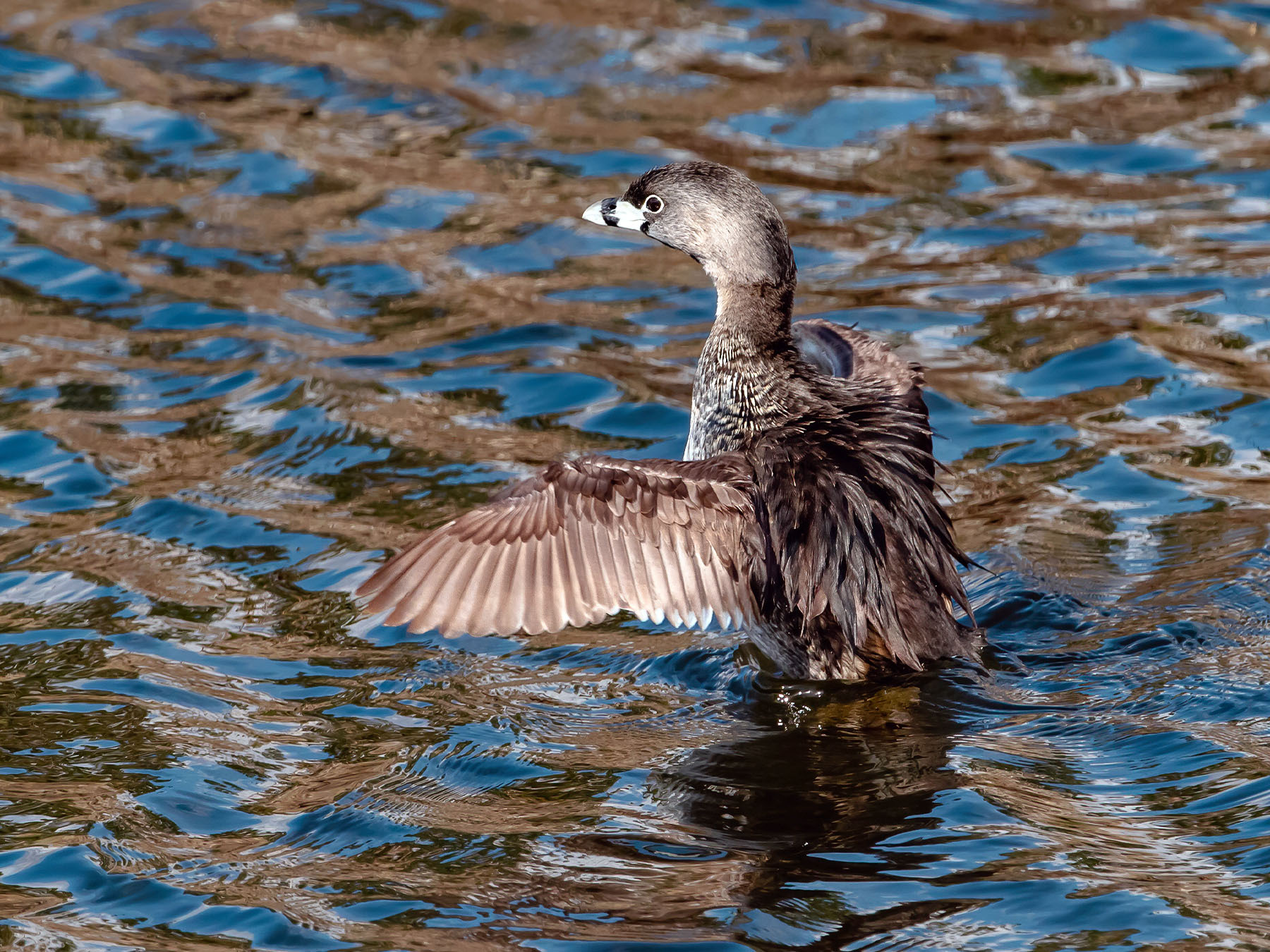
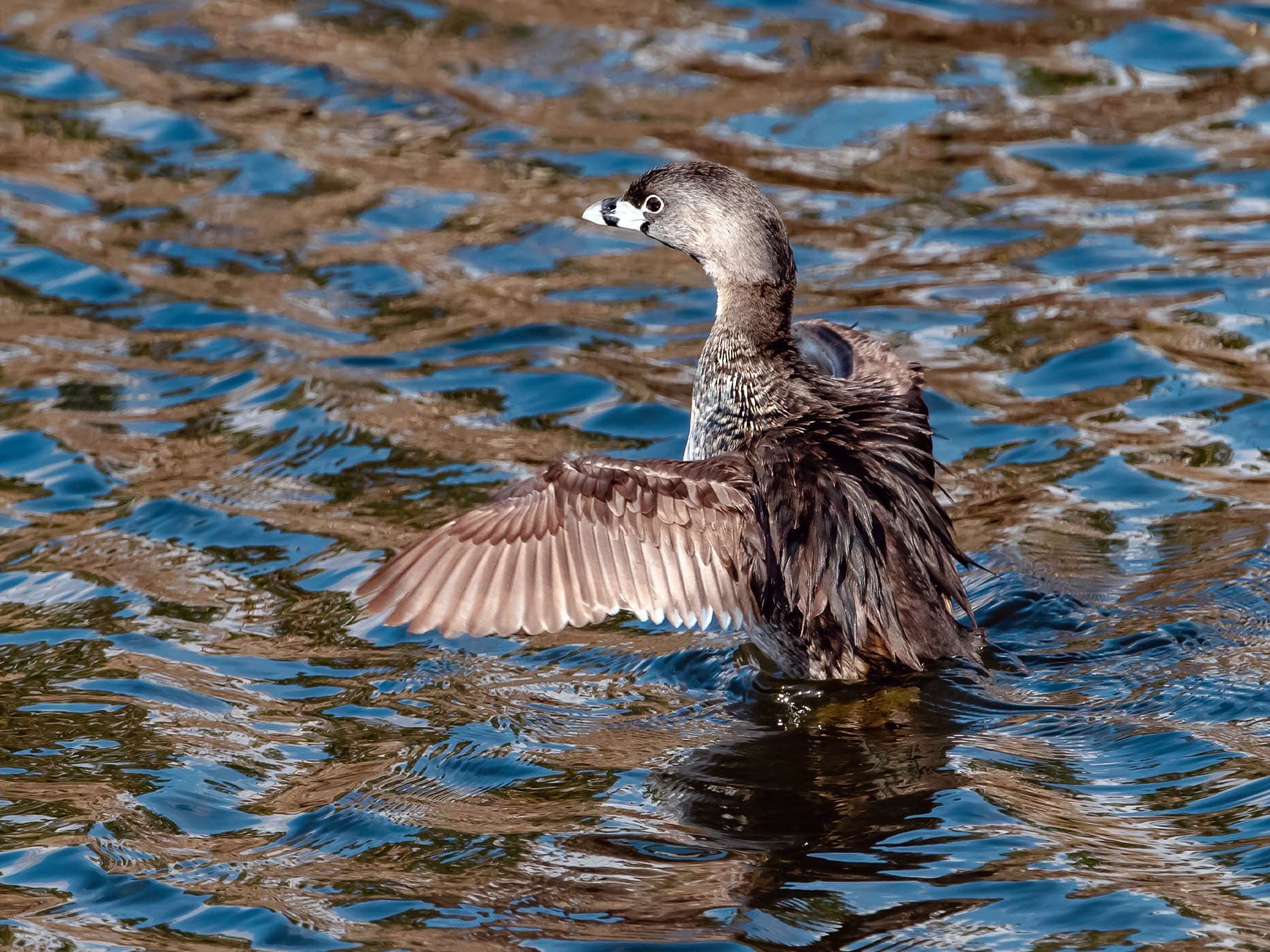 Pied-billed Grebe rising up from the water
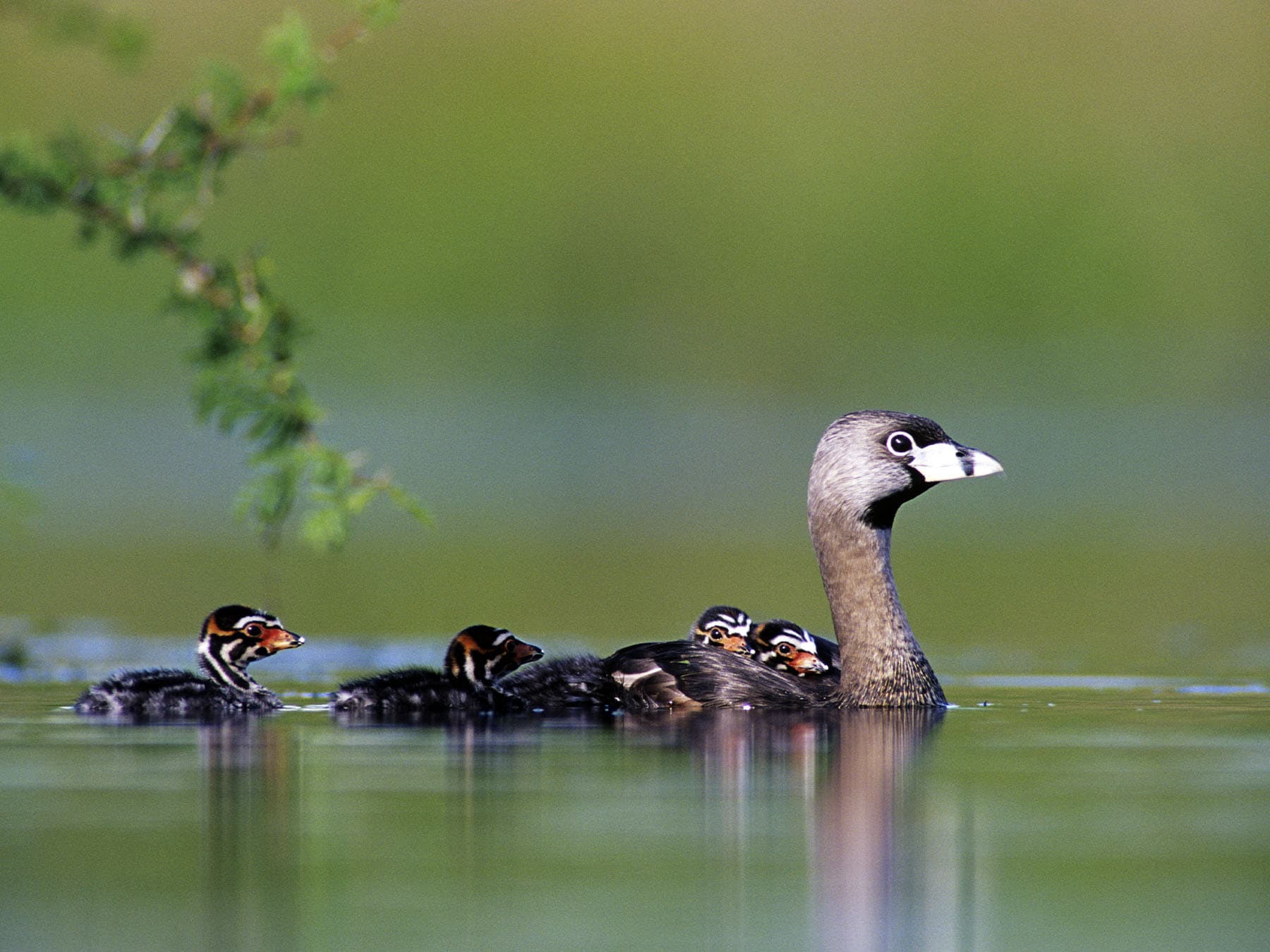 Pied-billed Grebe swimming with her young
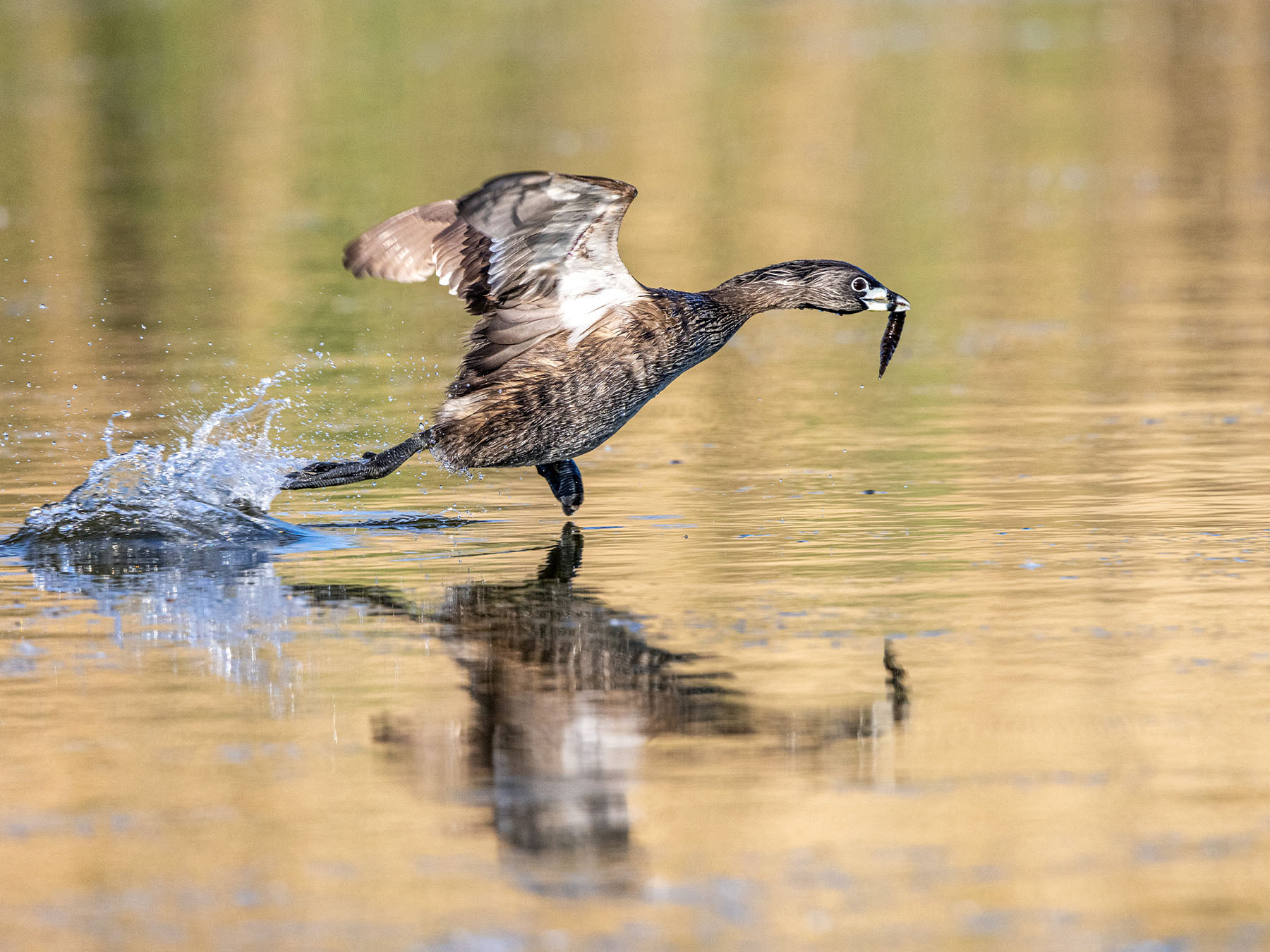
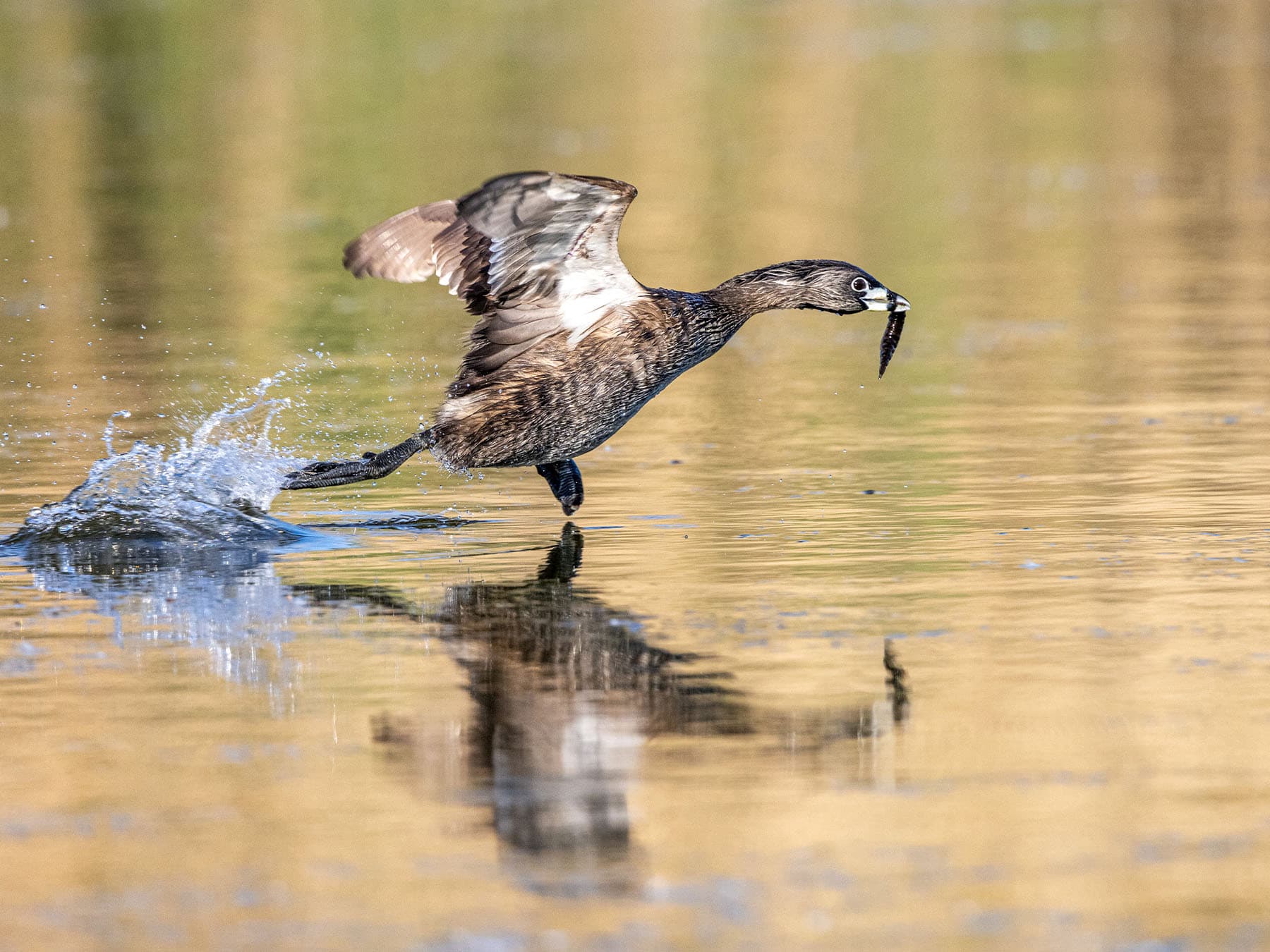 Pied-billed Grebe running on the water preparing to take off
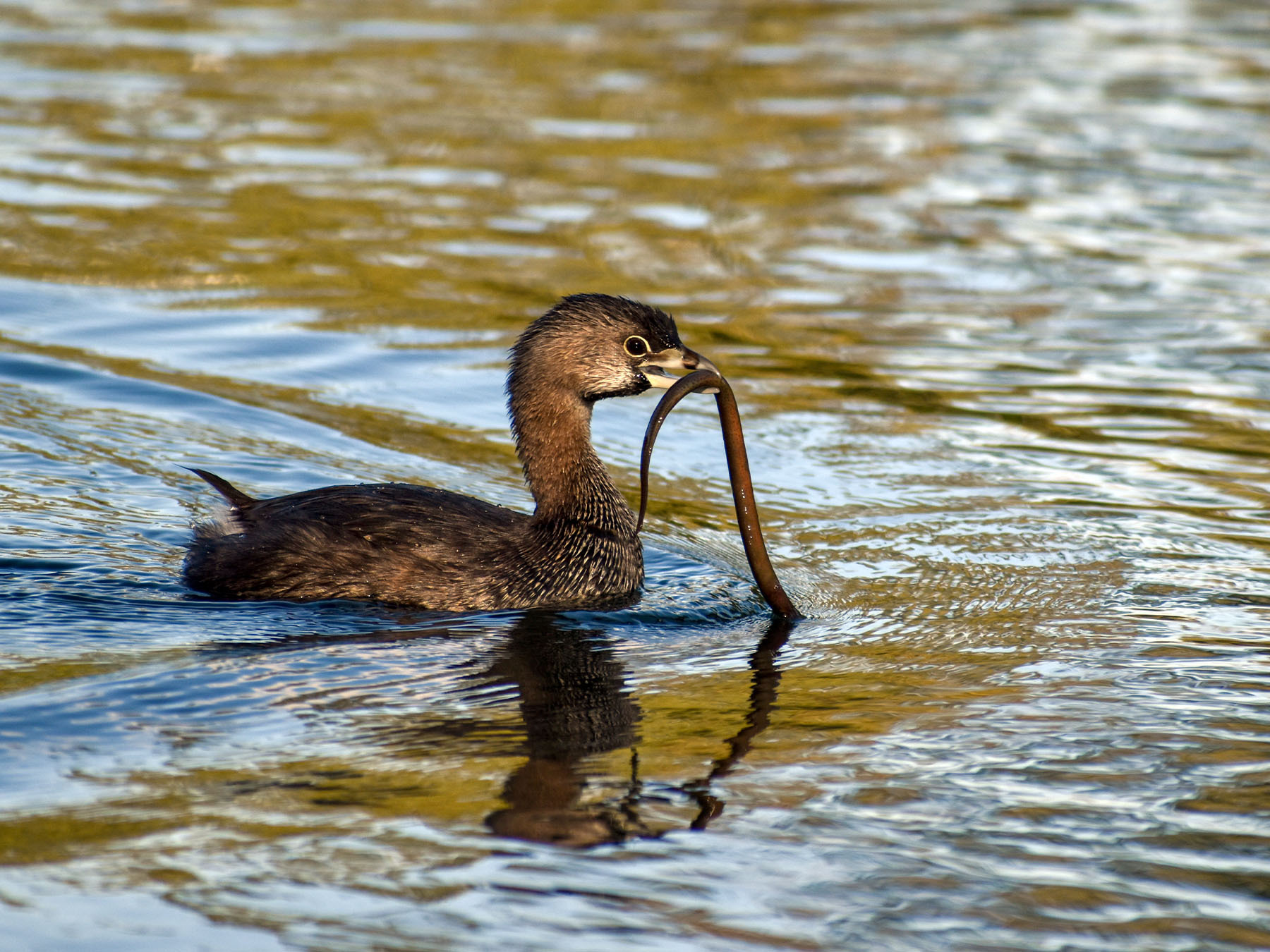
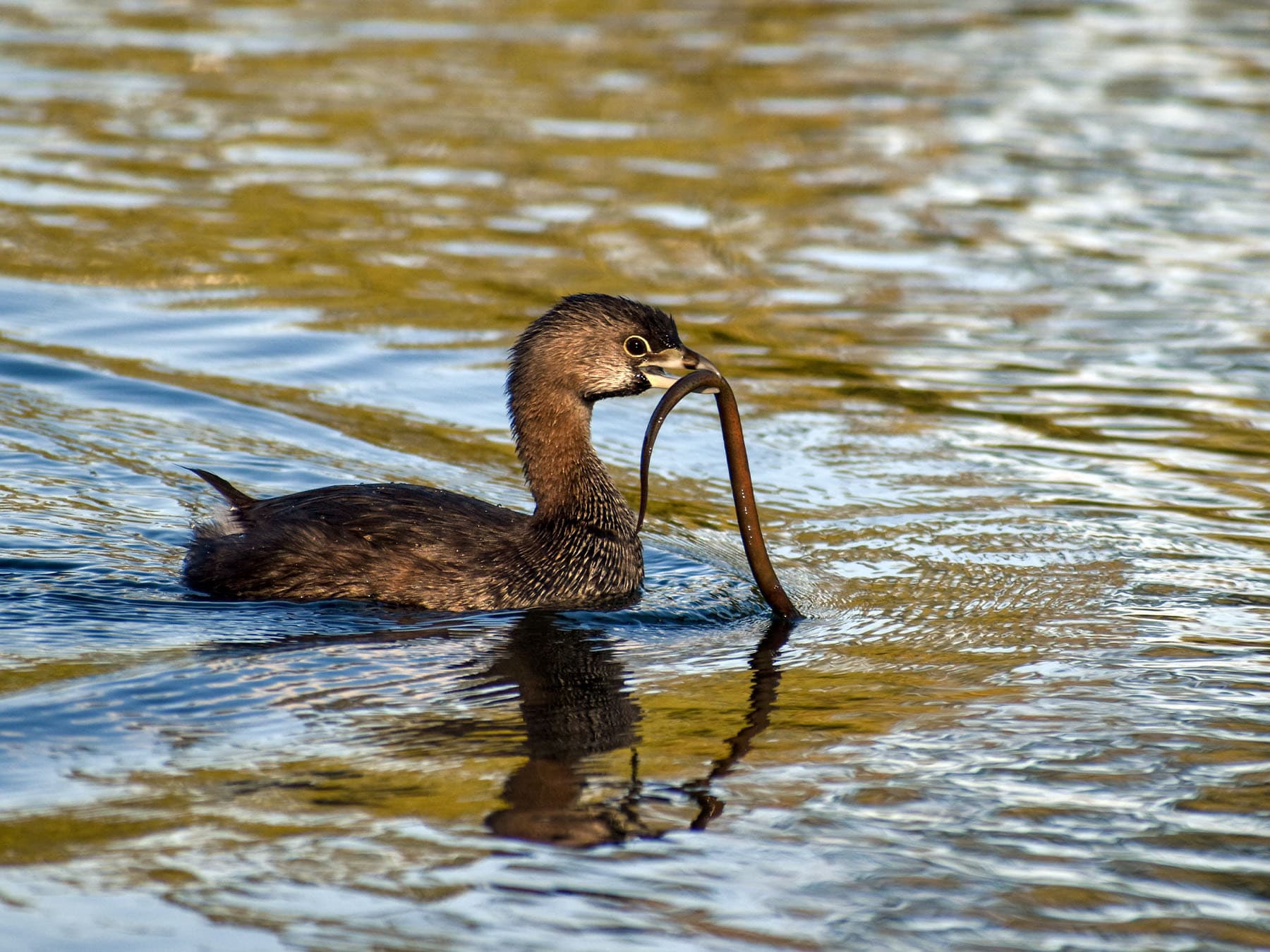 Pied-billed Grebe with an eel in its beak
Quick facts
- Length
- 31–38 cm
- Wingspan
- 45–62 cm
- Weight
- 253–568 g
- Lifespan
- 3–5 years
- Family
- Grebes
- Migration
- Partial migrant
- Global status (IUCN)
- Least Concern
- World population
- 3,100,000 mature individuals
- Population trend
- Increasing
- Also called
- American Dabchick, Dabchick, Carolina Grebe, Devil-diver, Dive-dapper, Hell-diver, Pied-billed Dabchick, Thick-billed grebe, Water Witch
- Scientific name
- Podilymbus podiceps
Sources
4- 1BirdLife International. 2021. Podilymbus podiceps. The IUCN Red List of Threatened Species 2021: e.T22696574A138962202. Source (opens in a new tab)
- 2Partners in Flight, Wetlands International (2020)
- 3Partners in Flight (2020) Source (opens in a new tab)
- 4Storer, R. Evolution in the diving birds. Proc. Int. Ornithol. Congr., II: 694-707. (1960)

Checked by
Nathan Cope, founder and editor
Nathan founded Birdfact and leads its writers and contributors in the UK, the US and Canada. He has watched and studied birds for more than ten years, and checks every article and species guide before it’s published.