


Little Egret
White Heron · Egretta garzetta
By the Birdfact teamChecked by Nathan Cope
On this page15 sections
How to recognise it
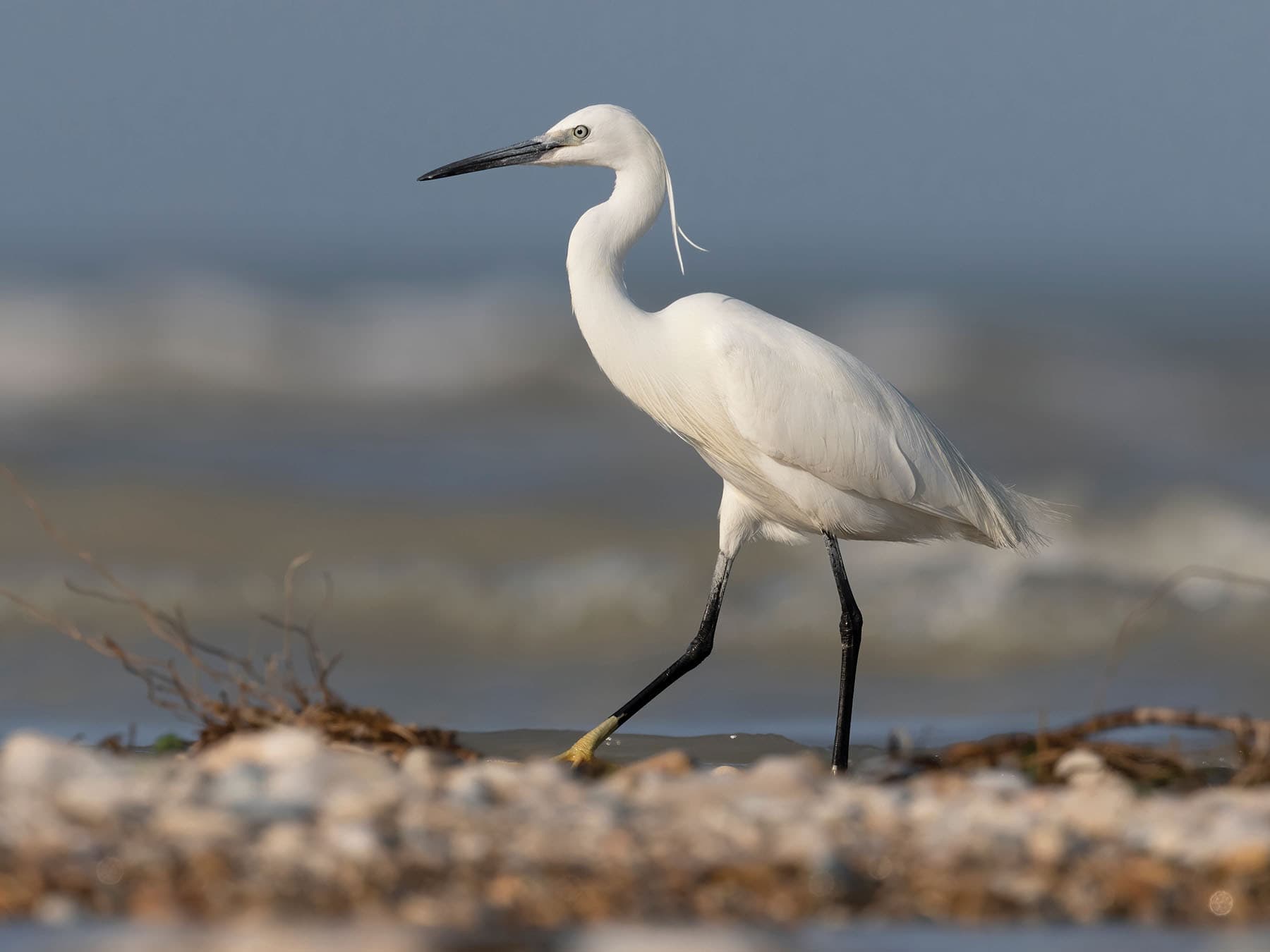
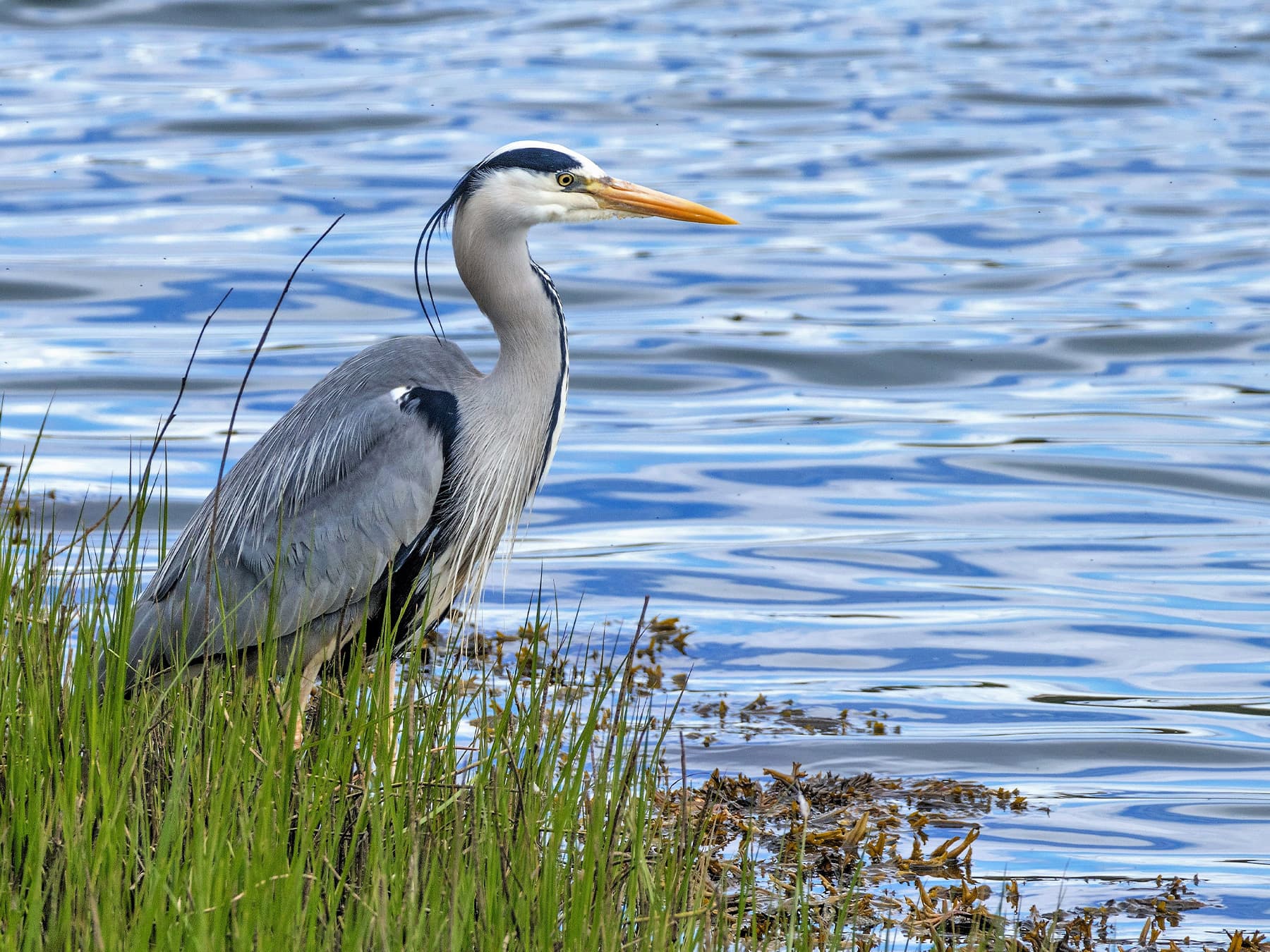
The Little Egret is a small, all-white egret, similar in shape but half the size of a Grey Heron.
What do Little Egrets look like?
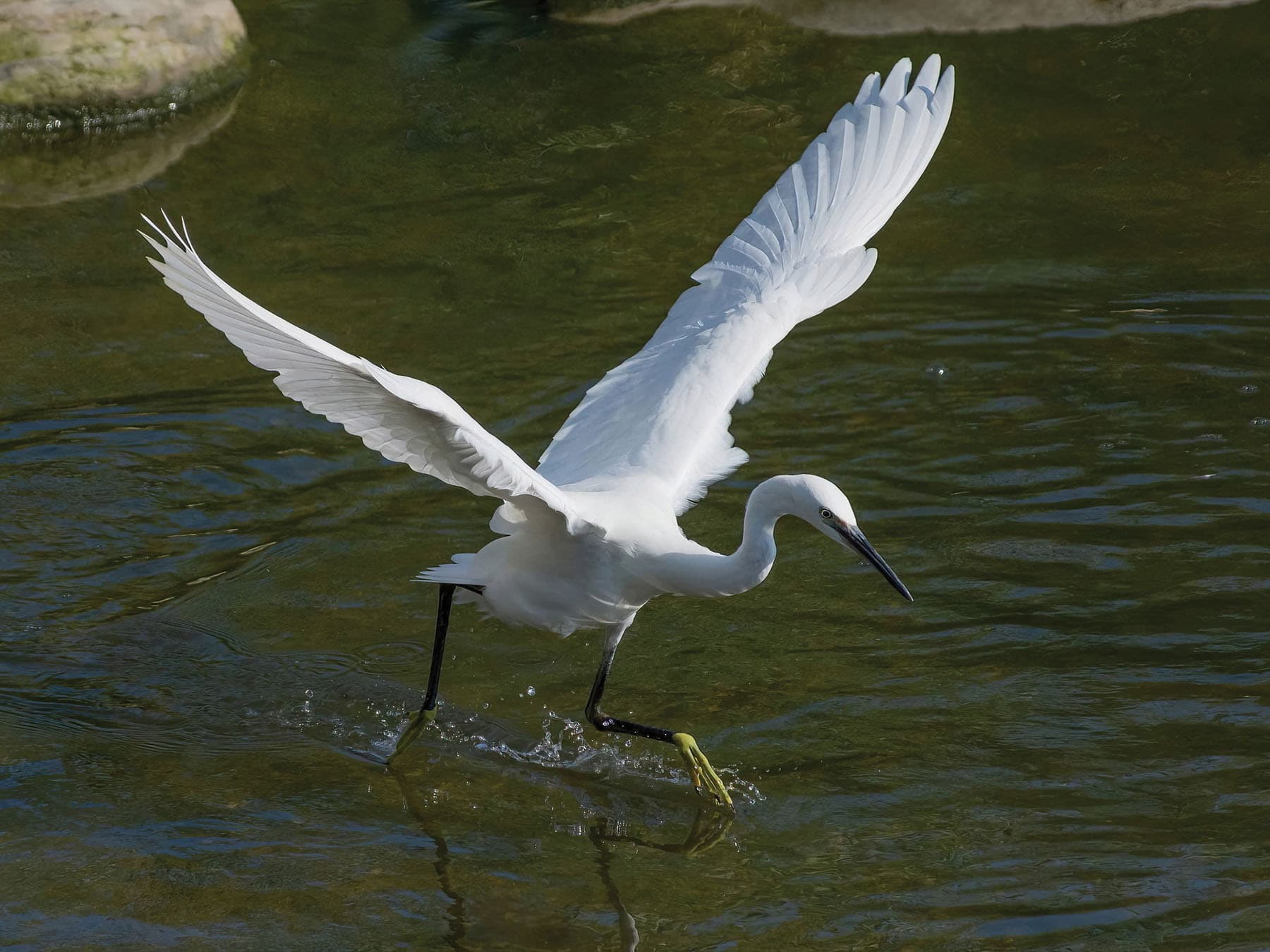
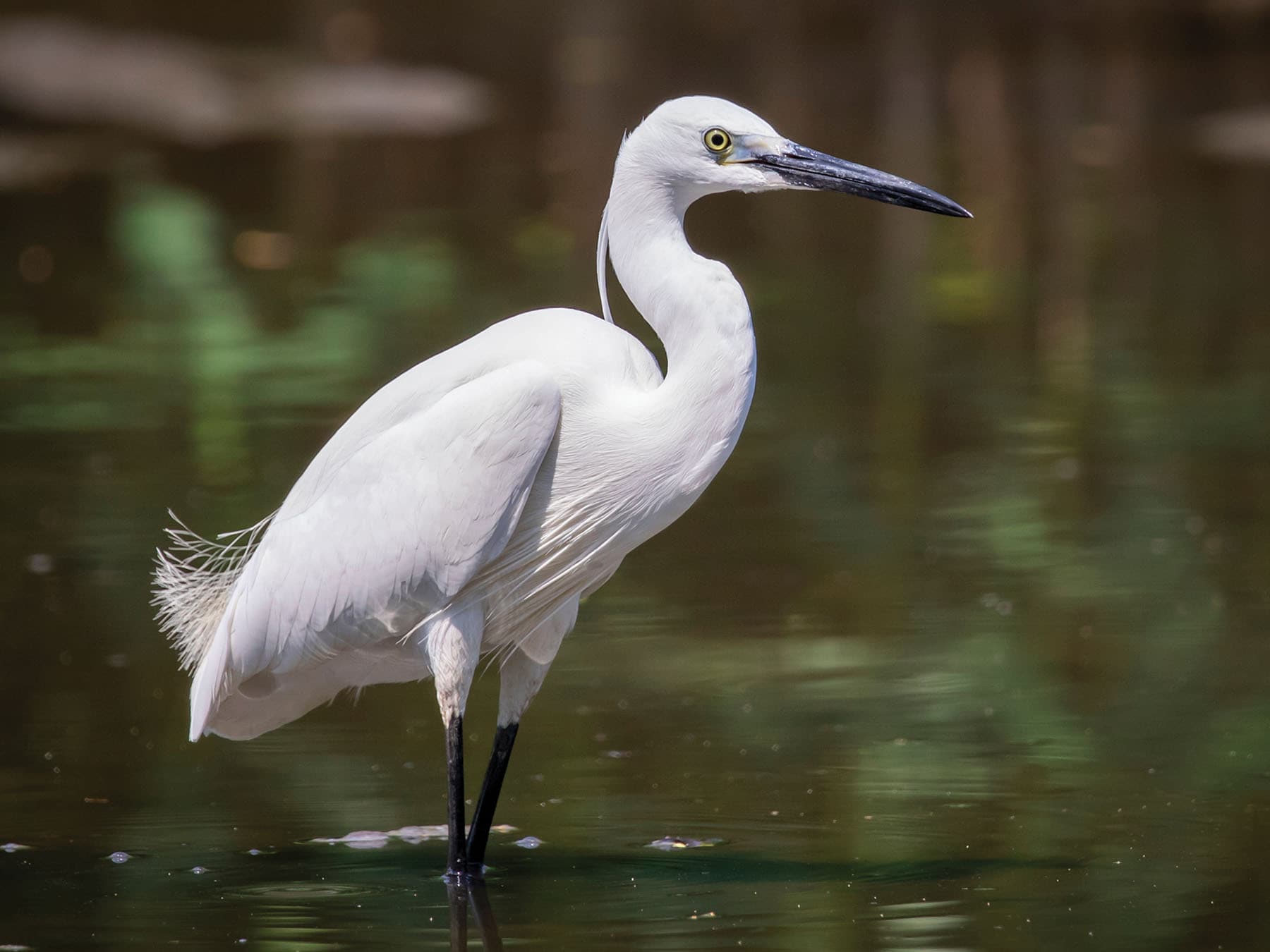
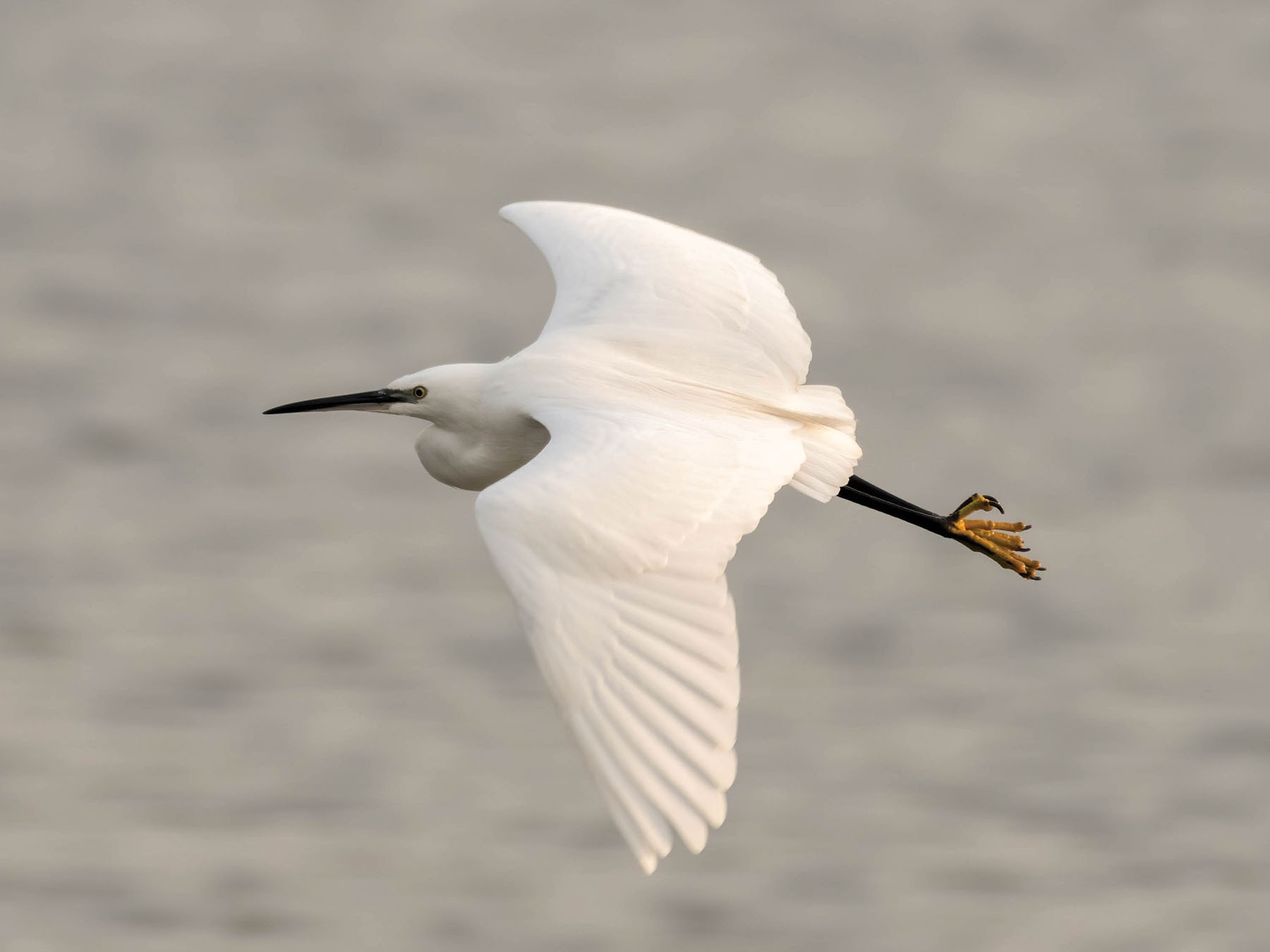
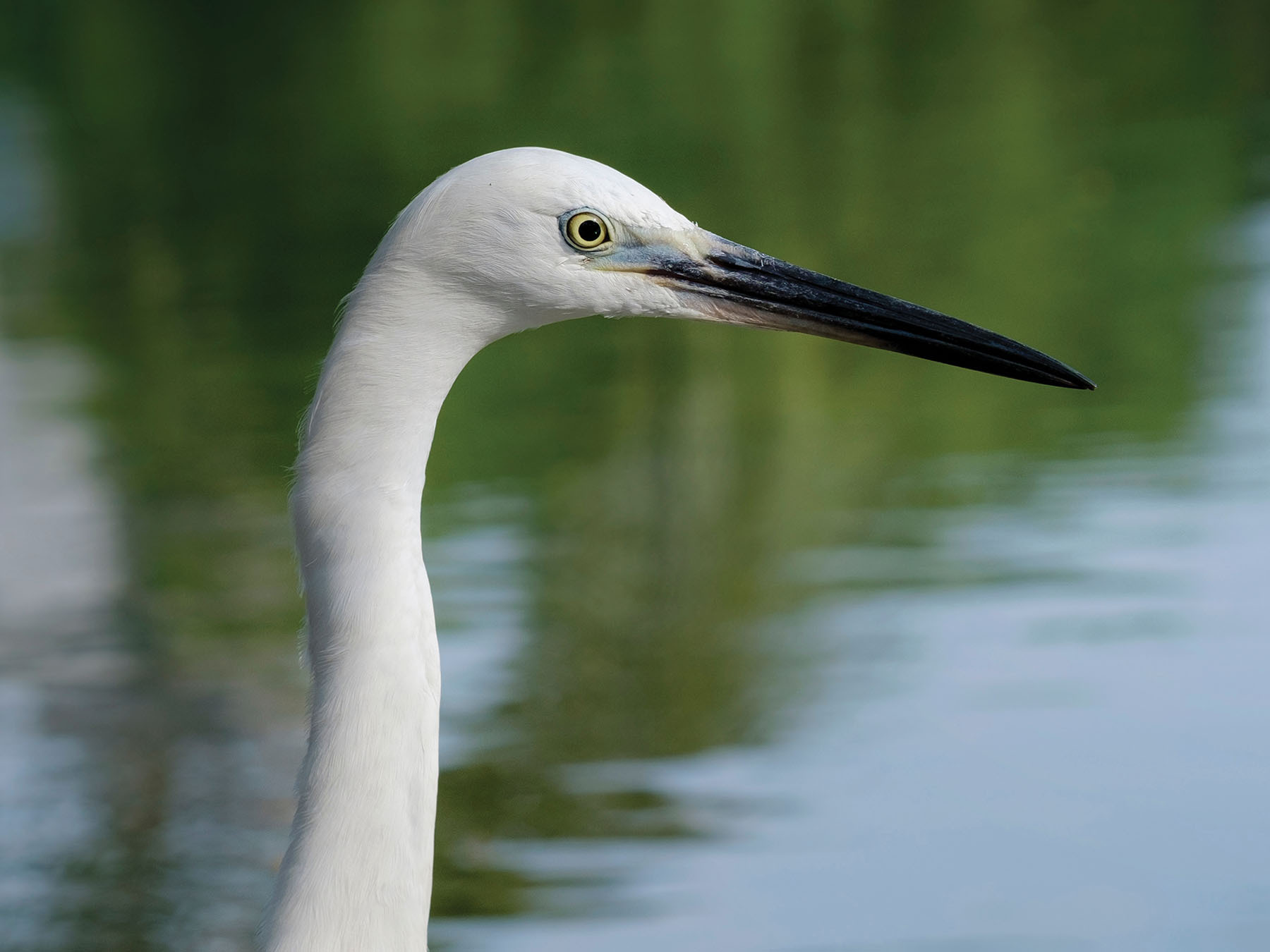
Little Egrets are elegant, snow-white wading birds with long legs and a long S-shaped neck. Their straight, dagger-like bill is black, and their eyes are yellow. These birds have black legs with characteristic yellow feet, although this feature is often hidden under the water.
Female Little Egrets are smaller than their male counterparts but otherwise similar. In the breeding season, both sexes develop long paired plumes on the nape of the neck and long feathers on the breast and shoulders.
Juveniles appear similar to non-breeding adults but have dull greenish bills and legs and lack yellow feet.
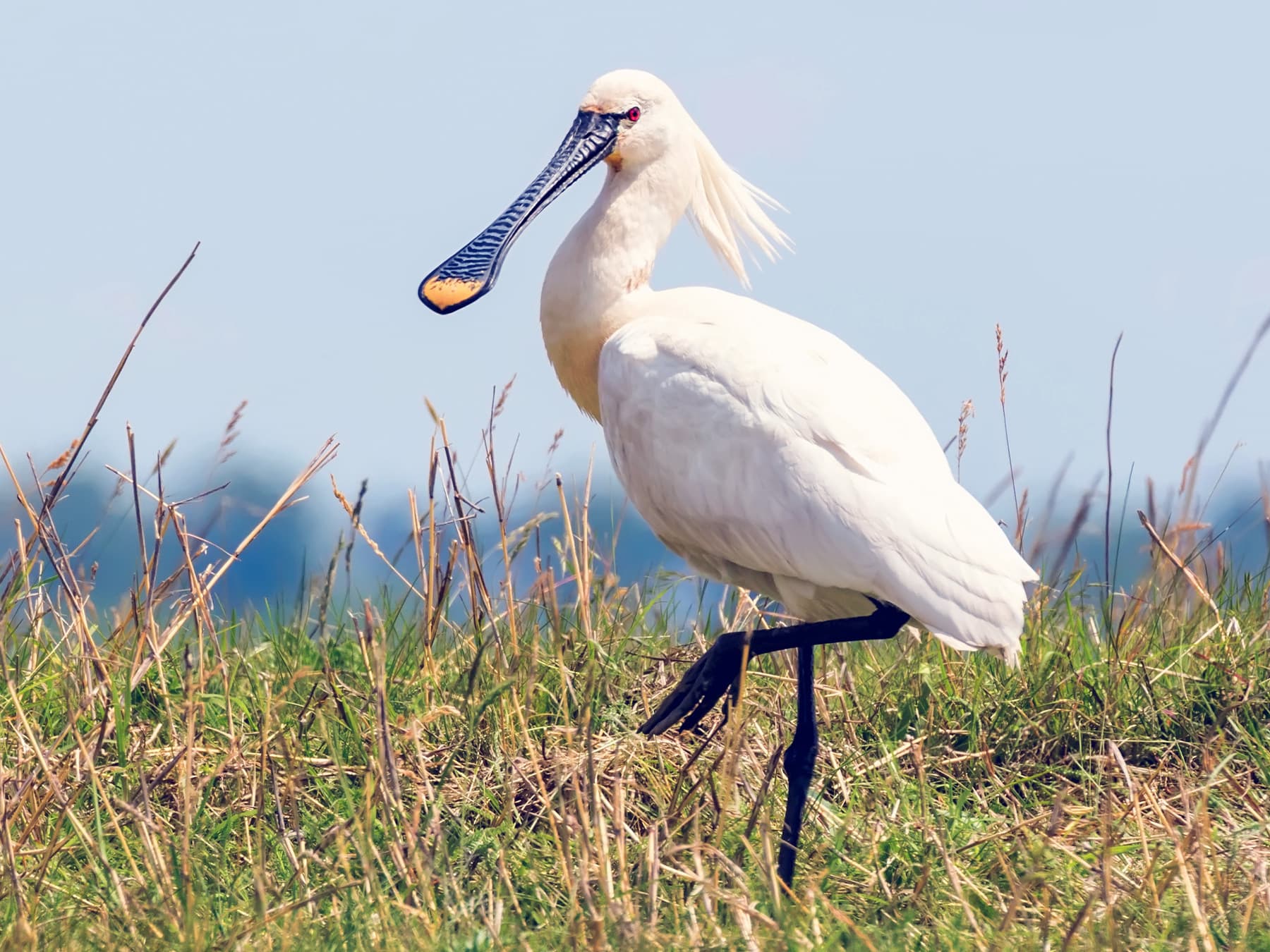
Little Egrets in the UK are most likely to be confused with another all-white species, the Great White Egret (Ardea alba). However, that species is much taller and larger, with a yellow bill and yellow upper legs.
How big are Little Egrets?
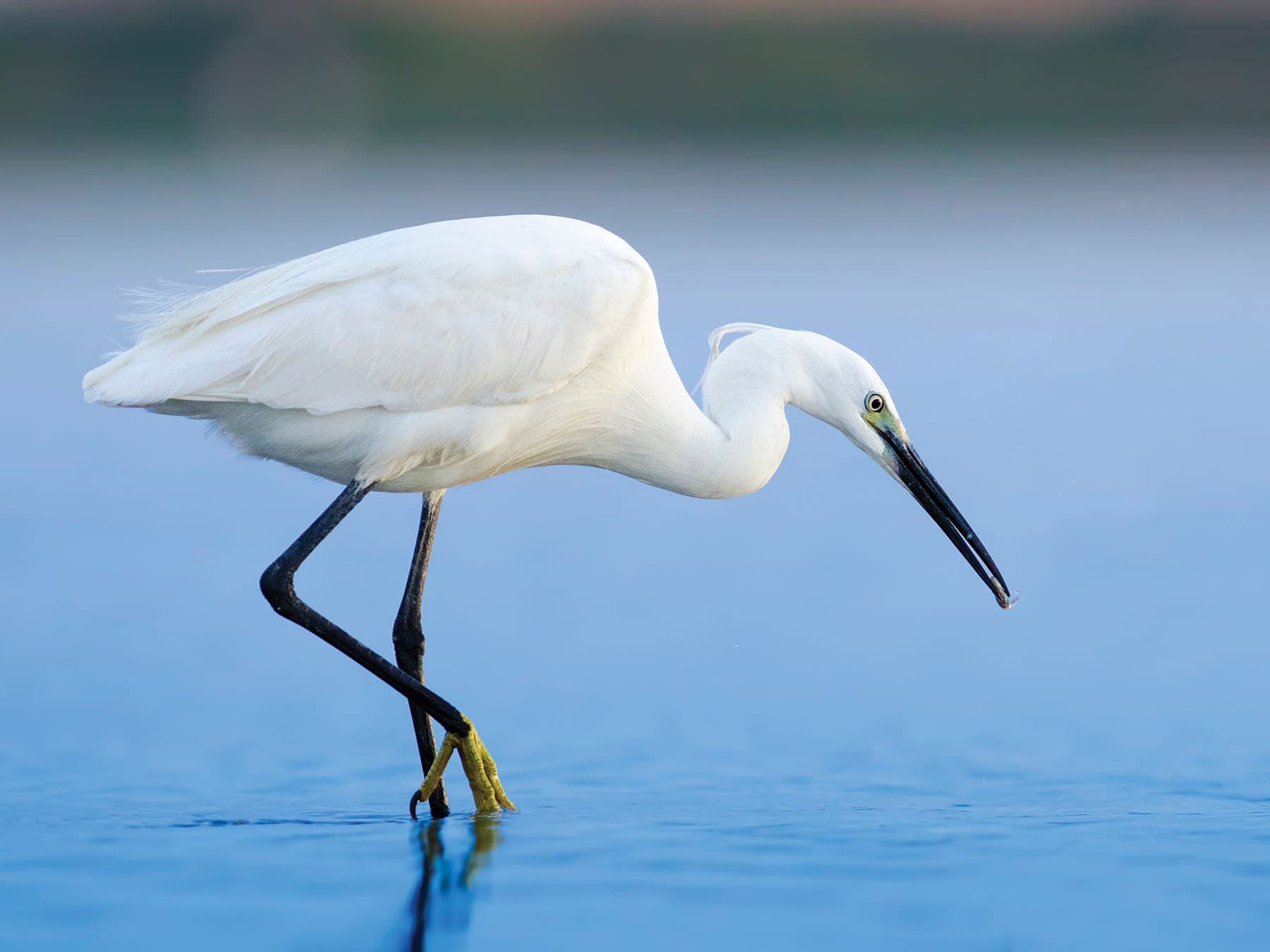
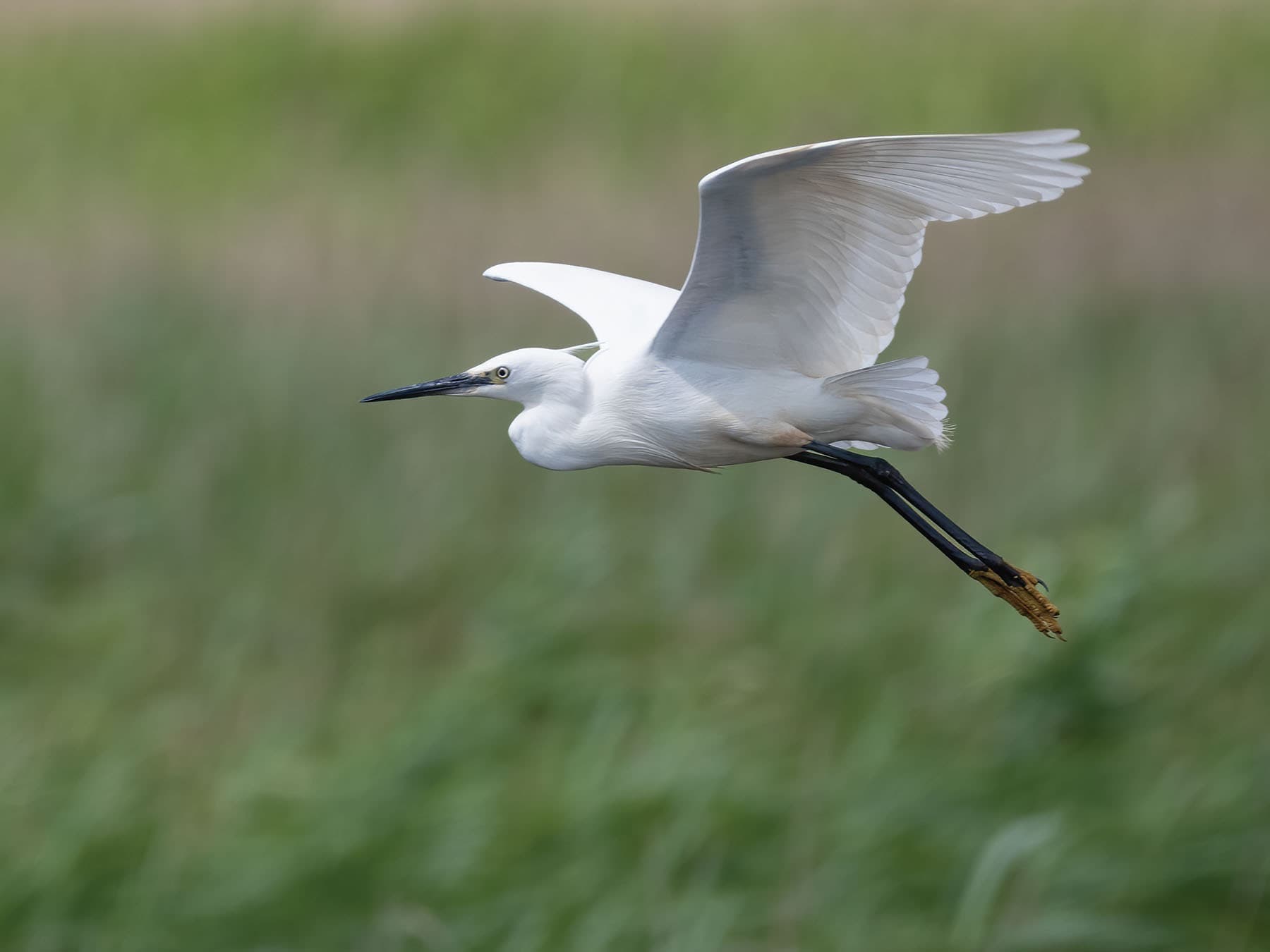
The Little Egret may appear large in flight or when standing tall with a fully extended neck, but they can look dramatically smaller when hunched at rest.
Length
Adult Little Egrets have a body length of 55 to 65 centimetres. They are upright birds with long legs and long necks. These features allow them to walk in the water and spear their prey.
Weight
Little Egrets weigh just 350 to 550 grams, similar to a Woodpigeon.
Wingspan
The Little Egret has a wingspan of 88 to 95 cm.
Its size
Adults- Length
- 55–65 cm
- Wingspan
- 88–106 cm
- Weight
- 350–550 g
Its song and calls
Little Egrets could not be described as musical birds, although they can be rather vocal.
What sound does a Little Egret make?
Little Egrets produce a variety of harsh squawking calls to express alarm and aggression or during courtship displays. They also call when landing and while feeding, and are frequently heard as they take off after being disturbed.
- Flight call0:00 / 0:03
Recorded in Normandie, France · February 2021
When and where to see it
OctoberIn season
Most recorded in October
- 1. Louth2.8%
- 2. Anglesey2.4%
- 3. Carmarthenshire2.4%
- 4. Conwy2.4%
- 5. Kerry2.3%
Each dot is a county, state or province: the bigger and darker, the larger the bird’s share of that place’s bird records that month. Grey dots: no regular records. The ringed point is the centre of the bird’s records this month; the arrow shows how it moved since last month, and the dashed loop its path through the year. “Arrivals” colours places where it becomes regular this month (orange) or is in its last regular month (grey). GBIF eBird Observation Dataset, 2019–2024. Map data: Natural Earth, US Census Bureau; place centres © OpenStreetMap contributors.
In your area
See when the Little Egret is recorded in your county, state or province.
How often the Little Egret turns up in the UK, Ireland and Canada through the year, from birdwatchers' records.
United Kingdom
Resident · all year · most records in August
Ireland
Resident · all year · most records in September
Canada
Passage migrant · regularly Oct–Nov · most records in October
Show as a table
| Month | United Kingdom | Ireland | Canada |
|---|---|---|---|
| January | 0.75% (regular) | 1.2% (regular) | – |
| February | 0.72% (regular) | 1.2% (regular) | – |
| March | 0.69% (regular) | 1.2% (regular) | – |
| April | 0.64% (regular) | 0.97% (regular) | – |
| May | 0.64% (regular) | 0.87% (regular) | <0.001% |
| June | 0.70% (regular) | 1.1% (regular) | <0.001% |
| July | 1.0% (regular) | 1.4% (regular) | <0.001% |
| August | 1.1% (regular) | 1.6% (regular) | – |
| September | 1.1% (regular) | 1.6% (regular) | <0.001% |
| October | 0.95% (regular) | 1.4% (regular) | 0.001% (regular) |
| November | 0.86% (regular) | 1.4% (regular) | <0.001% (regular) |
| December | 0.76% (regular) | 1.3% (regular) | <0.001% |
Recorded regularly in
Worldwide: recorded regularly in 149 countries
Countries where it was recorded in at least 3 of the 6 years 2019–2024. Linked countries have their own bird list.
Europe (39)
- Albania
- Austria
- Belgium
- Bosnia & Herzegovina
- Bulgaria
- Croatia
- Czechia
- Denmark
- France
- Germany
- Gibraltar
- Greece
- Guernsey
- Hungary
- Iceland
- Ireland
- Isle of Man
- Italy
- Jersey
- Kosovo
- Luxembourg
- Malta
- Moldova
- Montenegro
- Netherlands
- North Macedonia
- Norway
- Poland
- Portugal
- Romania
- Russia
- Serbia
- Slovakia
- Slovenia
- Spain
- Sweden
- Switzerland
- Ukraine
- United Kingdom
Africa (49)
- Algeria
- Angola
- Benin
- Botswana
- Burkina Faso
- Burundi
- Cameroon
- Cape Verde
- Central African Republic
- Chad
- Congo - Brazzaville
- Congo - Kinshasa
- Côte d’Ivoire
- Djibouti
- Egypt
- Equatorial Guinea
- Eswatini
- Ethiopia
- Gabon
- Gambia
- Ghana
- Guinea
- Guinea-Bissau
- Kenya
- Liberia
- Libya
- Madagascar
- Malawi
- Mali
- Mauritania
- Morocco
- Mozambique
- Namibia
- Nigeria
- Rwanda
- Senegal
- Seychelles
- Sierra Leone
- Somalia
- South Africa
- South Sudan
- Sudan
- Tanzania
- Togo
- Tunisia
- Uganda
- Western Sahara
- Zambia
- Zimbabwe
Asia (46)
- Armenia
- Azerbaijan
- Bahrain
- Bangladesh
- Bhutan
- Brunei
- Cambodia
- China
- Cyprus
- Georgia
- Hong Kong SAR China
- India
- Indonesia
- Iran
- Iraq
- Israel
- Japan
- Jordan
- Kazakhstan
- Kuwait
- Laos
- Lebanon
- Macao SAR China
- Malaysia
- Maldives
- Myanmar (Burma)
- Nepal
- Oman
- Pakistan
- Palestinian Territories
- Philippines
- Qatar
- Saudi Arabia
- Singapore
- South Korea
- Sri Lanka
- Syria
- Taiwan
- Tajikistan
- Thailand
- Timor-Leste
- Turkey
- United Arab Emirates
- Uzbekistan
- Vietnam
- Yemen
North America (6)
- Barbados
- Canada
- Guadeloupe
- St Lucia
- St Vincent & the Grenadines
- Trinidad & Tobago
South America (1)
- French Guiana
Oceania (8)
- Australia
- Christmas Island
- Cocos (Keeling) Islands
- Guam
- New Zealand
- Northern Mariana Islands
- Palau
- Papua New Guinea
Data: EOD – eBird Observation Dataset (Cornell Lab of Ornithology), accessed via GBIF.org, CC BY 4.0. Records from 2019–2024, aggregated and filtered by Birdfact. How these lists are made
There was a time when seeing a Little Egret in the UK was cause for celebration, but today they are much easier to spot. Read on to learn where you might find these elegant waterbirds.
What is the habitat of a Little Egret?
Little Egrets are most at home in aquatic and coastal marine environments like estuaries, rocky shores, rivers, lakes, ponds and marshes. They will also feed in flooded terrestrial environments like farmlands.
What is the range of a Little Egret?
Little Egrets are a very widespread species, occurring across much of Europe, Southern Asia, Australia, and Africa. In the UK, they are most common in Wales and the southeast coasts of England, although they are spreading inland and further north as far as Scotland.
Where do Little Egrets live?
Little Egrets spend most of their time walking on the ground or through shallow water. They also perch and roost in trees.
How rare are Little Egrets?
Little Egrets remain uncommon over much of the United Kingdom, although they are locally common in some areas. Their population is increasing, and their range has been expanding since they recolonised the British Isles in the 1980s.
Where can you see Little Egrets in the UK?
Look for Little Egrets in any shallow water environment, particularly in the south and East of England. Norfolk is a popular place for birdwatchers to go and watch them in their natural habitat.
Migration
Little Egrets can be sedentary, partially migratory, or fully migratory in various parts of their range. Read on to learn more about Little Egret movements in the UK.
Do Little Egrets migrate?
Little Egrets were rare winter visitors to the UK until about 30 years ago. Today they are resident in the south of the UK throughout the year, and many more join the local population each winter on migration from mainland Europe.
Are Little Egrets native to the UK?
Little Egrets are native to the United Kingdom. Until the late 1980s, these birds were considered a vagrant in the United Kingdom, despite once being a common species. They were wiped out in the 1700s due to the desire for their fashionable plume feathers.
Today, these birds are making a welcome comeback. They first bred in 1989 and have continued to grow from strength to strength since then, colonising northwards and inland as they go.

Tips for seeing it
- Look for Little Egrets in shallow waters of coastal areas, estuaries, and inland wetlands
- Observe their distinctive yellow feet, which contrast with their black legs
- Watch for their active foraging behaviour, including foot-stirring to flush out prey
- In the UK, they are increasingly common along southern and eastern coasts
What it eats
Little Egrets are specialised hunters with some clever tricks for catching their prey.
What do Little Egrets eat?
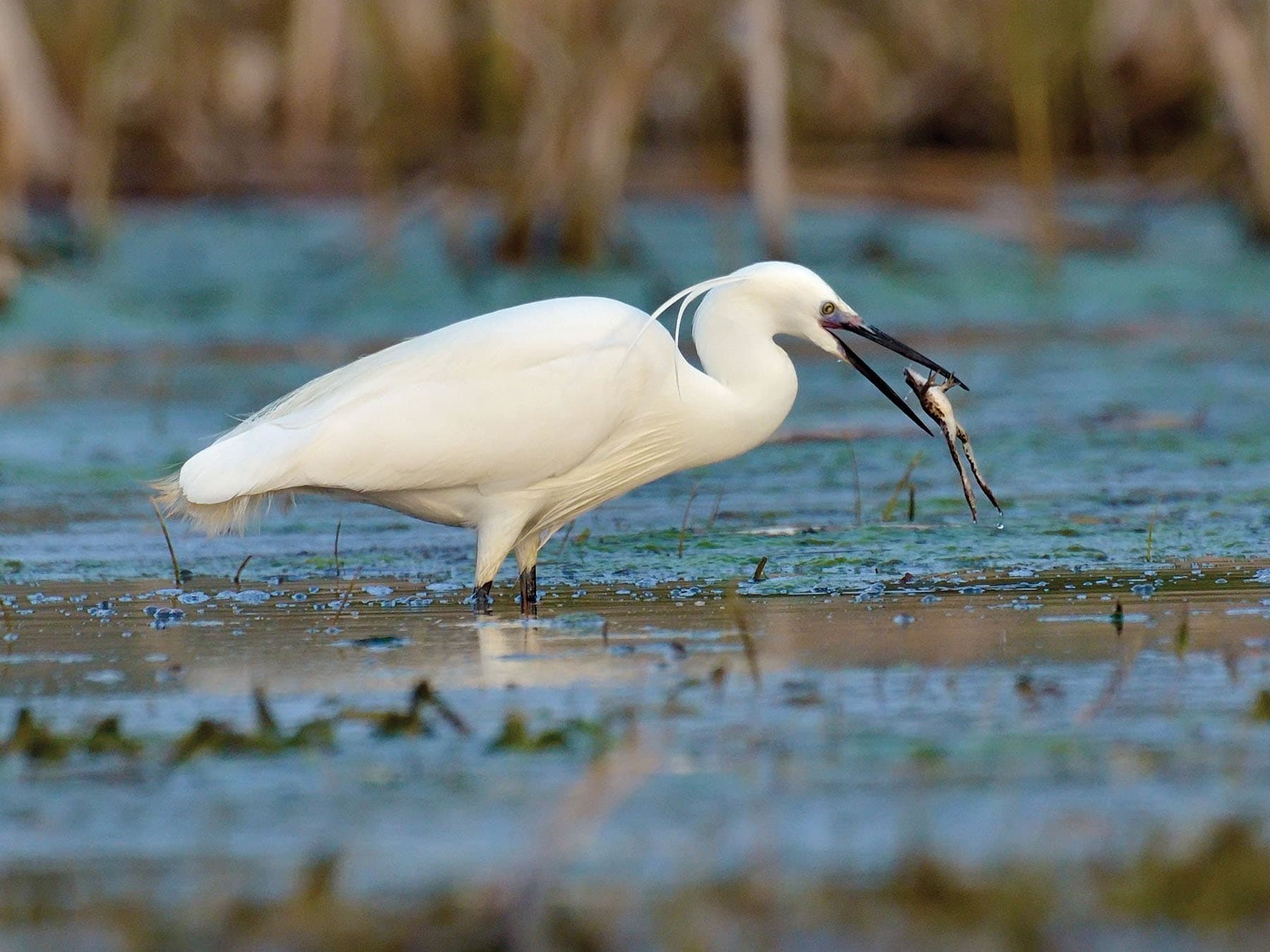
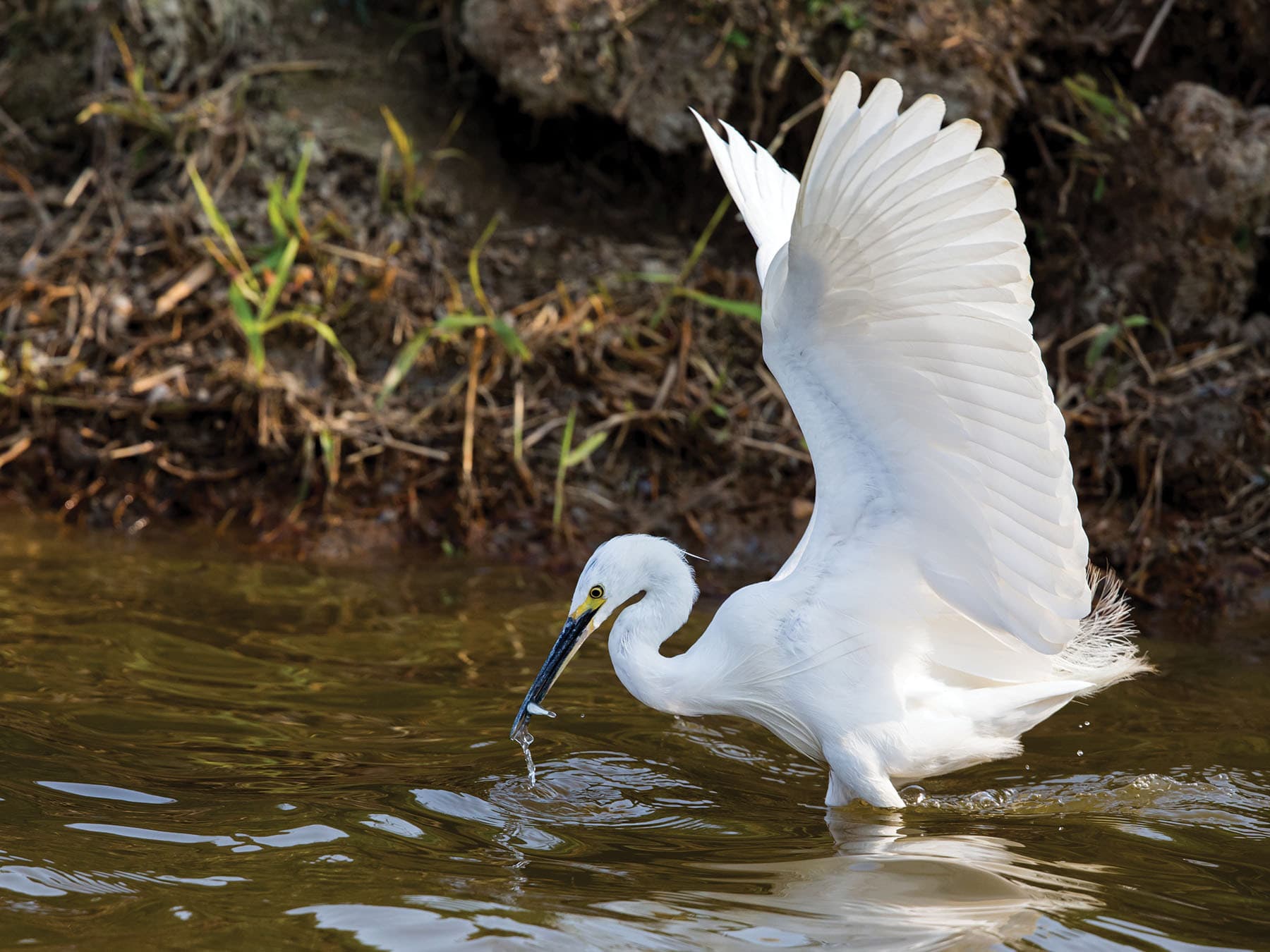
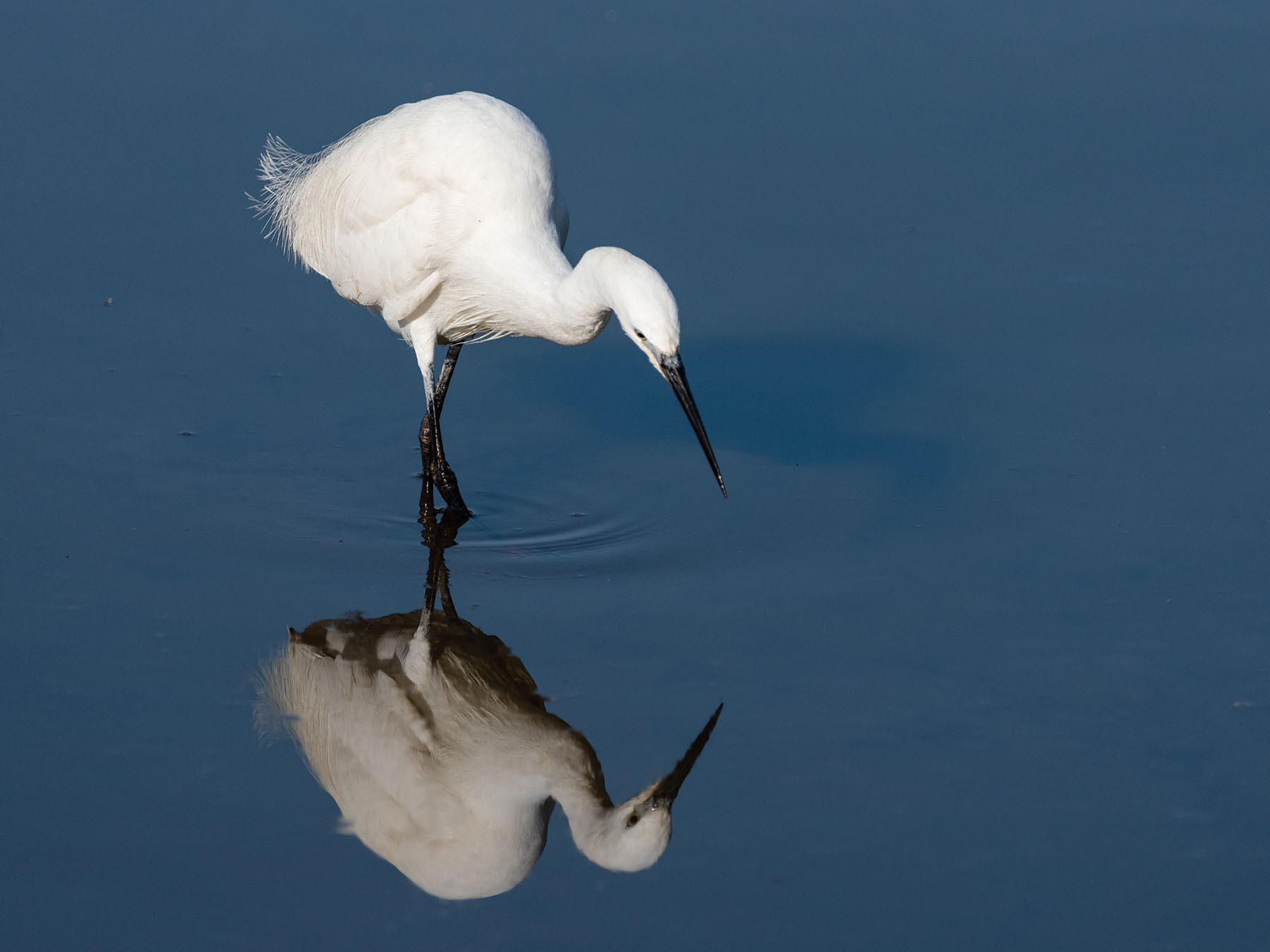
Little Egrets are predators that search for live prey in the water and on land. They do most of their hunting in shallow fresh and saltwater environments, usually by stalking through the water.
They frequently shuffle their yellow feet to disturb their quarry from cover and may half-run-half-fly in pursuit of prey in the shallows.
Little Egret prey items:
- Small fish
- Frogs
- Dragonflies, crickets, and other insects
- Small crustaceans
- Snails, worms, and other invertebrates
- Small birds
- Rodents
What do Little Egret chicks eat?
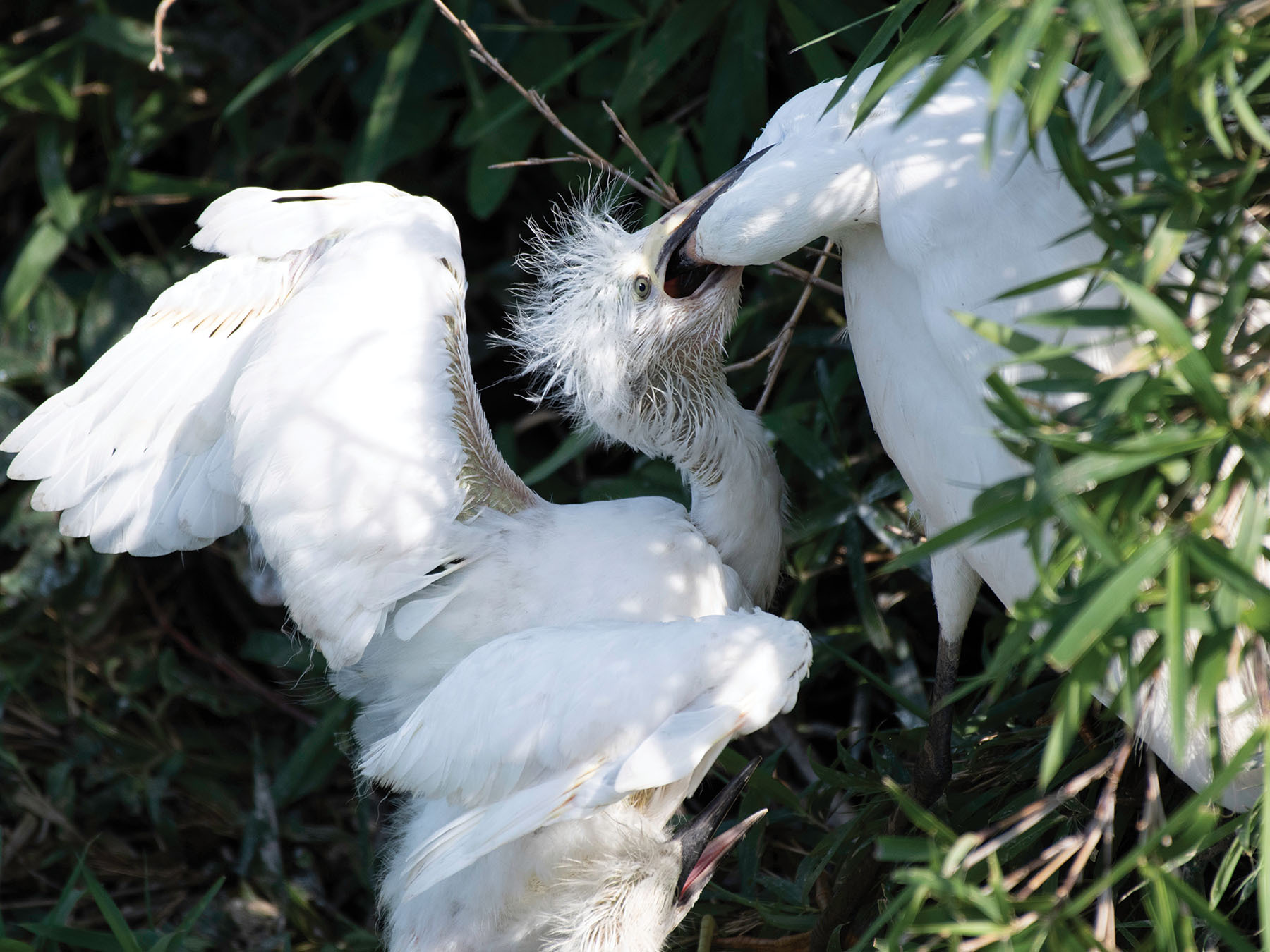
Baby Little Egrets are fed the regurgitated prey of their parents. They will eat from the nest floor or directly from their parent’s bill.
Nesting and breeding
Little Egrets began breeding in the UK in 1996 after a very long absence. Continue reading to learn more about their nesting behaviours in the UK.
Where do Little Egrets nest?
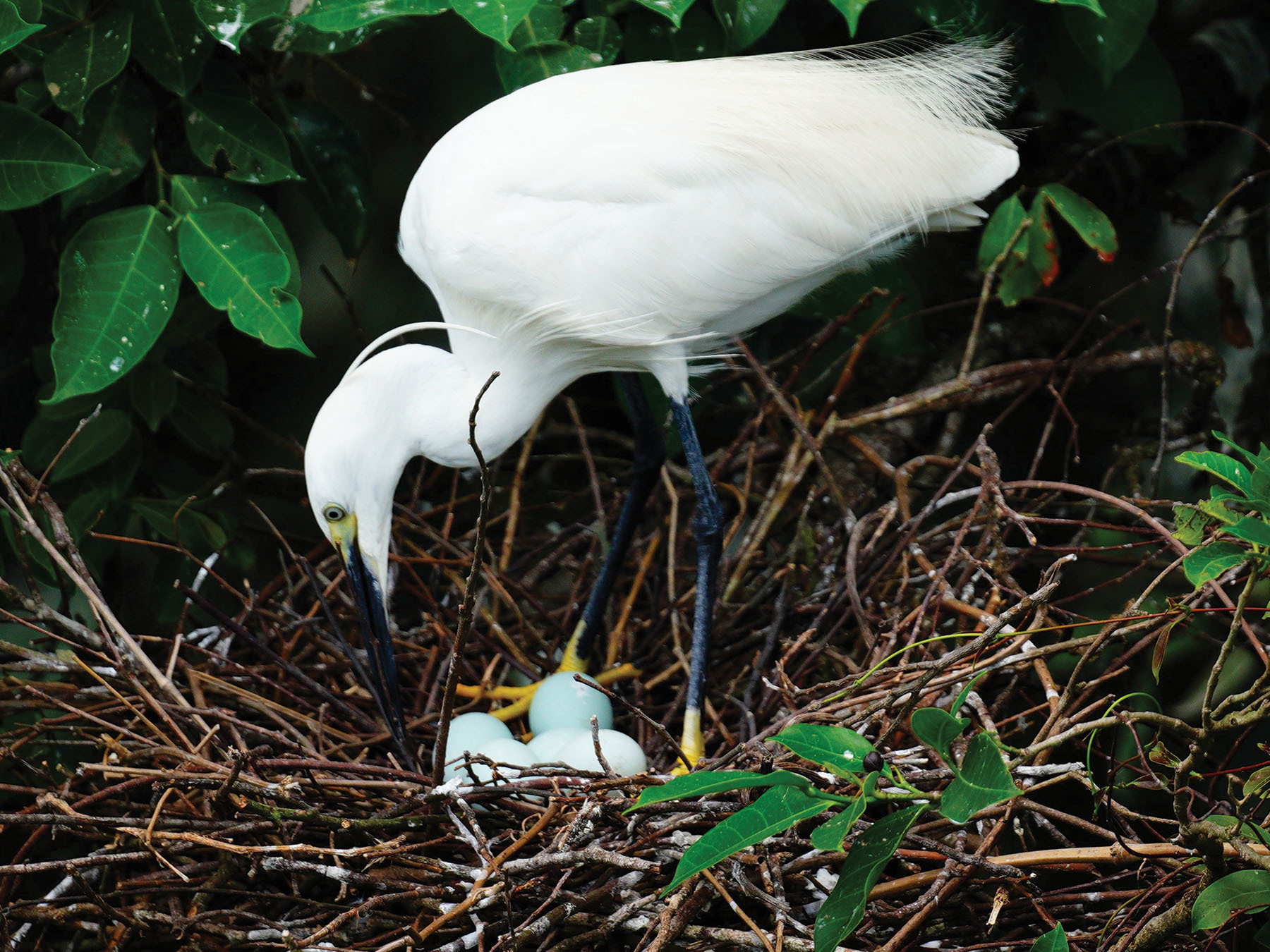
Little Egrets nest in colonies, frequently in the company of the larger Grey Heron. These colonies are often atop large trees, although they may also nest in reedbeds or bushes. Both adults work together to build a simple platform of twigs.
What do Little Egret eggs look like?
Little Egrets lay one to seven blue-green eggs, each measuring approximately 46 millimetres long and 34 millimetres wide.
Do Little Egrets mate for life?
It is unknown whether Little Egrets form long-lasting pair bonds, although they are monogamous during each breeding season.
Behaviour
Are Little Egrets aggressive?
Little Egrets are generally solitary and territorial during the day. They will defend their feeding area aggressively against other egrets if need be. However, they are more gregarious at night when flocks gather to roost.
Where do Little Egrets sleep at night?
Little Egrets sleep in trees and reedbeds over water.

Lifespan and predators
Humans have proved to be the greatest threat to the Little Egret, although these birds are a relatively rare example of a species making a comeback in the modern era.
How long do Little Egrets live?
Little Egrets live for an average of five years, although some individuals have survived for over twenty years.
What are the predators of Little Egrets?
Adult Little Egrets have few predators, although birds like harriers, Sparrowhawks, gulls, and crows may take eggs and chicks.
Are Little Egrets protected?
Little Egrets in the UK are protected by the Wildlife and Countryside Act.
Are Little Egrets endangered?
Little Egrets are not endangered. Their population is increasing, and they are assessed as a ‘Least Concern’ species according to the IUCN. In the UK, these birds have a green conservation status and are increasing after disappearing from the region centuries ago.
Conservation
While the Little Egret is currently listed as Least Concern, it faces localised threats from habitat loss and degradation, particularly in wetland areas. Climate change may affect its distribution.
Conservation efforts focus on protecting and restoring wetland habitats, which benefit this species and many other water birds.
Similar birds
Often mistaken for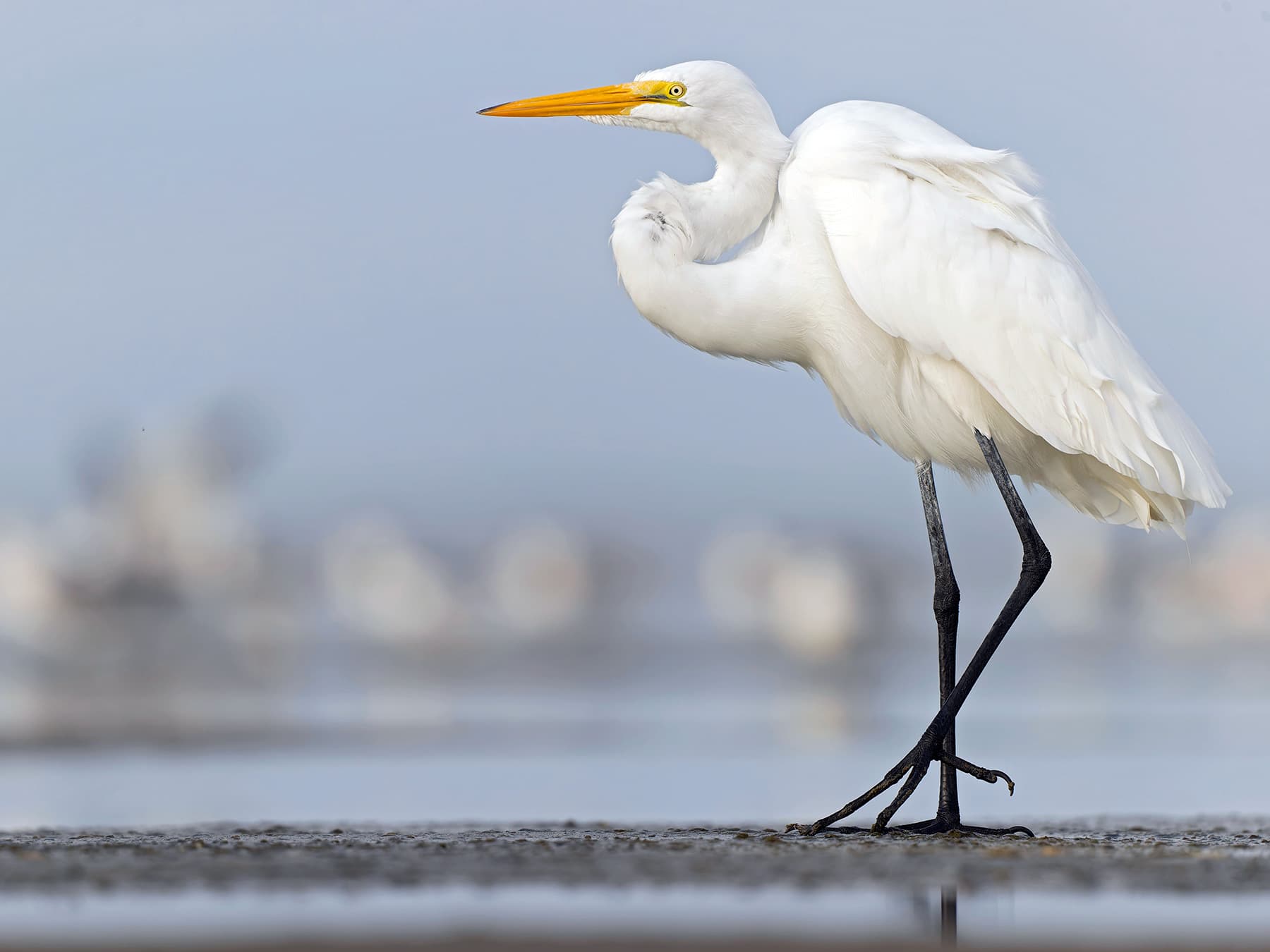
More photos
6 photos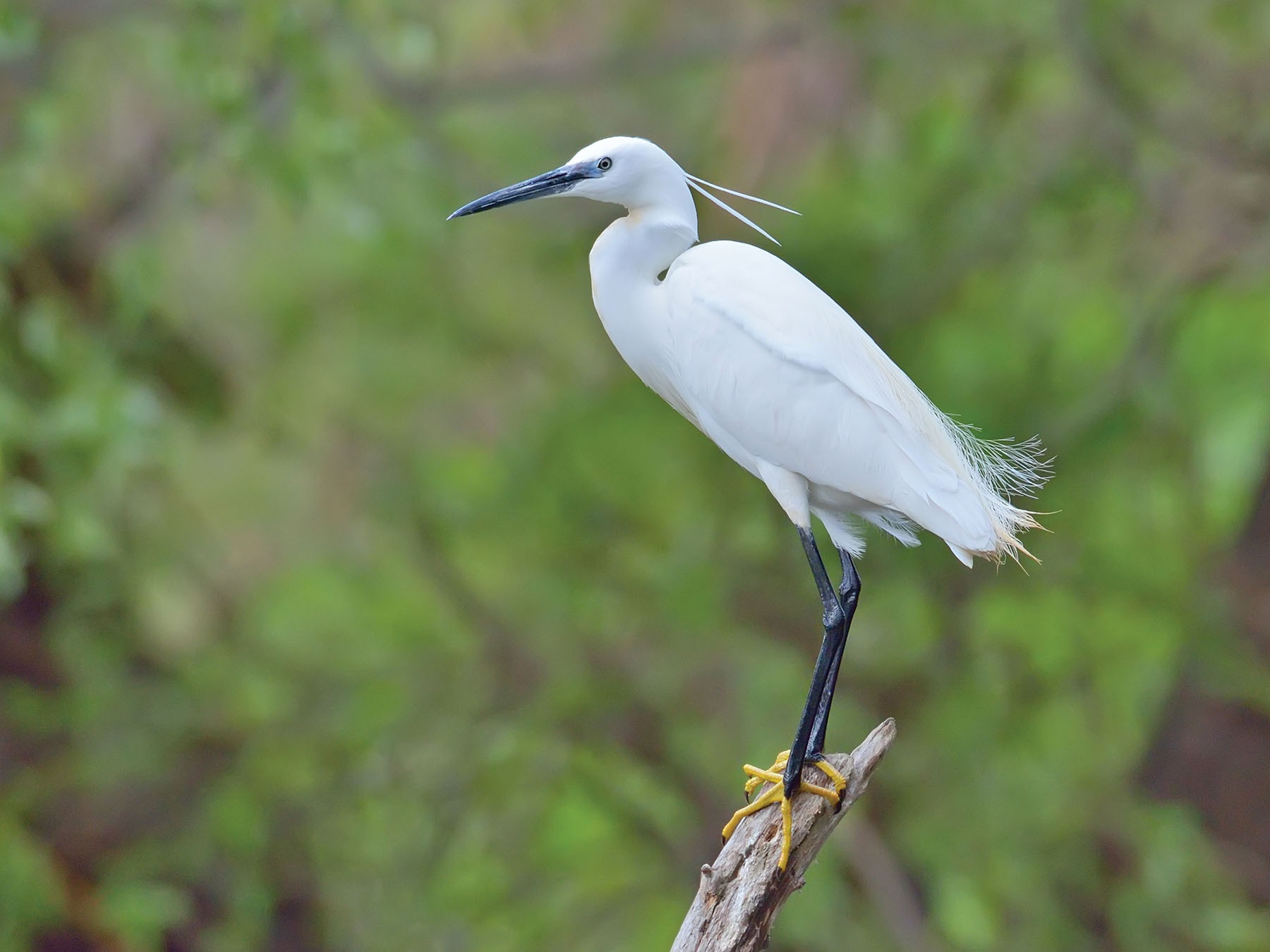
Little Egret guides
2 guidesQuick facts
- Length
- 55–65 cm
- Wingspan
- 88–106 cm
- Weight
- 350–550 g
- Lifespan
- 15–20 years · oldest recorded 13.5 years
- Family
- Herons & Egrets
- Migration
- Partial migrant
- Global status (IUCN)
- Least Concern
- World population
- 660,000 - 3,150,000 individuals
- Population trend
- Increasing
- Also called
- White Heron
- Scientific name
- Egretta garzetta
Questions
1Do you get Little Egrets in Scotland?
Little Egrets remain relatively uncommon in Scotland, although they are becoming increasingly numerous. These birds are a regular sight at places like the Montrose Basin and Solway Firth.
Sources
4- 1BirdLife International. 2016. Egretta garzetta. The IUCN Red List of Threatened Species 2016: e.T62774969A86473701. Source (opens in a new tab)
- 2Wetlands International (2006)
- 3Wetlands International (2015)
- 4BTO longevity records: maximum age from a ringed bird, 13 years, 6 months, 12 days (set in 2019), BirdFacts: Little Egret (2019) Source (opens in a new tab)

Checked by
Nathan Cope, founder and editor
Nathan founded Birdfact and leads its writers and contributors in the UK, the US and Canada. He has watched and studied birds for more than ten years, and checks every article and species guide before it’s published.