


Eurasian Spoonbill
Common Spoonbill · Platalea leucorodia
By the Birdfact teamChecked by Nathan Cope
On this page13 sections
How to recognise it
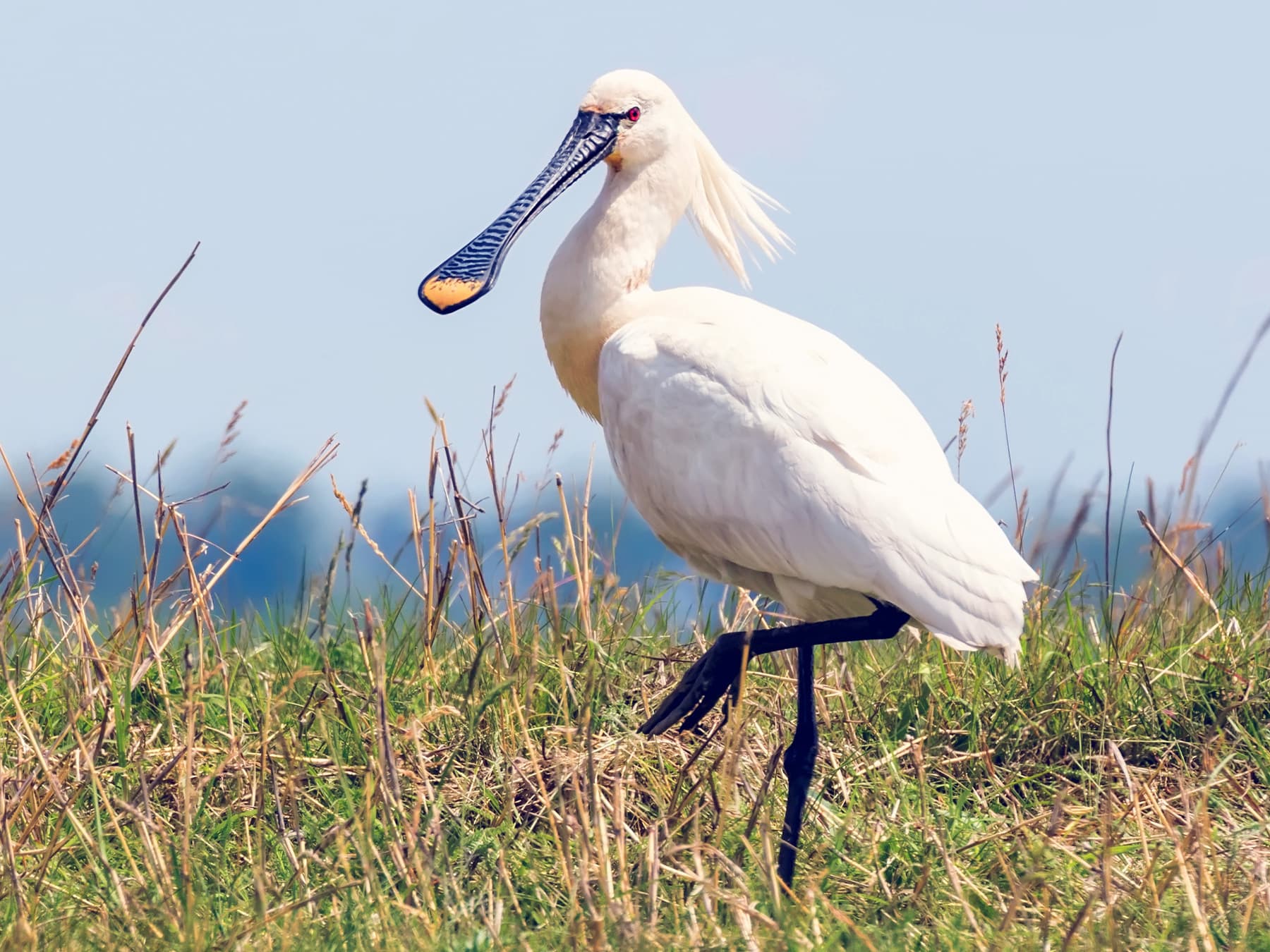
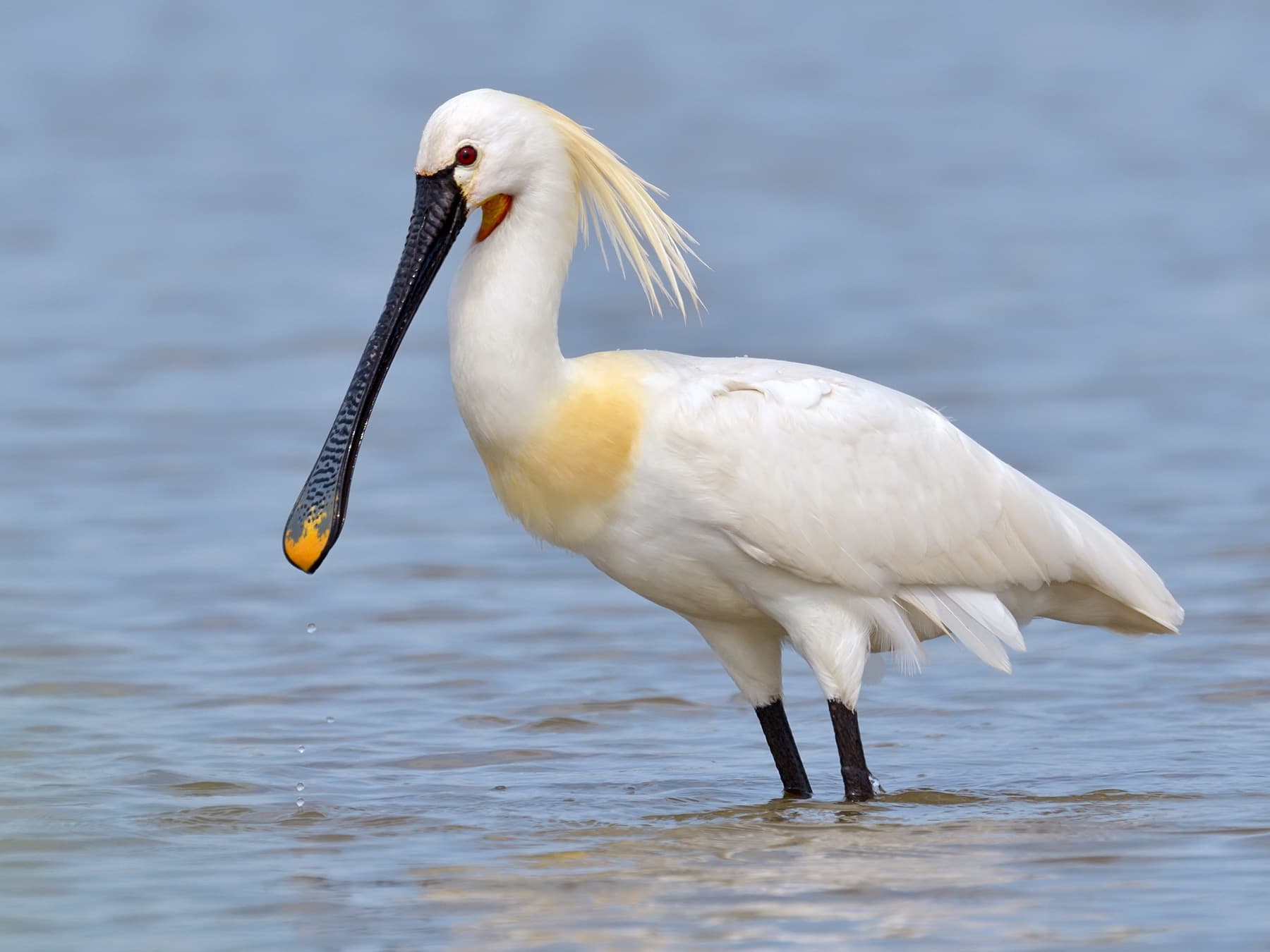
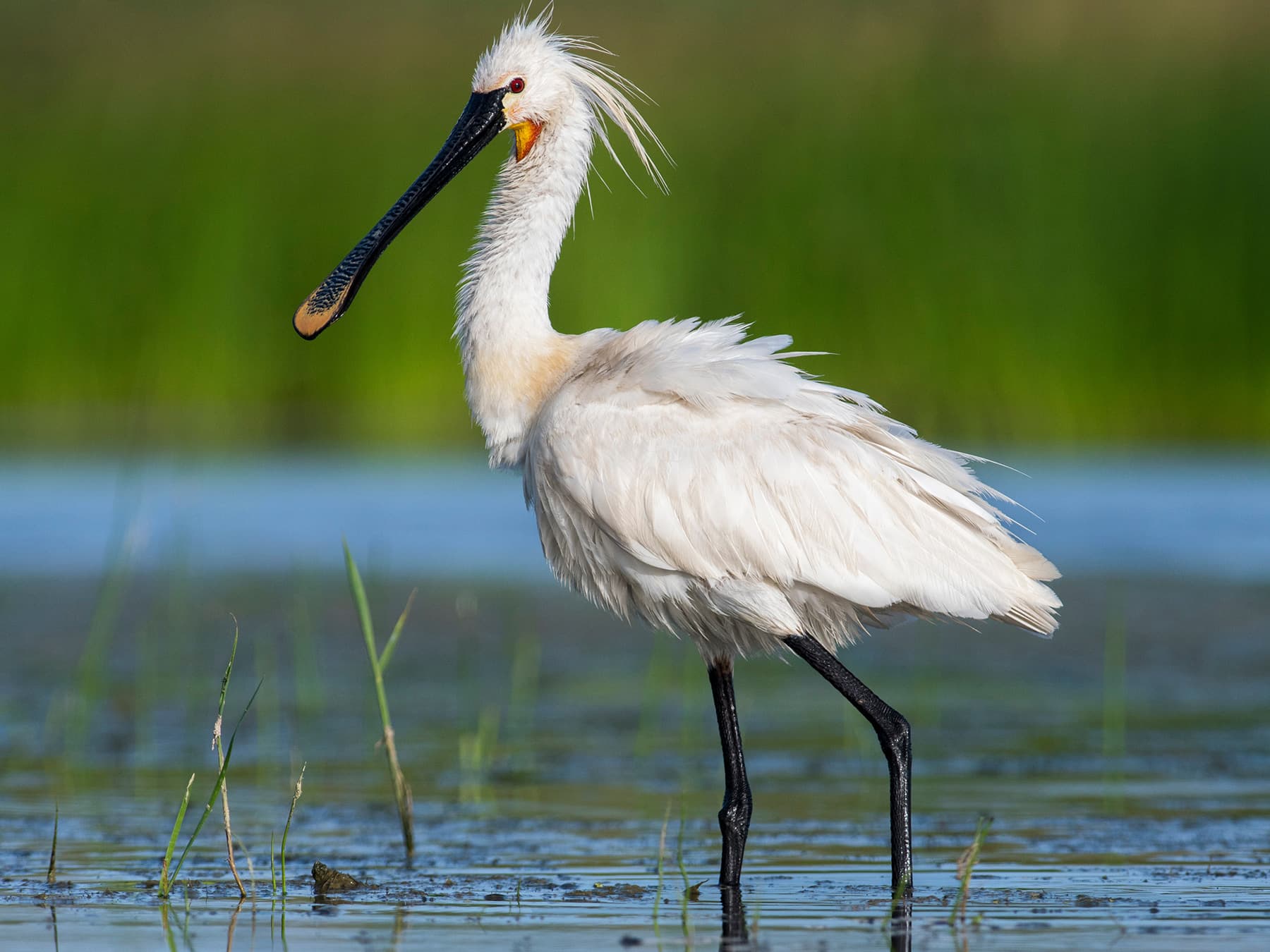
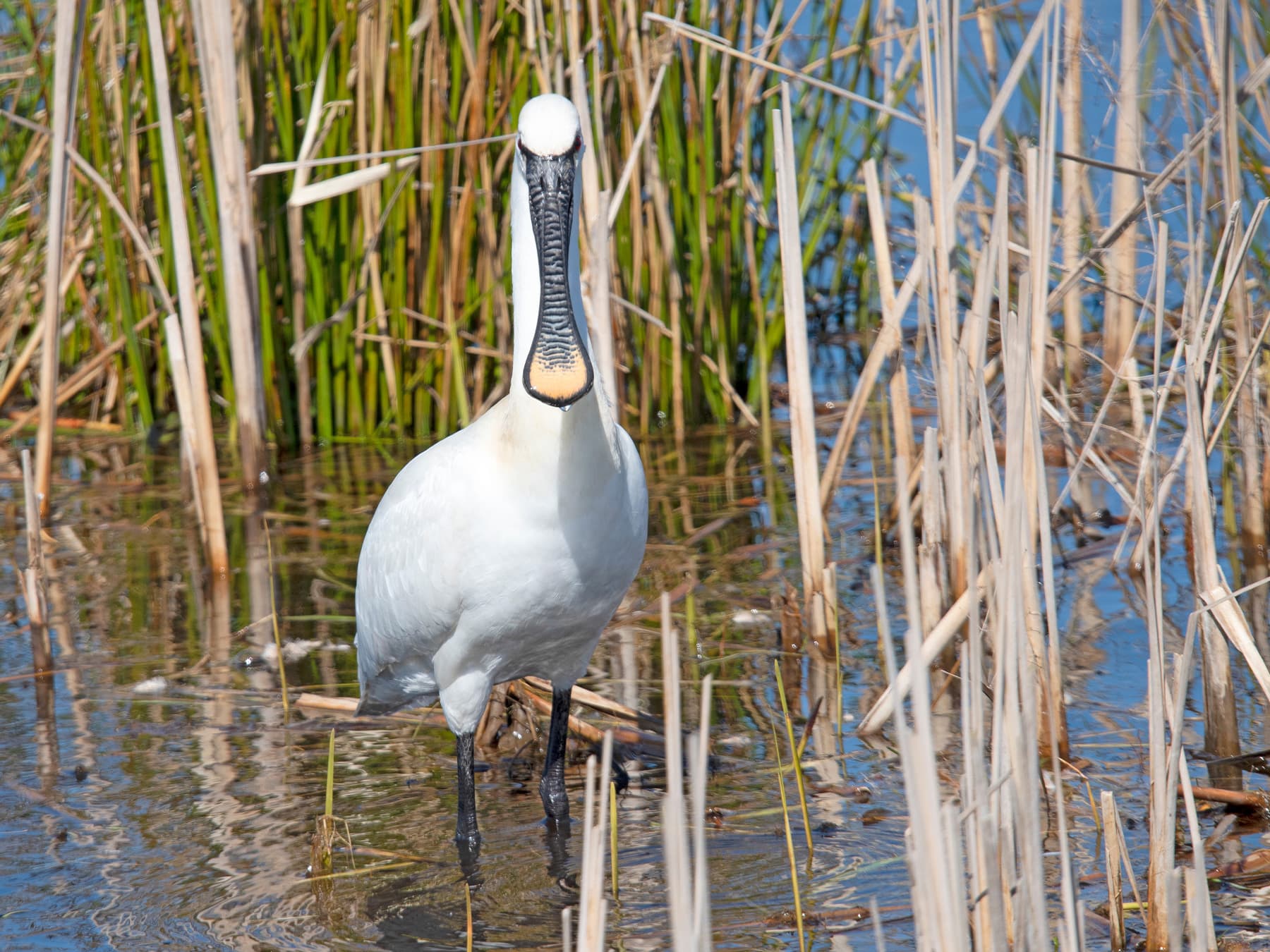
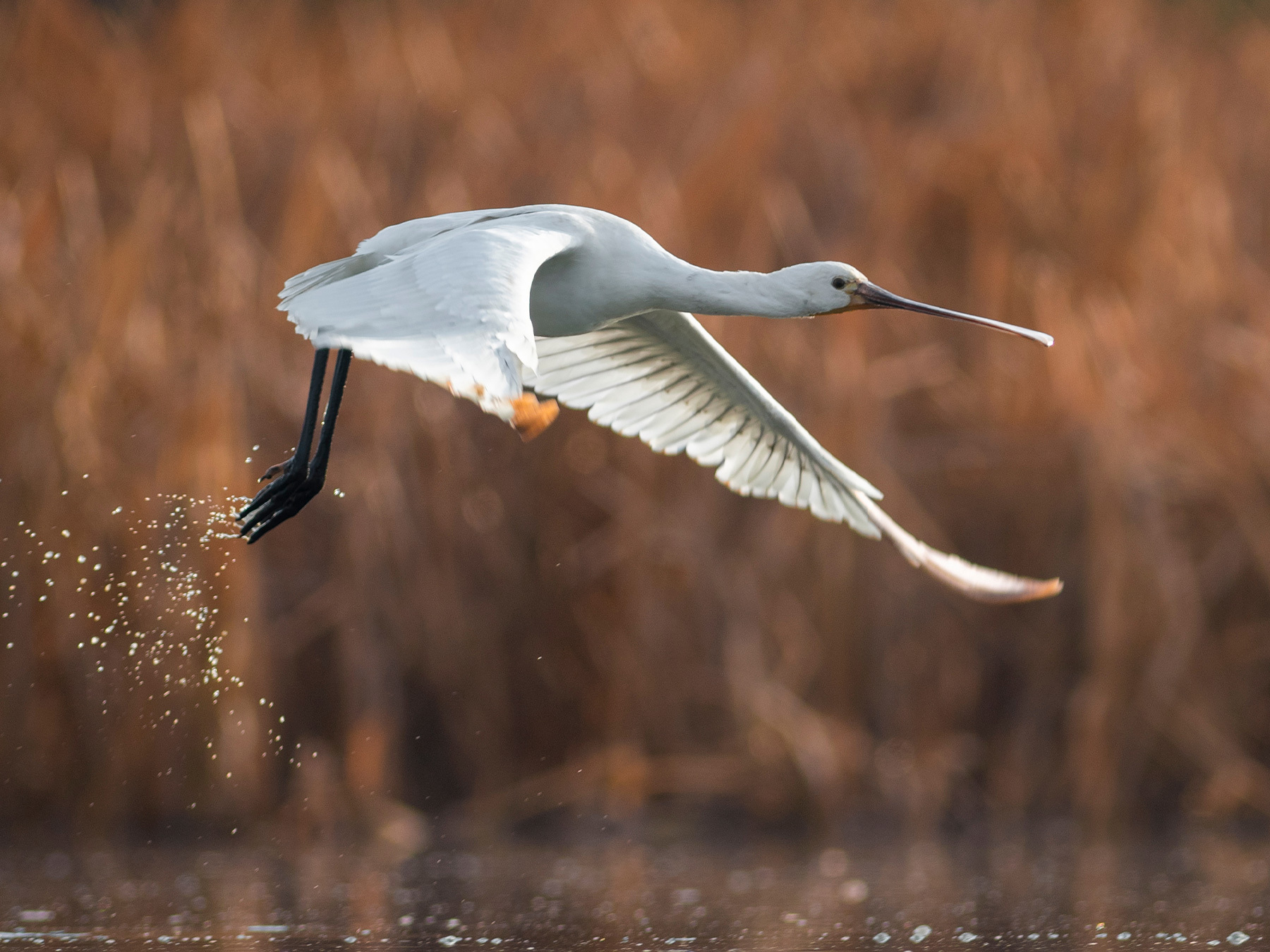
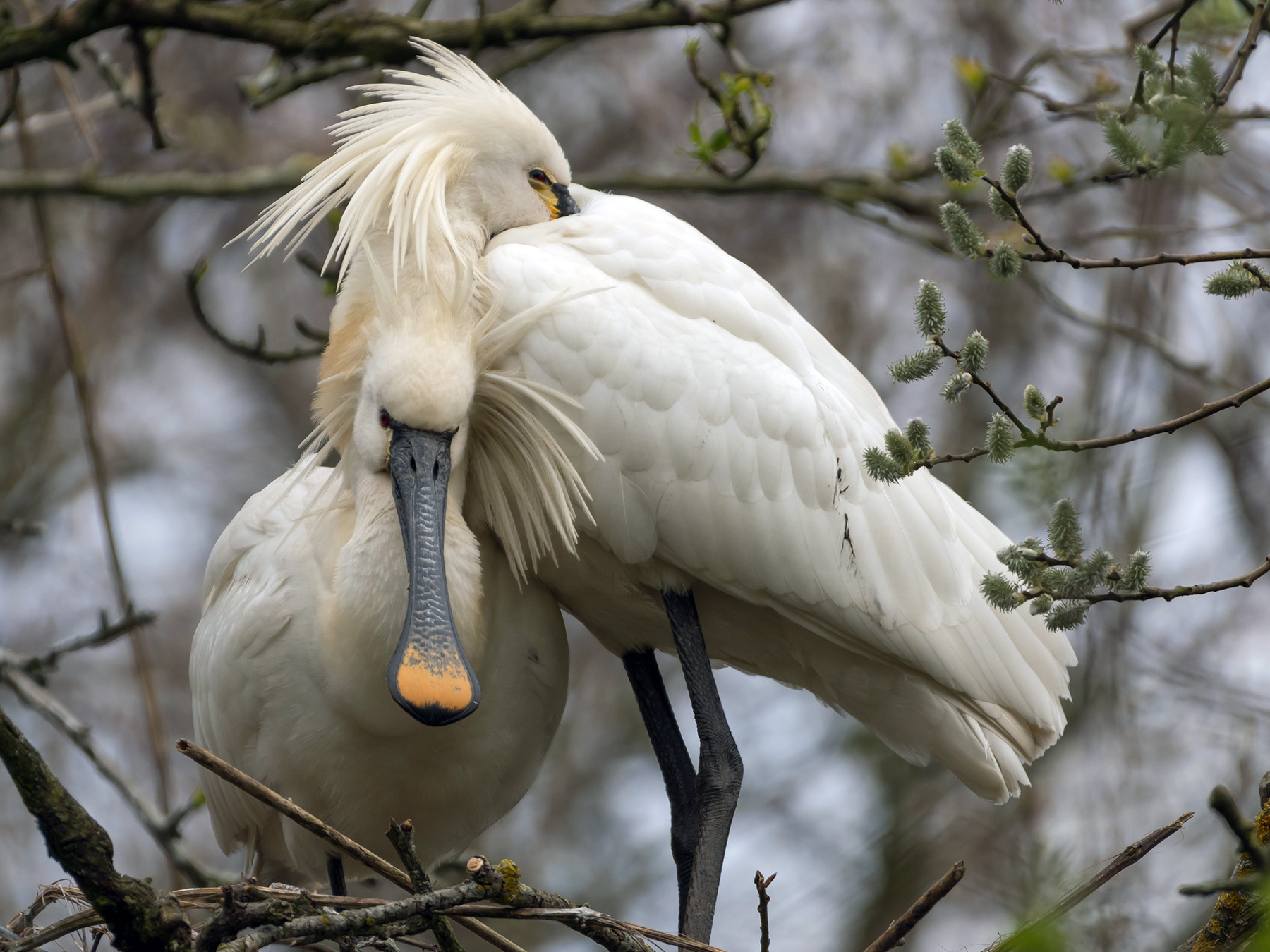
The Spoonbill is a large, upright waterbird with snow-white plumage, a long neck, and long black legs. However, their bill is undoubtedly their most notable feature. True to their common name, these birds have a very long, flattened bill with a widened (spatulate) tip reminiscent of a wooden spoon.
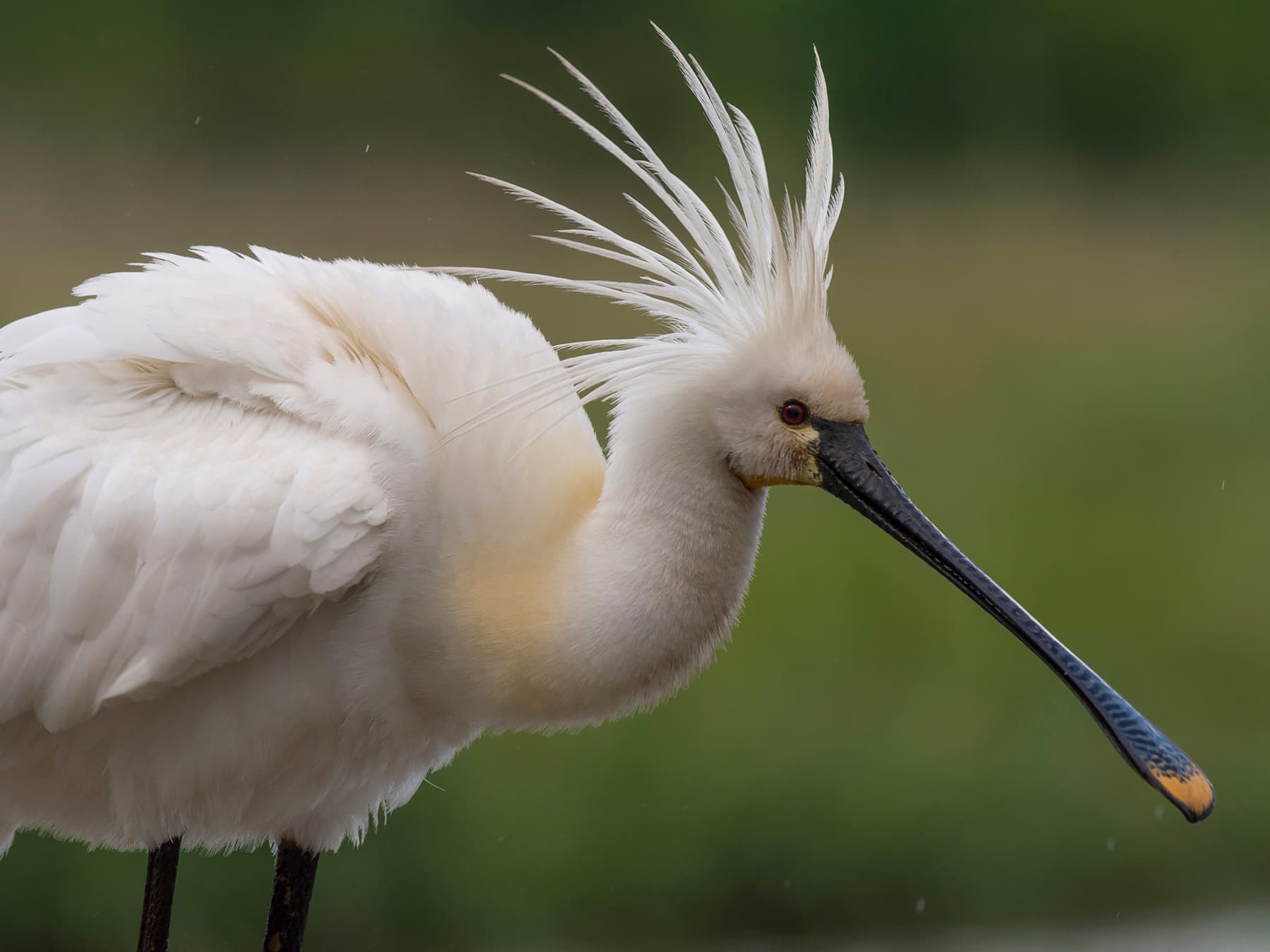
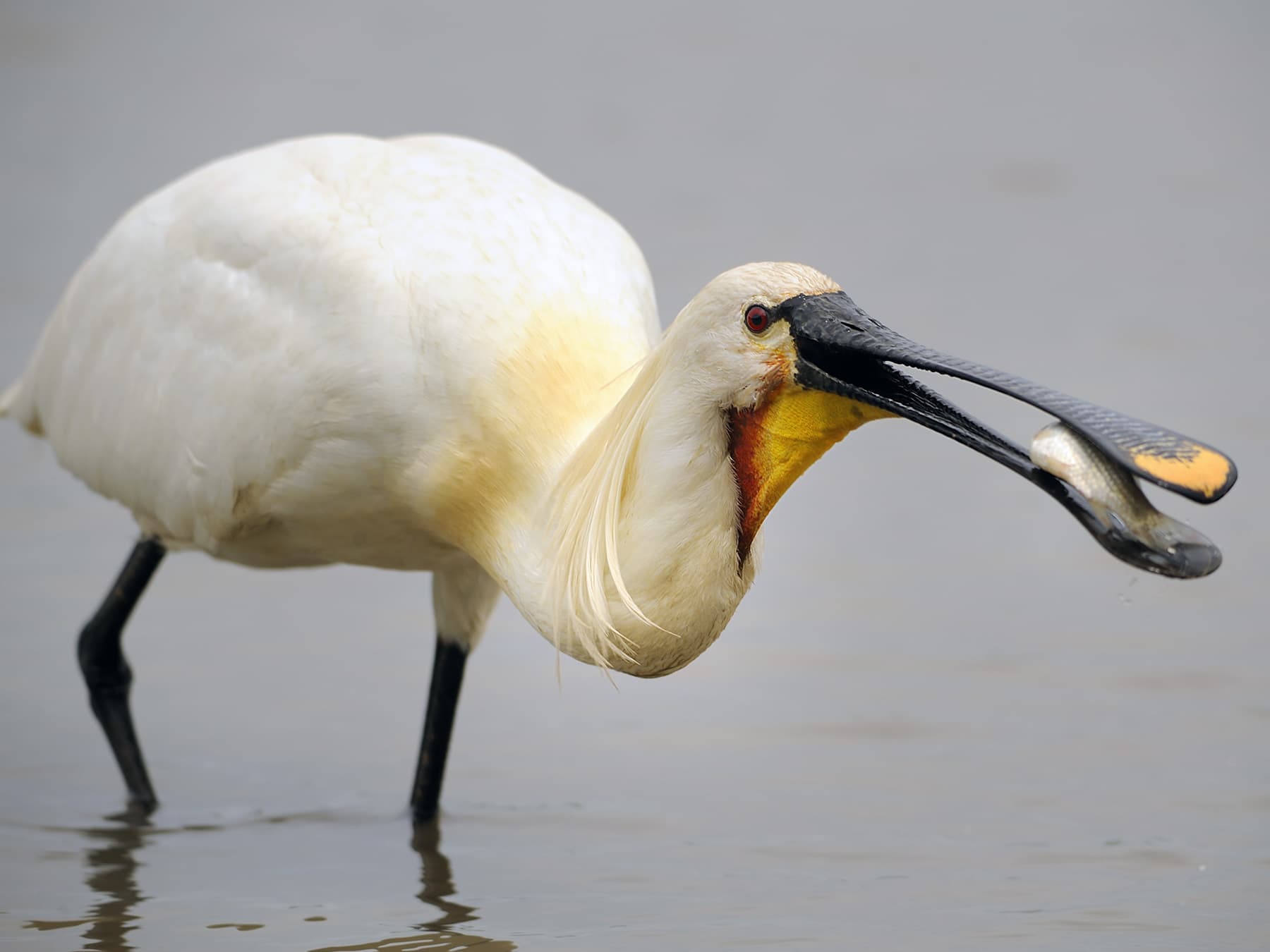
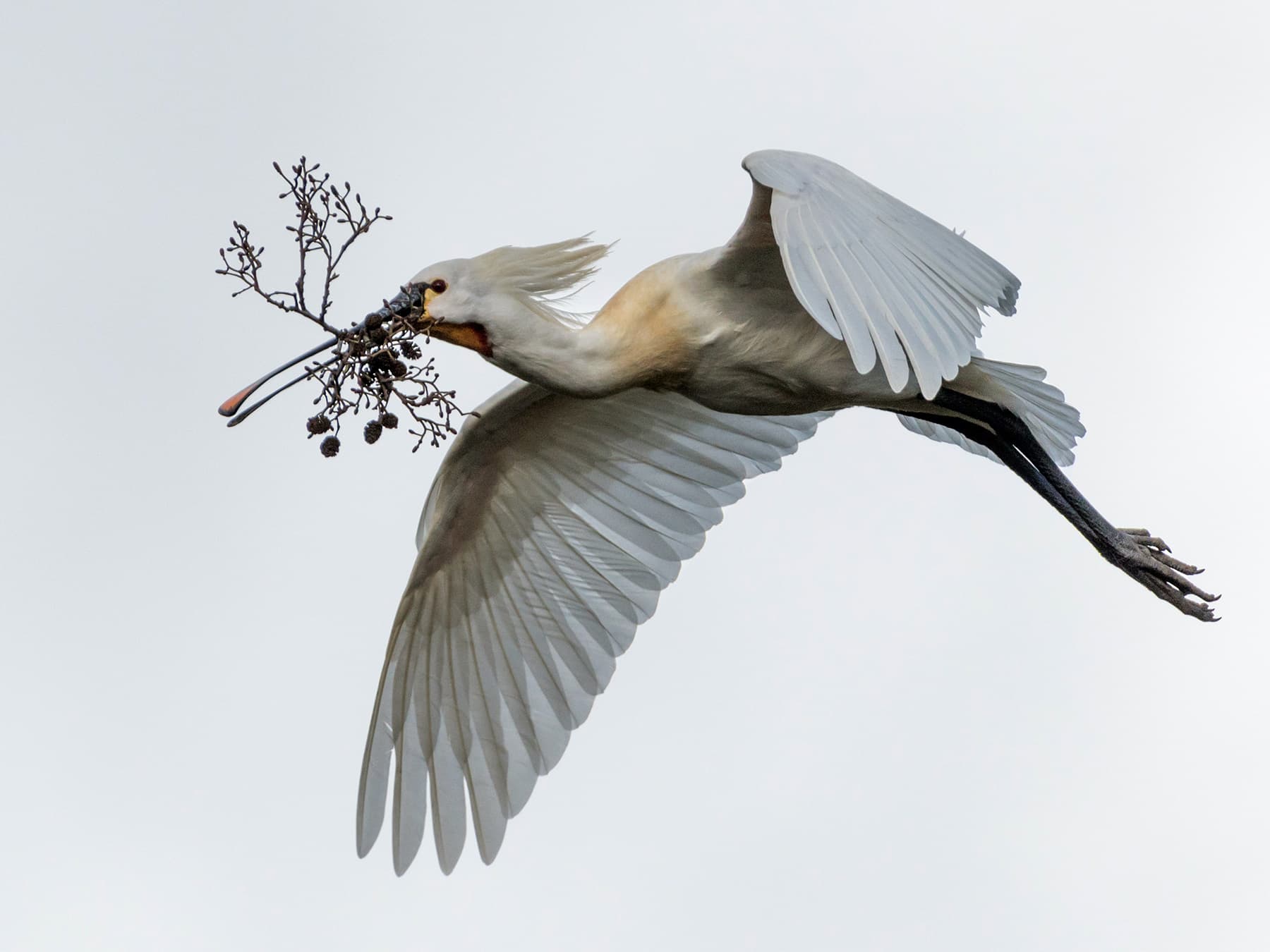
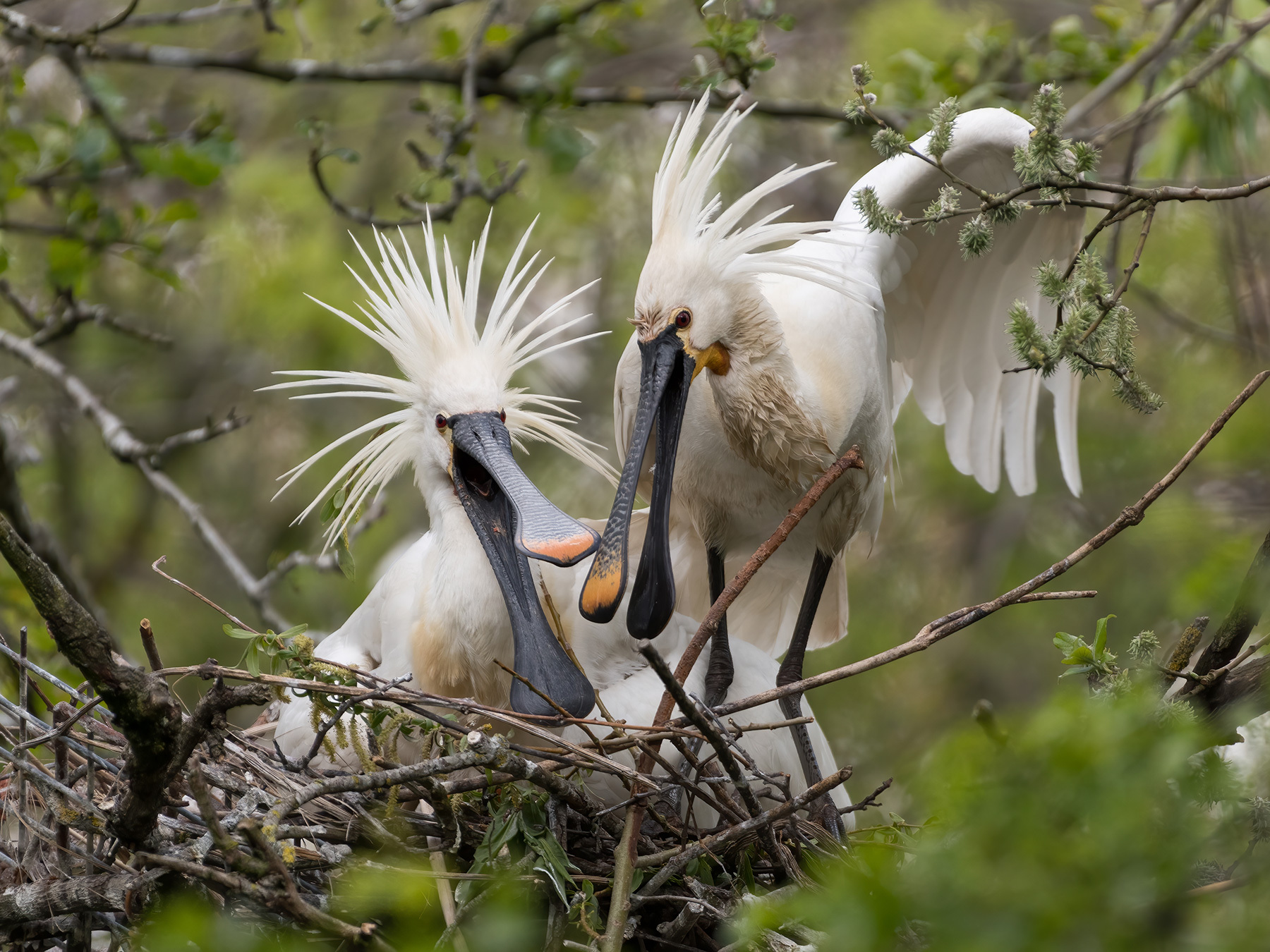
In the breeding season, Eurasian Spoonbills grow a long, hanging crest that reaches most of the way toward their back and a bare patch of orange skin on the chin/throat. They also develop a yellow bill tip and yellow plumage at the base of their neck that may form a complete collar in some individuals.
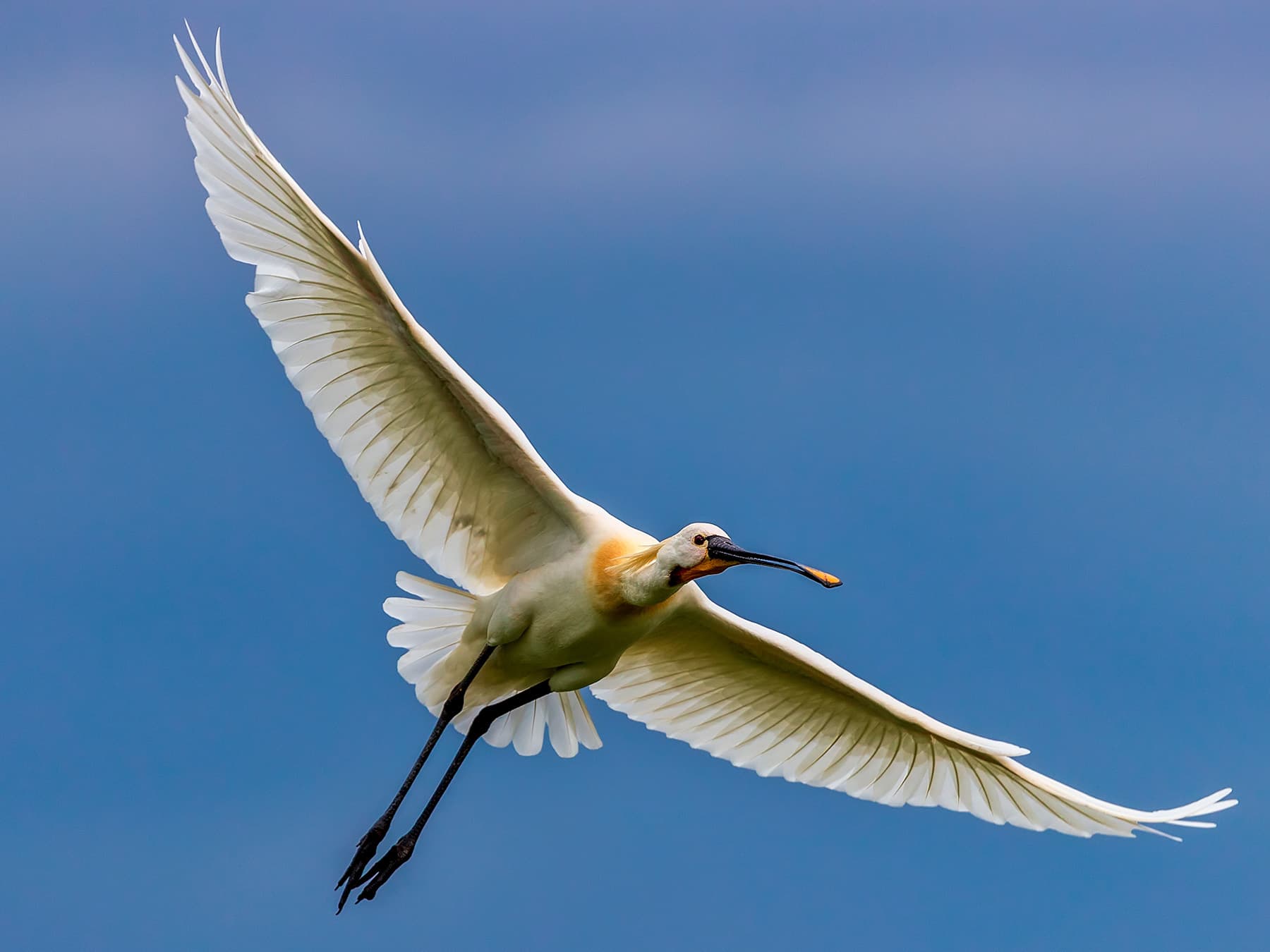
Male and female Spoonbills appear similar, and juveniles can be distinguished from adults by their pinkish bill, and lack of crest plumes and yellow plumage around the neck. Young birds also have black tips on their primary feathers, which are most distinct in flight but also visible on foraging birds.
The Spoonbill is a highly distinctive bird, unlikely to be confused with any other species if seen well. From a distance, however, they could be mistaken for the Little Egret, which is a similarly upright but much smaller white waterbird. Spoonbills also differ from these more common birds in their habit of flying with their necks outstretched.
How big are Spoonbills?
Length
Most Spoonbills in the United Kingdom measure between 80 and 90 centimetres long, although the species’ total body length varies between 70 and 95cm.
Weight
The Eurasian Spoonbill is a fairly heavy species with recorded weights between 1.13 to 1.96 kilograms.
Wingspan
These birds have a wingspan of 115 to 135 centimetres.
Its size
Adults- Length
- 80–90 cm
- Wingspan
- 120–135 cm
- Weight
- 1200–2000 g
Its song and calls
What sound does a Spoonbill make?
Spoonbills are generally quiet. However, they are more vocal in the breeding season when adults make low grunting and groaning calls, and chicks beg for food with loud squeals.
- Call0:00 / 0:35
When and where to see it
OctoberLeaving
Most recorded in October
- 1. Carmarthenshire0.86%
- 2. Newport0.32%
- 3. Stockton-on-Tees0.26%
- 4. Dorset0.23%
- 5. Swansea0.18%
Each dot is a county, state or province: the bigger and darker, the larger the bird’s share of that place’s bird records that month. Grey dots: no regular records. The ringed point is the centre of the bird’s records this month; the arrow shows how it moved since last month, and the dashed loop its path through the year. “Arrivals” colours places where it becomes regular this month (orange) or is in its last regular month (grey). GBIF eBird Observation Dataset, 2019–2024. Map data: Natural Earth, US Census Bureau; place centres © OpenStreetMap contributors.
In your area
See when the Eurasian Spoonbill is recorded in your county, state or province.
How often the Eurasian Spoonbill turns up in the UK and Ireland through the year, from birdwatchers' records.
United Kingdom
Summer visitor · all year · most records in August
Ireland
Resident · regularly Oct–Jul · most records in April
Show as a table
| Month | United Kingdom | Ireland |
|---|---|---|
| January | 0.029% (regular) | 0.010% (regular) |
| February | 0.042% (regular) | 0.006% (regular) |
| March | 0.039% (regular) | 0.028% (regular) |
| April | 0.048% (regular) | 0.030% (regular) |
| May | 0.077% (regular) | 0.010% (regular) |
| June | 0.091% (regular) | 0.013% (regular) |
| July | 0.15% (regular) | 0.004% (regular) |
| August | 0.16% (regular) | 0.003% |
| September | 0.12% (regular) | 0.010% |
| October | 0.049% (regular) | 0.004% (regular) |
| November | 0.031% (regular) | 0.009% (regular) |
| December | 0.029% (regular) | 0.012% (regular) |
Recorded regularly in
Worldwide: recorded regularly in 69 countries
Countries where it was recorded in at least 3 of the 6 years 2019–2024. Linked countries have their own bird list.
Europe (31)
Africa (12)
Data: EOD – eBird Observation Dataset (Cornell Lab of Ornithology), accessed via GBIF.org, CC BY 4.0. Records from 2019–2024, aggregated and filtered by Birdfact. How these lists are made
What is the habitat of a Spoonbill?
Spoonbills inhabit wetlands, marshes, river margins and other areas with an abundance of shallow fresh, estuarine, or salt water. They prefer waters up to about a foot deep, with soft sandy, or muddy bottoms and limited aquatic vegetation.
What is the range of a Spoonbill?
The Spoonbill has a wide but patchy distribution in Europe, Africa, and Asia. They occur in many Western European countries, including the Netherlands, France, Spain, Germany, Portugal, and Denmark. Their range extends eastwards through Asia to Japan, south to Sri Lanka, and in several North African countries surrounding the Sahara desert.
Where do Spoonbills live?
Spoonbills spend their lives near water bodies, feeding in the shallows and sleeping on the ground or making the daily commute to colonies up to about 15 kilometres away. They are partial migrants, with many birds making a long annual journey to distant overwintering grounds in southern Europe and Africa.
How rare are Spoonbills?
Spoonbills are very rare in the United Kingdom, with just 29 breeding pairs in 2017. They were extinct as a breeding species since the 17th century but returned to nest in 1999 and have slowly increased since then. The estimated world population is relatively small, at just 63,000 to 65,000 individuals in 2015.
Where can you see Spoonbills in the UK?
Spoonbills are present throughout the year, although they are more numerous in the warmer months. These birds are still scarce in the United Kingdom, although birdwatchers may spot them at the following reserves:
- Hazelwood Marshes, Suffolk
- Brownsea Island, Dorset
- RSPB Arne, Dorset
- Cley Marshes, Norfolk
- Holkham National Nature Reserve, Norfolk
- Titchwell Marsh, Norfolk
- Exe Estuary, Devon
Migration
Do Spoonbills migrate?
Spoonbills are mainly migratory, and the Western European population overwinters primarily in North Africa and the Mediterranean Basin. However, many individuals stay in Western Europe throughout the winter, and they are resident throughout the year in India and other southern parts of their range.
Are Spoonbills native to the UK?
Spoonbills are native to the United Kingdom, although they have only recently returned to England. These birds disappeared as a breeding species centuries ago as a result of habitat destruction and direct persecution for their plumes and meat. Their breeding range is currently expanding northwards, possibly due to climate change.
Tips for seeing it
- Look for Eurasian Spoonbills in shallow wetlands, estuaries, and coastal lagoons
- Observe their distinctive feeding behaviour, sweeping their bills through the water
- Listen for their soft grunting sounds, especially in breeding colonies
- In the UK, visit coastal areas in East Anglia or the South Coast for the best chances of spotting them
What it eats
What do Spoonbills eat?
Spoonbills eat small amounts of aquatic vegetation and algae, although they are primarily carnivorous. These birds sweep their long bills from side to side through the water, feeling for small prey such as insects, worms, crustaceans, frogs, and small fish.
The Spoonbill’s immense bill is held slightly open as it searches for its prey in the water column. Prey is seized at the tip and deftly thrown upwards to the throat to be swallowed whole.
What do Spoonbill chicks eat?
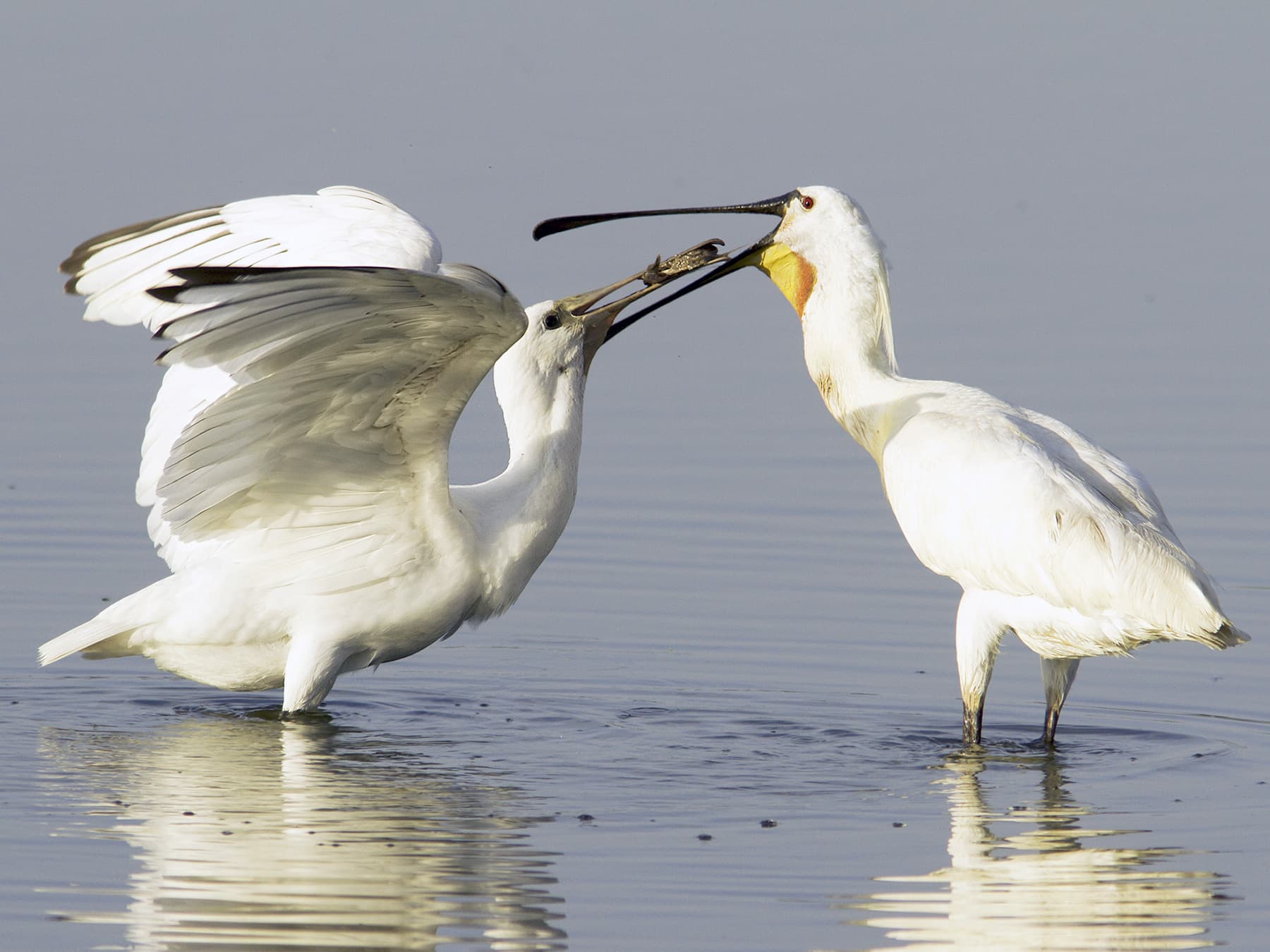
Spoonbill chicks are fed regurgitated aquatic organisms by both their mother and father. The young birds have short, straight bills, which makes it easier to take their meal directly from their parent's throats. They leave the nest after just a few weeks but may be fed by their parents for over two months before gaining independence.
Nesting and breeding
Where do Spoonbills nest?
Spoonbills build platform nests of twigs and other plant material on the ground or in bushes and trees up to about five metres. Holkham on the North Norfolk coast is currently the most important nesting site for Spoonbills in the United Kingdom.
When do Spoonbills nest?
Spoonbills nest at various times of the year across their range, although they breed in spring in the United Kingdom. Both parents work on the nest, incubate the eggs, and feed the chicks. The eggs take 24 or 25 days to hatch, and the young birds leave the nest after 31 to 42 days.
What do Spoonbill eggs look like?
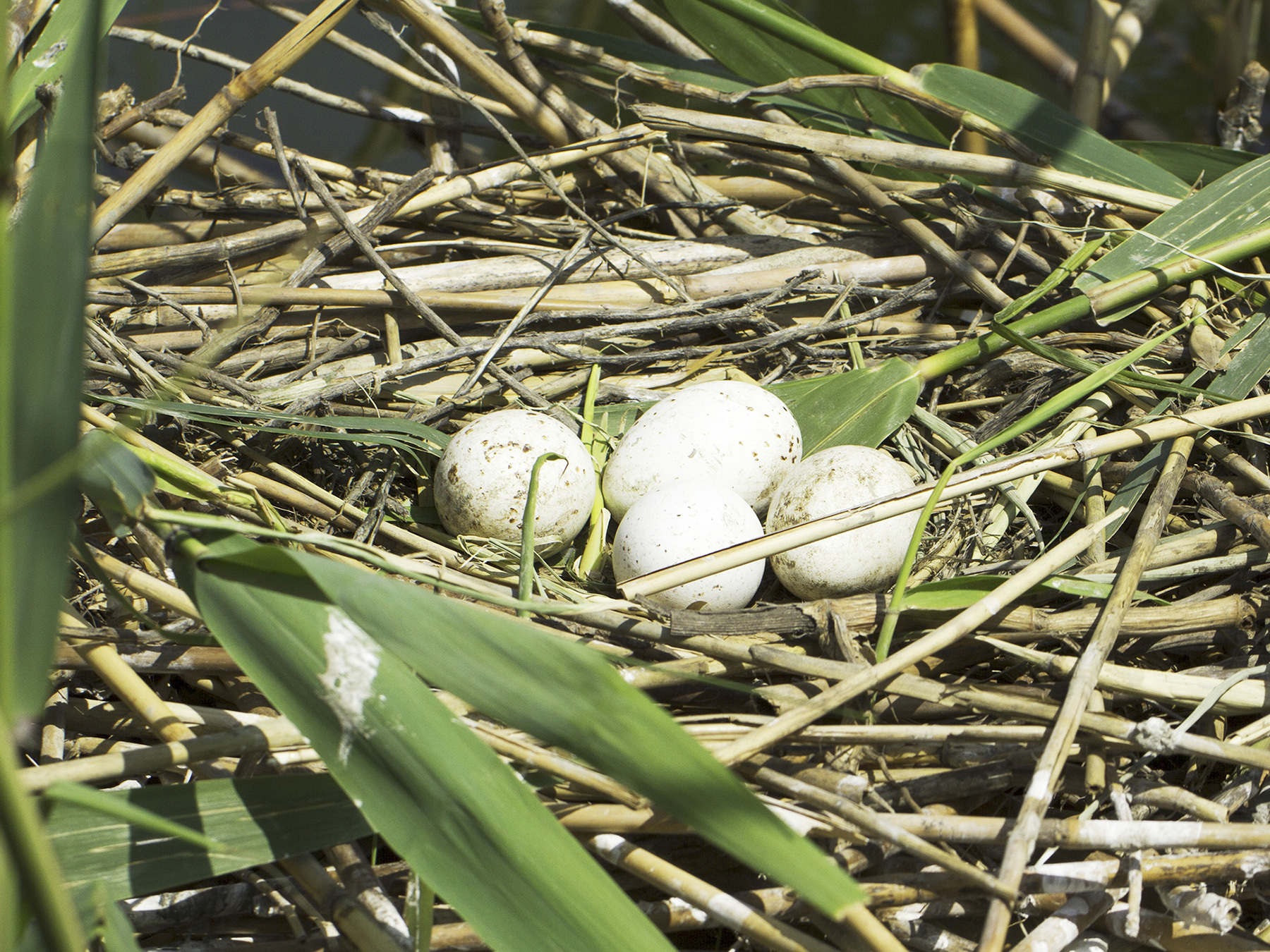
Spoonbills lay three or four white eggs with sparse red-brown blotches. Each egg measures about 67 millimetres long and 46 millimetres wide.
Do Spoonbills mate for life?
Spoonbills are monogamous during the breeding season, although they are not particularly faithful to their partner, and females often mate with other males while their partner is away from the nest. These birds are thought to find a new mate each year.
Behaviour
Are Spoonbills aggressive?
Spoonbills are not particularly aggressive, although males may use aggressive displays when establishing their nesting territories.
Where do Spoonbills sleep at night?
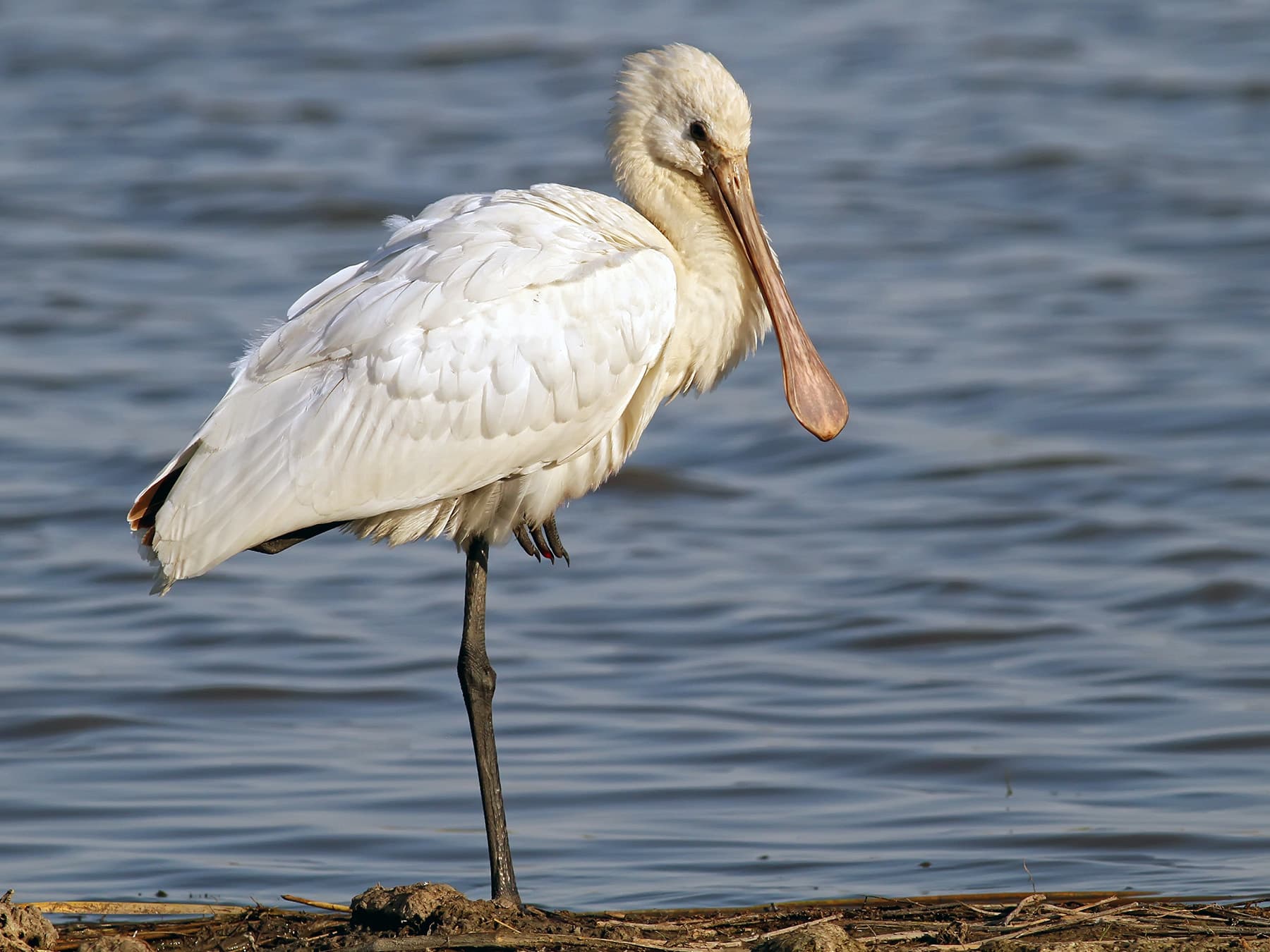
Spoonbills sleep standing on islands, in shallow water, or perched in the safety of trees. They typically snooze while balanced on one leg and with their bill tucked under a wing. However, they are often seen asleep during the day and will happily forage both during the day and after dark.
Lifespan and predators
How long do Spoonbills live?
Little information is available on the longevity of the Eurasian Spoonbill, although a captive specimen lived for thirty years.
What are the predators of Spoonbills?
Adult Spoonbills have few predators, although terrestrial carnivores like foxes in Europe and jackals in Africa do pose a threat.
Are Spoonbills protected?
Spoonbills in the United Kingdom are protected by the Wildlife and Countryside Act 1981. They also benefit from the Bern Convention and the Convention of Migratory Species, and action plans are in place internationally and in various European countries.
Are Spoonbills endangered?
Spoonbills are not endangered, although they are on the UK amber list, and their numbers remain low. Fortunately, they are thought to be increasing in Europe, and the species is globally ranked as a ‘Least Concern’ species on the IUCN Red List.
Conservation
While currently listed as Least Concern globally, Eurasian Spoonbills face threats from habitat loss and degradation. Conservation efforts focus on protecting wetland habitats and managing water levels in key breeding areas.
In some regions, such as the UK, reintroduction programs have been successful in re-establishing breeding populations.
More photos
5 photos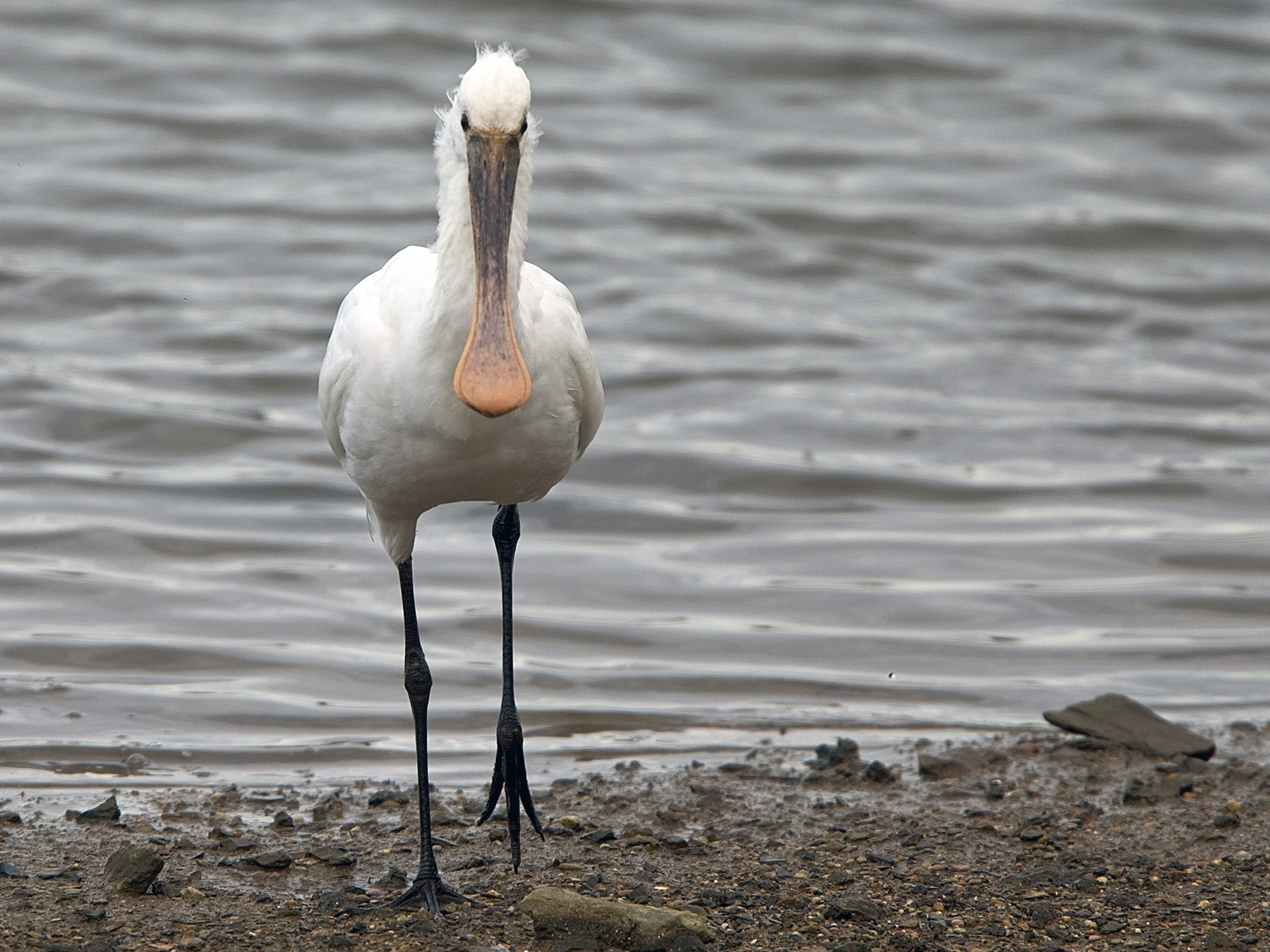
Quick facts
- Length
- 80–90 cm
- Wingspan
- 120–135 cm
- Weight
- 1200–2000 g
- Lifespan
- 10–20 years · oldest recorded 30.1 years
- Family
- Ibises & Spoonbills
- Migration
- Partial migrant
- Global status (IUCN)
- Least Concern
- World population
- 63,000 - 65,000 individuals
- Population trend
- Unknown
- Also called
- Common Spoonbill
- Scientific name
- Platalea leucorodia
Questions
3Are baby Spoonbills called teaspoons?
Young Spoonbills are affectionately known as ‘teaspoons’ before their bill has reached full adult proportions.
Is a Spoonbill a heron?
Spoonbills are not closely related to herons, although they frequent similar habitats and bear a superficial resemblance. Herons are from the Ardeidae family, while Spoonbills are from the Threskiornithidae family.
What do you call a group of Spoonbills?
A large group of Spoonbills would most accurately be described as a flock, although a more interesting collective noun has been proposed for the species. Many birdwatchers call a group of Spoonbills a ‘runcible,’ a word first coined by the English artist Edward Lear.
Sources
3- 1BirdLife International. 2019. Platalea leucorodia (amended version of 2016 assessment). The IUCN Red List of Threatened Species 2019: e.T22697555A155460986. Source (opens in a new tab)
- 2Wetlands International (2015)
- 3Brouwer et al. Longevity and breeding records of ibises and spoonbills in captivity, Int Zoo Yb, 33:94-102 (1994)

Checked by
Nathan Cope, founder and editor
Nathan founded Birdfact and leads its writers and contributors in the UK, the US and Canada. He has watched and studied birds for more than ten years, and checks every article and species guide before it’s published.