


Cattle Egret
Buff-backed Heron, Cow Crane, Western Cattle-Egret · Ardea ibis
By the Birdfact teamChecked by Nathan Cope
On this page15 sections
How to recognise it
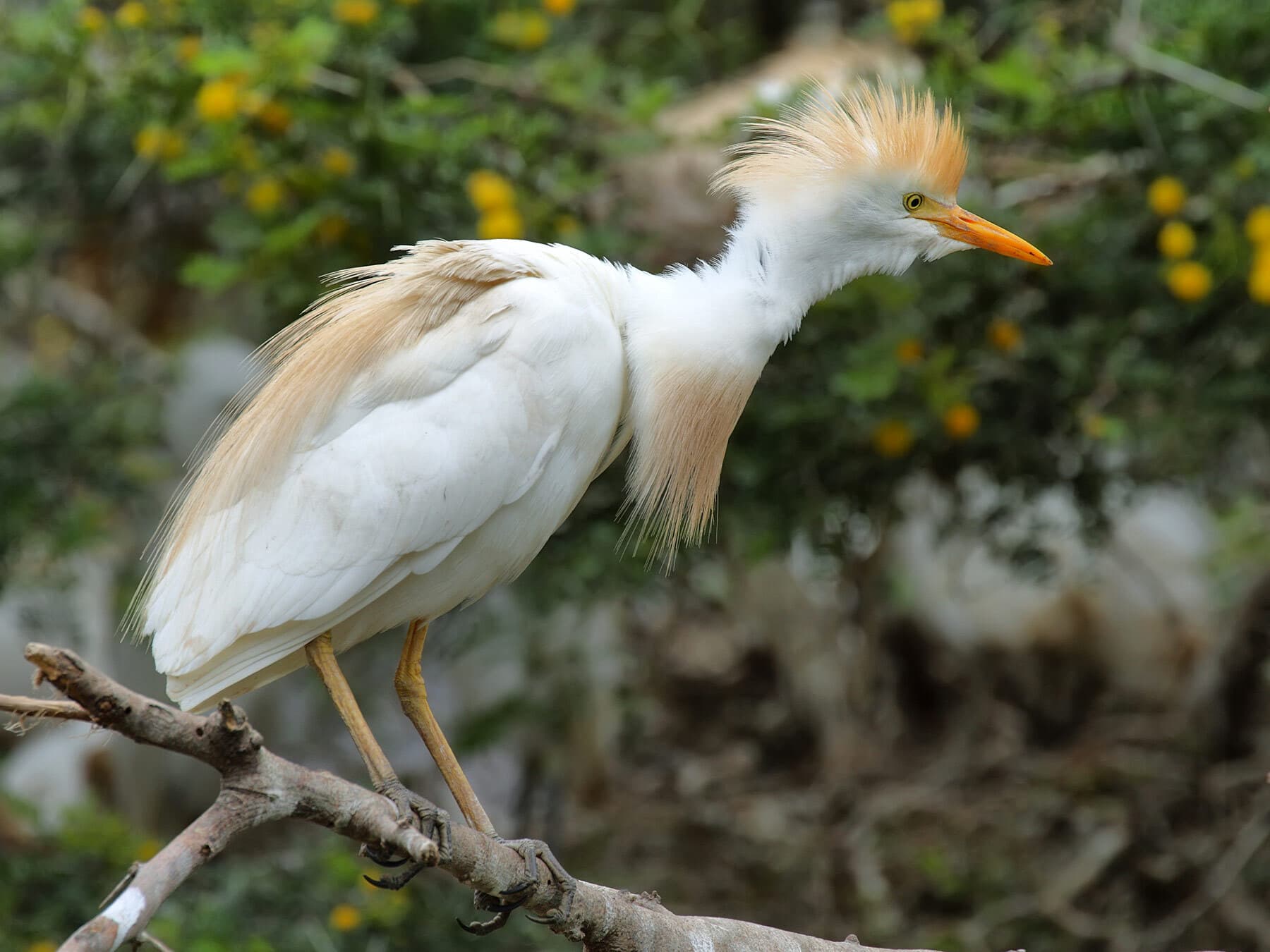
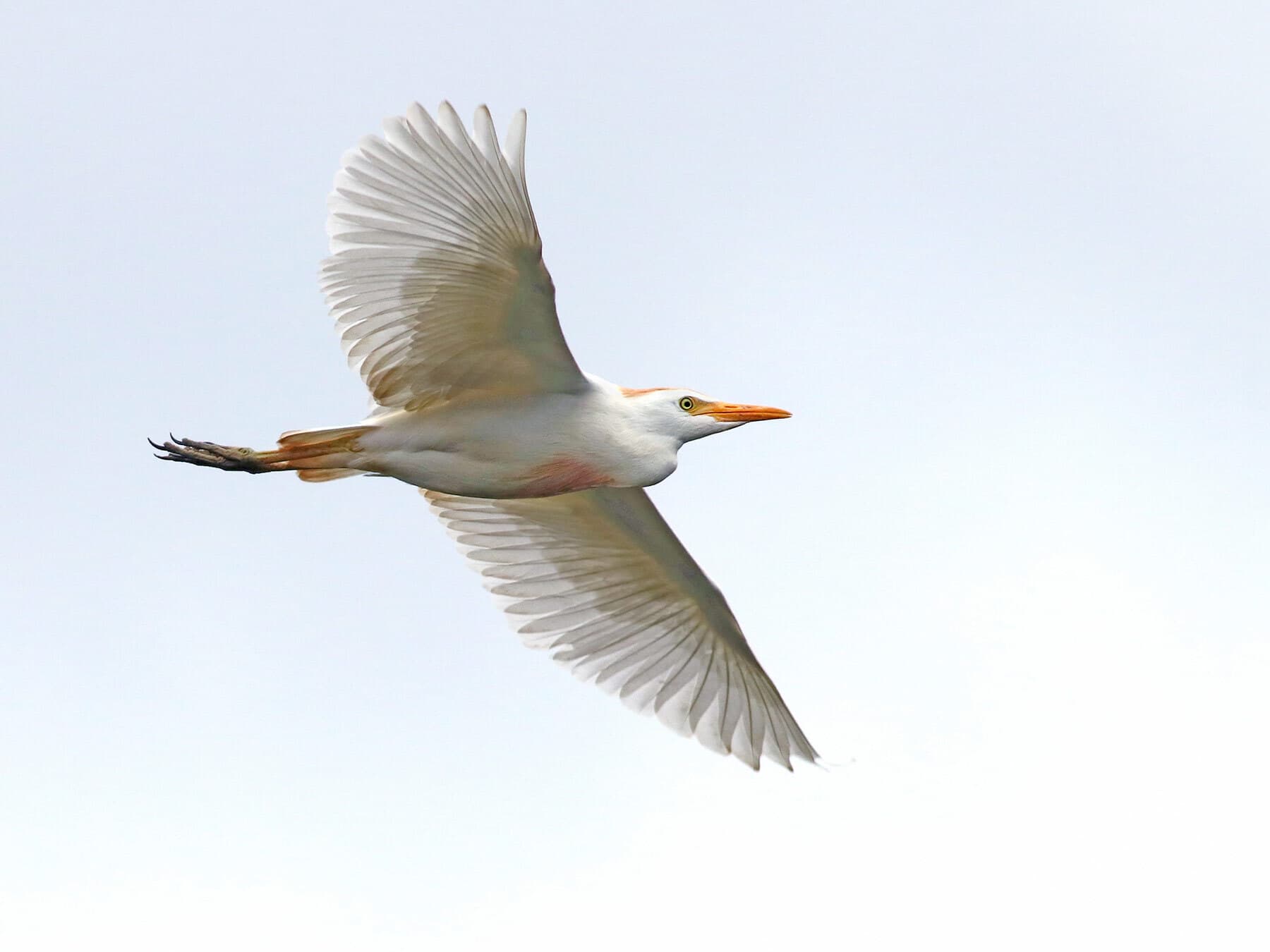
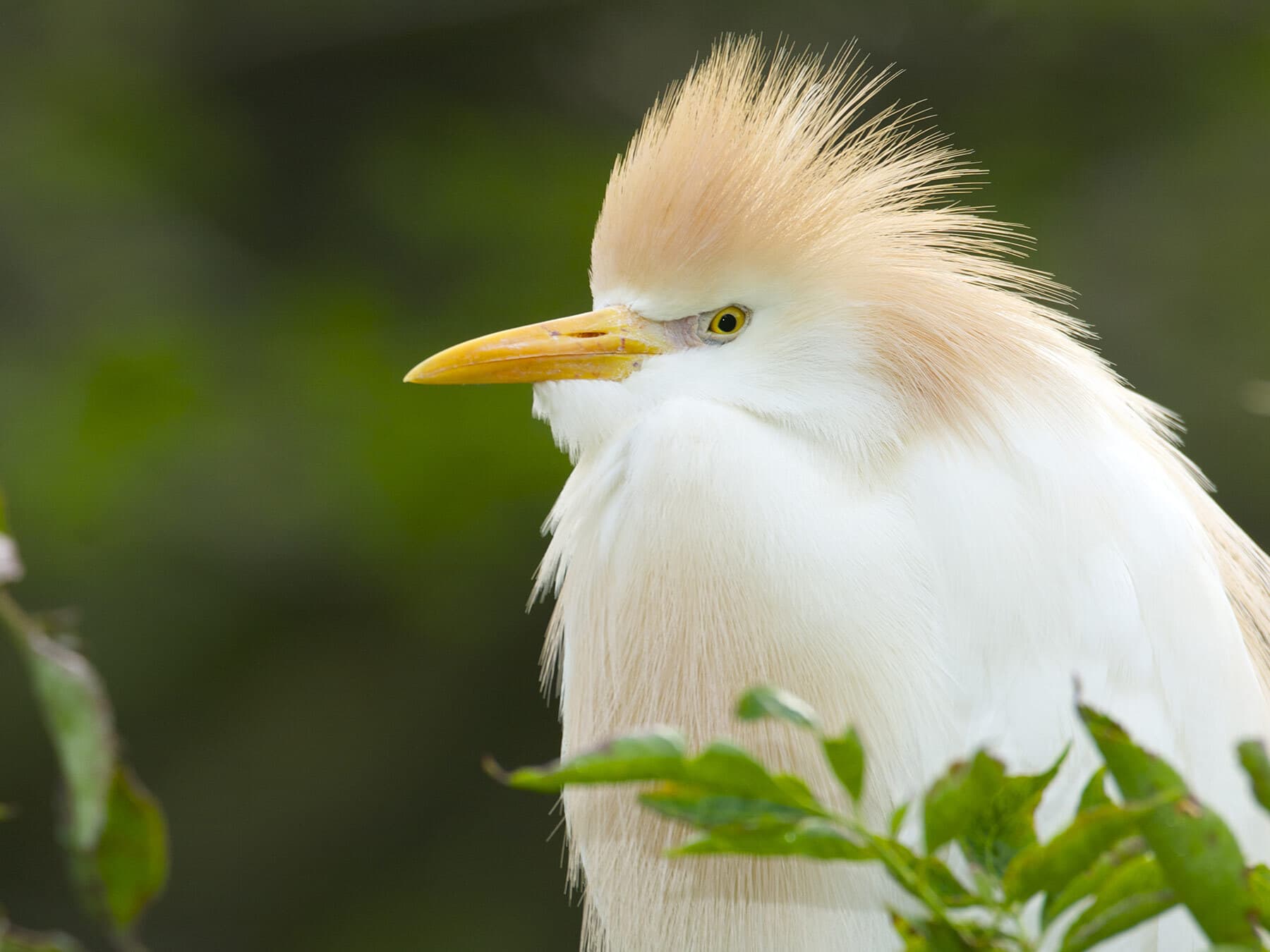
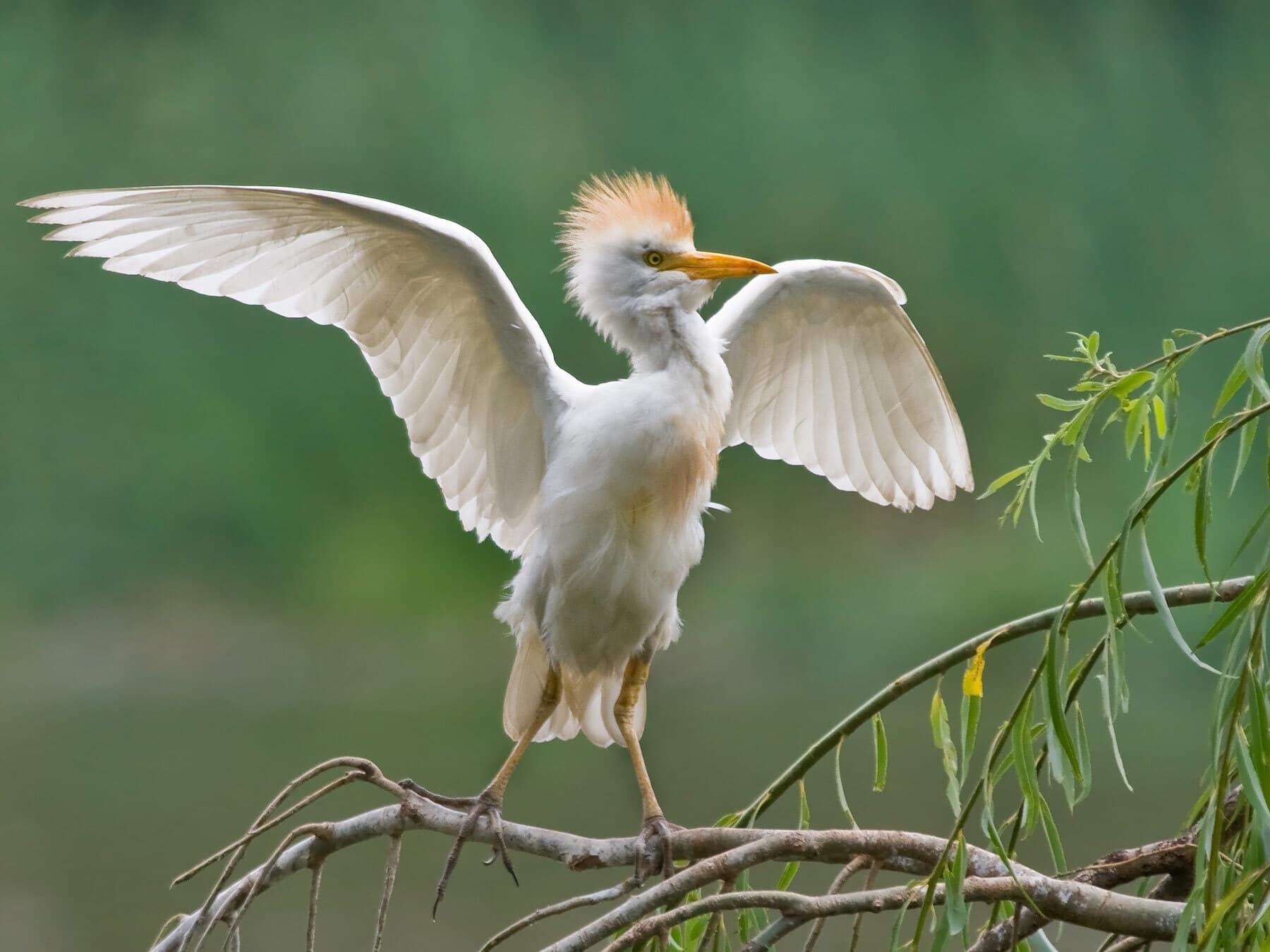
The Cattle Egret is a compact, white heron with a robust yellow bill and yellowish-black legs. During the breeding season, adults develop buff-colored plumes on their heads, necks, and backs, giving them a golden glow.
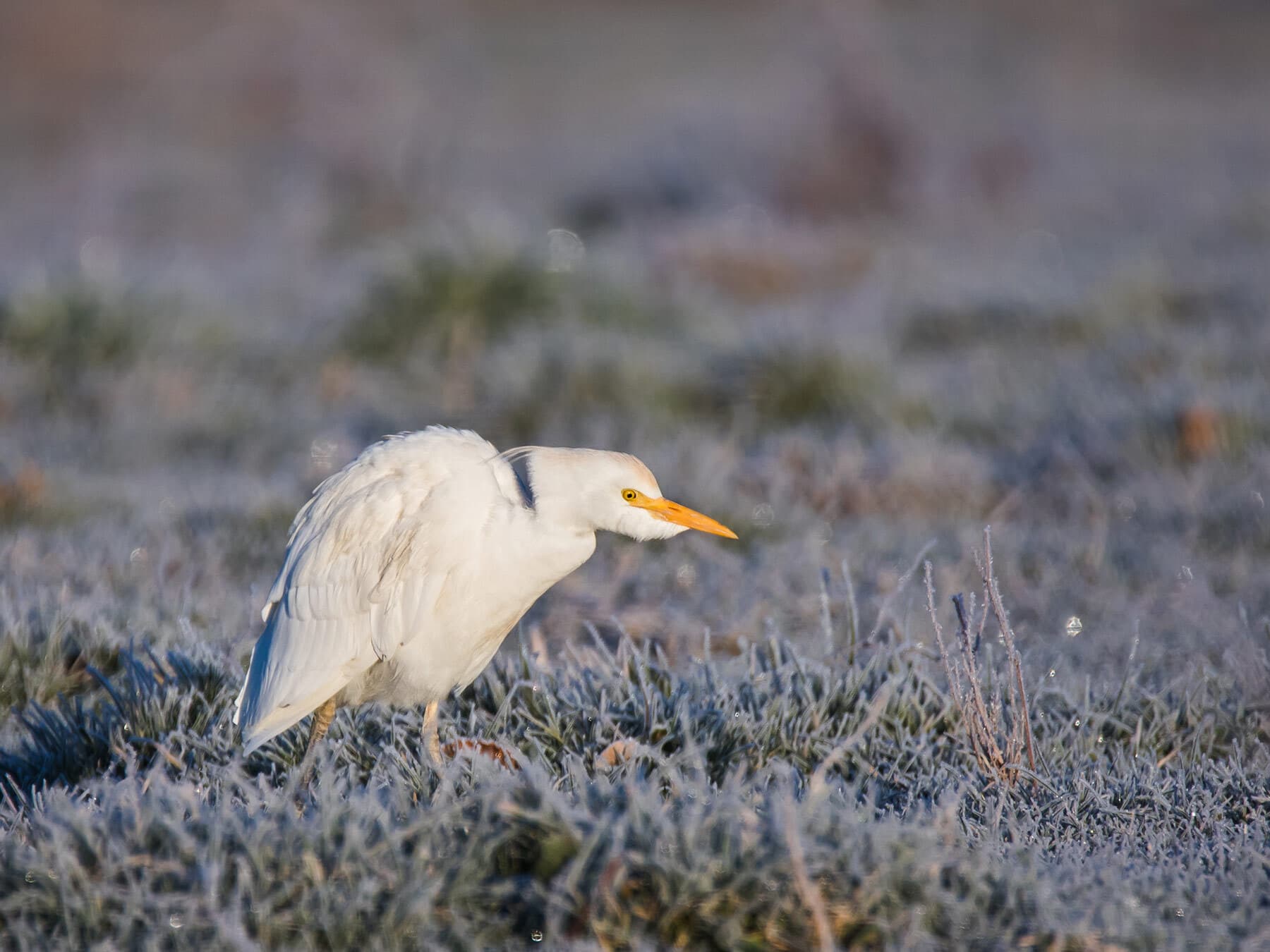
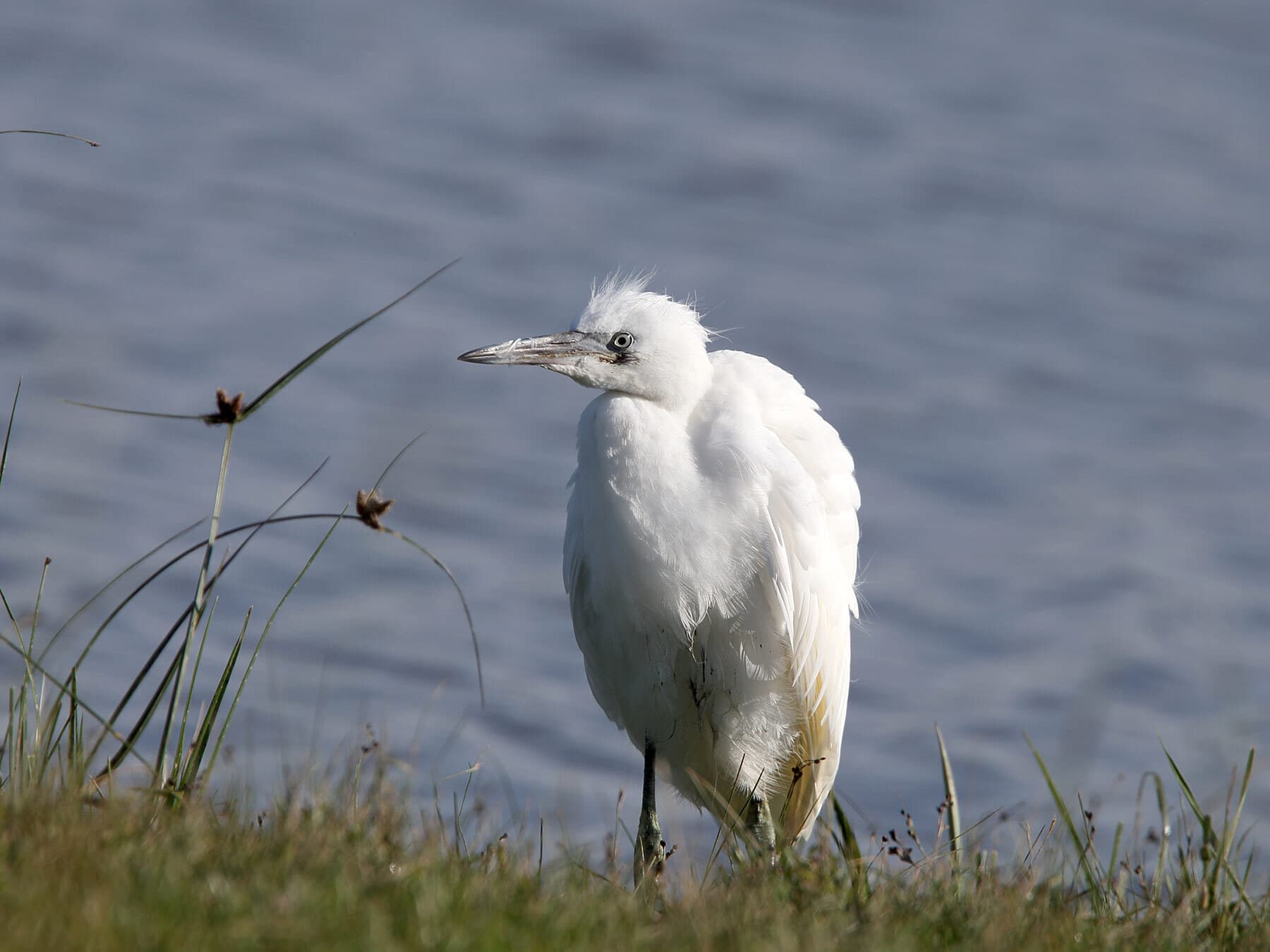
Non-breeding adults and juveniles are entirely white. The species shows no significant sexual dimorphism, with males and females appearing nearly identical. Females are usually smaller, however.
Its size
Adults- Length
- 46–56 cm
- Wingspan
- 88–96 cm
- Weight
- 270–512 g
Its song and calls
Generally silent the bird will vocalise around the colony during the breeding season most commonly using short croaking sounds similar to, ‘rik – rak, rik – rak’.
- Call0:00 / 0:23
When and where to see it
OctoberPeak season
Most recorded in October
- 1. Somerset0.49%
- 2. Kent0.25%
- 3. Wexford0.25%
- 4. Flintshire0.24%
- 5. West Sussex0.23%
Each dot is a county, state or province: the bigger and darker, the larger the bird’s share of that place’s bird records that month. Grey dots: no regular records. The ringed point is the centre of the bird’s records this month; the arrow shows how it moved since last month, and the dashed loop its path through the year. “Arrivals” colours places where it becomes regular this month (orange) or is in its last regular month (grey). GBIF eBird Observation Dataset, 2019–2024. Map data: Natural Earth, US Census Bureau; place centres © OpenStreetMap contributors.
In your area
See when the Cattle Egret is recorded in your county, state or province.
How often the Cattle Egret turns up in the UK, Ireland, the United States and Canada through the year, from birdwatchers' records.
United Kingdom
Resident · all year · most records in September
Ireland
Winter visitor · regularly Oct–May · most records in November
United States
Resident · all year · most records in April
Canada
Passage migrant · regularly Sep–Nov · most records in November
Show as a table
| Month | United Kingdom | Ireland | United States | Canada |
|---|---|---|---|---|
| January | 0.060% (regular) | 0.034% (regular) | 0.13% (regular) | – |
| February | 0.049% (regular) | 0.017% (regular) | 0.11% (regular) | – |
| March | 0.044% (regular) | 0.033% (regular) | 0.100% (regular) | – |
| April | 0.039% (regular) | 0.027% (regular) | 0.14% (regular) | 0.001% |
| May | 0.027% (regular) | 0.008% (regular) | 0.069% (regular) | 0.001% |
| June | 0.036% (regular) | <0.001% | 0.100% (regular) | <0.001% |
| July | 0.046% (regular) | 0.003% | 0.12% (regular) | 0.001% |
| August | 0.075% (regular) | 0.003% | 0.13% (regular) | 0.001% |
| September | 0.090% (regular) | 0.002% | 0.098% (regular) | 0.002% (regular) |
| October | 0.088% (regular) | 0.033% (regular) | 0.091% (regular) | 0.016% (regular) |
| November | 0.064% (regular) | 0.038% (regular) | 0.10% (regular) | 0.035% (regular) |
| December | 0.053% (regular) | 0.015% (regular) | 0.11% (regular) | 0.001% |
Recorded regularly in
Worldwide: recorded regularly in 160 countries
Countries where it was recorded in at least 3 of the 6 years 2019–2024. Linked countries have their own bird list.
Europe (33)
Africa (55)
- Algeria
- Angola
- Benin
- Botswana
- Burkina Faso
- Burundi
- Cameroon
- Cape Verde
- Central African Republic
- Chad
- Comoros
- Congo - Brazzaville
- Congo - Kinshasa
- Côte d’Ivoire
- Djibouti
- Egypt
- Equatorial Guinea
- Eswatini
- Ethiopia
- Gabon
- Gambia
- Ghana
- Guinea
- Guinea-Bissau
- Kenya
- Lesotho
- Liberia
- Libya
- Madagascar
- Malawi
- Mali
- Mauritania
- Mauritius
- Mayotte
- Morocco
- Mozambique
- Namibia
- Niger
- Nigeria
- Rwanda
- São Tomé & Príncipe
- Senegal
- Seychelles
- Sierra Leone
- South Africa
- South Sudan
- St Helena
- Sudan
- Tanzania
- Togo
- Tunisia
- Uganda
- Western Sahara
- Zambia
- Zimbabwe
Asia (19)
- Armenia
- Azerbaijan
- Bahrain
- Cyprus
- Georgia
- Iran
- Iraq
- Israel
- Jordan
- Kazakhstan
- Kuwait
- Lebanon
- Oman
- Palestinian Territories
- Qatar
- Saudi Arabia
- Turkey
- United Arab Emirates
- Yemen
North America (38)
- Anguilla
- Antigua & Barbuda
- Aruba
- Bahamas
- Barbados
- Belize
- Bermuda
- British Virgin Islands
- Canada
- Caribbean Netherlands
- Cayman Islands
- Costa Rica
- Cuba
- Curaçao
- Dominica
- Dominican Republic
- El Salvador
- Grenada
- Guadeloupe
- Guatemala
- Haiti
- Honduras
- Jamaica
- Martinique
- Mexico
- Montserrat
- Nicaragua
- Panama
- Puerto Rico
- Sint Maarten
- St Kitts & Nevis
- St Lucia
- St Martin
- St Vincent & the Grenadines
- Trinidad & Tobago
- Turks & Caicos Islands
- United States
- US Virgin Islands
South America (14)
Oceania (1)
- US Outlying Islands
Data: EOD – eBird Observation Dataset (Cornell Lab of Ornithology), accessed via GBIF.org, CC BY 4.0. Records from 2019–2024, aggregated and filtered by Birdfact. How these lists are made
The cattle egret (western) is found extensively in sub-Saharan and north Africa, Turkey and western European countries bordering the Mediterranean and North and South America. Predominantly a year-round resident throughout much of its range, cattle egrets from Canada and the more northern states of the US migrate south during the winter but are sedentary across Florida, Texas, California and Louisiana. The cattle egret (Eastern) includes within its range, South and Southeast Asia, including the Indian sub-continent, Southern China and Japan, North and Eastern Australia and New Zealand.
Signs and Spotting tips
Frequently seen foraging in flocks around grazing cattle and roosting in trees across dry grassland and savannah, they are a social bird often identified by their hunched appearance and synchronous head movements as they strut across the ground. Their bill and legs are smaller than other egrets and whilst they nest near water it is rare to see them feeding or gathering at the water’s edge as other egrets do.
What it eats
Often gathered around cattle and other large mammals, the cattle egret will forage on the ground for insects disturbed by these animals’ movements as they graze and also take flies and ticks directly off the animals’ bodies to the benefit of both. In general, their diet consists of flies, grasshoppers and crickets, ticks, beetles, moths, spiders, lizards, frogs and worms. They will also scavenge for scraps around areas of human occupation.
Nesting and breeding
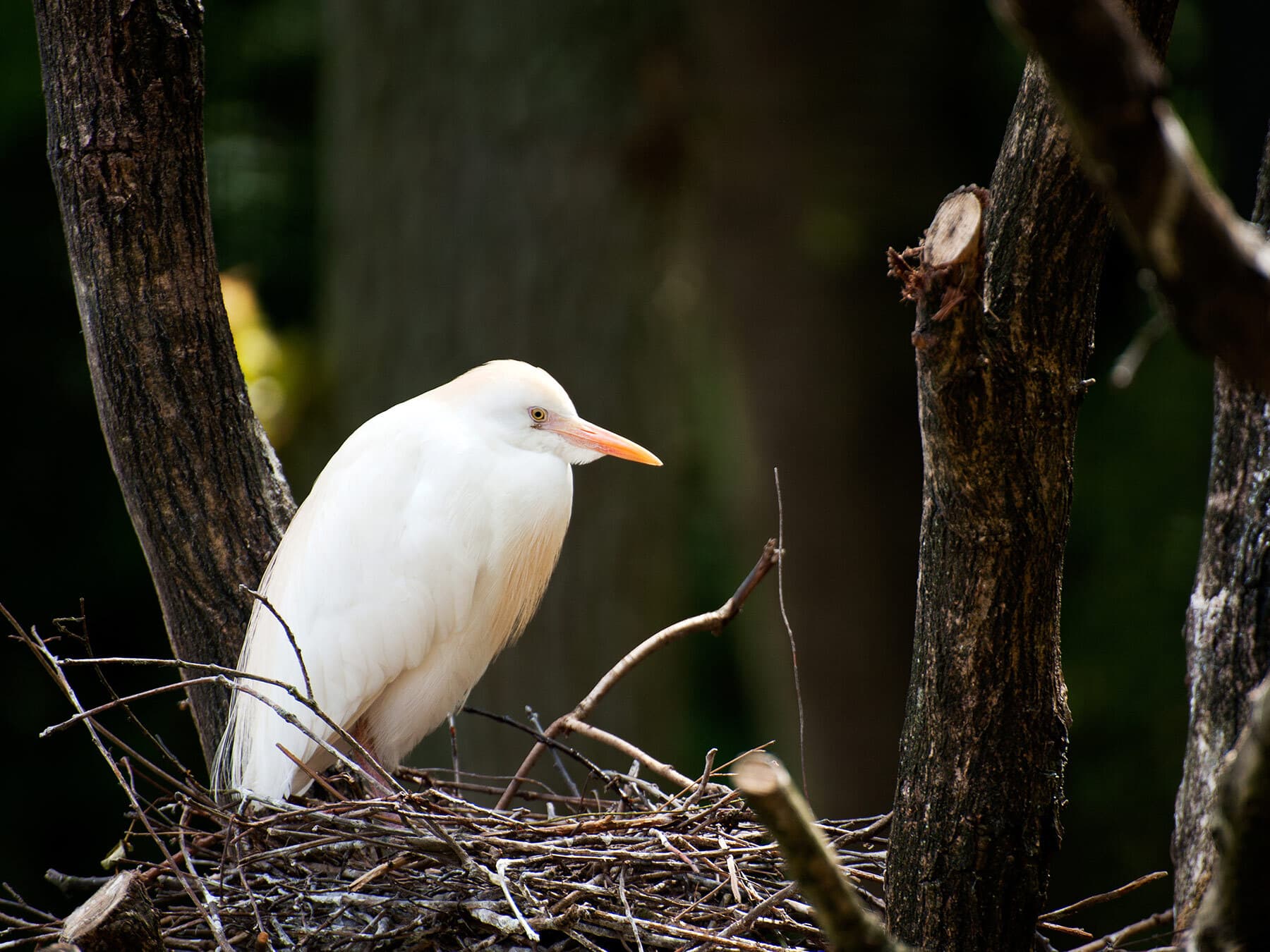
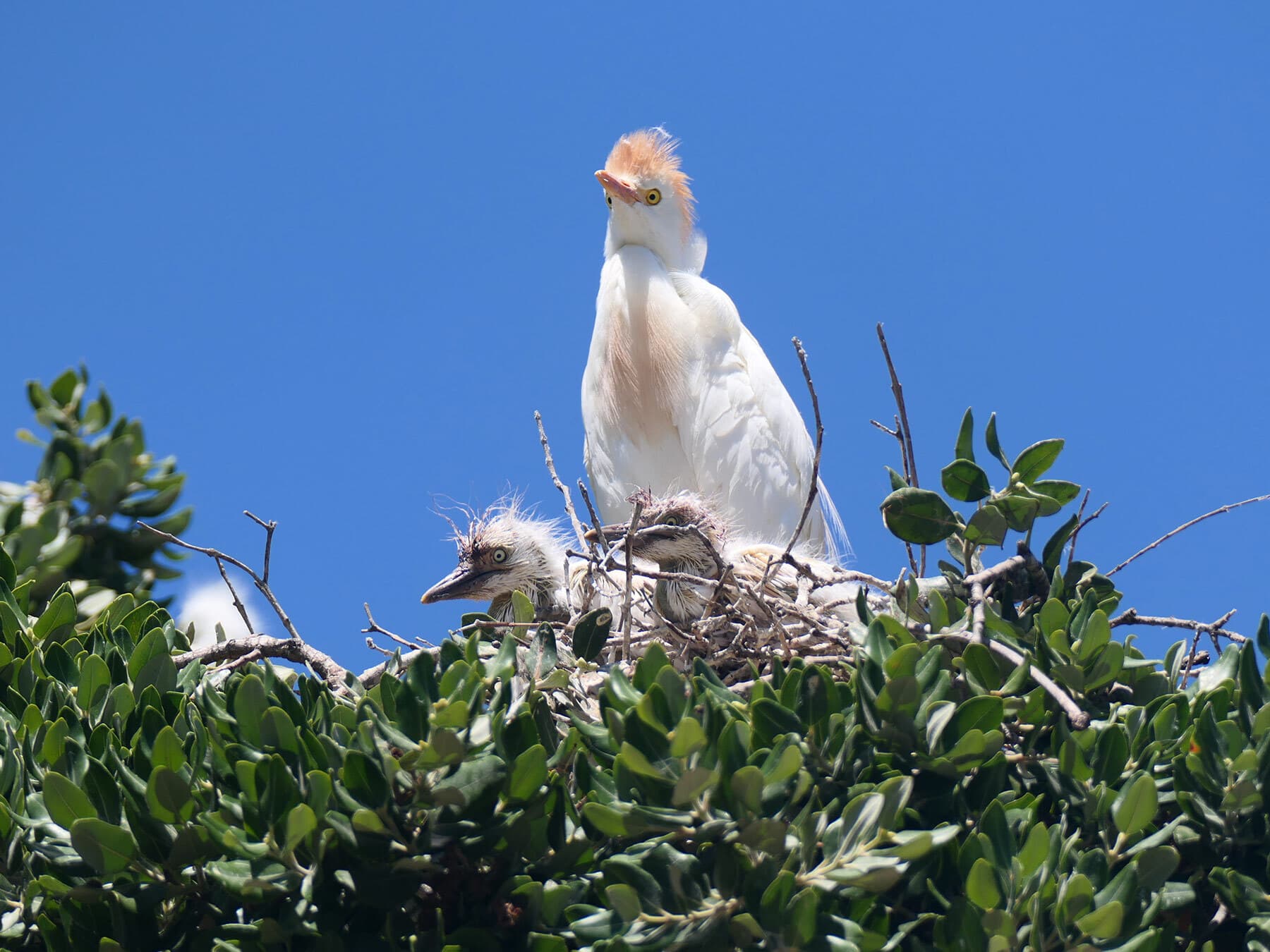
Cattle egrets breed in large colonies, usually in trees and bushes often close to water, or among reedbeds. The male chooses the nest site and is assisted in its construction by the female. Whilst the breeding season obviously depends upon climatic conditions and location, within the northern hemisphere breeding generally takes place between the months of April to June although this can extend into October within North America. In Australia and New Zealand, the season lies between November to January. One brood averaging 4 or 5 pale blue eggs is produced annually and incubated by both parents for twenty four days with fledging occurring a month later. Two broods annually have been reported regularly in Hawaii and the Indian sub-continent.
Behaviour
Cattle Egrets are highly social and often seen in large flocks. They're known for their commensal relationship with large grazing mammals, following them to catch disturbed insects.
These birds are also adept at catching flies and ticks directly off animals, showcasing their opportunistic feeding strategy.
Lifespan and predators
The average lifespan of a cattle egret is up to ten years although occasionally ringed birds have been recorded as surviving substantially longer.
Conservation
While the Cattle Egret is listed as Least Concern due to its vast range and increasing population, it faces localized threats from habitat loss and agricultural changes.
Conservation efforts focus on protecting wetlands and maintaining traditional farming practices that benefit the species.
What does a Cattle Egret look like?
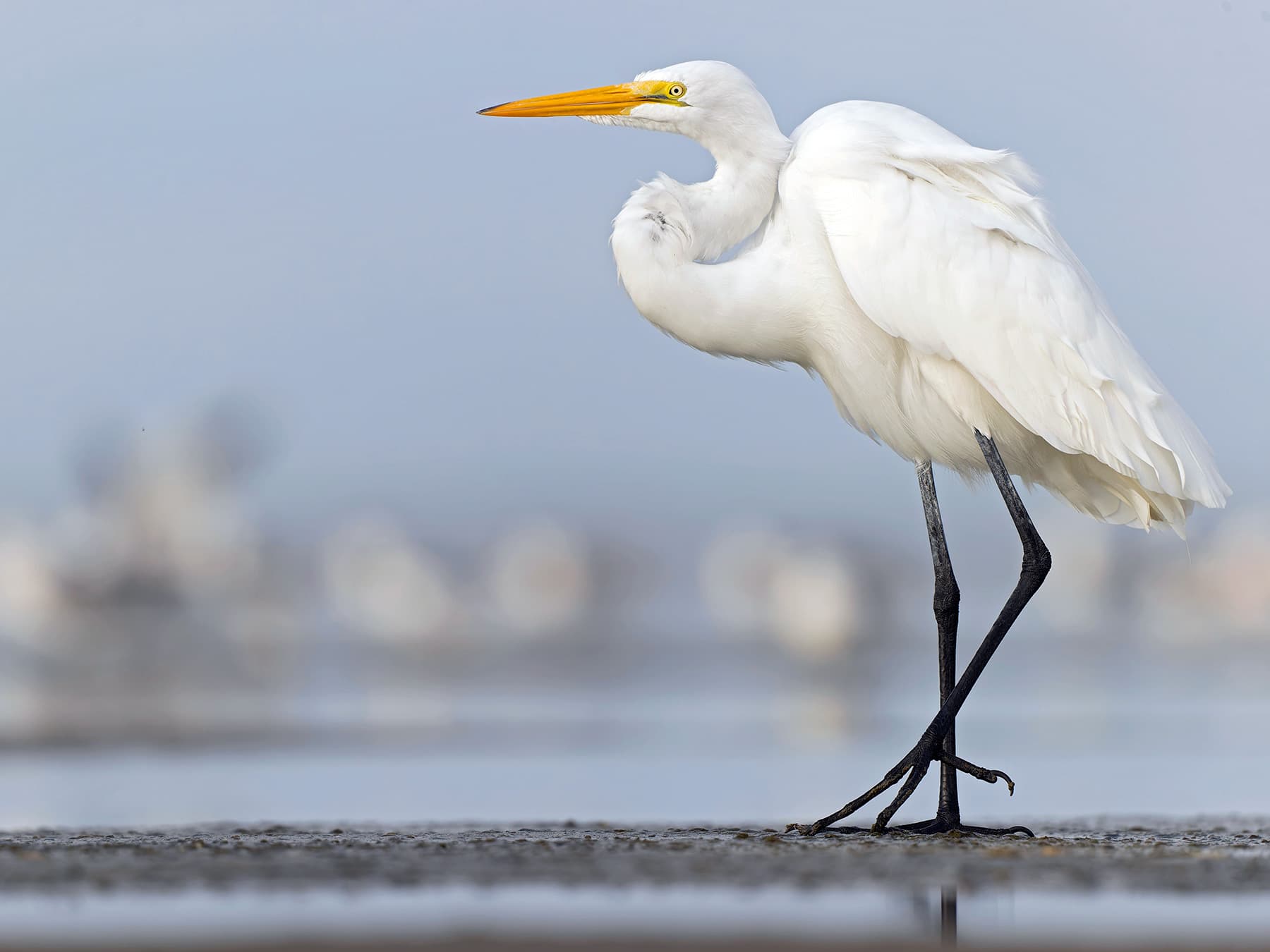
The cattle egret is a stocky bird which, when compared to other Egret species has a much shorter, thicker neck. In size it is smaller than the Little Egret and half the size of the Great White Egret. In winter plumage and non breeding birds the adult is white throughout with a yellow bill and yellowish grey legs. In breeding plumage, the nominate sub-species Bubulcus ibis ibis identified as Cattle Egret (Western), is predominantly white but with the addition of a buff coloured crown, chest and back which consist of longer feathers and plumes. The medium sized bill, legs and eyes turn red for a short period prior to pairing. Adult males and females are similar although the male is usually slightly larger. Juvenile birds resemble adults in their winter plumage but the bill is black as opposed to yellow. The sub-species Bubulcus ibis coromandus, Cattle Egret (Eastern) in winter plumage is similar to the nominate sub-species. However, in breeding plumage the buff coloured areas apparent on the cattle egret (western) are extended to include the cheeks and the throat with the colouration changing from a light buff to a much darker buff and gold and the feathers and plumes of these non white areas appearing longer and thicker. Juveniles of the eastern variant are similar to the nominate.
The sub-species debate
Whilst it is recognised generally that there are two sub-species of the cattle egret, split by geographical habitat and plumage characteristics, some ornithologists are of the opinion that the western variety and eastern variety are in fact two separate species. In the main however, it is accepted that both the western and eastern birds fall within the Bubulcus ibis species. Confusion arises with a third dissident sub-species known as Bubulcus ibis seychellarum, which inhabits the Seychelles archipelago in the Indian Ocean. Whilst the jury is still out, although this latter egret is smaller in stature than the nominate sub-species, the western variety, it is widely recognised as being a member of that sub-species (Bubulcus ibis ibis).
Similar birds
Often mistaken for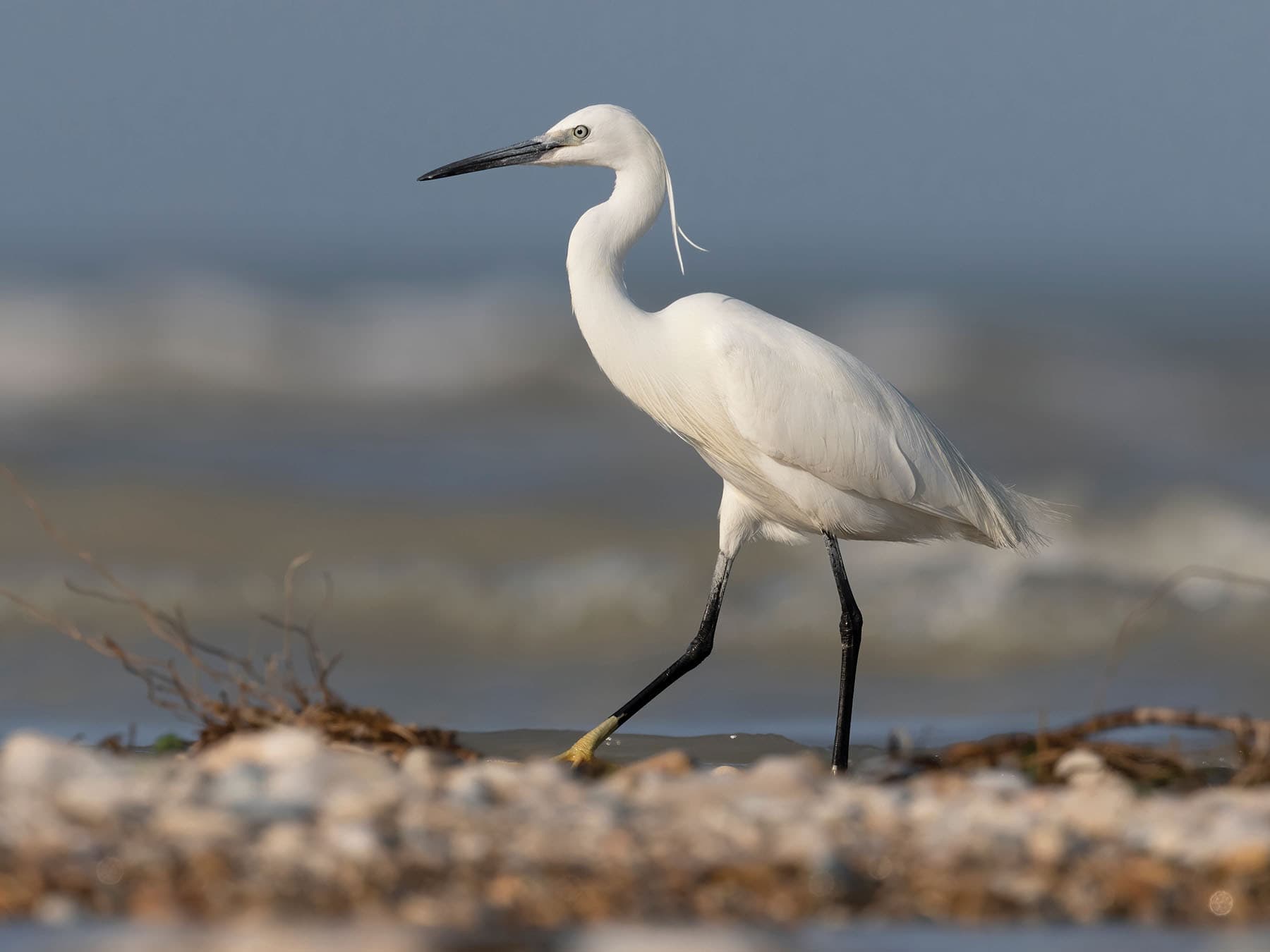
Cattle Egret guides
2 guidesQuick facts
- Length
- 46–56 cm
- Wingspan
- 88–96 cm
- Weight
- 270–512 g
- Lifespan
- 7–10 years · oldest recorded 23 years
- Family
- Herons & Egrets
- Migration
- Partial migrant
- Global status (IUCN)
- Least Concern
- World population
- 4,000,000 - 9,850,000 individuals
- Population trend
- Increasing
- Also called
- Buff-backed Heron, Cow Crane, Western Cattle-Egret
- Scientific name
- Ardea ibis
Sources
4- 1BirdLife International. 2019. Bubulcus ibis (amended version of 2016 assessment). The IUCN Red List of Threatened Species 2019: e.T22697109A155477521. Source (opens in a new tab)
- 2Wetlands International (2015)
- 3BirdLife International (2015) Source (opens in a new tab)
- 4Carey and Judge, Longevity Records: Life Spans of Mammals, Birds, Amphibians, Reptiles, and Fish (2000) Source (opens in a new tab)

Checked by
Nathan Cope, founder and editor
Nathan founded Birdfact and leads its writers and contributors in the UK, the US and Canada. He has watched and studied birds for more than ten years, and checks every article and species guide before it’s published.