
Grey Heron
Common Heron · Ardea cinerea
By the Birdfact teamChecked by Nathan Cope
On this page15 sections
How to recognise it
What do Grey Herons look like?
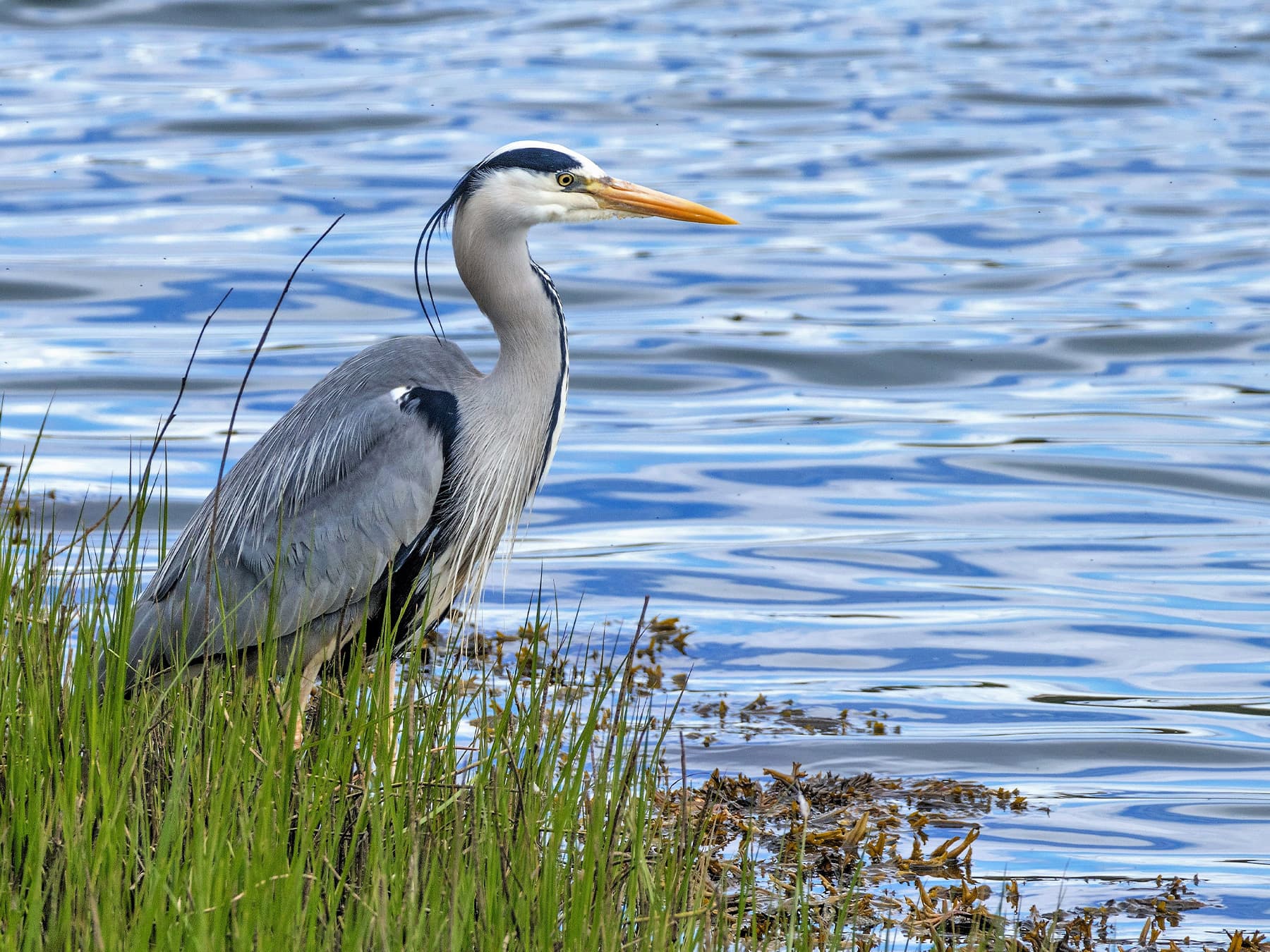
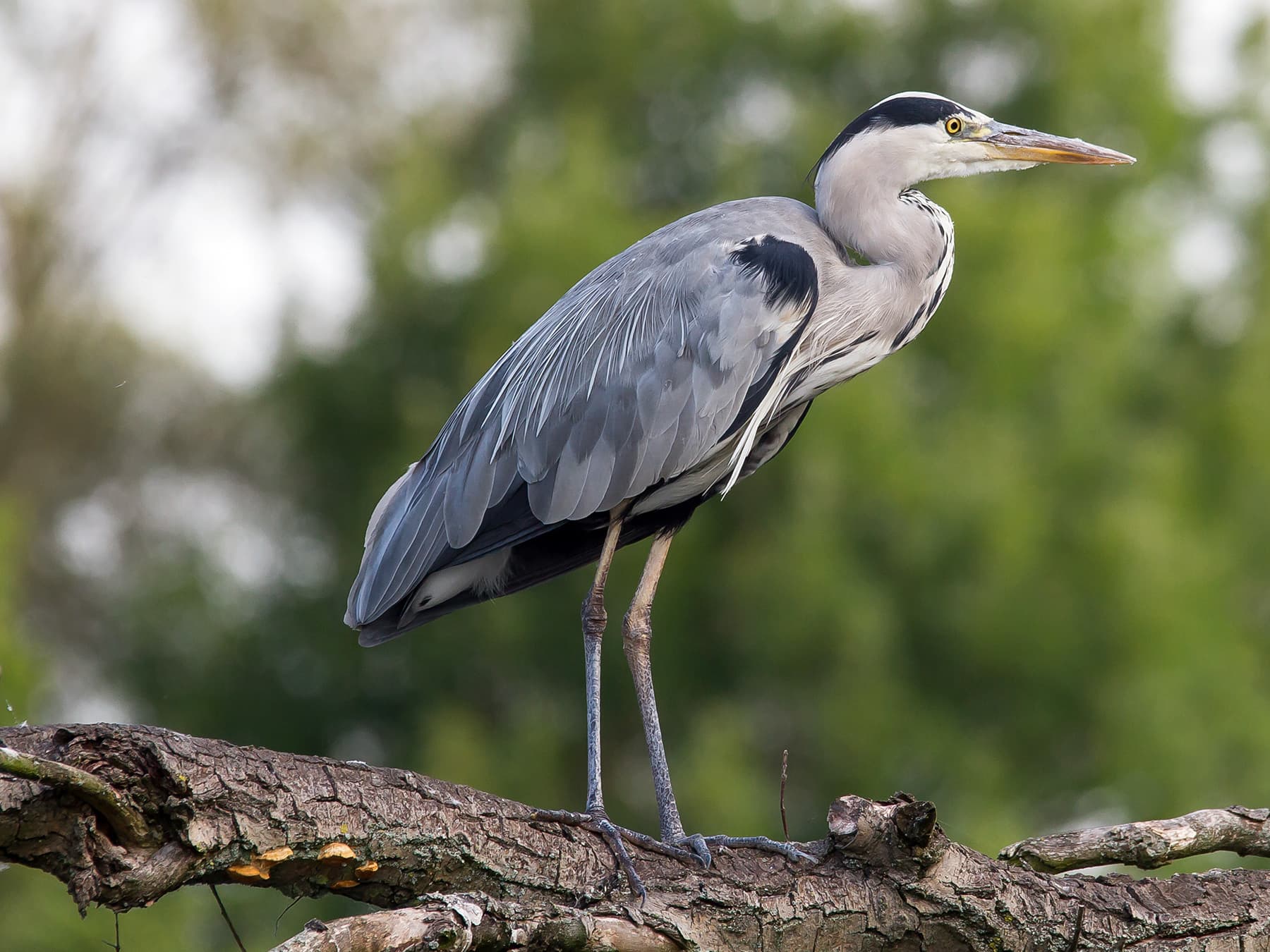
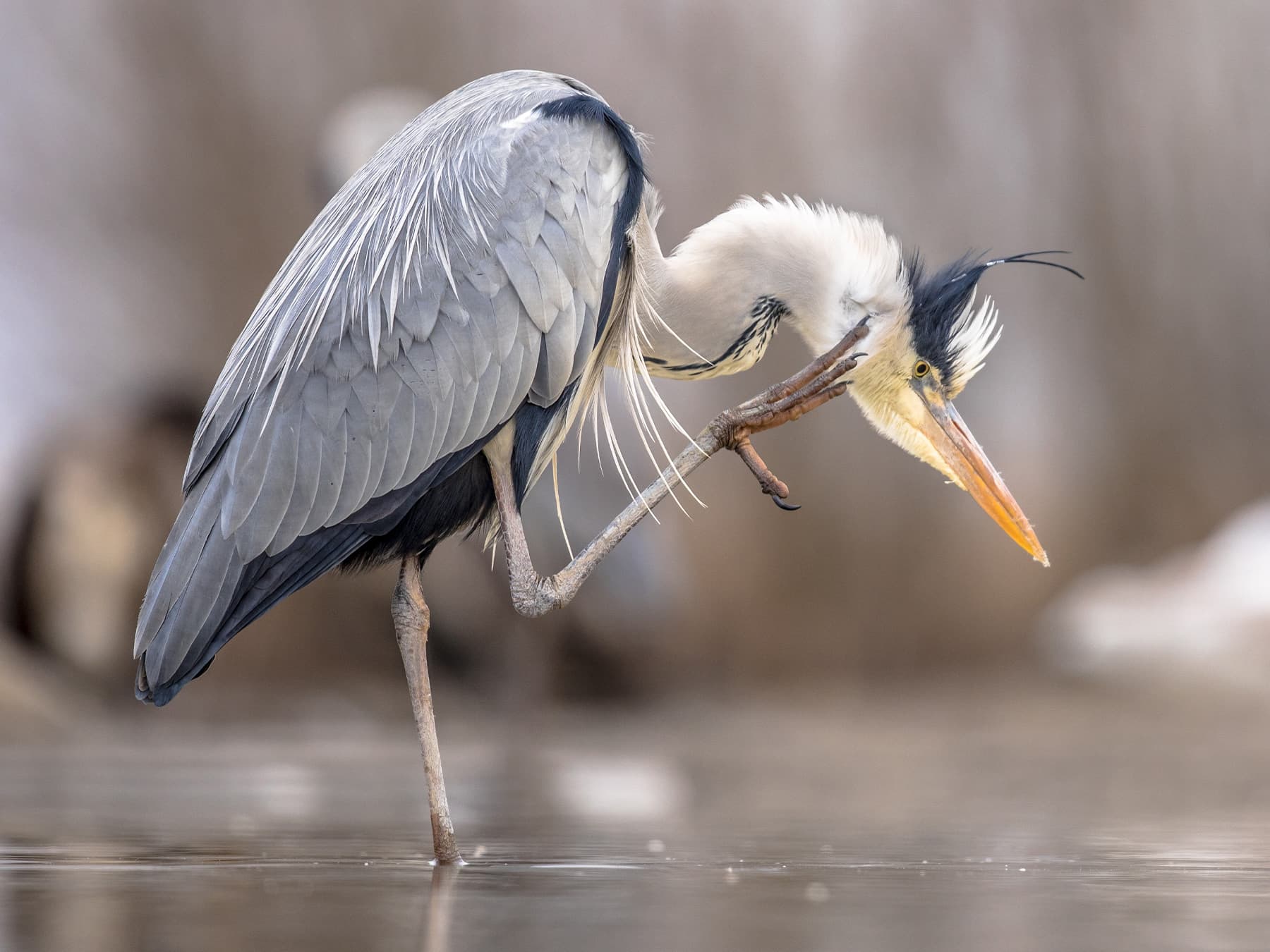
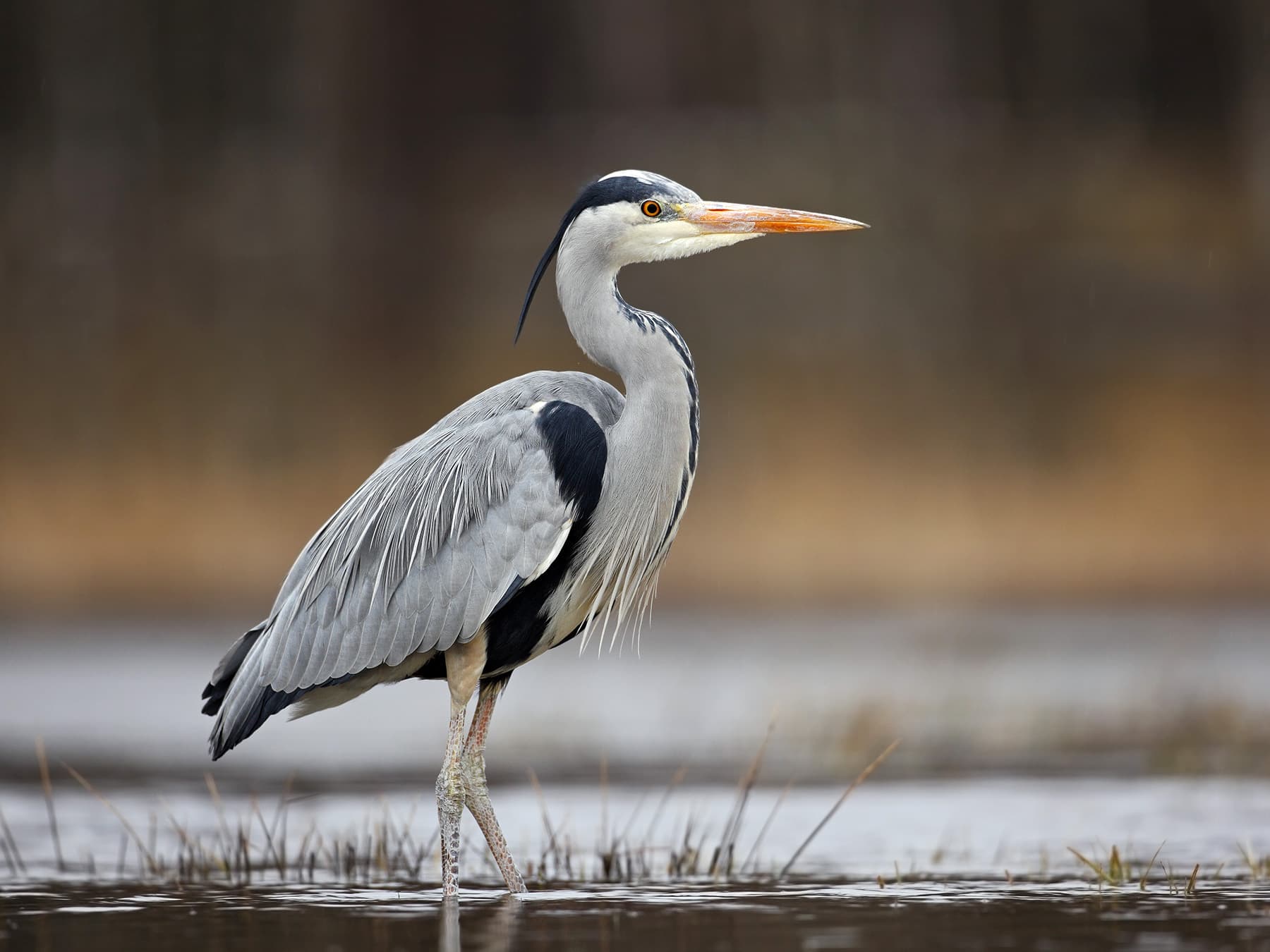
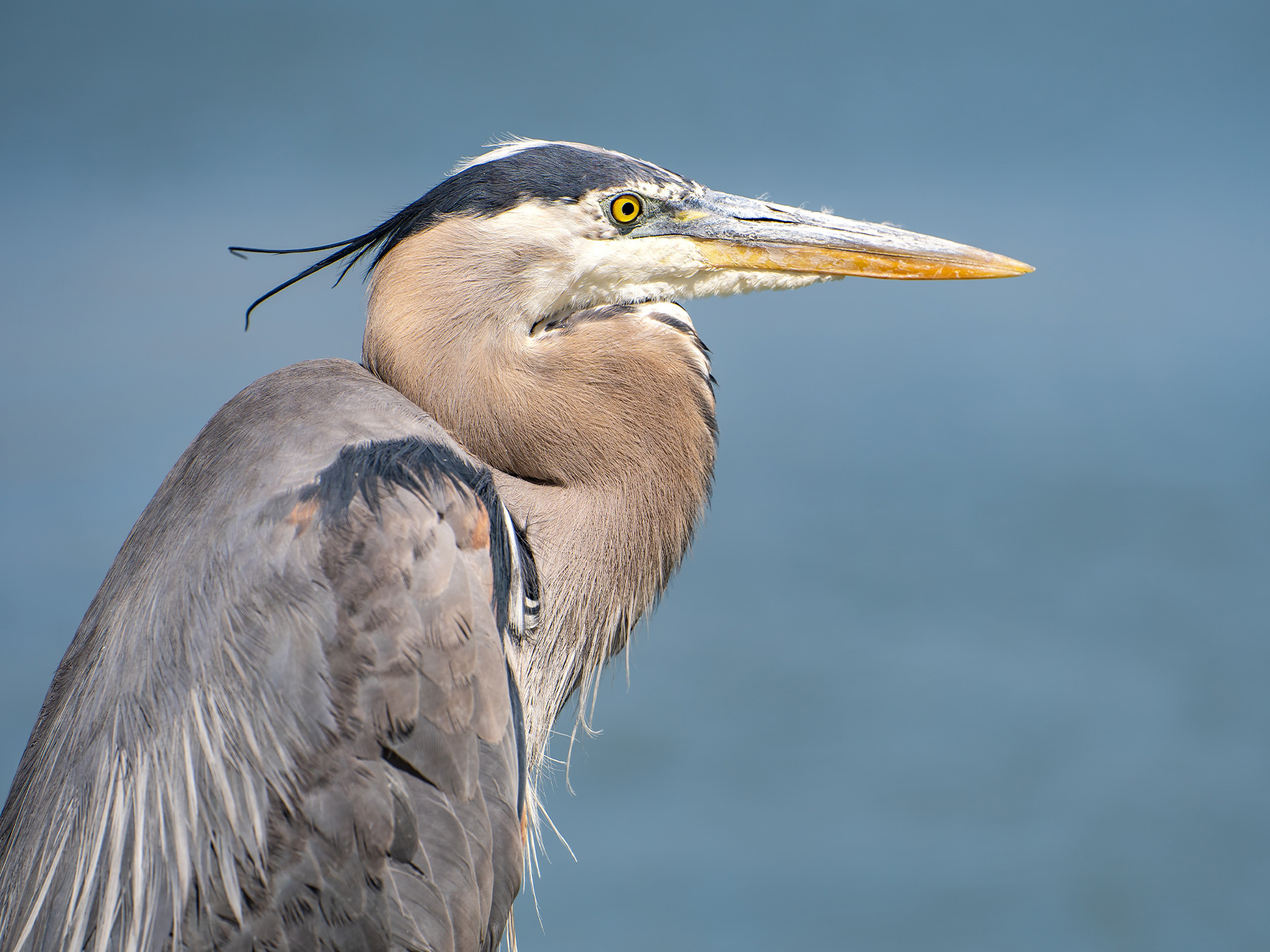
The Grey Heron is a tall, unmistakable bird with a long S-shaped neck. They have long yellow legs and a straight yellowish bill. These birds are grey overall, but their head is white with a bold black stripe from above each eye to the nape of the neck, extending as a short wispy crest. They also have black stripes on the throat and shoulders.
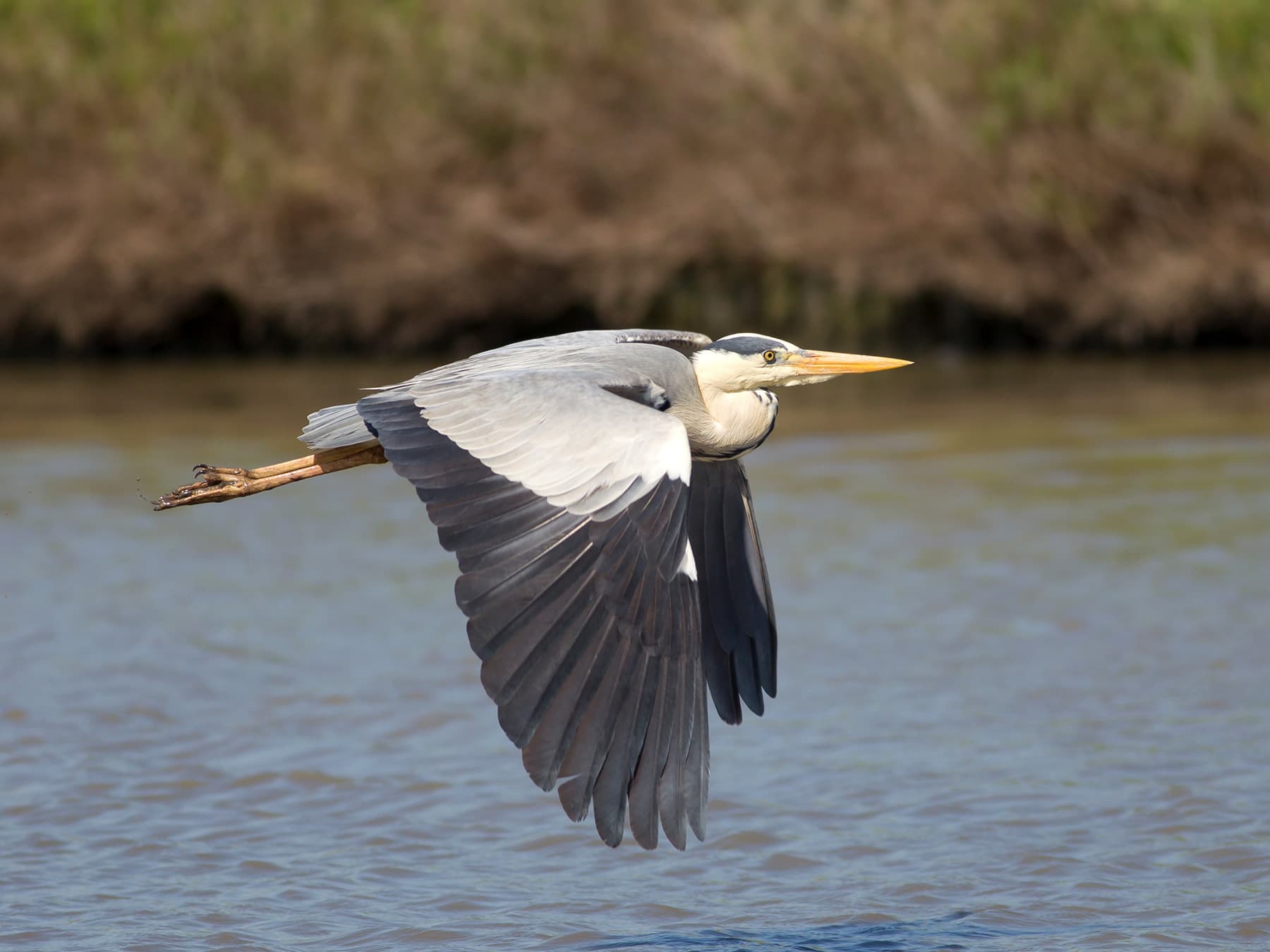
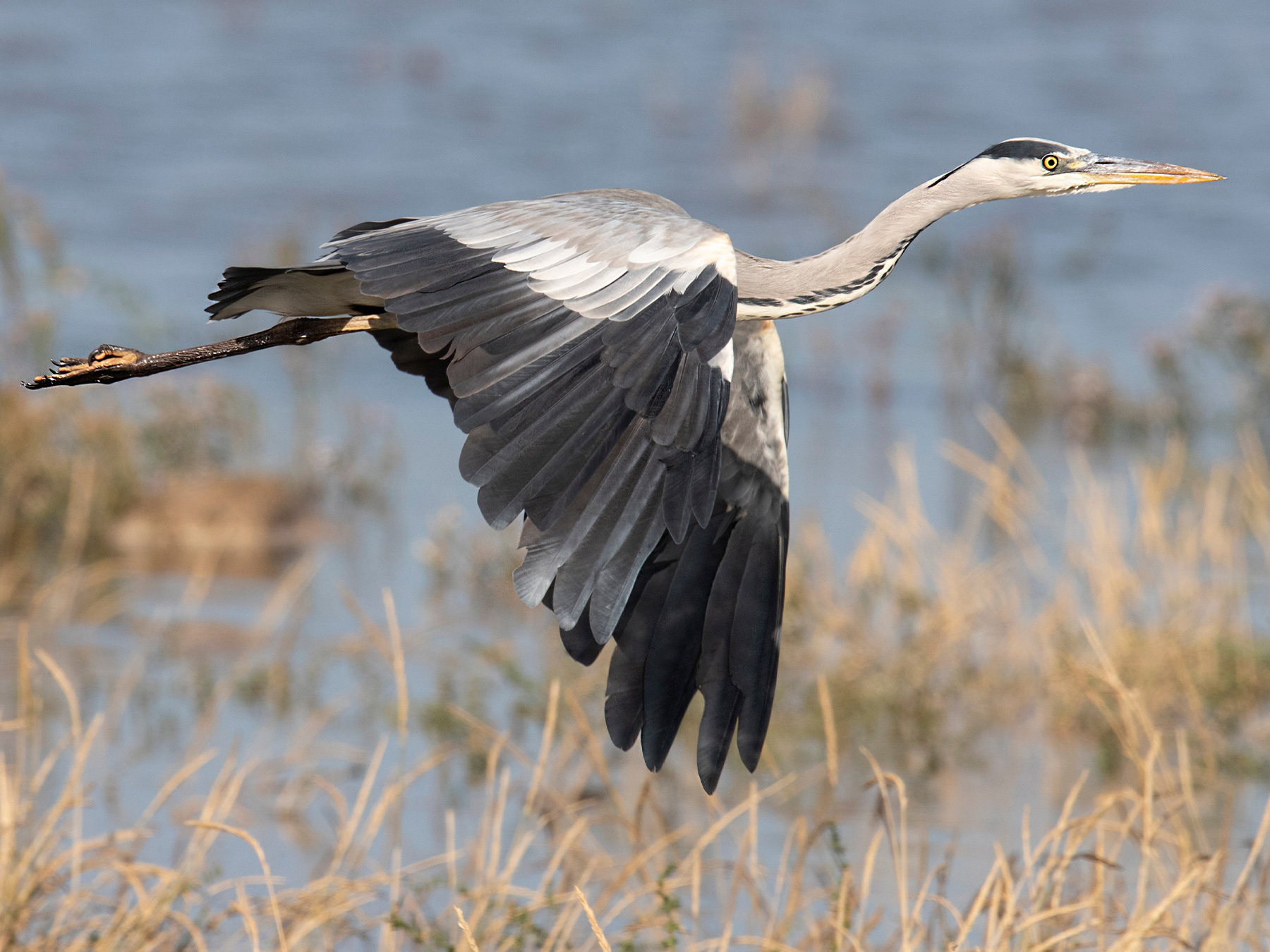
In flight, Grey Herons hold their necks coiled back in a distinct S-shape, and their long legs trail out far beyond the end of the tail. They may soar at great heights and can resemble a large bird of prey. Their body appears whitish, and their broad wings have a darker grey shade when seen from below.
Females appear similar to males but average smaller. Juvenile Grey Herons have more uniform grey plumage than adults. Young birds also have darker grey legs and lack the plumes and black head and shoulder markings of mature specimens.
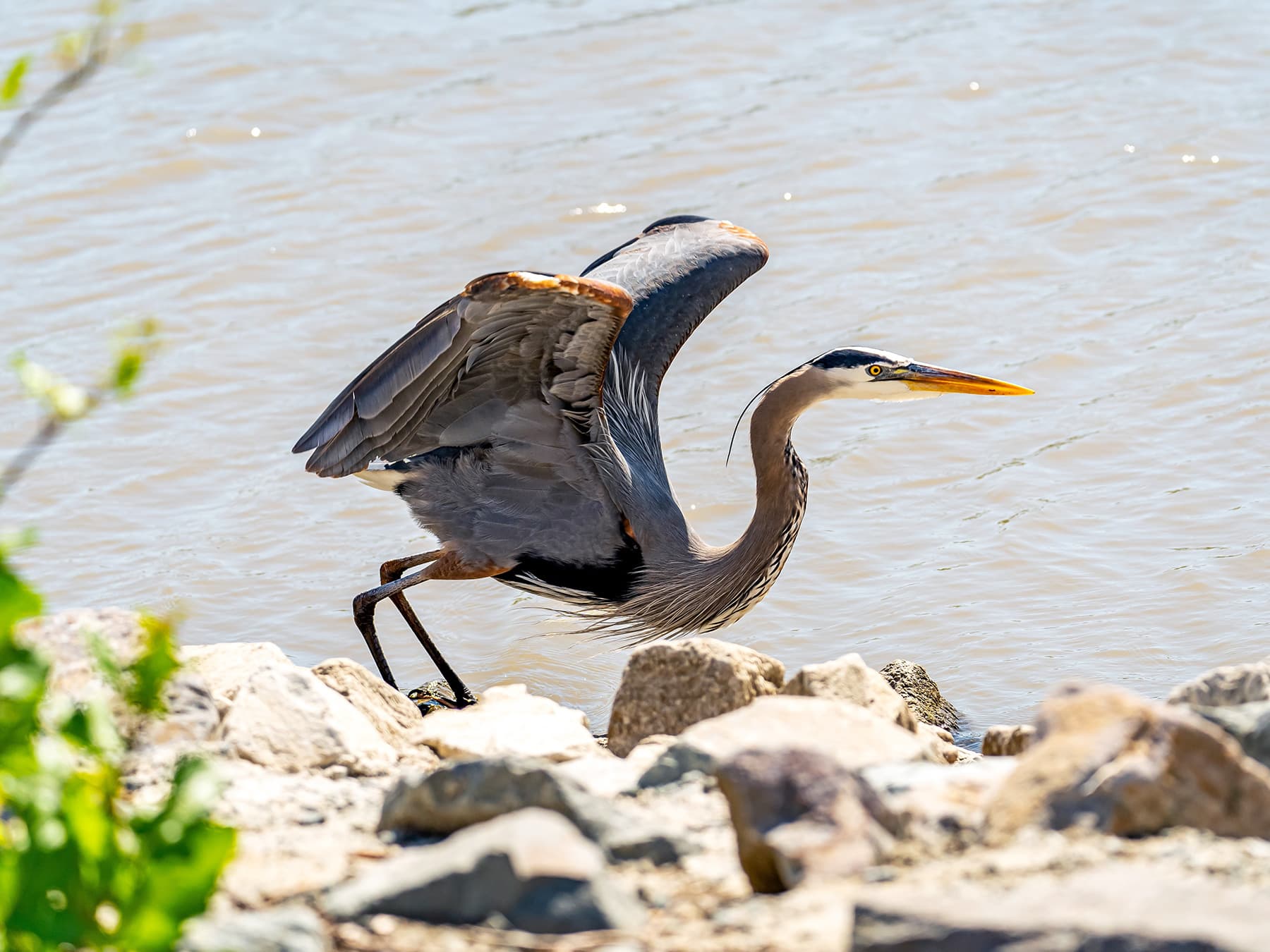
Grey Herons appear similar to the Great Blue Heron of North America, although the two species rarely occur together. Check out this in-depth comparison to learn more about distinguishing between them.
How big are Grey Herons?
Grey Herons are large, stately waterbirds. They are one of the tallest birds in the UK, after the Mute Swan and the Crane.
Length
Grey Herons have a body length of 90 to 98 centimetres or about three feet.
Weight
Despite their height and length, these lanky birds weigh just one to two kilograms.
Wingspan
Grey Herons have broad wings and a large wingspan of 1.75 to 1.95 metres.
Its size
Adults- Length
- 90–98 cm
- Wingspan
- 175–195 cm
- Weight
- 1020–2073 g
Its song and calls
What sound does a Grey Heron make?
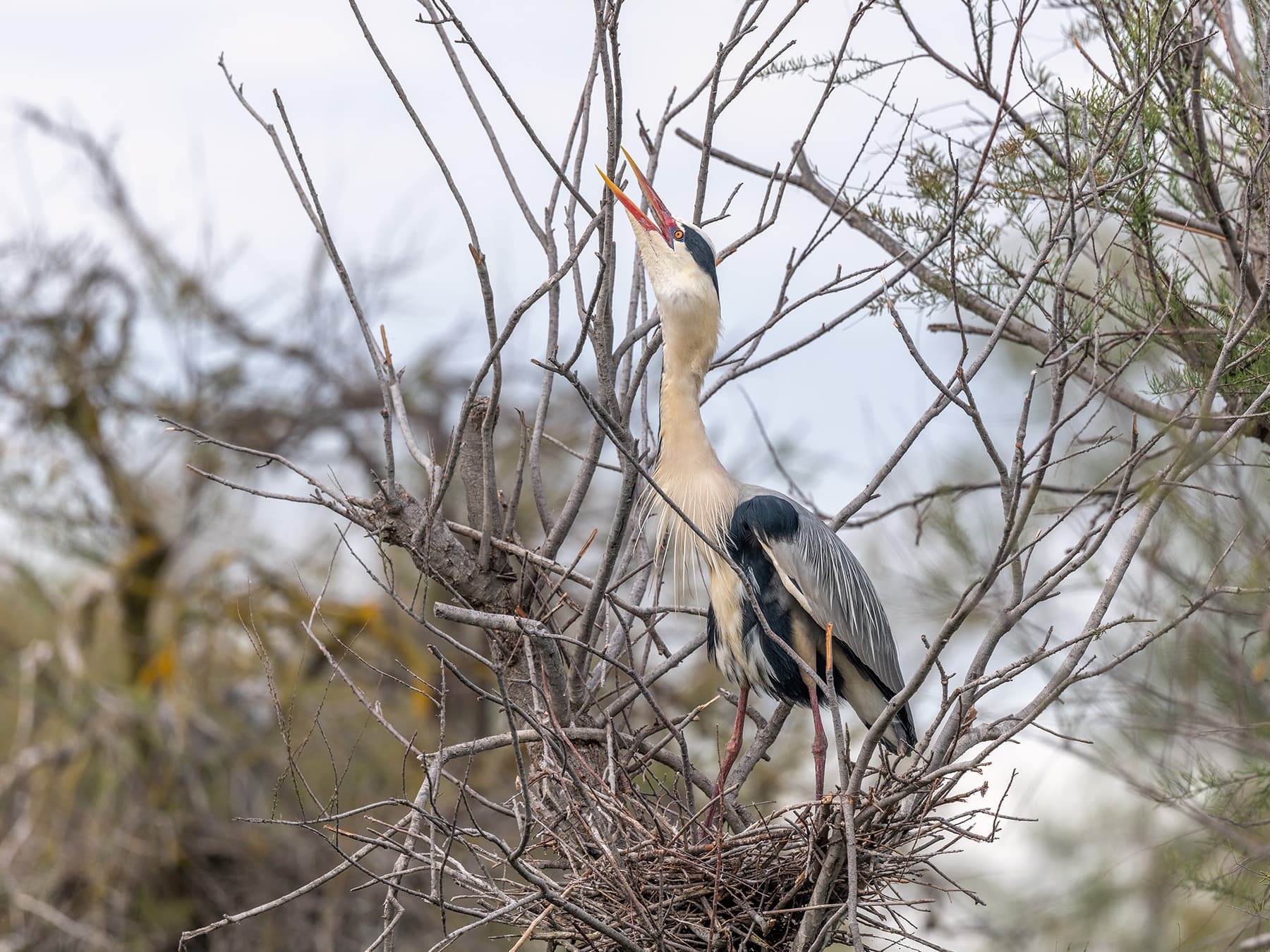
The Grey Heron is most often heard in flight when it produces a loud, piercing squawk. They also make a variety of other calls around the nesting colony, including the male's advertisement call to attract a female and a ‘go go’ alarm call.
- Flight call0:00 / 0:09
Recorded in Pembrokeshire, Wales · August 2025
When and where to see it
OctoberHere all year
Most recorded in October
- 1. Argyll and Bute2.8%
- 2. Galway2.5%
- 3. Dublin2.3%
- 4. Kerry2.3%
- 5. Donegal2.3%
Each dot is a county, state or province: the bigger and darker, the larger the bird’s share of that place’s bird records that month. Grey dots: no regular records. The ringed point is the centre of the bird’s records this month; the arrow shows how it moved since last month, and the dashed loop its path through the year. “Arrivals” colours places where it becomes regular this month (orange) or is in its last regular month (grey). GBIF eBird Observation Dataset, 2019–2024. Map data: Natural Earth, US Census Bureau; place centres © OpenStreetMap contributors.
In your area
See when the Grey Heron is recorded in your county, state or province.
How often the Grey Heron turns up in the UK, Ireland and Canada through the year, from birdwatchers' records.
United Kingdom
Resident · all year · most records in August
Ireland
Resident · all year · most records in September
Canada
Passage migrant · regularly Jan · most records in February
Show as a table
| Month | United Kingdom | Ireland | Canada |
|---|---|---|---|
| January | 1.2% (regular) | 1.9% (regular) | <0.001% (regular) |
| February | 1.0% (regular) | 1.5% (regular) | 0.002% |
| March | 1.0% (regular) | 1.7% (regular) | <0.001% |
| April | 1.1% (regular) | 1.7% (regular) | <0.001% |
| May | 1.1% (regular) | 1.7% (regular) | <0.001% |
| June | 1.1% (regular) | 1.9% (regular) | <0.001% |
| July | 1.3% (regular) | 2.1% (regular) | <0.001% |
| August | 1.5% (regular) | 2.2% (regular) | <0.001% |
| September | 1.5% (regular) | 2.3% (regular) | <0.001% |
| October | 1.3% (regular) | 2.1% (regular) | <0.001% |
| November | 1.3% (regular) | 2.1% (regular) | – |
| December | 1.2% (regular) | 2.0% (regular) | 0.001% |
Recorded regularly in
Worldwide: recorded regularly in 151 countries
Countries where it was recorded in at least 3 of the 6 years 2019–2024. Linked countries have their own bird list.
Europe (48)
- Åland Islands
- Albania
- Andorra
- Austria
- Belarus
- Belgium
- Bosnia & Herzegovina
- Bulgaria
- Croatia
- Czechia
- Denmark
- Estonia
- Faroe Islands
- Finland
- France
- Germany
- Gibraltar
- Greece
- Guernsey
- Hungary
- Iceland
- Ireland
- Isle of Man
- Italy
- Jersey
- Kosovo
- Latvia
- Liechtenstein
- Lithuania
- Luxembourg
- Malta
- Moldova
- Montenegro
- Netherlands
- North Macedonia
- Norway
- Poland
- Portugal
- Romania
- Russia
- Serbia
- Slovakia
- Slovenia
- Spain
- Sweden
- Switzerland
- Ukraine
- United Kingdom
Africa (51)
- Algeria
- Angola
- Benin
- Botswana
- Burkina Faso
- Burundi
- Cameroon
- Cape Verde
- Chad
- Comoros
- Congo - Brazzaville
- Congo - Kinshasa
- Côte d’Ivoire
- Djibouti
- Egypt
- Equatorial Guinea
- Eswatini
- Ethiopia
- Gabon
- Gambia
- Ghana
- Guinea
- Guinea-Bissau
- Kenya
- Lesotho
- Liberia
- Libya
- Madagascar
- Malawi
- Mauritania
- Mayotte
- Morocco
- Mozambique
- Namibia
- Niger
- Nigeria
- Rwanda
- Senegal
- Seychelles
- Sierra Leone
- Somalia
- South Africa
- South Sudan
- Sudan
- Tanzania
- Togo
- Tunisia
- Uganda
- Western Sahara
- Zambia
- Zimbabwe
Asia (47)
- Armenia
- Azerbaijan
- Bahrain
- Bangladesh
- Bhutan
- Brunei
- Cambodia
- China
- Cyprus
- Georgia
- Hong Kong SAR China
- India
- Indonesia
- Iran
- Iraq
- Israel
- Japan
- Jordan
- Kazakhstan
- Kuwait
- Kyrgyzstan
- Laos
- Lebanon
- Macao SAR China
- Malaysia
- Maldives
- Mongolia
- Myanmar (Burma)
- Nepal
- Oman
- Pakistan
- Palestinian Territories
- Philippines
- Qatar
- Saudi Arabia
- Singapore
- South Korea
- Sri Lanka
- Syria
- Taiwan
- Tajikistan
- Thailand
- Turkey
- United Arab Emirates
- Uzbekistan
- Vietnam
- Yemen
North America (3)
Oceania (2)
- Northern Mariana Islands
- Palau
Data: EOD – eBird Observation Dataset (Cornell Lab of Ornithology), accessed via GBIF.org, CC BY 4.0. Records from 2019–2024, aggregated and filtered by Birdfact. How these lists are made
What is the habitat of a Grey Heron?
Grey Herons are usually associated with aquatic and tidal habitats, although they occasionally forage in nearby grasslands and fields. They hunt around shallow fresh or saltwater bodies with a healthy population of fish and other prey items, and they require tall trees for roosting and nesting.
Look for Grey Herons in the following habitats:
- Lakes
- Ponds
- Reservoirs
- Gravel pits
- Marshes
- Estuaries
- Harbours
- Rocky shores
- Quiet beaches
What is the range of a Grey Heron?
Grey Herons occur in suitable habitats throughout the United Kingdom. Elsewhere the species is widespread across Europe and Asia to Japan and Indonesia. They are also widespread in Africa south of the Sahara desert.
Where do Grey Herons live?
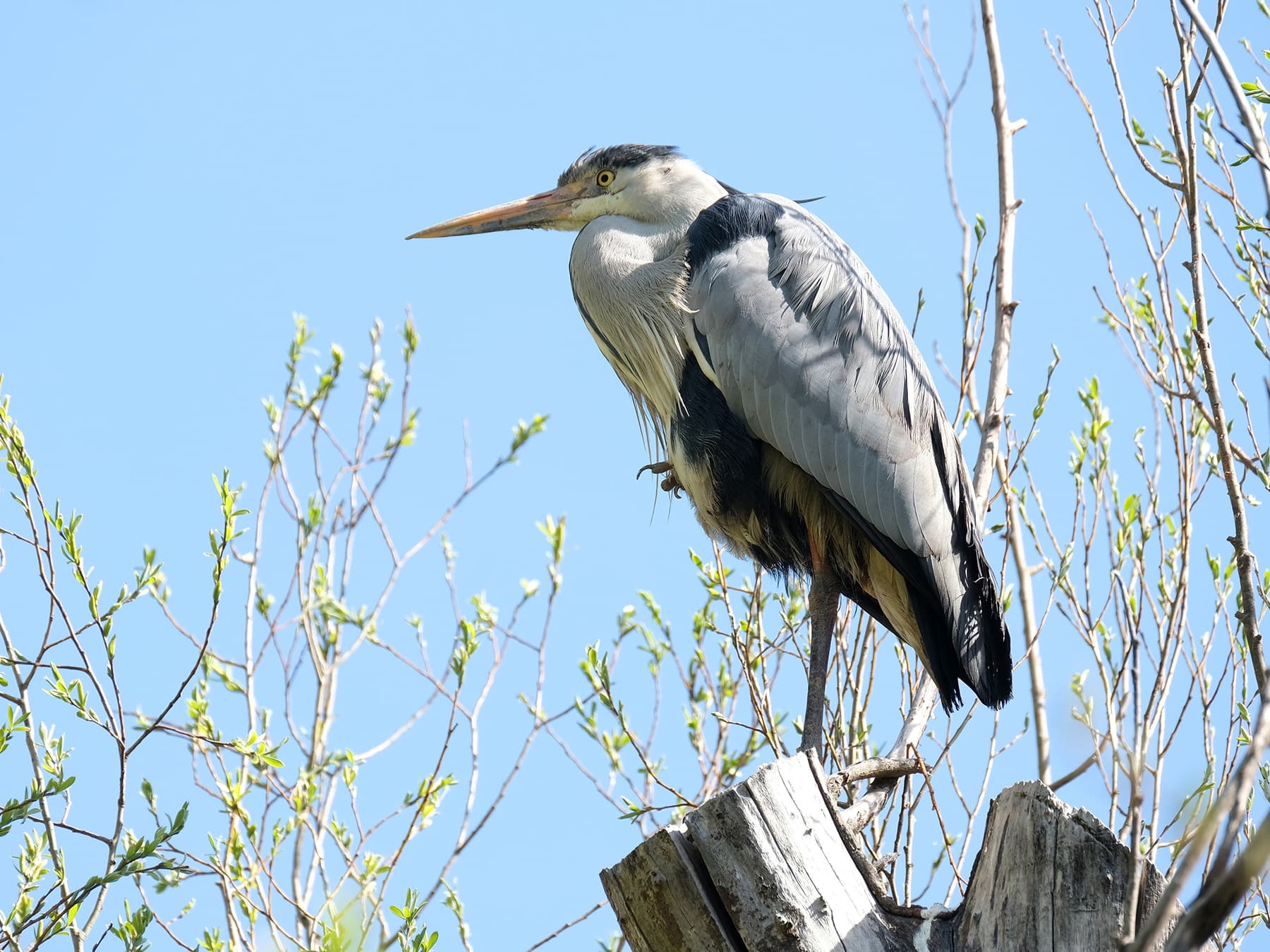
Grey Herons spend most of their time on the ground, usually standing motionless or stalking along the margins of a pond or river. These birds can swim but prefer to keep their feet firmly planted. Herons also spend time above the ground on poles and perched in trees.
How rare are Grey Herons?
Grey Herons are common birds in suitable habitats. You can expect to see them on any visit to a local waterway.
Where can you see Grey Herons in the UK?
Grey Herons are easy to find in the United Kingdom. Visit any wetland, lake, pond, or even the seashore for a chance to spot these handsome waterbirds. Visiting a heronry (heron nesting colony) in the breeding season provides wonderful observations of Grey Heron behaviour.
Accessible UK heronries can be seen at:
- Ellesmere, Shropshire
- Trentabank Reservoir, Cheshire
- Attenborough Nature Reserve, Nottinghamshire
Are Grey Herons ever spotted in North America?
Grey Herons do show up in North America, although they are a rare vagrant there. They have been spotted near the west coast of Alaska and near the east coast of Massachusetts and Newfoundland.
Migration
Do Grey Herons migrate?
Grey Herons in the United Kingdom do not migrate, although they undertake lengthy migrations between northern breeding grounds and southern overwintering areas in other parts of their extensive range. Some birds migrate from Scandinavia to enjoy the UK’s relatively mild winter.
Are Grey Herons native to the UK?
Grey Herons are native to the United Kingdom.
Tips for seeing it
- Look for Grey Herons near water bodies, including lakes, rivers, and coastal areas.
- Observe their patient hunting technique, standing still for long periods.
- Listen for their harsh, croaking call, especially near nesting sites.
- In the UK, visit wetland reserves like the London Wetland Centre or RSPB Minsmere for good viewing opportunities.
What it eats
What do Grey Herons eat?
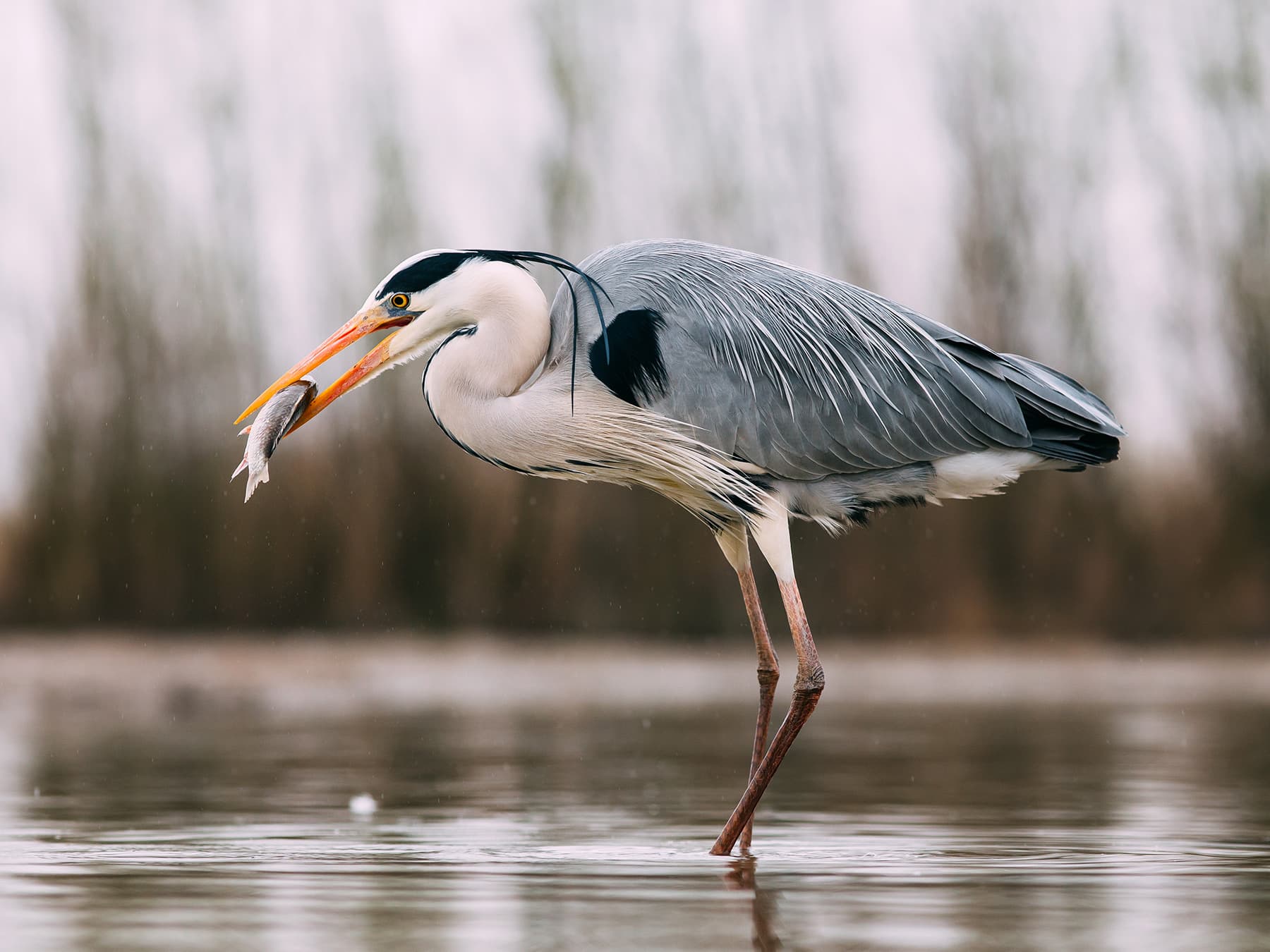
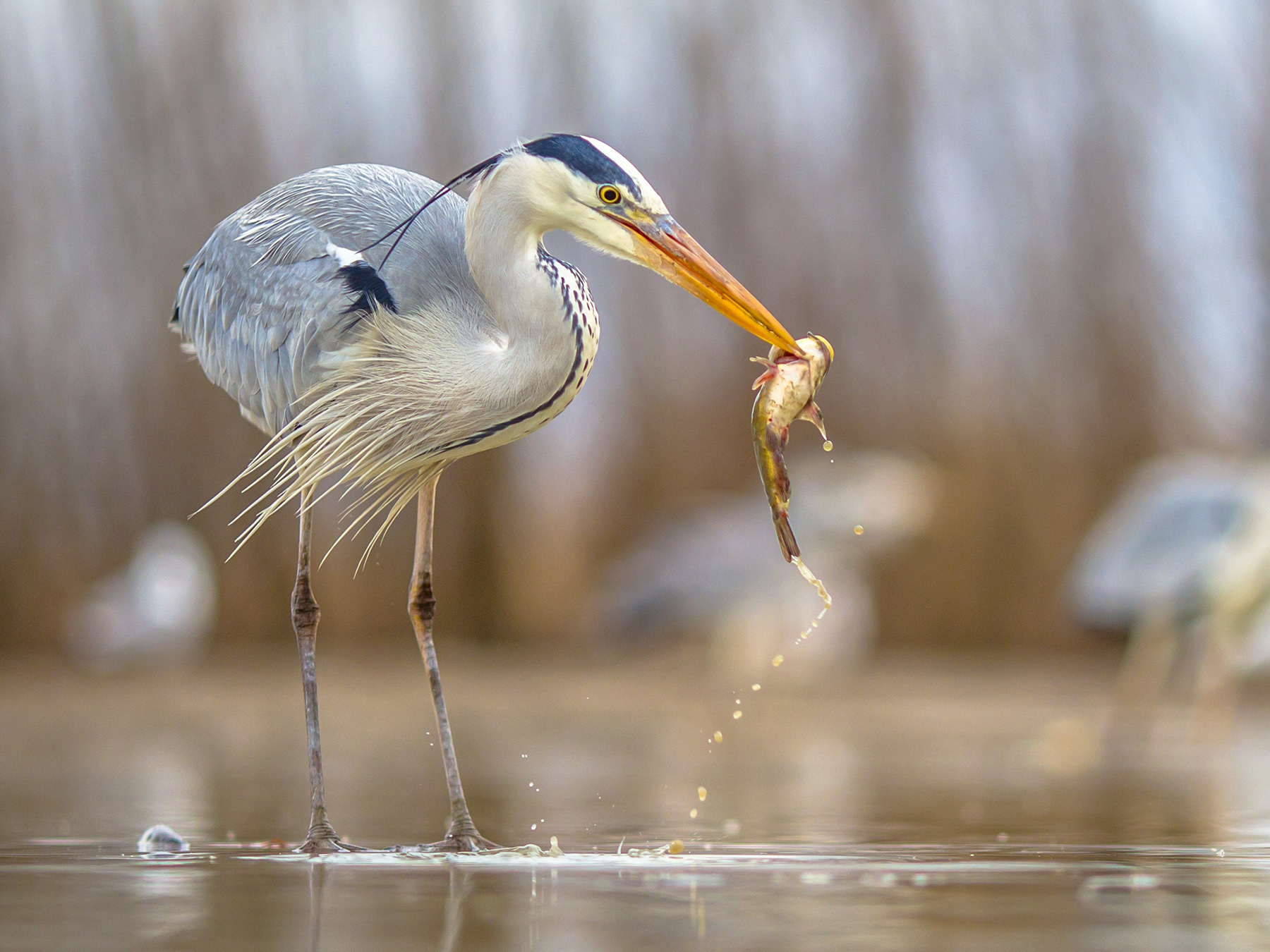
Fish and frogs form the bulk of the Grey Heron diet, and they hunt by striking their prey with their sharp bill and coiled neck. These birds will take just about any small animal they can catch, including rodents, other birds, reptiles, and insects.
What do Grey Heron chicks eat?
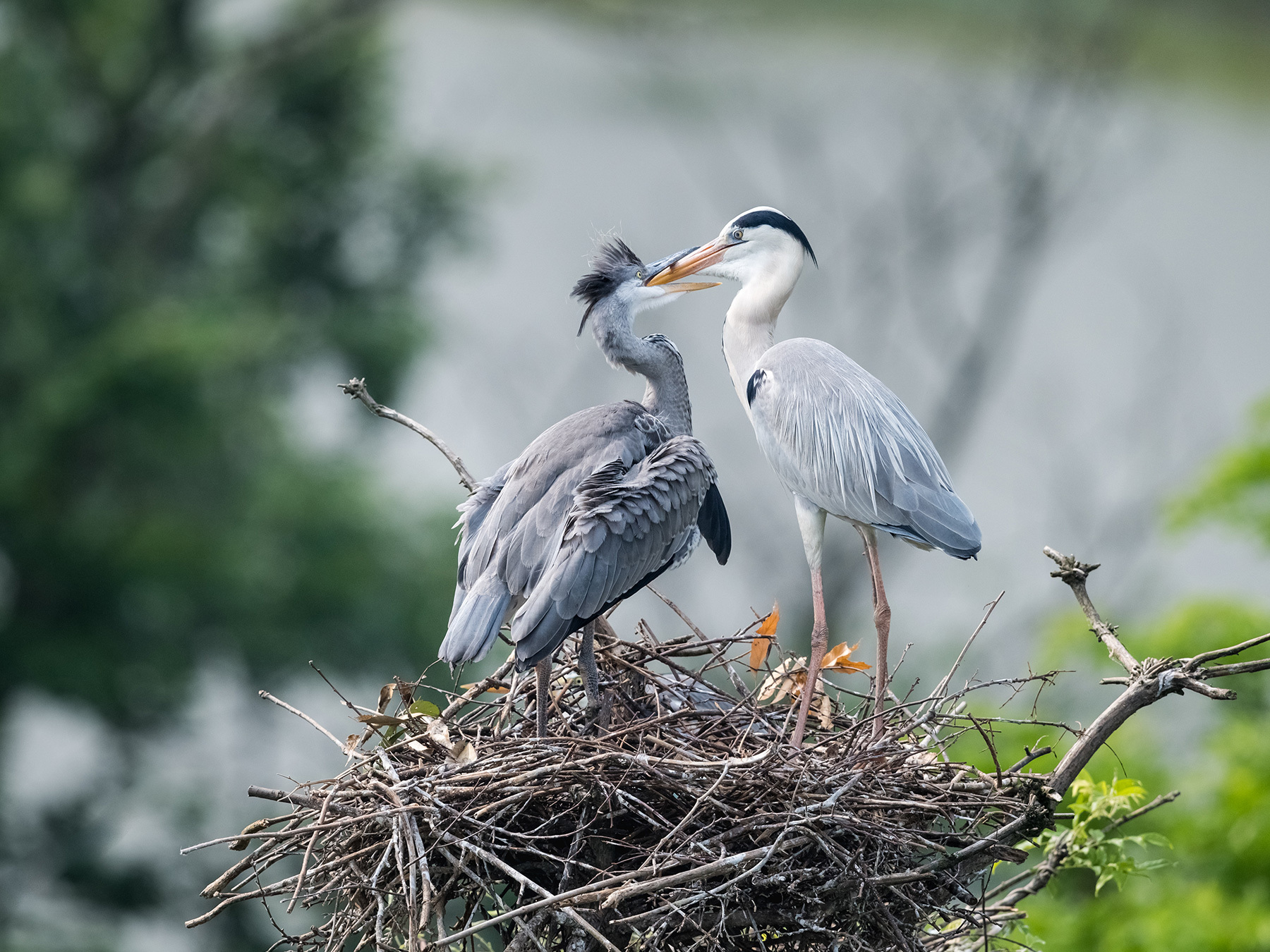
Grey Heron chicks eat regurgitated fish and other animals from their parents.
Nesting and breeding
Where do Grey Herons nest?
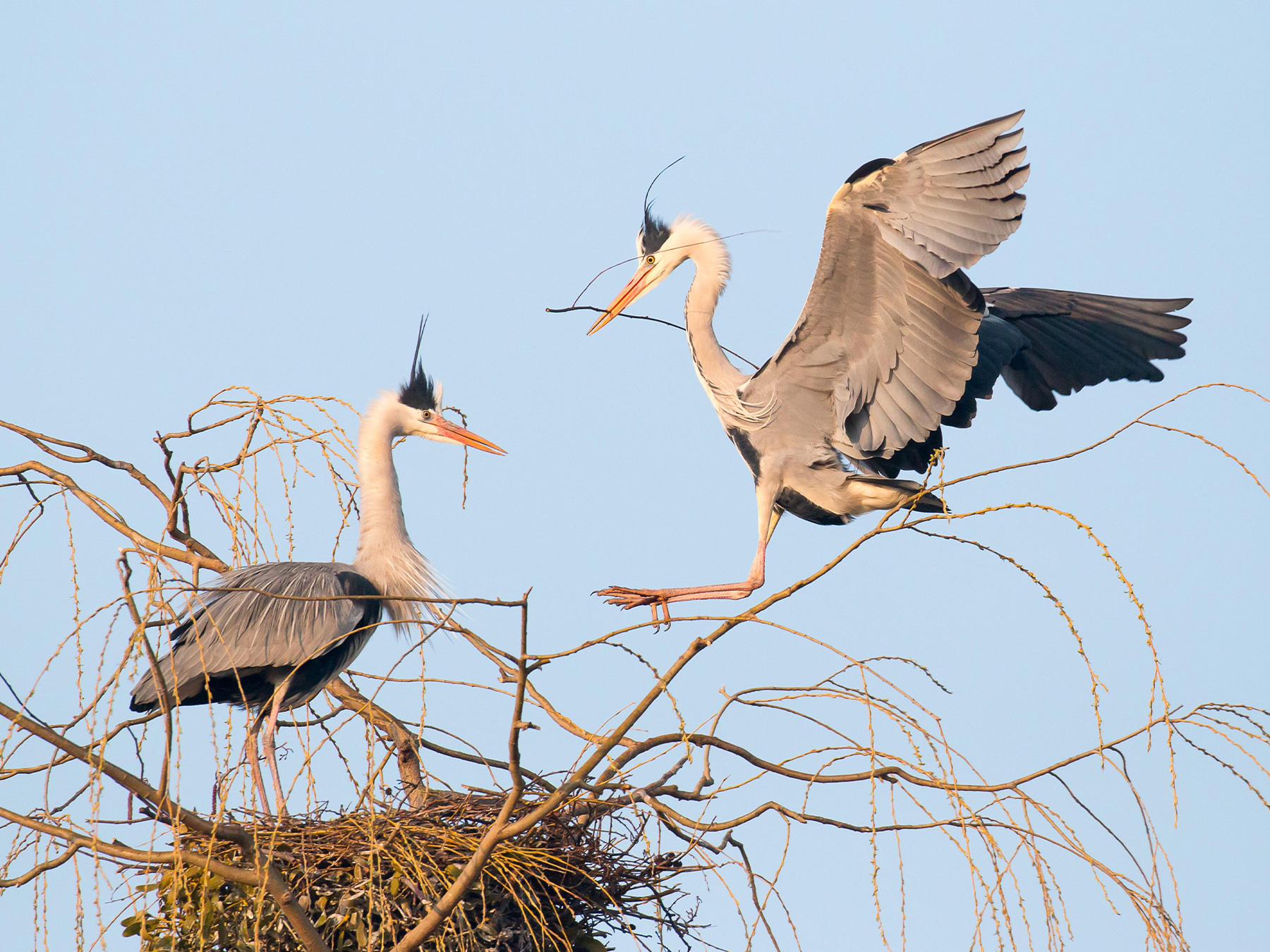
Grey Herons usually nest in colonies called heronries, often with other birds like the Little Egret and Cormorant. These colonies can hold anything from two to over a thousand nests and are usually found in large trees.
The nest is a large twig platform that may last several years and be used multiple times. The male collects the material for the nest, but the female does the construction.
When do Grey Herons nest?
Grey Herons begin nesting in February or March in the United Kingdom. Their eggs hatch after about 26 days, and the chicks fledge the nest 50 to 55 days later.
What do Grey Heron eggs look like?
Grey Herons typically lay a single clutch of three to six blueish-green eggs, each measuring approximately 61 millimetres long and 43 millimetres wide.
Do Grey Herons mate for life?
Grey Herons do not mate for life, preferring instead to find a new partner each year.
Behaviour
Are Grey Herons aggressive?
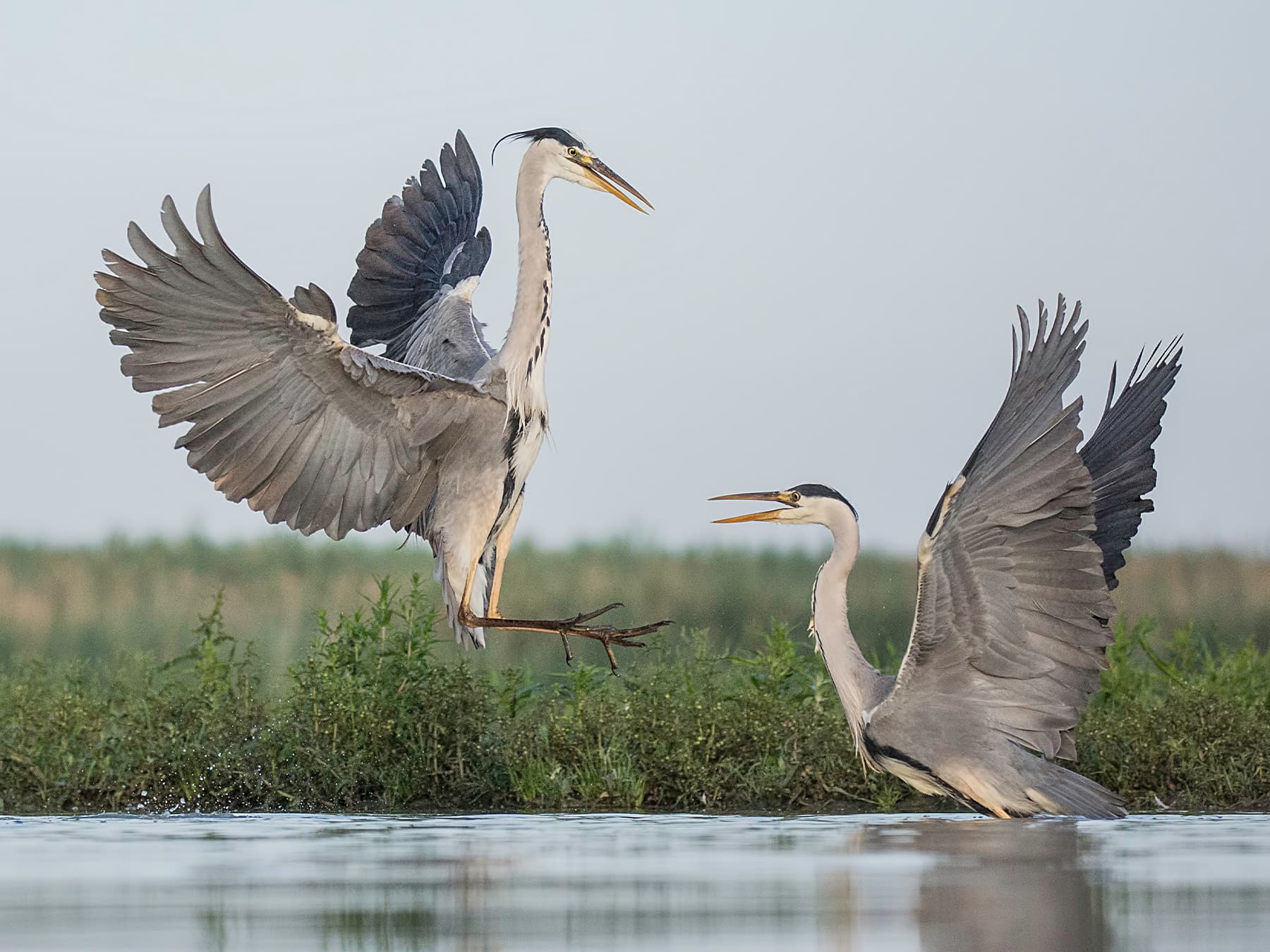
Grey Herons can be aggressively territorial over feeding areas and may get into serious fights with intruders. They may warn their opponent by raising their crest and performing stabbing motions with their neck. Chicks can be highly aggressive towards each other, and older chicks often kill their younger siblings, especially when food is scarce.
Where do Grey Herons sleep at night?
Grey Herons may be active at any time of day or night. They may rest on the ground, but these birds generally sleep in trees where they are safe from ground predators.
Lifespan and predators
How long do Grey Herons live?
Grey Herons can live for over 23 years in the wild, although the typical life expectancy of birds that reach adulthood is about five years.
What are the predators of Grey Herons?
Adult Grey Herons have few natural enemies, although their eggs and young are vulnerable to opportunistic predators like foxes and crows.
Are Grey Herons protected?
Grey Herons are protected by the Wildlife and Countryside Act 1981 in the United Kingdom.
Are Grey Herons endangered?
Grey Herons are not an endangered species. These common waterbirds have a green conservation status in the United Kingdom and a ‘Least Concern’ status on the IUCN Red List.
Conservation
While the Grey Heron is currently listed as Least Concern, it faces threats from habitat loss and water pollution. Conservation efforts focus on protecting wetland habitats and maintaining water quality in their foraging areas. In some regions, collision with power lines poses a risk to these birds.
Similar birds
Often mistaken for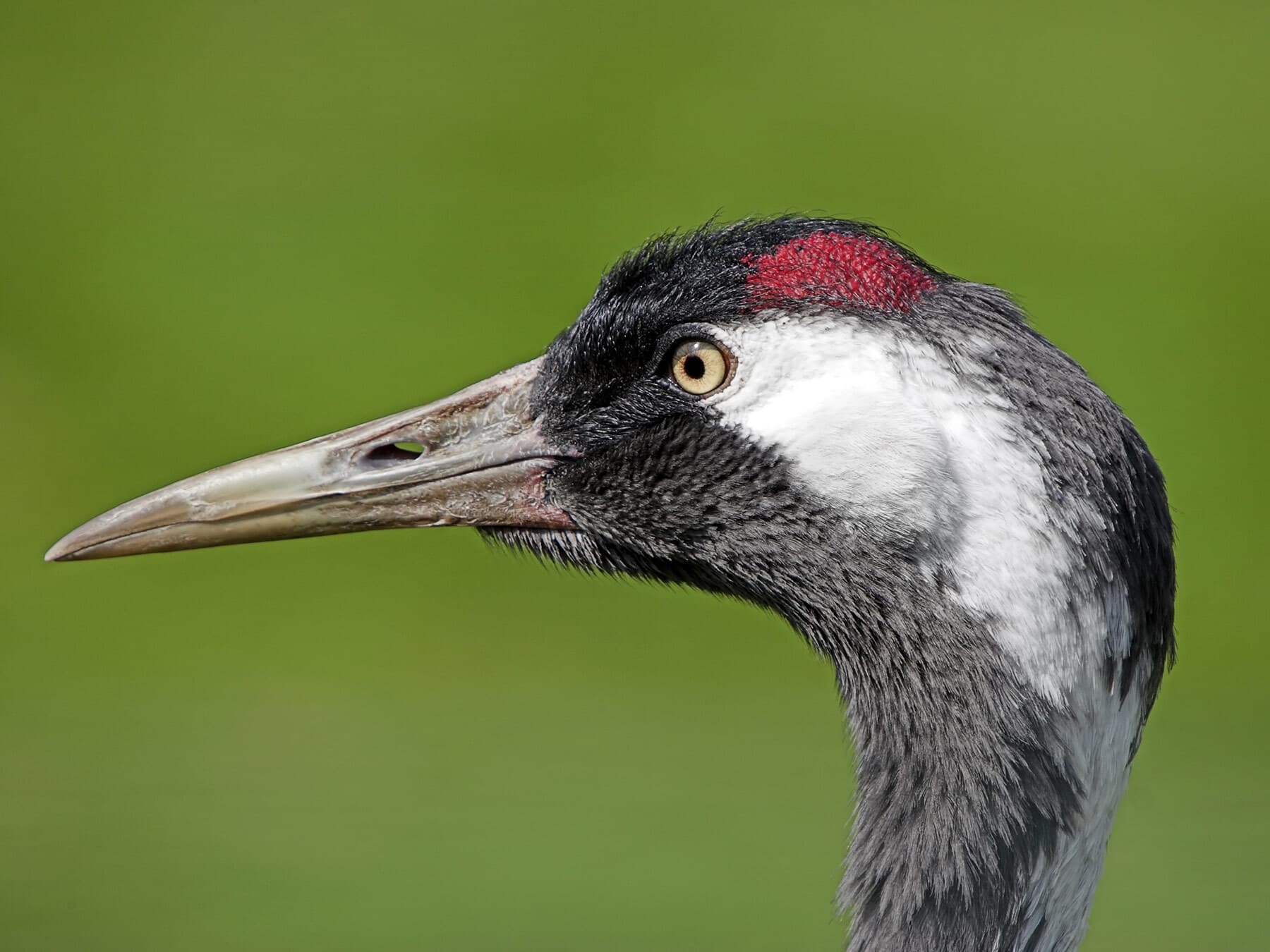
More photos
6 photos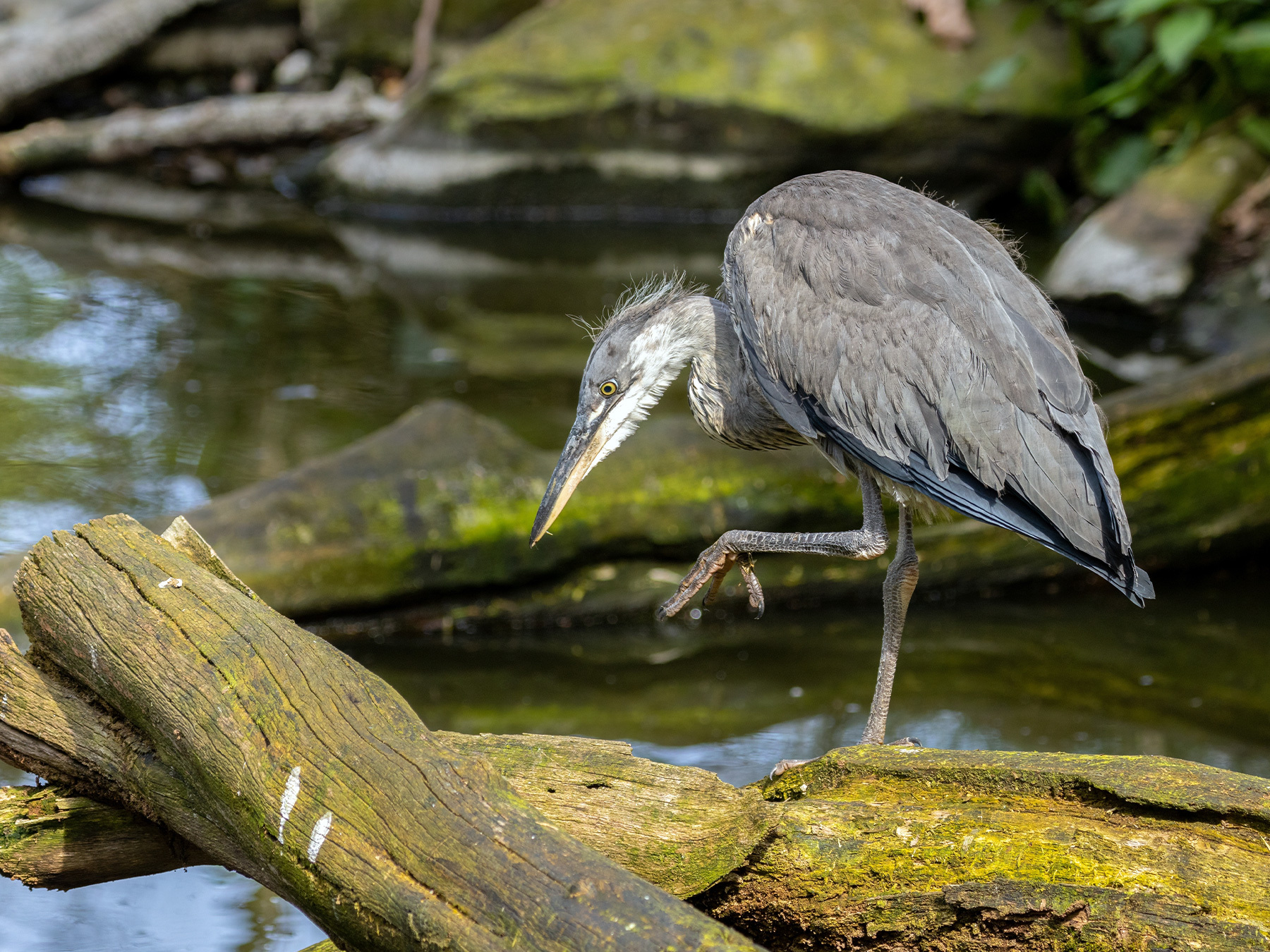
Grey Heron guides
3 guidesQuick facts
- Length
- 90–98 cm
- Wingspan
- 175–195 cm
- Weight
- 1020–2073 g
- Lifespan
- 15–20 years · oldest recorded 23.7 years
- Family
- Herons & Egrets
- Migration
- Partial migrant
- Global status (IUCN)
- Least Concern
- World population
- 500,000 - 2,500,000 mature individuals
- Population trend
- Unknown
- Also called
- Common Heron
- Scientific name
- Ardea cinerea
Questions
1How to attract Grey Herons?
Grey Herons do not visit most gardens, and they are not attracted to bird tables. However, they will hunt at larger water features, often to the dismay of ornamental fish keepers. Installing a large pond or water garden is a wonderful way to attract herons and many other bird species, although you will need to accept that these birds eat live fish and frogs.
Sources
3- 1BirdLife International. 2019. Ardea cinerea. The IUCN Red List of Threatened Species 2019: e.T22696993A154525233. Source (opens in a new tab)
- 2Wetlands International (2015)
- 3BTO longevity records: maximum age from a ringed bird, 23 years, 9 months, 2 days (set in 2003), BirdFacts: Grey Heron (2003) Source (opens in a new tab)

Checked by
Nathan Cope, founder and editor
Nathan founded Birdfact and leads its writers and contributors in the UK, the US and Canada. He has watched and studied birds for more than ten years, and checks every article and species guide before it’s published.