
Species Profile
Carolina Wren
Thryothorus ludovicianus
Quick Facts
Conservation
LCLeast ConcernLifespan
6–8 years
Length
12.5–14 cm
Weight
18–23 g
Wingspan
18–20 cm
Migration
Resident
Gallery
Appearance
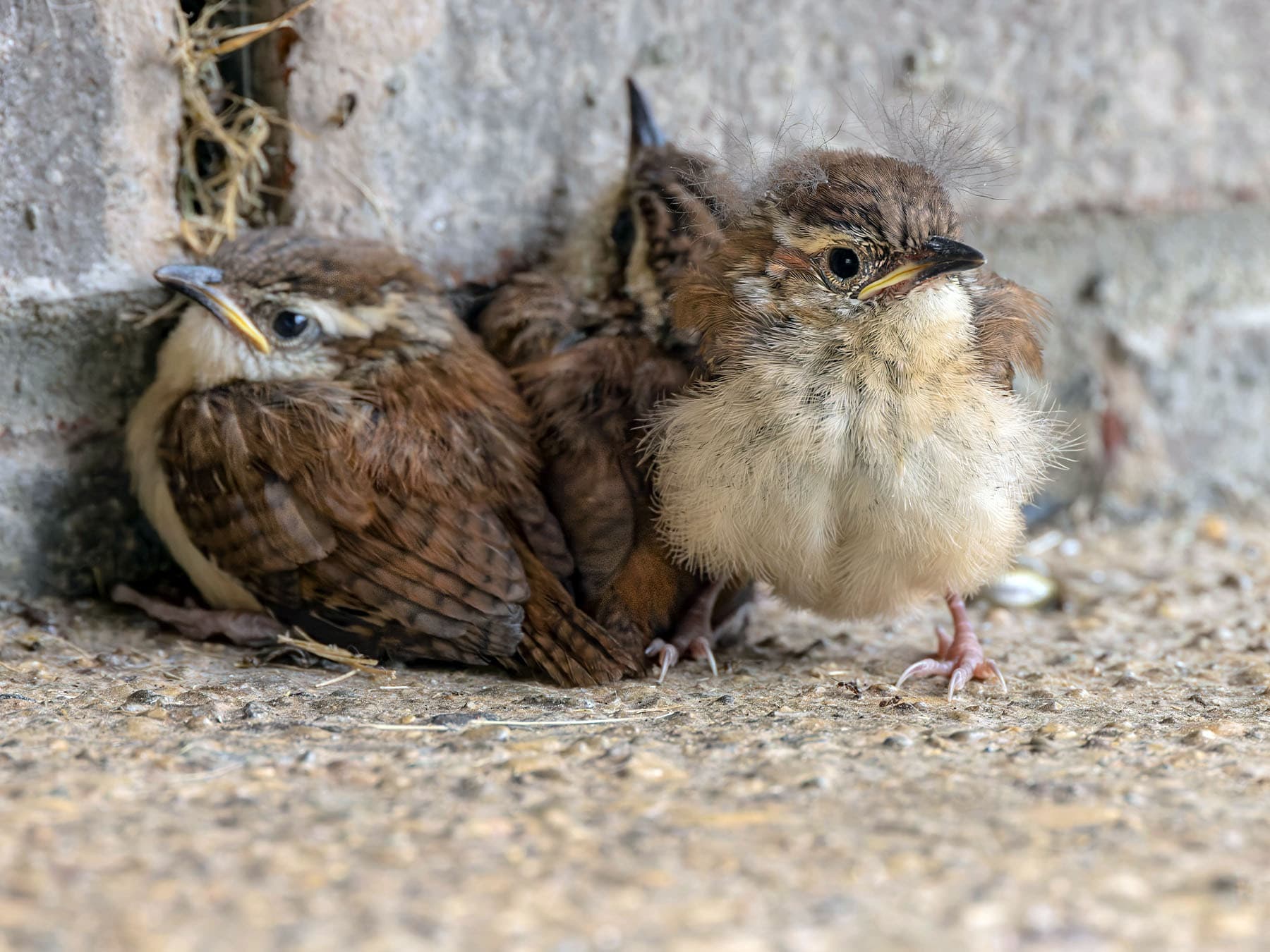
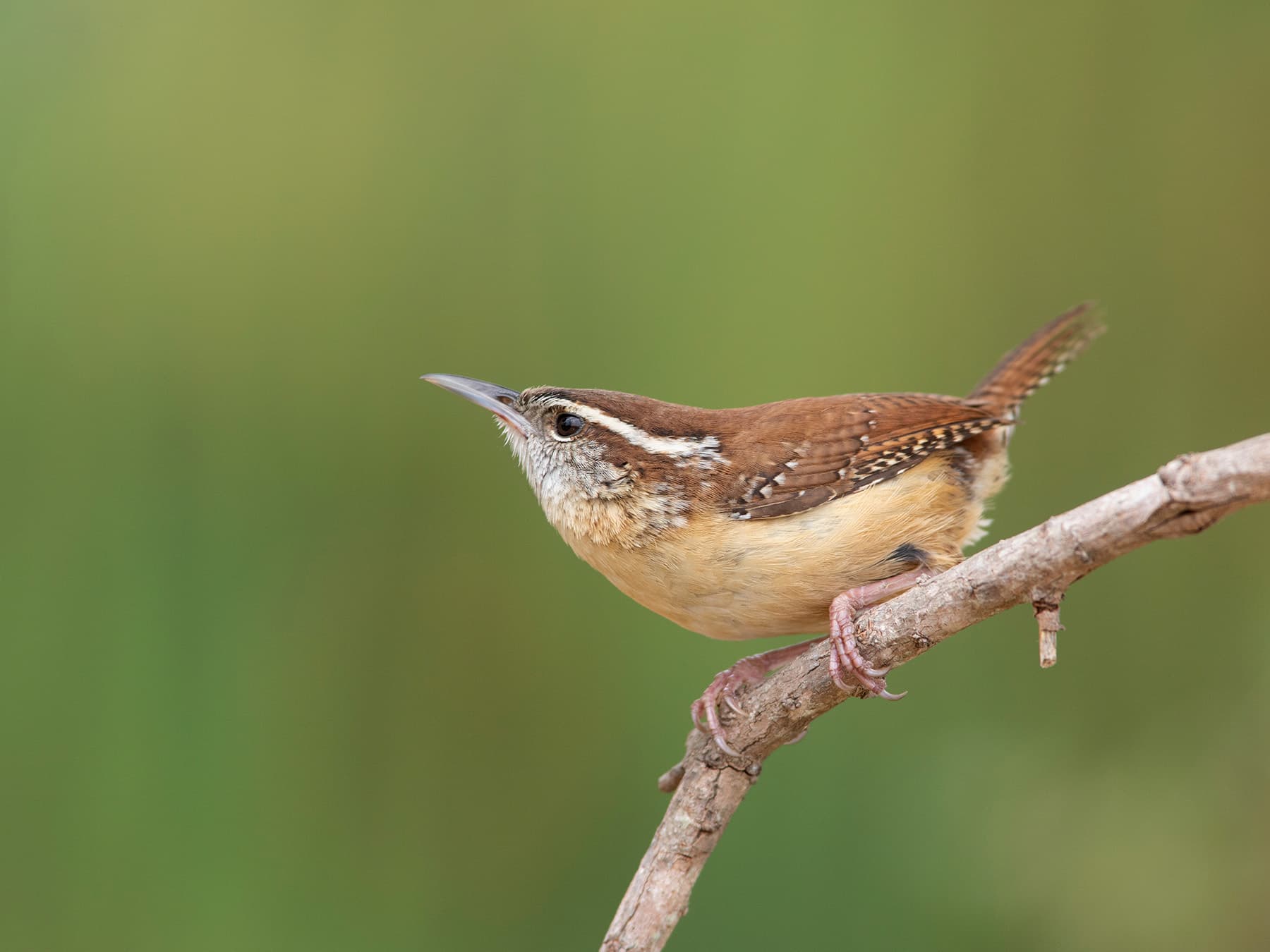
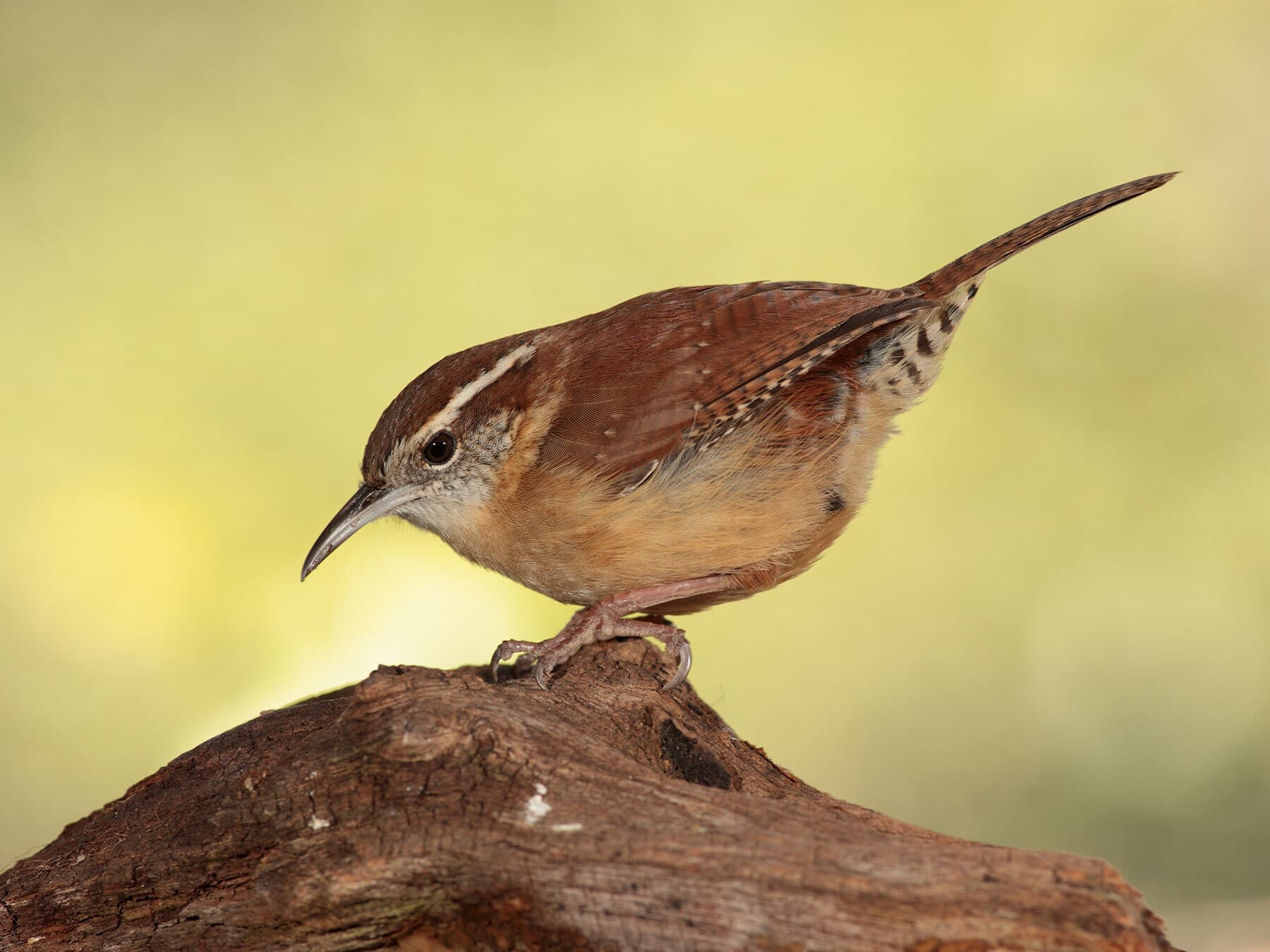
The Carolina Wren is a small, plump bird with rich reddish-brown upperparts and warm buff underparts. It has a distinctive white eyebrow stripe, a long, slightly curved bill, and a short, often upright tail.
Both sexes look alike, with no seasonal plumage changes. Juveniles resemble adults but may have slightly duller plumage and less distinct markings.
Identification & Characteristics
Colors
- Primary
- Brown
- Secondary
- White
- Beak
- Brown
- Legs
- Pink
Attributes
Understanding Attributes
Rated 0–100 based on research and observation. A score of 50 is average across all bird species. These attributes are relative and don't necessarily indicate superiority.
Habitat & Distribution
Carolina Wrens inhabit a wide range of wooded environments, including deciduous and mixed forests, swamps, and suburban areas with dense shrubbery. They are year-round residents throughout the southeastern United States.
Their range has been expanding northward in recent decades, likely due to climate change and increased winter bird feeding. They are now found as far north as southern Ontario, Canada, and parts of New England.
Diet
Carolina Wrens are primarily insectivorous, feeding on a variety of insects, spiders, and other small invertebrates. They also consume small fruits and seeds, especially in winter. These wrens often forage in pairs, methodically searching through leaf litter and probing bark for hidden prey.
Behaviour
Carolina Wrens are active and curious birds, often seen hopping and darting through dense vegetation. They forage by probing into bark crevices and leaf litter with their long bills. These birds are typically found in pairs and maintain year-round territories, which they defend vigorously with loud vocalizations.
Calls & Sounds
The Carolina Wren is known for its loud, musical song, often described as "tea-kettle, tea-kettle, tea-kettle" or "tweedle-tweedle-tweedle." Males sing year-round to defend territory. Both sexes use a variety of calls, including harsh chatters when alarmed and soft "purring" notes between mates.
Nesting & Breeding
Carolina Wrens form monogamous pairs that often stay together year-round. Breeding season typically begins in early spring and can last through summer. Males often build several dummy nests before the female selects one to complete.
Nests are domed structures with a side entrance, built in a variety of locations from natural cavities to human-made objects. The female lays 4-6 white or pinkish eggs with brown speckles.
Incubation lasts about 14 days, primarily by the female. Both parents feed the nestlings, which fledge after 12-14 days. Pairs may produce multiple broods in a single season.
Conservation
While the Carolina Wren is currently listed as Least Concern, it faces threats from habitat loss due to urbanization and intensive agriculture. Climate change also poses a risk, as severe winters can cause population declines in northern parts of its range. Conservation efforts focus on preserving diverse woodland habitats.
Population
Estimated: Unknown
Trend: Increasing
Elevation
Sea level to 1500 meters
Additional Details
- Predators:
- Carolina Wrens face predation from various animals, including domestic cats, hawks, owls, snakes, and occasionally larger songbirds like Blue Jays.
Birdwatching Tips
- Listen for their loud, distinctive song to locate them
- Look for movement in low, dense vegetation
- Check near fallen logs and brush piles in wooded areas
- Observe feeders, as they often visit for suet or peanuts
- In the US, they're common in suburban areas with shrubby cover
Did You Know?
- Carolina Wrens can raise up to three broods in a single breeding season.
- They have been known to build nests in unusual places, including mailboxes, flower pots, and even pockets of hanging laundry.
- Despite their small size, Carolina Wrens have one of the loudest songs per unit of body weight among birds.
Community Photos
Be the first to share a photo of the Carolina Wren
Upload a PhotoRelated Articles
Identify Any Bird Instantly
- Upload a photo from your phone or camera
- Get an instant AI identification
- Ask follow-up questions about the bird
Monthly Birds in Your Area
- Personalised for your location
- Seasonal tips and garden advice
- Updated every month with new species