Published 6 Oct 2026
Starling Sounds: Song, Calls and Mimicry
By the Birdfact teamChecked by Nathan Cope
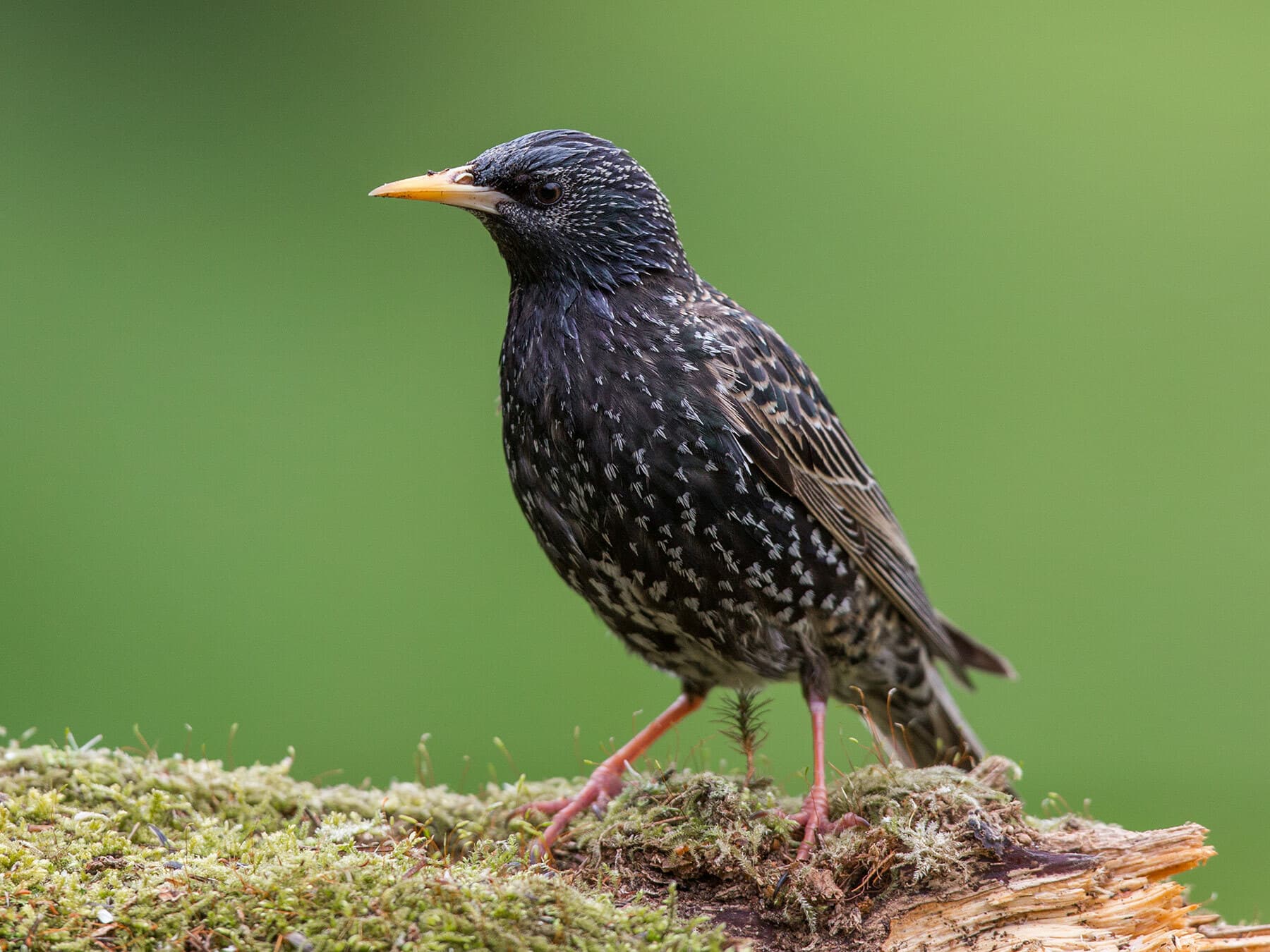
Starlings sing a long, rambling medley of whistles, clicks and rattles, copying other birds, phones and car alarms, and they can even learn human speech. Listen to the song and the main calls, and find out what they copy.
On this page9 sections
Starlings are noisy, varied singers: whistles, clicks, rattles and warbles, with copies of other birds and everyday sounds mixed in. This page has recordings of the song and the main calls, explains their mimicry, and answers whether Starlings can talk. For the bird itself, see Starling identification and facts.
What does a Starling sound like?
The song
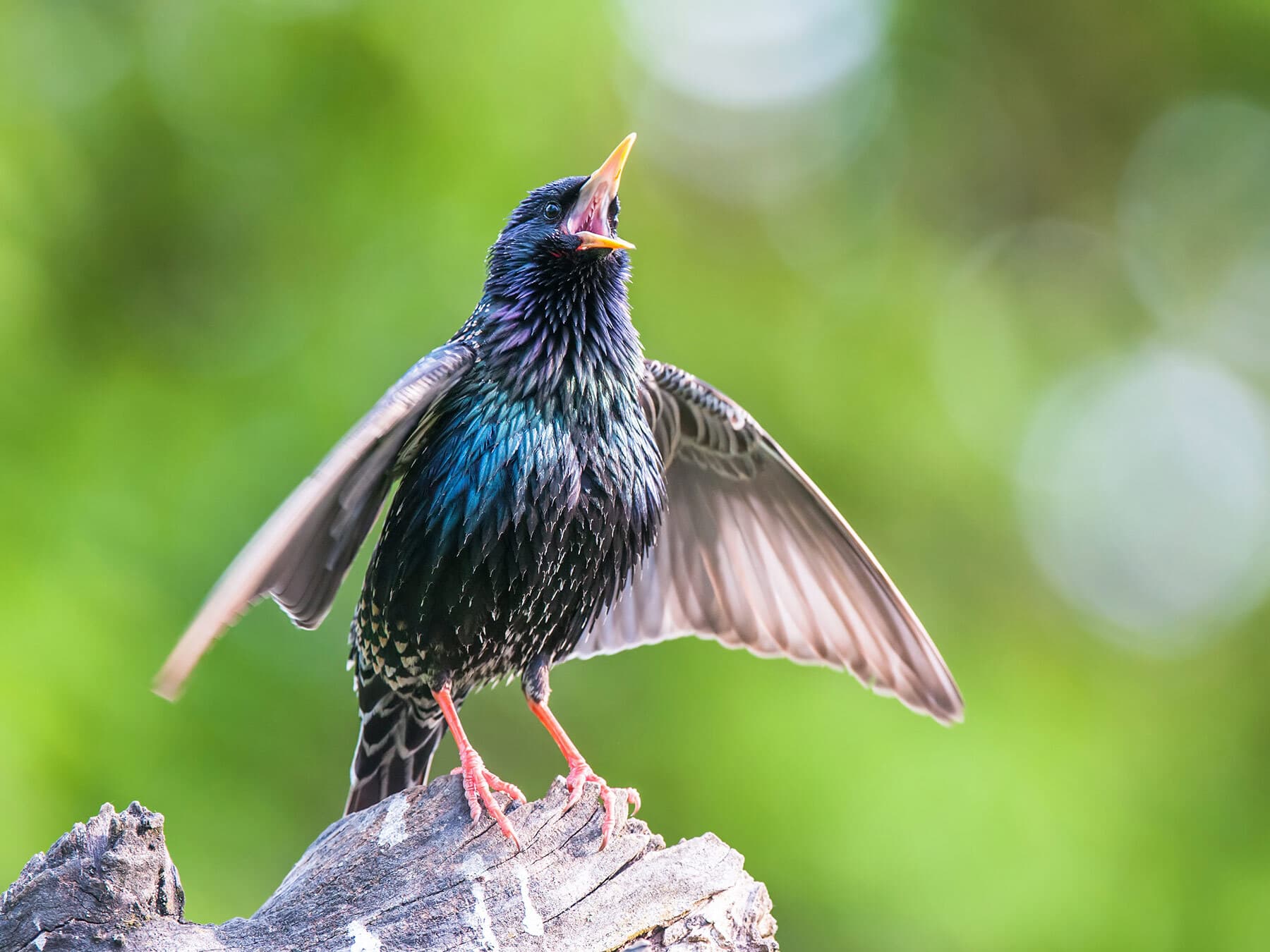
Starlings have two kinds of song. The whistled song is loud and simple, made of clear whistles; males share a handful of whistled themes with other Starlings and add their own. The warbling song is softer and far more complex: an unbroken string of phrases lasting about 40 seconds on average and up to 80, each phrase often repeated two to 12 times, and often ending in high squeals and trills.
A singing male often waves his wings in circles as he sings, especially near a female, and females favour males whose songs are longer and more varied. Older males know more: 35 to 67 phrase types against 21 to 31 in their first year.1
When do Starlings sing?
In every month: least in late summer, when they moult, and most early in the breeding season. Through autumn and winter they sing most in the morning, and in the breeding season in the morning and evening. They sing from a perch near the nest, and even at roosts at night (the RSPB notes clicks and rattles from chimneys, aerials and treetops). Females sing too, more quietly and mostly in autumn.1
Starling calls
The calls are shorter and simpler than the song, and both sexes use them. In flight, listen for a purring prurrp; in squabbles, harsh rattles and screeching chacker-chacker; and in alarm, a metallic chip, given when mobbing a predator or at a roost.1
Mimicry: what can Starlings copy?
Almost anything they hear often. Starlings copy other birds, other animals and machines: in Britain the RSPB lists phones, sirens, car alarms and dog barks, and a Lapwing or Curlew calling in quite the wrong habitat may well be a Starling.2 In North America their copies include Killdeer, meadowlarks, Northern Bobwhite, Wood Thrush and American Robins. A single bird may copy up to 20 different calls, and Starlings go on learning new sounds all their lives.1
Can Starlings talk?
Yes. Both male and female Starlings can learn to copy human speech, and how well they learn seems to depend on their social setting.1
Baby Starling sounds
Nestlings beg noisily for food from inside the nest hole: listen for them in a hole in a wall, roof or tree in late spring. Young males start practising song at about 3 months old. More: baby Starlings.1
Questions
Why do Starlings mimic?
Probably because mimicry adds variety to a male's song, and females favour males whose songs are longer and more varied.
Do female Starlings sing?
Yes, more quietly than males and mostly in autumn. See female Starlings.
Do Starlings sing at night?
Sometimes, at their roosts.
What bird sounds like a car alarm?
It may be a Starling: car alarms are among the sounds the RSPB lists them copying.
Sources
- Cabe, P. R. (2020). European Starling (Sturnus vulgaris), version 1.0. Birds of the World (S. M. Billerman, Editor). Cornell Lab of Ornithology. doi:10.2173/bow.eursta.01
- RSPB. Starling. Accessed 6 October 2026. Source
- BTO. Starling (Sturnus vulgaris). BTO BirdFacts. Accessed 6 October 2026. Source
- Cornell Lab of Ornithology. European Starling (overview and life history). All About Birds. Accessed 6 October 2026. Source
- National Audubon Society (text: Kaufman, Lives of North American Birds). European Starling. Audubon Guide to North American Birds. Accessed 6 October 2026. Source