Facts · Updated 8 Oct 2026
Do Woodpigeons Mate for Life? Pairs, Bowing and Courtship
By the Birdfact teamChecked by Nathan Cope
Not as far as anyone has shown
A pair stays together at least through the long breeding season. Some pairs return to their territory together in winter, but none of the studies we read shows that the same two birds pair for life.
On this page10 sections
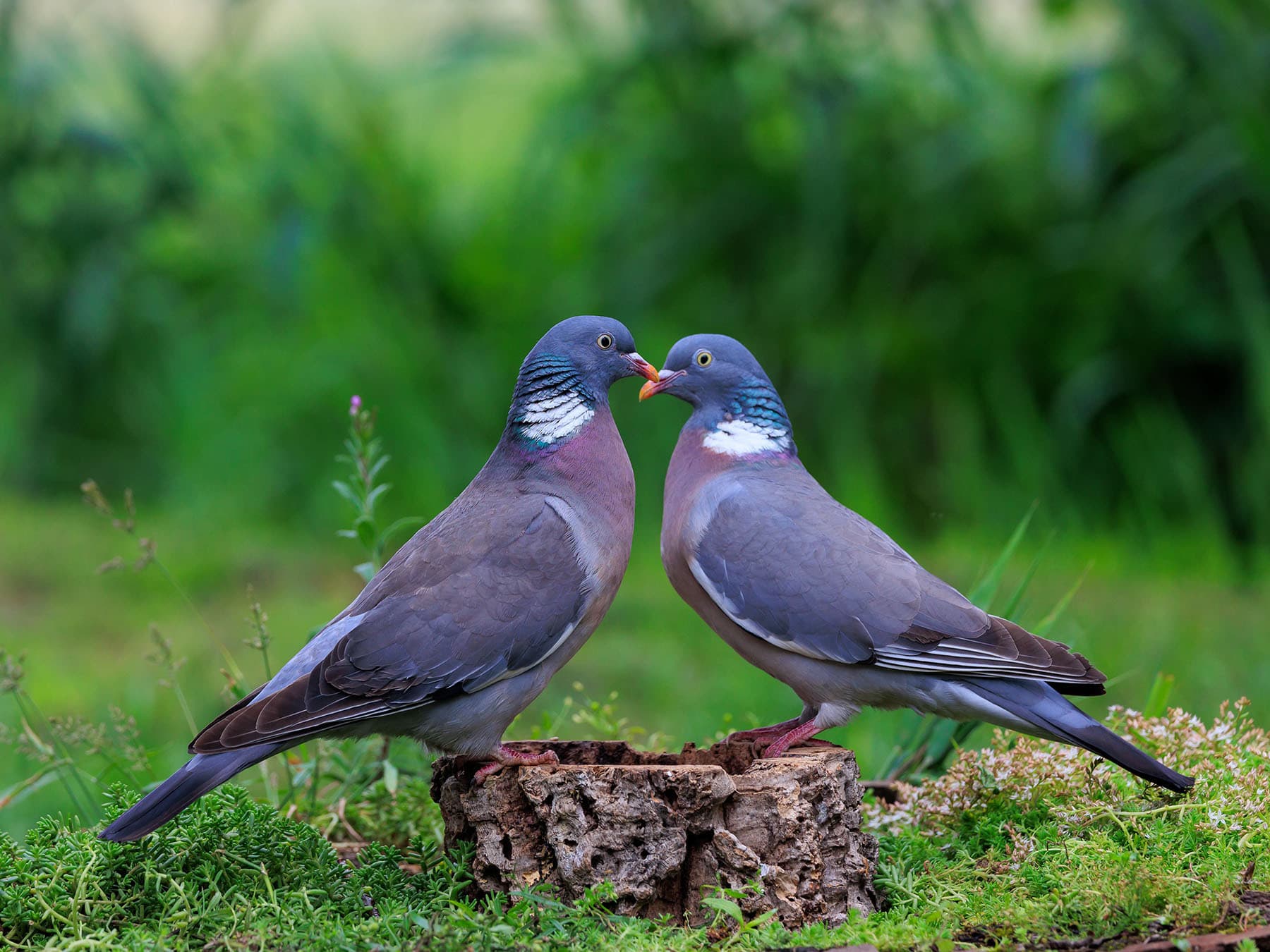
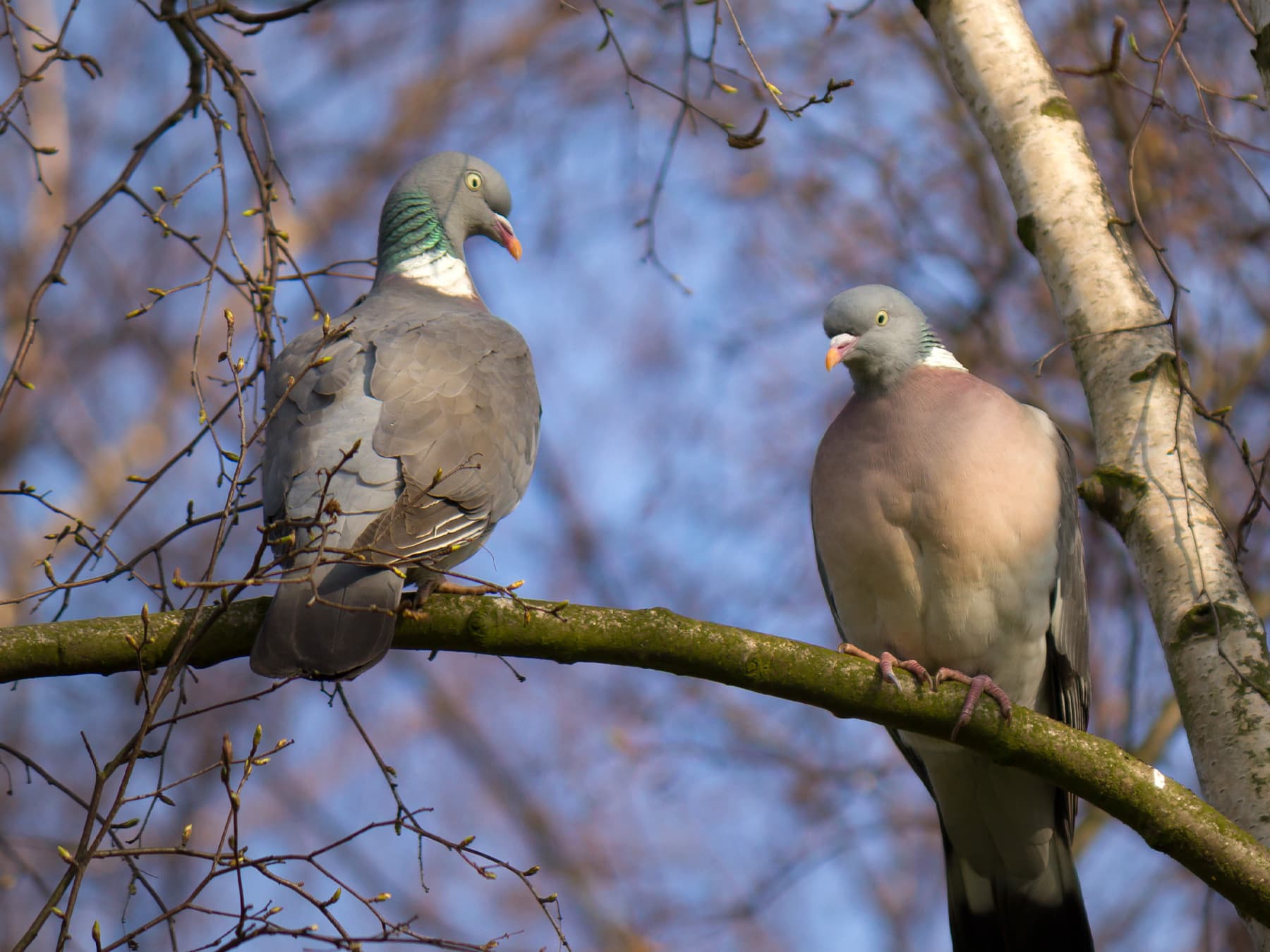
A Woodpigeon pair stays together through a long breeding season, but none of the studies we read shows that pairs last for life. Courtship is easy to watch: the male bows with his neck puffed out and tail fanned, the pair caress and bill, and he shows her nest sites with a deep double coo.
Pairs, courtship and territory in the Woodpigeon: whether pairs stay together, the bowing display, caressing and billing, the display flight, and how a pair shares the nest. For the bird itself, see Woodpigeon identification and facts.
Do Woodpigeons mate for life?
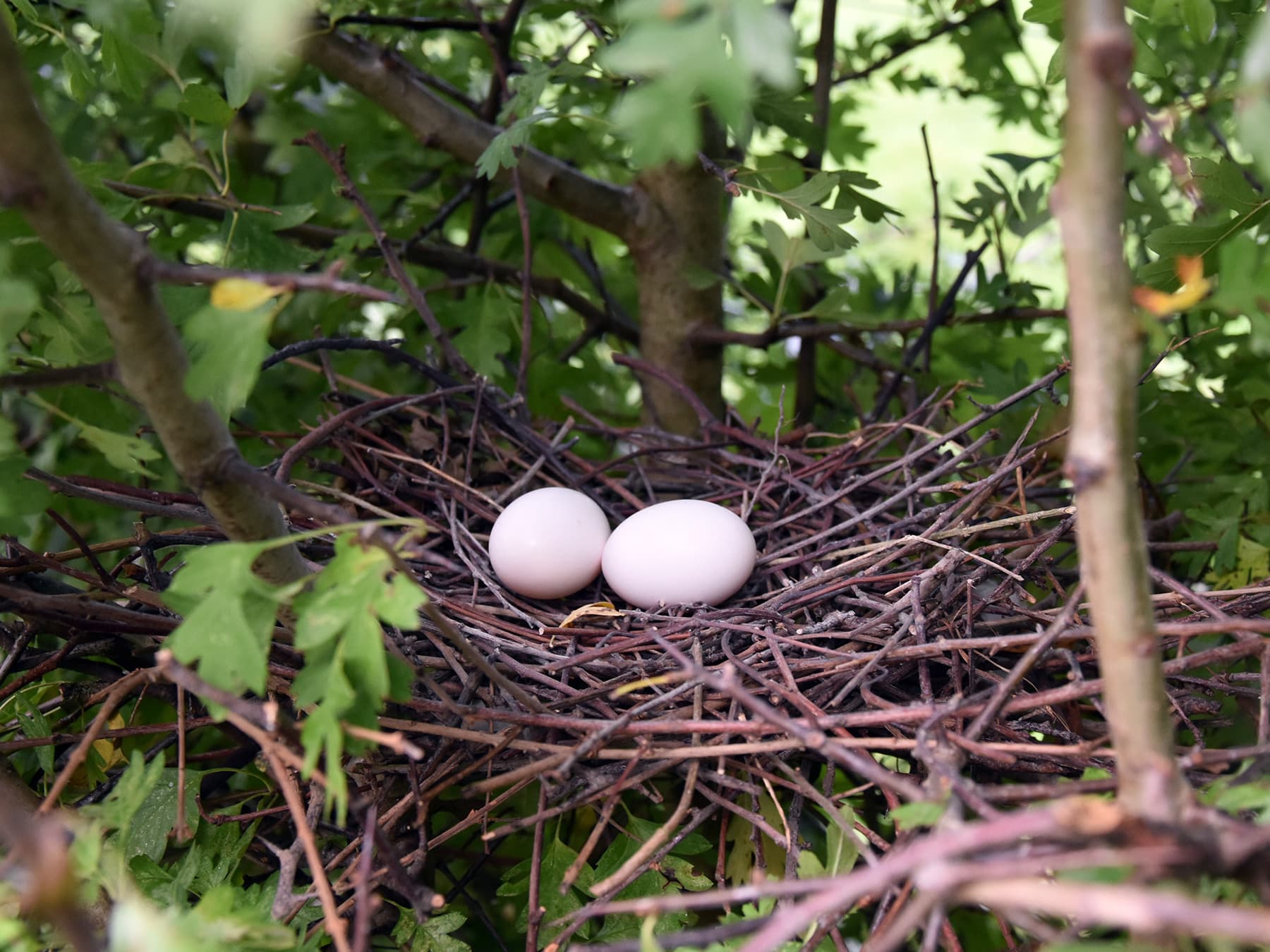
Not as far as anyone has shown: none of the studies we read found that Woodpigeons pair for life. A pair stays together at least through the breeding season, which is long: they may nest up to three times in a year, more if some attempts fail.1 Whether the same two pair up again the next year is less clear. In central London, Stanley Cramp watched some pairs return to their territory together in winter and thought they may have been paired the year before, but his birds were not colour-ringed, so he had no proof.
The sources we read do not follow what happens to a Woodpigeon whose mate dies. A Woodpigeon that survives to breed typically lives about 3 years.2
Forming a pair
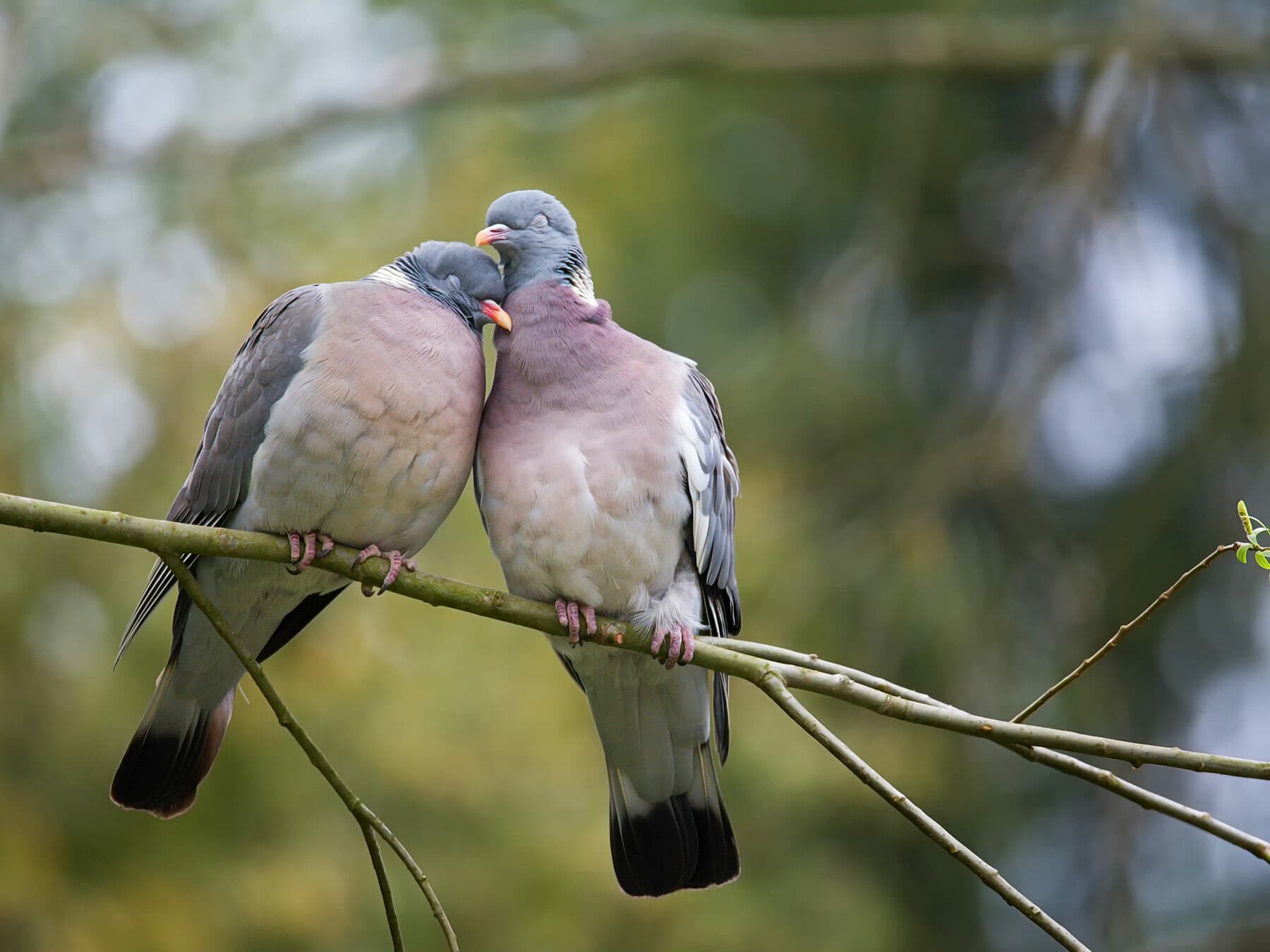
In Cramp's London study, unmated males sat in their territory trees from November, and more regularly from January, often silent and still. When another Woodpigeon landed, the male flew over at once. A male intruder usually left; a female ready to pair stood her ground, often nervously.1
It can take weeks for a pair to settle. At first the female keeps her distance, perching on another branch, and cold spells can halt courtship altogether.
Why do Woodpigeons bow?
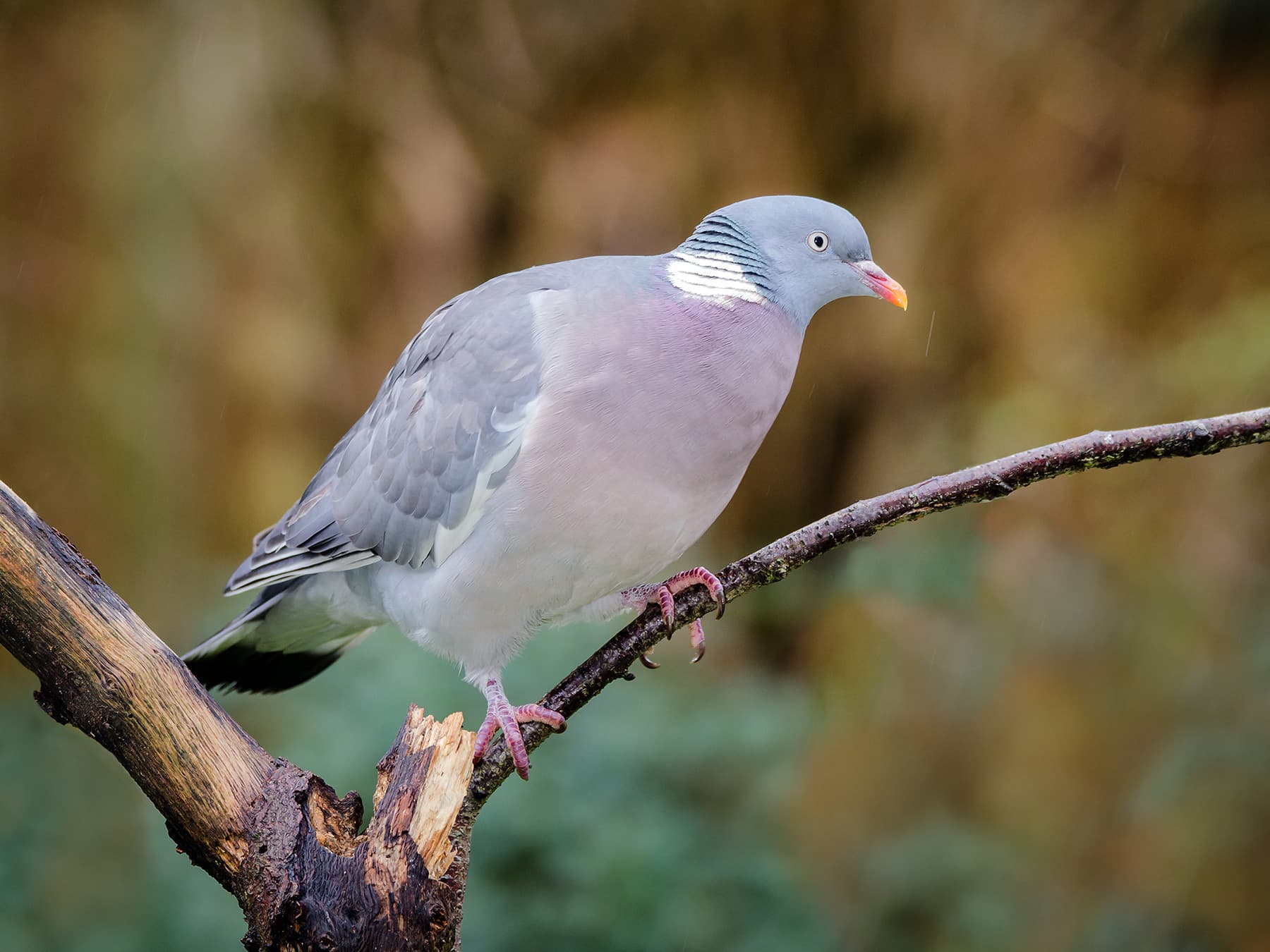
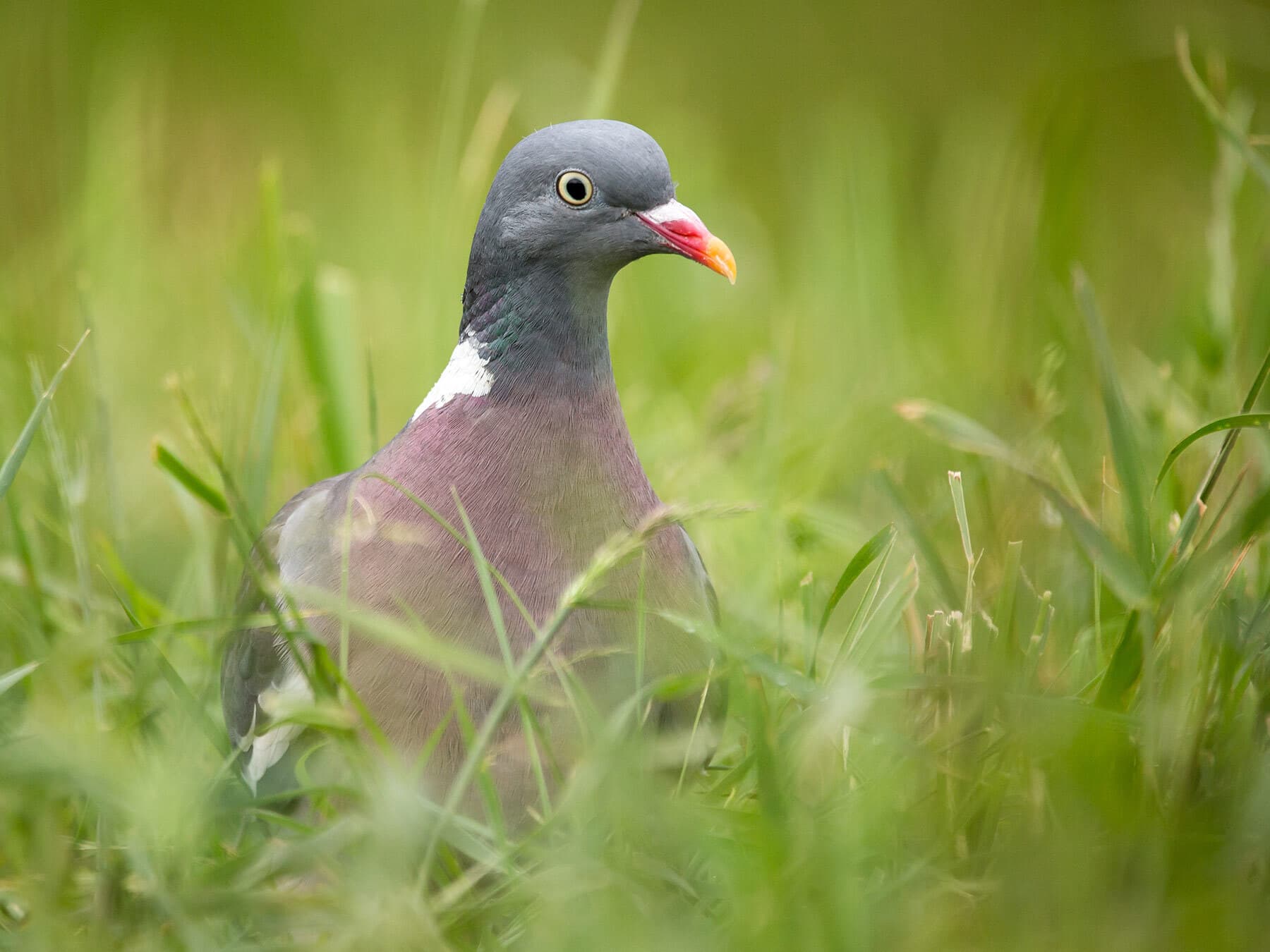
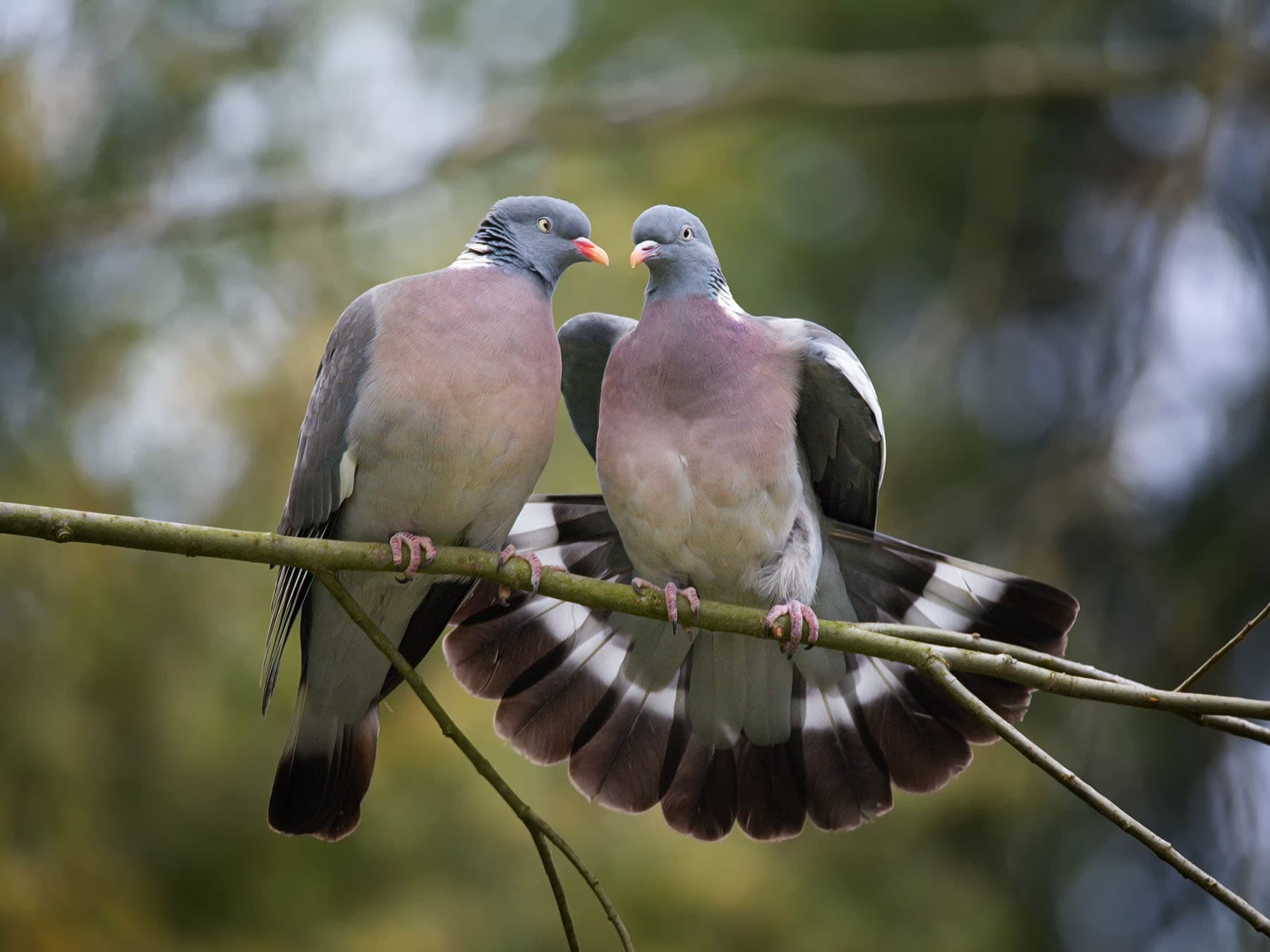
Bowing is courtship. The male lowers his head, puffs out his neck to show off the white patches and green sheen, and raises and fans his tail, closing it at the top of the bow, usually with a soft coo.1 It is his first approach to a female.3 Cramp saw it as the opposite of a threat: bill down and wings closed. A beaten rival may bow to the winner too, and after fights between pairs he saw females bow to their mates.
On the ground a male may follow a female, walking or hopping, stopping to bow and coo. Cramp even described leaps of a foot or more into the air, which he called "kangaroo hopping".
Caressing and billing
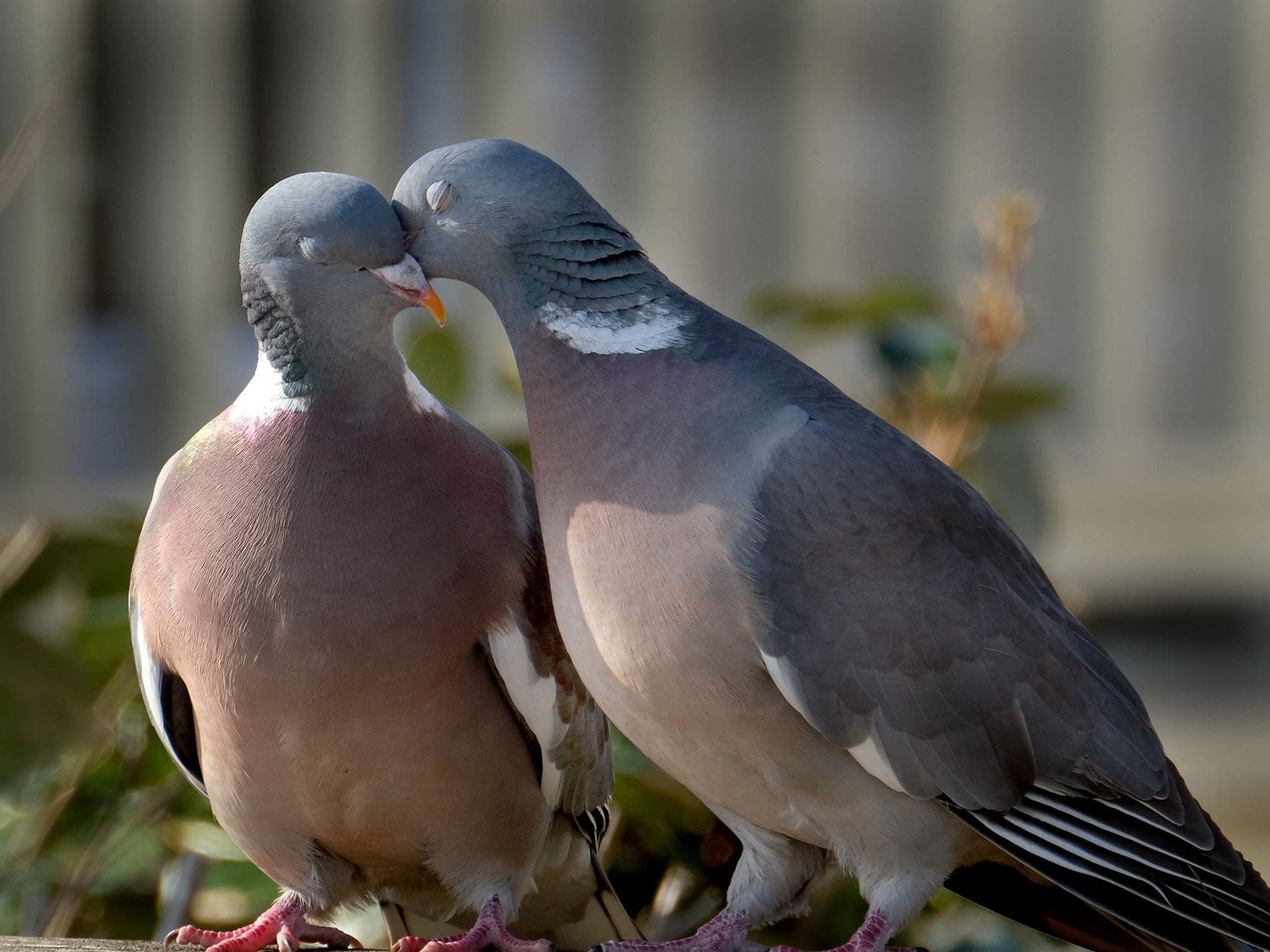
Once a female has lost her fear, the pair spend long spells side by side, and two displays strengthen the bond. In caressing, each nibbles the other's head and neck. In billing, the female puts her bill into the male's. Cramp could not tell whether food passes; Murton and Isaacson call it courtship feeding. Billing normally comes before mating, though it also happens on its own, especially early in the year.1
Choosing the nest site
From early in the year the male shows the female possible nest sites. He crouches on a fork or an old nest, pecks downwards and gives a deep double coo, wings and tail twitching. She flies to join him. He may call at several sites, and Cramp thought the female makes the final choice.
The display flight and wing clapping
Woodpigeons announce a territory with a display flight: the bird climbs, sometimes claps its wings at the top, then glides down on stiff wings.4 In central London display flights were most frequent in February and March, when territorial squabbles peaked there, and Cramp heard a clap on fewer than 5% of them. The ordinary loud clatter of wings when a Woodpigeon takes off is a different sound.5
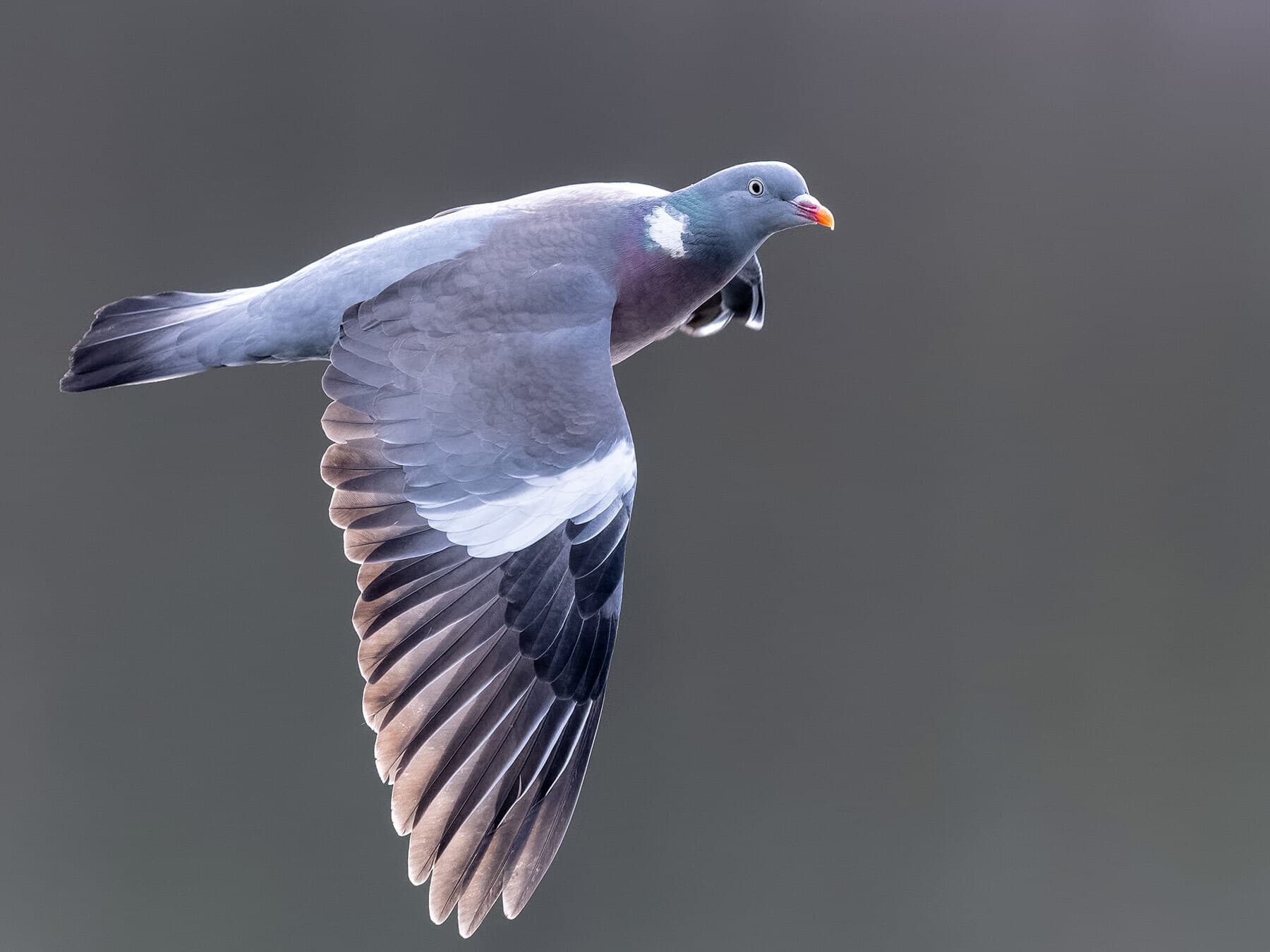
Are Woodpigeons territorial?
Yes, for much of the year. In central London Cramp found territories held from early winter to the end of nesting, mainly by the male simply sitting there and chasing intruders off; where Woodpigeons were crowded, only the trees were defended. Usually the male dealt with intruders, the female sometimes joining in.1 In a farmland population, territorial display built up from early spring and most birds were territorially active by mid-July.3
Most disputes are chases from branch to branch. Real fights are fierce: rivals batter each other with their wings, each trying to get on top, and Cramp once saw a Woodpigeon tear a feather from its rival's back.
Sharing the nest
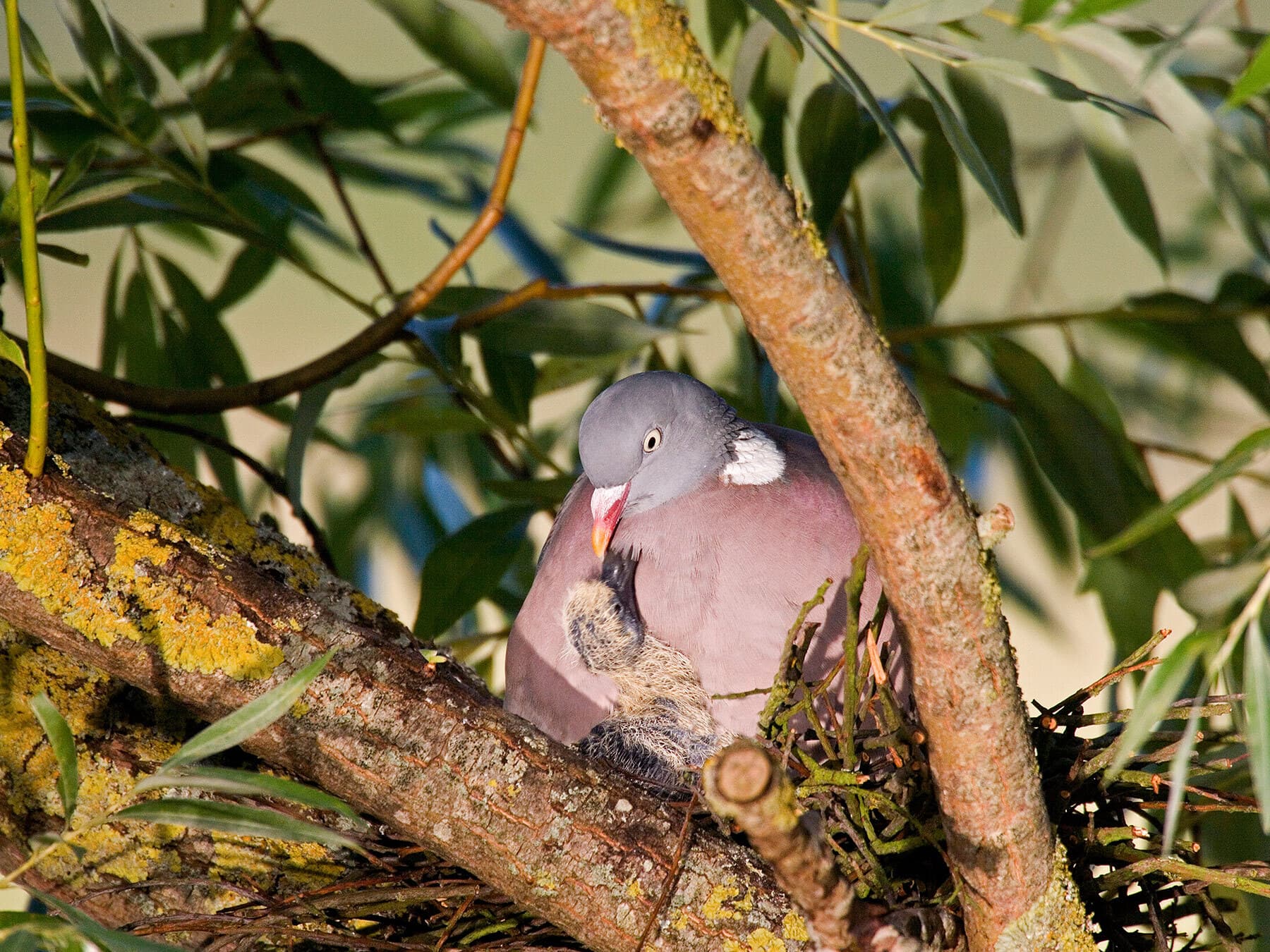
Both parents incubate the eggs in shifts: in one study the male sat from about 10.00 to 17.00 and the female the rest of the day and night.3 Like all pigeons, the parents feed the young on "crop milk" made in the crop.6 See Woodpigeon nesting.
After the breeding season
When nesting ends, Woodpigeons gather in flocks for the winter, feeding and roosting together. In London, Cramp's birds left the city centre in October for acorns and grain elsewhere, and the first males returned to their territories in November or December, earlier as numbers grew.
Sources
- Cramp, S. (1958). Territorial and other behaviour of the Woodpigeon. Bird Study 5(2): 55-66. doi:10.1080/00063655809475903
- BTO. Woodpigeon (Columba palumbus). BTO BirdFacts. Accessed 8 October 2026. Source
- Murton, R. K., Isaacson, A. J. (1962). The functional basis of some behaviour in the Woodpigeon Columba palumbus. Ibis 104: 503-521. doi:10.1111/j.1474-919x.1962.tb08683.x
- Baptista, L. F., Trail, P. W., Horblit, H. M., Boesman, P. F. D., Garcia, E., Perlman, Y. (2025). Common Wood-Pigeon (Columba palumbus), version 1.1. Birds of the World (J. del Hoyo, A. Elliott, J. Sargatal, D. A. Christie, E. de Juana and M. G. Smith, editors). Cornell Lab of Ornithology. doi:10.2173/bow.cowpig1.01.1
- RSPB. Woodpigeon. RSPB Birds A-Z. Accessed 8 October 2026. Source
- Horseman, N. D., Buntin, J. D. (1995). Regulation of pigeon cropmilk secretion and parental behaviors by prolactin. Annual Review of Nutrition 15: 213-238. doi:10.1146/annurev.nu.15.070195.001241